Article

An MMSE-Optimized Pre-Rake Receiver with a Comparative Analysis of Channel Estimation Methods for Multipath Channels †

1
Graduate School of Engineering, Chiba University, Chiba 263-8522, Japan
2
School of Information Technology, Sungkonghoe University, Seoul 08359, Republic of Korea
*
Author to whom correspondence should be addressed.
This paper is an extended version of our paper published in Morimoto, A.; Ishihara, R.; Omi, N.; Inoue, H.; Sato, R.; Kasahara, M.; Cha, J.; Ahn, C.-J.; Jeong, I. A Quadratically Interpolated and Minimum-Mean-Square-Error-Optimized Pre-rake Receiver for Multipath Channel. In Proceedings of the 2025 IEEE Asia Pacific Conference on Wireless and Mobile (APWiMob), Bali, Indonesia, 6–8 November 2025.
Electronics 2026, 15(7), 1540; https://doi.org/10.3390/electronics15071540
Submission received: 27 February 2026 / Revised: 31 March 2026 / Accepted: 2 April 2026 / Published: 7 April 2026
(This article belongs to the Section Microwave and Wireless Communications)

Abstract

In Time Division Duplex (TDD) Direct-Sequence Code Division Multiple Access (DS/CDMA) architectures, Pre-Rake filtering serves as a powerful transmitter-side strategy to alleviate receiver hardware constraints by leveraging channel reciprocity. Nevertheless, rapid channel fluctuations induced by high Doppler spreads critically undermine this reciprocity assumption. This failure is primarily driven by the unavoidable latency between uplink reception and downlink transmission, leading to severe performance deterioration. To address these challenges and enhance system robustness in modern high-speed scenarios, we propose an improved hybrid transceiver architecture. This scheme integrates multiplexed Pre-Rake processing with a Matched Filter-based Rake receiver and employs a Minimum Mean Square Error (MMSE) equalizer to suppress the severe Inter-Symbol Interference (ISI) and Multi-User Interference (MUI). Furthermore, we conduct a comparative analysis of channel estimation methods tailored for a 10 Mbps high-speed transmission environment.Our investigation reveals that while complex quadratic interpolation is often prioritized in low-data-rate studies, simple averaging is sufficient and even superior in high-speed communications. This is because the shortened slot duration allows simple averaging to effectively track channel variations while avoiding the noise overfitting associated with higher-order interpolation. The simulation results demonstrate that the proposed MMSE-optimized architecture achieves superior Bit Error Rate (BER) performance, providing a practical and computationally efficient solution for next-generation mobile networks.

1. Introduction

The sixth-generation (6G) wireless network demands extremely high reliability and massive connectivity [1,2,3]. To meet these rigorous requirements, the advancement of multiplexing and precoding technologies is essential. Currently, Orthogonal Frequency Division Multiplexing (OFDM) serves as the dominant standard due to its spectral efficiency [4]. However, relying solely on a single technology may limit the potential for diverse 6G scenarios due to issues like high Peak-to-Average Power Ratio (PAPR) and complexity [4,5]. Therefore, revisiting fundamental technologies such as Code Division Multiple Access (CDMA) and Rake reception is crucial to exploring new possibilities for robust channel compensation and precoding.
CDMA and Rake techniques offer inherent multipath resistance without the need for complex Fourier Transform processing [5]. In particular, the Pre-Rake technique significantly simplifies the receiver structure by pre-compensating for channel distortions at the transmitter [6,7]. By shifting the heavy computational burden to the base station, the power consumption of the user equipment is drastically reduced. This inherent energy efficiency makes the Pre-Rake architecture highly suitable for massive IoT applications and ultra-low-power devices. As emphasized in recent research, integrating such ultra-low power techniques is essential for realizing self-sufficient communication networks in the 6G era [8]. Despite these theoretical advantages, the evolution of these technologies stagnated for a long period. Historically, practical research and development were severely restricted by patents until the 2010s. With these intellectual property barriers now removed, there is a significant opportunity to re-evaluate and improve these fundamental schemes for modern practical implementation.
Although the patent landscape has cleared, technical challenges for practical deployment remain. The first issue is the sensitivity to the Doppler frequency [9,10,11]. Since the conventional Pre-Rake system utilizes fixed weights based on past channel information, time-varying channels cause performance degradation [6]. The second issue is Multi-User Interference (MUI). In 6G massive-connectivity scenarios, interference among users increases, which severely deteriorates signal quality [12].
The main objective of this paper is to re-evaluate the Pre-Rake system and improve its performance for practical implementation. This study proposes an MMSE-optimized Pre-Rake receiver and includes a comparative analysis of channel estimation methods. Specifically, channel estimation accuracy is critical for Pre-Rake systems because they rely on Time Division Duplex (TDD) channel reciprocity [13]. In actual TDD systems, the channel states of the uplink and downlink are different due to the time delay between reception and transmission. In high-mobility environments, this discrepancy leads to a mismatch in the Pre-Rake weights [9,10,11]. To address this, robust channel estimation is required. While foundational studies employed quadratic interpolation [14] to estimate the channel by fitting a curve through known data points [15,16], its effectiveness in modern 10 Mbps transmission scenarios, where the slot duration is drastically reduced, remains to be re-evaluated. In this study, we hypothesize that the shortened slot duration at high transmission rates keeps the normalized Doppler frequency small enough that simple averaging can effectively track channel variations. We investigate whether this approach provides sufficient accuracy while avoiding the noise-overfitting risks associated with higher-order interpolation, thereby offering a more practical and robust implementation for high-speed mobile communications.
Furthermore, to handle the interference in massive-connectivity scenarios, an MMSE filter is introduced at the receiver side. While the Pre-Rake technique compensates for multipath fading, it cannot completely eliminate the interference arising from code multiplexing, especially when orthogonality is compromised by channel variations. The MMSE filter minimizes the error between the transmitted and received signals, effectively suppressing residual Inter-Symbol Interference (ISI) and MUI [17,18] that the transmitter-side processing could not remove. Our simulation results demonstrate that the proposed system achieves highly reliable communication, validating the effectiveness of revisiting this technology.
This paper is an extended version of our previous conference paper [19]. The primary contributions and extensions from the preliminary work are summarized as follows. First, the simulation parameters, including frame size and transmission rates, have been updated to reflect current high-speed wireless communication standards. Second, we have enhanced the receiver architecture by introducing a Decision Feedback Minimum Mean Square Error (DF-MMSE) equalizer, moving beyond the conventional linear MMSE approach to better suppress Inter-Symbol Interference. Furthermore, the performance evaluation has been significantly broadened to include Bit Error Rate (BER) comparisons in multi-user scenarios, providing a more comprehensive analysis of the system’s robustness in realistic environments.
This paper is organized as follows. In Section 2, we describe the Rake and Pre-Rake system model and some related technologies. In Section 3, we describe our proposed system. In Section 4, we confirm that our analysis coincides with the simulation result, and we conclude the paper in Section 5.

2. System Model

This section describes the conventional Rake and Pre-Rake systems.

2.1. Rake System

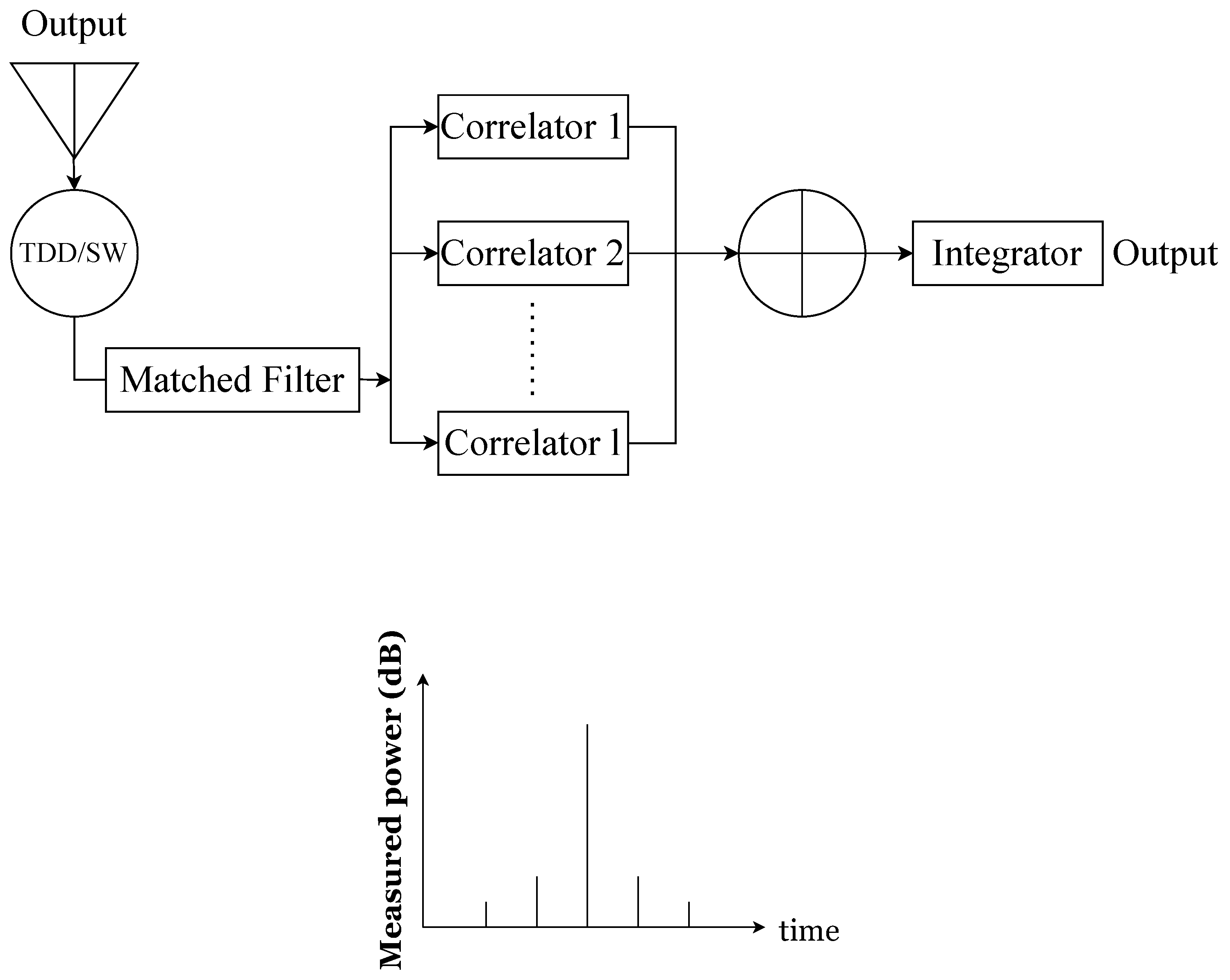
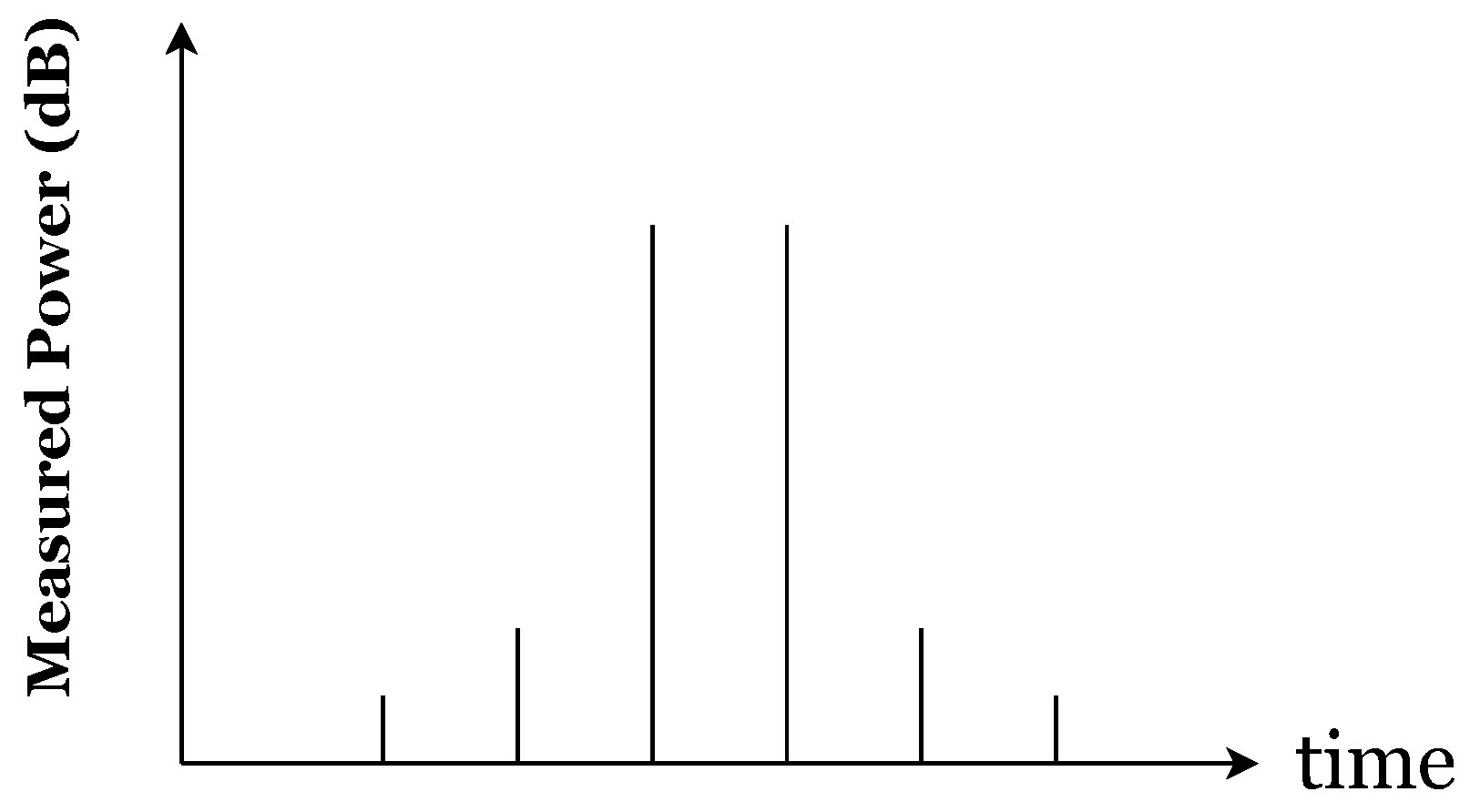
A block diagram of the Rake receiver and the output of the Rake receiver are shown in Figure 1.
A conventional Rake architecture utilizes parallel correlation units, known as fingers [20]. As illustrated in Figure 1a, the received signal is distributed into these parallel branches. The multiple labeled outputs in the block diagram represent the isolated multipath components prior to coherent combination. Furthermore, Figure 1b visually demonstrates the physical meaning of the Matched Filter outputs in relation to the energy combining process. Specifically, the incoming waveform at the receiver can be mathematically formulated as an aggregation of L distinct, delayed multipath components, expressed as:
r ( t ) = E 2 l = 0 L 1 | h l | 2 l = 0 L 1 d ( t τ l ) · c ( t τ l ) + n ( t )
In this formulation, the propagation delay associated with the l-th path is represented by τ l , while n ( t ) accounts for the Additive White Gaussian Noise (AWGN). These delayed components manifest as distinct energy peaks in the time domain. By computing the cross-correlation between the incoming signal and the appropriately time-shifted spreading sequence, each finger isolates a specific peak:
z l = r ( t ) c ( t τ l ) d t .
Given the orthogonal or quasi-orthogonal nature of the spreading codes, this operation successfully extracts the isolated energy of the l-th path from the composite received signal. Finally, to maximize the combined signal quality, the system linearly aggregates these branch outputs. This physical energy-combining process directly corresponds to Maximal Ratio Combining (MRC) [21], which applies a weighting factor using the complex conjugate of its respective path gain:
Z = l = 0 L 1 w l z l , w l = h l .
This comprehensive process effectively mitigates the adverse effects of fading and improves the overall SNR. However, the Rake architecture has inherent limitations. The primary drawback is the computational complexity at the receiver.

2.2. Pre-Rake System

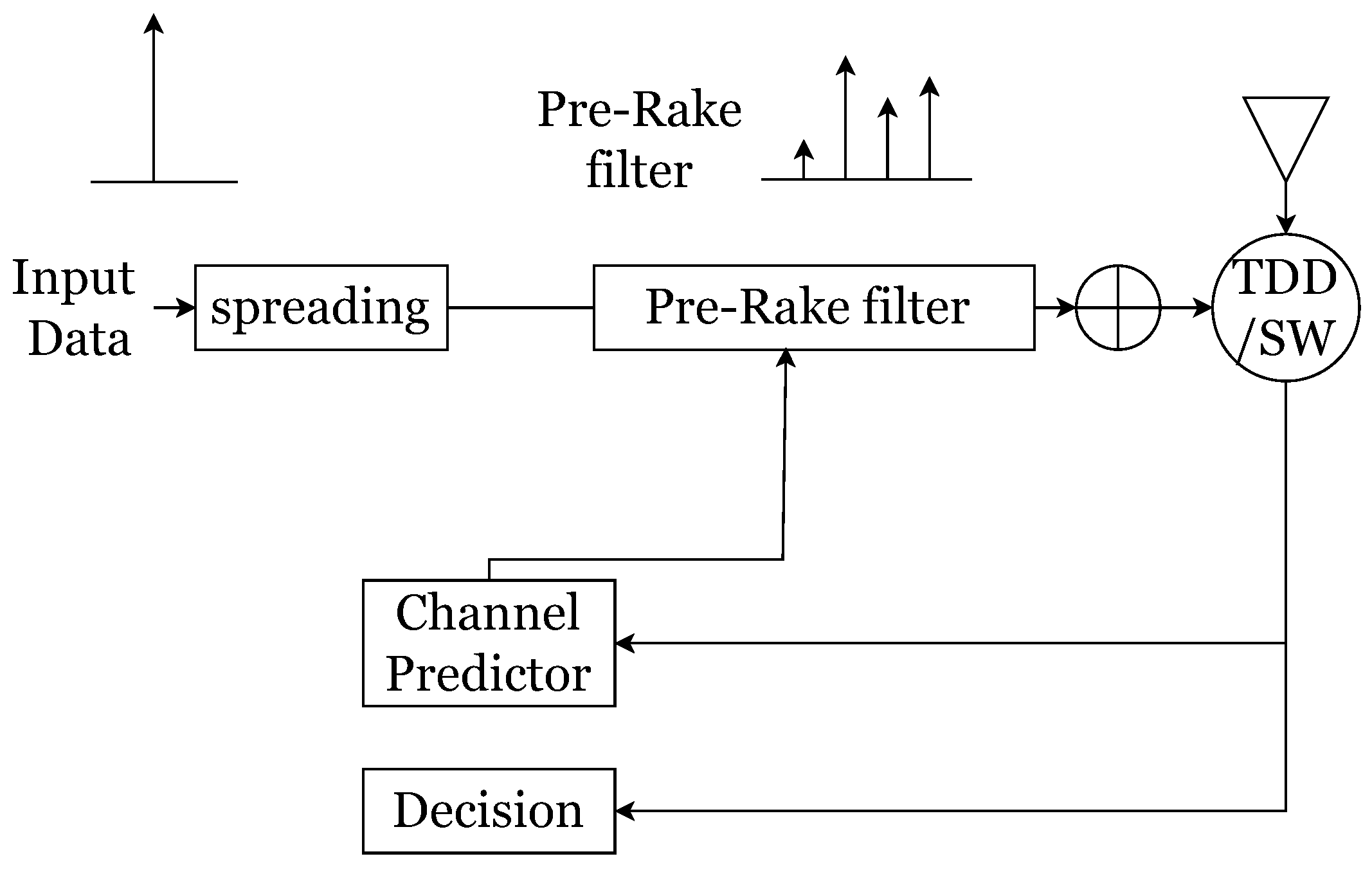
Standard Rake reception successfully captures multipath diversity. However, this approach demands significant computational power, has a large hardware footprint, and exhibits high energy consumption. Such issues are highly problematic for resource-constrained mobile devices. To overcome these terminal-side bottlenecks, researchers have proposed shifting the equalization process to the transmitter, a method known as Pre-Rake processing [6,22,23]. Figure 2 shows a block diagram of the Pre-Rake transmitter.
In contrast to the conventional Rake receiver, Pre-Rake processing emulates the combining process at the transmitter. This enables the receiver to remain simple while still benefiting from the diversity gain provided by multipath propagation. Theoretically, if perfect channel knowledge and ideal time synchronization are assumed, Pre-Rake processing can achieve performance equivalent to that of a conventional Rake receiver. This is because the transmitter-side pre-equalization effectively aligns the multipath components before transmission, resulting in a similar constructive combination at the receiver. Furthermore, the Pre-Rake system has been reported to outperform the conventional Rake receiver in a multi-user scenario [6]. Unlike Rake combining, which may emphasize interference along with the desired signal, Pre-Rake processing concentrates the desired signal’s energy while randomizing signals from other users. Consequently, it effectively suppresses MUI and achieves better Bit Error Rate (BER) performance [24]. Let the baseband-equivalent channel impulse response characterizing the frequency-selective fading environment be defined as:
h ( t ) = l = 0 L 1 h l δ ( t τ l ) .
To pre-compensate for this channel distortion, the transmitter utilizes a filter whose impulse response is the time-reversed complex conjugate of the estimated channel:
h ( t ) = l = 0 L 1 h l δ ( t + τ l ) .
Consequently, the original data stream is subjected to this pre-equalization process prior to transmission, yielding the signal s ( t ) :
s ( t ) = E c 2 l = 0 L 1 | h l | 2 m = 0 L 1 h ^ m · d ( t + τ m ) · c ( t + τ m ) .
Here, a normalization scalar (the denominator) is introduced to guarantee that the total transmit power remains constant. Furthermore, h ^ m signifies the conjugated estimate of the path gain, and E c dictates the energy per chip, whereas d ( t ) and c ( t ) correspond to the mapped information symbols and the spreading sequence characterized by a chip interval of T c , respectively. When s ( t ) propagates through the multipath channel h ( t ) , the received signal r ( t ) is expressed as:
r ( t ) = s ( t ) × g ( t ) + n ( t ) = s ( τ ) h ( t τ ) d τ + n ( t ) = l = 0 L 1 h l s ( t τ l ) + n ( t ) = E c 2 l = 0 L 1 | h l | 2 l = 0 L 1 m = 0 L 1 h ^ m h l · d ( t + τ m τ l ) · c ( t + τ m τ l ) + n ( t ) ,
where n ( t ) represents AWGN. The output contains 2 L 1 paths, including a strong peak at the delay satisfying m + l = L . The output of the Matched Filter at the receiver is given by:
r ( t ) = E c 2 l = 0 L 1 | h l | 2 q = L + 1 L 1 η q · d ( t τ q ) · c ( t τ q ) + n ( t ) .
In this equation, η q = h ^ m h l defines the effective composite channel response, obtained via the convolution (⊗) of the transmitter weights and the physical channel. To yield the decision statistic Z, the filtered signal undergoes correlation with the local spreading sequence, followed by integration across the entire symbol period T:
Z = τ l τ l + T [ r ( t ) c ( t ) ] + [ r ( t ) c ( t ) ] d t .
The symbol⊙is utilized to specify that the correlation process is executed independently for the in-phase (real) and quadrature (imaginary) parts.
Z p r e r a k e = N S F 2 E c l = 0 L 1 | h k | 2 l = 0 L 1 | h l | 2 · d + I S + n = D + I S + n ,
where N S F = T / T c is the spreading factor. D, I S , and n denote the desired signal, ISI, and AWGN, respectively. A major limitation of conventional Pre-Rake systems is their sensitivity to Doppler frequency shifts in high-mobility environments. These systems rely on TDD channel reciprocity and quasi-static conditions. However, significant Doppler spread invalidates this assumption. Channel aging causes a mismatch between the estimated uplink channel and the actual downlink channel. Consequently, the multipath components misalign at the receiver. This degradation reduces the SNR and increases the BER [25]. To mitigate Doppler effects, a hybrid scheme utilizing multiple Pre-Rake filters and a Rake combiner has been proposed [26]. This method applies multiple filters at the transmitter to generate several pre-equalized signals. These signals create multiple diversity peaks at the receiver, which are then combined to improve robustness. However, this approach increases transmitter complexity and may reduce bandwidth efficiency in constrained environments.

3. Proposed System

The multiple Pre-Rake system proposed [26] is an effective technique for improving diversity gain at the receiver by actively generating artificial delay paths at the transmitter. However, this conventional system faces significant challenges in practical high-mobility environments.
The first challenge is its vulnerability to Doppler frequency shifts. Conventional methods often rely on the assumption of channel reciprocity or simple linear interpolation. In high-mobility environments, the channel state changes non-linearly due to phase rotations caused by the Doppler effect. This phenomenon, known as “channel aging,” causes a severe mismatch between the Pre-Rake weights applied at the transmitter and the actual downlink channel, leading to degradation of the SNR.
The second challenge is the interference inherent in the multiplexing process itself. The generation of artificial multipath components increases ISI. Furthermore, in a multi-user environment, this degrades the orthogonality among users, resulting in severe MUI. Consequently, system performance deteriorates significantly as the number of users increases.
To overcome these challenges and enhance the robustness of the conventional system, this paper proposes an improved multi-user Pre-Rake transceiver architecture. The proposed scheme integrates the following three key technologies:
1.
Complex Ratio-based Channel Prediction: This is a method to precisely track the phase rotation and amplitude variation caused by Doppler shifts, thereby minimizing channel estimation errors.
2.
MMSE-Decision Feedback Equalization (MMSE-DFE): This is a non-linear detection scheme at the receiver designed to effectively suppress the severe ISI and MUI caused by filter multiplexing.

3.1. The Transmitter Structure for Pre-Rake Multiplexing

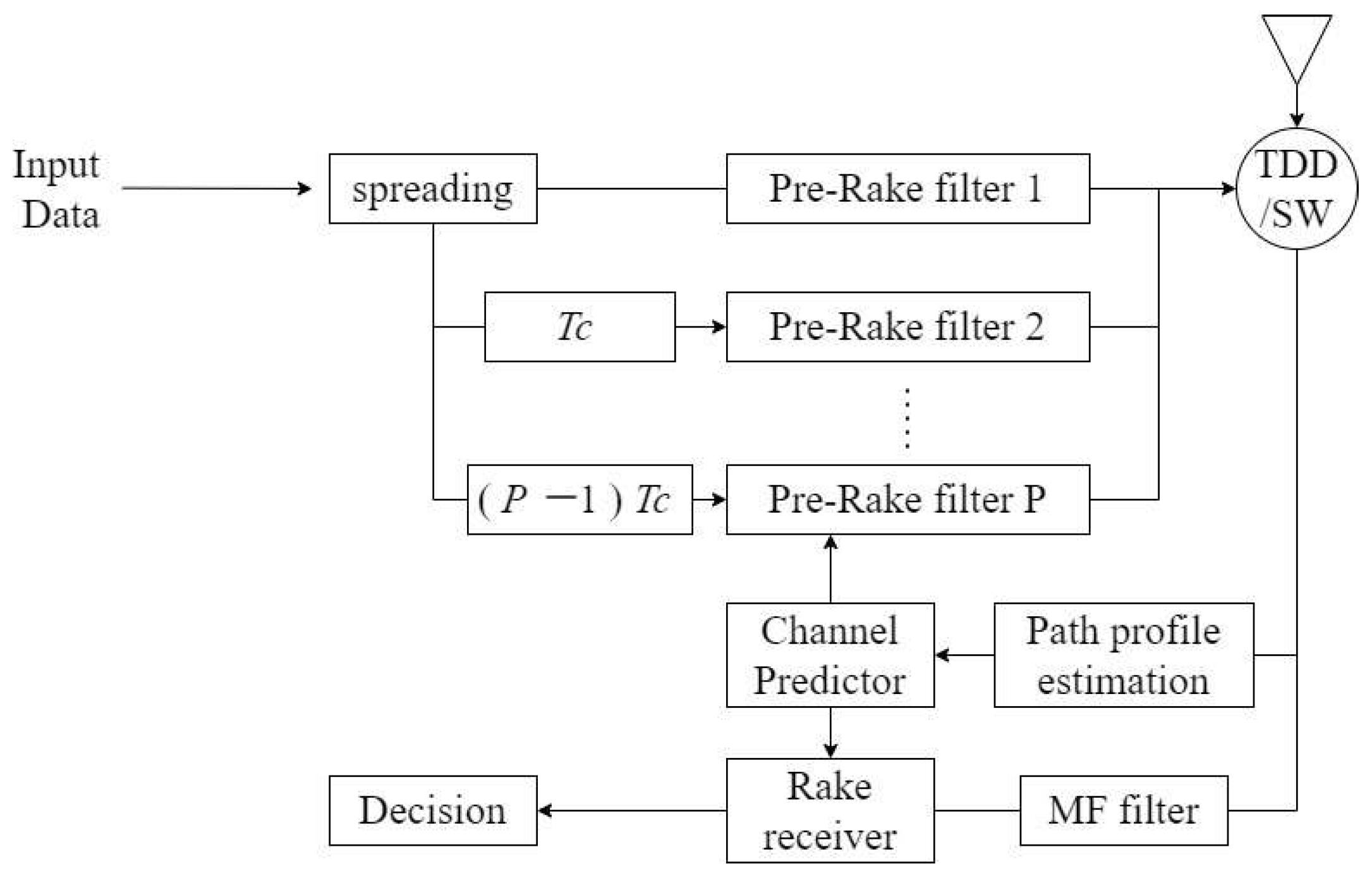
This section details the transmitter configuration of the proposed system. The structure of the transmitter is shown in Figure 3.
We consider a downlink multi-user system where the base station transmits data simultaneously to U active users. To enhance diversity gain, the transmitter is equipped with a bank of P parallel Pre-Rake filters for each user.
Let d u ( n ) denote the data symbol for the u-th user ( u = 0 , , U 1 ), and c u ( t ) be the user-specific spreading code. Each user’s signal is processed by P filters, each applying a specific delay p T c to create temporally resolvable paths at the receiver, where T c is the chip duration. The transmitted signal component for the u-th user, s u ( t ) , is expressed as:
s u ( t ) = E c 2 P l = 0 L 1 | h ^ u , l | 2 p = 0 P 1 m = 0 L 1 h ^ u , m · d u ( t + m T c + p T c ) · c u ( t + m T c + p T c ) ,
where E c represents the chip energy. The term inside the square root acts as a normalization factor to ensure constant transmission power regardless of the number of filters or channel gain variations. By transmitting the superposition of these signals, the system actively generates “artificial multipath” components. This mechanism allows the receiver to capture signal energy that would otherwise be lost in frequency-selective fading channels, thereby maximizing the diversity gain.
In (10), h ^ u , m denotes the Pre-Rake weight coefficient applied to the m-th path of the u-th user. It is crucial to note that the effectiveness of Pre-Rake transmission relies entirely on the accuracy of this coefficient h ^ u , m . In TDD systems, there is an inevitable time lag between uplink channel estimation and downlink transmission. In static environments, channel reciprocity holds, meaning h ^ u , m can be assumed to be equal to the uplink estimate. However, in high-mobility environments, the Doppler effect causes significant phase rotations and amplitude variations during this time lag, rendering the direct use of outdated uplink estimates inaccurate. A mismatch between the coefficient h ^ u , m and the actual downlink channel leads to a loss of diversity gain and increased interference.
Therefore, to calculate the precise weight h ^ u , m required in (10), a robust prediction method that accounts for complex channel evolution is essential. This prediction mechanism is detailed in the following subsection.

3.2. Channel Estimation and Prediction Methods

As discussed in Section 3.1, the performance of Pre-Rake transmission depends heavily on the accuracy of the weight coefficients. In TDD systems, a time lag exists between the uplink pilot reception and the downlink data transmission. In high-mobility environments, the Doppler effect causes the channel impulse response to undergo rapid rotation and amplitude fluctuations. To determine the optimal estimation strategy for high-speed scenarios, we evaluate two different approaches: quadratic interpolation and simple averaging.
The first approach, quadratic interpolation, predicts the future channel state by analyzing the trajectory of channel estimates from the past three time slots. The fundamental assumption is that the nonlinear channel variation can be closely approximated by a second-order polynomial. Let h e s t ( t 1 ) , h e s t ( t 2 ) , and h e s t ( t 3 ) denote the channel impulse responses estimated from previous slots. The variation trend, which reflects the velocity of the channel change, can be represented by the first-order difference:
Δ h ( t 1 ) = h e s t ( t 1 ) h e s t ( t 2 ) .
By incorporating both the velocity and acceleration of the channel variation, the predicted channel h ^ ( t ) is obtained by extrapolating a quadratic curve:
h ^ ( t ) = 3 h e s t ( t 1 ) 3 h e s t ( t 2 ) + h e s t ( t 3 ) .
The second approach is simple averaging, where the channel estimate is obtained by averaging the 16 pilot symbols within the current slot, assuming the channel is quasi-static over the shortened slot duration. Regardless of the chosen approach, the resulting channel estimate h ^ ( t ) is applied to the Pre-Rake weights in (10). While quadratic interpolation (12) has been found to be essential in foundational low-data-rate studies, this paper re-evaluates whether simple averaging provides superior robustness by avoiding noise overfitting at 10 Mbps.

3.3. Receiver Structure: Rake-Based MMSE-DFE

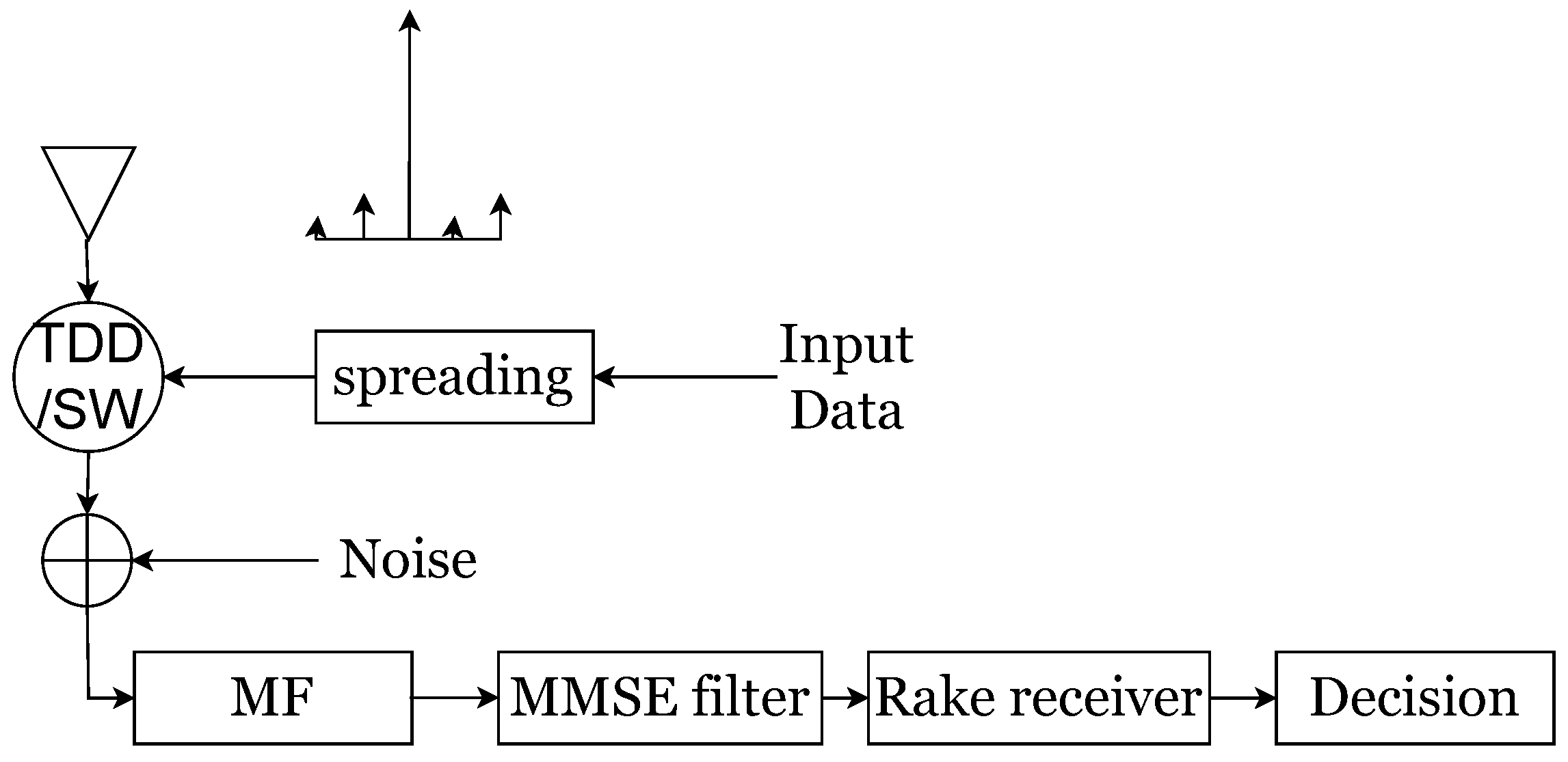
In this subsection, we describe the receiver structure at the mobile station. A block diagram of the proposed receiver and the output of the Matched Filter are illustrated in Figure 4 and Figure 5, respectively. As depicted in Figure 4, the received signal is first processed by a Matched Filter (MF), after which the despread outputs are dynamically routed into the Feed-Forward Filter (FFF) and Feedback Filter (FBF) of the MMSE-DFE. Furthermore, Figure 5 demonstrates the conceptual output of this MF, highlighting a strong main peak where the pre-equalized multipath components constructively combine, surrounded by side peaks that represent residual ISI and MUI. The primary role of the subsequent MMSE-DFE is to suppress these unwanted side peaks.
While the reference model utilizes a standard Rake combiner with MRC, our proposed system employs an MMSE-Decision Feedback Equalizer to compensate for the pilot shortage and suppress residual interference. The signal received by the u-th user ( u = 0 , , U 1 ) passes through the multipath fading channel. Consistent with the transmitter model defined in the previous section, the received signal r u ( t ) is expressed as the superposition of the Pre-Rake filtered signals convolved with the channel impulse response:
r u ( t ) = E c 2 P l = 0 L 1 | h u , l | 2 p = 0 P 1 l = 0 L 1 m = 0 L 1 ·   d u ( t l T c + m T c + p T c ) ·   c u ( t l T c + m T c + p T c ) h ^ u , m h u , l + n ( t ) ,
where n ( t ) is the zero-mean AWGN. As described in (4), this can be simplified by considering the composite channel response η u , q = h ^ u , m h u , l . The output of the Matched Filter (MF) sampled at the chip rate is given by:
y u ( t ) = E c 2 P l = 0 L 1 | h u , l | 2 q d u ( t q T c ) c u ( t q T c ) η u , q + n ˜ ( t ) .
In the conventional approach, a Rake combiner would simply sum these multipath components using conjugate weights. However, in high-mobility environments with insufficient pilot symbols, the channel estimation errors lead to significant residual ISI and MUI.
To address this, we replace the conventional MRC summation with an MMSE-DFE structure. The Feed-Forward Filter (FFF) acts as a generalized Rake combiner, capturing energy from the dispersed paths while spatially whitening the interference. The Feedback Filter (FBF) utilizes past decisions to subtract post-cursor ISI, effectively compensating for the lack of accurate channel state information (CSI) derived from pilots.
Let r u ( n ) denote the vector of sampled outputs from the Matched Filter in (14) corresponding to the n-th symbol period. The decision variable Z u ( n ) is formed as follows:
Z u ( n ) = w u H r u ( n ) b u H d ^ u ( n 1 ) ,
where w u is the FFF weight vector and b u is the FBF weight vector. d ^ u ( n 1 ) represents the vector of previously decided symbols. Our decision variable Z u ( n ) minimizes the mean square error E [ | d u ( n ) Z u ( n ) | 2 ] . By using the decision feedback term b u H d ^ u , the receiver utilizes detected bits as “pseudo-pilots,” maintaining robust performance even when the explicit pilot overhead is minimized. To ensure the reproducibility of the proposed receiver, the specific implementation of the MMSE-DFE is detailed as follows. The system adopts a decision-directed approach to compensate for the pilot shortage in the high-speed 10.24 Mcps environment. First, a tentative decision d ^ u , t e n t a t i v e ( n ) is obtained through conventional Rake combining. This result is then used to construct a feedback replica vector, effectively expanding the reference signal to include both the 16 pilot symbols and the 144 data symbols as “pseudo-pilots.” The optimal weight vector w u is determined by solving the Wiener–Hopf equation: w u = R u 1 p u . Here, the correlation matrix R u C P × P is calculated as R u = 1 L i = 1 L y u ( i ) y u H ( i ) , where y u ( i ) is the P-dimensional vector of Matched Filter outputs from the P Pre-Rake fingers, and L = 160 is the total number of symbols in a slot. The cross-correlation vector p u C P × 1 is given by p u = 1 L i = 1 L y u ( i ) x r e f ( i ) , where x r e f represents the combined reference sequence of pilots and tentative decision replicas. By employing direct matrix inversion, the weights are updated every slot to track fast fading. The filter lengths are fixed at L F F F = P and L F B F = 1 , which provides sufficient degrees of freedom to suppress ISI and MUI while maintaining computational stability. This structure ensures that even if the pilot-based estimation becomes outdated due to the high-speed transmission, the feedback mechanism maintains the accuracy of the MMSE weights throughout the data payload. We discuss the computational complexity of the proposed architecture. Regarding the transmitter side, the multiple Pre-Rake system employs P parallel filter banks for each user. Consequently, the computational load for pre-equalization increases by a factor of P compared to the conventional single Pre-Rake system. However, this additional burden is absorbed by the base station, which typically possesses sufficient computational resources and power supply. On the mobile terminal side, the complexity remains low, as the Pre-Rake processing eliminates the need for maintaining multiple Rake fingers and path-tracking loops. While the proposed receiver introduces an MMSE-DFE, the required matrix inversion is limited to a size of P × P (where P 4 ). Thus, the O ( P 3 ) complexity is an acceptable trade-off considering the hardware simplification achieved at the terminal. Furthermore, we consider the computational and memory costs of the channel estimation methods. Quadratic interpolation requires storing channel estimates from at least three previous slots in memory and performing scalar multiplications and additions for each path. In contrast, the simple-averaging method only requires accumulating the 16 pilot symbols within the current slot, reducing both memory footprints and arithmetic operations. Given the high transmission rate of 10 Mbps, the shortened slot duration keeps the normalized Doppler frequency low. As demonstrated in the simulation results, simple averaging provides comparable or superior BER performance without the noise overfitting associated with higher-order interpolation. Therefore, considering the balance between performance and computational cost, the simple-averaging method is practically suited for the proposed architecture.

4. Computer Simulation

We describe the simulation parameters used to verify the effectiveness of the proposed system. The major simulation parameters are summarized in Table 1.
The system employs a TDD frame structure, where the length of one time slot is 1 ms. Each slot consists of a total of 160 symbols, comprising N p = 16 pilot symbols for channel estimation and N d = 144 data symbols. The chip rate is set to 10.24 M chips/s. With a Spreading Factor (SF) of 64, the symbol rate becomes 160 ksymbol/s. QPSK is used for data modulation, and BPSK is used for spreading modulation.
Regarding the spreading codes, we deliberately select optimal sequences according to the specific interference characteristics of the single-user and multi-user environments, rather than using a single code type throughout. In a single-user environment, there is no Multi-User Interference (MUI); thus, the primary cause of performance degradation is self-interference from delayed multipath components. Since Walsh codes exhibit exceptionally poor non-zero-shift auto-correlation properties, they cause severe self-interference and synchronization errors in multipath channels. Therefore, Gold codes, which possess sharp and superior auto-correlation properties, are exclusively adopted for the single-user case to isolate multipath components effectively. Conversely, in a multi-user environment, minimizing MUI is the absolute top priority. While Gold codes have bounded cross-correlation, it is not zero, leading to significant MUI when multiple users transmit simultaneously. Therefore, Walsh codes are adopted for multi-user simulations because they possess perfect orthogonality (zero cross-correlation at zero delay) between users, allowing the base station to multiplex users synchronously. This environment-specific code selection ensures that we evaluate the system’s performance under the most practical and challenging conditions for each scenario.
For the propagation environment, we adopt a frequency-selective model comprising L = 4 resolvable multipath components, each experiencing independent Rayleigh fading. The average power of these paths is set to decay exponentially over time. Furthermore, to rigorously assess the system’s resilience to terminal mobility, its performance is evaluated across a spectrum of maximum Doppler shifts f d .
The MMSE equalizer is applied exclusively to the proposed system, while the channel estimation based on quadratic interpolation is applied only to the conventional Pre-Rake system and the proposed system.
In these simulations, the number of multiple Pre-Rake filters is set to P = 2 , 3 , and 4. The rationale for selecting these specific values is twofold. First, it aligns with the parameter settings of the foundational multiple Pre-Rake study [26], ensuring a fair benchmark for evaluating the proposed MMSE-DFE architecture. Second, increasing P introduces a fundamental trade-off: while it enhances the diversity gain, it simultaneously increases the number of artificial multipath components, which leads to severe Inter-Symbol Interference (ISI) and Multi-User Interference (MUI). Evaluating configurations up to P = 4 is sufficient and necessary to observe the saturation point where the performance degradation caused by the destroyed code orthogonality begins to outweigh the diversity benefits, especially in massive-connectivity scenarios.

4.1. Results for Single-User Environment

In this subsection, the BER performance of the proposed and conventional systems is evaluated in a single-user environment. To comprehensively analyze the impact of spreading sequences on multipath resolution, we compare the performance of the systems using both Gold and Walsh codes. The rationale behind this comparative evaluation is to quantitatively demonstrate that Walsh codes suffer from severe self-interference in a multipath channel due to their poor auto-correlation properties. Furthermore, corresponding to the mathematical definitions of their sequence lengths, the processing gain is set to 64 for the Walsh code simulations and 63 for the Gold code simulations.

4.1.1. BER Performance in Low-Mobility Environment ( f d = 20 Hz) Using Gold Codes

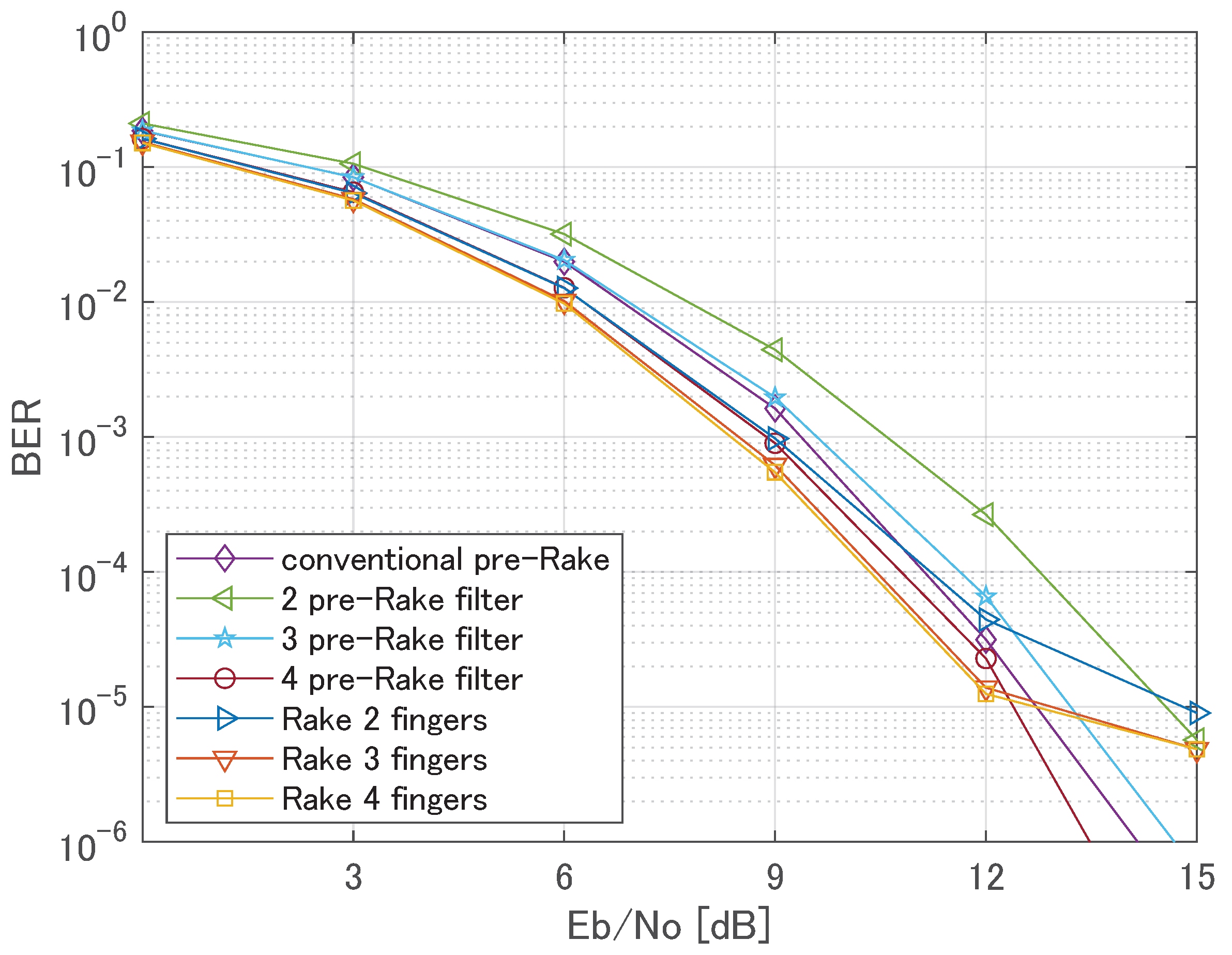
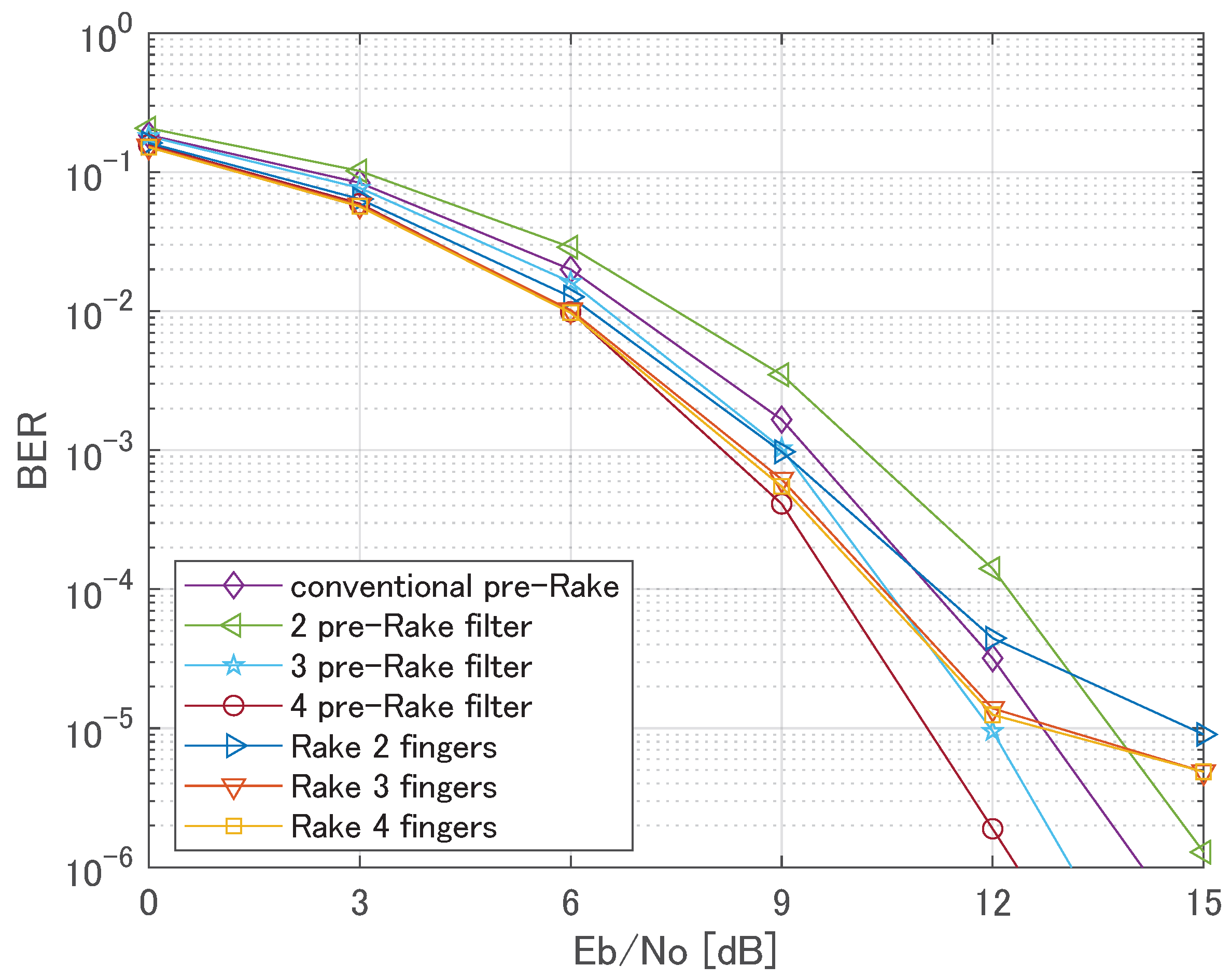
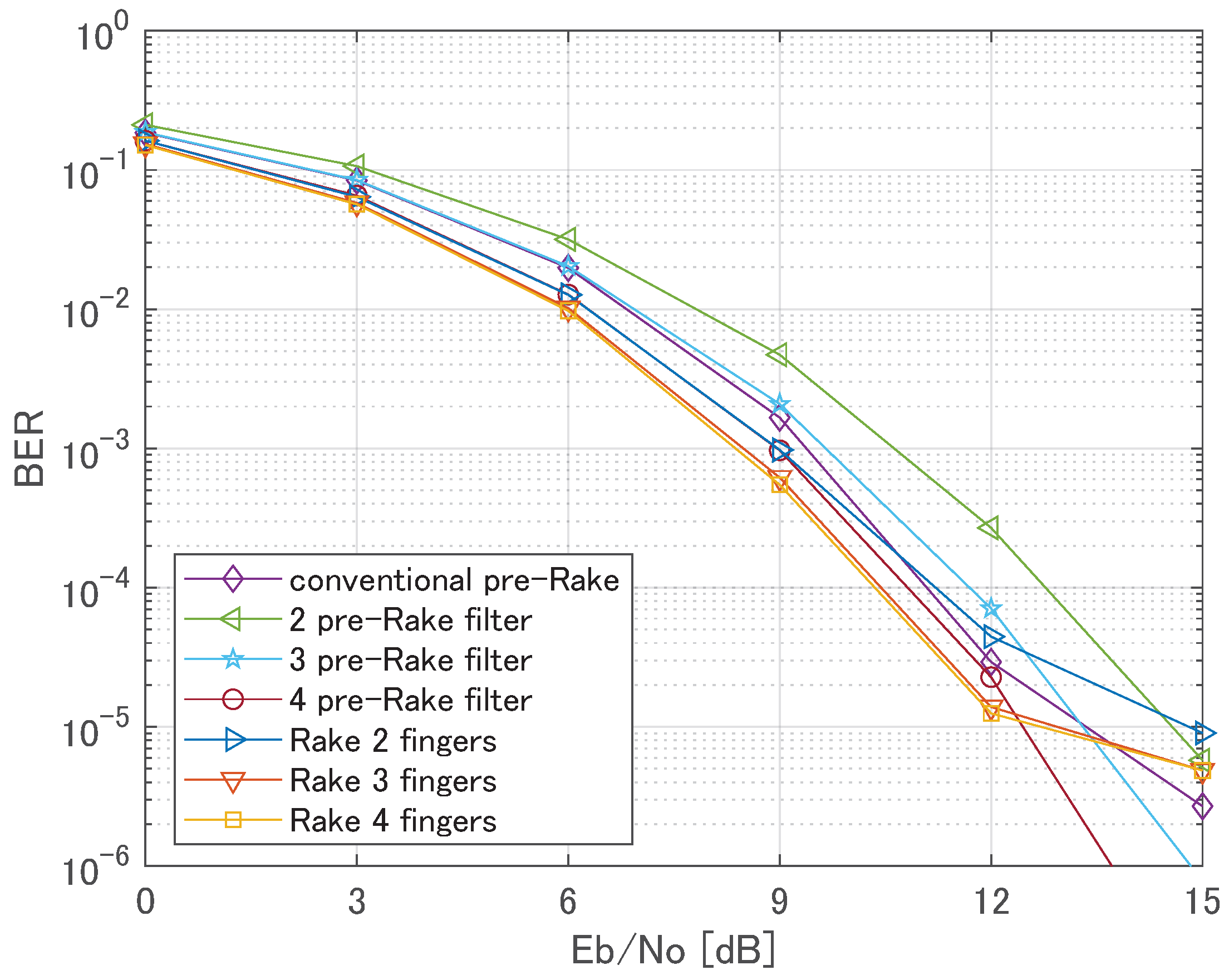
First, BER performance was evaluated in a single-user scenario to compare the conventional Rake receiver, the conventional Pre-Rake system, and the proposed system. Figure 6, Figure 7, Figure 8 and Figure 9 show the BER performance for a Doppler frequency of f d = 20 Hz, under various combinations of detection schemes and channel estimation methods. Specifically, these figures illustrate the performance of the systems using Matched Filter (MF) detection with simple-averaging-based channel estimation, MMSE equalization with simple averaging, MF detection with quadratic interpolation, and MMSE equalization with quadratic interpolation, respectively.
To quantitatively evaluate system performance in a low-mobility and single-user environment at a Doppler frequency of 20 Hz using Gold sequences, we analyze the BER characteristics by comparing Figure 6, Figure 7, Figure 8 and Figure 9. In this analysis, we specifically compare the conventional Rake receiver, the conventional Pre-Rake system, and the proposed multiple Pre-Rake system. First, we investigate baseline performance using simple-averaging-based channel estimation without MMSE equalization, as shown in Figure 6. In this slow-fading environment, the conventional Rake receiver achieves a BER of 4.86 × 10 6 at E b / N 0 = 15 dB. The conventional Pre-Rake system achieves a better BER of 2.60 × 10 7 than the Rake receiver, but still suffers from residual self-interference caused by the non-orthogonal sequences. In contrast, the proposed 4 Pre-Rake filter system achieves the lowest BER of 3.98 × 10 8 . This demonstrates that the proposed structure, which distributes energy across multiple Pre-Rake filters at the transmitter, inherently mitigates multipath-induced self-interference and maximizes the diversity gain even in a low-Doppler environment. Furthermore, comparing Figure 6 with Figure 7 reveals the quantitative impact of the MMSE equalizer on the proposed system. By applying the MMSE equalizer, the multipath interference caused by the non-orthogonal Gold sequences is effectively suppressed, further reducing the BER of the proposed system from 3.98 × 10 8 to 8.20 × 10 9 at 15 dB. Since the conventional Rake and conventional Pre-Rake systems are basic structures that do not employ an MMSE equalizer, they cannot benefit from this powerful interference suppression. These results highlight that the combination of the robust multiple Pre-Rake structure and the interference suppression capability of the MMSE equalizer is highly effective in extracting ultimate performance in low-mobility scenarios. Finally, we investigate the contribution of quadratic interpolation, which is applied only to the conventional Pre-Rake system and the proposed system, by examining Figure 8 and Figure 9. For the proposed system without MMSE equalization, introducing quadratic interpolation degrades the BER at 15 dB from 3.98 × 10 8 to 9.60 × 10 8 compared to simple-averaging-based estimation. Even when the MMSE equalizer is applied, the BER with quadratic interpolation ( 1.00 × 10 8 ) falls slightly short of that with simple averaging ( 8.20 × 10 9 ). This phenomenon can be theoretically explained by the extremely slow channel variation at a low Doppler frequency of 20 Hz. In such a low-mobility environment, the channel impulse response remains highly correlated over the estimation window. Consequently, the simple-averaging method can accurately track the slow phase variations while effectively averaging out and suppressing thermal noise. On the other hand, applying a higher-order method like quadratic interpolation tends to overfit the small noise fluctuations, thereby amplifying the estimation error rather than improving accuracy. Therefore, our results prove that in a low-mobility scenario, simple averaging provides superior channel estimation accuracy, and combining it with the proposed multiple Pre-Rake structure and the MMSE equalizer forms an optimal and highly practical configuration that eliminates unnecessary computational complexity.

4.1.2. BER Performance in High-Mobility Environment ( f d = 200 Hz) Using Gold Codes

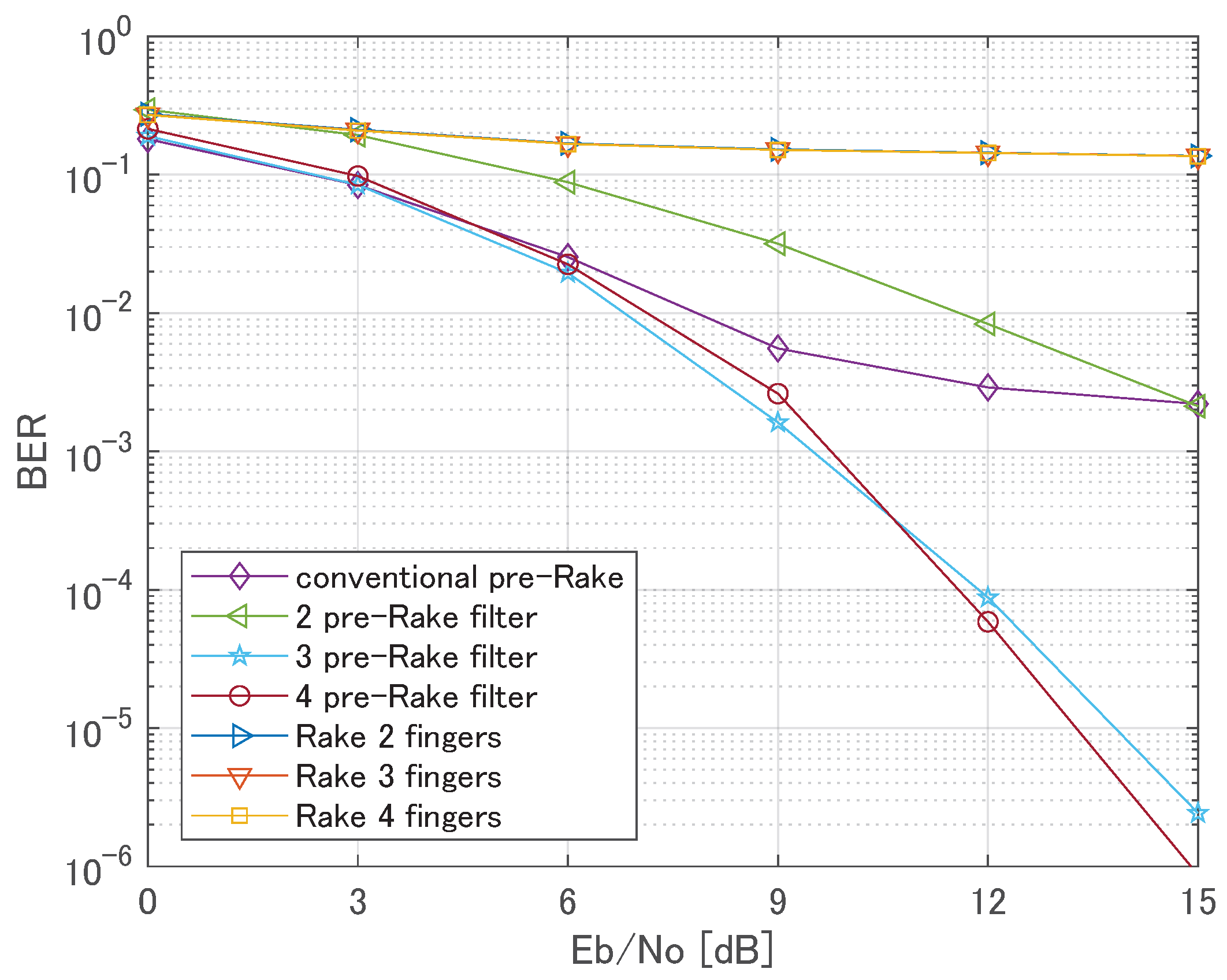
Next, to evaluate the robustness of the systems in a high-mobility environment, BER performance was investigated under the same single-user scenario. Figure 10, Figure 11, Figure 12 and Figure 13 show the BER performance for a Doppler frequency of f d = 200 Hz, again under various combinations of detection schemes and channel estimation methods. Specifically, these figures illustrate the performance of the systems using Matched Filter (MF) detection with simple-averaging-based channel estimation, MMSE equalization with simple averaging, MF detection with quadratic interpolation, and MMSE equalization with quadratic interpolation, respectively.
To quantitatively evaluate the performance of the systems in a high-mobility and single-user environment at a Doppler frequency of 200 Hz using Gold sequences, we analyze the BER characteristics by comparing Figure 10, Figure 11, Figure 12 and Figure 13. First, we investigate baseline performance using simple-averaging-based channel estimation without MMSE equalization, as shown in Figure 10. In this severe fast-fading environment, the conventional Rake receiver fails to track the rapid channel fluctuations, resulting in a persistent error floor with a BER of 1.05 × 10 1 at E b / N 0 = 15 dB. The conventional Pre-Rake system performs better than the Rake receiver but still suffers from noticeable performance degradation, exhibiting an error floor at 2.71 × 10 4 . This deterioration occurs because, at a Doppler frequency of 200 Hz, the channel state changes rapidly between the uplink channel estimation phase and the downlink transmission phase in the TDD system. Consequently, the estimated channel information becomes outdated, causing a severe channel mismatch that renders the conventional pre-filtering suboptimal. In contrast, the proposed 4 Pre-Rake filter system achieves a significantly lower BER of 4.17 × 10 7 . This demonstrates that the proposed structure, which distributes energy across multiple Pre-Rake filters at the transmitter and utilizes a Rake combiner at the receiver, inherently compensates for this Doppler-induced channel mismatch. Furthermore, comparing Figure 10 with Figure 11 reveals the quantitative impact of the MMSE equalizer on the proposed system. By applying the MMSE equalizer, the multipath interference caused by the non-orthogonal Gold sequences is effectively suppressed, further reducing the BER of the proposed system from 4.17 × 10 7 to 3.40 × 10 8 at 15 dB. Since the conventional Rake and conventional Pre-Rake systems do not employ MMSE equalization, their basic structures cannot overcome the severe self-interference and Doppler mismatch. These results highlight that the robust multiple Pre-Rake structure combined with the interference suppression capability of the MMSE equalizer is highly effective in high-mobility scenarios.Finally, we investigate the contribution of quadratic interpolation, which is applied only to the conventional Pre-Rake system and the proposed system, by examining Figure 12 and Figure 13. For the proposed system without MMSE equalization, introducing quadratic interpolation degrades the BER at 15 dB from 4.17 × 10 7 to 9.72 × 10 7 due to noise amplification. However, when the MMSE equalizer is applied, quadratic interpolation slightly outperforms simple averaging, achieving a BER of 1.40 × 10 8 at 15 dB compared to 3.40 × 10 8 . Despite the high Doppler frequency of 200 Hz, the introduction of quadratic interpolation yields only marginal performance differences. This phenomenon can be theoretically attributed to the high transmission rate of 10 Mbps employed in this system. At such a high transmission rate, the physical time duration of a single slot is extremely short, making the normalized Doppler frequency, which is the product of the Doppler frequency and the slot duration, very small. Consequently, the channel impulse response varies sufficiently slowly within the estimation window, allowing the simple-averaging method to track the variations with adequate accuracy. To support this hypothesis, a previous study by Ahn and Sasase demonstrated that predicting the channel impulse response significantly improved BER performance at lower transmission rates. Comparing their findings with our results indicates that the efficacy of advanced channel estimation techniques strongly depends on the transmission rate. Therefore, in our 10 Mbps high-speed scenario, the overall system reliability is predominantly determined by the combination of the proposed multiple Pre-Rake structure and the MMSE equalizer, offering a highly practical configuration that eliminates the computational complexity of quadratic interpolation.

4.1.3. BER Performance in Low-Mobility Environment ( f d = 20 Hz) Using Walsh Codes

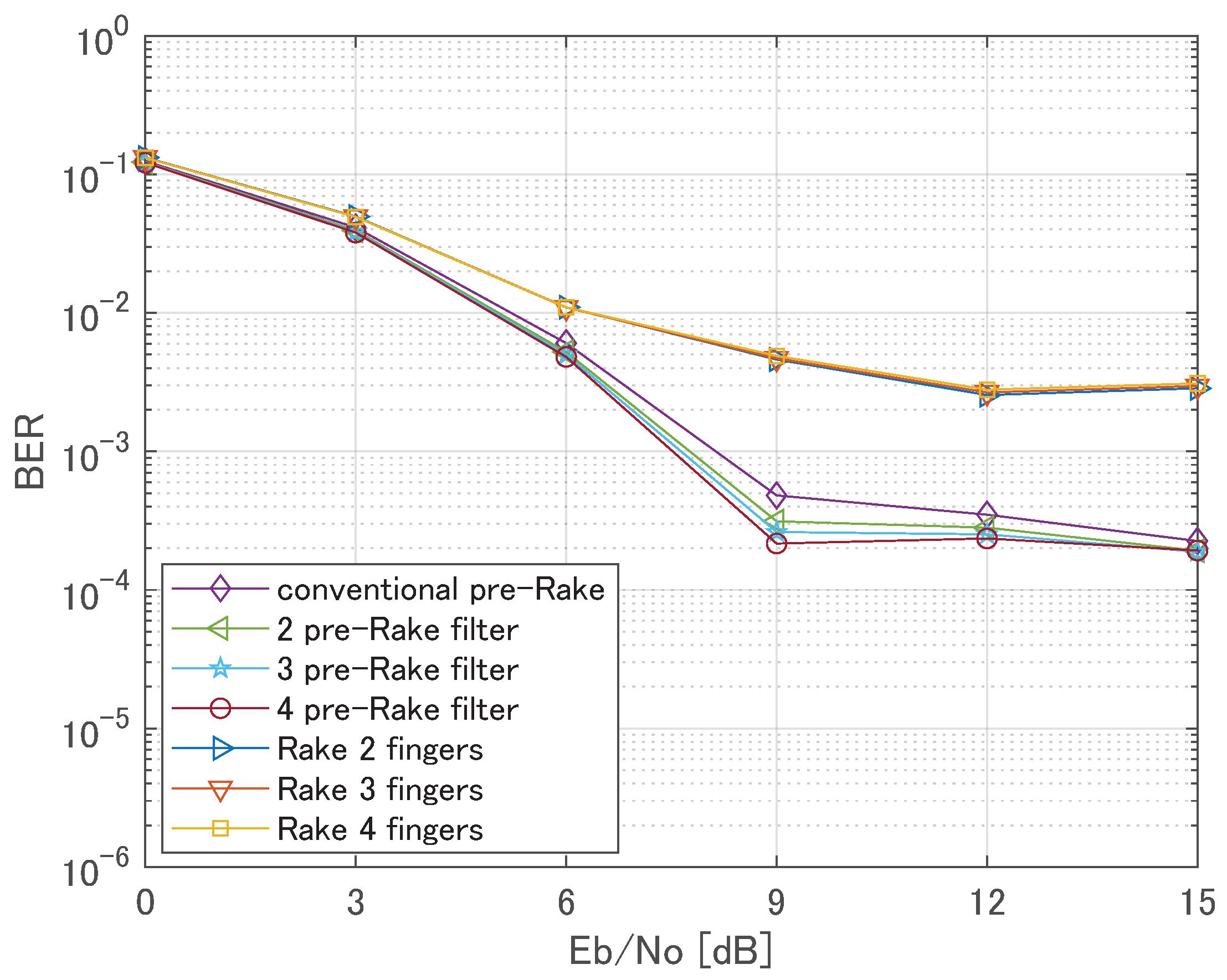
BER performance in a low-mobility single-user environment ( f d = 20 Hz) using Walsh sequences is quantitatively evaluated in Figure 14, Figure 15, Figure 16 and Figure 17.
First, we analyze baseline performance without MMSE equalization. As illustrated in Figure 14 (simple averaging), the conventional Rake receiver (two fingers) and the conventional Pre-Rake system achieve BERs of 2.02 × 10 4 and 3.14 × 10 4 at E b / N 0 = 15 dB, respectively. Under the same conditions, the proposed multiple Pre-Rake system with P = 4 filters exhibits a BER of 2.53 × 10 4 . In general, all schemes suffer from noticeable performance degradation, exhibiting error floors in the 10 4 regime. This relative performance limitation is fundamentally caused by the intentional generation of artificial multipath components. Without an advanced equalizer, these additional delayed paths destroy the orthogonality of the Walsh sequences due to their poor non-zero-shift auto-correlation, thereby increasing self-interference and diminishing the diversity gain. The role of the MMSE equalizer in the proposed architecture is demonstrated by comparing the aforementioned baseline with Figure 15. The integration of MMSE equalization effectively suppresses a portion of the self-interference. Consequently, the BER of the proposed P = 4 system at 15 dB improves from 2.53 × 10 4 to 1.80 × 10 4 . However, performance is not completely restored to a lower error magnitude. This finding highlights a critical trade-off: the self-interference induced by Walsh sequences in a multipath channel is so persistent that even an MMSE equalizer cannot completely eliminate it, confirming the inherent limitation of Walsh codes against non-zero-delay interference. Regarding the channel estimation strategy, the simple-averaging method presented in Figure 15 ( 1.80 × 10 4 ) slightly outperforms the quadratic interpolation shown in Figure 17 ( 1.92 × 10 4 ) at 15 dB. In this quasi-static 20 Hz regime, simple averaging is capable of tracking the slow phase variations while effectively averaging out thermal noise. Conversely, higher-order quadratic interpolation tends to overfit the minute noise fluctuations, leading to amplified estimation errors. Ultimately, this result confirms that while the proposed architecture with MMSE equalization successfully mitigates interference to some extent, overall BER performance is heavily constrained by the auto-correlation properties of the Walsh codes. Because Walsh codes cannot effectively resolve delayed multipath components, a certain degree of unsuppressed self-interference inevitably remains. To quantitatively benchmark this specific penalty, an evaluation using sequences with sharp auto-correlation peaks (e.g., Gold codes, as detailed in Section 4.1.1) provides a clear contrast. Under identical conditions (i.e., the proposed P = 4 system with MMSE equalization and simple averaging at 15 dB), the Gold sequence achieves a BER of 8.20 × 10 9 . This is approximately four orders of magnitude lower than the 1.80 × 10 4 achieved by the Walsh sequence. This substantial performance difference isolates the degradation attributable solely to the poor non-zero-shift auto-correlation of Walsh sequences, highlighting the fundamental trade-off they introduce in frequency-selective fading environments.

4.1.4. BER Performance in High-Mobility Environment ( f d = 200 Hz) Using Walsh Codes

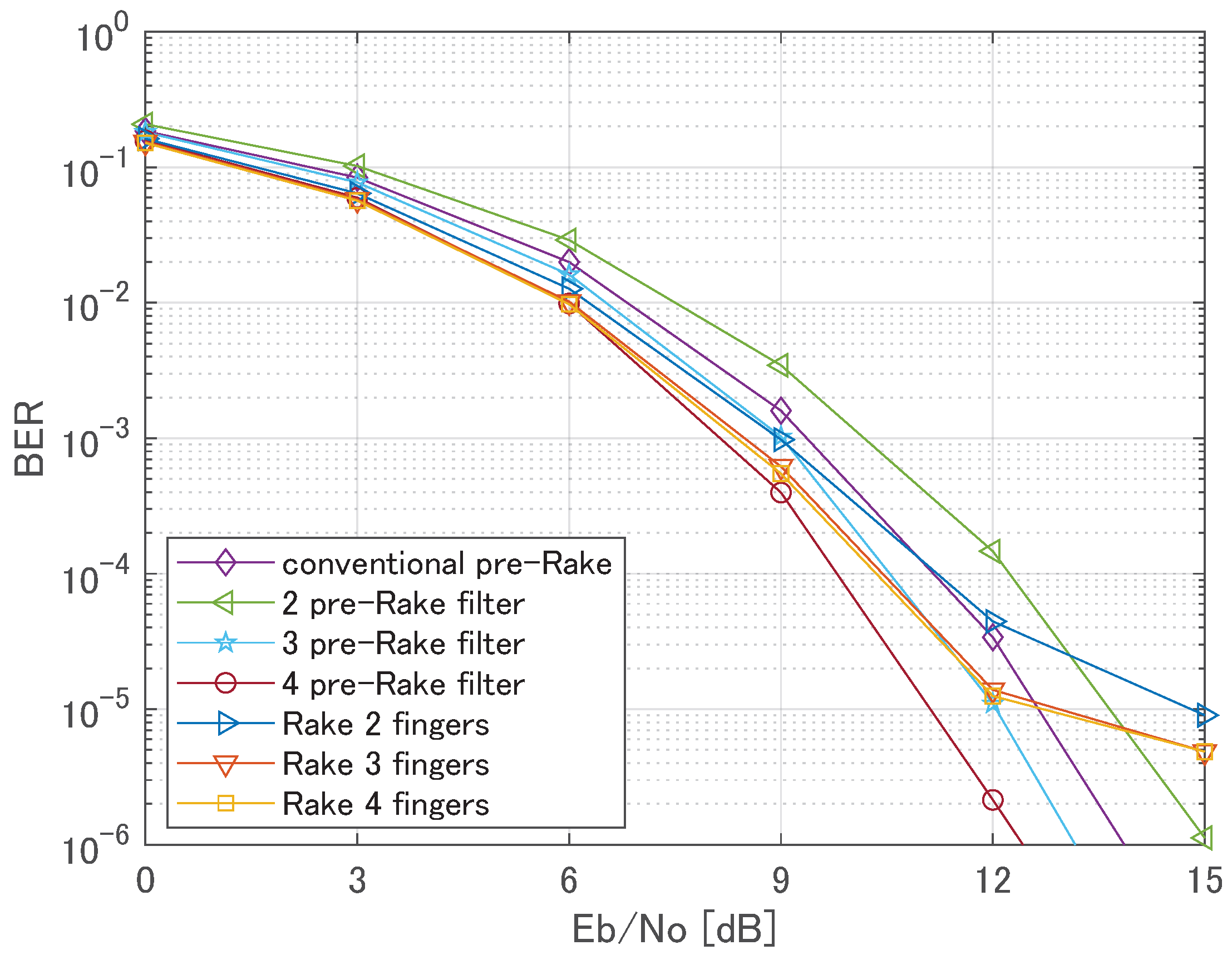
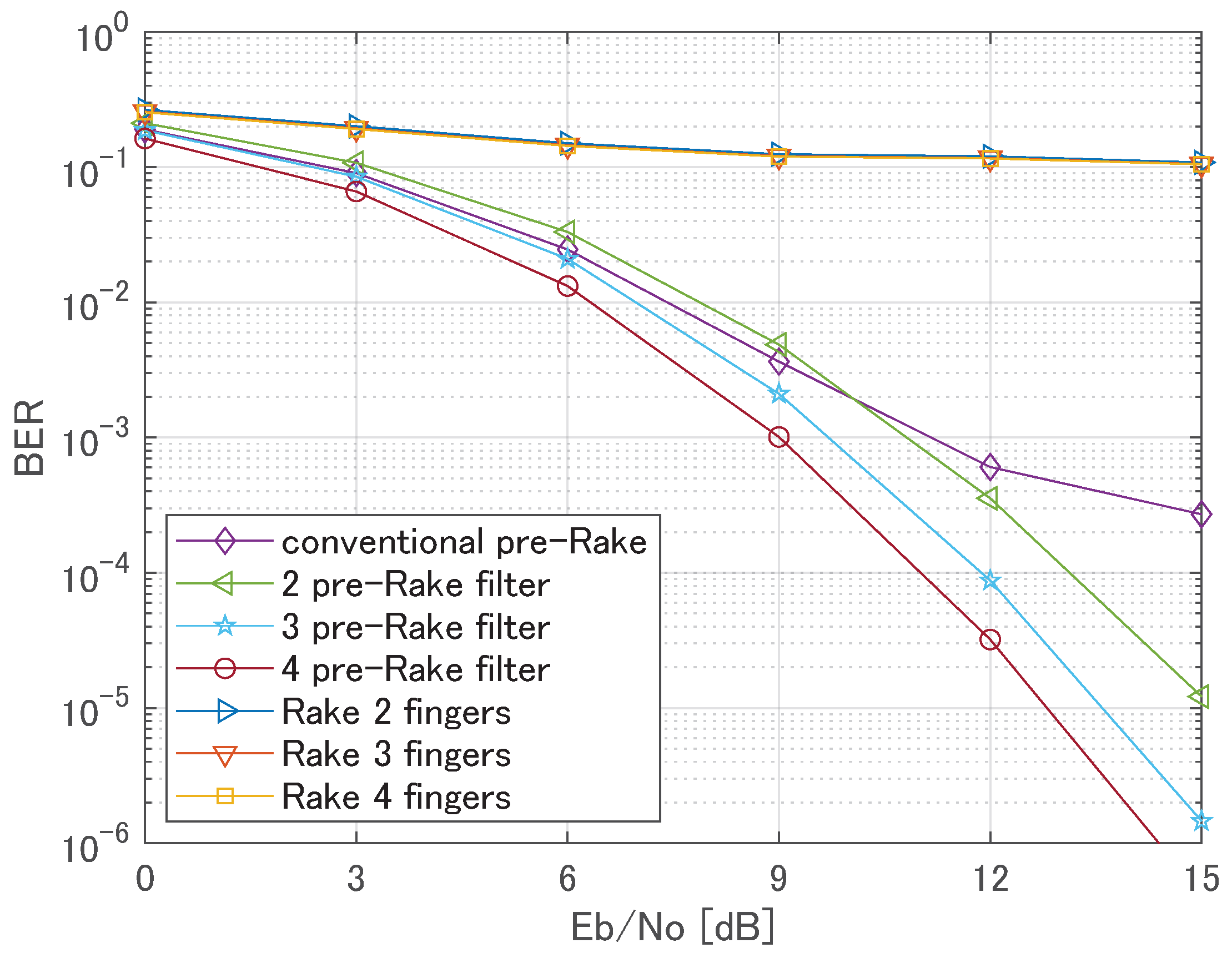
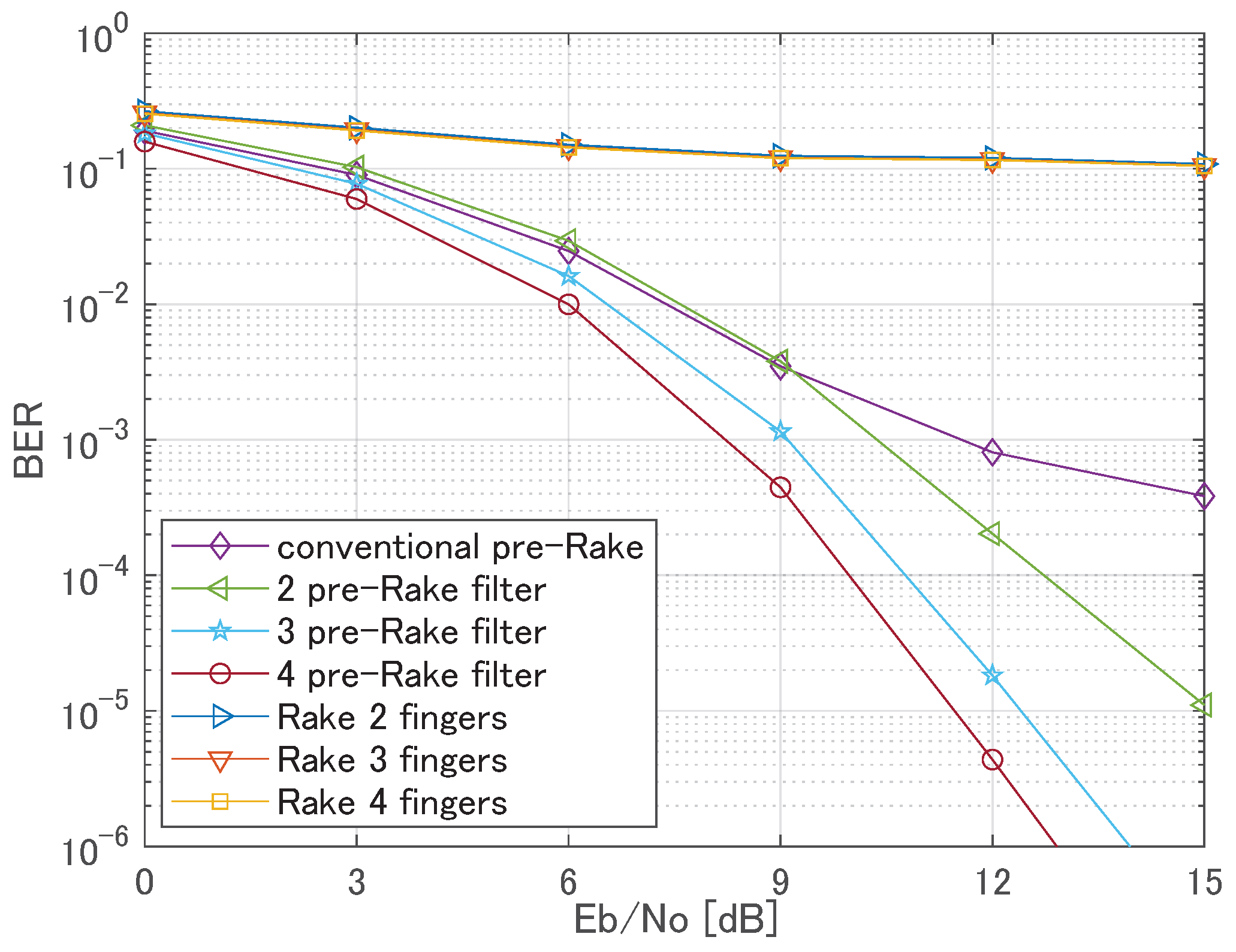
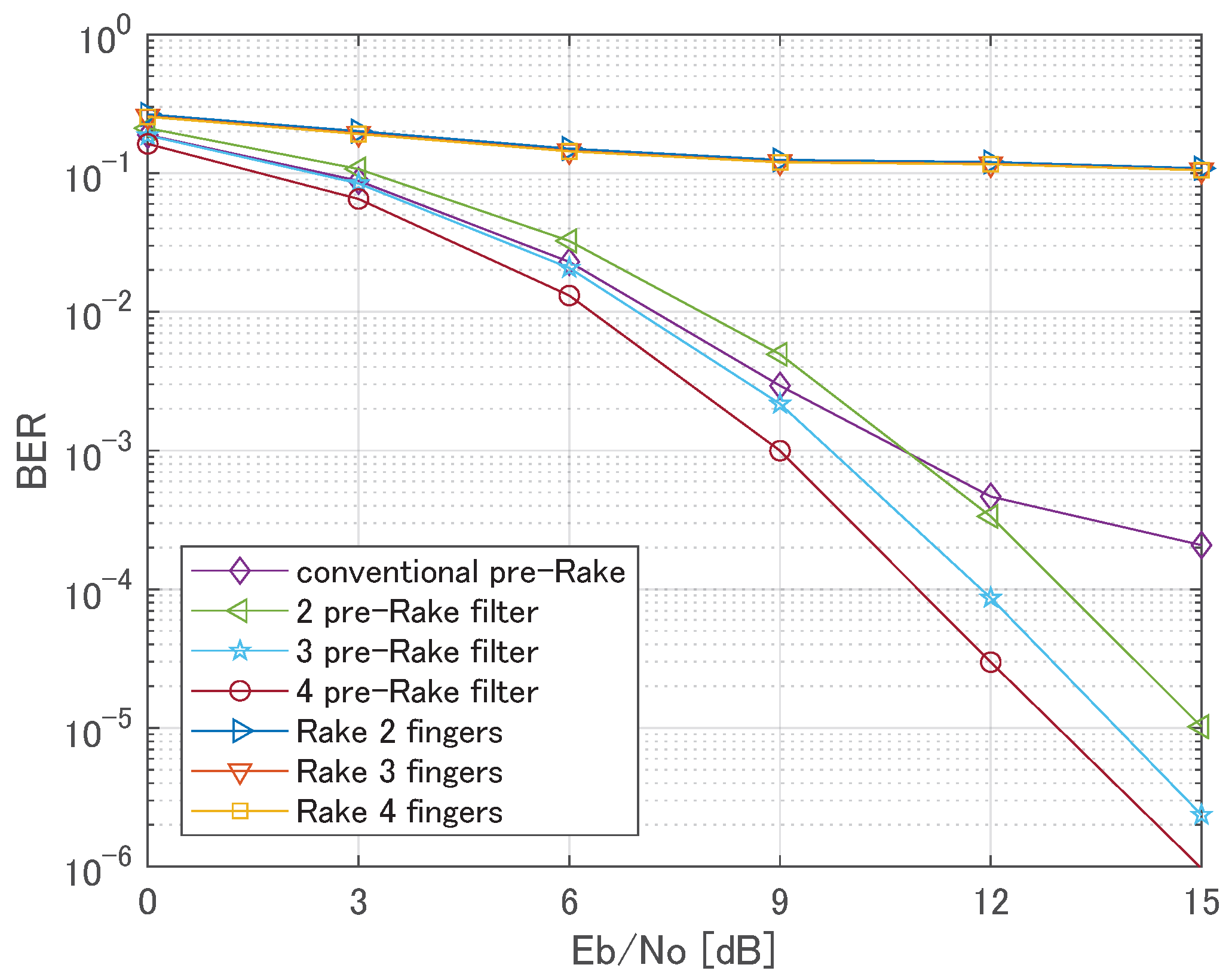
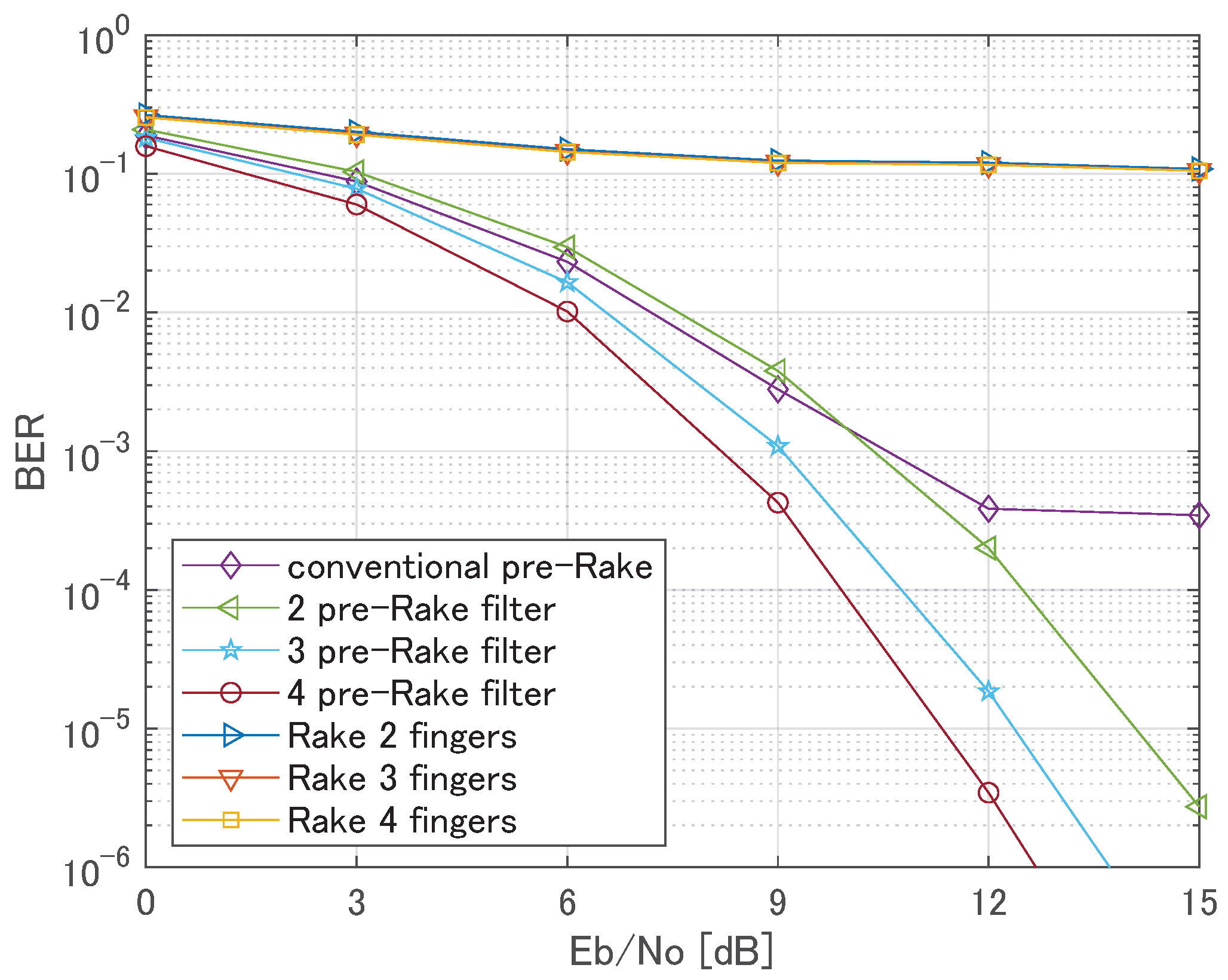
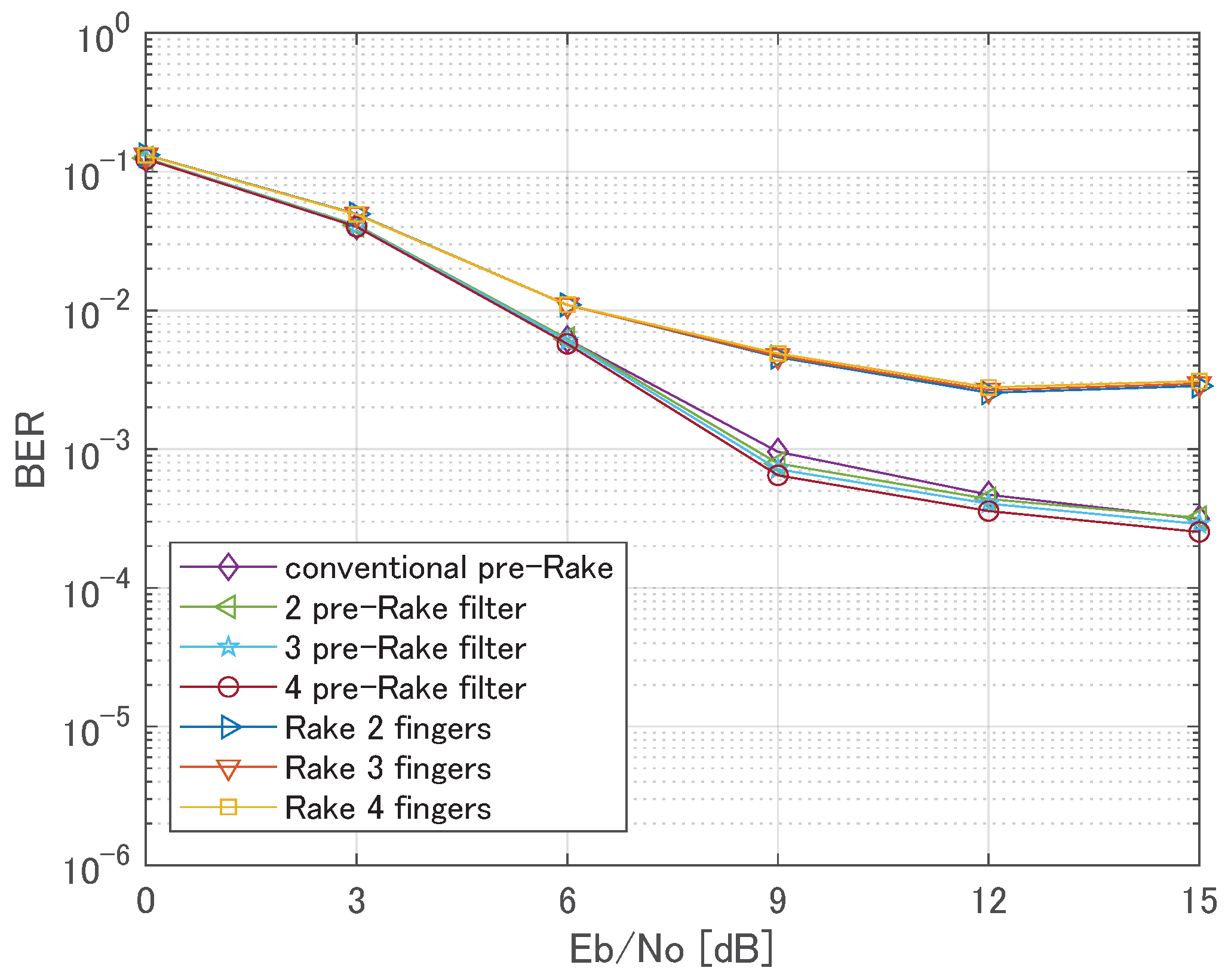
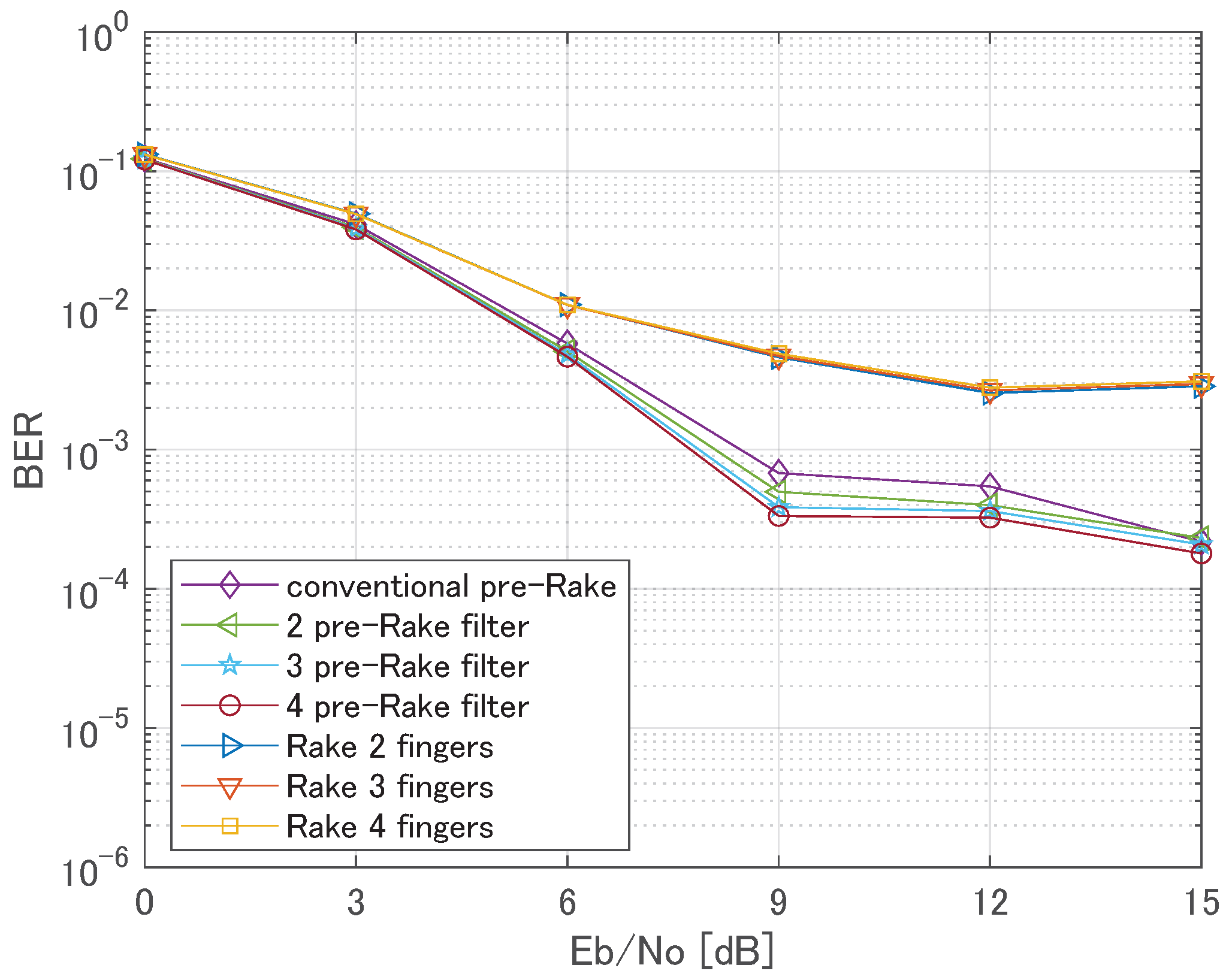
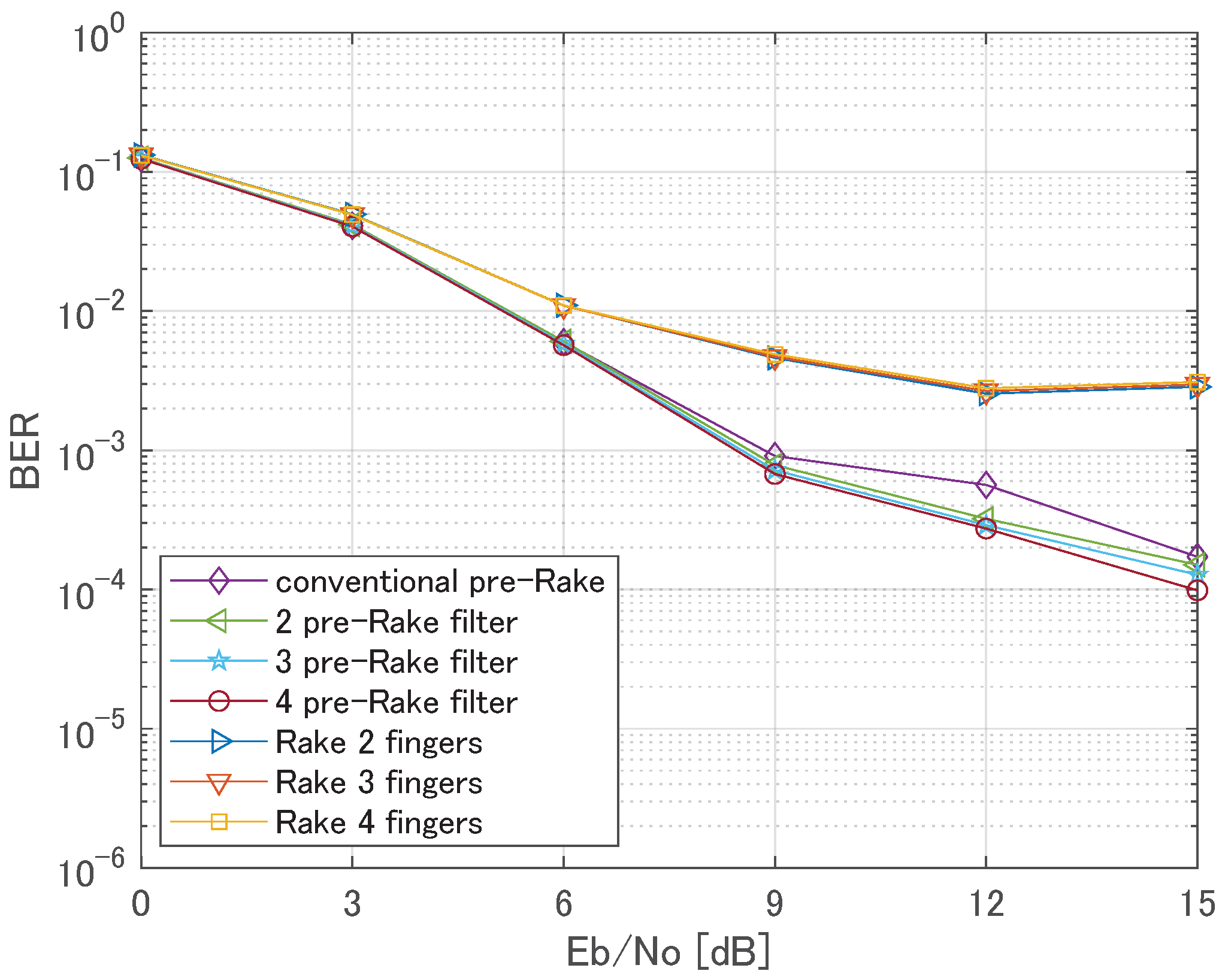
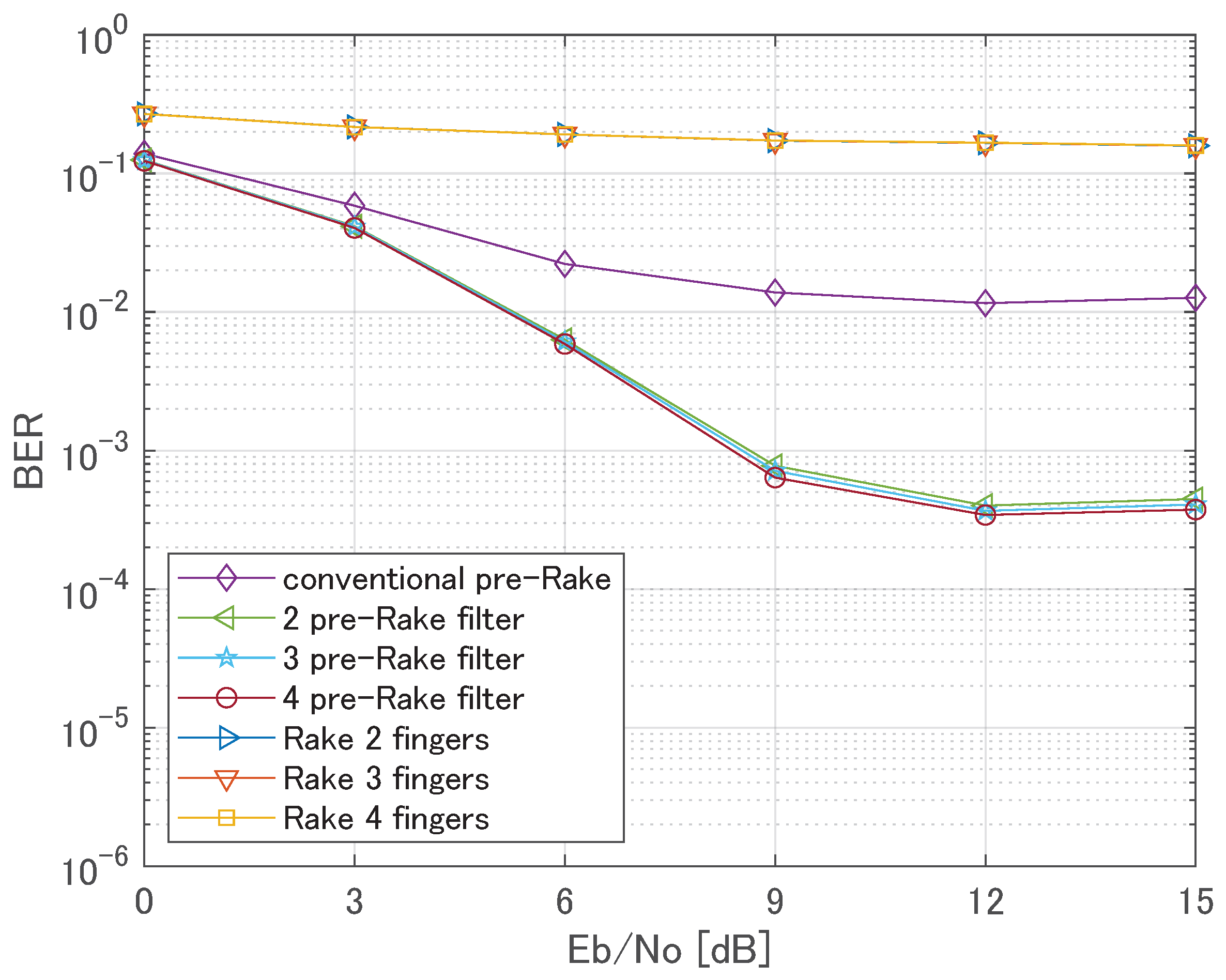
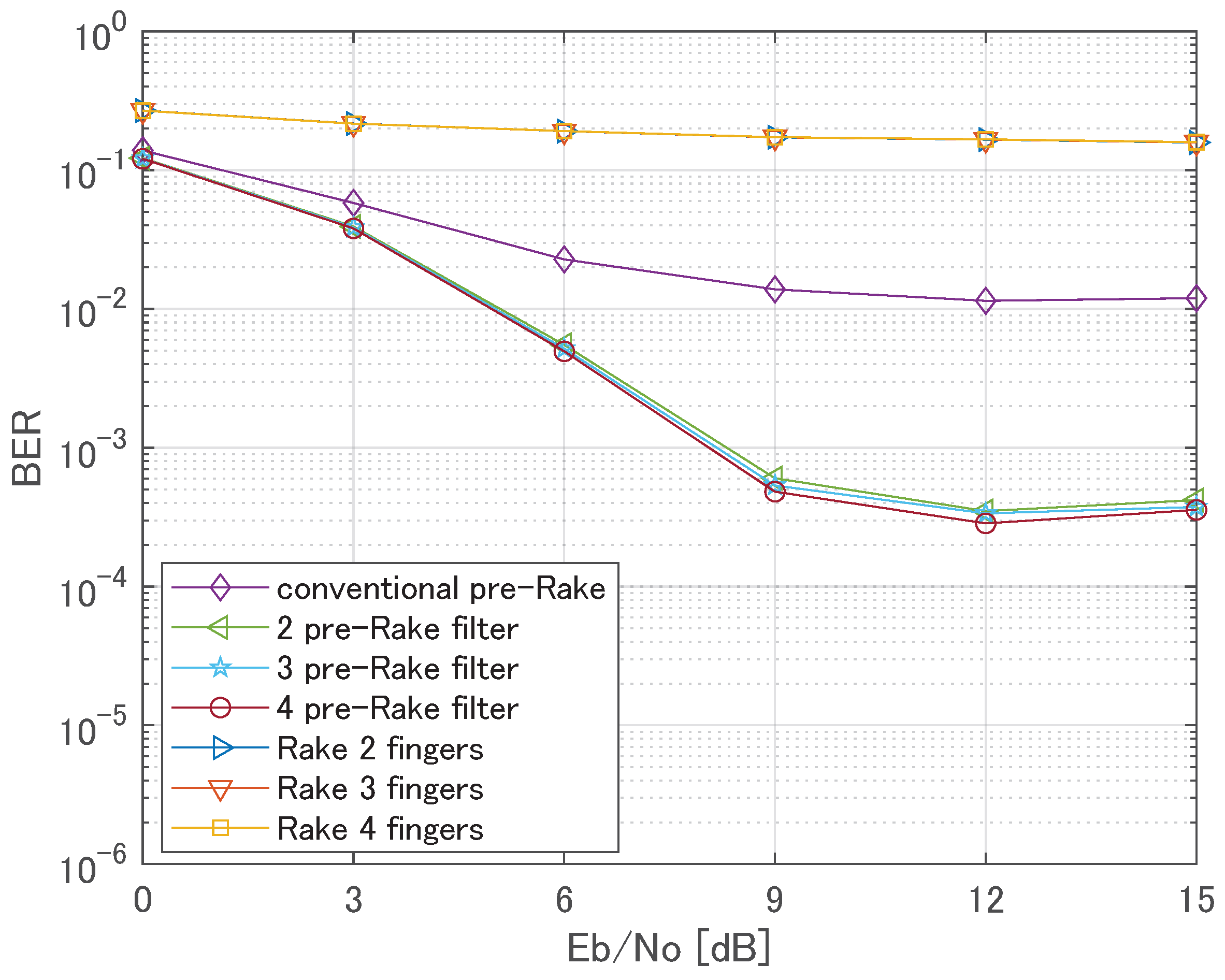
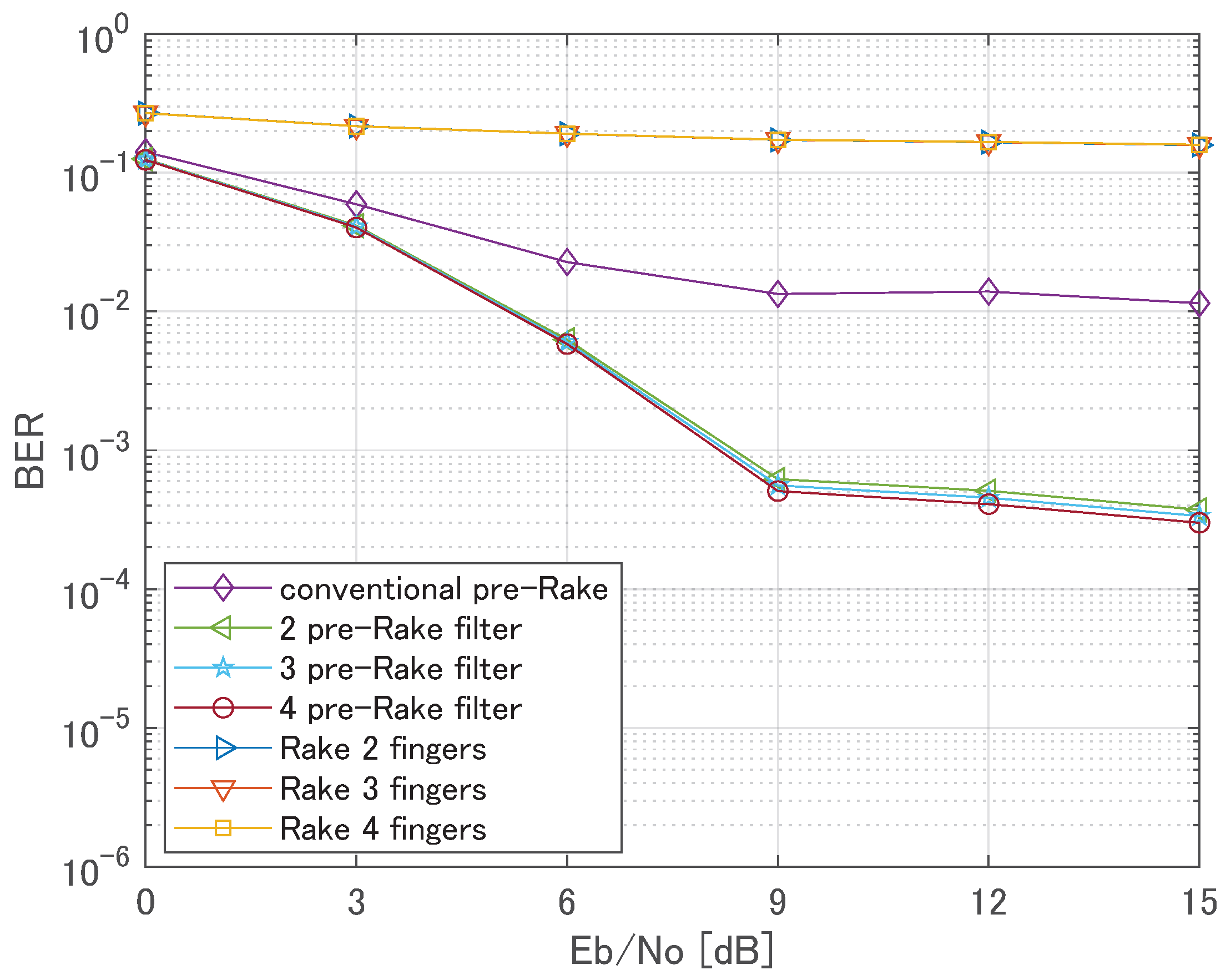
To evaluate the robustness of the system in a high-mobility environment, the BER performance for a Doppler frequency of f d = 200 Hz using Walsh sequences is quantitatively investigated in Figure 18, Figure 19, Figure 20 and Figure 21.
In this fast-fading environment, the conventional Pre-Rake system experiences severe performance degradation, resulting in a persistent error floor with a BER of 1.27 × 10 2 at E b / N 0 = 15 dB (Figure 18). This deterioration occurs because the channel state changes rapidly during the TDD time lag, causing the estimated uplink channel information to become outdated. This channel aging leads to a mismatch, rendering conventional pre-filtering less effective. In contrast, the proposed P = 4 multiple Pre-Rake system inherently compensates for this Doppler-induced mismatch by distributing energy across multiple paths, achieving a substantially lower BER of 3.74 × 10 4 even without MMSE equalization. The significance of the channel prediction method becomes highly evident in this 200 Hz scenario. Unlike the low-mobility case, simple averaging fails to fully capture the rapid phase rotations within the slot. Consequently, even when combined with MMSE equalization, the simple-averaging method (Figure 19) achieves a BER of only 3.57 × 10 4 at 15 dB, showing limited improvement. On the other hand, the application of quadratic interpolation (Figure 21) allows the system to accurately predict the trajectory of the channel variations. By utilizing this higher-order tracking in conjunction with MMSE interference suppression, the proposed P = 4 system achieves an optimized BER of 1.78 × 10 4 . Ultimately, these results confirm that even with optimal channel tracking and MMSE equalization, BER performance is strongly bounded by the inherent properties of Walsh sequences. Because Walsh codes exhibit poor auto-correlation at non-zero delays, a substantial amount of multipath interference remains unsuppressed. To objectively quantify this interference penalty, we can refer to the results using sequences with bounded non-zero-shift auto-correlation (e.g., the Gold codes evaluated in Figure 10, Figure 11, Figure 12 and Figure 13) as a baseline. Under identical conditions (i.e., the proposed P = 4 system with MMSE equalization and quadratic interpolation at 15 dB), the reference case yields no observable error floor within the simulation limits (BER < 10 7 ). Comparing this to the 1.78 × 10 4 floor of the Walsh sequence clearly isolates the performance degradation caused strictly by the Walsh codes’ inability to resolve delayed multipath components. This confirms the fundamental trade-off of employing Walsh sequences in frequency-selective fast-fading environments.

4.2. Results for Multi-User Environment

In this subsection, the BER performance of the proposed and conventional systems is evaluated in a multi-user environment. In contrast to the single-user scenario, Walsh codes are employed as the spreading sequences. The rationale behind this selection is that Walsh codes provide perfect orthogonality, which is crucial for effectively mitigating multiple access interference (MAI) among different users in a synchronous transmission system. Corresponding to the standard generation of Walsh matrices, the processing gain for this set of simulations is set to 64.

4.2.1. Results for Low-Mobility Environment ( f d = 20 Hz)

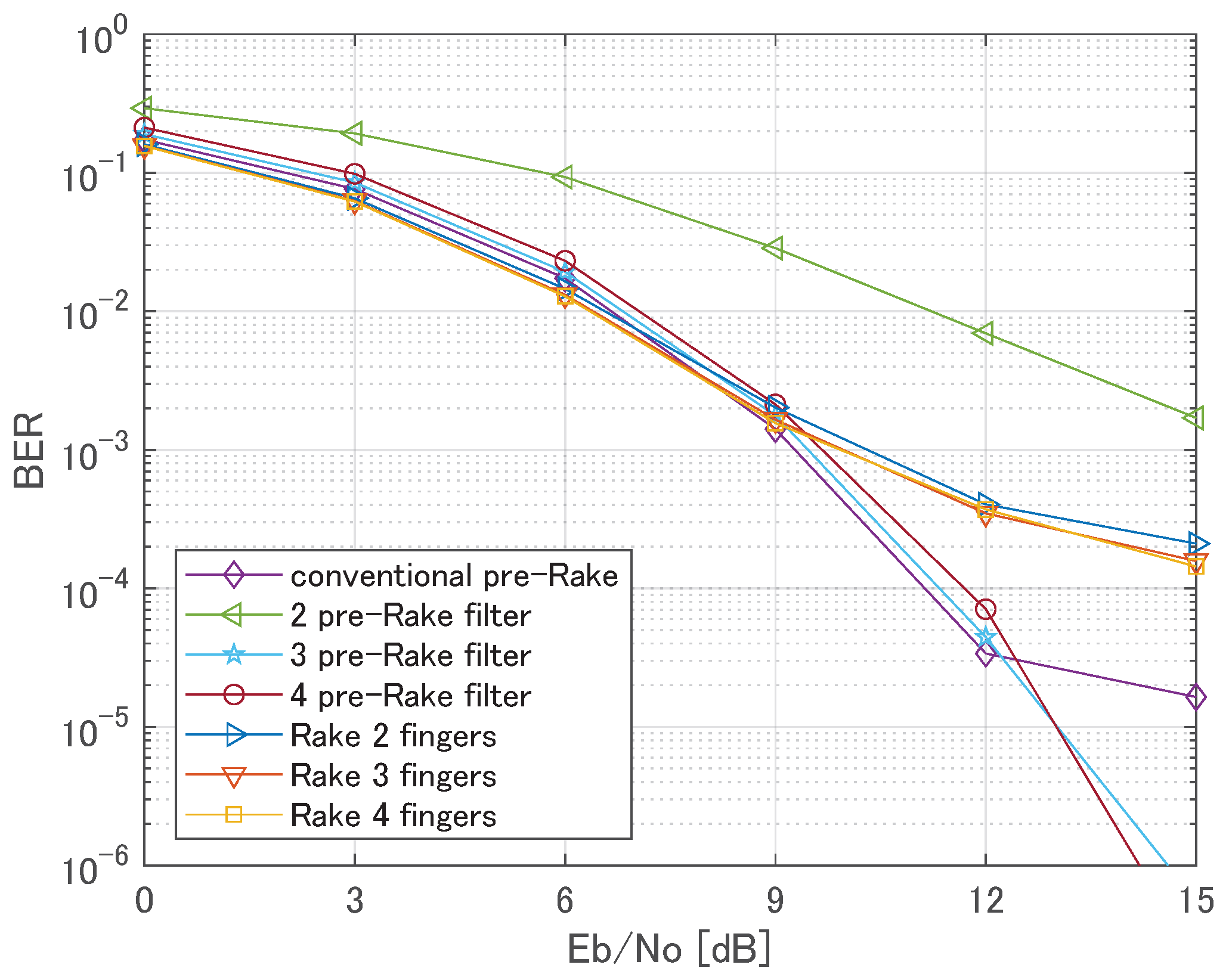
First, BER performance was evaluated in a multi-user scenario with 10 users to compare the conventional Rake receiver, the conventional Pre-Rake system, and the proposed system. Figure 22, Figure 23, Figure 24 and Figure 25 show the BER performance for a Doppler frequency of f d = 20 Hz using Walsh sequences, under various combinations of detection schemes and channel estimation methods. Specifically, these figures illustrate the performance of the systems using Matched Filter (MF) detection with simple-averaging-based channel estimation, MMSE equalization with simple averaging, MF detection with quadratic interpolation, and MMSE equalization with quadratic interpolation, respectively.
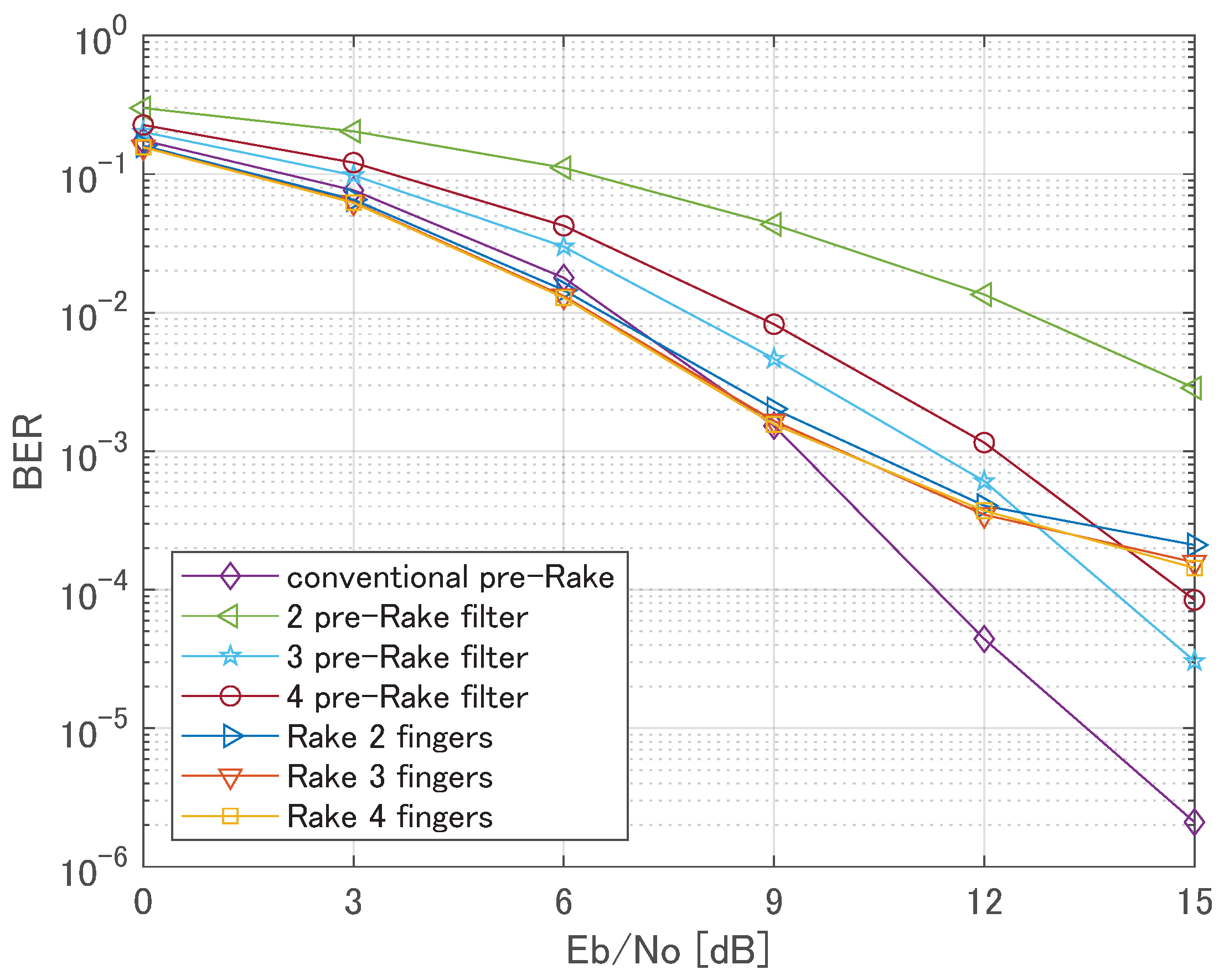
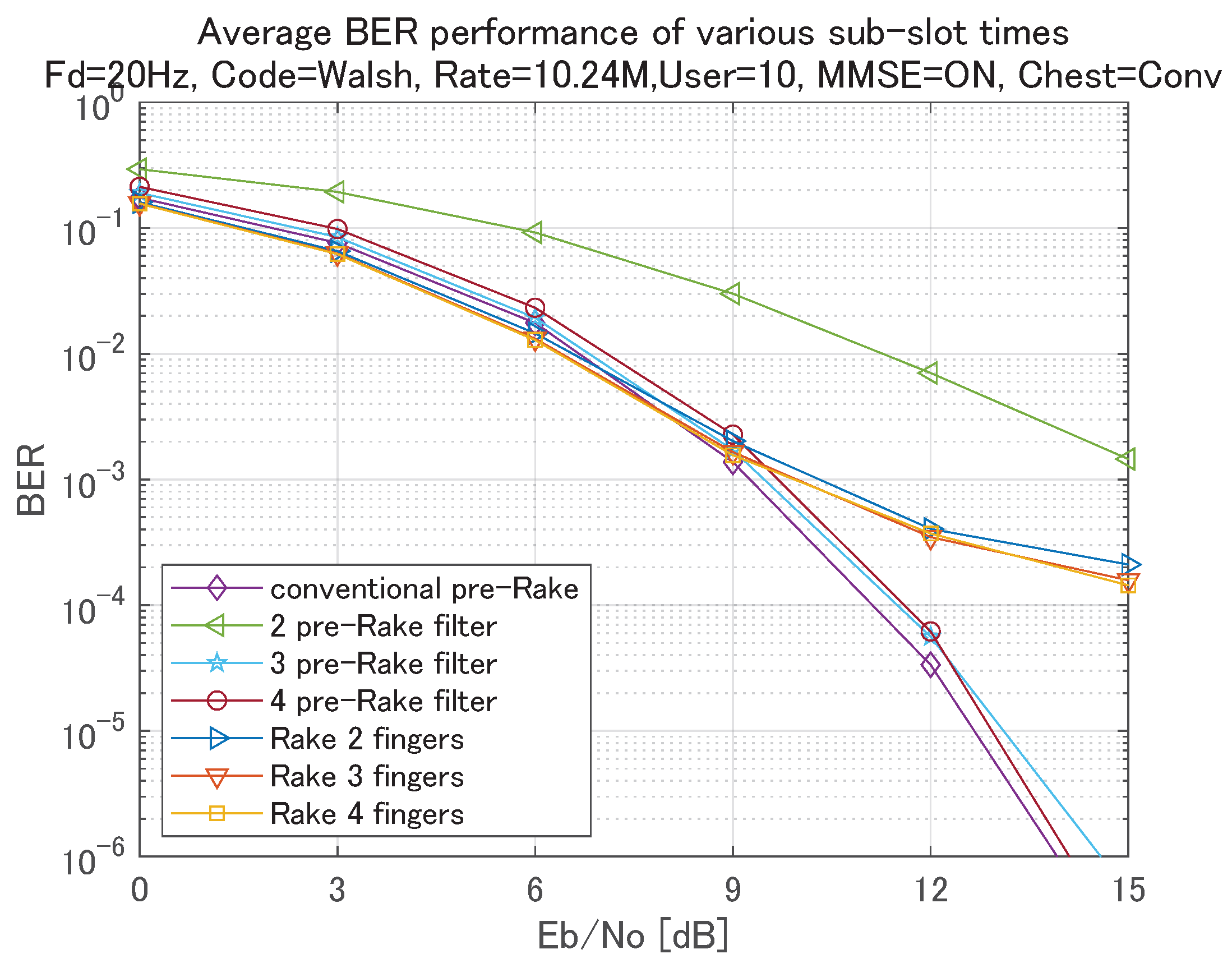
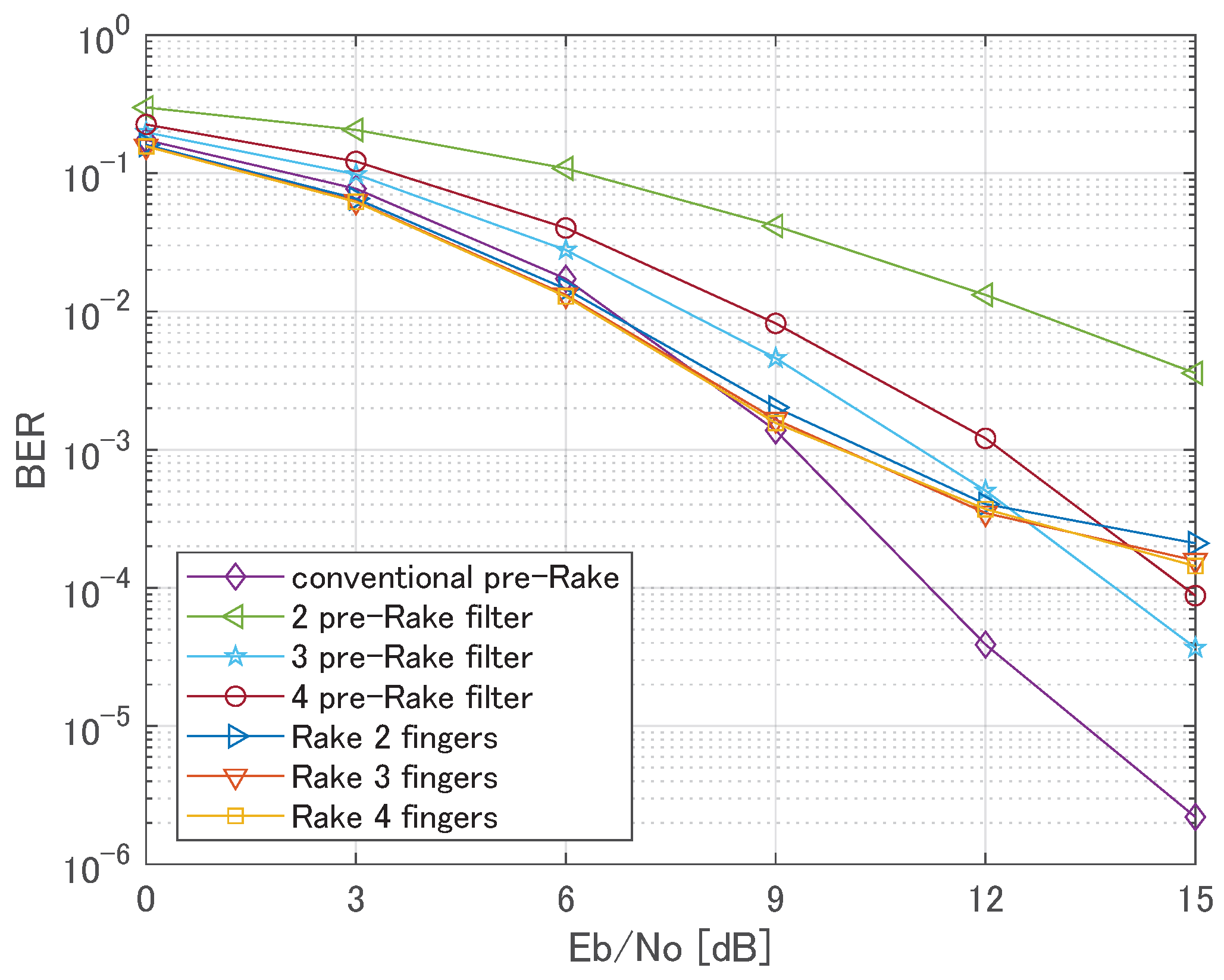
To quantitatively evaluate performance in a low-mobility multi-user environment with 10 users at a Doppler frequency of 20 Hz using Walsh codes, we analyze the BER characteristics by comparing Figure 22, Figure 23, Figure 24 and Figure 25. In this analysis, we specifically compare the conventional Rake receiver, the conventional Pre-Rake system, and the proposed multiple Pre-Rake system. First, we investigate baseline performance using simple-averaging-based channel estimation without MMSE equalization, as shown in Figure 22. In this multi-user environment, the conventional Rake receiver suffers from severe performance degradation due to multiple access interference, exhibiting a BER of 1.44 × 10 4 at E b / N 0 = 15 dB. The conventional Pre-Rake system achieves a better BER of 2.10 × 10 6 . In contrast, the proposed 4 Pre-Rake filter system shows BER deterioration of 8.44 × 10 5 , which is significantly worse than the conventional Pre-Rake system. This degradation is a phenomenon specific to a multi-user environment. In a multi-user scenario, Walsh codes are utilized to maintain orthogonality among users. However, the proposed structure intentionally distributes transmission energy across multiple Pre-Rake filters, which increases the number of multipath components arriving at the receiver. Without an equalizer, this artificially increased multipath interference severely damages the orthogonality of the Walsh codes, leading to massive multiple access interference. Fundamentally, Walsh sequences maintain perfect orthogonality only when they are perfectly time-aligned (i.e., zero relative delay). However, their cross-correlation properties at non-zero time shifts are extremely poor. When the transmitter actively generates P artificial multipath components, the receiver is inundated with multiple asynchronous overlapping signals from all 10 users. Consequently, as P increases to 4, the sheer number of non-zero-delayed interfering chips overwhelms the system, completely breaking the orthogonality and causing the Multi-User Interference (MUI) to spike. Furthermore, comparing Figure 22 with Figure 23 reveals the quantitative impact of the MMSE equalizer on the proposed system. By applying the MMSE equalizer, the severe multiple access interference is effectively suppressed, and the orthogonality of the Walsh codes is mathematically restored. Consequently, the BER of the proposed system at 15 dB dramatically improves from 8.44 × 10 5 to 1.74 × 10 7 . Since the conventional Rake and conventional Pre-Rake systems are basic structures that do not employ an MMSE equalizer, they cannot benefit from this powerful interference suppression and remain vulnerable to multiple access interference. These results highlight that while the multiple Pre-Rake structure alone exacerbates interference in a multi-user environment, combining it with the interference suppression capability of the MMSE equalizer becomes highly effective and essential for achieving superior performance. Finally, we investigate the contribution of quadratic interpolation, which is applied only to the conventional Pre-Rake system and the proposed system, by examining Figure 24 and Figure 25. When the MMSE equalizer is applied to the proposed system, the BER with quadratic interpolation is 2.08 × 10 7 at 15 dB, which falls slightly short of the 1.74 × 10 7 achieved with simple averaging. This phenomenon can be theoretically explained by the extremely slow channel variation at a low Doppler frequency of 20 Hz. In such a low-mobility environment, the channel impulse response remains highly correlated over the estimation window. Consequently, the simple-averaging method can accurately track the slow phase variations while effectively averaging out and suppressing thermal noise. On the other hand, applying a higher-order method like quadratic interpolation tends to overfit the small noise fluctuations, thereby amplifying the estimation error rather than improving accuracy. Therefore, our results prove that in a low-mobility multi-user scenario, simple averaging provides superior channel estimation accuracy, and combining it with the proposed multiple Pre-Rake structure and the MMSE equalizer forms an optimal configuration that effectively resolves multiple access interference while eliminating unnecessary computational complexity.

4.2.2. Results for High-Mobility Environment ( f d = 200 Hz)

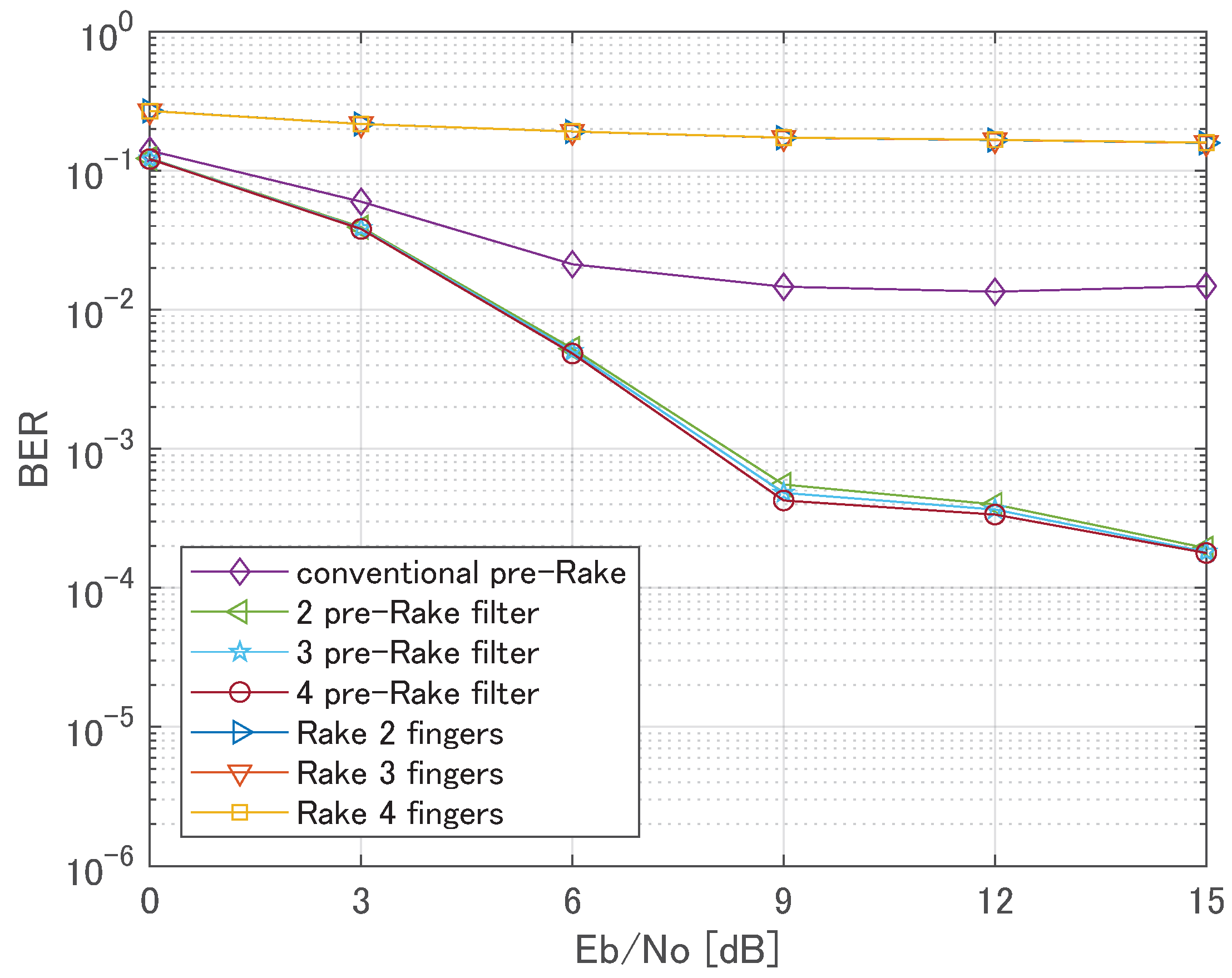
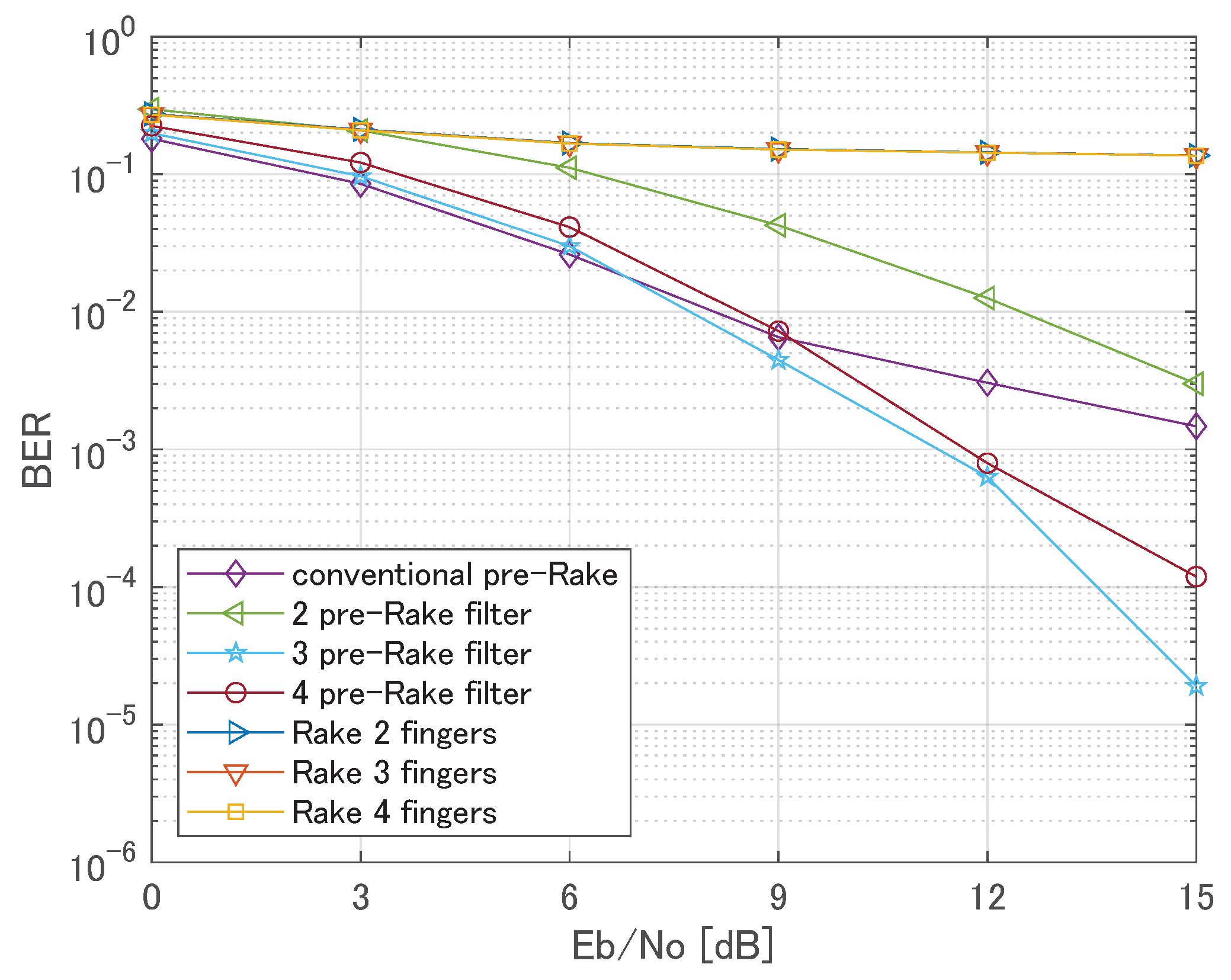
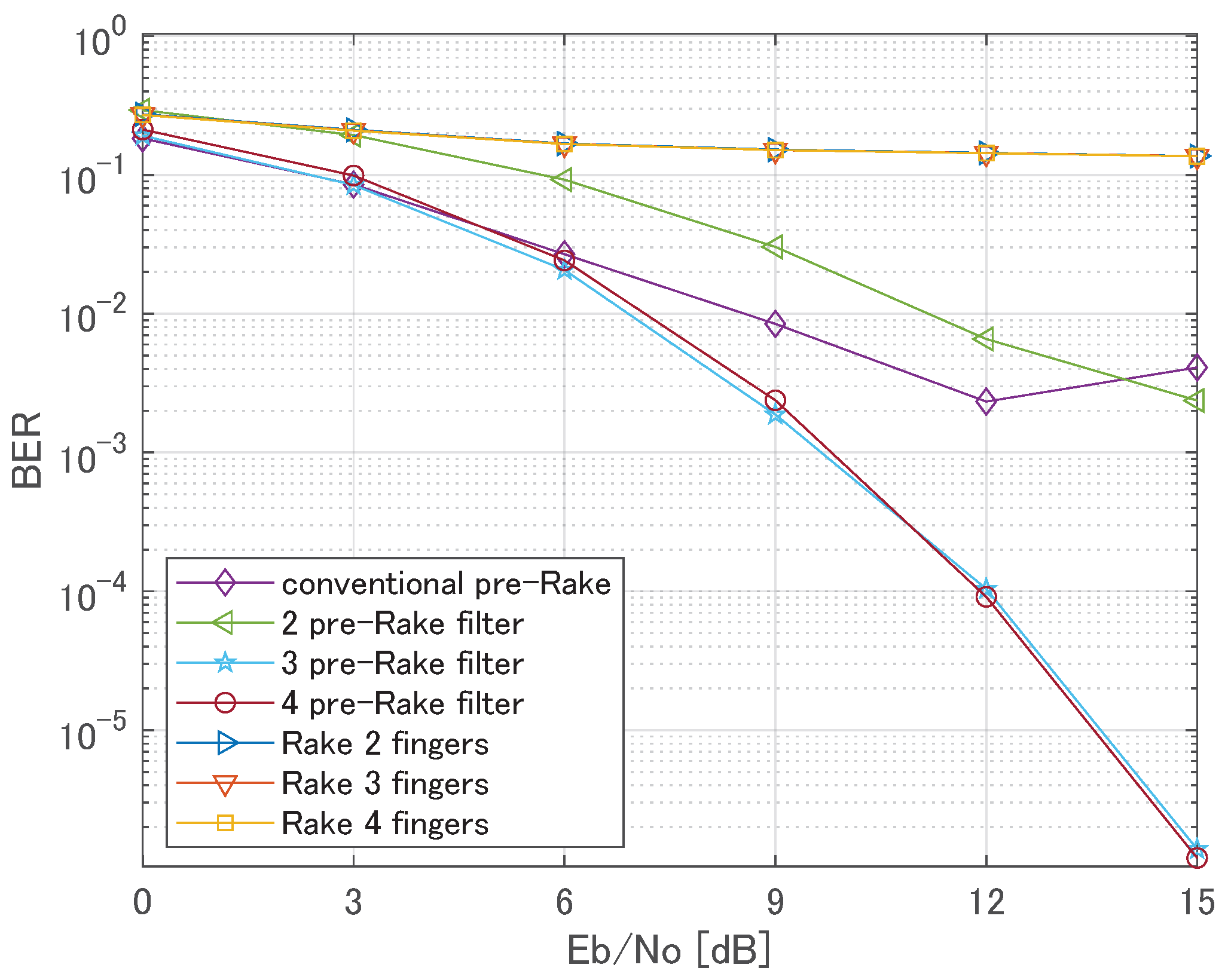
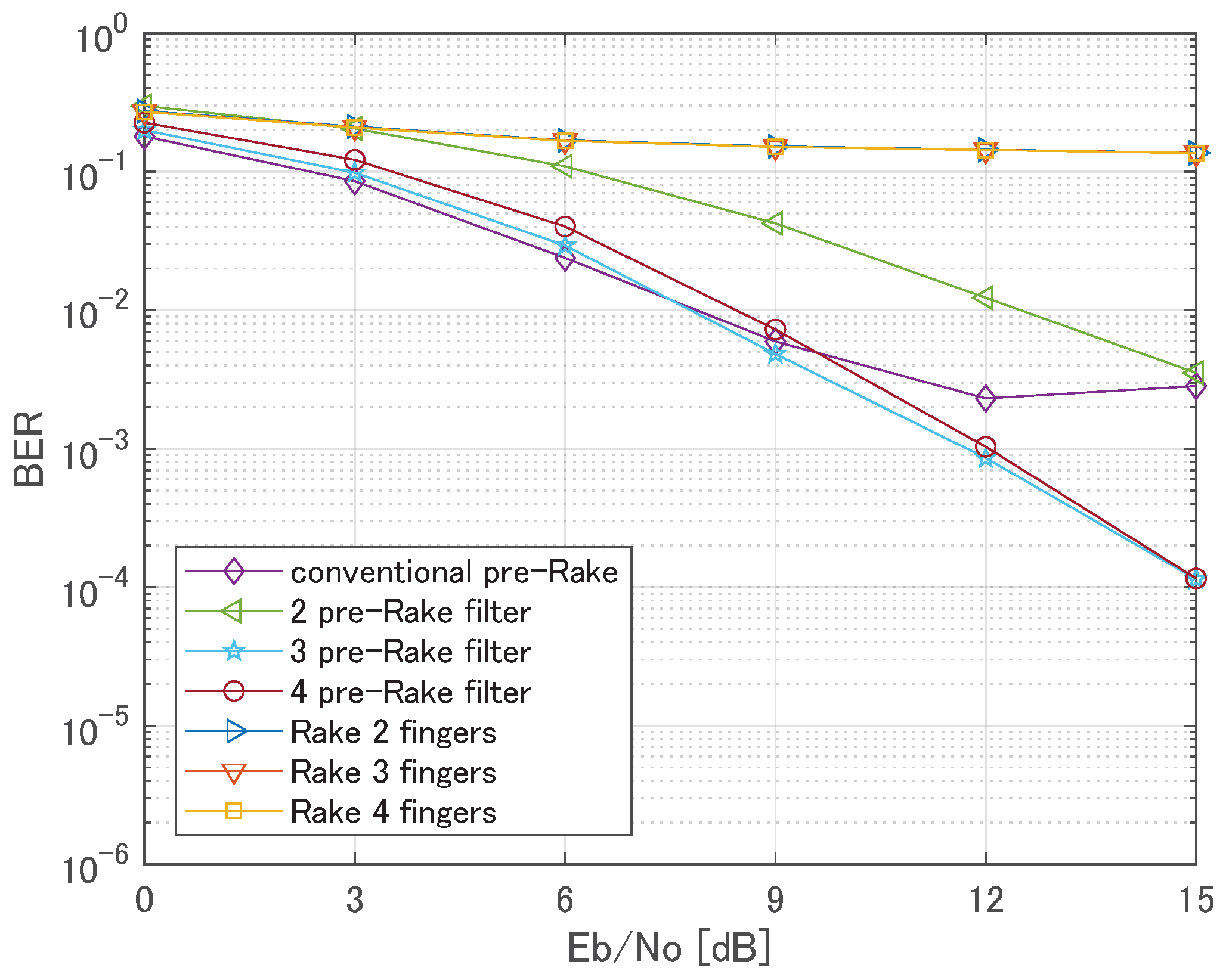
To quantitatively evaluate the performance of the systems in a high-mobility multi-user environment with 10 users at a Doppler frequency of 200 Hz using Walsh codes, we analyze the BER characteristics by comparing Figure 26, Figure 27, Figure 28 and Figure 29. In this analysis, we specifically compare the conventional Rake receiver, the conventional Pre-Rake system, and the proposed multiple Pre-Rake system. First, we investigate baseline performance using simple-averaging-based channel estimation without MMSE equalization, as shown in Figure 26. In this severe environment combining fast fading and multiple access interference, the conventional Rake receiver fails to track the rapid channel fluctuations, resulting in a persistent error floor with a BER of 1.43 × 10 1 at E b / N 0 = 12 dB. The conventional Pre-Rake system mitigates this issue to some extent but still exhibits a noticeable error floor at 3.05 × 10 3 due to the channel mismatch caused by the high Doppler frequency. In contrast, the proposed 4 Pre-Rake filter system achieves a better BER of 7.96 × 10 4 under the same conditions. This demonstrates that the proposed structure inherently compensates for the Doppler-induced channel mismatch. However, in the high-SNR region at 15 dB, the proposed system still suffers from an error floor of 1.19 × 10 4 . As explained in the 20 Hz scenario, this occurs because the multiple Pre-Rake paths artificially increase the number of arriving signals. The poor cross-correlation of the Walsh sequences at non-zero delays cannot handle this influx, which severely damages the orthogonality among users and generates massive multiple access interference.Furthermore, comparing Figure 26 with Figure 27 reveals the quantitative impact of the MMSE equalizer on the proposed system. By applying the MMSE equalizer, the severe multiple access interference is effectively suppressed, and the orthogonality of the Walsh codes is mathematically restored. Consequently, the BER of the proposed system at 12 dB reduces from 7.96 × 10 4 to 9.13 × 10 5 . This improvement becomes highly pronounced in the higher-SNR region; at 15 dB, the BER decreases by approximately two orders of magnitude, from 1.19 × 10 4 to 1.20 × 10 6 . Since the conventional Rake and conventional Pre-Rake systems do not employ an MMSE equalizer, they cannot benefit from this powerful interference suppression and remain vulnerable. These results highlight that combining the robust multiple Pre-Rake structure with the interference suppression capability of the MMSE equalizer is essential to resolve both Doppler mismatch and multiple access interference. Finally, we investigate the contribution of quadratic interpolation, which is applied only to the conventional Pre-Rake system and the proposed system, by examining Figure 28 and Figure 29. When the MMSE equalizer is applied to the proposed system, quadratic interpolation slightly outperforms simple averaging, achieving a BER of 8.70 × 10 7 at 15 dB compared to 1.20 × 10 6 . Despite the high Doppler frequency of 200 Hz, the introduction of quadratic interpolation yields only marginal performance differences. This phenomenon can be theoretically attributed to the high transmission rate of 10 Mbps employed in this system. At such a high transmission rate, the physical time duration of a single slot is extremely short, making the normalized Doppler frequency, which is the product of the Doppler frequency and the slot duration, very small. Consequently, the channel impulse response varies sufficiently slowly within the estimation window, allowing the simple-averaging method to track the variations with adequate accuracy. To support this hypothesis, a previous study by Ahn and Sasase demonstrated that predicting the channel impulse response significantly improved BER performance at lower transmission rates. Comparing their findings with our results indicates that the efficacy of advanced channel estimation techniques strongly depends on the transmission rate. Therefore, in our 10 Mbps high-speed scenario, the overall system reliability is predominantly determined by the combination of the proposed multiple Pre-Rake structure and the MMSE equalizer, offering a highly practical configuration that eliminates the computational complexity of quadratic interpolation.

5. Conclusions

In this paper, we proposed and evaluated a multiple Pre-Rake filtering system combined with a Rake receiver and an MMSE equalizer for TDD DS-CDMA high-speed mobile communication systems. Extensive simulations demonstrated that this architecture inherently compensates for severe Doppler-induced channel mismatches in high-mobility environments. While distributing transmission energy across multiple Pre-Rake filters artificially increases multipath components and degrades code orthogonality, the MMSE equalizer effectively compensates for this degradation, significantly suppressing both self-interference and massive multiple access interference. Furthermore, at the targeted 10 Mbps transmission rate, we proved that simple averaging fully tracks channel variations and averages out thermal noise, eliminating the need for computationally complex quadratic interpolation.
Ultimately, this combination provides a highly practical and robust configuration for high-speed mobile systems. For future work, this architecture can be expanded to meet diverse 6G requirements. Because the Pre-Rake processing shifts the computational burden to the base station, adapting this scheme for massive IoT networks and ultra-low-power devices is a highly practical avenue. Additionally, integrating machine learning (ML)-based predictive models could further enhance channel estimation in ultra-high-mobility scenarios. Finally, exploring its application in next-generation satellite communications, such as Low Earth Orbit (LEO) networks with severe Doppler shifts, remains an important subject for future investigation.

Author Contributions

A.M. is the main author. J.C. and I.J. contributed to the methodology and provided the software and constructive feedback on every part of the manuscript. C.-J.A. supervised the manuscript. All authors have read and agreed to the published version of the manuscript.

Funding

Grant of Science Research from the Japan Society for the Promotion of Science (JSPS) 22K04085.

Data Availability Statement

The original contributions presented in this study are included in the article. Further inquiries can be directed to the corresponding author.

Conflicts of Interest

The authors declare no conflicts of interest.

References

  1. Giordani, M.; Polese, M.; Mezzavilla, M.; Rangan, S.; Zorzi, M. Toward 6G Networks: Use Cases and Technologies. IEEE Commun. Mag. 2020, 58, 55–61. [Google Scholar] [CrossRef]
  2. Saad, W.; Bennis, M.; Chen, M. A Vision of 6G Wireless Systems: Applications, Trends, Technologies, and Open Research Problems. IEEE Netw. 2020, 34, 134–142. [Google Scholar] [CrossRef]
  3. Yang, P.; Xiao, Y.; Xiao, M.; Li, S. 6G Wireless Commun.s: Vision and Potential Techniques. IEEE Netw. 2019, 33, 70–75. [Google Scholar] [CrossRef]
  4. Wu, Y.; Zou, Y. Orthogonal frequency division multiplexing: A multi-carrier modulation scheme. IEEE Trans. Consum. Electron. 1995, 41, 392–399. [Google Scholar] [CrossRef]
  5. Falconer, D.; Ariyavisitakul, S.L.; Benyamin-Seeyar, A.; Eidson, B. Frequency domain equalization for single-carrier broadband wireless systems. IEEE Commun. Mag. 2002, 40, 58–66. [Google Scholar] [CrossRef]
  6. Esmailzadeh, R.; Sourour, E.; Nakagawa, M. Prerake diversity combining in time-division duplex CDMA mobile communications. IEEE Trans. Veh. Technol. 1999, 48, 795–801. [Google Scholar] [CrossRef]
  7. Esmailzadeh, R.; Nakagawa, M. Pre-RAKE diversity combination for direct sequence spread spectrum mobile communications systems. In Proceedings of the ICC ’93 - IEEE International Conference on Communications, Geneva, Switzerland, 23–26 May 1993; IEEE: New York, NY, USA, 1993; Volume E76-B, pp. 1008–1015. [Google Scholar]
  8. Citroni, R.; Mangini, F.; Frezza, F. Efficient Integration of Ultra-low Power Techniques and Energy Harvesting in Self-Sufficient Devices: A Comprehensive Overview of Current Progress and Future Directions. Sensors 2024, 24, 4471. [Google Scholar] [CrossRef]
  9. Ahn, C.-J. Performance Evaluation of Pre-Rake TDD/DS-CDMA System with Transmission Power Control. IEEE Commun. Lett. 2005, 9, 405–407. [Google Scholar] [CrossRef]
  10. Papazafeiropoulos, A.K.; Ratnarajah, T. Linear Precoding for Downlink Massive MIMO with Delayed CSIT and Channel Aging. IEEE Trans. Commun. 2017, 65, 541–553. [Google Scholar]
  11. Truong, K.T.; Heath, R.W. Effects of Channel Aging in Massive MIMO Systems. J. Commun. Netw. 2013, 15, 338–351. [Google Scholar] [CrossRef]
  12. Verdu, S. Minimum probability of error for asynchronous Gaussian multiple-access channels. IEEE Trans. Inf. Theory 1986, 32, 85–96. [Google Scholar] [CrossRef]
  13. Marzetta, T.L. Noncooperative Cellular Wireless with Unlimited Numbers of Base Station Antennas. IEEE Trans. Wirel. Commun. 2010, 9, 3590–3600. [Google Scholar] [CrossRef]
  14. Coleri, S.; Ergen, M.; Puri, A.; Bahai, A. Channel estimation techniques based on pilot arrangement in OFDM systems. IEEE Trans. Broadcast. 2002, 48, 223–229. [Google Scholar] [CrossRef]
  15. Choi, Y.-S.; Voltz, P.J.; Cassara, F.A. On channel estimation and detection for multicarrier signals in fast and selective Rayleigh fading channels. IEEE Trans. Commun. 2001, 49, 1375–1387. [Google Scholar] [CrossRef]
  16. Dong, L.; Qian, G.; Zhu, X. Polynomial interpolation channel estimation for OFDM systems. IEEE Trans. Consum. Electron. 2008, 54, 1148–1154. [Google Scholar] [CrossRef][Green Version]
  17. Madhow, U.; Honig, M.L. MMSE interference suppression for direct-sequence spread-spectrum CDMA. IEEE Trans. Commun. 1994, 42, 3178–3188. [Google Scholar] [CrossRef]
  18. Wang, X.; Poor, H.V. Blind multiuser detection: A subspace approach. IEEE Trans. Inf. Theory 1998, 44, 677–690. [Google Scholar] [CrossRef]
  19. Morimoto, A.; Ishihara, R.; Omi, N.; Inoue, H.; Sato, R.; Kasahara, M.; Cha, J.; Ahn, C.-J.; Jeong, I. A Quadratically Interpolated and Minimum-Mean-Square-Error-Optimized Pre-rake Receiver for Multipath Channel. In Proceedings of the 2025 IEEE Asia Pacific Conference on Wireless and Mobile (APWiMob), Bali, Indonesia, 6–8 November 2025; IEEE: New York, NY, USA, 2025; pp. 24–30. [Google Scholar] [CrossRef]
  20. Proakis, J.G. Digital Communication, 4th ed.; McGraw-Hill: New York, NY, USA, 2001. [Google Scholar]
  21. Brennan, D.G. Linear diversity combining techniques. Proc. IRE 1959, 47, 1075–1102. [Google Scholar] [CrossRef]
  22. Jeong, I.; Nakagawa, M. A novel transmission diversity system in TDD-CDMA. IEICE Trans. Commun. 1998, E81-B, 1409–1416. [Google Scholar]
  23. Choi, R.L.-U.; Letaief, K.B.; Murch, R.D. Transmit diversitycombining for wideband DS/CDMA system in wireless communication systems. In Proceedings of the ISCC 2000. Fifth IEEE Symposium on Computers and Communications, Antibes-Juan Les Pins, France, 3–6 July 2000; IEEE: New York, NY, USA, 2000; pp. 717–722. [Google Scholar]
  24. Barreto, A.N.; Fettweis, G.P. Capacity increase in the downlink of spread spectrum systems through joint signal predistortion. IEEE Trans. Wirel. Commun. 2002, 1, 86–93. [Google Scholar]
  25. Suraweera, H.A.; Smith, P.J.; Cavers, J.K. Performance analysis of pre-rake diversity with imperfect channel knowledge. IEEE Trans. Veh. Technol. 2008, 57, 1319–1324. [Google Scholar]
  26. Ahn, C.-J.; Sasase, I. Multiple Pre-Rake Filtering Based on the Predicted Channel Impulse Response in the Transmitter and a Rake Combiner in the Receiver for TDD/DS-CDMA Mobile Communication Systems. IEICE Trans. Commun. 2002, E85-B, 2282–2291. [Google Scholar]
Figure 1. Rake receiver. (a) Block diagram of the rake receiver, where circles represent summation points; (b) the output of the Rake receiver, where vertical lines represent the extracted multipath energy peaks.
Electronics 15 01540 g001
Figure 2. Block diagram of Pre-Rake transmitter, where arrows, circles, and inverted triangles represent the signal flow, summation points, and filter weights, respectively.
Electronics 15 01540 g002
Figure 3. The transmitter of our proposed system, where arrows, circles, and inverted triangles represent the signal flow, summation points, and Pre-Rake weights, respectively.
Electronics 15 01540 g003
Figure 4. The structure of our proposed receiver, where arrows, circles, and inverted triangles represent the signal flow, summation points, and MMSE-DFE filter weights, respectively.
Electronics 15 01540 g004
Figure 5. The output of the matched filter, where the central vertical line represents the desired signal peak and the surrounding lines represent residual interference (ISI and MUI).
Electronics 15 01540 g005
Figure 6. BER performance for f d = 20 Hz in a single-user case using Gold sequences, employing simple-averaging-based channel estimation and Matched Filter detection.
Electronics 15 01540 g006
Figure 7. BER performance for f d = 20 Hz in a single-user case using Gold sequences, employing simple-averaging-based channel estimation and MMSE equalization.
Electronics 15 01540 g007
Figure 8. BER performance for f d = 20 Hz in a single-user case using Gold sequences, employing quadratic interpolation for channel estimation and Matched Filter detection.
Electronics 15 01540 g008
Figure 9. BER performance for f d = 20 Hz in a single-user case using Gold sequences, employing quadratic interpolation for channel estimation and MMSE equalization.
Electronics 15 01540 g009
Figure 10. BER performance for f d = 200 Hz in a single-user case using Gold sequences, employing simple-averaging-based channel estimation and Matched Filter detection.
Electronics 15 01540 g010
Figure 11. BER performance for f d = 200 Hz in a single-user case using Gold sequences, employing simple-averaging-based channel estimation and MMSE equalization.
Electronics 15 01540 g011
Figure 12. BER performance for f d = 200 Hz in a single-user case using Gold sequences, employing quadratic interpolation for channel estimation and Matched Filter detection.
Electronics 15 01540 g012
Figure 13. BER performance for f d = 200 Hz in a single-user case using Gold sequences, employing quadratic interpolation for channel estimation and MMSE equalization.
Electronics 15 01540 g013
Figure 14. BER performance for f d = 20 Hz in single-user case using Walsh sequences, employing simple-averaging-based channel estimation and Matched Filter detection.
Electronics 15 01540 g014
Figure 15. BER performance for f d = 20 Hz in single-user case using Walsh sequences, employing simple-averaging-based channel estimation and MMSE equalization.
Electronics 15 01540 g015
Figure 16. BER performance for f d = 20 Hz in single-user case using Walsh sequences, employing quadratic interpolation for channel estimation and Matched Filter detection.
Electronics 15 01540 g016
Figure 17. BER performance for f d = 20 Hz in single-user case using Walsh sequences, employing quadratic interpolation for channel estimation and MMSE equalization.
Electronics 15 01540 g017
Figure 18. BER performance for f d = 200 Hz in single-user case using Walsh sequences, employing simple-averaging-based channel estimation and Matched Filter detection.
Electronics 15 01540 g018
Figure 19. BER performance for f d = 200 Hz in single-user case using Walsh sequences, employing simple-averaging-based channel estimation and MMSE equalization.
Electronics 15 01540 g019
Figure 20. BER performance for f d = 200 Hz in single-user case using Walsh sequences, employing quadratic interpolation for channel estimation and Matched Filter detection.
Electronics 15 01540 g020
Figure 21. BER performance for f d = 200 Hz in single-user case using Walsh sequences, employing quadratic interpolation for channel estimation and MMSE equalization.
Electronics 15 01540 g021
Figure 22. BER performance for f d = 20 Hz in multi-user case using Walsh sequences, employing simple-averaging-based channel estimation and Matched Filter detection.
Electronics 15 01540 g022
Figure 23. BER performance for f d = 20 Hz in multi-users case using Walsh sequences, employing simple-averaging-based channel estimation and MMSE equalization.
Electronics 15 01540 g023
Figure 24. BER performance for f d = 20 Hz in multi-user case using Walsh sequences, employing quadratic interpolation for channel estimation and Matched Filter detection.
Electronics 15 01540 g024
Figure 25. BER performance for f d = 20 Hz in multi-user case using Walsh sequences, employing quadratic interpolation for channel estimation and MMSE equalization.
Electronics 15 01540 g025
Figure 26. BER performance for f d = 200 Hz in multi-user case using Walsh sequences, employing simple-averaging-based channel estimation and Matched Filter detection.
Electronics 15 01540 g026
Figure 27. BER performance for f d = 200 Hz in multi-user case using Walsh sequences, employing simple-averaging-based channel estimation and MMSE equalization.
Electronics 15 01540 g027
Figure 28. BER performance for f d = 200 Hz in multi-user case using Walsh sequences, employing quadratic interpolation for channel estimation and Matched Filter detection.
Electronics 15 01540 g028
Figure 29. BER performance for f d = 200 Hz in multi-user case using Walsh sequences, employing quadratic interpolation for channel estimation and MMSE equalization.
Electronics 15 01540 g029
Table 1. Simulation parameters.
ParameterValue
Transmission rate10 [Mchip/s] TDD
Spreading codeGold/Walsh sequence
Process gain63/64
Modulation (data)QPSK
Modulation (spreading)BPSK
Frame size N p = 16 , N d = 144
Channel model4-Rayleigh wave model
Doppler frequency20–200 Hz
Disclaimer/Publisher’s Note: The statements, opinions and data contained in all publications are solely those of the individual author(s) and contributor(s) and not of MDPI and/or the editor(s). MDPI and/or the editor(s) disclaim responsibility for any injury to people or property resulting from any ideas, methods, instructions or products referred to in the content.