2. Function Unit Selection and Design
The core switching unit selected for this design is a high-performance relay-type [
11] coaxial switch. This choice was guided by multi-dimensional factors, including high-frequency electrical performance, mechanical lifespan, environmental adaptability, and system integration level. This type of switch has good voltage standing wave ratio (VSWR) and insertion loss consistency within a wide frequency band. At the same time, it also features high power capacity and long-term mechanical reliability, making it suitable for high-density and high-frequency automated test environments.
In the mechanical structure design, the switch system strictly adheres to the modular design concept and is divided into three functional units: the radio frequency module, the mechanical transmission module, and the drive control module. The radio frequency module adopts a dual-node self-cleaning contact structure. By increasing the contact area and optimizing the contact mechanical properties, the contact resistance is significantly reduced and the electrical stability is improved. The contact point materials are selected from low-resistivity metals such as gold plating or platinum–silver alloy to further ensure the efficiency and integrity of high-frequency signal transmission. The dielectric support components are made of high-purity alumina ceramics [
12] or aluminum nitride composites [
13], which have a low dielectric constant and a low loss factor, effectively suppressing the dielectric loss and phase drift in the high-frequency band.
The mechanical transmission module uses a stepper motor as the core driving source, and is combined with a camshaft linkage mechanism and precision-grade ball bearings to achieve switch actions with precise positioning and high repeatability. This transmission scheme features high rigidity, low backlash, and long service life, and can withstand the mechanical stress brought about by frequent switching. The drive control module incorporates a high-resolution optical encoder [
14,
15,
16,
17] for real-time position feedback and closed-loop calibration. This ensures precise and repeatable positioning throughout the switching process. For communication, the module supports standard industrial bus protocols (e.g., RS-232 and USB) and is compatible with the SCPI instruction set. This facilitates seamless integration with host computer test systems for programmable switching and status monitoring. To comprehensively evaluate and optimize the high-frequency performance of the Single-Pole Eight-Throw (SP8T) coaxial switch, a detailed full-wave electromagnetic (EM) simulation of a single signal path was conducted using ANSYS HFSS 2021 R2.
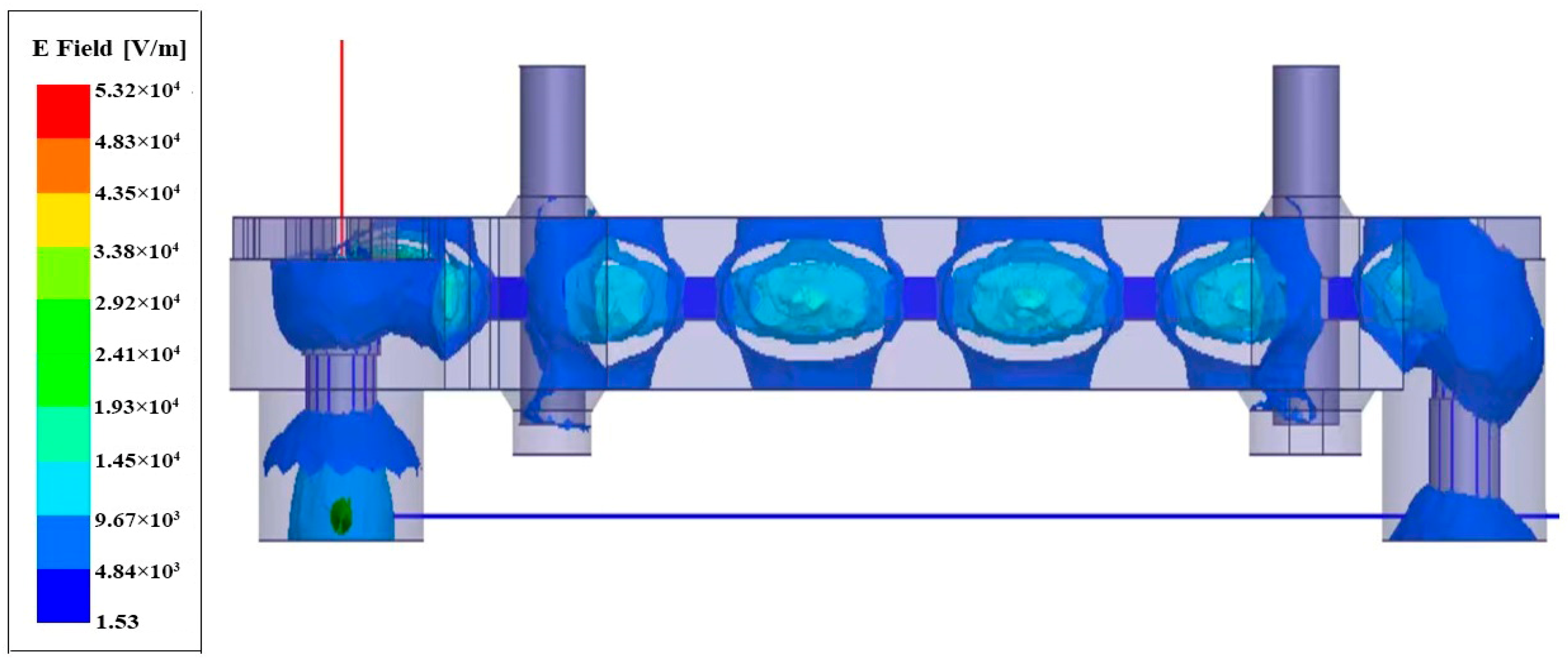
Figure 1 presents the 3D simulation model, showing the complete signal path from the input 2.92 mm connector through the internal transmission structure to the output connector.
In conclusion, through optimized device selection, innovative mechanical structure, and precise control system design, this switch matrix significantly improves the reliability and environmental adaptability of the system while ensuring radio frequency performance, and is suitable for high-demand application scenarios such as communications, radar, and aerospace. To comprehensively evaluate and optimize the high-frequency performance of the Single-Pole Eight-Throw (SP8T) coaxial switch, a detailed full-wave electromagnetic (EM) simulation of a single signal path was conducted using the industry-standard 3D electromagnetic modeling tool, ANSYS HFSS (High-Frequency Structure Simulator). The simulation focused on optimizing the contact structure, impedance matching network, and shielding effectiveness to enhance signal integrity and minimize electromagnetic interference (EMI).
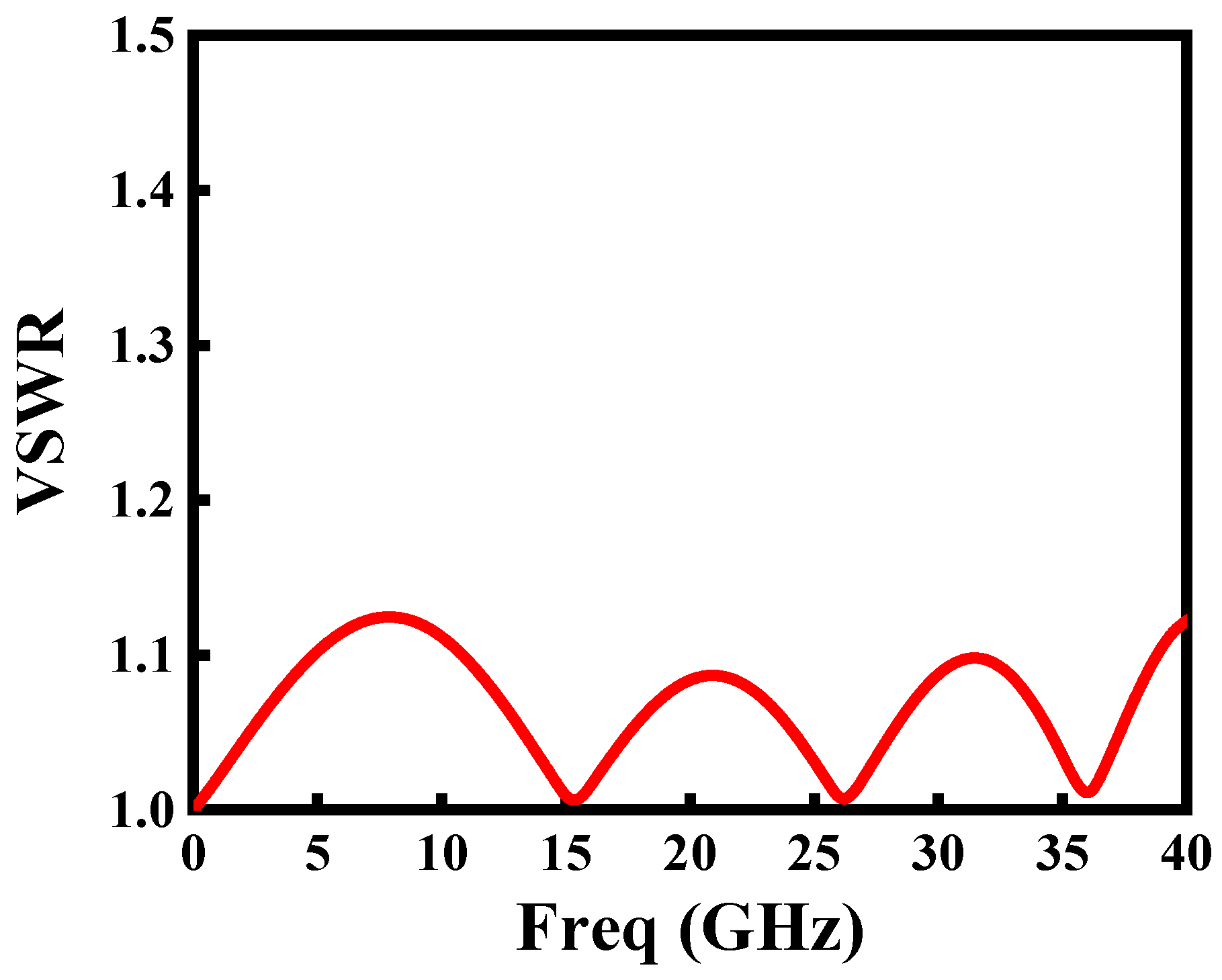
The simulation results demonstrate that the SP8T coaxial switch exhibits excellent radio frequency (RF) performance across the DC to 40 GHz frequency range, with an insertion loss of no more than 0.8 dB, a voltage standing wave ratio (VSWR) not exceeding 1.6, isolation of at least 60 dB, a maximum power handling capacity of up to 10 W, and a switching time within 10 ms. The control circuit operates in conjunction with the main control microcontroller and a serial-to-parallel converter driver to enable synchronous switching of all coaxial switches while minimizing switching time. Bidirectional communication between the MCU and the serial port display supports seamless transitions between manual operation and program-controlled modes, ensuring operational flexibility. The system interface is intuitive and user-friendly. In addition to USB-to-serial functionality, the system incorporates an Ethernet interface, enabling network integration and centralized management of multiple matrix switch modules.
To validate the simulation model, we measured the VSWR of two representative channels across the DC-40 GHz band. The results are summarized in
Table 1. As shown, the measured VSWR for both channels remains below 1.5:1 across the entire frequency range, which is consistent with the simulated values (≤1.6:1) presented in
Figure 2. The slightly higher VSWR observed in the 35–40 GHz band (1.49) is within expected tolerances and can be attributed to minor impedance mismatches introduced by connector transitions and manufacturing variations.
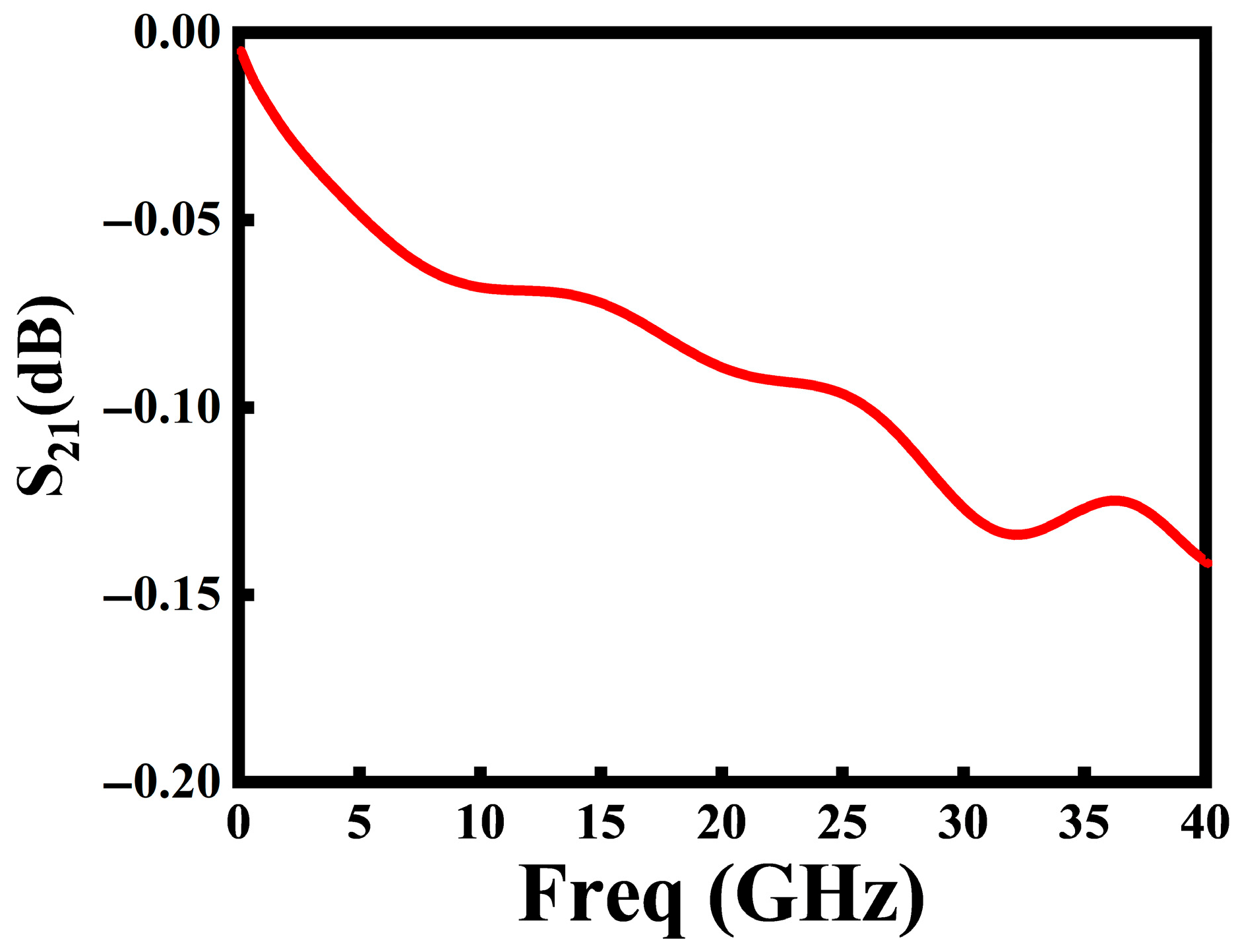
The simulation results presented in
Figure 2 and
Figure 3 represent the modeled performance of a single RF channel within the SP8T coaxial switch. To validate these simulation models, we measured the VSWR and insertion loss of two representative channels across the DC-40 GHz band. The measured VSWR results are summarized in
Table 1, and the measured insertion loss results for the SP8T switch component are summarized in
Table 2. As shown, the measured values are consistent with the simulated results, confirming the accuracy of the electromagnetic model.
All RF measurements were performed using a Keysight N5247A PNA-X vector network analyzer (VNA) (Keysight Technologies, Santa Rosa, CA, USA). Full two-port short-open-load-thru (SOLT) calibration was conducted using a 2.92 mm calibration kit (Maury Microwave 8050K, Maury Microwave, Ontario, CA, USA) up to 40 GHz. The calibration reference plane was set at the input connectors of the switch matrix to de-embed the effects of test cables. During measurement, all unused ports were terminated with 50 Ω matched loads to maintain consistent termination conditions and prevent spurious resonances. Each measurement was repeated three times to ensure thermal stability, and the results were averaged. The connection torque for all coaxial interfaces was controlled to 0.9 N·m using a torque wrench to minimize measurement uncertainty. For single-channel characterization, the VNA was connected directly to the input and output ports of the selected switch path. For cascaded-path measurements (e.g., SPDT + SP8T), the VNA was connected across the full signal chain from the matrix input to the matrix output. This setup enabled accurate extraction of insertion loss, VSWR, and isolation across the DC-40 GHz band.
3. Detailed System Design
This advanced solution is precisely engineered to deliver seamless performance across the DC to 40 GHz frequency range. By integrating SPDT to SP8T switch modules in a highly efficient manner, it enables dynamic configuration of an M × N channel architecture—such as 2 × 8, 4 × 8, and larger setups—providing exceptional capabilities in dynamic signal routing, multi-input/multi-output switching, and ultra-high operational reliability. Designed with scalability as a core principle, the system supports user-defined expansions with minimal integration effort, ensuring long-term adaptability to evolving application requirements.
The total insertion loss for a signal path traversing multiple switch stages can be expressed as:
where
ILi is the insertion loss of the i-th switch stage, and
ILcable,j is the loss of the j-th interconnecting cable. For the proposed two-stage architecture (SPDT + SP8T), this simplifies to:
The RF channel is the core path for signal transmission, and its design quality directly determines key RF performance indicators such as insertion loss, isolation, and standing wave ratio of the system. The core goal of this design is to ensure signal integrity, and fine-tuned design is carried out from multiple dimensions such as channel topology, impedance matching, electromagnetic shielding, and contact structure to ensure excellent transmission performance in the wide frequency range of DC to 40 GHz in
Figure 4.
The RF channel topology structure adopts a cascade configuration of “single pole double throw switchsingle pole eight throw switch”, with a specific configuration of combining 4 SPDT switches and 4 SP8T switches to achieve 16 × 16 full crossover switching. Among them, the SPDT switch serves as the input level switching unit, responsible for dividing 16 input signals into 4 groups, with 4 signals in each group connected to 1 SP8T switch; the SP8T switch serves as the output stage switching unit, responsible for distributing 4 input signals from each group to 16 output terminals. Through the coordinated control of the two-stage switch, it achieves the connection between any input port and output port. This topology structure has obvious advantages. Firstly, through reasonable grouping design, it reduces the number of cascaded switches in a single circuit and lowers the superposition of insertion losses. The second is to facilitate the expansion of channels. By increasing the number of SPDT and SP8T modules, it can be quickly expanded to larger matrices such as 32 × 32. The third is to improve the reliability of the system. When a certain switch module fails, it only affects the corresponding channel of the group and will not cause the entire system to crash.
Impedance matching is a part of high-frequency RF design, and poor impedance matching can cause signal reflection, increase insertion loss, and reduce signal integrity. The RF channels in this design all adopt a 50 ohm standard impedance design, which requires full impedance matching from the RF connector to the switch port.
Electromagnetic interference (EMI) is one of the main problems faced by high-frequency systems, and severe EMI can lead to signal crosstalk, performance degradation, and even system failures. This design focuses on electromagnetic compatibility (EMC) design from three aspects: shielding structure, grounding design, and wiring optimization. In terms of shielding structure, the RF module is encapsulated in a full metal shielding cover made of aluminum alloy, which has excellent electromagnetic shielding performance and can effectively block external electromagnetic signal interference while preventing internal high-frequency signals from radiating outward. The interior of the shielding cover adopts a compartment design to separate the switch modules of different groups, further reducing inter group crosstalk. In terms of grounding design, a combination of single point grounding and multi-point grounding is adopted, and the RF module adopts single point grounding to reduce interference caused by grounding loops. The control module adopts multi-point grounding to reduce grounding resistance. At the same time, we design an independent grounding plane that is separated from the signal plane to ensure the reliability of grounding. In terms of wiring optimization, RF signal lines and control signal lines are strictly separated to avoid parallel wiring. The RF signal line adopts the shortest path design to reduce signal transmission distance and loss. The control signal line adopts shielded cables to reduce the impact of electromagnetic interference on the control signal.
The design of the contact structure directly affects the contact resistance and transmission performance of the switch. This design adopts a dual node self-cleaning contact structure, which produces a slight relative sliding between the two contact points during the switch action, forming a “wiping” effect that can effectively remove pollutants such as oxidation layer and dust on the contact surface, ensuring the stability of the contact resistance. To further improve the contact performance, gold plating technology is used for the contact points. Gold has low electrical resistivity and strong oxidation resistance, which can significantly reduce contact losses. At the same time, optimizing the contact pressure design, too little pressure can easily lead to poor contact, while too much pressure can increase mechanical wear and shorten the life of the switch.
To avoid signal reflection and device damage caused by no-load output of the switch, each RF switch’s output is integrated with a 50 Ω matched load. High-frequency thin-film resistors are selected for load matching, which have excellent high-frequency performance, high accuracy, and low temperature coefficient, ensuring stable impedance matching over a wide frequency range. The matching load and switch output end are directly soldered with gold strips to reduce connection losses. At the same time, the layout position of the load is optimized through simulation to avoid interference with other RF channels.
- B.
Matrix Architecture Design
The matrix achieves channel flexibility by integrating switch modules with varying channel counts, thereby supporting arbitrary M × N configurations (e.g., 2 × 4, 2 × 8, and 4 × 8). This architecture enables flexible signal switching across M × N channels and supports customized expansion tailored to specific application requirements. The system enables signal routing between any input and output ports and is compatible with both single-input multiple-output (SIMO) and multiple-input single-output (MISO) operation modes. It employs an independent RF modular design, which simplifies maintenance and facilitates future capacity upgrades. By cascading multiple stages of RF switches, the system can distribute one input signal to more than ten outputs—such as 16 or 32—achieving scalable signal distribution. In multi-stage cascaded structures, insertion loss accumulates, with the total loss equaling the sum of individual insertion losses from each RF switch stage and the interconnecting cables.
To ensure system stability, reliability, and signal integrity, as well as to maintain measurement accuracy and protect connected circuits and equipment, a matched load is integrated at each output terminal of every RF switch within the matrix. This design enhances performance across diverse application scenarios, offering high versatility and adaptability. Furthermore, the system supports hot-swapping, and each RF module features an independent power supply interface, significantly improving maintainability and expandability.
To ensure that the measured RF performance is representative of the full 16 × 16 switching matrix, we adopted a systematic route selection strategy. The 16 input ports and 16 output ports are organized into four groups, with each group associated with one SPDT switch (input stage) and one SP8T switch (output stage). For performance characterization, we selected measurement paths that cover all four input groups and all four output groups, ensuring that every SPDT and SP8T switch module is exercised. Specifically, for cascaded-path insertion loss measurements, we measured 16 representative paths—one through each input port to its corresponding output port via the two-stage architecture. While full characterization of all 256 possible input–output combinations was not performed, this approach exercises every switch module and interconnection cable within the matrix, providing a representative assessment of the overall system performance. The measured data reflect the performance variations across different switch modules and interconnection cables, supporting the headline performance claims.
- C.
Control Unit Design
The control unit consists of a power module and a single-chip microcomputer circuit. To enhance user convenience, the chassis is powered by a 220 V AC supply, with a high-voltage switch at the input to control the AC power. A regulated switching power supply within the module converts the 220 V AC input into a stable low-voltage DC output, providing reliable power for the radio frequency (RF) module.
The control system is built around a high-performance microcontroller. It is seamlessly integrated with a responsive touchscreen interface and dual-mode communication ports (Ethernet and serial), ensuring robust connectivity. The microcontroller runs sophisticated embedded firmware that orchestrates real-time interactions with the touchscreen, facilitates bidirectional communication with external devices via standardized protocols, and precisely controls the switching mechanisms. Engineered for efficiency and precision, the system operates with strict communication parameters: a baud rate of 115,200 bps, 8 data bits per byte, and a fixed frame structure of 12 bytes. To maintain byte alignment, each frame is padded with leading zeros, ensuring flawless 8-bit synchronization (e.g., 55 AA 01 00 00 00 00 00 00 00 00 00). Notably, a special frame header (55 AA FF) functions as a master reset command. This triggers a complete matrix reset: all SPDT switches return to their normally closed (NC) state, and all SP8T switches simultaneously disconnect every signal path, restoring the system to its default configuration.
The control system is built around a high-performance microcontroller integrated with a responsive touchscreen interface and dual-mode communication ports (Ethernet and USB). The microcontroller runs embedded firmware that orchestrates real-time interactions with the touchscreen, facilitates bidirectional communication with external devices via standardized protocols (SCPI command set, TCP/IP), and precisely controls the switching mechanisms.
The system employs a 12-byte fixed-frame communication protocol (baud rate: 115,200 bps, 8 data bits) to ensure reliable command transmission. Each frame is padded with leading zeros to maintain byte alignment (e.g., 55 AA 01 00 00 00 00 00 00 00 00 00). A special frame header (55 AA FF) functions as a master reset command, restoring all switches to their default states—SPDT switches return to Channel 0 (normally closed), and all SP8T switches disconnect all signal paths.
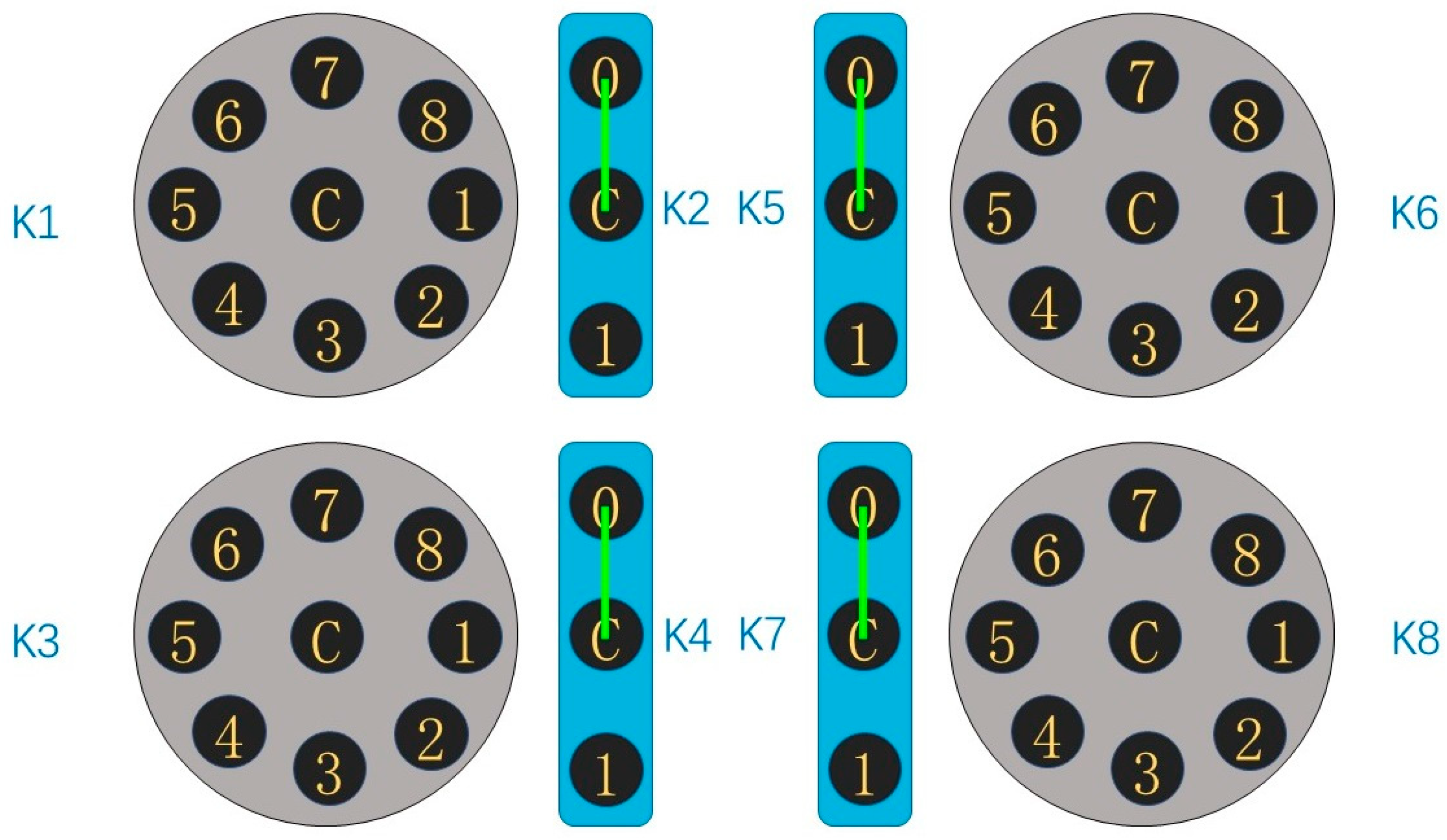
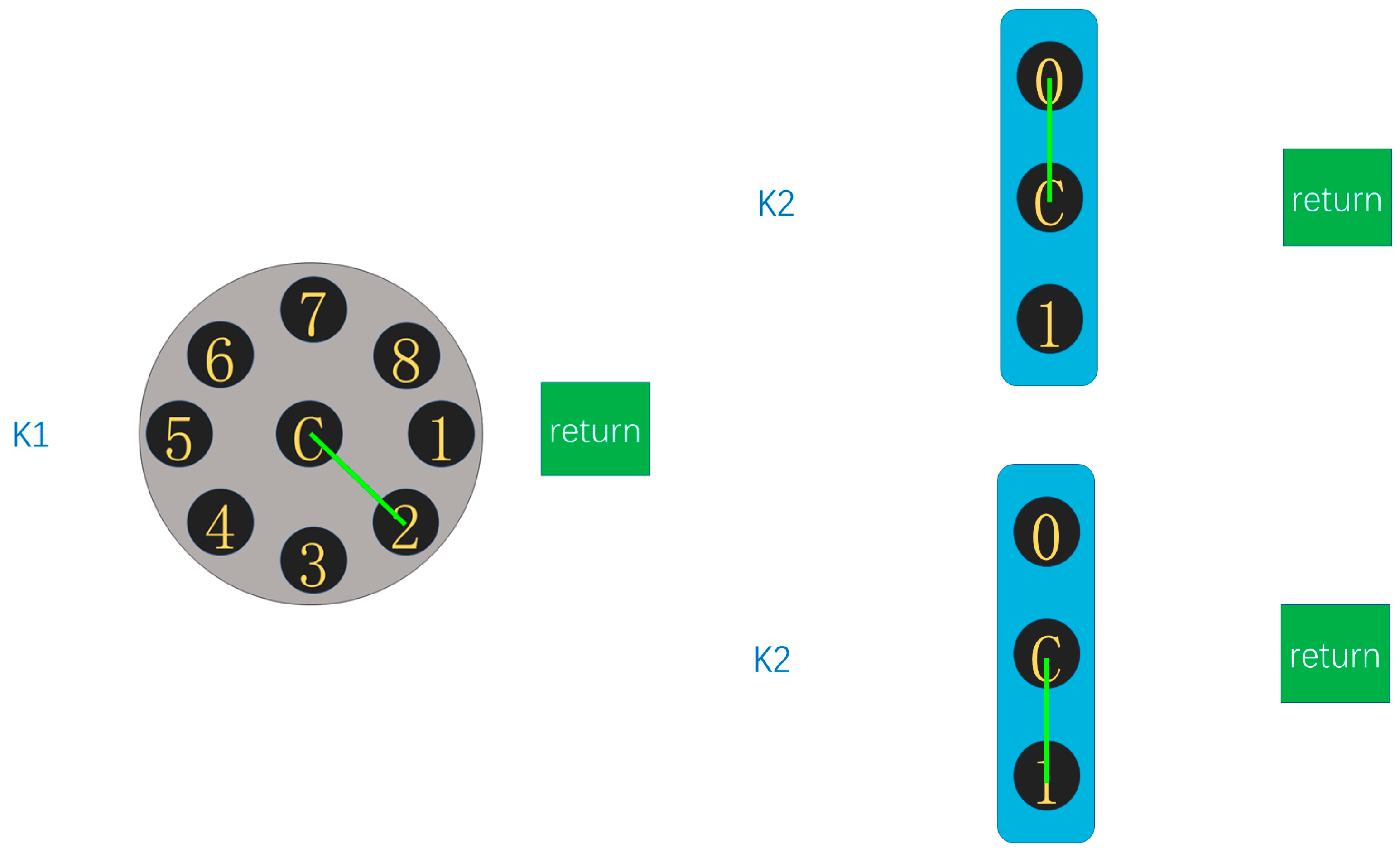
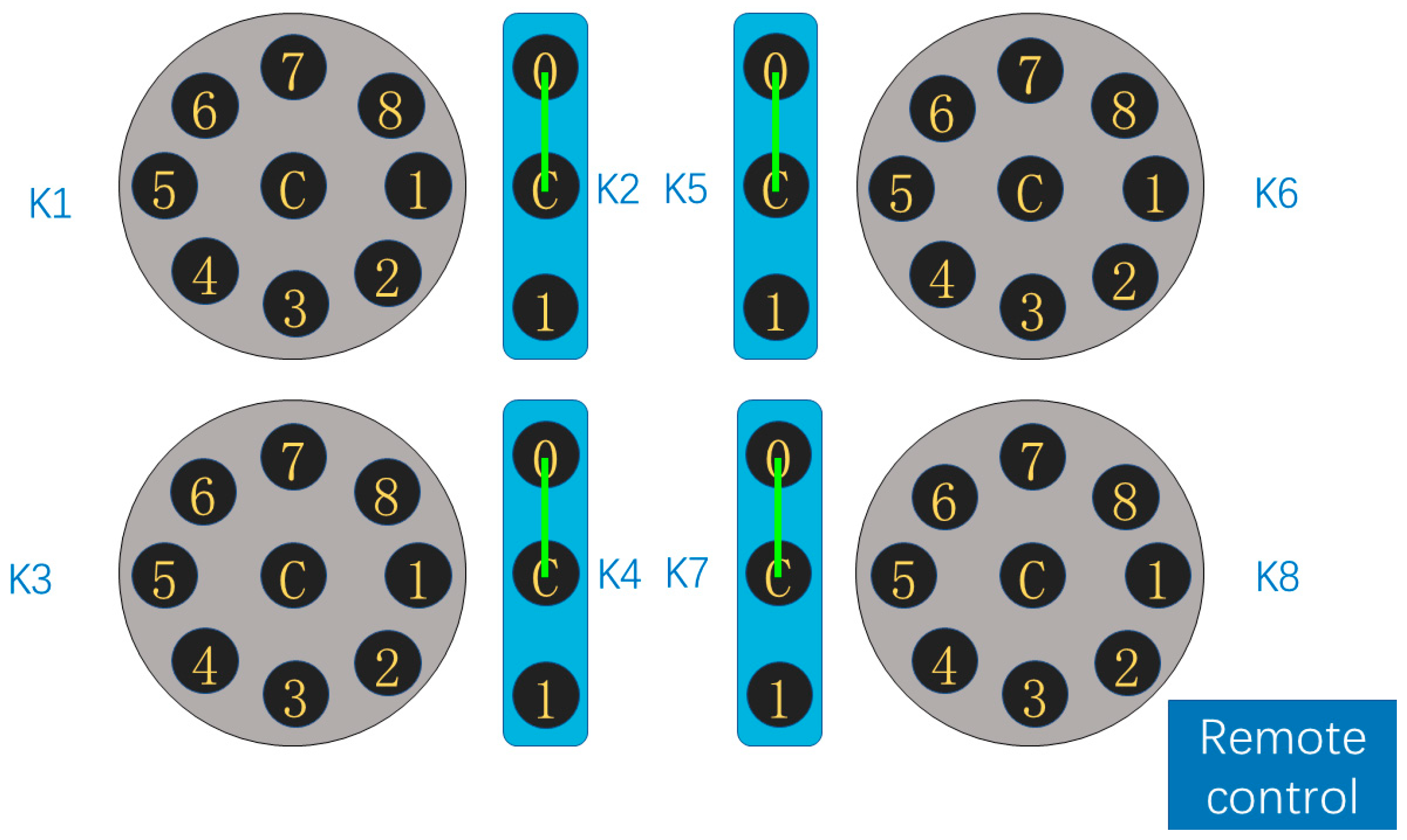
The touchscreen interface provides intuitive real-time control and status monitoring. For SP8T switches, users can select any channel (1–8) via the touch panel, with active connections visually indicated by a green line between the common terminal (C) and the selected channel. For SPDT switches, the interface displays the current connection status (Channel 0 or Channel 1) and allows instant switching. All user interactions are processed by the microcontroller, which updates the switch states and provides immediate visual feedback.
Figure 4,
Figure 5 and
Figure 6 illustrate the main interface and control panels for K1 (SP8T) and K2 (SPDT) switches.
In remote control mode, the touchscreen’s local control functionality is disabled, and all switching operations are managed via the Ethernet or USB interface using the SCPI command set. This dual-mode operation ensures flexibility for both manual testing and fully automated test system integration.
Upon program initialization, the main interface displays the remote control button (as shown in the
Figure 7). In this mode, the touch hot zone functionality is disabled, and users must click the remote control button to return to the local (initial) state. On the main interface, clicking the reset button triggers a synchronized reset operation for all switches.
The serial communication module provides external physical interfaces including an LAN port and a USB port, enabling network connectivity with the automatic test system. During testing, users can choose between USB cable or network cable connection based on actual requirements, ensuring high compatibility and operational convenience.
Due to the symmetrical structure of the SP8T switch and the electromagnetic isolation between channels, the RF performance of a single channel is representative of all eight channels. The simulation was therefore performed on a single signal path to reduce computational complexity while maintaining accuracy.
Figure 1 presents the detailed 3D model used in the ANSYS HFSS simulation, with key dimensions and material properties summarized in
Table 1. The simulation employed an interpolating frequency sweep from DC to 40 GHz with a convergence criterion of maximum delta S < 0.02. Radiation boundaries were applied to the outer surfaces of the model to account for electromagnetic leakage. The optimized design parameters—including contact geometry, impedance matching networks, and shielding structures—were subsequently applied uniformly to all eight channels in the physical implementation, ensuring consistent performance across the entire switch matrix.
4. Development Results
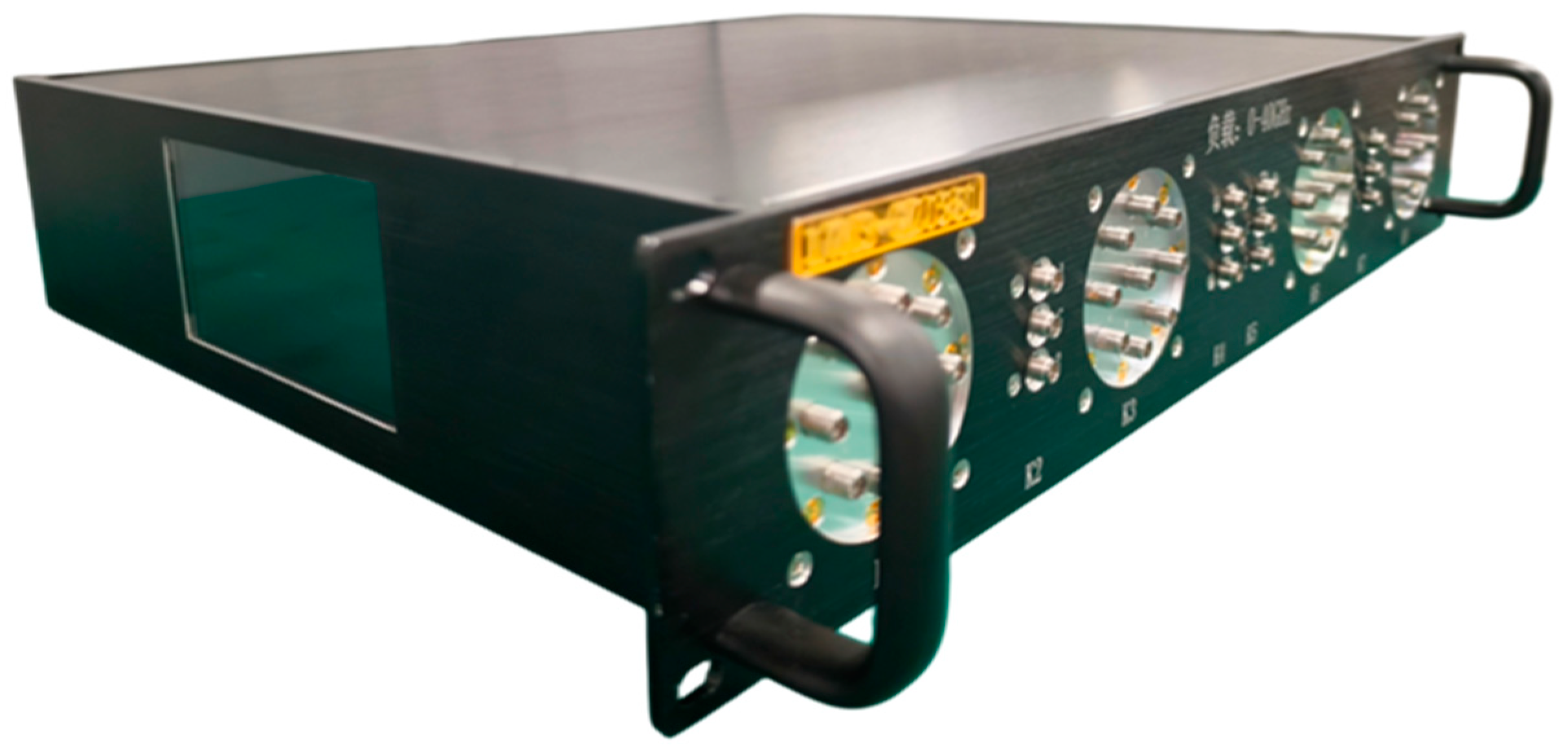
The 16 × 16 high-frequency switching matrix is housed in a standard 2U black chassis (483 × 350 × 88.9 mm), combining a compact design with robust functionality. The system delivers outstanding RF performance up to 40 GHz. The insertion loss is no more than 0.9 dB, and the channel-to-channel isolation exceeds 50 dB, highlighting exceptional signal purity. It features a rapid switching response, with a time ≤ 10 ms. It operates stably under AC 220 V power supply and is equipped with high-end 2.92-F type RF connectors to ensure the ultimate signal integrity. The dual-mode USB and Ethernet interface design enables seamless system integration, supports intuitive remote control, and greatly expands operational flexibility. Engineered for durability, the module ensures a switching lifespan of over 2 million times, demonstrating unparalleled reliability and long-term operational stability even under harsh working conditions.
The single pole double throw switch and the single pole eight throw switch are cascaded through RF cables to achieve the function of a single pole sixteen throw switch. The cumulative insertion loss data in the cascaded architecture is as follows.
The cascaded-path insertion loss data presented in
Table 3 cover all 16 channels of the 16 × 16 switching matrix. Each channel represents a unique signal path from a specific input port to a specific output port, traversing one SPDT switch in the input selection stage and one SP8T switch in the output distribution stage. The measurements were performed across the full DC-40 GHz frequency band, with data recorded for six frequency sub-bands to capture frequency-dependent variations. As shown in
Table 3, the accumulated insertion loss for all 16 channels remains consistently below 0.9 dB across the entire operating band, with minor variations among channels attributed to differences in cable lengths and connector transitions. This comprehensive coverage across all channels and frequency sub-bands provides strong evidence that the reported system-level performance specifications (≤0.9 dB insertion loss, >50 dB isolation, ≤1.5:1 VSWR) are representative of the full 16 × 16 switching matrix.
To quantitatively evaluate the consistency of RF performance across the 16 × 16 switching matrix, we performed statistical analysis on the cascaded-path insertion loss data presented in
Table 3. For each frequency sub-band, the mean insertion loss, standard deviation, minimum value, and maximum value were calculated across all 16 channels.
The standard deviation of insertion loss across all 16 channels remains below 0.04 dB across the entire DC-40 GHz band, indicating excellent channel-to-channel consistency. The maximum insertion loss observed across all channels and all frequency sub-bands is 0.29 dB (at 35–40 GHz), which is well within the system specification of ≤0.9 dB. The mean insertion loss gradually increases with frequency, from −0.051 dB at DC-6 GHz to −0.241 dB at 35–40 GHz, which is consistent with the frequency-dependent loss characteristics of coaxial switches and interconnect cables. To further evaluate consistency across the frequency band, we calculated the variation in insertion loss for each channel across the six frequency sub-bands. The maximum channel-to-channel variation (i.e., the difference between the highest and lowest insertion loss values across the frequency band for a given channel) ranges from 0.20 dB to 0.26 dB, with an average of 0.23 dB. This small variation confirms that the matrix maintains stable transmission performance across the entire operating frequency range.
This statistical characterization demonstrates that the 16 × 16 switching matrix achieves consistent RF performance across all signal paths and across the full DC-40 GHz operating band, supporting the system-level claims of high stability and signal integrity.