Communication

A Light and Compact Circular Polarized Antenna for First-Person-View (FPV) Drones

1
Department of Civil, Environmental and Mechanical Engineering—DICAM, University of Trento, 38123 Trento, Italy
2
Department of Electronics and Communication Engineering, Centre for Flexible Electronics and Advanced Materials, Amrita Vishwa Vidyapeetham, Amritapuri 690525, India
3
Fondazione Bruno Kessler (FBK), 38123 Trento, Italy
*
Author to whom correspondence should be addressed.
Electronics 2026, 15(6), 1150; https://doi.org/10.3390/electronics15061150
Submission received: 23 January 2026 / Revised: 1 March 2026 / Accepted: 9 March 2026 / Published: 10 March 2026
(This article belongs to the Section Microwave and Wireless Communications)

Abstract

This work presents the design of a compact, omnidirectional, and circular polarized antenna for first-person-view (FPV) drones. An FPV drone is an aircraft used in sporting activities, where the pilot, equipped with a visor, controls the drone’s activities. Due to the high velocity of FPV and the required low reaction time, the radio connection must be safe and accurate. An omnidirectional antenna with circular polarization, high gain, low weight, and good mechanical robustness is mandatory for FPV design. The proposed antenna is designed and fabricated on a ceramic substrate operating at 5.8 GHz. The prototypes tested ensure that the proposed design is a potential candidate for FPV applications. A set of antenna prototypes has been designed, fabricated, and assessed numerically and experimentally, demonstrating the capabilities and potential of the proposed antenna design.

1. Introduction

First-person-view (FPV) is a method used to control a radio-controlled aircraft or other types of unmanned aerial vehicles (UAVs) [1], such as rescue, security, surveillance [2], sport competition [3], and military drones [4]. The pilot usually uses a radio remote controller to drive the drone, and gets a first-person perspective from an onboard camera that feeds video to FPV goggles or a monitor. There are more sophisticated setups that include a pan-and-tilt gimbaled camera controlled by a gyroscope sensor in the pilot’s goggles and with dual onboard cameras, enabling a true stereoscopic view. The two primary components of an FPV system are the aircraft component and the ground station. A basic FPV system consists of a camera and an analog video transmitter, mounted onboard the vehicle. The ground station consists of a video receiver and a suitable display. There are more advanced setups that incorporate global positioning systems GPS for navigation and flight data, stabilization systems, and autopilot devices that permit the return to home capability, which allow the aircraft to fly back to its starting point autonomously in the event of a signal loss. Receiving equipment placed at the ground station consists of an analog video receiver tuned to the frequency of the transmitter on board the aircraft and a viewing device. More complex Ground Stations are equipped with record devices that receive images of the mission. Recently, unmanned aerial vehicles (UAVs) with first-person view (FPV) control systems are going to become crucial devices for security and safety applications, such as surveillance in agriculture, healthcare system problems, sport (drone race competitions), military, and rescue operations. These systems require a small and lightweight design, high-technology capabilities, and cost-effective solutions. Of great importance is the antenna design, a crucial device aimed at guaranteeing a good radio connection with the pilot. In particular, an antenna for a FPV drone must have omnidirectional gain and circular polarization. Half- and quarter-wavelength cloverleaf antennas are widely used because of their omnidirectional beam pattern, good axial ratio, with variation of less than 0.5 dB [5,6]. The problem with these antennas is the mechanical fragility and the excessive weight, especially if they are equipped with a plastic radome aimed at protecting the antenna structure from collisions. Various types of omnidirectional and left-hand circular polarization (LHCP) antennas can be realized using cylindrical monopoles combined with arc-shaped dipoles, Vee dipoles, planar microstrip antennas, or arrays made of cylindrical patches [7,8,9,10]. These types of antennas offer good results but are complex to manufacture and mechanically fragile, making them unsuitable for the proposed application [11,12]. New types of planar microstrip antennas have recently appeared in the scientific literature. These antennas are typically based on a zero-order rectangular resonator (ZOR) loaded with open stubs arranged along the ground perimeter to convert linear polarization to circular polarization [13,14,15]. A ZOR antenna principle is based on the so-called “zero-order” mode. In particular, the electromagnetic wave propagates without a phase shift along the antenna structure, so the entire antenna resonates in phase. This behavior allows the realization of very small, efficient radiators. These kinds of antennas are usually fabricated with a set of patches and via structures, creating a mushroom-type geometry. The antenna structure resembles the conceptual configuration of current loops that act as electric and magnetic monopoles, respectively. This type of antenna has a wide range of applications in wireless communications because, in addition to providing very clean left-hand circular polarization (LHCP) and an omnidirectional radiation pattern, it limits the multipath fading phenomena that degrade the quality of video transmissions. In this letter, we propose the design of a light, circularly polarized, omnidirectional microstrip antenna fabricated on a robust ceramic substrate. In particular, the antenna structure consists of a square patch, four arms around the patch edges, and vias connecting to a square ground plane. The design is inspired by the geometry reported in [16]. Four different antenna prototypes operating in the C band at 5.8 GHz have been fabricated and experimentally assessed. The obtained results are quite satisfactory and promising, demonstrating the effectiveness of the proposed antenna as a good substitute for cloverleaf and other circularly polarized antennas.

2. Antenna Design

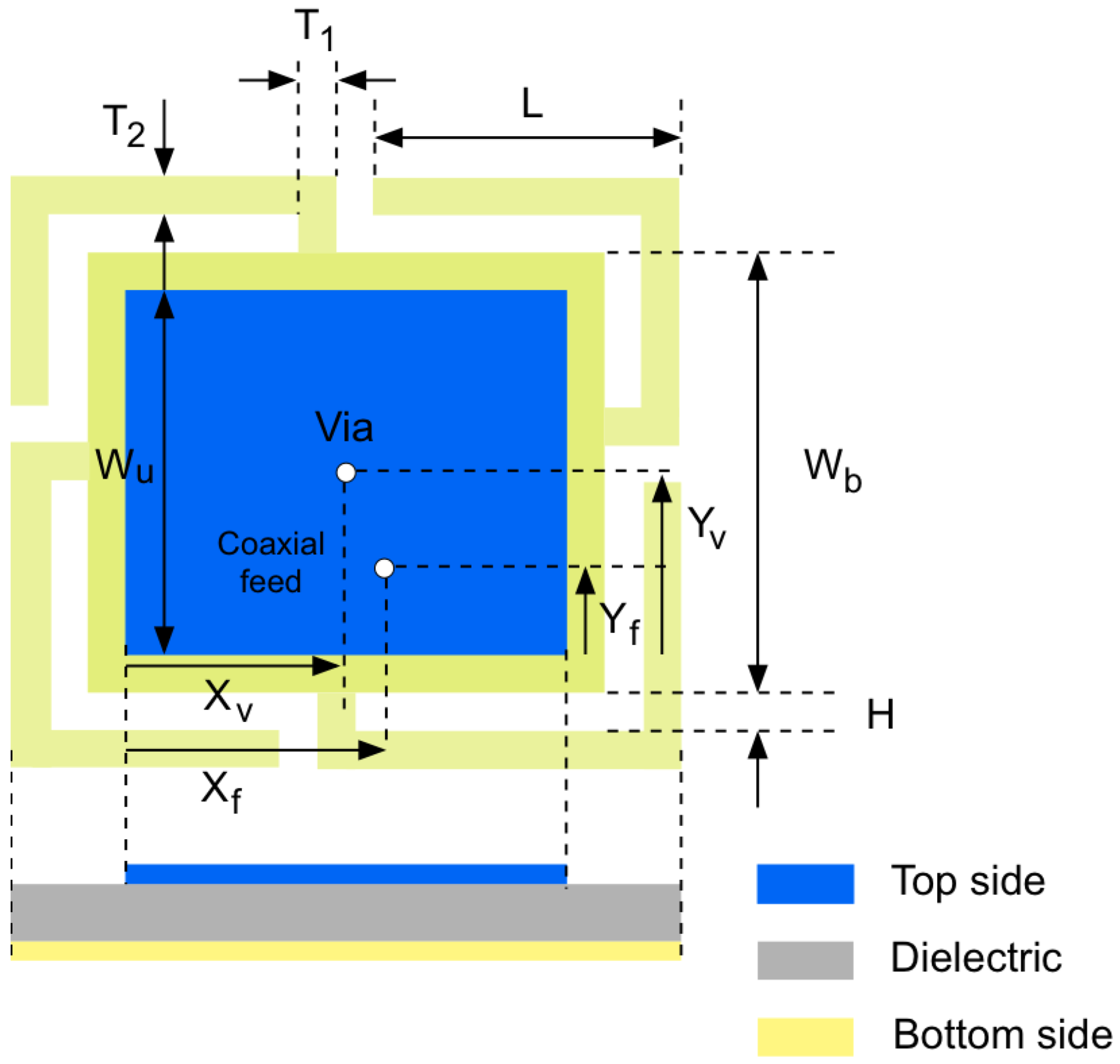
The antenna structure is shown in Figure 1 while the values of geometrical parameter are summarized in Table 1. The antenna consists of two parts printed on a Arlon 25 N ceramic substrate ( ε r = 3.38 , tan( δ ) = 10 3 ). The substrate thickness is t = 0.8 mm. This ceramic substrate was chosen for its mechanical resistance. On the top layer of the upper substrate (metallized with 10 μ m copper), there is a square patch of side W b , with four folded metallic arms arranged in rotational symmetry and joined at the central square patch. On the bottom layer of the lower substrate, a square patch of side W u is connected to the corresponding metallic patch on the top layer by means of a via placed exactly at the antenna center. The antenna structure is quite similar to the one reported in [16], but it was optimized to properly work in the C band at 5.8 GHz with a good bandwidth, more than 0.5 GHz, to properly guarantee the transmission speed mandatory to obtain good and stable video and telemetry signals during the FPV operations. The geometrical dimensions of the proposed antenna are optimized using a suitable optimizer in conjunction with the High-Frequency Simulation Software (HFSS), 2025 R2. The design methodology is based on the combination of commercial electromagnetic simulator HFSS, an evolutionary algorithm, the particle swarm optimizer, and a suitable cost function aimed at guaranteeing good radiation properties. In more detail, the particle swarm algorithm (PSO) [17], has been combined with the HFSS simulator, to minimize a suitable cost function and optimize the antenna geometrical parameters. The goals of the cost function are to minimize the S 11 , the axial ratio (AR), and maximize the gain. In particular, the cost function, reported in the following [17], receives as input the antenna geometrical parameters defined in Figure 1 (namely W u , W b , H, T 1 , T 2 , L, X v , Y v , X f , and Y f ) and provides as output an estimation of the antenna radiating properties.
F X = α 1 · m i n S 11 X + α 2 · m i n A R X + α 3 · m i n 1 G a i n X + α 4 · m a x B W X
where α 1 = 0.4 , α 2 = α 3 = α 4 = 0.2 are four weights empirically chosen, and X = W u , W b , H , T 1 , T 2 , L , X v , Y v , X f , Y f is the vector of geometrical parameters to optimize. Then, the PSO optimizer has been used in conjunction with a commercial electromagnetic simulator able to simulate the antenna with a high degree of accuracy. The PSO generates a set of trial solutions by varying the geometrical parameters of the antenna, and the electromagnetic simulator estimates the performance of the corresponding trial origami feeder to compute the cost function and guide the algorithm’s evolution toward the optimal solution. Concerning the considered PSO parameters, ten different particles have been considered, a constant inertial with an inertial weight I w = 0.6 . The optimizer has been run on a laptop equipped with 16 Gbyte of RAM and an AMD Ryzen I5 processor. The computational time required to obtain the results was about two hours. The summary of antenna geometrical values of each parameter obtained after the optimization procedure is listed in Table 1. Table 2 reports the comparisons of different FPV antennas characteristics, in particular, monopole, loaded monopole, cloverleaf, and the proposed ZOR antenna are reported.

Antenna Prototype

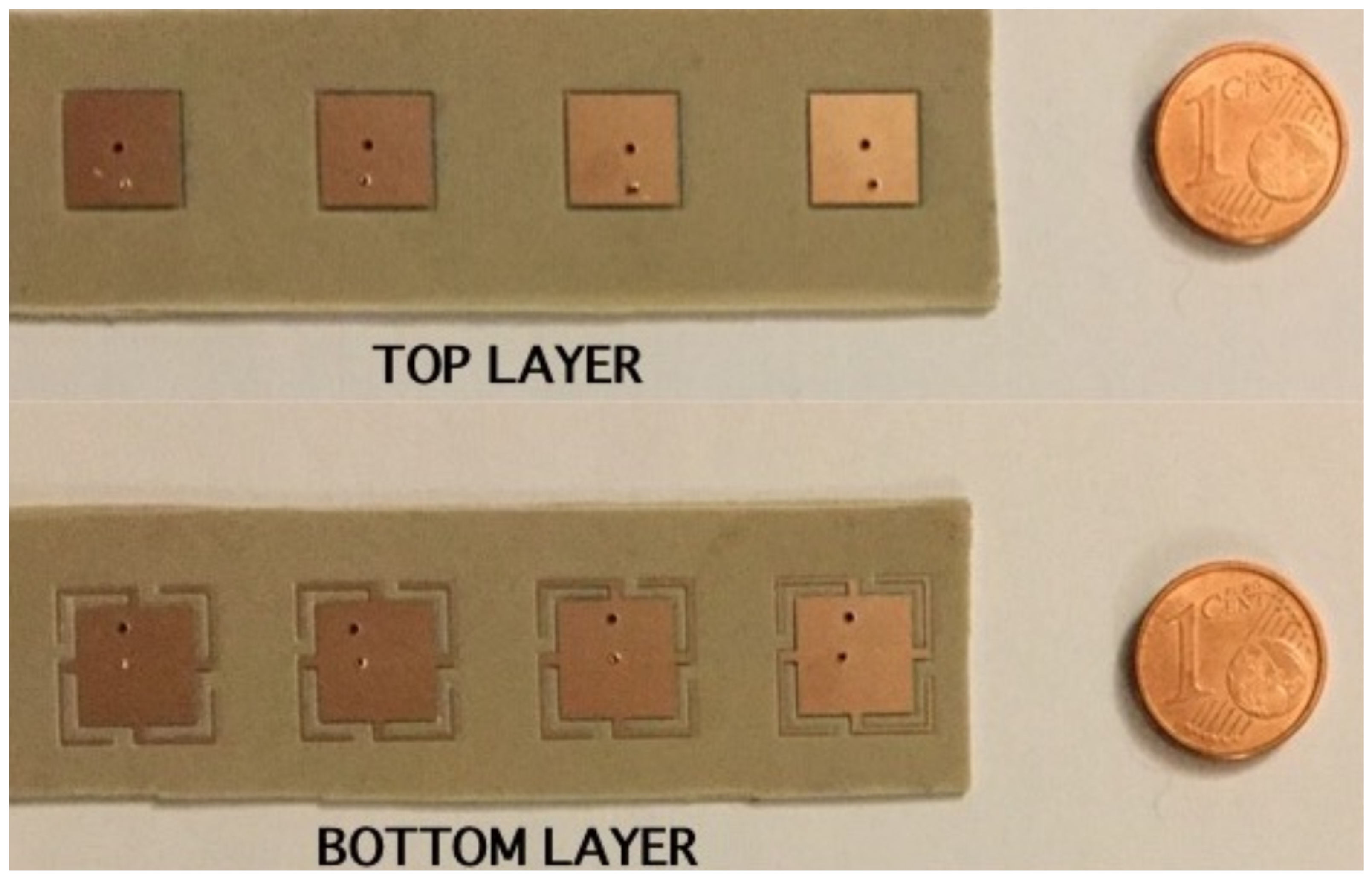
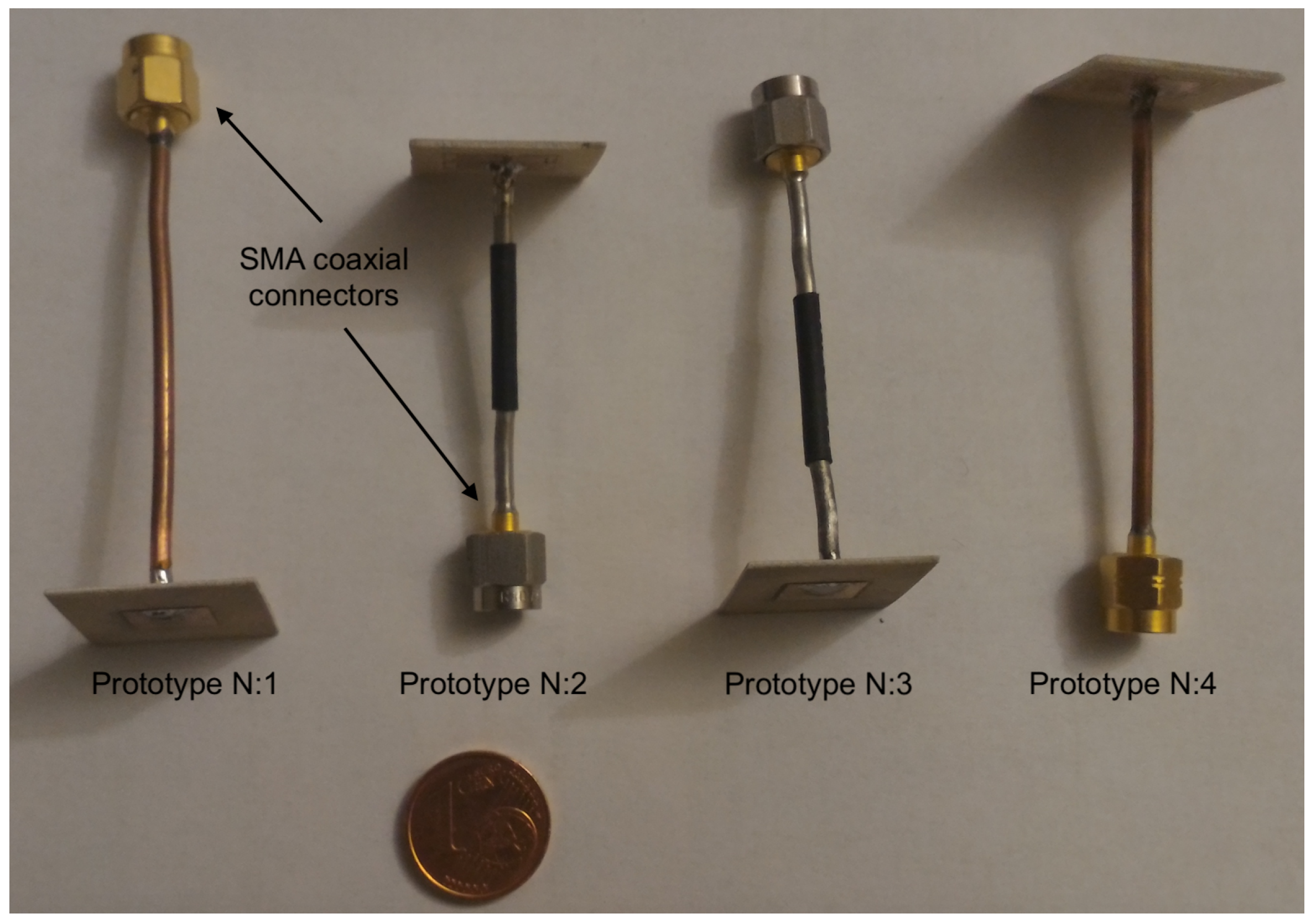
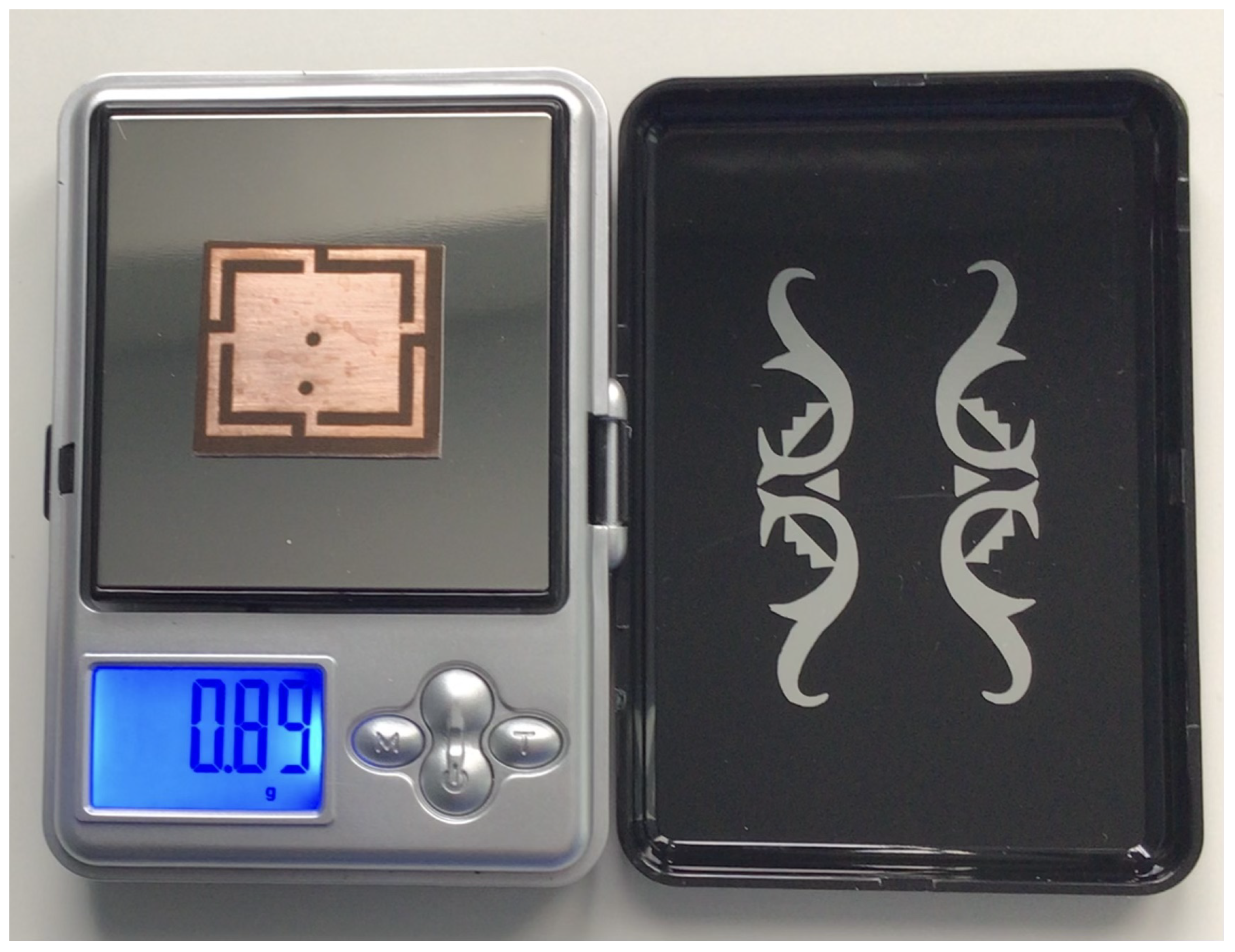
In this sub-section, the fabrication procedure of the antenna will be detailed. Starting from the geometrical parameters reported in Table 1, four prototypes have been fabricated by using a CNC milling machine with an accuracy of 0.1 mm. The obtained upper bottom sides of the four prototypes are shown in Figure 2. The central via has been connected with a small silver wire, and the four prototypes have been equipped with coaxial SMA connectors for the experimental assessment. The four prototypes equipped with the SMA connectors are reported in Figure 3 , while Figure 4 shows an antenna prototype placed on a scale to verify its weight.

3. Experimental Assessment

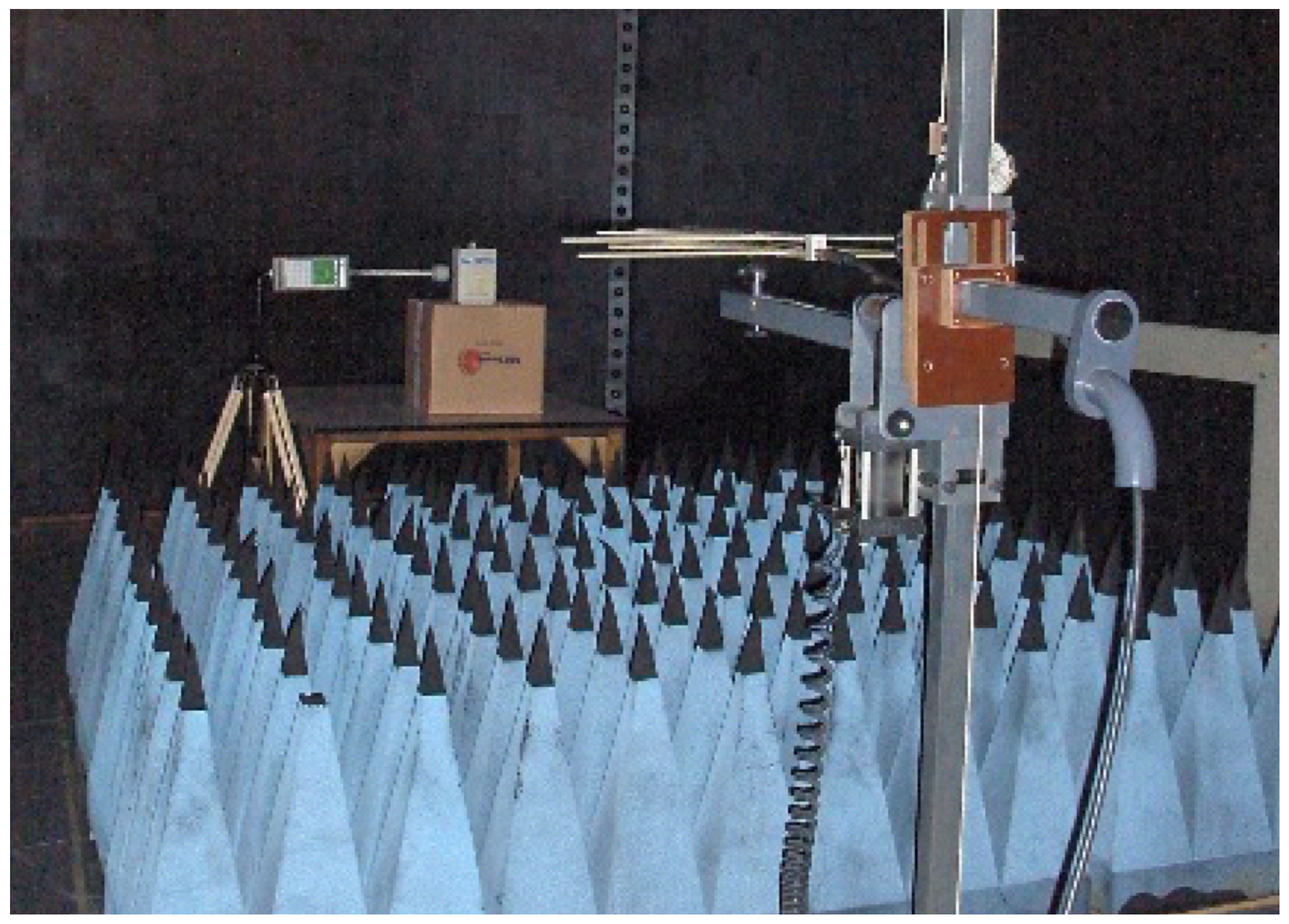
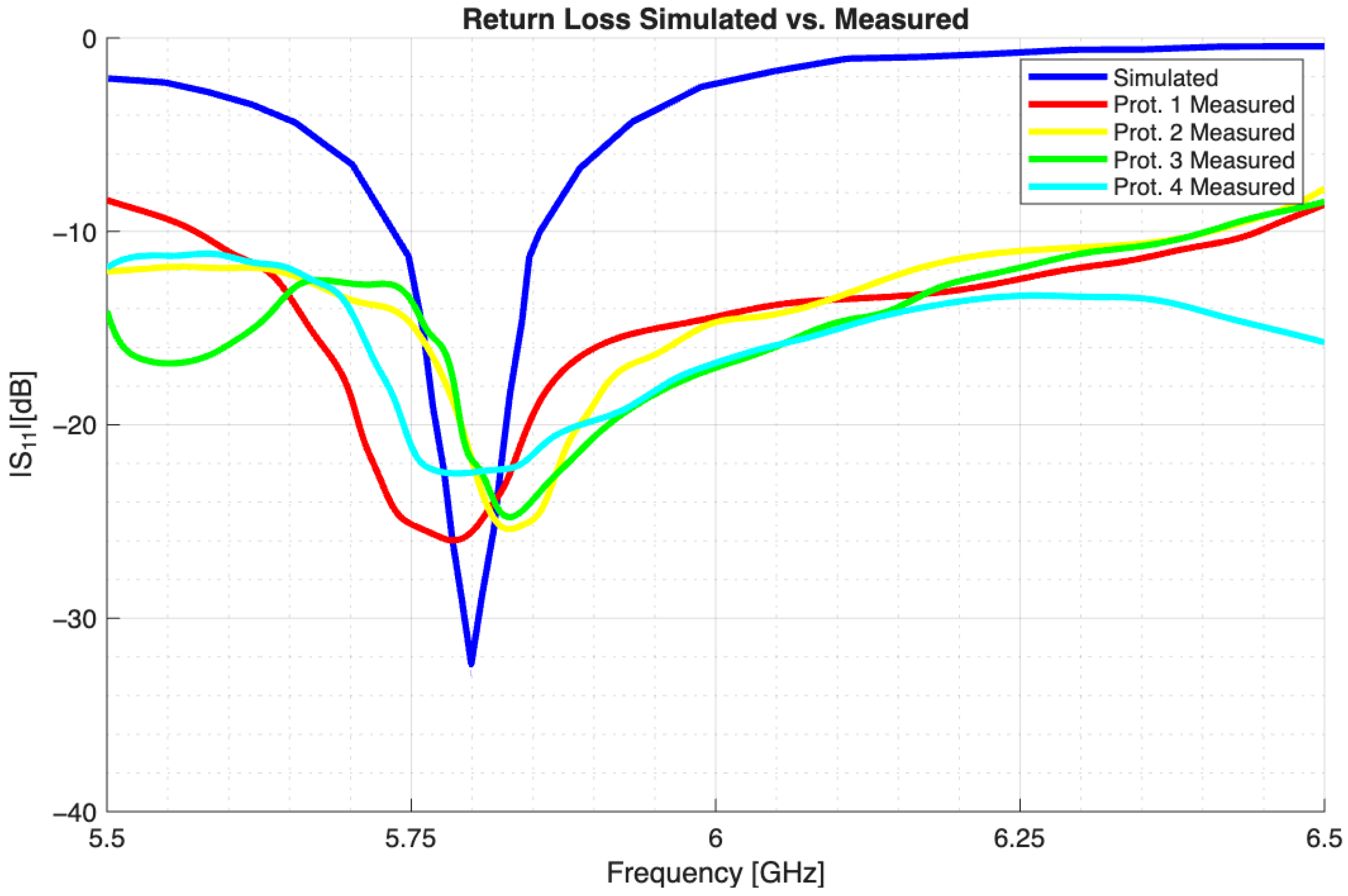
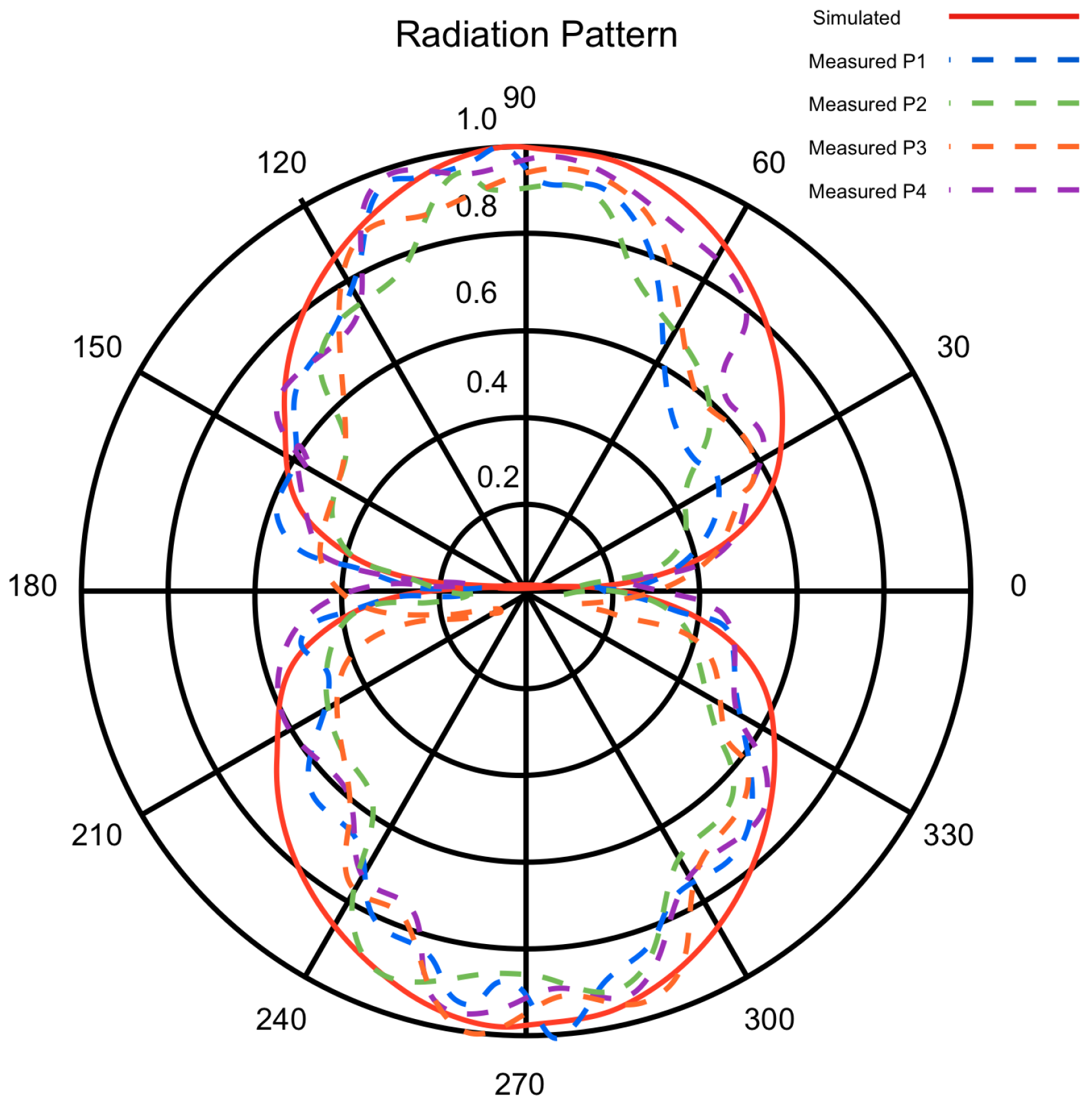
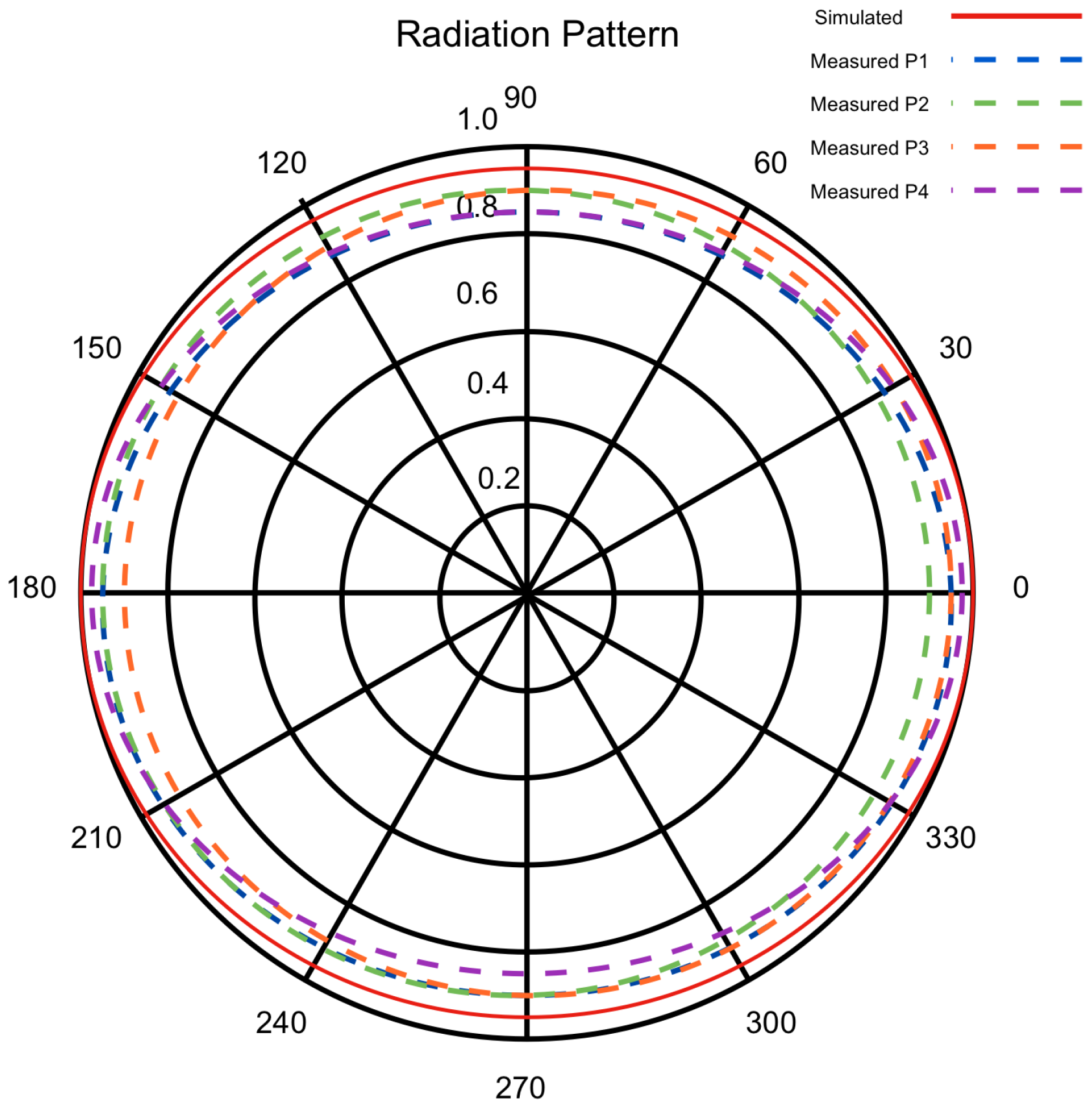
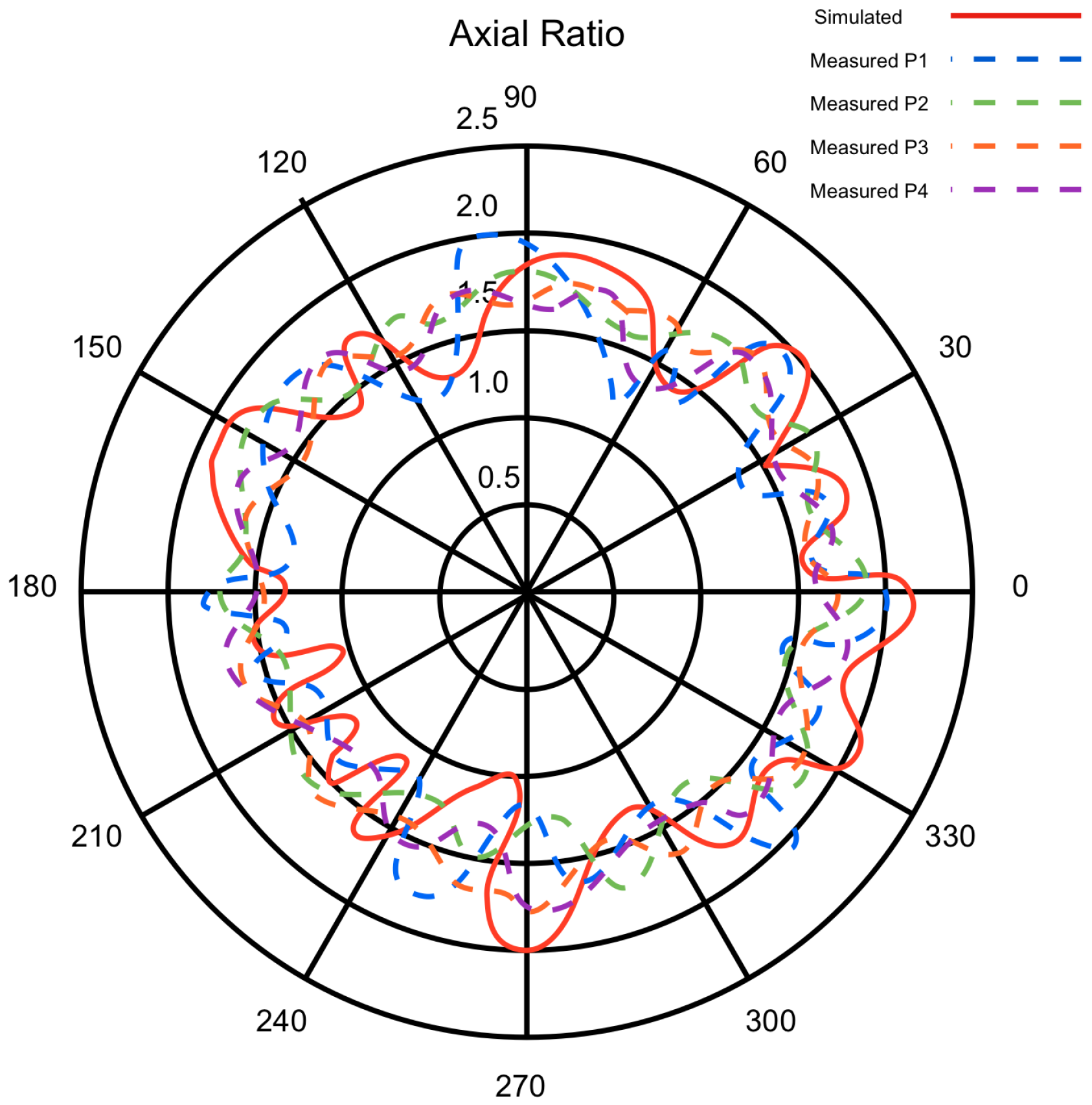
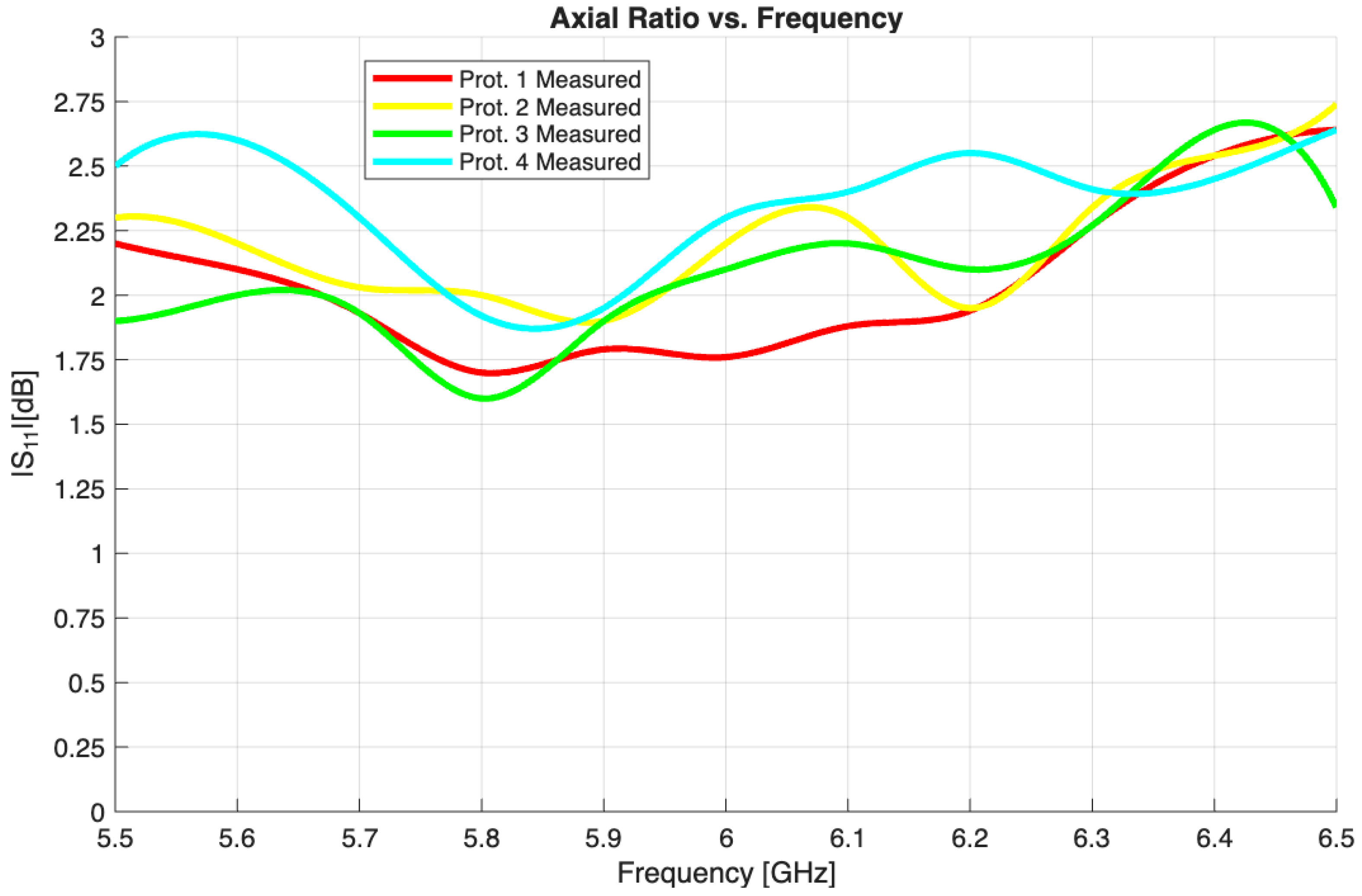
In this section, the proposed planar antenna is numerically and experimentally assessed. The numerical data were obtained using ANSYS HFSS. The fabricated prototypes are measured in an anechoic chamber for their reflection and radiation characteristics. The beam patterns have then been collected along the E-plane and H-plane with an angular step of 1 degree. A photo of the experimental setup is reported in Figure 5. The results are shown in Figure 6, which reports the simulated (blue line) and measured S 11 , for all four prototypes. However, despite the frequency shift, the S 11 remains well below 10 dB, especially at F = 5.78 GHz where the return loss is about 13.0 dB for the worst case (prototype number 4) and 17.1 dB for the best case (prototype number 2). Anyway, all four prototypes present a bandwidth of about 1 GHz in which the S 11 is below 10 dB. It is worth noticing that the bandwidth reported in [16] is narrow, and this was confirmed by the numerical simulation. However, the measurement campaign shows a less sharp resonance peak, due to a lower quality factor. This is certainly due to the losses and the small thickness of the dielectric substrate that reduced the resonance peak depth and consequently increased the bandwidth. In the next measurements, the antenna beam pattern and gain are estimated. Figure 7 and Figure 8 report the beam patterns along the H-plane and E-plane, respectively. The radiation pattern in E-plane (Figure 7) shows a dipole pattern, and omnidirectional radiation (Figure 8) in H-plane for all four prototypes. The agreement between numerical and simulated data is quite good. Concerning the antenna gain, these are the measured values for the four prototypes G a n t 1 = 1.90 dBi, G a n t 2 = 1.80 dBi, G a n t 3 = 1.95 dBi, and G a n t 4 = 1.75 dBi. In the last set of measures, the axial ratio AR was measured at the C-band central frequency of f = 5.8 GHz along the direction of maximum and compared with numerical results. The results are reported in Figure 9. As it can be seen from the data shown in Figure 9, the AR is very good, always less than 2 for the various positions of the azimuthal angle. For the sake of completeness, Figure 10 reports the AR versus frequency, in the direction of maximum radiation θ = 90 degrees.

4. Conclusions

A planar, omnidirectional, and circularly polarized microstrip antenna has been proposed in this letter. The proposed antenna geometry can operate in the C band at 5.8 GHz, which is the central band. The agreement between numerical and experimental data is good. In S 11 , a slight frequency shift is present, which is probably due to material and fabrication tolerances. The beam pattern is omnidirectional in the H-plane as required. The axial ratio, measured at 5.8 GHz, is in the range between 1.0 and 2.0. Moreover, the antenna is very compact and mechanically robust, presenting a weight of about 2 g, which makes it particularly suitable for mounting on small UAV drones. A set of antenna prototypes has been designed, fabricated, numerically simulated, and experimentally assessed. The obtained results were quite satisfactory, and they demonstrated the potentialities of such an antenna as a competitive substitute for standard FPV antennas, such as cloverleaf and helical antennas.

Author Contributions

Conceptualization, M.D., S.M. and V.M.; methodology, M.D. and S.M.; software, I.D.C.; validation, G.M., V.M., S.M. and M.D.; writing—original draft preparation, M.D., S.M. and V.M.; writing—review and editing; supervision, M.D., S.M. and V.M. All authors have read and agreed to the published version of the manuscript.

Funding

This research received no external funding.

Data Availability Statement

The original contributions presented in this study are included in the article. Further inquiries can be directed to the corresponding author.

Conflicts of Interest

The authors declare no conflicts of interest.

References

  1. Purba, R.Y.; Nur, L.O.; Anwar, R. Skew Planar Wheel Antenna for First Person View of Unmanned Aerial Vehicle. In Proceedings of the 2021 7th International Conference on Space Science and Communication (IconSpace), Selangor, Malaysia, 23–24 November 2021; pp. 303–306. [Google Scholar] [CrossRef]
  2. Yallappa, D.; Veerangouda, M.; Maski, D.; Palled, V.; Bheemanna, M. Development and evaluation of drone mounted sprayer for pesticide applications to crops. In Proceedings of the 2017 IEEE Global Humanitarian Technology Conference (GHTC), San Jose, CA, USA, 19–22 October 2017; pp. 1–7. [Google Scholar] [CrossRef]
  3. Díaz-Martínez, J.-G.; Alvarez, J.; Gutiérrez-Carmona, I. Drone Grand Prix: Educational Robotics Competitions Using Drones with First-Person-view (FPV). In Proceedings of the 2023 IEEE International Conference on Engineering Veracruz (ICEV), Boca del Río, VE, Mexico, 23–26 October 2023; pp. 1–6. [Google Scholar] [CrossRef]
  4. KS, N.P.; Jatkar, M.; Kumar, P.; Arya, P.; Kumari, J.; Garg, A. Military Grade FPV Drone for Enemy Recognition: Precision. In Proceedings of the 2024 International Conference on Emerging Technologies and Innovation for Sustainability (EmergIN), Greater Noida, India, 20–21 December 2024; pp. 589–594. [Google Scholar] [CrossRef]
  5. Smith, P.H. “Cloverleaf” Antenna for F.M. Broadcasting. Proc. IRE 1947, 35, 1556–1563. [Google Scholar] [CrossRef]
  6. Li, J.; Yan, Z.; Bo, H.; Wen, W. Design of a Cloverleaf Shaped Wideband Antenna for 5.8 GHz Wireless Application. In Proceedings of the 2024 IEEE International Workshop on Electromagnetics: Applications and Student Innovation Competition (iWEM), Taoyuan County, Taiwan, 10–12 July 2024; pp. 1–3. [Google Scholar] [CrossRef]
  7. Kraus, J.D.; Marhefka, R.J. Antennas for All Applications, 3rd ed.; McGraw-Hill: Columbia, HI, USA, 2008. [Google Scholar]
  8. Letestu, Y.; Sharaiha, A. Broadband Folded Printed Quadrifilar Helical Antenna. IEEE Trans. Antennas Propag. 2006, 54, 1600–1604. [Google Scholar] [CrossRef]
  9. Deng, C.; Li, Y.; Zhang, Z.; Feng, Z. A Circularly Polarized Pattern Diversity Antenna for Hemispherical Coverage. IEEE Trans. Antennas Propag. 2014, 62, 5365–5369. [Google Scholar] [CrossRef]
  10. Škiljo, M.; Udženija, M.; Blažević, Z. Axial Ratio of Quarter- and Half-wavelength Cloverleaf Antenna for Drone FPV Applications. In Proceedings of the 2023 International Conference on Software, Telecommunications and Computer Networks (SoftCOM), Split, Croatia, 21–23 September 2023; pp. 1–5. [Google Scholar] [CrossRef]
  11. Yu, J.J.; Lim, S. Design of an Electrically Small, Circularly Polarized, Parasitic Array Antenna for an Active 433.92-MHz RFID Handheld Reader. IEEE Trans. Antennas Propag. 2012, 60, 2549–2554. [Google Scholar] [CrossRef]
  12. Lu, J.-H.; Wang, S.-F. Planar Broadband Circularly Polarized Antenna With Square Slot for UHF RFID Reader. IEEE Trans. Antennas Propag. 2013, 61, 45–53. [Google Scholar] [CrossRef]
  13. Ji, J.K.; Kim, G.H.; Seong, W.M. A Compact Multiband Antenna Based on DNG ZOR for Wireless Mobile System. IEEE Antennas Wirel. Propag. Lett. 2009, 8, 920–923. [Google Scholar] [CrossRef]
  14. D’Amico, M.; Feo, M. A novel reconfigurable ZOR antenna. In Proceedings of the 7th European Conference on Antennas and Propagation (EuCAP), Gothenburg, Sweden, 8–12 April 2013; pp. 1242–1245. [Google Scholar]
  15. Shil, A.; Tabassum, S.; Jahan, N. Gain Improvement of a Circularly Polarized Metamaterial-Based Antenna Using Square Ring-Shaped Defected Ground Structure. In Proceedings of the 11th International Conference on Electrical and Computer Engineering (ICECE), Dhaka, Bangladesh, 17–19 December 2020; pp. 89–92. [Google Scholar] [CrossRef]
  16. An, J.; Wang, G.M.; Zhang, C.; Zeng, H. Compact circularly polarized omnidirectional microstrip antenna. Microw. Opt. Technol. Lett. 2009, 51, 2643–2646. [Google Scholar] [CrossRef]
  17. Donelli, M.; Massa, A. Computational approach based on a particle swarm optimizer for microwave imaging of two-dimensional dielectric scatterers. IEEE Trans. Microw. Theory Tech. 2005, 53, 1761–1776. [Google Scholar] [CrossRef]
  18. Hayat, B.; Zhang, J.; Majeed, A.; Ishfaq, M.; Khan, A.; Ahmad, S. A Low Profile Wideband Linear to Circular Polarization Converter Metasurface with Wide Axial Ratio and High Ellipticity. Electronics 2024, 13, 352. [Google Scholar] [CrossRef]
Figure 1. Antenna geometry.
Electronics 15 01150 g001
Figure 2. Top and bottom layers of the four obtained antenna prototypes after the milling process.
Electronics 15 01150 g002
Figure 3. The four antenna prototypes, equipped with SMA coaxial connectors ready for the experimental setup.
Electronics 15 01150 g003
Figure 4. An antenna prototype, without the SMA coaxial connector, is on the scales to verify its weight.
Electronics 15 01150 g004
Figure 5. Experimental setup arranged into a semi-anechoic chamber. To obtain a circular polarization from a linear polarized antenna a circular polarization converter metasurface has been considered [18].
Electronics 15 01150 g005
Figure 6. Variation of S 11 with frequency. Measured vs. simulated results.
Electronics 15 01150 g006
Figure 7. Radiation pattern along the E-plane. Simulated vs. measured data.
Electronics 15 01150 g007
Figure 8. Radiation pattern along the H-plane. Simulated vs. measured data.
Electronics 15 01150 g008
Figure 9. Axial ratio, simulated vs. measured.
Electronics 15 01150 g009
Figure 10. Measured axial ratio vs. frequency.
Electronics 15 01150 g010
Table 1. Antenna geometrical parameters.
ParametersValue [mm]
W u 9.0
W b 9.8
H1.0
T 1 1.0
T 2 0.5
L4.15
X f 4.15
Y f 4.15
X v 3.95
Y v 2.50
Table 2. Comparisons of FPV antennas’ characteristics.
AntennaLength [mm]Gain [dBi]Weight [gr.]PolConn.
Monopole82.86LIN.SMA
Loaded Monopole131.94LINSMA
Cloverleaf241.264LHCPSMA
ZOR11.94LHCPSMA
Disclaimer/Publisher’s Note: The statements, opinions and data contained in all publications are solely those of the individual author(s) and contributor(s) and not of MDPI and/or the editor(s). MDPI and/or the editor(s) disclaim responsibility for any injury to people or property resulting from any ideas, methods, instructions or products referred to in the content.