Article

Rail-Embedded SS-Topology Wireless Power Transfer with Reduced Leakage Magnetic Field for Automotive Power Seats
Department of Automotive Engineering, Yeungnam University, Gyeongsan 38541, Republic of Korea
*
Author to whom correspondence should be addressed.
Electronics 2026, 15(5), 955; https://doi.org/10.3390/electronics15050955
Submission received: 31 December 2025 / Revised: 9 February 2026 / Accepted: 23 February 2026 / Published: 26 February 2026
(This article belongs to the Special Issue New Insights in Power Electronics: Prospects and Challenges)

Abstract

Power seats in vehicles require multiple cables, which can lead to potential short- or open-circuit issues. To address this limitation, this paper proposes a rail-embedded wireless power transfer coil. By embedding the coil within the rail structure, leakage magnetic fields are reduced by up to 90%, which helps mitigate electromagnetic interference. Additionally, various coil structures are compared and analyzed to enhance power transfer efficiency. Moreover, considering practical operating conditions where the power seat position varies, the compensation capacitance is determined based on the minimum Tx coil inductance to ensure zero-voltage-switching conditions. The theoretical analysis of power transfer efficiency is validated through simulation and experimental results. The results demonstrate that the proposed approach is well suited for power seat applications, offering a compact structure while maintaining high power transfer efficiency. In this research, a power of 70 W is successfully transferred, achieving a maximum coil-to-coil power transfer efficiency of 92% and an overall system efficiency of 80%.

1. Introduction

Nowadays, vehicles serve not only as transportation tools but also as systems that pursue greater comfort and convenience for passengers [1,2,3]. For example, the power seat has become an essential component that enhances both driver comfort and safety. Unlike conventional manually adjustable seats, power seats utilize multiple electric actuators to enable precise adjustment of the seat position, height, and inclination. These electrically driven mechanisms allow users to achieve an optimal driving posture, thereby improving ergonomics and reducing driver fatigue during long-term operation. Recent power seat systems have integrated advanced features such as heating, cooling, and massage functions to improve overall driving comfort. Furthermore, the inclusion of memory modules enables automatic adjustment according to individual driver preferences, contributing to user convenience and safety. With the rapid electrification and automation of vehicle systems, the number of electrical components embedded within the seat continues to increase, necessitating reliable and efficient power delivery mechanisms.
However, as the number of electrical modules and devices in the power seat increases, the number of power cables and connectors also increases [4]. In addition, the wired power supply can occasionally cause open-circuit issues, which limit the movement range of the power seat. Furthermore, the wired connectors make it more difficult to detach the seat from the vehicle chassis. For this reason, several research groups have introduced wireless power transfer (WPT)-based power seats. By applying a WPT system, the open-circuit problem can be eliminated, and the attachment and detachment of the power seat become more convenient. As a type of WPT-introduced power seat, a cylindrical coil WPT system has been introduced [5,6]. Nevertheless, although this configuration increases the movement range of the power seat, detachment remains limited because the transmitting (Tx) and receiving (Rx) coils are coaxially aligned. Furthermore, additional space is required beneath the seat structure to accommodate the Tx and Rx coils. In addition, many research groups have introduced wirelessly powered sensors for power seats [7,8]. In these systems, the receiving coils are attached beneath the power seat, and the transmitting coil is installed under the platform. However, this structure could introduce thermal issues due to eddy current phenomena if metal is inadvertently placed between the transmitting and receiving coils [9,10,11,12]. Moreover, the Tx and Rx coils are quite bulky, and, therefore, additional space is required. To overcome the bulkiness and achieve a more compact WPT-based power seat, a rail-embedded WPT power seat structure has been introduced [13]. However, analysis of the leakage magnetic field has not been conducted, and the power transfer efficiency has not been described in detail with respect to the seat’s movement. In order to address these limitations, this research analyzes the leakage magnetic field of a WPT-introduced power seat and evaluates the power transfer efficiency according to the lateral movement of the power seat. The proposed system shows stable power delivery and a reduced leakage magnetic field.
In this paper, a rail-embedded compact WPT system for automotive power seats is proposed. The proposed structure offers advantages in reducing leakage magnetic fields while achieving high power transfer efficiency. In addition, the proposed system shows robust performance by maintaining zero-voltage-switching (ZVS) operation regardless of the seat position. Since the rail structure does not introduce angular misalignment between the transmitting and receiving coils, this research focuses only on misalignment, specifically lateral displacement, between the transmitting and receiving coils. To enhance the coupling coefficient, which is highly correlated with power transfer efficiency, U-type and E-type Tx and Rx coil structures are considered. The power transfer efficiency of the proposed WPT system is theoretically analyzed by using an equivalent WPT circuit model, and the effects of different ferrite and steel structures are compared using electromagnetic simulations. The results show that the proposed configuration not only achieves high power transfer efficiency but also effectively reduces the leakage magnetic field. The validity of the proposed structure and system is further verified through experimental evaluation.
This work contributes to the practical implementation of an automotive power seat by achieving high power transfer efficiency with reduced leakage magnetic fields and a compact size. This paper is organized as follows. Section 2 presents the proposed WPT system for a moving power seat, including its concept, its coil structures, and a circuit analysis of the proposed model. In Section 3, the proposed model is verified using a simplified three-dimensional finite element method (FEM) electromagnetic field simulation to observe and obtain the leakage magnetic field and electrical parameters. Section 4 describes circuit simulations conducted to evaluate power transfer efficiency under various load conditions and coil positions. Experimental results and corresponding analyses are presented in Section 5. The limitations of this work and remaining practical issues are discussed in Section 6. Finally, conclusions are described in Section 7.

2. Proposed WPT System for Moving Power Seat

2.1. Proposed Embedded WPT Coil Model

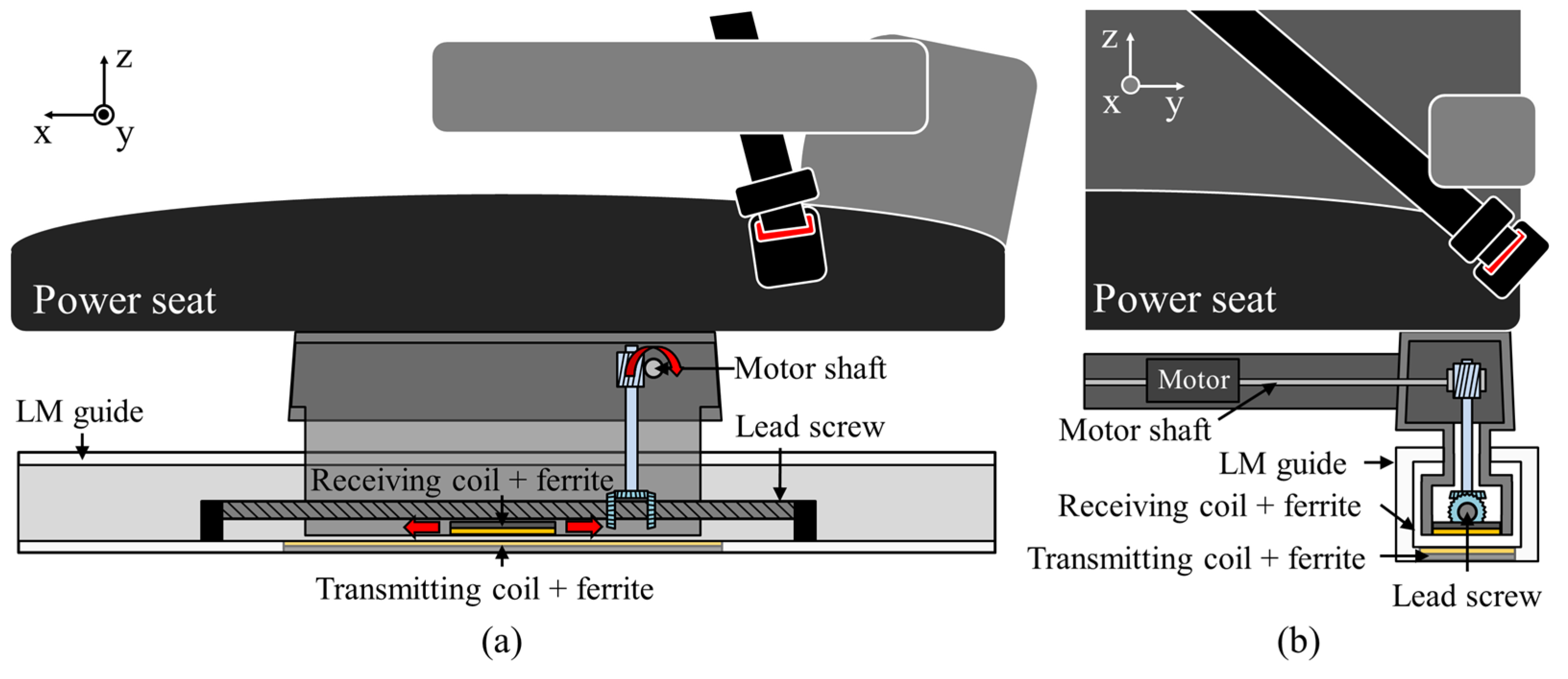
Figure 1 shows a simple diagram of the proposed wireless power seat rail structure. As illustrated in Figure 1a, by controlling the motor, both the shaft and the worm are rotated simultaneously. This rotation drives the worm wheel, which consequently transfers motion to the gearbox, enabling forward and rearward movement along the rail.
Since the gearbox is attached beneath the seat, the seat can move from the fully forward position to the fully rearward position. As illustrated in Figure 1b, as there is a space between the gearbox and the ground, the Tx coil and the Rx coil are attached beneath the gearbox and under the lead screw, respectively. Practically, these components are enclosed by a linear-motion (LM) guide made of aluminum, a conductive material that can reduce the magnetic field due to the eddy current effect. In addition, the gearbox is typically made of steel, a magnetic material that can concentrate and guide the magnetic field.
As a result, as these coils are enclosed by steel and aluminum, variations in self-inductance and mutual inductance can be observed, which directly affect the performance of the wireless power transfer circuit system. For this reason, ferrite plates, which are magnetic materials capable of effectively concentrating magnetic fields, are used to introduce higher and stable self-inductance and mutual inductance. In particular, efficiently designed ferrite structures for magnetic field guidance enable the achievement of high power transfer efficiency. Moreover, since the magnetic field can be concentrated near magnetic materials and the aluminum enclosure can help guide the magnetic flux, it is expected that the proposed structure can reduce the leakage magnetic field while maintaining high mutual inductance.
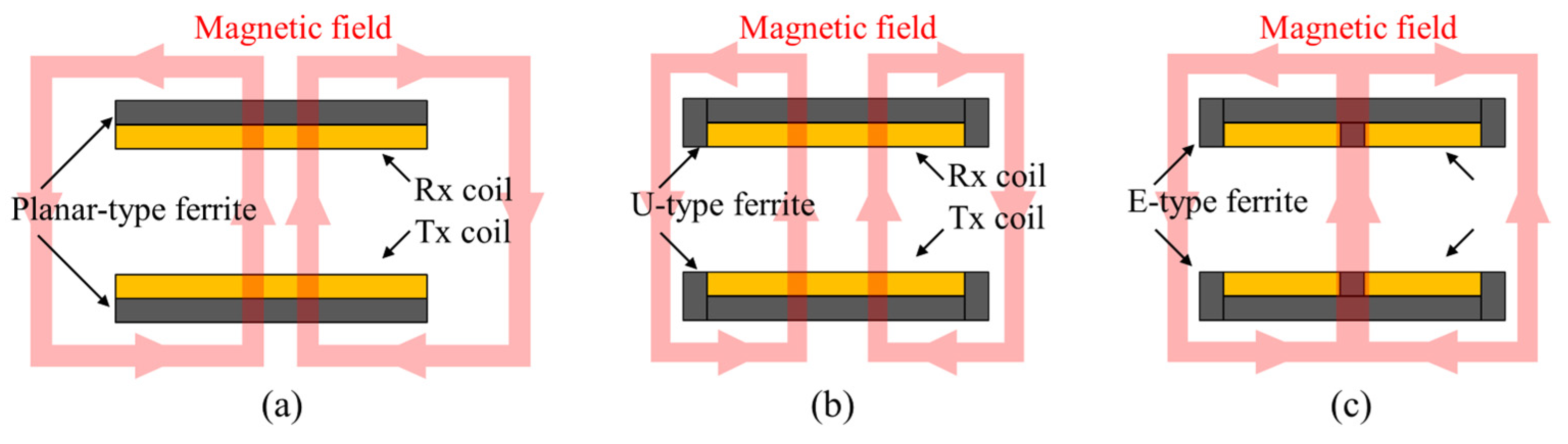
Figure 2 illustrates the considered ferrite structures of the Tx and Rx coils. In order to increase the mutual inductance, not only a planar-type structure but also U-type and E-type structures are considered. The red loops in Figure 2 represent the magnetic field paths. Compared to that in Figure 2a, the curved edges of the U-type and E-type structures shorten the magnetic path. As described in Figure 2b,c, comparing U-type and E-type structures, projecting part of the center of the E-type structure shortens the magnetic field and therefore concentrates the magnetic field, which allows it to achieve higher mutual inductance.

2.2. Topology Determination for Moving Power Seat

There are several topologies for WPT systems that are widely used in order to achieve high power transfer efficiency and/or system robustness [14,15]. Each topology includes impedance compensation circuits, which are composed of capacitors and/or inductors in series or parallel, in order to maximize the power transfer efficiency. The SS topology offers advantages due to its structural simplicity and the reduced number of required components compared to LCC or LCC-S configurations, enabling a more compact system implementation. Furthermore, considering that the position of the power seat can vary during operation, the relative position of the Rx coil may also change, resulting in variations in both self-inductance and mutual inductance. Therefore, in this research, the SS topology is considered, as it is more robust against variations in mutual inductance.

2.3. Theoretical Analysis of SS Topology

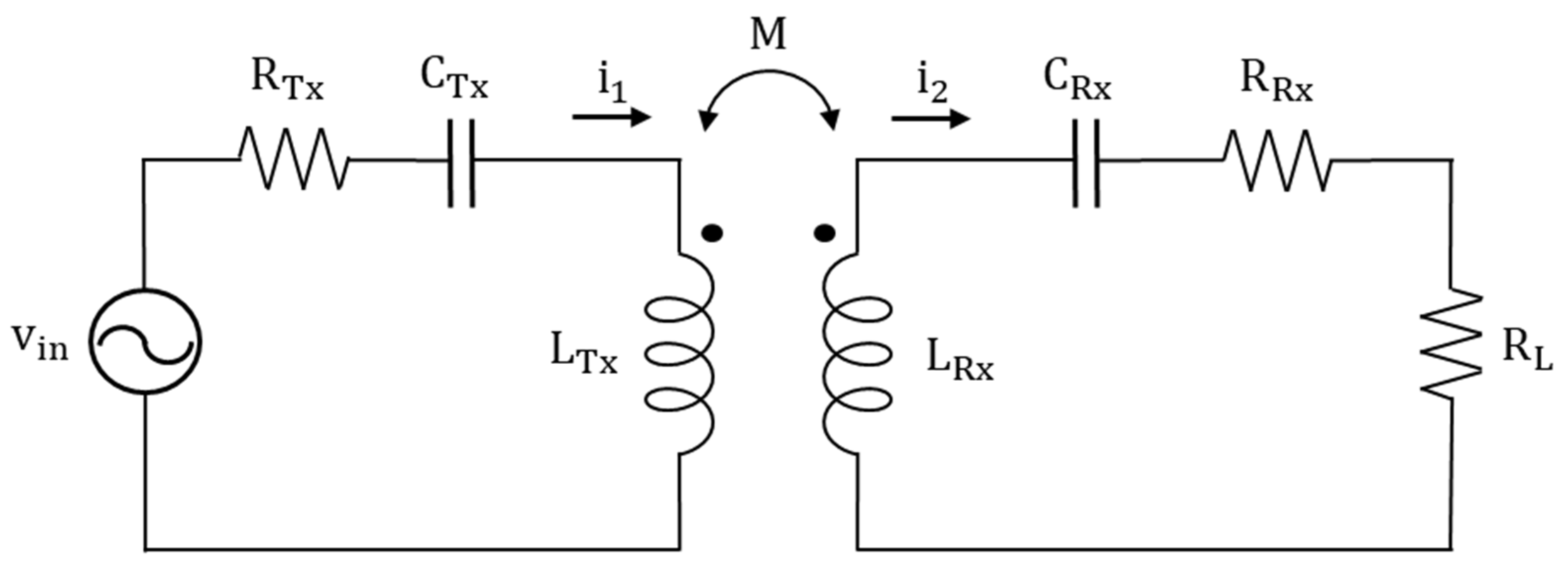
In order to investigate the effect of mutual inductance on the power transfer efficiency, a theoretical analysis is performed. In this work, the definitions of the symbols are listed in Table 1.
Figure 3 shows the equivalent circuit of the SS-topology WPT system. By applying Kirchhoff’s voltage law (KVL) to Loop 1 and Loop 2, Equations (1) and (2) are obtained, respectively.
V i n = R T x + 1 j ω C T x + j ω L T x I 1 j ω M I 2
V i n d = j ω M I 1 = R R x + 1 j ω C R x + j ω L R x I 2
When Equation (2) is solved for I2 and substituted into Equation (1), Equation (3) can be obtained.
I 1 = V i n R T x + j ω L T x + 1 j ω C T x + ω 2 M 2 1 j ω C R x + j ω L R x + R R x + R L  
On the other hand, by expressing I1 from Equation (2) and substituting it into Equation (1), the following relation is obtained.
I 2 = j ω M R T x + j ω L T x + 1 j ω C T x R R x + j ω L R x + 1 j ω C R x + R L + ω 2 M 2 V i n
As power is the product of voltage and current, the input power can be obtained as in Equation (5).
P i n = V i n I 1 = V i n 2 R T x + j ω L T x + 1 j ω C T x + ω 2 M 2 1 j ω C R x + j ω L R x + R R x + R L  
Also, considering that power is the product of the square of the current, I2, and the load, RL, by using Equation (4), the output power can be obtained as in Equation (6).
P o u t = j ω M R T x + j ω L T x + 1 j ω C T x R R x + j ω L R x + 1 j ω C R x + R L + ω 2 M 2 v i n 2 R L  
Since the power transfer efficiency is defined as the ratio between the input power magnitude and the output power magnitude, the efficiency can be expressed as shown in Equation (7).
η = P o u t P i n = ω 2 M 2 R T x + j ω L T x + 1 j ω C T x R R x + j ω L R x + 1 j ω C R x + R L + ω 2 M 2 ( R R x + 1 j ω C R x + j ω L R x + R L ) R L
Typically, the angular frequency and RTx, RRx, and RL are determined by the system configuration. As a result, higher mutual inductance and operating frequency lead to increased power transfer efficiency.
Ideally, when complete compensation is applied to both the Tx and Rx sides, Equation (7) can be simplified to Equation (8), as the imaginary terms are eliminated.
η e x c t = P o u t P i n = ω 2 M 2 R T x R R x + R L + ω 2 M 2 ( R R x + R L ) R L
Focusing on the load, Equation (8) can be reorganized into Equation (9).
η e x c t = P o u t P i n = R L R R x + R L + R T x R R x + R L 2 ω 2 M 2
As a result, a higher load resistance RL leads to a lower power transfer efficiency. However, since this work considers a power transfer system under misalignment conditions, variable self-inductances, mutual inductance, and self-resistances, or equivalent series resistance (ESR), are introduced. More precisely, the overall power transfer efficiency in this manuscript is defined by (7).

2.4. Determination of Compensation Capacitors Considering Variant Self-Inductances

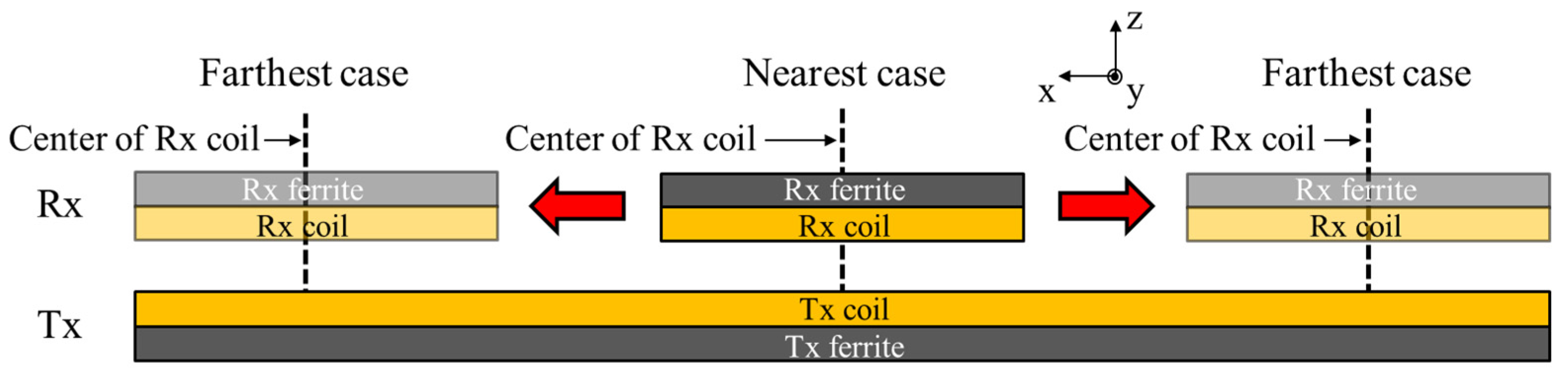
In general, the self-inductance of a coil can be influenced by its surrounding environment. In particular, the presence or absence of magnetic materials can significantly affect the self-inductance, as these materials either redirect or concentrate the magnetic flux. As illustrated in Figure 4, the proposed system includes sliding power seats, where the Tx coil is mounted on the bottom rail and the Rx coil has one degree of freedom. Therefore, when a moving power seat is considered, the self-inductances of both the Tx and Rx coils, as well as the mutual inductance, vary.
The variation in mutual inductance is not affected by the impedance components of the SS topology, but the self-inductances affect the compensation circuit of the Tx and Rx parts. Therefore, to guarantee ZVS conditions and minimize the power transfer efficiency drop, the compensation capacitors are evaluated based on the lowest values of LTx and LRx, which occur under maximum misalignment conditions [16,17].

3. Electromagnetic Simulation Analysis of Proposed Model

To verify the proposed model, 3D electromagnetic (EM) field simulations and circuit simulations were conducted using Ansys Electronics Maxwell and Ansys Electronics Simplorer, respectively.

3.1. Simulation Setup for EM Simulation

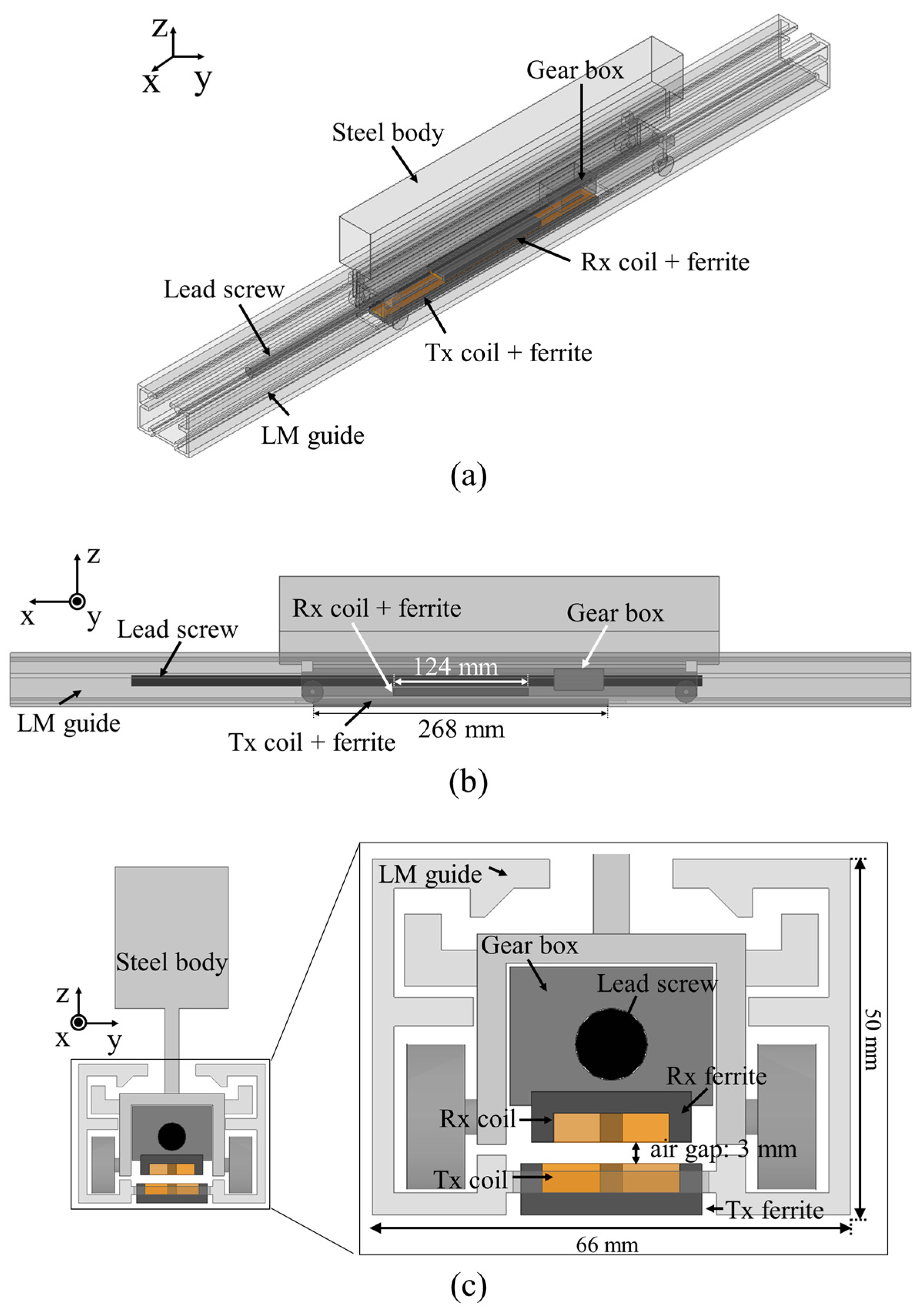
Figure 5 shows the designed model for the EM simulation. To incorporate the practical design of the power seat slider, a simplified aluminum beam representing the LM guide is included, along with the steel body housing the gearbox, as well as the wheels and lead screw, since these components can affect the magnetic field distribution. However, the power seat and coil structures are modeled as lumped elements to reduce complexity. As illustrated, the steel parts are colored dark gray, while the aluminum parts are shown in light gray. In this simulation, the moving range of the steel block or gearbox is assumed to be from −100 mm to +100 mm, and the length of the transmitting coil is designed to be 200 mm. Additionally, the air gap, which is the distance between the Tx coil and Rx coil, is assumed to be 3 mm.
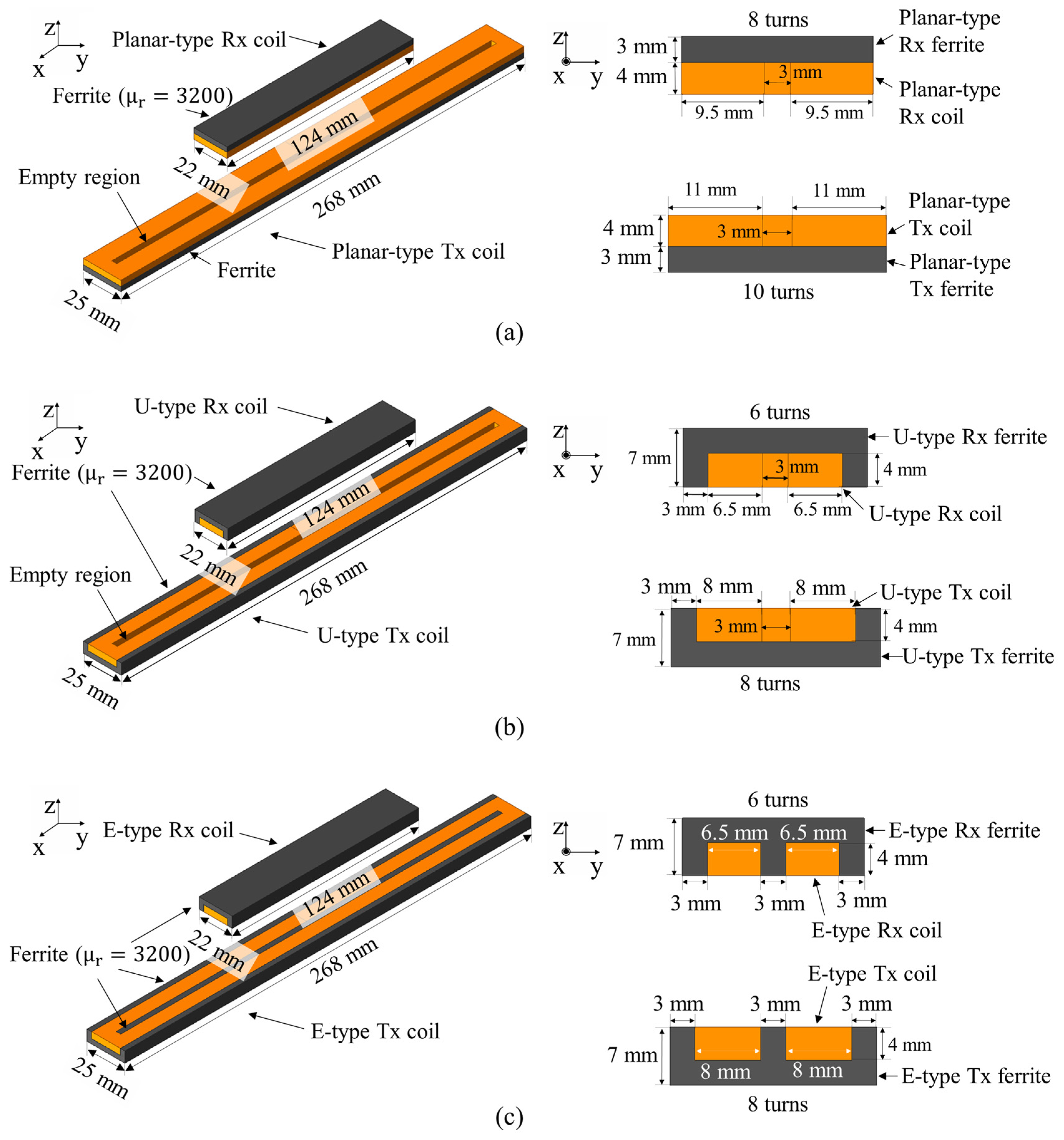
In the Maxwell 3D simulation, the solution type was set to eddy current mode, since this work considers time-varying magnetic fields. The percent error was set to 0.3, and the maximum number of solver iterations was set to 20. In this simulation, three different types of Tx and Rx coil pairs—planar-type, U-type, and E-type coils—were investigated. The total volumes of the models were restricted as described in Figure 6.
As illustrated in Figure 6a, the planar-type Tx and Rx coils have 8 and 10 turns, respectively. In contrast, the U-type and E-type coils have two fewer turns in both the Tx and Rx coils because the ferrite at the edges reduces the available winding area. As a result, the numbers of turns for the U-type and E-type Tx coils are six, and those for the corresponding Rx coils are eight. In addition, the relative permeability of the ferrite was set to 3200, considering practical ferrite plates.

3.2. Electromagnetic Simulation Results

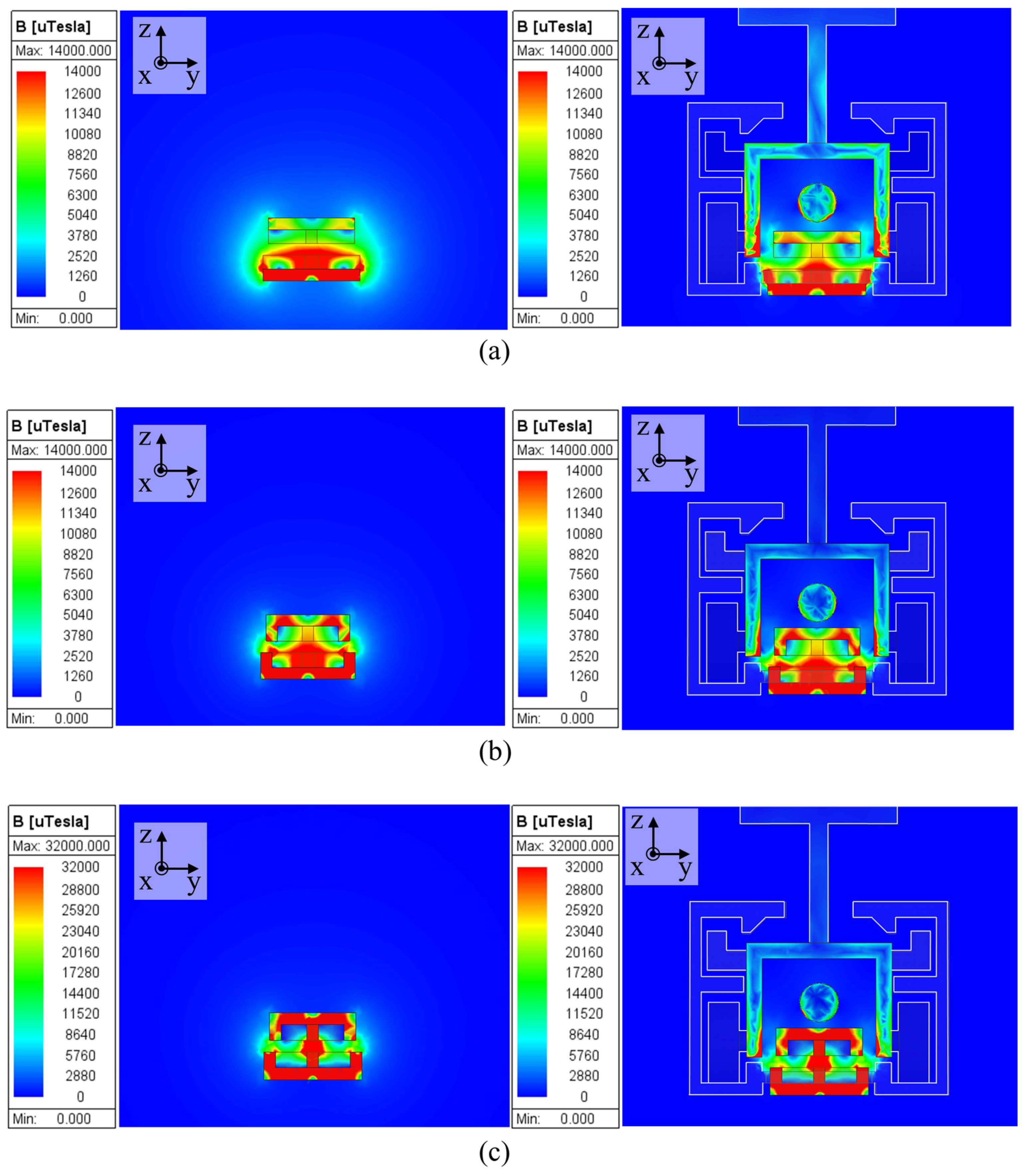
Figure 7 shows the magnetic field distribution results without rail models and with rail models. In this simulation, it was assumed that currents of 18 A and 3 A flow in the Tx and Rx coils, respectively, which are the maximum values required to deliver 70 W to the load. As illustrated, the magnetic field is more concentrated in the ferrite plates and steel body. Specifically, the E-type coil structure shows greater concentration of the magnetic field compared to the planar and U-type structures, which results in higher mutual inductance. Since the magnitude of the magnetic field is proportional to the current flowing in the conductor, arbitrary current values result in similar magnetic field distributions. From these simulation results, it can be observed that the rail structures reduce the leakage magnetic field due to the presence of steel and aluminum materials. In addition, by comparing Figure 7a with Figure 7b,c, the magnetic field magnitude can be observed to be more concentrated at the edges of the receiving coil. For a more detailed analysis of the magnetic field vector paths, additional investigations were conducted.
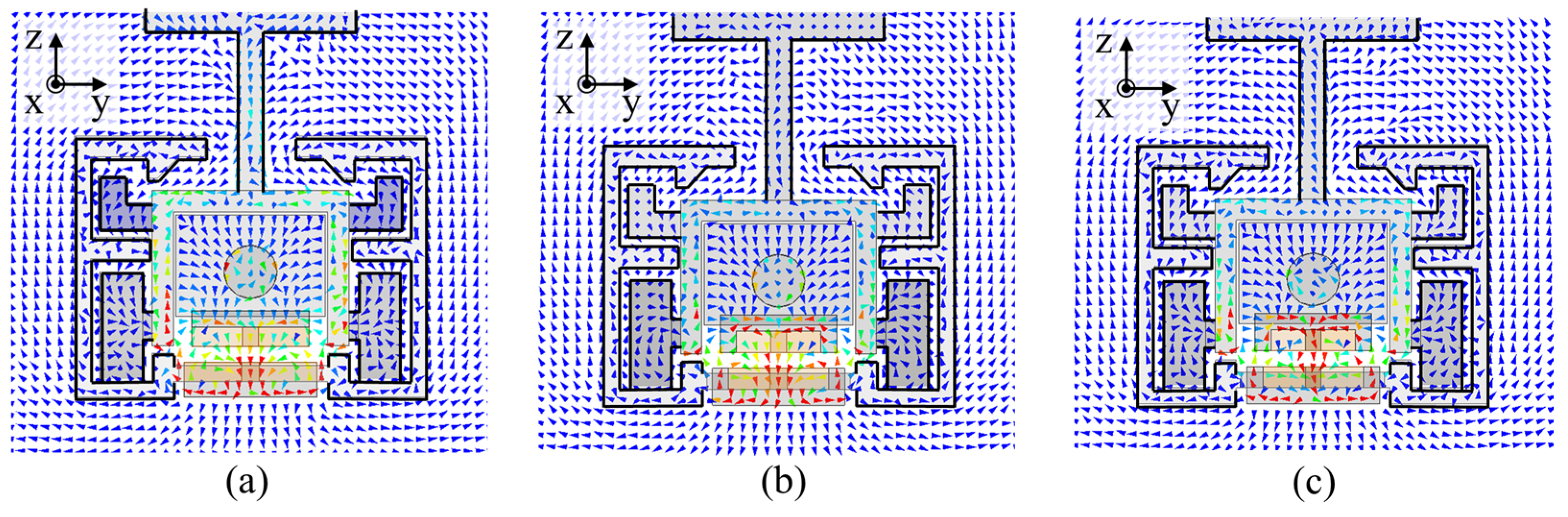
Figure 8 shows the magnetic field vectors depending on the coil types. As can be expected from the results in Figure 7, the steel body, which is a kind of magnetic material, guides the magnetic field vector. As the magnetic field needs to establish a closed loop, the magnetic field on the steel is concentrated in the edge parts in the planar-type coil. In the U-type and E-type coils, as they have curved edges, the magnetic field detours the edge parts; therefore, relatively reduced magnetic fields are observed in the steel edge. In the case of the E-type structure, by using ferrite in the center parts, the magnetic field loop can be made shorter and is therefore able to achieve high mutual inductance.
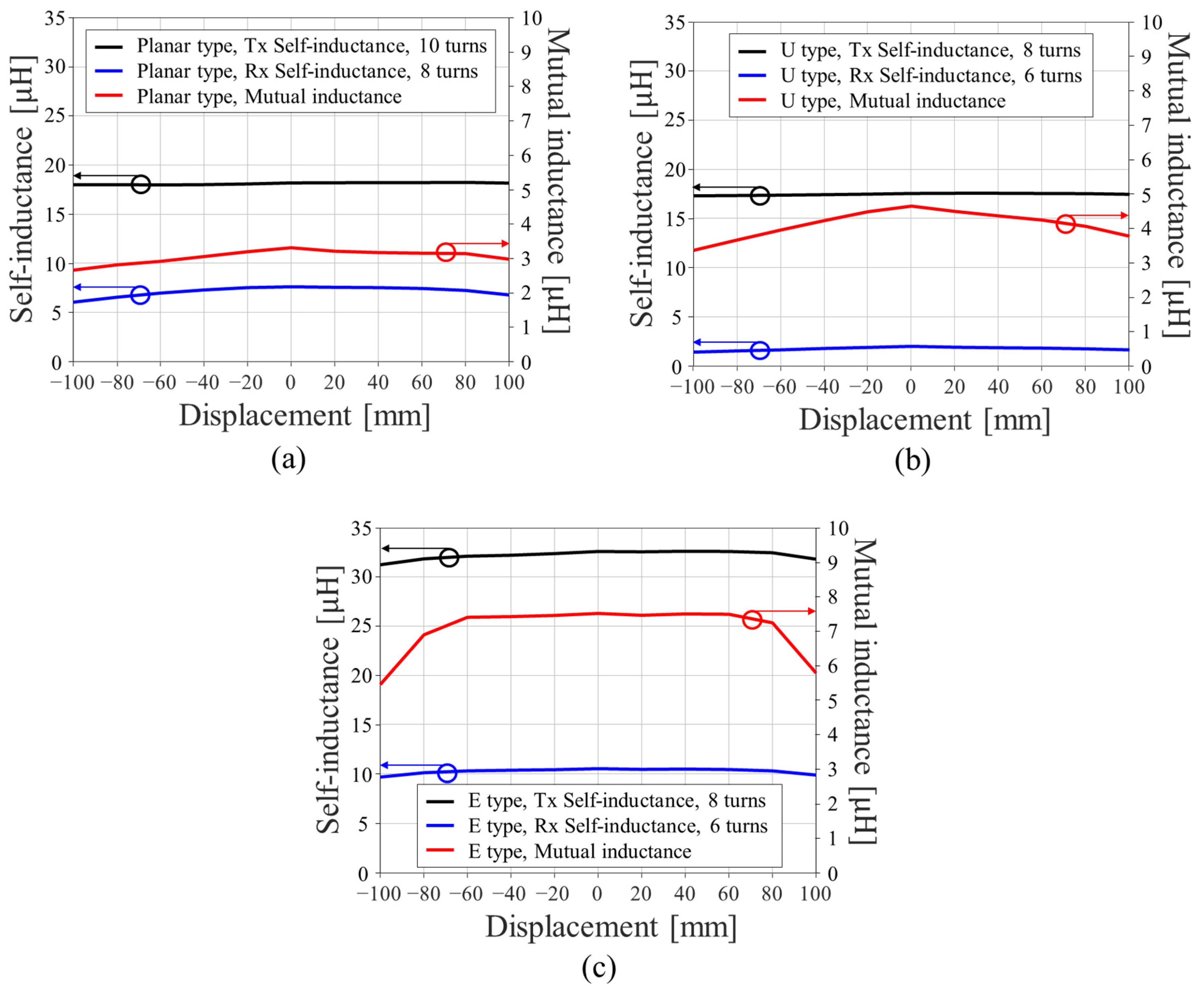
Figure 9 shows the simulation results regarding the self-inductances and mutual inductances of the planar type, U-type, and E-type models. As can be expected, the U-type and E-type have higher mutual inductance as they have shorter magnetic paths. Specifically, the planar coil employs a greater number of turns, whereas the U-type coil, despite having fewer turns, provides additional magnetic flux paths along the edges, resulting in a self-inductance of 17 µH. In contrast, the E-type Tx coil exhibits a significantly higher self-inductance of approximately 32 µH, as the ferrite plate positioned at the center of the coil effectively concentrates the magnetic field. Consequently, the E-type configuration achieves a higher self-inductance than the U-type coil, even though both configurations employ the same number of turns.
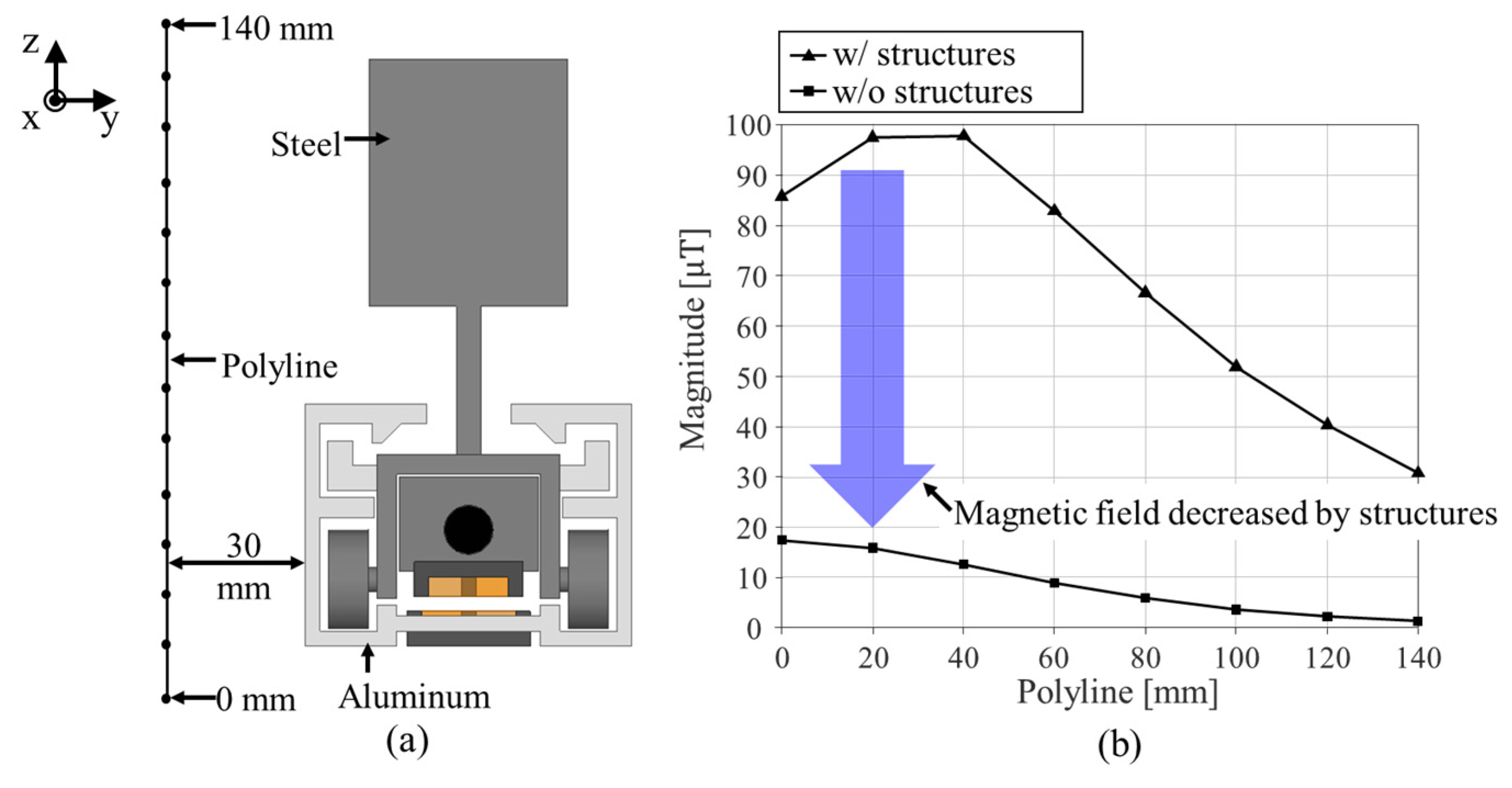
With respect to the leakage magnetic field, it can be observed that the steel body and the aluminum LM guide effectively shield the magnetic field, thereby reducing leakage, as illustrated in Figure 7. In order to investigate the leakage magnetic field, a specific position was observed as illustrated in Figure 10a. As shown in Figure 10b, displaying the leakage magnitude of the magnetic field 30 mm away from the edge position, the model including the LM guide and steel body showed 90% suppression compared to the model without these structures. These results support the assertion that the coil-embedded wireless powering system has a much more reduced magnetic field. Practically, according to SAE J2954 RP [18], which is a wireless charging standard for electric vehicles, the magnetic field in the interior vehicle region is limited to 27 µT based on the ICNIRP 2020 guidelines. In this research, the maximum leakage magnetic field measured at a distance of 30 mm from the rail is 24 µT under the assumed maximum power transfer condition, with currents of 18 A and 3 A flowing in the Tx and Rx coils, respectively. Therefore, the proposed model is confirmed to satisfy the electromagnetic field exposure requirements.

4. Circuit Simulation and Analysis of Proposed Model

4.1. Circuit Simulation Setup

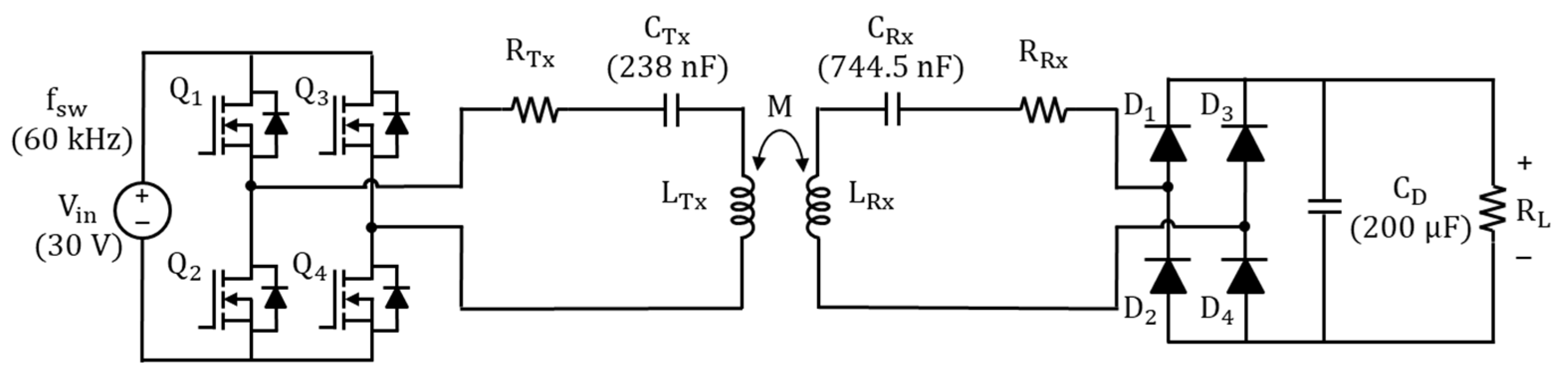
In order to verify the power transfer efficiency of the proposed model, a circuit simulation was conducted. Figure 11 shows the circuit diagram of the simulation setup. An SS-topology WPT system was established, including a full-bridge inverter, rectifier, and assumed load of 3 Ω to 7 Ω in steps of 2 Ω. Also, the ESR values of the transmitting coil and receiving coil were varied from 100 mΩ to 348 mΩ and from 60 mΩ to 78 mΩ as listed in Table 2.
The powering frequency was considered around 60 kHz in order to avoid disturbance of the EV WPT frequency and Qi standard bands. As discussed, in order to secure a ZVS condition and lower power transfer efficiency drop, the compensation capacitors were determined by the lowest LTx and LRx values obtained from the EM simulation.

4.2. Simulation Results

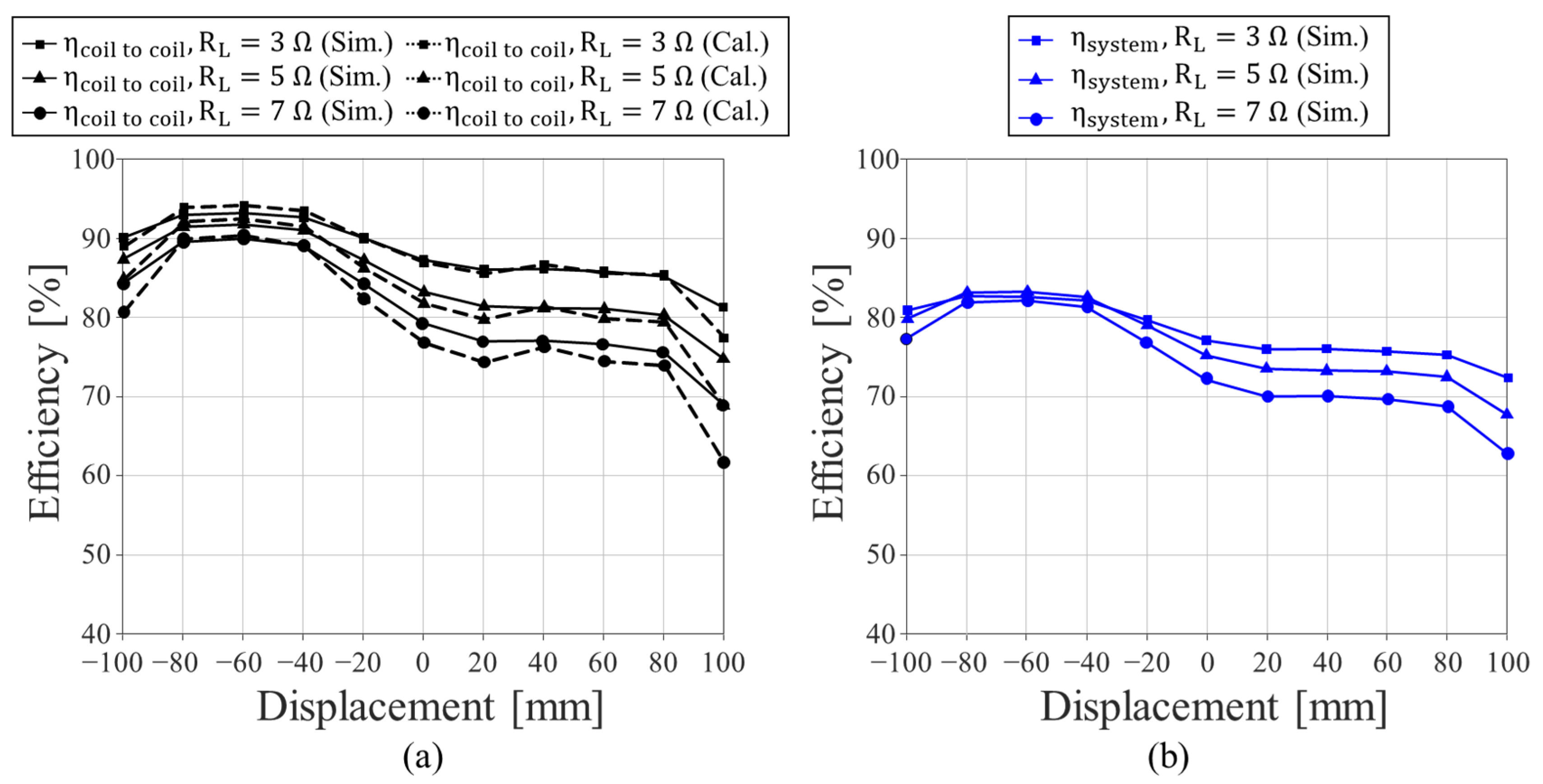
Figure 12 shows the power transfer efficiencies and coil-to-coil efficiencies depending on their types. As can be expected, the E-type has higher power transfer efficiency compared to the U-type and planar-type structures. As described in Figure 12a, the theoretical calculation results and simulation results correspond to each other, and these results support Equation (7), with higher mutual inductance achieving higher power transfer efficiency.
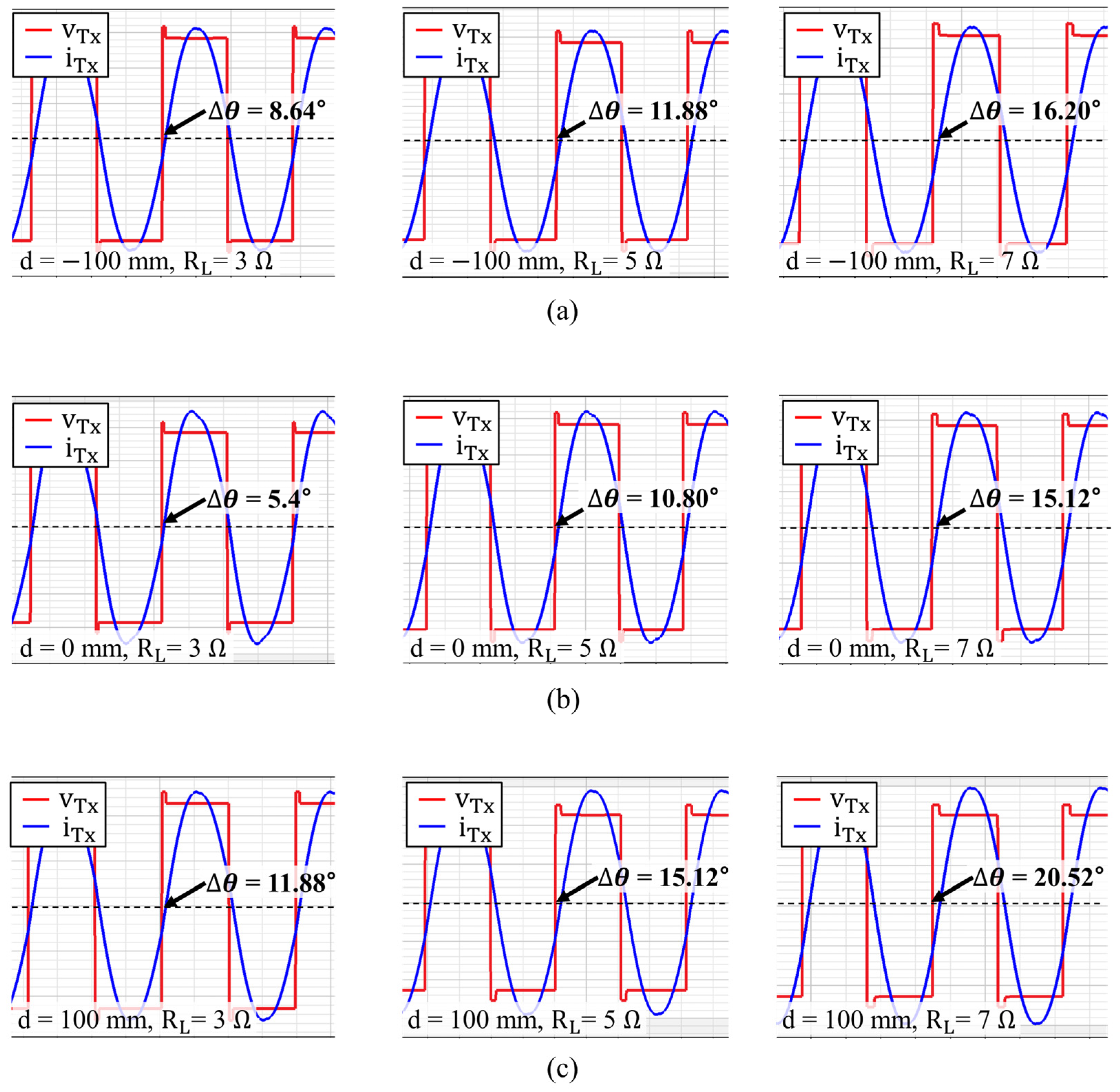
Figure 13 illustrates the voltage and current waveforms at the transmitting and receiving sides as a function of the power seat position. Here, θ represents the phase difference between the voltage and current at the transmitting part. Due to variations in the imaginary component of the impedance, the phase difference between the voltage and current changes with the position. Since the compensating capacitors are designed based on the minimum values of LTx and LRx, the ZVS condition is satisfied not only at the maximum displacement positions of d = ±100 mm but also at the aligned position of d = 0 mm under various load conditions.

5. Experimental Verification

To verify the proposed model, experiments were conducted using a single rail. In the experiment, the received power was set to 70 W, which is sufficient to operate the power seat. According to the simulation results, E-type Tx and Rx coils achieve higher mutual inductance. Therefore, the Tx and Rx coils were fabricated using an E-type coil structure to realize high power transfer efficiency.

5.1. Fabricated Tx/Rx Coils and Electric Parameter Measurement Setup

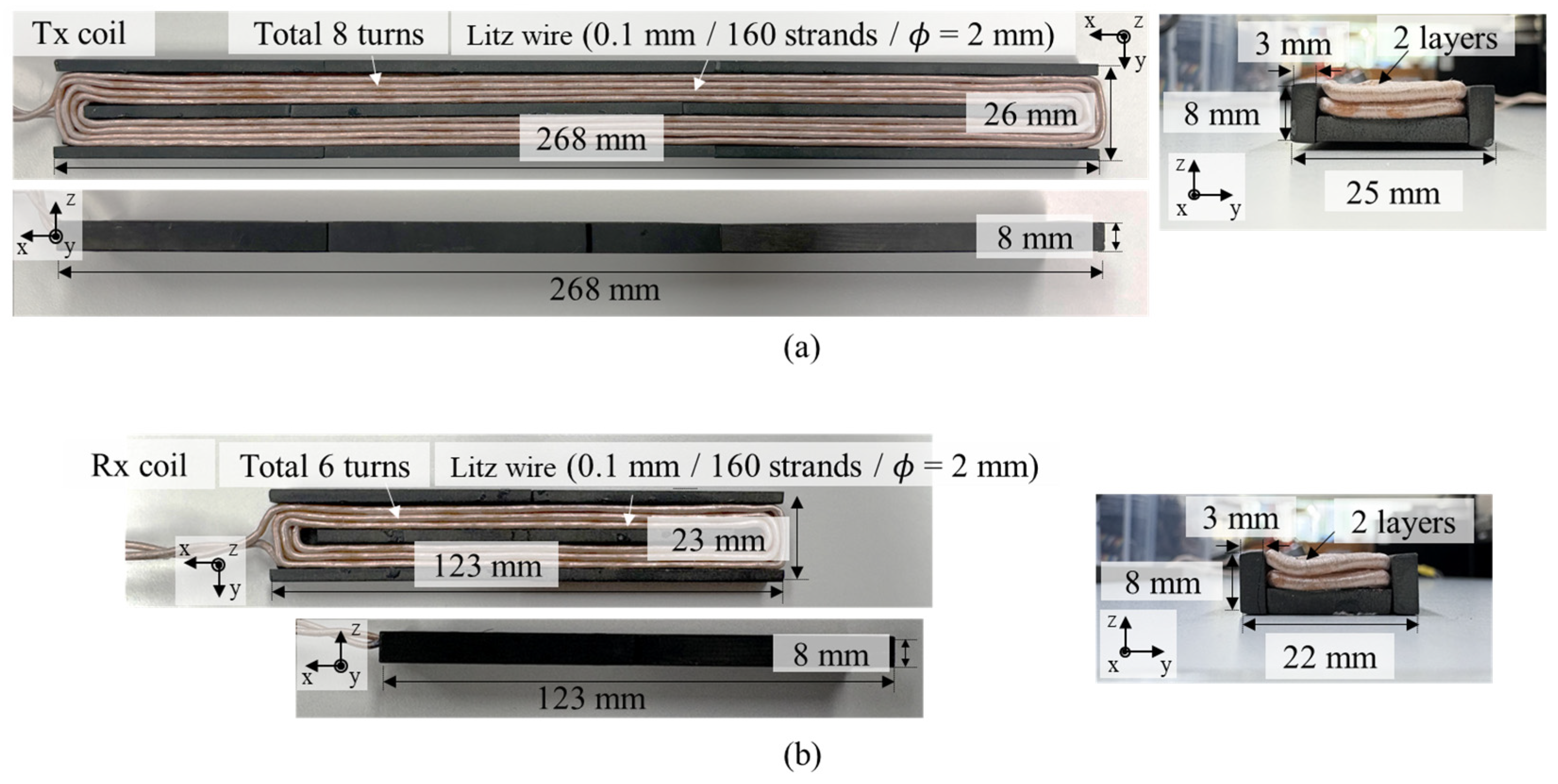
The fabricated Tx and Rx coils are illustrated in Figure 14. Their dimensions are identical to those used in the simulations due to the limited space available in the rail. For the ferrite core, PM12 (TODA materials, Gangwon, Republic of Korea) ferrite plates with a relative permeability of 3200 were cut into multiple pieces and assembled to form an E-type coil structure. Both coils were wound on the ferrite cores using Litz wire (USTC, 0.1 mm, 160 strands) with an overall diameter of 2 mm. The evaluated numbers of turns for the Tx and Rx coils were eight and six, respectively.
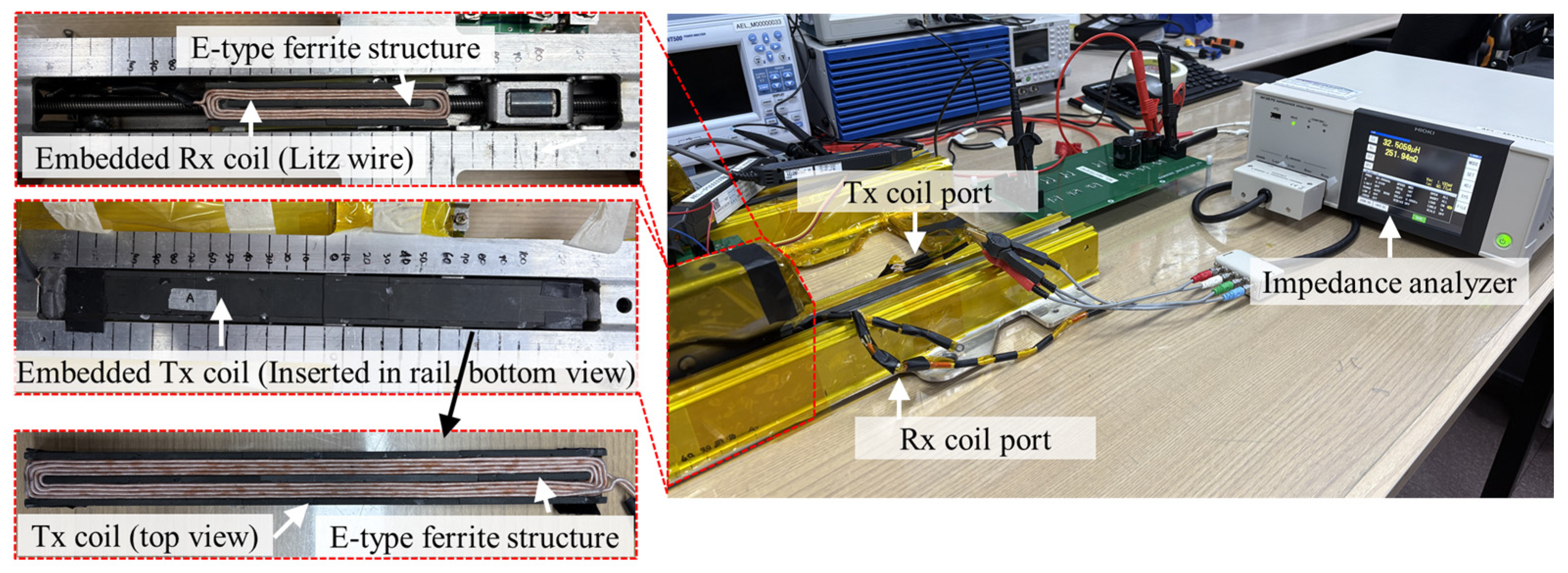
As illustrated in Figure 15, in order to measure the electrical parameters of the Tx and Rx coils, a HIOKI 3570 LCR meter (HIOKI, Nagano, Japan) was used. In order to establish the practical setup for measurement, the Tx and Rx coils were embedded in the frame. Also, as the operating frequency was assumed to be 60 kHz, all the parameters were measured at 60 kHz. As the mutual inductance, self-inductance, and ESR of both the Tx and Rx coils varied depending on the position of the rail, the measurement was conducted at various positions from −100 mm to 100 mm in steps of 20 mm. The Tx matching capacitor and Rx matching capacitor were included for the compensation circuits. Considering that the self-inductance of Tx and Rx coils, as well as their mutual inductance, can vary depending on the rail position, both of the matching capacitances were evaluated when the self-inductance of the Tx and Rx coils was at its lowest; this guarantees the zero-voltage-switching condition, which is essential to a robust power system. The capacitance and impedance of capacitors are independent of the rail position, so the capacitor-related electric parameters were measured in the center position as a nominal value.
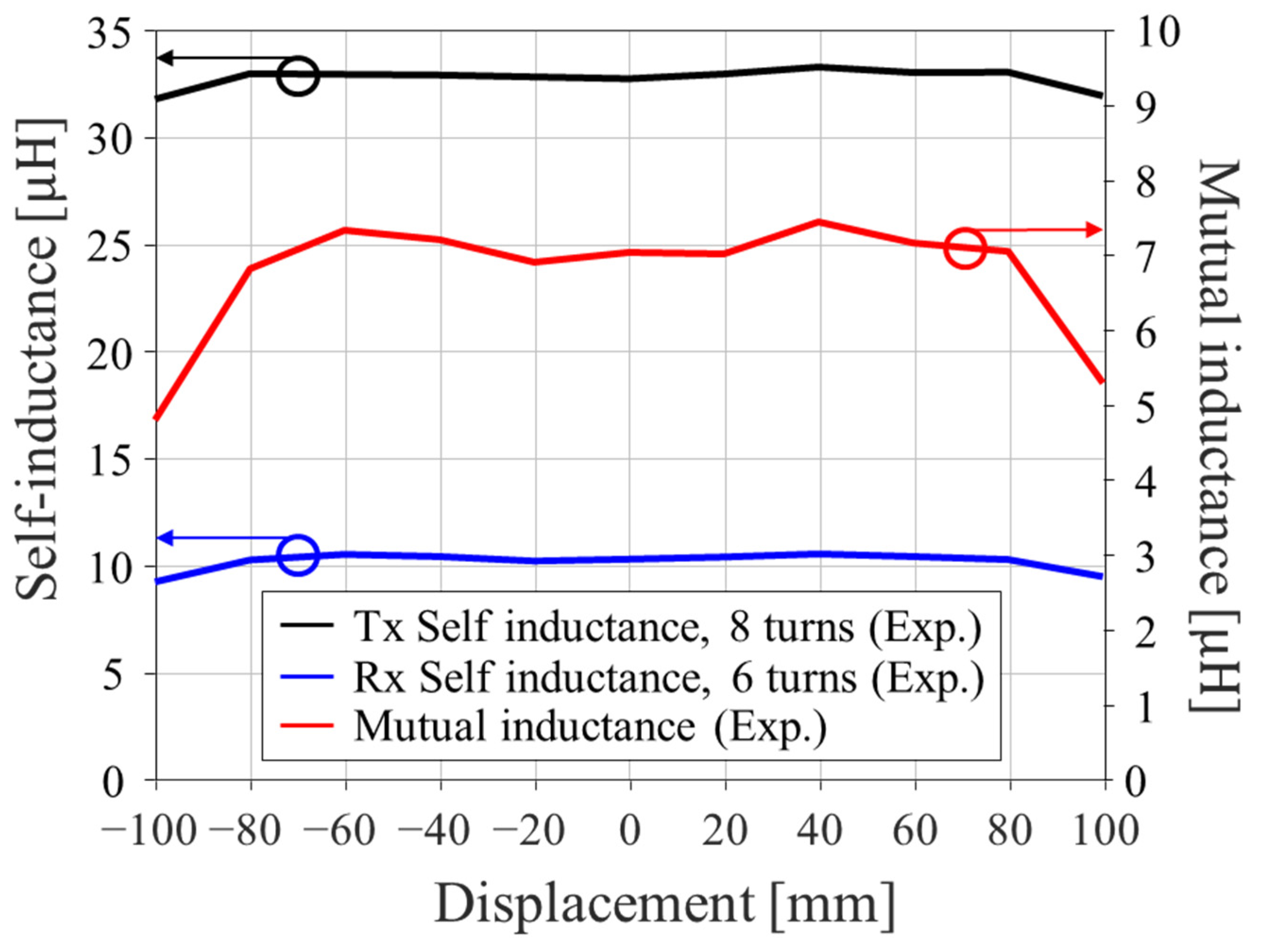
Figure 16 shows the measured self-inductance of the Tx/Rx coils and their mutual inductance. The black and blue solid lines represent the self-inductances of the Tx and Rx coils, respectively. As described in Figure 14, since the Tx coil has a larger number of turns and a greater physical size, its self-inductance is approximately three times higher than that of the Rx coil. The red solid line represents the mutual inductance between the transmitting and receiving coils. The mutual inductance remains nearly constant within a ±10% range, which is considered acceptable, except near the edge regions. Due to the symmetrical rail structure, the measured inductance profiles are also symmetrical.
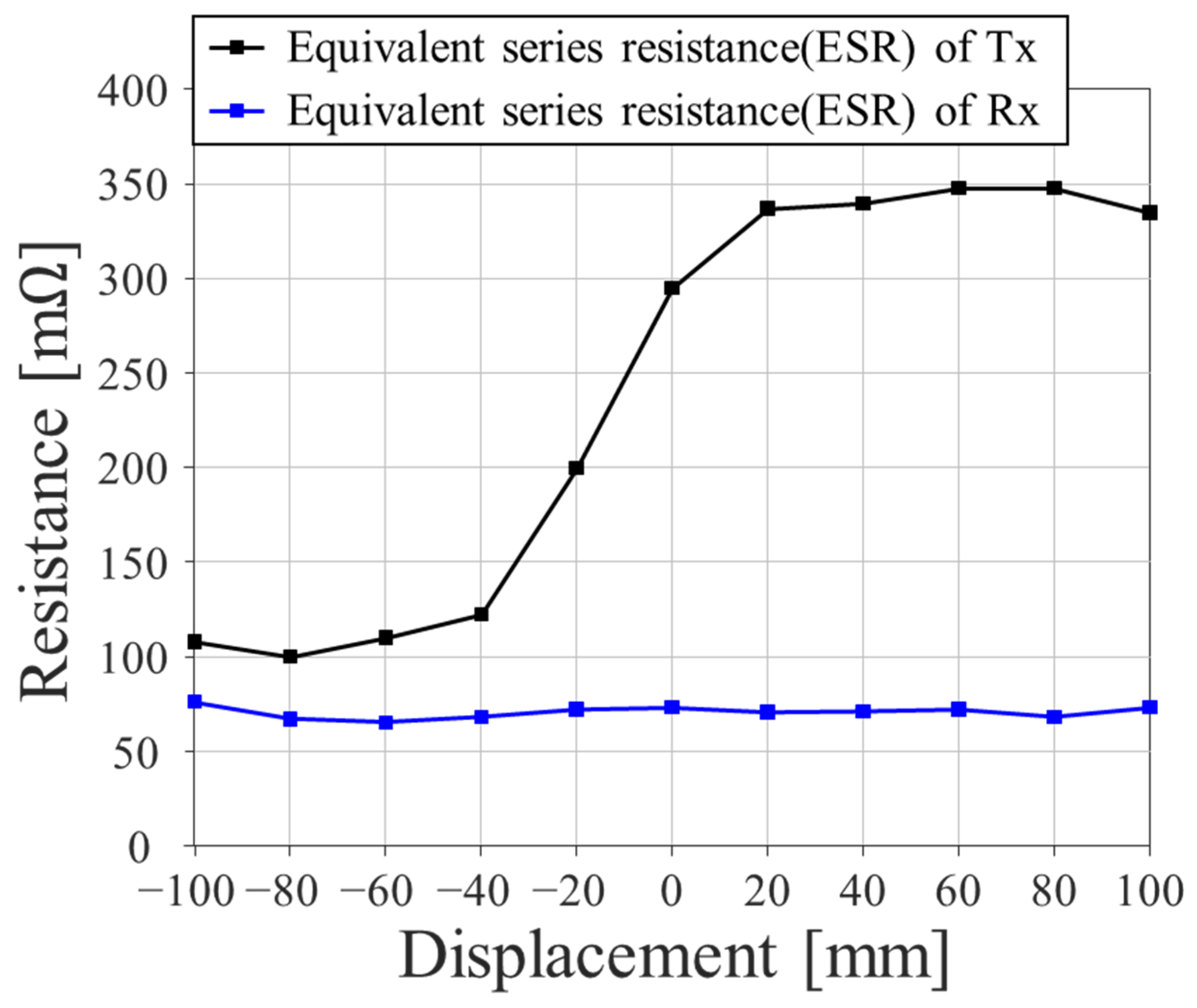
Figure 17 shows the measured ESR values of the Tx and Rx coils as a function of coil displacement. The measurements were performed using an impedance analyzer at 60 kHz, with the displacement varied from −100 mm to 100 mm in 20 mm steps. While the ESR of the Rx coil remains nearly constant at approximately 53 mΩ, the ESR of the Tx coil increases as the displacement changes from −20 mm to 100 mm. This behavior is attributed to the effects of the steel and aluminum shielding, for which eddy current losses become more dominant as the displacement increases.

5.2. Power Transfer Efficiency Measurement Setup

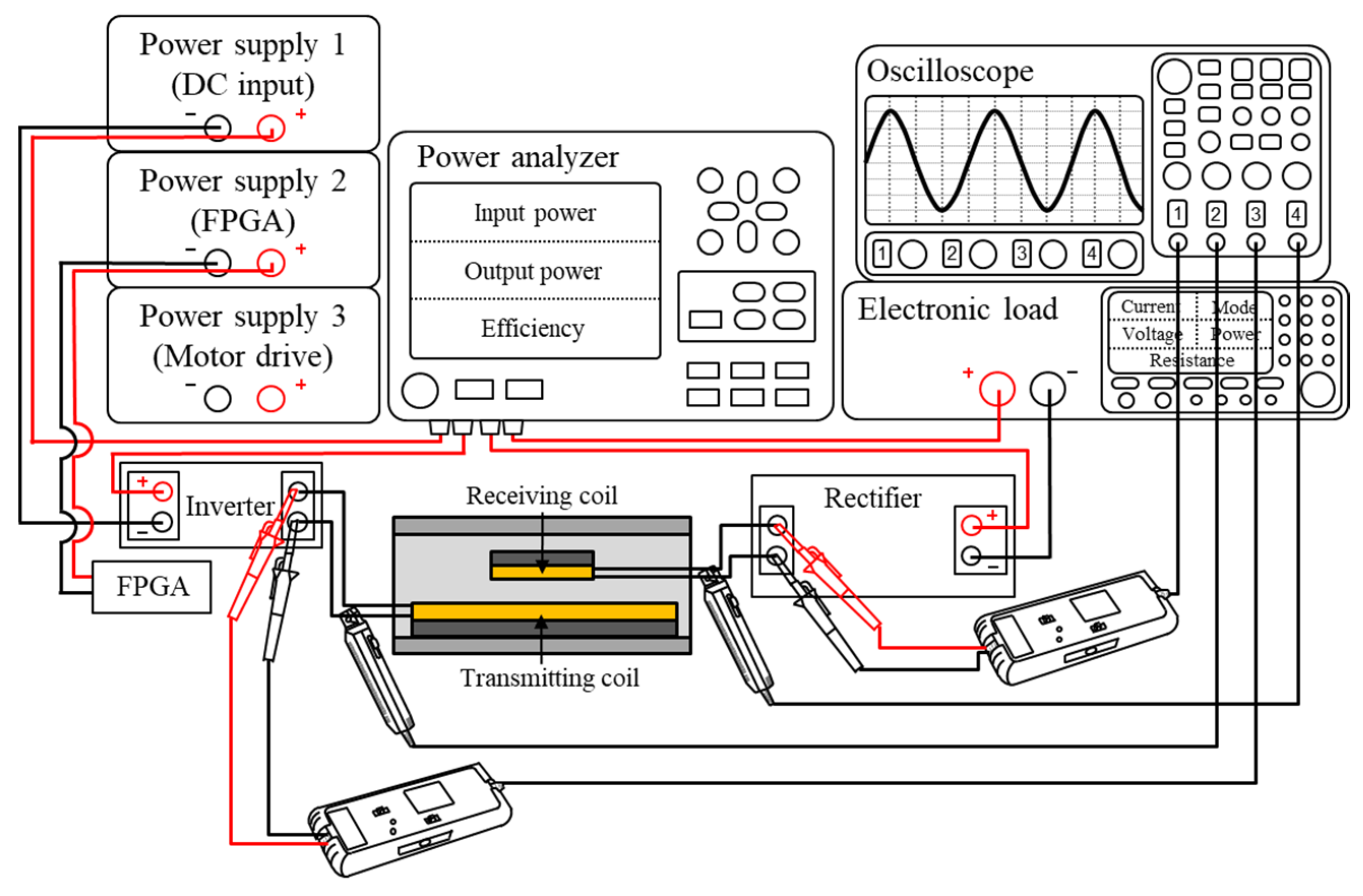
Figure 18 presents a simplified illustration of the power transfer efficiency measurement setup. In this experiment, both the coil-to-coil power transfer efficiency and the overall system efficiency, defined as the DC-to-DC efficiency, were measured as the position of the Rx coil varied. As illustrated in Figure 18, to measure the coil-to-coil power transfer efficiency, the voltages applied to both the Tx and Rx sides were measured, along with the currents flowing through the Tx and Rx sides. Based on these measurements, the power transfer efficiency between the Tx and Rx sides, namely the coil-to-coil efficiency, was calculated and displayed on the oscilloscope. In addition, to measure the DC-to-DC power transfer efficiency, or the efficiency from the power supply to the load, a power analyzer was used. Since the DC-to-DC efficiency includes both the inverter and rectifier stages, power conversion losses are inevitable.
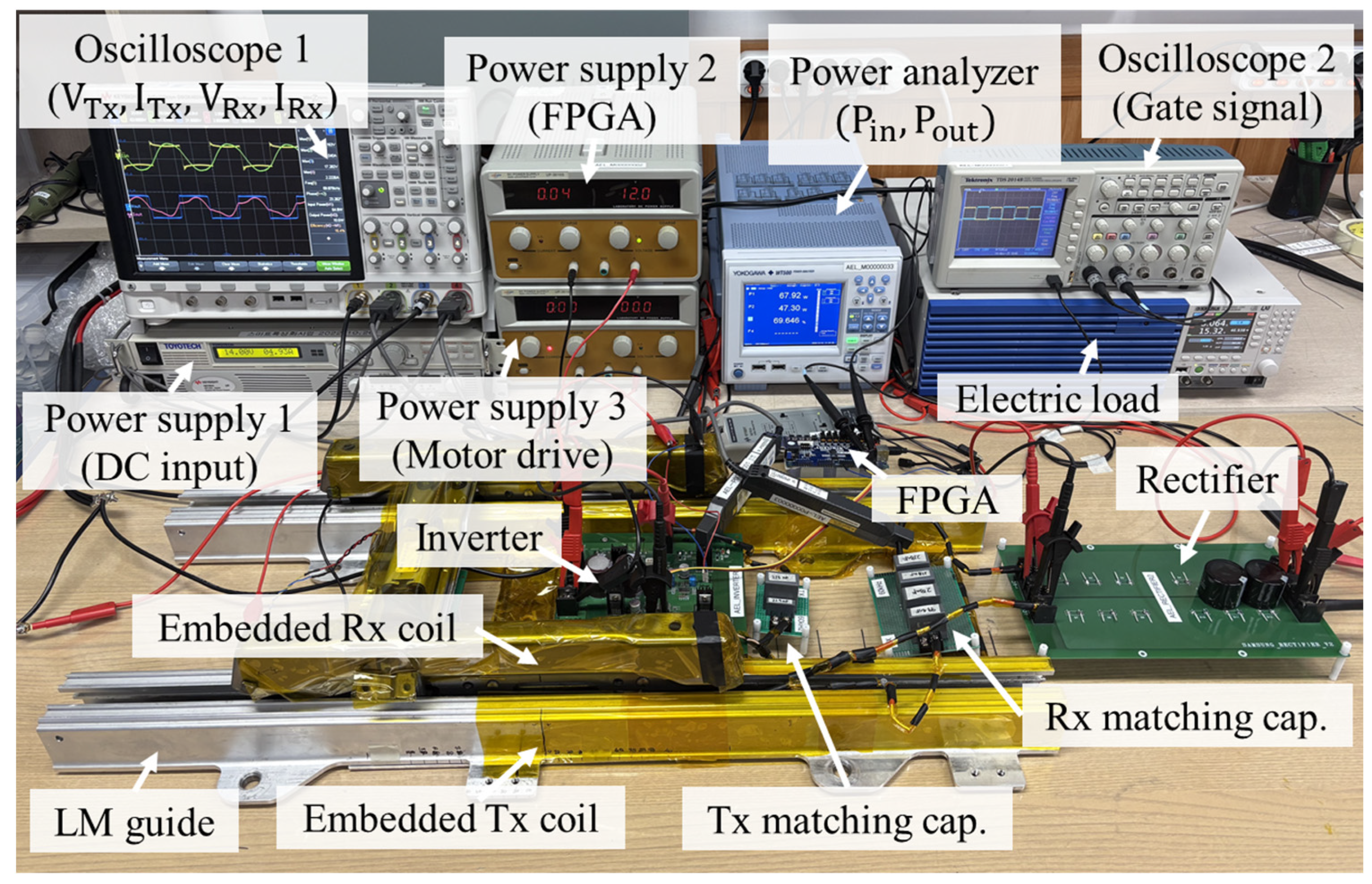
Figure 19 illustrates a captured image of the power transfer efficiency measurement setup. Since this study considered a series–series topology, both the Tx and Rx coils, as well as the Tx and Rx matching capacitors, were connected in series. As discussed, both the system efficiency and the coil-to-coil efficiency were measured in this setup. Specifically, to measure the system efficiency or the DC-to-DC efficiency, the input voltage and current and the output voltage and current were connected to channel 1 and channel 2 of the power analyzer (WT500, YOKOGAWA, Tokyo, Japan), respectively.
Additionally, to measure the coil-to-coil efficiency, differential voltage probes and current probes were applied to the Tx and Rx sides, and the corresponding waveforms were monitored using oscilloscope 1 (DSOX4024A, Keysight, Santa Rosa, CA, USA). The power and power transfer efficiency were then calculated using the power supply test software (D4000PWRB, Keysight, Santa Rosa, CA, USA). On the Rx side, a rectifier was used to convert the received AC power into DC power, and an electronic load (PLZ 1205W, KIKUSUI, Yokohama, Japan) was connected as the load. To evaluate various load conditions, the load resistance was varied from 3 Ω to 7 Ω in increments of 2 Ω. A full-bridge inverter was used to supply a time-varying current to the transmitting coil. Specifically, power supply 1 provided the DC link voltage (VDS) for the inverter, while power supply 2 supplied 12 V on a gate driver. A field-programmable gate array (FPGA Spartan-3, Xilinx, San Jose, CA, USA) was programmed to generate two gate signals at 60 kHz for inverter operation, and these gate signals were monitored using oscilloscope 2. Lastly, power supply 3 was connected to the geared motor to control the rail position.

5.3. Experiment Results

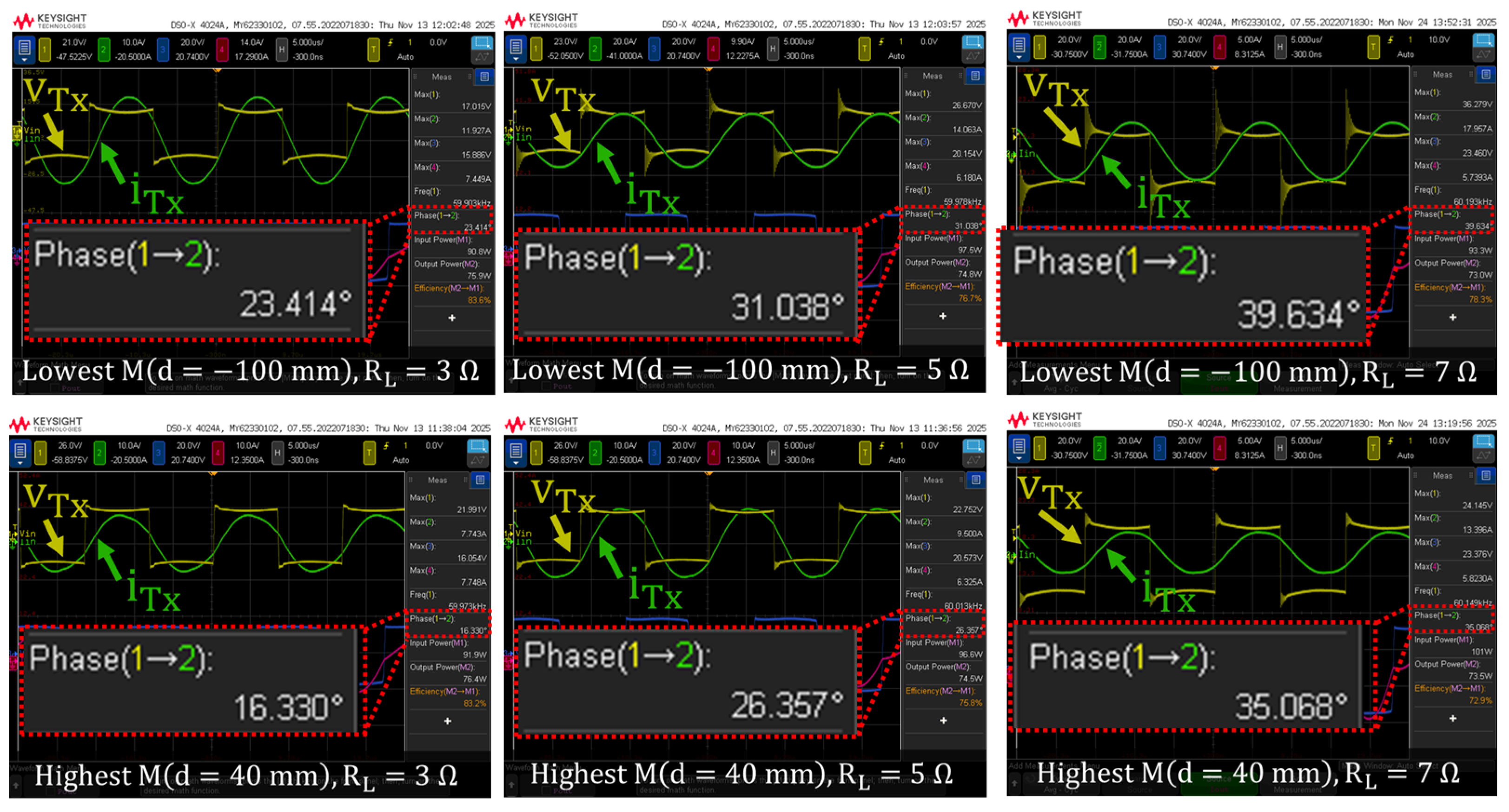
Figure 20 illustrates the voltage and current waveforms of the Tx and Rx coils. Depending on the rail position, the phase difference between VTx and ITx varies. Since the matching capacitances are determined based on the lowest LTx under the farthest condition, the distance of 100 mm exhibits the minimum phase difference. In contrast, under the closest condition, the Tx side becomes dominantly inductive, resulting in a larger phase difference, which satisfies the ZVS condition. To further confirm the ZVS condition in detail, the manually converted phase difference between VTx and ITx, obtained from the time delay between VTx and ITx, is illustrated in Figure 20. As illustrated, the ZVS condition is guaranteed over the entire range of rail positions, regardless of the load condition.
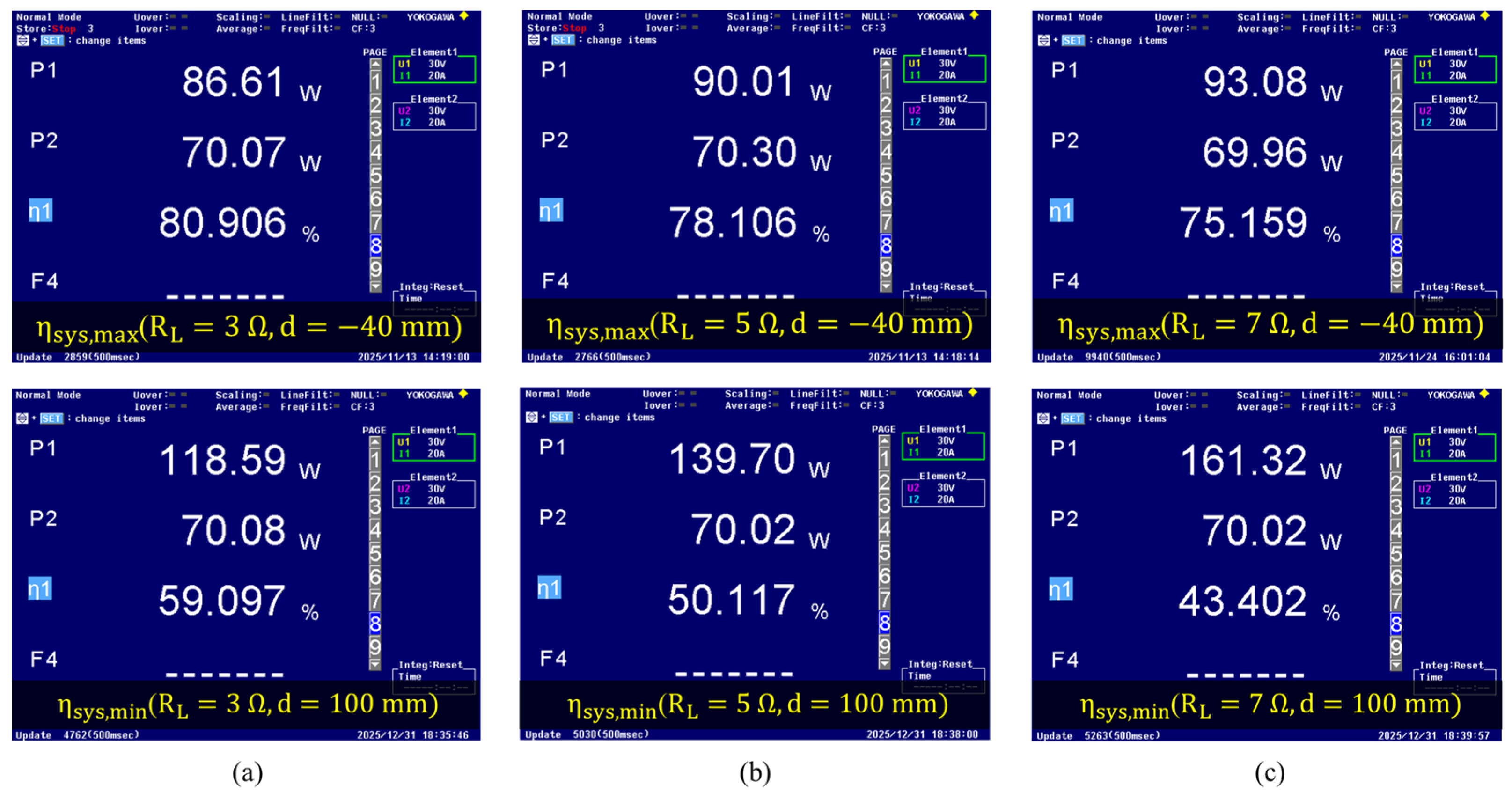
Figure 21 shows the maximum and minimum power transfer efficiencies under various load conditions. The maximum power transfer efficiency is observed at −40 mm, while the minimum power transfer efficiency occurs at −100 mm. This is caused by variations in the mutual inductance, which directly influence the power transfer efficiency, as described in (7). Additionally, as the load increases, the coil-to-coil power transfer efficiency decreases. This result supports the theoretical analysis presented in (7)–(9).
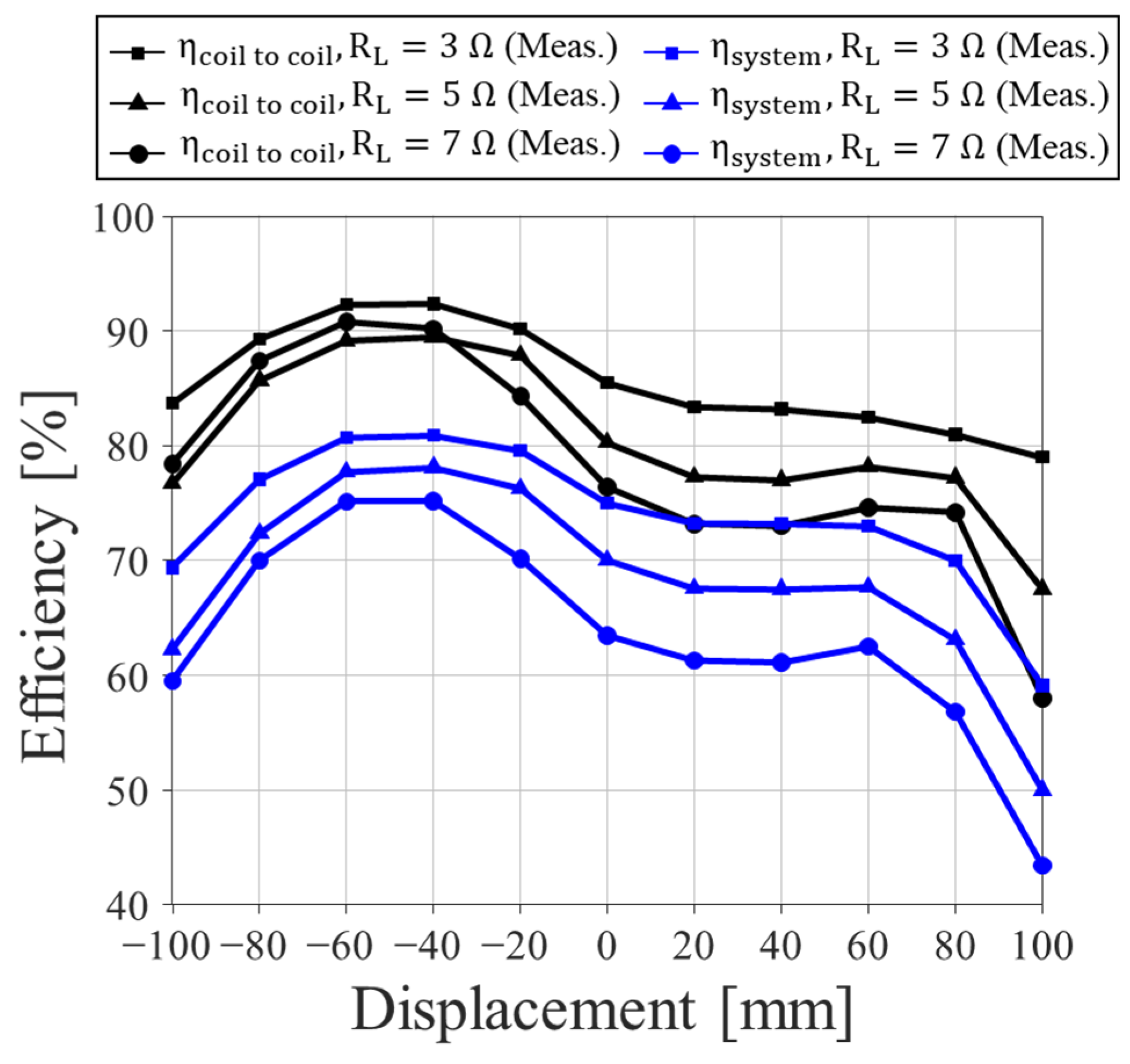
Figure 22 shows the coil-to-coil power transfer efficiency and system efficiency with various load conditions. As described in Equation (7), the power transfer efficiency is influenced by the ESRs of the Tx and Rx coils, the mutual inductance, and the impedance components. As illustrated in Figure 17, the measured ESR of the Tx coil increases by approximately 3.5 times in the position range from −20 mm to 100 mm. Meanwhile, the mutual inductance remains nearly constant from −80 mm to 80 mm and decreases at positions of −100 mm and 100 mm. Due to these two phenomena, the variation in the measured power transfer efficiency with respect to the coil position can be explained. The highest coil-to-coil efficiency is observed at the −60 mm~−40 mm position. Therefore, the highest system efficiency is observed at the −60 mm~−40 mm position as well. The reason why the power transfer efficiency is not symmetrical is that the ESRs of the Tx and Rx coils vary with the position of the Rx coil as shown in Figure 17.

6. Discussions

This work contributes to the development of a wireless power transfer system for automotive power seats by achieving a compact structure with significantly reduced leakage magnetic fields. The proposed approach primarily focuses on a rail-embedded coil structure operating under a robust ZVS condition. Although high power transfer efficiency was experimentally demonstrated, detailed loss mechanisms including core losses, proximity effects, and thermal analysis were not explicitly addressed in this study and are left for future investigation.
In addition, the proposed coil configuration was implemented for a single-rail structure, which provides a foundation for extending the design to dual-rail configurations in practical power seat systems. In practical applications, the power seat is continuously driven along the rail by a motorized mechanism. However, in this work, experimental measurements were conducted using fixed resistive loads of 3 Ω, 5 Ω, and 7 Ω at discrete coil positions rather than under continuous motion. The performance of the system under continuous Rx coil movement will be addressed in future research.
During experimental validation, it was also confirmed that the proposed system is capable of delivering up to 250 W for a duration of 10 s. Nevertheless, due to the observed degradation in capacitance performance, the continuous transmitting power was limited to 70 W in this work. This power level is sufficient for the operation and adjustment of automotive power seats, thereby demonstrating the practical feasibility of the proposed system.

7. Conclusions

In this paper, a rail-embedded coil structure for a wireless power transfer-based power seat system was proposed. By electromagnetic simulation, it was confirmed that the rail-embedded coil structure contributes to a reduction in leakage magnetic fields. To improve power transfer efficiency, planar, U-type, and E-type coil structures were analyzed, and the E-type coil was shown to provide the highest mutual inductance under restricted dimensional constraints. An SS-topology-based wireless power transfer system was modeled using an equivalent circuit, and the relationship between mutual inductance and power transfer efficiency was theoretically derived. Considering variations in rail position, the compensation capacitances were determined based on the minimum Tx coil inductance to ensure zero-voltage-switching conditions. The theoretical analysis was validated through electromagnetic and circuit simulations, as well as experimental measurements using a rail-embedded power seat wireless power transfer prototype. Consistent with the theoretical predictions, the experimental results demonstrated that the prototype maintained ZVS over the entire range of motion while achieving high power transfer efficiency. Based on the experimental results, a power level of 70 W was successfully transferred, achieving maximum coil-to-coil and overall system efficiencies of 92% and 80%, respectively. In addition, the leakage magnetic field simulation result sufficiently complied with the magnetic field density limits specified in the electric vehicle wireless charging standard SAE J2954 RP.

Author Contributions

Conceptualization, W.N. and D.K.; methodology, D.K.; validation, W.N. and D.K.; formal analysis, W.N.; investigation, W.N.; data curation, W.N.; writing—original draft preparation, D.K.; writing—review and editing, D.K.; supervision, D.K.; project administration, D.K.; funding acquisition, D.K. All authors have read and agreed to the published version of the manuscript.

Funding

This work was supported in part by the Technology development Program (RS-2022-00141837) funded by the Ministry of SMEs and Startups (MSS, Korea).

Data Availability Statement

The original contributions presented in this study are included in the article. Further inquiries can be directed to the corresponding author.

Conflicts of Interest

The authors declare no conflicts of interest.

References

  1. Martínez-Estrada, M.; Gil, I.; Fernández-García, R. Automotive Seat Occupancy Sensor Based on e-Textile Technology. Eng. Proc. 2023, 30, 7. [Google Scholar] [CrossRef]
  2. Pan-Zagorski, W.; Johnson, P.W.; Pereny, M.; Kim, J.H. Automotive Seat Comfort and Vibration Performance Evaluation in Dynamic Settings. Appl. Sci. 2022, 12, 4033. [Google Scholar] [CrossRef]
  3. Martins, I.; Esteves, J.; Marques, G.D.; da Silva, F.P. Permanent-Magnets Linear Actuators Applicability in Automobile Active Suspensions. IEEE Trans. Veh. Technol. 2006, 55, 86–94. [Google Scholar] [CrossRef]
  4. Xia, K.; Zhu, Q.; Yuan, Q.; Wang, J. Prediction of Automotive Wire Harness Aging Based on CNN-BiLSTM-Attention. Sensors 2025, 25, 2910. [Google Scholar] [CrossRef] [PubMed]
  5. Yoon, K.-S.; Cho, I.-K.; Kim, S.-W.; Kim, S.-M.; Ko, G. Position-Insensitive Wireless Power Transfer System for Long-Range Moving Seat in Autonomous Electric Vehicles. In Proceedings of the 2025 IEEE Wireless Power Technology Conference and Expo (WPTCE), Rome, Italy, 3–6 June 2025; pp. 1–4. [Google Scholar] [CrossRef]
  6. Kim, D.; Kang, Y.G.; Ahn, C.-H. Compact and High-Efficiency Novel Wireless Power Transfer System for Reconfigurable Seat in Autonomous Vehicle Applications. IEEE Trans. Ind. Electron. 2025, 72, 1–11. [Google Scholar] [CrossRef]
  7. Shin, C.-S.; Kim, S.; Junchen, X.; Kang, S.J.; Koo, G.W.; Kim, D.-H. Design of Wireless Charging Pad for EV Power Seats Considering Surrounding Structures. In Proceedings of the 2024 IEEE Energy Conversion Congress and Exposition (ECCE), Phoenix, AZ, USA, 20–24 October 2024; pp. 1964–1969. [Google Scholar]
  8. Masrur, M.A.; Cox, M. A Unique Military Application of Wireless Power Transfer: Wireless Charging Through a Vehicle Seat With Simplified Design Considerations. IEEE Electrif. Mag. 2019, 7, 18–27. [Google Scholar] [CrossRef]
  9. Niu, S.; Zhao, Q.; Niu, S.; Jian, L. A Comprehensive Investigation of Thermal Risks in Wireless EV Chargers Considering Spatial Misalignment from a Dynamic Perspective. IEEE J. Emerg. Sel. Top. Ind. Electron. 2024, 5, 1560–1570. [Google Scholar] [CrossRef]
  10. Xia, C.; Lu, C.; Zhao, S.; Yang, Z.; Cao, Y.; Liu, F.; Gao, Y. Planar Double-Winding Foreign Object Detection for the EV Wireless Charging System Based on Time-Division Multiplexing. IEEE Trans. Power Electron. 2024, 39, 13988–14003. [Google Scholar] [CrossRef]
  11. Chabalko, M.; Besnoff, J.; Laifenfeld, M.; Ricketts, D.S. Resonantly Coupled Wireless Power Transfer for Non-Stationary Loads with Application in Automotive Environments. IEEE Trans. Ind. Electron. 2017, 64, 91–103. [Google Scholar] [CrossRef]
  12. Albesa, J.; Gasulla, M. Occupancy and Belt Detection in Removable Vehicle Seats Via Inductive Power Transmission. IEEE Trans. Veh. Technol. 2015, 64, 3392–3401. [Google Scholar] [CrossRef]
  13. Kim, S.; Chae, J.; Shin, E.; Yook, H. Development of Moving WPT Circuit for Seat Slider. In Proceedings of the International Conference on Precision Engineering and Sustainable Manufacturing (PRESM2024), Busan, Republic of Korea, 7–12 July 2024. [Google Scholar]
  14. Lu, Y.; Qiu, D.; Meng, X.; Zhang, B.; Tang, S.C. S-PS Resonant Topology of WPT System for Implantable Spinal Cord Stimulator. IET Power Electron. 2018, 11, 2499–2505. [Google Scholar] [CrossRef]
  15. Houran, M.A.; Yang, X.; Chen, W. Magnetically Coupled Resonance WPT: Review of Compensation Topologies, Resonator Structures with Misalignment, and EMI Diagnostics. Electronics 2018, 7, 296. [Google Scholar] [CrossRef]
  16. Lee, S.; Cheon, J.; Park, H.; Kim, D. Determination and Analysis of Compensation Capacitor for a Robust Distance-Variable Wireless Power Transfer System. AIP Adv. 2024, 14, 115220. [Google Scholar] [CrossRef]
  17. Lee, S.; Cheon, J.; Park, H.; Kim, D. Determining Matching Capacitance for a Variable Distance WPT System Considering ZVS. AIP Adv. 2024, 14, 015152. [Google Scholar] [CrossRef]
  18. Hybrid—EV Committee. Wireless Power Transfer for Light-Duty Plug-In/Electric Vehicles and Alignment Methodology; SAE Recommended Practice J2954 (rev. 201904); SAE International: Troy, MI, USA, 2019. [Google Scholar]
Figure 1. Concept of proposed power seat rail-embedded WPT coil model. (a) Side view of proposed WPT coil model. (b) Front view of proposed WPT coil model.
Electronics 15 00955 g001
Figure 2. Simplified magnetic field loop for various coil types: (a) planar coil, (b) U-type coil, and (c) E-type coil.
Electronics 15 00955 g002
Figure 3. Equivalent circuit of series–series topology of wireless power transfer system.
Electronics 15 00955 g003
Figure 4. Concept of various positions of Rx coil on Tx coil (side view).
Electronics 15 00955 g004
Figure 5. Simplified model of rail-embedded coil for electromagnetic simulation: (a) perspective view, (b) side view, and (c) front view.
Electronics 15 00955 g005
Figure 6. Various coil models: (a) planar coil model, (b) U-type coil model, and (c) E-type coil model.
Electronics 15 00955 g006
Figure 7. Magnetic field distribution comparison without the rail model (left models) and with the rail model included (right models) in various coil types: (a) planar coil, (b), U-type coil, and (c) E-type coil.
Electronics 15 00955 g007
Figure 8. Magnetic field vectors of rail-included model in various coil types: (a) planar coil, (b), U-type coil, and (c) E-type coil. The arrows represent the direction of the magnetic field vectors, and the color scale indicates the magnitude of the magnetic field.
Electronics 15 00955 g008
Figure 9. Self-inductance and mutual inductances of structure-included and -excluded models with various coil types, depending on misalignment or displacement: (a) planar coil, (b), U-type coil, and (c) E-type coil.
Electronics 15 00955 g009
Figure 10. Observed magnitude of magnetic field along line. (a) Simulation setup. (b) Comparison of magnitude of magnetic field in cases with rail structure and without rail structure.
Electronics 15 00955 g010
Figure 11. Circuit simulation configuration for transient response analysis.
Electronics 15 00955 g011
Figure 12. (a) Coil-to-coil and (b) system power transfer efficiency results.
Electronics 15 00955 g012
Figure 13. Voltage and current waveforms of Tx part depending on various load conditions: (a) displacement at −100 mm position, (b) displacement at 0 mm position, and (c) displacement at 100 mm position.
Electronics 15 00955 g013
Figure 14. Various views of fabricated E-type Tx and Rx coils. (a) Tx coil with 8 turns. (b) Rx coil with 6 turns.
Electronics 15 00955 g014
Figure 15. Electric parameter measurement setup.
Electronics 15 00955 g015
Figure 16. Transient response of low-side buck converter for simulation.
Electronics 15 00955 g016
Figure 17. Measured ESR of Tx and Rx coils depending on their position.
Electronics 15 00955 g017
Figure 18. Concept of power transfer efficiency measurement setup.
Electronics 15 00955 g018
Figure 19. Captured experiment setup for coil power transfer efficiency.
Electronics 15 00955 g019
Figure 20. Phase difference between voltage and current on Tx coil depending on position of Rx coil to verify ZVS condition.
Electronics 15 00955 g020
Figure 21. Measured maximum and minimum system power transfer efficiency in various load conditions. The electrical load conditions are set to (a) 3 Ω, (b) 5 Ω, and (c) 7 Ω.
Electronics 15 00955 g021
Figure 22. Measured coil-to-coil and system power transfer efficiency.
Electronics 15 00955 g022
Table 1. Definitions of symbols.
SymbolsExpressions
VinInput voltage
RTXEquivalent series resistor of Tx coil
RRXEquivalent series resistor of Rx coil
RLLoad
LTXSelf-inductance of Tx coil
LRxSelf-inductance of Rx coil
MMutual inductance between Tx coil and Rx coil
CTXCompensation capacitance of Tx part
CRXCompensation capacitance of Rx part
i1Current flows in Tx part
i2Current flows in Rx part
Table 2. Assumed ESR values of Tx and Rx coils.
Displacement [mm]−100−80−60−40−20020406080100
ESR of Tx coil
[mΩ]
108100110122200295337340348348323
ESR of Rx oil
[mΩ]
78696770747572.5707374.575
Disclaimer/Publisher’s Note: The statements, opinions and data contained in all publications are solely those of the individual author(s) and contributor(s) and not of MDPI and/or the editor(s). MDPI and/or the editor(s) disclaim responsibility for any injury to people or property resulting from any ideas, methods, instructions or products referred to in the content.