1. Introduction
The accelerating transition toward renewable energy is fundamentally redefining the operational paradigm of modern power systems. Traditionally dominated by synchronous generators, power grids are increasingly evolving into inverter-dominated systems in which inverter-based resources (IBRs) serve as the primary interface between generation and the grid. Within this transformation, grid-forming inverters (GFMs) have emerged as a critical enabling technology, addressing challenges associated with reduced inertia, increased intermittency, and the growing need for decentralized control. Unlike grid-following inverters, which synchronize to an external voltage reference, GFMs autonomously regulate voltage and frequency, making them essential for stabilizing weak and low-inertia grids [
1,
2,
3,
4,
5,
6,
7,
8,
9,
10,
11].
GFMs play a pivotal role in mitigating contemporary grid stability challenges. By providing virtual inertia, they emulate key dynamic characteristics of synchronous generators, buffering frequency deviations and enhancing transient stability in high-renewable environments where conventional mechanical inertia is limited [
6,
12,
13,
14]. However, their function extends beyond inertia emulation. In systems with high inverter penetration, future grid architectures may be intentionally designed around the fast and programmable response of GFMs rather than attempting to replicate traditional rotating-machine dynamics. Through advanced control strategies such as adaptive inertia injection and virtual damping, GFMs can deliver faster and tunable responses to disturbances, enabling stability through coordinated, software-defined control rather than inertia-heavy mechanical systems.
This flexibility has enabled a wide spectrum of real-world applications, including microgrids, hybrid renewable storage systems, and utility-scale renewable installations. GFMs facilitate seamless transitions between grid-connected and islanded operation, enhance fault ride-through capability, and maintain reliable voltage regulation under diverse operating conditions [
6,
15,
16,
17,
18,
19].
A key enabler of these capabilities lies in advanced control methodologies. Strategies such as Virtual Oscillator Control (VOC) and hybrid grid-forming/grid-following configurations have improved adaptability under weak-grid and dynamic conditions [
20,
21,
22,
23,
24,
25]. VOC enhances synchronization robustness under fluctuating loads, while hybrid control schemes optimize performance across varying grid strengths [
2,
4]. Parallel progress in semiconductor technologies—particularly Silicon Carbide (SiC) and Gallium Nitride (GaN)—has significantly improved switching speed, thermal performance, and conversion efficiency, supporting compact and high-performance inverter designs [
4,
18].
Beyond efficiency gains, wide-bandgap semiconductor devices directly influence fault behavior and protection coordination. SiC devices can tolerate short-duration overcurrents due to superior thermal conductivity and fast switching characteristics. In contrast, GaN devices offer higher power density but operate with narrower fault tolerance margins, requiring ultra-fast protection mechanisms. These material-dependent characteristics must be carefully integrated into future GFM design and protection strategies, especially in weak-grid or islanded scenarios.
Despite these technological advances, systemic integration challenges persist. Maintaining stability in weak grids with low short-circuit ratios remains a priority, requiring robust and adaptive control frameworks. Seamless interoperability with legacy synchronous generators and conventional infrastructure continues to pose technical constraints. Furthermore, the increasing digitalization of GFMs exposes power systems to cyber–physical vulnerabilities, necessitating secure communication protocols, encryption strategies, and real-time anomaly detection mechanisms [
2,
4,
6,
11,
13,
22,
26,
27,
28].
This review adopts a multi-layer analytical perspective that extends beyond control methodologies alone. In addition to comparing grid-forming control strategies, the paper examines converter topologies, semiconductor device technologies, harmonic behavior, protection coordination, cybersecurity resilience, and system-level interoperability challenges. Rather than reproducing detailed circuit schematics extensively available in specialized power electronics literature, the focus is placed on structural and operational implications relevant to inverter-dominated grids.
To examine these interrelated dimensions, this study adopts a structured narrative review methodology that synthesizes insights from peer-reviewed literature, technical reports, pilot projects, and industrial case studies. The objective is to critically assess the development, control evolution, hardware advancements, and system-level integration challenges of GFMs in inverter-dominated power systems. By consolidating state-of-the-art research and emerging industrial practices, this review identifies key research gaps and proposes future research directions aimed at enhancing stability, protection coordination, interoperability, and cybersecurity resilience.
This review is structured around a central analytical lens: how innovations at the power electronics level translate into measurable improvements in power system stability. Rather than enumerating control methods or hardware developments in isolation, the paper systematically connects converter-level design advances—including control strategies, semiconductor technologies, and protection mechanisms—to their impact on frequency stability, voltage regulation, fault resilience, and interoperability in inverter-dominated grids. This innovation-to-stability linkage forms the guiding logic of the manuscript.
The remainder of this paper is organized as follows.
Section 2 presents the technical background of GFMs.
Section 3 describes the review methodology.
Section 4 examines power electronics challenges and control strategies.
Section 5 synthesizes thematic findings.
Section 6 discusses renewable integration challenges.
Section 7 explores system-level and cross-disciplinary considerations. Finally,
Section 8 and
Section 9 provide concluding remarks and outline future research directions.
2. Background
2.1. Fundamental Concepts of Grid-Forming and Grid-Following Inverters
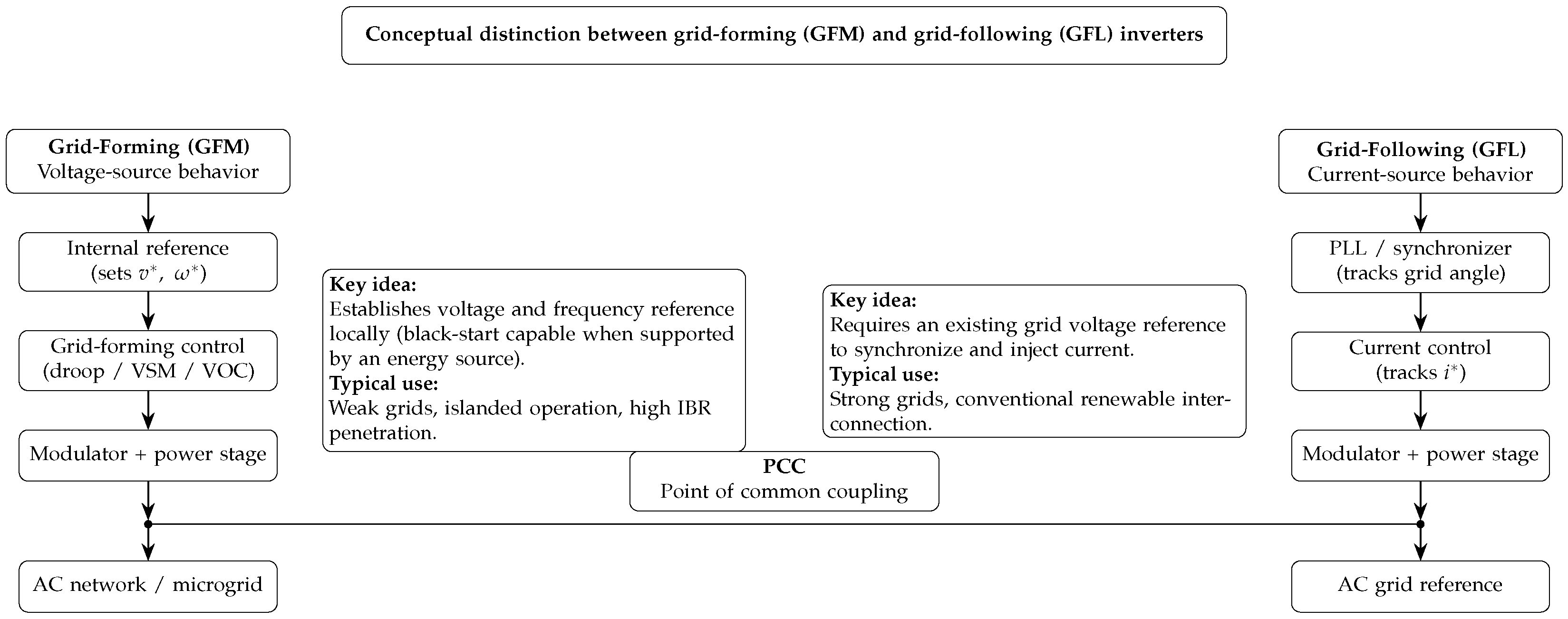
GFM and GFL inverters constitute foundational technologies in modern power systems. GFM inverters operate as controlled voltage sources, enabling autonomous regulation of voltage magnitude and frequency. This functionality allows them to stabilize weak or islanded grids and provide essential grid-support services, including synthetic inertia, voltage stabilization during disturbances, and black-start capability. It should be noted, however, that practical black-start operation requires a co-located energy storage system to supply the necessary energy reserve, as the inverter alone cannot energize a de-energized network.
In contrast, GFL inverters operate as current sources synchronized to an existing grid through phase-locked loops (PLLs). While highly effective for renewable integration in strong grids, their dependence on external voltage references limits their performance in low-inertia or weak-grid environments [
2,
15,
23,
24,
28,
29,
30,
31,
32,
33,
34,
35,
36,
37].
2.2. Historical Development and Evolution
The evolution of inverter technologies mirrors the increasing complexity of renewable-dominated power systems. Early deployments primarily relied on GFL inverters for photovoltaic (PV) and wind integration, operating within grids largely stabilized by synchronous generators [
1,
34,
38].
As renewable penetration increased, stability limitations of GFL inverters became evident, particularly in weak grids characterized by low short-circuit ratios (SCRs) [
11,
21,
23,
39,
40,
41]. These challenges motivated the development of GFM inverters, which incorporate concepts such as Virtual Synchronous Machines (VSMs) and droop control. VSM-based approaches introduced inertial-like dynamic responses, enabling improved frequency support in low-inertia systems [
34,
41].
Over the past decade, hybrid control architectures combining GFM and GFL functionalities have emerged. These configurations expand operational flexibility and enhance adaptability across microgrids and bulk power systems [
1,
39].
Figure 1 illustrates high-level conceptual comparison between GFM and GFL inverter operation.
2.3. Current State-of-the-Art Technologies
Contemporary GFM inverters incorporate advanced control strategies such as Virtual Oscillator Control (VOC) and Power Synchronization Control (PSC) to improve dynamic stability and synchronization robustness [
23,
34,
36]. Nevertheless, current commercial deployments predominantly rely on VSM and droop-based approaches. These methods align closely with existing grid codes and utility requirements and are widely adopted in utility-scale applications due to their proven stability, simplicity, and interoperability.
While VOC and PSC demonstrate promising performance in academic studies and pilot projects, their large-scale commercial implementation remains in an early stage. VOC enhances disturbance response through nonlinear oscillatory dynamics, whereas PSC facilitates stable operation in mixed grid-forming and grid-following environments.
In parallel, hardware advancements—particularly the integration of Silicon Carbide (SiC) semiconductors—have improved efficiency, thermal performance, and power density, enabling more compact and reliable inverter designs [
1,
23].
Applications of GFMs now extend across microgrids, utility-scale renewable installations, and grid-resilience projects. Demonstration projects in regions such as Denmark and Australia have shown that GFMs can support systems operating at very high renewable penetration levels, approaching 100% inverter-based generation [
33,
42,
43]. These developments underscore the strategic importance of GFM technology in enabling sustainable, resilient, and inverter-dominated power systems.
3. Methodology
To ensure methodological rigor and transparency, a structured multi-stage literature screening process was implemented between January 2024 and March 2025 [
44]. The review targeted peer-reviewed publications published between 2016 and early 2025 to capture the rapid evolution of grid-forming inverter (GFM) technologies in inverter-dominated power systems [
27]. This time frame was selected to reflect the accelerated development of renewable integration, advanced GFM control strategies, wide-bandgap semiconductor applications, protection redesign, and evolving grid-code requirements.
In addition to foundational studies, recently published 2024–2025 contributions were explicitly screened and incorporated to ensure that the review reflects the most current technical and regulatory developments in this rapidly advancing field.
A systematic search was conducted across IEEE Xplore, ScienceDirect, SpringerLink, and Google Scholar using predefined keyword combinations including: “grid-forming inverters,” “virtual synchronous machine,” “virtual oscillator control,” “inverter-based resources,” “low-inertia grids,” “synthetic inertia,” “inverter protection,” and “cyber–physical security in power systems.” Boolean operators (AND, OR) were applied to refine search queries.
This study adopts a structured narrative review approach based on thematic synthesis rather than a formal meta-analysis. The narrative approach allowed for flexible comparison across diverse methodologies, technical domains, and study contexts [
45]. A qualitative synthesis methodology was applied to identify trends and compare control strategies, material technologies, and protection frameworks. Thematic coding was performed manually to classify studies under recurring themes such as control innovation, grid stability enhancement, hardware reliability, and cyber–physical risks [
46].
To enhance the reliability of the thematic coding process, a structured codebook was developed defining each theme, inclusion and exclusion rules, and representative examples. Two independent reviewers coded a randomly selected subset of studies (20% of the final dataset). Inter-coder agreement was quantified using Cohen’s kappa coefficient, and discrepancies were resolved through discussion to refine theme definitions prior to full-dataset coding. This verification step strengthened the consistency and reproducibility of the thematic classification.
Inclusion criteria were:
- -
Peer-reviewed journal articles, conference papers, technical white papers, or industry reports;
- -
Relevance to GFM control strategies, materials (e.g., SiC, GaN), protection systems, or cyber–physical aspects;
- -
Studies involving experimental validation, simulations, or real-world applications.
Exclusion criteria included:
- -
Non-English articles;
- -
Papers focusing solely on grid-following inverters without comparative analysis;
- -
Sources lacking technical depth or methodology (e.g., opinion pieces or editorials).
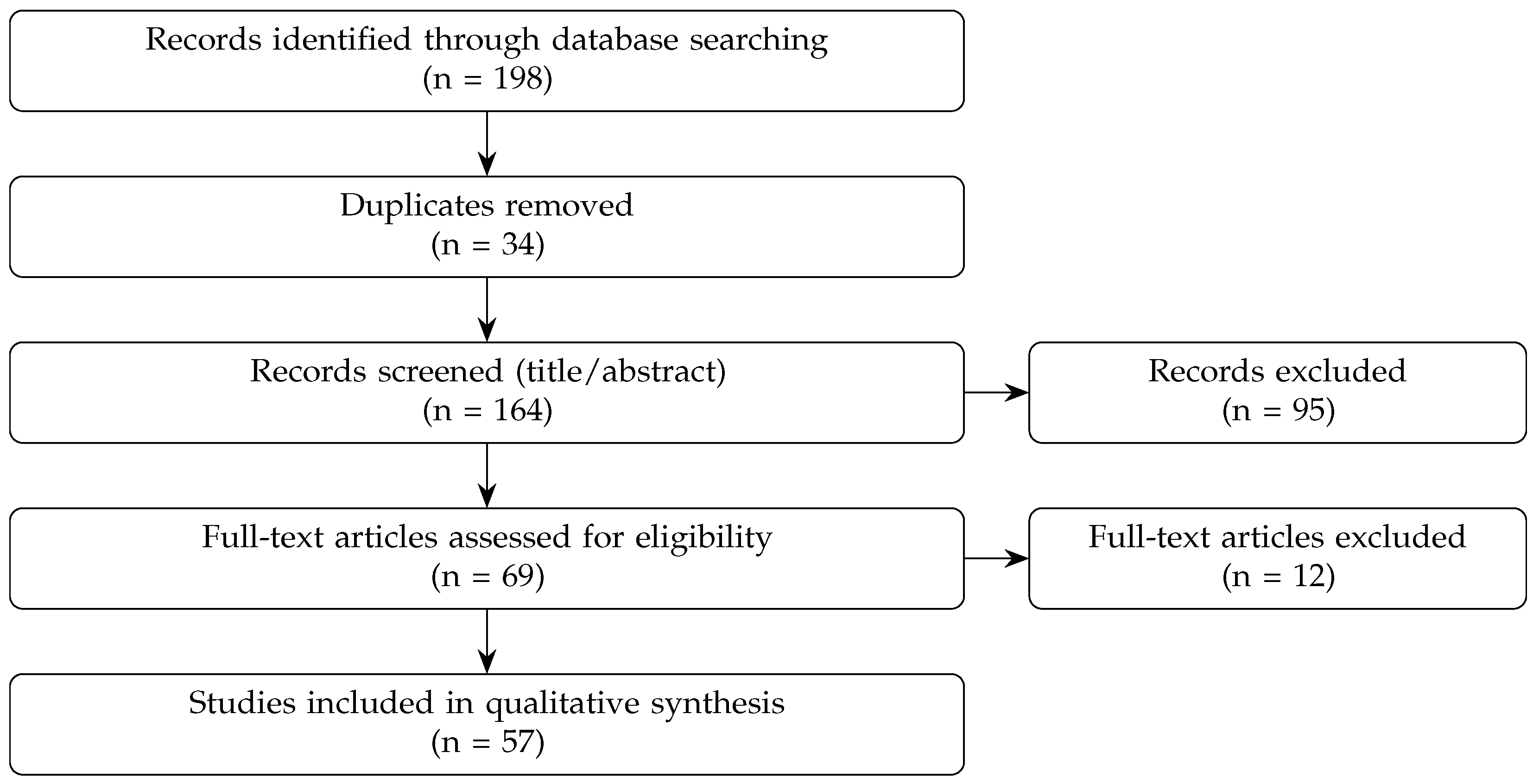
As shown in
Figure 2, the initial database search yielded 198 records across IEEE Xplore, ScienceDirect, SpringerLink, and Google Scholar. After removal of duplicates (n = 34), 164 records remained for title and abstract screening. During this phase, 95 records were excluded based on irrelevance to grid-forming inverter control, materials, protection, or system integration. The remaining 69 full-text articles were assessed for eligibility. Of these, 12 were excluded due to insufficient methodological depth, lack of validation, or focus limited to grid-following inverters without comparative analysis. A final set of 57 studies was included in the qualitative thematic synthesis.
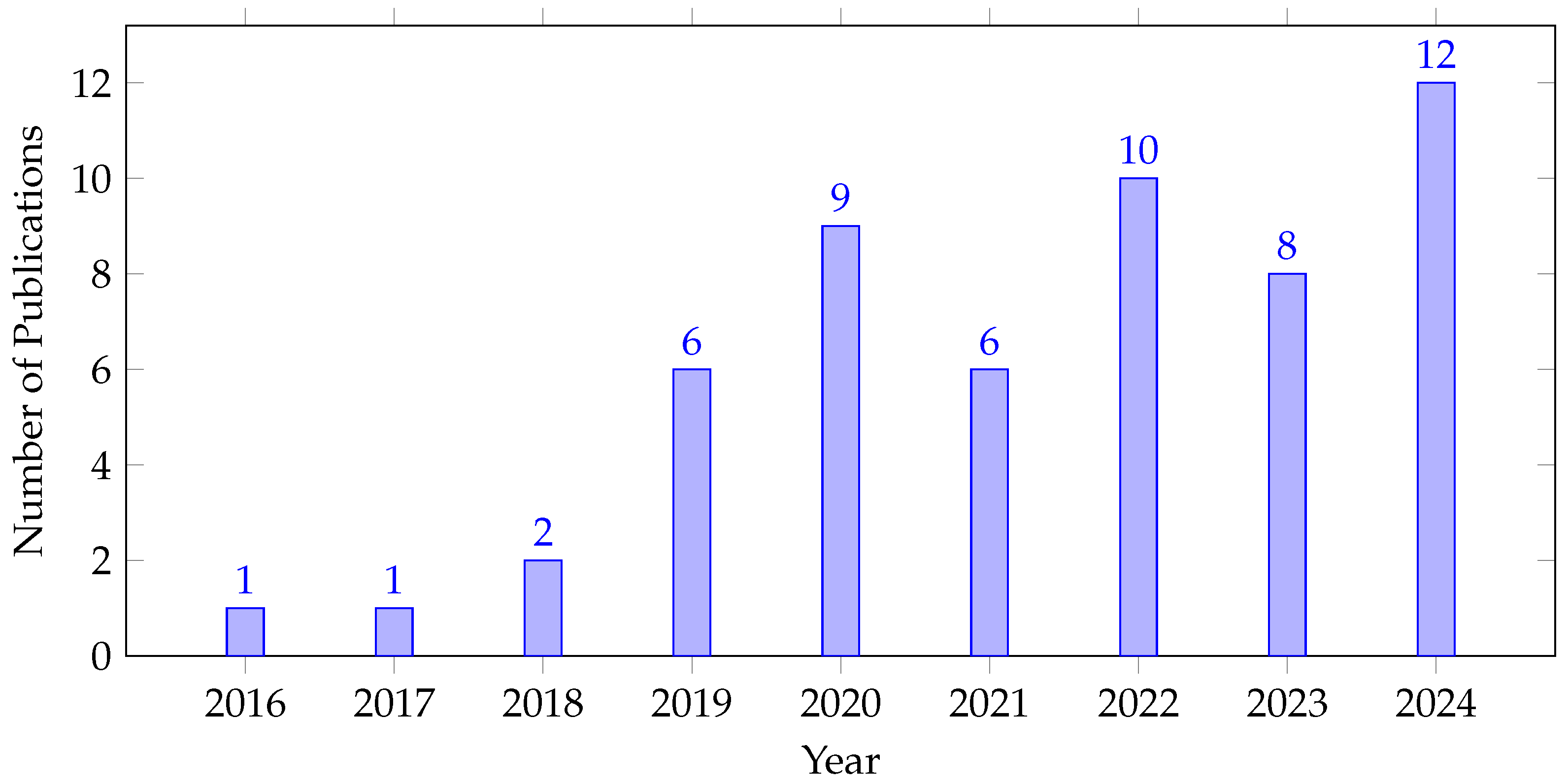
Figure 3 illustrates the steady growth of research activity in grid-forming inverter technologies, with a pronounced acceleration after 2019. The increase aligns with the rising penetration of inverter-based resources and growing concerns regarding low-inertia system stability.
The selected documents were then categorized into sub-domains such as synchronization and stability control, semiconductor materials, fault response, system-level integration, and cyber resilience [
47]. Cross-cutting themes such as scalability, interoperability, and standardization were also extracted through iterative review.
Although this study follows a structured narrative review approach rather than a full systematic meta-analysis, the screening and selection process was conducted in alignment with PRISMA-inspired transparency principles to enhance methodological rigor and reproducibility. The literature selection process is summarized in
Figure 2.
Extracted data were organized into thematic categories, including control strategy innovation, hardware advancement, protection coordination, and cybersecurity resilience. Cross-source triangulation was applied to validate trends and ensure consistency of interpretation. This involved comparing findings from multiple studies addressing the same technical challenge, ensuring that observed conclusions were not isolated results. Discrepant or ambiguous studies were either excluded or verified using supplementary technical reports. In cases where technical data was incomplete or conflicting, preference was given to sources with experimental verification or simulation-based case studies published in IEEE or high-impact journals [
48].
4. Technical Challenges: Power Electronics Perspective
This section analyzes how converter-level innovations influence system-level stability performance, particularly under low-inertia and weak-grid conditions.
GFMs are central to the evolution of renewable-dominated power systems. Their autonomous voltage and frequency regulation capabilities make them essential for stabilizing weak and low-inertia grids. However, their large-scale deployment introduces substantial technical challenges spanning dynamic stability control, circuit- and device-level design constraints, fault tolerance, synchronization with legacy infrastructure, and thermal reliability. Addressing these challenges requires a multidisciplinary framework integrating advances in power electronics, control theory, hardware design, and grid interoperability.
4.1. Stability and Control Under Dynamic Grid Conditions
The increasing penetration of renewable energy reduces system inertia and introduces significant variability, placing new demands on inverter control performance. The effectiveness of GFMs under dynamic conditions depends heavily on the selected control strategy, which governs synchronization, disturbance response, and stability margins.
Several control approaches have been proposed, including droop control, Virtual Oscillator Control (VOC), Model Predictive Control (MPC), Virtual Synchronous Machine (VSM) methods, and adaptive control frameworks. While each strategy offers distinct technical advantages, their levels of commercial maturity differ considerably. Droop and VSM-based control remain the most widely deployed in utility-scale systems, supported by existing grid codes and commercial implementations. In contrast, MPC and VOC are primarily confined to research prototypes and pilot projects due to computational demands and integration complexity.
This section critically compares these strategies in terms of theoretical performance, scalability, and real-world deployment readiness.
4.1.1. PLL-Free Stability Mechanisms in Grid-Forming Architectures
A critical distinction between grid-following and grid-forming converters lies in the role of the phase-locked loop (PLL). In grid-following systems, the PLL synchronizes the converter to the external grid voltage, effectively embedding the grid dynamics within the control loop. In weak or low short-circuit ratio (SCR) environments, PLL dynamics may interact with grid impedance, introducing negative damping and oscillatory modes that degrade small-signal stability [
21,
41]. This interaction has been identified as a primary mechanism behind instability in high inverter-penetration systems.
Grid-forming strategies fundamentally alter this structure by adopting PLL-free synchronization architectures. Instead of tracking an external voltage phase, the converter internally generates its own voltage reference through swing-equation emulation (VSM), nonlinear oscillator synchronization (VOC), or power-angle dynamics. By removing the PLL from the synchronization loop, the control structure reduces sensitivity to grid impedance variations and improves damping characteristics in weak-grid conditions [
25,
34,
36].
However, PLL-free operation does not guarantee unconditional stability. In multi-inverter systems, interactions among droop coefficients, virtual impedance parameters, and internal oscillator states may introduce low-frequency power oscillations or mode coupling effects. Additionally, current saturation and fault ride-through constraints can modify the effective converter impedance during disturbances. Consequently, stability assessment of PLL-free GFMs increasingly relies on impedance-based modeling and eigenvalue sensitivity analysis rather than conventional PLL tuning metrics [
41,
49].
Understanding these mechanisms is essential for defining robust tuning guidelines and ensuring stable large-scale deployment in inverter-dominated grids.
4.1.2. Droop Control
Droop control is among the most established strategies for GFMs, emulating the frequency–active power (P–f) and voltage–reactive power (Q–V) characteristics of synchronous generators. Its simplicity enables decentralized power sharing among multiple inverters and facilitates straightforward implementation in systems with moderate renewable penetration.
However, droop control exhibits performance limitations in weak grids. Under rapid load variations, its proportional regulation mechanism may lead to degraded frequency and voltage stability, particularly in low short-circuit ratio environments [
1,
3,
6,
12,
50].
4.1.3. Virtual Oscillator Control (VOC)
Virtual Oscillator Control (VOC) adopts a nonlinear synchronization mechanism inspired by natural oscillator dynamics. By regulating voltage and frequency through internal oscillatory states, VOC enables decentralized synchronization without relying on phase-locked loops.
VOC demonstrates strong performance in weak grids with high renewable penetration, where conventional droop control may underperform. Its decentralized structure reduces communication dependency and enhances disturbance robustness. However, coordinating multiple oscillators in large-scale systems remains challenging and requires advanced synchronization frameworks [
2,
15,
25,
36,
51].
4.1.4. Model Predictive Control (MPC)
Model Predictive Control (MPC) utilizes real-time optimization based on system models to anticipate grid behavior and determine optimal inverter actions. This predictive capability enables rapid disturbance response and improved fault management in highly dynamic systems.
Despite its superior transient performance, MPC requires substantial computational resources and accurate system modeling. These requirements limit its scalability and widespread commercial adoption, particularly in large utility-scale applications [
12,
20,
52,
53].
4.1.5. Virtual Synchronous Machine (VSM)
The Virtual Synchronous Machine (VSM) approach emulates the electromechanical dynamics of synchronous generators by implementing swing-equation-based control. This strategy enhances inertial response and improves frequency stability during disturbances.
VSM is particularly suitable for systems transitioning from conventional generation to inverter-dominated architectures, as it facilitates interoperability with legacy infrastructure. However, accurate parameter tuning and dynamic modeling increase implementation complexity and may require iterative calibration [
4,
13,
54,
55].
4.1.6. Adaptive Control
Adaptive control strategies dynamically adjust inverter parameters in response to real-time grid conditions. Unlike fixed-parameter approaches, adaptive algorithms continuously monitor system variables such as voltage, frequency, and power flow to optimize performance.
This flexibility makes adaptive control well-suited for microgrids and hybrid renewable systems subject to frequent disturbances. Nevertheless, the approach demands continuous data acquisition and substantial computational capability, increasing system cost and design complexity [
2,
15,
54].
Table 1 synthesizes qualitative characteristics and semi-quantitative performance indicators reported in the literature, providing a structured comparison of major grid-forming control strategies in terms of response speed, frequency support, scalability, and commercial maturity.
4.2. Circuit-Level Design Challenges
4.2.1. Inverter Topologies
The topology of grid-forming inverters significantly influences efficiency, harmonic performance, fault tolerance, and scalability. Two-level voltage source converters (2L-VSCs), although structurally simple and commercially mature, generate relatively higher harmonic distortion due to abrupt voltage transitions. Consequently, larger filtering stages are often required in medium- and high-power applications. Despite these limitations, their simplicity and reliability make them suitable for low- to medium-power systems.
Three-level topologies, such as Neutral Point Clamped (NPC) converters, introduce intermediate voltage levels that reduce dv/dt stress and harmonic content. This improves waveform quality and efficiency, particularly in medium-voltage applications. However, NPC converters require more complex control algorithms for neutral-point voltage balancing, and their increased component count raises cost and implementation complexity [
4,
18].
Multilevel inverter topologies, particularly Modular Multilevel Converters (MMCs), provide superior scalability and enhanced fault tolerance, making them well suited for high-voltage and HVDC applications. MMCs synthesize near-sinusoidal output waveforms through cascaded submodules, significantly reducing external filtering requirements. Their modular architecture allows redundancy and continued operation under partial submodule failure. Nevertheless, the high number of components, internal circulating current management, and sophisticated balancing control introduce substantial design and computational complexity [
2,
13,
56,
57].
Comprehensive circuit-level schematics and switching analyses of these converter structures are extensively documented in established power electronics literature. Accordingly, this review emphasizes their structural characteristics and system-level implications for grid-forming operation rather than detailed device-level design derivations.
4.2.2. Filtering and Harmonic Distortion
Harmonic distortion remains a significant circuit-level challenge in GFMs due to high-frequency switching and nonlinear converter behavior. Excessive voltage and current harmonics degrade power quality, increase thermal stress and switching losses, and may destabilize weak grids characterized by low SCRs, particularly under high inverter penetration [
1,
4]. In such environments, grid impedance can amplify harmonic interactions, increasing the risk of resonance and small-signal instability.
Two-level voltage source converters (2L-VSCs), while structurally simple and widely deployed, generate relatively high voltage distortion due to abrupt switching transitions between
and
. The resulting high dv/dt stress contributes to electromagnetic interference (EMI), insulation stress, and greater dependence on external filtering. In weak grids, the interaction between converter output impedance and grid impedance may amplify low-order harmonics, necessitating large L or LCL filters to maintain acceptable total harmonic distortion (THD) levels [
1,
4]. However, larger filters increase system size, cost, and conduction losses.
Three-level Neutral Point Clamped (NPC) topologies mitigate these effects by introducing intermediate voltage levels, thereby reducing dv/dt stress and lowering harmonic content at the converter terminals. The smoother voltage waveform reduces filtering requirements and switching ripple. Nevertheless, neutral-point voltage balancing becomes an additional control requirement; improper balancing may introduce low-frequency oscillatory components and additional harmonic interactions [
2,
15]. Thus, harmonic reduction in multilevel converters is achieved at the expense of increased control and structural complexity.
MMCs inherently generate near-sinusoidal output waveforms through multi-level voltage synthesis, significantly reducing voltage THD and external filter requirements. Their scalability and harmonic performance make them particularly attractive for high-voltage and High-Voltage Direct Current (HVDC) applications. However, MMC architectures introduce internal circulating currents and capacitor voltage ripple harmonics that must be actively regulated through advanced arm-balancing strategies [
2,
15]. While external harmonic distortion is minimized, internal harmonic management increases computational and control-layer complexity.
From a current-harmonic perspective, grid-forming control strongly interacts with converter impedance characteristics. The tuning of droop control, virtual impedance, and synchronization strategies directly influences harmonic damping capability. Inadequate parameter tuning may exacerbate harmonic amplification in low-SCR systems, especially when multiple GFMs operate in parallel [
4,
18]. Therefore, harmonic performance must be evaluated jointly with control design and grid strength rather than topology alone.
Filtering strategies further shape harmonic behavior. LC filters offer structural simplicity but are susceptible to resonance under grid impedance variation. LCL filters provide superior high-frequency attenuation and allow reduced inductor size; however, passive or active damping mechanisms are required to prevent instability [
1,
4]. In inverter-dominated grids, dynamic grid impedance variation increases the importance of adaptive damping techniques.
Wide-bandgap semiconductor devices such as Silicon Carbide (SiC) and Gallium Nitride (GaN) enable higher switching frequencies, shifting dominant harmonics toward higher frequency bands where filtering becomes more effective and passive components can be reduced in size [
4,
18]. This improves power density and efficiency. However, higher switching frequencies increase switching losses, EMI emissions, and thermal stress, requiring careful optimization between harmonic mitigation, efficiency, and reliability.
Overall, harmonic performance in GFMs represents a multidimensional trade-off among topology selection, switching frequency, filter configuration, and control tuning. In weak-grid and high-renewable penetration scenarios, impedance-based and small-signal stability analyses are increasingly necessary to ensure robust harmonic stability and coordinated multi-inverter operation [
1,
4,
18].
4.3. Device-Level Design Challenges
Achieving an optimal balance among efficiency, robustness, and cost remains central to GFM design. Traditional silicon devices face switching and thermal limitations, motivating the adoption of wide-bandgap semiconductors such as SiC and GaN.
SiC devices exhibit lower conduction and switching losses, making them suitable for high-power applications. GaN devices offer superior electron mobility and reduced parasitic capacitance, enabling high-frequency operation and improved efficiency. However, both technologies introduce packaging complexity, EMI sensitivity, and stringent thermal management requirements.
Control platforms must also support real-time computation, fault detection, and rapid reconfiguration. Field-programmable gate arrays (FPGAs) and digital signal processors (DSPs) are commonly used to ensure low-latency and deterministic performance. Integrated thermal monitoring and protection schemes are essential to maintain reliability under transient and fault conditions.
4.4. Fault Tolerance
GFMs inherently exhibit limited fault current capability, typically restricted to 1.2–2.0 p.u., in contrast to synchronous generators. This limitation complicates protection coordination in inverter-dominated grids.
Advanced mitigation strategies include virtual impedance control, which dynamically adjusts inverter output impedance to limit fault currents, and hardware-based current-limiting circuits. MMC architectures further enhance fault resilience through submodule redundancy, enabling load redistribution during fault events [
12,
18]. These techniques improve stability while protecting converter hardware.
4.5. Challenges in Synchronizing with Legacy Systems
Integrating GFMs with legacy synchronous generators and conventional grid infrastructure remains technically complex. Phase mismatches and transient oscillations may arise during operational transitions, particularly in hybrid systems.
Power Synchronization Control (PSC) and VSM-based techniques have been developed to improve interoperability by emulating synchronous machine behavior [
4,
21,
58]. Nevertheless, seamless synchronization requires precise control coordination and reliable communication. Variations in regional grid codes and the absence of standardized interoperability protocols further complicate integration [
2,
13].
4.6. Thermal Management and Reliability
High switching frequencies and power densities generate substantial thermal stress in GFMs. Excessive heat accelerates device degradation and reduces operational lifespan, making thermal management a critical design consideration.
Advanced cooling techniques, including liquid cooling systems and optimized heat sink architectures, are widely implemented. Additionally, predictive maintenance approaches based on electrothermal modeling and digital twin technologies enable early detection of degradation mechanisms, improving long-term reliability [
4,
6].
5. Results and Thematic Discussion
The findings of this review are synthesized from a curated set of 57 peer-reviewed studies, selected through the structured screening and eligibility process described in
Section 3. Using qualitative thematic synthesis, the literature was grouped into key domains reflecting the dual role of GFMs: (i) control strategies and grid stability; (ii) power electronics innovations and semiconductor technologies; (iii) protection and cybersecurity integration; and (iv) system-level challenges. The following subsections summarize state-of-the-art developments, comparative insights, and unresolved issues aligned with the research objectives stated in
Section 1.
5.1. Grid-Forming Control Strategies and Grid Stability
GFMs rely on control architectures that establish autonomous voltage and frequency references and emulate selected dynamic characteristics of synchronous machines. Across the reviewed literature, three paradigms dominate: droop control, Virtual Synchronous Machine (VSM) approaches, and dispatchable Virtual Oscillator Control (dVOC).
Droop control provides decentralized power sharing through proportional frequency–power and voltage–reactive power regulation. Although widely adopted, it exhibits reduced dynamic performance in weak-grid conditions due to sensitivity to grid strength and limited damping under fast transients. VSM-based control improves this behavior by embedding inertial and damping characteristics via swing-equation-inspired dynamics, which typically enhances transient response and stability margins in low-inertia systems.
More recently, dVOC has been proposed to improve response speed and support decentralized synchronization through nonlinear oscillator dynamics. dVOC can support islanding and reconnection with limited supervisory coordination; however, most reported implementations remain at simulation or laboratory validation stages compared with the broader field maturity of droop and VSM strategies. Overall, VSM-based approaches currently represent a practical balance between dynamic stability, scalability, and implementation readiness for utility-scale deployment.
5.2. Innovations in Power Electronics and Semiconductor Materials
Advances in power semiconductor devices have improved both efficiency and reliability of GFMs. In particular, wide-bandgap technologies such as Silicon Carbide (SiC) and Gallium Nitride (GaN) enable higher switching frequencies, improved thermal performance, and more compact converter designs compared with conventional silicon (Si) devices.
SiC-based converters are especially attractive for grid-scale GFM applications due to high blocking capability, fast switching transitions, and reduced conduction losses. These features facilitate higher-bandwidth control loops, supporting improved frequency regulation and fault response. By contrast, GaN devices are well suited to high-frequency, low-to-medium voltage applications, offering high power density but presenting challenges in high-power utility-scale deployments due to tighter fault tolerance margins and packaging constraints.
The reviewed studies also emphasize that wide-bandgap devices support advanced topologies, including MMCs and hybrid architectures, enabling flexible integration across centralized and distributed control paradigms. Despite these advances, cost, manufacturing complexity, and electromagnetic interference (EMI) constraints remain barriers to broad adoption. Continued research is needed in packaging, thermal interface design, and coordinated protection strategies for SiC- and GaN-based GFM platforms.
5.3. Protection Systems and Cybersecurity Integration
As GFMs increasingly assume responsibility for voltage and frequency regulation, protection coordination and cybersecurity resilience become critical design considerations. Conventional protection schemes developed for synchronous machine fault behavior may not operate reliably in inverter-dominated systems, primarily due to limited and actively controlled fault-current contributions.
Recent literature emphasizes adaptive protection frameworks that dynamically adjust relay thresholds and operating times based on real-time system conditions. Several approaches leverage inverter-internal measurements—such as instantaneous power, voltage states, and controller variables—to enhance differential, directional, and communication-assisted protection schemes. Embedding protection functionality directly within inverter firmware has also been proposed to reduce response latency and improve coordination between converter control and grid protection devices.
Cybersecurity challenges are equally significant. Because GFM operation depends on digital sensing, communication networks, and supervisory control layers, vulnerabilities such as signal spoofing, false-data injection, and denial-of-service attacks can impair synchronization and degrade dynamic grid support. Proposed mitigation strategies include embedded anomaly detection algorithms, secure hardware-based control implementations (e.g., FPGA-based platforms), encrypted communication channels, and decentralized security architectures. Despite ongoing research efforts, the lack of harmonized standards for GFM protection and cyber resilience remains a major obstacle to multi-vendor interoperability and grid-code compliance.
5.4. System-Level Challenges: Interoperability, Fault Tolerance, and Scalability
The large-scale deployment of GFMs introduces complex system-level challenges, particularly related to interoperability, multi-inverter coordination, and stable operation under mixed-generation scenarios. In weak-grid or islanded environments, interactions among multiple GFMs may lead to power oscillations, control-mode mismatches, or re-synchronization instability if controller parameters are not properly coordinated.
Recent studies underscore the importance of standardized interoperability mechanisms to enable coordinated start-up, synchronization, and dynamic load sharing among multiple converters. Hardware-in-the-loop (HIL) and real-time simulation analyses indicate that improperly tuned control parameters may introduce instability during black-start sequences or large load transients. In distribution systems, scalable GFM deployment often requires adaptive droop tuning or hybrid control architectures to ensure stable parallel operation with grid-following inverters.
Long-term scalability is further influenced by thermal cycling, component aging, and maintenance strategies. Predictive maintenance techniques, including electrothermal modeling and digital twin frameworks, are increasingly recommended to mitigate degradation and reduce unplanned outages. Collectively, these challenges highlight the necessity for standardized validation platforms and grid codes specifically tailored to inverter-dominated power system architectures. These system-level considerations directly connect power electronics innovation with broader power system stability objectives, reinforcing the dual technical focus of this review.
5.5. Stability Classification and Transient Performance of GFM
The stability of grid-forming inverters can be classified into three categories: (i) steady-state stability, (ii) small-signal (linearized) stability, and (iii) transient (large-disturbance) stability. While GFMs typically maintain steady-state voltage and frequency effectively due to fast control loops, their transient behavior under severe faults and large load disturbances is more sensitive to controller design, current-limiting behavior, and protection coordination.
Transient performance is governed primarily by control dynamics rather than mechanical inertia. Key factors include controller bandwidth, current saturation limits, synchronization mechanisms (including PLL use when present), and the design of synthetic inertia and damping functions. Unlike synchronous generators, which rely on stored kinetic energy, GFMs depend on available energy buffers (e.g., DC-link and storage interfaces) and fast control actions.
Recent studies emphasize that coordinated droop- and VSM-based implementations can maintain stability under moderate disturbances, whereas inadequate coordination among multiple inverters may introduce oscillations or degraded damping [
59,
60,
61,
62]. As GFM penetration increases, transient performance should be validated using nonlinear time-domain simulations and power-hardware-in-the-loop (PHIL) platforms to ensure robustness across a wide range of grid strengths and fault conditions [
59].
5.6. Protection Coordination and Distance Protection Challenges
Grid-forming inverters can alter short-circuit behavior because fault currents are typically limited through converter controls, often within a narrow range compared with synchronous generators. This characteristic complicates the application of conventional transmission protection schemes, including distance protection, which relies on clear impedance trajectories and sufficient fault current magnitude for reliable zone discrimination.
In inverter-dominated conditions, distance relays may under-reach or misoperate due to reduced fault current, fast controller dynamics, and controlled voltage phase behavior during faults. Accordingly, recent research trends increasingly emphasize adaptive and communication-assisted protection schemes, as well as traveling-wave-based methods, to improve dependability in converter-dominated networks. However, large-scale field validation remains limited, and future standards should define coordinated fault-response characteristics and interoperability requirements between inverter controllers and protection devices.
5.7. Simulation-Based Insights into GFM Impacts on Power System Stability
Although this review does not present new simulations, recent simulation-based studies provide important evidence regarding stability implications of GFM integration. Reported results indicate that GFMs can improve voltage support, enhance frequency stability, and maintain synchronism under weak-grid and high inverter-penetration conditions when appropriate control and current-limiting strategies are applied [
1,
11,
32,
34,
40,
51,
52,
63,
64]. At the same time, performance remains sensitive to grid strength, controller parameterization, and multi-inverter interaction, reinforcing the importance of EMT-level validation and PHIL testing prior to large-scale deployment [
32,
59].
5.8. Limitations of the Study and Data Interpretation
Several limitations should be acknowledged. First, although a structured screening process with PRISMA-inspired reporting was implemented, the study remains a narrative review and does not perform a formal meta-analysis or quantitative effect-size aggregation. This may limit reproducibility at the level of statistical synthesis and can introduce residual selection bias [
65]. Second, no original simulations or experimental data were produced; therefore, conclusions regarding comparative performance and stability metrics are derived from secondary sources. Third, the lack of quantitative aggregation (e.g., effect sizes or standardized performance indices) limits statistical validation of trends, and variability in modeling assumptions and parameter tuning across studies may affect comparability. Finally, cybersecurity, interoperability, and scalability remain fast-evolving topics, and many proposed solutions are still limited to conceptual demonstrations or pilot-scale testing. These limitations motivate future work on standardized validation frameworks, broader coverage of deployment contexts, and stronger empirical benchmarking for GFM systems.
While the preceding discussion has focused on converter-level and circuit-level constraints, large-scale deployment introduces additional system-wide operational challenges that extend beyond hardware performance. These system-level dynamics are addressed in the following section from a power system perspective.
6. Technical Challenges: Power System Perspective
This section evaluates the stability implications of large-scale GFM deployment, focusing on how converter innovations interact with grid dynamics and protection frameworks.
The increasing integration of GFMs into modern power systems is driven by high penetration of renewable energy sources (RESs). While GFMs offer essential stability support in low-inertia environments, their large-scale deployment introduces significant challenges related to system stability, frequency and voltage regulation, renewable variability, protection coordination, and cybersecurity resilience [
66]. These challenges are examined below from a power-system-level perspective.
6.1. Application of Grid-Forming Inverters in HVDC Systems
HVDC systems represent a key application domain for grid-forming control, particularly in voltage-source converter (VSC) and MMC architectures. In weak-grid and offshore wind integration scenarios, grid-forming converters enable autonomous voltage and frequency regulation while reducing reliance on PLL-based synchronization mechanisms [
67,
68,
69].
Recent studies indicate that GFM-enabled HVDC systems can enhance frequency nadir performance, provide synthetic inertia, and support black-start capability for offshore wind farms [
67]. In multi-terminal HVDC configurations, coordinated DC-voltage droop and AC-side grid-forming control allow decentralized power sharing and improved transient performance [
70].
Despite these advantages, technical challenges persist, particularly in multi-terminal coordination, DC fault management, and the interaction between AC frequency control and DC voltage regulation [
71]. Industry roadmaps increasingly recognize grid-forming functionality as a cornerstone for future meshed offshore and hybrid AC/DC transmission systems [
72].
6.2. Grid Stability and Inertia Considerations
The displacement of synchronous generators (SGs) by IBRs has significantly reduced system inertia, fundamentally altering grid dynamics. Traditional SGs inherently provide rotational inertia that damps frequency excursions following disturbances. In contrast, low-inertia systems experience faster rates of change of frequency (RoCoF), increasing the risk of instability and cascading failures.
GFMs attempt to compensate for reduced physical inertia by emulating synthetic inertia through control strategies such as Virtual Synchronous Machines (VSMs) and droop-based approaches [
1,
3,
5,
34,
63]. However, synthetic inertia is control-based and may exhibit response delays or limitations under large disturbances or extreme RoCoF conditions.
In hybrid systems where GFMs coexist with synchronous generators, mismatched dynamic responses can introduce oscillatory interactions. Recent research highlights the importance of coordinated hybrid control strategies that integrate inertia emulation with adaptive damping mechanisms to enhance stability in mixed-generation environments [
23,
39].
6.3. Frequency and Voltage Regulation Challenges
Frequency regulation in conventional systems relies on inertial response followed by governor-based primary control. In inverter-dominated systems, these functions must be replicated through fast, distributed control strategies implemented within GFMs. Achieving coordinated frequency support is particularly challenging in weak grids, where low short-circuit ratios amplify voltage and frequency fluctuations [
1,
39].
GFMs must dynamically balance active and reactive power injection while maintaining stable synchronization. The absence of standardized distributed coordination frameworks further complicates multi-inverter frequency response.
Voltage regulation presents additional complexity. In weak or islanded grids, GFMs must autonomously maintain voltage profiles while ensuring equitable reactive power sharing. Conventional droop-based methods may lead to uneven power distribution or voltage deviations under stressed conditions. Advanced approaches, including adaptive droop and virtual flux orientation techniques, are being investigated; however, their large-scale validation remains limited [
33,
34,
39].
6.4. Short-Circuit Ratio and Grid Strength
SCR is a primary indicator of grid strength. Weak grids typically exhibit SCR values below 3, indicating limited fault current capability and reduced voltage stiffness. Under such conditions, GFMs must provide enhanced reactive power support and precise voltage control to maintain stability.
By contrast, strong grids, generally characterized by SCR values above 10, inherently maintain more stable voltage profiles and fault-handling capabilities, thereby reducing the operational burden on GFMs [
19,
23,
33].
Table 2 summarizes that comparison in performance between weak and strong grids.
6.5. Fault Recovery Time
Fault recovery dynamics differ significantly between weak and strong grids. In weak grids, reduced inertia and limited fault current contributions can prolong voltage and frequency stabilization following disturbances. GFMs must therefore incorporate robust fault ride-through (FRT) and current-limiting mechanisms to maintain stability.
Strong grids benefit from higher inertia and greater fault current availability, enabling faster post-fault stabilization and improved disturbance tolerance [
14,
34,
57,
63,
64].
6.6. Voltage Stability
Voltage stability is a persistent challenge in weak grids, where small load or generation changes can cause significant voltage deviations. GFMs operating in these environments must adopt sophisticated techniques like virtual flux orientation and adaptive droop control to dynamically stabilize the grid. In strong grids, voltage fluctuations are naturally dampened due to the ample reactive power reserves and the system’s overall strength, enabling more consistent voltage regulation [
9,
23,
34].
6.7. Harmonic Distortion
Harmonic distortion is typically more pronounced in weak grids due to higher impedance and reduced damping. High penetration of inverter-based resources further increases harmonic sensitivity. GFMs must incorporate harmonic mitigation strategies, including active filtering and optimized control bandwidth, to preserve power quality.
In strong grids, inherent damping characteristics and lower impedance reduce harmonic amplification, decreasing reliance on advanced compensation techniques [
24,
33,
42,
57].
6.8. Power Flow Stability
Weak-grid environments are more susceptible to power oscillations, particularly under variable renewable generation. GFMs operating in these conditions must implement oscillation-damping mechanisms such as VSM-based control or power synchronization strategies to maintain stable power transfer [
23].
Strong grids exhibit greater robustness due to higher reserve margins and inherent system strength, enabling smoother power flow under fluctuating conditions.
6.9. Challenges in Integrating with Renewable Energy Sources
The large-scale deployment of RESs fundamentally alters power system dynamics due to variability, intermittency, and increased converter-based penetration. As GFMs become central to stabilizing renewable-dominated networks, their integration introduces several interconnected technical challenges spanning dynamic response, voltage regulation, operational flexibility, and multi-inverter coordination.
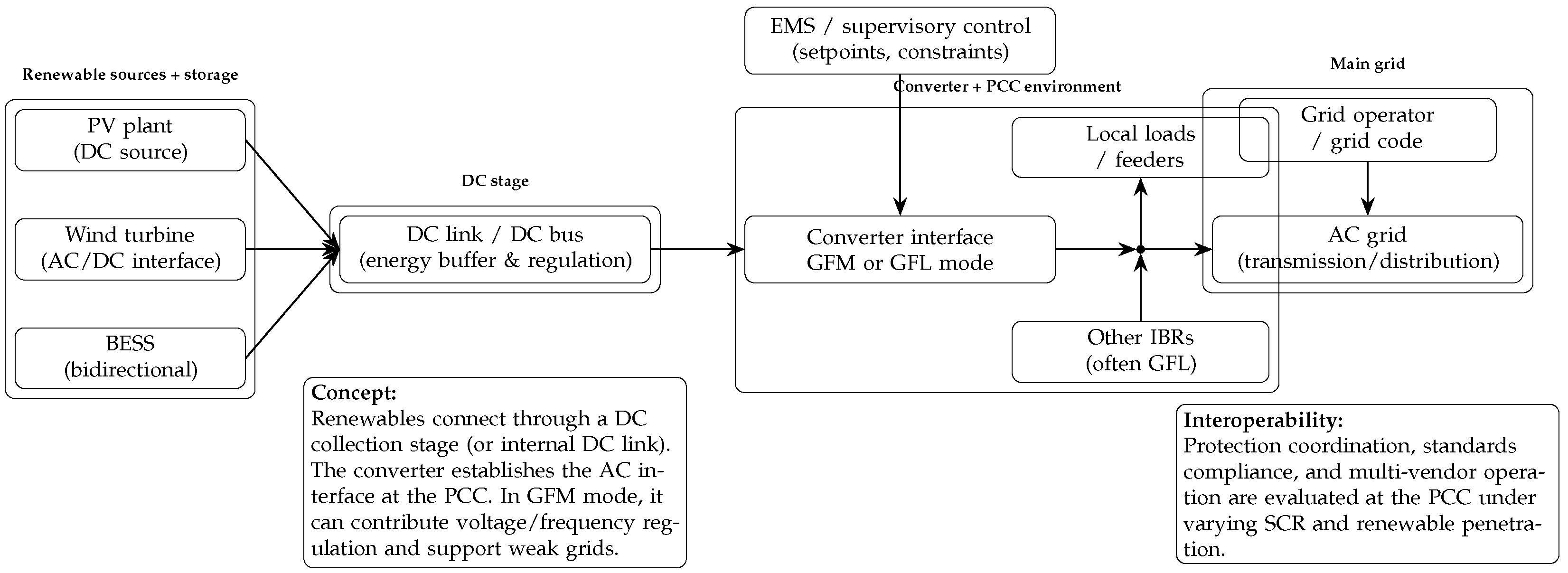
Figure 4 shows the conceptual integration of renewable sources and storage through a DC link and inverter interface operating in GFM or GFL mode to connect with the AC grid at the PCC.
6.9.1. Variability and Fast Dynamic Response Requirements
Wind and solar generation exhibit intrinsic variability driven by meteorological conditions. Rapid reductions in solar irradiance or wind speed fluctuations can create sudden power imbalances, particularly in low-inertia systems. Under high renewable penetration, such disturbances can produce steep frequency deviations that require immediate corrective action.
GFMs are designed to respond through fast active power modulation and synthetic inertia emulation [
1,
33,
34]. However, during extreme fluctuations, converter current limits and DC-link constraints may restrict response capability. The integration of battery energy storage systems (BESSs) can mitigate short-term imbalances by buffering renewable variability and providing additional frequency support. Nevertheless, real-time coordination between GFMs and storage systems requires advanced control frameworks that account for state-of-charge constraints, dynamic grid conditions, and economic dispatch objectives [
23,
33].
6.9.2. Voltage Regulation and Reactive Power Coordination in Weak Grids
Renewable integration frequently occurs in weak-grid regions characterized by low short-circuit ratios (SCRs). In such environments, voltage sensitivity to active and reactive power variations is amplified. GFMs must therefore provide coordinated reactive power support to maintain voltage stability and prevent sustained voltage oscillations [
23,
34,
39,
42].
In hybrid systems where grid-forming and grid-following inverters coexist, improper coordination may result in reactive power imbalances and voltage instability. Adaptive droop control, virtual impedance shaping, and advanced synchronization techniques are being explored to enhance voltage robustness. However, large-scale validation under high renewable penetration remains an active research area [
1,
23,
26].
6.9.3. Operational Mode Transitions and Bidirectional Power Flow
High renewable penetration introduces operational complexity, particularly during transitions between grid-connected and islanded modes. Black-start scenarios, grid faults, and intentional islanding require GFMs to rapidly reconfigure control strategies while maintaining stable voltage and frequency references [
1,
23].
During black-start operation, GFMs must establish system voltage autonomously and coordinate active and reactive power injection among multiple converters. Such transitions demand decentralized control architectures and robust synchronization mechanisms to prevent transient instability [
23,
33].
Additionally, the proliferation of distributed energy resources (DERs) has introduced bidirectional power flows in distribution networks traditionally designed for unidirectional operation. Reverse power flow conditions complicate voltage regulation and protection coordination. GFMs must dynamically adjust power output while distinguishing between normal bidirectional operation and fault events, requiring adaptive current-limiting and real-time diagnostic strategies [
23,
39].
6.9.4. Multi-Inverter Coordination and Interoperability
As renewable penetration increases, multiple GFMs often operate in parallel within the same network. Poorly coordinated control settings can lead to uneven power sharing, circulating currents, or low-frequency oscillations. Advanced consensus-based and hierarchical control strategies are being investigated to ensure stable load sharing and coordinated dynamic response [
33,
34].
Interoperability among multi-vendor inverter technologies presents an additional challenge. Standardized communication protocols, synchronized control frameworks, and clearly defined grid-code requirements are essential for ensuring seamless integration in heterogeneous systems [
1,
33]. Without harmonized operational standards, large-scale renewable deployment may increase system complexity and reduce stability margins.
6.9.5. Deployment and Infrastructure Constraints
Beyond technical control challenges, renewable integration requires substantial infrastructure upgrades, including energy storage deployment, advanced monitoring systems, and enhanced protection architectures. Ensuring that GFMs remain cost-effective while meeting performance requirements under high-RES conditions remains a critical engineering objective [
14,
33,
54,
63].
Collectively, these challenges illustrate that renewable integration in inverter-dominated systems is not solely a control problem, but a system-level coordination and infrastructure issue. Continued research, standardized validation platforms, and field demonstrations are necessary to ensure that GFMs can reliably support grids with high renewable penetration while preserving stability, resilience, and interoperability.
6.10. Cybersecurity and Operational Resilience
The increasing reliance of GFMs on software-based control, real-time communication, and distributed coordination introduces significant cybersecurity and operational resilience challenges. Because GFM operation depends on digital sensing and communication networks, attacks such as spoofing, denial-of-service (DoS), and data manipulation can compromise synchronization and destabilize grid operation [
4,
18,
35].
Hierarchical and communication-dependent control structures are particularly vulnerable to data integrity breaches and unauthorized access. Mitigation strategies include encrypted communication channels, secure authentication mechanisms, embedded anomaly detection systems, and hardware-based secure control platforms [
4,
35].
Operational resilience requires that GFMs maintain stability under both physical disturbances and cyber disruptions. Robust fault ride-through mechanisms, adaptive protection systems, and seamless transitions between grid-connected and islanded modes are critical for sustaining service continuity [
2,
4]. Future research must prioritize decentralized control architectures that reduce communication dependency and improve autonomous operation.
The establishment of harmonized cybersecurity standards specific to inverter-dominated systems is essential to ensure secure, interoperable deployment across diverse grid environments [
30,
35].
7. Cross-Disciplinary Challenges
The deployment of GFMs represents a pivotal shift in modern power systems, particularly under high renewable penetration. Unlike conventional generation technologies, GFMs operate at the intersection of power electronics and power system engineering. This dual positioning introduces cross-disciplinary challenges arising from differing design priorities: power electronics emphasizes efficiency, switching performance, and thermal constraints, whereas power system operation prioritizes stability, protection coordination, and dynamic resilience.
Resolving these challenges requires harmonizing device-level optimization with system-level reliability requirements. Furthermore, standardized integration practices are necessary to ensure scalable and interoperable deployment across diverse grid environments.
7.1. Coordination Between Power Electronics and Power System Requirements
GFMs occupy a unique interface between converter hardware design and large-scale system operation. From a power electronics perspective, objectives include maximizing switching efficiency, minimizing losses, ensuring thermal reliability, and reducing converter footprint. In contrast, system operators prioritize frequency stability, voltage regulation, fault ride-through capability, and oscillation damping.
This divergence can lead to conflicting design trade-offs. For example, aggressive current limiting protects semiconductor devices but may reduce fault current contribution required for system protection. Similarly, minimizing switching losses may constrain dynamic control bandwidth, potentially affecting transient response performance.
The absence of inherent mechanical inertia further complicates coordination. While GFMs emulate inertia through control algorithms, synthetic inertia remains fundamentally different from kinetic energy stored in synchronous machines. Advanced control strategies—including hybrid droop–VSM approaches and model predictive control—aim to bridge this gap by enhancing dynamic responsiveness while preserving converter efficiency [
2].
Recent research increasingly focuses on integrated control architectures that jointly optimize converter-level performance and grid-level stability metrics. Coordinated voltage–frequency control combined with harmonic mitigation and adaptive damping has shown promise in weak-grid environments [
4,
35]. Effective deployment therefore requires close collaboration between converter designers and system planners to ensure alignment of protection settings, stability margins, and operational limits.
7.2. Interfacing and Standardization Issues
Interfacing GFMs with existing grid infrastructure presents additional complexity due to the absence of universally harmonized protocols for grid-forming operation. GFMs must interact seamlessly with synchronous generators, grid-following inverters, protection systems, renewable plants, and energy storage units. However, differences in control philosophies and regional grid codes often necessitate customization, limiting interoperability and scalability [
4].
Regional variations further complicate deployment. Some jurisdictions emphasize stringent fault ride-through requirements, while others prioritize reactive power capability or dynamic frequency response [
30,
35]. This lack of alignment increases implementation complexity and slows standard adoption.
Standardization efforts are therefore critical. Proposed measures include universal communication protocols, modular control frameworks, adaptive compliance schemes, and interoperability certification platforms. Harmonized standards can reduce engineering overhead, improve protection compatibility, and enable large-scale deployment across heterogeneous grid environments [
4,
35].
7.3. Alignment with Emerging Dynamic Standards and Grid Codes
The increasing penetration of inverter-based resources has prompted significant updates to interconnection standards and grid codes. IEEE Std 2800-2022 [
73] establishes performance requirements for inverter-based resources connected to bulk power systems, including dynamic voltage control, frequency ride-through capability, and fault response behavior. Similarly, IEEE Std 1547-2018 [
74] defines distributed energy resource (DER) interconnection performance requirements, including reactive power support, abnormal operating response, and voltage regulation characteristics.
At the international level, IEC standards such as IEC 62786 [
75] address distributed resource connection to distribution networks, while IEC 61850 [
76] supports communication and interoperability within digital substations and hybrid AC/DC systems. These evolving standards increasingly recognize grid-forming functionality as a viable mechanism for maintaining stability in low-inertia systems.
As dynamic performance requirements continue to evolve, coordinated development between control strategy research and standards organizations—including IEEE, IEC, and ENTSO-E—will be essential to ensure interoperability, protection coordination, and scalable deployment. Alignment between converter control capabilities and standardized performance metrics will play a decisive role in the reliable integration of GFMs into future power systems.
7.4. Practical Implementation and Deployment Barriers
Despite rapid technical advancements, large-scale deployment of grid-forming inverters (GFMs) faces several practical barriers beyond purely technical performance. One major challenge is certification and compliance with evolving grid codes. Existing interconnection standards were largely developed for synchronous generators or grid-following converters, and certification procedures for grid-forming functionality remain regionally inconsistent. Demonstrating compliance under dynamic performance requirements, fault ride-through scenarios, and interoperability testing increases validation time and cost.
Economic considerations also affect adoption. Wide-bandgap semiconductor devices (e.g., SiC and GaN), advanced digital control platforms, and enhanced protection coordination mechanisms increase capital expenditure compared to conventional inverter systems. Additionally, utilities may require redundant testing, hardware-in-the-loop validation, and extended commissioning periods before approving GFM-based assets.
Compatibility with legacy infrastructure presents another constraint. Protection schemes, relay coordination logic, and short-circuit studies are often based on assumptions of high fault current contribution from synchronous machines. Integrating GFMs may therefore require recalibration of protection settings, communication upgrades, and revised operational procedures.
These certification, cost, and compatibility barriers highlight that the transition toward grid-forming-dominated systems is not solely a technological evolution but also a regulatory and institutional transformation requiring coordinated action among manufacturers, utilities, and standards organizations.
8. Future Trends and Directions in Grid-Forming Inverter Technology
Future research directions are framed according to their expected contribution to long-term system stability, interoperability, and resilience.
The previous sections examined existing technical constraints from two complementary perspectives: converter-level limitations rooted in power electronics design and system-level operational challenges associated with large-scale grid integration. While these analyses reflect the current state of GFM deployment and validation, they also expose structured research gaps that extend beyond incremental performance improvements.
Building upon these identified limitations, the following section transitions from present challenges to forward-looking research priorities. It synthesizes emerging technological directions and highlights strategic areas requiring coordinated advancement in control theory, protection design, cybersecurity resilience, hybrid coordination mechanisms, and grid-code standardization. These directions collectively define the pathway toward scalable, interoperable, and standards-aligned grid-forming inverter deployment in inverter-dominated power systems.
8.1. Emerging Technologies and Solutions
8.1.1. Advanced Control Methods
Future GFM development is strongly driven by advanced control architectures capable of improving dynamic stability, power-sharing accuracy, and robustness under weak-grid conditions. Finite-control-set model predictive control (FCS-MPC), multivariable feedback strategies, and virtual oscillator control (VOC) are gaining increasing research attention.
FCS-MPC offers improved transient performance and fast constraint handling, enabling efficient voltage regulation under nonlinear and high-order system dynamics [
16,
40,
52]. VOC, inspired by nonlinear oscillator synchronization principles, enables decentralized and self-synchronizing behavior, reducing reliance on PLLs and improving resilience under grid disturbances [
30,
36].
These approaches aim to overcome limitations associated with conventional droop and virtual synchronous machine (VSM) strategies, particularly in low short-circuit ratio environments where dynamic interactions are amplified.
8.1.2. Material Innovations
Wide-bandgap semiconductor technologies, including silicon carbide (SiC) and gallium nitride (GaN), are transforming GFM hardware capabilities. These materials enable higher switching frequencies, reduced conduction losses, improved thermal management, and enhanced power density [
2,
15,
23,
57].
In addition to semiconductor advancements, innovations in passive components—such as high-reliability DC-link capacitors and improved magnetic core materials—support increased converter lifetime and scalability. Collectively, these developments facilitate compact, high-efficiency inverter architectures suitable for both microgrid applications and large-scale transmission systems.
8.1.3. Integration with Digital Technologies
Digitalization is emerging as a transformative enabler of next-generation GFM systems. Digital twins allow real-time performance replication and predictive maintenance through high-fidelity system modeling [
16,
63,
77]. Artificial intelligence (AI) and machine learning algorithms are increasingly applied for adaptive control tuning, anomaly detection, and fault classification.
Advanced communication frameworks and IoT-enabled architectures further enhance coordination among distributed GFMs and energy storage systems [
16,
33]. However, the increasing digital dependency simultaneously introduces new cybersecurity and latency challenges that must be addressed through resilient and decentralized control strategies.
8.2. Research Gaps and Potential Areas for Innovation
8.2.1. Standardization of Grid Codes
Despite rapid technical progress, the absence of harmonized grid codes tailored to grid-forming operation remains a major barrier to large-scale deployment. Existing regulations were largely designed for synchronous machines and grid-following inverters, limiting compatibility with autonomous voltage-source control strategies.
European initiatives such as MIGRATE and evolving IEEE/IEC standards represent important steps toward harmonized dynamic performance requirements [
1,
2,
30,
63]. However, global alignment of interoperability metrics, fault response criteria, and frequency regulation standards remains incomplete. Future regulatory frameworks must explicitly define performance envelopes for inverter-dominated systems.
8.2.2. Scalability and Multi-Converter Coordination
Scaling GFM deployment from isolated microgrids to large interconnected networks introduces challenges in synchronization, stability margins, and equitable power sharing. Interaction among multiple grid-forming units can result in oscillatory behavior, circulating currents, or mode conflicts [
33,
39].
Promising solutions include distributed consensus-based control, modular converter architectures, and hybrid grid-forming/grid-following configurations [
15,
16,
78,
79]. Nonetheless, large-scale experimental validation remains limited, particularly under high renewable penetration scenarios.
8.2.3. Cybersecurity and Resilience
As GFM systems increasingly depend on communication networks and digital controllers, cybersecurity risks escalate. Signal spoofing, false-data injection, and communication latency can undermine synchronization and voltage regulation performance [
2,
15,
30,
34,
80].
Research priorities include intrusion detection systems, secure firmware architectures, and decentralized control schemes capable of autonomous operation during communication loss. Additionally, resilience against combined cyber–physical disturbances requires integrated testing platforms and standardized vulnerability assessment methodologies.
8.2.4. Enhanced Fault Tolerance
GFMs inherently provide limited fault current compared to synchronous generators, complicating protection coordination in inverter-dominated systems. Advanced current-limiting strategies, adaptive droop modifications, and virtual flux orientation techniques are under investigation to enhance fault ride-through capability while preserving stability [
2,
23,
30,
34].
Future research must address coordinated AC/DC fault management, especially in hybrid grids and multi-terminal HVDC systems, where fault propagation dynamics differ significantly from conventional AC networks.
8.3. Priority Research Directions for Large-Scale GFM Deployment
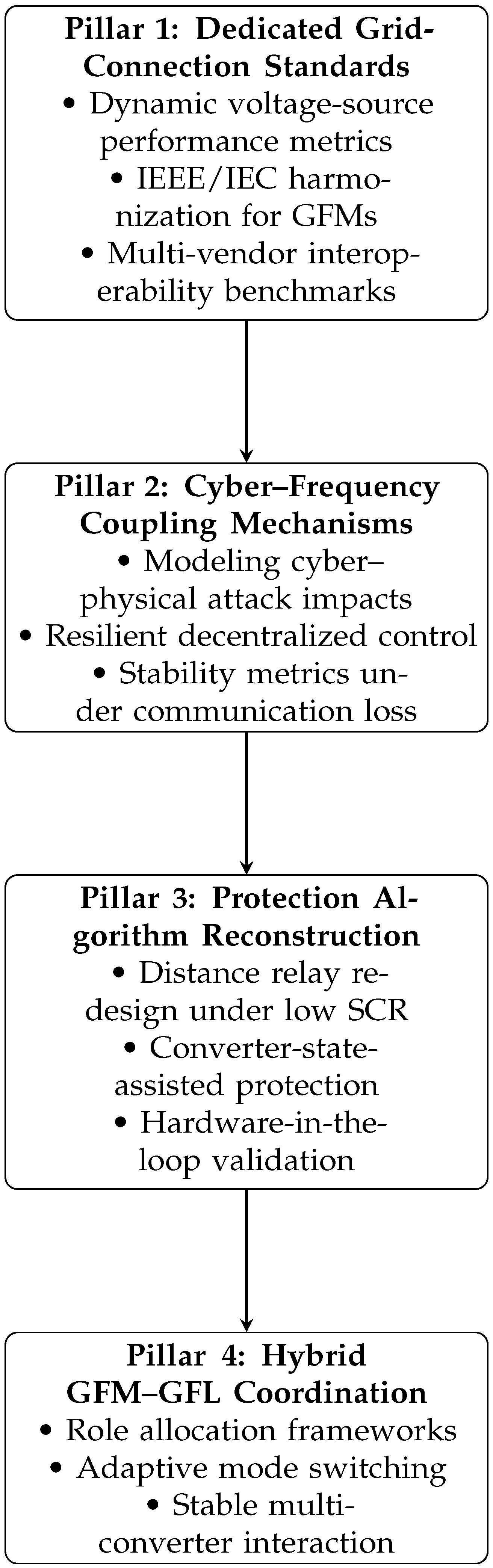
To enable reliable large-scale deployment of grid-forming inverters, future research must move beyond incremental improvements toward coordinated system-level innovation. Based on the reviewed literature, the following priority directions are identified:
1. Dedicated Grid-Connection Standards for Grid-Forming Inverters
Existing interconnection standards were primarily developed for synchronous machines and grid-following converters. A dedicated framework defining dynamic performance requirements, fault current contribution, voltage source behavior, and interoperability metrics for grid-forming inverters is urgently required. Harmonized IEEE and IEC standards tailored specifically to grid-forming operation will be essential to ensure multi-vendor compatibility, protection coordination, and scalable deployment.
2. Coupling Mechanisms Between Cyber-Attacks and Frequency Disturbances
The increasing digitalization of GFM control introduces a new research frontier: the interaction between cyber vulnerabilities and electromechanical stability. False-data injection, communication delays, or coordinated cyber-attacks may directly influence frequency regulation and voltage stability in low-inertia systems. Future work must investigate the dynamic coupling between network-layer attacks and system-level frequency disturbances, including the development of resilient decentralized control architectures capable of autonomous stabilization under communication loss.
3. Reconstruction of Distance Protection Algorithms Under Low Short-Circuit Capacity
Traditional distance protection algorithms assume high fault-current contributions from synchronous generators. In inverter-dominated grids, limited and controlled fault currents can lead to relay misoperation or delayed tripping. New protection principles—potentially based on impedance trajectory shaping, converter-internal state variables, or communication-assisted schemes—must be developed to ensure reliable operation under low SCR conditions.
4. Coordination Mechanisms for Hybrid GFM–GFL Systems
Future grids will likely operate with mixed grid-forming and grid-following converters. Without proper coordination, hybrid systems may experience control conflicts, circulating currents, or unstable dynamic interactions. Research is needed to establish hierarchical or consensus-based coordination frameworks that define clear role allocation, adaptive mode switching, and stable power-sharing mechanisms across varying grid strengths.
Collectively, these directions highlight the necessity of integrated research spanning control theory, protection engineering, cybersecurity, and regulatory standardization. Addressing these priorities will be fundamental to ensuring the stability, resilience, and interoperability of inverter-dominated power systems.
Table 3 summarizes emerging technologies and strategic research priorities shaping the evolution of grid-forming inverter systems. Collectively, these trends indicate a transition from isolated control improvements toward system-level integration, regulatory harmonization, and digital resilience.
Figure 5 illustrates the projected technological trajectory, highlighting the progression from short-term control optimization to long-term AC/DC hybrid architectures and standards-driven interoperability frameworks. This roadmap underscores the necessity of coordinated advancements across control theory, power electronics design, protection engineering, and regulatory development.
9. Conclusions
This review has examined grid-forming inverter (GFM) technology through a multi-layered analytical framework encompassing converter-level constraints, system-level operational challenges, and forward-looking research priorities.
From a power electronics perspective, the analysis highlighted the influence of control architectures, semiconductor materials (e.g., SiC and GaN), filtering design, fault current limitations, and thermal management on dynamic performance and reliability. While droop and VSM-based strategies remain commercially mature, emerging approaches such as Virtual Oscillator Control (VOC) and Model Predictive Control (MPC) demonstrate promising dynamic characteristics but require broader hardware-in-the-loop validation and large-scale field testing to confirm scalability and robustness.
From a power system perspective, challenges associated with low inertia, weak-grid operation, protection coordination, interoperability, and cybersecurity resilience remain critical barriers to widespread GFM deployment. In particular, limited short-circuit contribution, hybrid GFM–GFL coordination, and the interaction between digital control vulnerabilities and frequency stability require deeper cross-disciplinary investigation.
Building upon these identified constraints, the review consolidated structured research priorities, including (i) the development of dedicated grid-connection standards tailored to grid-forming operations, (ii) reconstruction of protection algorithms for low short-circuit capacity environments, (iii) systematic study of cyber–frequency disturbance coupling mechanisms, and (iv) scalable coordination strategies for hybrid GFM–GFL systems.
Overall, GFMs hold transformative potential for enabling resilient, low-inertia, renewable-dominated grids. However, their successful large-scale integration depends on rigorous validation, standards-aligned deployment, and coordinated advancement across converter design, system operation, and regulatory frameworks.