1. Introduction
SAR has emerged as a pivotal technology for monitoring surface targets, primarily due to its capability for all-weather observation [
1,
2,
3]. However, traditional single-view SAR faces prominent challenges, such as insufficient 3D positioning accuracy and high error sensitivity in complex scenarios (e.g., mountainous areas and urban building clusters). These drawbacks limit its capacity to meet the urgent demands for high-precision 3D positioning in critical applications like disaster emergency response, high-resolution mapping, and military reconnaissance. In contrast, multi-perspective SAR offers a promising solution by significantly enhancing the accuracy and dimensionality of target localization using the integration of multi-baseline and multi-angle data, thereby garnering increased interest from researchers.
The airborne-distributed platform, characterized by its multi-platform collaborative observation capability, flexible baseline configuration scheme, and synchronous multi-view data acquisition features, serves as an ideal implementation platform for multi-view SAR target 3D positioning technology. This system captures multi-angle SAR images of the target area via multiple flight platforms during a single flight, thereby providing abundant data support for 3D positioning. Compared with single-platform systems, the distributed architecture has distinct advantages: each platform can independently adjust flight parameters and flexibly configure large-baseline or wide-view observation modes based on task requirements. Simultaneously, the platforms can maintain collaborative operations and share real-time key information, such as distance measurement and attitude between machines, thereby significantly enhancing the system’s adaptability and positioning accuracy. This unique feature of ‘independent collaboration’ enables airborne-distributed platforms to exhibit technological advantages in multi-view SAR target positioning that are unmatched by single systems.
However, there are inherent differences among various airborne-distributed platforms, which are susceptible to external disturbances, such as airflow disruptions during flight. These disturbances can lead to deviations in flight trajectories from ideal states and inconsistencies between the trajectories of different platforms. Although all platforms are equipped with onboard navigation devices, the design of distributed platforms often involves small and highly maneuverable aircraft, which complicates the integration of high-precision navigation systems. This challenge further exacerbates the errors in platform position measurements. Consequently, this technological limitation significantly constrains the three-dimensional positioning accuracy of multi-angle targets on airborne-distributed platforms. Nevertheless, systematic research addressing this critical issue remains insufficient at present.
In recent years, research on SAR target positioning has gradually transitioned from traditional two-dimensional plane positioning to three-dimensional spatial positioning. This shift aims to meet the demands for target elevation information and enhance both positioning accuracy and scene perception capabilities. Early studies predominantly employed the single-look SAR target location model, with the most representative models being the Range Doppler model (RD) [
4,
5,
6], Rational Polynomial model (RPC) [
7,
8], and Collinearity Equation model. The RD model is founded on the range and Doppler equations, enabling the positioning of targets on a two-dimensional plane using simultaneous solutions. However, it does not directly provide elevation information and relies on an external Digital Elevation Model (DEM) for auxiliary solutions, which limits accuracy in areas with undulating terrain. The RPC establishes a mapping relationship between SAR image coordinates and ground coordinates using rational functions, exhibiting strong versatility and wide adaptability. Nevertheless, its accuracy heavily depends on Ground Control Points (GCP), and its computational complexity poses challenges for directly solving elevation information. The Collinearity Equation model, based on the collinearity condition in photogrammetry, describes the geometric relationships among SAR image points, the radar antenna phase center, and ground target points. While this model offers high positioning accuracy, it requires highly precise radar position and attitude parameters, and does not facilitate direct acquisition of elevation information. A common limitation of these single-view SAR models is their difficulty in directly obtaining three-dimensional target information, which constrains their applicability in elevation-sensitive scenarios.
To address the limitations of single-look SAR in three-dimensional positioning, researchers have proposed various SAR technologies capable of directly obtaining three-dimensional information about targets. These include Interferometric SAR (InSAR) [
9,
10,
11], Tomographic SAR [
12,
13,
14], and Circular SAR [
15,
16]. InSAR retrieves elevation information by utilizing the phase difference from multiple SAR images; however, it necessitates a high baseline length and phase stability, making it susceptible to decoherence effects. Tomographic SAR reconstructs three-dimensional target profiles by analyzing scattering characteristics in the vertical direction using multi-baseline observations. Nevertheless, its complexity in both system design and computation poses challenges for real-time processing. Circular SAR enhances three-dimensional positioning accuracy by capturing omni-directional scattering information using multi-angle observations, yet it imposes stringent requirements on platform trajectory planning and data acquisition. While these methods offer significant advantages for 3D positioning, their complexity and computational demands hinder widespread practical application.
To address these challenges, multi-view SAR image positioning schemes have emerged as a significant research focus. By integrating target information from multiple SAR images, multi-view SAR not only circumvents the limitations of single-view SAR in acquiring elevation data but also enhances positioning accuracy and robustness. Furthermore, multi-view SAR can reduce system complexity and computational demands by optimizing view configurations and track planning, thus providing an efficient and practical solution for three-dimensional target positioning. Consequently, multi-view SAR target localization technology holds substantial research value and promising application prospects. Multi-view SAR image localization essentially represents a stereo localization problem, typically utilizing the oblique range and Doppler information of the same target across two or more SAR images to determine the target’s three-dimensional position. Currently, research on multi-view SAR image positioning predominantly concentrates on spaceborne SAR systems, as illustrated in ref. [
17]. Using prediction error analysis, a weighted spatial intersection algorithm has been proposed, yielding the weighted least squares solution for the three-dimensional position of the target, which has been validated using Radarsat data. Similarly, in ref. [
18] TerraSAR-X data was employed for stereo positioning data processing, with measured results demonstrating that the elevation of the intersection angle can significantly enhance positioning accuracy and robustness. In ref. [
19], the measured data processing of GF-3 yielded analogous results, indicating that the geometric configuration of the platform substantially influences positioning accuracy. In contrast to spaceborne platforms, airborne platforms exhibit high mobility and flexible observation geometries, providing unique technical advantages for multi-view SAR image positioning, particularly in urban surveying, disaster monitoring, and other scenarios demanding strict timeliness and accuracy. However, current research in this area is limited; only an error transfer model has been derived, and target positioning performance under various heading designs has been simulated and analyzed [
20,
21], with a notable lack of measured data processing and analysis.
In summary, airborne-distributed multi-view SAR exhibits significant technical potential in three-dimensional positioning under complex environments by virtue of its high maneuverability and flexible observation geometry configuration, and has attracted extensive attention from researchers. However, existing studies have not yet conducted detailed and quantitative analyses on the error propagation models for different flight paths and various error sources, nor have corresponding solutions been proposed for different error sources. The main contributions of this paper are as follows:
A multi-view normalized Range-Doppler positioning model is constructed, with the CRLB as the quantitative evaluation metric. In addition to range error, Doppler error and matching error, the platform position measurement error is incorporated into the positioning model, and the theoretical expression of the CRLB is derived.
Furthermore, since different flight paths significantly affect target positioning performance, positioning accuracy analysis is carried out for two typical flight modes: parallel flight and angular flight, so as to clarify the influence degree of each error source on target positioning accuracy.
To effectively reduce the dependence of target positioning accuracy on platform position measurement, this paper proposes a target positioning method based on inter-aircraft ranging information: by acquiring ranging data between distributed airborne platforms, constraints are imposed on platform positions to weaken the adverse effect of platform position measurement error on target positioning.
Finally, the proposed method is verified using measured data, and the results demonstrate that the method is effective and feasible.
The structure of this paper is organized as follows:
Section 2 introduces the multi-angle SAR target positioning model, analyzes various error sources, and derives the CRLB.
Section 3 examines the positioning accuracy of both parallel flight mode and intersection flight mode. In
Section 4, a target localization method based on the distance information between aircraft is proposed.
Section 5 presents the processing results of the measured data. Finally,
Section 6 provides a summary of the entire paper.
2. Multi-View Target Localization Model
2.1. Localization Model
For SAR target positioning, the RD positioning model is the most commonly employed due to its clear physical significance and geometric relationship. The error relationships within this model are well-defined, facilitating the construction of an error propagation model with good modifiability. The RD model utilizes two measurements: the target’s slant range and Doppler frequency, to formulate the range and Doppler equations. This approach establishes a functional relationship between the coordinates of image points and the radar platform coordinates in SAR images. A similar methodology applies to multi-view SAR target positioning. When the SAR platform observes the same target from
N different trajectories, range and Doppler equations can be derived for each observation, resulting in a total of 2
N equations that can be employed to determine the three-dimensional coordinates of the target. Clearly, the target position can be accurately determined as long as
N ≥ 2. For instance, by considering two view angles, a SAR target positioning model can be constructed within the Northeast celestial coordinate system, as follows:
In this study, we define the three-dimensional coordinate of the target in the Northeast celestial coordinate system as point . Points , , , and represent the position and velocity of the platform at the moment the target of interest is observed during the acquisition of two SAR images. Additionally, and denote the slant distances of the target in the two SAR images, respectively. and indicate the Doppler center of the target in these two images. Finally, point refers to the signal wavelength. The three-dimensional coordinates of the target to be measured in the Northeast celestial coordinate system can be obtained by solving Equation (1).
Equation (1) is evidently a system of nonlinear equations, which usually requires multiple iterations to achieve an accurate solution. Thus, the residual of the equation is of great significance. The dimensions of the range equation in Equation (1) are inconsistent with those of the Doppler equation. Specifically, the dimension of the range equation is generally expressed in meters, whereas the dimension of the Doppler equation is typically in Hertz. This discrepancy leads to inconsistent scales of the residuals between the two equations, thereby affecting the iterative solution process. To address this issue, the dimension of the Doppler equation can be transformed into meters by introducing an average velocity, thereby achieving dimensional consistency with the range equation, as illustrated in Equation (2).
Let and represent the average velocities of the platform during the observation process, respectively. Since the squint angle of the platform is proportional to the Doppler effect, denoted as , the dimensionality of the Doppler equation in Equation (2) is also converted to meters, thereby aligning it with the dimensionality of the range equation.
In order to more clearly express the RD model mathematically, it can be written as an optimization problem according to the optimization theory, and the residual of the RD model can be directly minimized, then the following objective function can be established:
In this way, the multi-view SAR target positioning is modeled as an unconstrained optimization problem, and the target position can be obtained by solving it.
2.2. CRLB Calculation
After establishing the target positioning model, error analysis becomes a crucial step in evaluating the upper limits of system performance and identifying the error propagation paths. The CRLB-based error analysis method reveals the theoretical accuracy limits of parameter estimation from the perspective of information theory. Its advantages are as follows: (1) Quantifying the coupling effects of various error sources and deriving the statistical lower bounds analytically; (2) Guiding the optimization direction of the system and algorithm; (3) Reducing the reliance on extensive experimental data while enabling rapid verification of parameter sensitivity. Consequently, this paper selects CRLB as the core index for analyzing the errors in multi-view SAR target positioning and quantitatively assesses the influence of different error sources on target positioning errors.
From the established target positioning equation, it can be seen that the observation of the target mainly includes slant range and Doppler frequency, so the multi angle observation of the target can be made as
, where
is slant range observation and
is Doppler frequency observation. At the same time, make the target position
, the position and speed of the
i-th platform
,
. Then you can get
where
and
are the slant range measurement error and Doppler measurement error, respectively.
In the process of data acquisition for SAR systems, the platform is required to move in a uniform straight line. However, atmospheric turbulence inevitably introduces motion errors. These position errors directly distort the geometric model, while velocity errors result in Doppler estimation inaccuracies, ultimately leading to azimuth positioning errors. Such inaccuracies significantly impact target localization, particularly in multi-view target scenarios. The nonlinear characteristics of error transmission can considerably degrade positioning performance, making secondary external analysis essential.
Compared to single-view SAR target localization, multi-view SAR target localization introduces a significant and unavoidable source of error: the matching error. This error represents the discrepancy between the image point position of the target of interest obtained using image matching and its actual image point position. Specifically, range matching errors further contribute to target slant errors, while azimuth matching errors lead to platform position errors along the heading. These errors must be converted to eastward or northward position errors based on the heading angle.
Based on the above description, it is necessary to update the observation, that is, add the position observation
and speed observation
of the platform. For the position observation of the platform, there is not only the position measurement error in the process of platform movement, but also the azimuth matching error. Therefore, the platform position observation can be written as the following formula:
where
is the azimuth matching error,
,
,
is the platform position measurement error of the three coordinate axes respectively. Similarly, the platform velocity observation can be written as the following formula:
Then the slant range and Doppler observation were updated. An error term is added to the slant distance observation, as follows:
The Doppler observation results have not been affected. It is only necessary to update the position and speed of the platform, as follows:
Through the above analysis, various error sources introduced in practice are identified, and these error sources are substituted into the observation equation, as shown in Equations (7) and (8). The unknowns can then be estimated based on this observation equation. To calculate the theoretical limit of this estimation problem, i.e., the CRLB, it is first necessary to clarify the distribution satisfied by different error sources. Among them, the observation errors of slant range and Doppler are relatively simple, which can be regarded as the systematic errors of the SAR system itself. After calibration, they can be approximately treated as zero-mean Gaussian white noise, and their standard deviations can be set as
and
, respectively. As for the platform position error, it is generally introduced by the airborne integrated navigation equipment. Reports from the FAA indicate that it can be approximately regarded as a Gaussian distribution under certain conditions, and the standard deviations of its three-axis errors are defined as
,
, and
, respectively [
22]. The SAR image matching error is the most complex. The speckle noise in SAR images inherently exhibits non-Gaussian statistical characteristics (e.g., following a Gamma distribution). Importantly, registration errors caused by geometric distortions such as layover and shadow, as well as feature mismatching in low-texture regions, tend to produce discrete outliers with heavy-tailed distributions. However, in this paper, to simplify the analysis, it is assumed to follow an independent Gaussian distribution (the central limit theorem indicates that the combined effect of many independent and small random error sources approximately obeys a Gaussian distribution), with its standard deviation denoted as
.
After adding the above error sources, the obtained multi angle measurement of the target is
. Of course, the estimator also changes, that is,
.
Therefore, the likelihood function of the observed data can be obtained, as shown in the following equation.
Then its Fisher information matrix is given by
The Fisher information quantity can be written as the following formula:
Then, different error sources can be analyzed in detail according to the derived CRLB, and the influence of various error terms on target positioning accuracy can be quantitatively evaluated. Meanwhile, different flight paths and platform position configurations can be set for further simulation and analysis, so as to provide a theoretical basis and performance reference for the subsequent target positioning verification and parameter optimization in the next section.
3. Positioning Accuracy Analysis
Positioning accuracy analysis is critical to the SAR target positioning system, as it aims to quantitatively reveal the nonlinear effects of multiple error sources on positioning accuracy. By integrating CRLB analysis, the contribution weights of various error sources can be determined, providing a theoretical basis for optimizing system configuration and error allocation strategies. Furthermore, by comparing with Monte Carlo simulations, the comprehensiveness of the error propagation path description of the model is validated, establishing a theoretical foundation for the design of system robustness and its engineering implementation.
Unlike other SAR target positioning methods, the accuracy of target positioning in multi-view SAR is highly sensitive to flight path planning. Therefore, it is essential to analyze various flight paths. In this study, two typical flight paths are examined: one is the parallel flight path, where the heading angles of multiple flight paths for the same target are identical and the paths are parallel; the other is the angled flight path, characterized by a specific angle between different flight paths. This paper conducts an independent analysis of both flight paths.
3.1. Parallel Flight Mode
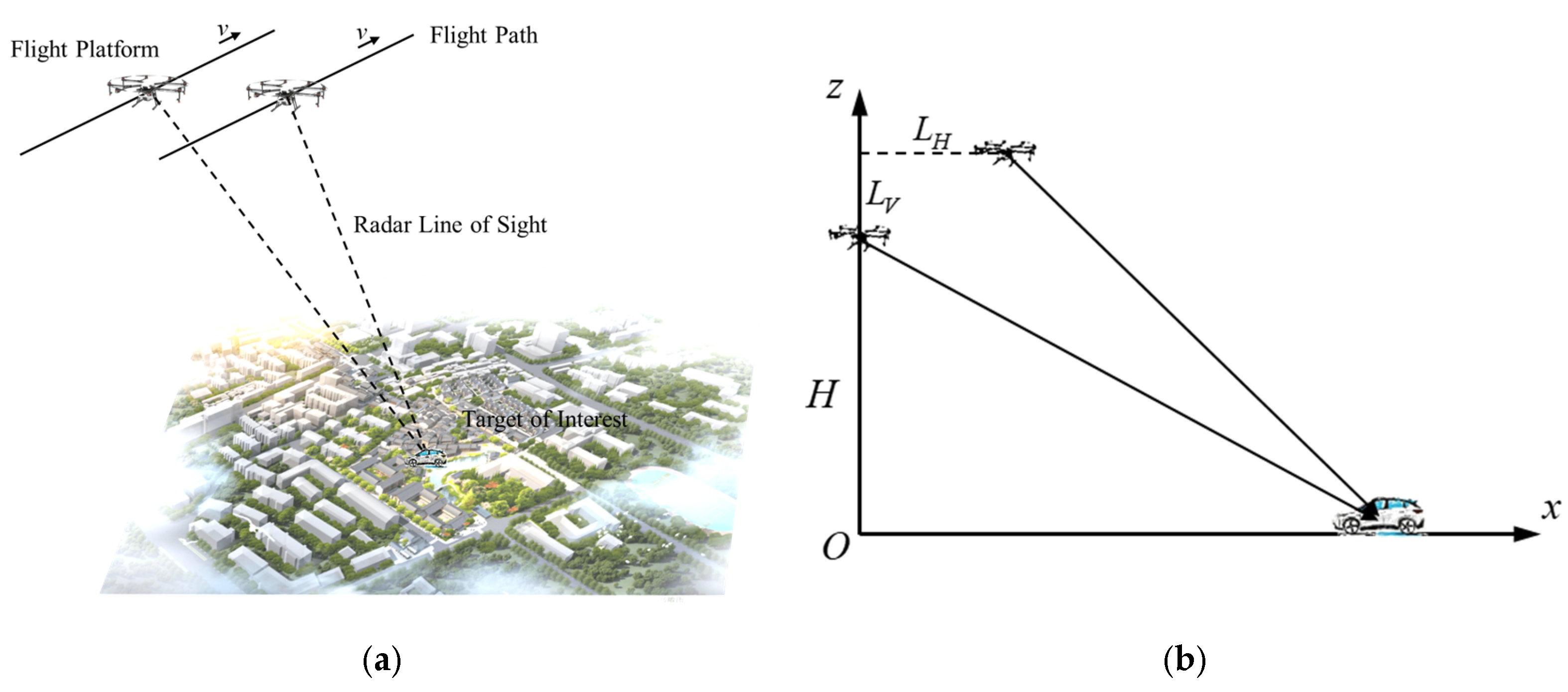
In this flight mode, the various flight paths are parallel, resulting in similar detection areas. This configuration facilitates broader coverage. However, to enhance the visual angle difference for target detection, it is necessary to increase the baseline length. Unfortunately, this approach does not effectively improve target positioning accuracy, particularly when the flight altitude is low or the detection distance is significant. The schematic diagram is provided below.
As illustrated in
Figure 1a, during the data acquisition process, the flight platform performs uniform linear motion at a certain speed in the air. It should be noted that the velocity component in the altitude direction is zero, while the radar line of sight points to the ground target of interest, so as to ensure that the SAR echo of the ground target can be acquired. Under the parallel flight model, the flight path remains parallel during multiple collections of SAR data, with a fixed baseline length maintained between them. This configuration results in varying angles of view for target observation. In the context of positioning accuracy analysis, this geometric relationship can be simplified, as depicted in
Figure 1b. In this model, multiple flight platforms traverse along the
y-axis at a constant altitude, denoted as h, while a fixed baseline is established along the
x-axis with a length of l. The target, positioned on the
x-axis, is illuminated during flight, and the slant distance to the target is represented as r. Within this simplified geometric framework, aside from the previously analyzed error sources, only the baseline length L and the detection distance r influence the positioning accuracy of the target. Therefore, the error analysis can focus exclusively on these two parameters.
Due to the numerous factors influencing target positioning accuracy, this paper employs the fixed variable method for analysis. Initially, the baseline length is numerically simulated by maintaining a constant magnitude of the error source. The parameters used are listed in
Table 1.
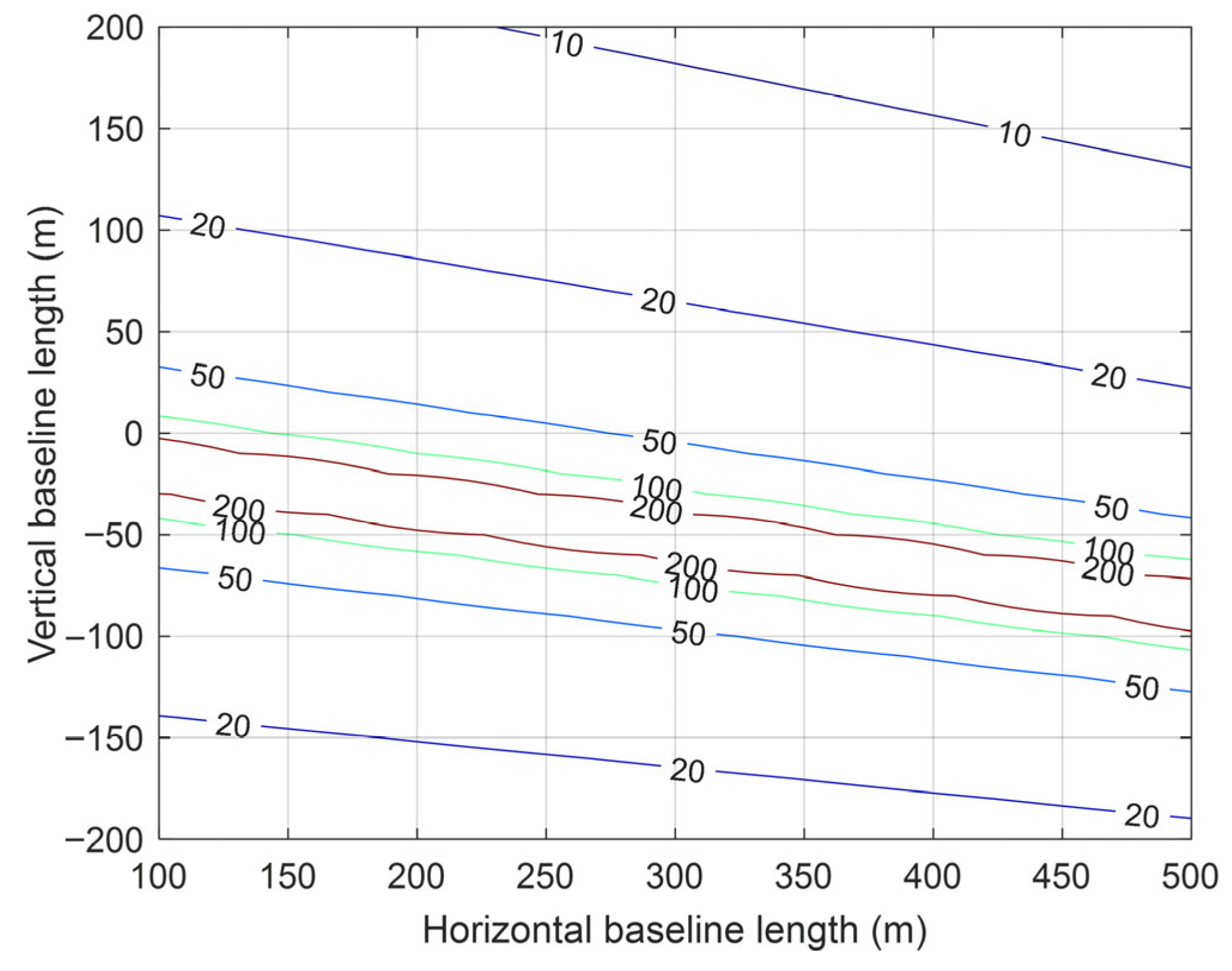
In the numerical simulation, the positioning accuracy of the target at a consistent detection distance under varying baseline conditions can be determined by traversing both the vertical and horizontal baseline lengths. This relationship is illustrated by contour lines in
Figure 2. It is evident that the positioning accuracy of the target improves progressively with an increase in baseline length.
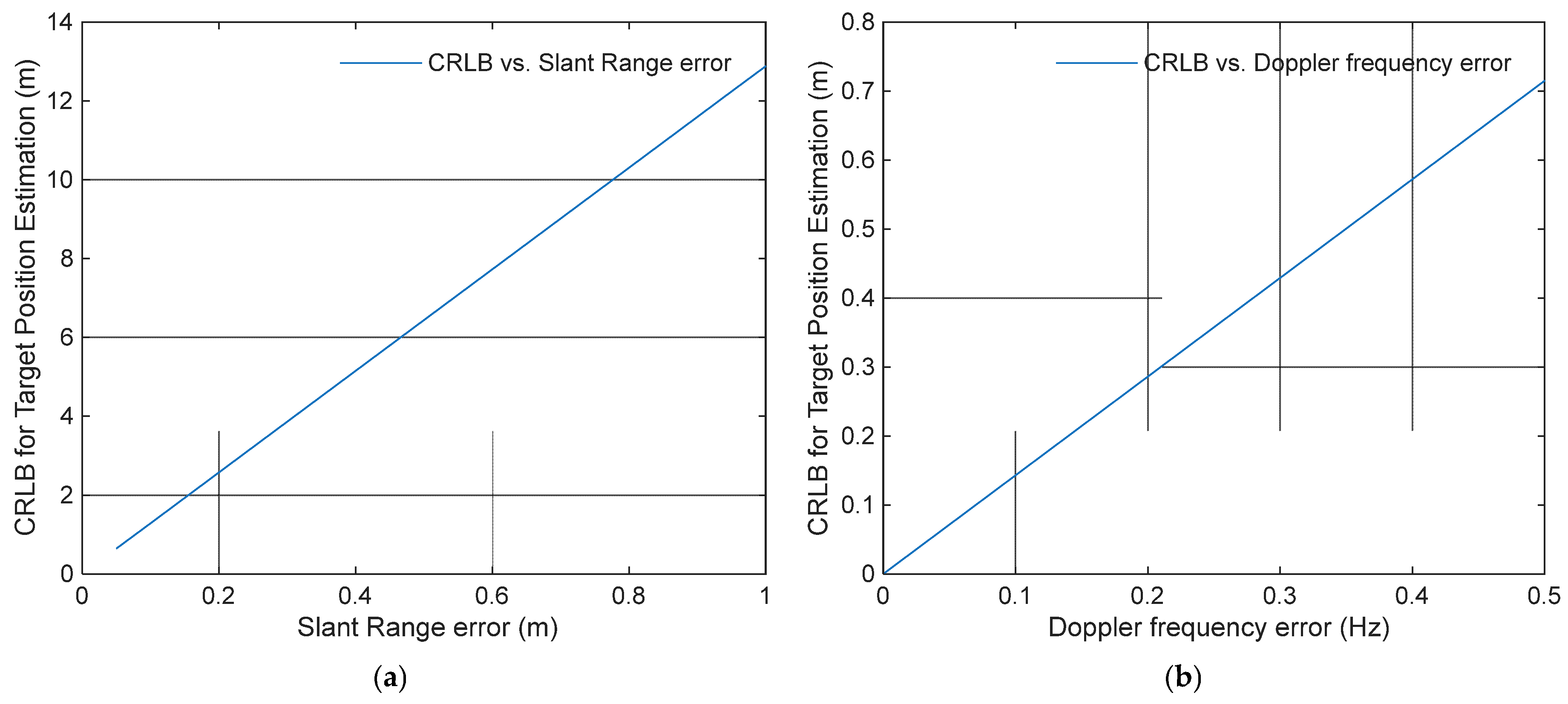
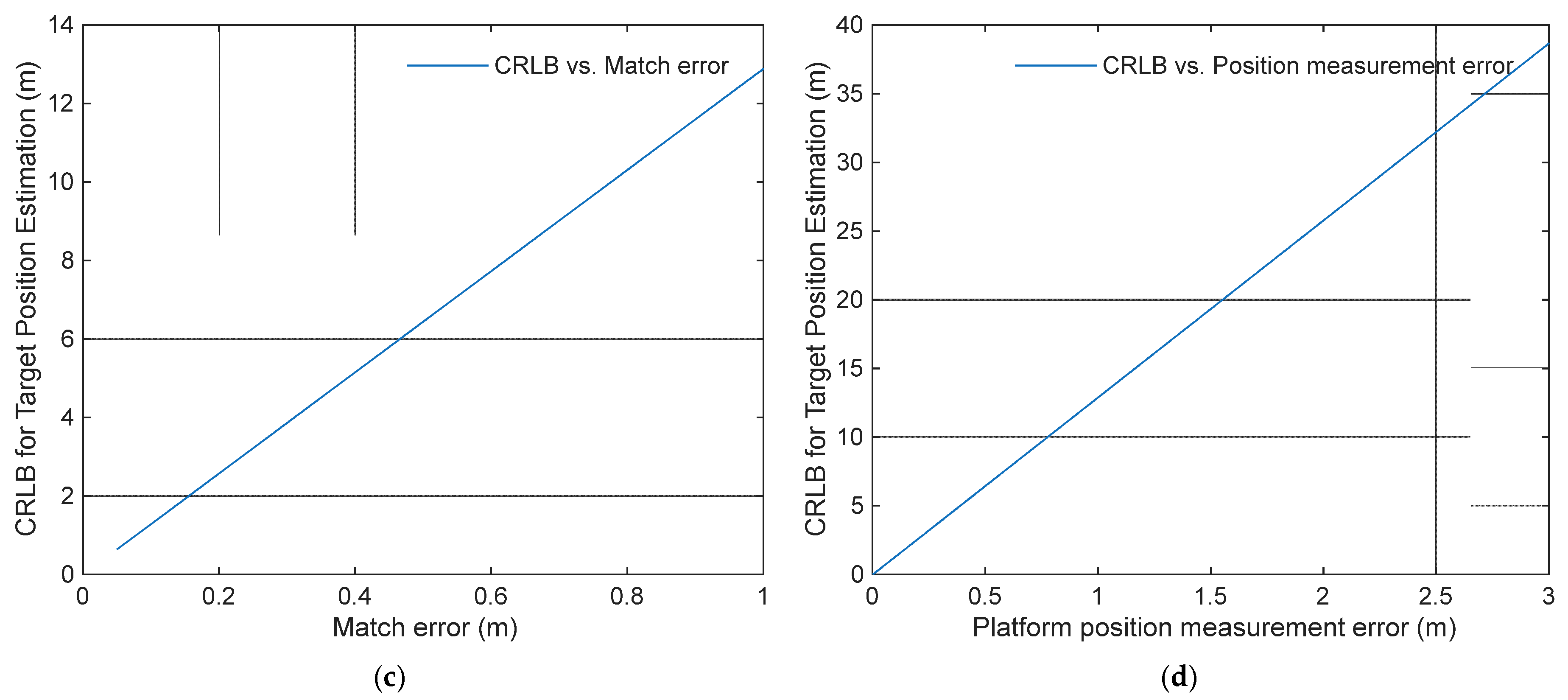
Similarly, different error sources can be numerically simulated with a fixed baseline length of 300 m and a detection distance of 3 km, as shown in the
Figure 2.
Figure 3 illustrates the impact of different error sources on target localization accuracy under parallel flight mode. It is evident that the effects of various error sources on target localization accuracy differ significantly. Among these, the influence of Doppler frequency error is the least pronounced, as this flight mode does not create a perspective difference along the flight path. Thus, it can be approximated as single-view localization, which is solely dependent on detection distance. The farther the detection distance, the greater the impact of Doppler frequency error on target localization. The effects of slant range error and matching error are approximately the same. In contrast, platform position error has the most detrimental effect on target localization accuracy.
3.2. Angular Flight Mode
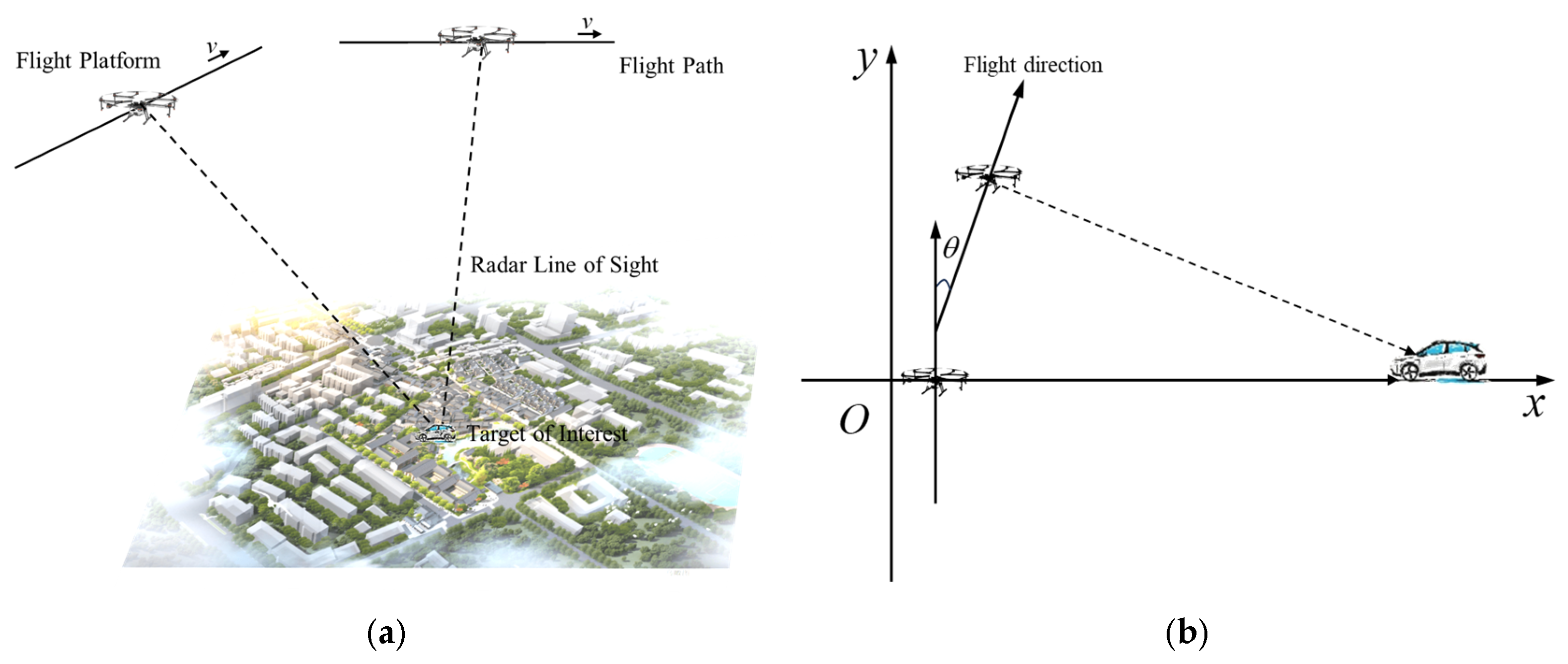
In contrast to the parallel flight mode, the angled flight mode features an included angle between different flight tracks. This configuration facilitates the acquisition of a significant angular difference, thereby enhancing target positioning accuracy. However, the included angle between flight paths results in a gradually increasing distance from the detection area, leading to reduced coverage. The geometric schematic diagram is presented below.
Figure 4a shows the geometric schematic diagram of the cross angle flight mode, while
Figure 4b shows the top view of the simplified geometric model, in which different flight platforms fly on the plane with altitude h, and the included angle of the two flight paths is, which can be directly mapped into the angle difference of the target. Under this simplified geometric model, the target positioning accuracy is related to the included angle of the flight path and the detection distance r in addition to the various error sources analyzed above. Similarly, the fixed variable method is used to analyze the included angle of flight path and detection distance. The parameters used are shown in
Table 1. The numerical simulation results are shown in
Figure 5 and
Figure 6.
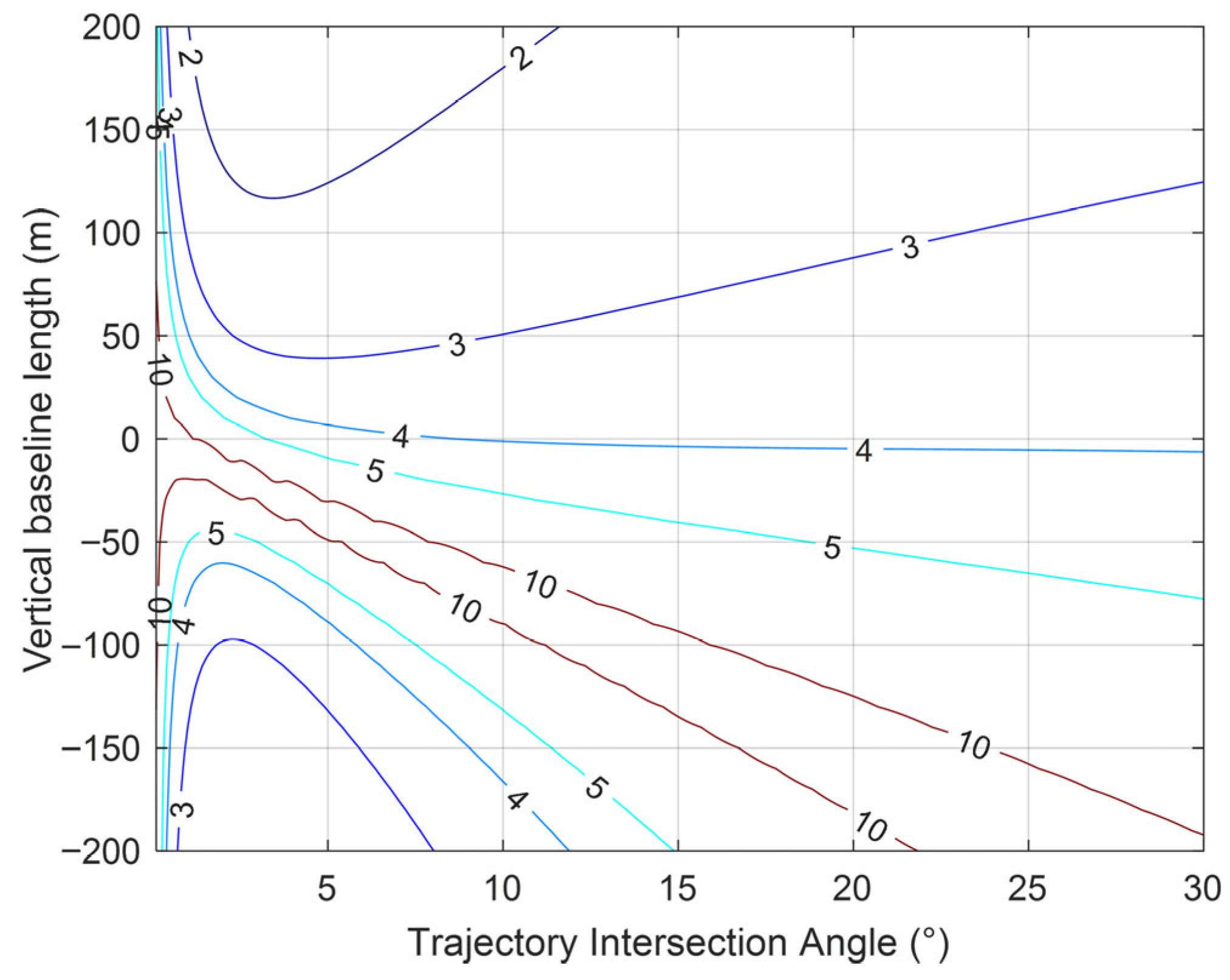
Figure 5 shows the numerical simulation results of target positioning accuracy under different flight path angles and detection distances, which are represented by contour lines. It is obvious that the target positioning accuracy will gradually improve with the decrease in detection distance and the increase in flight path angle.
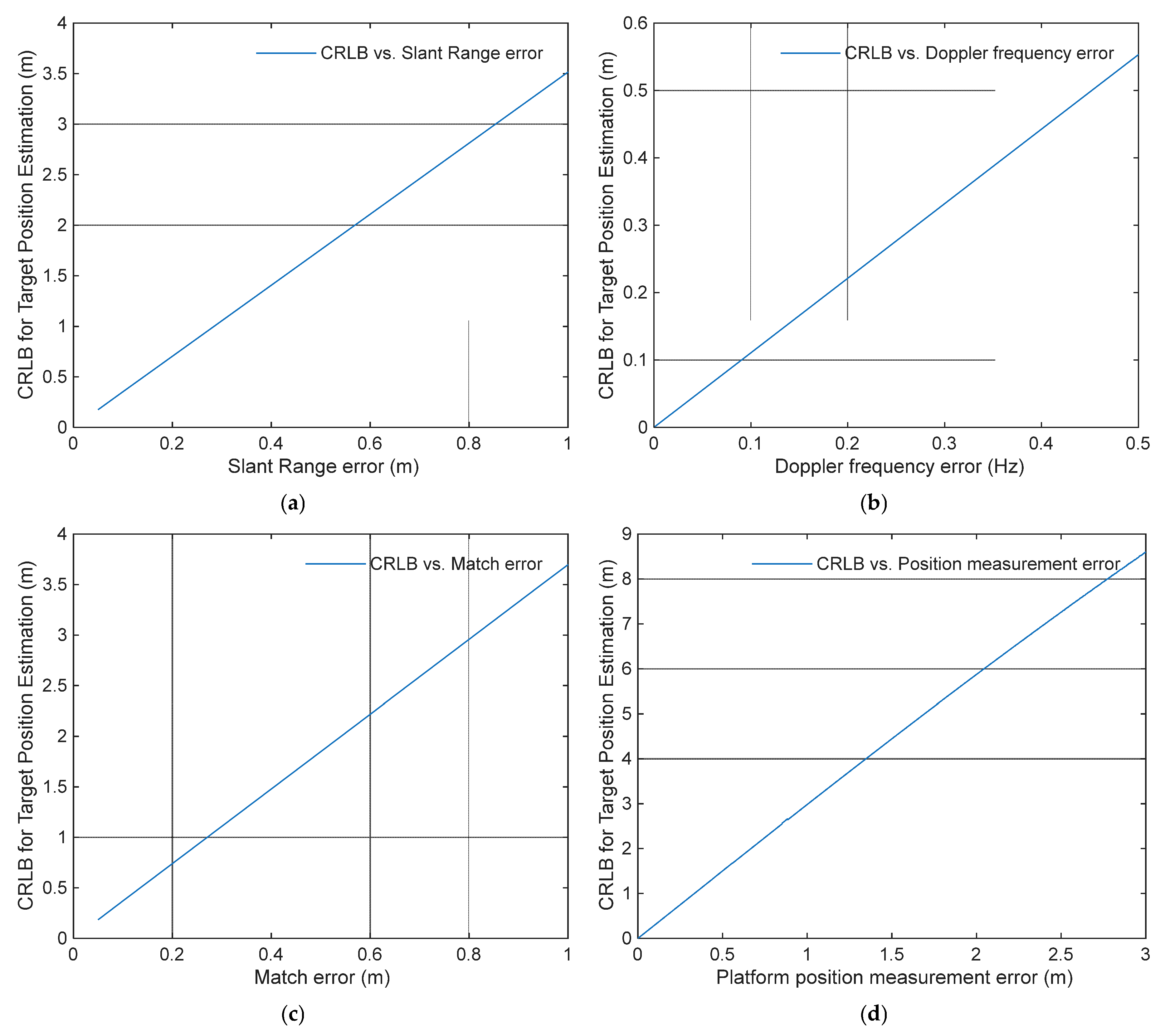
Similarly, different error sources can be numerically simulated with a fixed flight path of 15° and a detection distance of 3 km, as shown in
Figure 6.
Figure 6 illustrates the impact of various error sources on target positioning accuracy during the oblique flight mode. Similar to the parallel flight mode, the influence of Doppler frequency error is minimal, followed by slant range error and matching error, while the platform position measurement error has the greatest effect on target positioning accuracy.
This section focuses on the detailed simulation analysis of three-dimensional target positioning accuracy for two typical flight modes: parallel flight and angular flight. By establishing a complete error propagation model, we quantify the influences of slant range error, Doppler error, matching error, and platform position/velocity error on the final positioning accuracy. The simulation results show that, among various error sources, the platform position measurement error is the dominant factor affecting positioning accuracy, and its influence is particularly significant under complex trajectories such as angular flight.
In summary, regardless of the flight mode, the measurement error of the platform’s position has an extremely detrimental effect on the accuracy of target localization. Moreover, compared to other types of errors, the measurement error of the platform’s position is more difficult to control. For instance, slant-range errors can be managed within a unit distance using system calibration methods, while the measurement error of the platform’s position is entirely dependent on onboard navigation equipment. However, as the constraints on the flight platform become increasingly stringent and the application scenarios become more challenging, it becomes difficult to control the measurement error of the platform’s position within an ideal range. Therefore, there is an urgent need to adopt alternative methods to mitigate the impact of the platform’s position measurement error on the accuracy of target localization.
4. Proposed Method
The numerical simulation tests conducted on target positioning accuracy across various flight modes, error sources, and error magnitudes indicate that the motion measurement error of the flight platform significantly adversely affects target positioning accuracy in all scenarios. Given that these tests are simulations for the CRLB, which represents the theoretical performance limit of estimation, enhancing the robustness of target positioning accuracy against platform position measurement errors using optimization estimation methods proves to be challenging.
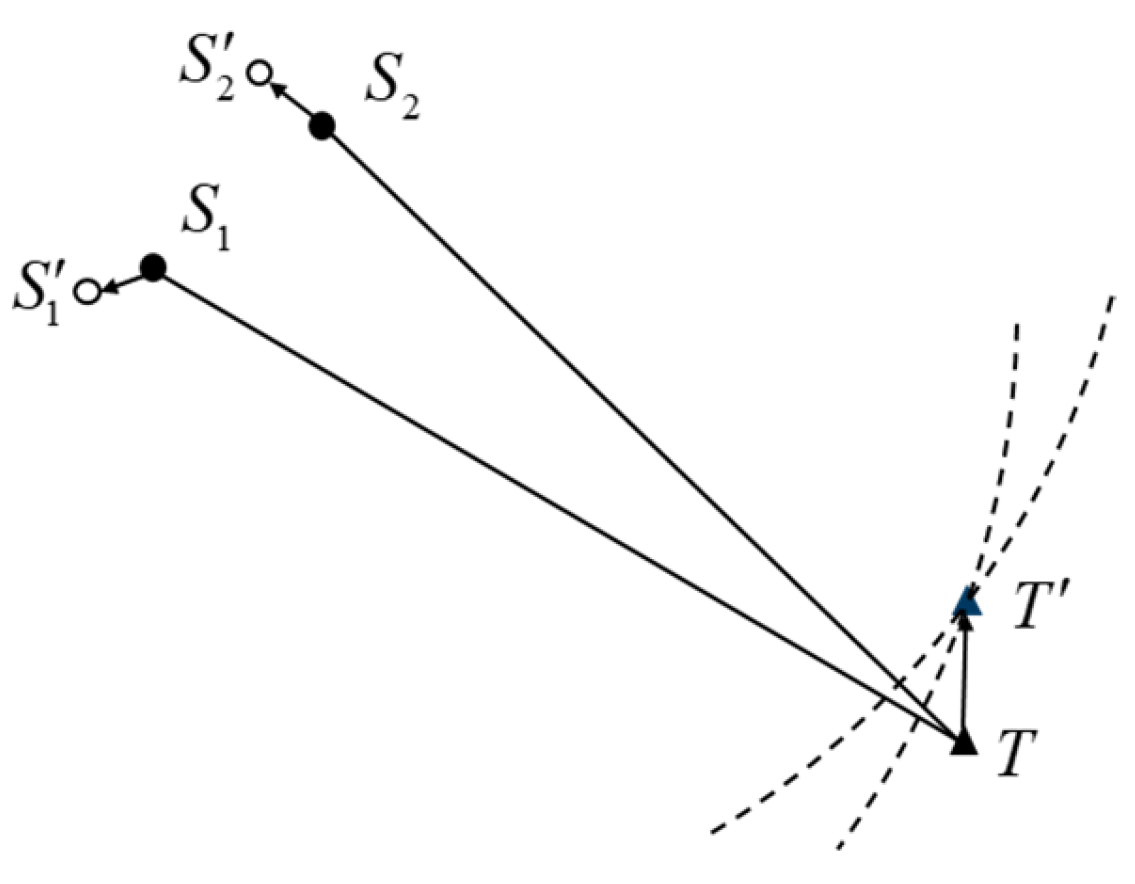
Figure 7 illustrates the influence of platform position error on target localization using geometric relationships.
In this paper, we refer to relevant methods in the field of wireless sensors to introduce inter-machine ranging information, which constrains the positional relationship between different platforms. Our aim is to reduce the impact of measurement errors in platform positioning on target positioning accuracy. Similarly, we simplify the geometric model of two aircraft. Let the positions of the two platforms be and , respectively, at the moment the target is observed. Due to the presence of navigation system errors, the measured values may not exactly equal the true values; instead, they fluctuate around the true values and follow a Gaussian distribution, denoted as and . In the same manner, the true distance between the two platforms is denoted as , which also follows a Gaussian distribution, represented as .
If the positions of the two platforms are
and
respectively in a certain observation, the true values of the platform positions meet the requirements of
and
. Add the constraint of the distance between two platforms, then the probability that the real position of two platforms is
and
is
Thus, it is reasonable to consider that the maximum point of the function
corresponding to the platform position is the true value, and only the maximum value needs to be calculated for this function. According to mathematical knowledge, the general step of finding extreme value is to find stagnation points, and then judge whether these stagnation points are maximum points. This requires calculating the first-order partial derivative and solving the equations, finding all possible stagnation points, and then using the second-order derivative test or other methods to confirm whether it is the maximum value. First, find the partial derivatives of function
with respect to
and
, as follows:
The following results can be obtained by successively calculating their partial derivatives:
If the partial derivative is 0, the extreme point can be obtained, then the following equation is satisfied:
The equations presented in Equation (29) are nonlinear due to the calculation of the 2-norm, which significantly complicates their resolution. Our objective is to simplify these equations to linear forms while preserving accuracy to the greatest extent possible. Consequently, we can further refine them and express them in the following form:
Among them,
can be regarded as the direction vector of
, and
and
jitter around
and
, and the amount of jitter is far less than the oblique distance between them, so it can be approximated as
Then Equation (30) can be written as the following equation:
The optimal solution of the target position can be obtained by solving it, as follows:
This calculates the most likely position of the real platform in a probabilistic sense, and then the platform position can be substituted into the previously established multi-view normalized distance Doppler model to solve for the target position.
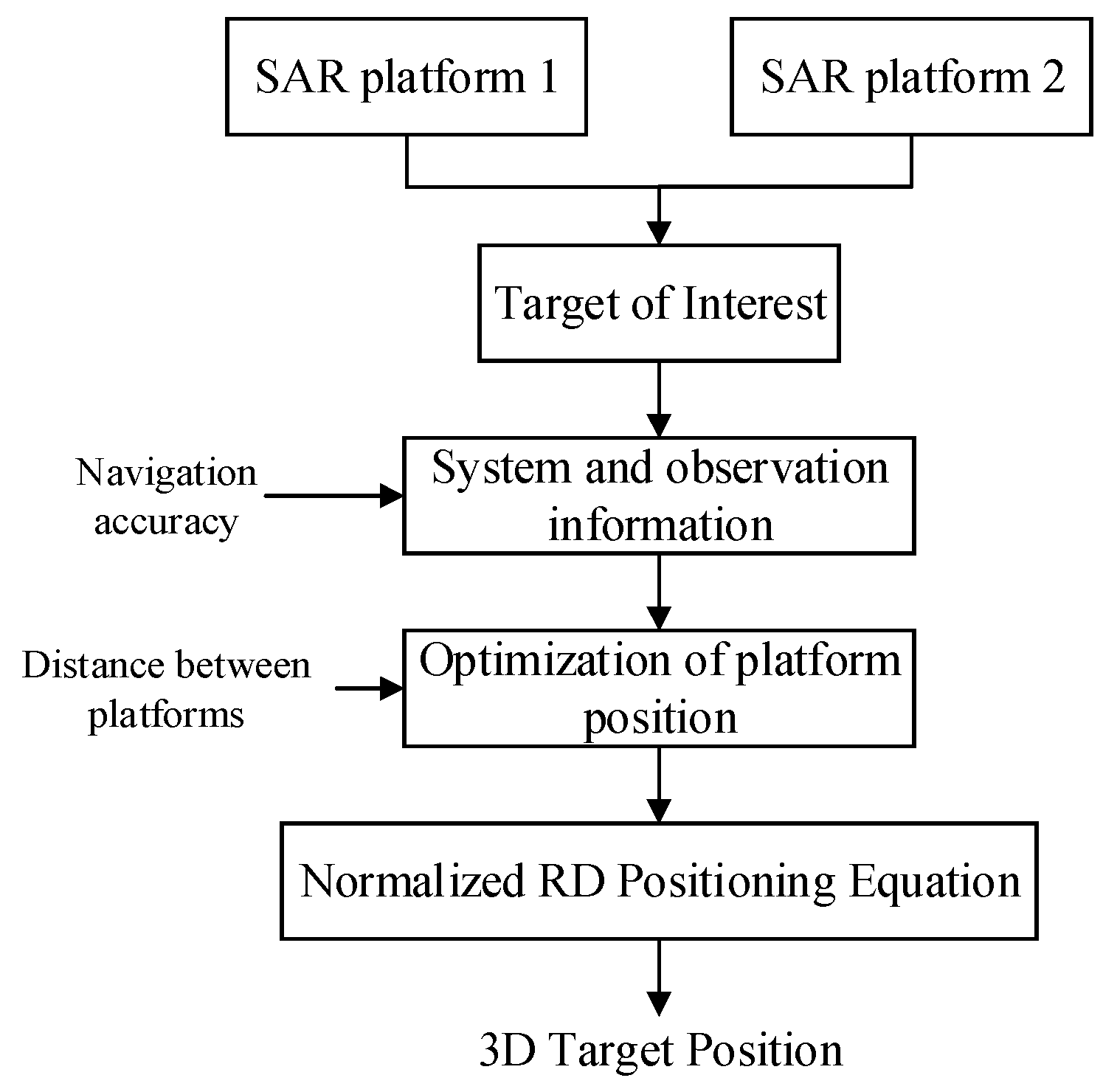
In summary, the proposed method can be concluded, and its workflow is as follows:
As shown in the
Figure 8, to perform three-dimensional localization of the target of interest, at least two SAR images of the target from different viewing angles need to be acquired first. The pixel positions of the target in the SAR images are obtained via image matching or manual annotation. Then, information such as platform position, slant range, and Doppler frequency can be derived from the system parameters recorded during SAR image acquisition. Inevitably, the obtained platform position contains certain measurement errors, which can be optimized by substituting the inter-platform distances into Equation (33). Finally, the optimized platform positions are substituted into the normalized RD localization model and solved, yielding the three-dimensional position of the target of interest.
5. Results
Through the CRLB analysis of the multi-view SAR target positioning model, this study further elucidates the impact of positional measurement errors of the flight platform on target positioning accuracy during movement. The numerical simulation results indicate that target positioning accuracy does not consistently exhibit sensitivity to the positional measurement errors of the platform, an aspect that cannot be overlooked in practical applications. To further substantiate this issue, measured data are employed for verification. The parameters of the SAR system utilized are presented in
Table 2.
We use two C-band SAR systems mounted on two multi-rotor UAVs, respectively, for data acquisition. The flight altitude is 300 m, and the UAVs perform uniform linear motion at a speed of 5 m/s. The slant range between the detection area and the flight platforms is 800 m. The two platforms detect the same area simultaneously to obtain SAR images of the region. To facilitate the calculation of target positioning errors, we have deployed a series of corner reflectors with known absolute positions in the detection area. Similarly, target positioning using the proposed method requires the distance between the platforms, so UWB modules are mounted on both UAV platforms for mutual ranging, with a ranging accuracy of 10 cm. All data collected in the experiment are processed on the MATLAB R2021b platform.
To illustrate the impact of motion measurement error on target positioning accuracy, two navigation systems with different accuracies were mounted during the data collection process, with specific indicators shown in
Table 3.
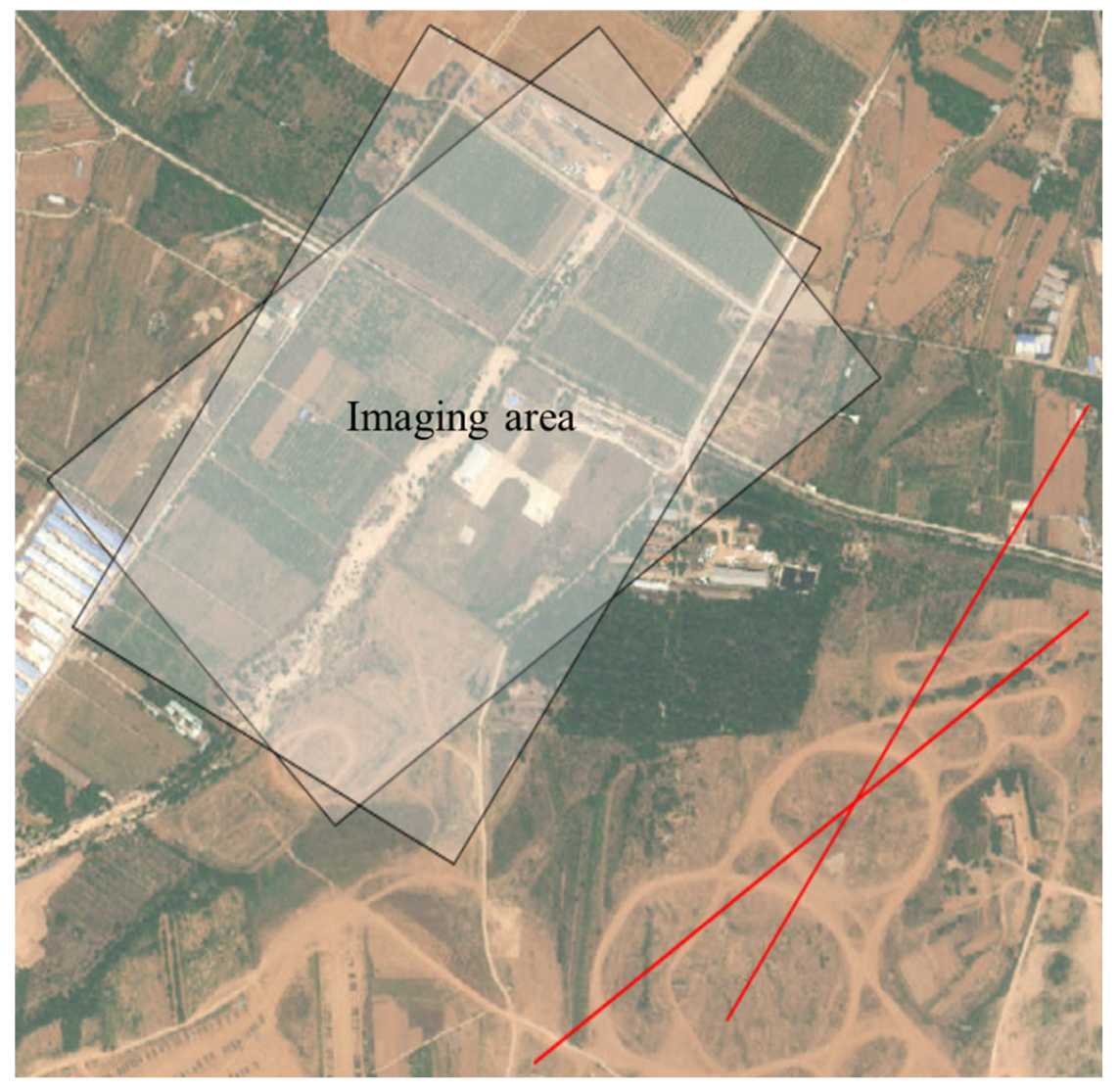
In the process of data acquisition, the cross-angle flight mode is adopted, and the included angle between flight paths is 20°. SAR images from two different perspectives of the target are collected, respectively. The flight path and detection area are shown in
Figure 9.
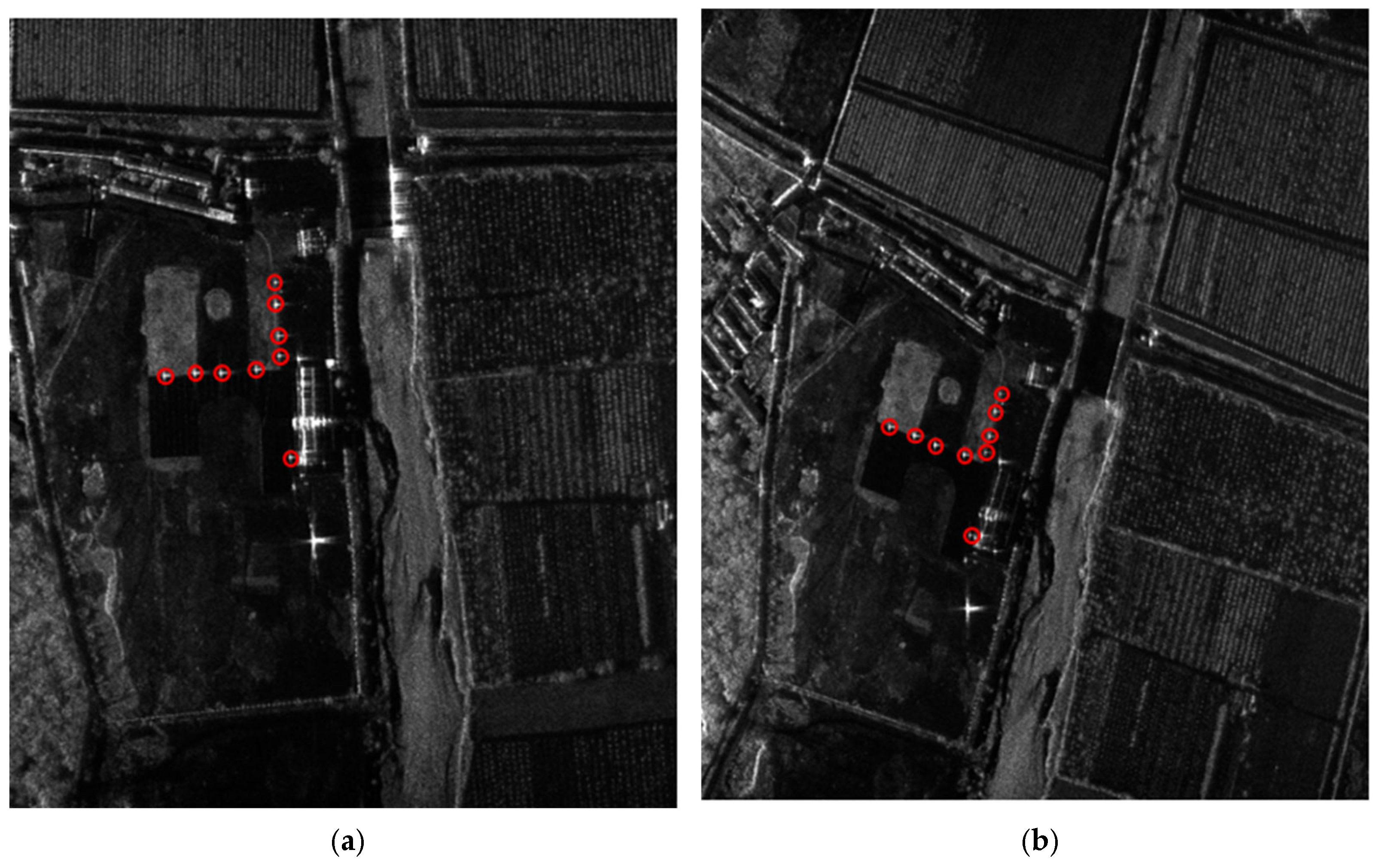
In this manner, we can obtain two sets of observations from distinct perspectives within the same area. As illustrated in
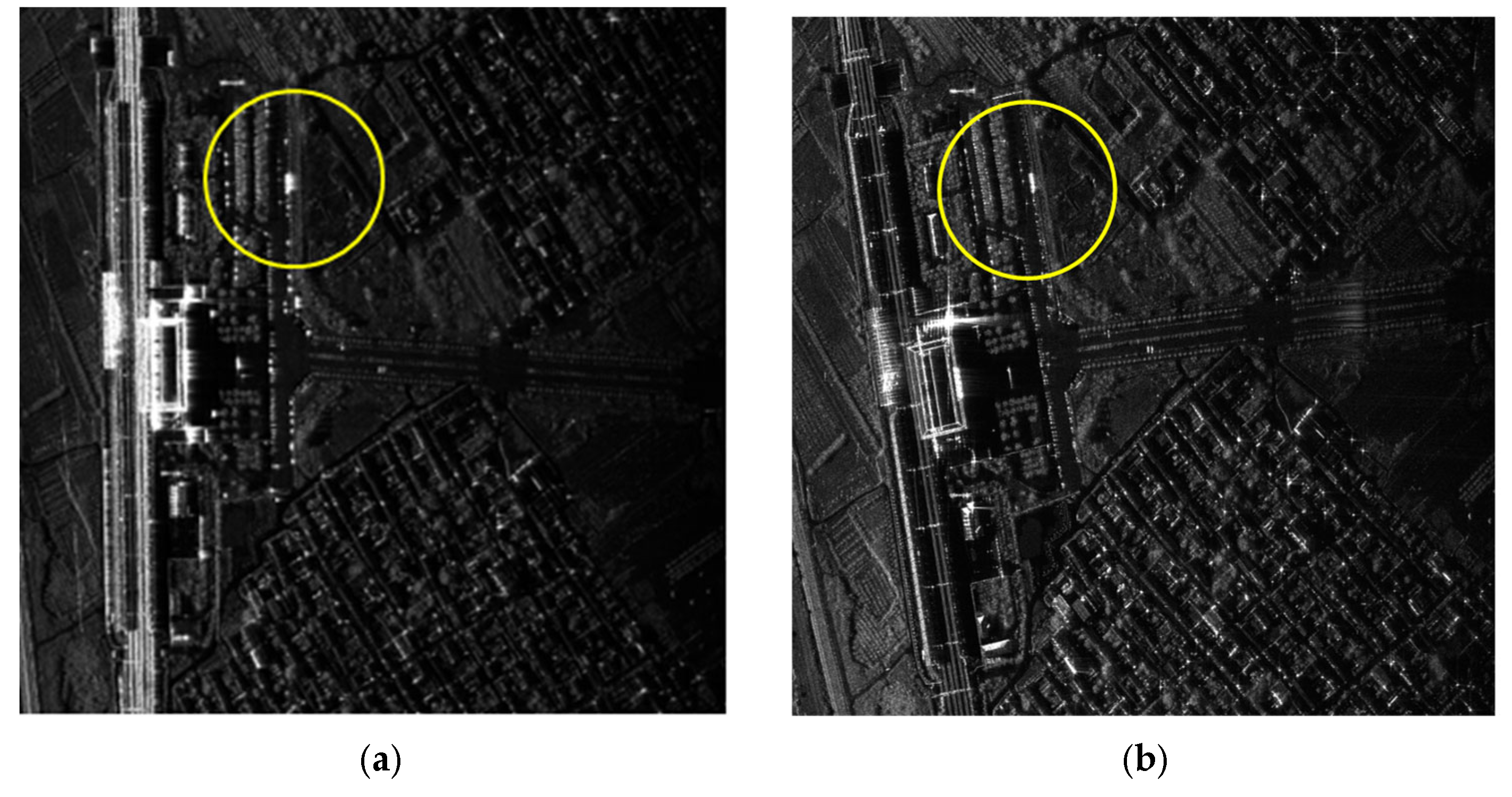
Figure 10, there is a 20° angular difference between the two SAR images presented in
Figure 10a,b. To quantitatively assess the positioning accuracy of the target, we positioned nine corner reflectors within the detection area and measured their actual geographical locations to calculate the target positioning error.
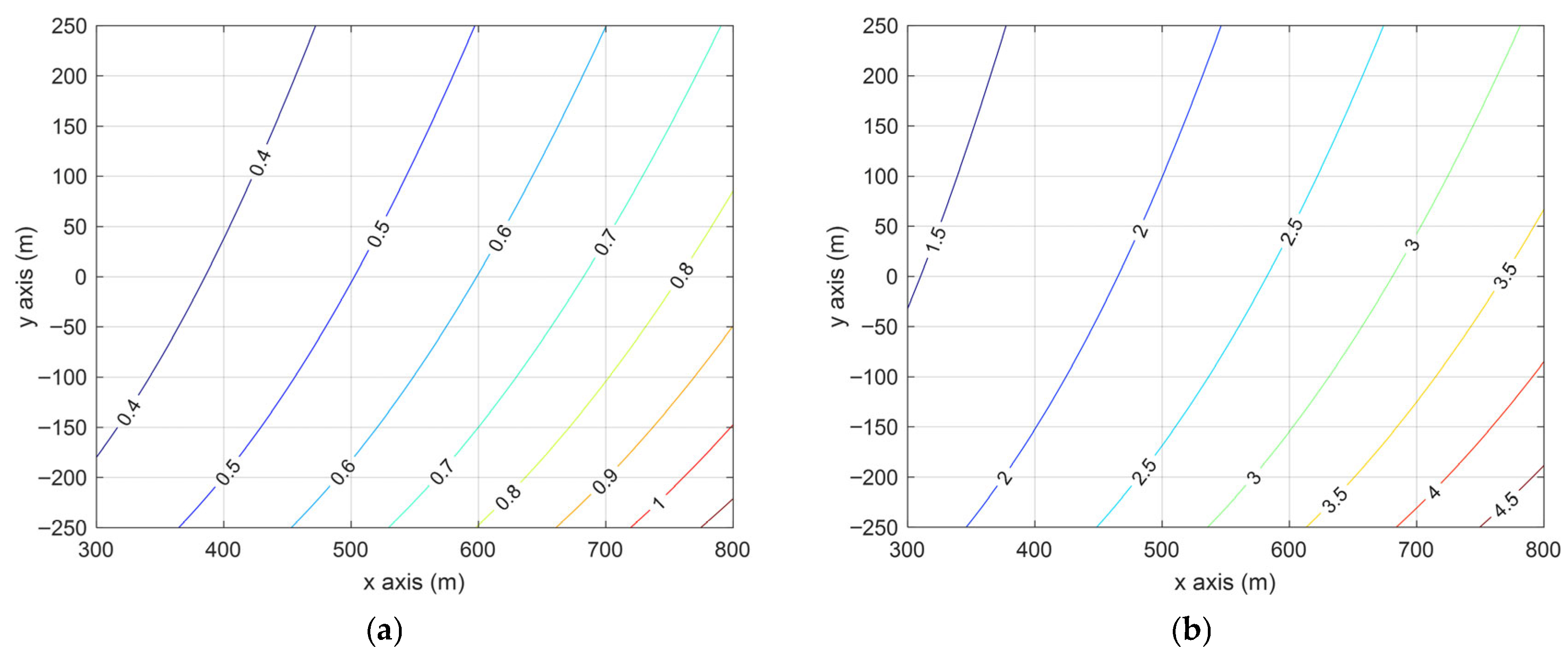
During the flight, two SAR systems with varying levels of accuracy are utilized, allowing for separate target positioning processing. It can be assumed that the only difference between the two processing methods is the platform position measurement error, while all other factors remain constant. The target positioning accuracy within the detection area can be computed using the formula derived in
Section 2, as illustrated in
Figure 11. The positioning accuracy achieved using simulations of both high-precision and low-precision navigation systems is presented in
Figure 11a and
Figure 11b, respectively, in the form of contour lines. The figure mainly shows the contour map of target positioning accuracy in the detection area. The flight platform with an observation angle of 0° flies along the
y-axis in the
plane, and another flight platform forms an included angle of 20° with it. The two platforms intersect at the origin
, and the detection area is a square region of 500 m × 500 m. The figure clearly indicates that the platform position measurement error significantly impacts target positioning; a decrease in platform position measurement accuracy results in nearly a fourfold deterioration in target positioning accuracy.
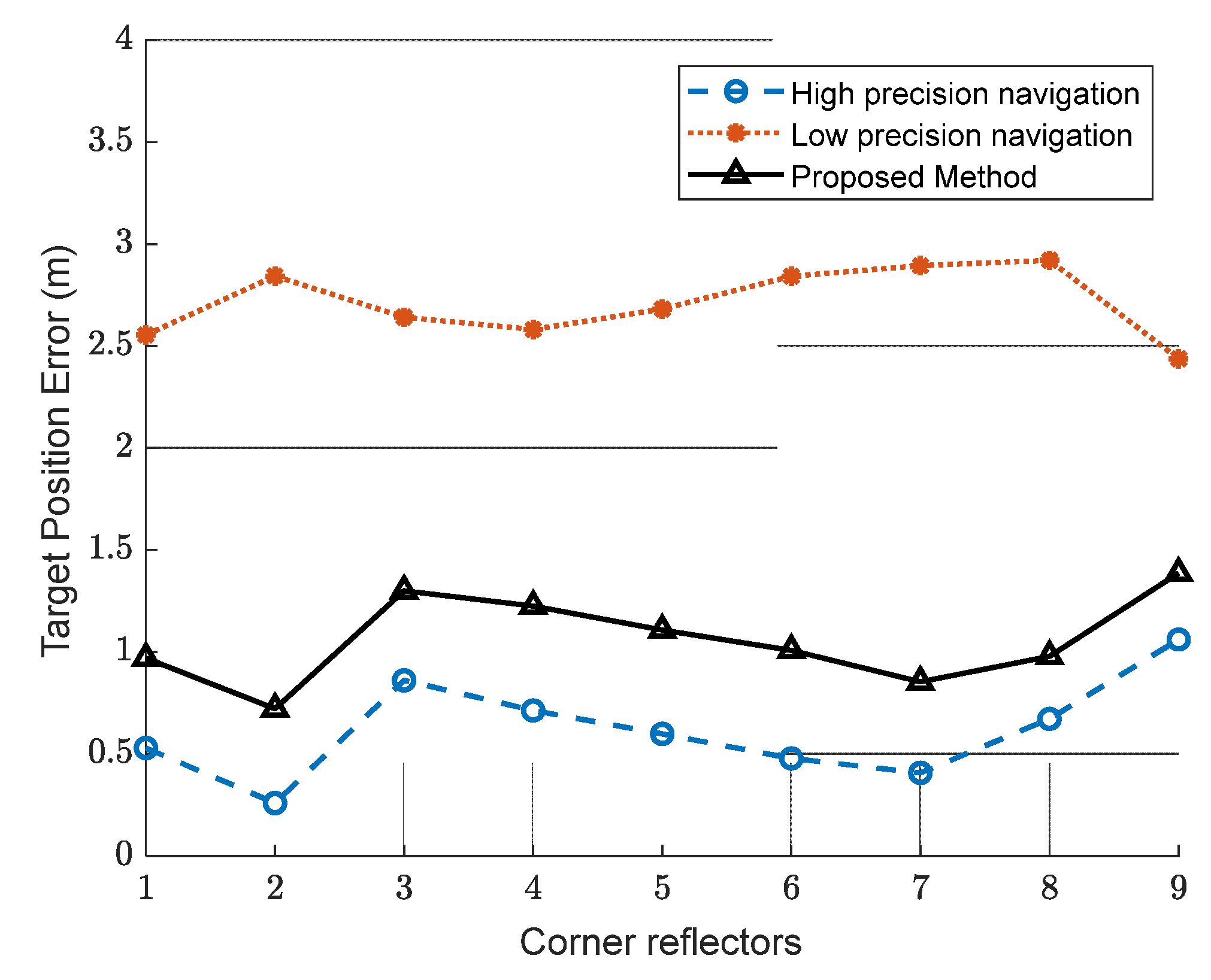
Figure 12 and
Table 4 presents the positioning errors of the nine deployed calibration points, analyzed using various data sets and methods. The first column displays the positioning results of the target based on high-precision navigation data, with positioning errors consistently stable around 0.6 m. This level of error aligns closely with the simulation results and is likely influenced by factors such as residual offset errors and matching errors. The second column illustrates the positioning results derived from low-precision navigation data, where the positioning error remains stable at approximately 2.7 m, indicating a deterioration of about 4.5 times compared to the first column. This result is consistent with our conclusion in
Section 3 and also agrees with the simulation results in
Figure 11, where platform position errors severely degrade target positioning accuracy. This observation highlights the detrimental impact of platform position errors on target positioning. The third column reports the results from the proposed method, which utilizes low-precision navigation information combined with inter-aircraft ranging data. The resulting target positioning error stabilizes around 1 m, representing a 60% reduction in positioning error compared to low-precision navigation data, demonstrating significant improvement.
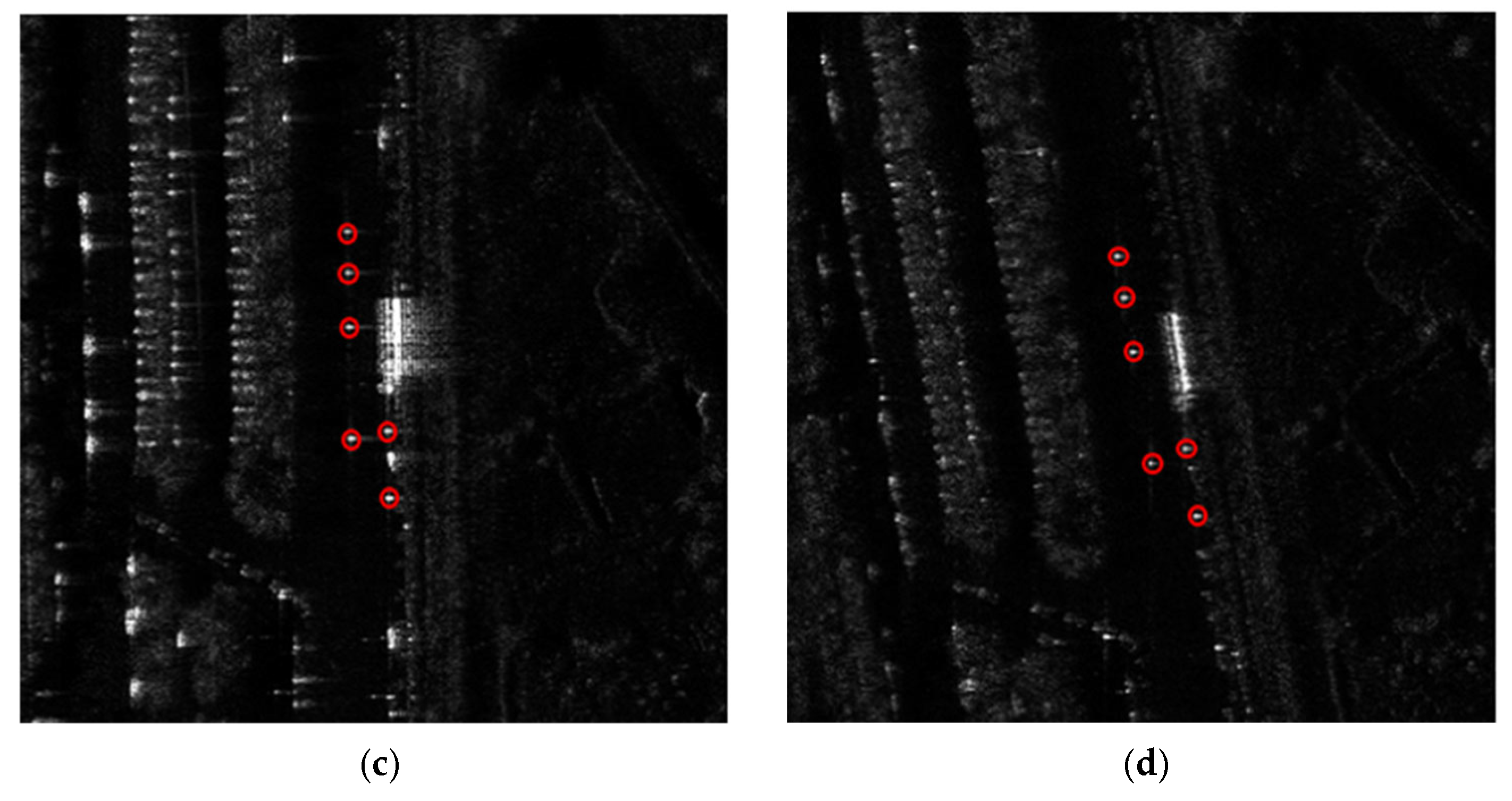
Similarly, we evaluated the proposed method using measured data with a viewing angle difference of 10°. As illustrated in
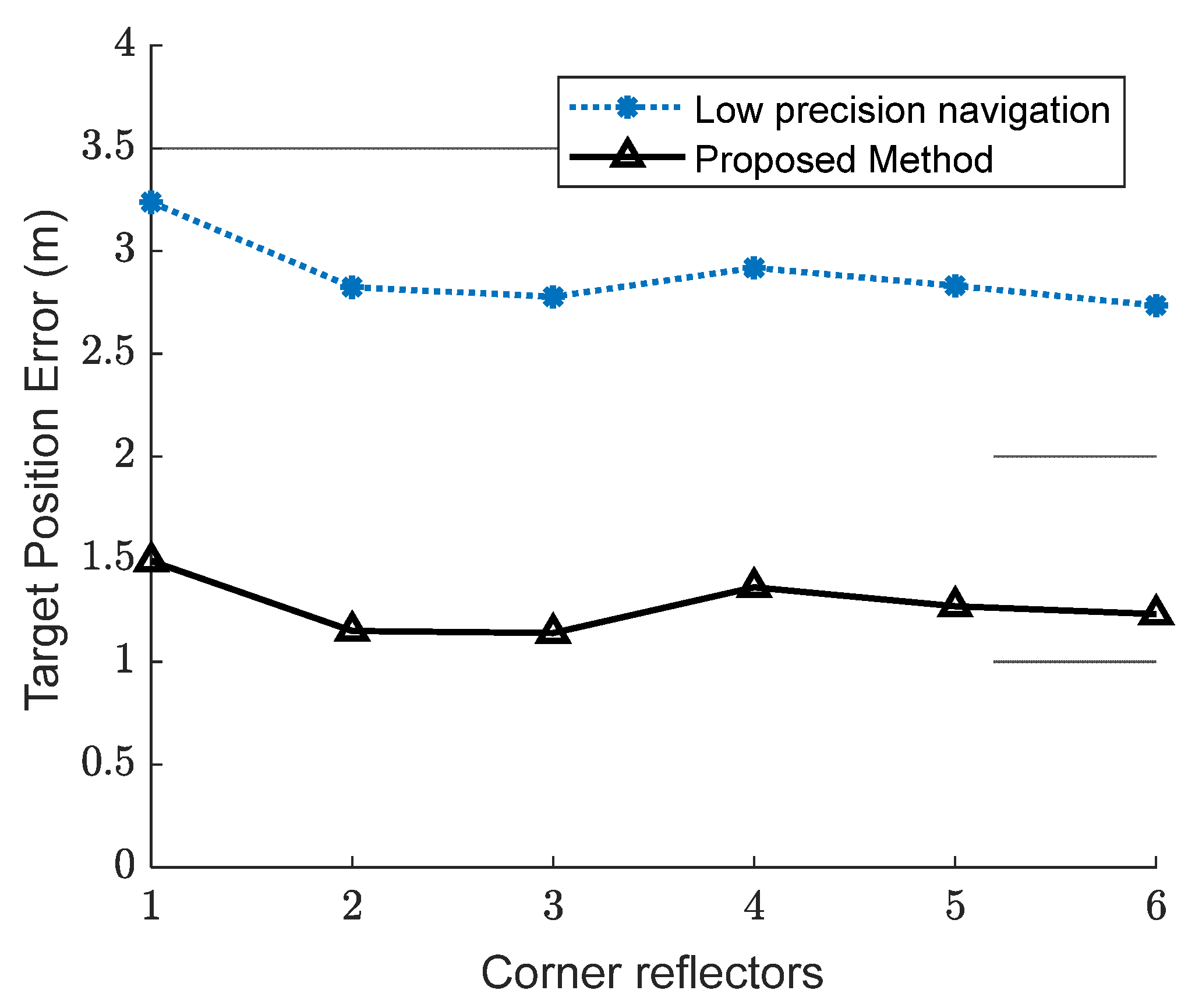
Figure 13, six corner reflectors were evenly distributed within the detection scene, and the proposed method was employed for three-dimensional localization, which significantly enhanced accuracy. The results are illustrated in
Figure 14.
Computational complexity is a key metric for evaluating algorithmic performance. The proposed method mainly involves two core computational steps: platform position optimization and solution of the normalized positioning model. Among these, the computational cost of platform position optimization is relatively low. As shown in Equation (33), it is proportional to the number of targets, yielding a computational complexity of , where denotes the number of targets. The solution of the normalized positioning model is essentially equivalent to solving a linear system, with a computational complexity of , where represents the number of platforms and each platform provides two observations. Such computational complexity is very low compared with SAR imaging and image matching (both involve image processing; in particular, SAR imaging requires massive nonlinear operations on large volumes of data, leading to extremely high computational burden). Therefore, the computational latency and operational requirements of the proposed method are nearly negligible, making it suitable for real-time processing systems. The method proposed in this paper fundamentally relies on the geometric configuration of multi-angle observations and is theoretically applicable to distributed SAR systems with an arbitrary number of platforms. Furthermore, the target positioning accuracy can be further improved as the number of platforms increases. Nevertheless, this conclusion is only based on theoretical analysis. In practice, with an increasing number of platforms, potential risks may emerge regarding inter-platform SAR signal interference, the stability of inter-aircraft ranging, and the design of flight configurations, which impose higher requirements on the proposed method.