1. Introduction
Pulse power technology [
1] finds broad applications in various advanced technological domains, including ultra-wideband radar (UWB) [
2,
3], biomedicine [
4,
5], and plasma physics [
6,
7]. With the continuous expansion and deepening of application scenarios, higher voltage, faster leading edge, and narrower pulse width are crucial parameters, with the pulse power semiconductor switch being a pivotal device in this regard.
Currently, semiconductor switches capable of generating fast, narrow leading pulses include gas switches, drift step recovery diode (DSRD), semiconductor opening switch (SOS), fast ionization dynistors (FID), and photoconductive semiconductor switch (PCSS) [
8,
9,
10,
11]. However, the high internal pressure of gas switches imposes geometric limitations, which may result in impedance mismatches during energy transmission. Additionally, DSRD, SOS, and FID are challenging to manufacture, expensive, and infrequently utilized in practice. Notably, FID has relatively stringent triggering requirements. Domestically and internationally, the output from the fast front pulse circuit of the step recovery diode is predominantly employed as the trigger pulse for FID, and the associated trigger circuit is relatively straightforward. The lifespan of PCSS is constrained by the effects of current filamentation and electrode degradation. In recent years, avalanche transistors have garnered significant attention in the pulse power domain due to their low cost and rapid conduction speed.
Due to the relatively low breakdown voltage of individual avalanche transistors, high-voltage pulses can be generated by connecting these transistors in series or by employing avalanche-type Marx circuits to achieve the necessary high amplitude and power. Aimin Zou et al. from Jilin University [
12] conducted a series experiment with four avalanche transistors, yielding an output pulse amplitude of 666 V, a rising edge of 3 ns, and a pulse width of 3 ns. Jianwen Tan et al. from Chongqing Medical University [
13] developed a circuit comprising 22 avalanche transistors arranged in series to produce square wave pulses with an amplitude of 2.5 kV, a rise time of 2.5 ns, and a pulse width of 12.5 ns. Li Chengxiang et al. from Chongqing University [
14] developed a 14-stage avalanche Marx generator based on microstrip transmission theory. By utilizing this theory to mitigate reflection and incorporating series inductors to enhance the output waveform, they achieved an output amplitude of 1015 V and a pulse width of 620 ps. Yu Liang et al. from Chongqing University [
15] proposed an improved avalanche Marx circuit. By integrating a protection resistor in series with the second-stage transistor, they effectively suppressed the passive boost voltage, resulting in a 20-stage avalanche Marx that produced a high-voltage pulse with a rising edge of 230 ps and an amplitude of 1.65 kV.
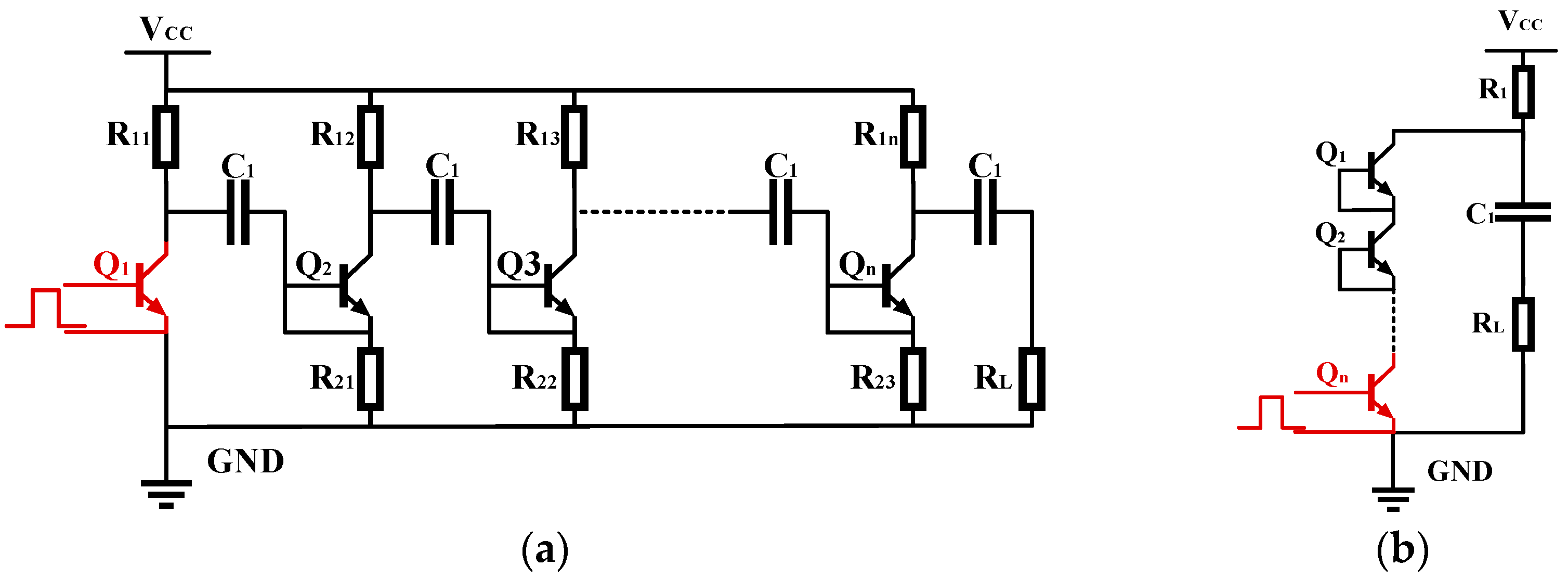
The current triggering method for avalanche transistors primarily relies on base triggering. In the avalanche Marx circuit, the first stage employs base triggering for the avalanche transistor. For subsequent avalanche transistors, the base and emitter are short-circuited. This configuration results in a potential change that generates a pulse exceeding the avalanche breakdown voltage, thereby triggering conduction in the avalanche transistor. Multiple sharpening stages are utilized to produce a fast front edge pulse output. However, the base triggering in the first stage results in a relatively slow conduction speed, typically ranging from tens of nanoseconds to several tens of nanoseconds. This slow response not only leads to passive voltage boosting, which increases the risk of damage to the second-stage avalanche transistor, but also necessitates multi-stage compression to achieve a rapid leading edge. The circuit structure is illustrated in
Figure 1a. In the series configuration of avalanche transistors, all but the last one, which is triggered by the base, have their base and emitter terminals shorted and connected to the collector of the subsequent transistor. Once the last transistor triggers conduction, surpassing the breakdown voltage of the other transistors in the series, the entire structure conducts. This triggering mechanism confines the output pulse amplitude to the bias voltage, corresponding to the charging voltage of the energy storage capacitor. However, the presence of internal resistance in the avalanche diode array post-conduction ensures that the final output pulse amplitude will be lower than the bias voltage. The circuit structure is illustrated in
Figure 1b. Although the output magnitude can be fine-tuned by adjusting the bias voltage, the range for such adjustments is limited to ensure successful conduction of the avalanche transistor series. Furthermore, reducing the bias voltage can impact the leading edge of the output pulse. These challenges are also present in the avalanche Marx circuit.
To overcome the limitations associated with bias voltage, this paper presents a novel avalanche transistor series structure circuit. The final avalanche transistor employs a configuration that short-circuits the base and emitter. When a bias voltage is applied, a negative pulse is introduced at the short-circuit point to activate the avalanche transistor series structure. By incorporating an additional DC power supply to regulate the amplitude of the negative pulse voltage, the output pulse amplitude can be adjusted accordingly. Additionally, a series test platform involving four avalanche transistors was established to facilitate experimental validation. To achieve a faster leading edge, pF-level capacitors were connected in parallel across the transistor, followed by experimental verification. The designed circuit is capable of generating output pulses with a relatively high slope, exceeding 1 kV/ns, which aligns with the theoretical calculated value for silicon-based avalanche devices. This fast front pulse can serve as a trigger pulse for silicon-based avalanche devices. Additionally, the enhanced circuit is utilized to provide the trigger pulse for silicon-based fast ionization transistors (FID) in test experiments. and the output fast front pulse was employed as the trigger pulse for test experiments involving the silicon-based fast ionization transistor (FID).
2. Design of Avalanche Transistor Series Circuit
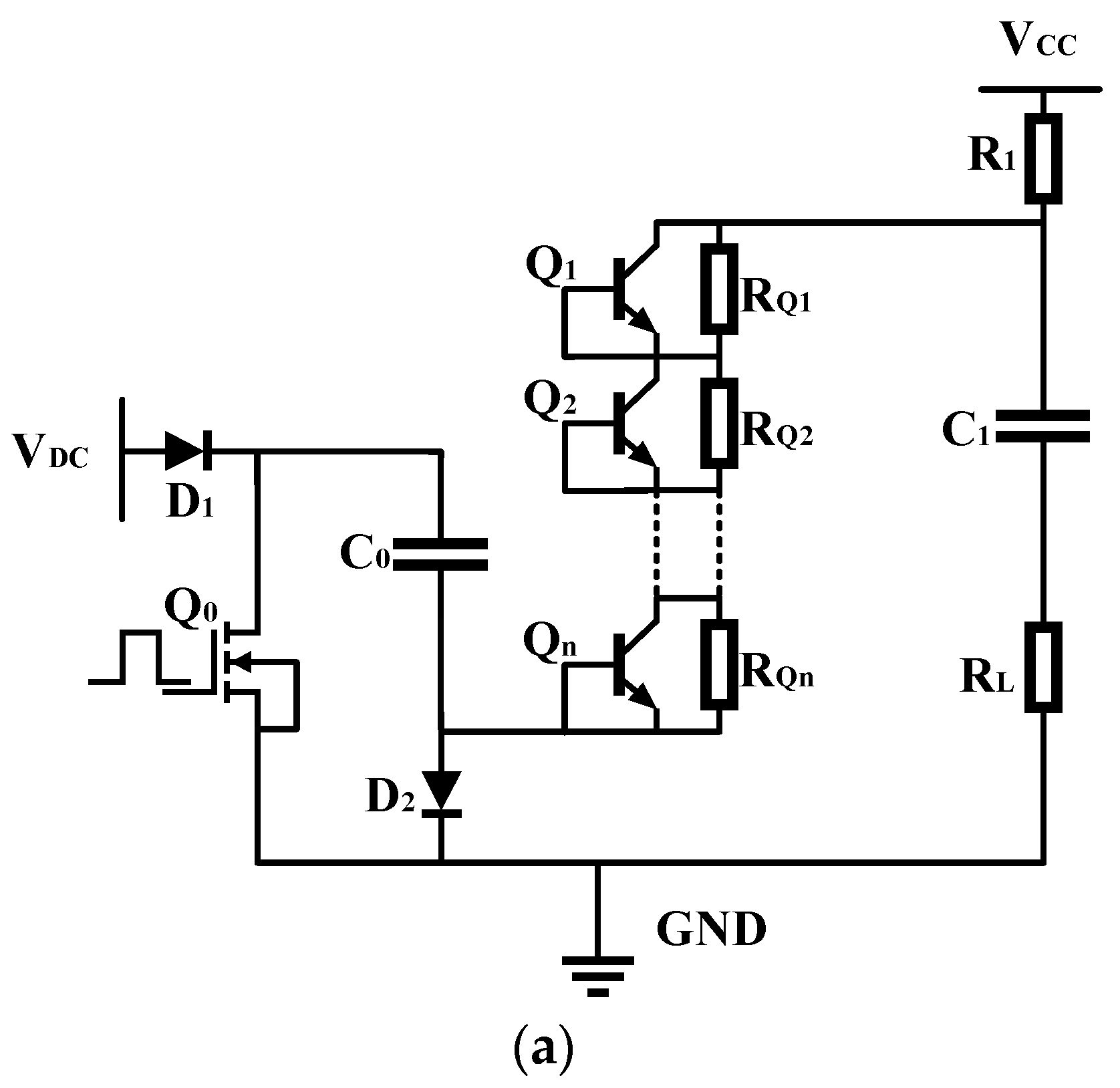
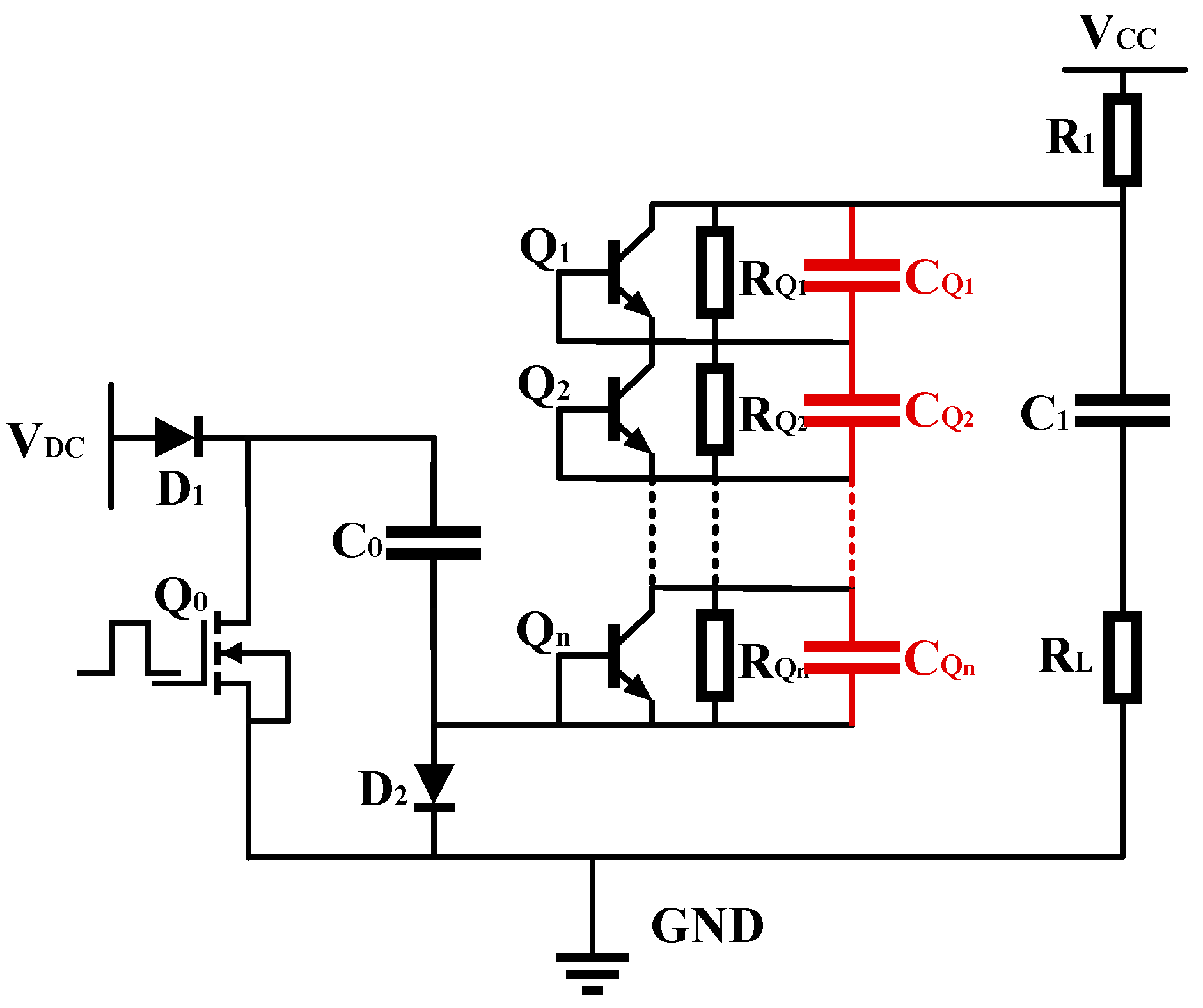
The voltage tolerance of a single avalanche collective transistor is relatively low, generally in the range of several hundred volts. Consequently, it is necessary to connect multiple transistors in series to achieve a higher output voltage. The operational principle of the series pulse circuit, which relies on the brief contact between the base and emitter of the avalanche transistor, is illustrated in
Figure 2a.
In this configuration, VCC represents the bias voltage DC power supply for the series structure of the avalanche transistors, VDC serves as the trigger pulse DC power supply, R1 functions as the charging resistor, and RQ1–RQn are the voltage equalizing resistors. Additionally, C0 and C1 are the respective energy storage capacitors, Q0 denotes the MOSFET, Q1–Qn are the series avalanche transistors, and RL is the load resistor.
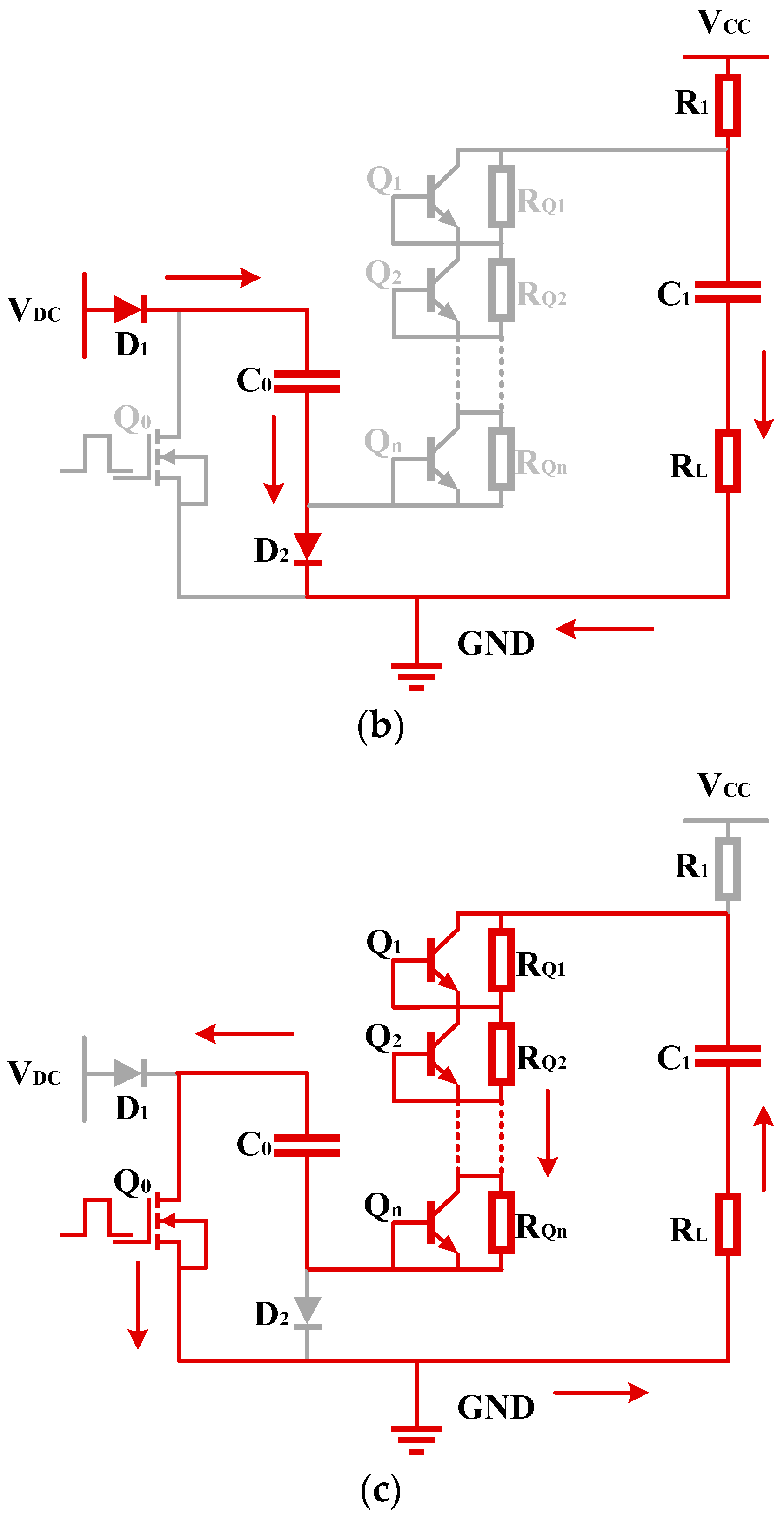
The charging process circuit is illustrated in
Figure 2b. In this configuration, the MOSFET remains in a non-conductive state. The DC power supply V
DC charges the energy storage capacitor C
0 via the D
1-C
0-D
2 circuit. Concurrently, the DC power supply V
CC charges capacitor C
1 through the R
1-C
1-R
L circuit, while also providing bias power for the avalanche transistor series structure. However, this arrangement does not suffice to activate the avalanche transistor series structure. The discharge process circuit is depicted in
Figure 2c. Here, the MOSFET is triggered to conduct, allowing the energy storage capacitor C
0 to discharge through Q
0. When the voltage across Q
0 is disregarded, the upper potential of capacitor C
0 is clamped to 0, and the lower potential is clamped to −V
DC. Consequently, the voltage across the avalanche transistor series structure becomes V
CC + V
DC, initiating the avalanche conduction of the avalanche transistor series structure. Ignoring the residual voltage of the avalanche transistor series structure, the upper potential of C
1, which corresponds to the collector potential of the first avalanche transistor is rapidly clamped to:
Since the voltage across the capacitor cannot change abruptly, the lower potential of C
1 is rapidly clamped to:
C
1 discharges through the illustrated circuit, thereby generating a fast falling-edge negative pulse amplitude on the load R
L as follows:
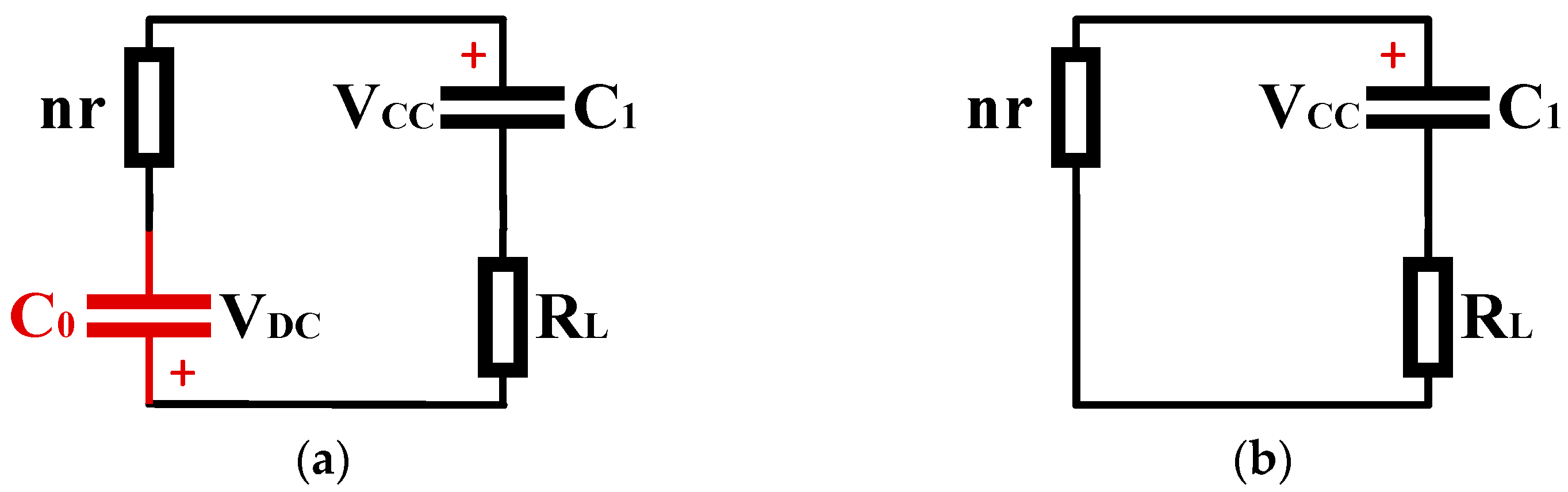
Due to the internal resistance of the avalanche transistor after conduction, the simplified circuit model after conduction is shown in
Figure 3a. The pulse amplitude on the load is as follows:
which is generally valued at 2–3 Ω, and n is the number of series connections of the avalanche transistor.
Under identical conditions regarding the number of avalanche transistors, bias voltage, and load, the simplified circuit model of the base-triggered avalanche transistor series structure after conduction is shown in
Figure 3b, and the pulse amplitude on the load is as follows:
Principle analysis reveals that, unlike the traditional base-triggered avalanche transistor series circuit, the final avalanche transistor in this configuration employs a short-circuiting method between the base and the emitter. A negative pulse is applied at the short-circuiting point to initiate conduction in the series structure. Because the DC power supply regulating the amplitude of the negative pulse operates independently of the biased DC power supply, this approach introduces an additional adjustable input voltage, VDC. Consequently, the output pulse can be modulated by varying this supplementary input voltage VDC while maintaining a larger bias voltage, thereby overcoming the limitations imposed by the bias voltage.
4. Result
4.1. Avalanche Transistor Series Test Experiment
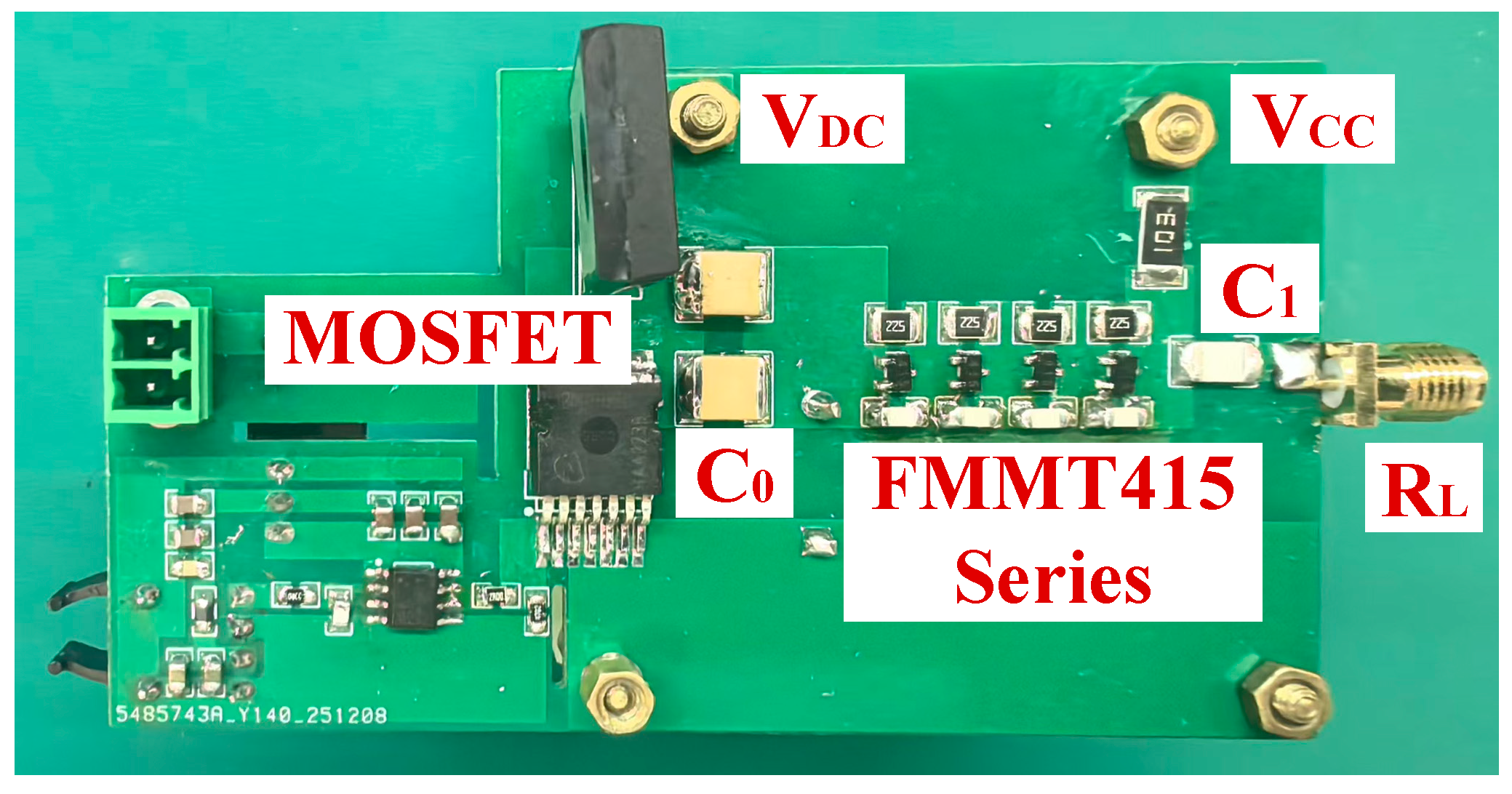
To achieve a rapid leading pulse, the avalanche transistor FMMT415 (DIODES, SOT23 package) was chosen for the series test experiment involving four avalanche transistors. The printed circuit board (PCB) utilized for this experiment is depicted in
Figure 6. A 10 kΩ surface mount resistor was selected as the charging resistor R
1. The voltage equalizing resistors R
Q1–R
Q4 were chosen as 2.2 MΩ surface mount resistors, while the energy storage capacitor C
0 was selected as a 100 nF surface mount ceramic capacitor. Due to the inherent delay between the application of the trigger pulse and the complete conduction of the avalanche transistor series structure, capacitor C
0 will discharge into the entire circuit. Consequently, a capacitor with a larger capacitance is required. The energy storage capacitor C
1 was selected as a surface mount ceramic capacitor with a capacitance of 100 pF, and the load resistance R
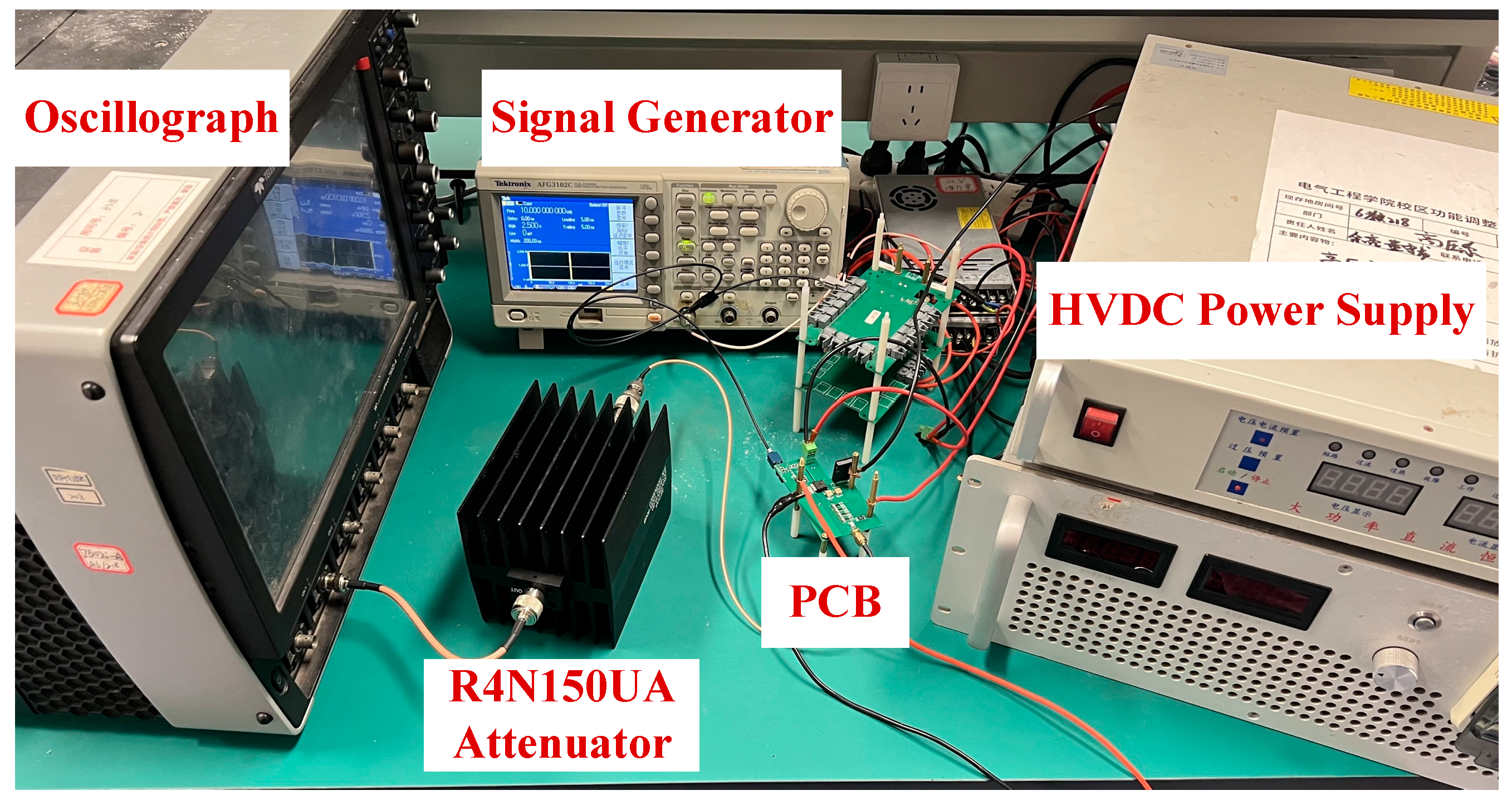
L is set at 50 Ω. The high-voltage test platform constructed for this study is illustrated in
Figure 7. The bias voltage V
CC is maintained at 1200 V, while the input voltage V
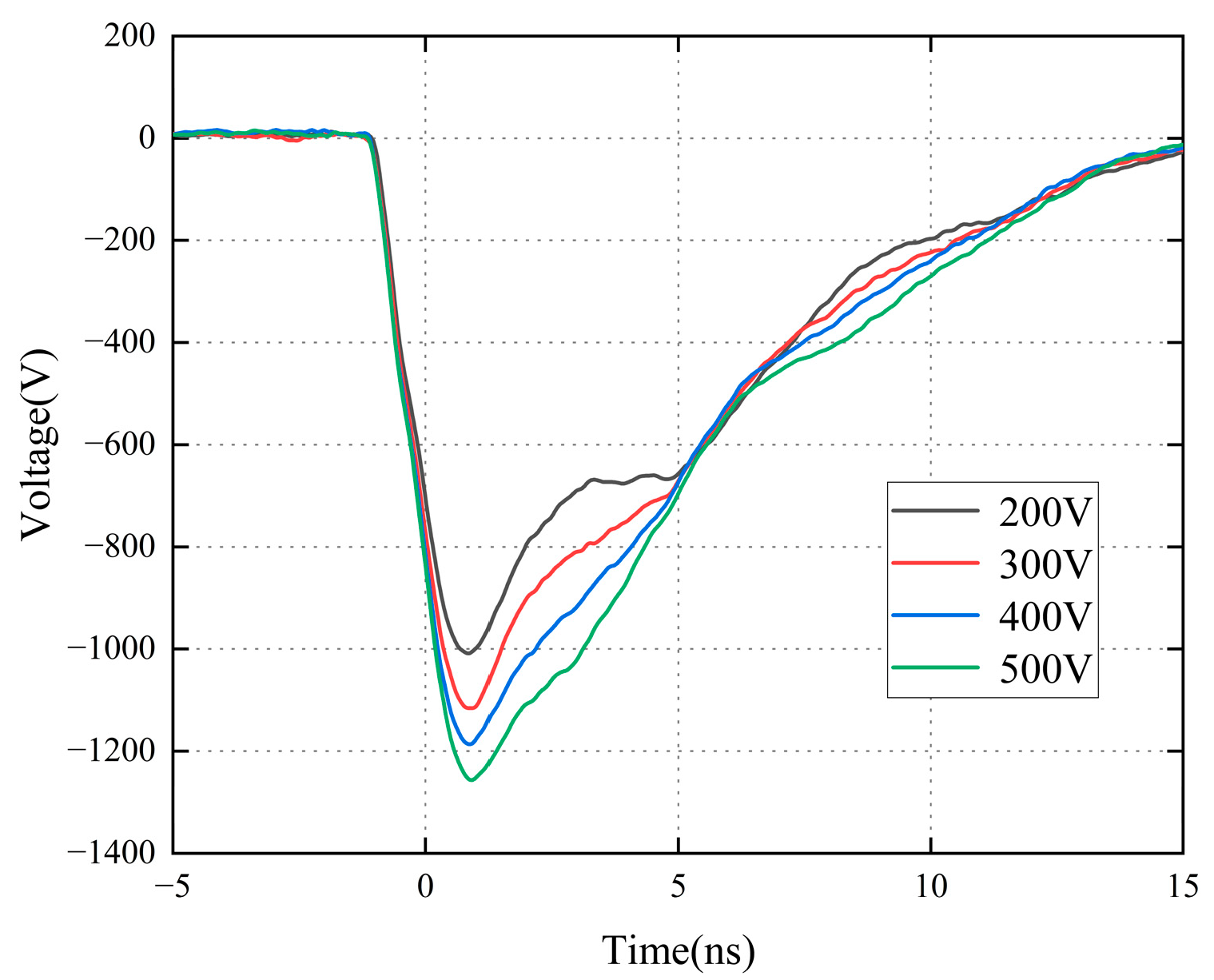
DC ranges from 200 V to 500 V. The output pulse voltage waveform is presented in
Figure 8, and the corresponding output voltage amplitudes are summarized in
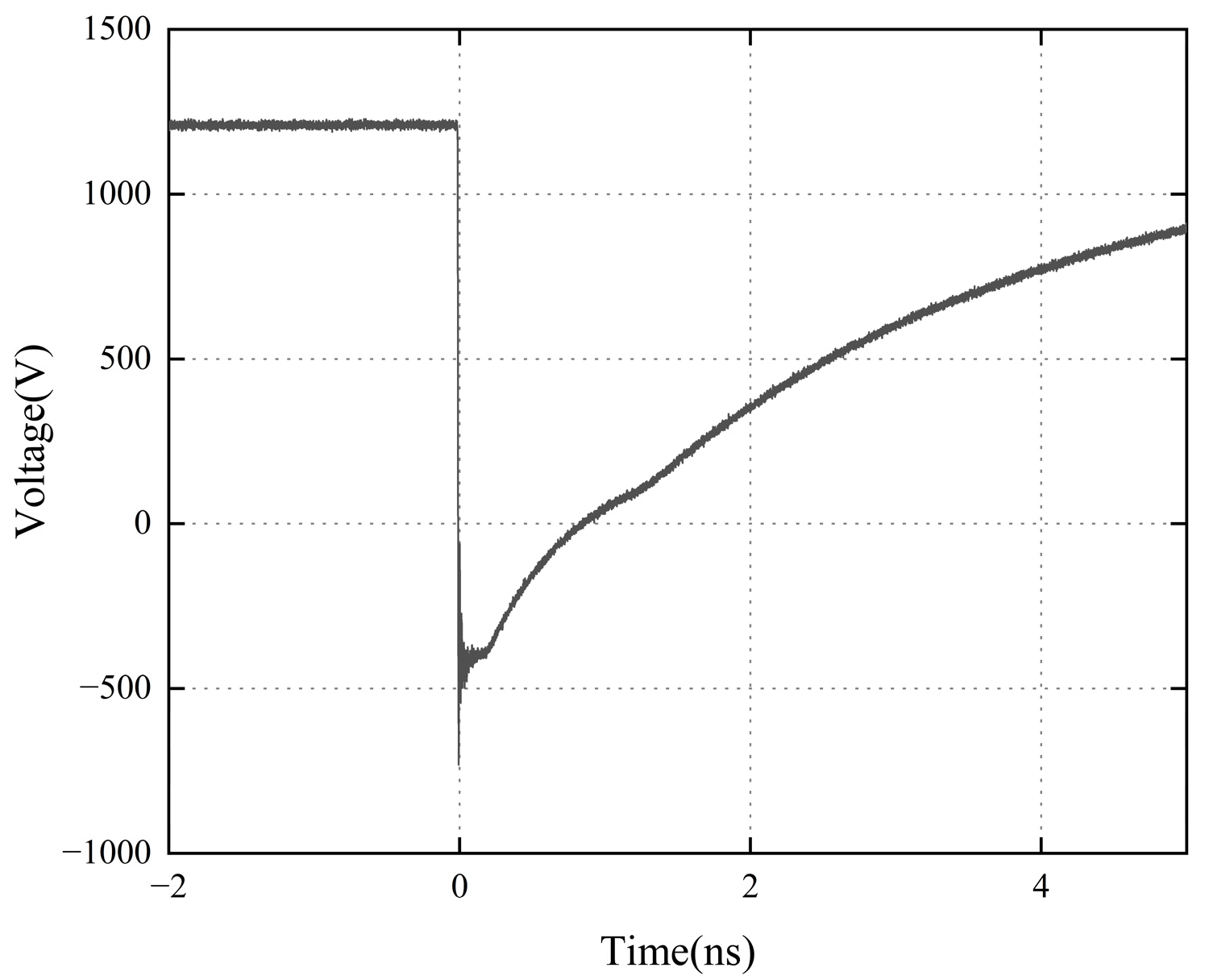
Table 1. When the input voltage is set to 500 V, the voltage waveform across the avalanche transistor series structure is shown in
Figure 9. Based on the circuit principle analysis discussed previously, it is evident that the series structure of the avalanche transistor successfully conducts.
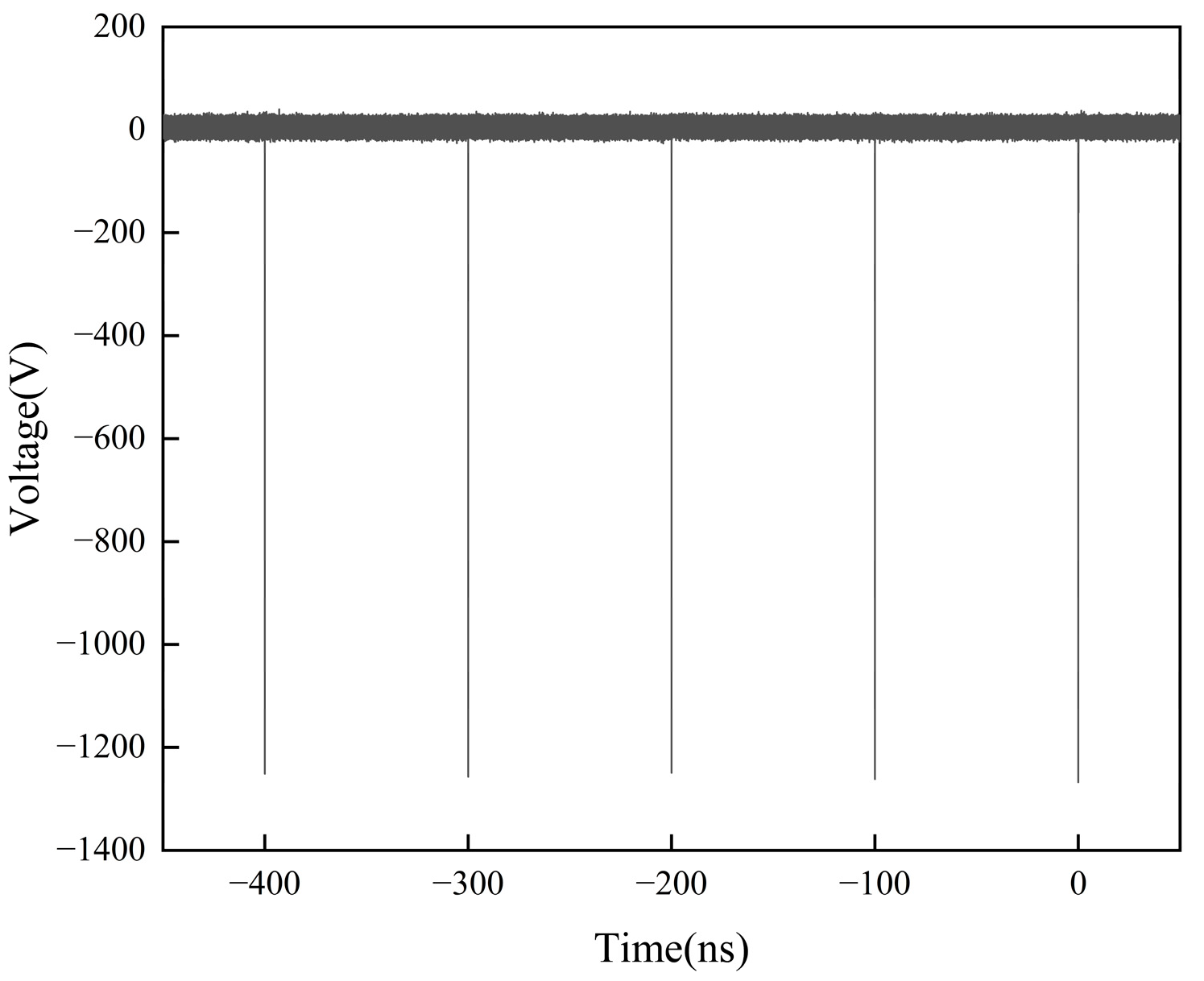
The output waveform indicates that the output pulse amplitude of the series circuit involving four avalanche transistors can be adjusted between 1020 and 1270 V. This finding confirms that the circuit design presented in this paper can achieve an adjustable output pulse amplitude by varying the input pulse voltage, thereby surpassing the bias voltage limit. Additionally, to assess circuit performance, a repetition frequency experiment was conducted. The circuit consistently outputs 1260 V at a frequency of 10 kHz with minimal jitter. The waveform diagram of the repetition frequency experiment is shown in
Figure 10. Continuing to increase the repetition rate will cause the overall circuit to overheat and result in random damage to avalanche transistors.
4.2. Optimization Design Experiment of Capacitor in Parallel
The preceding analysis indicates that an increase in the capacitance value of parallel capacitors within a specific range can enhance the conduction speed of the avalanche transistor. To confirm that parallel pF-level capacitors connected across the avalanche transistor can indeed improve its conduction speed and to identify the optimal range of capacitance values, the series experiments was conducted involving four avalanche transistors.
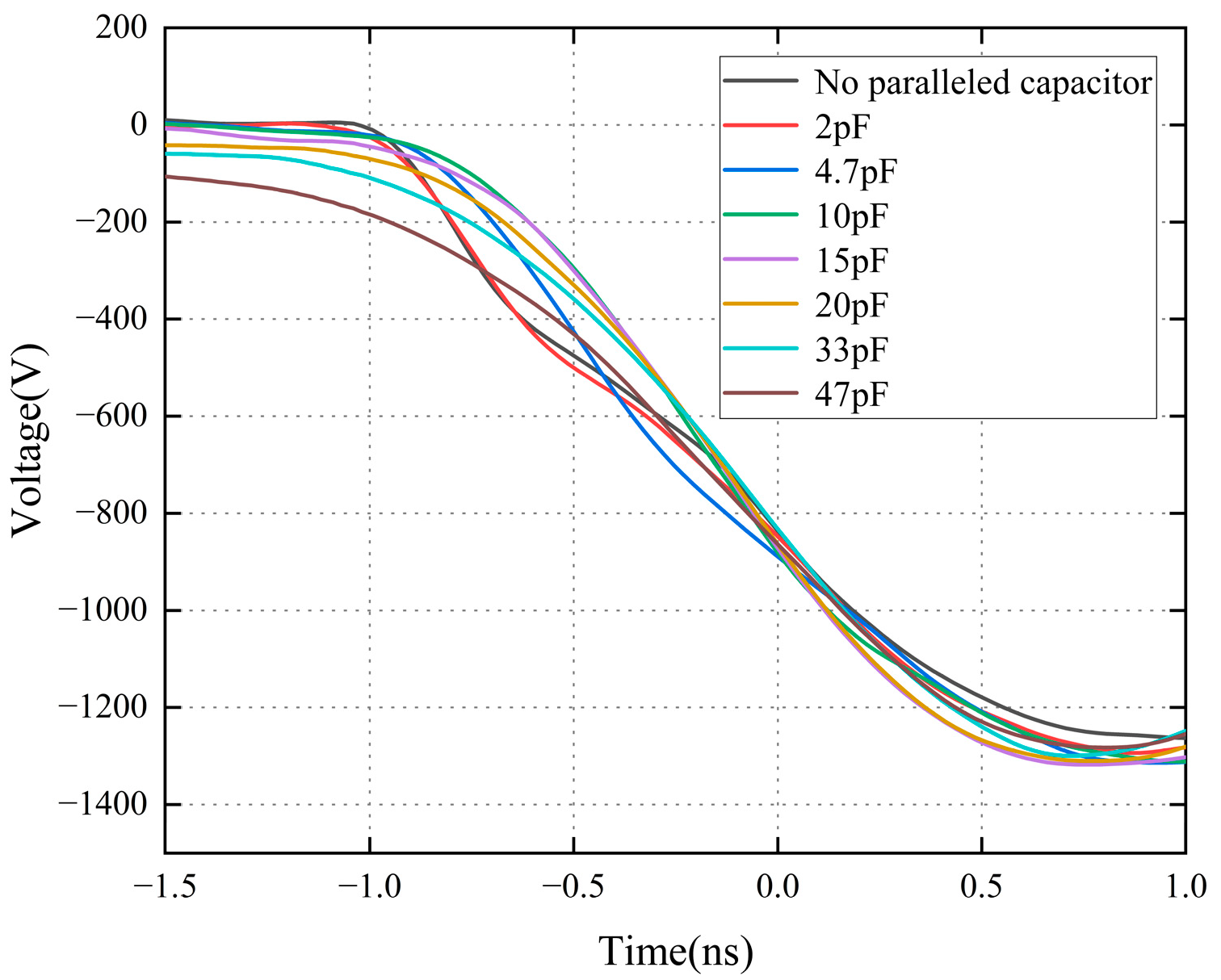
The bias voltage is set at 1200 V, while the input voltage is 500 V. Surface mount ceramic capacitors with capacitance values of 2 pF, 4.7 pF, 10 pF, 15 pF, 20 pF, 33 pF, and 47 pF were connected in parallel across the terminals of avalanche transistors Q
1 to Q
4. The resulting output pulse waveform, particularly the falling edge, is illustrated in
Figure 11, while the corresponding pulse amplitude, falling edge characteristics, and slope are summarized in
Table 2.
The experimental results indicate that when the capacitance of the parallel capacitor is less than 15 pF, an increase in capacitance corresponds to a decrease in the falling edge and an increase in the conduction speed of the avalanche transistor series structure. However, as the capacitance continues to rise beyond this threshold, the falling edge begins to increase, indicating that the discharge time constant becomes predominant, resulting in a reduction in conduction speed. Furthermore, with further increases in capacitance, the tail of the output waveform starts to distort. Specifically, when a 15 pF capacitor is connected in parallel with the avalanche transistor, the output pulse amplitude rises from 1270 V to 1320 V, the falling edge decreases from 1.27 ns to 1.00 ns, and the slope increases from 1.00 kV/ns to 1.32 kV/ns, representing a 32% increase.
These experiments demonstrate that the parallel connection of pF-level capacitors across the avalanche transistor enhances conduction speed, with an optimal capacitance value identified. Furthermore, a longer discharge time implies that more energy is dissipated across the on-resistance of the transistor during the conduction period, potentially leading to an increase in junction temperature and adversely affecting the device’s switching characteristics.
4.3. FID Extended Circuit Experiment
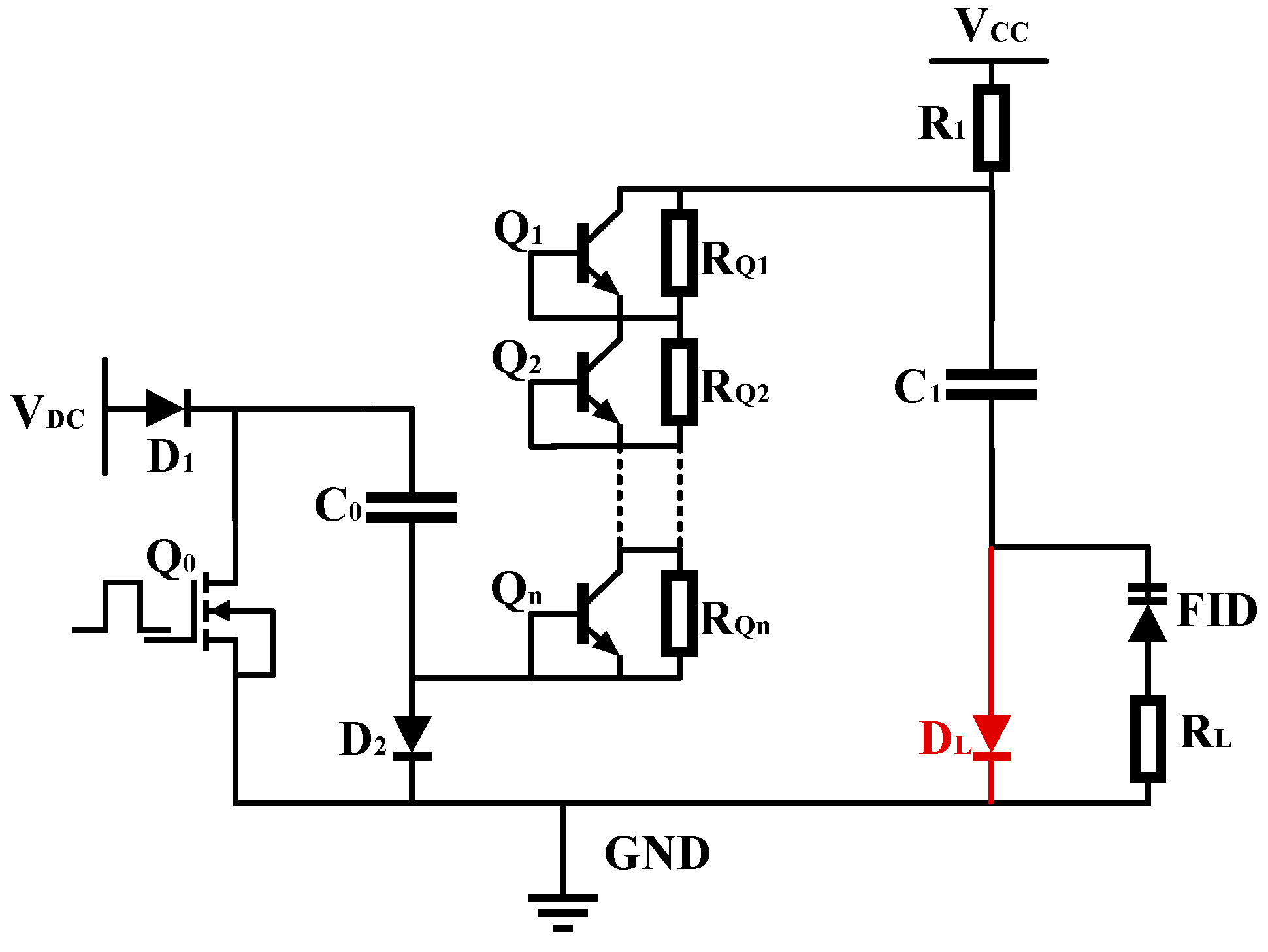
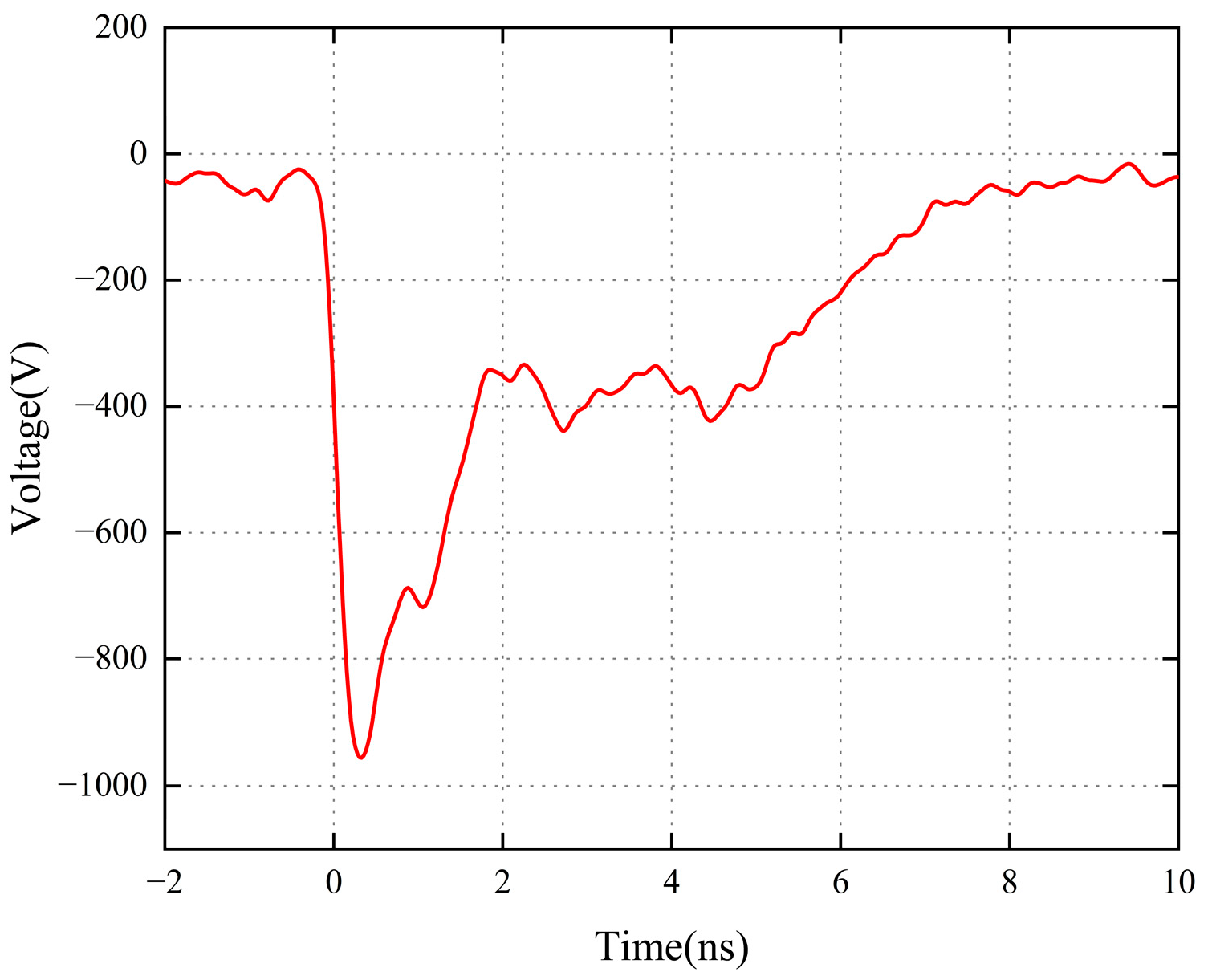
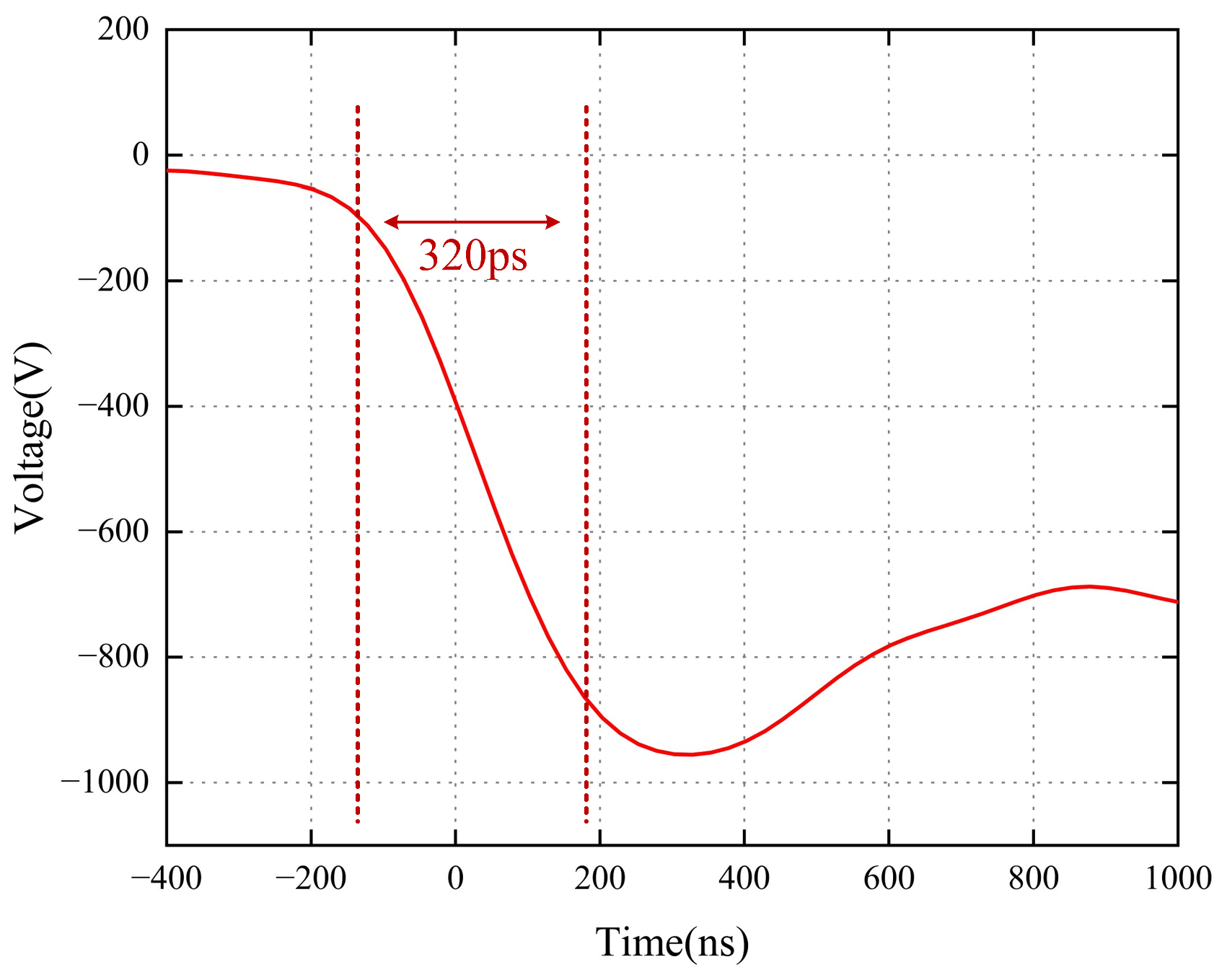
To confirm that the output pulse of the designed avalanche transistor series circuit is suitable for triggering the FID, an experimental test with the FID test expansion circuit was conducted. The bias voltage was set at 1200 V, while the input voltage was maintained at 400 V. The resulting output waveform is depicted in
Figure 12, with the falling edge illustrated in
Figure 13. Due to the delayed avalanche breakdown effect of the FID, a narrow picosecond leading edge pulse was generated, exhibiting a rise time of approximately 320 ps and an amplitude of 965 V across a 50 Ω load.
The experimental results indicate that the rapid front pulse generated by the avalanche transistor series circuit developed in this study can effectively trigger conduction in silicon-based avalanche devices, such as FID. Additionally, these results validate the feasibility of the enhanced FID test circuit derived from the original configuration.
5. Discussion
This paper presents the design of a fast-leading narrow pulse circuit utilizing a series configuration of avalanche collective transistors. The conduction of the avalanche transistor is initiated by applying a negative pulse to the base-emitter short junction. The amplitude of the output pulse can be adjusted by varying the input voltage of the trigger pulse. Additionally, a pF-level capacitor is connected in parallel with the avalanche transistor, which increases the current during the conduction phase. This enhancement accelerates the conduction speed, reduces the falling edge of the output pulse, and significantly increases the slope. This circuit can serve as a test trigger pulse for silicon-based avalanche devices.
This paper was verified through a series test experiment of four avalanche transistors. The experimental results are as follows:
The bias voltage is set at 1200 V, while the input voltage ranges from 200 V to 500 V. The output pulse amplitude is adjustable between 1020 V and 1270 V.
With a maintained bias voltage of 1200 V and an input voltage of 500 V, a 15 pF capacitor is connected in parallel. Under these conditions, the falling edge decreases from 1.27 ns to 1.00 ns, the amplitude increases from 1270 V to 1320 V, and the slope rises from 1.00 kV/ns to 1.32 kV/ns, representing a 32% increase.
Additionally, circuit expansion design is conducted, utilizing the aforementioned fast leading-edge pulse as the test trigger pulse for the 500 V withstand voltage FID. The falling edge of the output pulse measures approximately 320 ps, with an amplitude of 965 V.
Currently, all avalanche transistor series structures and avalanche Marx types utilize base triggering. This paper introduces an innovative method for generating a base-emitter short contact, which overcomes the limitations of bias voltage and enables adjustable pulse amplitude under high bias conditions. The output parameters of the circuit designed in this paper are compared with those of the traditional base triggering as shown in
Table 3. Furthermore, this study proposes the parallelled connection of capacitors across the avalanche transistor to enhance conduction speed and presents a novel test circuit for FID.
However, the on-resistance of avalanche transistors, once activated, results in a relatively high residual voltage when the number of avalanche transistors connected in series is increased. This configuration may also lead to saturation issues with the output amplitude. Additionally, while the capacitance value of parallel capacitors can enhance conduction speed within a limited range, further increases may adversely affect both the conduction speed and the amplitude of the output pulse.
After confirming the feasibility of the circuit design, the subsequent task involves employing the avalanche transistor series structure as the basic unit of the avalanche Marx generator to produce the picosecond front high-voltage pulse source and investigating the impact of the first-stage parallelled pF-level capacitor on the output of the multi-stage avalanche Marx.