Design and Experimental Validation of a 3D-Printed Hybrid Soft Robotic Gripper for Delicate Object Manipulation

Abstract
1. Introduction
2. Related Work

3. Soft Gripper Design and Fabrication
3.1. Finger Architecture and Geometry
3.2. Material Selection and Additive Manufacturing
3.3. Actuation System
4. Experimental Validation and Testing
5. Discussion
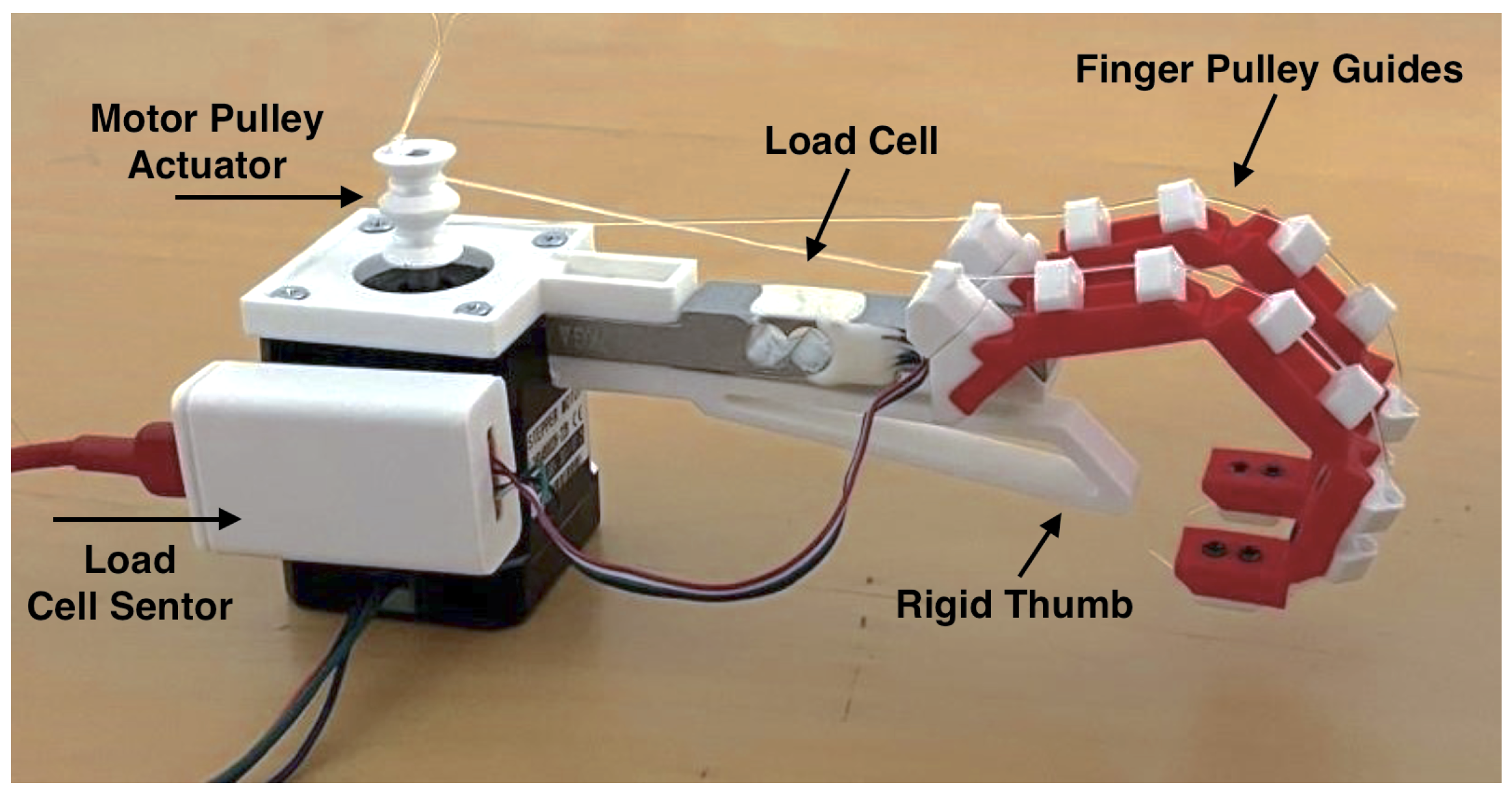
5.1. Implementation Overview
5.2. Key Advantages
- Low-cost and accessible fabrication: The use of consumer-grade 3D-printed materials allows the entire system to be produced at minimal cost. This approach supports rapid prototyping, easy reproduction, and wide accessibility for research, educational, and experimental purposes.
- Modular and easily maintainable structure: Externally routed cables and independently mounted guiding elements simplify assembly, inspection, and replacement. Each structural part can be reprinted or modified without specialized tools, promoting open-ended experimentation and customization.
- Simplified actuation and control: The single-motor, dual-pulley configuration enables synchronized finger motion without complex kinematic coordination. This mechanical simplicity reduces control effort, power consumption, and system weight while maintaining consistent grasping behavior.
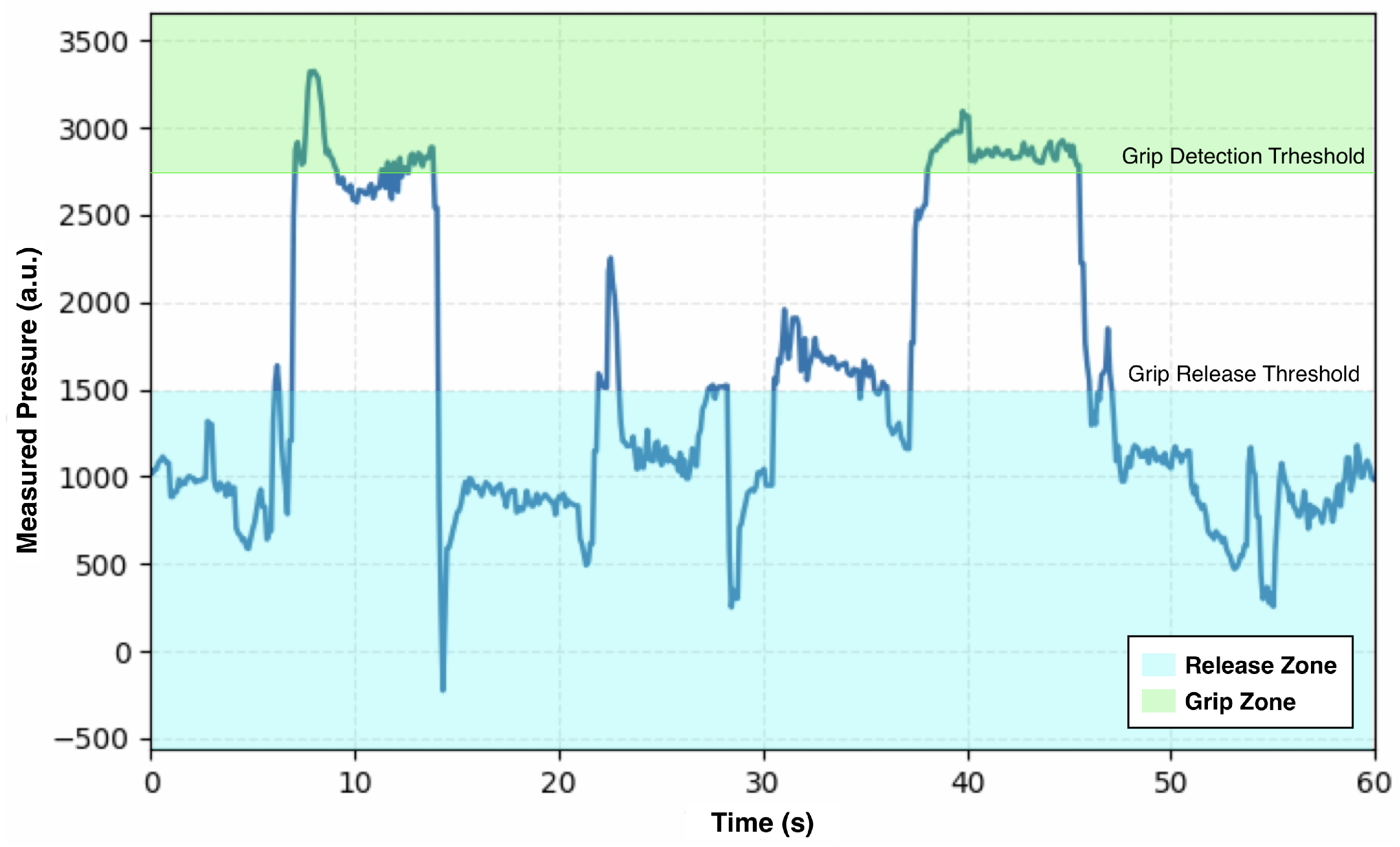
- Integrated sensing and intrinsic safety: The inclusion of a standard prismatic load cell provides direct force feedback, enabling consistent, repeatable, and gentle gripping. The force-limited actuation design—where the motor only opens the fingers and closing relies solely on passive elastic restoring force—provides intrinsic safety by bounding the maximum grip force to a predictable value determined by the pre-curved TPU geometry. This makes the system well suited for human-interactive or assistive robotic contexts.
- Scalability and adaptability: The lightweight and compact design can in principle be readily scaled or modified for different soft robotic platforms. The motor and cable routing can be positioned remotely, enabling integration into varied research setups or mobile manipulators.
5.3. Limitations and Challenges
- Limited dexterity: The single-motor actuation restricts independent finger motion, limiting the ability to perform complex or asymmetric grasps. Introducing differential or selective coupling mechanisms could enhance dexterity in future iterations.
- Cable and material fatigue: The cable-driven mechanism, while efficient and lightweight, is subject to wear and tension-related fatigue over prolonged use. Similarly, the compliant TPU material may experience mechanical degradation after extensive cyclic loading. The long-term durability and number of cycles to failure were not characterized in the present study. However, the flexible finger components are designed as consumable parts intended for periodic replacement. The modular architecture ensures that worn fingers can be quickly reprinted on any consumer-grade 3D printer capable of processing flexible filaments, minimizing downtime and maintenance cost.
- Force measurement dependency: The single integrated load cell provides global force feedback through the rigid thumb. While effective for contact detection and safe gripping, any misalignment or structural decoupling between the sensor and finger assembly may influence measurement accuracy.
- Limited performance characterization: The present work focused on proof-of-concept validation. Comprehensive performance metrics—including maximum gripping force, load capacity, energy consumption, actuation speed, and long-term reliability—were not systematically measured and remain areas for future investigation. Quantitative grasp success rates were not reported because isolated gripper testing—without integration into a complete robotic arm system—would not accurately reflect real-world performance. Grasp success depends critically on the positioning control loop provided by the manipulator, which is outside the scope of this gripper-focused study.
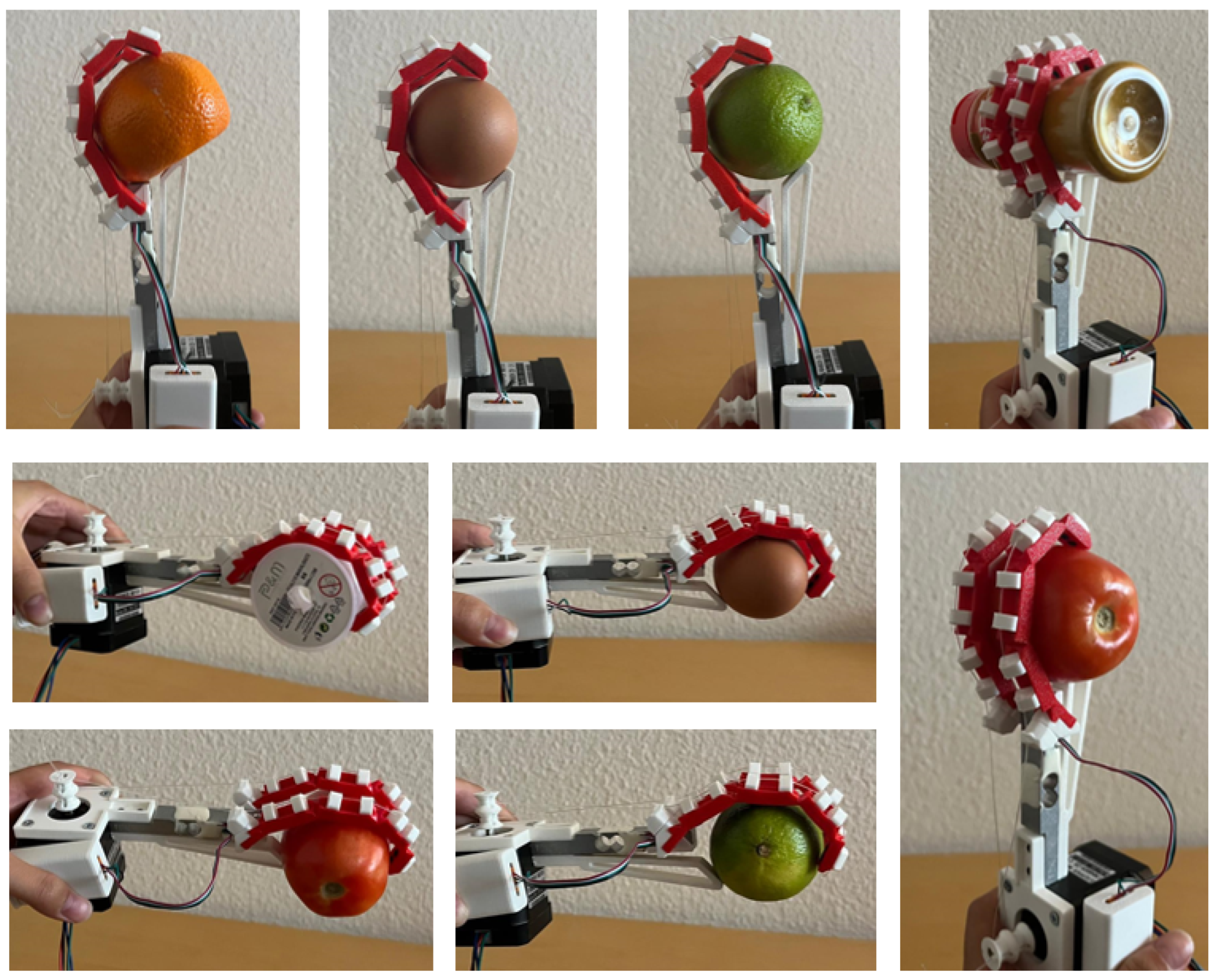
- Object geometry scope: The experimental validation employed objects with predominantly regular geometries (spherical and cylindrical). While these represent typical household items relevant to assistive applications, the gripper’s performance with highly irregular, non-convex, or asymmetric objects was not evaluated. We note that most household objects present an optimal grasping orientation with cylindrical or curved contact surfaces; successful manipulation of irregular objects would depend primarily on gripper alignment by the robotic arm rather than the gripper itself. Extending the validation to geometrically complex objects remains an area for future work.
5.4. Comparison with Existing Soft Gripper Designs
5.5. Real-World Application Advantages
6. Conclusions
Author Contributions
Funding
Data Availability Statement
Conflicts of Interest
References
- Laschi, C.; Cianchetti, M. Soft Robotics: New Perspectives for Robot Bodyware and Control. Front. Bioeng. Biotechnol. 2014, 2, 3. [Google Scholar] [CrossRef] [PubMed]
- Deng, C.; Li, Z. Review: Advanced Drive Technologies for Bionic Soft Robots. J. Bionic Eng. 2025, 22, 419–457. [Google Scholar] [CrossRef]
- Shintake, J.; Cacucciolo, V.; Floreano, D.; Shea, H. Soft Robotic Grippers. Adv. Mater. 2018, 30, e1707035. [Google Scholar] [CrossRef]
- Xiang, T.; Li, B.; Zhang, Q.; Leach, M.; Lim, E. A Novel Approach to Grasping Control of Soft Robotic Grippers based on Digital Twin. In Proceedings of the 2024 29th International Conference on Automation and Computing (ICAC), Sunderland, UK, 28–30 August 2024; IEEE: Piscataway, NJ, USA, 2024; pp. 1–6. [Google Scholar] [CrossRef]
- Runciman, M.; Darzi, A.; Mylonas, G.P. Soft Robotics in Minimally Invasive Surgery. Soft Robot. 2019, 6, 423–443. [Google Scholar] [CrossRef] [PubMed]
- Mohammadi, A.; Lavranos, J.; Zhou, H.; Mutlu, R.; Alici, G.; Tan, Y.; Choong, P.; Oetomo, D. A practical 3D-printed soft robotic prosthetic hand with multi-articulating capabilities. PLoS ONE 2020, 15, e0232766. [Google Scholar] [CrossRef]
- Rus, D.; Tolley, M. Design, fabrication and control of soft robots. Nature 2015, 521, 467–475. [Google Scholar] [CrossRef]
- Wang, Y.; Wang, Y.; Mushtaq, R.T.; Wei, Q. Advancements in Soft Robotics: A Comprehensive Review on Actuation Methods, Materials, and Applications. Polymers 2024, 16, 1087. [Google Scholar] [CrossRef]
- Dzedzickis, A.; Petronienė, J.J.; Petkevičius, S.; Bučinskas, V. Soft Grippers in Robotics: Progress of Last 10 Years. Machines 2024, 12, 887. [Google Scholar] [CrossRef]
- Hiremath, S.; Mathias, K.A.; Kim, T.W. 3D-Printed soft pneumatic actuators: Enhancing flexible gripper capabilities. ROBOMECH J. 2025, 12, 26. [Google Scholar] [CrossRef]
- Lee, J.H.; Chung, Y.; Rodrigue, H. Long Shape Memory Alloy Tendon-based Soft Robotic Actuators and Implementation as a Soft Gripper. Sci. Rep. 2019, 9, 11251. [Google Scholar] [CrossRef]
- Otti, M.; Monsalve, D.; Chapelle, F.; Bouzgarrou, C.; Lapusta, Y. Recent Improvements in the Development of Soft Grippers Capable of Dexterous Manipulation. Appl. Sci. 2025, 15, 275. [Google Scholar] [CrossRef]
- El-Sayed, A. A novel approach to enhancing smart stiffness of soft robotic gripper fingers for wider grasping capability. Int. J. Intell. Robot. Appl. 2024, 9, 553–573. [Google Scholar] [CrossRef]
- Zaidi, S.; Maselli, M.; Laschi, C.; Cianchetti, M. Actuation Technologies for Soft Robot Grippers and Manipulators: A Review. Curr. Robot. Rep. 2021, 2, 355–369. [Google Scholar] [CrossRef]
- Chen, H.; Zhu, J.; Cao, Y.; Xia, Z.; Chai, Z.; Ding, H.; Wu, Z. Soft-rigid coupling grippers: Collaboration strategies and integrated fabrication methods. Sci. China Technol. Sci. 2023, 66, 3051–3069. [Google Scholar] [CrossRef]
- Peng, Z.; Liu, D.; Song, X.; Wang, M.; Rao, Y.; Guo, Y.; Peng, J. The Enhanced Adaptive Grasping of a Soft Robotic Gripper Using Rigid Supports. Appl. Syst. Innov. 2024, 7, 15. [Google Scholar] [CrossRef]
- Manti, M.; Hassan, T.; Passetti, G.; D’Elia, N.; Laschi, C.; Cianchetti, M. A Bioinspired Soft Robotic Gripper for Adaptable and Effective Grasping. Soft Robot. 2015, 2, 107–116. [Google Scholar] [CrossRef]
- Zhang, X.; Liu, H.; Du, B.; Cao, L.; Chen, X.; Huang, Y. Design and experimental validation of a cable-driven continuum manipulator and soft gripper. In Proceedings of the 2019 IEEE International Conference on Robotics and Biomimetics (ROBIO), Dali, China, 6–8 December 2019; IEEE: New York, NY, USA, 2019; pp. 1965–1968. [Google Scholar] [CrossRef]
- Mishra, A.K.; Del Dottore, E.; Sadeghi, A.; Mondini, A.; Mazzolai, B. SIMBA: Tendon-Driven Modular Continuum Arm with Soft Reconfigurable Gripper. Front. Robot. AI 2017, 4, 4. [Google Scholar] [CrossRef]
- Wang, Z.; Freris, N.M.; Wei, X. SpiRobs: Logarithmic spiral-shaped robots for versatile grasping across scales. Device 2025, 3, 100646. [Google Scholar] [CrossRef]
- Chen, F.; Xu, W.; Zhang, H.; Wang, Y.; Cao, J.; Wang, M.Y.; Ren, H.; Zhu, J.; Zhang, Y.F. Topology Optimized Design, Fabrication, and Characterization of a Soft Cable-Driven Gripper. IEEE Robot. Autom. Lett. 2018, 3, 2463–2470. [Google Scholar] [CrossRef]
- Chen, S.; Pang, Y.; Yuan, H.; Tan, X.; Cao, C. Smart Soft Actuators and Grippers Enabled by Self-Powered Tribo-Skins. Adv. Mater. Technol. 2020, 5, e1901075. [Google Scholar] [CrossRef]
- Honji, S.; Tahara, K. Dynamic Modeling and Joint Design of a Cable Driven Soft Gripper. In Proceedings of the 2020 3rd IEEE International Conference on Soft Robotics (RoboSoft), New Haven, CT, USA, 15 May–15 July 2020; IEEE: Piscataway, NJ, USA, 2020; pp. 593–598. [Google Scholar] [CrossRef]
- Tawk, C.; in het Panhuis, M.; Spinks, G.; Alici, G. Soft Pneumatic Sensing Chambers (SPSC) for Generic and Interactive Human-Machine Interfaces. Adv. Intell. Syst. 2019, 1, e1900002. [Google Scholar] [CrossRef]
- Hussain, I.; Malvezzi, M.; Gan, D.; Iqbal, M.Z.; Seneviratne, L.; Prattichizzo, D.; Renda, F. Compliant gripper design, prototyping, and modeling using screw theory formulation. Int. J. Robot. Res. 2020, 40, 55–71. [Google Scholar] [CrossRef]
- Yap, H.K.; Ng, H.; Yeow, R.C.H. High-Force Soft Printable Pneumatics for Soft Robotic Applications. Soft Robot. 2016, 3, 144–158. [Google Scholar] [CrossRef]
- Tawk, C.; Spinks, G.M.; in het Panhuis, M.; Alici, G. 3D Printable Linear Soft Vacuum Actuators: Their Modeling, Performance Quantification and Application in Soft Robotic Systems. IEEE/ASME Trans. Mechatron. 2019, 24, 2118–2129. [Google Scholar] [CrossRef]
- Hao, Y.; Gong, Z.; Xie, Z.; Guan, S.; Yang, X.; Ren, Z.; Wang, T.; Wen, L. Universal soft pneumatic robotic gripper with variable effective length. In Proceedings of the 2016 35th Chinese Control Conference (CCC), Chengdu, China, 27–29 July 2016; IEEE: Piscataway, NJ, USA, 2016; pp. 6109–6114. [Google Scholar] [CrossRef]
- Zhu, M.; Wang, Z.; Hirai, S.; Kawamura, S. Design and fabrication of a soft-bodied gripper with integrated curvature sensors. In Proceedings of the 2017 24th International Conference on Mechatronics and Machine Vision in Practice (M2VIP), Auckland, New Zealand, 21–23 November 2017; IEEE: Piscataway, NJ, USA, 2017; pp. 1–6. [Google Scholar] [CrossRef]
- Wang, Z.; Hirai, S. Geometry and Material Optimization of a Soft Pneumatic Gripper for Handling Deformable Object. In Proceedings of the 2018 IEEE International Conference on Robotics and Biomimetics (ROBIO), Kuala Lumpur, Malaysia, 12–15 December 2018; IEEE: Piscataway, NJ, USA, 2018; pp. 612–617. [Google Scholar] [CrossRef]
- Tayeb, A.; Le Cam, J.B.; Loez, B. 3D printing of soft thermoplastic elastomers: Effect of the deposit angle on mechanical and thermo-mechanical properties. Mech. Mater. 2022, 165, 104155. [Google Scholar] [CrossRef]
- Prajapati, S.; Sharma, J.K.; Kumar, S.; Pandey, S.; Pandey, M.K. A review on comparison of physical and mechanical properties of PLA, ABS, TPU, and PETG manufactured engineering components by using fused deposition modelling. Mater. Today Proc. 2024, in press. [Google Scholar] [CrossRef]
- Edgar, J.; Tint, S. “Additive Manufacturing Technologies: 3D Printing, Rapid Prototyping, and Direct Digital Manufacturing”, 2nd Edition. Johns. Matthey Technol. Rev. 2015, 59, 193–198. [Google Scholar] [CrossRef]
- Ngo, T.D.; Kashani, A.; Imbalzano, G.; Nguyen, K.T.; Hui, D. Additive manufacturing (3D printing): A review of materials, methods, applications and challenges. Compos. Part B Eng. 2018, 143, 172–196. [Google Scholar] [CrossRef]


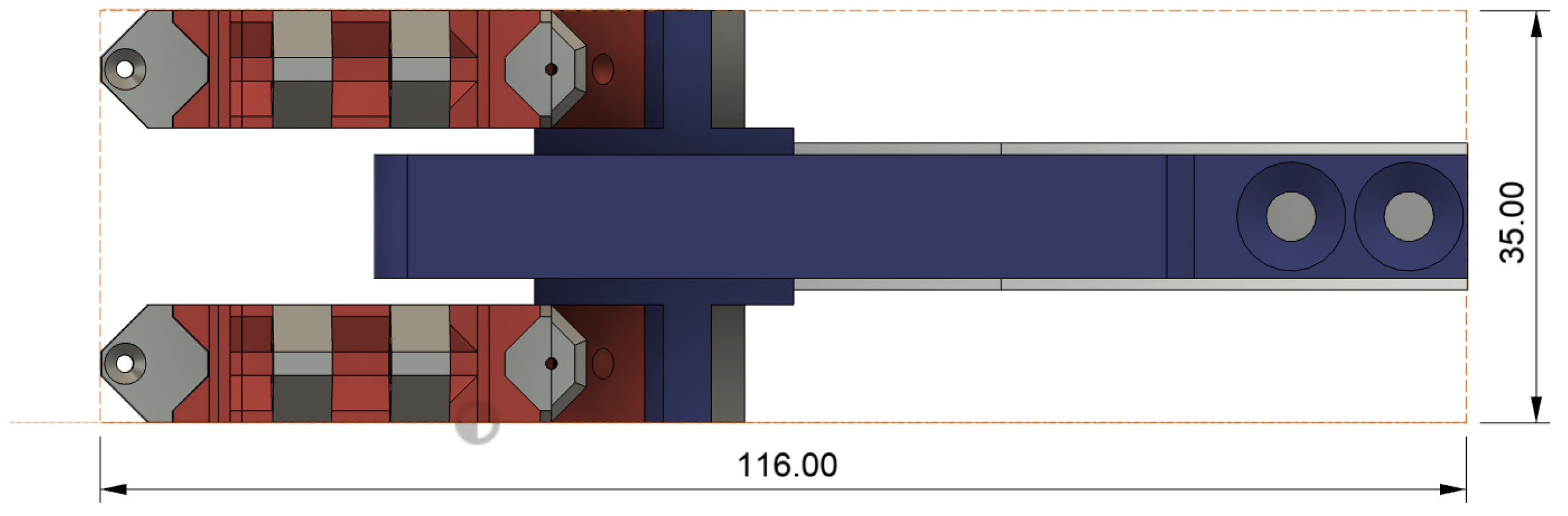






| Parameter | Value |
|---|---|
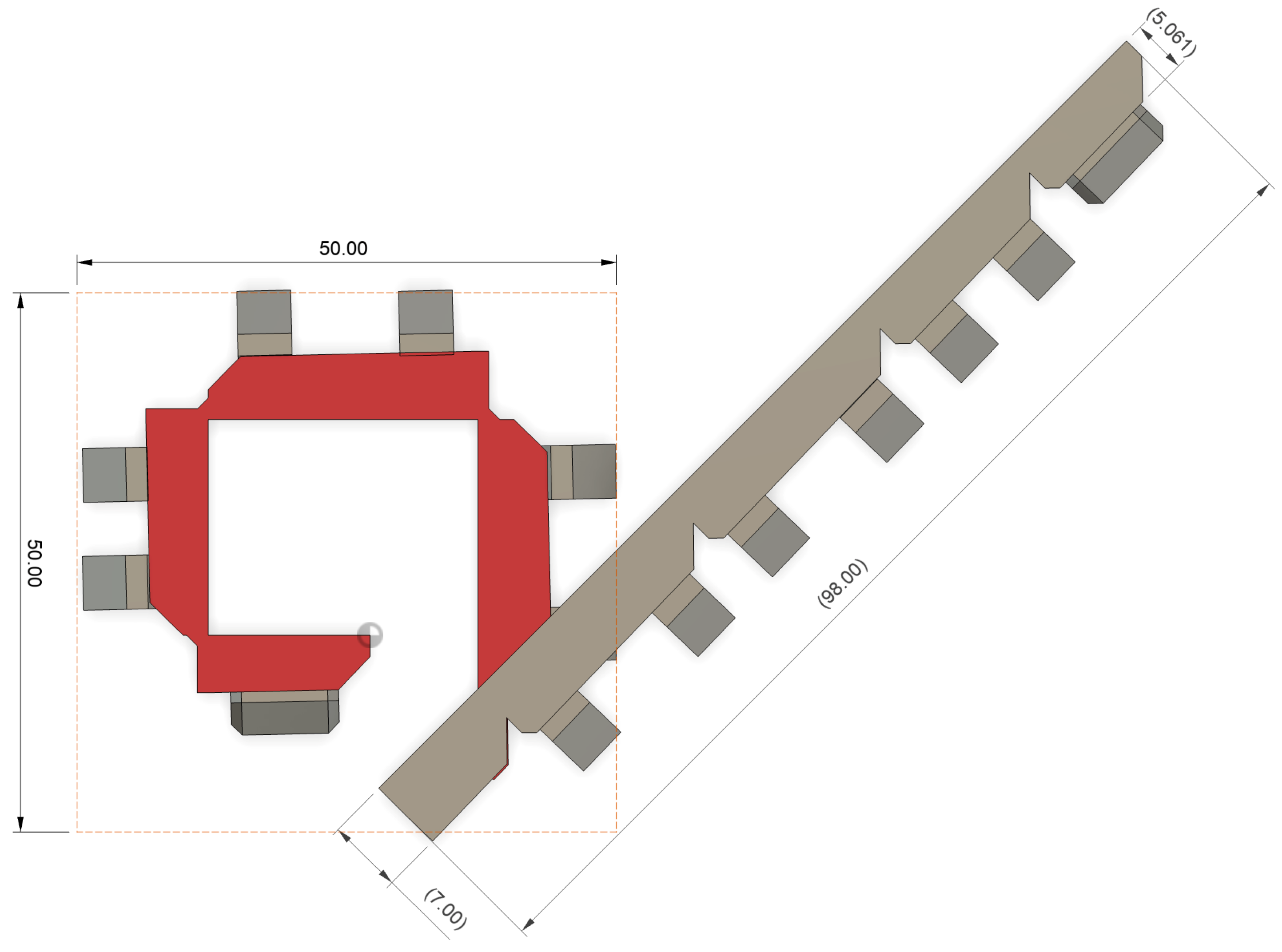
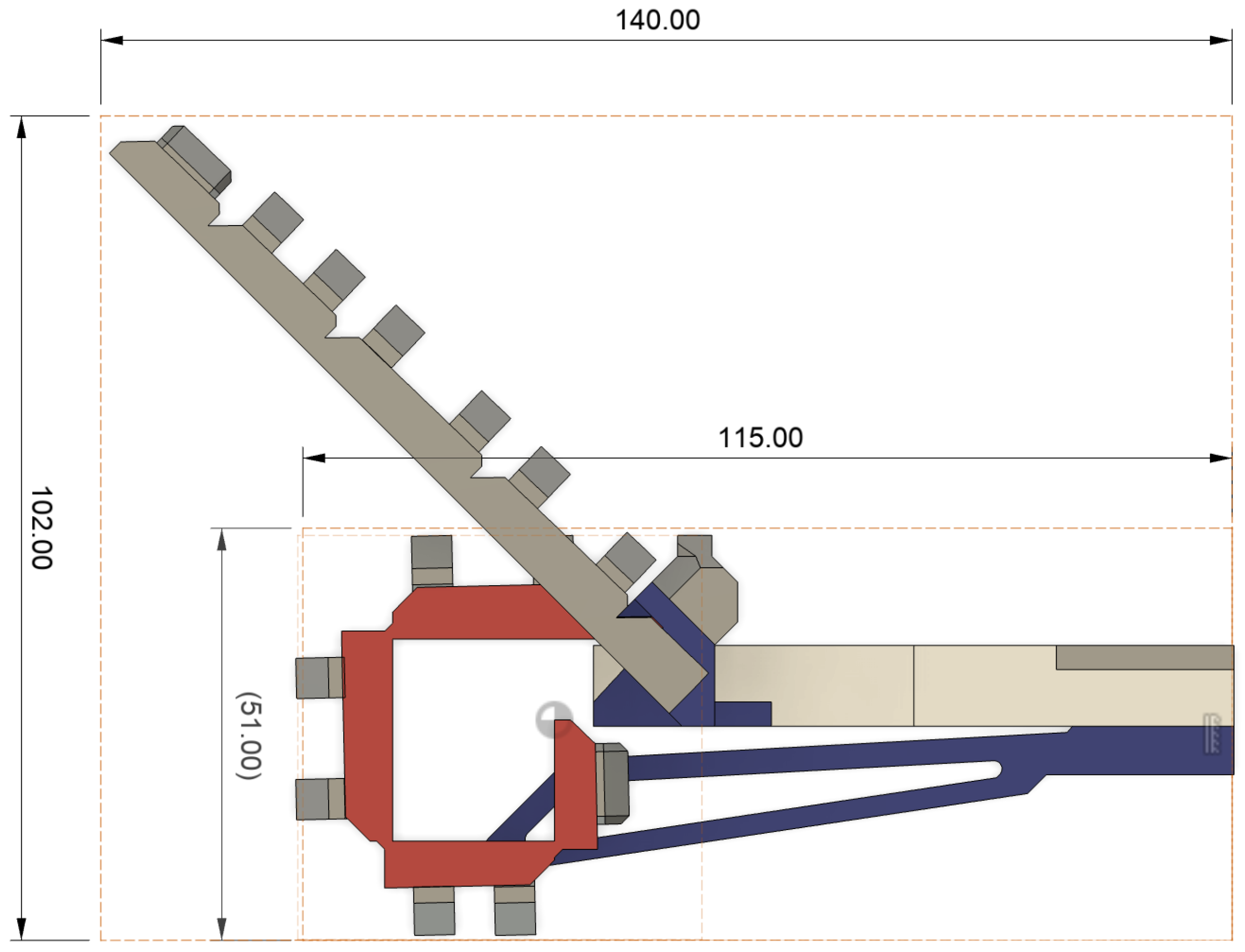
| Number of compliant fingers | 2 |
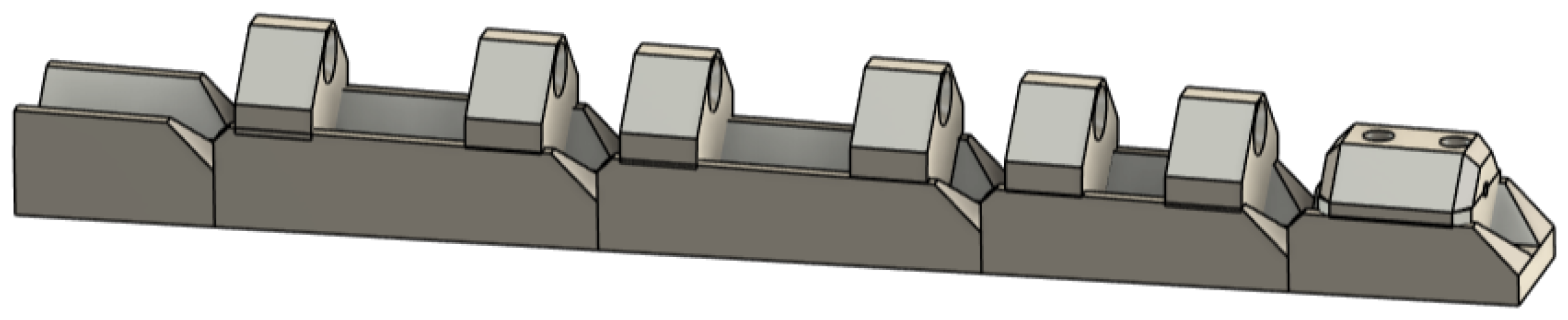
| Number of segments per finger | 4 |
| Cable guiding elements per finger | 7 |
| Component | Material |
|---|---|
| Compliant fingers | TPU (thermoplastic polyurethane) |
| Rigid thumb | PLA (polylactic acid) |
| Cable guiding elements | PLA |
| Support structure | PLA |
| Actuation cables | nylon |
| Parameter | Value |
|---|---|
| Motor type | Stepper motor |
| Transmission | Dual-pulley, cable-driven |
| Pulley diameter | 5 mm |
| Cable diameter | 1 mm |
| Actuation mode | Motor pulls the fingers open; passive elastic closure |
| Parameter | Value |
|---|---|
| Type | Aluminum bar (strain gauge) |
| Measuring range | 5 kg |
| Precision | 1 g |
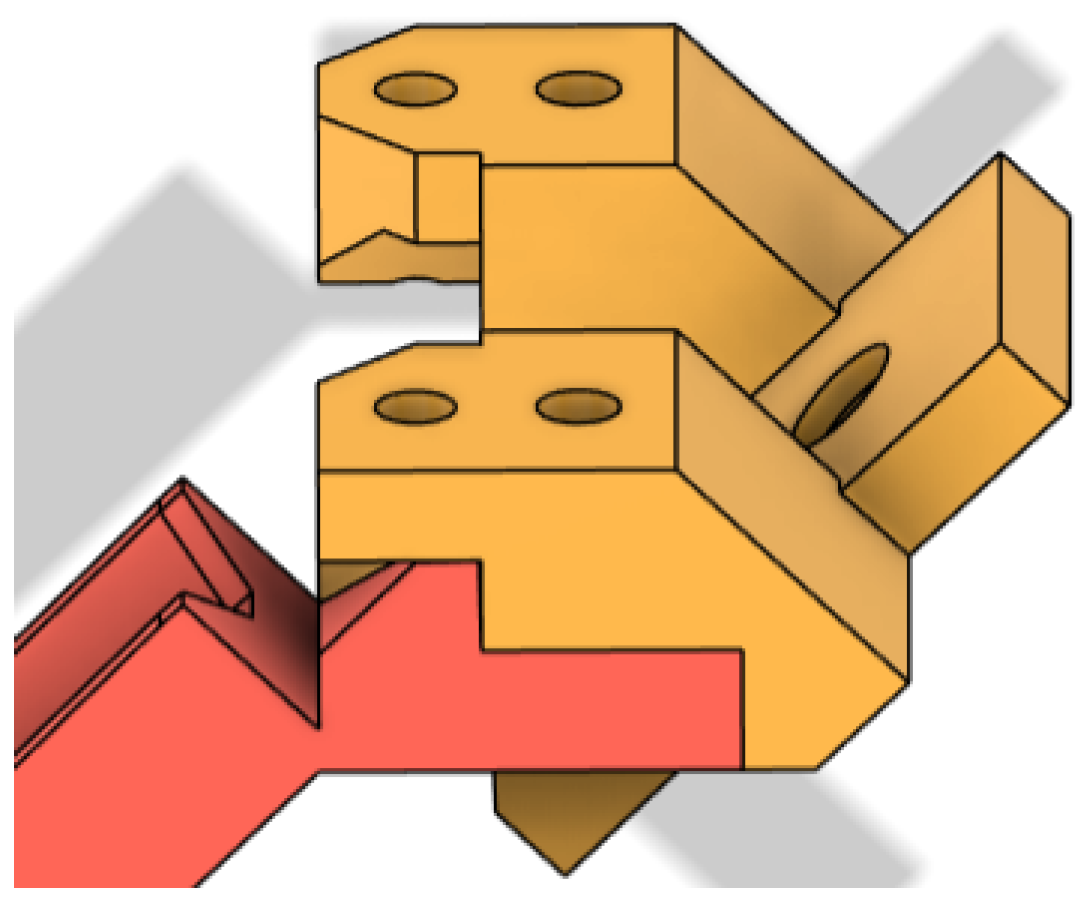
| Integration location | Rigid thumb |
| Design/Feature | Independent Finger Control | Mechanical Complexity | Cost | Ease of Assembly/ Maintenance |
|---|---|---|---|---|
| Proposed Single-Motor Gripper | Low | Low | Low | High |
| Multi-Motor Gripper | High | High | Medium-High | Medium |
| Design/Feature | Ease of Assembly | Maintenance | Modularity | Manufacturing Complexity |
|---|---|---|---|---|
| Proposed Gripper | High | Low | High | Low |
| Traditional Cable-Driven Soft Grippers | Medium | High | Low | Medium-High |
Disclaimer/Publisher’s Note: The statements, opinions and data contained in all publications are solely those of the individual author(s) and contributor(s) and not of MDPI and/or the editor(s). MDPI and/or the editor(s) disclaim responsibility for any injury to people or property resulting from any ideas, methods, instructions or products referred to in the content. |
© 2026 by the authors. Licensee MDPI, Basel, Switzerland. This article is an open access article distributed under the terms and conditions of the Creative Commons Attribution (CC BY) license.
Share and Cite
Al-Hadithi, B.M.; Pastor, C.; Lin, T.Y. Design and Experimental Validation of a 3D-Printed Hybrid Soft Robotic Gripper for Delicate Object Manipulation. Electronics 2026, 15, 848. https://doi.org/10.3390/electronics15040848
Al-Hadithi BM, Pastor C, Lin TY. Design and Experimental Validation of a 3D-Printed Hybrid Soft Robotic Gripper for Delicate Object Manipulation. Electronics. 2026; 15(4):848. https://doi.org/10.3390/electronics15040848
Chicago/Turabian StyleAl-Hadithi, Basil Mohammed, Carlos Pastor, and Tian Yao Lin. 2026. "Design and Experimental Validation of a 3D-Printed Hybrid Soft Robotic Gripper for Delicate Object Manipulation" Electronics 15, no. 4: 848. https://doi.org/10.3390/electronics15040848
APA StyleAl-Hadithi, B. M., Pastor, C., & Lin, T. Y. (2026). Design and Experimental Validation of a 3D-Printed Hybrid Soft Robotic Gripper for Delicate Object Manipulation. Electronics, 15(4), 848. https://doi.org/10.3390/electronics15040848