Article

Design and Performance Enhancement of a PCB-Based Axial-Flux Stepper Motor

1
School of Electronics and Information Engineering, Tongji University, Shanghai 201804, China
2
School of Physics and Science, Tongji University, Shanghai 200092, China
3
The Institute of Dongguan—Tongji University, Dongguan 523808, China
*
Authors to whom correspondence should be addressed.
Electronics 2026, 15(4), 777; https://doi.org/10.3390/electronics15040777
Submission received: 9 January 2026 / Revised: 6 February 2026 / Accepted: 10 February 2026 / Published: 11 February 2026

Abstract

This paper presents a disc-type stepper motor based on PCB technology. Aiming to provide a solution for the difficulty of torque enhancement in multi-pole PCB stepper motors under the limited wiring space of the PCB stator, a novel spiral winding configuration is proposed. Without increasing the number of PCB stator layers or the overall dimensions, an axially offset layout is employed to enlarge the coil flux-linkage area, thereby increasing the electromagnetic torque. Theoretical analysis and finite element simulation results show that the proposed winding achieves approximately 30% higher torque than conventional spiral windings. Meanwhile, to address the current fluctuation problem caused by the low-inductance characteristic resulting from the coreless PCB stator, the influence of current ripple on the microstepping drive of the stepper motor is analyzed. A series-inductor approach is adopted to suppress current fluctuation, and the optimal inductor value is selected through theoretical calculation and simulation, which effectively reduces the current ripple and significantly improves the microstepping performance. Finally, a prototype is fabricated and tested experimentally. The results indicate that the motor output torque reaches 46.4 mN·m, and the step-angle error under 16-microstep drive is within 0.25°, providing a feasible solution for the design and control of PCB stepper motors in compact spaces.

1. Introduction

Stepper motors, as actuators that precisely convert electrical pulse signals into angular displacement, are widely used in precision control fields such as 3D printers, CNC machine tools, robots, automated instruments, and office automation equipment, owing to their excellent characteristics, including high positioning accuracy, absence of cumulative error, and simple control [1]. In recent years, coreless disc motors have attracted considerable attention from researchers due to their advantages, such as short axial length, high power density, high efficiency, low rotor inertia, and lack of cogging torque [2,3,4,5]. By adopting PCB-based stators, such disc motors further reduce the axial dimension while significantly lowering the weight compared to conventional wound windings, making them suitable for large-scale, low-cost manufacturing [6,7]. The absence of cogging torque in PCB-based stepper motors not only suppresses torque ripple but also reduces positioning error, thereby improving overall positioning accuracy [8]. Furthermore, the low rotational inertia of these motors enhances braking performance and enables rapid dynamic response during starting, acceleration, and stopping, thereby allowing for more responsive and precise control over position and speed. Active research is being conducted on PCB winding design, which lies at the heart of PCB motors and critically influences their torque density, efficiency, and thermal performance. X. Wang presents a study on the geometry of PCB windings [9]. Through this work, an analytical model was established, leading to the proposal of a novel hybrid trapezoidal–circular winding configuration. This design has been shown to effectively improve the torque and efficiency of PCB motors. P. Gao introduced a distributed PCB winding and utilized conductors of unequal width to reduce winding losses, thereby improving both the output characteristics and overall efficiency of the generator [10]. Furthermore, they provided an analytical comparison of the winding factors for concentrated and distributed windings. It clarified methods to enhance the winding factor in concentrated designs and achieved an effect similar to skewing by inclining the effective conductors, which effectively lowered the back-EMF total harmonic distortion (THD) in the PCB winding [11]. As a type of permanent magnet stepper motor, the PCB-based stepper motor requires an equal number of stator and rotor teeth. Consequently, to enhance the motor’s resolution, the number of stator poles must be increased. This, however, reduces the mechanical angle occupied by each individual coil and decreases the flux linkage, which inevitably leads to a reduction in torque output. In prior studies, waveform PCB windings have been employed to enhance torque in multi-pole motors [12]. However, the relatively high density of vias along their inner diameter presents challenges to the thermal reliability of the PCB stator. Meanwhile, research on torque improvement in spiral-type winding motors has primarily focused on the optimization of winding geometry [13].
However, existing research has predominantly addressed isolated aspects of PCB windings—such as geometric optimization, inductance compensation, or control algorithms—rather than offering a systematic framework that concurrently considers their electrical, mechanical, thermal, and manufacturability trade-offs. Such a holistic approach is crucial for realistically assessing the applicability of PCB-based stepper motors in practical engineering contexts.
Table 1 summarizes a four-dimensional comparison covering structural, electromechanical, thermal, and manufacturing attributes. It illustrates the PCB design’s inherent benefits—high integration, light weight, no cogging, and rapid prototyping—alongside its main limitations: reduced torque density and poorer thermal performance.
Furthermore, while the coreless structure of the PCB stator eliminates drawbacks associated with conventional iron cores, its inherently low inductance leads to rapid current transients, which complicates current control and adversely affects overall motor drive performance. To mitigate current fluctuations in such low-inductance motors, extensive research has been conducted by scholars globally. One approach involves introducing external inductors to adjust the load-side inductance of the inverter, thereby modifying the system’s inherent low-inductance characteristic and suppressing current ripple [14]. Alternatively, regulating the DC-link voltage of the inverter in real time according to current conditions has been adopted to curb such fluctuations [15]. In [16], a buck converter is employed as a bus voltage controller to reduce the DC-link voltage, while series inductors are added to further attenuate motor current ripple. Further improvements are reported in another study, where the switching frequency is increased, and advanced control algorithms are implemented. Specifically, acceleration torque control and instantaneous torque control algorithms based on a single current sensor are proposed. These are combined with strategies such as adaptive asymmetric compensation torque closed-loop control, back-EMF feedforward, and commutation torque control, effectively reducing torque ripple during both conduction and commutation intervals [17,18]. However, there remains a notable lack of investigation into the impact of rapid current fluctuations on the drive performance of low-inductance stepper motors.
To address the installation constraints of stepper motors in confined spaces, this paper proposes a PCB-based stepper motor. In response to the challenge of torque enhancement in multi-pole PCB stepper motors, a novel winding configuration is proposed and comparatively analyzed against conventional designs. The results demonstrate that the electromagnetic torque of the PCB stepper motor with the proposed winding configuration is significantly improved by approximately 29.7%. Regarding the current fluctuations induced by the low inductance of PCB windings, and considering the system volume and control complexity, a series inductor is adopted to suppress current ripple. The impact of current fluctuations on the microstepping current and microstepping angle is analyzed, and an optimal series inductor is designed based on the driving principle. The effectiveness of the proposed method is verified through simulations in MATLAB/Simulink 2023a. Finally, a prototype is fabricated, and the torque characteristics of the PCB stepper motor are measured. In addition, the angular accuracy of the optimized microstepping drive system is evaluated experimentally.

2. Design and FEA-Based Evaluation of PCB Stepper Motor

2.1. Overall Structural Design of the PCB Stepper Motor

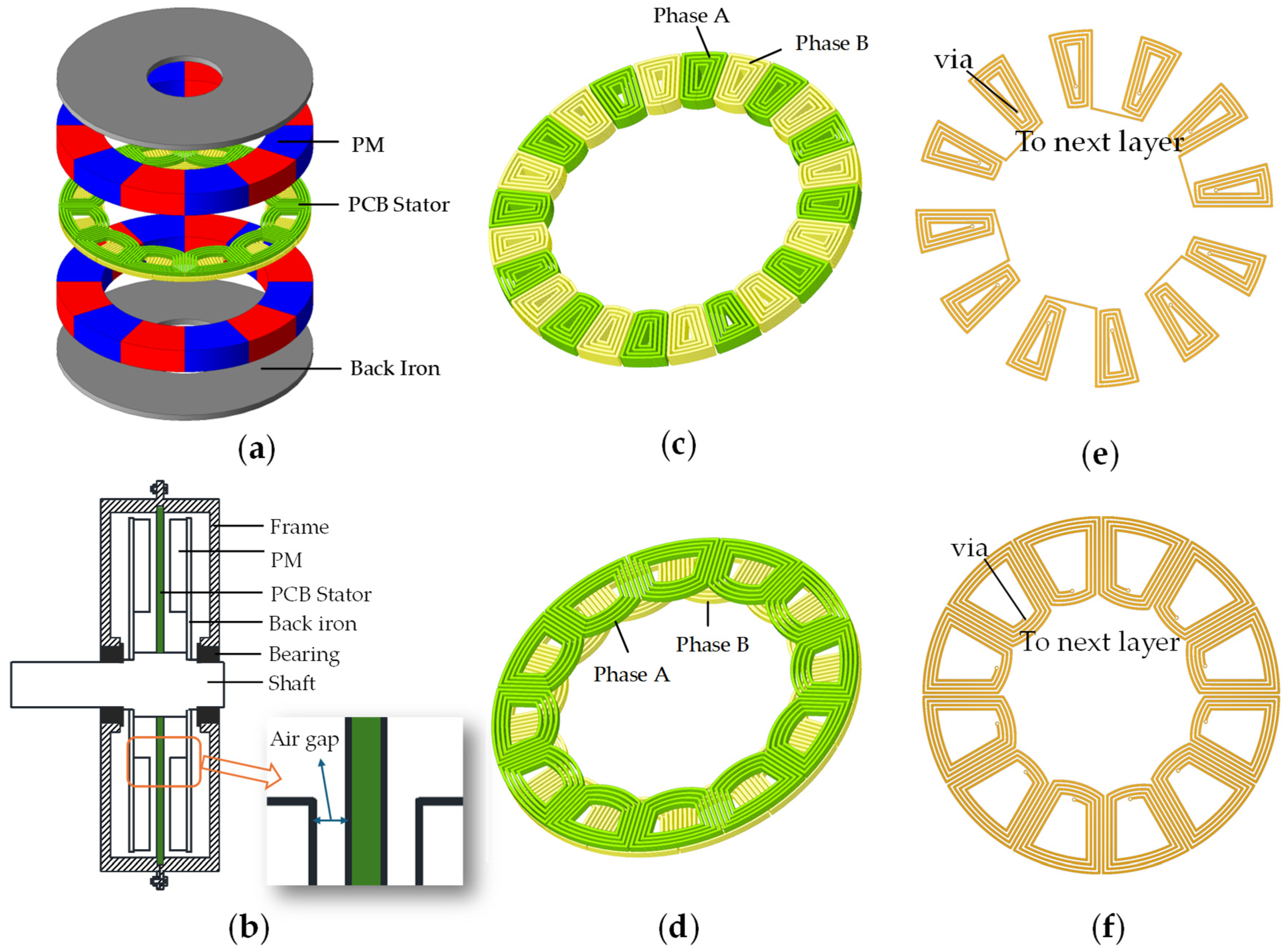
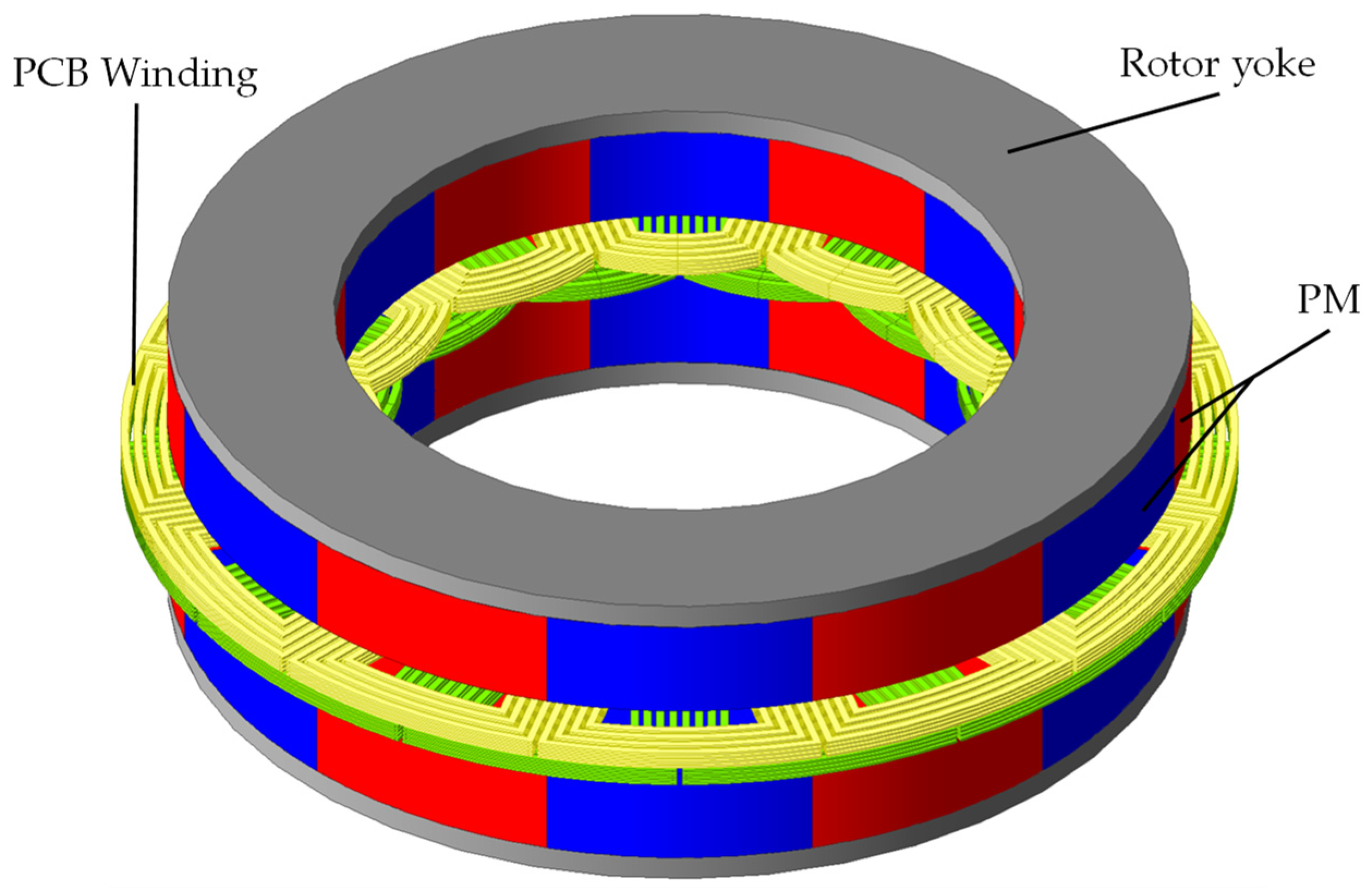
In terms of motor structure, a central stator with a dual-rotor configuration was selected, which eliminates unbalanced magnetic pull and provides higher air-gap flux density compared to a single-rotor design. Figure 1a shows the overall structure of the motor, which consists of one stator and two rotors. The rotors are equipped with twelve planar, alternately magnetized N-S pole magnets arranged in sequence. Figure 1b illustrates the assembly details of the motor. In this design, a stepped shaft is utilized, where the shoulder of the step serves to axially position and secure the rotor, thereby ensuring the prescribed air-gap length. Figure 1c,d show the different structures of the PCB stator. The stator is fabricated using PCB technology, and its coils adopt a multi-layer spiral structure, with interlayer connections realized through vias. Figure 1e,f show the single-phase PCB stator structure of a single layer. Both winding configurations share the same connection method. The difference lies in their layer distribution; in the conventional design, the windings of both phases A and B are present across all 8 PCB layers and are interleaved with each other. In contrast, the proposed winding allocates the A phase exclusively to the upper four layers, while the B phase is rotated circumferentially and placed on the lower four PCB layers.
The PCB winding designed in this paper adopts a combined trapezoidal and circular shape. This configuration retains the advantages of trapezoidal windings, such as high flux linkage and large output torque, while also utilizing circular traces to connect the active conductors. This approach reduces end connections and minimizes end-winding losses. Currently, most research efforts focus on optimizing the electromagnetic performance of PCB-based permanent magnet synchronous motors. Consequently, improvements targeting PCB stators primarily aim to reduce back-EMF harmonics, winding losses, and similar parameters. Moreover, most existing spiral windings are designed with the windings of each phase placed adjacently within the same layer [9,10,11,19,20,21]. As illustrated in Figure 1c, the yellow coil represents the A-phase winding, the green coil represents the B-phase winding, and both windings are positioned side by side. To improve the stepping resolution of the PCB stepper motor, it is necessary to increase the number of rotor poles. However, as the rotor pole count of the PCB stepper motor rises, the mechanical angle occupied by each individual coil becomes progressively compressed. This leads to a reduction in the flux linkage of the windings and consequently a decrease in torque output. If the conventional parallel-wound PCB winding configuration is adopted, the motor’s torque output characteristics cannot be guaranteed as the number of rotor poles increases. To address this issue, we propose a configuration in which the windings of phases A and B are arranged in separate layers with a 15° offset between them. This design increases the mechanical angle occupied by each coil group, enhances the flux linkage area, and thereby achieves the objective of improving torque.

2.2. Theoretical Analysis of PCB Winding

2.2.1. Winding Factor

In the preliminary design and optimization of PCB-based motors using analytical methods, the calculation of the winding factor is crucial in addition to the determination of the magnetic field distribution. It directly influences the back-EMF and magnetomotive force and can even affect the power factor and operating efficiency. For conventional slotted motors, the winding factor is primarily governed by the pole–slot combination and the winding arrangement, its physical essence reflecting the pitch and distribution characteristics of the stator windings. When slot or pole skewing is not considered, the fundamental winding coefficient can be expressed as the product of the pitch factor k w 1 and the distribution factor k d 1 :
k w 1 = k p 1 k d 1
Thus, for harmonic order v,
k w v = k p v k d v
where the k w v , k p v , and k d v denote the winding factor, pitch factor, and distribution factor for the v-th harmonic, respectively.
Given that PCB features a coreless, slotless design, the established formulas for calculating the winding factor in traditional slotted motors are not directly applicable. To address this, the present work redefines key characteristic parameters for PCB motors through analogy with their slotted counterparts and elucidates their physical meaning. Furthermore, to characterize the spatial distribution of the windings, we used the concept of a “virtual slot”, defined here as an abstract geometric element representing the location of an individual effective conductor.
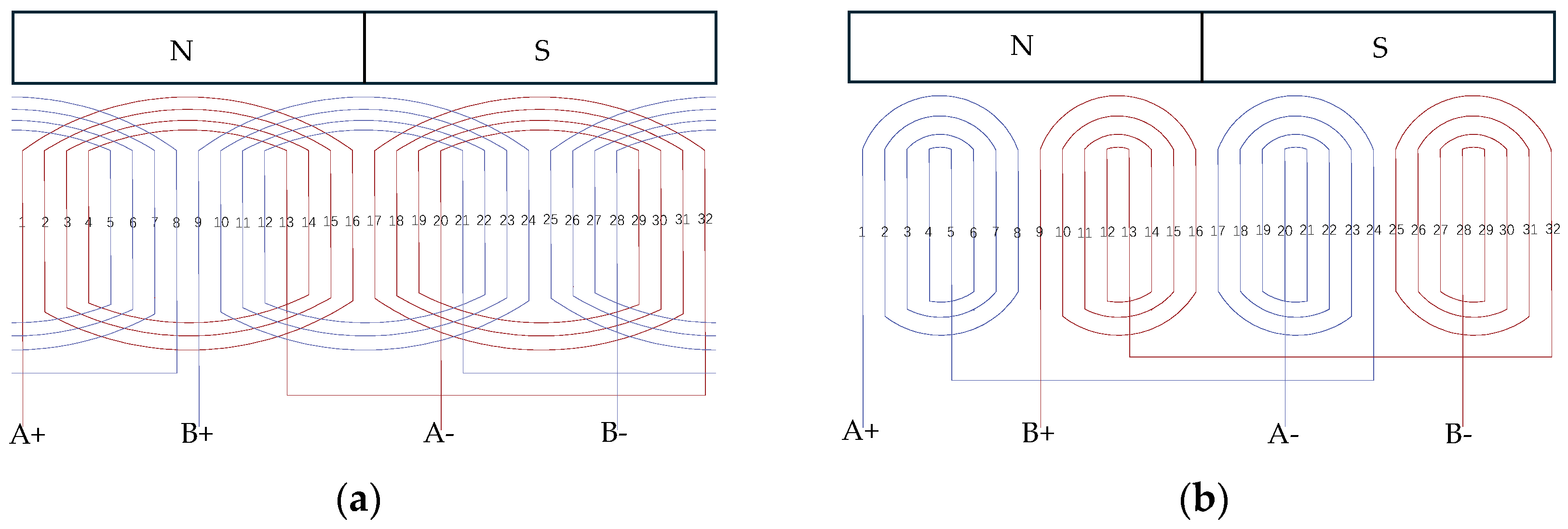
To facilitate analysis, Figure 2 illustrates the PCB winding arrangement per pole pair for the conventional and the proposed designs, where a single effective conductor corresponds to one slot.
In accordance with conventional motor winding theory, the formula for the distribution factor is generally derived as
k d v = sin v q γ 2 q sin v γ 2
where v denotes the v-th harmonic, q is the equivalent number of virtual slots per phase per pole, and γ is the electrical angle corresponding to the pitch of the equivalent virtual slots.
The windings of a PCB motor operate in a short-pitched configuration. The pitch factor for a single turn can be expressed as
K p _ c i = sin ( w i τ π 2 ) = sin ( β 2 α i β π 2 )
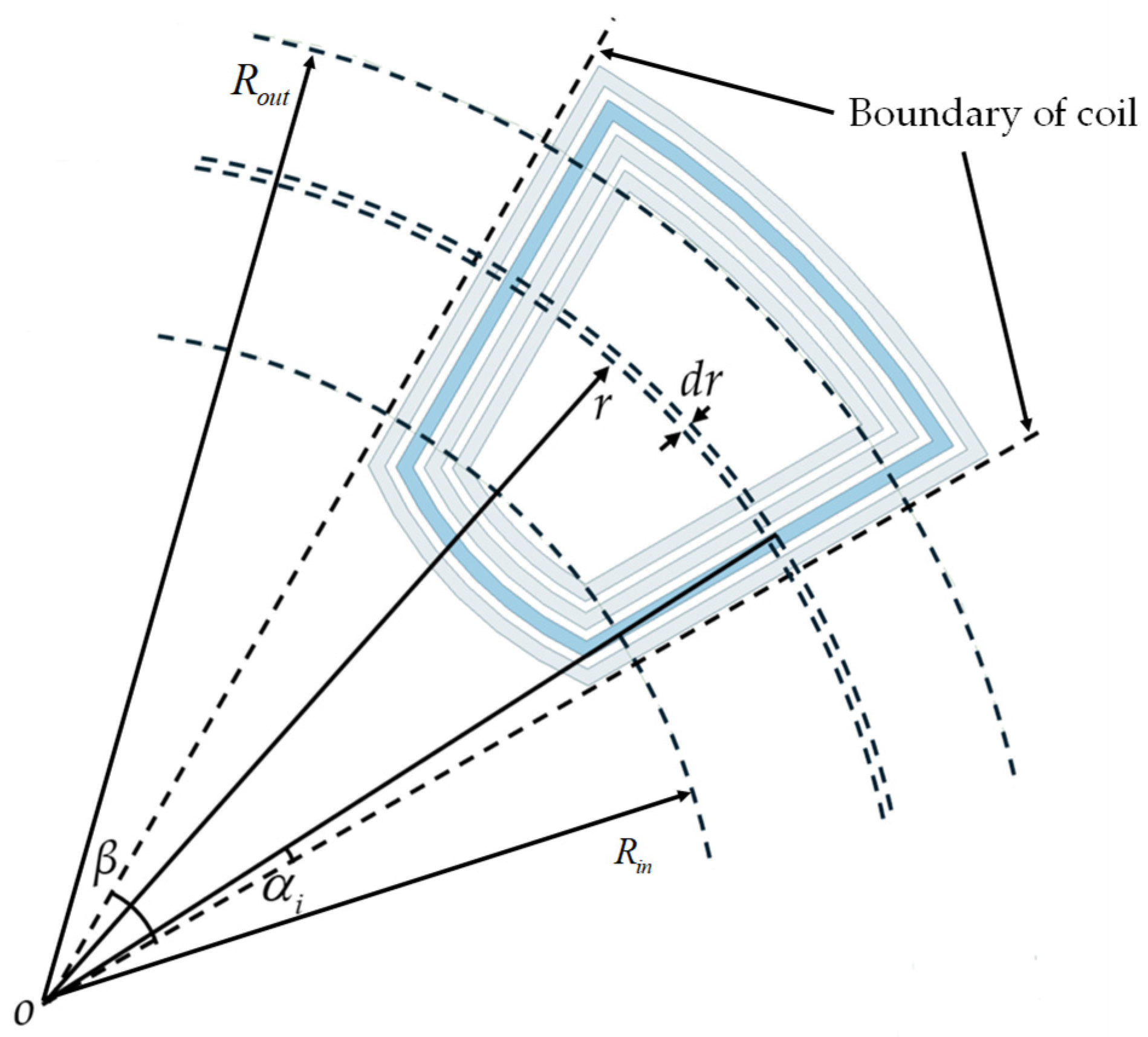
where w i is the pitch of the i-th turn, τ is the pole pitch, β is the mechanical angle covered by the magnetic pole, and α i is the angle between the effective conductor and the boundary of the coil group. However, because the active sides of the PCB winding are placed parallel to each other, as shown in Figure 3, a differential element dr is selected at a radial distance r. This leads to
α i = 1 R o u t R i n R i n R o u t arcsin 2 i 1 w + d 2 r d r
where R i n is the inner radius of the permanent magnet, R o u t is its outer radius, w is the width of an effective conductor, and d is the distance between adjacent effective conductors.
Therefore, the pitch factor for the PCB winding is expressed as follows:
K p v = 1 N i = 1 N k p i = 1 N i = 1 N sin ( β 2 α i β π 2 v )
where k p i is the pitch factor for a single turn of the PCB winding, and N is the total number of winding turns.

2.2.2. Back EMF

The back EMF directly reflects the distribution of the motor’s magnetic field and the arrangement of its windings. The magnetic flux per pole Φ f produced by the permanent magnets is given by
Φ f = R in R o u t α i B m 2 π 2 p r d r = α i B m π 2 p R o u t 2 R i n 2 = α i B m π 8 p D o u t 2 D i n 2
where α i is the calculated pole-arc coefficient, which represents the ratio of the average air-gap flux density to its peak value under B m a non-sinusoidal air-gap flux density waveform. For a sinusoidal air-gap flux density waveform, α i = 2 / π , and p is the number of pole pairs. D i n and D o u t is the inner diameter and outer diameter of the permanent magnet.
The no-load back EMF can be obtained by differentiating the flux waveform Φ f 1 = Φ f sin ω t once and multiplying by the equivalent number of turns N 1 k w 1 .
e = N k w 1 d Φ f 1 d t = 2 π f N 1 k w 1 Φ f cos ω t
The amplitude of the fundamental component of the no-load back EMF is
E = 2 π f N k w 1 α i B m π 8 p D o u t 2 D i n 2

2.2.3. Resistance and Inductance

Winding resistance and inductance are decisive for the heating, efficiency, response speed, and current/voltage matching of a stepper motor, constituting its core electrical parameters. Hence, calculating winding resistance and inductance is essential.
For a PCB spiral winding, assuming uniform current distribution in the conductors, the winding resistance r can be expressed as follows:
r = ρ i = 1 N t o t a l L i s = ρ i = 1 N t o t a l L i w d
Here, ρ is the copper resistivity, and L i is the length of the i -th turn.
Current in the PCB winding creates an armature magnetomotive force; the fundamental amplitude of F 1 is given by
F 1 = m 2 π N k w 1 I
where I is the RMS value of the phase current, and N is the number of turns per phase winding.
The fundamental amplitude of the magnetic flux density B m 1 resulting from the magnetomotive force is expressed as follows:
B m 1 = μ 0 δ F 1 = μ 0 δ 2 m 2 N k w 1 p I
Here, μ 0 denotes the permeability of free space. Given that the FR4 substrate of the PCB winding has a permeability virtually equal to μ 0 , δ defines the Equivalent air-gap length. In the context of a PCB motor, δ is the total of the effective air-gap length and the combined thickness of the two permanent magnets.
The armature reaction flux linkage is expressed as
ψ 1 = 1 2 N k w 1 2 π B m 1 π 8 p D o u t 2 D i n 2
Therefore, the expression for the inductance is given by
L = ψ 1 I = m μ 0 δ N k w 1 2 8 p 2 D o u t 2 D i n 2

2.3. Electromagnetic Torque Theoretical Analysis

To verify the torque enhancement capability of the proposed winding configuration, a comparative torque analysis between the proposed winding and the conventional design is conducted. First, we conducted a theoretical analysis.
According to [22,23], the electromagnetic torque equation for an axial-flux permanent magnet motor is consistent with that of a radial-flux motor, and it can be expressed as follows:
T em = C t Φ I = p N 2 π a Φ I = p N I 2 π a α i B σ a v S
where C t is the torque constant, Φ is the magnetic flux, I is the current, p is the number of pole pairs, and a is the number of parallel paths. Here, B σ a v represents the average air-gap magnetic flux density, α i = π / 2 is the calculated pole-arc coefficient under a sinusoidal flux density distribution, and S is the effective flux-linked area of a single-turn coil. This formula describes the case where the flux area per turn is identical. However, for PCB windings, the number of parallel branches is one, and each turn differs in position, size, and thus flux area. To simplify the calculation, the spiral winding is typically modeled with each turn of the conductor forming its own closed loop. Assuming that the air-gap magnetic flux density B σ does not vary with the radius, the electromagnetic torque produced by winding can be expressed as
T em = 12 × I 2 π α i B σ j = 1 4 S j = p I π α i B σ j = 1 4 S j
where j = 1 4 S j is the total effective flux-linked area of a single-layer PCB winding.
Since the direction of the air-gap magnetic field is primarily perpendicular to the PCB plane, the flux linked by coil units located at the same mechanical angle position but on different layers is essentially the same. Meanwhile, the interlayer connections of the windings are realized through vias, where the current flows axially along the motor axis, parallel to the axial magnetic field direction. Consequently, this current does not cut the magnetic field lines and does not contribute to effective torque. Therefore, a single-layer coil can be taken as the subject of analysis, and the total electromagnetic torque of the winding can be obtained by multiplying the torque of a single-layer coil by the total number of layers [20]. Based on the PCB stator design methodology, two types of windings are designed using an 8-layer PCB structure. In both designs, the inner and outer diameters, the width of the conductors, the insulation spacing between the conductors, and the thickness of the conductors of the stator windings remain identical. Since the step angle is set to the same value, both winding configurations consist of 12 coils per phase. To ensure a fair comparison by minimizing the number of variables, each coil is wound with 4 turns per layer in both designs. However, due to the different layout strategies, the proposed winding locates the A-phase coils exclusively on the upper four PCB layers, while the B-phase coils are placed on the lower four layers. Specifically, the conventional winding has twice the total number of turns compared to the proposed winding, but the mechanical angle per coil is only half that of the proposed design. Consequently, the analytical expressions for the electromagnetic torque under single-phase excitation for the conventional winding and the proposed winding are as follows:
T em _ c o n v e n t i o n a l = 4 p I π α i B σ j = 1 4 S c _ j
T em _ p r o p o s e d = 2 p I π α i B σ j = 1 4 S p _ j
Here, S c _ j and S p _ j denote the flux linkage area per coil turn of the conventional winding and the proposed winding, respectively.
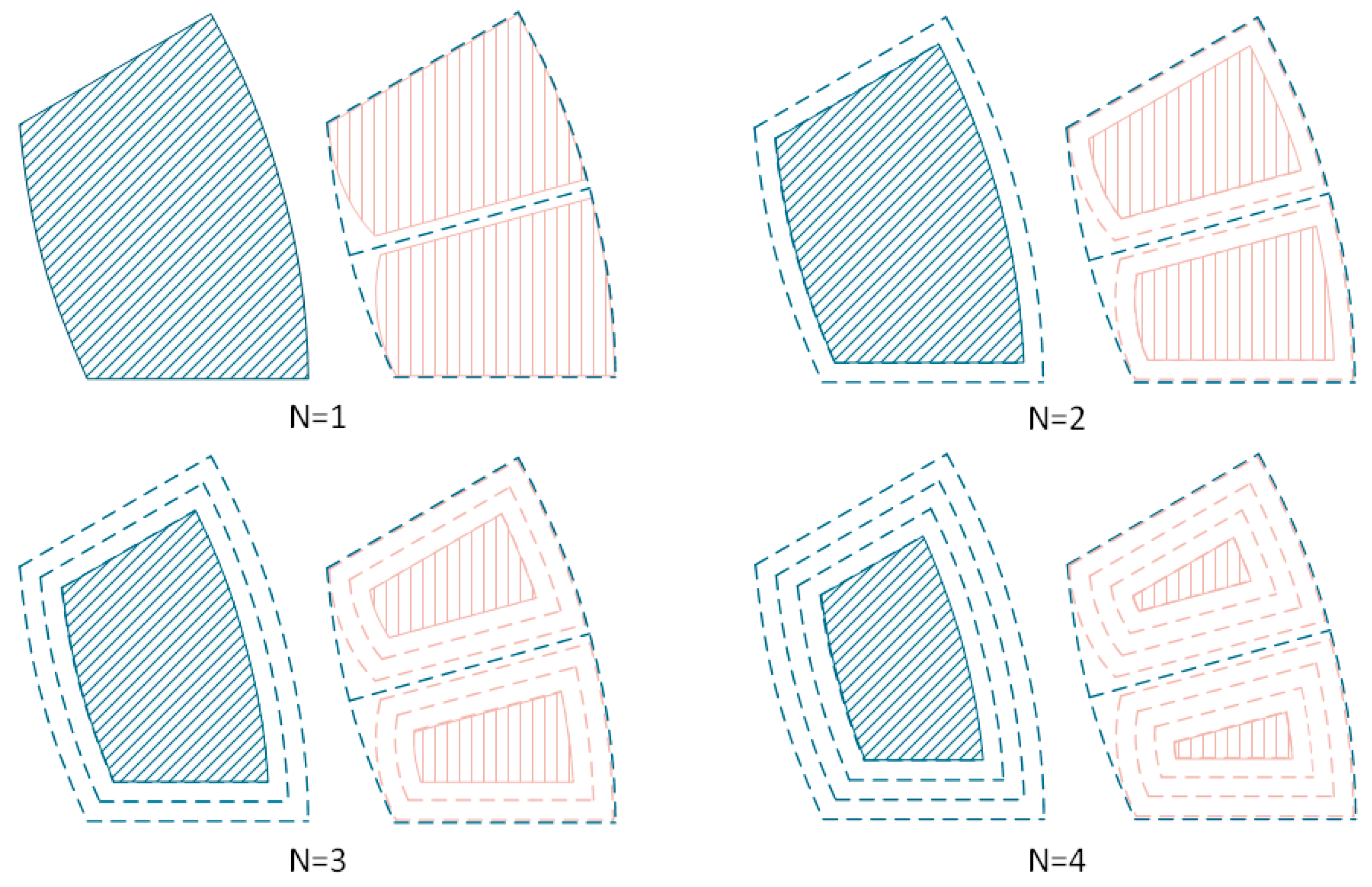
Under identical magnetic field conditions, the difference in electromagnetic torque between the conventional winding and the proposed winding in a single-layer PCB configuration is primarily attributed to the difference in their flux linkage areas. As shown in Figure 4, which illustrates the flux linkage areas corresponding to coils with different numbers of turns, where the blue curves represent the proposed winding and the pink curves represent the conventional winding, it can be observed that the discrepancy in flux linkage area becomes more pronounced for the closed windings located closer to the center.
2 j = 1 4 S c _ j < j = 1 4 S p _ j
Additionally, the torque enhancement capability of the proposed winding can also be evaluated using the analytical expression for electromagnetic torque. When the two-phase windings are supplied with sinusoidal currents of equal amplitude and a 90° phase shift, the motor torque can be expressed as
T e ω = e a i a + e b i b
where T e is the instantaneous electromagnetic torque, ω is the mechanical angular velocity of the motor, and e a , e b , i a , and i b are the back-EMFs and currents of the two phases, respectively. The average electromagnetic torque is given by
T e = N I k w 1 α i B m π 8 p D o u t 2 D i n 2
Based on the theoretical analysis and calculations presented above, it can be concluded that the fundamental winding coefficients of the conventional and proposed windings are 0.3691 and 0.9364, respectively. The proposed winding exhibits a higher fundamental winding factor, an increased fundamental amplitude of the back-EMF, and significantly reduced harmonic content. Furthermore, the phase inductance values of the proposed and conventional windings are 16.5 mH and 15.2 mH, respectively, while the phase resistances are 5.24 Ω and 6.36 Ω, with the lower resistance of the proposed winding attributable to its reduced number of turns. Most critically, theoretical calculations show a 31.6% torque improvement for the proposed winding without increasing the stator layer count or outer dimensions.

2.4. Finite Element Analysis

In order to further substantiate the torque enhancement capability of the proposed winding, a comparative finite element analysis of the motor torque was conducted for both winding configurations. The finite element simulation model and its corresponding parameters are presented in Figure 5 and Table 2, respectively.
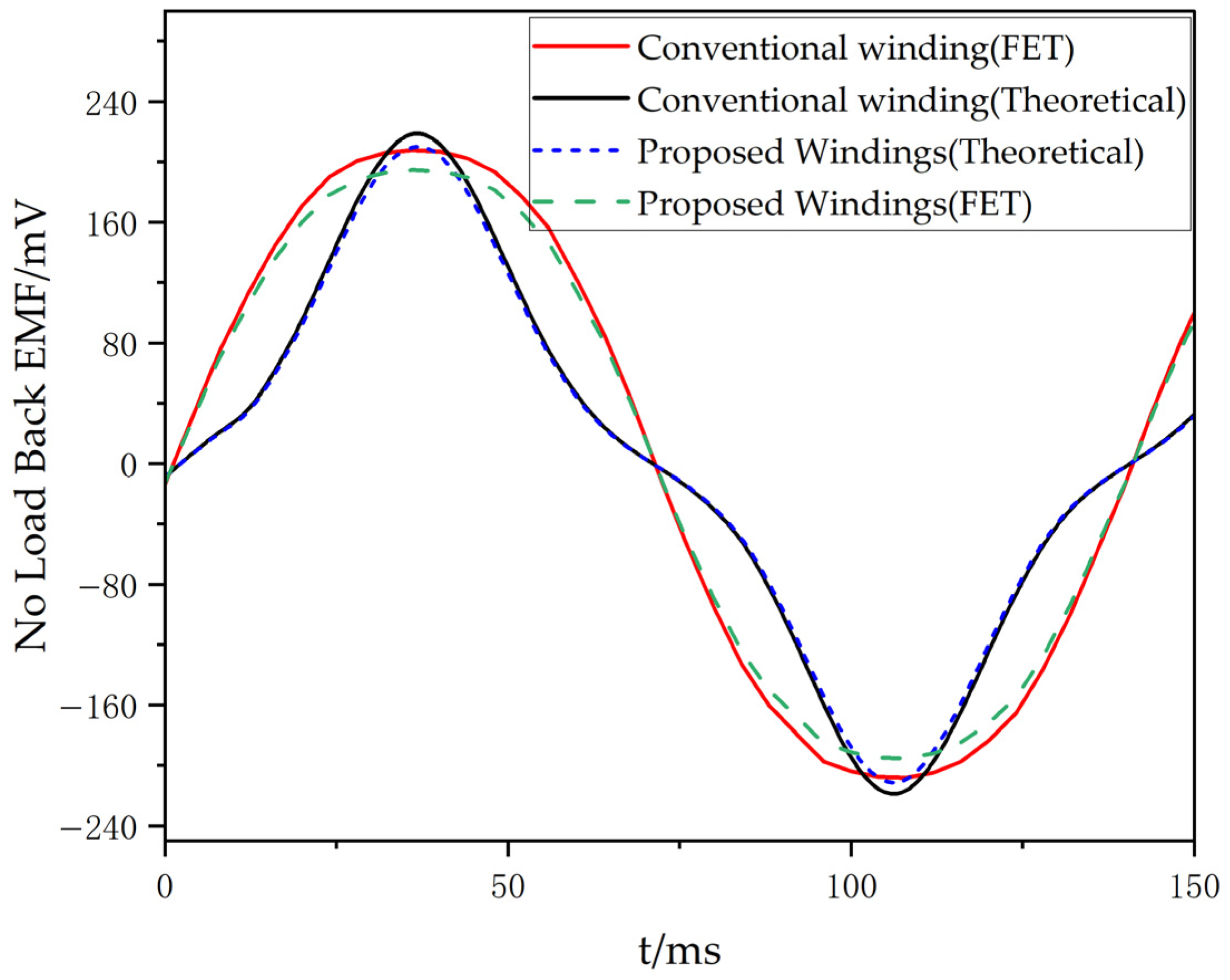
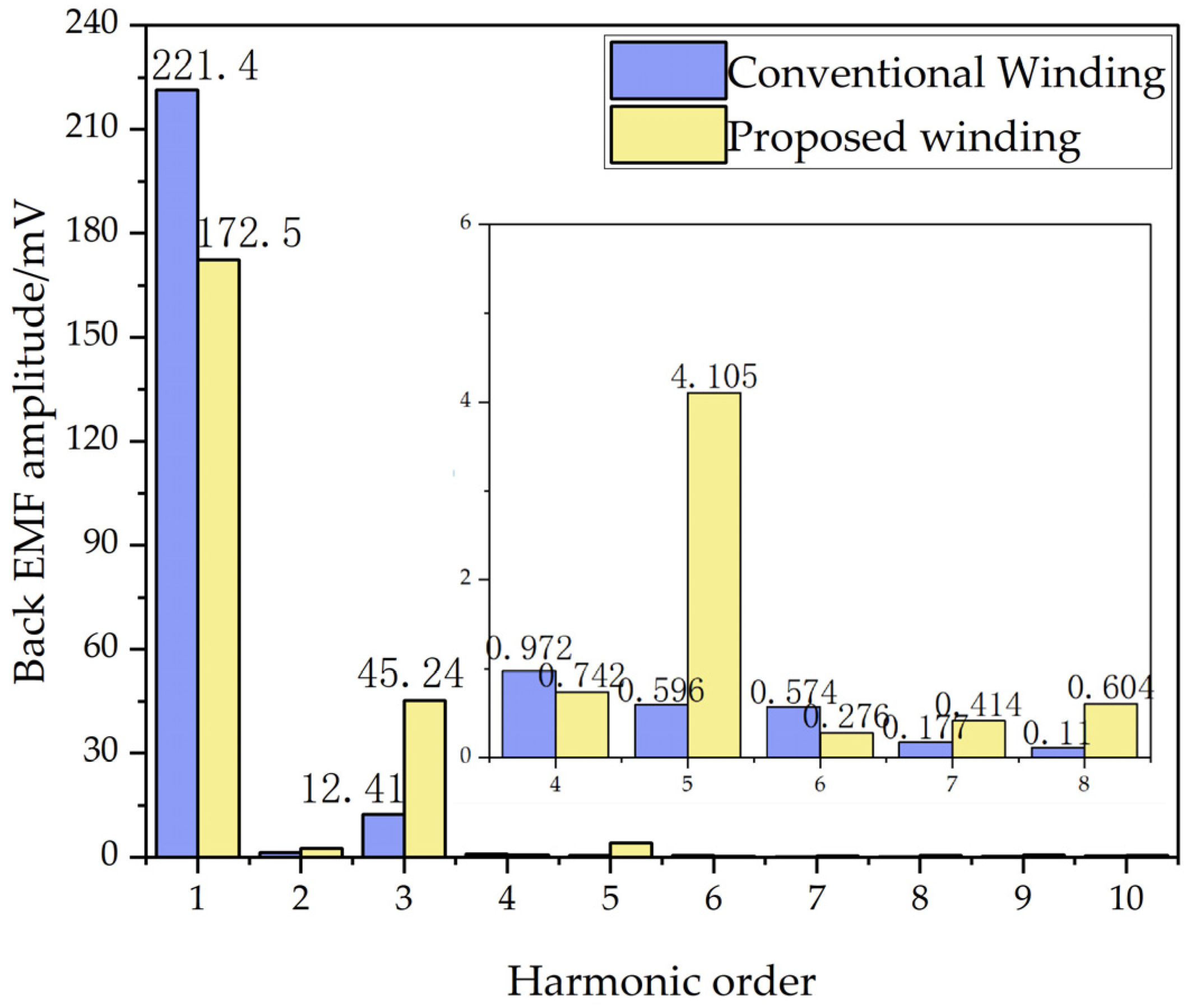
The improved winding optimizes the stator layout. Under the same stator dimensions, the waveforms and harmonic decompositions of the no-load line-to-line back-EMF for the two windings are shown in Figure 6 and Figure 7, respectively. As can be observed, the amplitude of the no-load fundamental back-EMF of the proposed winding increases from 172.5 mV to 221.4 mV, representing an improvement of 28.34%. The total harmonic distortion (THD) values for the two windings are 26.23% and 5.7%, respectively. Compared with the conventional winding, the improved design exhibits a higher no-load back-EMF while effectively reducing harmonic content.
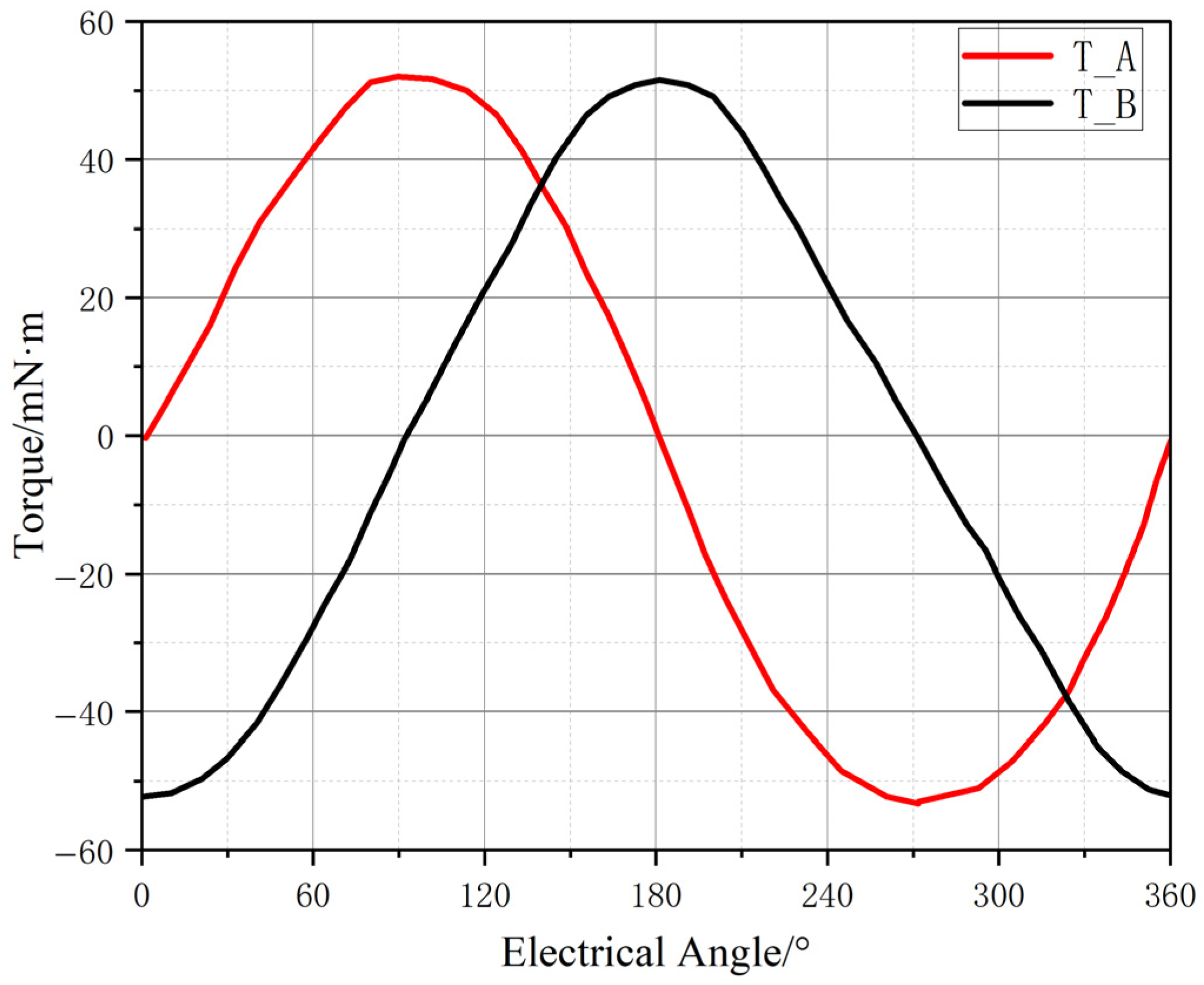
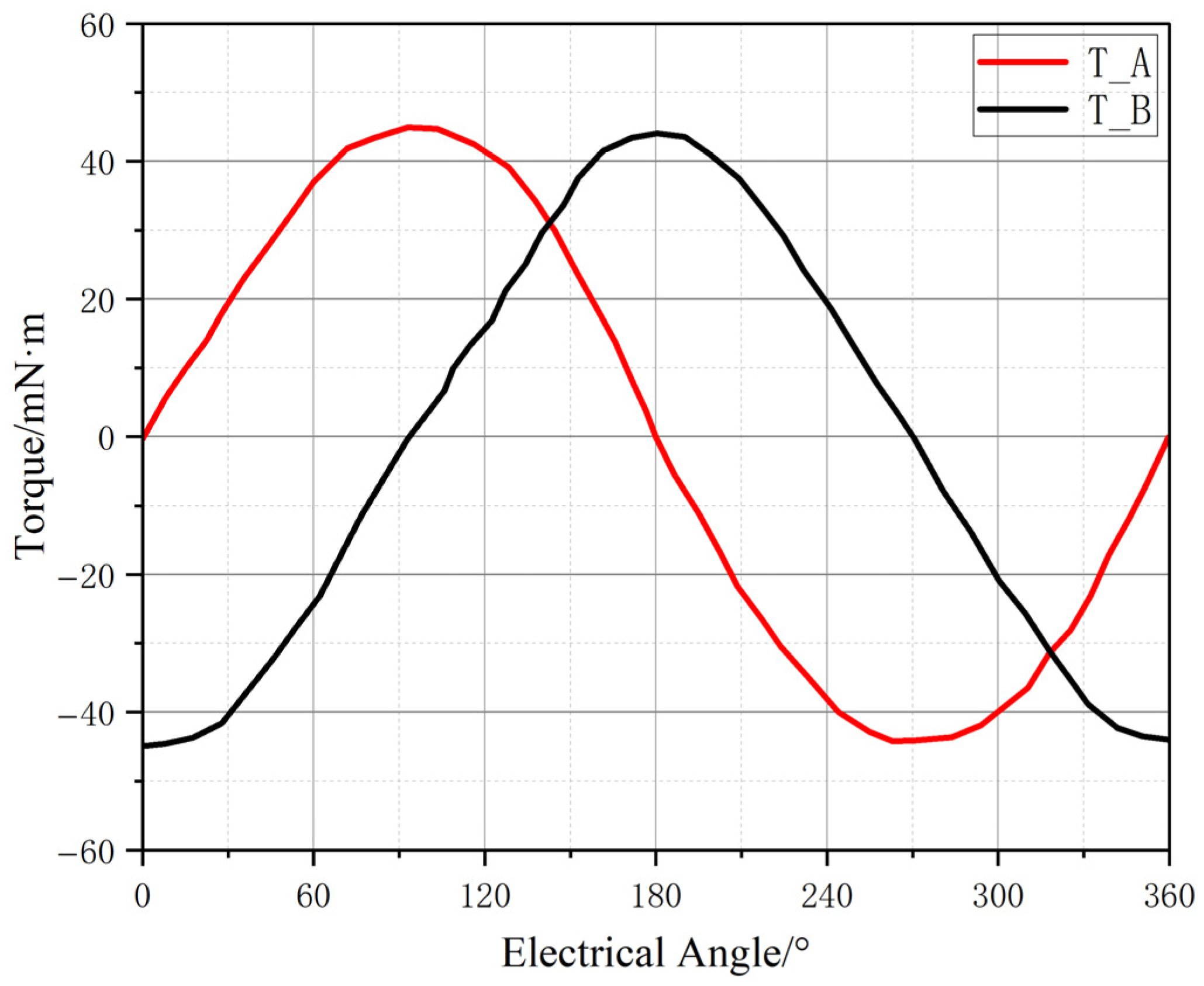
When a DC of 1.5 A was applied to the windings and the rotor was rotated, the resulting torque represents the static torque characteristics of the PCB stepper motor, as shown in Figure 8. The torque curves are approximately sinusoidal, with the torque of phase A lagging phase B by 90°, consistent with the fundamental torque-angle characteristics of a two-phase stepper motor. These results confirm the rationality of the designed PCB stepper motor structure.
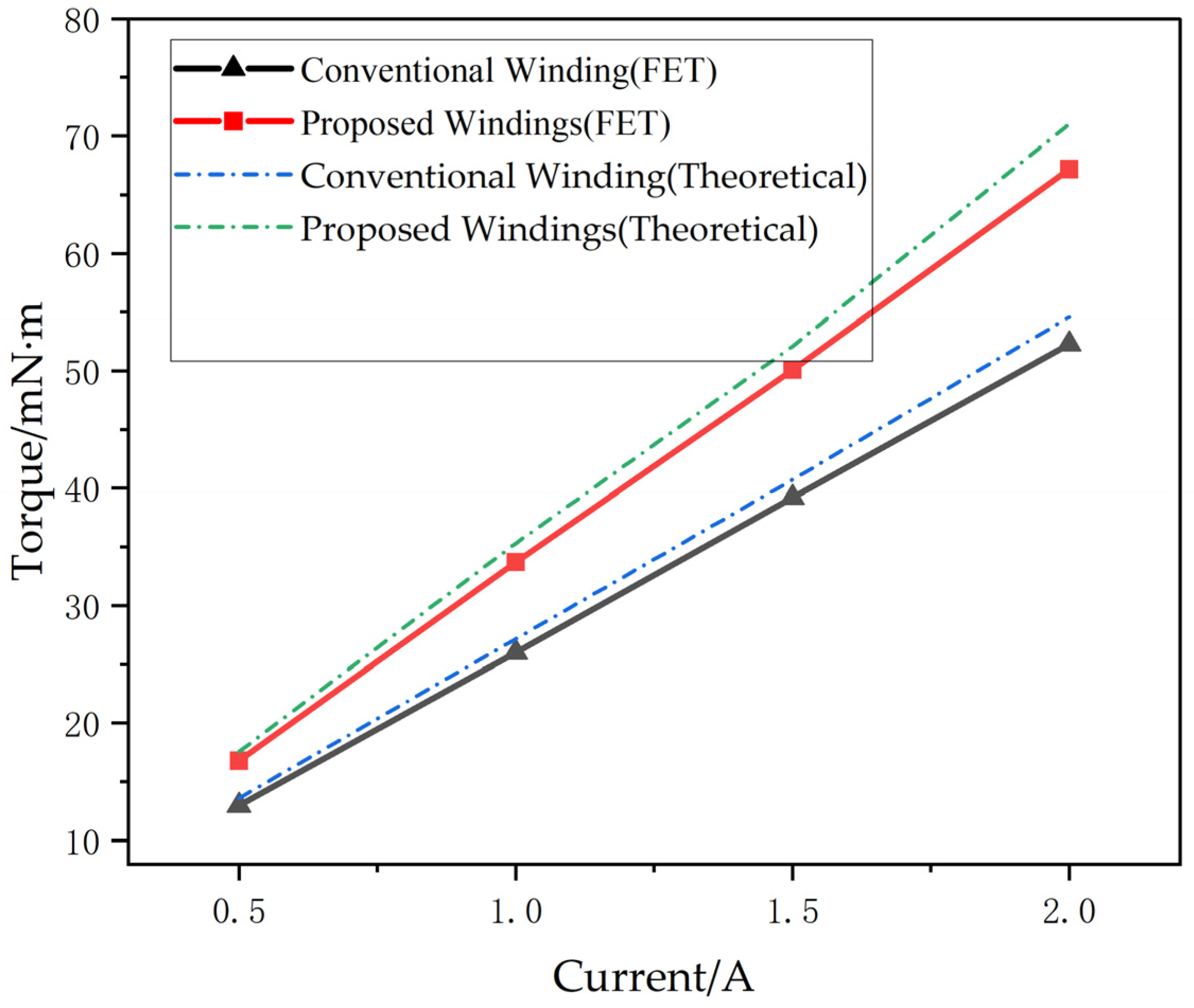
By varying the excitation current, the motor torque under both the conventional and proposed winding configurations was compared through finite element analysis. The relationship between electromagnetic torque and current is illustrated in Figure 9. The comparison reveals that the motor employing the proposed winding design achieves an electromagnetic torque improvement of approximately 29.7%, which aligns closely with the theoretical analysis.

3. Improvements in Drive Control Strategy

Inductance is a critical parameter in motor systems. Due to the coreless stator structure of PCB stepper motors, the armature reaction is weak, resulting in a relatively small phase inductance that remains essentially constant with rotor position. Finite element simulations conducted in Ansys EDT show that the average phase inductance of the designed PCB stepper motor is 16.71 μH. Excessively small phase inductance can lead to rapid current fluctuations. Since rotor position control in stepper motors fundamentally depends on accurate phase-current regulation, these current ripples can significantly degrade microstepping accuracy. To enhance the microstepping performance of the PCB stepper motor, an optimal series inductance was selected and incorporated into the drive circuit. The motor’s performance with the added inductance was then evaluated through finite element simulation, and the results verify the effectiveness of the proposed approach.

3.1. Influence of Low-Inductance Characteristics on the Phase Current

The motor proposed in this paper is a two-phase bipolar stepper motor. For bipolar motors, H-bridge circuits are required to enable bidirectional current flow in the windings. Therefore, most two-phase bipolar stepper motors are driven using two H-bridge circuits. Taking the case of forward current flow in a single-phase winding as an example, the influence of inductance on the current over one switching period is analyzed below.
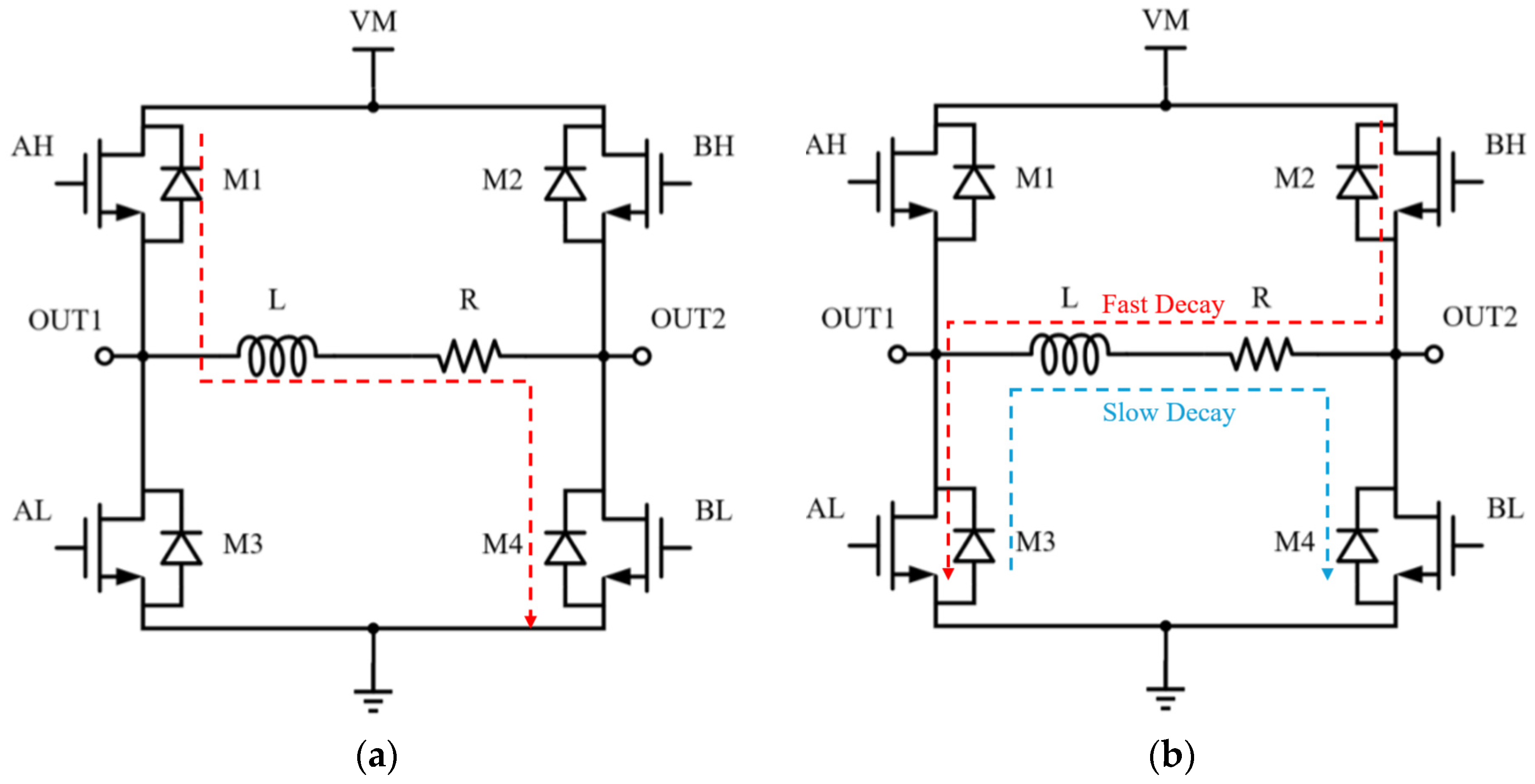
Figure 10 illustrates the circuit schematic of the single-phase H-bridge, the motor windings can be modeled as a series combination of an inductor and a resistor. When MOSFETs M1 and M4 are turned on, and M2 and M3 are turned off, ignoring the voltage drop across the conducting transistors, the voltage at OUT1 is VM, and the voltage at OUT2 is zero, creating a forward voltage difference across the windings. At this point, current flows from OUT1 to OUT2, and the current increases gradually. The current decay phase can be divided into slow decay, fast decay, and mixed decay based on the rate of current reduction. Slow decay occurs when MOSFETs M1 and M2 are turned off, and M3 and M4 are turned on. During this phase, the voltage difference across the windings is zero, and the winding current dissipates through the resistor in the freewheeling path. Fast decay occurs when M1 and M4 are turned off, and M2 and M3 are turned on. At this point, the voltage difference across OUT1 and OUT2 is −VM, which causes the inductive voltage to oppose the current direction, leading to a rapid decrease in current.
Therefore, for the current rising phase, the following equation applies:
V M = e A + R e i ( t ) + L e d i ( t ) d t
During the slow-decay phase of the current, the following equation applies:
0 = e A + R e i ( t ) + L e d i ( t ) d t
During the fast-decay phase of the current, the following equation applies:
V M = e A + R e i ( t ) + L e d i ( t ) d t
where V M is the DC voltage of the H-bridge, e A is the back electromotive force (back-EMF) of the A-phase winding in the PCB stepper motor during the rotation process, R e and L e represents the resistance and inductance of the single-phase winding of the PCB stepper motor, respectively.
We assume that the initial current value at the rising phase is I 10 , and the initial current value during the decay phase is I 20 . The following equation can be derived:
Rising phase current:
i 1 ( t ) = V M e A R e + ( I 10 V M e A R e ) e t τ
Slow-decay phase current:
i 2 ( t ) = I 20 e t τ ( 1 e t τ ) e A R e
Fast-decay phase current:
i 2 ( t ) = V M e A R e + ( I 20 V M e A R e ) e t τ
where τ = L e R e is the time constant.
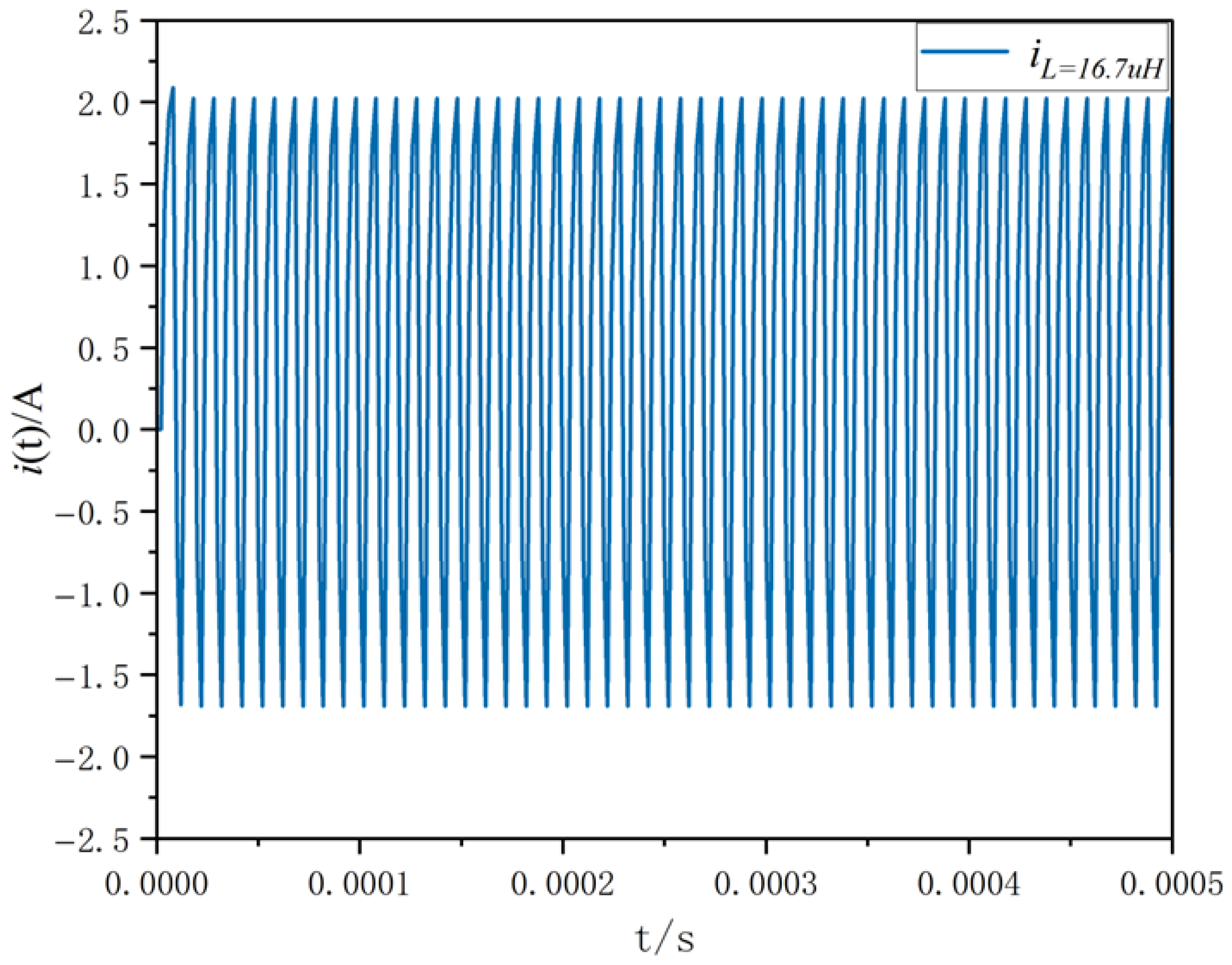
From the current expressions during the turn-on and turn-off periods, it can be seen that a small inductance reduces the time constant τ. A smaller time constant leads to a faster current variation rate. While the current response speed is increased, it also results in larger current fluctuations. For the PCB stepper motor proposed in this paper, the inductance is 16.7 μH, and the resistance is 5.5 Ω. The amplitude of the back EMF is proportional to the motor speed; under low-speed operation, the back EMF amplitude is 0.23 V. The H-bridge driving the single-phase winding operates at a PWM frequency of 80 kHz under fixed-frequency control and adopts the fast-decay scheme for current turn-off. With a given current of 1.5 A, the single-phase winding current waveform is shown in Figure 11. Due to the use of reverse voltage for rapid current decay, the current even reverses direction, with the peak current fluctuation reaching about 3.7 A. As indicated by the previous theoretical analysis, the resulting current fluctuation will be even greater when the set current is lower or when the switching frequency is reduced.

3.2. Impact of Current Fluctuations on Microstepping Drive Performance

To further enhance the step resolution, a microstepping drive is employed for the PCB stepper motor. The rotor position of the stepper motor is determined by the direction of the stator magnetic field, which, in turn, is controlled by the vector sum of the currents in the two-phase windings, ia and ib. The core of microstepping control is to synthesize a magnetic field vector at any desired angle by controlling phase A and phase B currents to follow sinusoidal and cosine waveforms with stepwise variations. In this study, the effect of rapid current changes due to low inductance on microstepping drive control is simulated.
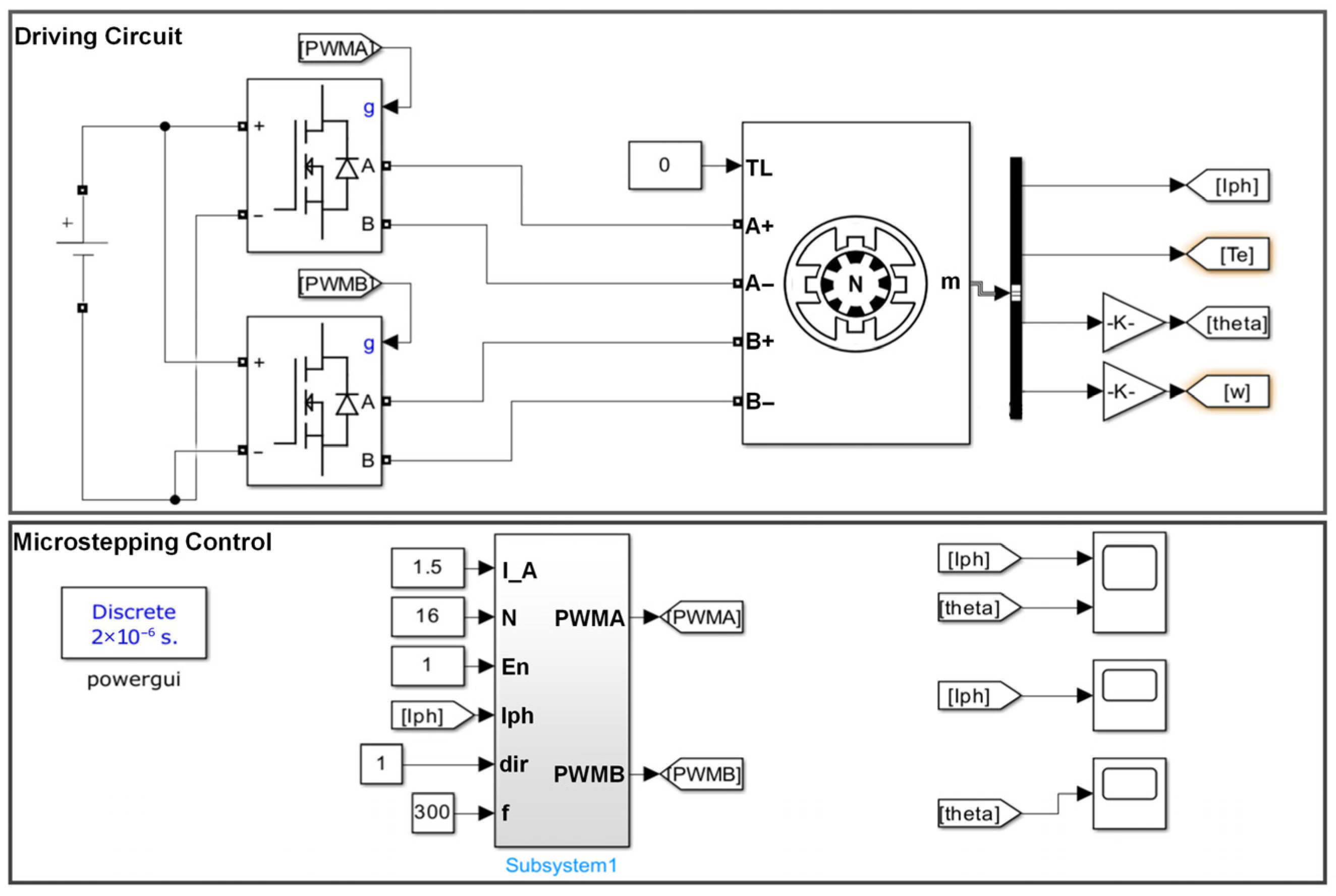
An open-loop control simulation model for the two-phase stepper motor was constructed in MATLAB/Simulink 2023a to analyze the influence of its low-inductance characteristics on microstepping drive control. The simulation model is shown in Figure 12. The stepper motor utilizes an existing permanent magnet stepper motor module from the component library, with its parameters replaced by those of the PCB stepper motor. The drive section employs a dual H-bridge configuration and implements microstepping control. The PWM drive method employs fixed off-time PWM control with an automatic decay mode. Within each step cycle, if the DAC output current setpoint is lower than the value from the previous cycle, mixed decay is applied; if the setpoint is higher than or equal to the previous value, slow decay is used, thereby reducing current ripple. In mixed decay mode, the fast decay period accounts for 30% of the off-time period to improve the current response speed.
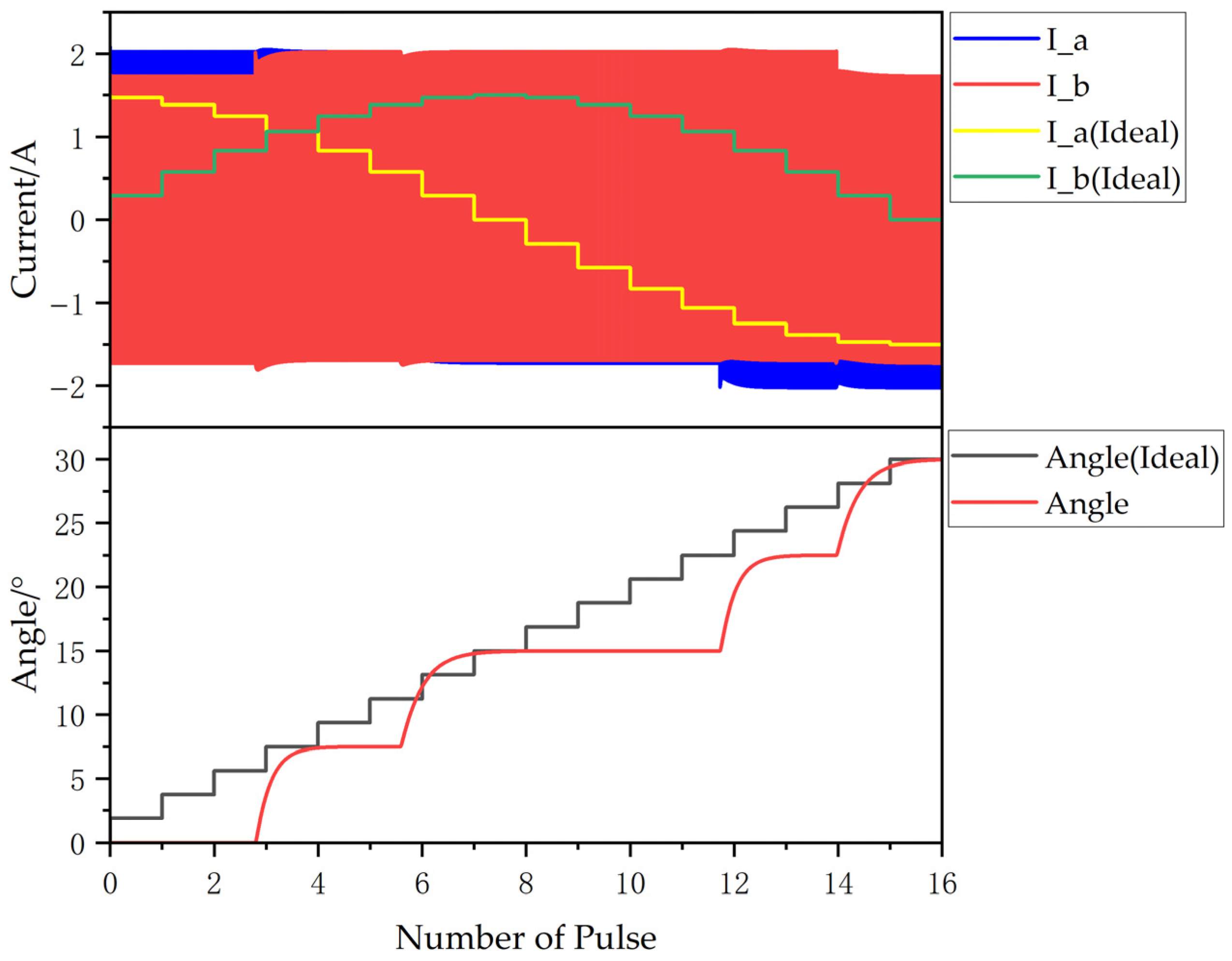
Finite element simulations indicate that the winding inductance of the PCB stepper motor is 16.7 μH. According to empirical guidelines, the current ripple should typically be maintained within 15~30%. Figure 13 shows the simulated two-phase currents and the angular position of the PCB stepper motor. According to the ideal principle of microstepping current drive, when microstepping is employed, the current waveforms in the two-phase windings should be sinusoidal step waveforms. It can be observed that the winding current exhibits excessive fluctuations, resulting in severe distortion of the microstepping current waveform. Consequently, the angular position of the motor does not vary continuously, indicating that the microstepping control essentially fails to function as intended.

3.3. Optimal Inductance Selection

From the above simulation analysis, it can be observed that due to the low-inductance characteristic of the PCB stepper motor, the current waveforms for the two-phase windings experience significant fluctuations, resulting in severe distortion. This leads to discontinuous changes in the rotor’s angular position and ultimately causes the microstepping control to fail. Current methods for reducing current fluctuations in low-inductance motors include reducing the DC bus voltage, adding series inductors, increasing switching frequency, and optimizing control algorithms. Considering the application direction of the PCB stepper motor designed in this paper, reducing bus voltage and increasing switching frequency would increase the size of the drive circuit, while optimizing control algorithms would consume substantial computational resources. Therefore, the most cost-effective solution is to use series inductance methods.
From the previous analysis of the H-bridge and its operating mode, the current variation during operation can be calculated, and the maximum value of the current fluctuation is given by
Δ I m a x = V M 2 L f
The maximum value of the current fluctuation is denoted as Δ I m a x , and f represents the switching frequency of the power transistors; L is the load-side equivalent inductance.
Typically, the current loop PWM frequency for stepper motor driver chips ranges from 20 to 80 kHz. Using a commonly used chip with a switching frequency of 30 kHz as the benchmark, and setting the maximum current fluctuation Δ I m a x to 0.25 A, with a supply voltage of 12 V, while neglecting the inductance of the PCB windings, the required series inductance can be calculated as follows:
L = V M 2 f Δ I m a x = 12 4 × 30 , 000 × 0.25 = 800 μ F
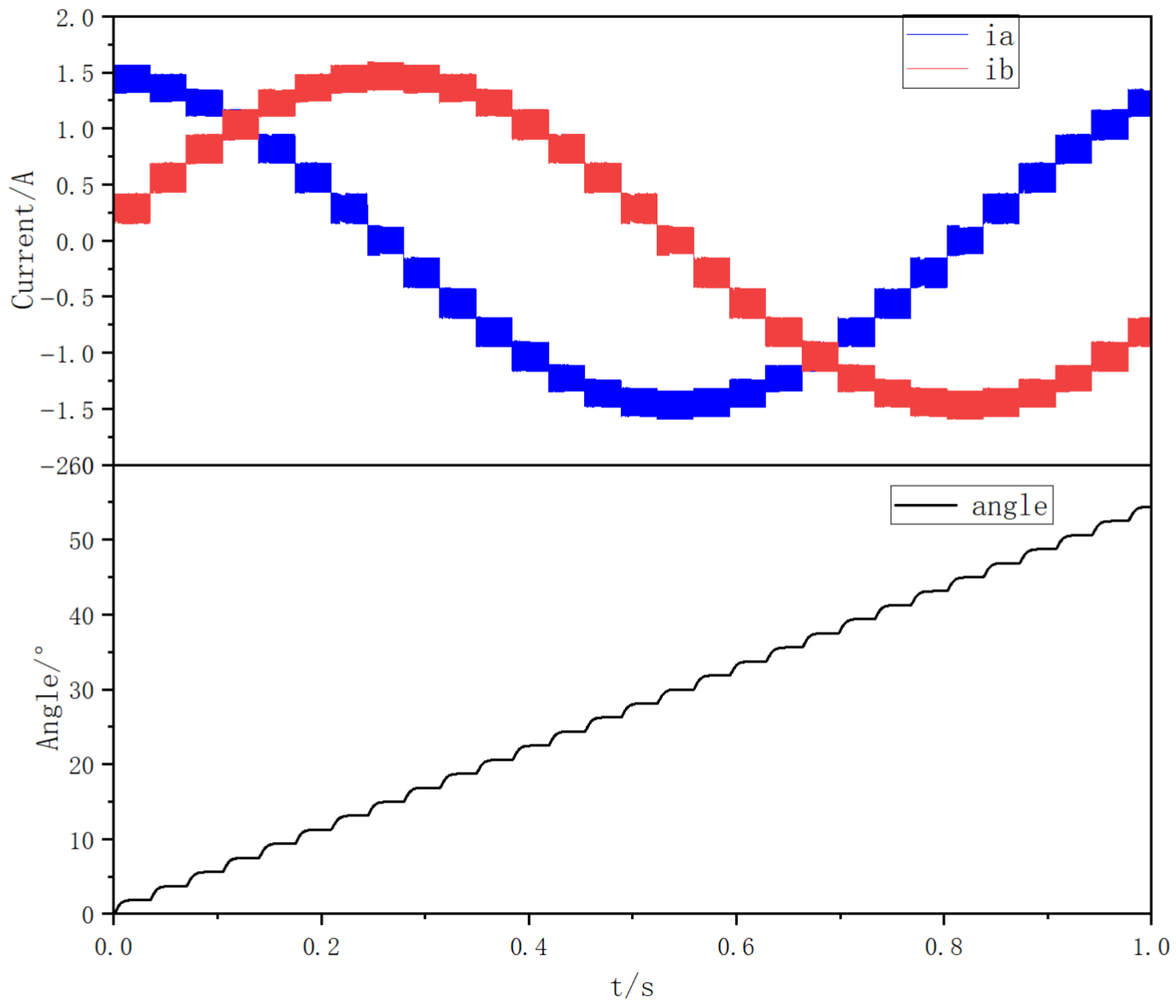
The optimized inductor was connected in series with the winding, and the current ripple was simulated, with the results shown in Figure 14. The current fluctuation is effectively limited to within 0.25 A, and the microstepping performance of the PCB stepper motor is significantly improved. With the series inductance, the current ripple is maintained at 23%. In some permanent magnet synchronous motor applications, stricter requirements are imposed on current ripple, for instance, 5% [24]. Although further reduction could be achieved by increasing the inductance value or raising the switching frequency, no additional optimization was pursued in this work due to practical constraints related to system volume and switching losses.

4. Prototype Experiment

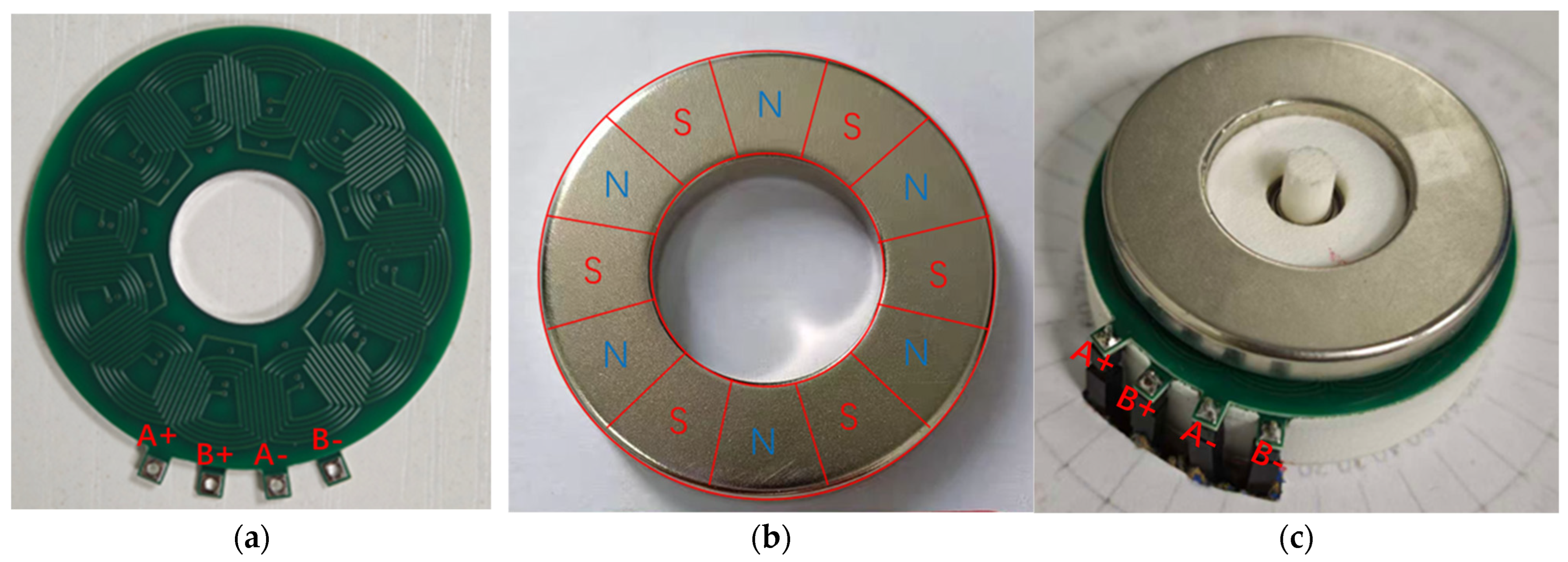
Based on the above analysis, a prototype was constructed to validate the performance of the PCB stepper motor presented in this paper. Figure 15a illustrates the rotor magnet, which is a planar magnetized 12-pole annular permanent magnet. Figure 15b shows the stator, which was fabricated using PCB technology. Figure 15c displays the overall structure of the PCB stepper motor, which is consistent with the designed single-stator dual-rotor configuration.

4.1. Electromagnetic Performance Testing of the PCB Stepper Motor

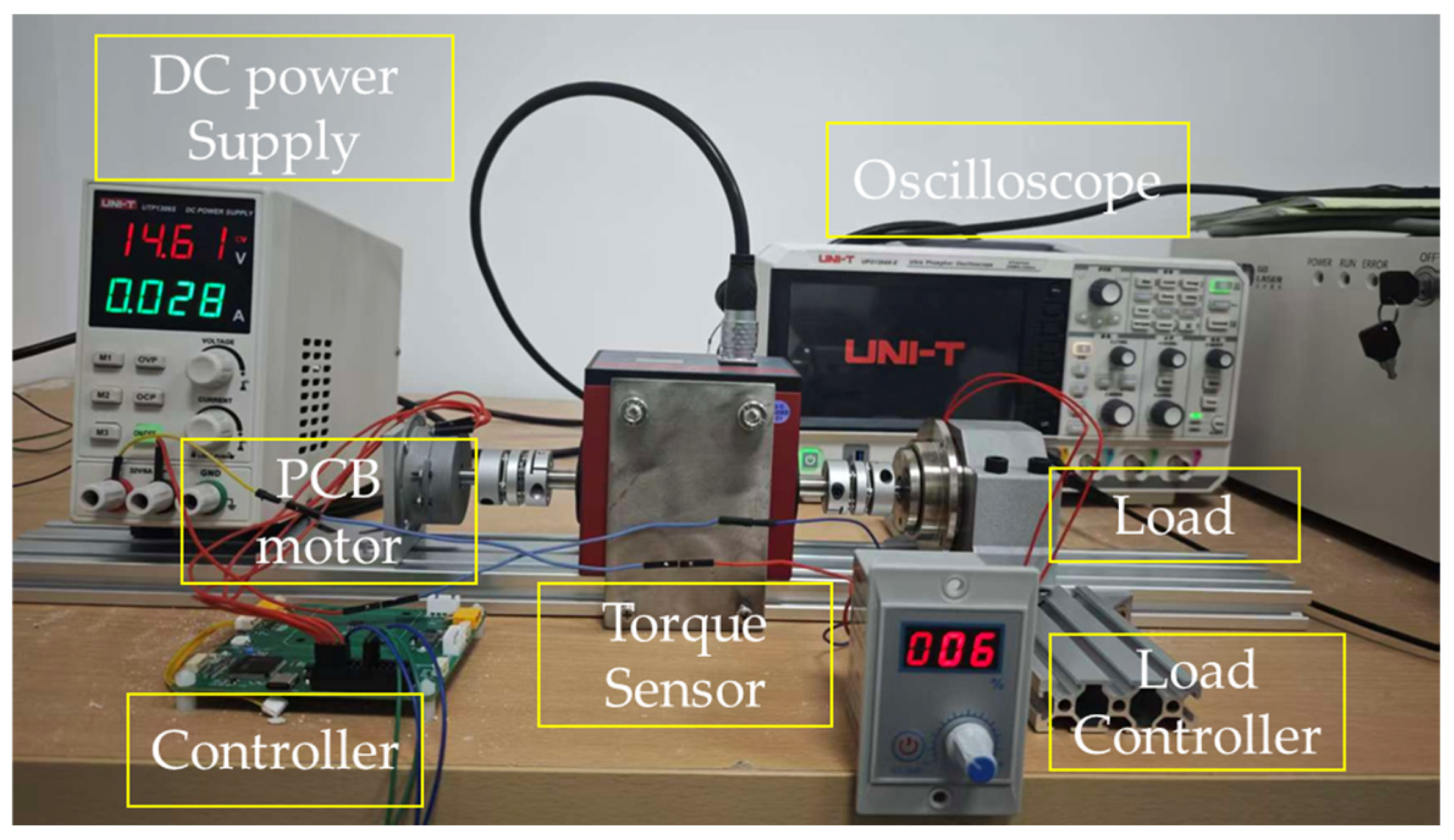
To test the electromagnetic performance of the PCB stepper motor, an experimental testing setup was constructed, as shown in Figure 16. The corresponding models and basic parameters of the experimental instruments are listed in Table 3. After connecting the power supply, the static torque curve of the PCB stepper motor was tested under a 1.5 A DC applied to phases A and B, without inputting control pulses. The results, as shown in Figure 17, are generally consistent with the simulation results.
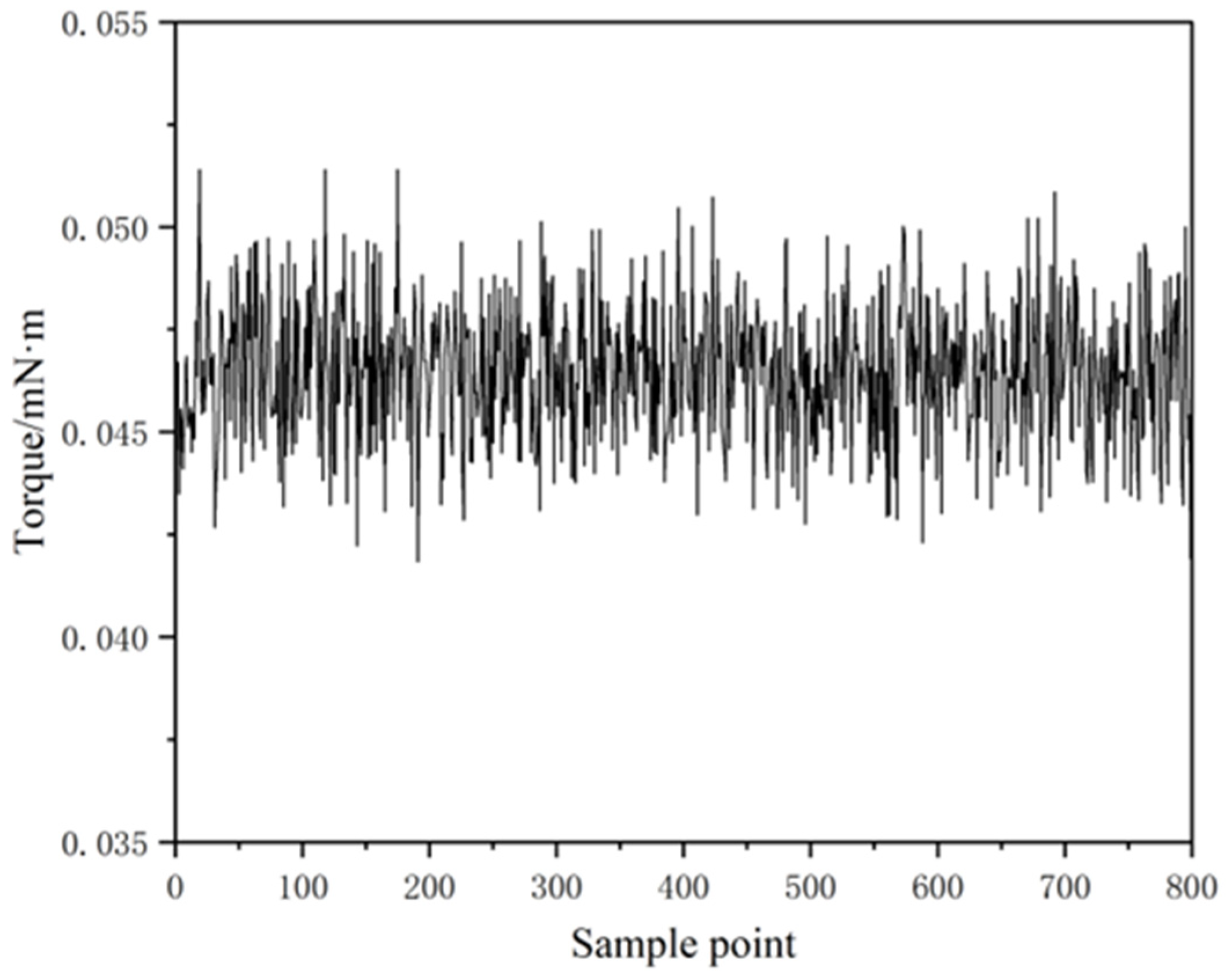
Secondly, the output torque performance of the motor was tested to evaluate the dynamic output torque of the PCB motor. As is shown in Figure 18, the output torque has an average value of 46.2 mN·m. Compared with the theoretical value of 53.06 mN·m and the simulated value of 51.21 mN·m, although a slight reduction in torque was observed due to prototyping and measurement errors, the PCB stepper motor exhibits favorable dynamic torque characteristics and meets the operational requirements.
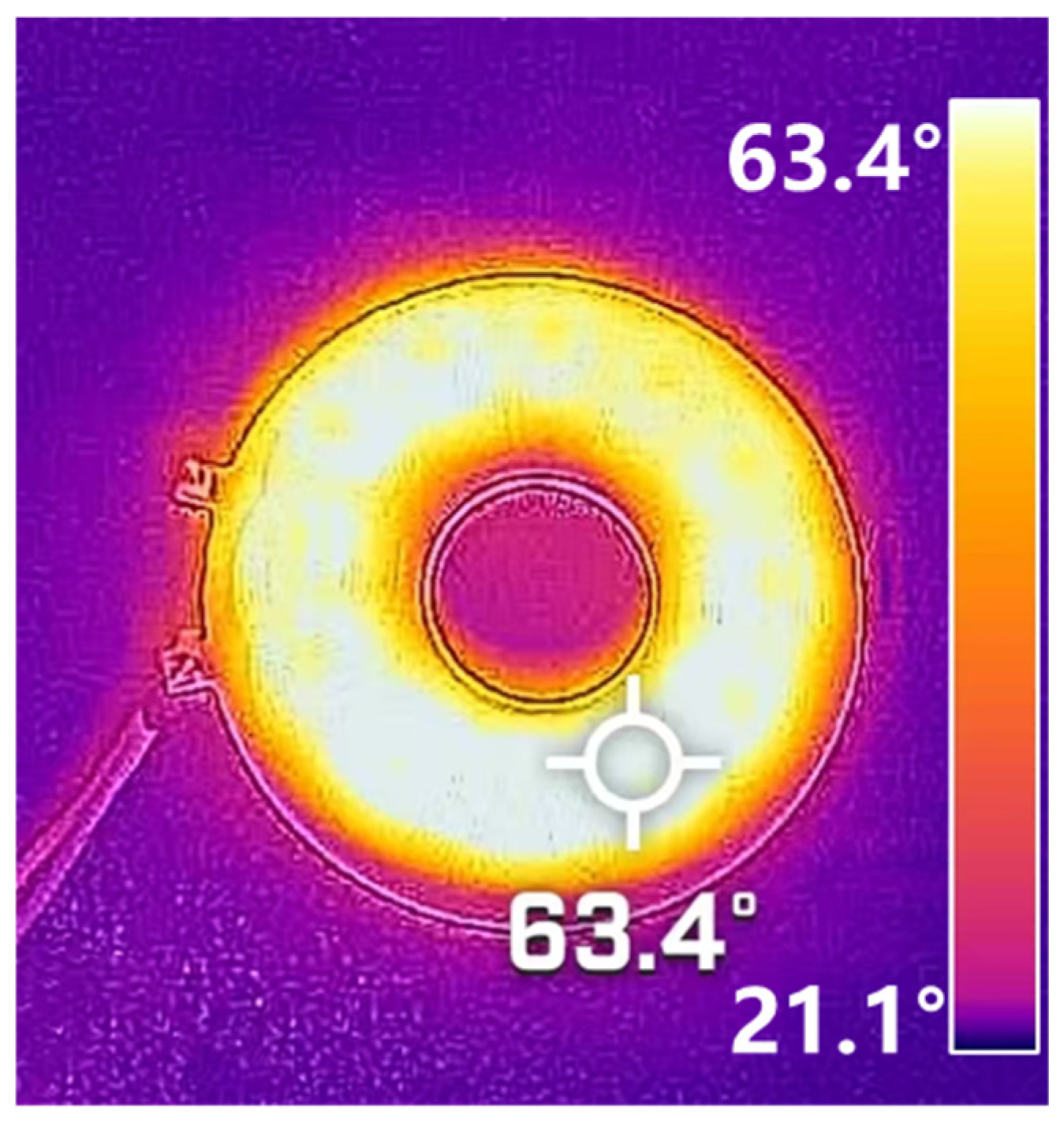
Additionally, to ensure the thermal reliability of the designed motor under normal operating conditions, temperature tests were conducted on the PCB windings. Under an ambient temperature of 20 °C, the temperature of the PCB winding was measured using an infrared thermal imager after 20 min of continuous stepping operation. The infrared temperature measurement of the PCB winding is presented in Figure 19. The test results show that the maximum temperature of the PCB winding reached 63.4 °C. During the entire operating period, heat was dissipated from the motor housing surface and the rotating shaft to the surrounding environment. This indicates that the designed PCB stepper motor operates stably within the permissible temperature range.

4.2. Evaluation of Microstepping Drive Performance

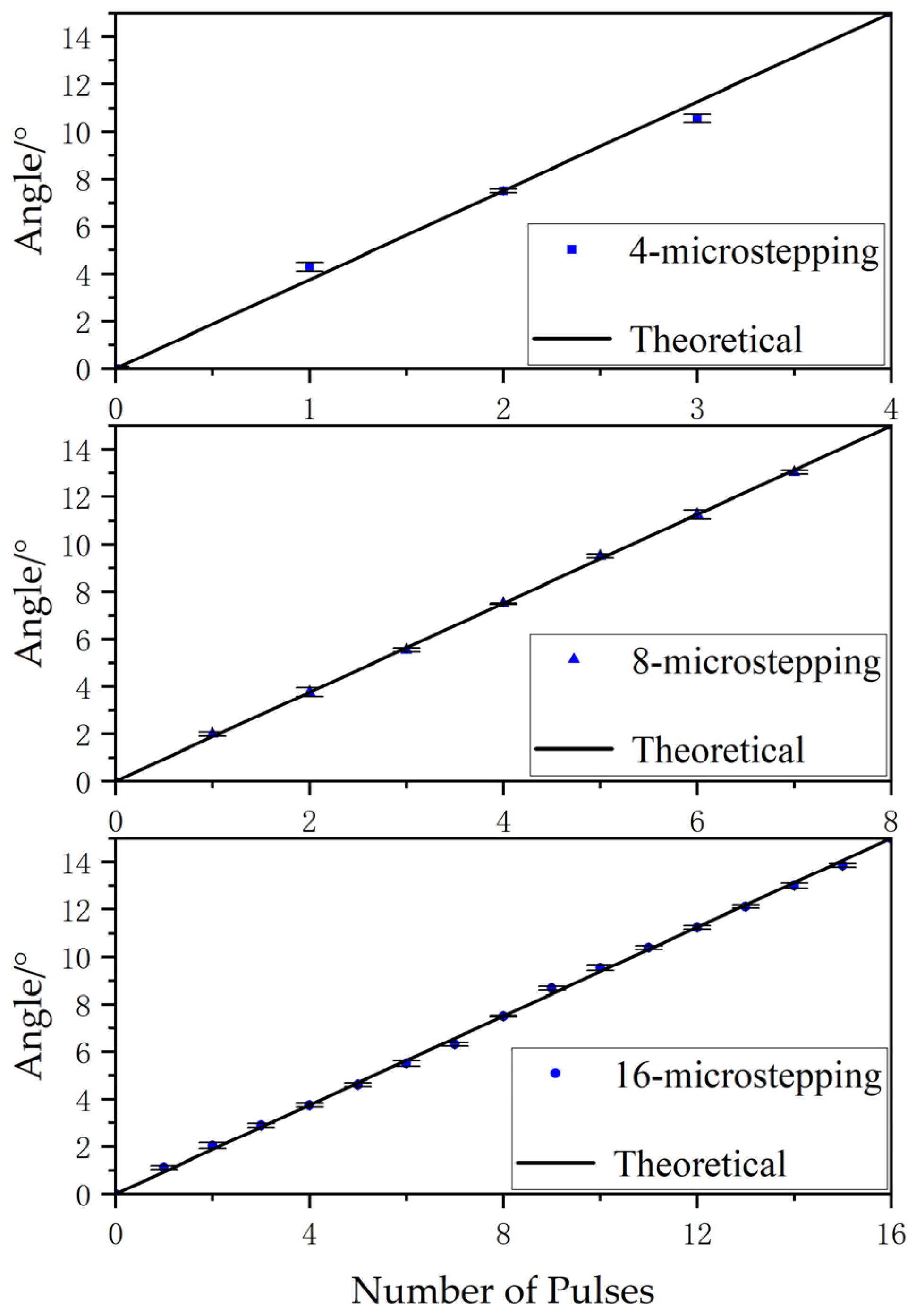
To evaluate the microstepping performance of the PCB stepper motor after inserting the optimal inductor, the experimental setup described above was used to test the motor’s step angle under microstepping operation. An AS5600 magnetic encoder chip was employed to measure the angular displacement. We conducted multiple trials of the step angles at 4-, 8-, and 16-microstep divisions for the PCB stepper motor and derived the final value from the average. Figure 20 illustrates the test results, while Table 4 provides the corresponding detailed data. The test results indicate that the enhanced microstepping drive function has been substantially improved, with the maximum step-angle error kept within 0.25°, which falls within an acceptable range.

5. Conclusions

This paper presents a disc-type stepper motor based on PCB technology. In light of the characteristics of the PCB stator, an axially offset spiral winding is proposed. Compared with the conventional side-by-side spiral winding under the same step-angle design, the proposed winding achieved an improvement in electromagnetic torque output of approximately 30%. The core of the winding improvement presented in this study lies in enhancing the pitch factor of the PCB windings. By increasing the mechanical angle occupied by a single winding turn, the pitch factor of each turn approached closer to 1, thereby raising the overall winding factor and ultimately improving the electromagnetic performance of the PCB stepper motor. This method is also applicable to PCB motors with other pole–slot combinations, provided that the number of turns in series remains unchanged, enabling similar performance enhancement. The proposed method establishes a viable pathway for enhancing the electromagnetic performance of PCB motors.
Subsequently, the low-inductance characteristic of the PCB stepper motor was analyzed with regard to its influence on current fluctuations and, in turn, on microstepping drive control. To mitigate the adverse effect of the current ripple on microstepping performance, a series-inductor approach was adopted to suppress the current fluctuation, and an optimal inductor value was selected. As a result, the current ripple was limited within 0.25 A, leading to a notable enhancement in the microstepping performance of the PCB stepper motor.
Finally, based on the above analyses, a motor prototype was fabricated and tested for its static torque curve, dynamic output torque, and microstepping angle. The experimental results align well with the simulation outcomes. The average torque produced by the proposed winding at a phase current of 1.5 A was measured as 46.4 mN·m. Furthermore, the introduction of an optimal series inductor effectively improved the microstepping drive performance of the PCB stepper motor with low-inductance characteristics. Tests show that under 16-microstep operation, the step-angle error was controlled within 0.25°, confirming a significant improvement in microstepping performance.

Author Contributions

Conceptualization, methodology, and design: Y.P.; experiment, Y.P., H.Z. and J.X.; writing—original draft preparation, Y.P. and H.Z.; writing—review and editing, C.Z., C.W. and H.L. All authors have read and agreed to the published version of the manuscript.

Funding

This research was funded by the National Natural Science Foundation of China (11774057, 11874286, 61205041) and Fundamental Research Funds for the Central Universities (20153638, 22120190222).

Data Availability Statement

The original contributions presented in this study are included in the article. Further inquiries can be directed to the corresponding author.

Conflicts of Interest

The authors declare no conflicts of interest.

References

  1. Liang, G.J. Design of Stepper Motor Control System based on PLC. Electr. Eng. 2025, 14, 13–18. [Google Scholar]
  2. Hao, Z.; Ma, Y.; Wang, P.; Luo, G.; Chen, Y. A Review of Axial-Flux Permanent-Magnet Motors: Topological Structures, Design, Optimization and Control Techniques. Machines 2022, 10, 1178. [Google Scholar] [CrossRef]
  3. Javadi, S.; Mirsalim, M. Design and Analysis of 42-V Coreless Axial-Flux Permanent-Magnet Generators for Automotive Applications. IEEE Trans. Magn. 2010, 46, 1015–1023. [Google Scholar] [CrossRef]
  4. Daghigh, A.; Javadi, H.; Torkaman, H. Design Optimization of Direct-Coupled Ironless Axial Flux Permanent Magnet Synchronous Wind Generator With Low Cost and High Annual Energy Yield. IEEE Trans. Magn. 2016, 52, 7403611. [Google Scholar] [CrossRef]
  5. Xiaoxiao, Z.; Xiaoyuan, W.; Peng, G.; Tianyuan, L. Equivalent Analytical Model of Magnetic Field in Parallel Magnetic Circuit Axial Flux Permanent Magnet Machines. IEEJ Trans. Electr. Electron. Eng. 2024, 19, 1079–1090. [Google Scholar] [CrossRef]
  6. Daghigh, A.; Javadi, H.; Javadi, A. Improved Analytical Modeling of Permanent Magnet Leakage Flux in Design of the Coreless Axial Flux Permanent Magnet Generatorx. Can. J. Electr. Comput. Eng. 2017, 40, 3–11. [Google Scholar] [CrossRef]
  7. Ko, S.; Hong, M.; Jo, N.; Lee, Y.; Kim, W. Performance Comparison of Coreless PCB AFPM Topologies for Duct Fan. Energies 2025, 18, 4600. [Google Scholar] [CrossRef]
  8. Yuan, B.; Li, H.; Xiang, X.; Zhou, T.; Zhou, H.; Jiang, P. Investigation of Cogging Torque Comprehensive Reduction Method in High Precision Servo Permanent Magnet Motor. In Proceedings of the 2022 25th International Conference on Electrical Machines and Systems (ICEMS), Chiang Mai, Thailand, 29 November–2 December 2022; pp. 1–4. [Google Scholar]
  9. Wang, X.Y.; Tian, Z. Shape Design of Windings of Disc-Type Electric Machine with PCB Stator. Small Spec. Electr. Mach. 2016, 44, 29–33. [Google Scholar]
  10. Gao, P.; Pang, W.; Zhao, X.X.; Zhang, X.S. Optimization design of PCB distributed winding for axial flux permanent magnet wind generator. Electr. Mach. Control 2021, 25, 32–39. [Google Scholar]
  11. Gao, P.; Wang, Z.; Zhang, G.; Li, B. Winding Coefficient Calculation and Harmonic Suppression of Axial Flux Permanent Magnet Machine with PCB Winding. IEEJ Trans. Electr. Electron. Eng. 2025, 20, 1802–1812. [Google Scholar] [CrossRef]
  12. Marignetti, F.; Volpe, G.; Mirimani, S.M.; Cecati, C. Electromagnetic Design and Modeling of a Two-Phase Axial-Flux Printed Circuit Board Motor. IEEE Trans. Ind. Electron. 2018, 65, 67–75. [Google Scholar] [CrossRef]
  13. Qu, A.; Wang, J.; Xue, K. Design of Sector Winding Disc Torque Motor. J. Change Univ. Sci. Technol. 2021, 44, 7–12. [Google Scholar]
  14. Lovatt, H.C.; Ramsden, V.S.; Mecrow, B.C. Design of an in-wheel motor for a solar-powered electric vehicle. In Proceedings of the 1997 Eighth International Conference on Electrical Machines and Drives (Conf. Publ. No. 444), Cambridge, UK, 1–3 September 1997; pp. 234–238. [Google Scholar]
  15. Su, G.J.; Adams, D.J. Multilevel DC link inverter for brushless permanent magnet motors with very low inductance. In Proceedings of the Conference Record of the 2001 IEEE Industry Applications Conference. 36th IAS Annual Meeting (Cat. No.01CH37248), Chicago, IL, USA, 30 September–4 October 2001; pp. 829–834. [Google Scholar]
  16. Li, H.; Zheng, S.; Ren, H. Self-Correction of Commutation Point for High-Speed Sensorless BLDC Motor With Low Inductance and Nonideal Back EMF. IEEE Trans. Power Electron. 2017, 32, 642–651. [Google Scholar] [CrossRef]
  17. Fang, J.; Zhou, X.; Liu, G. Precise Accelerated Torque Control for Small Inductance Brushless DC Motor. IEEE Trans. Power Electron. 2013, 28, 1400–1412. [Google Scholar] [CrossRef]
  18. Hou, H. Torque Ripple Reduction of Small Inductance BLDCM Based on Instantaneous Voltage Control. In Proceedings of the 2022 25th International Conference on Electrical Machines and Systems (ICEMS), Chiang Mai, Thailand, 29 November–2 December 2022; pp. 1–5. [Google Scholar]
  19. Wang, X.; Xiang, L.; Wei, P.; Li, C.; Li, F.; Hu, X. Comparative analysis of distributed winding for PCB stator coreless axial flux permanent magnet motor. Electr. Mach. Control 2018, 22, 11–18. [Google Scholar]
  20. Wang, X.; Lou, F.; Li, C. Optimization Design of PCB Winding for Axial Flux Permanent Magnet Synchronous Motor. Proc. CSEE 2017, 37, 6092–6100. [Google Scholar]
  21. Wang, X.; Huang, X.; Li, T. Optimal Design of Winding of Permanent Magnet Motor Based on High Frequency PCB Stator. Proc. CSEE 2021, 41, 1937–1946. [Google Scholar]
  22. Gieras, J.F.; Wang, R.; Kamper, M.J. Axial Flux Permanent Magnet Brushless Machines; Springer: Dordrecht, The Netherlands, 2008; p. 362. [Google Scholar]
  23. Tang, R.Y. Modern Permenent Magnet Machine: Theory and Design; China Machine Press: Beijing, China, 2016; p. 473. [Google Scholar]
  24. Wang, X.; Wang, X.; Fu, T.; Wang, J. Predictive Instantaneous Torque Control for Disc Coreless Permanent Magnet Synchronous Motor with the Current Source Chopper. IEEE Trans. Power Electron. 2015, 30, 7100–7112. [Google Scholar] [CrossRef]
Figure 1. (a) Overall structure of the PCB-based stepper motor; (b) motor assembly drawing; (c) structure of conventional winding; (d) structure of proposed winding; (e) single-phase PCB structure of a single layer of conventional winding; (f) single-phase PCB structure of a single layer of proposed winding.
Electronics 15 00777 g001
Figure 2. PCB winding layout: (a) conventional; (b) proposed.
Electronics 15 00777 g002
Figure 3. Schematic of a single-turn PCB winding.
Electronics 15 00777 g003
Figure 4. Comparison of interlinked magnetic flux areas per turn between conventional windings (pink area) and proposed windings (blue area).
Electronics 15 00777 g004
Figure 5. Finite element simulation model.
Electronics 15 00777 g005
Figure 6. No-load line EMF waveform.
Electronics 15 00777 g006
Figure 7. Harmonic decomposition of the no-load EMF.
Electronics 15 00777 g007
Figure 8. Static torque curve under single-phase excitation.
Electronics 15 00777 g008
Figure 9. Torque–current characteristic curve.
Electronics 15 00777 g009
Figure 10. Single-phase h-bridge topology: (a) current rising stage; (b) current decay stage.
Electronics 15 00777 g010
Figure 11. Current response under different inductance parameters.
Electronics 15 00777 g011
Figure 12. Open-loop control simulation model of the stepper motor.
Electronics 15 00777 g012
Figure 13. Ideal vs. actual microstepping: current and position waveforms of the low-inductance motor.
Electronics 15 00777 g013
Figure 14. Improved microstepping current waveform and rotor position.
Electronics 15 00777 g014
Figure 15. Prototype of PCB stepper motor: (a) PCB stator winding; (b) rotor permanent magnet; (c) complete PCB stepper motor.
Electronics 15 00777 g015
Figure 16. Schematic diagram of the prototype drive.
Electronics 15 00777 g016
Figure 17. Measured torque–angle characteristics of the PCB stepper motor.
Electronics 15 00777 g017
Figure 18. Output torque of the PCB stepper motor.
Electronics 15 00777 g018
Figure 19. IR image of the proposed PCB stator.
Electronics 15 00777 g019
Figure 20. Rotor angular displacement under 4-, 8-, and 16-microstep driving.
Electronics 15 00777 g020
Table 1. Performance comparison between PCB-based and conventional stepper motors.
Comparison
Categories
SpecificPCB Stepper MotorConventional Stepper Motor
Structural and
physical properties
Stator materialMultilayer PCB planar coil, CorelessEnameled wire coil
vs. Laminated silicon steel core
Weigh and
volume
Extremely light,
Ultra-thin
Relatively bulky
Integration LevelHigh (PCB stator
facilitates integration)
Low
Torque performanceTorque densitylowerhigh
Positioning
accuracy
Lower
(due to cogging torque)
Enables rapid, low-cost prototyping and low-volume customization.
Dynamic
Response
RapidSlower
Thermal Management
& Derating
Heat Dissipation PathChallenging, relying on
limited conduction through PCB copper layers and surface convection.
Effective, via thermal
conduction through the metal housing and shaft.
Derating ImpactSignificant derating constraints,
a strictly limited continuous current.
Stable; higher sustainable
continuous current.
Design &
Manufacturing
Customization & IterationHigh mold/tooling cost
and long iteration cycles.
Enables rapid, low-cost prototyping and low-volume customization.
Manufacturing CostRelatively highlow
Table 2. Simulation parameters of the PCB-based stepper motor.
Design Parameter Title 2
Magnet’s outer diameter40 mm
Magnet’s inner diameter 27 mm
Magnet thickness 4 mm
Number of poles12
Air gap0.7 mm
Back iron’s outer diameter 40 mm
Back iron’s inner diameter 27 mm
Back iron thickness 1
Stator’s outer diameter 40
Stator’s inner diameter 27
Width of conductor0.3 mm
Insulation spacing between conductors0.2 mm
Thickness of conductor2 oz
PCB layers8
Table 3. List of test instruments with relevant parameters.
InstrumentModelTitle 2
DC Power SupplyUTP1306SOutput Voltage: 0–32 V
Output Current: 0–6 A
Voltage accuracy: ≤±0.1%
Current accuracy: ≤±0.1%
Torque SensorEVG-D200Range: 0–0.2 N·m
Measurement accuracy: ≤±0.1% F.S
Sampling rate: 1000 Hz
Magnetic encoderAS5600Resolution: 12 bits
Sampling rate: 6.67 kHz
Thermal imagerFLIR ONE ProRange: −20 °C to +400 °C
Thermal sensitivity: 0.1 °C
OscilloscopeUPO1204X-EAnalog Bandwidth: 200 MHz
Maximum Sample Rate: 2 GSa/s
Table 4. Rotor angular displacement under 4-, 8-, and 16-microstep driving.
MicrosteppingNumber of PulsesTheoretical Angular/°Angular Displacement
4-Microstep Driving13.754.3
27.57.5
311.2510.55
41515
8-Microstep Driving11.8751.99
23.753.76
35.6255.53
47.57.5
59.3759.49
611.2511.26
713.12513.03
81515
16-Microstep Driving10.93751.1175
21.8752.035
32.81252.8825
43.753.74
54.68754.6075
65.6255.495
76.56256.3025
87.57.5
98.43758.6675
109.3759.535
1110.312510.3825
1211.2511.24
1312.187512.1075
1413.12512.995
1514.062513.8525
161515
Disclaimer/Publisher’s Note: The statements, opinions and data contained in all publications are solely those of the individual author(s) and contributor(s) and not of MDPI and/or the editor(s). MDPI and/or the editor(s) disclaim responsibility for any injury to people or property resulting from any ideas, methods, instructions or products referred to in the content.