1. Introduction
Metro systems are essential for mitigating surface transportation congestion, especially in larger cities where high passenger volumes can overwhelm road networks. By providing efficient and rapid transit options, metros play a crucial role in enhancing urban mobility. However, many metro stations are located underground, namely subway stations, which introduces significant risks to human safety and assets in the case of a fire. The enclosed and densely populated nature of underground metro stations poses severe threats during emergencies [
1,
2,
3]. Timely evacuation is critical for protecting lives and minimizing property damage. Several factors complicate evacuation in these environments. The limited number of exits can lead to congestion when large groups of passengers attempt to evacuate simultaneously. In addition, the complex internal structures of subway stations, which often include multiple levels, corridors, and underpasses, can disorient evacuees, making it difficult to identify safe exits. Moreover, the alignment of smoke diffusion with pedestrian movement further exacerbates evacuation challenges. As smoke concentration increases, visibility diminishes, hindering the ability of individuals to navigate effectively. This impairment can result in slower movement and respiratory difficulties, significantly threatening passenger safety [
4,
5].
Many existing studies [
6,
7,
8] mainly focus on the interaction between pedestrians and subway facilities, often neglecting the relationship with fire. Most research employs models that assume a uniform distribution of smoke, failing to account for the reality that smoke can form concentration gradients, which significantly affect pedestrian perception, and the choices made during evacuation in different locations. Furthermore, most of the existing studies [
9,
10,
11] overlook the varying responses of individuals to fire incidents. Subway fire evacuation is a complex problem that involves pedestrian behavior, smoke propagation, and station structure. It requires an integrated approach that combines behavioral analysis, flow theory, and effective station facility management. Based on the current literature, no subway fire evacuation models sufficiently quantify or integrate individual differences, variations in fire dynamics, and the constraints imposed by subway station design in emergency situations. This oversight presents significant challenges for conducting practical safety assessments during actual emergencies.
In response to the limitations identified in previous studies, the present work develops a human–fire–agent interaction model that integrates social force models, fluid dynamics, fire impacts on pedestrians, and a multi-agent system. Specifically, this study innovatively proposes a fine-grained ‘human-fire-facility’ coupling mechanism using dynamic virtual cells as interaction carriers, enabling real-time, high-fidelity interactions and risk quantification during evacuation. The model connects the Fire Dynamics Simulator (FDS) with AnyLogic (8.9.4) to simulate fire spread, pedestrian evacuation, and the proposed interaction dynamics. Based on this integrated model, the research performs an in-depth analysis of subway fire evacuation and assesses the safety conditions of pedestrians under various evacuation scenarios.
This approach aims to improve the analysis of pedestrian movement during fire emergencies. The main contributions of this study compared to previous research are as follows: (1) Developing a human–fire–agent interaction model to describe the interactions among human, fire, and station facilities, while considering the response differences in pedestrians with different ages and genders towards carbon monoxide (CO) concentration changes. (2) Analyzing the impact of the time of fire alerts (fire evacuation notice) on evacuation efficiency and safety and evaluating the evacuation efficiency of turnstile reversal strategy. (3) Building a high-fidelity simulation ecosystem for accurately carrying out pedestrian fire evacuation by connecting FDS to AnyLogic and faster connecting real-time data and scenario visualization to identify potential bottlenecks, congestion areas and evacuation risks.
Furthermore, beyond post-disaster mitigation, this framework extends to the preparedness phase. It facilitates serious game-based virtual evacuation drills and provides a quantitative tool for railway managers and public authorities to support emergency decision-making and optimize station designs [
12,
13,
14,
15].
2. Related Work
2.1. Pedestrian Evacuation Model
Existing pedestrian evacuation models primarily focus on the microscopic parameters of individuals, including factors such as movement behavior, psychological responses, and environmental influences. These models aim to better understand and predict pedestrian behavior during evacuations. A few representative studies are highlighted as follows: (1) Ronchi et al. [
16] examined the impact of physical fatigue and psychological factors on pedestrian behavior during staircase evacuations. (2) Yang et al. [
17] enhanced the traditional social force model by incorporating an ant colony optimization algorithm to explore the influence of obstacle avoidance strategies on evacuation performance. (3) Zhang et al. [
18] investigated group evacuation effectiveness, focusing on the role of leadership and cooperation in group movement under varying visibility conditions. They proposed an enhanced floor field cellular automation model which analyzed two movement modes of group evacuation.
Subway fire evacuation models operate across various scales, from individual movement dynamics to group behavior, and ultimately the overall evacuation process. Zhang and Jia [
19] proposed a hybrid multi-scale approach to simulate follower movement, leader guidance, and their interaction during subway evacuations. They compared various guidance strategies to identify the optimal guidance approach that enhances evacuation efficiency. Jin et al. [
20] proposed an evacuation shelter system that utilizes underground space, with Shanghai, China, as a case study. They formulated a bi-objective optimization model to simultaneously optimize shelter locations and identify critical pedestrian evacuation routes. Chen et al. [
21] proposed an evacuation guidance model to evaluate the effectiveness of evacuation strategies by balancing the timing of evacuation command issuance and heterogeneous walking speeds.
Existing models on pedestrian evacuation lack a quantification of the interactions among humans, fire and station facilities [
22]. It is necessary to build a model to simultaneously consider individual decision-making, microscopic movement behavior, and macroscopic group behaviors.
2.2. Safety Assessment for Pedestrian Evacuation
Evaluating the incident-induced evacuation time and the number of people who fail to evacuate is a direct method to assess evacuation safety. Zhang et al. [
23] divided the evacuation process into four stages: carriage, platform, staircase and connecting channel, and calculated pedestrian walking time and stagnation periods to estimate the evacuation time. Qin et al. [
24] utilized Pathfinder software to model the evacuation process within a subway station. By modeling different fire scenarios and adjusting passenger flow, their study analyzed the evacuation conditions under varying circumstances. It also examined platform capacity for trains carrying different passenger loads, as well as evacuation protocols and pressure analysis for special subway stations during fire incidents. Based on their findings, they proposed measures to alleviate congestion at staircases and regulate the number of people on the platform. Chen et al. [
25] introduced a four-dimensional parameter framework for fire safety assessment, quantifying the performance of evacuation from four aspects of required safety evacuation time, average evacuation time, average waiting time and average travel distance, and established dimensionless risk indexes corresponding to each dimension.
With the emergence of numerous evacuation models, the assessment of evacuation safety is not only limited to evacuation time and the characteristics of the crowd. Other quantitative methods have been introduced to evaluate evacuation safety. For example, Jin et al. [
26] investigated the spatiotemporal patterns of personnel movement during evacuation in subway stations under multi-node failures. They proposed a strategy that balances overall evacuation duration and crowd local density to avoid massive congestion caused by narrow areas during emergency evacuations, thereby maintaining a relatively safe spatiotemporal distribution. Furthermore, Zhang et al. [
27] created a full-scale virtual reality (VR) scenario of a tunnel and utilized the Analytic Hierarchy Process (AHP) to establish a risk assessment model. They investigated the interplay between evacuation risk values and factors such as total evacuation time, pedestrian flow, evacuation signs, and fire extinguishers, and optimized the evacuation paths using the A* algorithm.
Several studies [
28,
29,
30,
31] have incorporated the characteristics of different building structures into the safety assessment of pedestrian evacuation. For instance, Mirahadi et al. [
32] developed a framework called EvacuSafe, which integrates fire dynamics simulation, agent-based modeling, and building information modeling to evaluate the evacuation safety performance of buildings. This framework employs two spatiotemporal risk metrics, namely the Route Risk Index (RRI) and the Compartment Risk Index (CRI), to assess the safety of pathways and structural sections of the building. On the other hand, Hosseini and Maghrebi [
33] combined parallel computing techniques with a simulation engine based on the social force model. They utilized 4D-BIM technology to simulate emergency scenarios in construction sites and used a Quantitative Risk Assessment (QRA) module to quantify the risks of fire occurrences. Considering evacuation time and safety, they conducted a multi-criterion assessment of the evacuation performance of the building site.
2.3. Impact of Fire on Pedestrians
Existing studies indicate that smoke poses a greater threat to pedestrians than exposed ignition sources during fire evacuation. Cao et al. [
34] proposed a comprehensive fire evacuation model that incorporates the impact of hazardous factors, such as fire spreads, on evacuees. This model quantitatively evaluates the risks and stress levels faced by evacuees during localized fire incidents and analyzes the evacuation dynamics across various stages of fire. Li et al. [
35] proposed an agent-based simulator called FREEGRES to analyze the effects of fire hazards on the physiological status of evacuees, including evacuee movement, navigational decision-making, and health status. Similarly, evacuees may experience psychological impacts when facing different fire scenarios. For example, Li et al. [
36] utilized the “FDS + Evac” simulation model to model the evacuation process in a subway interchange zone during a fire incident, investigating the psychological and physiological effects of fire on evacuees, and concluded that the effects of fire smoke on evacuation are mainly in the three aspects of evacuation time, restriction of activity range and change in evacuation routes. Furthermore, Wang et al. [
37] developed an expanded ground field model for fires occurring within rooms to explore the impact of individual personality heterogeneity on evacuees’ escape behavior and movement patterns. The study specifically focused on the effects of pedestrian panic emotions, the initial fire location, and the distinctions between regular walking and evacuation behavior during a fire.
Some studies [
38,
39,
40] also found that fire will produce different degrees of impact on human behavior. Cao et al. [
41] developed an enhanced multi-grid model to analyze fire evacuation dynamics in a room with two exits. A probabilistic transition was employed to model pedestrian movement during fire emergencies, and it was found that active pedestrians are more conducive to overall evacuation. Jiang et al. [
42] proposed a sticky continuous pedestrian flow model that considered the effects of smoke, which was used to simulate the evacuation process of pedestrians in the presence of smoke diffusion. The model considers the concept of stickiness, which captures the resistance of pedestrians to changes in speed.
Traditional studies on pedestrian behavior during fires often treat pedestrians as a homogeneous group, overlooking individual differences. However, in fire evacuation scenarios, it is essential to consider both the characteristics of pedestrians and the impact of fire changes on their behavior. Compared to non-smoking circumstances, the evacuation dynamics under smoke circumstances are more complex. This observation has driven our research to integrate real-time variations in CO concentration with pedestrian movement, effectively combining evacuation with fire-related factors. By closely linking the evacuation process with the specific fire elements, the study aims to enhance the understanding of how these factors influence pedestrian behavior.
3. Concepts of Human–Fire–Agent Interaction Model
3.1. Social Force Model
During pedestrian locomotion, individuals are influenced by multiple interactions, which can be effectively captured by the social force model. This model describes three primary forces at play: (1) the driving force, which reflects an individual’s subjective intention to reach their desired destination at a preferred speed, exerting a “social force” upon themselves; (2) the interaction force, which arises from interactions among pedestrians and encourages individuals to maintain a specific distance from others based on social norms and physical contact; and (3) the boundary and obstacle forces, which resemble the pressures experienced in interpersonal interactions and are influenced by the existence of barriers, partitions, and other impediments within the space. Together, these forces provide a comprehensive framework for understanding pedestrian dynamics during movement. The social force model is shown in Equation (1).
where
represents the spatial position vector of pedestrian
,
is the velocity of pedestrian
,
defined as the social force exerted on pedestrian
at time
, and
is known as the perturbation term representing random deviations of pedestrian
.
represents the acceleration force,
represents the force between pedestrian
and the boundaries,
represents the interaction force between pedestrian
and pedestrian
. Furthermore,
is the attraction effect. In this study, the social force model is used to reflect the mutual interactions among pedestrians during various service activities and evacuation within a subway station.
3.2. Impact of CO Concentration on Pedestrian
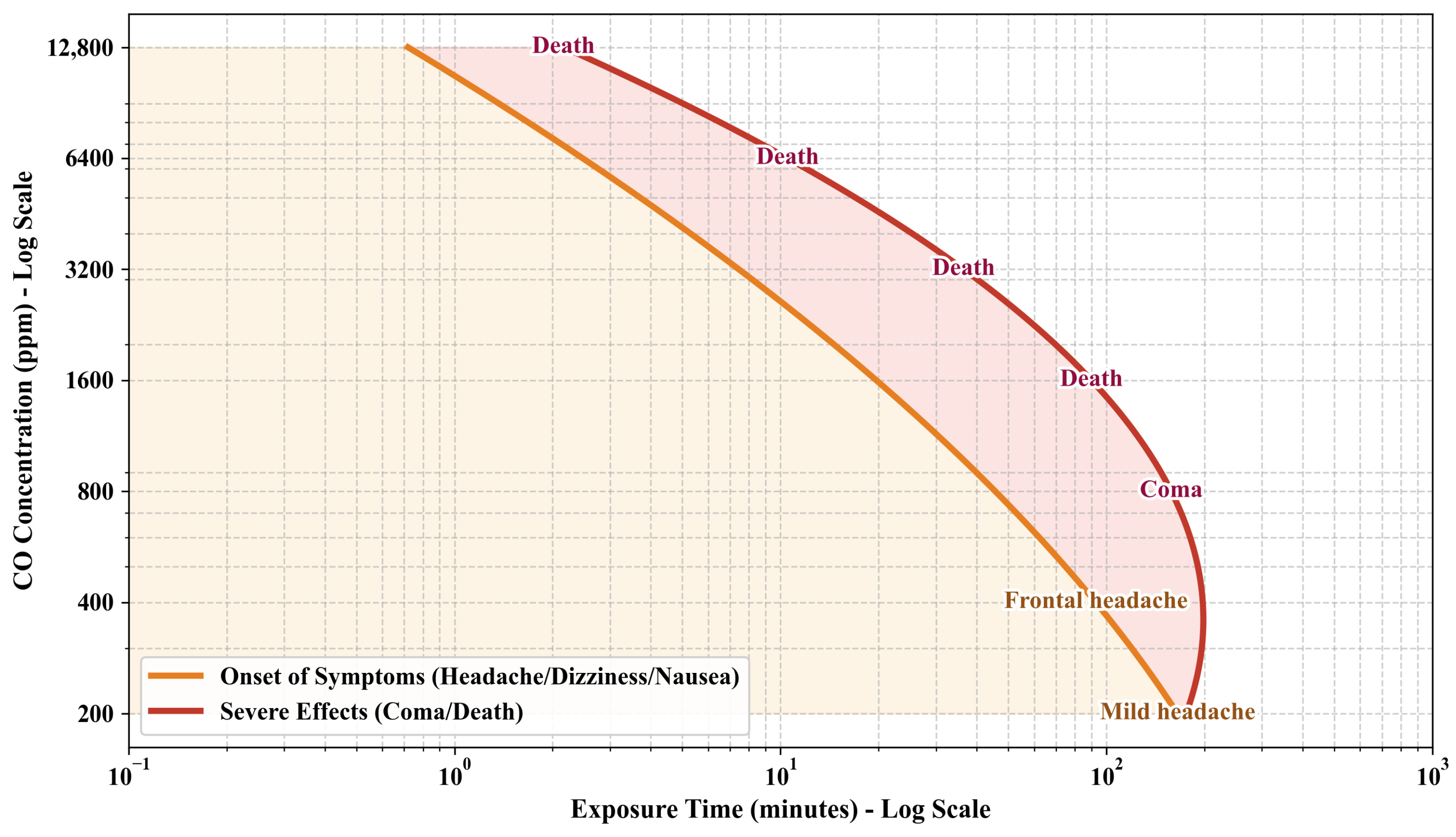
To illustrate the toxicological threat of fire-induced smoke,
Figure 1 presents the relationship between ambient CO concentration and human physiological degradation over varying exposure times. Plotted on a logarithmic scale, the graph delineates two critical boundaries: the onset of preliminary incapacitating symptoms (e.g., headaches, dizziness) and the threshold for severe, life-threatening effects (e.g., coma, death).
As depicted, the safe exposure time decreases exponentially as CO levels rise. While lower concentrations require extended exposure to induce mild physical impairment, the physiological response shifts drastically at higher concentrations, where severe motor dysfunctions are triggered almost immediately, rapidly incapacitating the individual.
In the context of subway evacuations, this non-linear physiological deterioration directly restricts pedestrian movement capabilities. Consequently, this toxicity curve serves as the fundamental empirical basis for our simulation model. It justifies the mechanism wherein evacuees experience a significant deceleration in walking speed—eventually reaching a minimal crawling speed—when traversing zones with elevated toxic exposure.
3.3. Human–Fire–Agent Interaction Model
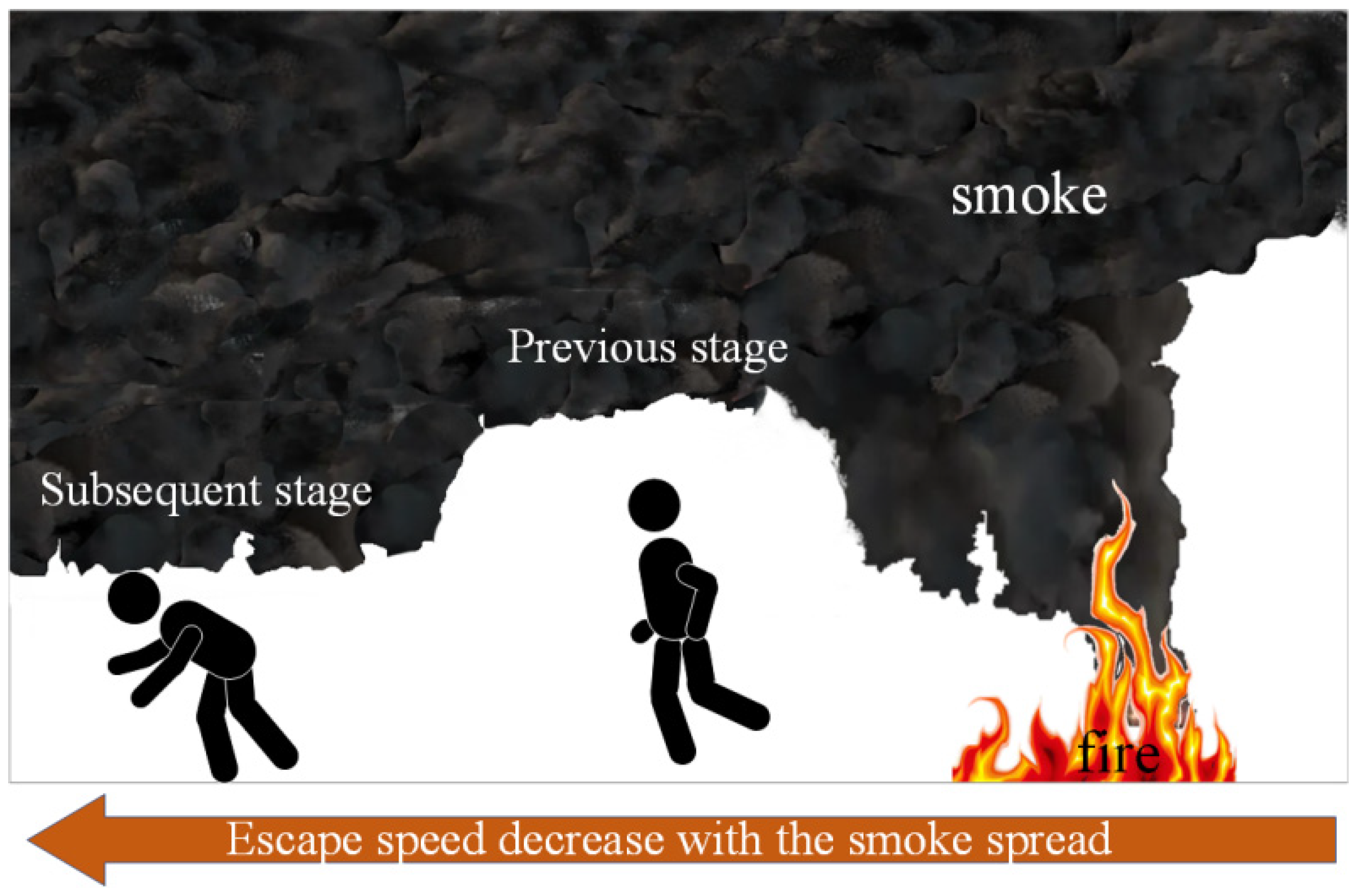
In an enclosed environment, smoke particles generated by flames rise and disperse into the surrounding space. This results in smoke accumulation in the upper regions of the area, exerting pressure on the lower space. When individuals encounter a certain concentration of CO at a specific height, leading to symptoms such as dizziness and nausea, their instinctive response is to crouch down and seek escape, as illustrated in
Figure 2. This crouching behavior, compared to previous stages of movement, subsequently reduces crowd speed during evacuation. This phenomenon aligns with the findings of Zheng et al. [
43].
Evacuation behaviors can vary for individuals of different ages and genders. This study categorizes the population into distinct age groups and genders to model the evacuation dynamics of various demographic segments when CO levels reach critical thresholds in a subway fire environment. The initial parameter settings for these groups are detailed in
Table 1.
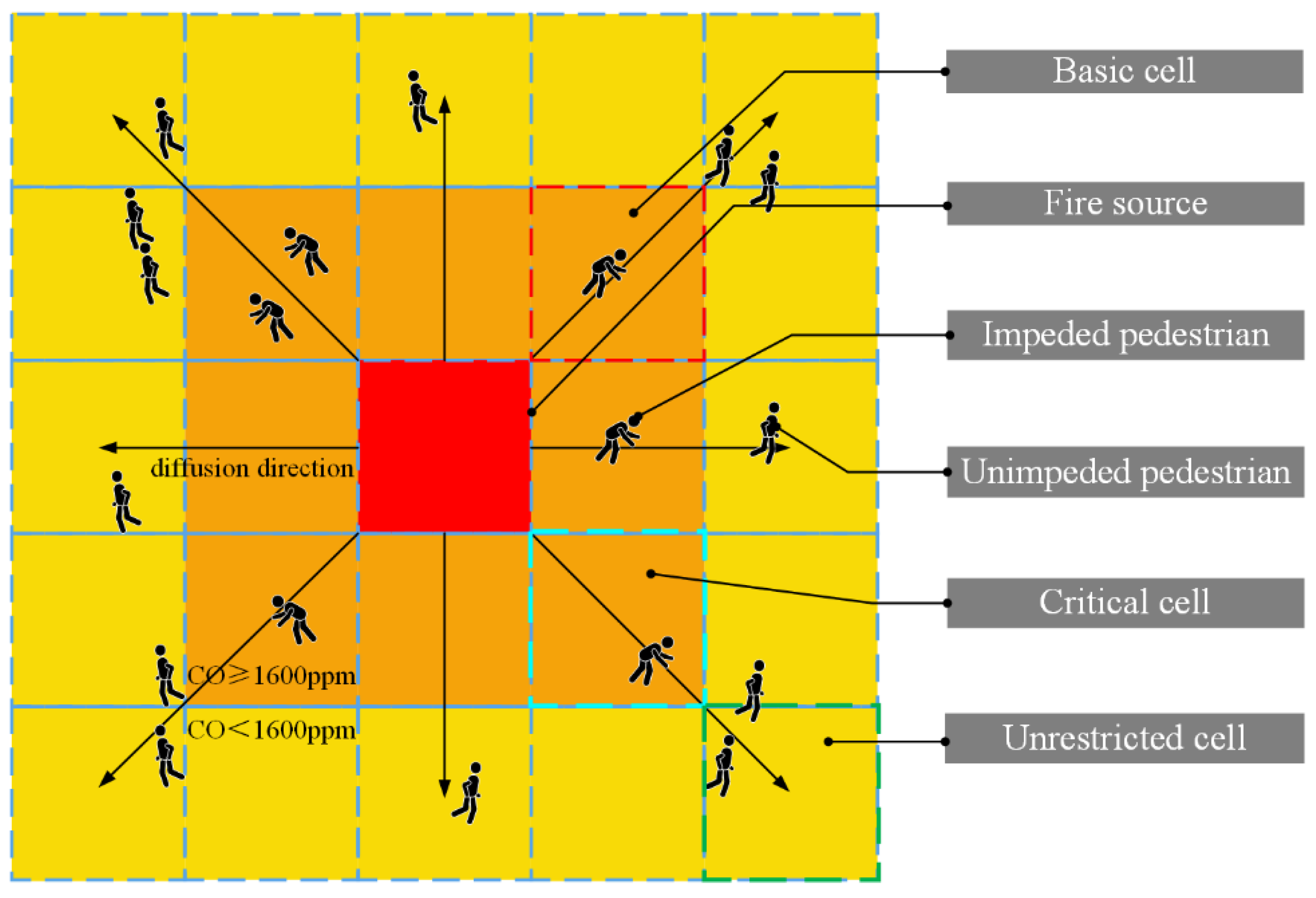
Large-scale service facilities, such as subway stations, are typically multi-functional buildings that incorporate commercial, transportation, and strategic functions. The diffusion of CO concentration is also subject to varying degrees of gradient changes due to variations in internal structure. To effectively study the impact of CO concentration fluctuations on pedestrians, the subway station is modeled as a cell set, as illustrated in
Figure 3. Real-time CO concentrations are assigned to the corresponding cells to facilitate the simulation of pedestrian evacuation in scenarios involving fire spread. Regions where the CO concentration exceeds a specified threshold are classified as critical cells, where pedestrian escape is hindered by dense smoke. Conversely, cells that allow for unhindered pedestrian escape from smoke are designated as unrestricted cells.
Normal walking speeds for pedestrians across different age groups are presented in
Table 1. When the CO concentration is below 1600 ppm, pedestrians can walk at their normal speed. However, as the CO concentration increases beyond this threshold, a correlation emerges between CO concentration and pedestrian speed. Specifically, once the CO concentration exceeds 3200 ppm, pedestrians evacuate at the lowest speed observed within the station. The relationship between pedestrian speed and CO concentration is illustrated in Equation (2) below [
43,
44].
The variables are defined as follows,
represents the initial speed of different age and gender groups. The initial speed for females is discounted by 0.8 of the initial value of males.
represents the minimum walking speed set at 0.2 m/s.
represents the CO concentration.
is the critical value for CO concentration, which is set at 1600 ppm.
is the pedestrian speed correction coefficient.
denotes the updated speeds of different age and gender groups affected by the concentration of CO. In the interactions,
are random values in given value range. Different age groups correspond to different pedestrian speed correction coefficients. Specific parameter values refer to
Table 1.
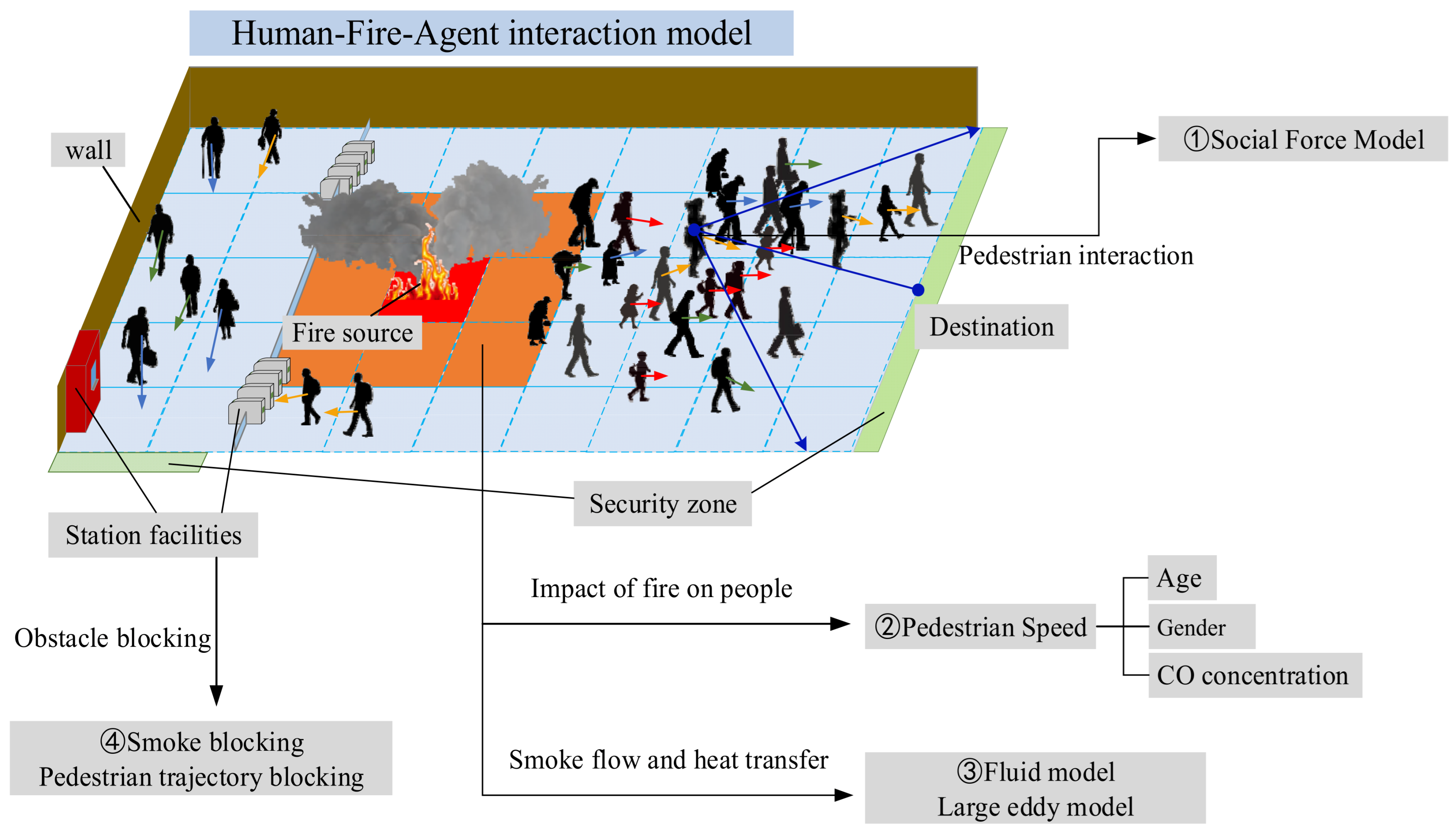
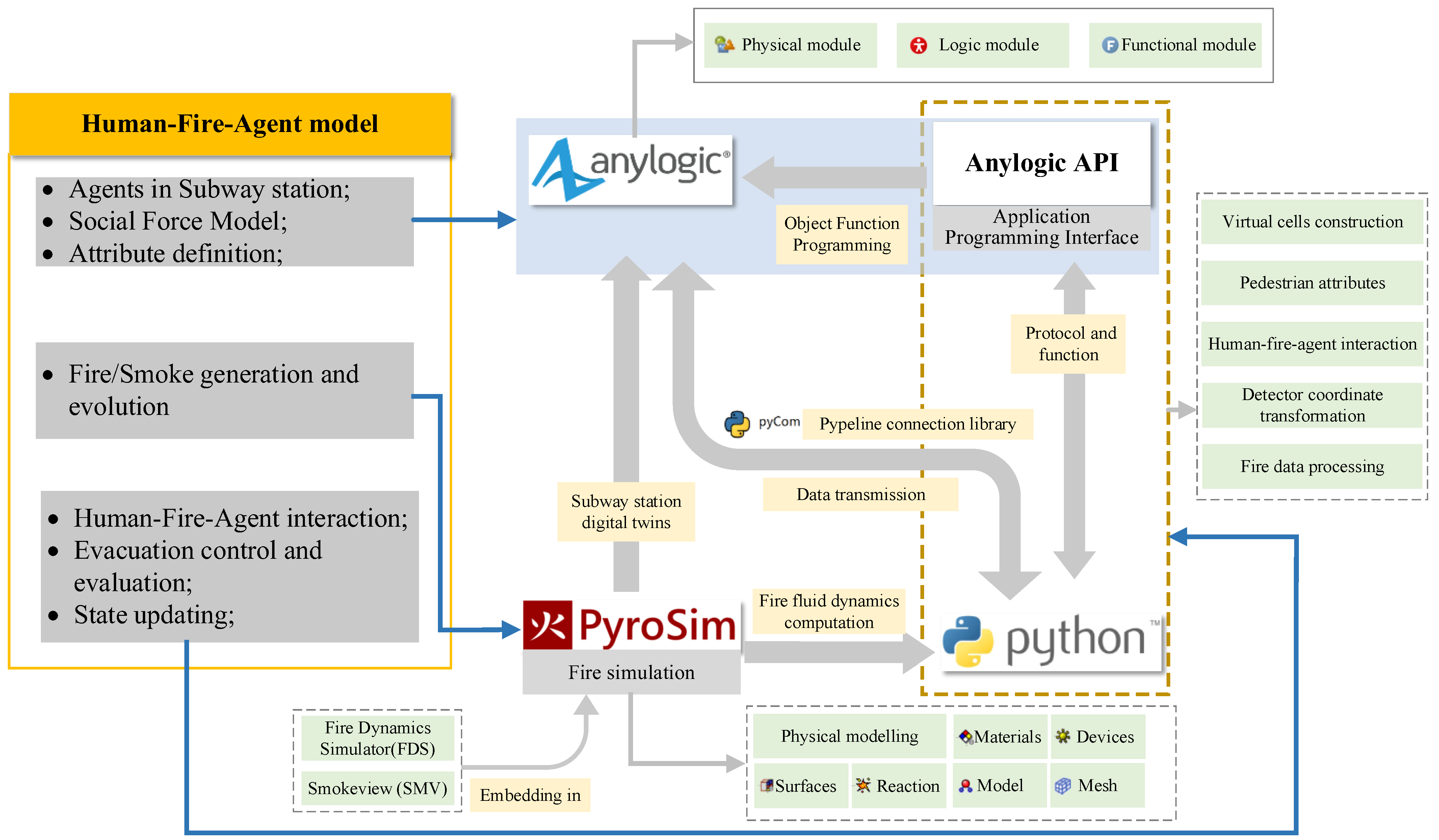
The movement of pedestrians within subway stations is driven by behavioral logic and the social force model. Human behavior is influenced by factors such as group attributes and CO concentration. In a fire scenario, the flow of smoke is modeled using the large eddy simulation theory from fluid dynamics. The physical layout of station facilities affects the trajectories of pedestrian movement and smoke flow. Evacuees dynamically search for escape routes by estimating the state of nearby individuals, the fire, and the station facilities. Each route must include at least one passenger-carrying facility, such as stairs, elevators, or escalators. The probability of choosing these facilities is determined by their service levels and congestion levels. Furthermore, the states surrounding evacuees, the fire, and station facilities are continuously updated to reflect real-time conditions. Based on these considerations, a comprehensive human–fire–agent interaction model framework is constructed, with specific details illustrated in
Figure 4.
4. Evaluation and Analysis
4.1. Station Information
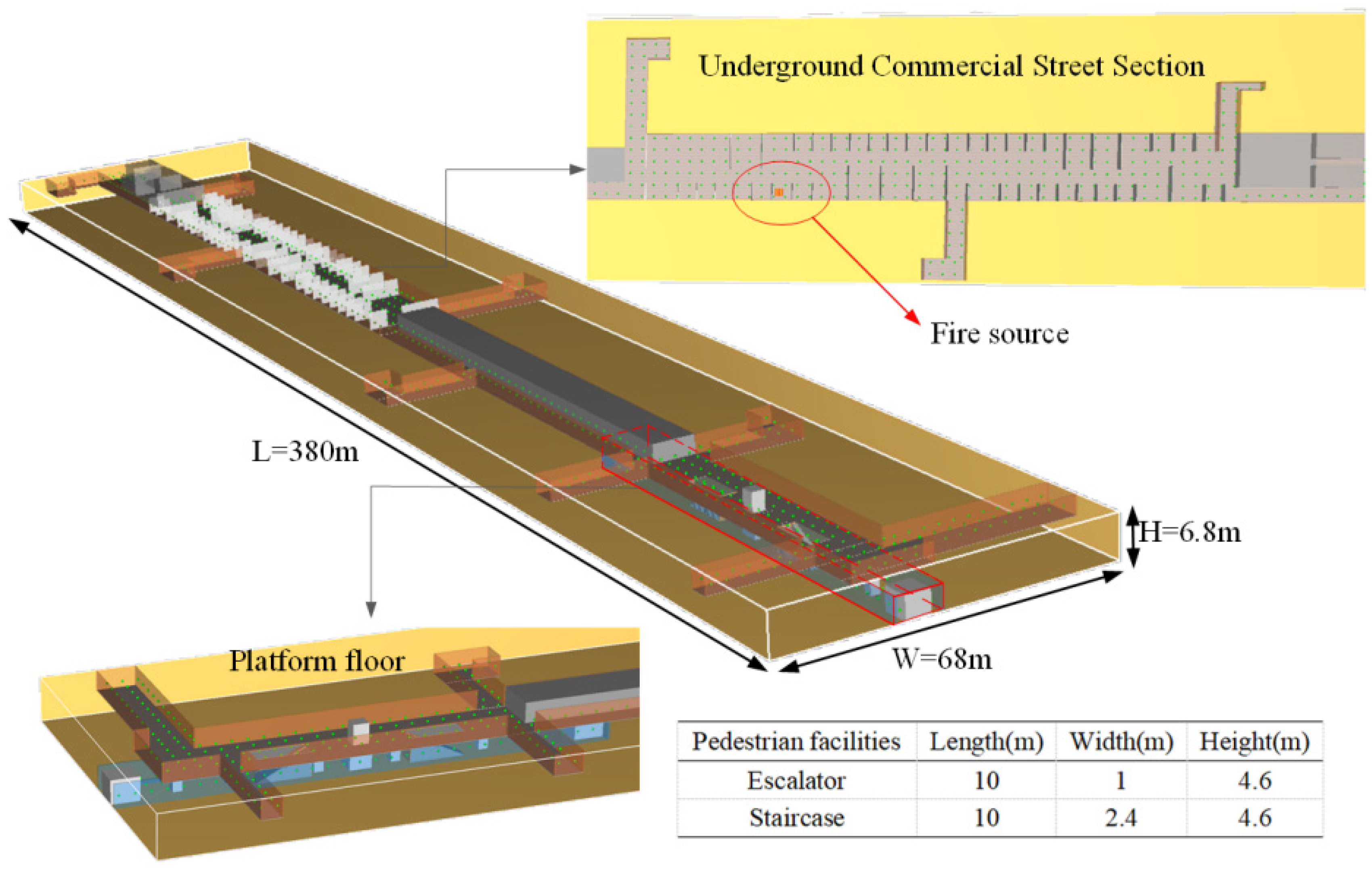
The study takes the Lumu Station in Suzhou, China, as an example. The transportation section is divided into two areas: the waiting-train hall (where passengers prepare to board arriving trains) and service hall (where passengers purchase tickets and pass through security inspection machines). In the waiting-train hall, staircases and escalators are essential points for pedestrian evacuation. The station has a total of nine exits and features an underground commercial street that extends approximately 300 m in length. This commercial street is connected to the service hall via a channel that measures 110 m long and 4 m wide. Based on these actual dimensions, a simulation mesh is established with a length of 380 m, a width of 68 m, and a height of 8.6 m. This mesh comprises a total of 25,840 basic units, each sized at 2 m × 2 m × 2 m.
The waiting-train hall is 93 m long, 10 m wide, and 4.6 m high. Pedestrians in the service hall can reach the waiting-train hall only through staircases, while in the waiting-train hall, passengers can choose between stairs and escalators to reach the hall level (as shown in
Figure 5). There is a total of 40 train exits for bi-directional trains, with a departure interval of 7 min and a dwell time of 30 s. The station floor is mainly paved with matte tiles, featuring non-combustible homogeneous marble, which provides high fire resistance. The flooring in the underground commercial street is also constructed from non-combustible materials, while the walls separating individual shops are made of inert materials to enhance safety.
The heat release rate in a fire refers to the amount of heat released per unit of time, representing the energy released by a fire source or burning object per second. A higher heat release rate indicates a faster fire spread in the subway scenario, which may result in thermal radiation, conduction, and convective heating of surrounding combustible materials. The study adopts the following parameters for fire model simulation, aligning with the findings of [
45]. The heat release rate in this study is set as 5 MW, and the fuel species used in the simulation is polyurethane. The CO production is 0.04, and the simulation time for the fire model is defined as 360 s.
4.2. Simulation Platform
Using the Pyrosim (2024.1) [
46] graphical user interface, which combines FDS simulation engine and the Smokeview visualization module, a total of 3014 CO detectors have been installed in the platform and hall levels. The detectors are spaced at intervals of 3 m, which aligns with the basic virtual unit size of 3 × 3 m in AnyLogic. The height of the detectors is set at 1.6 m, based on the position of the human mouth and nose.
In the process of Pyrosim simulation modeling, the level of mesh refinement determines the accuracy of the fire simulation results. Increasing the number of grid divisions enhances the precision of the simulated smoke data; however, it also extends the simulation time. Following the mesh division formula and the actual dimensions of the environment, a grid measuring 380 m in length, 68 m in width, and 8.6 m in height have been established. This grid comprises a total of 25,840 basic units, utilizing a uniform mesh division method that divides the network region into 2 m × 2 m × 2 m sections. The size of the mesh in Pyrosim is calculated by Equation (3).
where
represents the characteristic diameter of the fire, in meter (m),
is the heat release rate of the fire source, in kilowatts (KW);
is the air density, taken as 1.2 kg/m
3;
is the specific heat capacity of air, taken as 1.014 KJ/Kg·K, T represents the ambient temperature inside the subway station, assumed to be 25 degrees Celsius, converted to 298 K, g represents the acceleration due to gravity, which is 9.8 m/s
2.
To describe human–fire–agent interactions, this study develops a PyroSim-Python-Anylogic simulation platform as shown in
Figure 6. PyroSim is used for simulating fire and smoke dynamics. AnyLogic serves as the main platform for capturing evacuation processes, and conducting simulations of pedestrian flow evacuation based on fire conditions. The simulated subway station in Anylogic and PyroSim are digital twins of the real-world Lumu station, which ensures that fire smoke evolution can be synchronously transformed. Python (3.9.12) is used to connect PyroSim and AnyLogic by integrating Pypeline [
47] and AnyLogic API. This platform allows for the execution of self-defined algorithms, facilitates the transmission of fire-induced CO concentration data, constructs virtual cells, updates the states of evacuees and agents, and provides detailed calculations and simulations in a step-by-step manner.
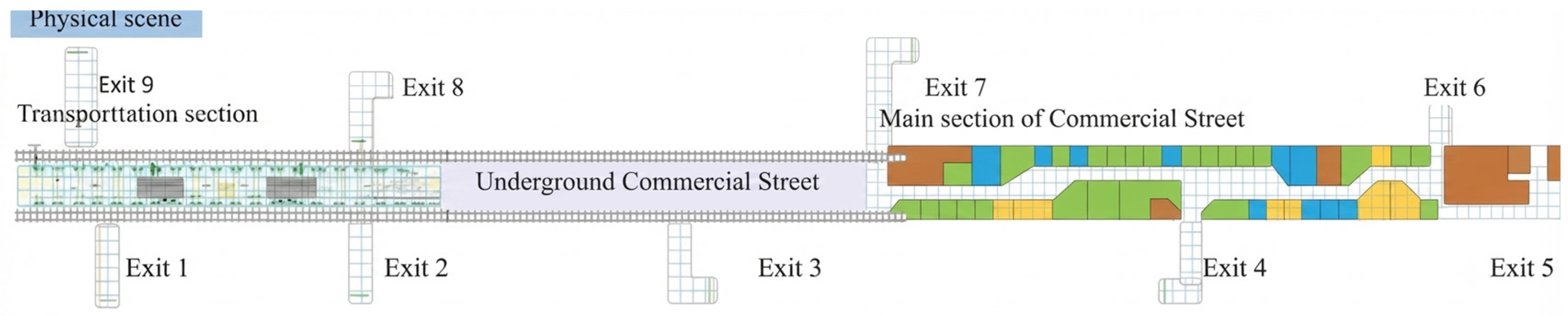
Figure 7 presents an overhead view of Lumu Station as simulated in AnyLogic, illustrating the basic logical rules governing the walking behavior of evacuees. The parameters for station facilities, channels, exits, rooms, and obstacles have been carefully calibrated to reflect realistic conditions [
48]. Passenger behavior was analyzed during peak hours, encompassing factors such as age distribution, gender distribution, mobile payment rates, paper metro ticket purchase rates, and escalator usage rates. In the simulation, the fire initiates in the main section of the commercial street, with the resulting CO spreading through the underground commercial area, posing a significant threat to passengers in the transportation section.
4.3. Results
4.3.1. Scenarios
This study examines two evacuation scenarios: fire evacuation and non-fire evacuation. In the fire evacuation scenario, evacuees must escape the station while simultaneously being affected by CO from the fire. In contrast, the non-fire evacuation scenario involves evacuees who are not exposed to CO. In both scenarios, a total of 565 passengers need to be evacuated. Within the fire evacuation scenario, five fire alert times are evaluated: 600 s, 630 s, 660 s, 690 s, and 720 s. The fire is initiated at 600 s, at which point pedestrians have access to all services.
4.3.2. Smoke Flow and CO Space Distribution
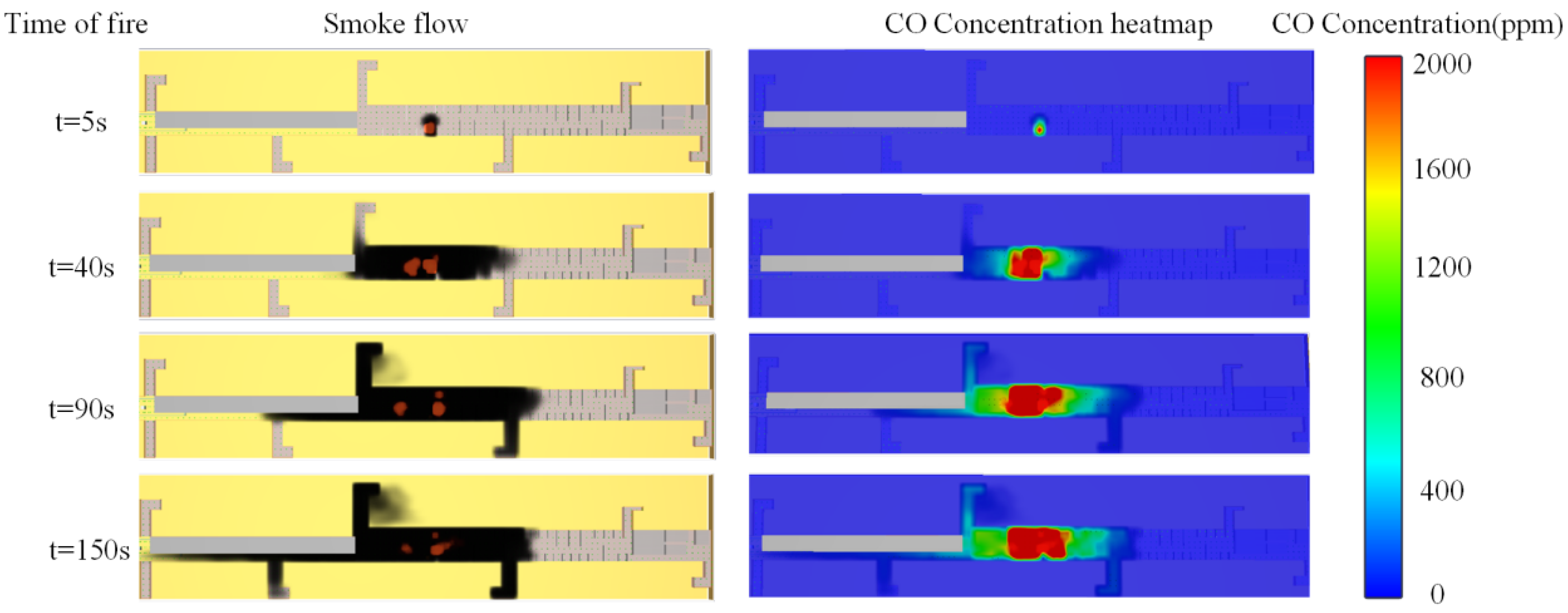
As depicted in
Figure 8, when a fire occurs in the commercial street, nearby stores are initially engulfed in smoke within 40 s. The smoke flow is influenced by the internal structure of the channel, posing a greater threat when it intersects with pedestrian routes. At the 90 s mark after the fire starts, smoke fills the passageways at exits 4 and 7, gradually spreading toward exits 5 and 6 due to the effects of the ventilation system. Once the smoke reaches the channel, it takes approximately 114 s to pass through and affects pedestrians.
4.3.3. Pedestrian Density in Evacuations
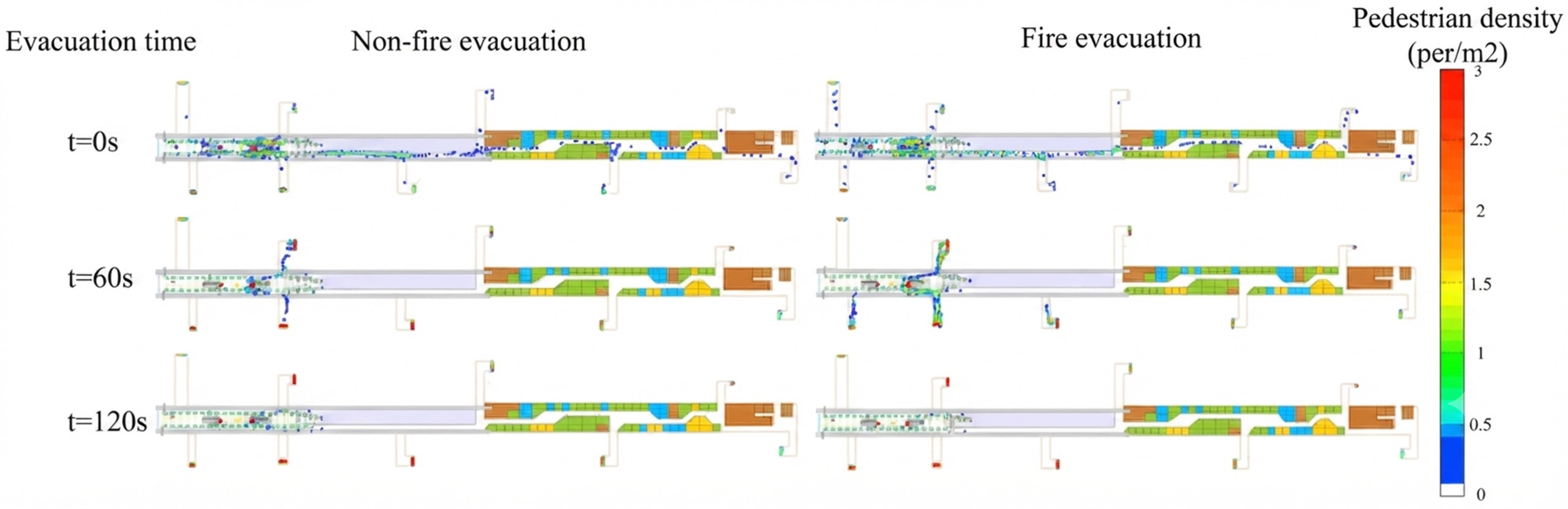
In both evacuation scenarios, as is shown in
Figure 9, pedestrians experience relatively heavier congestion near exits 2 through 8 with a density of 3.0 per/m
2, compared to the staircases and escalators near exits 1 and 9. As the evacuation progresses, pedestrian density gradually decreases from 3.0 to 1.5 per/m
2 in the service level. At the same time, pedestrian congestion increases from 1.0 to 3.0 per/m
2 for exits 1, 2, 8, and 9, which are closest to the service hall. In contrast, the underground commercial street, which is farther from the service hall, accommodates fewer evacuees, resulting in milder congestion of approximately 1.0 per/m
2. Throughout each time step of the evacuation, it is observed that, compared to the non-fire evacuation scenario, the rate of decrease in density is relatively slower during the fire evacuation.
4.3.4. Evacuation of Different Fire Alerts
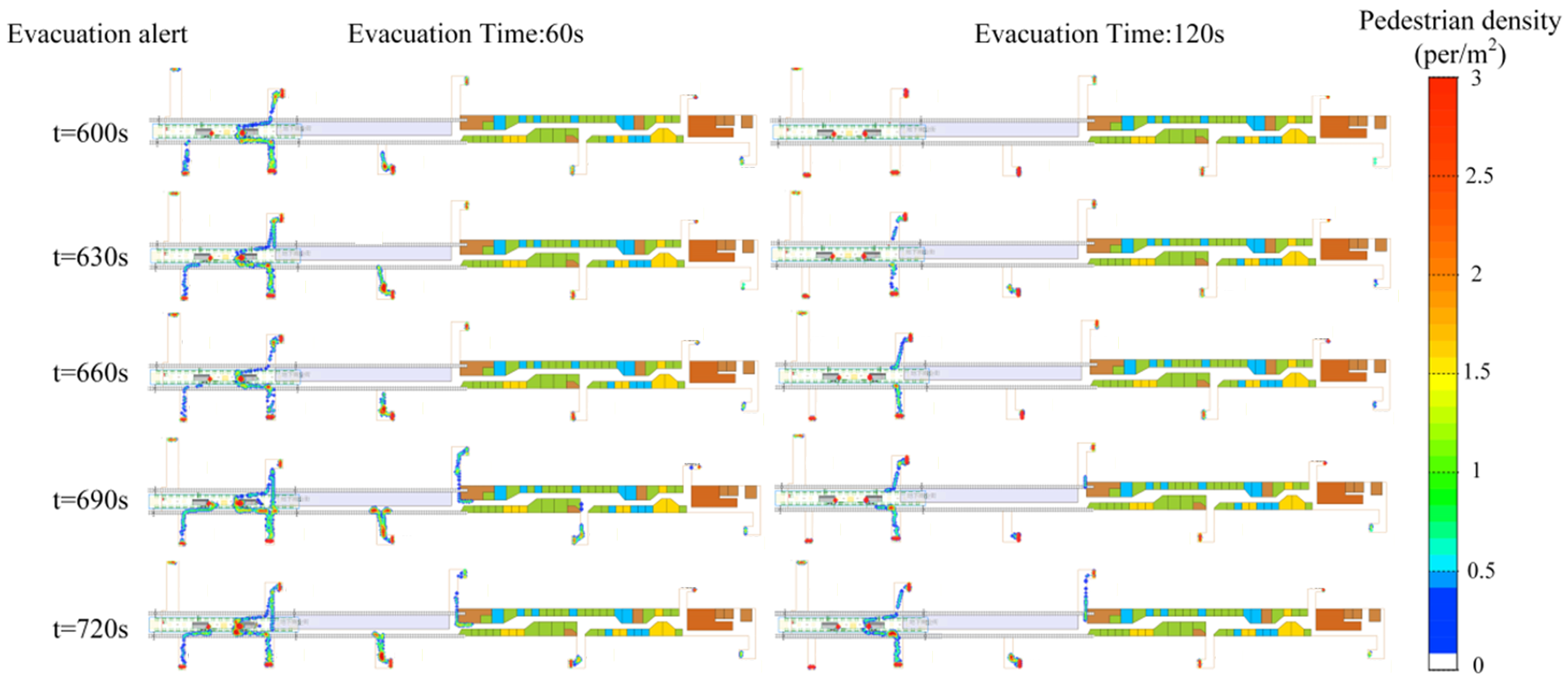
To further investigate the impact of different evacuation alerts on pedestrian evacuation within the subway station, fire evacuation alerts are respectively set at 600 s, 630 s, 660 s, 690 s, and 720 s. Five different evacuation alerts are given, and the pedestrian density at evacuation time 60 s and 120 s are compared; results are illustrated in
Figure 10. When the evacuation alerts are prolonged, the pedestrian density in the channel increase by 3.0 per/m
2. Comparing the pedestrian density at evacuation times of 60 s and 120 s, it is observed that the prolonged evacuation alert result in a slower decrease at the same evacuation time span from 60 s to 120 s in pedestrian density. Pedestrians who are farther away from the fire source can evacuate more quickly due to lower CO concentrations (below 2500 ppm), while maintaining speed that over half of original speed. However, those closer to the fire experience higher CO concentrations (over 2500 ppm), leading to a slower evacuation speed that is below half of original speed. As a result, more pedestrians remain in the channel for the same evacuation span, leading to an extended evacuation end time.
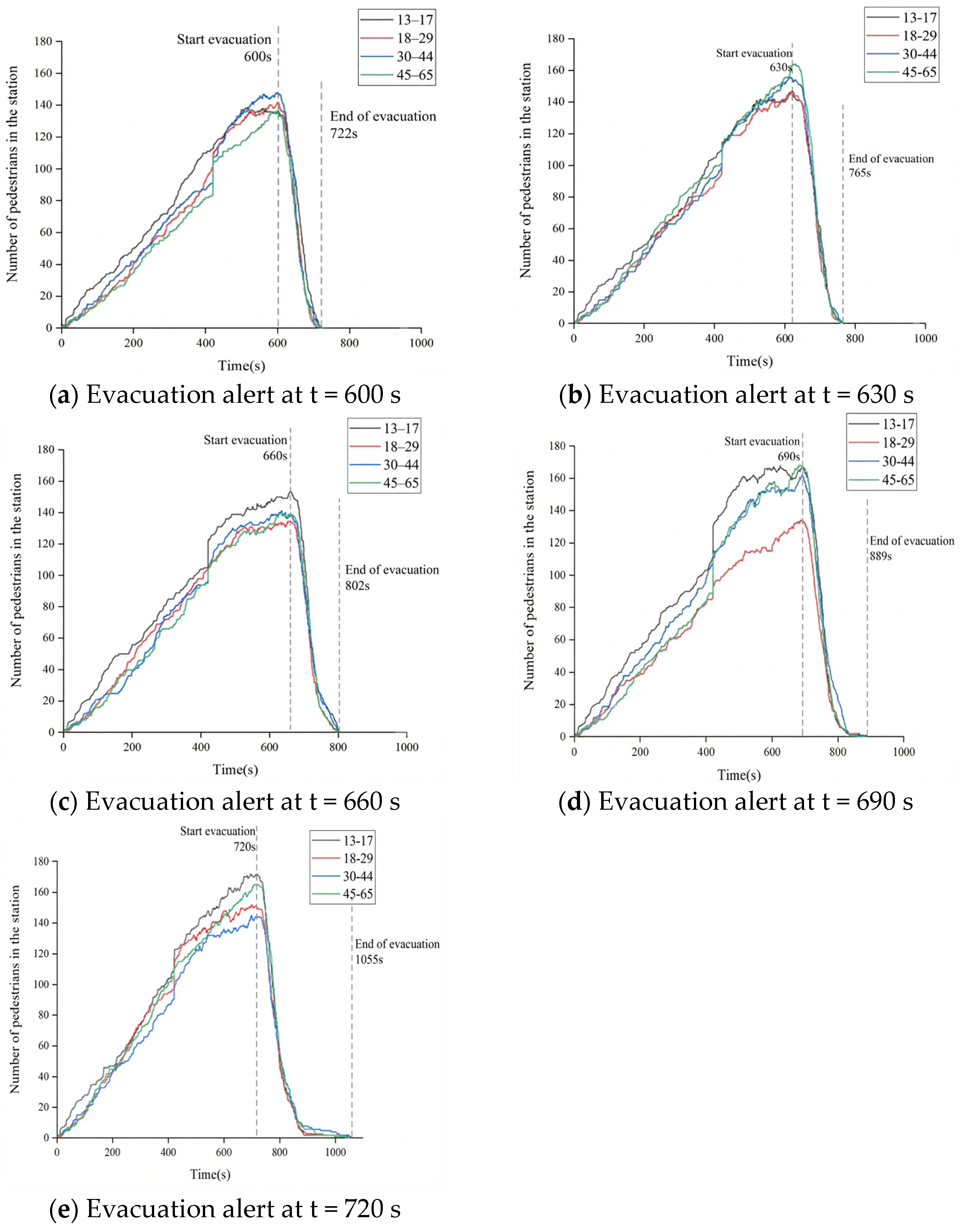
The changes in the number of different groups of evacuees under different evacuation alerts are shown in
Figure 11. The evacuation process is divided into three stages: early-stage evacuation, mid-stage evacuation, and final-stage evacuation. During the early-stage evacuation, pedestrians who have just entered the station move toward the nearest exits to escape, while others already in the station cease their current activities, such as ticket purchasing, security checks, queuing, and waiting. Pedestrians in the waiting-train hall evacuate via the nearest staircases or elevators, while those in the service hall head to the closest exits. At this stage, there is a notable transition among pedestrians from a dispersed to a clustered formation within the first 30 s of evacuation.
In the mid-stage evacuation, the numbers of evacuees from different age groups remain closely aligned within the same time span. This observation indicates that when pedestrians encounter emergencies that lead to congestion, limited exit space and increased interactions hinder evacuees at the back of the queue from bypassing the crowd, resulting in reduced evacuation speed. The average duration of mid-stage evacuation across different evacuation alerts is approximately 80 s.
In the final-stage evacuation, the remaining number of evacuees is recorded as 14, 26, 45, 52, and 117, corresponding to each evacuation alert. The speed of these evacuees within the station gradually decreases because of CO concentration, with this trend becoming more pronounced as the evacuation alert duration increases. The evacuation times for the different alerts are 122 s, 135 s, 142 s, 199 s, and 335 s, respectively. When the time difference between the fire start time and the evacuation alert time is less than 60 s, evacuation times remain relatively stable, ranging from 120 to 140 s. However, if this time difference exceeds 60 s, evacuation durations may surpass 200 s or more. These results underscore the critical importance of establishing feasible evacuation alert times during fire incidents to ensure the safe evacuation of pedestrians.
4.3.5. The Evaluation of Turnstile Reversal Strategies
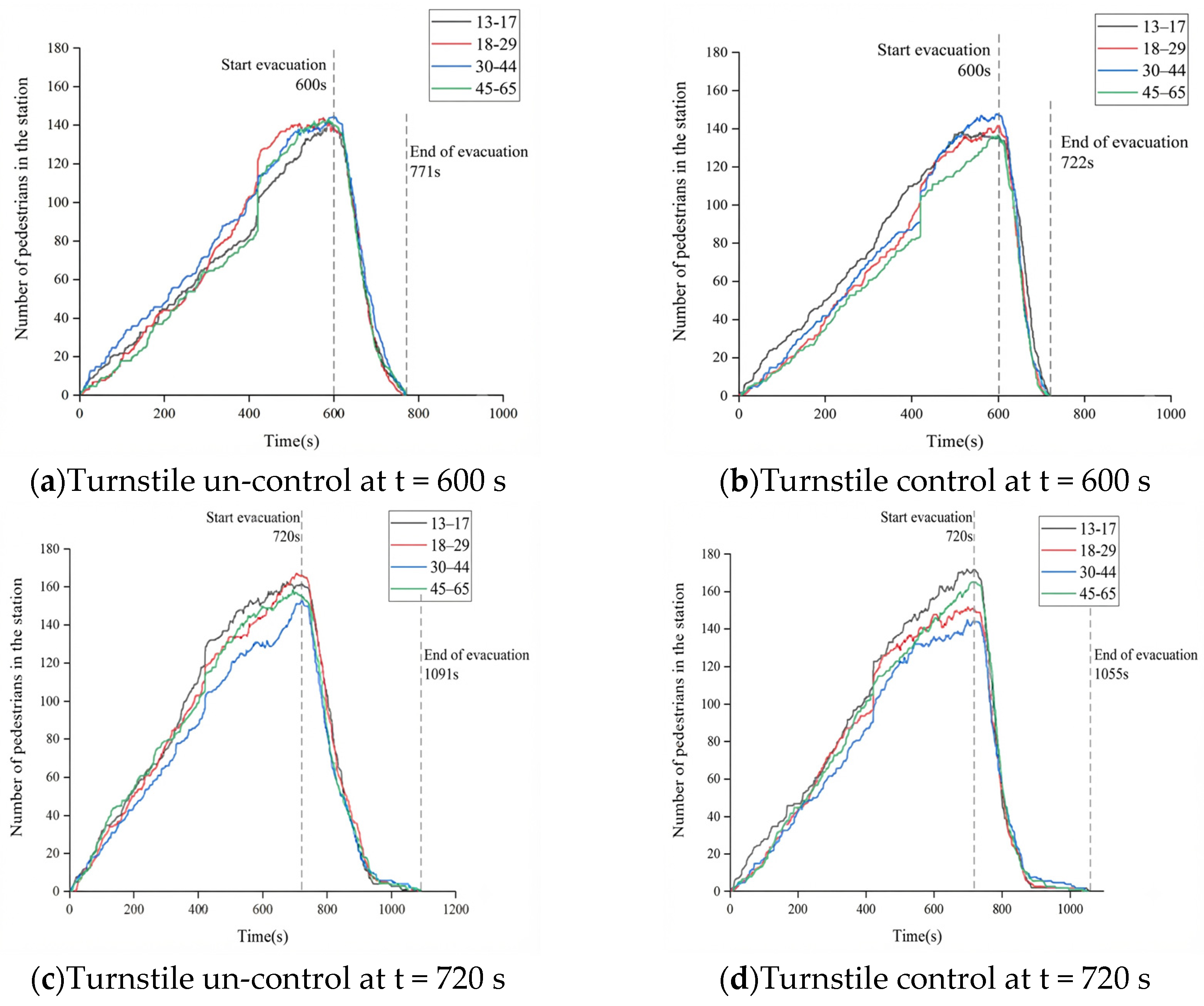
In general, subway stations utilize designated entrance and exit turnstile groups to manage passenger flows. During emergencies, entrance turnstiles can be reversed to maximize evacuation throughout, namely, entrance turnstile reversal strategies. This study evaluates the effectiveness of turnstile reversal strategies. The results comparing controlled and uncontrolled scenarios under evacuation alerts of 600 s and 720 s are shown in
Figure 12.
When the evacuation alerts are set at 600 s and 720 s, the evacuation during time is reduced by 49 s and 36 s respectively compared to the un-control scenario, resulting in efficiency improvements of 40.2% and 10.7% respectively. Results indicate that the later the evacuation alert is issued, the less effective the turnstile control strategy becomes.
4.3.6. Risk Assessment
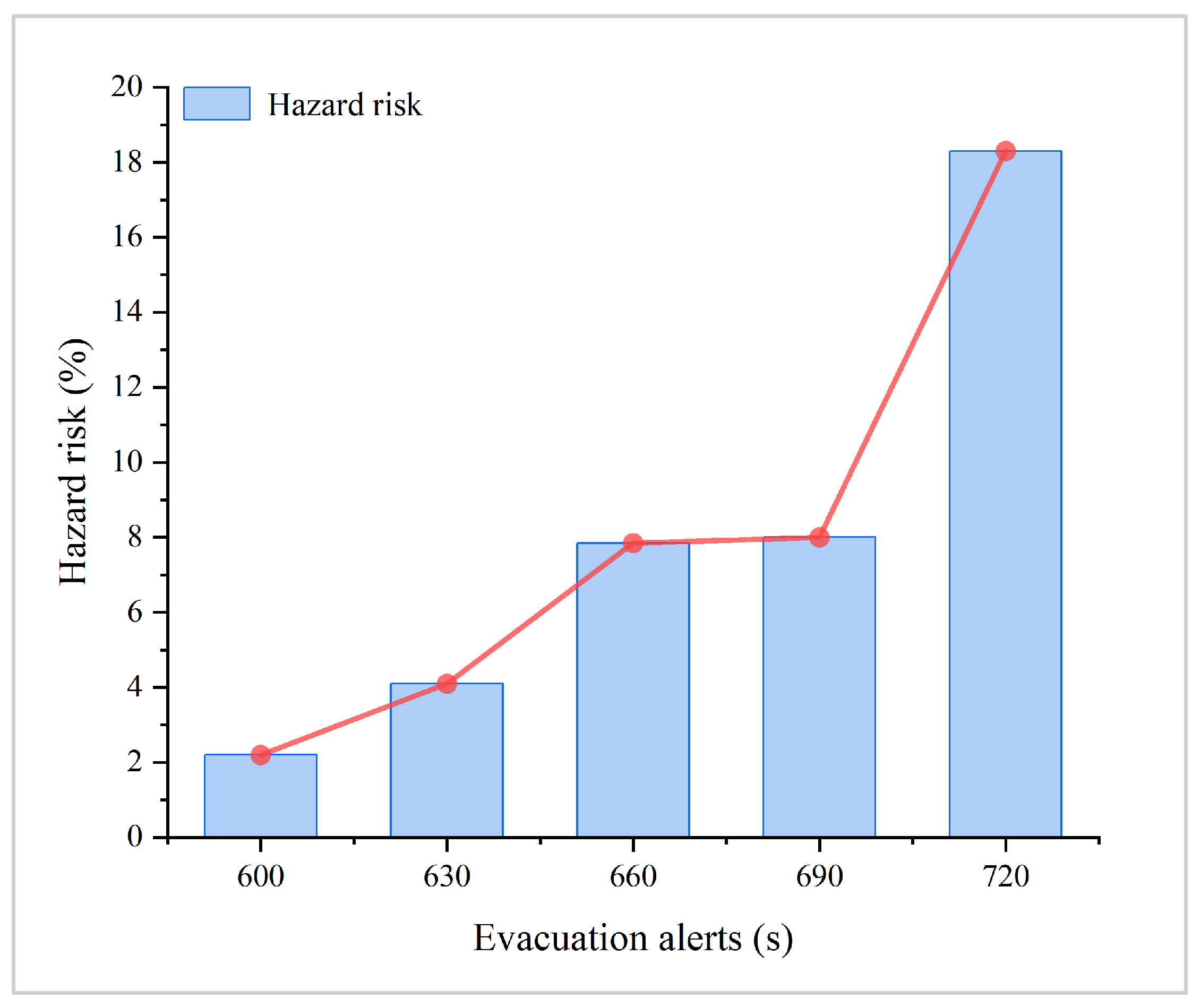
In practice, evacuation risks associated with underground commercial buildings are less frequently studied compared to above-ground structures. To further explore the risk involved in this context under different evacuation alerts, a risk assessment is conducted to understand why increased evacuation alert times can lead to significantly prolonged evacuation durations.
To address the question above, this study establishes a hazard risk metric that measures both CO concentration and evacuation crowd density, as these are the root causes of evacuation challenges. When the CO concentration rises to 2500 ppm, evacuees are considered to be in a dangerous state. Hazard risk is determined based on the premise that fewer evacuees indicate a safer evacuation status. The hazard risk is calculated by Equation (4).
where
represents the number of evacuees in the station.
denotes the total number of evacuees under different evacuation alerts.
represents the CO concentration when pedestrians are in a dangerous state.
The results of hazard risk in the fire scenario are shown in
Figure 13. When evacuation alert time is less than 690 s, hazard risks are 2.5%, 4.3%, 8.0% and 8.3%, respectively, and evacuees are still in a relatively safe state. However, when evacuation alert times exceed 690 s, hazard risks rapidly increase to 18.5%. The result indicates that when evacuation alert time exceeds 690 s, the marginal effect of the alert time on hazard risk significantly increases.
5. Conclusions
This study proposes a human–fire–agent interaction model to capture the dynamic relationship between CO concentration during a fire and pedestrian behavior. Two scenarios—fire evacuation and non-fire evacuation—were designed to explore the evacuation characteristics of different age and gender groups, with a particular focus on fire emergencies. The study comprehensively analyzes the evacuation interaction process concerning CO distribution under various evacuation alerts and evaluates the effectiveness of the turnstile reversal strategy. The proposed hazard risk metric is utilized to assess CO concentration impacts and overall evacuation safety.
The main findings can be summarized into four aspects. First, a timely evacuation alert can minimize total evacuation time, with minimal disruption caused by age and gender factors. Second, as evacuation alerts are delayed, the potential interaction behavior of evacuees influenced by CO distribution is amplified, making evacuation more challenging and resulting in a significant increase in evacuation time. Third, when older adults and children evacuate together or in groups, it can negatively impact overall evacuation efficiency. Fourth, increasing delays in evacuation alerts can lead to decreased control strategy effectiveness and higher hazard risks for evacuees, exhibiting a marginal effect.
Compared to existing research, this study introduces a human–fire–agent model that quantifies the relationship between CO concentration and pedestrian behavior, analyzes the heterogeneous characteristics of evacuees, and assesses the hazard risk of pedestrian evacuation under different evacuation alerts in fire scenarios. This research provides important insights into crowd evacuation interactions during sudden fire incidents. Furthermore, the developed high-fidelity simulation framework serves as a robust quantitative foundation to support immersive emergency evacuation drills, enabling railway managers to optimize standard operating procedures and train staff effectively.
Despite these contributions, this study presents certain limitations that pave the way for future research. First, achieving statistically credible simulation calibration across a multitude of emergency scenarios imposes a substantial computational workload. For instance, executing 10 independent random seeds across 10 distinct scenarios necessitates 100 comprehensive simulation runs; integrating iterative parameter calibration for each would cause the experimental overhead to escalate exponentially, rendering exhaustive optimization highly resource-intensive. Second, while the current framework meticulously calibrates physical interactions, it cannot fully capture the psychological “panic effect”. Due to the highly stochastic nature of panic and a scarcity of real-world empirical data, quantifying this behavior mathematically remains challenging. Third, restricted by current empirical data availability, the simulation does not yet encompass vulnerable demographics over 65 years old, whose distinct physiological degradation and behavioral traits require targeted verification.
To overcome these bottlenecks, future research will pursue several key advancements. A primary focus will be developing simulation acceleration methodologies and high-performance computing frameworks to drastically reduce the computational overhead required for multi-scenario statistical validation and real-time decision support. Additionally, we aim to incorporate stochastic noise variables into the perturbation term of social force model to simulate erratic, panic-driven behaviors, alongside systematically gathering empirical data to accurately model the evacuation dynamics of older adults. Finally, subsequent studies will investigate fire and smoke propagation within complex subway ventilation environments and explore the integration of intelligent emergency response systems—such as unmanned vehicles and rescue robots—to further minimize evacuation risks.
Author Contributions
Data collection: G.H., R.Q., Z.L., Y.Y. and W.L.; study conception and design: G.H., R.Q. and W.L.; analysis and interpretation: G.H., R.Q. and Y.Y.; draft manuscript preparation: G.H., R.Q., Y.Y. and W.L. All authors have read and agreed to the published version of the manuscript.
Funding
This research was funded by National Natural Science Foundation of China (No. 62303343) and Science and Technology Program of Suzhou (grant number: SYG2025046).
Data Availability Statement
The raw data supporting the conclusions of this article will be made available by the authors on request.
Conflicts of Interest
Author Weike Lu is employed by Jiangsu JD-Link International Logistics Co. The remaining authors declare that the research was conducted in the absence of any commercial or financial relationships that could be construed as a potential conflict of interest.
Abbreviations
The following abbreviations are used in this manuscript:
| FDS | Fire Dynamics Simulator |
| CO | Carbon Monoxide |
References
- Murray-Tuite, P.; Wolshon, B. Evacuation transportation modeling: An overview of research, development, and practice. Transp. Res. Part C Emerg. Technol. 2013, 27, 25–45. [Google Scholar] [CrossRef]
- Han, J.Q.; Wang, Z.H.; Geng, P.Q.; Wang, F.; Wen, J.; Liu, F. The effect of blockage and tunnel slope on smoke spread and ceiling temperature distribution in a natural-ventilated metro depot. Energy Build. 2021, 253, 111540. [Google Scholar] [CrossRef]
- Li, Y.S.; Zhang, X.L.; Sun, X.P.; Zhu, N. Maximum temperature of ceiling jet flow in longitudinal ventilated tunnel fires with various distances between fire source and cross-passage. Tunn. Undergr. Space Technol. 2021, 113, 103953. [Google Scholar] [CrossRef]
- Seike, M.; Kawabata, N.; Hasegawa, M. Experiments of evacuation speed in smoke-filled tunnel. Tunn. Undergr. Space Technol. 2016, 53, 61–67. [Google Scholar] [CrossRef]
- Giachetti, B.; Couton, D.; Plourde, F. Smoke spreading analysis from an experimental subway scale model. Fire Saf. J. 2016, 86, 75–82. [Google Scholar] [CrossRef]
- Chen, Y.M.; Wang, C.; Yap, J.B.H.; Li, H.; Zhang, S.J. Emergency evacuation simulation at starting connection of cross-sea bridge: Case study on Haicang Avenue Subway Station in Xiamen Rail Transit Line. J. Build. Eng. 2020, 29, 101163. [Google Scholar] [CrossRef]
- Lu, T.T.; Zhao, Y.X.; Wu, P.; Zhu, P.F. Pedestrian ascent and descent behavior characteristics during staircase evacuation under invisible conditions. Saf. Sci. 2021, 143, 105441. [Google Scholar] [CrossRef]
- Wu, P.H.; Wang, Y.; Jiang, J.C.; Wang, J.H.; Zhou, R. Evacuation Optimization of a Typical Multi-exit Subway Station: Overall partition and local railing. Simul. Model. Pract. Theory 2022, 115, 102425. [Google Scholar] [CrossRef]
- Wan, J.; Sui, J.; Yu, H. Research on evacuation in the subway station in China based on the Combined Social Force Model. Phys. A Stat. Mech. Its Appl. 2014, 394, 33–46. [Google Scholar] [CrossRef]
- Wang, J.; Yan, W.; Xu, H.; Zhi, Y.; Wang, Z.; Jiang, J. Investigation of the probability of a safe evacuation to succeed in subway fire emergencies based on Bayesian theory. KSCE J. Civ. Eng. 2018, 22, 877–886. [Google Scholar] [CrossRef]
- Yang, P.; Li, C.; Chen, D. Fire emergency evacuation simulation based on integrated fire–evacuation model with discrete design method. Adv. Eng. Softw. 2013, 65, 101–111. [Google Scholar] [CrossRef]
- Silva, J.F.; Almeida, J.E.; Rossetti, R.J.; Coelho, A.L. A serious game for EVAcuation training. In 2013 IEEE 2nd International Conference on Serious Games and Applications for Health (SeGAH); IEEE: Piscataway, NJ, USA, 2013; pp. 1–6. [Google Scholar]
- Capuano, N.; King, R. Adaptive serious games for emergency evacuation training. In 2015 International Conference on Intelligent Networking and Collaborative Systems; IEEE: Piscataway, NJ, USA, 2015; pp. 308–313. [Google Scholar]
- Rindone, C.; Russo, A. Disaster Risk Reduction in a Manhattan-Type Road Network: A Framework for Serious Game Activities for Evacuation. Sustainability 2025, 17, 6326. [Google Scholar] [CrossRef]
- Rossolov, O.; Bhaumik, N.; Habib, M.A.; Yasar, A.U.H. Virtual reality experimental framework for outdoor fire evacuations with inclusive design: A pilot study. Saf. Sci. 2026, 198, 107140. [Google Scholar] [CrossRef]
- Ronchi, E.; Reneke, P.A.; Peacock, R.D. A conceptual fatigue-motivation model to represent pedestrian movement during stair evacuation. Appl. Math. Model. 2016, 40, 4380–4396. [Google Scholar] [CrossRef]
- Yang, X.L.; Yang, X.X.; Li, Y.X.; Zhang, J.H.; Kang, Y.L. Obstacle avoidance in the improved social force model based on ant colony optimization during pedestrian evacuation. Phys. A Stat. Mech. Its Appl. 2021, 583, 126256. [Google Scholar] [CrossRef]
- Zhang, J.J.; Zhao, J.C.; Song, Z.S.; Duan, L.P. Experimental and modeling study on evacuation behaviors considering small groups under different visibility. Phys. A Stat. Mech. Its Appl. 2023, 623, 128850. [Google Scholar] [CrossRef]
- Zhang, Z.; Jia, L.M. Optimal guidance strategy for crowd evacuation with multiple exits: A hybrid multiscale modeling approach. Appl. Math. Model. 2021, 90, 488–504. [Google Scholar] [CrossRef]
- Jin, J.G.; Shen, Y.F.; Hu, H.; Fan, Y.Q.; Yu, M.J. Optimizing underground shelter location and mass pedestrian evacuation in urban community areas: A case study of Shanghai. Transp. Res. Part A Policy Pract. 2021, 149, 124–138. [Google Scholar] [CrossRef]
- Chen, L.; Guo, Z.L.; Wang, T.; Li, C.Y.; Tang, T.Q. An evacuation guidance model for heterogeneous populations in large-scale pedestrian facilities with multiple exits. Phys. A Stat. Mech. Its Appl. 2023, 620, 128740. [Google Scholar] [CrossRef]
- Qiang, R.; Yuan, Y.; Lu, W. Modeling Drone-Assisted Subway Fire Evacuation Based on Digital Twin and Human–Fire-Station Interaction. Electronics 2026, 15, 3070. [Google Scholar] [CrossRef]
- Zhang, B.; Xu, Z.S.; Zhao, Q.W.; Liu, Y.Y. A Study on Theoretical Calculation Method of Subway Safety Evacuation. Procedia Eng. 2014, 71, 597–604. [Google Scholar] [CrossRef]
- Qin, J.W.; Liu, C.C.; Huang, Q. Simulation on fire emergency evacuation in special subway station based on Pathfinder. Case Stud. Therm. Eng. 2020, 21, 100677. [Google Scholar] [CrossRef]
- Chen, J.F.; Liu, C.; Meng, Y.Y.; Zhong, M.H. Multi-Dimensional evacuation risk evaluation in standard subway station. Saf. Sci. 2021, 142, 105392. [Google Scholar] [CrossRef]
- Jin, B.; Wang, J.H.; Wang, Y.; Gu, Y.M.; Wang, Z.R. Temporal and spatial distribution of pedestrians in subway evacuation under node failure by multi-hazards. Saf. Sci. 2020, 127, 104695. [Google Scholar] [CrossRef]
- Zhang, X.C.; Chen, L.J.; Jiang, J.H.; Ji, Y.X.; Han, S.Y.; Zhu, T.; Xu, W.B.; Tang, F. Risk analysis of people evacuation and its path optimization during tunnel fires using virtual reality experiments. Tunn. Undergr. Space Technol. 2023, 137, 105133. [Google Scholar] [CrossRef]
- Mirzaei-Zohan, S.A.; Gheibi, M.; Chahkandi, B.; Mousavi, S.; Khaksar, R.Y.; Behzadian, K. A new integrated agent-based framework for designing building emergency evacuation: A BIM approach. Int. J. Disaster Risk Reduct. 2023, 93, 103753. [Google Scholar] [CrossRef]
- Li, N.; Huang, G.Z.; Jiang, H.L.; Gao, X.H.; Zhou, L. Fire propagation-driven dynamic intelligent evacuation model in multifloor hybrid buildings. Adv. Eng. Inform. 2023, 57, 102097. [Google Scholar] [CrossRef]
- Zang, Y.; Mei, Q.; Liu, S.X. Evacuation simulation of a high-rise teaching building considering the influence of obstacles. Simul. Model. Pract. Theory 2021, 112, 102354. [Google Scholar] [CrossRef]
- Xu, J.; Shi, Y.; Zhang, H. Passengers gathering-scattering analysis at the corners of subway stations. Digit. Transp. Saf. 2023, 2, 139–149. [Google Scholar] [CrossRef]
- Mirahadi, F.; McCabe, B.; Shahi, A. IFC-centric performance-based evaluation of building evacuations using fire dynamics simulation and agent-based modeling. Autom. Constr. 2019, 101, 1–16. [Google Scholar] [CrossRef]
- Hosseini, O.; Maghrebi, M. Risk of fire emergency evacuation in complex construction sites: Integration of 4D-BIM, social force modeling, and fire quantitative risk assessment. Adv. Eng. Inform. 2021, 50, 101378. [Google Scholar] [CrossRef]
- Cao, R.F.; Lee, E.W.M.; Xie, W.; Gao, D.L.; Chen, Q.; Yuen, A.C.Y.; Yeoh, G.H.; Yuen, R.K.K. Development of an agent-based indoor evacuation model for local fire risks analysis. J. Saf. Sci. Resil. 2023, 4, 75–92. [Google Scholar] [CrossRef]
- Li, Z.W.; Huang, H.; Li, N.; Chu (Zan), M.L.; Law, K. An agent-based simulator for indoor crowd evacuation considering fire impacts. Autom. Constr. 2020, 120, 103395. [Google Scholar] [CrossRef]
- Li, Y.F.; Wang, H.Y.; Wang, C.; Huang, Y.B. Personnel evacuation research of subway transfer station based on fire environment. Procedia Eng. 2017, 205, 431–437. [Google Scholar] [CrossRef]
- Wang, G.N.; Chen, T.; Zheng, H.J.; Wang, J.Y.; Hu, X.M.; Deng, K.F.; Tao, Z.X.; Luo, N. Heterogeneous crowd dynamics considering the impact of personality traits under a fire emergency: A questionnaire & simulation-based approach. Phys. A Stat. Mech. Its Appl. 2023, 610, 128411. [Google Scholar] [CrossRef]
- Arce, S.G.; Jeanneret, C.; Gales, J.; Antonellis, D.; Vaiciulyte, S. Human behaviour in informal settlement fires in Costa Rica. Saf. Sci. 2021, 142, 105384. [Google Scholar] [CrossRef]
- Zhang, Z.C.; Li, H.B.; Lee, E.W.M.; Ma, Y.; Zhang, W.K.; Shi, M. Application of Minecraft in the study of evacuation dynamics under fire emergency conditions. Phys. A Stat. Mech. Its Appl. 2023, 624, 128935. [Google Scholar] [CrossRef]
- Lee, M.; Lee, J.; Jun, C. An extended floor field model considering the spread of fire and detour behavior. Phys. A Stat. Mech. Its Appl. 2021, 577, 126069. [Google Scholar] [CrossRef]
- Cao, S.C.; Fu, L.B.; Song, W.G. Exit selection and pedestrian movement in a room with two exits under fire emergency. Appl. Math. Comput. 2018, 332, 136–147. [Google Scholar] [CrossRef]
- Jiang, Y.Q.; Zhou, S.G.; Duan, Y.L.; Huang, X.Q. A viscous continuum model with smoke effect for pedestrian evacuation. Phys. A Stat. Mech. Its Appl. 2023, 621, 128792. [Google Scholar] [CrossRef]
- Zheng, Y.; Jia, B.; Li, X.G.; Jiang, R. Evacuation dynamics considering pedestrians’ movement behavior change with fire and smoke spreading. Saf. Sci. 2017, 92, 180–189. [Google Scholar] [CrossRef]
- Liu, Y.; Li, J.; Sun, C. Cellular Automaton Model for Pedestrian Evacuation Considering Impacts of Fire Products. Fire 2023, 6, 320. [Google Scholar] [CrossRef]
- Lei, W.J.; Li, A.G.; Tai, C.M. The Effect of Heat Release Rate on the Environment of a Subway Station. Procedia Eng. 2017, 205, 3717–3720. [Google Scholar] [CrossRef]
- Thunderhead Engineering Consultants. PyroSim User Manual; Thunderhead Engineering Consultants, Inc.: Manhattan, KS, USA, 2012. [Google Scholar]
- Borshchev, A. The Big Book of Simulation Modeling: Multimethod Modeling with Anylogic 6; AnyLogic North America: Oakbrook Terrace, IL, USA, 2013. [Google Scholar]
- Li, T.; Xu, B.; Lu, W.; Chen, Z.; Zhang, S.; Xia, F. The Parameter Calibration of Social Force Model for Pedestrian Flow Simulation Based on YOLOv5. Sensors 2024, 24, 5011. [Google Scholar] [CrossRef] [PubMed]
| Disclaimer/Publisher’s Note: The statements, opinions and data contained in all publications are solely those of the individual author(s) and contributor(s) and not of MDPI and/or the editor(s). MDPI and/or the editor(s) disclaim responsibility for any injury to people or property resulting from any ideas, methods, instructions or products referred to in the content. |