


A Study on Fault Ride-Through and Inertia Support Strategies for Grid-Forming Energy Storage Stations

 ,
,
Abstract
1. Introduction
2. Mathematical Modeling of Energy Storage Power Plants
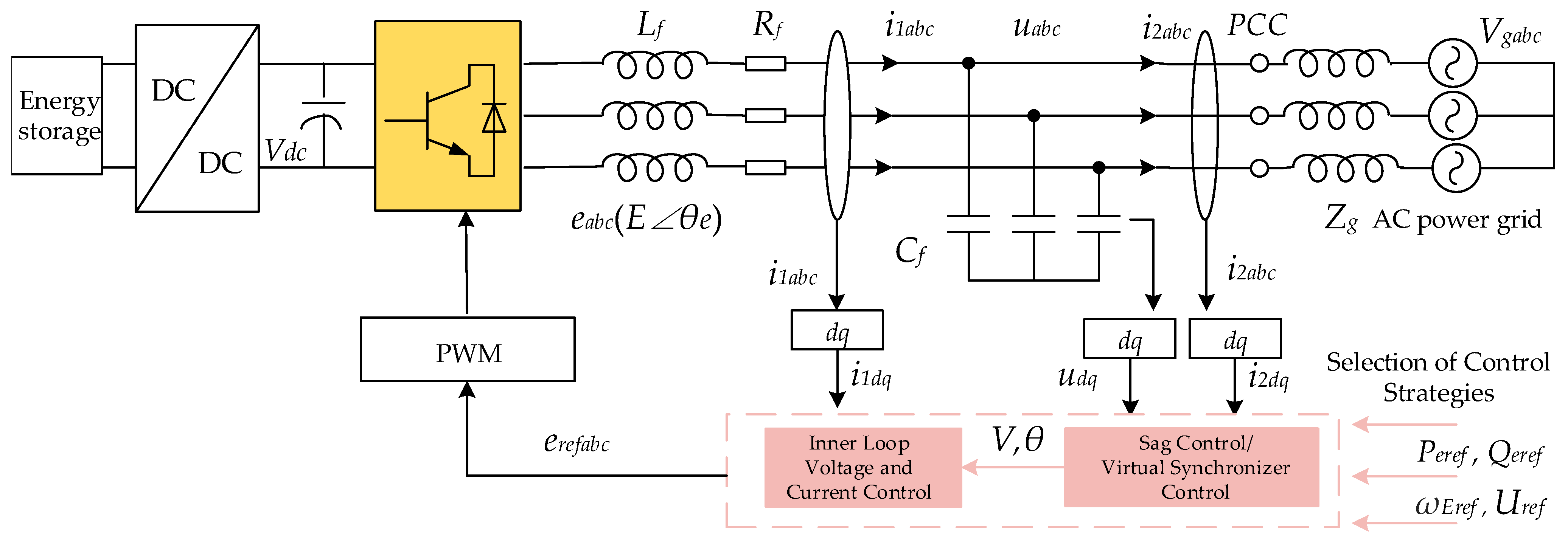
2.1. Basic Structure of an Energy Storage Power Station
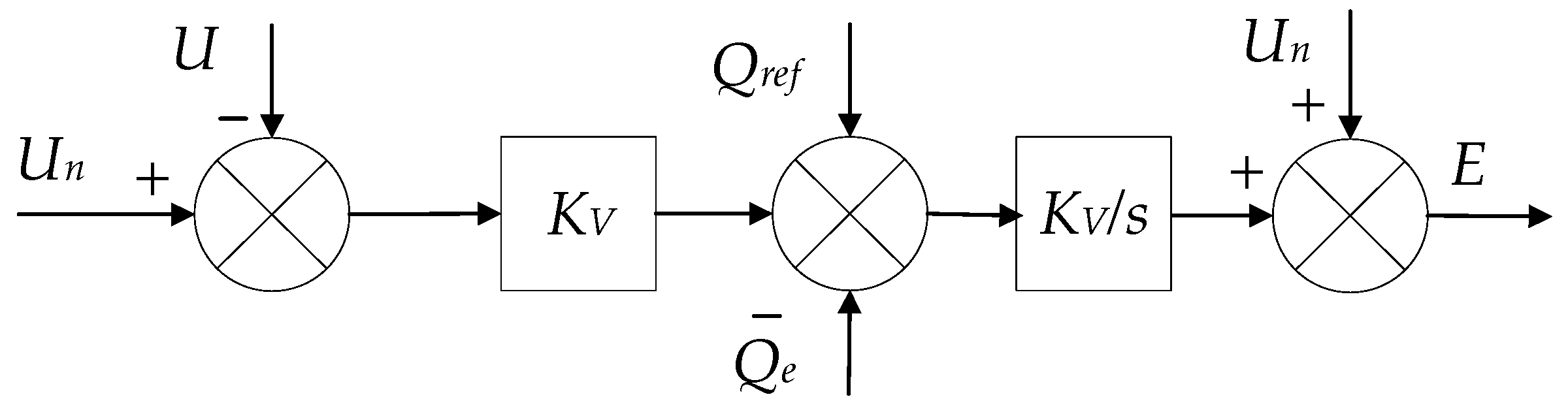
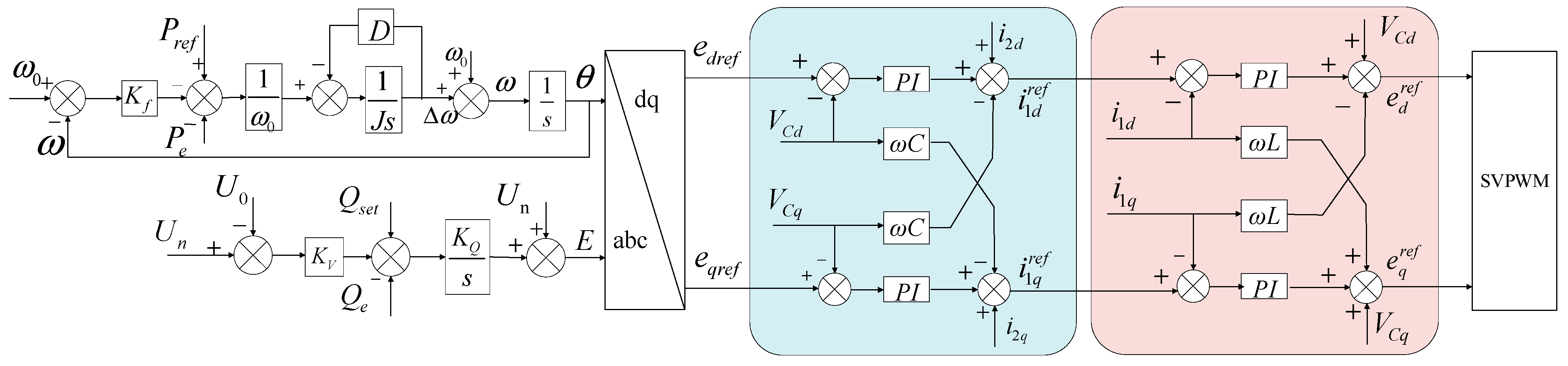
2.2. Grid-Forming Converter Control System
3. Fault Ride-Through Strategies for Grid-Forming Energy Storage Stations
3.1. Analysis of Transient Mechanisms
3.2. Analysis of Fault Current Characteristics
3.3. Fault-Tolerant Control Strategy
3.3.1. Active Power Setpoint
3.3.2. Voltage Adjustment Setpoint
3.3.3. Virtual Impedance Control
3.3.4. Mode Switching Criteria
- (1)
- Normal mode (Vg > 0.9 pu): Pref = Pref0, droop control active, virtual impedance disabled.
- (2)
- Fault mode—mild sag (0.2 pu < Vg ≤ 0.9 pu): Pref is reduced according to Equation (10); voltage command remains droop-controlled. Virtual impedance is activated only if Ig > 1.5 pu.
- (3)
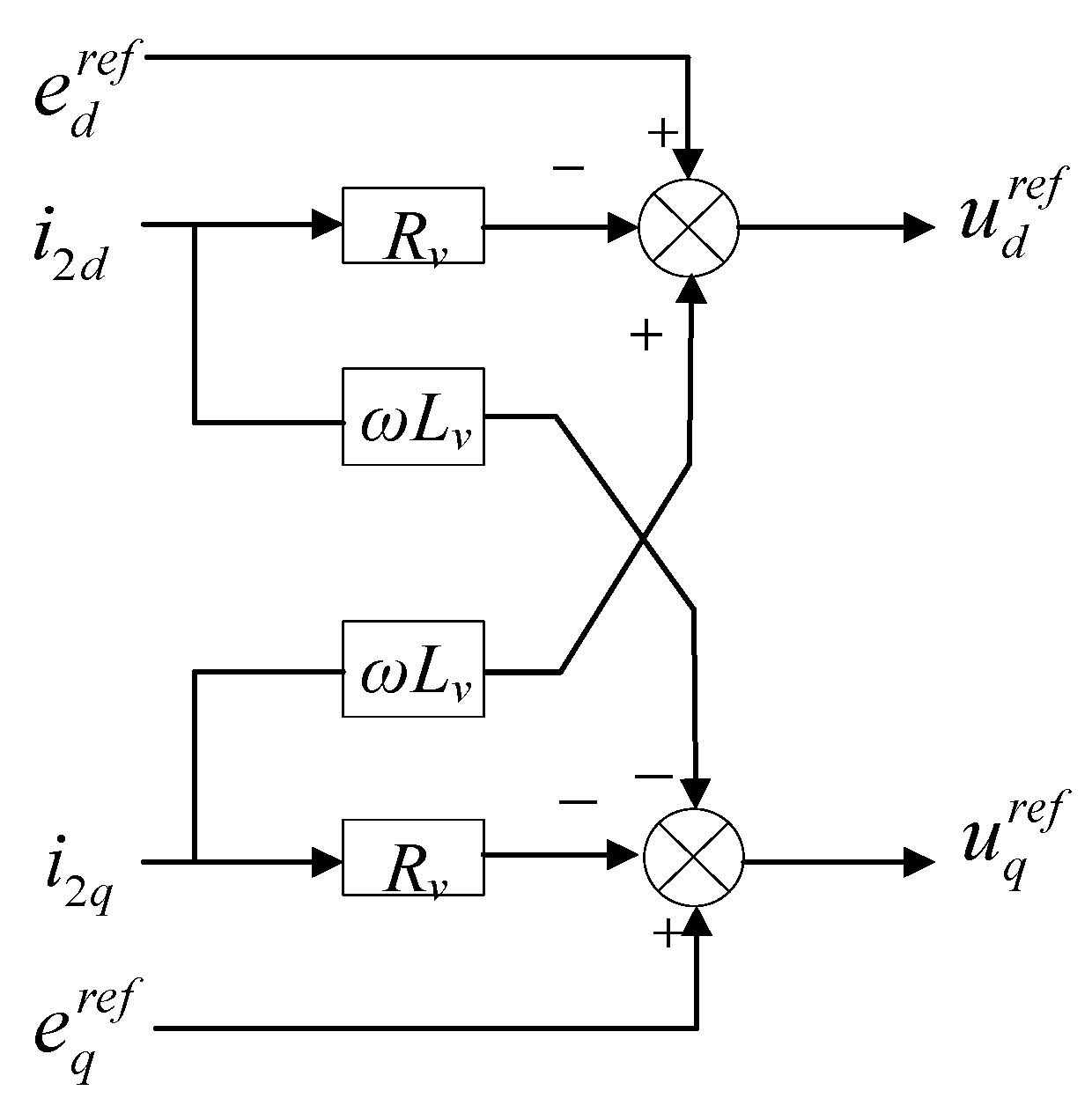
- Fault mode—severe sag (Vg ≤ 0.2 pu): Pref reduced as above; reactive droop is disabled and Uref is fixed by Equation (14). Virtual impedance is always engaged to limit current to 1.5 pu.
3.3.5. Simulation Verification
3.4. Bridging Transient Fault Response and Post-Fault Inertia Support
4. Virtual Inertia in Grid-Forming Control
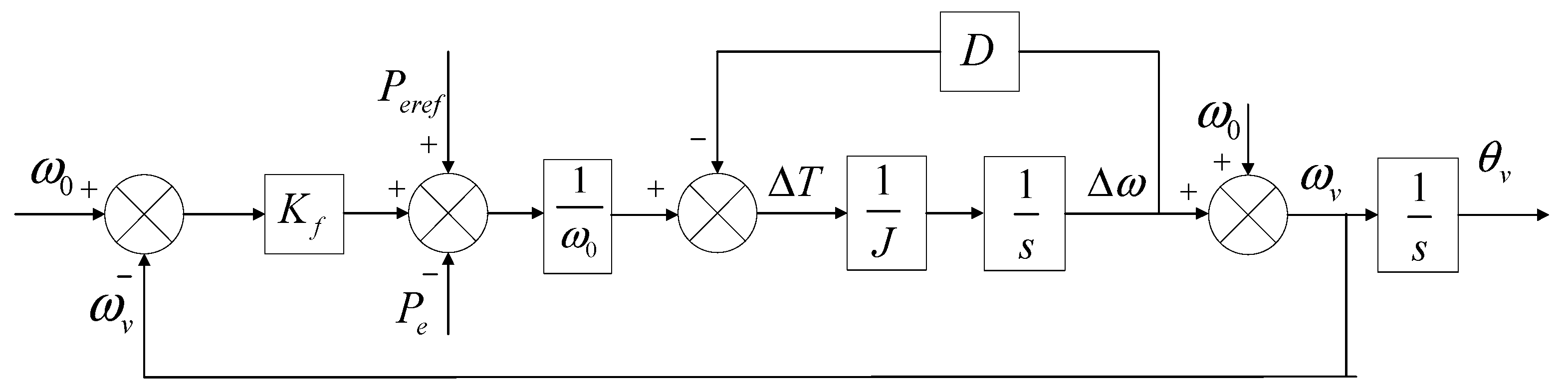
4.1. Active Power Control Loop Model
4.2. Virtual Inertia Analysis
4.3. Simulation Verification
5. Scalability and Practical Implementation Challenges
6. Conclusions
- (1)
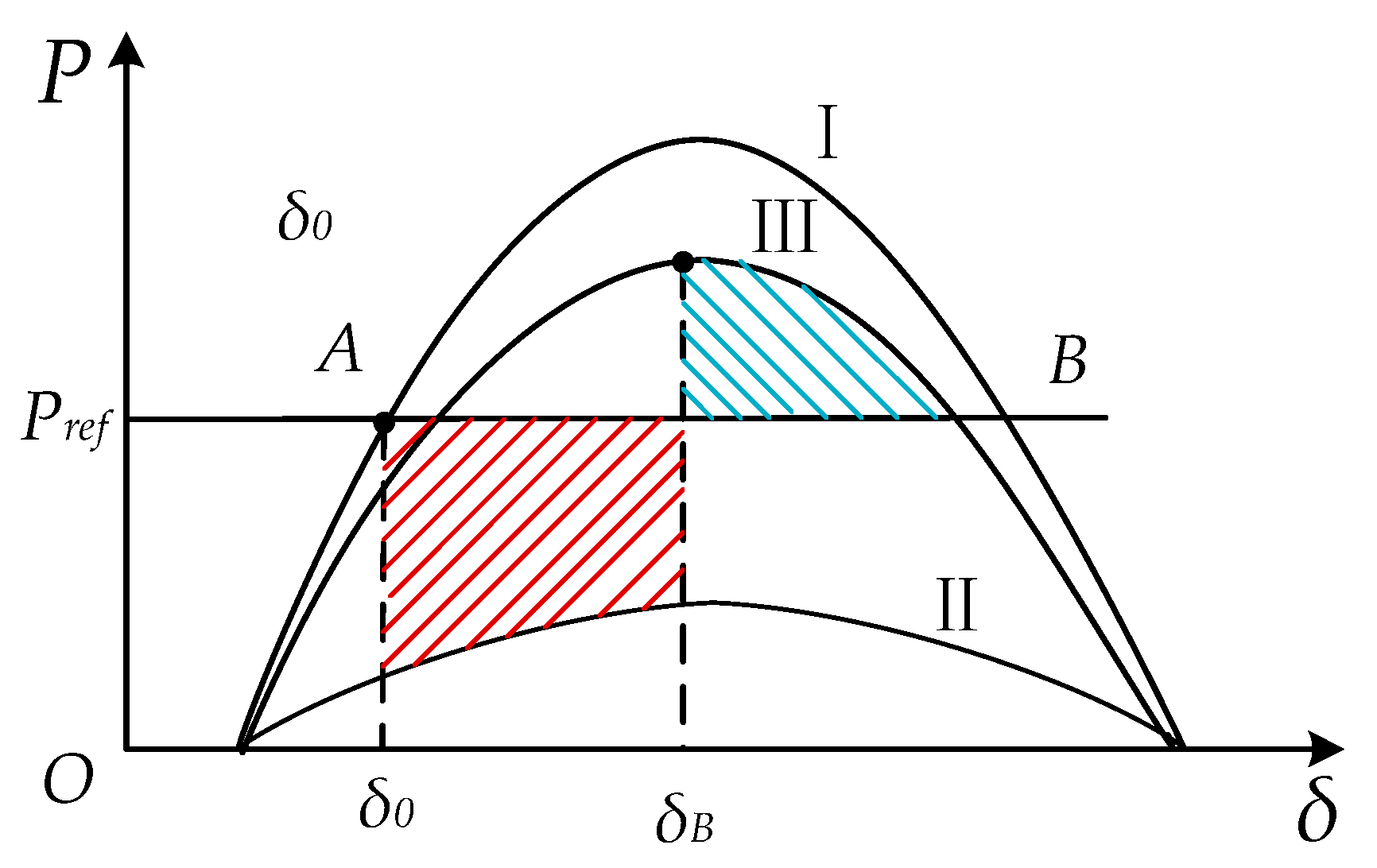
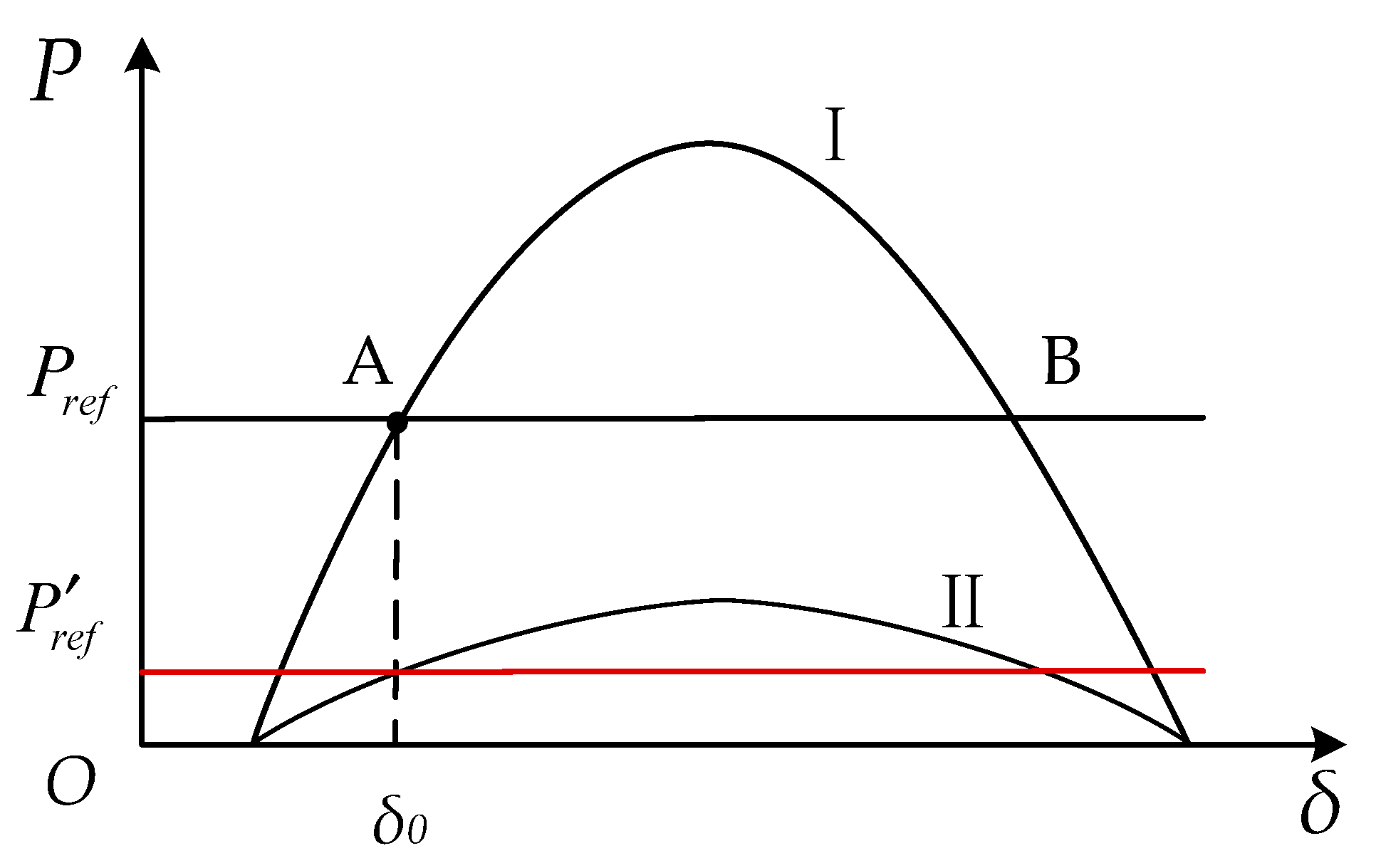
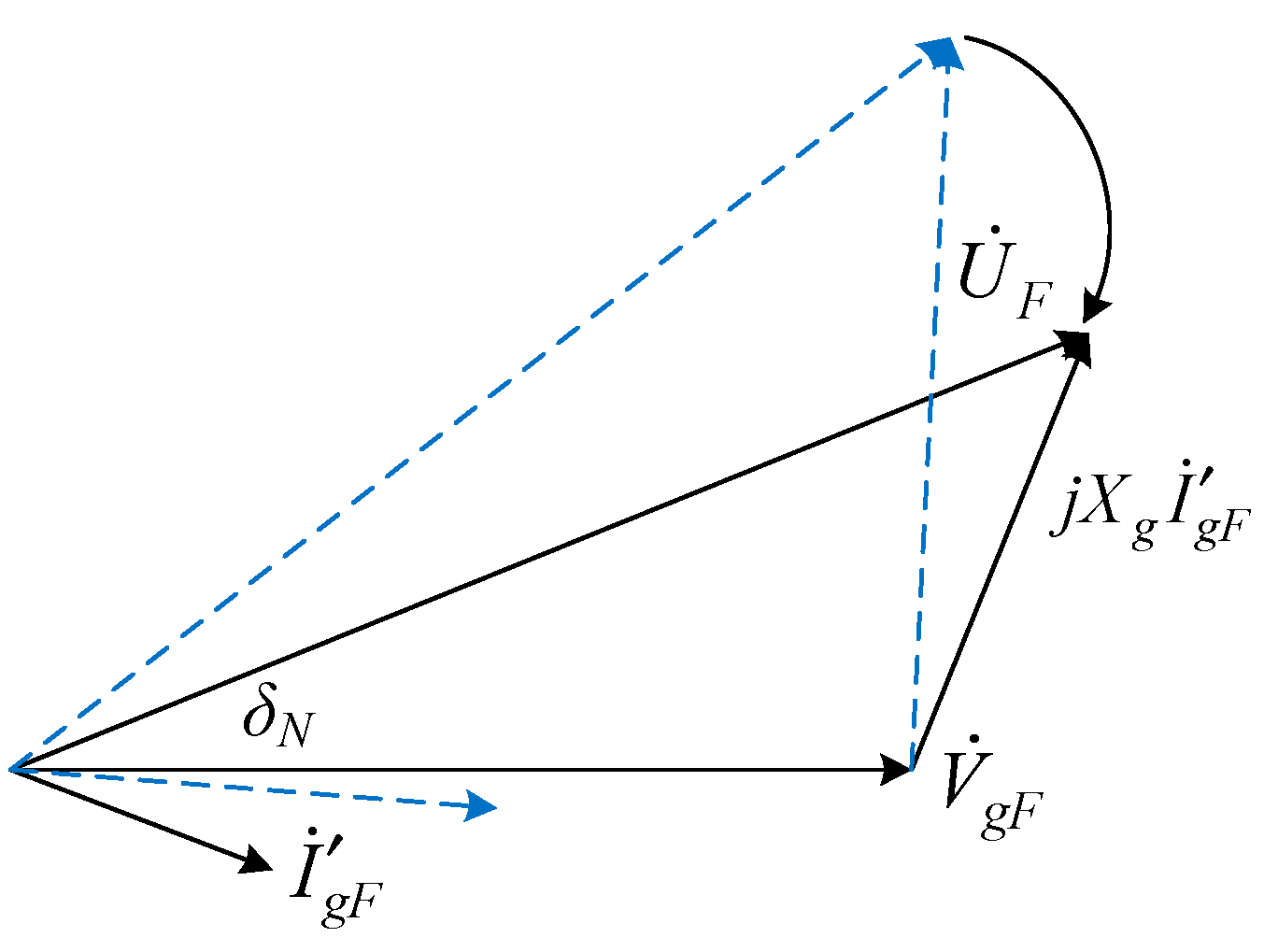
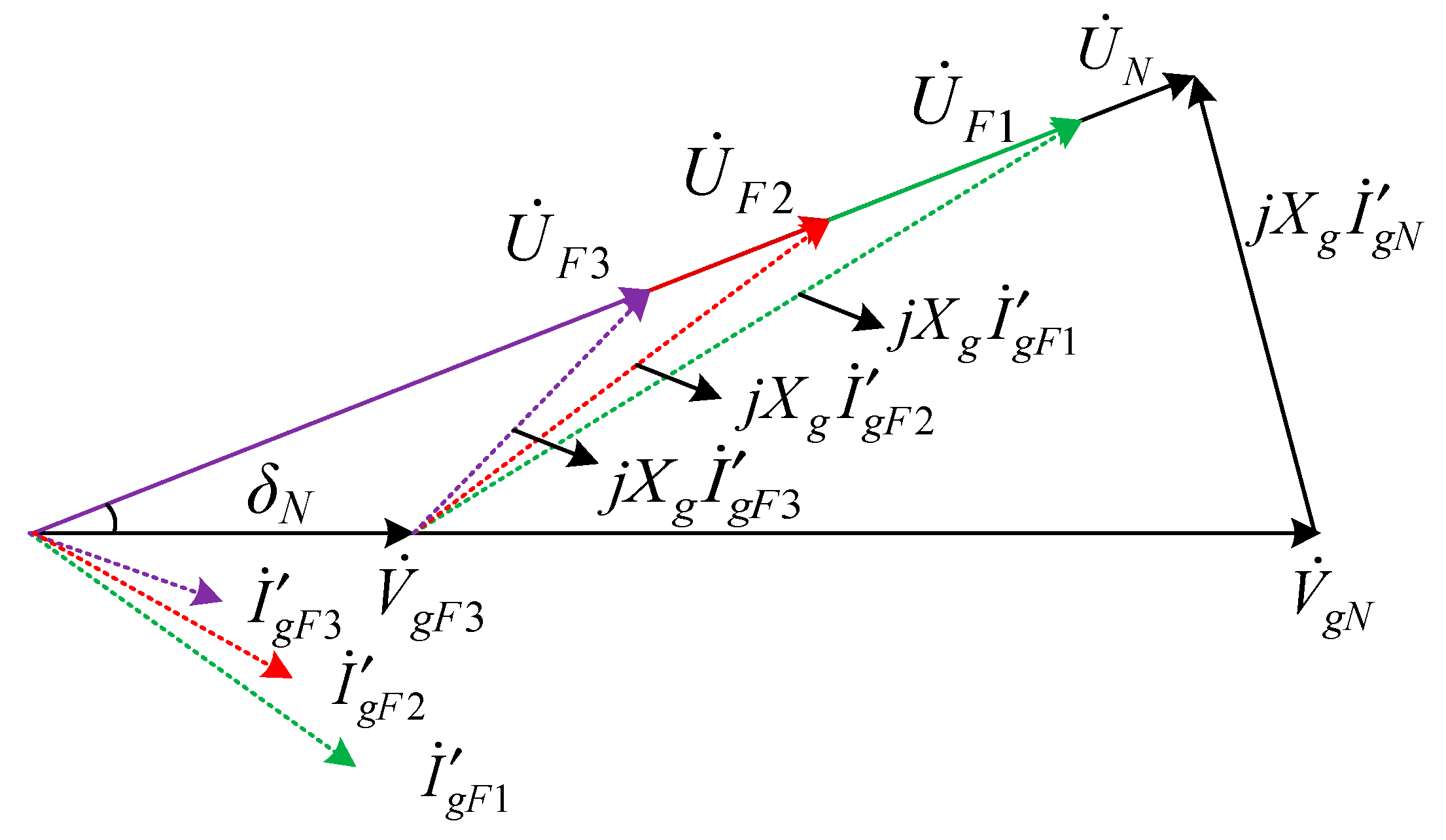
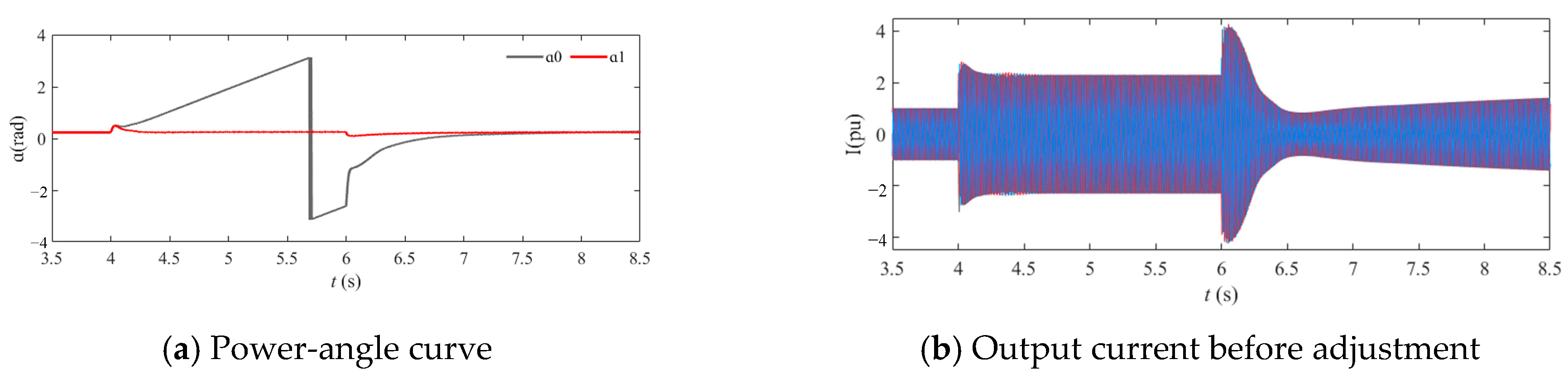
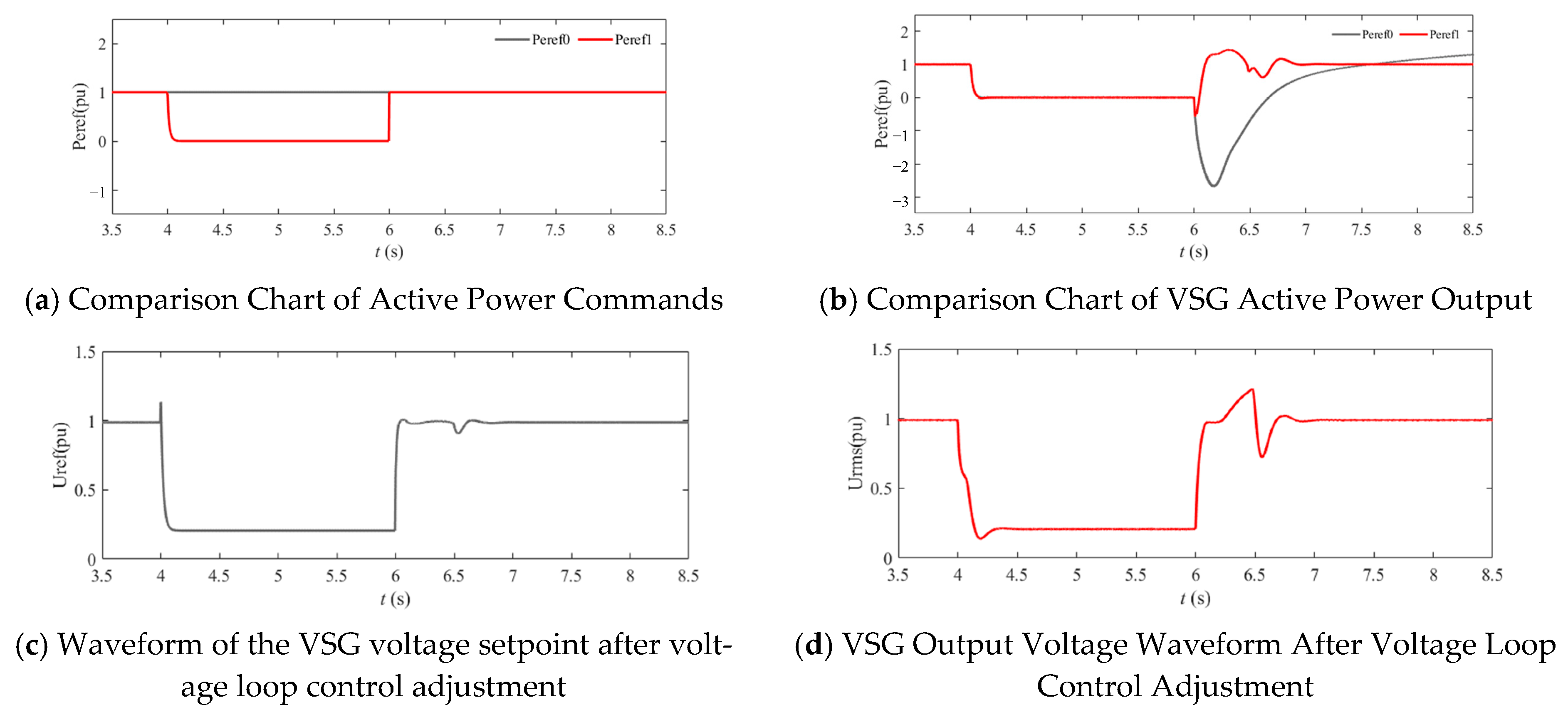
- Active power command adjustment (Equation (10)) preserves power-angle stability. Without it, the power angle δ diverges and the converter loses synchronism after fault clearance. With the adjustment, δ remains stable and the system recovers within 0.4 s.
- (2)
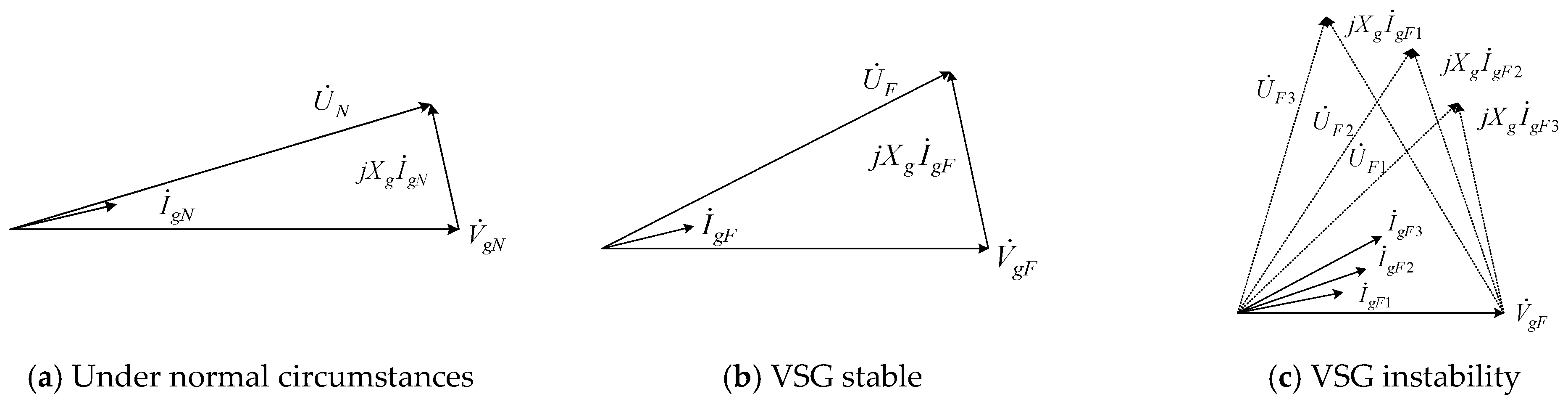
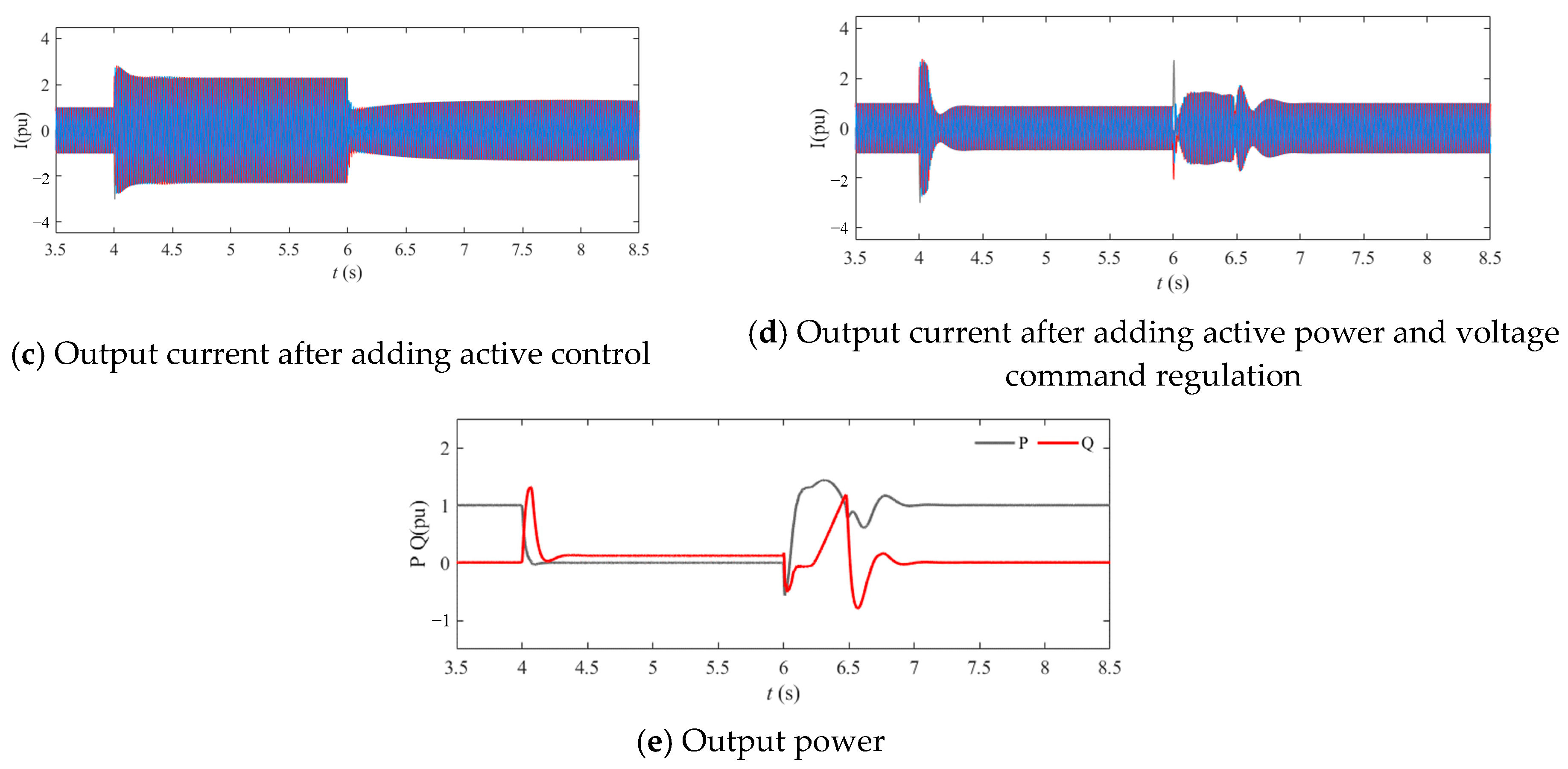
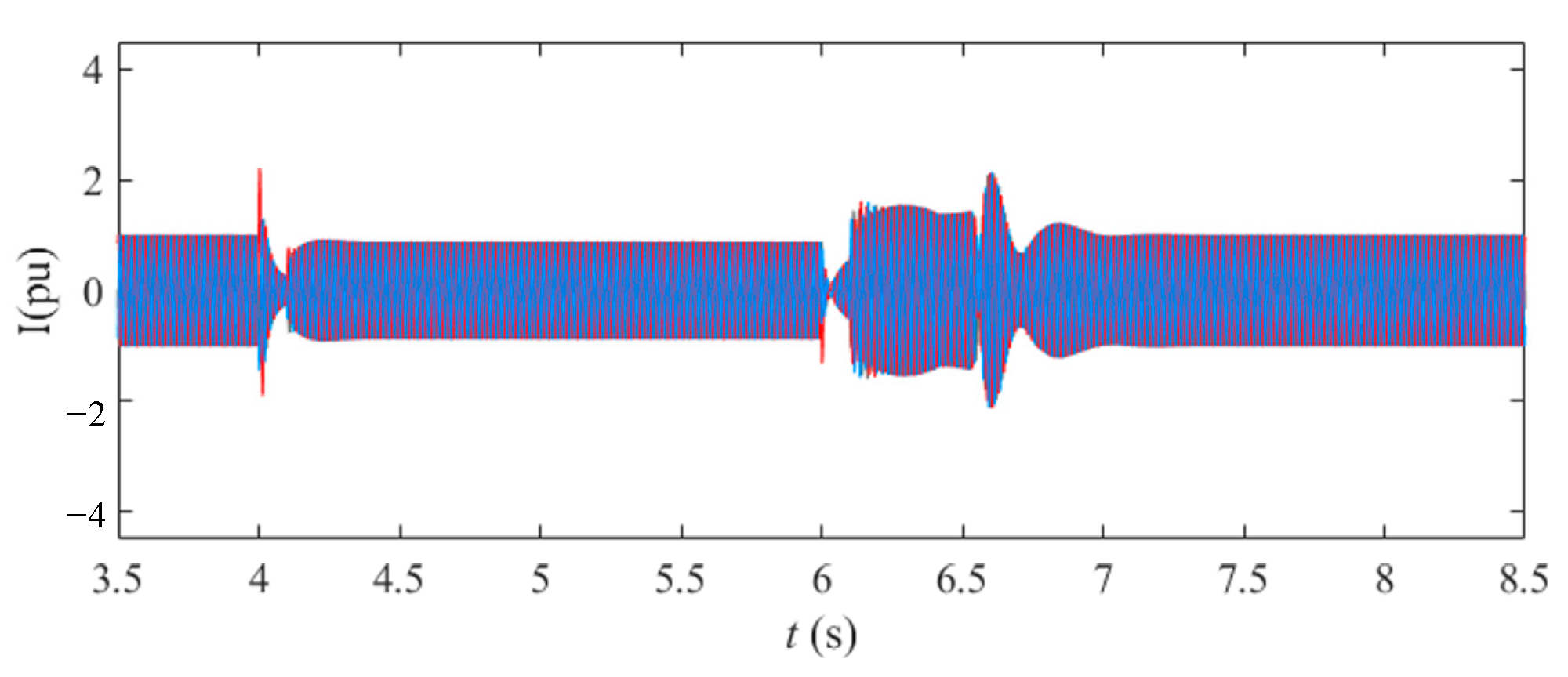
- Fixed voltage command plus virtual impedance limits fault current to 1.5 pu even under 0 pu voltage sag. The transient inrush current peak is reduced from 2.3 pu to 1.6 pu (Figure 13), eliminating trial-and-error tuning.
- (3)
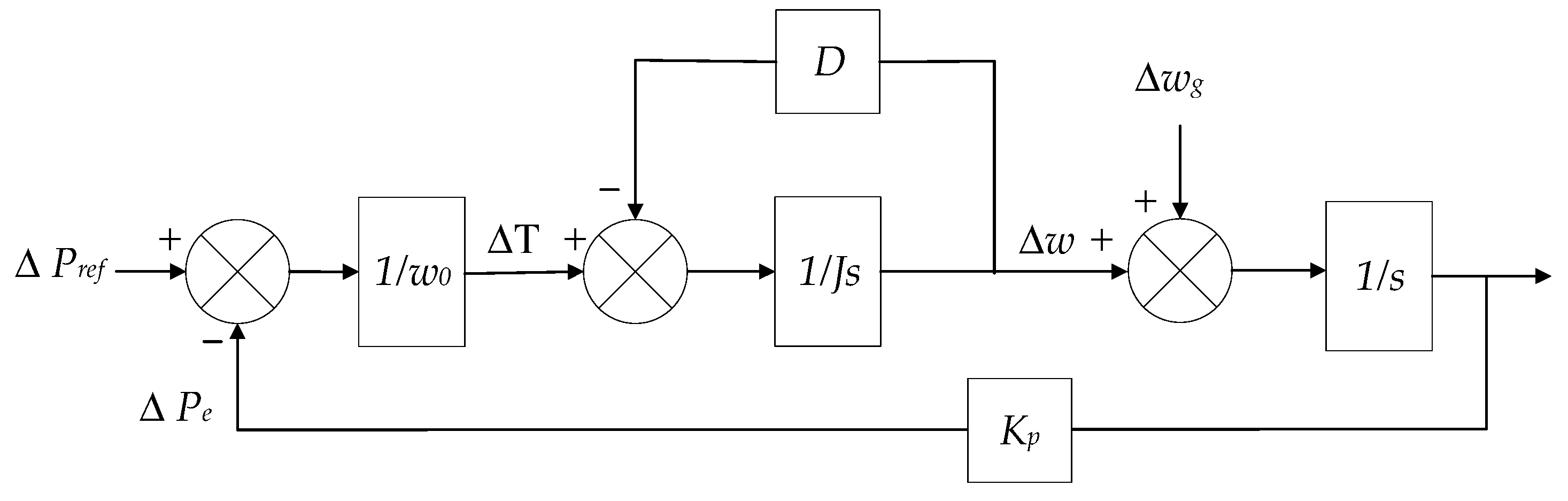
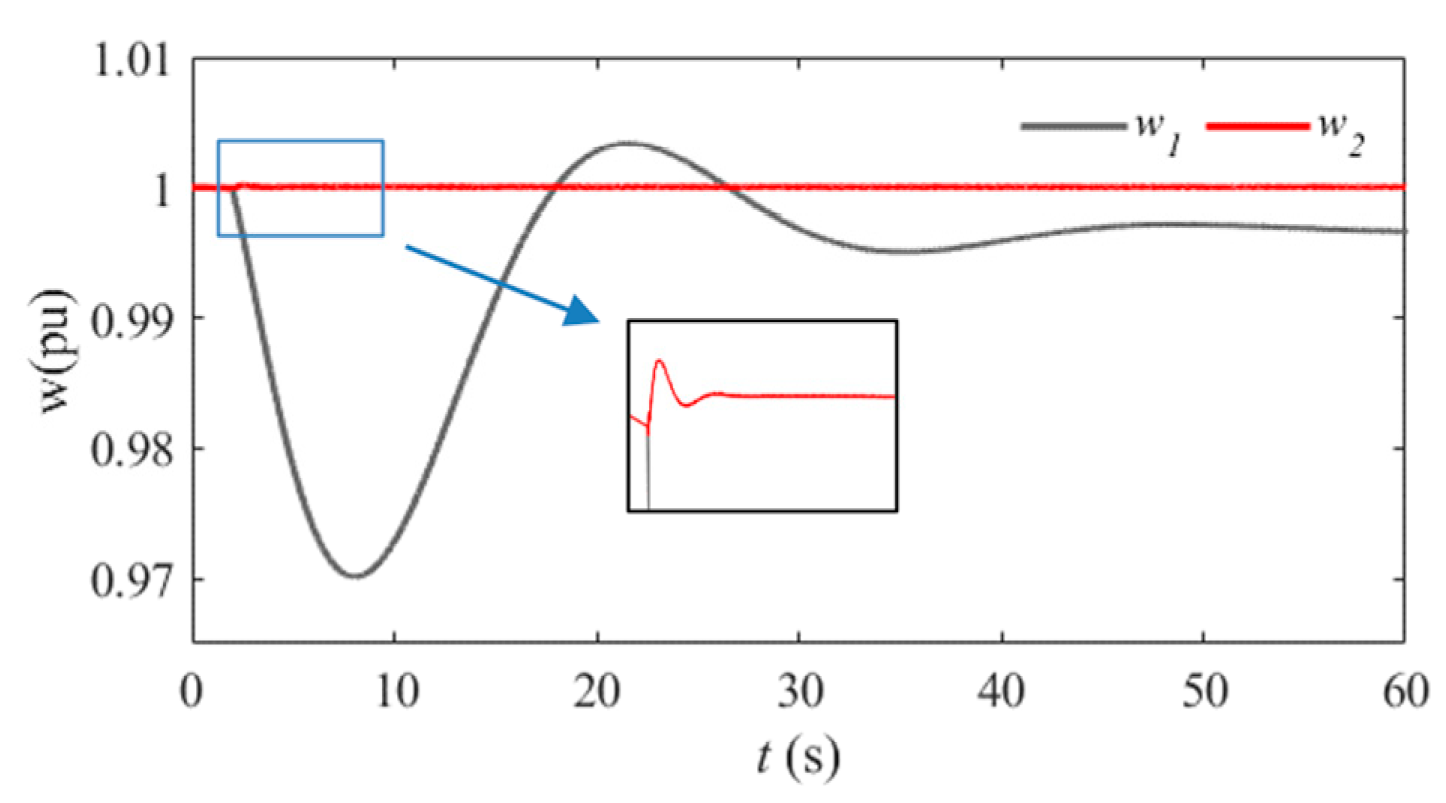
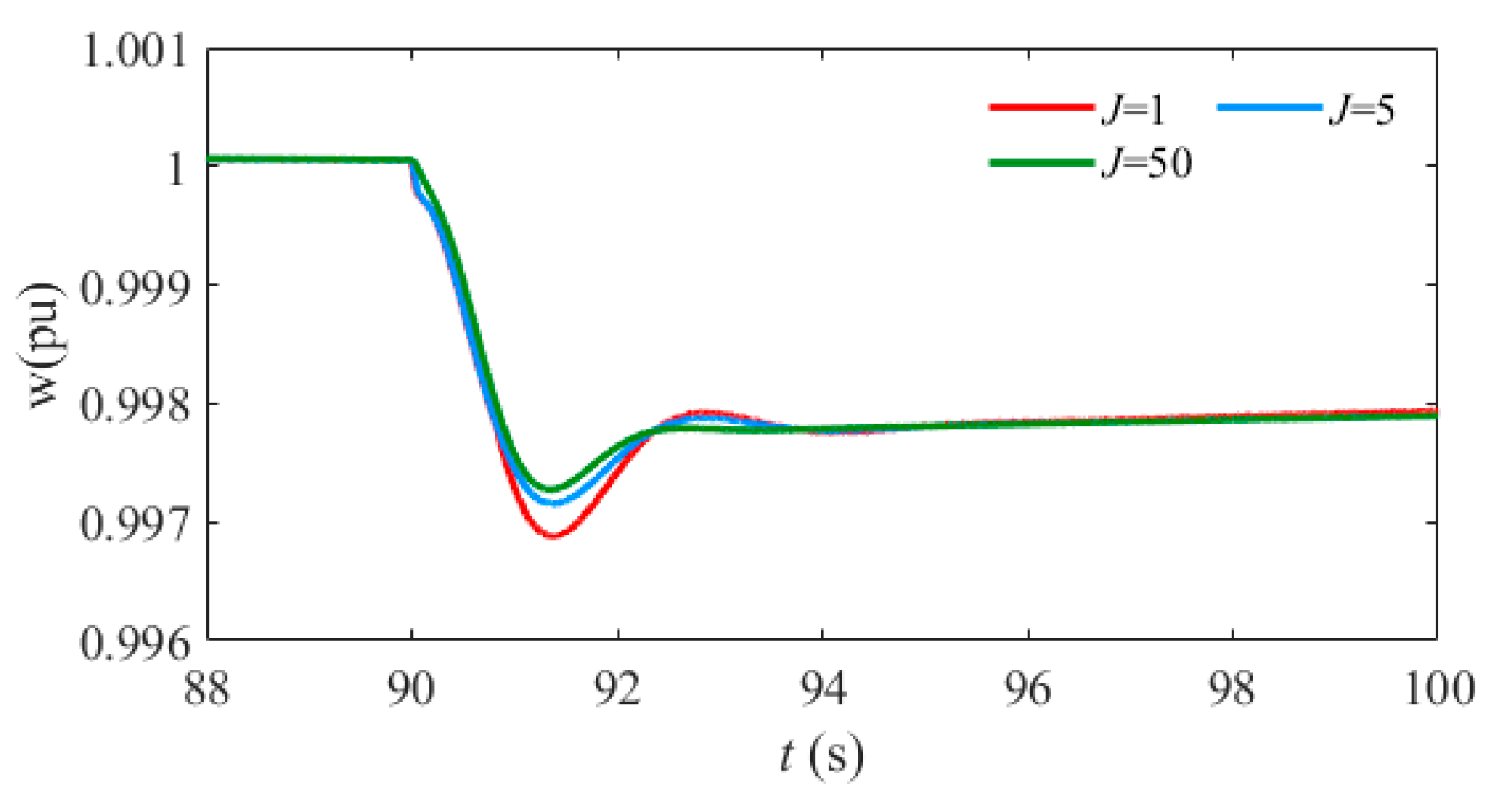
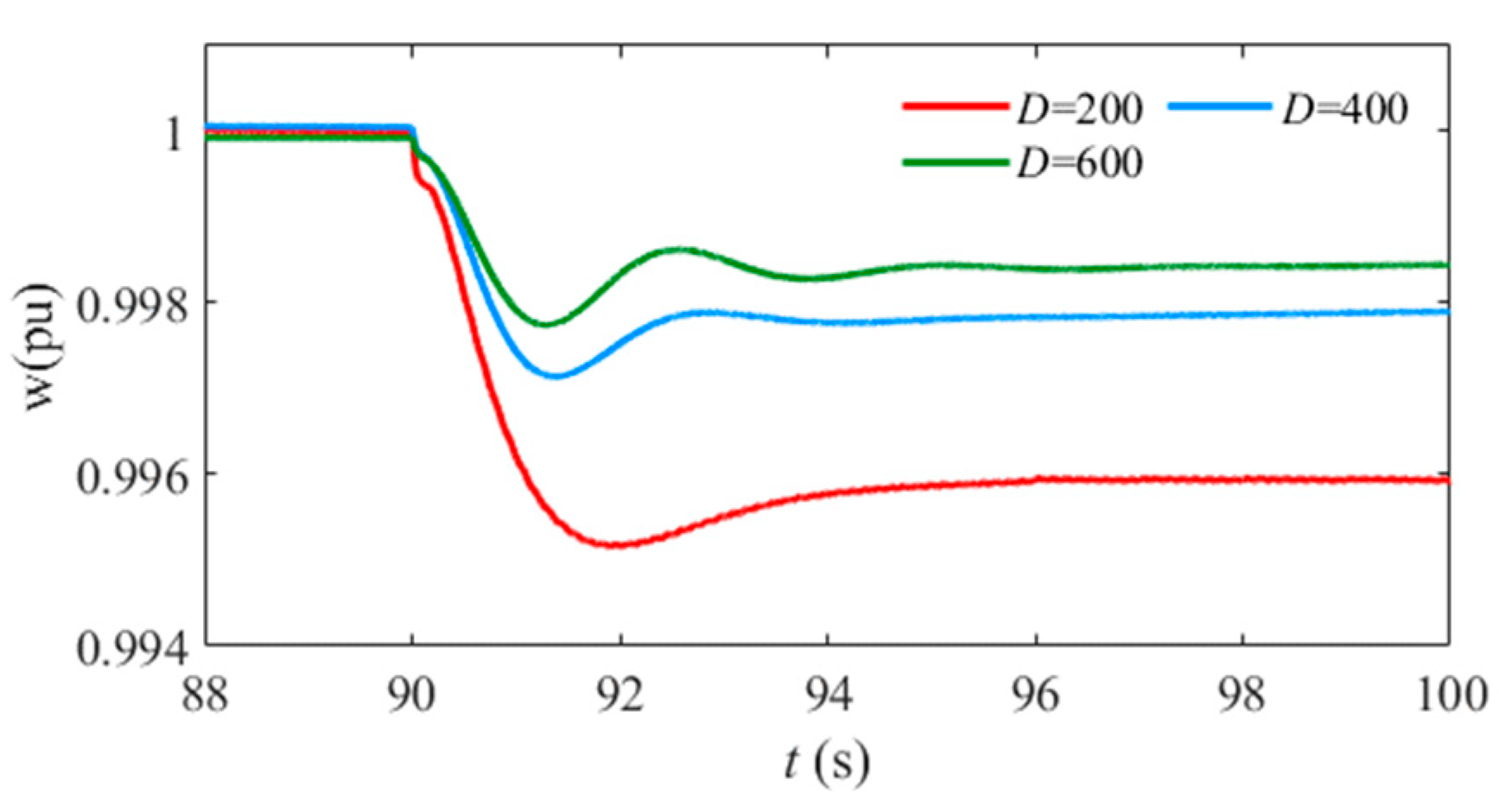
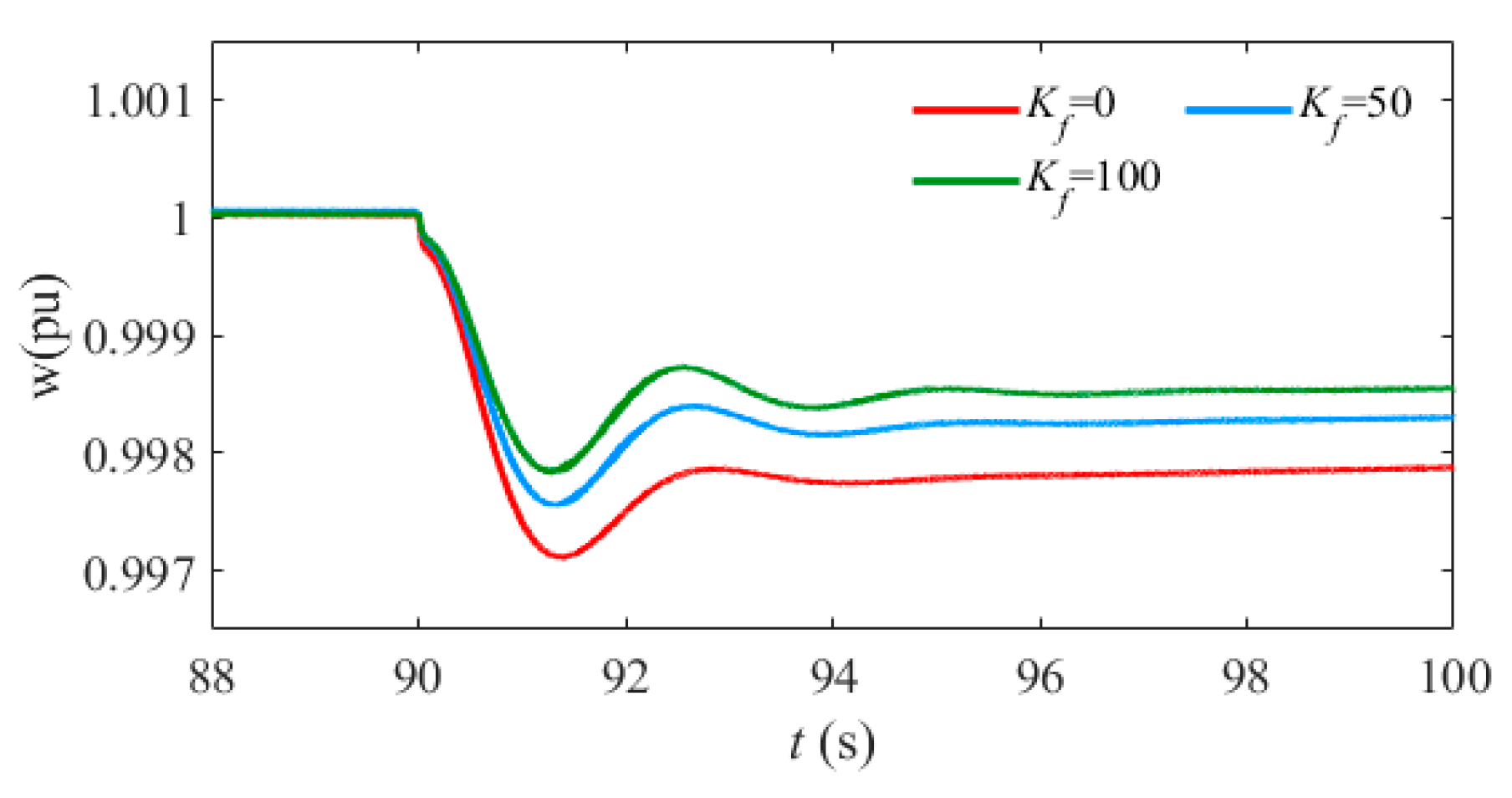
- The inertia coefficient J governs the frequency change rate, while the damping coefficient D determines oscillation decay and steady-state deviation. Increasing J from 5 to 20 (D = 50) raises the frequency nadir by 0.12 Hz and reduces RoCoF by 0.15 Hz/s. Increasing D from 30 to 80 (J = 10) reduces steady-state deviation by 0.08 Hz but does not affect initial RoCoF. Moreover, the steady-state energy of the storage depends only on D (Equation (28)), providing a clear capacity sizing guideline.
- (4)
- The proposed grid-forming station significantly improves grid frequency stability. Under a 0.2 pu load step, the frequency nadir increases by 0.25 Hz, RoCoF decreases from 0.48 Hz/s to 0.31 Hz/s, and settling time reduces by 2.1 s (Figure 16).
- (5)
- Practical implication: For low-inertia, renewable-dominated grids, the proposed LVRT strategy enables storage stations to ride through extreme faults (0 pu voltage), preventing cascading disconnections, while virtual inertia emulates synchronous generators to compensate for lost system inertia.
Author Contributions
Funding
Data Availability Statement
Conflicts of Interest
Abbreviations
| NPC | Neutral Point Clamped |
| VSG | Virtual Synchronous Generator |
| PCC | Point of Common Coupling |
| PLL | Phase Locked Loop |
| PCS | Power Conversion System |
| FRT | Fault Ride-Through |
Appendix A

| Equipment | Item | Parameter |
|---|---|---|
| NPC | Rated Capacity/MW | 1.75 |
| DC-Side Voltage/kV | 1.5 | |
| AC-Side Line Voltage/kV | 0.69 | |
| DC-Side Capacitance/μF | 2500 | |
| Filter inductor/mH | 0.5 | |
| Filter capacitor/μF | 500 | |
| grid-forming | moment of inertia J | J = 0.2 |
| damping coefficient D | D = 150 | |
| frequency modulation coefficient Kf | Kf = 30 | |
| voltage regulation coefficient Kv | Kv = 1.5 | |
| droop coefficient Kq | Kq = 0.0001 | |
| Voltage loop control parameters | Kp = 8, Ki = 0.0303 |
References
- Salem, Q.; Fawaz, B.B.; Aljarrah, R.; Karimi, M. Grid Forming Converters for Low Inertia Systems-Capabilities and Limitations: A Critical Review. IEEE Open J. Ind. Electron. Soc. 2025, 6, 775–801. [Google Scholar] [CrossRef]
- Rosso, R.; Wang, X.; Liserre, M.; Lu, X.; Engelken, S. Grid-Forming Converters: Control Approaches, Grid-Synchronization, and Future Trends—A Review. IEEE Open J. Ind. Appl. 2021, 2, 93–109. [Google Scholar] [CrossRef]
- Chen, X.; Si, W.; Yu, Q.; Fang, J. Transient Stability Analysis and Enhancement of Grid-Forming Converters: A Comprehensive Review. Electronics 2025, 14, 645. [Google Scholar] [CrossRef]
- Ji, Y.; Liu, Z.; Gu, X.; Huo, C.; Zhang, Z.; Tang, S.; Mei, J.; Huang, C. Exponential Synergistic Adaptive Control for PV–Storage Grid-Forming Inverters to Eliminate Overdamped Hysteresis in Weak Grids. Electronics 2026, 15, 1273. [Google Scholar] [CrossRef]
- Li, Y.; Wu, H.; Wang, X. A Protection-Interoperable Fault Ride-Through Control for Grid-Forming Inverters. IEEE Trans. Ind. Electron. 2026, 73, 2415–2426. [Google Scholar] [CrossRef]
- Bottrell, N.; Green, T.C. Comparison of Current-Limiting Strategies During Fault Ride-Through of Inverters to Prevent Latch-Up and Wind-Up. IEEE Trans. Power Electron. 2014, 29, 3786–3797. [Google Scholar] [CrossRef]
- Zhu, G.; Dong, J.; Grazian, F.; Bauer, P. A Hybrid Modulation Scheme for Efficiency Optimization and Ripple Reduction in Secondary-Side Controlled Wireless Power Transfer Systems. IEEE Trans. Transp. Electrif. 2025, 11, 6840–6853. [Google Scholar] [CrossRef]
- Paquette, A.D.; Divan, D.M. Virtual Impedance Current Limiting for Inverters in Microgrids With Synchronous Generators. IEEE Trans. Ind. Appl. 2015, 51, 1630–1638. [Google Scholar] [CrossRef]
- Fan, B.; Liu, T.; Zhao, F.; Wu, H.; Wang, X. A Review of Current-Limiting Control of Grid-Forming Inverters Under Symmetrical Disturbances. IEEE Open J. Power Electron. 2022, 3, 955–969. [Google Scholar] [CrossRef]
- Tan, T.; He, S.; Gao, Y.; Xiao, H.; Shen, X. Coordinated FRT Control for Paralleled Grid-Following and Grid-Forming Generators Connected to Weak Grid. Processes 2025, 13, 3816. [Google Scholar] [CrossRef]
- Du, W.; Fu, Q.; Wang, H.F. Power System Small-Signal Angular Stability Affected by Virtual Synchronous Generators. IEEE Trans. Power Syst. 2019, 34, 3209–3219. [Google Scholar] [CrossRef]
- Altawallbeh, A.; Alassi, A.; Meskin, N.; Al-Hitmi, M.A.; Massoud, A.M. Small-Signal Stability Analysis and Parameters Optimization of Virtual Synchronous Generator for Low-Inertia Power System. IEEE Access 2025, 13, 107227–107243. [Google Scholar] [CrossRef]
- Liu, Q.; Wang, M.; Nick, M.; Chen, C.; Zhao, X. Current-Limiting Control Design for Grid-Forming Capability Enhancement of IBRs Under Asymmetric Grid Disturbances. IEEE Trans. Power Electron. 2026, 41, 6430–6448. [Google Scholar] [CrossRef]
- Chao, W.; Dai, L.; Feng, Y.; Huang, J.; Wang, J.; Lin, X.; Zhang, C. Adaptive Hybrid Grid-Following and Grid-Forming Control with Hybrid Coefficient Transition Regulation for Transient Current Suppression. Energies 2026, 19, 549. [Google Scholar] [CrossRef]
- Gu, W.; Li, X.; Li, H.; Zhou, L.; Zhang, W.; Huang, M. Coordinated Configuration Model of Grid-Forming Energy Storage and Synchronous Condenser for New Energy Base Considering Transient Stability Constraints. Energies 2026, 19, 2148. [Google Scholar] [CrossRef]
- Gao, M.; Chen, Y.; Luo, C.; Xie, Z.; Wang, Z.; Lian, Z. Fault Ride-Through Strategy for Grid-Forming Converters Satisfying Multi-Objective Constraints. IEEE Trans. Sustain. Energy 2026, 17, 101–115. [Google Scholar] [CrossRef]
- Shi, K.; Ye, H.; Xu, P.; Zhao, D.; Jiao, L. Low-voltage ride through control strategy of virtual synchronous generator based on the analysis of excitation state. IET Gener. Transm. Distrib. 2018, 12, 2165–2172. [Google Scholar] [CrossRef]
- Geng, H.; Liu, L.; Li, R. Synchronization and Reactive Current Support of PMSG-Based Wind Farm During Severe Grid Fault. IEEE Trans. Sustain. Energy 2018, 9, 1596–1604. [Google Scholar] [CrossRef]

| Method | Power Angle Considered? | 0 pu Sag Current (pu) | Parameter Design | Inertia Support |
|---|---|---|---|---|
| Current limiting [6] Virtual impedance [8] Variable inertia [14,15] Proposed | No | 2.85 | — | No |
| Partial | 2.10 | Trial-error | No | |
| — | — | Heuristic | Adaptive J | |
| Yes | 1.62 | Analytical | Yes (J, D) |
Disclaimer/Publisher’s Note: The statements, opinions and data contained in all publications are solely those of the individual author(s) and contributor(s) and not of MDPI and/or the editor(s). MDPI and/or the editor(s) disclaim responsibility for any injury to people or property resulting from any ideas, methods, instructions or products referred to in the content. |
© 2026 by the authors. Licensee MDPI, Basel, Switzerland. This article is an open access article distributed under the terms and conditions of the Creative Commons Attribution (CC BY) license.
Share and Cite
Guo, J.; Kuang, W.; Ning, L.; Zhang, J.; Gu, X.; Xiao, M.; Shi, S.; Hao, W.; Zhou, M.; Wang, Q.; et al. A Study on Fault Ride-Through and Inertia Support Strategies for Grid-Forming Energy Storage Stations. Electronics 2026, 15, 2394. https://doi.org/10.3390/electronics15112394
Guo J, Kuang W, Ning L, Zhang J, Gu X, Xiao M, Shi S, Hao W, Zhou M, Wang Q, et al. A Study on Fault Ride-Through and Inertia Support Strategies for Grid-Forming Energy Storage Stations. Electronics. 2026; 15(11):2394. https://doi.org/10.3390/electronics15112394
Chicago/Turabian StyleGuo, Jinchuan, Weiheng Kuang, Lianhui Ning, Junyuan Zhang, Xinmei Gu, Mengmeng Xiao, Shihong Shi, Weihan Hao, Min Zhou, Qingxin Wang, and et al. 2026. "A Study on Fault Ride-Through and Inertia Support Strategies for Grid-Forming Energy Storage Stations" Electronics 15, no. 11: 2394. https://doi.org/10.3390/electronics15112394
APA StyleGuo, J., Kuang, W., Ning, L., Zhang, J., Gu, X., Xiao, M., Shi, S., Hao, W., Zhou, M., Wang, Q., & He, T. (2026). A Study on Fault Ride-Through and Inertia Support Strategies for Grid-Forming Energy Storage Stations. Electronics, 15(11), 2394. https://doi.org/10.3390/electronics15112394

