1. Introduction
The increasing penetration of decentralized generation, electric vehicles, and flexible loads has introduced new dynamics and vulnerabilities into modern power systems [
1]. At the same time, the growing frequency of extreme weather events and cyber threats has elevated the importance of grid resiliency as a primary operational objective [
2]. While microgrids have been widely recognized for their potential in improving system survivability, current implementations often rely on fixed topologies or limited rule-based logic, lacking the ability to adapt dynamically to evolving grid conditions [
3].
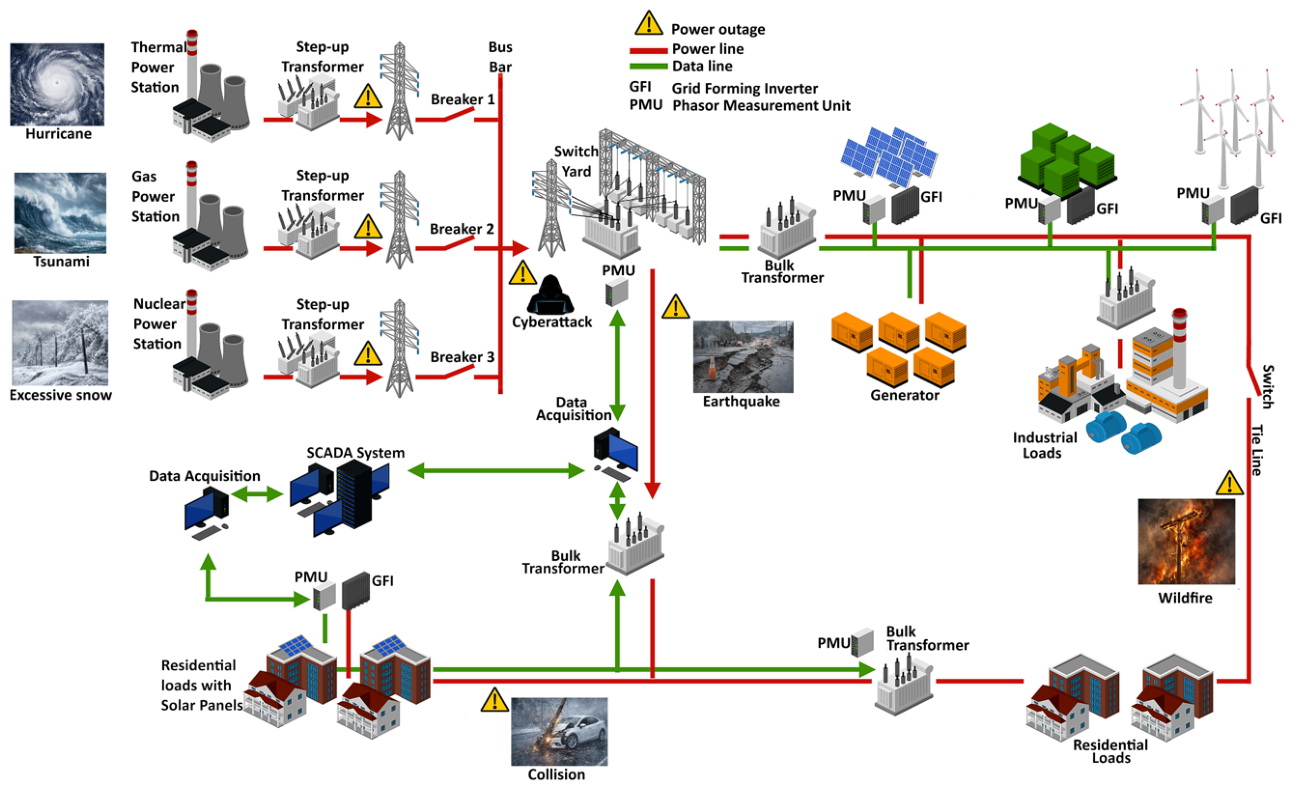
The operation of a microgrid in island mode is crucial for independently serving loads in the worst cases, when the traditional grid fails due to extreme weather or natural disasters. The increasing complexity of modern power systems, driven by high penetration of renewable energy resources, rapid electrification of transportation, and growing cyber-physical interdependencies, has elevated resilience as a critical requirement for both transmission and distribution networks [
4,
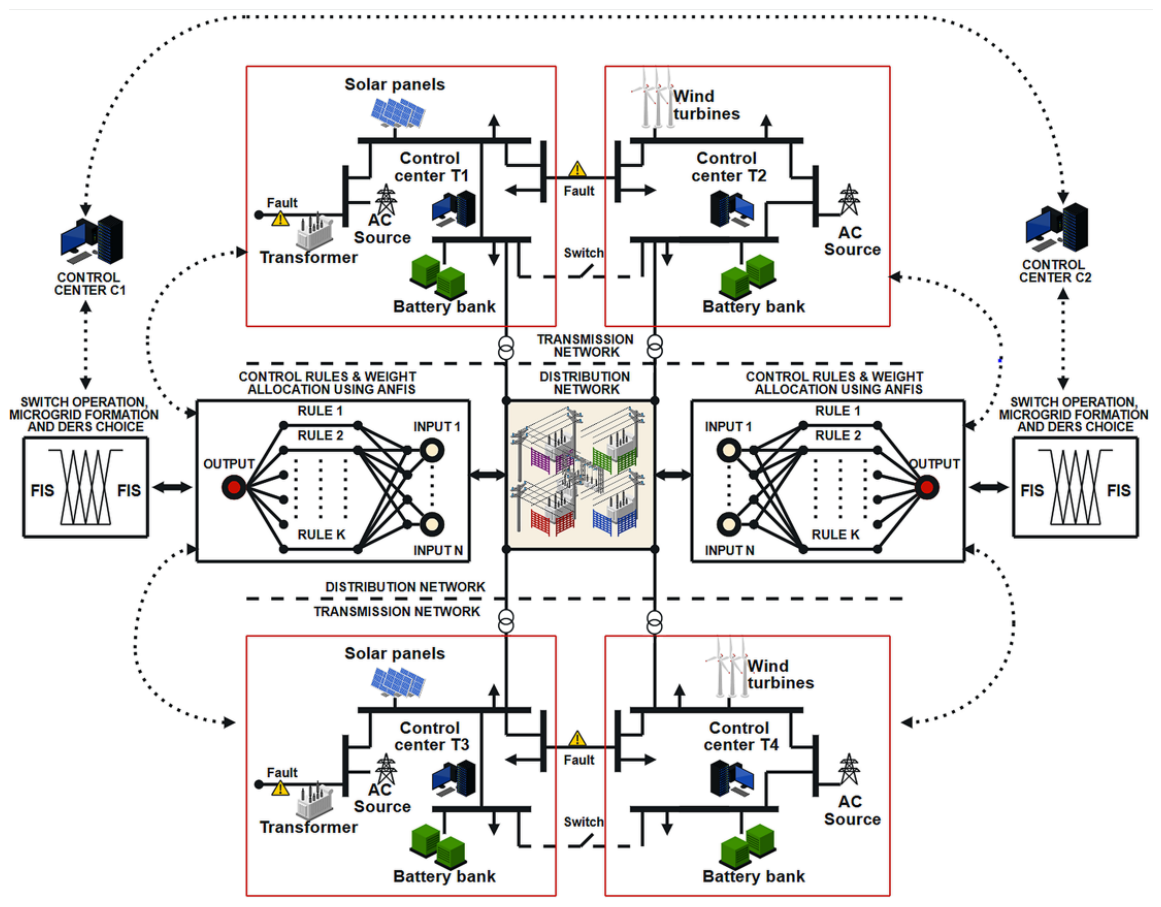
5]. Conventional centralized grid architectures are often ill-equipped to withstand and recover from natural disasters, cyber-attacks, or cascading failures, as shown in
Figure 1.
According to a 2019 World Bank report, “overall, between 2000 and 2017, 54.8% of all recorded power outage events were caused by natural shocks, and 44.2% by non-natural causes (26.9% excluding vandalism)” [
7]. In 2023, a Department of Energy (DOE) report established that power outages due to weather-related events account for about 80–83% of the major outages in the United States [
8]. The high-impact low-frequency (HILF) events, according to [
7,
8], are becoming more frequent in recent times, and there is a need for proper mitigation against their undesirable effects.
The microgrid must be able to provide necessary backup for loads, especially critical loads, in the event of grid failure [
9]. The state of the microgrid during this critical period must be ascertained to ensure proper control of nominal frequency and voltage [
10]. Real power/frequency and reactive power/voltage droop controls are two important aspects of implementing these control techniques. Microgrids with a high share of renewable energy suffer from over-voltage due to the voltage/frequency controller deployed [
10].
This research introduces hybridized multi-layer microgrid formation and supervised optimization techniques to improve the resiliency of T&D networks. Unlike previous approaches that focus on either the distribution system (DS) or transmission system (TS) network only, such as the use of electric buses (EBs) for the restoration of the DS network [
11], a rolling integrated service restoration strategy using the Mobile Energy Storage System (MESS) to increase the resiliency of the distribution system [
12]. Researchers in [
13] proposed a multi-task learning framework and a safety layer that can effectively improve topology awareness in the DS network, while [
14] proposed a formal approach to evaluate the operational resiliency of a power distribution system (PDS) and quantify the resiliency of a system using a code-based metric for the DS network. In [
15], a modernized DS network restoration technique was introduced, geared towards improving the resiliency of the DS network against extreme weather. In [
16], a method for defining and enabling the resilience of electric distribution systems with multiple microgrids was introduced.
Research in [
17] developed a restoration algorithm to improve the DS network’s resiliency and reliability. In [
18], a DS restoration approach was proposed, considering uncertain devices and associated asynchronous information, while [
19] proposed a resiliency measurement scheme for transmission power systems using a decentralized Remedial Action Scheme (RAS). Thus, refs. [
17,
18,
19] treat the transmission and distribution layers independently. In [
20], a co-simulation platform was developed to enable the analysis of several simulators that suffer from synchronization and code compatibility issues. In [
21], the importance of detailed DS network analysis for network stability is demonstrated using a co-simulation platform with a TS sub-transmission network. In [
16], a resiliency metric for the DS network short-term planning is developed to assist distribution system operators. In [
22,
23], the importance of comprehensive, accurate, and computationally efficient modeling techniques was emphasized in the context of practical applications to high-impact, low-probability events, as well as the T&D co-simulation platform performance compared to only DS simulation in power systems. In [
24], the authors deployed reinforcement learning and neural-based methods for real-time Energy Management System (EMS) optimization and distributed energy resource (DER) coordination using the mode selection and resource allocation (MSRA-TD3) approach to address a nonconvex optimization problem by learning efficient power and resource allocation policies.
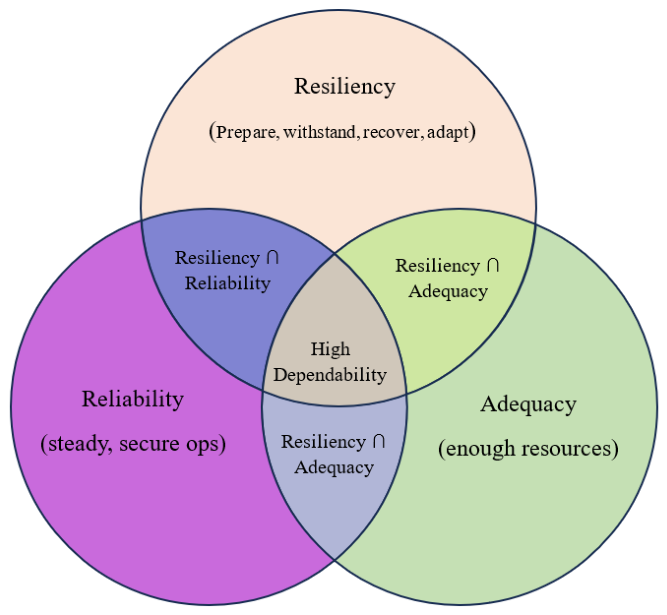
The proposed framework employs a coordinated model with ANFIS-based learning, enabling intelligent, data-driven control across the entire grid hierarchy. The contributions include: (i) development of a scalable T&D co-simulation architecture that integrates transmission and distribution models using a modular and interoperable framework; (ii) implementation of resiliency-oriented analysis and optimization strategies that enable coordinated evaluation of disturbances, renewable variability, and load restoration scenarios; (iii) a real-time microgrid clustering model driven by topological and operational states; (iv) an ANFIS trained model to optimize control strategies under fault conditions; and (v) integrated optimal power flow (OPF) and voltage/reactive optimization routines tailored for T&D coordination. The framework is evaluated against standard resiliency benchmarks using IEEE network cases, demonstrating their robustness and operational value in emergency and recovery scenarios. Power system resiliency (PSR) is the ability of a power grid to withstand, respond to, and recover from major power disruptions. It is a power system’s ability to bounce back from high-impact low-probability (HILP) events, such as extreme weather, accidents on major grid facilities, or cyberattacks [
25]. According to [
26], Resiliency is defined as the power grid’s capability to withstand and recover quickly from severe incidents, react properly to changing conditions, and prevent future events.
The following are the characteristics of a resilient power system:
A resilient power system can reduce the frequency of long-duration outages.
It can limit the scope and impact of outages.
It can be restored rapidly after outages.
However, to improve power system resiliency, one or more of the following steps have been considered in the past [
11,
12,
13,
14,
15,
16,
17]:
- (a)
Strategic deployment of renewable energy resources like solar, wind, water, geothermal, and bioenergy.
- (b)
Enhancing power electronics (use of superior controllers in inverters and converter circuits).
- (c)
Decentralizing the power supply.
- (d)
Improving cybersecurity.
- (e)
Developing resilience metrics.
- (f)
Enhancing system design for resiliency.
- (g)
Improving preparedness and mitigation measures (the system operator plays an important role in this regard).
- (h)
Improving system response and recovery.
Analyzing and managing interdependencies, several research efforts have proposed resiliency metrics tailored to the case study under consideration that focus on the network [
22]. In the wake of the growing concerns of unpredictable environmental conditions that impact both T&D networks, there is a need for a holistic solution that considers both the downstream and upstream sectors of the power network. In [
27], an ANN-based short-term load forecasting model suffers from slow optimization speed and does not consider integration of DER mesh formation models.
The proposed solution achieves faster optimization times and incorporates DER’s integration into the solution formulation. The ANFIS-based solution reduced computational time at deployment while guaranteeing optimization accuracy. In [
25], the initial assumption that transmission grids can no longer power distribution systems limits the scope of the study to microgrid formation and restoration optimization. However, the proposed solution considers both transmission (TS) and distribution (DS) networks for an appropriate T&D network solution before going into an island mode of operation with DER allocations. In [
28], the transmission and distribution network interactions were left out of the reconfiguration procedure, limiting the robustness of the solution. The proposed solution is robust as it has a T&D co-simulation platform for the incorporation of the transmission network into the reconfiguration solution modeling. In [
27], switching operations result in large frequency deviations that are outside normal ranges and cause the collapse of the microgrid. The Grid Friendly Appliances (GFAs) deployed in the grid formation are quite expensive to deploy on a larger power network [
27]. Looking at the gaps, such as simulation time and accuracy, the ANFIS-based solution achieved improved accuracy and reduced computational burden. The proposed solution reduces the operational cost, which is cheaper to implement. The resiliency study here is based on simulations.
Among other benefits is a robust T&D co-simulation platform that handles the distribution and transmission network interaction with optimization capabilities, as compared to previous studies [
29,
30] that focus on the DS network, and [
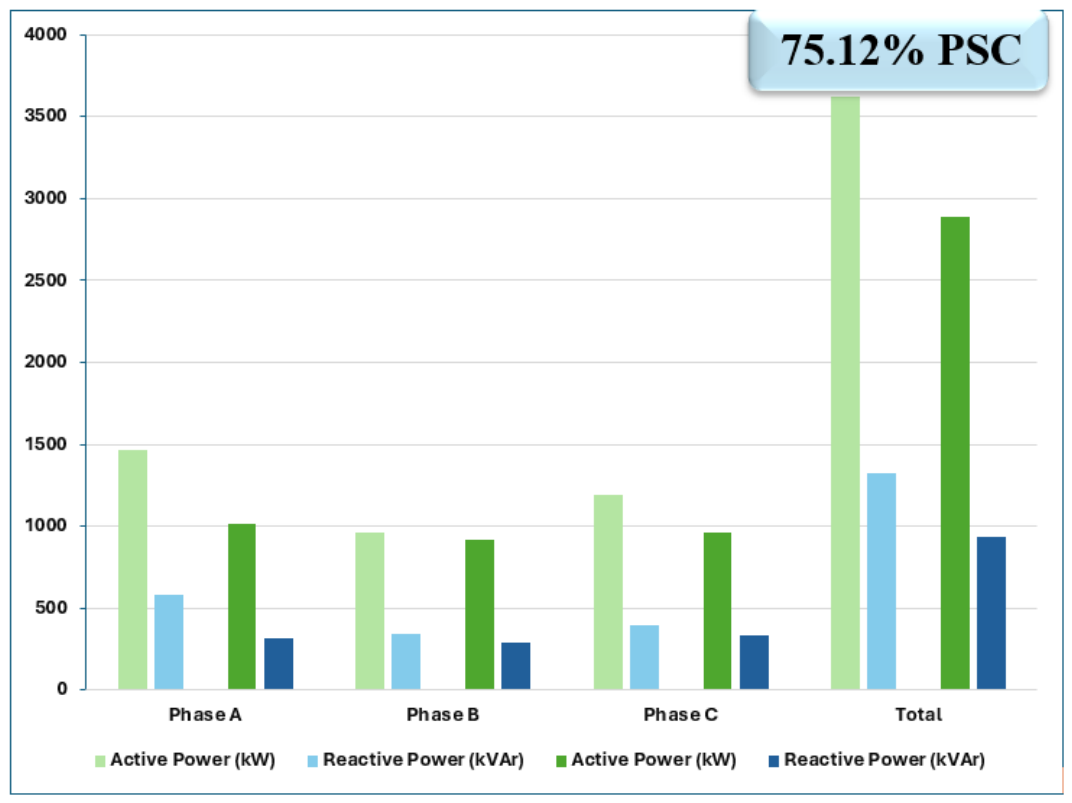
19] on TS. In the worst-case simulated HILF event, 79.84% of the network’s total active power demand is served. Thus, 70.39% of the total network reactive power demand was met, causing less computational burden in terms of simulation time and hardware requirements. With concentrated DERs (four-number DERs), the simulation time stands at 1.885045 s after numerical optimization using the developed ANFIS-enabled co-simulation platform. The 5.954774 s simulation time with 22-DERs distributed on the modified 123-Bus IEEE distribution network, which is faster compared to previous works [
31,
32]. The cost of operating the optimized network was reduced significantly as compared to conventional network operations, as indicated in the General Algebraic Modeling System (GAMS) numerical optimization model deployed. The scalability and adaptability of the proposed solution from a 15-Bus IEEE distribution network to the modified unbalanced 123-Bus IEEE distribution network yielded similar good results, and a successful simulation of abnormal operating conditions with excellent active power and grid frequency control in grid-tied and island modes of operation. A power serving capacity (PSC) of 75.12% was achieved in the face of the worst HILF event simulated. The remaining part of this paper is divided into sections:
Section 2 presents Power Management Concepts’/Metrics’ definitions.
Section 3 is the research methodology that details the procedure for the implementation of the proposed solution.
Section 4 is the result analysis of the research findings.
Section 5 provides the conclusion and recommendations.
3. Research Methodology
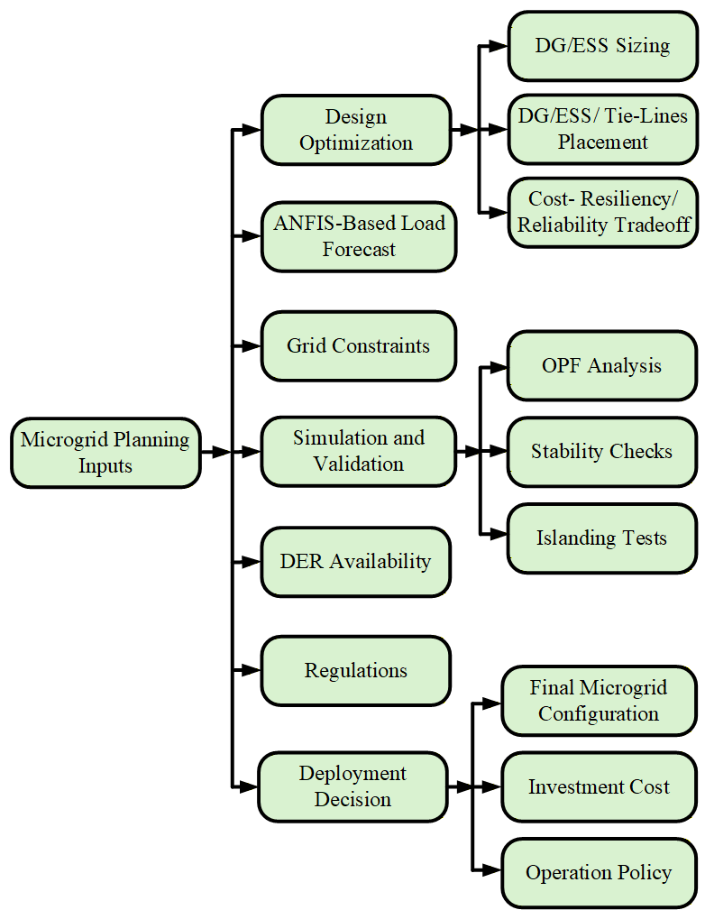
The research methodology is based on a microgrid planning scheme [
34]. The microgrid planning procedure serves as the framework for developing this research methodology, which focuses on two key aspects: resource allocation and network reconfiguration. Resource allocation comprises Distributed Generators (
), Demand Response Systems (
), and Energy Storage Systems (
), while network reconfiguration (
) involves the placement of tie-lines and the predefined and dynamic formation of microgrids. The research framework is shown in
Figure 3.
Figure 4 represents the implementation path for the
-enabled optimization technique on the Unbalanced IEEE 123-Bus distribution network with four microgrids and four (4) IEEE 14-Bus sub-transmission networks, based on supervised learning training of the model using the network configuration, load, generation, and fault data forecast for decision-making that is geared towards enhancing the overall power network resilience. The health state of the distribution system (
) and transmission system (
) networks is initially monitored using OPF analysis, which utilizes data from the local control centers within the
networks. The two central control centers (
) are virtually connected to improve decision-making and network profile restoration in the event of the loss of one center due to an
event. The optimized results are used in contrast by local control centers for important
. ANFIS acts as a supervisory, surrogate, and predictive model within the co-simulation platform. The supervisory decision layer involves BESS dispatch, load curtailment or prioritization. Predictive layer is made up of PV, wind, and load forecasting with smooth variability. ANFIS handles fragmented modeling challenges of complex power network with several subsystems modeled in different tools/language, making integration inconsistent. However, ANFIS provides a unified mapping creating a single nonlinear input–output mapping for multiple subsystems. Instead of passing full solver-level models between platforms, ANFIS replaces detailed subsystems with a trained function which reduces tool over dependency. This results in simplified co-simulation topology with fewer interfaces and less error-prone data exchange. Finally, ANFIS enables fast evaluation in optimization loops without full physics-level models. Since systems are carefully modeled in modular form with the DS restoration time limited often to 24 h, ANFIS proved very useful with medium data size.
3.1. ANFIS-Enabled Power Management and Optimization Theory
The Adaptive Neuro-Fuzzy Inference System (
) offers a convenient and flexible model that allows various decision-making criteria and their weights to be structured as a mixture of real values, interval values, or fuzzy values/sets.
is based on a hybridization scheme of Artificial Neural Networks (
s) and Fuzzy Inference System (
).
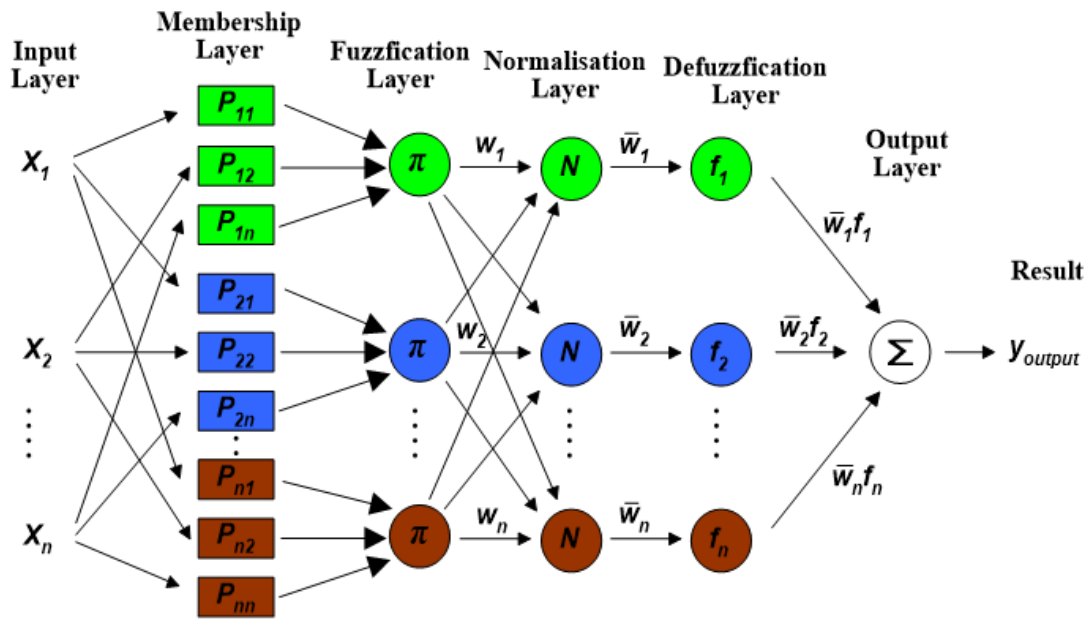
is a five-layer network with supervised learning, as shown in
Figure 5.
Membership Layer: The choice of an appropriate membership function is based on the application. Two membership functions are deployed for this work, namely the Gaussian membership function (
) and the Generalized Bell membership function (
). According to [
35,
36], the Gaussian membership function is suitable for power generation and load forecasting, while the Generalized Bell membership functions are well-suited for load weight and priority modeling.
of this layer are Generalized Bell functions given by Equation (
1) used for load weight and priority modeling.
The load criticality level is used to tag the DS and TS network load types where critical loads have weight of 1. Averagely critical loads are tagged 0.5. Non-critical loads are 0. The critical loads are first served during the restoration phase followed by averagely critical loads and lastly non-critical loads based on the available sources in the power network. The tags are used to select appropriate membership function and appropriate rule formulation (Generalized Bell function for weight allocation).
where
is the parameter set regarded as ‘Premise Parameters’. The Gaussian membership function is given by the Equation (
2) used for short-term power generation and load forecasting.
where
is the Gaussian function, ‘
c’ is the mean, and ‘
’ is the standard deviation. The function is smooth and symmetrical, and is controlled by the mean (‘
c’) and standard deviation (‘
’).
Fuzzification Layer: In this layer, every node is a fixed node labeled
. The node’s output is multiplied by the incoming values. For example,
The nodal output represents firing strength (equivalent to fuzzy ‘
’ operation), which is the minimum operation. Normalization Layer: Every node in this layer is a fixed node marked ‘
N’. This is known as the normalization layer. The output of the node is the normalization firing strength (
) given by Equation (
4):
Defuzzification Layer: In this layer, every node is an adaptive node. The node output is given by Equation (
5):
where the function (
) is given by Equation (
6):
where
is a parameter set. These parameters are known as ‘Consequent Parameters’.
Output Layer: In this layer, there is a single node, which is fixed and labeled as Σ. It computes the overall output by summing all incoming values. So, the output is given by Equation (
7),
This is the way alternative adaptive neural networks function, much like a Sugeno-type FIS. This structure can be streamlined by merging layers three and four. Similarly, weight normalization can be applied at the output stage [
37]. The ANFIS suffers from the curse of dimensionality if not well managed; that is, as the number of inputs (
n) or the number of membership functions (
) increases, the number of fuzzy rules (
) also increases.
Although suffers from the curse of dimensionality, there is a need for precise and definite knowledge of the T&D power system under review, in terms of demand and generation profiles, which, when carefully studied, guides the choice of membership functions in the prediction algorithm to prevent unnecessary rule multiplicity and power system model complexity. The regulations and members for this study are well-defined to reflect the actual system’s behavior.
3.1.1. Advantages of ANFIS over Other Machine Learning Models
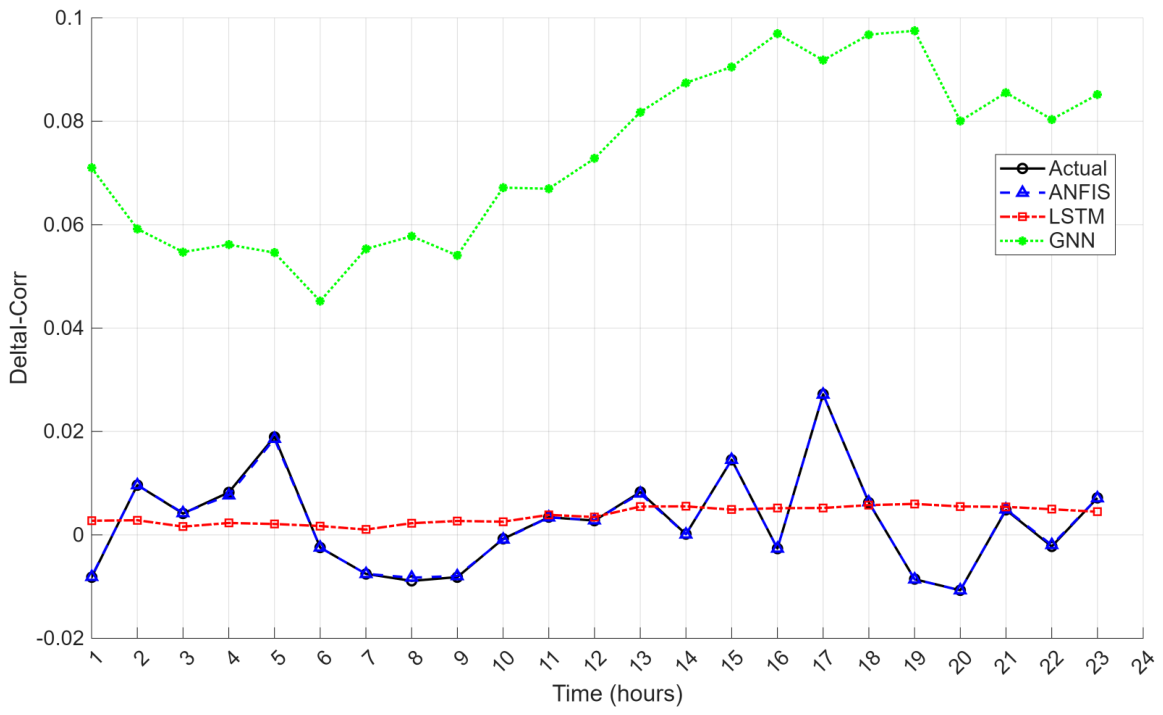
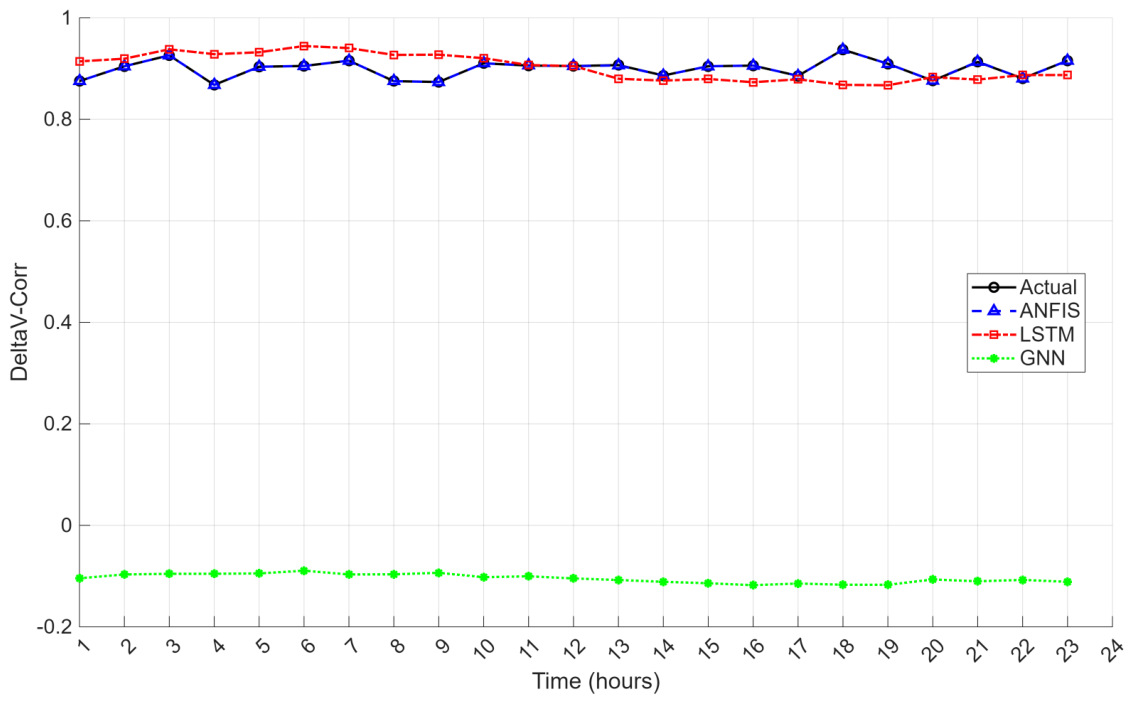
ANFIS is a rule-based ML model with transparent and explainable rules. However, other machine learning models, such as Graph-Based Learning (GBL) and LSTM, are based on a black box learning behavior, which makes them difficult to explain decision node-by-node. In power systems, especially Energy Management Systems (EMSs), interpretability is critical for system modeling and optimization. ANFIS performs well on small datasets and can incorporate expert knowledge [
37]. LSTM and GBL require large, structured datasets and labeled data for training. This results in computational complexity with the high cost of implementation, as it requires a GPU for a larger network. ANFIS is computationally lightweight with fast training and inference, which makes it easier to deploy for real-time simulation on RTAC or SCADA. LSTM and GBL models are exposed to the risk of overfitting when dealing with small datasets due to several hyperparameter tuning requirements. ANFIS is more robust for small/medium datasets.
Table A2 presents a summarized comparison of ANFIS with other ML models.
3.1.2. ANFIS Training and Adaptation
The ANFIS modules are trained offline and updated online due to the ease of deployment for real-time applications. The ANFIS forecasting is modeled to minimize the forecast error using least-square error training objectives, as given by Equation (
9):
where
contains the premise and the consequent parameters.
is the training horizon (which is a resolution of 1 min for this work).
is the actual load demand in microgrid
i at time
t and
is the forecast load. The ANFIS-enabled weight generation is trained against a target supervisory policy given by Equation (
10)
where
is the parameter set of the ANFIS model for load-weight estimation.
is the desired load weight.
is the ANFIS-predicted load weight.
is the squared error (Euclidean norm).
is the number of training time steps.
3.2. Mathematical Modeling of the Objective Functions
The following are three objective functions of this research:
To minimize the outage/loss of load on both the distribution and transmission systems.
To minimize the number of active network operations carried out to achieve the first objective. This objective function aims to minimize the restoration time of loads during events. The more active network operations carried out to restore the power supply, the more complex the restoration procedure and consequently the longer time to achieve the objective (1).
Minimization of the costs of generation, switching, and load curtailment.
3.2.1. Modeling Objective Function I
where
and
are the
weight coefficient allocations for the transmission and distribution loads, respectively.
is the
active load loss,
is the
’s active load recovered.
is the
reactive load loss,
is the
reactive load recovered,
is the
active load loss,
is the
’s active load recovered at the coupling point ‘
k’,
is the
reactive load loss,
is the
’s reactive load recovered at the coupling point ‘
k’,
i represents the distribution nodes or transmission buses, and
k corresponds to the coupling points between the
and
network, where
k = 1, 2, 3, 4.
and
are derived from the total power loss, reliability, and self-adequacy indices handled by the ANFIS-designed algorithm. The total power loss index (
) is derived from Equation (
14).
where
M is the total number of microgrids formed in the network.
where the bus current, except for the slack bus, is estimated as given by Equation (
17).
is the current of bus
i,
is the complex power of bus
i, and
is the voltage of bus
i. By applying Kirchhoff’s Current Law (
), in a backward sweep, the branch current between two buses is calculated using (
18).
is the current of line
j, and
is the current of bus
i. The suffix
denotes the line next to
j, which is used to apply the
at the node. Bus voltage is estimated using Kirchhoff’s Voltage Law
, in a forward sweep, using Equation (
19).
is the voltage of bus ‘
i’,
is the current of line ‘
j’, and
is the impedance of line ‘
j’. Loss Target is the target value for power losses, calculated when the microgrid is formed, with loss minimization included only in the objective function.
is the power loss in microgrid ‘
m’. ‘
n’ is the total number of lines between buses in microgrid ‘
m’;
is the current flow, and
is the resistance of line ‘
j’ of microgrid ‘
m’ [
34].
is the target value of the Index Adequacy calculated when the microgrid is formed, with the adequacy index included only in the objective function. is the real power injection at node ‘i’; is the load connected at node ‘i’; is the power loss in line ‘j’ in microgrid ‘m’ and ‘j’ is the line between two nodes.
Reliability index (
) is given by Equation (
22):
is the Expected Loss Load (ELL) given by Equation (
23):
is the probability of loss of load on day ‘
i’,
is the availability capacity on day ‘
i’, and
is Forecast Peak Load on the day ‘
i’ [
34]. Thus, the ANFIS weight coefficients can be estimated using Equation (
24):
3.2.2. Modeling Objective Function II
The following are considered the network active operations for this work:
Line Switching operations ().
allocations ().
Load shedding/peak shaving ().
Physical Network Repair by linemen in cases where network power line re-energization could not be established via remote network re-configuration ().
& are the weight coefficient allocations for the transmission and distribution operations, respectively. and are correlated (but modeled separately). is based on historical data and the generation pattern of the . Additionally, control centers are strategically positioned to provide microgrid control from alternative locations in the event of abnormal operating conditions that may make one center inaccessible. The proposed hybridized multi-layer microgrid formation and optimization technique using aims to bridge this gap by leveraging adaptive learning and real-time optimization to enhance the grid’s ability to withstand and recover from disturbances.
3.2.3. Modeling Objective Function III
Minimization of generation, switching, and load curtailment costs.
The first part of Equation (
28) minimizes generation cost using a quadratic cost function; the second part minimizes operation costs (switching and active operation costs); and the last part minimizes load curtailment cost.
is the real power output of generator
i;
represent the generation quadratic cost coefficients;
is the generator switching variable;
is the switching decision;
denotes the cost of switching;
is the amount of curtailed load;
represents penalty cost per unit of curtailed load.
3.2.4. Tie-Line Management and Dynamic Microgrid Design
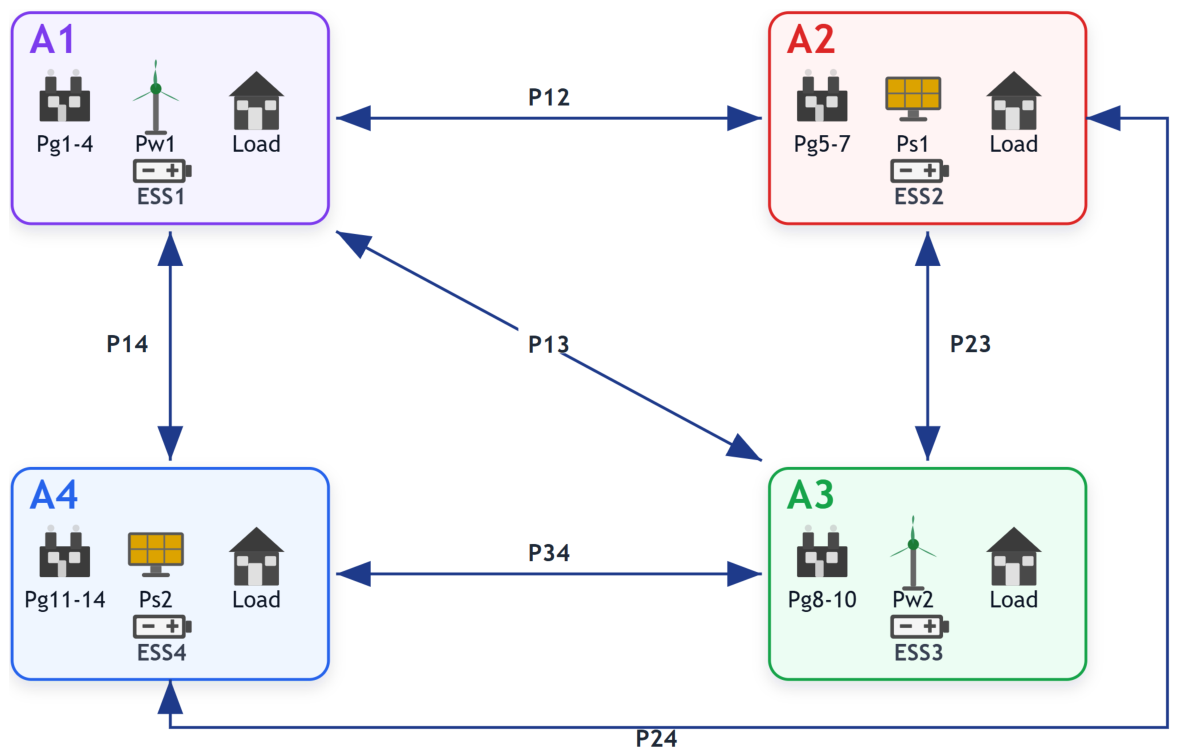
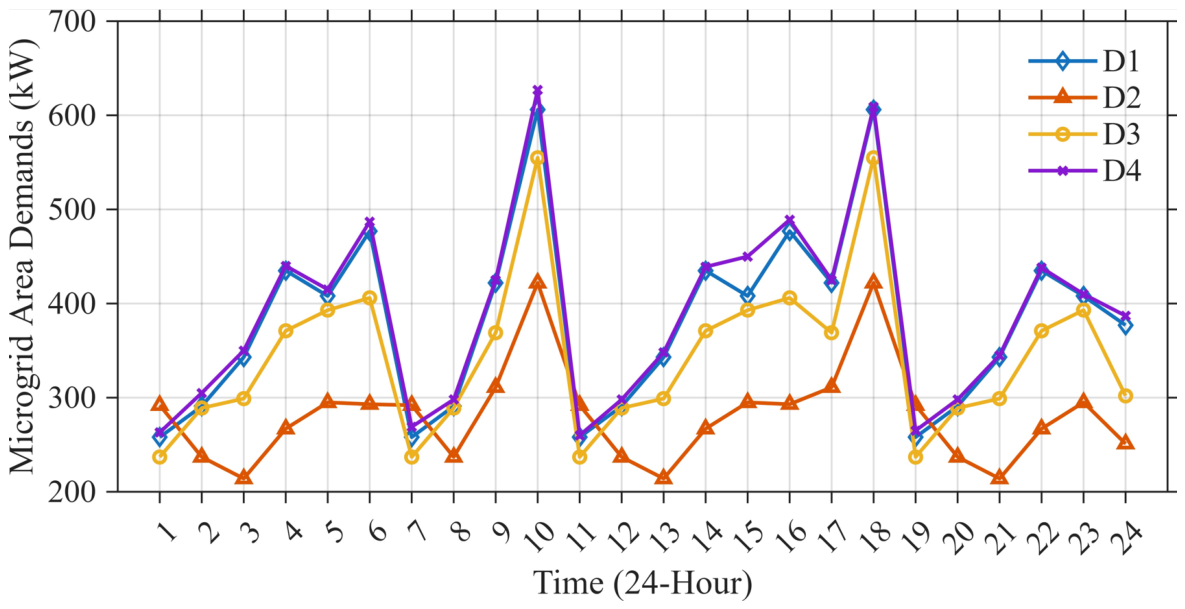
A multi-microgrid dynamic economic dispatch case study of the modified IEEE 123-Bus network is presented. The mathematical modeling of the power systems involves using the GAMS V43.3.1 for numerical optimization of the network.
is the electric load (kW) in the area ‘
a’ in time (
t).
is the amount of transferable energy between area
a and
.
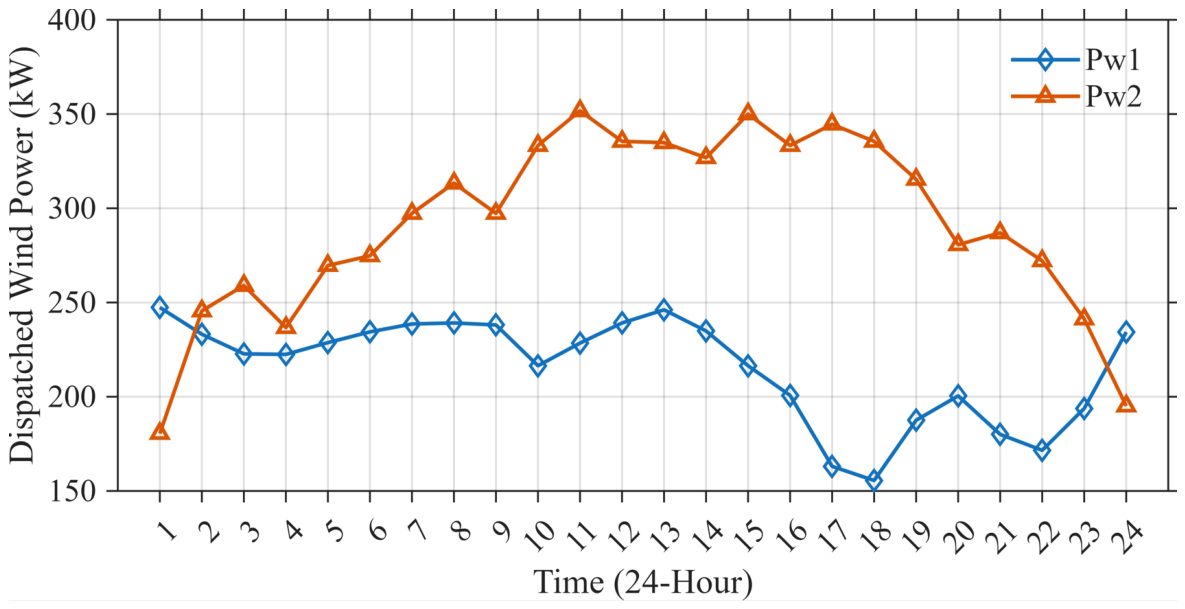
where
are the capacities of the wind turbines in kW.
where
are the solar farms’ capacities in kW.
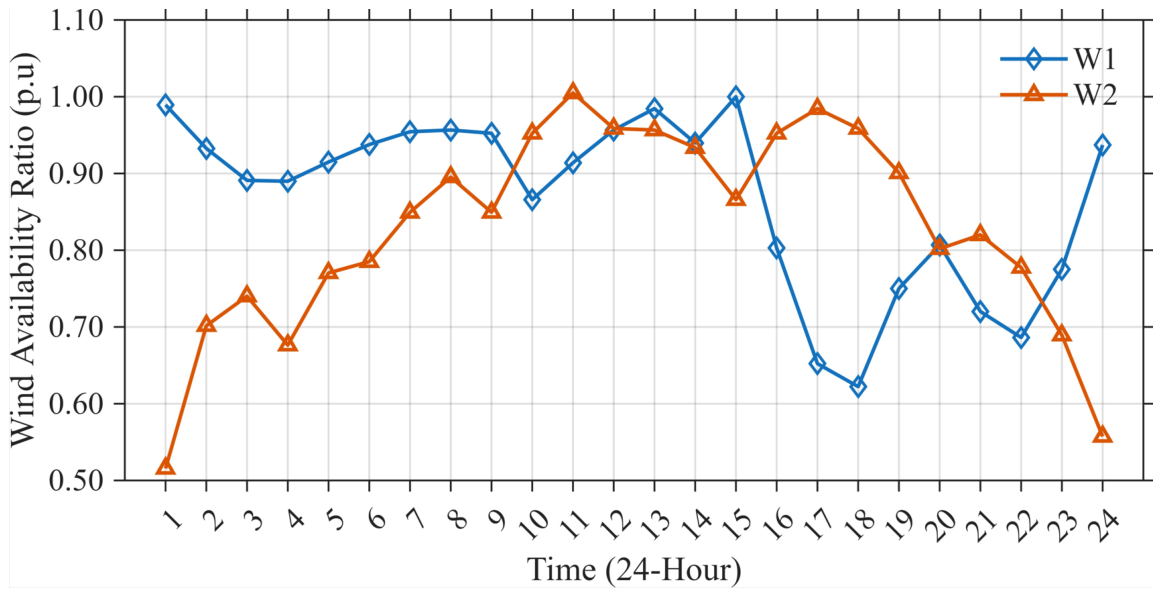
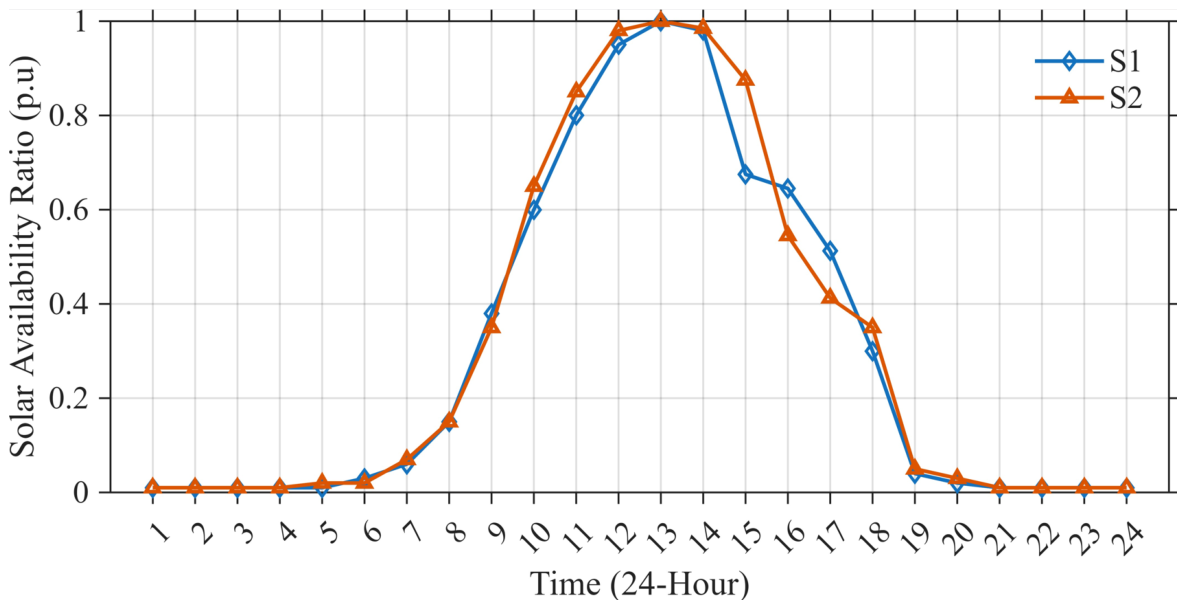
and
are wind and solar availability indices at time (
t). The Distributed Energy Resource Management System employs the optimization modeling technique described above, ensuring the balance of power and the economic distribution of resources in the power network [
38].
Figure 6 and
Figure 7 illustrate the power network dynamic coordination, tie-line/
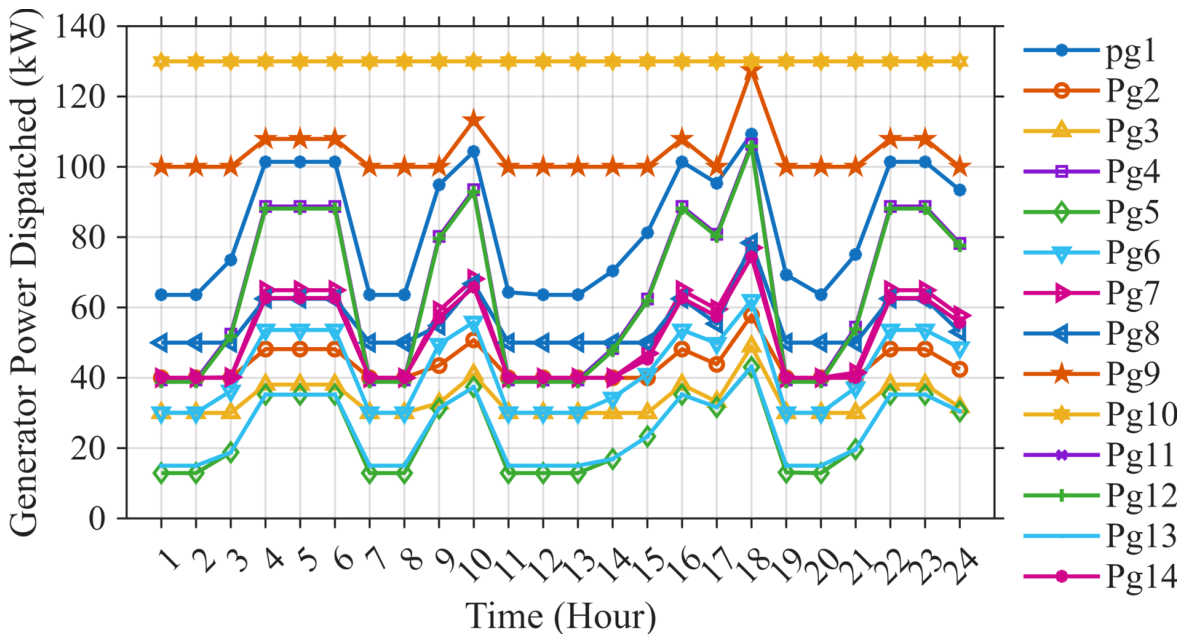
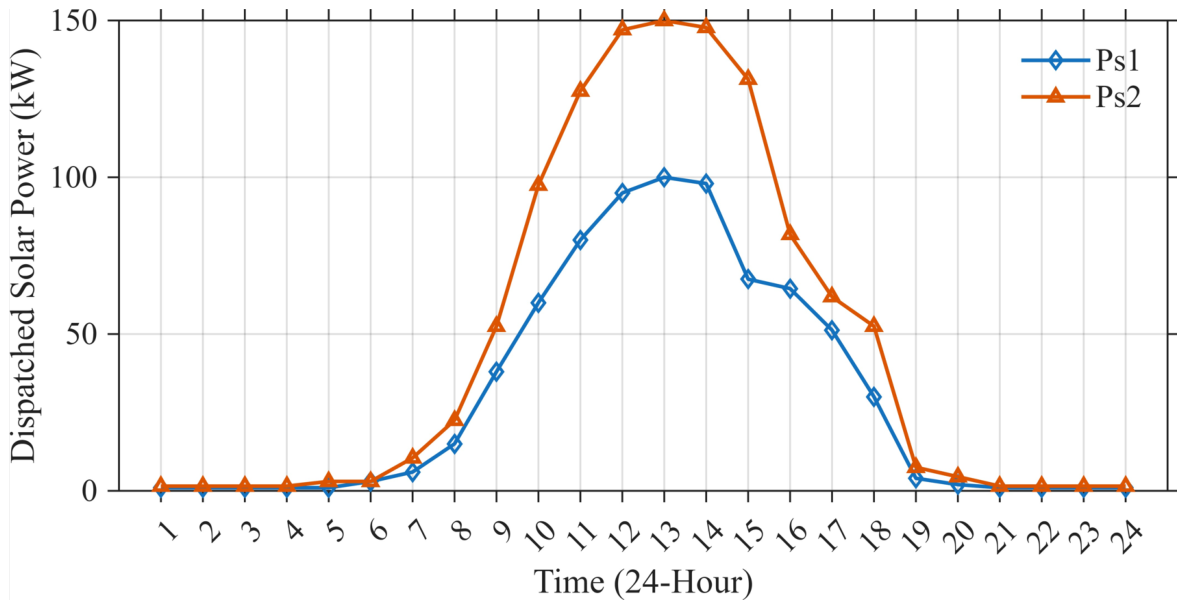
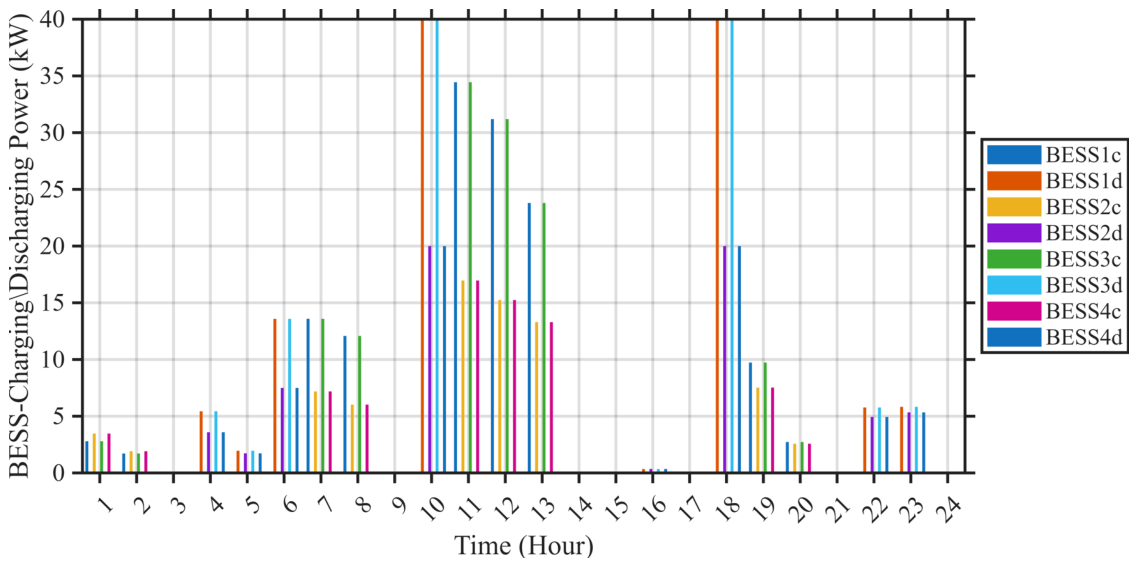
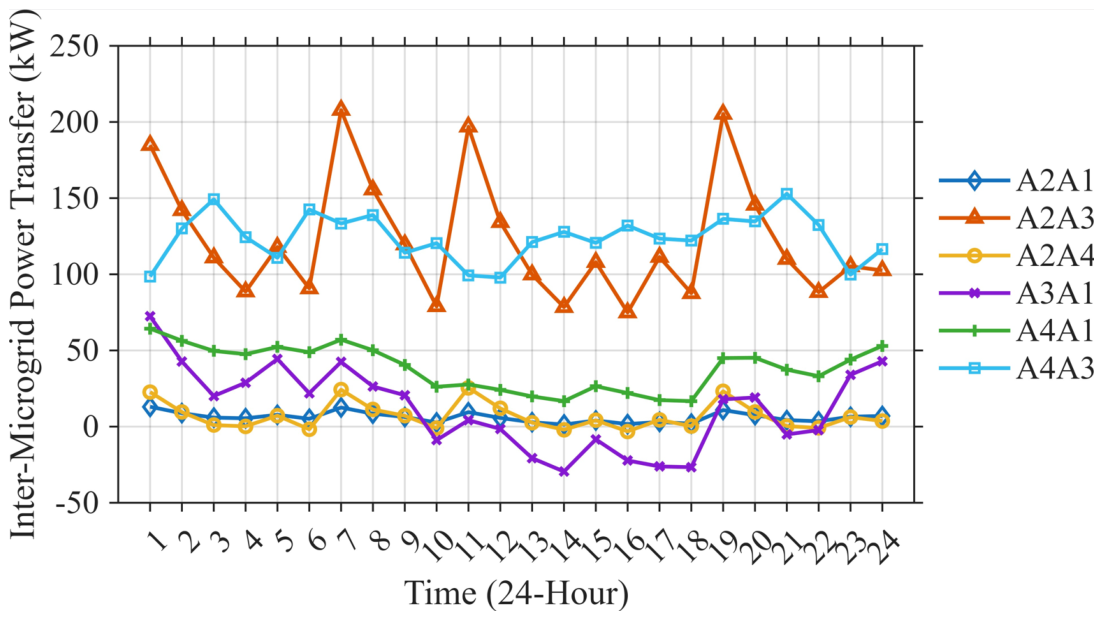
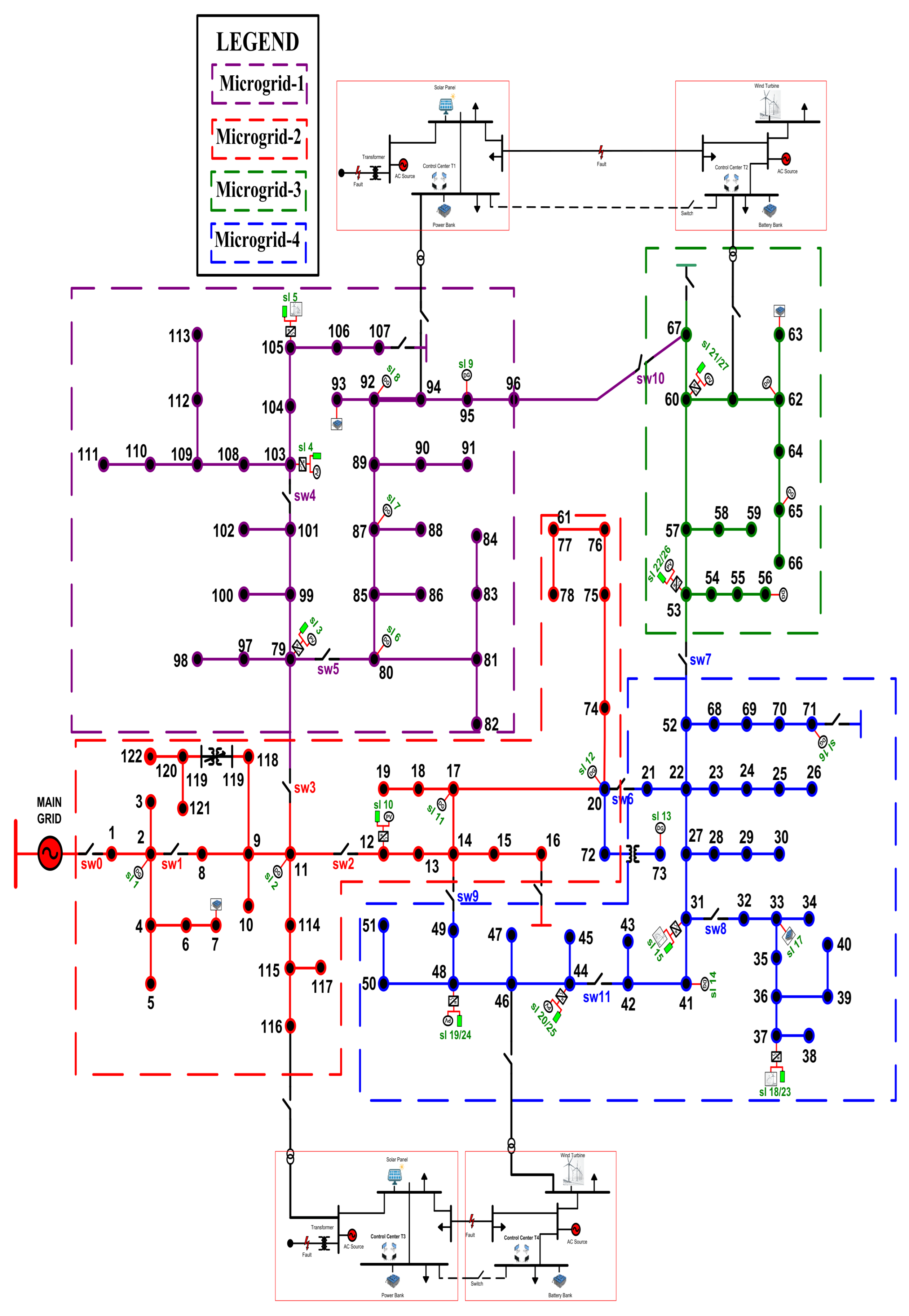
management, and multiple microgrid formation on the modified IEEE 123-Bus distribution network, with dispatched resources operating in both grid-connected and island modes through T&D network handshake on the developed co-simulation platform. An overview of the expanded distribution power network in
Figure 4 is shown in
Figure 6.
3.3. Data Exchange in the T&D Co-Simulation
In [
20], co-simulation is described as allowing simulators from different domains to interact by exchanging values during the simulation that define other simulators’ boundary conditions. Active power values, bus voltage magnitudes, switch status, dispatched resources, and curtailed load are exchanged at the feeder head through subscription and publication in MATLAB-GAMS (MATLAB v.R2025b, GAMS V43.3.1)data exchange protocols.
These variables are considered network physical variables that are exchanged at regular intervals. A feeder head is technically the coupling point between the transmission network and the distribution load via feeder lines, which transmit power to the loads in the distribution network area via a suitable transformer.
Figure 6 illustrates the T&D co-simulation network configuration, which involves the IEEE 14-Bus
sub-sections and the modified IEEE 123-Bus
network.
Figure 7 is the summarized dynamic management of
and tie-lines in the predefined 4-microgrid use case on the
network in
Figure 6. The detailed network configuration parameters of
Figure 7 are given in
Table A1. However,
are gradually integrated into the distribution network to monitor the impact of each resource on the total operating cost of the DS, while operating in island mode based on the modified IEEE 123-Bus network configuration in
Figure 6.
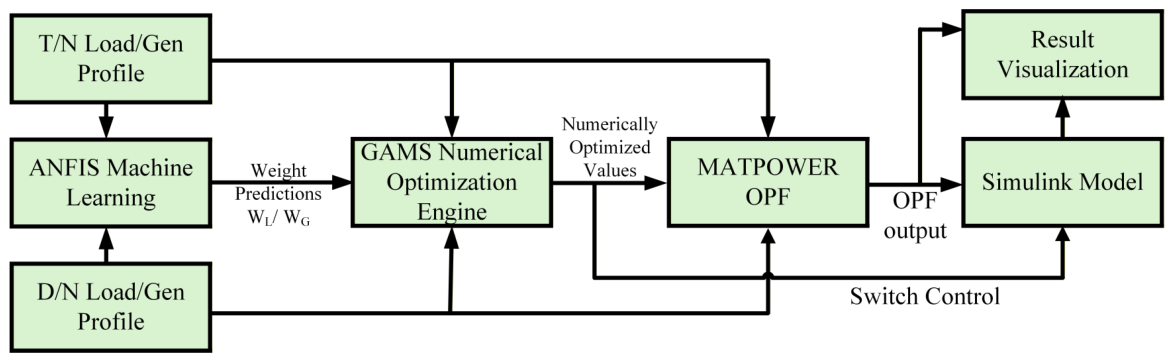
The block diagram in
Figure 8 illustrates the machine learning component (ANFIS) enhancement of the GAMS numerical optimization engine by providing appropriate load and power generation weights (
= Load Weight, and
= Power Generator’s Weight). Optimized values are fed into the MATPOWER v8.0 environment for optimal power flow analysis for Simulink (MATLAB v.R2025b) model control and, finally, result visualization. Appropriate switch controls come from the GAMS numerically optimized output, ensuring proper network reconfiguration and appropriate resource allocation.
5. Discussion
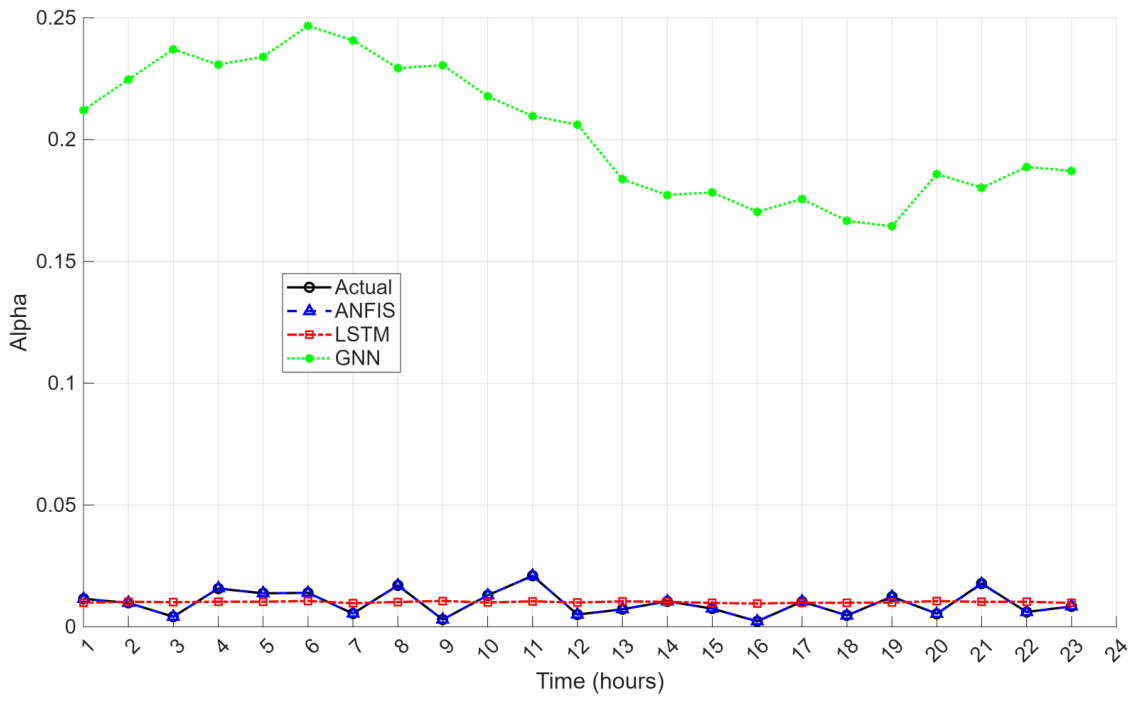
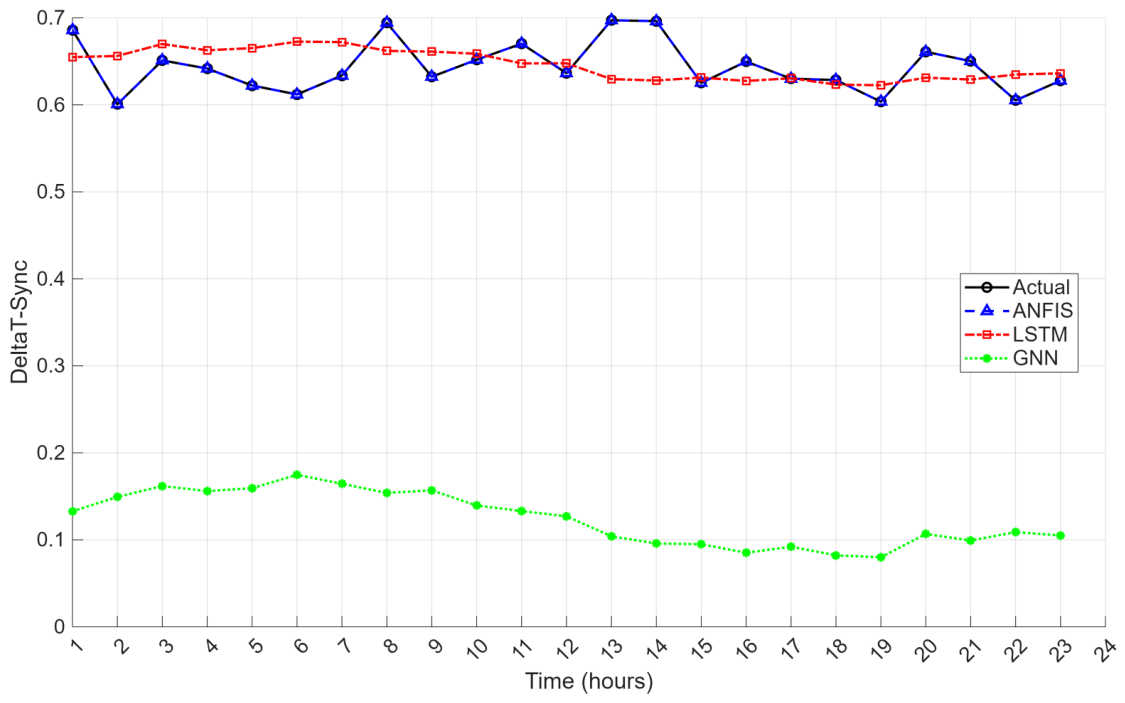
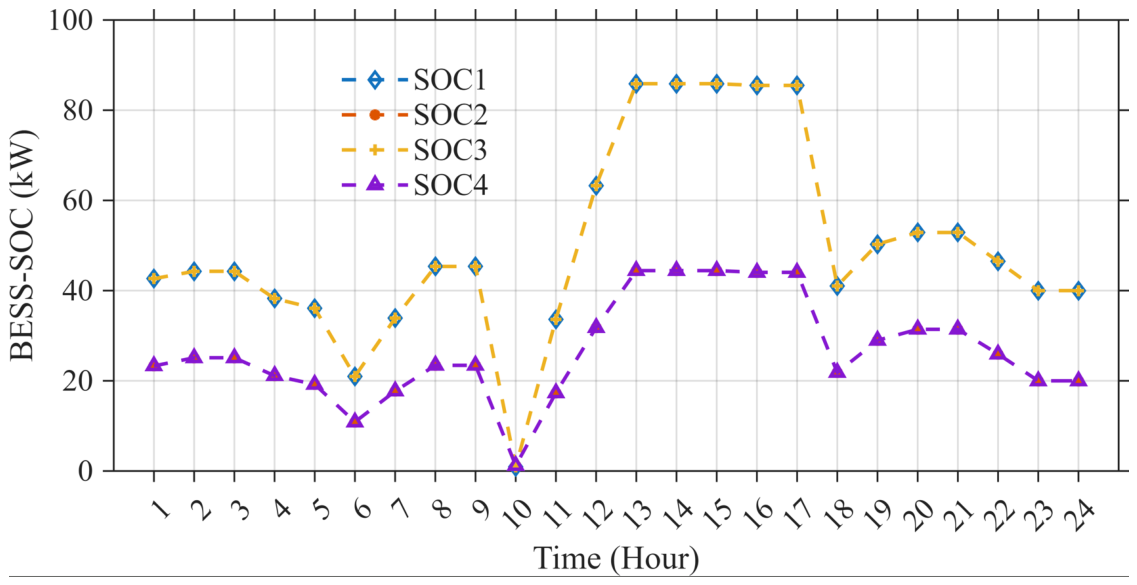
The ANFIS-enabled Energy Management System developed integrates short-term load forecasting and adaptive weighting of energy resources into the developed multi-microgrid optimal dispatch model. The ANFIS forecasting layer estimates the future power demand of four microgrids, while the ANFIS weighing layer dynamically adjusts conventional generators and load priorities according to forecasted demands, renewable availability, battery SOC, electricity price, and operating mode. The resulting optimization minimizes operating cost, battery degradation, renewable curtailment, and weighted load shedding subject to generators, storage, network configuration, tie-lines, and point of common coupling (PCC) constraints in both grid-connected and islanded operation. The developed unified co-simulation framework goes beyond mere integration by algorithmically addressing synchronization and fragmentation issues. It employs adaptive hierarchical time-stepping, predictive state estimation, and centralized boundary reconciliation to ensure that T&D subsystems share consistent states and accurately track fast dynamics. Compared to conventional RTDS-OPAL-RT or FMI/FMU setups, this approach reduces temporal discrepancies, improves convergence, and maintains numerical fidelity, effectively overcoming the fundamental synchronization and fragmented modeling challenges inherent in T&D coupling.
While the focus of this work is on the integration and real-time operation of a co-simulation platform, it is fully compatible with advanced techniques such as blockchain or homomorphic encryption for privacy-preserving computations in future extensions. The research work establishes the following points:
Multiple renewable energy resources improve the power system reliability and resiliency, as shown by the PSC of the networks after a simulated HILF event.
The deployment of reduces the operational cost of the network significantly compared to the network.
However, these benefits come at a cost of computational complexity, which machine learning aims to reduce.
The developed co-simulation platform drastically reduces computation time.
The developed solution effectively serves as a distributed energy resources management system (DERMS) platform where multiple resources can be managed and optimized.
6. Conclusions
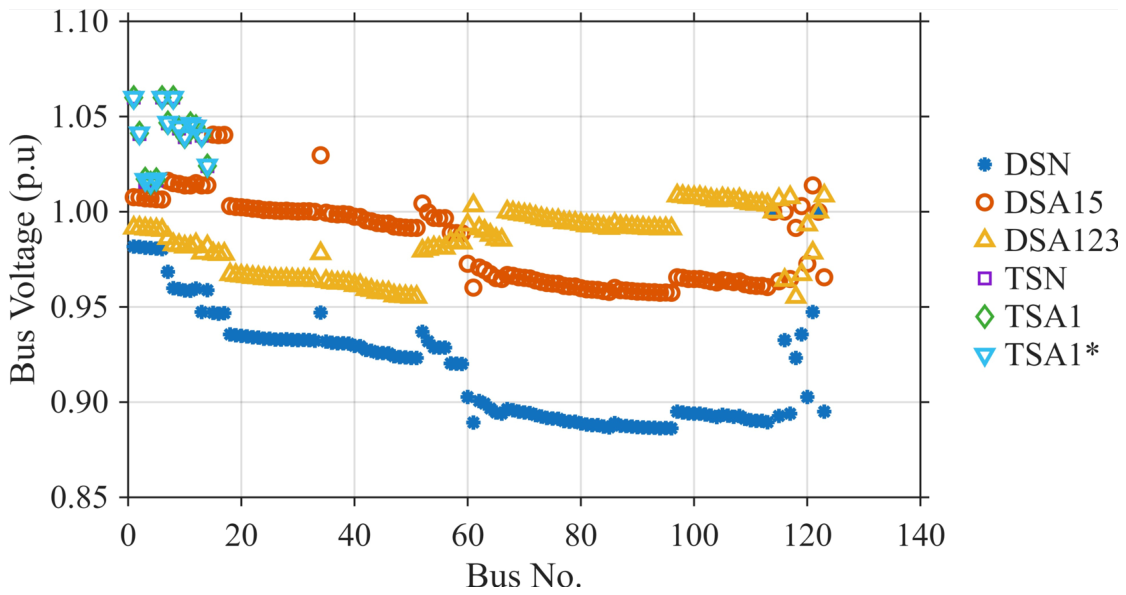
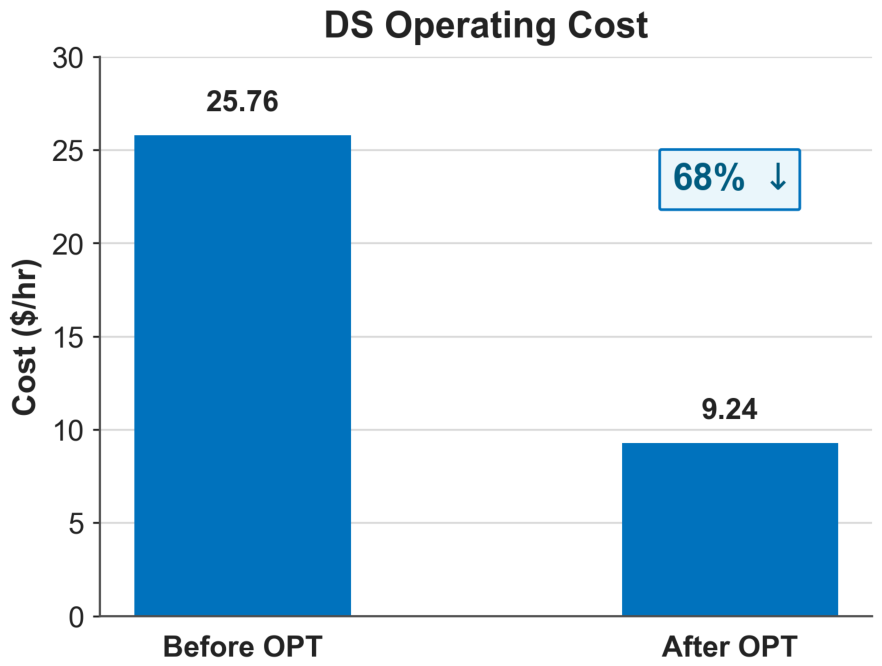
This research comprises two major case studies of power networks: the 14-Bus IEEE transmission system with 15-Bus IEEE distribution networks (Case I) and the 14-Bus with an unbalanced 123-Bus IEEE (modified) network (Case II), respectively. These two power systems were synthesized on MATLAB Simulink and optimized using a numerical optimization tool (). The systemic ANFIS-based optimization technique enhanced system resiliency while maximizing load. Unbalanced three-phase voltage analysis and use of , , and targeted at making informed decisions and initiating appropriate controls. Optimal power flow analysis of the system (), in conjunction with an Adaptive Neuro-Fuzzy Inference System () implemented in the allocation of weight factors to constraints considered in the definition of the objective function, achieved a 68% reduction in the operating cost of the unbalanced 123-Bus IEEE distribution network with the right network interaction when compared with the network running independent of the TS network and without optimization. Running the DS network in the island mode without the optimization algorithm developed will result in a higher operation cost.
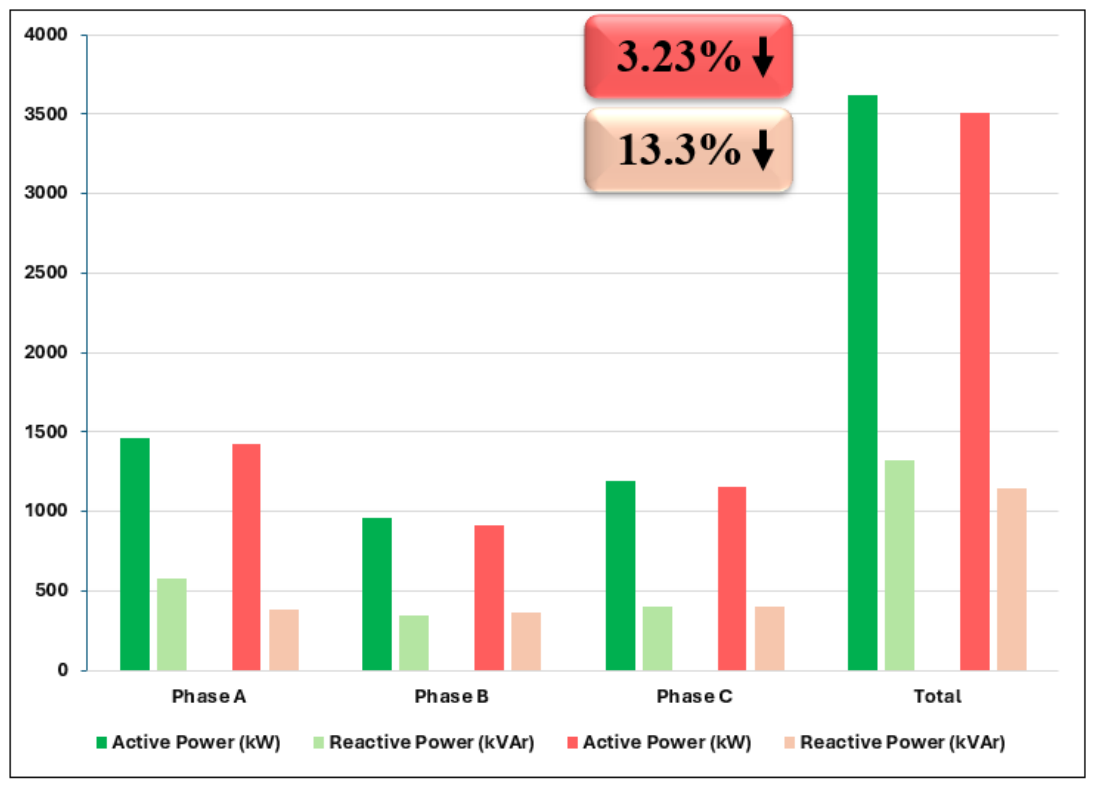
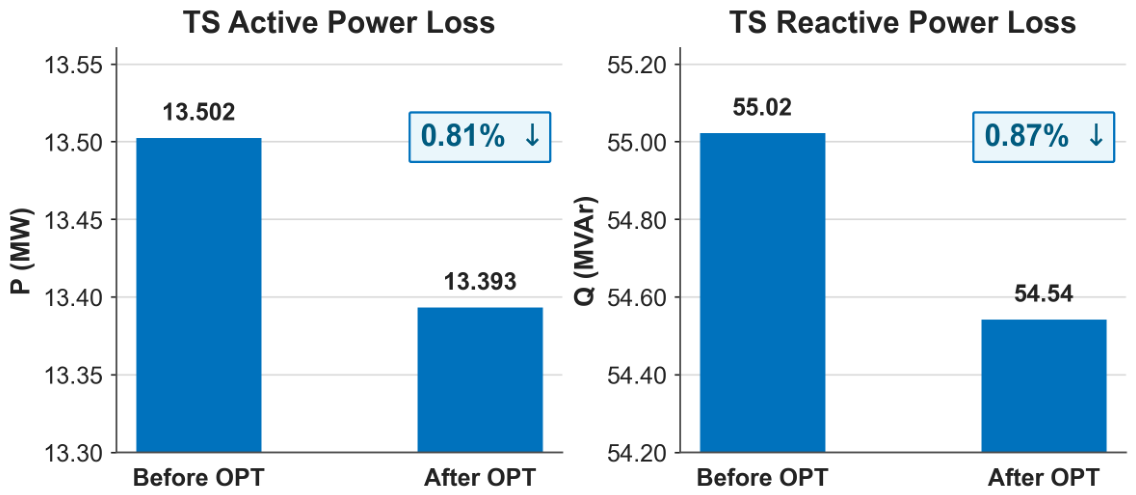
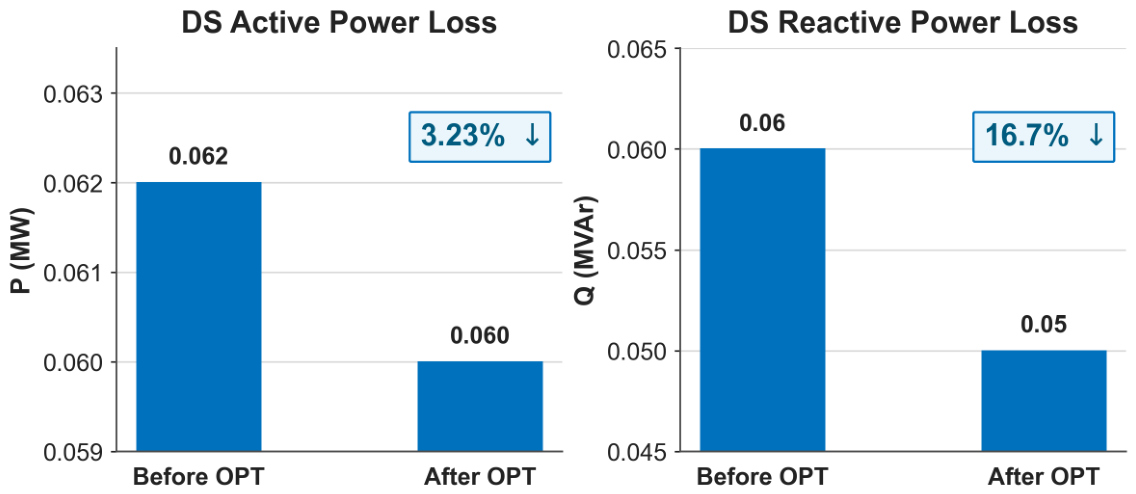
In Case-1, there is a reduction in the estimated active and reactive power losses across the T&D network (0.81% and 0.87% reductions in the active and reactive power losses of the transmission network, while 3.23% and 16.7% reductions are achieved in the active and reactive power losses of the distribution network, respectively). In case II, active and reactive power losses were reduced by 3.23% and 13.3%, respectively, with the implementation of the proposed solution. The computational time was equally reduced as compared to the situation where the developed co-simulation platform was not used. The microgrid formation and allocation of Distributed Energy Resources () within the power network are governed by constraints, such as the grid frequency and voltage limitations, load type (critical loads), and the cost of generation, power line capacity, among others. The mix of these constraints is assigned a weight using the system, and the result is used by the Simulink model to optimally allocate required and available resources within the network.
The interaction between the distribution and transmission network is established using a robust co-simulation platform. Actual implementation was carried out on the MATLAB Simulink model of an IEEE-123 bus network, where switches, tie-lines, power line segments, and are controlled for optimal results. is deployed in the prediction of load profiles for the research work. The research framework addressed, among others, the need for a robust T&D co-simulation platform, dynamic microgrid formation, network switching, operation cost minimization, Optimal Power Transfer between the networks, network loss curtailment, and load management.
Although ANFIS suffers from the curse of dimensionality if not well managed, the proposed solution handles the power system networks in a modular form, where memberships are carefully determined based on the expert knowledge of the system. The proposed solution is well-suited for short term restoration purposes.
Future research will focus on applying the proposed solution to larger power networks. Moreover, future deployment of the developed optimization solution on the real-time simulator (RT-Lab-based testbed, OPAL-RT, Hyper-Sim) will further evaluate real-time benefits of the proposed solution compared to the conventional methods.




 ,
,