1. Introduction
Tea is an important economic crop all over the world [
1,
2]. China, as one of the major tea producing countries, has a total tea output value of 318.07 billion yuan in 2022, of which the ratio of premium tea to bulk tea is up to 70%. The quality of premium tea is affected by many factors, in which the plucking of tea shoot is the prerequisite step. For obtaining premium tea, the plucking process needs to be selective, typically involving harvesting only a single shoot, one shoot with one leaf, or one shoot with two leaves [
3]. However, conventional mechanical plucking methods are lacking in selectivity and are prone to damage the xylem of tea trees [
4]. In a large-scale tea plantation, the best harvest time of tea trees is different, and it needs to be picked several times during the harvest season. For example, in Japan, tea leaves are harvested three to four times per season, while in Kenya, the number ranges from 16 to 25 times. Moreover, the optimal harvest window is very short. For instance, Longjing tea typically has a harvesting period of about one month. If this period is missed, overgrowth of the tea leaves leads to a decrease in the quality of the final product, subsequently reducing its market value [
5]. Therefore, how to plan and design the tea shoot plucking strategy over the whole tea garden through intelligent inspection is critical to improve the efficiency and accuracy of plucking shoots in tea gardens. At present, the intelligent automatic tea plucking machine has been developed to improve the efficiency of the tea plucking. In the intelligent plucking machines, the computer vision technology for detecting shoots is mainly based on the image of the ground end [
6,
7,
8]. They improved the mainstream detection algorithms YOLOv5 and YOLOv7 to achieve efficient detection of tea shoot and planning of plucking sequence. The tea shoot data they used for training were all collected on the ground using mobile phones or cameras, so they could only detect tea shoot in small scale images. But if we need to design the proper tea shoot plucking plan, the images of the ground end are much smaller and large-scale tea plant images are needed. The advanced UAV imaging technology provided us a potential feasible solution for the plucking planning of large-scale tea gardens.
Compared with traditional manual imaging, UAV imaging can save significant human and time resources. UAV imaging technology has the advantages of quickly covering a wide area, obtaining high-definition images, and capturing slight changes. In the early stages, it mainly relied on equipping UAVs with aerial cameras or photographic equipment to capture ground images through aerial photography, used for tasks such as AP making, terrain measurement, and resource surveying [
9,
10]. However, the efficiency of manual processing of large-scale images obtained by drones is still low. With the rapid development of computer vision technology, it is possible to process large-scale high-definition images obtained by UAV quickly and accurately. Therefore, UAV imaging technology has become more and more important in animal detection [
11], power line inspection [
12], search and rescue (SAR) systems [
13], and wildfire detection [
14]. In recent years, UAVs equipped with computer vision techniques have become a key focus in precision agriculture, including tasks such as the three-dimensional reconstruction of crop phenotypes [
15], the detection of crop diseases and pests based on remote sensing images [
16], and the monitoring of crop growth conditions based on digital and hyperspectral images [
17,
18]. These technologies provide new avenues for the sustainable development and precision management of the agricultural industry.
However, the UAV-based image detection technology faces common challenges of large image sizes, small target sizes, and significant occlusions [
19,
20,
21]. These issues place higher demands on the core technology for accurate detection and analysis of UAV images, necessitating more accurate and efficient image detection methods and models. Ünel et al. [
22] demonstrated the effectiveness of uniform cropping for small-object detection. SAHI [
23] divide high-resolution images into small overlapping crops before performing detection on them. In order to enhance the detection accuracy of small size and heavily occluded targets in large-scale UAV images, Courtrai et al. proposed a super-resolution method based on Generative Adversarial Networks (GANs) to improve the feature representation of small-objects [
24]. This method leverages the structural correlations between low and high-resolution features to enhance the representation capability of small objects. Chen et al. proposed a ResNeXtd combination structure to enhance the perception of small-sized objects [
25]. Similarly, Zhang et al. proposed a cross-aware network integrating attention mechanisms to refine feature representations by fully exploiting the rich spatial and spectral features of hyperspectral images, demonstrating robust performance in complex agricultural recognition tasks such as crop variety identification [
26]. The improvement aiming at small object detection has also been proposed [
27,
28], which significantly improved the accuracy of detecting small-sized targets in high-resolution images. However, the complexity made it impractical to deploy these models on embedded chips for real-world industrial and agricultural applications. In the study of Zhao et al. and Lee et al., they deployed UAV-scene wheat detection models and broccoli detection models on remote servers [
29,
30]. Li introduced a two-stage solution, consisting of coarse-grained and fine-grained detection stages, for the detection of pine wood nematodes in UAV imagery [
31]. In these agricultural UAV applications, remote servers are used as computing support. However, in the actual agricultural production, the environment is complex, and the portability and real-time requirements of testing equipment are very high. Therefore, the deployment of the detection models on embedded chips to cooperate with UAV for real-time detection may be the ultimate solution. However, how to achieve lightweight models while maintaining high accuracy has become a major challenge. Some scholars reduced the scale of the model by reducing the weight and activation bit width, and realized the real-time detection of coffee leaf disease and grape leaf disease on STM32 and embedded system single-chip microcomputers [
32,
33]. These methods can realize real-time crop detection by deploying deep learning models on the portable hardware, which provides a feasible solution for the hardware deployment of the UAV-based tea shoot detection system.
In order to realize the tea plucking planning in the valuable tea harvesting period, we propose a tea shoot detection method based on UAV images (TSDet-UAV). In the UAV image, most of the tea shoots only account for less than 0.04% of the image size. In order to improve the accuracy and the speed of the tea buds detection in the UAV images, we designed the SH-CoordMapping hash space mapping algorithm to accelerate the remerging of the detection results into the original image. The C2PSA-BI module and the CARAFE upsampling module are applied to improve detail preservation during feature fusion. The lightweight detection head is further used to reduce redundant computation in the detection stage. To achieve large-scale inspection of the tea garden, we deployed the TSDet-UAV on the NVIDIA Jetson Orin NX chip (NVIDIA Corporation, Santa Clara, CA, USA) and accelerated it through TensorRT 8.5.2. Through the MT-BatchInfer and the SH-CoordMapping algorithm, the processing speed of the image segmentation and reassembly links at the chip end has been significantly optimized, and a tea bud inspection system capable of real-time acquisition and real-time detection has been constructed. The tea shoot inspection system can carry out multiple inspections of the tea garden during the short picking period and realize automatic shooting of specific areas of the tea garden and real-time detection of tea shoots by presetting the flight path of the UAV, effectively confirming the growth status of tea shoots, and assisting the management of the tea garden in making accurate picking plans.
2. Materials and Methods
This chapter will be elaborated along the following research thread: Firstly, a systematic exposition will be conducted on the independently constructed dataset of tea shoots based on unmanned aerial vehicles, including its data sources, collection methods, annotation norms, and data feature analysis. Secondly, based on the feature analysis of this dataset, the model TSDet-UAV proposed in this paper is deeply analyzed. The discussion is carried out from three dimensions: the image segmentation and backsplicing strategy for small target detection, the optimization of the lightweight model architecture, and the inference acceleration optimization for the edge computing platform. Then, the dynamic learning rate adjustment strategy adopted in the model training process, the regularization optimization scheme, as well as the deployment hardware architecture and the integration scheme of the edge computing system are discussed in detail.
2.1. Unmanned Aerial Vehicle-Scale Tea Shoots Image (UAV-TS) Datasets
Tea shoot images were collected from various tea gardens in the West Lake Scenic Area of Hangzhou City, Zhejiang Province, China, in March 2021. The tea variety selected for the experiment was “Longjing 43,” bred by the Tea Research Institute of the China Agricultural Science Park. The UAV-scale tea shoot images were acquired under natural lighting conditions using a UAV. The specific process of data collection and processing is as follows: Firstly, in order to enrich the diversity of data, multiple batches of data were collected from tea garden plots at different times, with different densities of tender tea buds and different growth states. Secondly, we planned UAV image capture by determining appropriate heights and angles. Considering the distribution of tea trees and the sunshine conditions on the day of the experiment, we set the UAV shooting angles to 60° and 90°, respectively. If the UAV’s flying height is too low, the wind field generated by the UAV may affect the photographed tea trees; if too high, the clarity of the captured tea shoots may be compromised, affecting data quality. Therefore, we set the shooting height to 1 m and 1.5 m, obtaining four groups of tea shoot image data from different angles. Next, we performed data cleaning and annotation of tea shoots. A total of 124 images, with dimensions of 5472 × 3648 pixels and stored in JPG format, were processed. We used the open-source annotation tool LabelImg to annotate pluckable tea shoots in the UAV-TS dataset in the form of object detection. The annotation of tea shoots was selective and followed the standard of a single shoot, one leaf or one shoot, and two leaves, with annotation files saved in JSON format. After data cleaning, we obtained 124 images and annotated a total of 34,353 tea shoots.
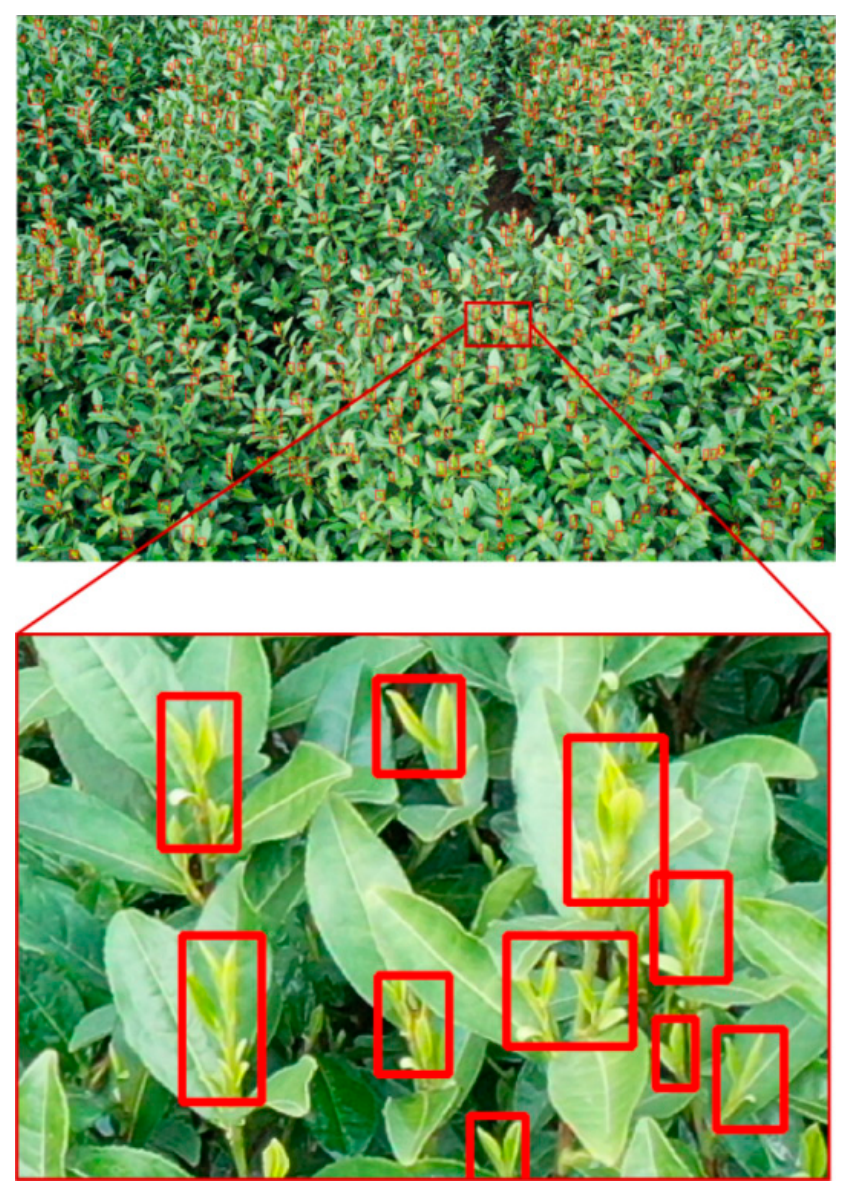
Figure 1 displays the labeled images. We divided the dataset into training, validation, and test sets according to an 8:1:1 ratio. The training set was used to train the model, the validation set to evaluate the model during training, and the test set to assess the final model obtained through training. In subsequent training, the dataset needs to be sliced, which will be detailed in
Section 3. We analyzed the dataset by counting the distribution of the length, width, and area of the annotated boxes to characterize the dataset type.
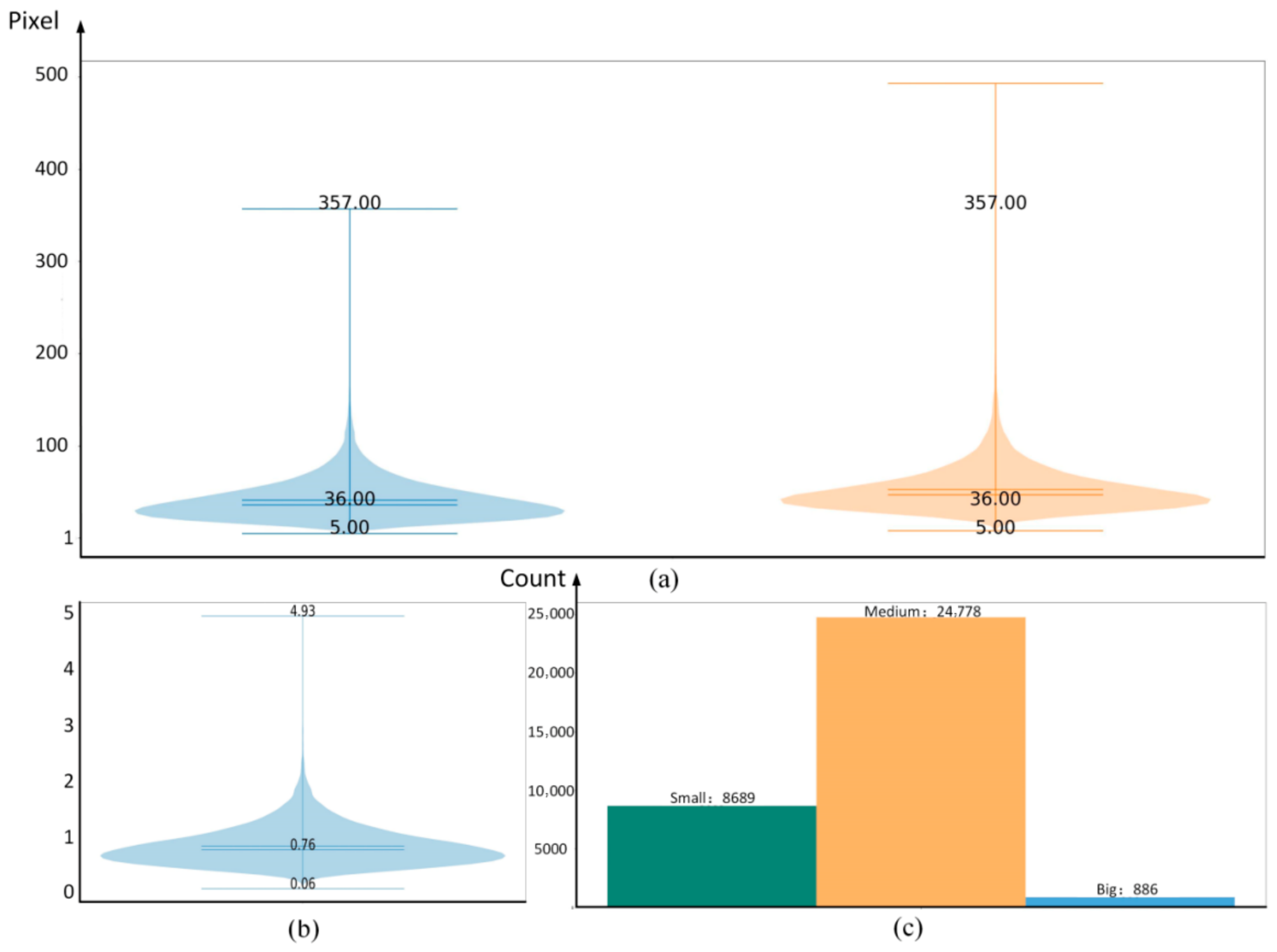
The visual analysis of UAV-TS dataset’s annotation boxes is shown in
Figure 2.
Figure 2a displays the distribution plot of width and height for object bounding box instances. The majority of bounding boxes in the dataset have widths ranging from approximately 10 to 60 and heights ranging from approximately 15 to 65, indicating that the object sizes in the datasets are generally small.
Figure 2b presents the distribution plot of aspect ratios for object bounding box instances, showing that the aspect ratios of most bounding boxes in the dataset fall within the range of 0.2 to 1.2, with the smallest ratio being 0.06 and the largest ratio being 4.93. This suggests a relatively uniform distribution of object shapes in the dataset.
Figure 2c illustrates the area distribution of bounding box instances based on area rules. According to the area rules proposed by COCO [
34], objects are classified as small targets if their resolution is less than 32 × 32 pixels, as medium targets if it is greater than or equal to 32 × 32 pixels but less than 96 × 96 pixels, and as large targets if it exceeds 96 × 96 pixels. In the COCO dataset, small- and medium-sized targets smaller than 96 × 96 account for 75%. In the constructed UAV-TS dataset, small and medium-sized objects account for 97.6%, much higher than the COCO dataset. In the COCO dataset, the size of most images is usually between 300 × 300 and 600 × 600, while the image size of UAV-TS dataset used in this study reaches 5472 × 3648, and the proportion of small and medium-sized targets in the original image area is less than 0.04%. After slicing the original high-resolution image into images of 640 × 640 size, the average target size ratio increases to 0.574%. Although the relative size of the target has increased, it still appears relatively small compared with the scale range in traditional target detection. So the UAV-TS dataset is a typical small-object dataset, mainly including the small- and medium-sized objects less than 96 × 96 pixels with the high resolution of 5472 × 3648 pixels.
2.2. Small-Scale Tea Shoots Detection Algorithm Based on UAV Imagery
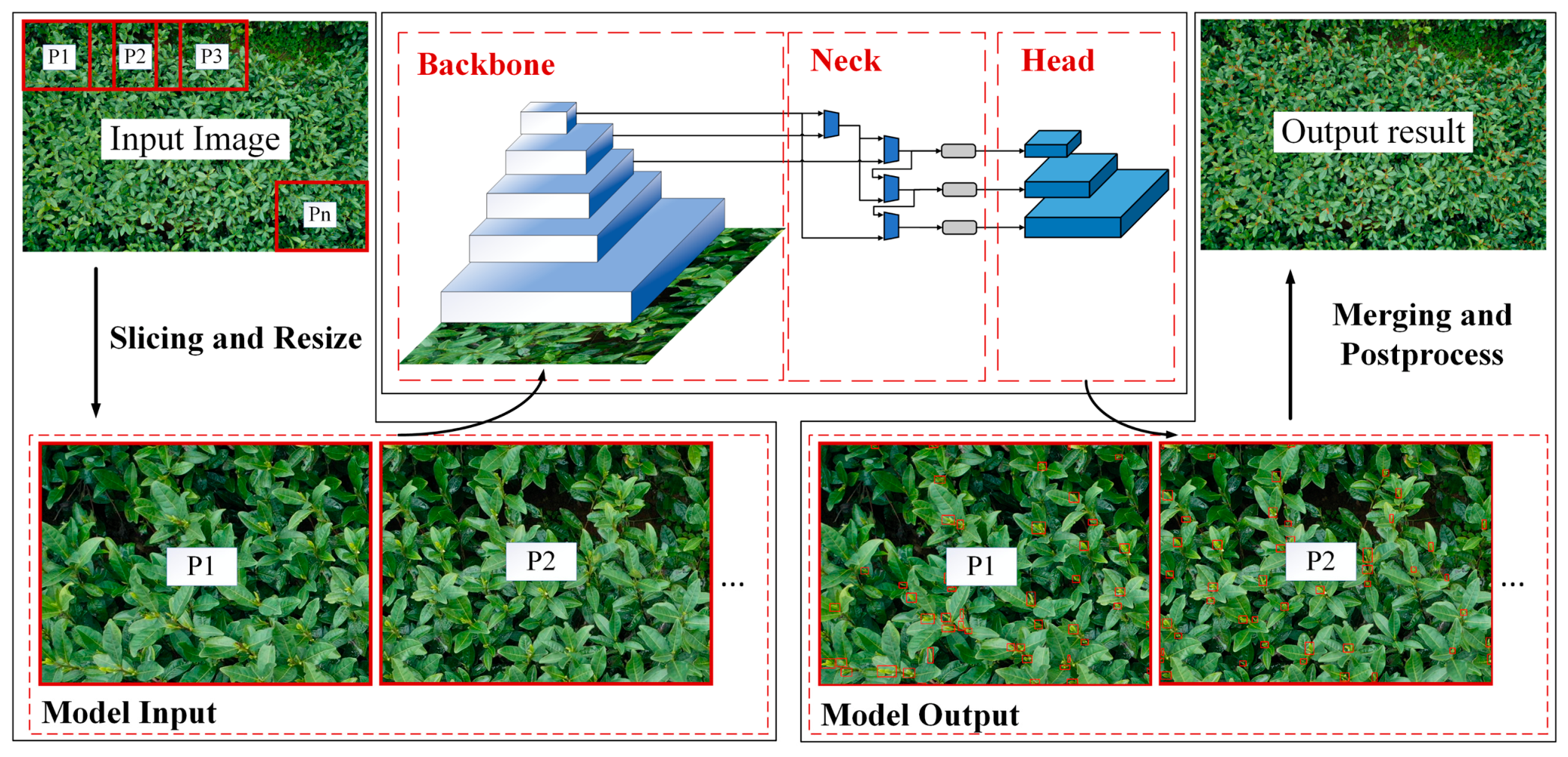
The detection of tea shoots in UAV images represents a highly typical small-object detection task. Directly downsampling these images could reduce the size of the extremely small tea shoot areas, significantly increasing the difficulty of recognizing these small-objects. Training directly on ultra-high-resolution images can drastically extend the training time and substantially increase GPU memory requirements. Moreover, it places significant demands on hardware resources during inference, making it unsuitable for portable detection devices. To address the challenge of small object detection in UAV imagery without increasing hardware demands during inference, this research proposes the TSDet-UAV scheme, as illustrated in
Figure 3.
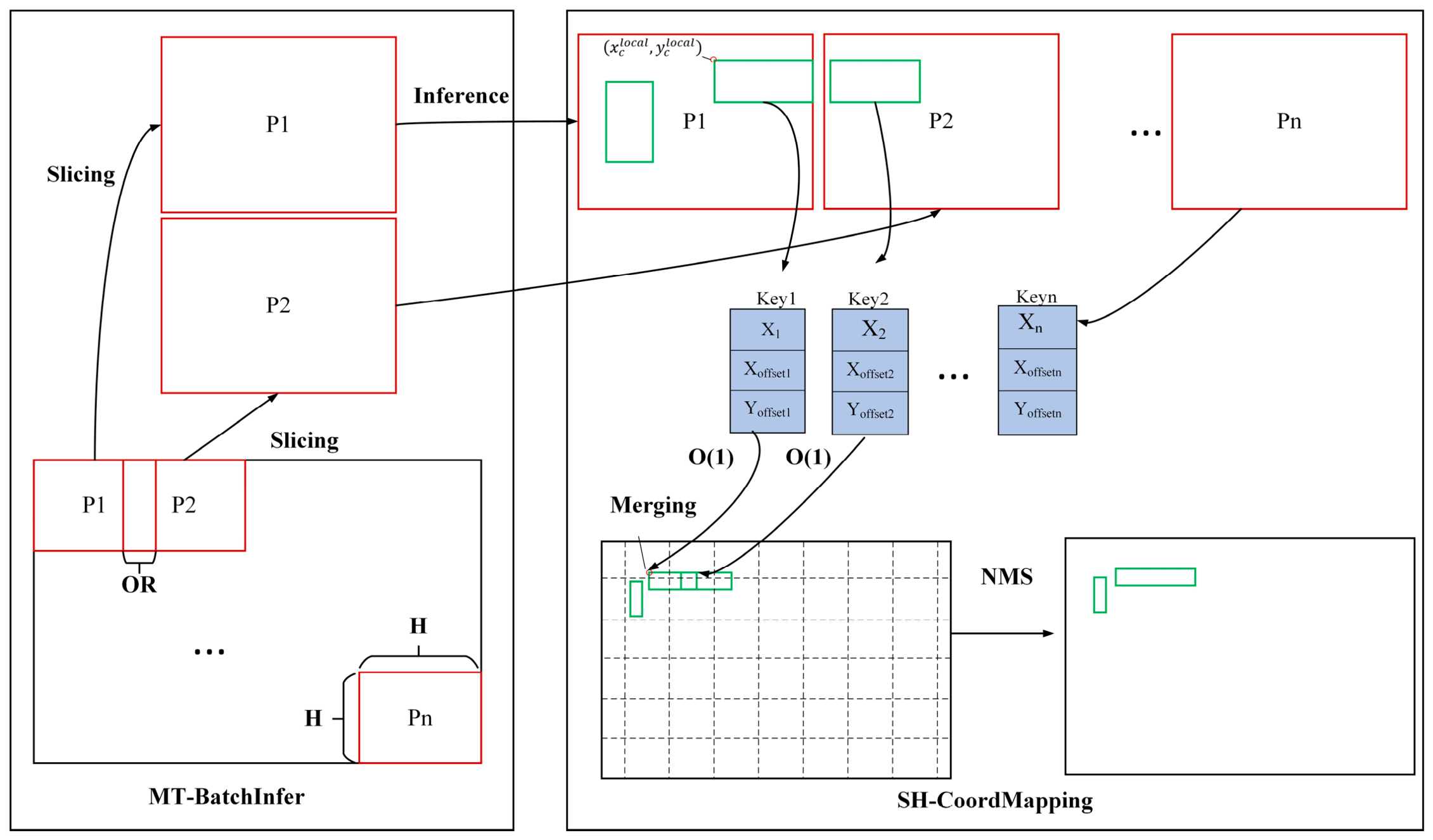
Although a lightweight detection model is adopted in this study, the serialized tiling-inference operations and massive image data processing under the sliding window mechanism still result in insufficient computational resource utilization and memory access bottlenecks. To address these challenges, this section proposes a sliding window optimization (SWO) framework including the multi-threaded asynchronous tiling and batch inference strategy (MT-BatchInfer) for parallel tiling and inference to fully exploit hardware capabilities, and the Spatial Hash-based Coordinate Mapping Scheme (SH-CoordMapping) to replace traditional image reassembly, significantly improving processing efficiency. As depicted in
Figure 4, the MT-BatchInfer section is responsible for slicing the large-resolution tea garden image P captured by the UAV into multiple overlapping slices, in which the side length of the sliced image “H” and the overlap rate “OR” are both important parameters. Subsequently, these slices are downsampled while preserving their aspect ratio to fit the requirements of the target detection network. The TSDet-UAV detection part is composed of the target detection model trained on sliced images from the dataset to realize tea shoots detection of the slice images. The SH-CoordMapping phase is responsible for remerging the inference results of the target detection model, as indicated by the green boxes in
Figure 4, into the original image. It also employs Non-Maximum Suppression (NMS) [
35] to merge the predicted results in overlapping regions, which could remove the low score prediction box when the intersection over union (IoU) [
36] of two prediction boxes is above a predefined threshold. The IoU is computed as the ratio of the intersection area between the predicted and ground truth boxes to the union area, as expressed below:
in which, A represents the predicted bounding box, while B represents the ground truth bounding box.
The proposed MT-BatchInfer framework enhances parallelism through a heterogeneous computing architecture with dynamic task scheduling. We decouple sub-image generation, data transfer, and batch inference into parallelized pipelines using multi-threaded asynchronous tiling, memory pre-allocation, and zero-copy memory mapping to eliminate redundant data transfers. Conventional single-image inference underutilizes GPU memory and computational potential. Batch inference enables simultaneous processing of multiple sub-images with minimal latency overhead, maximizing hardware utilization.
The sliding window reassembly phase typically stitches detected sub-images back into the original resolution. Traditional coordinate mapping converts local detection boxes to global coordinates via window offsets, followed by a single global NMS with O(M
2) complexity. Overlapping tiling (used to prevent edge-truncated targets) creates ambiguity in overlapping regions during direct reassembly. Additionally, performing Non-Maximum Suppression (NMS) on each sub-image before reassembly is computationally wasteful and inefficient, especially for overlapping detection. The proposed SH-CoordMapping scheme discretizes global coordinates into voxel-grid-aligned hash buckets via spatial hashing, enabling distributed NMS execution per bucket. This reduces time complexity to O(M
2/K) (where K is the number of hash buckets) and leverages GPU parallelism for large-scale image processing. The voxel resolution v is dynamically adjustable to balance computational resources and precision based on target density:
where
denotes local detection box center coordinates and
represents window offsets.
v is the spatial resolution, and H
size denotes the hash table size. The hash key is generated as:
mod H
size using large prime numbers
P1 = 73,856,093,
P2 = 19,349,669 to minimize collisions.
2.3. The Detection Module in TSDet-UAV
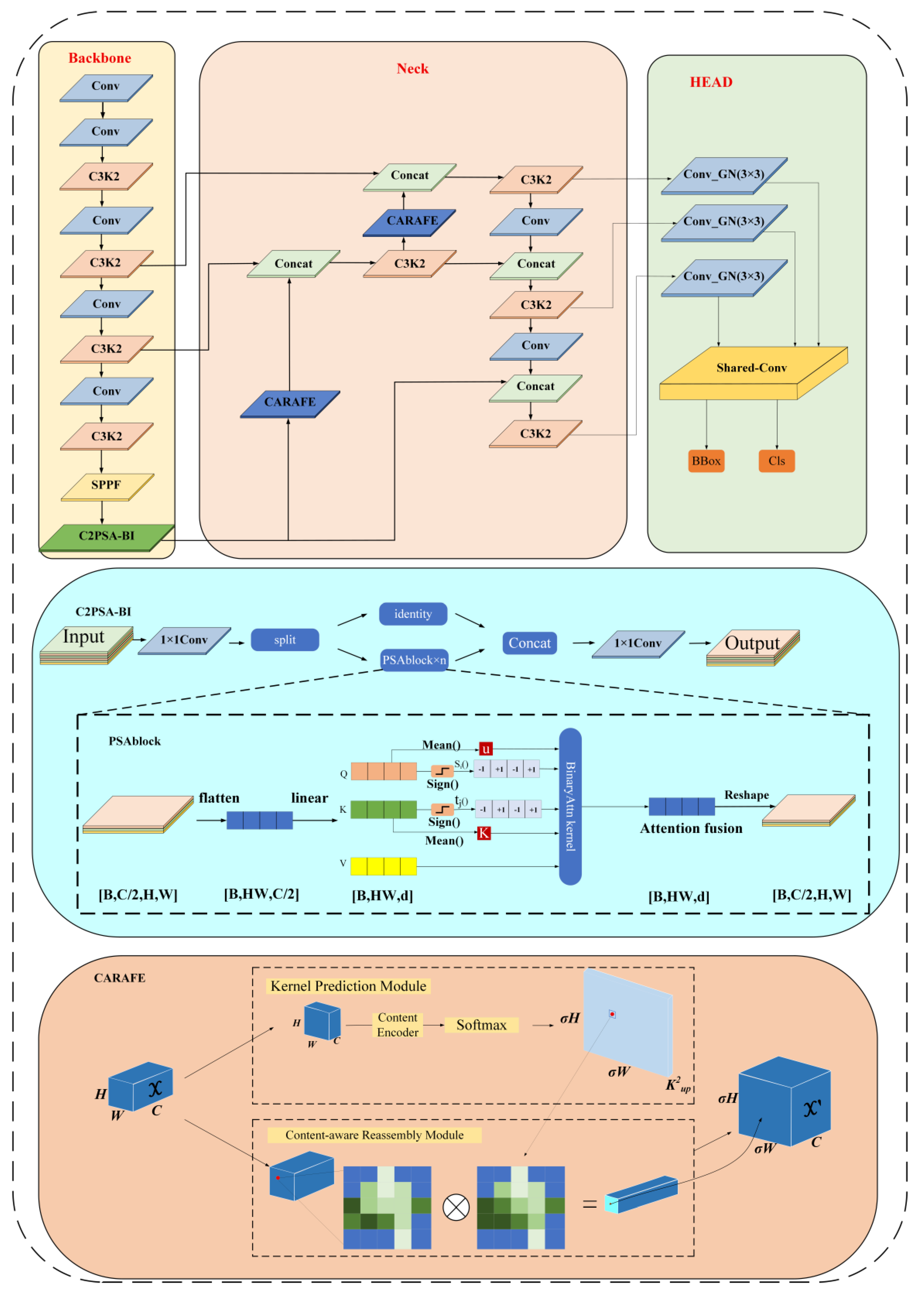
The detection module of TSDet-UAV introduces targeted adjustments with C2PSA-BI module to constrain deep semantic responses, detail-preserving CARAFE upsampling reconstruction, and lightweight shared convolution detection LSCD to reduce redundant computation in the detection stage of YOLO11n. The overall network architecture diagram is shown in
Figure 5.
The backbone progressively extracts features through convolutional layers and C3k2 blocks, with the SPPF module aggregating high-level contextual information at the deepest stage. In the dual-branch architecture, after entering the PSABlock, the spatial feature map [B, C/2, H, W] is first flattened into a sequence format [B, HW, C/2] and linearly projected to generate Query (Q), Key (K), and Value (V) matrices. During the critical attention interaction phase, we strictly utilize the binarized matching path, discarding any additional quantization branches. The Q and K matrices are directly transformed into discrete {−1, +1} states using the Sign() function, facilitating the computation of a highly lightweight BinaryAttention kernel. After the attention fusion, the feature sequence is reshaped back to its original spatial dimensions. Through this fundamental redesign, C2PSA-BI can selectively and strongly activate target-related feature responses while maintaining stable semantic information. In UAV tea-garden imagery, tea shoots are highly prone to visual confusion with surrounding leaves, shadows, and specular highlights. Deploying the redesigned C2PSA-BI after the SPPF effectively reorganizes the deep semantics before the neck fusion, significantly enhancing the discriminability of tea shoots and suppressing the propagation of background noise.
The neck of YOLO11n adopts a multi-scale fusion path with top-down and bottom-up information flow. In the top-down path, deep features must be upsampled twice before being fused with shallower backbone features. To improve detail preservation of small tea shoots during feature fusion, the upsampling operations in the neck applied CARAFE operation. The position-specific reassembly kernels are first predicted from the local neighborhood of the input features. Then these kernels are used to perform weighted reconstruction over the local region. The kernel prediction process can be written as follows:
For the input feature map X, l = (i, j) denotes a position in the input feature map, and l′ denotes the target position after upsampling. The local neighborhood around each input position is encoded by the kernel prediction function to generate a position-specific reassembly kernel. Then content-aware reassembly over the neighborhood features is performed to obtain the upsampled output:
where
is the reassembly kernel size, and
denotes the weight at position (n, m) in the reassembly kernel. Unlike nearest-neighbor or bilinear interpolation, the weights in CARAFE are adaptively generated from the input features. This makes CARAFE more suitable for preserving local structural information around the target and alleviate the loss of fine details when deep semantic information is transmitted to shallower layers. Hence the weak edges, fine textures, and local contours of tea shoots can be better preserved during multi-scale fusion.
The detection head applied LSCD to avoid repeated computation across separate convolutional prediction branches for features at different scales. The multi-scale features are mapped to a unified hidden channel dimension and extract detection features through shared convolutions to output the bounding-box regression results and category prediction results separately. The feature transformation process can be expressed as follows:
is the input feature at the i-th scale. Conv
GN(·) denotes a convolution operation with group normalization. S(·) denotes the convolution module shared across scales. LSCD outputs the regression branch and classification branch results separately:
where
and
denote the bounding-box regression output and category prediction output at the i-th scale, respectively, and
denotes a learnable scale-specific factor. Compared with constructing a complete convolutional prediction path independently for each scale, such operation compresses redundant parameters in the detection head through shared convolutions while preserving the necessary adaptation capability for different scales.
2.4. System Model and Hardware Design
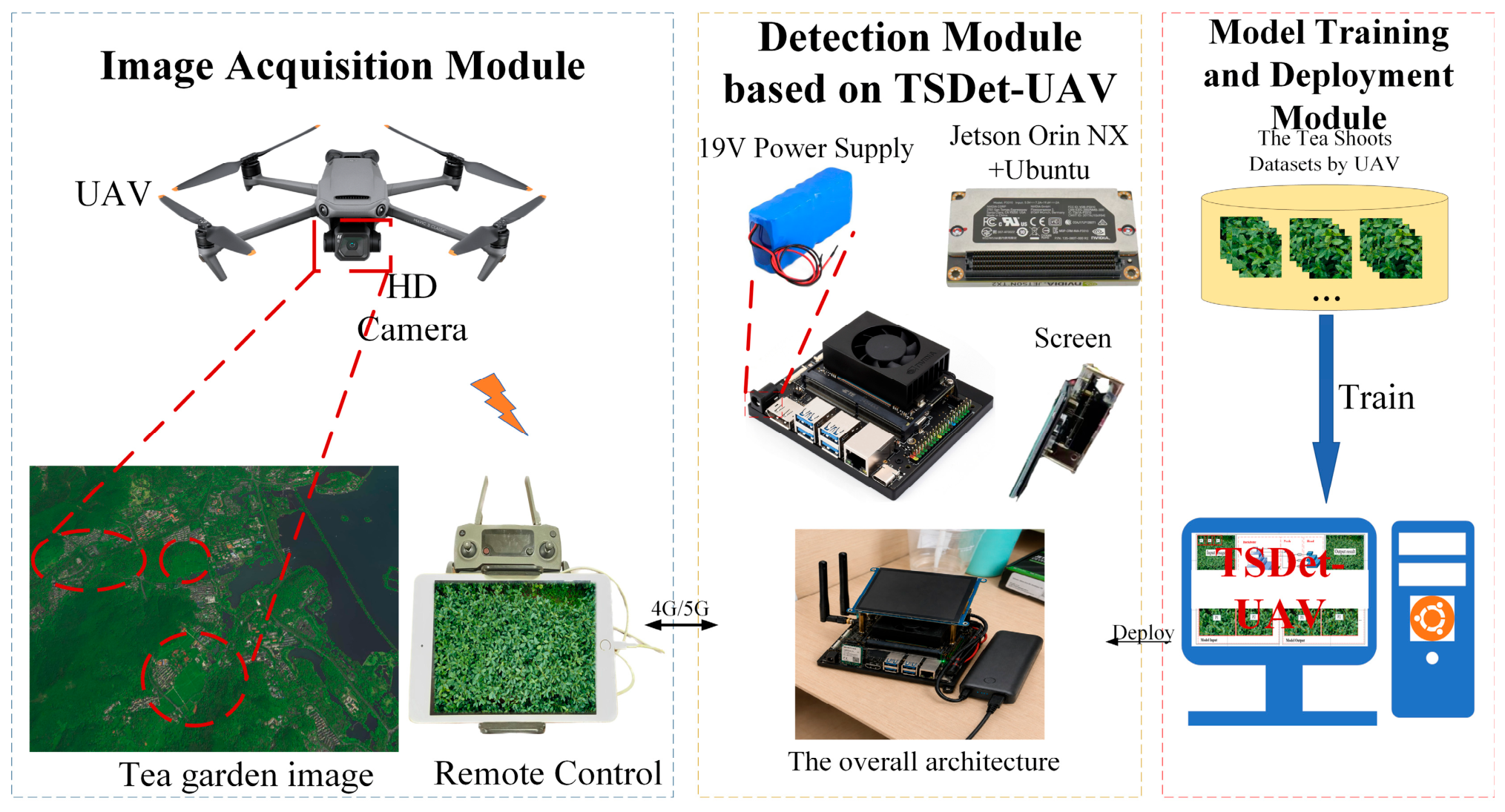
The proposed inspection platform for tea garden shoots based on UAV images consists of three modules: the image acquisition module based on UAV, the detection module based on TSDet-UAV, and the model training and deployment module, as illustrated in
Figure 6. In the image acquisition module, the DJI Mavic 2 (SZ DJI Technology Co., Ltd., Shenzhen, China) was chosen as the UAV platform, taking into account factors such as flight time, flight height, and stability. The DJI Mavic 2 professional aerial camera features a wide-angle lens with an equivalent focal length of 28 mm, and its aperture value can be freely adjusted between f/2.8 and f/11, enabling it to capture sharp and crisp images even in complex environments. For the detection module based on TSDet-UAV, considering portability and computing power, the NVIDIA Jetson Orin NX was selected as the embedded deployment platform. This device features an NVIDIA Ampere architecture GPU with 8 GB LPDDR5 memory and delivers up to 70 TOPS of AI computing performance. Equipped with 3rd-generation Tensor Cores and 2048 CUDA cores, it achieves 3.2 TFLOPS of FP32 floating-point computing capability. Combined with a 128-bit memory bus and 51.2 GB/s bandwidth, the platform fully meets the real-time processing requirements of high-resolution UAV imagery.
In the model training and deployment module, computer configuration for the small-scale tea shoots detection experiments conducted with UAV imagery comprised an Intel(R) Xeon(R) Platinum 8352 V CPU @ 2.10 GHz (Intel Corporation, Santa Clara, CA, USA), 64 GB of RAM, an NVIDIA GeForce RTX 4090 GPU with 24 GB of memory, and the Linux Ubuntu 22.04 operating system. In the model training phase, the parameters are set as follows: the learning rate is 0.001, the learning rate momentum is 0.937, the learning rate decline function is the cosine function, the model optimizer is Adam (adaptive time estimation), the optimizer weight decay factor is 0.0005, batch size is 16, and the total training era is 300.
3. Results
We first compared the detection performance of the TSDet-UAV method with that of traditional detection methods. Subsequently, a series of experiments were designed to investigate the influence of slice-image-related parameters in TSDet-UAV on the final detection results, to verify the effectiveness of the C2PSA_BinaryAttn module, the CARAFE upsampling module, and the lightweight shared convolution detection head LSCD in improving detection performance, and to further demonstrate the superiority of the proposed method by comparing it with current mainstream object detection models. Finally, the method with the optimal parameter configuration was deployed on an embedded chip to construct a UAV-based tea shoot inspection platform for tea gardens.
Within the TSDet-UAV framework, the training dataset consists of sub-images obtained by slicing UAV images. Therefore, UAV images with a resolution of 5472 × 3648 were divided into 640 × 640 sub-images. As a result, a total of 9313 training images, 1249 validation images, and 1249 test images were obtained, with the corresponding annotation files kept consistent with their respective data splits.
3.1. Analysis of SWO in TSDet-UAV
To verify the effectiveness of the proposed SWO framework and determine the baseline detector for subsequent model improvements, this study compares different detectors under the SWO and conventional SAHI slice-based inference schemes under the same experimental conditions. In all experiments, original UAV images with a resolution of 5472 × 3648 were used as input and divided into 640 × 640 sub-images for detection, with both the horizontal and vertical overlap ratios set to 0.1. The end-to-end processing time for a single original image was used as the speed metric. The results show that, compared with conventional SAHI, SWO exhibits a more stable overall advantage across different detectors. It not only improves precision, recall, F1-score, mAP
50 and mAP
50–95 for most models, but also achieves clearly faster inference speed, indicating that the slice inference and result merging process designed in this study can simultaneously improve detection performance and reduce the time cost of processing high-resolution images. Among the compared detectors, the combination of YOLO11n and SWO achieves a better balance between accuracy and speed. Specifically, YOLO11n+SWO attains a recall of 59.6% and an mAP
50 of 51.3%, both of which are the best in
Table 1, with a processing time of 1.38 s. Although this is slightly higher than the 1.23 s of YOLOv5n+SWO, its detection accuracy is clearly superior. Therefore, considering detection accuracy, recall capability, and inference efficiency together, this study selects YOLO11n as the baseline model for subsequent structural improvements in tea shoot small-object detection.
3.2. Parameter Analysis of the MT-BatchInfer Phase in the TSDet-UAV
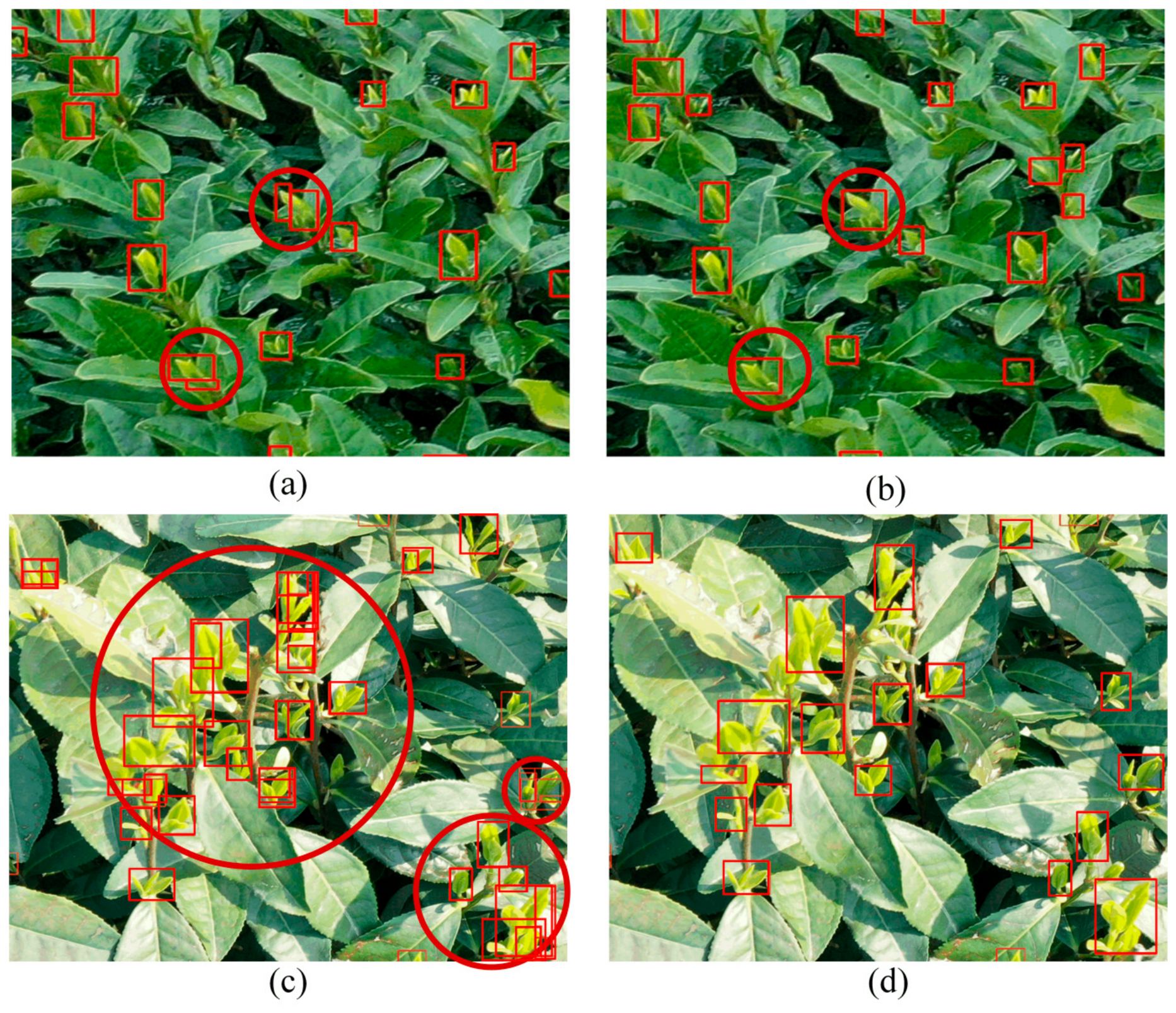
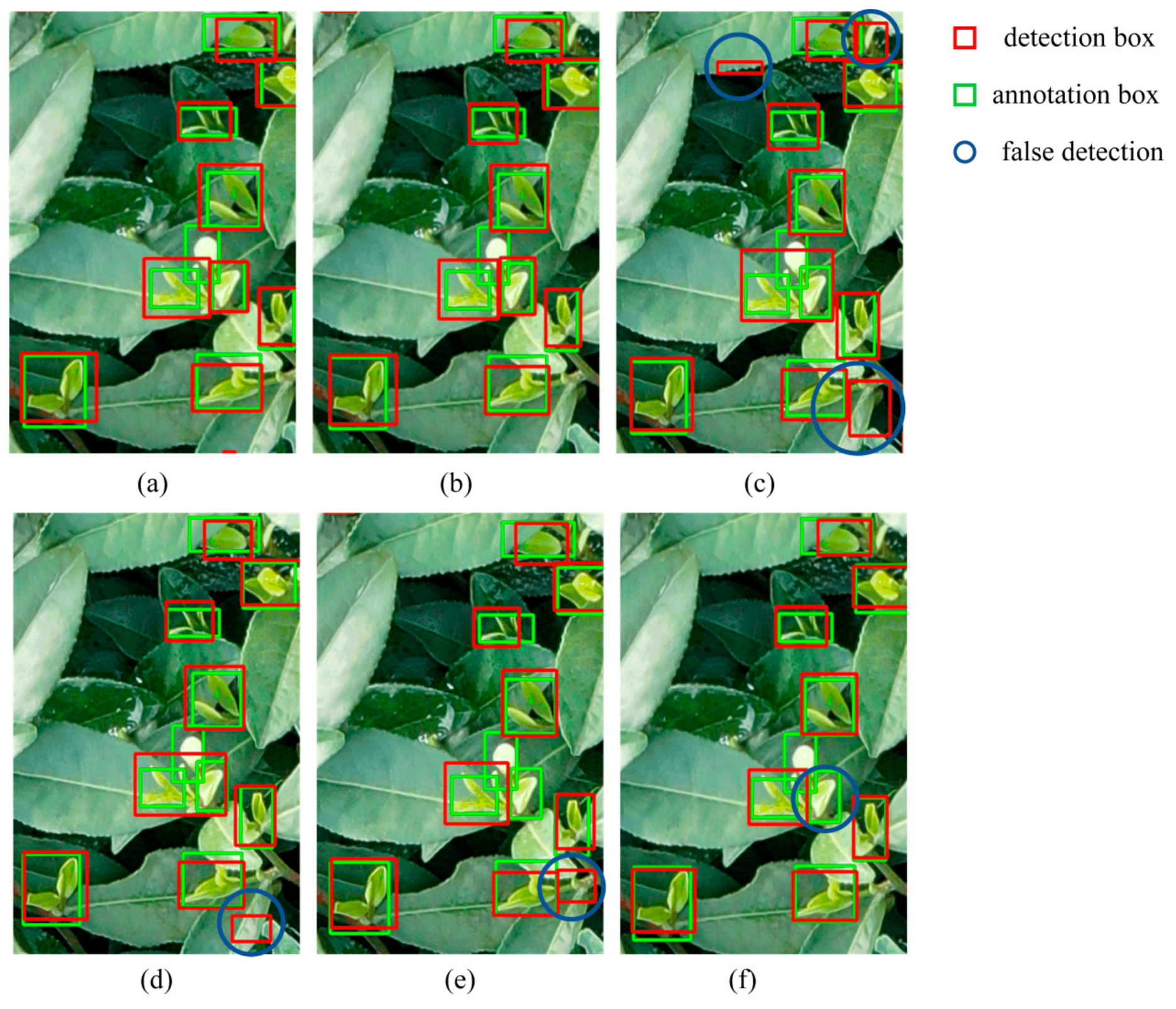
Although SWO can detect tea shoot targets more accurately at the UAV scale, its detection results still contain a considerable number of overlapping bounding boxes. This is mainly because, in the MT-BatchInfer stage, a certain overlap ratio is usually introduced during image slicing to avoid incomplete detection caused by splitting tea shoots located near slice boundaries, as shown in
Figure 7a,b. However, if these slice-level detection results containing overlapping regions are directly merged in the SH-CoordMapping stage, a large number of duplicated bounding boxes will appear in the overlapping areas, as illustrated in
Figure 7c, thereby affecting the accurate evaluation of model performance. Therefore, during image reconstruction, it is necessary to introduce a post-processing operation based on the IoU threshold to remove overlapping detection boxes, ultimately obtaining the detection result shown in
Figure 7d. This demonstrates that the proposed TSDet-UAV scheme can significantly improve the detection performance of tea shoot targets at the UAV scale, thereby verifying the necessity and effectiveness of slice-based detection.
However, to further exploit the performance advantages of this scheme, the selection of slice parameters is crucial. Different slice sizes and overlap ratios not only affect target completeness and relative scale, but also directly influence the number of sub-images, redundant computational cost, and final detection accuracy. Therefore, this section analyzes the key parameters in the MT-BatchInfer stage to determine a more suitable slicing configuration for the tea shoot detection task.
The results in
Table 2 show that the selection of slice parameters has a significant impact on the detection performance of TSDet-UAV, among which the slice size H plays a particularly important role. Overall, when H = 640, the model performs most consistently across different metrics, indicating that this scale can better balance target completeness, local detail preservation, and the representation ability of the detection network for small objects. In contrast, when H = 320, although slicing can enlarge tea shoot targets to a certain extent, the overly small slice size also compresses contextual information, making it difficult for the model to fully utilize the surrounding background and structural cues of the target. As a result, the overall detection performance remains relatively low. On the other hand, when H is further increased to 960 or 1280, each sub-image covers a larger area, causing the relative scale of tea shoots within the sub-image to decrease again, thereby weakening the advantage of slice-based detection for small-object enlargement and leading to different degrees of decline in mAP
50, mAP
50–95, AR, and F1, as shown in
Figure 8. These results indicate that H = 640 is more suitable as the slice size for high-resolution UAV tea-garden images in this task.
For the overlap ratio OR, the experimental results likewise show that introducing an appropriate overlap is necessary. In general, the configurations with OR = 0 are inferior to those with OR = 0.1 or OR = 0.25 under multiple slice sizes, indicating that if there is no overlap between adjacent slices, tea shoots located near slice boundaries are more likely to be truncated, which affects complete target detection and increases the risk of missed detections. In contrast, after introducing a certain overlap, targets near boundary regions can be more completely preserved in adjacent sub-images, thereby improving overall detection performance. Under the condition of H = 640, although OR = 0.25 is slightly higher than OR = 0.1 in mAP50 and mAP50–95, OR = 0.1 achieves 40.5% AR and 54.8% F1-score, both of which are the best among all experimental groups, indicating that this configuration has greater advantages in recall capability and overall detection effectiveness. Considering that this task emphasizes not only detection accuracy but also as complete a recognition of tea shoot targets as possible, the improvements in AR and F1-score are of greater practical significance.
By comprehensively considering the results under different slice sizes and overlap ratios, H = 640 and OR = 0.1 can be regarded as the more appropriate parameter configuration in this study. This setting not only achieves balanced overall performance, but also provides a better trade-off among detection accuracy, recall capability, and computational cost. Based on this result, all subsequent experiments in this study adopt H = 640 and OR = 0.1 as the default slicing parameter configuration of TSDet-UAV in the MT-BatchInfer stage.
3.3. Ablation Experiment of TSDet-UAV
To verify the effectiveness of the proposed detection module, this study progressively introduces BinaryAttn, CARAFE, and the final lightweight detection head on top of the YOLO11n+SWO baseline, and compares the detection performance and computational cost of each model under the same experimental conditions. The ablation results are presented in
Table 3. The results show that SWO plays a decisive role in high-resolution UAV tea shoot detection. Compared with the original YOLO11n, YOLO11n+SWO improves mAP
50 from 13.5% to 51.2%, mAP
50–95 from 3.8% to 23.3%, AR from 8.2% to 40.5%, and F1-score from 10.3% to 54.8%, indicating that slice inference and result merging are essential for detecting tea shoots in 5472 × 3648 UAV images. After introducing BinaryAttn, mAP
50 and mAP
50–95 further increase to 52.8% and 23.5%, respectively, although the gain in AR and F1-score remains limited and GFLOPs increase from 6.4 to 6.7.
After further introducing CARAFE, mAP50, AR, and F1-score increase to 53.1%, 41.3%, and 55.4%, respectively, showing that enhanced detail reconstruction during feature fusion is beneficial for tea shoot detection. Finally, the proposed TSDet-UAV+SWO achieves 52.9% mAP50, 41.8% AR, 55.4% F1-score, and only 6.0 GFLOPs. Although its mAP50 and mAP50–95 are not the highest among all compared models, it provides the best overall balance between detection accuracy, recall, and computational cost, making it more suitable for edge deployment in high-resolution UAV tea shoot detection.
This study systematically compares TSDet-UAV with several representative mainstream lightweight object detectors, including general-purpose detectors such as YOLOv8 and YOLOv10, edge-oriented lightweight models such as NanoDet-Plus, PP-PicoDet, and MobileDets, as well as small-object-oriented detectors such as SuperYOLO and TinyDet. To ensure a fair comparison, all models were evaluated using the image slicing and merging inference strategy proposed in this paper. The results in
Table 4 show that YOLOv8 performs relatively poorly on this task, achieving only 38.6% mAP
50, 14.4% mAP
50–95, 38.1% AR, and 38.4% F1-score. In contrast, the other lightweight models obtain better detection results, indicating that, in the high-resolution extreme small-object scenario of UAV-based tea shoot detection, lightweight detectors with stronger feature representation and optimization capability are more suitable.
Hence, the proposed TSDet-UAV further improves mAP50 to 52.9%, AR to 41.8%, and F1 to 55.4%, while reducing the parameter count to 2.4 M. Although its mAP50–95 is 23.2%, which is only comparable to the best competing models rather than clearly surpassing all baselines, TSDet-UAV achieves a better overall balance among detection accuracy, recall capability, and model lightweightness. Notably, even small-object-oriented detectors such as SuperYOLO and TinyDet still perform worse than the proposed method, suggesting that existing lightweight detection algorithms remain limited in the extreme small-object scenario represented by the UAV-TS dataset. Since 97.6% of the targets in this dataset are smaller than 32 × 32 pixels, conventional lightweight models struggle to effectively handle such dense and tiny targets. Overall, these results demonstrate that TSDet-UAV exhibits stronger adaptability and greater practical potential for UAV-based tea shoot detection.
3.4. UAV Tea Shoots Automatic Inspection System
To validate the feasibility of the proposed TSDet-UAV small-object detection approach for tea shoots in practical UAV scenarios, we deployed TSDet-UAV on an embedded chip, thereby establishing a tea shoots inspection platform based on UAV imagery.
The system employs a DJI Mavic 2 Pro UAV as the image acquisition terminal, whose compact airframe design mitigates strong airflow disturbances during low-altitude operations that could compromise tea bud recognition accuracy, while simultaneously reducing safety risks. The air–ground decoupled architecture enables independent deployment of the aerial platform and the Jetson Orin NX edge computing unit, significantly enhancing modular scalability and iterative optimization efficiency. A wireless local area network establishes the air–ground communication link, with real-time RGB image streaming achieved through SMB protocol implementation. Captured data is autonomously transmitted to ground-side shared storage directories, enabling end-to-end closed-loop management of visual data streams via graphical user interface access to storage paths. For operational requirements in hilly terrains, the UAV implements multi-source sensing fusion technology for contour flight control. The dual-frequency RTK positioning module integrates with downward-facing binocular vision sensors and a millimeter-wave radar system that scans terrain elevation at 20 Hz sampling frequency. A 3D terrain modeling algorithm dynamically calculates the relative altitude between the UAV and ground surface. The propulsion system is governed by PID closed-loop control strategies, executing altitude adjustments at 5 Hz frequency. This configuration maintains ±0.3 m vertical accuracy relative to preset adjustable baseline altitudes (1.2–3 m), ensuring height consistency in tea canopy image acquisition across complex topographies [
37].
In this study, TSDet-UAV was deployed on the NVIDIA Jetson Orin NX platform, and its inference performance was further optimized using the TensorRT framework. As shown in
Table 5, under the parameter setting of H = 640 and OR = 0.1, TSDet-UAV achieved consistently better efficiency than the SAHI-based scheme. Under the PyTorch 2.0.0 framework, TSDet-UAV required 2.95 s to process a single 5472 × 3648 image, including 2.34 s for model inference and only 0.61 s for image slicing, result merging, and post-processing. After TensorRT acceleration, the inference time was reduced to 0.95 s in FP32 mode and further to 0.71 s in FP16 mode, while the total processing time decreased to 1.56 s and 1.32 s, respectively. By comparison, the SAHI-based YOLO11n scheme showed much higher time consumption. Under TensorRT FP32, the slicing, merging, and post-processing stage required 4.76 s, and the total processing time reached 7.08 s; even under TensorRT FP16, the total time remained 6.55 s. These results indicate that the MT-BatchInfer and SH-CoordMapping strategies in TSDet-UAV can significantly reduce the overhead of image slicing and result reassembly, while TensorRT further improves model inference efficiency. Overall, TSDet-UAV achieves clear advantages in end-to-end processing efficiency and provides a more practical solution for high-resolution UAV image detection on edge devices.
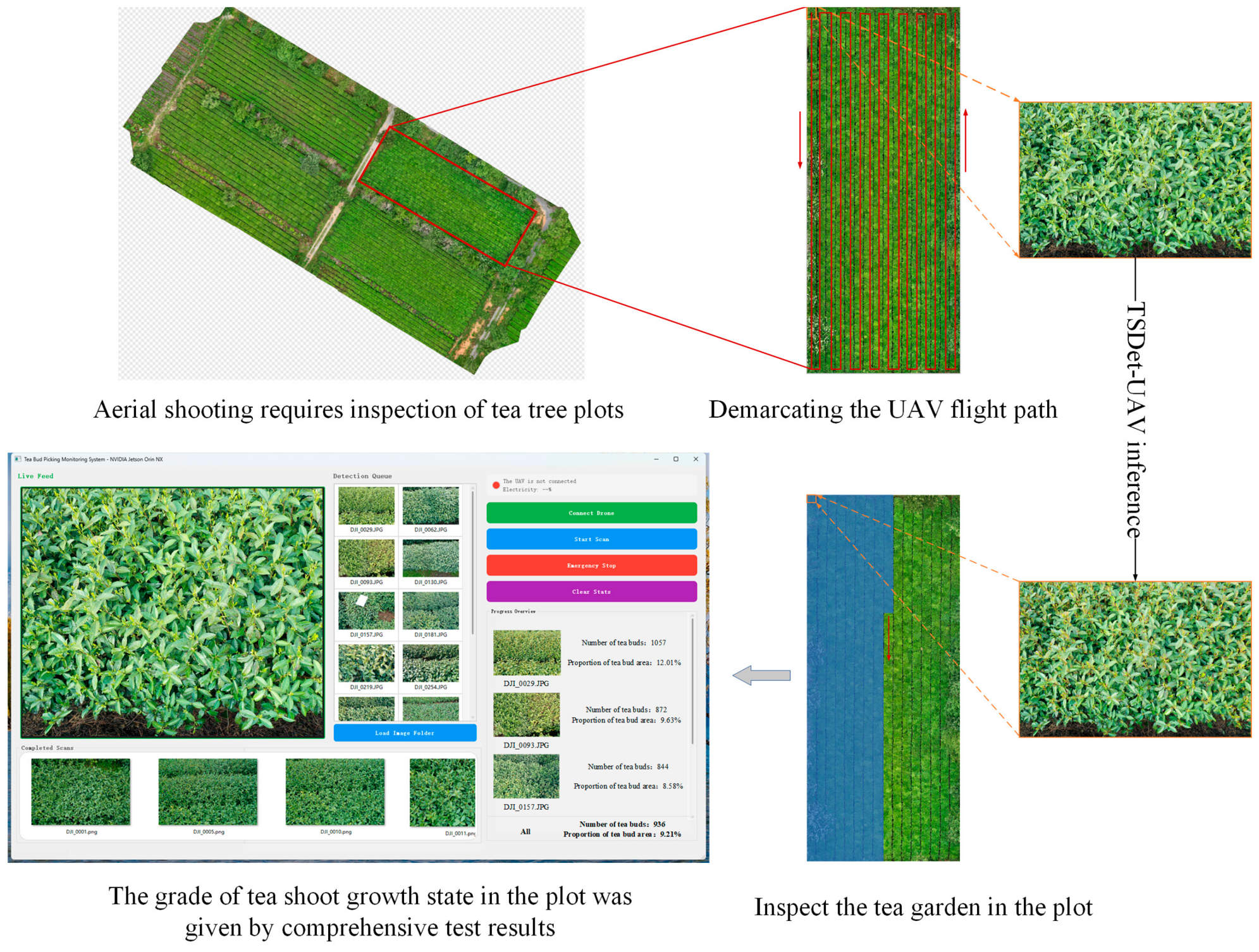
Figure 9 illustrates the workflow of the UAV-based intelligent tea detection system, which optimizes aerial photography parameters according to tea plant growth patterns. In the Longjing tea garden test site (48 m × 20 m) with single-row planting, experimental validation determined the optimal imaging configuration as 1.5 m above the canopy at a 90° shooting angle. To minimize computational redundancy, the system employs a discontinuous sampling strategy with 10 m intervals along planting rows. Utilizing the DJI Mavic 2’s 26 mm lens, it captures 5472 × 3648 resolution images covering 2 m × 1.5 m areas per sampling point. Through Z-shaped trajectory planning, the UAV completes 96 sampling points within 5 min, with images transmitted in real-time to the Jetson Orin NX edge platform via SMB protocol. Benchmark tests demonstrate that TSDet-UAV deployed on Jetson Orin NX achieves 1.32 s processing time per image, while the UAV’s 3 s sampling interval ensures seamless real-time acquisition and detection synchronization. The interface displays real-time tea bud localization results, calculates bud counts per frame, and computes weighted average density (buds/m
2) across all samples. When density exceeds 50/m
2, the system flags the area as harvest-ready. For 1 km
2 tea gardens, the workflow integrates 5 min UAV surveys with fully parallelized edge processing, eliminating offline delays through pipeline optimization. This case study demonstrates the system’s practical feasibility in optimizing high-frequency picking decisions, though real-world deployment may require adaptive adjustments to parameters such as sampling intervals and density criteria based on terrain variations, weather conditions, and cultivar-specific growth patterns.
4. Discussion
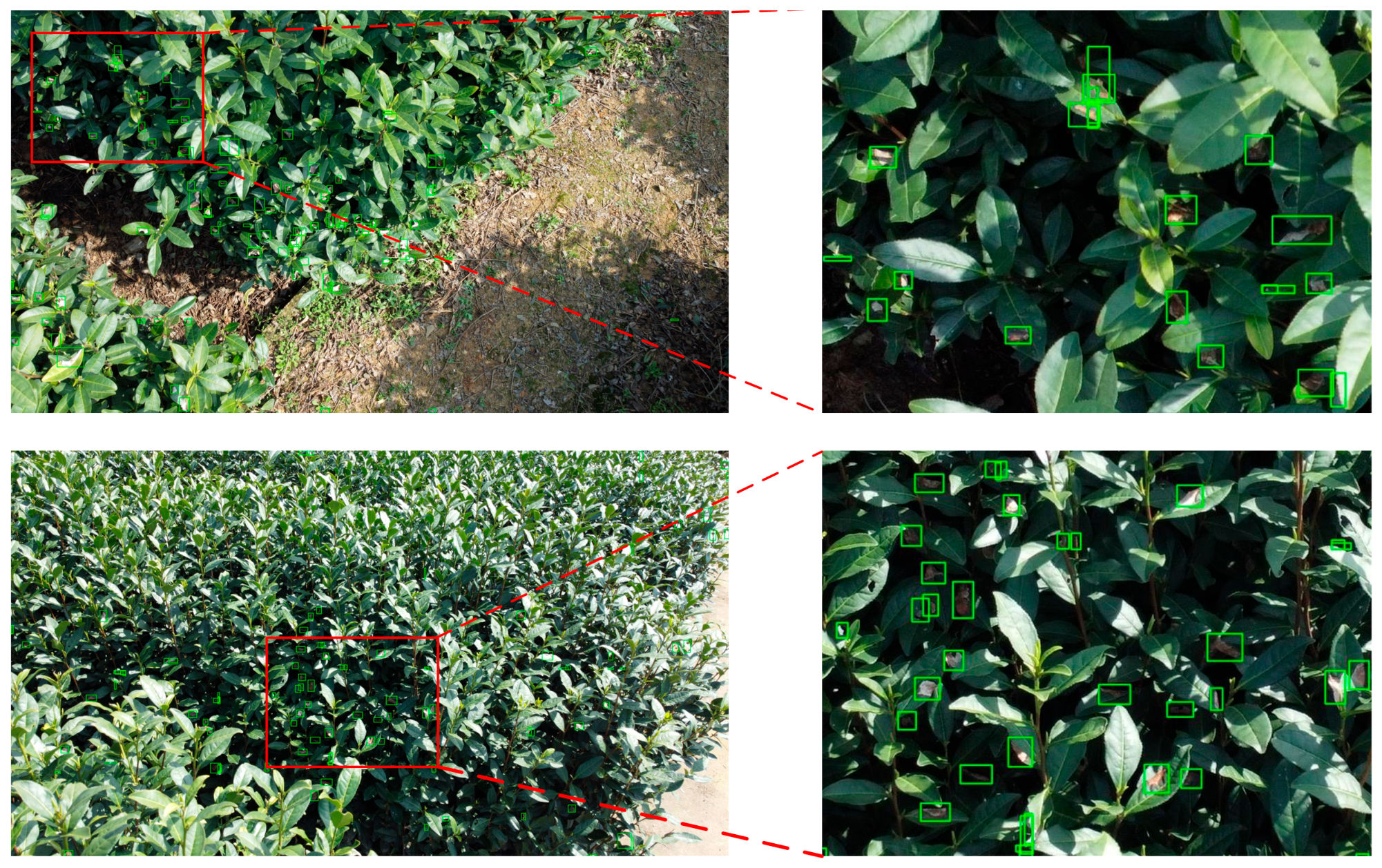
To further validate the cross-scenario applicability of the proposed method, we preliminarily transferred TSDet-UAV to the tea anthracnose detection task and conducted comparative experiments on a tea anthracnose dataset with an original resolution of 4000 × 2250. As shown in
Table 6, compared with Yolo11n+SAHI and Yolo11n+SWO, TSDet-UAV achieves better performance on all evaluated metrics, with mAP
50, mAP
50–95, AR, and F1 reaching 65.8%, 49.7%, 62.8%, and 68.7%, respectively.
Figure 10 presents the inference results of tea anthracnose using a high-resolution sliding window strategy in natural tea garden scenarios. The red bounding boxes in the original high-resolution images on the left represent the local patches extracted by sliding windows. As shown in the magnified views on the right, the model accurately localizes tiny brown lesions on leaf margins and surfaces, even under complex interference such as severe leaf occlusion, uneven illumination, and weak disease features. Tea anthracnose detection and tea shoot detection differ substantially in target morphology, scale distribution, and background interference patterns: the former focuses more on boundary and texture variations in lesion regions, whereas the latter mainly involves dense tiny-object detection. Nevertheless, the proposed method achieves stable improvements in both tasks, indicating that the slice inference and result merging framework, as well as the optimized detection module, are not limited to a single target type, but instead show good adaptability across different visual detection tasks in complex tea-garden scenes.
In addition, the TSDet-UAV method needs to slice the image into small ones for detection, and the results of the slices also need to be merged back, which inevitably reduces the running speed. There is related research on the feasibility of dynamic monitoring with 15–70 FPS on current mainstream NDVIA boards with the resolution mainly under 640 [
38,
39]. But the image size in our manuscript is 5472 × 3648 pixels, much higher than 640. So it is possible for video streaming monitoring with lower resolution and proper UAV flight parameters to achieve the large-scale tea bud estimation. Under our current UAV settings, we applied the “stop-and-stare” mode where drones perform fixed-point cruising, hover for photography, and conduct offline detection [
40]. Then, the on-board edge device has sufficient time (for example, several seconds) to complete the analysis. However, the tea shoots inspection platform built in this paper based on UAV images is used for the picking planning of large-scale tea gardens. Compared with the research on tea picking robots, the real-time requirements are lower, and the UAV can cover a large area. Therefore, the system proposed in this paper can meet the needs of tea picking planning and management.
We will continue to optimize the detection speed of the TSDet-UAV to achieve high precision and high speed tea shoot detection. At present, the detection speed can be improved mainly through the lightweight design of the model and the use of higher performance embedded chips. In the lightweight design of the model, techniques such as quantization [
41], knowledge distillation, pruning [
42], and tensor decomposition [
43], can reduce the parameters and calculation amount of the model to speed up the running speed of the model. We applied the Quantization-Aware Training (QAT) quantization approach in our dataset, which explicitly introduces quantization error during training through fake quantization operators, allowing the network parameters to gradually adapt to low-precision representations during back-propagation. The experimental results show that the choice of quantization strategy is critical for accuracy preservation. Under QAT, the model exhibits strong robustness. After INT8 quantization, the mAP dropped only slightly from 76.7% to 76.5%, while the inference latency was reduced from 1.0 ms to 0.6 ms—a significant speedup. These quantization experiments provide preliminary evidence that methods such as QAT can significantly improve detection speed while largely maintaining model accuracy, offering a feasible basis for practical deployment. Because our detection model ultimately needs to be deployed on an embedded chip, in addition to the model lightweight approach, we can also increase the detection speed of the deployed model through hardware optimization. Among them, FPGA-based accelerators, as a new technology in recent years, have the advantages of function customization, high parallel calculation, low power consumption, small size, etc., and are more convenient to integrate with edge devices [
44]. Lammie et al. deployed a quantized deep neural network for weed classification on an FPGA, demonstrating that the parallel computing capabilities of the FPGA could achieve faster inference speeds compared to GPU implementations [
45]. In addition to the design method of model lightweight, the design of FPGA acceleration circuit can also bring new ideas for our subsequent research. In the future, we intend to use chips with higher computing power, such as the NVIDIA AGX series, and better coupling with the drones, batteries and other devices in the system. At present, most of the detection systems designed in the literature separate the process of data acquisition from the process of inference calculation. The image is collected in the field and uploaded to the server through wireless communication. The deep learning algorithm runs on the server, and the inference result is sent back to the edge terminal in the field through the wireless network [
46]. But the limited bandwidth of the wireless network and the instability of the field network signal lead to the low efficiency of image transmission, which takes a lot of time and is difficult to achieve the real-time detection and recognition [
47]. The TSDet-UAV tea shoot detection method proposed by us can be deployed on the embedded chip, which can realize the detection system integrating the acquisition process and the inference calculation process. However, since the UAV model selected in this paper cannot drive the additional embedded chip and power battery to fly stably, the UAV is separated from the embedded chip. In future research, we plan to build a more integrated tea shoot detection platform using specialized UAVs and customized embedded chips.





 ,
,