1. Introduction
High-precision tracking radars rely heavily on the accuracy of their microwave feeding networks of antenna systems to acquire exact angular information of moving targets. As extensively documented in [
1,
2,
3,
4,
5,
6], monopulse radar architectures remain the gold standard for tracking applications, offering immunity to target amplitude fluctuations by extracting complete angular error information from a single pulse. At the core of these feeding networks is the monopulse comparator, which processes the received signals to generate the sum (Σ) and difference (Δ) channels. The electromagnetic integrity of this integrated microwave component is critical. Any amplitude or phase imbalance within the comparator directly diminishes the depth of the null in the antenna’s difference pattern, thereby limiting the radar’s angle error slope and overall tracking resolution.
To ensure that the performance of the comparator meets the system requirements, the precise microwave characterization of the fabricated components is essential. However, accurately and efficiently evaluating these multiport microwave networks presents significant measurement challenges. Conventional characterization setups using a standard two-port vector network analyzer (VNA) are inefficient for such components. The complex structure and high port count of a four-horn monopulse comparator require repetitive mechanical reconnections, sequential port switching, and multiple short and match terminations to evaluate all signal reflection and transmission paths. This conventional port-by-port network analysis not only significantly increases the testing time but also introduces measurement inconsistencies at the waveguide interfaces, making rapid and reliable evaluation exceedingly difficult.
While multiport VNA extensions offer a viable alternative [
7,
8], monopulse comparator measurements often require seven or more ports, for which the necessary instrumentation is less commonly available. Moreover, the close proximity of the four feed horn apertures makes it mechanically unfeasible to simultaneously connect four bulky, rigid waveguide adaptors or transitions. Furthermore, the utilization of multiport measurements cables may introduce dynamic phase drifts and calibration complexities, which can critically degrade the measurement accuracy.
To overcome the aforementioned limitations and achieve rapid measurement without compromising accuracy, this paper proposes a novel characterization technique utilizing switchable reflective excitation signals. Instead of sequentially measuring individual ports, the proposed methodology integrates a custom-designed switchable reflective window and a multiport matched load to precisely control the boundary conditions directly at the reference plane of the DUT. By actively toggling these switchable states, the inherent reflected signals are efficiently repurposed as internal excitation sources. This physical innovation allows for the simultaneous multiport input of the four-horn comparator, effectively simulating its actual operation and dramatically reducing the measurement complexity.
By directly extracting the intrinsic sum and difference characteristics under simultaneous excitation, and comparing these physical results with theoretical values, the highly-integrated comparator is rapidly evaluated. The remainder of this paper is organized as follows:
Section 2 demonstrates the monopulse comparator architecture and details the proposed reflective excitation feeding method along with the custom-designed switchable calibration kits.
Section 3 presents the experimental results and the quantitative comparison between the measured and theoretical values. Finally,
Section 4 concludes this paper.
2. Switchable Measurement Technique for Microwave Characterization of Monopulse Comparator
This section details the theoretical foundation and the physical implementation of the proposed switchable characterization method. First, the system architecture and operational logic of the monopulse radar are introduced. Subsequently, the novel reflective excitation feeding method, which utilizes reflected signals to achieve simultaneous multiport excitation, is proposed for the first time. Finally, the custom-designed test fixtures are presented to demonstrate the practical realization of the proposed measurement framework.
2.1. Monopulse Antenna System
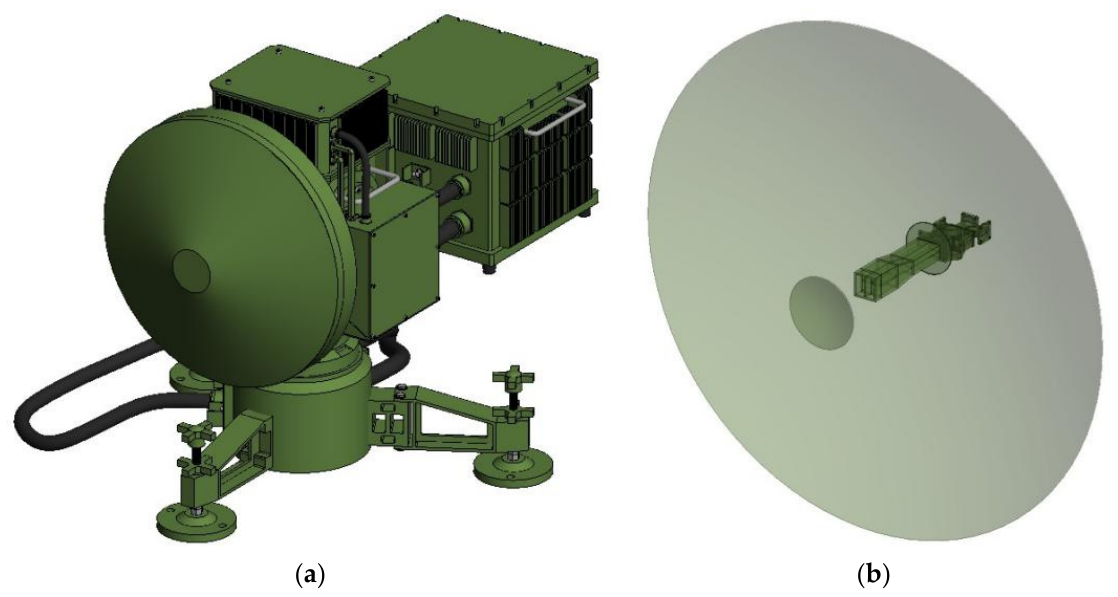
The performance of a precision tracking radar is fundamentally determined by its ability to resolve a target’s coordinates. In this study, we use a mobile monopulse tracking radar system as an example to illustrate the proposed method. The computer-aided design (CAD) model of the tracking radar is depicted in
Figure 1. The core of its tracking capability lies within the antenna assembly.
Figure 1 provides a perspective view of a Cassegrain antenna [
9] and its critical component—the monopulse comparator. As established in the literature, the physical symmetry of the comparator is the primary factor influencing the formation of the required beam patterns.
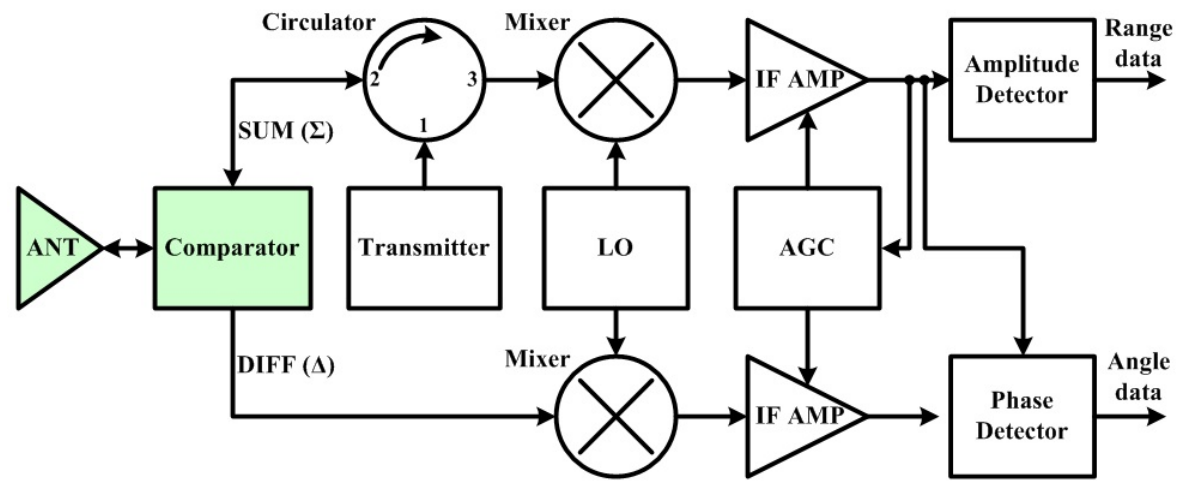
To further analyze the signal processing flow, a simplified architecture of the dual-channel monopulse radar system is presented in
Figure 2.
In a typical amplitude-comparison monopulse tracking radar system, the antenna feed is divided into four symmetrical quadrants, denoted as
A,
B,
C, and
D. The monopulse comparator is a passive microwave network that synthesizes the signals received from these four quadrants to generate one sum channel (Σ) and two difference channels, which are azimuth difference (Δ
AZ) and elevation difference (Δ
EL), respectively. The fundamental arithmetic logic of the comparator can be expressed as:
To achieve accurate characterization of this logic, the specific comparator network must be closely examined. The DUT in this study is a classic four-horn monopulse comparator.
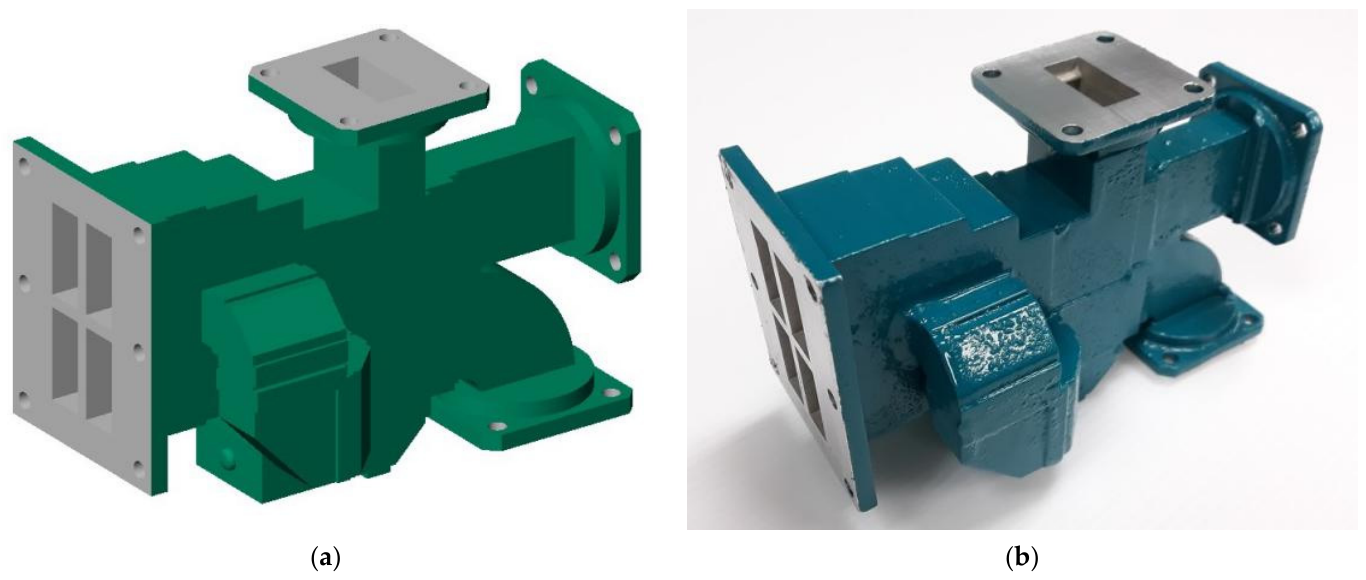
Figure 3 illustrates the external view of a comparator that comprises a highly integrated network of four waveguide magic-tee hybrids [
10,
11,
12]. As detailed in
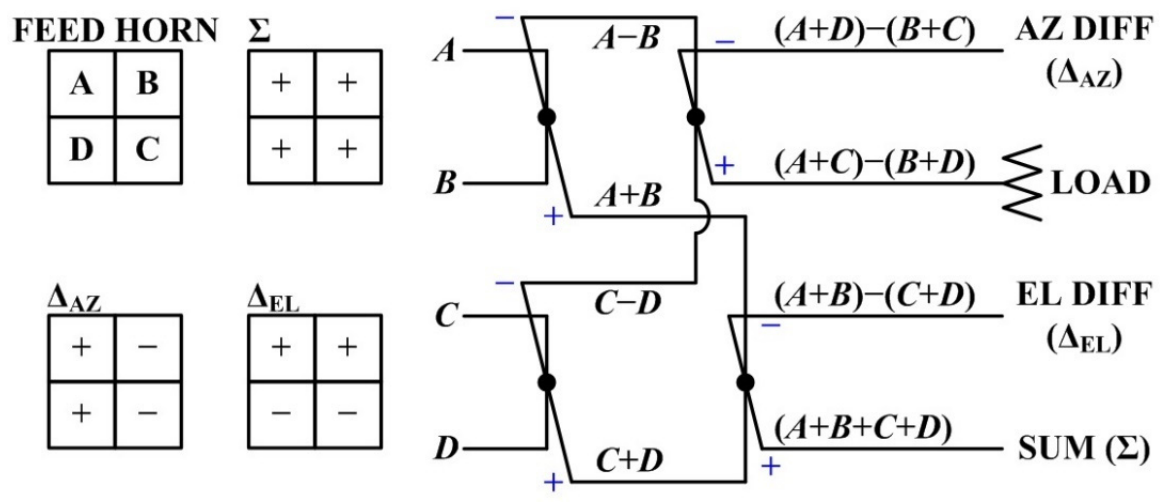
Figure 4, this interconnected topology creates complex internal signal paths, highlighting the need for advanced testing methodologies beyond conventional port-by-port measurements.
2.2. Reflective Excitation Feeding Technique
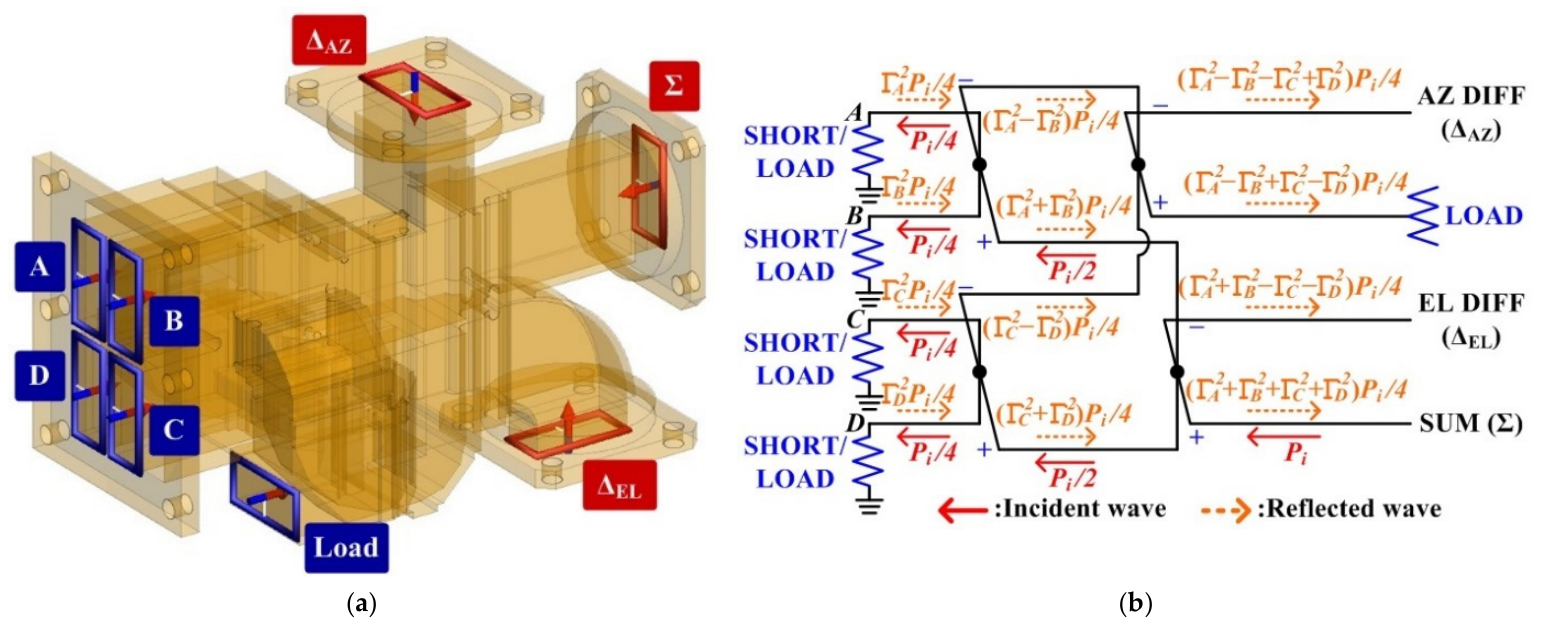
To rapidly characterize the comparator, a novel reflective excitation feeding method is proposed, as illustrated in
Figure 5.
Figure 5a shows the specialized settings for the input/output ports and terminations established at the waveguide interfaces. The corresponding schematic diagram and signal flow analysis are depicted in
Figure 5b. By systematically manipulating these reflective states, the setup introduces known boundary conditions, forcing the inherent signals to be reflected or absorbed and act as simultaneous internal excitation sources.
As shown in
Figure 5b, the excitation power of incident wave
Pi is equally distributed among ports
A,
B,
C, and
D through the magic-tee structures of the comparator. By utilizing the equally-divided power
Pi/4 in conjunction with short circuits and matched loads, simultaneous multiport excitation is realized. Here,
ΓA,
ΓB,
ΓC, and
ΓD represent the reflection coefficients of ports
A,
B,
C, and
D, respectively.
The reflected signal power received at sum, azimuth difference, and elevation difference ports of monopulse comparator with switchable inputs are respectively denoted as
Pr,Σ,
Pr,ΔAZ, and
Pr,ΔEL and can be expressed as:
Based on the above signal flow analysis shown in
Figure 5, the theoretical values of 13 calibration points for a four-horn monopulse comparator can be derived. As summarized in
Table 1, the 13 possible excitation states represent the theoretical known boundaries (e.g., ideal shorts or matched loads) generated by the switchable fixtures [
13,
14,
15,
16,
17]. Taking the single-input case as an example, assume that Port
A is short-circuited while the sum port is excited,
Pr,Σ,
Pr,ΔAZ, and
Pr,ΔEL each have a value of
Pi/4. Therefore, the values of Σ and Δ
AZ, and Δ
EL in the second row of
Table 1 are all 1/4. Compared to prior work, we employ the reflected wave as simultaneous multiport excitation to derive the theoretical sum and difference values of a monopulse comparator. In addition, we normalize the maximum signal levels to 0 dB to align with the
S-parameter measurements from the vector network analyzer.
2.3. Switchable Calibration Window and Multiport Matched Load
To physically implement the 13-state reflective excitation outlined in
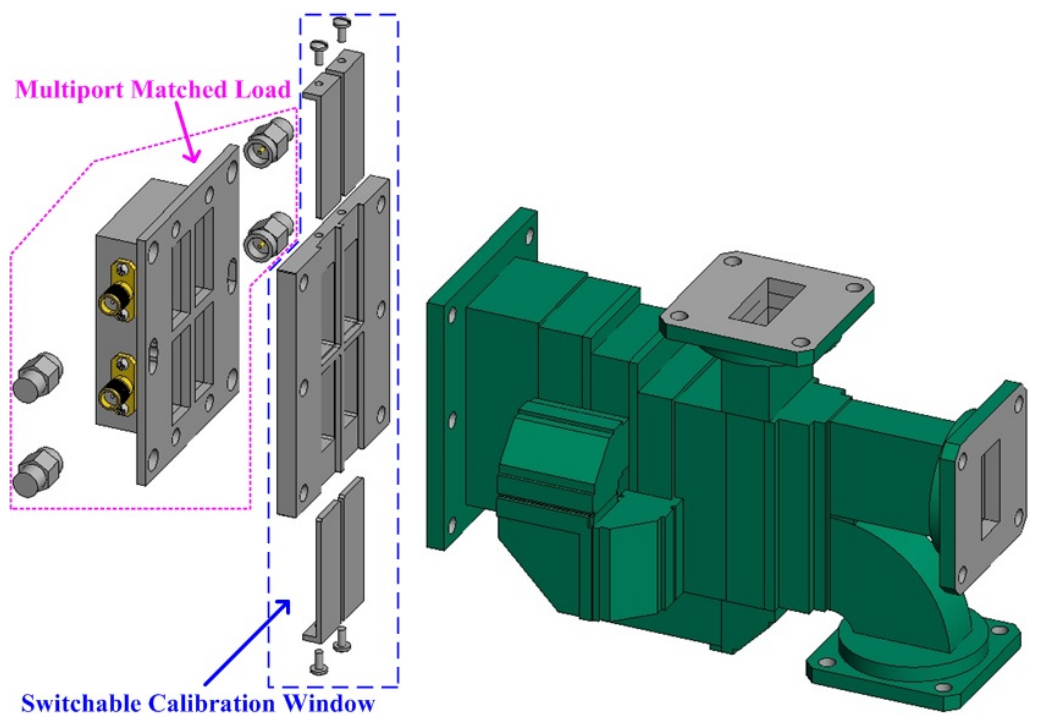
Table 1, custom-designed calibration kits were engineered. Standard waveguide test setups require repetitive mechanical connections, which inevitably introduce measurement inconsistencies. To resolve this, the proposed method employs a switchable reflective window and a multiport matched load.
Figure 6 provides an exploded view of these components, illustrating the precise mechanical alignment and switchable termination states.
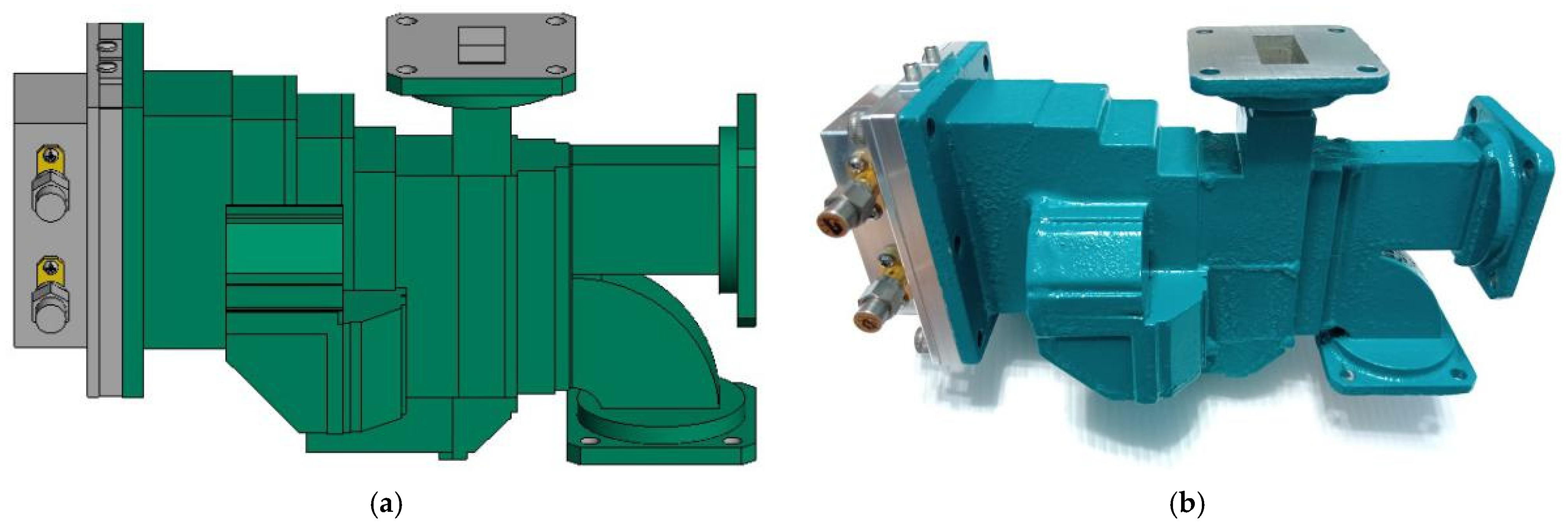
The measurement configuration is presented in
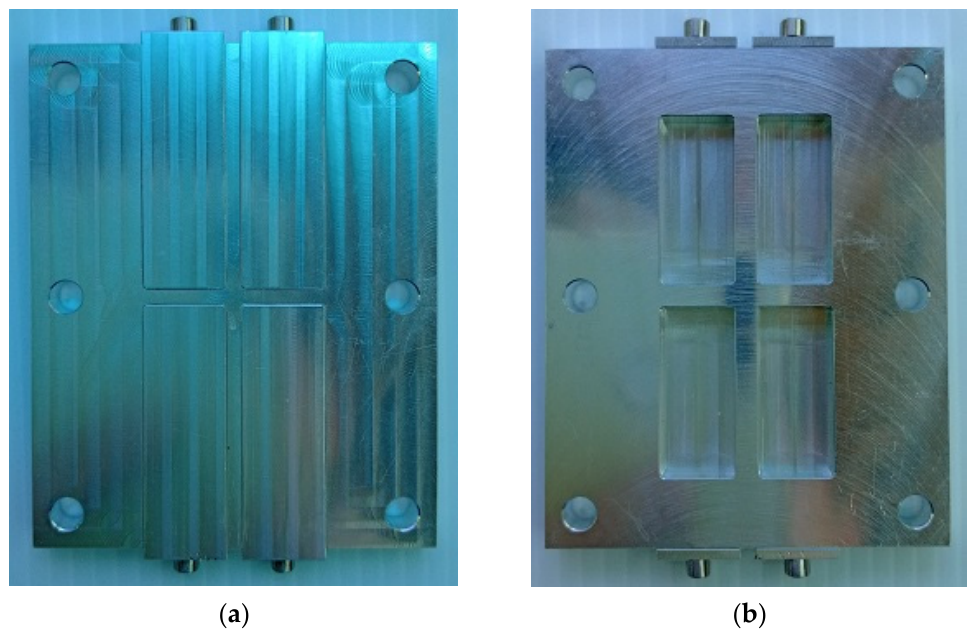
Figure 7, showing the CAD assembly model and the actual assembled setup. The core element enabling dynamic boundary modulation is the switchable reflective window, with its front and rear views detailed in
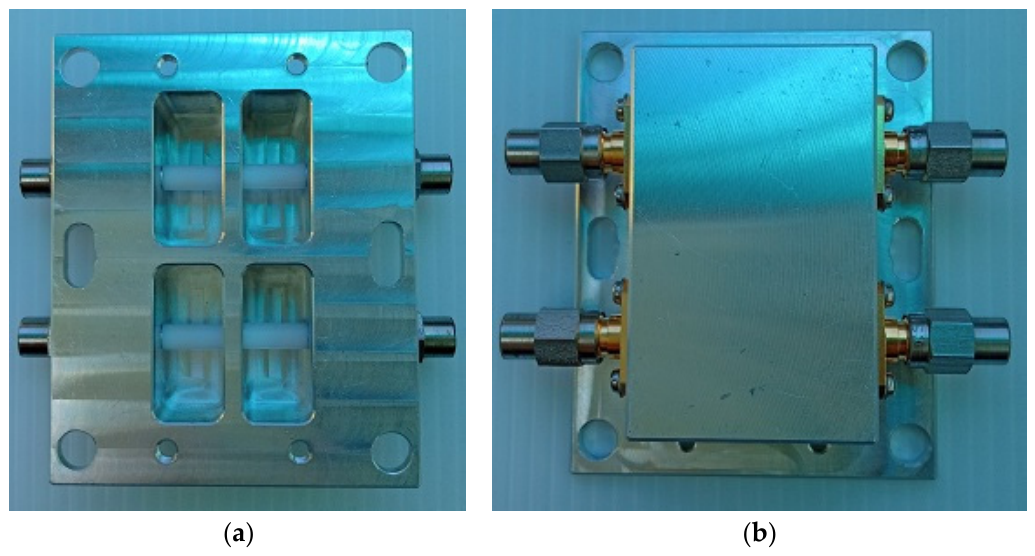
Figure 8. This component allows rapid toggling of reflective signals directly at the reference plane without physically disconnecting the DUT and waveguide adaptors. Furthermore, to provide the reference impedance, a specialized multiport matched load is utilized, as shown in
Figure 9. Together, these highly integrated fixtures facilitate the rapid acquisition of the signal states, enabling simultaneous multiport excitation while fundamentally eliminating non-repeatable mechanical and measurement errors.
3. Results and Discussion
This section presents the experimental validation of the proposed characterization method. By utilizing the inherent reflected signals as internal excitation sources, the microwave characteristics of the X-band waveguide monopulse comparator can be accurately extracted. To evaluate the hardware performance and validate the simultaneous excitation concept, the extracted measurement data are systematically compared with the theoretical results.
3.1. Experimental Results of Switchable Calibration Kits
Before characterizing the comparator, the fundamental microwave responses of the custom-designed switchable fixtures designed for X-band applications should verified, as they provide the critical boundaries for generating the required reflected signals.
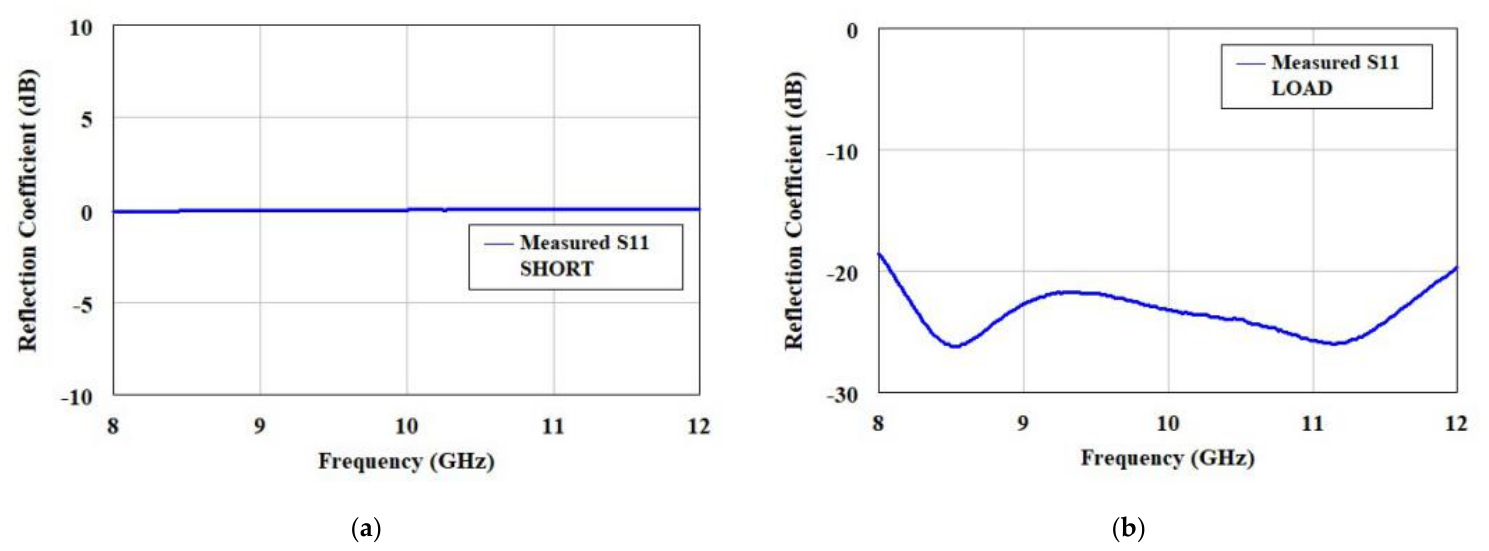
Figure 10 presents the measured reflection coefficients of the switchable reflective window and the multiport matched load. The closed switchable window must provide a highly stable reflection boundary across the operational bandwidth, while the multiport matched load must exhibit good return loss to ensure the absorption boundary condition. The robust performance of these fixtures guarantees that the distinct reflective excitation states are accurately established for the subsequent microwave measurements.
3.2. The 13-Point Calibration Results of the Waveguide Monopulse Comparator
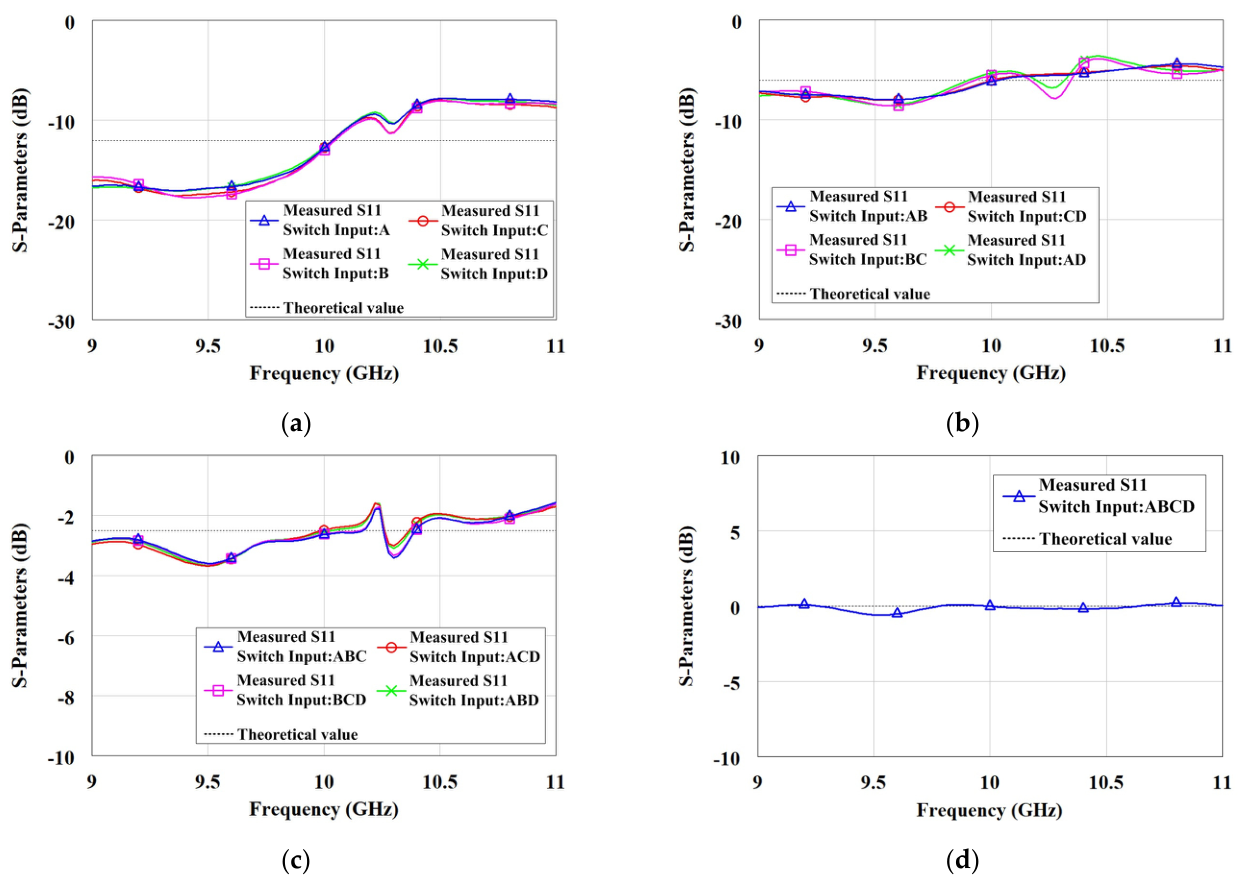
Below are the measurement results for the four-horn monopulse comparator designed at 10 GHz. Here we set Port 1, Port 2, and Port 3 as sum, azimuth difference, and elevation difference, respectively. The extracted sum signal (Σ) of the comparator, illustrated in
Figure 11, demonstrates optimal in-phase power combining. The signal intensity progressively and stably increases as the reflective excitation transitions from a single input to all four simultaneous inputs. The discrepancy between measured data and theoretical values increases as the operating frequency deviates from the center frequency (10 GHz).
Furthermore, the azimuth and elevation difference channels (Δ
AZ and Δ
EL), plotted in
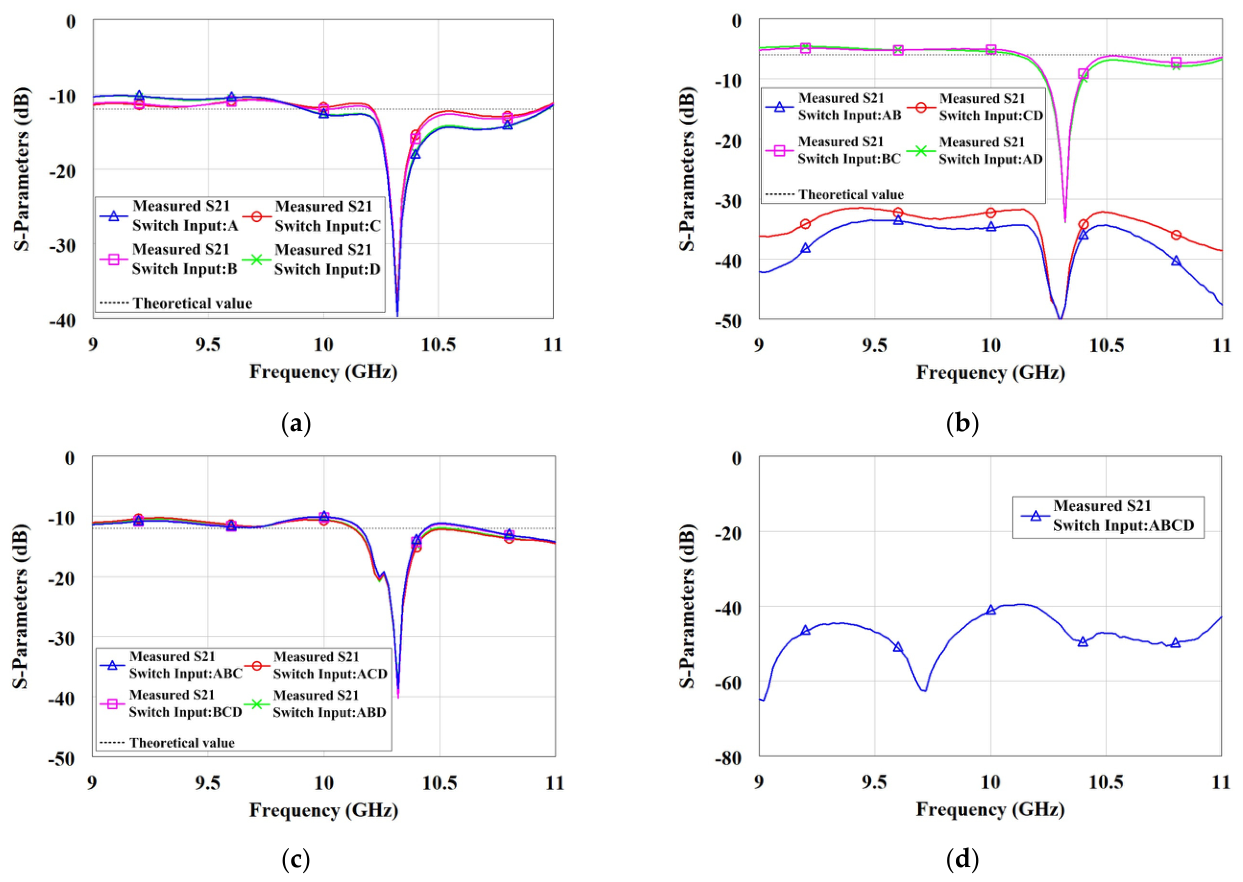
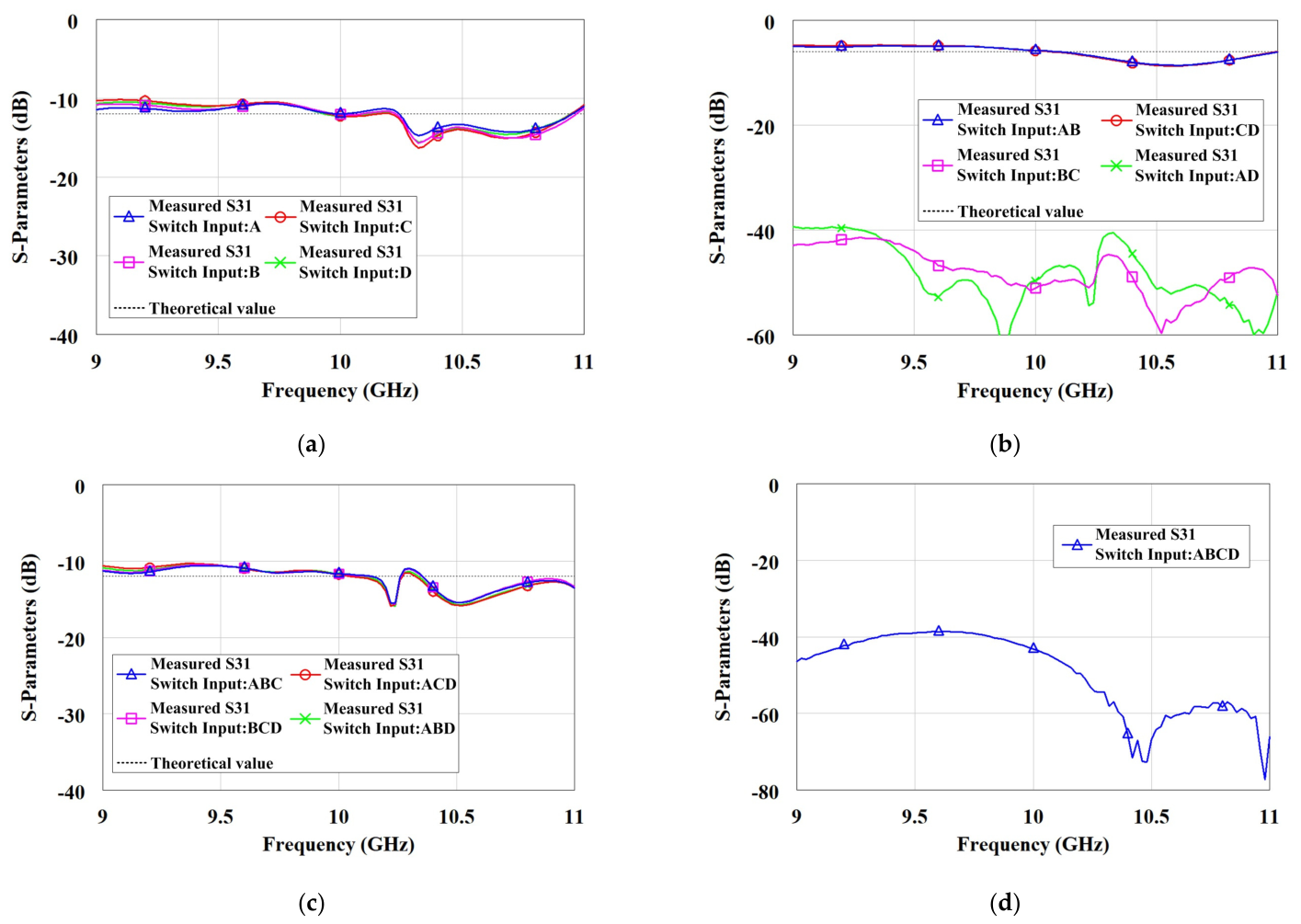
Figure 12 and
Figure 13, respectively, rely strictly on the out-of-phase cancellation of the simultaneous excitation signals. As observed in the multi-input excitation states, the comparison between the theoretical and measured difference signals demonstrates a high degree of agreement, especially near the center frequency.
To provide a precise quantitative evaluation, the extracted sum and difference data at the radar’s center frequency of 10 GHz are summarized in
Table 2. As we can see, the errors between the measured results and theoretical values for the single-input cases are all within 1 dB. The discrepancies are within acceptable limits. They are primarily attributed to structural design and assembly misalignment, which are typical in this frequency range. The low values observed in the difference channels, ranging from −32.31 dB to −51.01 dB, represent the null depth of the monopulse comparator. These values are well above the system’s noise floor (approximately −80 dBm in our setup) and fall within the dynamic range of the network analyzer, ensuring measurement reliability. Such deep nulls imply that the comparator possesses good amplitude and phase balance between its internal paths. It indicates that the signals from the antenna ports are effectively canceled at the difference ports due to the high structural symmetry of the magic-tee network. The measured sum signal level of the four-input case is very close to 0 dB, demonstrating the comparator’s superior performance of power distribution and combination This close correlation between the theoretical model and the physical implementation firmly validates the effectiveness of the proposed switchable characterization method.
As shown in
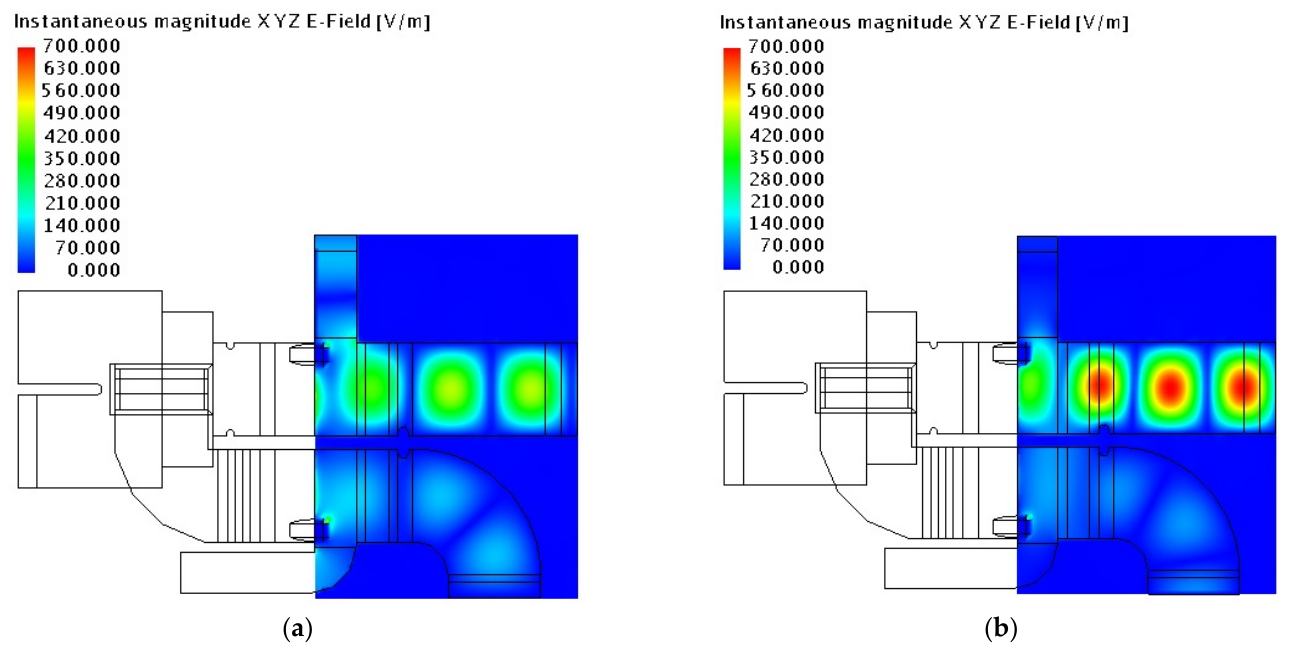
Figure 12, a significant transmission null of −30 to −50 dB is consistently observed near 10.3 GHz, regardless of the input state. To further investigate this phenomenon, high-frequency electromagnetic field analysis was performed on the component. For simplicity, without loss of generality, we consider the case with a single input port. As shown in the simulation results in
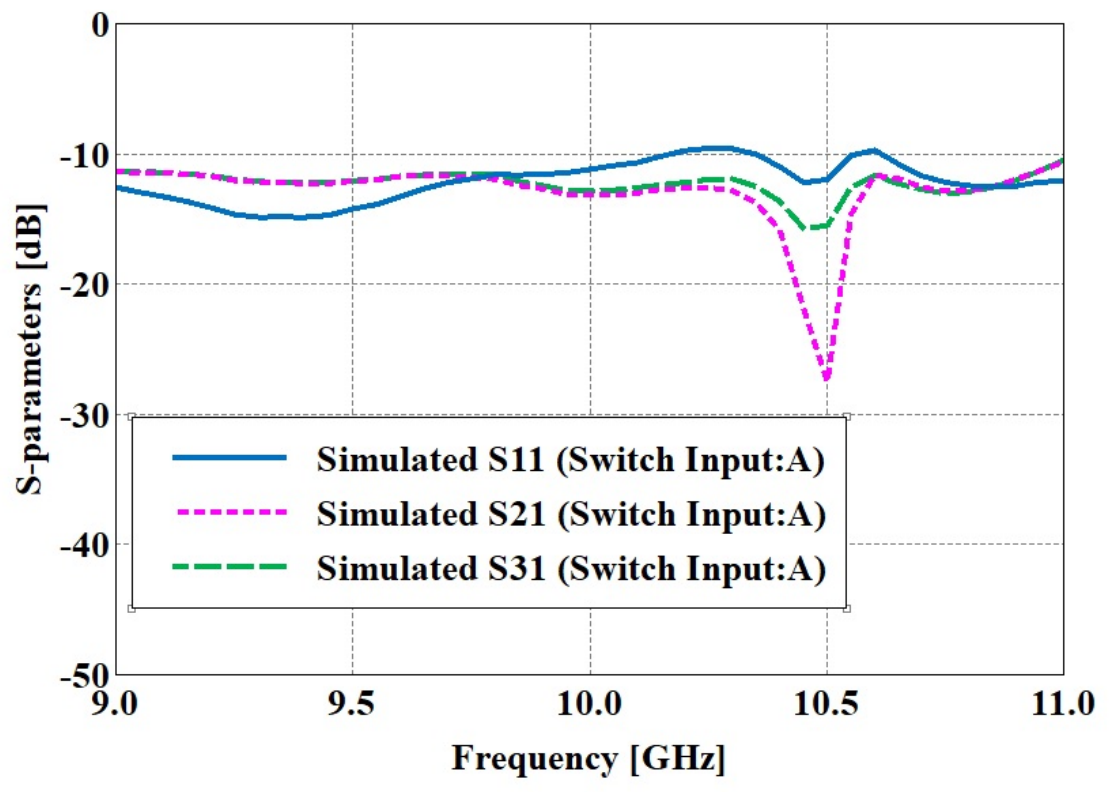
Figure 14, a significant transmission null near 10.5 GHz indeed occurs in the azimuth difference data, which is in good agreement with the measured data. As shown in the electric-field distribution of the monopulse comparator in
Figure 15, almost no energy passes through the upper azimuth port when resonance occurs. This is due to the structural differences between the magic tees used for the azimuth and elevation ports; consequently, the elevation port data does not exhibit resonance issues. According to the data in
Figure 11 and
Figure 14, we also observed that the sum signal under single-input conditions exhibits significant frequency-dependent fluctuations. To achieve an extremely compact monopulse comparator design, constraints on the structure and integration of multiple magic tees are inevitable, which consequently restricts the operating bandwidth of the component.
4. Conclusions
This paper has presented a novel reflective excitation technique specifically designed to overcome the measurement inefficiencies and physical challenges associated with highly integrated, high-port-count monopulse comparators. By developing a custom switchable reflective window and a multiport matched load, the proposed methodology transforms inherent reflected signals into internal excitation sources. This physical hardware innovation successfully enables the simultaneous multiport excitation of the device under test, fundamentally eliminating the need for tedious, sequential port-by-port microwave measurements and the associated mechanical and measurement errors.
Experimental characterization of an X-band four-horn comparator rigorously validated the efficacy of this approach. The intrinsic sum and difference channel responses were rapidly extracted under true operational boundary conditions. Quantitative analysis, particularly at the 10 GHz center frequency, demonstrated close agreement between the measurement data and the theoretical predictions. Ultimately, this simultaneous multiport excitation framework provides a rapid, accurate, and robust diagnostic solution for evaluating complex monopulse comparator and ensuring the high angular resolution demanded by tracking radar systems.
Author Contributions
Conceptualization, M.-H.C., S.-Y.L. and J.-S.S.; methodology, M.-H.C. and S.-Y.L.; software, S.-Y.L. and M.-H.C.; validation, S.-Y.L. and M.-H.C.; formal analysis, M.-H.C. and S.-Y.L.; investigation, M.-H.C. and S.-Y.L.; resources, M.-H.C. and S.-Y.L.; data curation, S.-Y.L. and M.-H.C.; writing—original draft preparation, S.-Y.L. and M.-H.C.; writing—review and editing, M.-H.C. and S.-Y.L.; visualization, M.-H.C. and S.-Y.L.; supervision, M.-H.C. and J.-S.S.; project administration, M.-H.C. and S.-Y.L.; funding acquisition, S.-Y.L. and J.-S.S. All authors have read and agreed to the published version of the manuscript.
Funding
This research received no external funding.
Data Availability Statement
All data are included within manuscript.
Conflicts of Interest
The authors declare no conflicts of interest.
Abbreviations
The following abbreviations are used in this manuscript:
| DUT | Device under test |
| VNA | Vector network analyzer |
| CAD | Computer-aided design |
References
- Skolnik, M.I. Radar Handbook, 3rd ed.; McGraw-Hill: New York, NY, USA, 2008; pp. 9.1–9.6. [Google Scholar]
- Sherman, S.M.; Barton, D.K. Monopulse Principles and Techniques, 2nd ed.; Artech House: Norwood, MA, USA, 2011; pp. 2–16. [Google Scholar]
- Huang, G.-L.; Zhou, S.-G.; Chio, T.-H.; Yeo, T.-S. Two types of waveguide comparator for wideband monopulse antenna array application. In 2015 IEEE 5th Asia-Pacific Conference on Synthetic Aperture Radar (APSAR), Singapore, 1–4 September 2015; IEEE: New York, NY, USA, 2015; pp. 264–266. [Google Scholar] [CrossRef]
- Liu, B.; Hong, W.; Kuai, Z.; Yin, X.; Luo, G.; Chen, J.; Tang, H.; Wu, K. Substrate integrated waveguide (SIW) monopulse slot antenna array. IEEE Trans. Antennas Propag. 2009, 57, 275–279. [Google Scholar] [CrossRef]
- Singh, A.K. A low cost, low side lobe and high efficiency non-orthogonally coupled slotted waveguide array antenna for monopulse radar tracking. In IEEE Antennas Propagation Society International Symposium; IEEE: New York, NY, USA, 2005; pp. 732–735. [Google Scholar] [CrossRef]
- Zink, M.; Ottl, H.; Freeman, A. Design of a monopulse SAR system for the determination of elevation angles. IEEE Trans. Geosci. Remote Sens. 1994, 32, 1198–1201. [Google Scholar] [CrossRef]
- Ferrero, A.; Teppati, V.; Garelli, M.; Neri, A. A Novel Calibration Algorithm for a Special Class of Multiport Vector Network Analyzers. IEEE Trans. Microw. Theory Tech. 2008, 56, 693–699. [Google Scholar] [CrossRef][Green Version]
- Ruttan, T.G.; Grossman, B.; Ferrero, A.; Teppati, V.; Martens, J. Multiport VNA measurement. IEEE Microw. Mag. 2008, 9, 56–69. [Google Scholar] [CrossRef]
- Stutzman, W.L.; Thiele, G.A. Antenna Theory and Design, 2nd ed.; John Wiley & Sons: Hoboken, NJ, USA, 1998; pp. 335–338. [Google Scholar]
- Pozar, D.M. Microwave Engineering, 3rd ed.; John Wiley & Sons: Hoboken, NJ, USA, 2005; p. 361. [Google Scholar]
- Wu, J.; Wang, C.; Guo, Y. Ridged Waveguide Magic Tees Based on 3-D Printing Technology. IEEE Trans. Microw. Theory Tech. 2020, 68, 4267–4275. [Google Scholar] [CrossRef]
- Ren, L.; Shu, Y. Full-Band Millimeter Wave Waveguide Magic Tees and Power Dividers for Manufacturing Ability. In Proceedings of the IEEE 2021 51st European Microwave Conference (EuMC), London, UK, 4–6 April 2022; pp. 229–232. [Google Scholar] [CrossRef]
- Harbater, Z.; Margalit, A. A Bit System that Guarantees Better Accuracy for Monopulse Antenna Detection Systems. IEEE Antennas Propag. Mag. 2000, 42, 82–86. [Google Scholar] [CrossRef] [PubMed]
- Freeman, A.; Zink, M. An Application of the Monopnlse principle to determining elevation angles in SAR images. IEEE Trans. Geosci. Remote Sens. 1994, 32, 616–625. [Google Scholar] [CrossRef]
- Lin, F.-L.C.; Kretschmer, F.F. Angle measurement in the presence of mainbeam interference. IEEE Aerosp. Electron. Syst. Mag. 1990, 5, 19–25. [Google Scholar] [CrossRef]
- Xue, H.; Kezys, V.; Litva, J. Smart antenna calibration for beamforming. IEEE Antennas Propag. Soc. Int. Symp. 1998, 3, 1458–1461. [Google Scholar] [CrossRef]
- Akhoondmahdi, Z.; Bakhtafrouz, A. Design and Implementation of Wideband Monopulse Comparator Based on Inverted-Microstrip Gap Waveguide Technology. IEEE Access 2024, 12, 134926–134936. [Google Scholar] [CrossRef]
Figure 1.
CAD model of a mobile monopulse tracking radar. (a) External view of the tracking radar. (b) Perspective view of the Cassegrain antenna and monopulse comparator.
Figure 1.
CAD model of a mobile monopulse tracking radar. (a) External view of the tracking radar. (b) Perspective view of the Cassegrain antenna and monopulse comparator.
Figure 2.
Block diagram of a dual-channel monopulse radar system.
Figure 2.
Block diagram of a dual-channel monopulse radar system.
Figure 3.
Four-horn monopulse comparator. (a) CAD model. (b) Photograph.
Figure 3.
Four-horn monopulse comparator. (a) CAD model. (b) Photograph.
Figure 4.
Schematic diagram of the four-horn monopulse comparator using waveguide magic-tee hybrids. The factors of 1/20.5 and 1/2 are omitted for simplicity.
Figure 4.
Schematic diagram of the four-horn monopulse comparator using waveguide magic-tee hybrids. The factors of 1/20.5 and 1/2 are omitted for simplicity.
Figure 5.
Proposed reflective excitation concept for microwave characterization of comparators. (a) Settings for input/output ports and terminations. (b) Schematic diagram and signal flow analysis.
Figure 5.
Proposed reflective excitation concept for microwave characterization of comparators. (a) Settings for input/output ports and terminations. (b) Schematic diagram and signal flow analysis.
Figure 6.
Exploded view of switchable calibration window and multiport matched load for rapid measurement of monopulse comparators.
Figure 6.
Exploded view of switchable calibration window and multiport matched load for rapid measurement of monopulse comparators.
Figure 7.
Assembled views of switchable calibration window and multiport matched load for rapid measurement of monopulse comparators. (a) CAD model. (b) Photograph.
Figure 7.
Assembled views of switchable calibration window and multiport matched load for rapid measurement of monopulse comparators. (a) CAD model. (b) Photograph.
Figure 8.
Photograph of switchable calibration window. (a) Front view. (b) Rear view.
Figure 8.
Photograph of switchable calibration window. (a) Front view. (b) Rear view.
Figure 9.
Photograph of multiport matched load. (a) Front view. (b) Rear view.
Figure 9.
Photograph of multiport matched load. (a) Front view. (b) Rear view.
Figure 10.
Measured reflection coefficients of switchable calibration kits. (a) Switchable calibration window (closed). (b) Multiport matched load.
Figure 10.
Measured reflection coefficients of switchable calibration kits. (a) Switchable calibration window (closed). (b) Multiport matched load.
Figure 11.
Measured sum signal of monopulse comparator with switchable inputs. (a) Single input. (b) Two inputs. (c) Three inputs. (d) Four inputs. Port 1: Σ, Port 2: ΔAZ, Port 3: ΔEL.
Figure 11.
Measured sum signal of monopulse comparator with switchable inputs. (a) Single input. (b) Two inputs. (c) Three inputs. (d) Four inputs. Port 1: Σ, Port 2: ΔAZ, Port 3: ΔEL.
Figure 12.
Measured azimuth difference signal of monopulse comparator with switchable inputs. (a) Single input. (b) Two inputs. (c) Three inputs. (d) Four inputs. Port 1: Σ, Port 2: ΔAZ, Port 3: ΔEL.
Figure 12.
Measured azimuth difference signal of monopulse comparator with switchable inputs. (a) Single input. (b) Two inputs. (c) Three inputs. (d) Four inputs. Port 1: Σ, Port 2: ΔAZ, Port 3: ΔEL.
Figure 13.
Measured elevation difference signal of monopulse comparator with switchable inputs. (a) Single input. (b) Two inputs. (c) Three inputs. (d) Four inputs. Port 1: Σ, Port 2: ΔAZ, Port 3: ΔEL.
Figure 13.
Measured elevation difference signal of monopulse comparator with switchable inputs. (a) Single input. (b) Two inputs. (c) Three inputs. (d) Four inputs. Port 1: Σ, Port 2: ΔAZ, Port 3: ΔEL.
Figure 14.
Simulated sum (S11), azimuth difference (S21), and elevation difference (S31) data of monopulse comparator with single input (Port A is short-circuited while the sum port is excited).
Figure 14.
Simulated sum (S11), azimuth difference (S21), and elevation difference (S31) data of monopulse comparator with single input (Port A is short-circuited while the sum port is excited).
Figure 15.
Electric-field distribution of the four-horn monopulse comparator with single input (Port A is short-circuited while the sum port is excited) simulated at (a) designed frequency (10 GHz) and (b) resonant frequency (10.5 GHz).
Figure 15.
Electric-field distribution of the four-horn monopulse comparator with single input (Port A is short-circuited while the sum port is excited) simulated at (a) designed frequency (10 GHz) and (b) resonant frequency (10.5 GHz).
Table 1.
Theoretical values of 13 calibration points for a four-horn monopulse comparator. Here the symbols ◯ and × represent the input ports switched to short and matched load, respectively.
Table 1.
Theoretical values of 13 calibration points for a four-horn monopulse comparator. Here the symbols ◯ and × represent the input ports switched to short and matched load, respectively.
| Switch Input | A | B | C | D | Σ | ΔAZ | ΔEL |
|---|
| Amp. | dB | Amp. | dB | Amp. | dB |
|---|
| A | ◯ | × | × | × | 1/4 | −12.04 | 1/4 | −12.04 | 1/4 | −12.04 |
| B | × | ◯ | × | × | 1/4 | −12.04 | −1/4 | −12.04 | 1/4 | −12.04 |
| C | × | × | ◯ | × | 1/4 | −12.04 | −1/4 | −12.04 | −1/4 | −12.04 |
| D | × | × | × | ◯ | 1/4 | −12.04 | 1/4 | −12.04 | −1/4 | −12.04 |
| AB | ◯ | ◯ | × | × | 1/2 | −6.02 | 0 | −∞ | 1/2 | −6.02 |
| BC | × | ◯ | ◯ | × | 1/2 | −6.02 | −1/2 | −6.02 | 0 | −∞ |
| CD | × | × | ◯ | ◯ | 1/2 | −6.02 | 0 | −∞ | −1/2 | −6.02 |
| AD | ◯ | × | × | ◯ | 1/2 | −6.02 | 1/2 | −6.02 | 0 | −∞ |
| ABC | ◯ | ◯ | ◯ | × | 3/4 | −2.5 | −1/4 | −12.04 | 1/4 | −12.04 |
| BCD | × | ◯ | ◯ | ◯ | 3/4 | −2.5 | −1/4 | −12.04 | −1/4 | −12.04 |
| ACD | ◯ | × | ◯ | ◯ | 3/4 | −2.5 | 1/4 | −12.04 | −1/4 | −12.04 |
| ABD | ◯ | ◯ | × | ◯ | 3/4 | −2.5 | 1/4 | −12.04 | 1/4 | −12.04 |
| ABCD | ◯ | ◯ | ◯ | ◯ | 1 | 0 | 0 | −∞ | 0 | −∞ |
Table 2.
Measured and theoretical sum and difference data of a comparator designed at 10 GHz.
Table 2.
Measured and theoretical sum and difference data of a comparator designed at 10 GHz.
Switch
Input | Σ (dB)
Measured at 10 GHz | Σ (dB)
Theoretical Value | ΔAZ (dB)
Measured at 10 GHz | ΔAZ (dB)
Theoretical Value | ΔEL (dB)
Measured at 10 GHz | ΔAZ (dB)
Theoretical Value |
|---|
| A | −12.72 | −12.04 | −12.70 | −12.04 | −12.00 | −12.04 |
| B | −12.97 | −12.04 | −12.00 | −12.04 | −12.06 | −12.04 |
| C | −12.73 | −12.04 | −11.72 | −12.04 | −12.25 | −12.04 |
| D | −12.65 | −12.04 | −12.63 | −12.04 | −12.29 | −12.04 |
| AB | −6.17 | −6.02 | −34.74 | −∞ | −5.73 | −6.02 |
| BC | −5.52 | −6.02 | −5.11 | −6.02 | −51.01 | −∞ |
| CD | −6.07 | −6.02 | −32.31 | −∞ | −5.80 | −6.02 |
| AD | −5.32 | −6.02 | −5.46 | −6.02 | −49.65 | −∞ |
| ABC | −2.64 | −2.5 | −10.14 | −12.04 | −11.65 | −12.04 |
| BCD | −2.61 | −2.5 | −10.22 | −12.04 | −11.67 | −12.04 |
| ACD | −2.49 | −2.5 | −10.71 | −12.04 | −11.75 | −12.04 |
| ABD | −2.54 | −2.5 | −10.60 | −12.04 | −11.66 | −12.04 |
| ABCD | 0.004 | 0 | −41.27 | −∞ | −43.18 | −∞ |
| Disclaimer/Publisher’s Note: The statements, opinions and data contained in all publications are solely those of the individual author(s) and contributor(s) and not of MDPI and/or the editor(s). MDPI and/or the editor(s) disclaim responsibility for any injury to people or property resulting from any ideas, methods, instructions or products referred to in the content. |