Experimental and Physics-Informed Deep-Learning-Enhanced Wearable Microwave Sensor for Non-Invasive Blood Glucose Monitoring


Abstract
1. Introduction
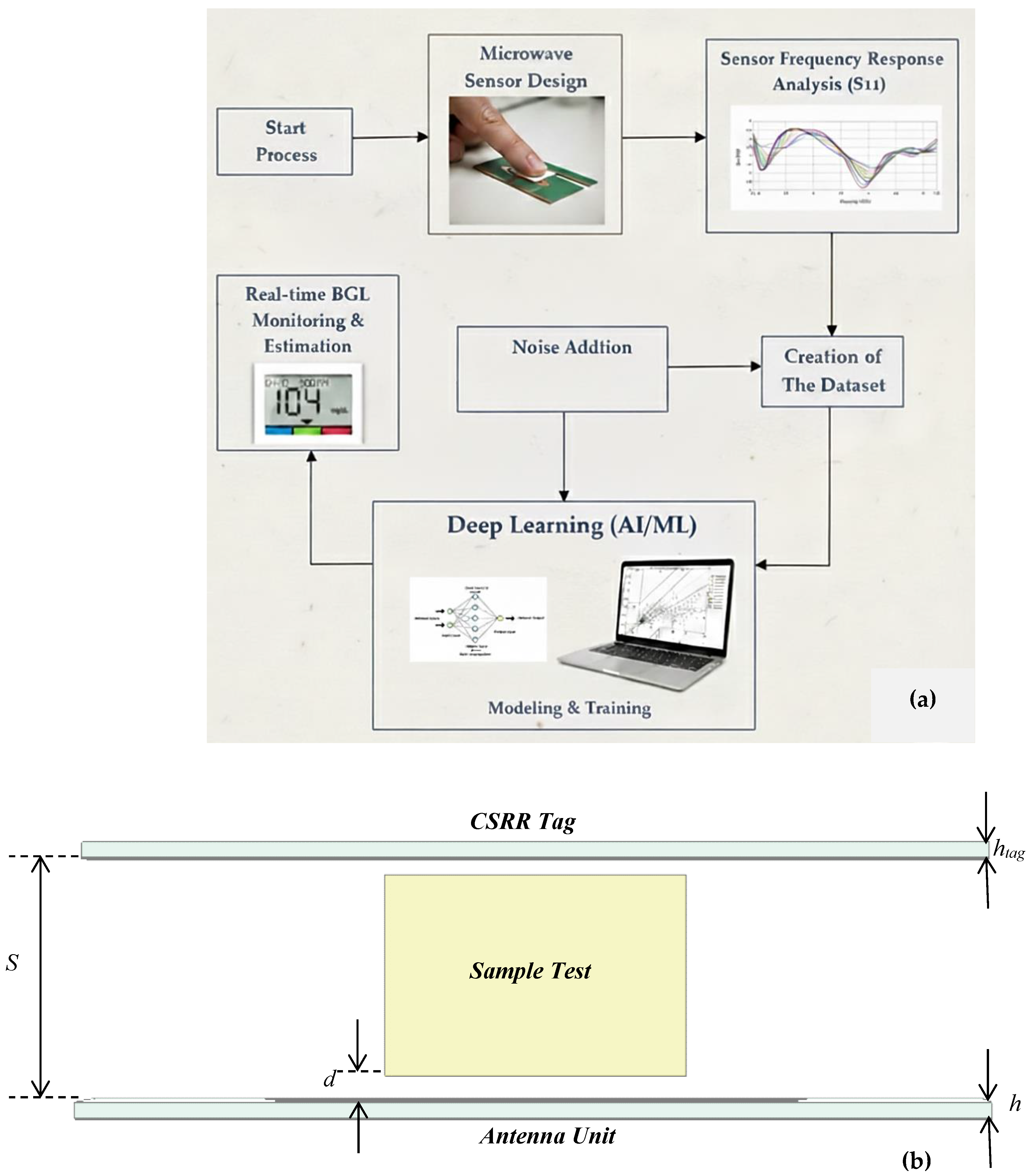
2. Sensor Design and Specification
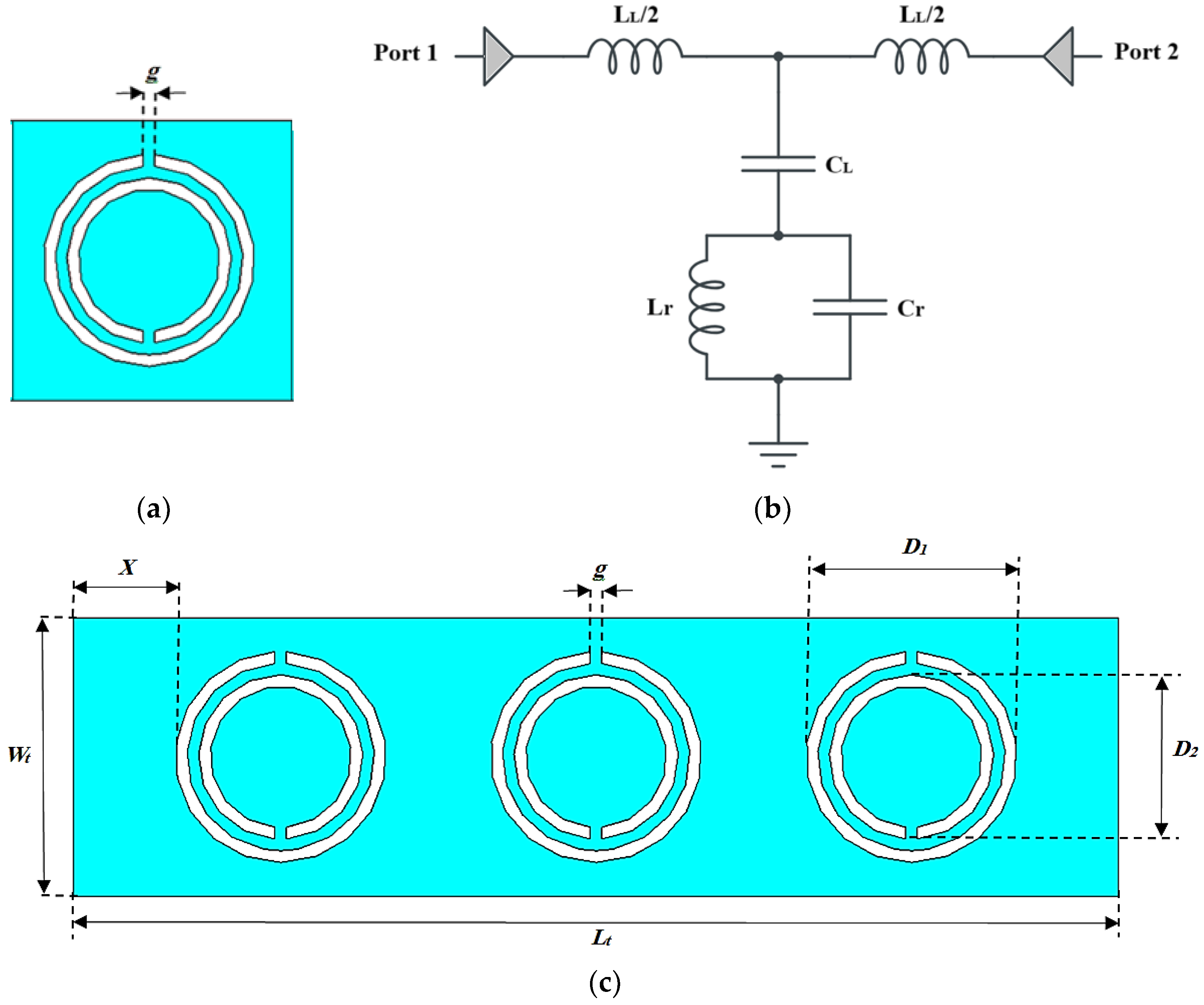
2.1. The Tag Unit Design
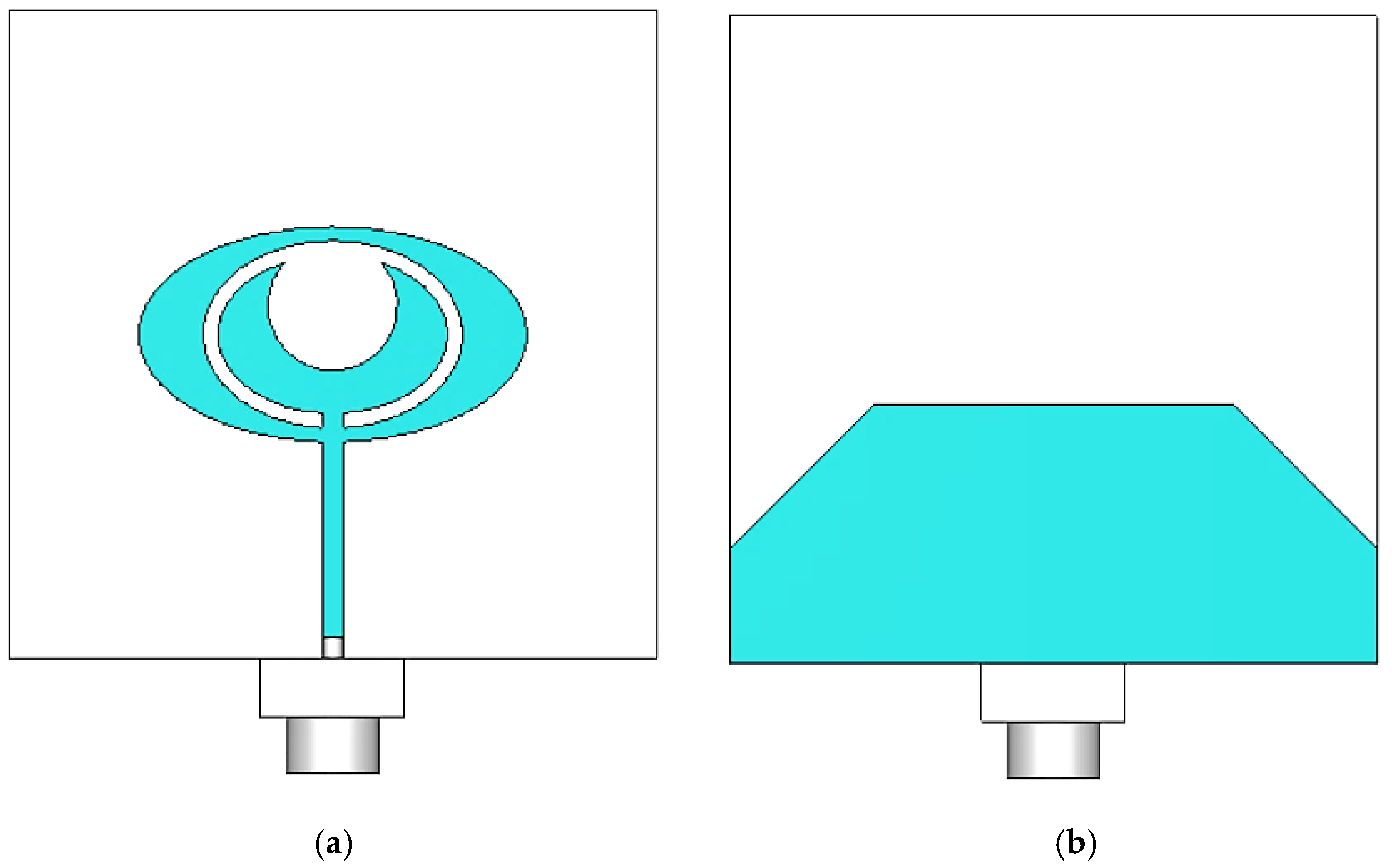
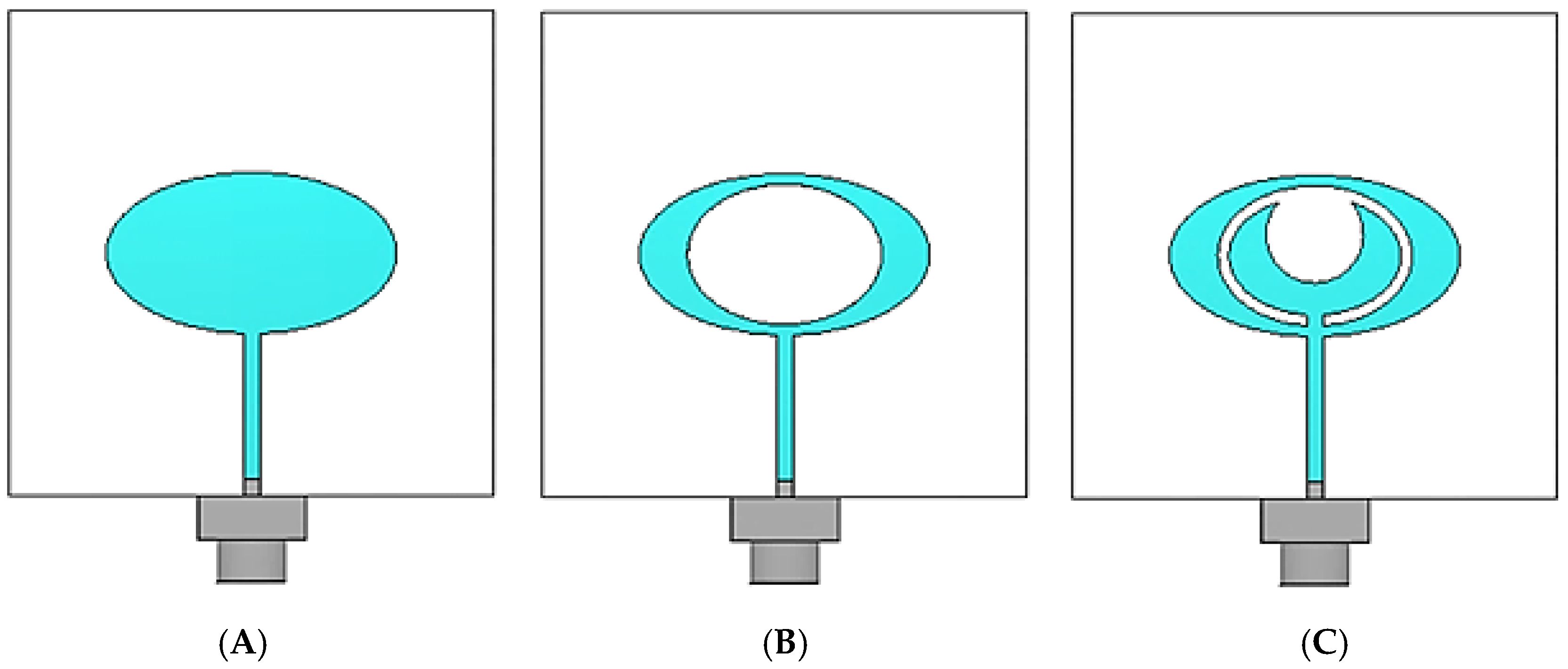
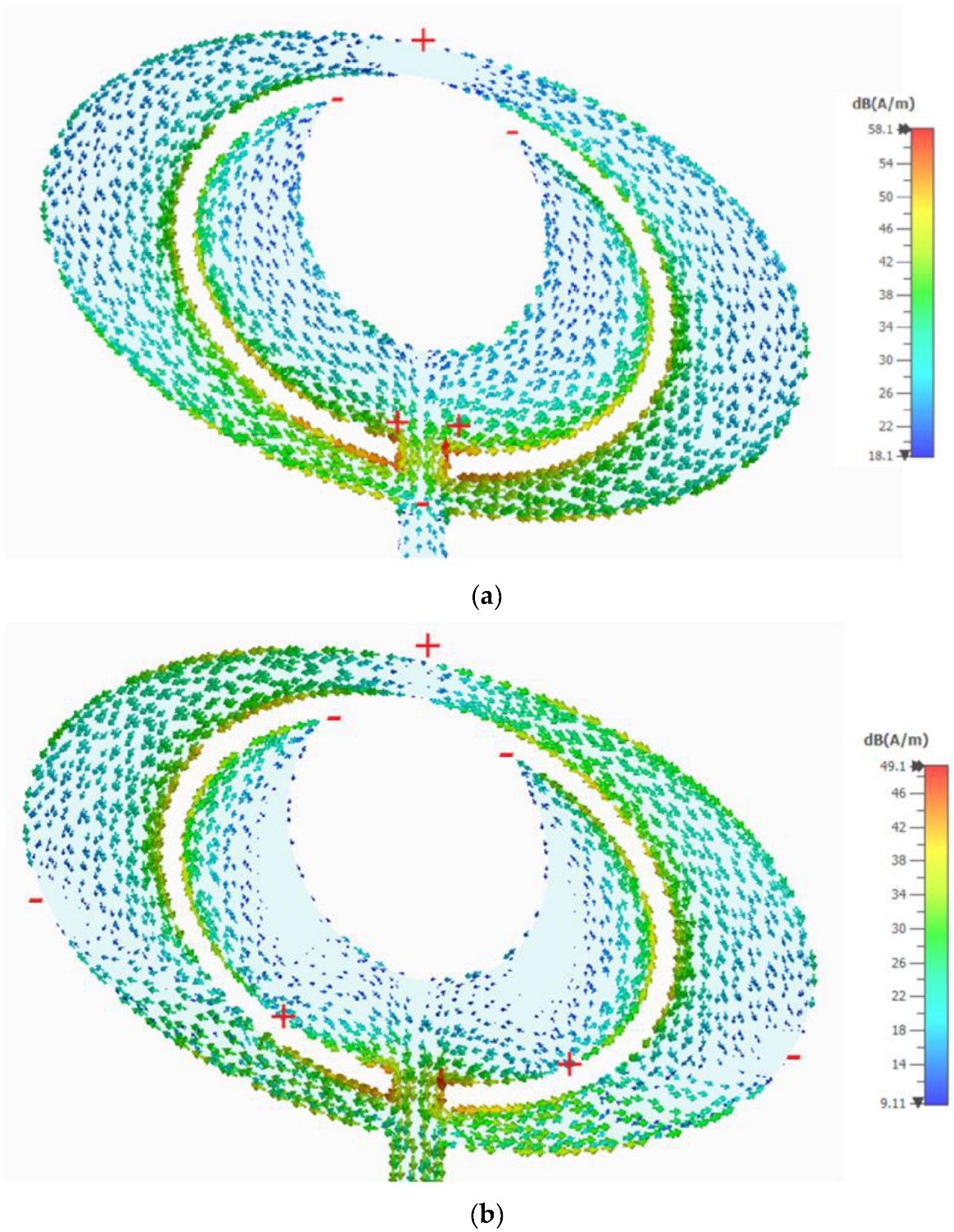
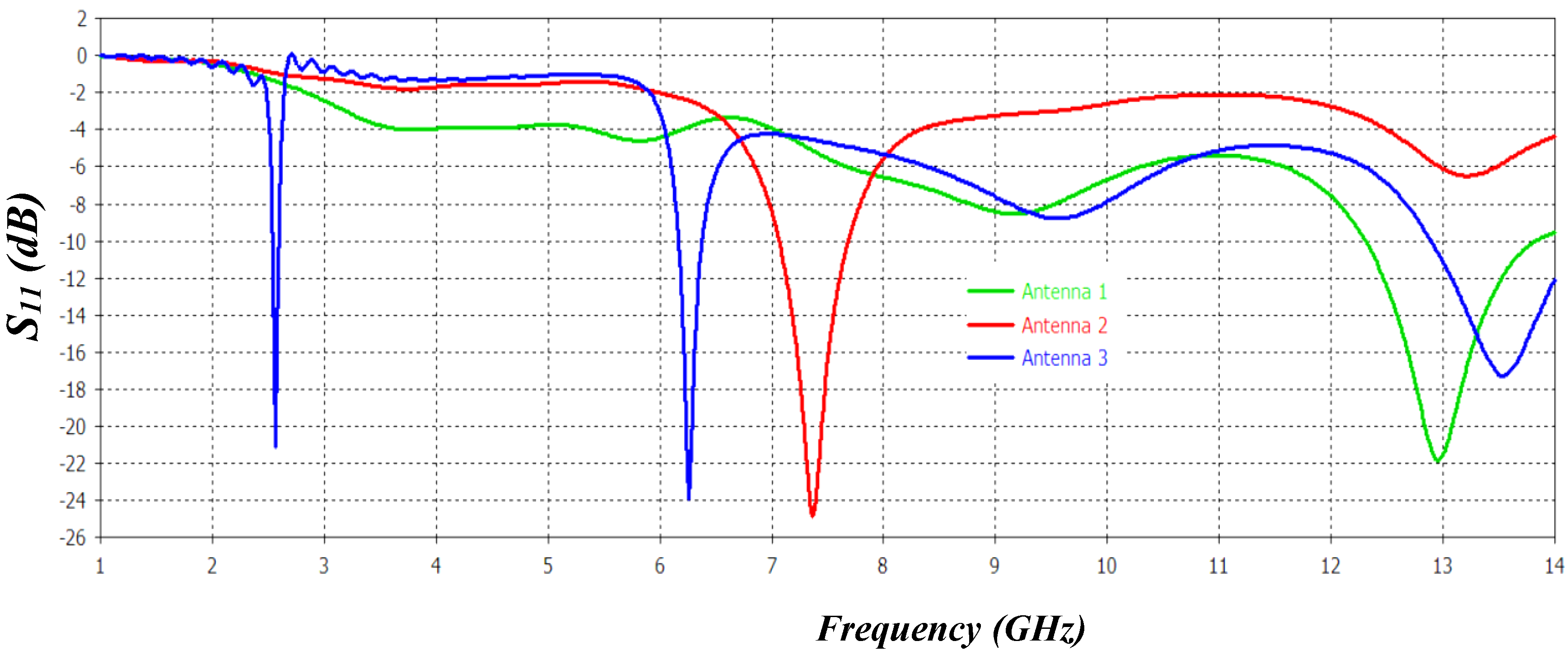
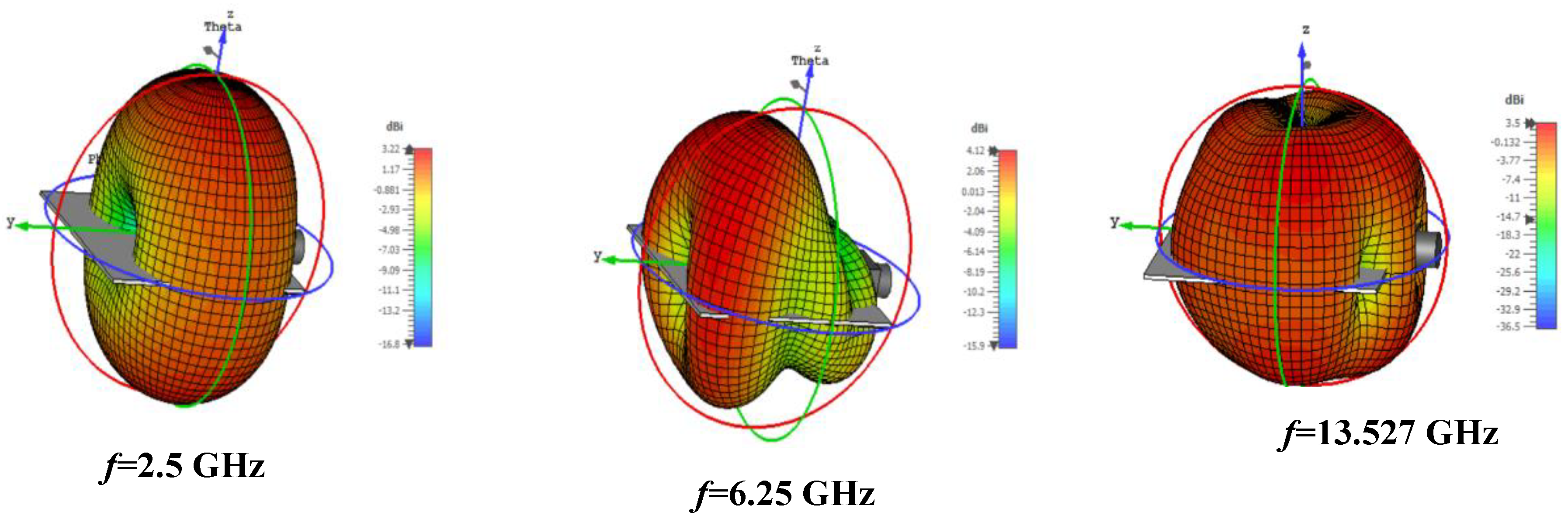
2.2. Antenna Design (Reader Unit)
3. Phantom Description
- is the permittivity at very high frequencies;
- is the permittivity difference for each relaxation process n;
- is the relaxation time for each process n;
- is the fractional order parameter, representing non-ideal relaxation behavior for process n;
- is the ionic conductivity.
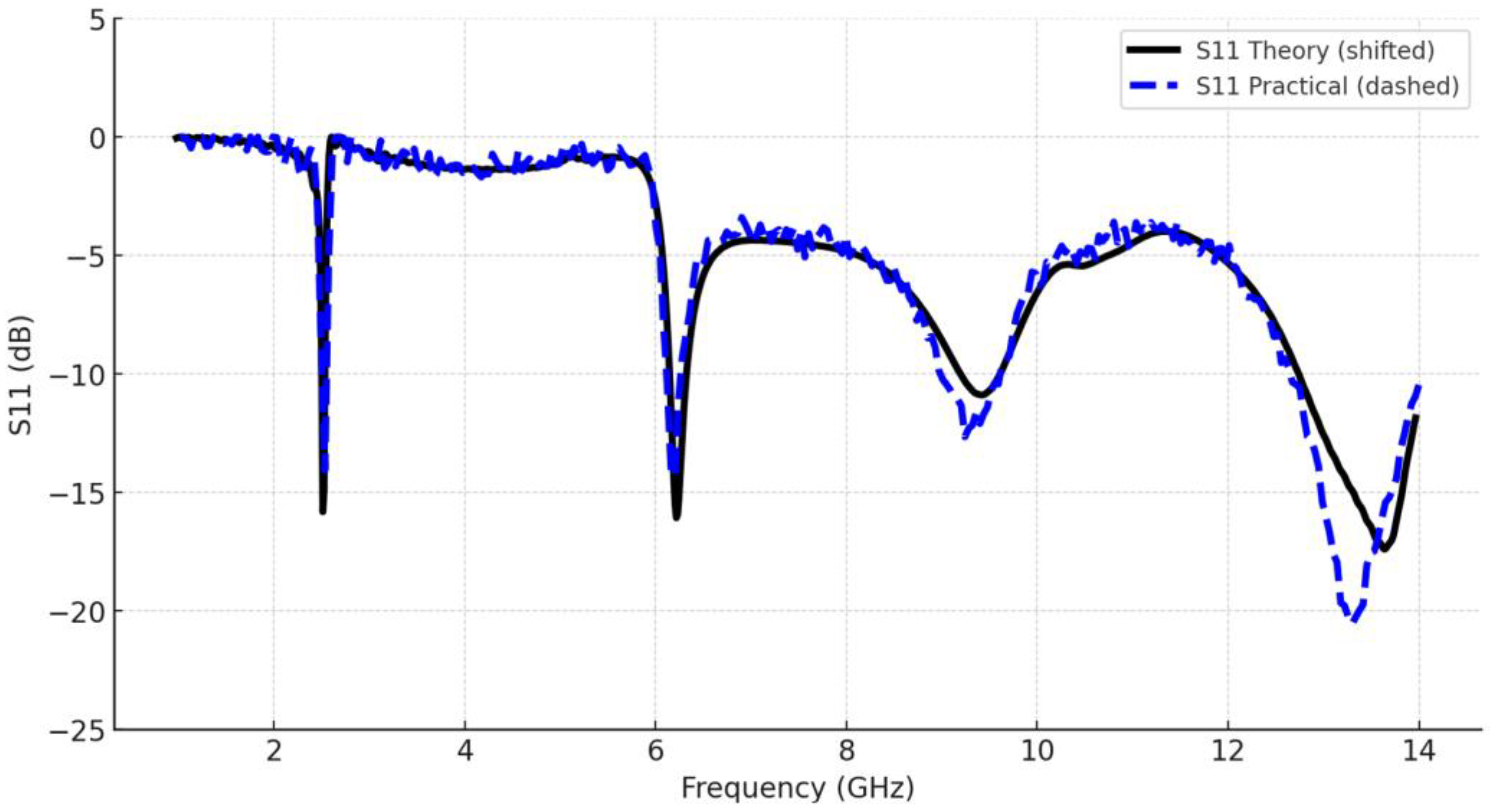
4. Quantitative Evaluation
5. Physics-Informed Residual Deep Learning for Glucose Estimation
5.1. Methodology: Physics-Informed Residual Deep Learning (PI-Residual DL)
- Overview
- 2.
- Physics Baseline and Inversion (Simulation-Driven)
- 3.
- Residual Formulation and Inputs
- 4.
- Network and Objective
- 5.
- Data and Noise (Simulation-Consistent)
- 6.
- Evaluation Protocol
5.2. Physics-Informed Residual Deep Learning
6. Comparison with Previous Studies
7. Conclusions
Author Contributions
Funding
Informed Consent Statement
Data Availability Statement
Conflicts of Interest
References
- World Health Organization. World Health Day 2016: WHO Calls for Global Action to Halt Rise in and Improve Care for People with Diabetes; World Health Organization: Geneva, Switzerland, 2016; Available online: https://www.who.int/news/item/06-04-2016-world-health-day-2016-who-calls-for-global-action-to-halt-rise-in-and-improve-care-for-people-with-diabetes (accessed on 6 April 2016).
- Whiting, D.R.; Guariguata, L.; Weil, C.; Shaw, J. IDF diabetes atlas: Global estimates of the prevalence of diabetes for 2011 and 2030. Diabetes Res. Clin. Pract. 2011, 94, 311–321. [Google Scholar] [CrossRef] [Scilit]
- Saurabh, R.; Shivesh, T.; Gaurav, U.; Shiv, S.; Vijay, S. An electromagnetic band gap-based complementary split ring resonator loaded patch antenna for glucose level measurement. IEEE Sens. J. 2021, 21, 22679–22687. [Google Scholar]
- American Diabetes Association. Diagnosis and classification of diabetes mellitus. Diabetes Care 2014, 37, S81–S90. [Google Scholar] [CrossRef] [Scilit]
- Holt, R.; Cockram, A.F.C.; Goldstein, B. Textbook of Diabetes; John Wiley & Sons: New York, NY, USA, 2011. [Google Scholar]
- American Diabetes Association. Glycemic targets: Standards of medical care in diabetes. Diabetes Care 2019, 42, S61–S70. [Google Scholar] [CrossRef] [Scilit]
- Burt, M.; Roberts, G.; Aguilar-Loza, N.; Stranks, S. Comparison of continuous glucose monitoring and finger-prick blood glucose levels in hospitalized patients administered basal–bolus insulin. Diabetes Technol. Ther. 2013, 15, 241–245. [Google Scholar] [CrossRef] [Scilit] [PubMed]
- Gonzales, W.; Mobashsher, A.; Abbosh, A. The progress of glucose monitoring—A review of invasive to minimally and non-invasive techniques, devices and sensors. Sensors 2019, 19, 800. [Google Scholar] [CrossRef] [Scilit]
- Lin, T.; Gal, A.; Mayzel, Y.; Horman, K.; Bahartan, K. Non-invasive glucose monitoring: A review of challenges and recent advances. Curr. Trends Biomed. Eng. Biosci. 2017, 6, 1–8. [Google Scholar] [CrossRef] [Scilit]
- Bruen, D.; Delaney, C.; Florea, L.; Diamond, D. Glucose sensing for diabetes monitoring: Recent developments. Sensors 2017, 17, 1866. [Google Scholar] [CrossRef] [Scilit]
- Kandwal, A.; Liu, L.W.; Igbe, T.; Li, J.; Liu, Y.; Das, R.; Kanaujia, B.K.; Wang, L.; Nie, Z. A novel method of using bifilar spiral resonator for designing thin robust flexible glucose sensors. IEEE Trans. Instrum. Meas. 2021, 70, 1–10. [Google Scholar] [CrossRef] [Scilit]
- Kandwal, A.; Li, J.; Igbe, T.; Liu, Y.; Das, R.; Kanaujia, B.K.; Nie, Z. Young’s double slit method-based higher order mode surface plasmon microwave antenna sensor: Modeling, measurements and application. IEEE Trans. Instrum. Meas. 2022, 71, 8006711. [Google Scholar] [CrossRef] [Scilit]
- Navaei, M.; Rezaei, P.; Kiani, S. Measurement of low-loss aqueous solutions permittivity with high detection accuracy by a contact and free-label resonance microwave sensor. Int. J. Commun. Syst. 2023, 36, e5417. [Google Scholar] [CrossRef] [Scilit]
- Kim, J.; Babajanyan, A.; Hovsepyan, A.; Lee, K.; Friedman, B. Microwave dielectric resonator biosensor for aqueous glucose solution. Rev. Sci. Instrum. 2008, 79, 2–5. [Google Scholar] [CrossRef] [Scilit]
- Dobson, R.; Wu, R.; Callaghan, P. Blood glucose monitoring using microwave cavity perturbation. Electron. Lett. 2012, 48, 905–906. [Google Scholar] [CrossRef] [Scilit]
- Wiwatwithaya, S.; Phasukkit, P.; Tungjitkusolmun, S.; Wongtrairat, W. Real-time monitoring glucose by using microwave antenna applied to biosensor. In Proceedings of the 4th 2011 Biomedical Engineering International Conference, Chiang Mai, Thailand, 29–31 January 2012. [Google Scholar]
- Hofmann, M.; Bloss, M.; Weigel, R.; Fischer, G.; Kissinger, D. Non-invasive glucose monitoring using open electromagnetic waveguides. In Proceedings of the 2012 42nd European Microwave Conference, Amsterdam, The Netherlands, 29 October–1 November 2012. [Google Scholar]
- Govind, G.; Akhtar, M.J. Metamaterial-inspired microwave microfluidic sensor for glucose monitoring in aqueous solutions. IEEE Sens. J. 2019, 19, 11900–11907. [Google Scholar] [CrossRef] [Scilit]
- Zhou, Z.; Wei, Z.; Tang, Z.; Yin, Y. Design and analysis of a wideband multiple-microstrip dipole antenna with high isolation. IEEE Antennas Wirel. Propag. Lett. 2019, 18, 722–726. [Google Scholar] [CrossRef] [Scilit]
- Kamil, R.A.; Alsabti, S.M.B.; Abdulsattar, R.K.; Mohammed, A.H.; Elwi, T.A. On the Enhancement Anomaly Detection for RF Bio-Sensors by Computing Artificial Networks Using Machine Learning Techniques. Infocommun. J. 2025, XVII, 89–95. [Google Scholar] [CrossRef] [Scilit]
- Kim, S.; Melikyan, H.; Kim, J.; Babajanyan, A.; Lee, J.-H.; Enkhtur, L.; Friedman, B.; Lee, K. Noninvasive in vitro measurement of pig-blood D-glucose by using a microwave cavity sensor. Diabetes Res. Clin. Pract. 2012, 96, 379–384. [Google Scholar] [CrossRef] [Scilit]
- Costanzo, S.; Cuccaro, A.; Dell’Aversano, A.; Buonanno, G.; Solimene, R. Microwave biomedical sensors with stable response: Basic idea and preliminary numerical assessments for blood glucose monitoring. IEEE Access 2023, 11, 99058–99069. [Google Scholar] [CrossRef] [Scilit]
- AbdulSattar, R.K.; Alibakhshikenari, M.; Elwi, T.A.; Kouhalvandi, L.; Hassain, Z.A.A.; Virdee, B.S.; Soruri, M.; Tokan, N.T.; Parchin, N.O.; See, C.H.; et al. Metamaterial Based Sensor Using Fractal Hilbert Structure for Liquid Characterization. In Proceedings of the 2023 International Conference on Electromagnetics in Advanced Applications (ICEAA), Venice, Italy, 9–13 October 2023; pp. 480–483. [Google Scholar] [CrossRef] [Scilit]
- Abdulsattar; Khalid, R.; Muqdad, S.; Hassain, A.; Zaid, A.; Muhsin; Yousif, M. Artificial Neural Network Approach for Estimation of Moisture Content in Crude Oil by Using a Microwave Sensor. Int. J. Microw. Opt. Technol. 2023, 18, 511. [Google Scholar]
- Alsultani, A.B.; Kovács, K.; Chase, J.; Benyó, B. Advances in Invasive and Non-Invasive Glucose Monitoring: A Review of Microwave-Based Sensors. Sens. Actuators Rep. 2025, 9, 100332. [Google Scholar] [CrossRef] [Scilit]
- Kiani, M.; Mir, Z.H.; Ghahramani, B.; Sadr, A.M.; Gholami, M. Improved Fully 3D-Printed SIW-Based Sensor for Non-Invasive Glucose Measurement. Sensors 2025, 25, 2382. [Google Scholar]
- Juan, C.G.; Grenier, K.; Zarifi, M.H.; Ebrahimi, A.; Martín, F. Planar Microwave Sensors: State of the Art and Applications. IEEE Access 2025, 13, 143985–144038. [Google Scholar] [CrossRef] [Scilit]
- Singh, T.; Mishra, P.K.; Pal, A.; Tripathi, V.S. A Planar Microwave Sensor for Noninvasive Detection of Glucose Concentration Using Regression Analysis. Int. J. Microw. Wirel. Technol. 2023, 15, 1343–1353. [Google Scholar] [CrossRef] [Scilit]
- Gupta, M.; Mathur, V. Multiband multiple elliptical microstrip patch antenna with circular polarization. Wirel. Pers. Commun. 2018, 102, 355–368. [Google Scholar] [CrossRef] [Scilit]
- Jose, J.V.; Rekh, A.S.; Jose, M.J. Design techniques for elliptical microstrip patch antenna and their effects on antenna performance. Int. J. Innov. Technol. Explor. Eng. 2019, 8, 2317–2320. [Google Scholar] [CrossRef] [Scilit]
- Costanzo, S.; Cioffi, V.; Raffo, A. Complex permittivity effect on the performances of non-invasive microwave blood glucose sensing: Enhanced model and preliminary results. In Proceedings of the World Conference on Information Systems and Technologies, Naples, Italy, 27–29 March 2018; Springer: Cham, Switzerland. [Google Scholar]
- Gabriel, C.; Gabriel, S.; Corthout, E. The dielectric properties of biological tissues: III. Parametric models for the dielectric spectrum. Phys. Med. Biol. 1996, 41, 2271–2293. [Google Scholar] [CrossRef] [Scilit]
- Morshidi, W.H.W.; Zaharudin, Z.; Khan, S.; Nordin, A.N.; Shaikh, F.A.; Adam, I. Inter-digital sensor for non-invasive blood glucose monitoring. In Proceedings of the 2018 IEEE International Conference on Innovative Research and Development (ICIRD), Bangkok, Thailand, 11–12 May 2018. [Google Scholar]
- Venkataraman, J.; Freer, B. Feasibility of non-invasive blood glucose monitoring: In-Vitro measurements and phantom models. In Proceedings of the 2011 IEEE International Symposium on Antennas and Propagation (APSURSI), Spokane, WA, USA, 3–8 July 2011; IEEE: New York, NY, USA; pp. 603–606. [Google Scholar]
- Abdolrazzaghi, M.; Katchinskiy, N.; Elezzabi, A.Y.; Light, P.E.; Daneshmand, M. Noninvasive glucose sensing in aqueous solutions using an active split-ring resonator. IEEE Sens. J. 2021, 21, 18742–18755. [Google Scholar] [CrossRef] [Scilit]
- Hasan, M.N.; Tamanna, S.; Singh, P.; Nadeem, M.D.; Rudramuni, M. Cylindrical dielectric resonator antenna sensor for non-invasive glucose sensing application. In Proceedings of the 2019 6th International Conference on Signal Processing and Integrated Networks (SPIN), Noida, India, 7–8 March 2019. [Google Scholar]
- Mondal, D.; Tiwari, N.K.; Akhtar, M.J. Microwave assisted non-invasive microfluidic biosensor for monitoring glucose concentration. In Proceedings of the IEEE Sensors, New Delhi, India, 28–31 October 2018. [Google Scholar]
- Kumar, A.; Wang, C.; Meng, F.-Y.; Zhou, Z.-L.; Zhao, M.; Yan, G.-F.; Kim, E.-S.; Kim, N.-Y. High-sensitivity, quantified, linear and mediator-free resonator-based microwave biosensor for glucose detection. Sensors 2020, 20, 4024. [Google Scholar] [CrossRef] [Scilit]
- Cebedio, M.C.; Rabioglio, L.A.; Gelosi, I.E.; Ribas, R.A.; Uriz, A.J.; Moreira, J.C. Analysis and design of a microwave coplanar sensor for non-invasive blood glucose measurements. IEEE Sens. J. 2020, 20, 10572–10581. [Google Scholar] [CrossRef] [Scilit]
- Jang, C.; Park, J.K.; Lee, H.J.; Yun, G.H.; Yook, J.G. Temperature-corrected fluidic glucose sensor based on microwave resonator. Sensors 2018, 18, 3850. [Google Scholar] [CrossRef] [Scilit]
- Ebrahimi, A.; Scott, J.; Ghorbani, K. Microwave reflective biosensor for glucose level detection in aqueous solutions. Sens. Actuators A Phys. 2020, 301, 111662. [Google Scholar] [CrossRef] [Scilit]
- Odabashyan, L.; Babajanyan, A.; Baghdasaryan, Z.; Kim, S.; Kim, J.; Friedman, B.; Lee, J.-H.; Lee, K. Real-time noninvasive measurement of glucose concentration using a modified Hilbert shaped microwave sensor. Sensors 2019, 19, 5525. [Google Scholar] [CrossRef] [Scilit]
- Huang, S.Y.; Omkar; Yoshida, Y.; Inda, A.J.G.; Xavier, C.X.; Mu, W.C. Microstrip line-based glucose sensor for noninvasive continuous monitoring using the main field for sensing and multivariable crosschecking. IEEE Sens. J. 2019, 19, 535–547. [Google Scholar] [CrossRef] [Scilit]
- Saha, S.; Cano-Garcia, H.; Sotiriou, I.; Lipscombe, O.; Gouzouasis, I.; Koutsoupidou, M.; Palikaras, G.; Mackenzie, R.; Reeve, T.; Kosmas, P.; et al. A glucose sensing system based on transmission measurements at millimeter waves using microstrip patch antennas. Sci. Rep. 2017, 7, 6855. [Google Scholar] [CrossRef] [Scilit] [PubMed]
- Abdulkarim, Y.I.; Muhammadsharif, F.F.; Bakır, M.; Awl, H.N.; Karaaslan, M.; Deng, L.; Huang, S. Hypersensitized metamaterials based on a corona-shaped resonator for efficient detection of glucose. Appl. Sci. 2020, 11, 103. [Google Scholar] [CrossRef] [Scilit]
- Hassan, R.S. Wireless and battery-free biosensor based on parallel resonators for monitoring a wide range of biosignals. IEEE Trans. Microw. Theory Tech. 2022, 70, 4566–4578. [Google Scholar] [CrossRef] [Scilit]
- Omer, A.E.; Shaker, G.; Safavi-Naeini, S.; Ngo, K.; Shubair, R.M.; Alquié, G.; Deshours, F.; Kokabi, H. Multiple-Cell microfluidic dielectric resonator for liquid sensing applications. IEEE Sens. J. 2021, 21, 6094–6104. [Google Scholar] [CrossRef] [Scilit]
- Omer, A.E.; Shaker, G.; Safavi-Naeini, S.; Alquié, G.; Deshours, F.; Kokabi, H.; Shubair, R.M. Non-invasive real-time monitoring of glucose level using novel microwave biosensor based on triple-pole CSRR. IEEE Trans. Biomed. Circuits Syst. 2020, 14, 1407–1420. [Google Scholar] [CrossRef] [Scilit]
- Omer, A.E.; Shaker, G.; Safavi-Naeini, S.; Kokabi, H.; Alquié, G.; Deshours, F.; Shubair, R.M. Low-cost portable microwave sensor for non-invasive monitoring of blood glucose level: Novel design utilizing a four-cell CSRR hexagonal configuration. Sci. Rep. 2021, 11, 15200. [Google Scholar] [CrossRef] [Scilit]









| Tag Parameter | Lt | Wt | D1 | D2 | ht | g | D | t | |
|---|---|---|---|---|---|---|---|---|---|
| Dimension (mm) | 45 | 12 | 9 | 7 | 7 | 0.8 | 1 | 14 | 0.035 |
| Parameter | Parameter Description | Value (mm) |
|---|---|---|
| h | Substrate height | 0.8 |
| Ws | Substrate width | 40 |
| Ls | Substrate length | 40 |
| a | Semi-major axis | 13.5 |
| Lf | Feed line length | 15 |
| Wf | Feed line width | 1.55 |
| Lg | Ground plane length | 18 |
| e | eccentricity of EMSA | 0.555 |
| Tissue Type | ε∞ | Δε1 | τ1 (ps) | α1 | Δε2 | τ2 (ns) | α2 | Δε3 | τ3 (µs) | α3 | Δε4 | τ4 (ms) | α4 | σ (S·m−1) |
|---|---|---|---|---|---|---|---|---|---|---|---|---|---|---|
| Bone | 2.5 | 10.0 | 13.2 | 0.2 | 180 | 79.58 | 0.20 | 5.0 × 10³ | 159.15 | 0.2 | 0.0 | 15.915 | 0.00 | 0.0200 |
| Fat | 2.5 | 3.0 | 7.96 | 0.20 | 15 | 15.92 | 0.10 | 3.3 × 10⁴ | 159.15 | 0.05 | 107 | 7.958 | 0.01 | 0.0100 |
| Muscle | 4.0 | 50.0 | 7.23 | 0.1 | 7000 | 353.6 | 0.10 | 1.2 × 10⁶ | 318.3 | 0.10 | 0.0 | 2.274 | 0.00 | 0.2000 |
| Skin | 4.0 | 39.0 | 7.96 | 0.1 | 280 | 79.58 | 0.00 | 3.0 × 10⁴ | 1.592 | 0.20 | 0.0 | 1.592 | 0.20 | 0.0004 |
| Parameter | Single-Pole | Two-Pole | Three-Pole |
|---|---|---|---|
| 4.72 | 3.58 | 7.15 | |
| 65.95 | 64.14 | 63.33 | |
| 12.2 | 11.55 | 12.12 | |
| ▬ | 4913.82 | 3632.92 | |
| ▬ | 143.99 | 172.98 | |
| ▬ | ▬ | 256744 | |
| ▬ | ▬ | 156.74 | |
| 1.02 | 0.88 | 0.28 |
| Reference | Technology | Frequency (GHz) | Sensitivity | Note |
|---|---|---|---|---|
| [35] | Active Split-Ring Resonator | 1.1315 | 0.24 kHz/mMol/L ≈ 0.0043 MHz/mg/dL | In vitro measurement only; no experimental validation on tissue-mimicking phantoms |
| [36] | Dielectric Resonator | 4.7 | 0.002 MHz/mg/dL | Cylindrical resonator design tested only in aqueous glucose solutions; lacks wearable integration |
| [37] | Double-split-ring resonator | 1.4 | 3.287 kHz per mmol/L ≈ 0.0655 MHz/mg/dL | Microfluidic platform with good sensitivity but no in vivo or phantom testing reported. |
| [38] | Linear and Mediator-Free Resonator | 1.5 | 0.0049 dB/mg/dL | Linear response demonstrated; however, only in vitro testing performed without noise |
| [39] | Invasive method by extracting fluids | 5.41 | 0.1 MHz/mg/dL | Non-invasive concept proposed but not experimentally validated on real biological samples |
| [40] | CSRR | 2.95 | 0.0003 dB/mg/mL | Temperature-compensated sensor validated in solution phase only; limited biological relevance. |
| [41] | open-ended microstrip transmission line loaded with CSRR | 2.5 | 0.005 dB/mg/mL | Reflective sensor tested in aqueous solutions; no deep learning or advanced data analysis included. |
| [42] | Hilbert-Shaped Microwave Sensor | 6.1 | 0.0000156 dB/mg/mL | Modified Hilbert structure demonstrated but lacks machine learning integration or noise analysis. |
| [43] | Microstrip Line-based | 1.48 | (1.8–6.6) × 10−3 dB/mg/dL | Continuous monitoring concept introduced but tested in controlled lab conditions without phantoms. |
| [44] | Millimeter Waves using Microstrip Patch Antennas | 60 | 0.65 × 10⁻³ dB/mg/dL | Patch-based system for transmission sensing; evaluated only in vitro with no wearable demonstration. |
| [45] | Corona-Shaped Resonator | 1.8 and 3.4 | 0.0002 MHz/mg/dL | High sensitivity metamaterial sensor but no data-driven modeling or practical deployment reported. |
| [46] | Battery-free Biosensor Based on Parallel Resonators | 2.8 GHz | 500 and 46 kHz/mg/dL | Wireless, battery-free sensor; tested on solution-level bio signals without deep learning integration. |
| [47] | metamaterial technology, integrated with a microfluidic channel | 1.46 and 4.95 | 0.05 dB/mg/dL | Three cells of circular complementary split-ring resonators (CSRRs) engraved on the ground plane, in vitro measurement only |
| [48] | Triple-Pole CSRR coupled to a planar microstrip line | 3.15 and 5.25 | 0.062 dB/mg/dL | Real-time monitoring of glucose level |
| [49] | four-cell CSRR hexagonal configuration | 1.65 | 0.625 MHz/mg/dL | In vitro measurement only |
| This work | Wearable, Crescent-Loaded Elliptical Patch Antenna and CSRR Tag | 9.4 | 1.14 MHz/mg/dL 0.01516 dB/mg/dL | wearable implementation, and physics-informed deep learning for robust glucose prediction under noisy conditions. |
Disclaimer/Publisher’s Note: The statements, opinions and data contained in all publications are solely those of the individual author(s) and contributor(s) and not of MDPI and/or the editor(s). MDPI and/or the editor(s) disclaim responsibility for any injury to people or property resulting from any ideas, methods, instructions or products referred to in the content. |
© 2025 by the authors. Licensee MDPI, Basel, Switzerland. This article is an open access article distributed under the terms and conditions of the Creative Commons Attribution (CC BY) license.
Share and Cite
Hassain, Z.A.A.; Farhan, M.J.; Elwi, T.A.; Mocanu, I.A. Experimental and Physics-Informed Deep-Learning-Enhanced Wearable Microwave Sensor for Non-Invasive Blood Glucose Monitoring. Electronics 2026, 15, 72. https://doi.org/10.3390/electronics15010072
Hassain ZAA, Farhan MJ, Elwi TA, Mocanu IA. Experimental and Physics-Informed Deep-Learning-Enhanced Wearable Microwave Sensor for Non-Invasive Blood Glucose Monitoring. Electronics. 2026; 15(1):72. https://doi.org/10.3390/electronics15010072
Chicago/Turabian StyleHassain, Zaid A. Abdul, Malik J. Farhan, Taha A. Elwi, and Iulia Andreea Mocanu. 2026. "Experimental and Physics-Informed Deep-Learning-Enhanced Wearable Microwave Sensor for Non-Invasive Blood Glucose Monitoring" Electronics 15, no. 1: 72. https://doi.org/10.3390/electronics15010072
APA StyleHassain, Z. A. A., Farhan, M. J., Elwi, T. A., & Mocanu, I. A. (2026). Experimental and Physics-Informed Deep-Learning-Enhanced Wearable Microwave Sensor for Non-Invasive Blood Glucose Monitoring. Electronics, 15(1), 72. https://doi.org/10.3390/electronics15010072