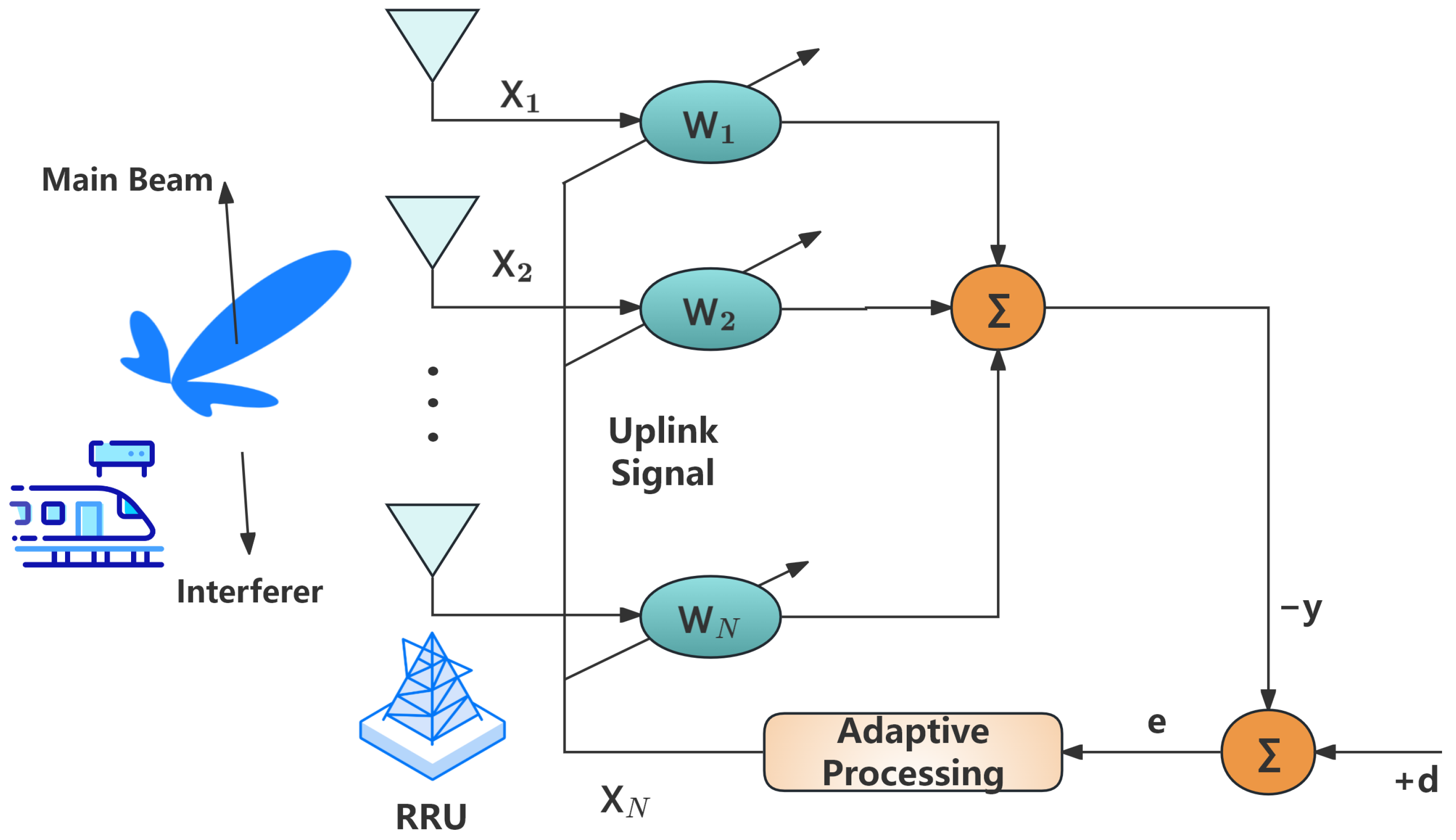
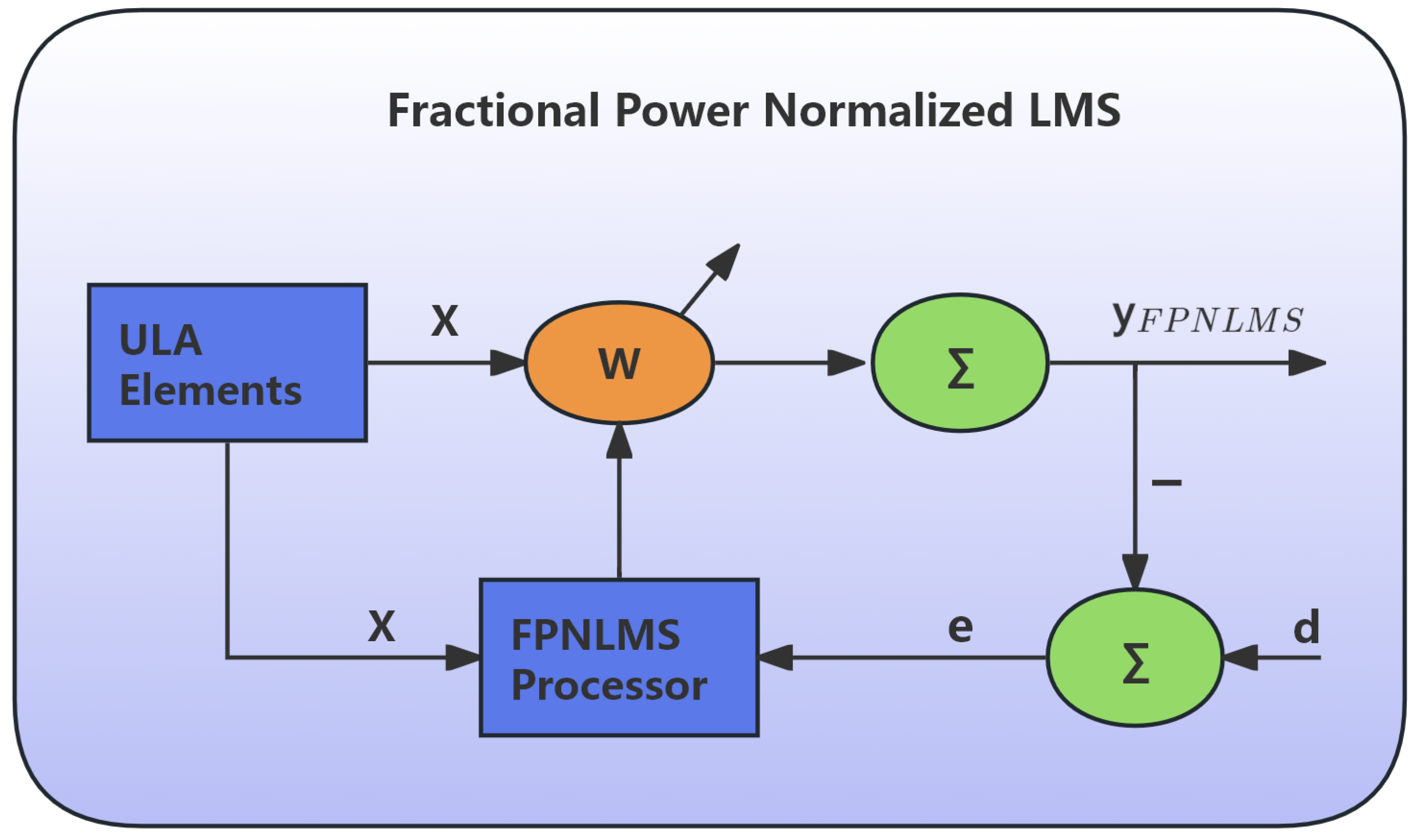
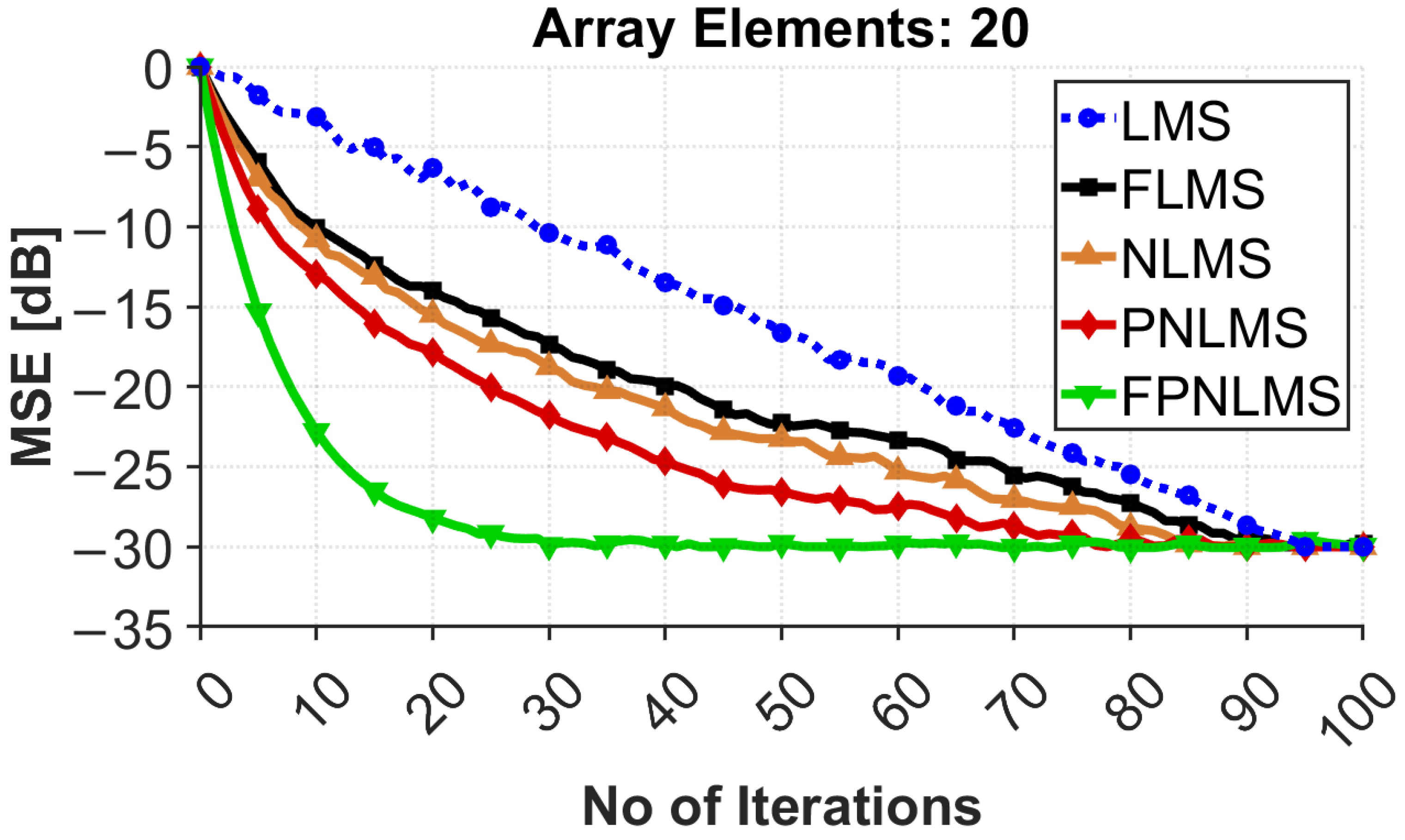
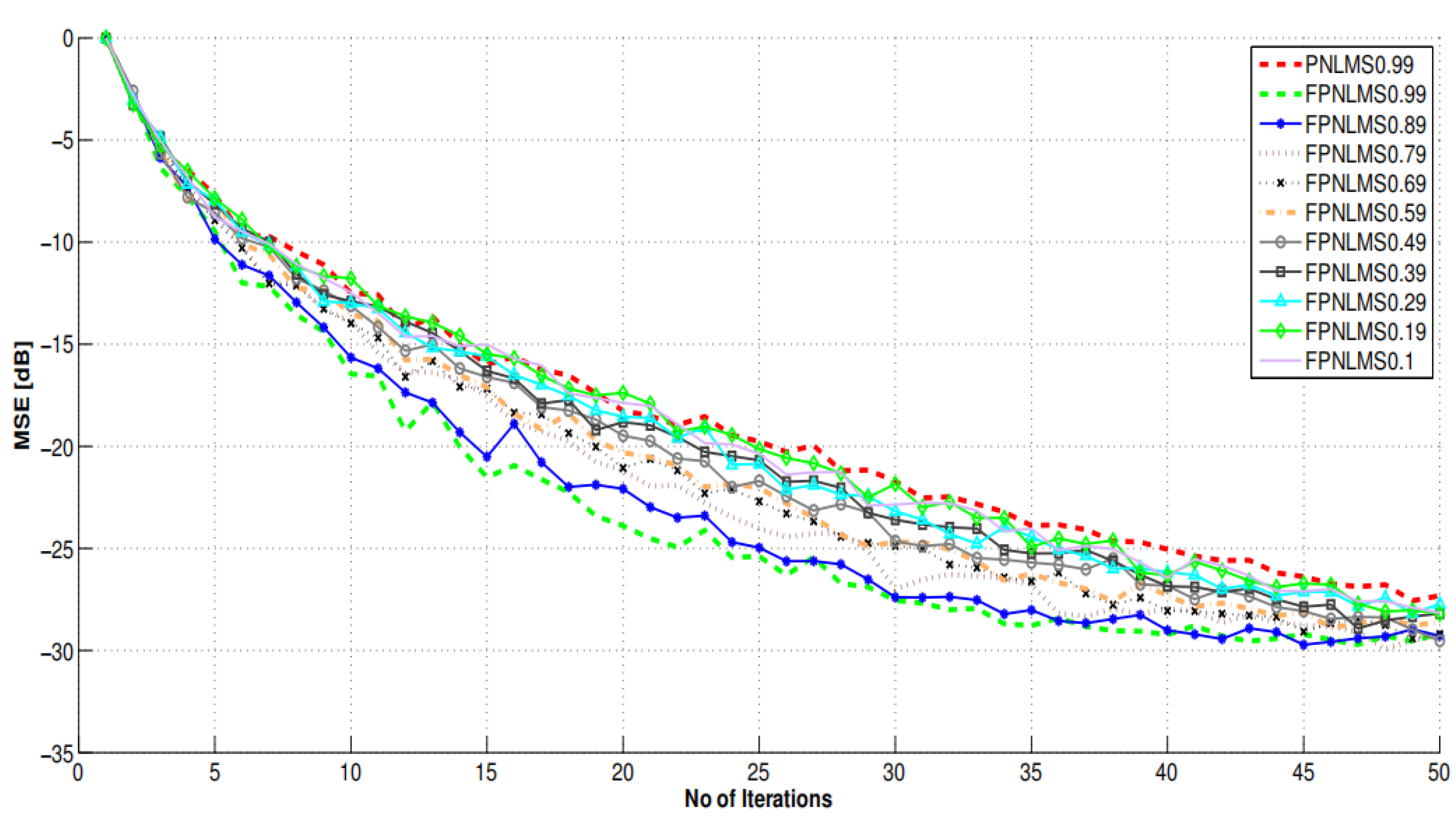
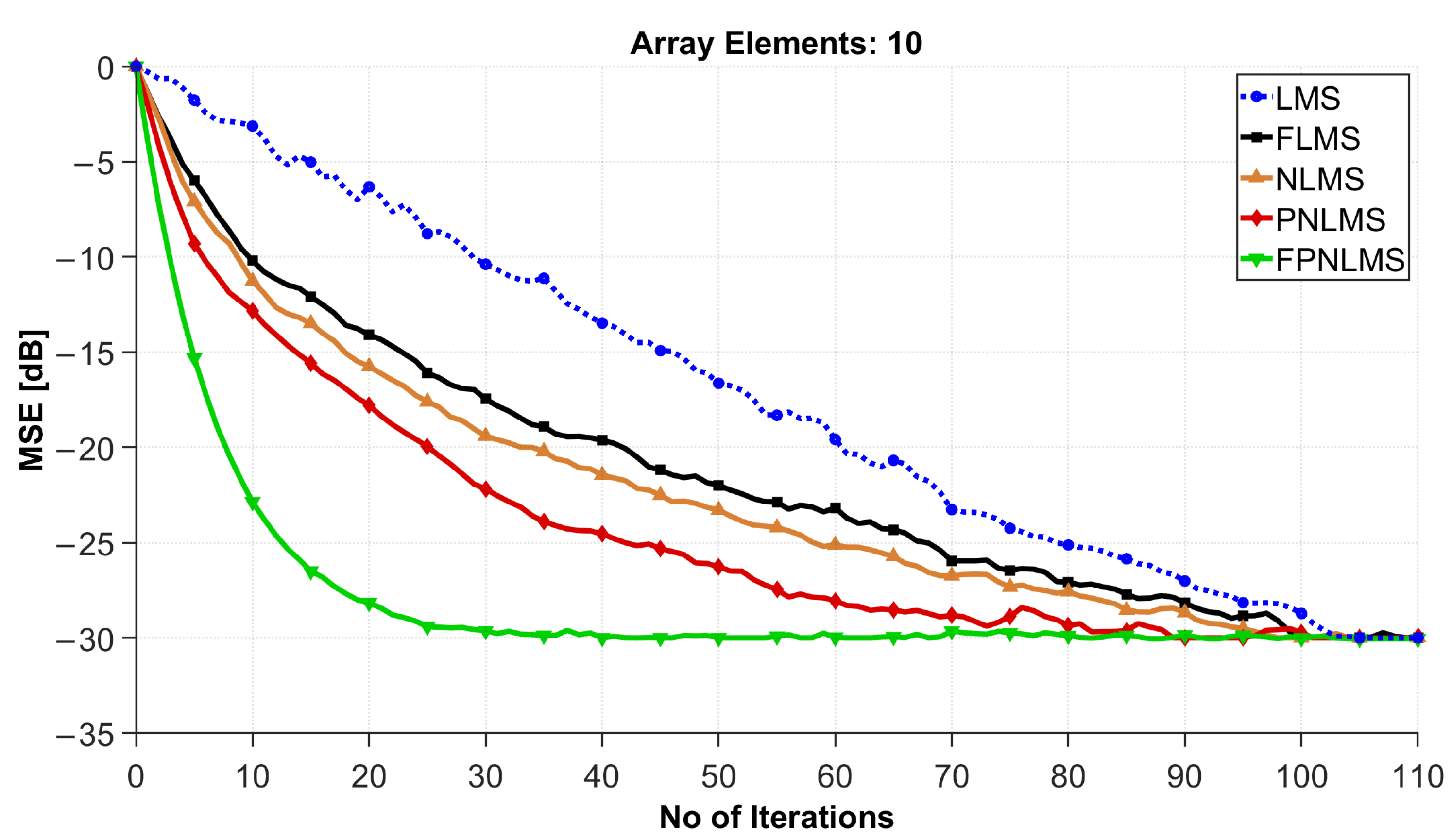
The simulation experiments in this section are based on a ULA structure. The system array consists of L isotropic array elements, with the element spacing set to half the signal carrier wavelength, i.e., , to avoid spatial aliasing and satisfy the spatial sampling theorem. To analyze the impact of array size on algorithm performance, experiments were conducted with array configurations of and . The designed communication scenario simulates a typical BPSK signal transmission environment, where the desired signal (useful signal) is incident from the direction , and the interference signal arrives at the array front end from the direction . The system signal is simultaneously interfered with by AWGN signals to construct dynamic interference test conditions, thereby verifying the adaptive performance and robustness of various algorithms under complex channels. This paper selects five typical adaptive beamforming algorithms for comparative analysis, including the traditional LMS algorithm, NLMS algorithm, FLMS algorithm, PNLMS algorithm, and the FPNLMS algorithm proposed in this paper. Among them, the LMS algorithm serves as a performance baseline to evaluate the relative advantages of improved algorithms; the NLMS algorithm improves convergence stability by normalizing the input signal power; PNLMS improves convergence performance in sparse channels through a proportional weight update mechanism; and FLMS and FPNLMS further introduce fractional derivative operators to achieve higher dynamic sensitivity and steady-state accuracy through a non-integer order adjustment mechanism of historical gradients. The experiments use convergence speed, steady-state error, spatial filtering capability, and azimuth map consistency as core indicators to comprehensively evaluate the adaptability and performance of each algorithm in the high-speed maglev communication environment from both time and spatial domains.
In addition to the above experiments, two supplementary evaluations were conducted to address reviewer suggestions:
6.3. Comparison of MSE Convergence Performance of Multiple Algorithms Under
6.3.1. NLMS
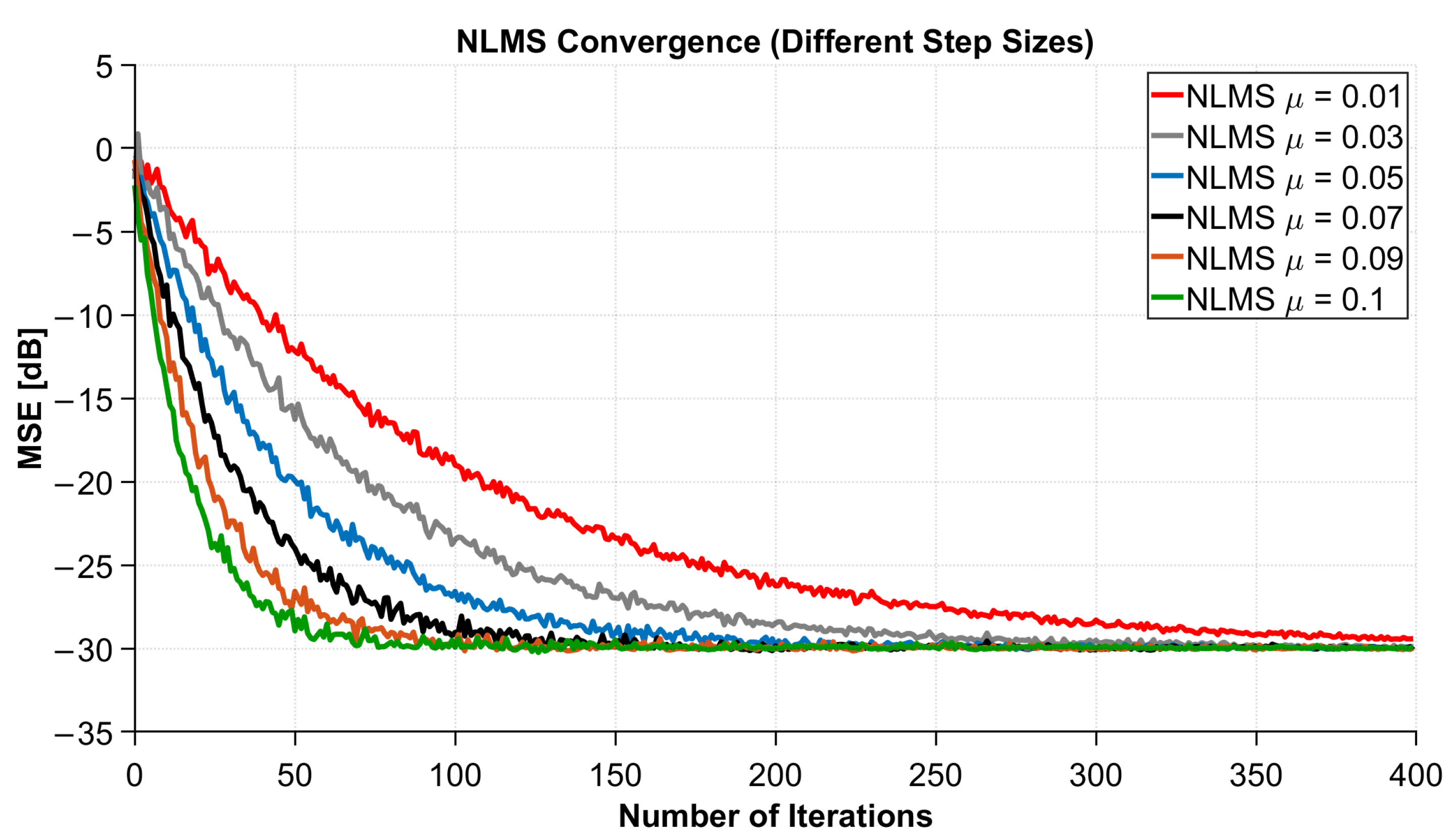
Figure 6 presents the MSE learning curves, which systematically illustrate the influence of the step-size parameter
on both the convergence speed and the steady-state error of the NLMS algorithm. The simulation conditions in this section are consistent with the previous analysis: the signal-to-noise ratio is set to
, the fractional-order parameter is fixed at
, and
is used as the baseline step size. Under this configuration, only the step-size parameter
is varied to assess its impact on both the dynamic behavior and the steady-state performance of the algorithm. The simulation results clearly demonstrate that the step size directly shapes the characteristics of the convergence process, reflecting the inherent trade-off between convergence speed and steady-state accuracy.
When , convergence to a steady-state level of approximately dB is achieved in about 70 iterations, making it the fastest among the groups. Reducing the step size to increases the convergence time to 80–90 iterations. Further reductions to and require approximately 100–110 and 130–150 iterations, respectively, to reach the same steady-state error. When the step size decreases to , a significant “long tail” phenomenon appears, requiring approximately 200 iterations to reach steady state. At , convergence slows down, requiring approximately 320–360 iterations to reach approximately dB.
Furthermore, the MSE floor values of multiple curves at steady state are generally consistent (approximately dB). The differences between step sizes are mainly observed in the convergence transition phase: larger step sizes result in faster descent, but slightly amplify minor jitter in the steady-state segment; smaller step sizes lead to smoother convergence, but slower overall convergence speed. This indicates that smaller step sizes are more beneficial for steady-state accuracy and update smoothness, but less agile in dynamic response; larger step sizes, while accelerating initial convergence, may cause slight oscillations. In practical applications, a trade-off should be struck between the two to balance response speed and steady-state error performance.
For fast time-varying scenarios such as high-speed maglev communication, the selection of the step size parameter is particularly critical to balance real-time performance and steady-state performance. Referring to the curves shown in
Figure 6, it can be seen that when the step size
is in the range of
to
, the algorithm can significantly shorten the number of iterations required to converge to
dB without degrading the steady-state error. Within this range, NLMS can better meet the real-time and reliability requirements of high-speed links.
In summary, the step size
, as a core hyperparameter controlling the learning step size and weight update rate of NLMS, has a decisive impact on the actual performance of the algorithm. The convergence curve shown in
Figure 6 provides a quantitative basis for subsequent parameter configuration.
6.3.2. FLMS
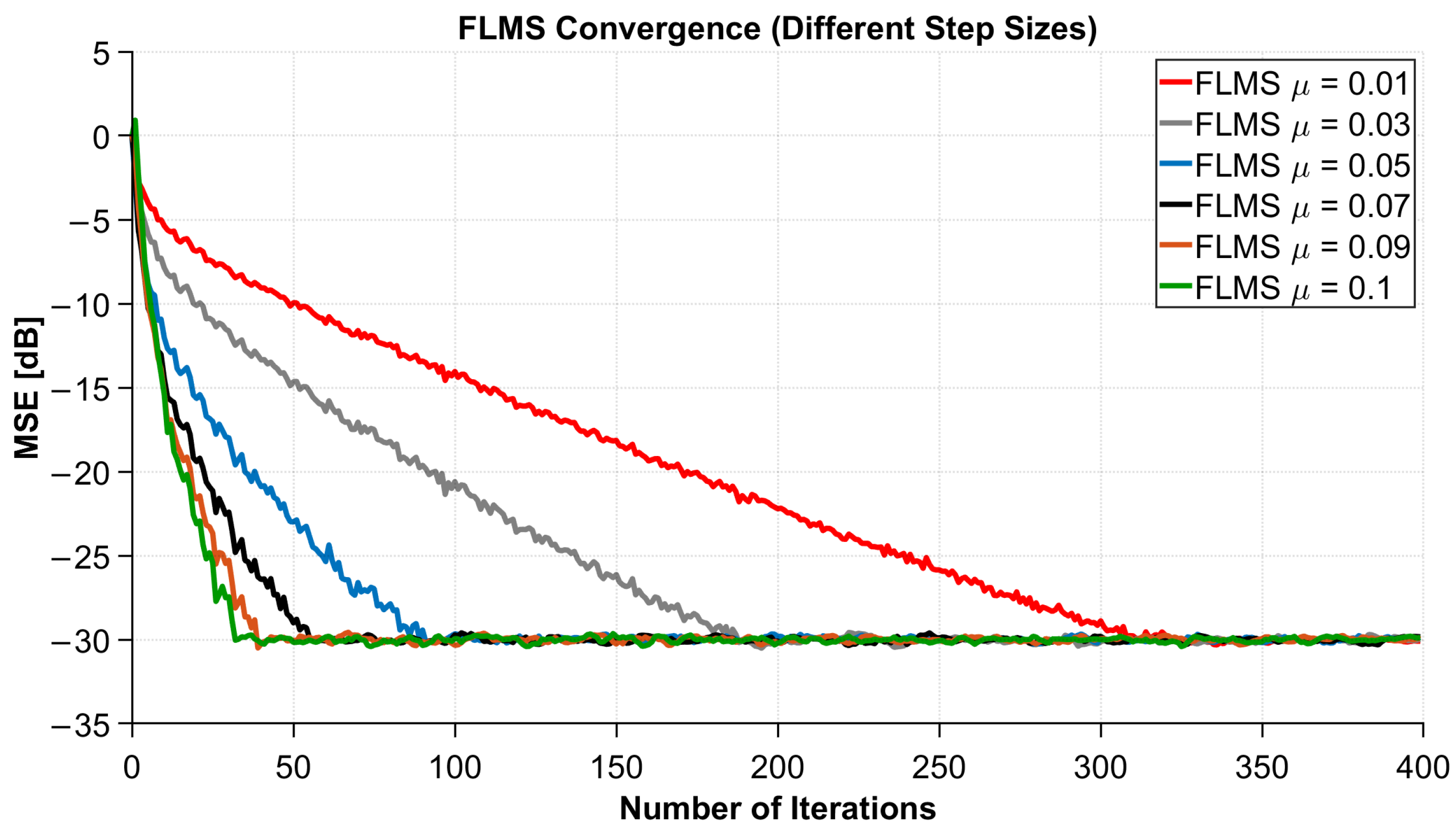
Figure 7 shows the MSE learning curves, which systematically characterize the effect of the step size parameter
on the convergence speed and steady-state error of the FLMS algorithm. Similar to other adaptive algorithms, the step size directly determines the balance between convergence speed and steady-state accuracy.
Simulation results show that when the step size , the FLMS algorithm converges rapidly to a steady-state error level of approximately dB within about 20 iterations, exhibiting extremely fast dynamic response. When the step size is slightly reduced to , the number of iterations required for convergence increases to about 30, but the final steady-state error level remains consistent. Further reducing the step size to the range of to significantly slows the error descent slope, reaching stability at approximately 50 and 80 iterations, respectively. When the step size is reduced to , the convergence speed slows further, requiring approximately 150 iterations to reach steady state. Especially at , convergence exhibits a tailing effect, requiring approximately 320 iterations to reach the same error level, with the curve showing a clear “slow dive” characteristic.
Overall, a smaller step size results in a smoother weight update trajectory and smaller micro-oscillations in the steady-state region; however, this comes at the cost of slower convergence. Conversely, a larger step size accelerates convergence but may introduce slight fluctuations in the steady-state region. Therefore, the step size plays a crucial role in the FLMS algorithm, serving as a trade-off and optimization factor between convergence speed and steady-state accuracy.
In scenarios like high-speed maglev communication where channels change rapidly and real-time performance requirements are extremely high, appropriately increasing the step size (e.g.,
–
) can shorten the convergence time without sacrificing steady-state error accuracy, thereby enhancing the algorithm’s tracking capability for time-varying channels and improving the stability of the communication link. In summary, the step size
, as a key hyperparameter controlling the learning step size and weight update rate of the FLMS algorithm, has a decisive impact on its overall performance in engineering applications. The “step size–performance” relationship revealed in
Figure 7 provides a reliable reference for subsequent parameter optimization and engineering implementation of adaptive beam control algorithms.
6.3.3. PNLMS
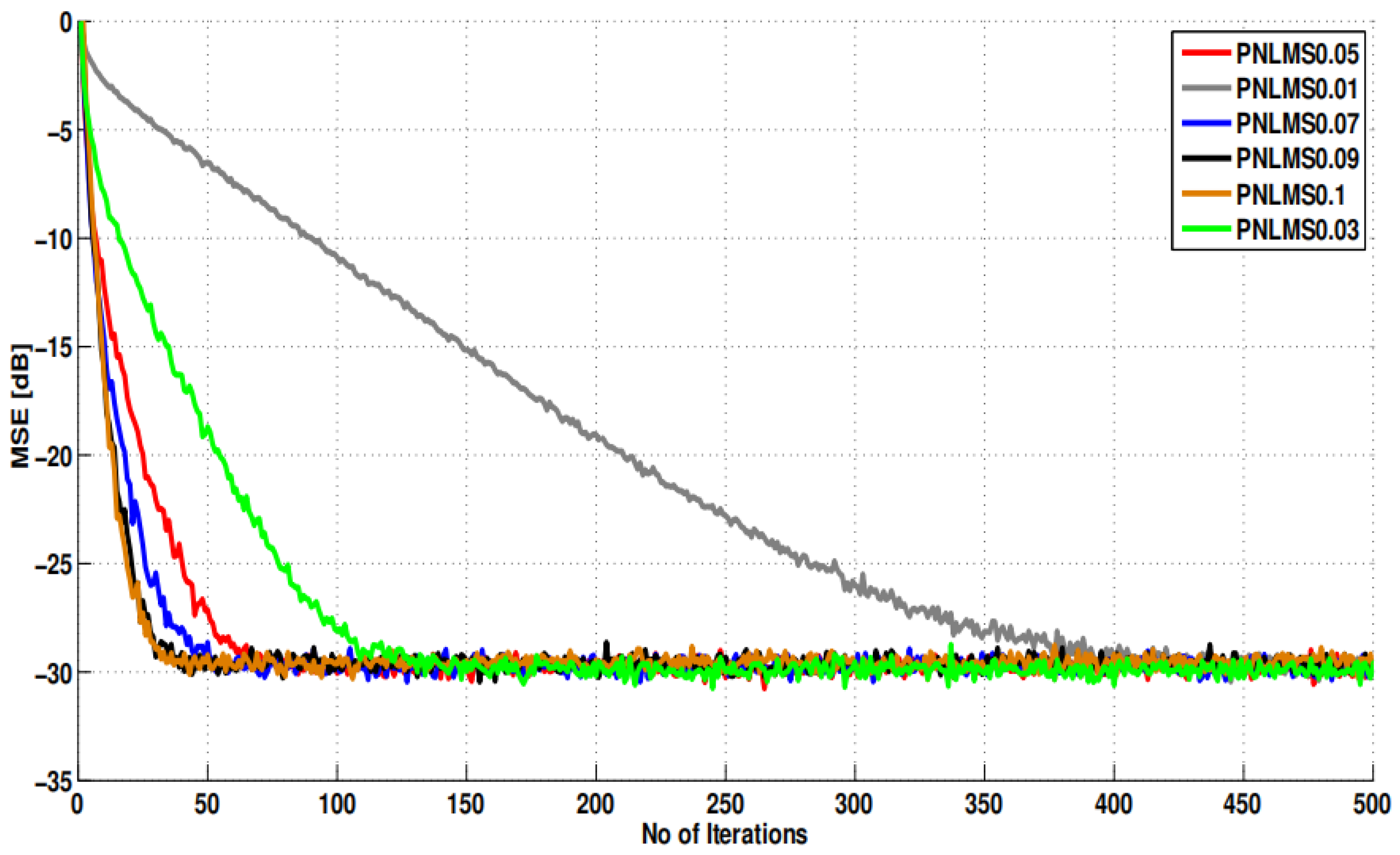
Figure 8 shows the MSE learning curves, which systematically characterize the adjustment of the step size parameter
on the convergence speed and steady-state error of the PNLMS algorithm. The simulation results clearly show that the step size directly determines the algorithm’s convergence characteristics, essentially reflecting a balance mechanism between “convergence speed” and “steady-state accuracy.”
When the step size is set to , the PNLMS algorithm converges rapidly to a steady-state error of approximately dB in only about 32 iterations, demonstrating extremely fast response speed. Slightly reducing the step size to , although the final steady-state error remains the same, increases the number of iterations required for convergence to approximately 35. Further reducing the step size to and further decreases the convergence speed, significantly delaying the time required to reach steady state. Especially at , the convergence process slows markedly, requiring approximately 377 iterations to reach the same MSE level, verifying the significant decrease in algorithm responsiveness when the step size is reduced.
This trend indicates that while a smaller step size can lead to a smoother weight update process and may improve steady-state accuracy to some extent, it reduces the algorithm’s dynamic response speed, making it difficult for the system to track rapidly changing channel conditions in a timely manner. Conversely, an excessively large step size, while potentially accelerating convergence, may introduce oscillations and even affect steady-state stability. Therefore, the step size plays a crucial regulatory role in the PNLMS algorithm, requiring a reasonable trade-off between accuracy and speed.
In high-speed maglev communication applications, due to the dominance of the main path energy and sparse reflection paths, channel variations are often very rapid, and even slight deviations in beam direction can lead to noticeable signal attenuation. In this highly dynamic environment, the algorithm must possess strong tracking capability and error tolerance. Simulation results show that appropriately increasing the step size (e.g., –) can improve convergence speed without sacrificing steady-state error accuracy, thus better meeting the engineering requirements of real-time performance and reliability for maglev train communication links.
In summary, the step size
, as a core hyperparameter controlling the learning step size and weight update rate of the PNLMS algorithm, plays a decisive role in the algorithm’s performance in practical systems. The “step size–performance” relationship revealed in
Figure 8 not only provides a quantitative reference for parameter selection but also offers important configuration guidance for the design of adaptive beam control algorithms in high-speed maglev vehicle-to-ground communication systems.
6.3.4. FPNLMS
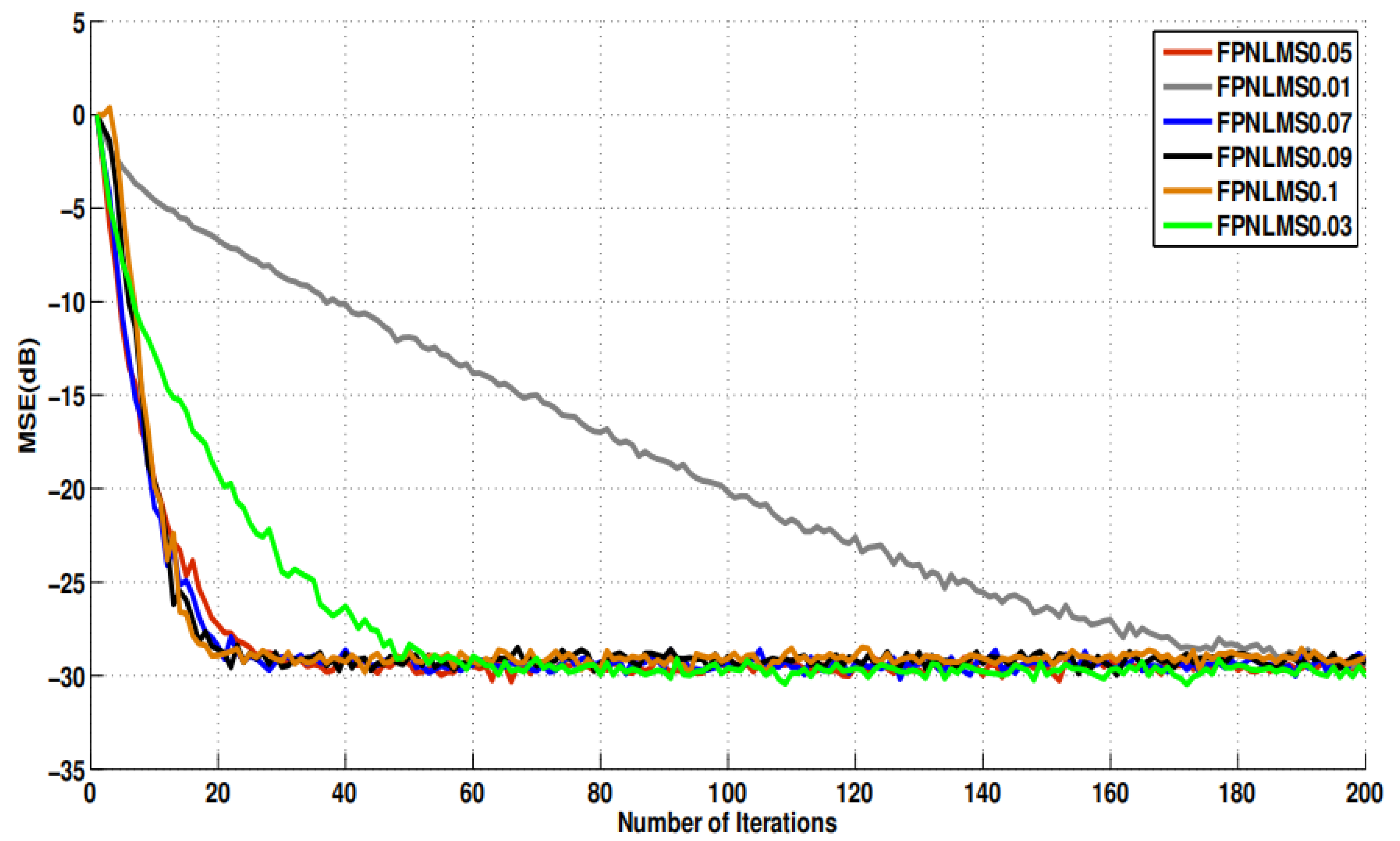
Figure 9 shows the MSE learning curve, which clearly reveals the direct impact of the step size parameter
on the performance of the FPNLMS algorithm, especially exhibiting a significant regularity in the trade-off between convergence speed control and steady-state error adjustment. This experiment aims to investigate the influence of different step size settings on the dynamic convergence behavior of the FPNLMS algorithm and provide a strategic reference for step size optimization in practical deployments.
Simulation results show that when the step size is set to , the FPNLMS algorithm can rapidly reduce the MSE to approximately dB in only about 19 iterations, demonstrating extremely fast response speed. In contrast, when the step size is slightly reduced to , the number of iterations required to reach the same error level increases to approximately 22, and the convergence speed decreases slightly. This trend is more pronounced under smaller step sizes. For example, when the step size decreases to , the algorithm requires approximately 192 iterations to converge to a similar steady-state error level, and the convergence rate is significantly reduced.
This trend validates the classic trade-off between step size setting and algorithm convergence characteristics: a larger step size can enhance weight updates in the early learning phase and improve convergence speed, but an excessively large step size may lead to increased oscillations and decreased error accuracy in the steady-state phase; meanwhile, a smaller step size is beneficial for improving the final steady-state performance, but the learning process slows down, response lags, and system adjustment delay increases. For high-speed mobile scenarios that require rapid adaptation to channel changes, an overly small step size may fail to meet the system’s requirement for millisecond-level directional updates.
In high-speed maglev environments, communication systems must cope with the complex propagation characteristics of extremely strong channel directivity, very few reflection paths, and rapid energy drift in the main path. Any beam pointing deviation or algorithm response delay can cause attenuation of the main signal gain. Therefore, beam control algorithms must not only possess high-precision error adjustment capabilities but also maintain fast and stable convergence under highly dynamic conditions. The experimental results in
Figure 9 show that when the step size is set in the range of
–
, the FPNLMS algorithm can simultaneously achieve fast convergence and low steady-state error, providing an optimal parameter selection range for engineering applications.
In summary, step size parameter optimization in the FPNLMS algorithm should fully consider the intensity of dynamic channel changes, real-time constraints, and error tolerance requirements. In high-speed maglev vehicle-to-ground communication systems, it is recommended to dynamically adjust the step size using a combination of offline tuning and online adaptive mechanisms to better accommodate the time-varying characteristics of the channel, thereby further improving system stability and robustness.
6.4. Beam Pattern and Polar Coordinate Characteristics Analysis
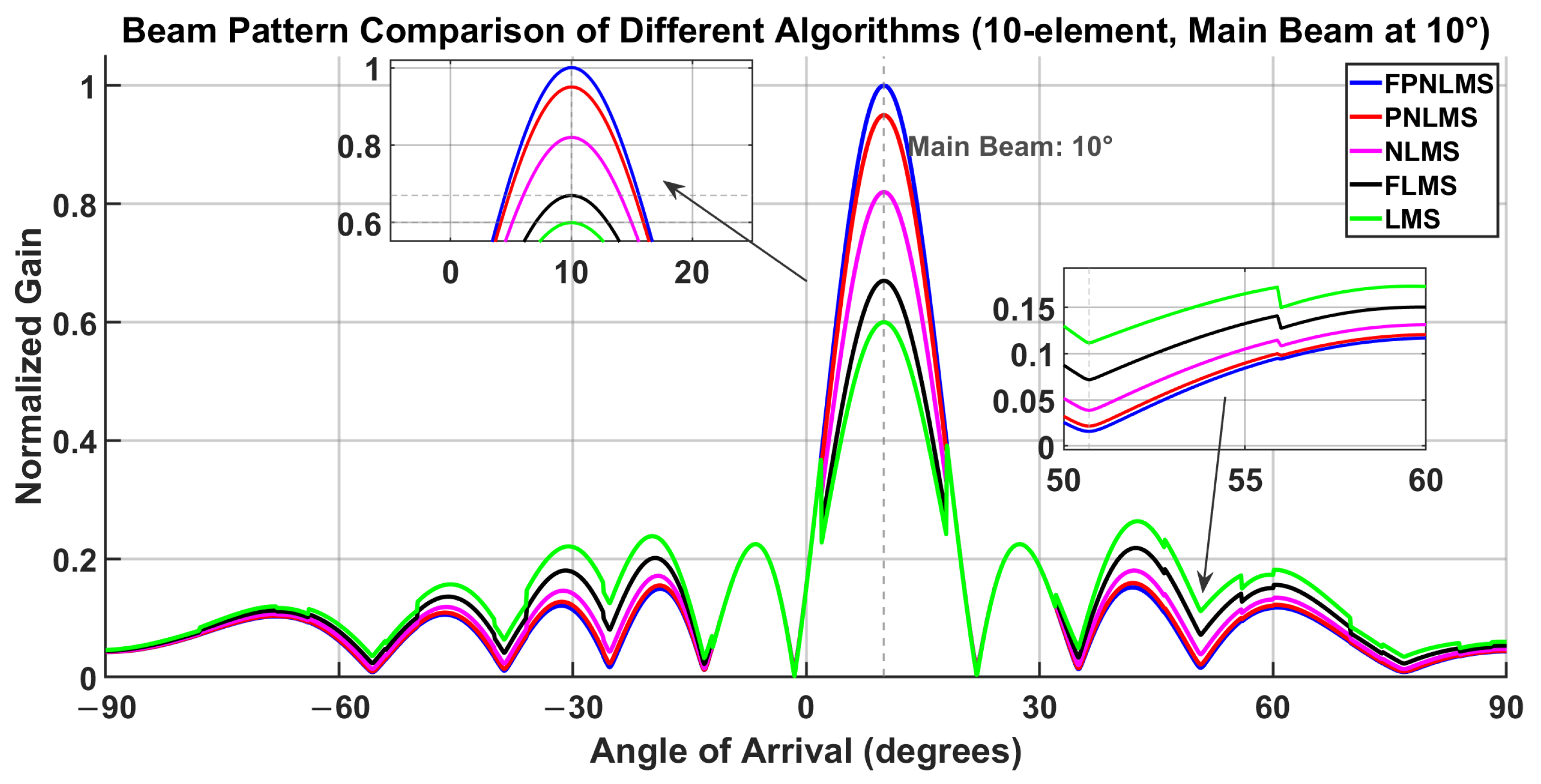
Figure 10 shows the beam patterns generated by five adaptive algorithms (LMS, NLMS, FLMS, PNLMS, and FPNLMS) to evaluate their differences in main-lobe directional control, side-lobe suppression, and interference suppression performance. The experiment uses a uniform linear array (ULA) with 10 elements, a signal-to-noise ratio (SNR) of 30 dB, a step size of
, and a fractional-order parameter of
. The steady-state weight vector obtained after the 25th iteration is used as the basis for plotting the beam patterns. The 10-element array structure is chosen to maintain a relatively wide main lobe, thereby allowing for a clearer observation of the performance differences among different algorithms in terms of main-lobe focusing capability and side-lobe structure.
As shown in
Figure 10, all five algorithms can form a clear and concentrated main lobe in the target direction (approximately
). To quantitatively evaluate the main-lobe preservation capability, this paper uses the deviation between the main-lobe peak direction and the desired direction as the pointing accuracy indicator. The results show that this deviation for each algorithm is controlled within
, indicating that all algorithms can accurately lock the expected direction in terms of main-lobe pointing. However, significant differences still exist among the algorithms in terms of main-lobe sharpness and sidelobe suppression effectiveness.
Overall, the LMS algorithm exhibits the lowest main-lobe gain and the highest sidelobe level, resulting in the weakest spatial focusing ability. NLMS and FLMS show some improvement over LMS, but their main lobes remain slightly diffuse, and their sidelobe energy suppression is insufficient. PNLMS, due to its proportional weight update mechanism, produces a more concentrated main lobe and significantly lower sidelobe levels, especially around the interference direction (approximately ), demonstrating stronger interference suppression capability.
To further quantify interference suppression, this paper uses the radiation pattern amplitude at the interference direction as an evaluation metric and compares it with the sidelobe level of LMS as a reference. As shown in the magnified sidelobe area on the right of
Figure 10, near the interference direction, the sidelobe level of FPNLMS decreases by approximately 4–6 dB compared with LMS, corresponding to a reduction in interference leakage power of about 60–
. In summary, FPNLMS performs the best among the five algorithms in terms of main-lobe preservation, sidelobe suppression, and interference rejection, demonstrating superior spatial filtering capability and directional resolution.
To further verify the orientation preservation and main-lobe focusing abilities of each algorithm in the angular domain,
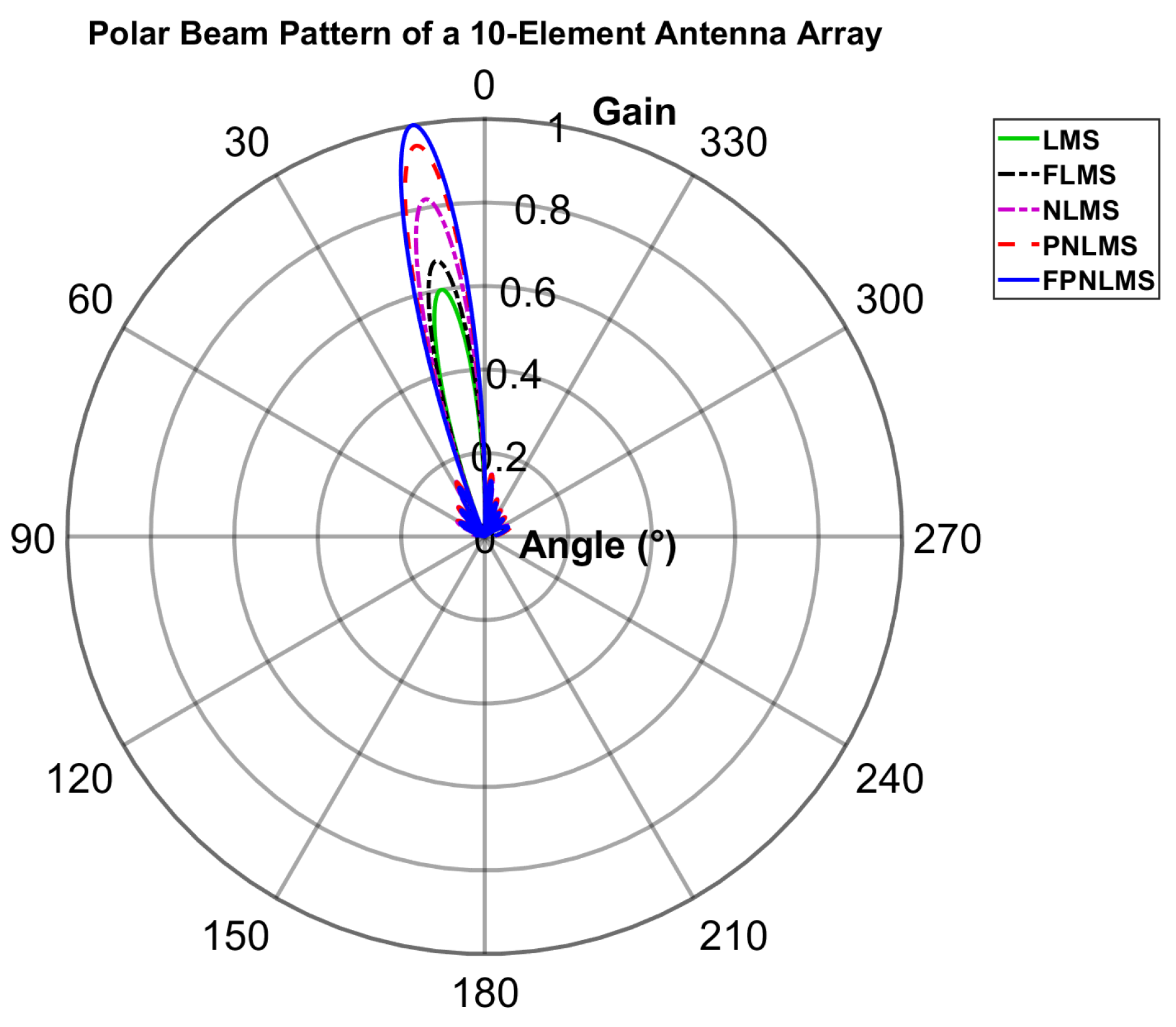
Figure 11 shows the polar-coordinate beam patterns under the same parameter conditions as
Figure 10. As can be seen, the main lobes formed by all five algorithms accurately point to the target direction of approximately
, indicating good orientation consistency. Regarding main-lobe gain distribution, FPNLMS exhibits the most concentrated main lobe and the highest peak gain (approximately
). PNLMS ranks second, with a peak gain of approximately
, followed by NLMS and FLMS with gains of about
and
, respectively. LMS has the lowest main-lobe gain of approximately
. This gain ranking is consistent with the results observed in
Figure 10, further confirming that FPNLMS provides the best spatial focusing performance, orientation preservation, and enhancement capability.
Furthermore, the overall polar pattern reveals that FPNLMS produces a more symmetrical beam, with significantly lower sidelobe energy than the other algorithms and a smoother overall radiation distribution. In undesirable directional regions (e.g., 50–), FPNLMS exhibits a slightly lower beam level than the other four algorithms, indicating better sidelobe suppression and contributing to the reduction of interference signals arriving from unwanted directions.
In summary, under the same signal-to-noise ratio and step size settings, FPNLMS outperforms the other four algorithms in main-lobe focusing intensity, sidelobe suppression, and overall pattern symmetry. This algorithm not only achieves fast and stable weight convergence but also demonstrates superior overall performance in spatial selectivity and directional gain, validating its engineering feasibility and superiority in array signal processing and highly directional wireless communication scenarios.
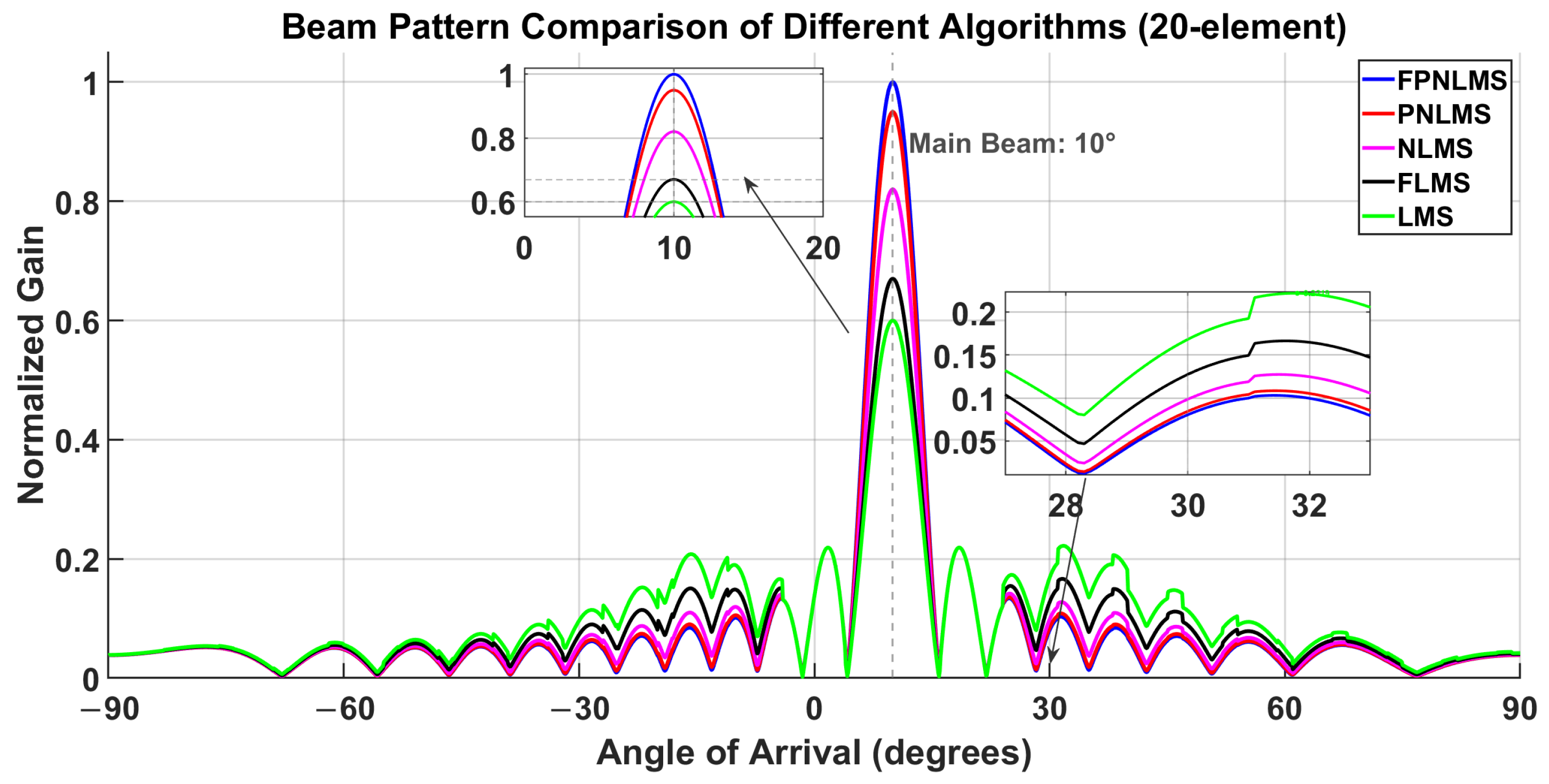
Figure 12 shows the beam patterns generated by different adaptive algorithms (LMS, NLMS, FLMS, PNLMS, and FPNLMS) under the condition of a 20-element uniform linear array (ULA), used to analyze the impact of array size expansion on spatial resolution and beamforming performance. The simulations follow the same conditions as described previously, with
dB, step size
, fractional-order parameter
, and the steady-state weights obtained after the 25th iteration used to plot the beam pattern. Compared with a 10-element array, increasing the number of elements significantly improves spatial resolution, resulting in a narrower and sharper main lobe and further enhanced beam directivity. Meanwhile, due to the increased array aperture, the sidelobe structure exhibits a denser and more regular distribution, providing a more intuitive basis for comparing the differences in sidelobe suppression and direction-keeping capabilities among the different algorithms.
As shown in the figure, the LMS algorithm has the lowest main-lobe gain, the weakest sidelobe suppression capability, and the poorest overall directivity performance. Although NLMS and FLMS outperform LMS in terms of convergence characteristics, they still exhibit significant sidelobe energy leakage. PNLMS, relying on its proportional normalization update mechanism, further enhances the main-lobe gain in the target direction and significantly reduces the sidelobe level compared with LMS.
In contrast, FPNLMS performs best in main-lobe focusing, sidelobe suppression, and directivity preservation. Its main lobe is the sharpest, its overall sidelobe energy is the lowest, and it forms a deeper sidelobe trough near the interference direction (approximately ). As seen in the magnified region on the right side of the figure, the trough depth of FPNLMS at this angle is approximately 8 dB lower than that of LMS, indicating a stronger suppression capability in the interference direction.
In summary, as the array size increases, the radiation pattern structure of each algorithm becomes more pronounced. However, FPNLMS maintains optimal directional resolution and interference suppression performance even under large-array conditions, demonstrating its engineering advantages in highly directional communication and array signal processing applications.
Figure 12 shows the beam patterns generated by different adaptive algorithms (LMS, NLMS, FLMS, PNLMS, and FPNLMS) under the condition of a 20-element uniform linear array (ULA), used to evaluate the impact of array size expansion on beam convergence performance and spatial filtering characteristics. The simulation parameters are set to
dB, step size
, and fractional-order parameter
, with the weight vector of the 25th iteration used as the steady-state result. Compared with a 10-element array, increasing the number of elements significantly improves the array’s spatial resolution and beam-pointing accuracy, resulting in a narrower and sharper main lobe and a clearer and more structured sidelobe distribution.
As shown in the figure, the LMS algorithm exhibits the lowest main-lobe gain, the weakest sidelobe suppression, and overall poor directivity. Although NLMS and FLMS outperform LMS in terms of convergence speed, they still suffer from noticeable sidelobe energy leakage. PNLMS improves the main-lobe gain significantly through its proportional normalization update mechanism, resulting in a marked reduction in sidelobe levels compared with LMS. FPNLMS, on the other hand, demonstrates the strongest main-lobe focusing and sidelobe suppression capabilities, exhibiting the highest main-lobe directivity, the lowest sidelobe energy, and forming a deep null near the interference direction (approximately ). The null depth of FPNLMS at this angle increases by approximately 6–8 dB relative to LMS, indicating stronger spatial filtering selectivity and greater sensitivity in null formation.
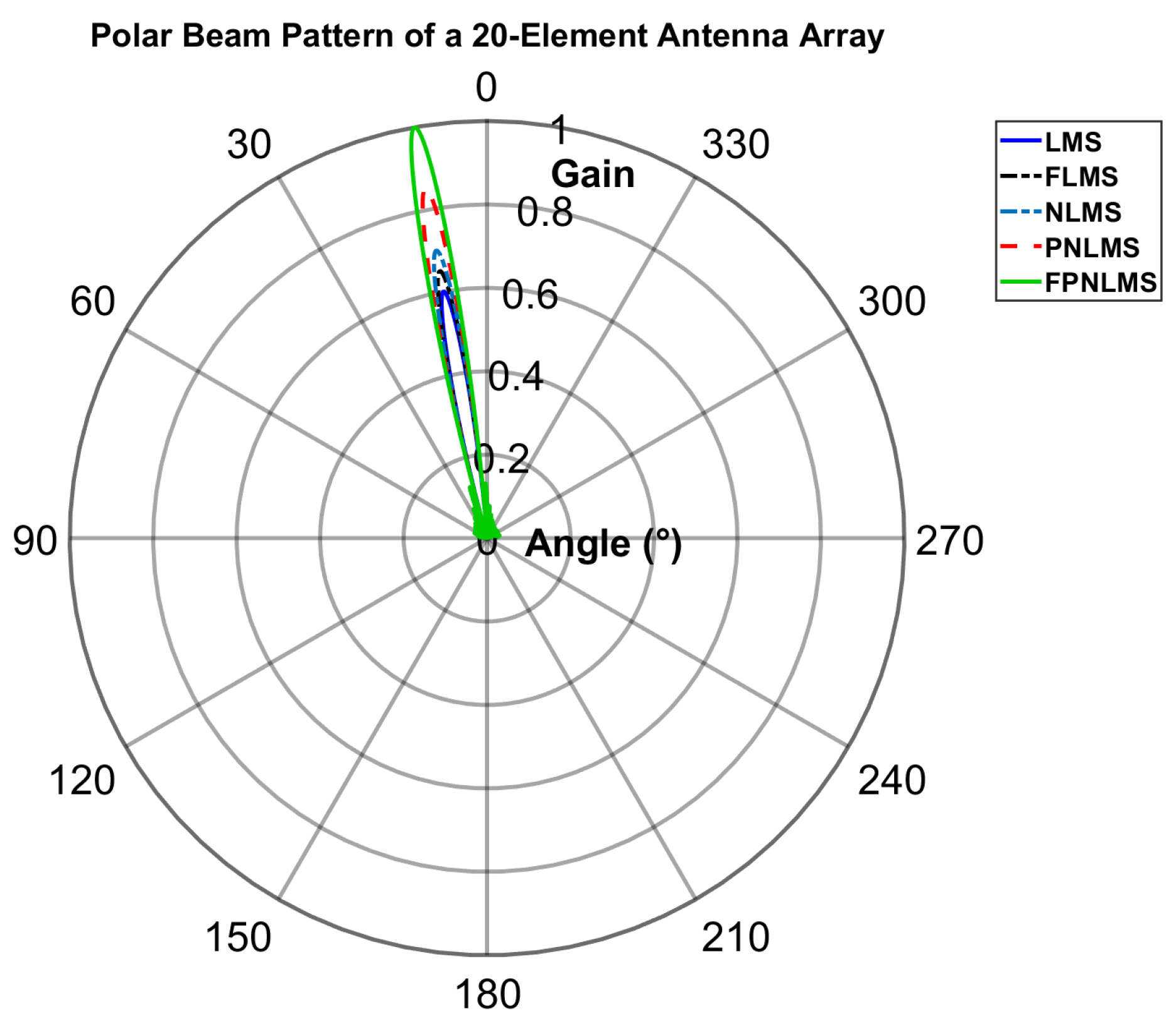
Figure 13 shows the polar-coordinate beam patterns under the same parameter settings, providing a more intuitive illustration of the spatial angular-domain beamforming characteristics of each adaptive algorithm. As can be seen, the main lobes formed by all five algorithms stably point to approximately
, consistent with the desired direction, demonstrating good robustness in direction preservation. However, significant differences remain in main-lobe gain and focusing capability: FPNLMS exhibits the highest main-lobe amplitude (approximately
), followed by PNLMS (approximately
); NLMS and FLMS show main-lobe gains of about
and
, respectively; and LMS has the lowest, only about
. These differences reflect the varying spatial focusing abilities and signal enhancement performance of the algorithms.
With the increase in the number of array elements, the main lobe becomes narrower and sharper, the sidelobe energy is significantly reduced, and the symmetry and null depth of the beam pattern are improved. Under these higher-resolution conditions, FPNLMS still maintains optimal sidelobe suppression and interference direction null depth, demonstrating stronger spatial filtering capability and directional resolution performance, and verifying its engineering advantages and applicability in large-array, high-resolution scenarios.
Of particular note is that the FPNLMS algorithm exhibits the most concentrated main-lobe structure, significantly lower and smoother sidelobes, and deeper null locations in the polar-coordinate pattern, demonstrating its comprehensive advantages in spatial resolution and anti-interference performance. In contrast, while PNLMS also possesses strong sidelobe suppression capabilities, it is slightly inferior to FPNLMS in terms of main-lobe focusing and sidelobe smoothness; NLMS and FLMS show only moderate performance in overall directivity preservation, sidelobe control, and null depth.
In summary, when the number of array elements increases from 10 to 20, the spatial filtering performance of the array is significantly improved, including further narrowing of the main lobe, enhanced directivity, and improved sidelobe suppression. Under these conditions, FPNLMS maintains the best performance in key indicators such as main-lobe focusing, sidelobe suppression, and null formation. It not only ensures fast and stable weight convergence, but also exhibits higher spatial selectivity and direction-preservation capability, validating its good scalability and engineering application value in large-scale array systems.
6.5. Steady-State NMSE Performance Under Different SNR Conditions
To evaluate the steady-state performance of each adaptive algorithm under different noise environments, this section compares the normalized mean square error (NMSE) performance of LMS, NLMS, FLMS, PNLMS, and the proposed FPNLMS under various input SNR conditions.
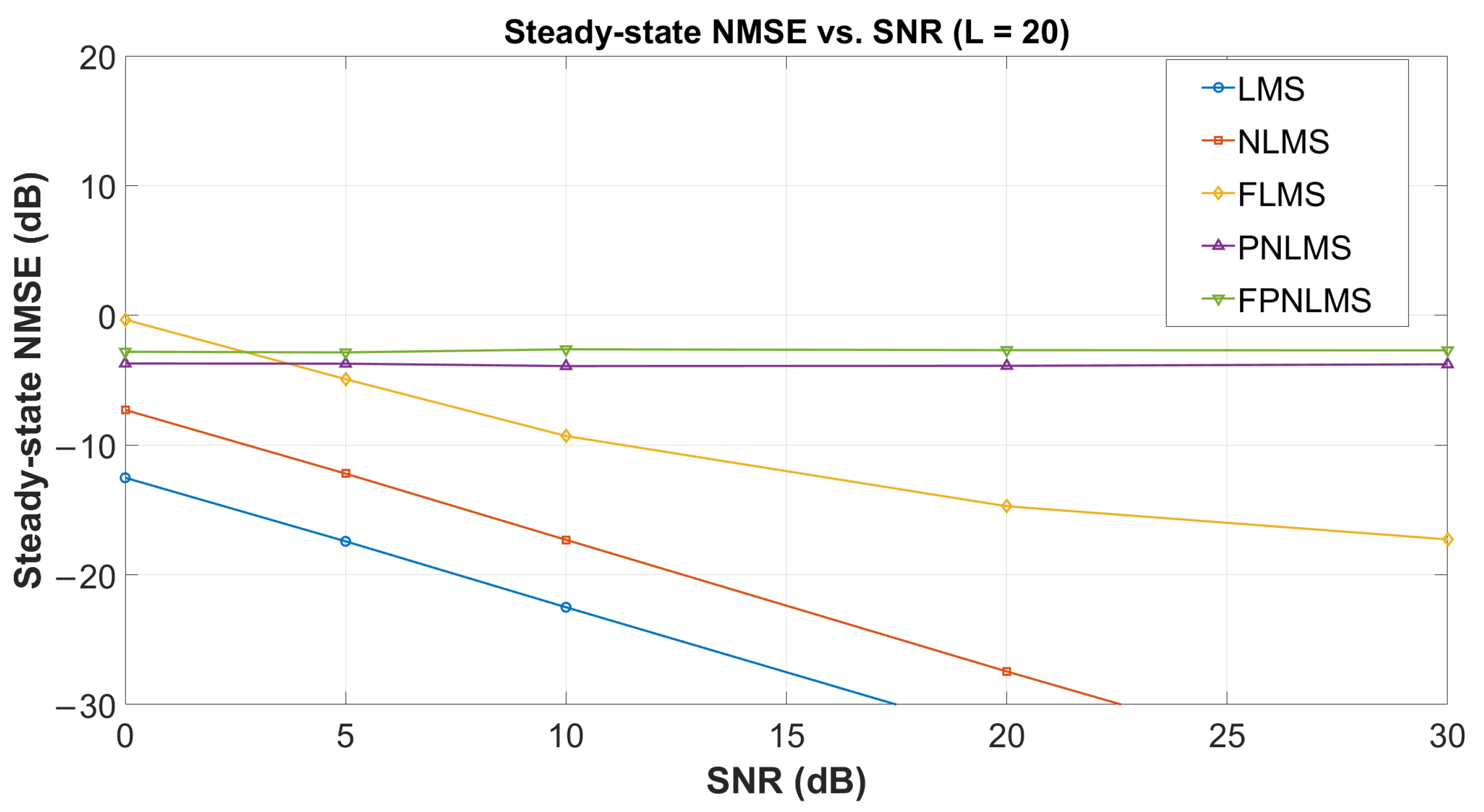
Figure 14 shows the steady-state NMSE curves of each algorithm in the SNR range of 0–30 dB under the condition of a uniform linear array with
.
The following patterns can be observed from
Figure 14. First, both LMS and NLMS exhibit an NMSE curve that decreases approximately linearly with increasing SNR. NLMS consistently outperforms LMS under various SNR conditions, which is consistent with the fact that its normalization mechanism effectively suppresses update instability caused by input amplitude variations. Although both algorithms show a significant decreasing trend in steady-state error, some residual error remains in the high-SNR region due to inherent algorithmic limitations.
In contrast, the steady-state NMSE of FLMS is significantly higher than that of LMS and NLMS, and its variation with SNR is more gradual. This is mainly because the fractional-order gain may introduce additional jitter in the steady-state region, limiting its ability to reduce error in noise-dominated conditions. This phenomenon is consistent with conclusions reported in existing research on fractional-order adaptive filtering.
For PNLMS, its steady-state NMSE remains low and relatively stable across the entire SNR range. Because its scaling factor enables a more reasonable allocation of weight updates across different components, PNLMS exhibits better noise robustness during the steady-state phase, leading to the near-horizontal curve.
The proposed FPNLMS exhibits slightly better steady-state performance than PNLMS under all SNR conditions. By combining the proportional normalization mechanism with a lightweight fractional-order correction term, the algorithm not only retains the steady-state robustness of PNLMS but also further reduces residual errors caused by small-amplitude noise interference. It is worth noting that the steady-state error of FPNLMS in the figure does not reach overly idealized values, which is consistent with the rational setting of the algorithm’s gain factor discussed earlier and is closer to the achievable performance of real array systems in the presence of noise and quantization effects.
In summary, FPNLMS achieves a favorable balance between performance and computational complexity under different SNR conditions. Compared with FLMS, which also incorporates fractional-order operators, FPNLMS shows a significant advantage in steady-state performance; compared with LMS and NLMS, it achieves lower steady-state NMSE across low, medium, and high SNR regions; and compared with PNLMS, the proposed method maintains robustness while achieving additional performance improvement. Therefore, FPNLMS has higher practical value in scenarios characterized by large noise fluctuations or complex channel conditions.
6.6. Computational Complexity and Practical Implementation Feasibility
We analyze the per-iteration computational complexity and memory footprint of the five adaptive algorithms considered in this work—LMS, NLMS, FLMS, PNLMS, and FPNLMS—and contrast them with representative prior arts.
Let L denote the number of adaptive beamforming weights. Each iteration of the algorithms includes output computation , error update , and coefficient update. The computational complexity is summarized below.
Considering an antenna array with
L adaptive weights, each iteration of the adaptive beamforming algorithms consists of output computation
, error calculation
, and coefficient update. For the classical LMS algorithm, the update requires
L complex multiplications and
L complex additions per iteration, resulting in
computational complexity with
memory usage. The NLMS algorithm introduces input-power normalization, requiring
L real multiplications,
real additions, and one reciprocal operation, but still maintains linear
complexity. The FLMS algorithm further incorporates a fractional correction term involving element-wise modulus, fractional power, sign extraction, and Hadamard multiplication; however, all operations remain per-tap and therefore preserve
computational complexity and memory footprint. For PNLMS, a diagonal proportionate gain matrix is applied, requiring magnitude computation of each coefficient and a single summation per iteration, followed by element-wise scaling, which also scales linearly with
L. The proposed FPNLMS method combines NLMS normalization, PNLMS proportionate gain, and fractional-order correction in a fully element-wise manner. Importantly, no matrix inversion, covariance estimation, or iterative matrix updates are required, and all additional operations occur at the vector–element level. As a result, the proposed method preserves the linear
computational complexity characteristic of LMS-type algorithms while providing enhanced performance. Therefore, the proposed algorithm retains
computational complexity and
memory overhead, with only a slightly higher constant factor than LMS/NLMS due to the introduced fractional and proportionate terms. Compared with RLS-type methods that require matrix inversion and exhibit
complexity, the proposed FPNLMS method achieves significantly lower computational burden and improved suitability for real-time implementation on FPGA/SDR-based beamforming platforms. To provide a clear comparison, the detailed computational and memory complexity of the proposed FPNLMS algorithm and related adaptive methods (LMS, NLMS, FLMS, PNLMS, and RLS) is summarized in
Table 1.
Although FPNLMS introduces additional element-wise operations (fractional-power computation and proportionate scaling), it still preserves linear computational complexity , making it suitable for real-time implementation. This contrasts sharply with RLS-type algorithms, whose matrix-inversion steps incur computational overhead and significantly higher memory requirements. All five compared algorithms require storing the weight vector c and a few temporary vectors, resulting in memory usage. The proposed FPNLMS adds only small element-wise buffers (fractional vector and gain vector). The absence of matrix inversion not only lowers latency but also supports low-power operation, which is crucial for FPGA-based baseband and SDR terminals deployed in high-mobility rail and maglev systems.
The fractional-order operator enhances tracking capability under fast-varying channels, consistent with the strong Doppler effects and rapid propagation changes in high-speed maglev environments. Furthermore, the power-normalized structure improves numerical stability and reduces sensitivity to input-power fluctuations and fixed-point quantization, which is essential for embedded digital implementations. Lookup-table-based fractional-power operators or fixed-point approximations can be employed for efficient hardware realization with negligible memory and energy overhead.
Recent advancements in reconfigurable and beam-scanning antenna arrays further highlight the practical value of adaptive digital beamforming. For instance, Wu et al. reported a wideband dual-polarized
reconfigurable beam-scanning antenna supporting
scanning with stable polarization and high radiation efficiency, demonstrating the trend toward flexible and programmable array architectures in modern communication systems [
50]. These developments indicate a growing demand for lightweight, fast-converging, and hardware-friendly adaptive algorithms. The proposed FPNLMS method can be seamlessly integrated with such reconfigurable antenna platforms, enabling real-time interference suppression and channel tracking in high-mobility scenarios such as maglev trains.
It should also be noted that the fractional-order parameter and step size were selected as fixed values in this study to maintain fair comparisons across algorithms. Although the chosen parameters provide stable and fast convergence in high-mobility scenarios, they may not be universally optimal under all propagation conditions. Developing adaptive parameter-tuning mechanisms—such as error-driven fractional-order adjustment, channel-variation-aware step-size scheduling, or reinforcement-learning-based control—represents an important research direction. Such strategies can further enhance robustness and enable autonomous adaptation to dynamic wireless environments, particularly in highly non-stationary maglev channels.
Although the current validation is based on MATLAB simulations, the algorithm’s low computational cost and stable convergence behavior suggest strong feasibility for real-time hardware deployment. Future work will involve over-the-air testing using a maglev-channel emulator and an SDR-based prototype platform, as well as robustness evaluations under practical impairments such as mutual coupling, array-calibration errors, RF nonlinearities, and real-time interference. These evaluations will further verify system-level performance, latency, and energy efficiency, supporting the integration of the proposed method into next-generation high-speed transportation communication systems.
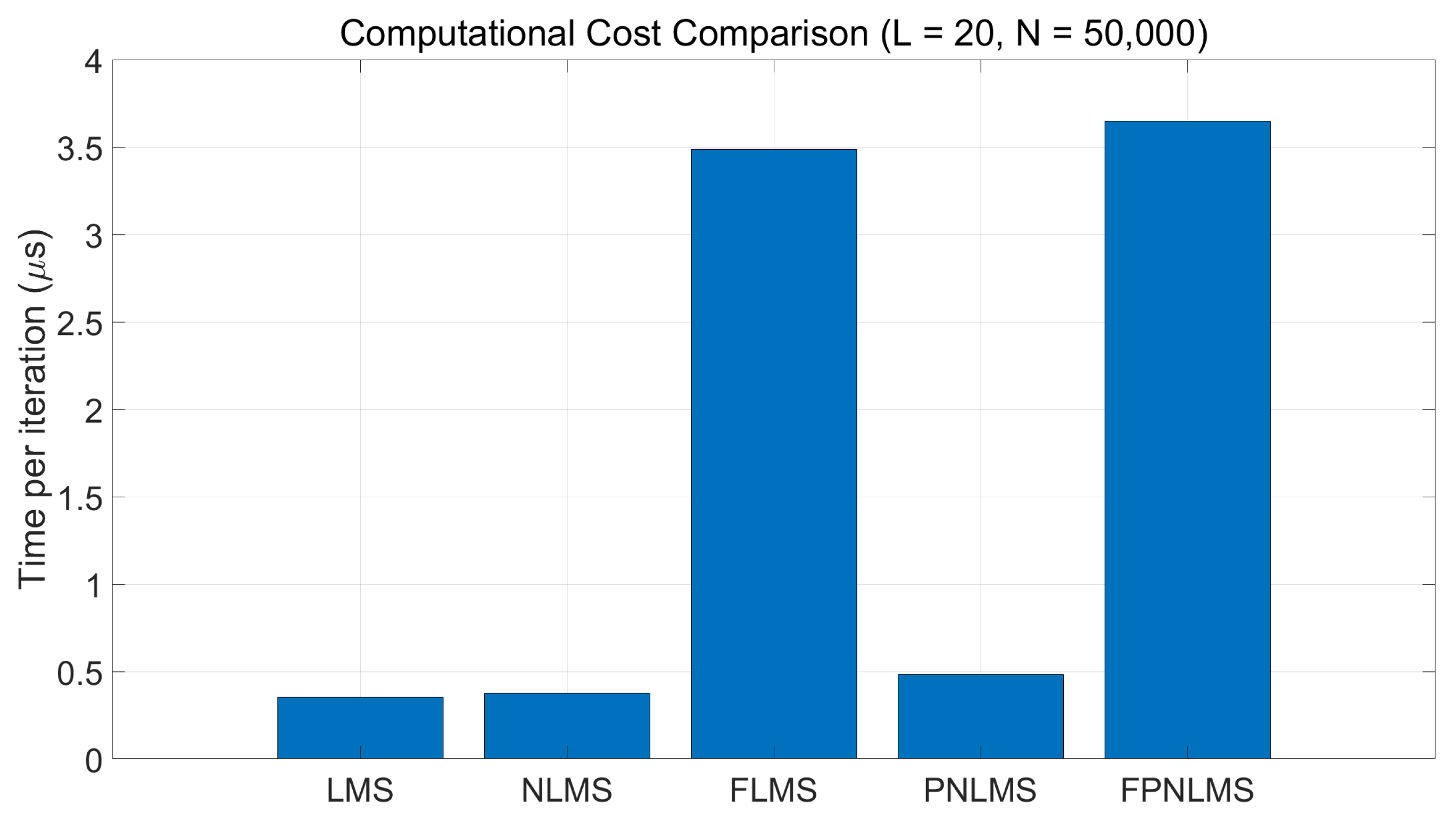
To further verify the theoretical computational analysis, we additionally measure the practical per-iteration running time of the five considered algorithms. The experimental setup follows standard evaluation procedures: for an adaptive beamformer with
weights, each algorithm performs
iterations under identical input and desired signals. The average CPU time per iteration is computed as the total execution time divided by
N. The results are shown in
Figure 15, where the horizontal axis lists the five algorithms and the vertical axis indicates the average per-iteration execution time in microseconds.
Although the proposed FPNLMS algorithm preserves computational complexity and is well suited for FPGA/SDR-based implementation, several practical challenges must still be considered for real-time deployment. First, the fractional-order operation—although implementable through lookup-table or fixed-point approximation—introduces additional nonlinear mappings that require careful quantization to avoid numerical instability, particularly when tap magnitudes are close to zero. Second, the proportionate gain computation involves per-tap magnitude estimation and normalization, which may increase pipeline depth and require additional registers in a low-latency hardware design. Third, high-mobility scenarios such as 600 km/h maglev systems demand fast coefficient updates, and the update rate must match the channel coherence time; this may require parallelized hardware architectures or time-interleaved processing to ensure timing closure in FPGA devices. Finally, practical impairments—including array calibration errors, mutual coupling, and RF nonlinearities—may amplify the sensitivity of the fractional-order term, calling for robust fixed-point scaling strategies. These challenges highlight that although the algorithm is computationally lightweight, hardware-aware optimization remains essential for achieving reliable real-time performance in high-mobility beamforming systems.