Article

Satellite Network Node Responsibility Value Estimation Algorithm Based on Load Imbalance

by
Jiacheng Ou
*,
Yong Yu
,
Zhichao Ma
,
Zhengdai Li
and
Shuyu Liu
Beijing Research Institute of Telemetry, Beijing 100076, China
*
Author to whom correspondence should be addressed.
Electronics 2026, 15(1), 147; https://doi.org/10.3390/electronics15010147 (registering DOI)
Submission received: 24 November 2025 / Revised: 24 December 2025 / Accepted: 27 December 2025 / Published: 29 December 2025
(This article belongs to the Section Networks)

Abstract

In this era of vigorous satellite network development, the growing variety of satellite services is increasingly exacerbating the load imbalance problem in these networks. In this context, methods for accurately evaluating the responsibility value of network nodes have become a trending research topic. In this study, a satellite network node model is established under two states: full link and broken link. Moreover, a common broken-link model in practical engineering applications is selected for essential analysis and research. Combining the two critical static network node attributes and dynamic satellite service load quota factors, a satellite network node responsibility value estimation algorithm based on load imbalance is proposed by introducing static and dynamic influence factors. The simulation results show that compared with other methods, the algorithm can evaluate the node responsibility value more accurately and reliably.

1. Introduction

In today’s interconnected world, the development of satellite networks has become essential for achieving truly global seamless coverage and reliable emergency communications [1,2,3]. It is not only a crucial infrastructure for addressing the blind spots of ground networks but also a strategic pillar supporting the future global Internet of Things, low-latency data transmission, and national strategic communication security [4].
One of the challenges facing the development of satellite networks is load imbalance, which is mainly due to the contradiction between its dynamic and non-uniform traffic distribution and network resources [5]. On the one hand, the geographical distribution of global users and traffic is extremely uneven. For example, satellites over cities, air routes, and Internet-developed regions need to carry data traffic far beyond satellites in remote areas to form natural hotspots [6]. On the other hand, the satellite network’s topology is constantly changing, with the azimuth and distance of the inter-satellite links continually adjusted. This constrains data flow to a few optimal paths, causing some vital relay nodes in the network to remain under high load for extended periods. If this imbalance is not managed, it could result in local overload due to the collapse of individual nodes, which in turn triggers wider network performance degradation. At the same time, this high-load node, responsible for forwarding major relays, is a high-value target of network attacks.
To enhance the reliability of satellite networks under dynamic load conditions, it is particularly crucial to protect satellite network nodes [7]. The critical part of this study is to quantitatively evaluate the responsibility value of network nodes [8]. Evaluating network node responsibility values identifies key nodes, enabling proactive protection and optimization to enhance network stability and reliability under failures, attacks, or high loads [9]. According to the responsibility value of nodes, limited resources can be preferentially allocated to nodes with higher responsibility values to improve the overall performance and efficiency of the network [10,11]. By evaluating the importance of nodes, the allocation of network bandwidth can be optimized to ensure that key nodes can obtain sufficient resources to handle high-priority tasks [12,13].
In recent years, research on node responsibility values has emerged endlessly, and there are studies on network node degree centrality [14]. The authors of [8] used network efficiency differences to evaluate the importance of nodes. The authors of [15,16] comprehensively considered local and global node characteristics to evaluate nodes. A method of sorting nodes in combination with network structure entropy has also been proposed [17]. Based on the variable of removing a limited number of nodes from a network, the authors of [18,19] observed changes in network performance to study key nodes. The authors of [20] proposed an algorithm based on deep reinforcement learning to find key nodes from a network, and the experimental results indicate that the method exhibits stable and effective performance in identifying critical node sequences. Many studies evaluating key nodes by studying the topological characteristics of an entire network have also been published [12,13,21,22]. For large-scale multi-layer complex networks, the authors of [23,24] researched the important factors in identifying key nodes in this scenario. The research on quantum satellite network links and relay nodes is also worthy of attention, as it can provide innovative inspiration for evaluating key node identification methods [25,26]. The evaluation methods presented by the authors of [8,14,15,16,17,18] do not account for the variable of dynamically changing loads. The algorithm proposed in this study directly addresses this issue. Furthermore, in scenarios with load imbalance, this study innovatively integrates static topology with dynamic loads, proposes a node responsibility value evaluation algorithm based on load imbalance, and conducts application verification in satellite constellation networks under the condition of inter-satellite link interruptions. Meanwhile, a quantitative analysis and discussion are conducted on the parameters involved in the algorithm, and further exploration is made into the scalability of the algorithm in large-scale network scenarios.

2. Network Modeling and Node Attribute Analysis

2.1. Establishment of Network Topology Model

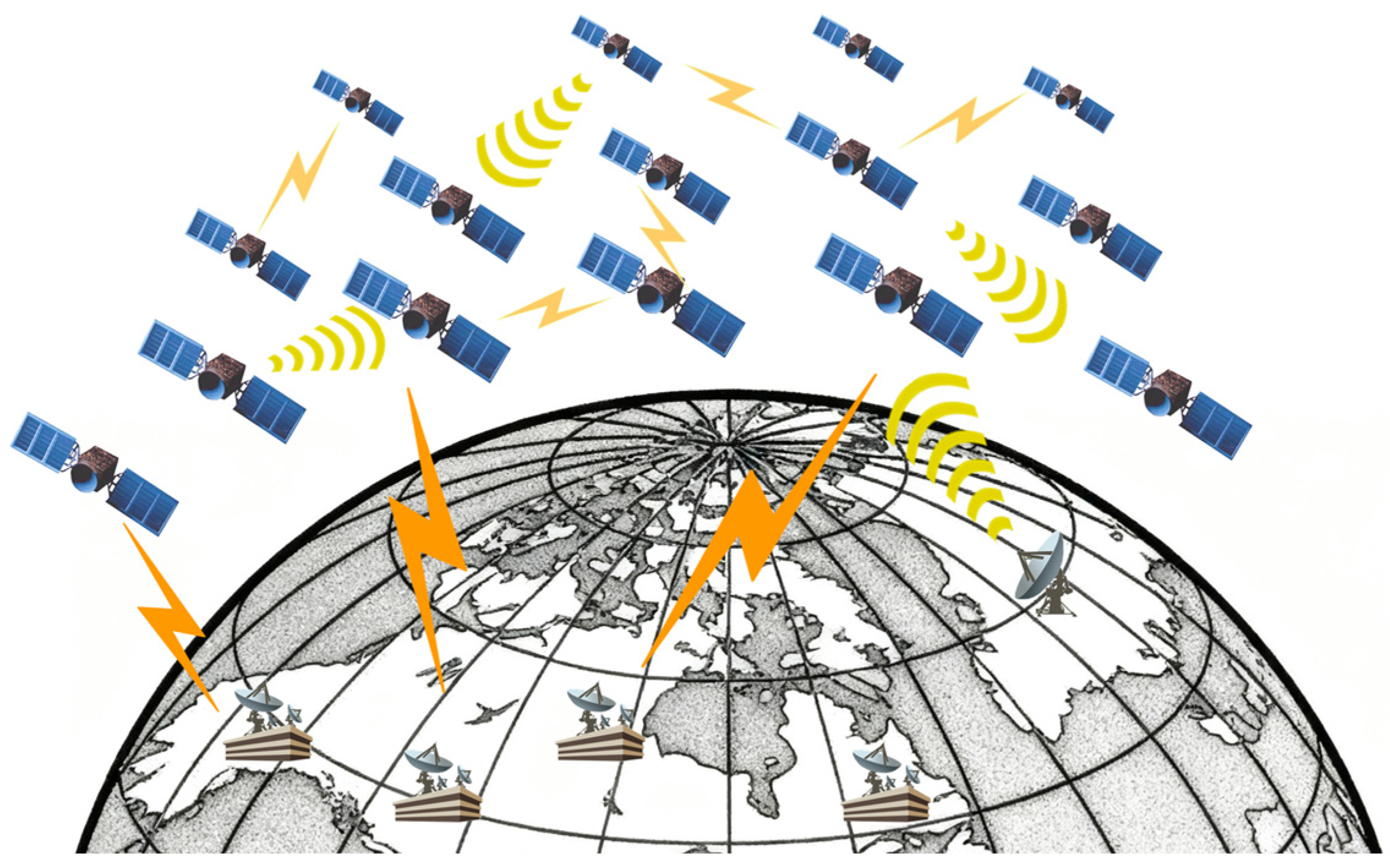
The interactive communication between a satellite network and the ground is shown in Figure 1. It can be observed that communication on Earth does not exhibit spherical uniform distributions. One of the reasons for the unbalanced load is the extremely uneven geographical distribution of users. In cities, economically developed areas, coastal areas, major traffic arteries, and other areas with dense population and commercial activities, the number of users is large, and the data flow generated is also extremely high. In areas such as oceans, deserts, mountains, and remote rural areas, users are scarce, and traffic demand is low. For example, since the coverage of the satellite is fixed, when a satellite flies over Asia, the user density under its coverage in eastern China and Siberia may differ by several orders of magnitude, resulting in substantial overloads in the beam serving East Asia, while the beam serving Siberia is almost idle.
Another reason for unbalanced loads is that the satellite coverage does not match the ground demand. The LEO satellite constellation achieves global coverage through a large number of satellites, but each satellite’s coverage area moves rapidly. At any given time, due to the different orbital positions of the satellites, regional user densities under their coverage vary greatly.
Traditional research methods for analyzing the impact of network nodes on network performance are generally considered from network connectivity and degree centrality aspects, and they do not consider the impact of dynamic service demand changes on network node loads. According to the general satellite network topology, this study selects a local sub-network of a large-scale constellation for analysis, including 16 satellites ( X Q S = X q = 1 S , X q = 2 S , X q = 3 S , , X q = 16 S ) involving four orbital planes, and each orbital plane involves four satellites.
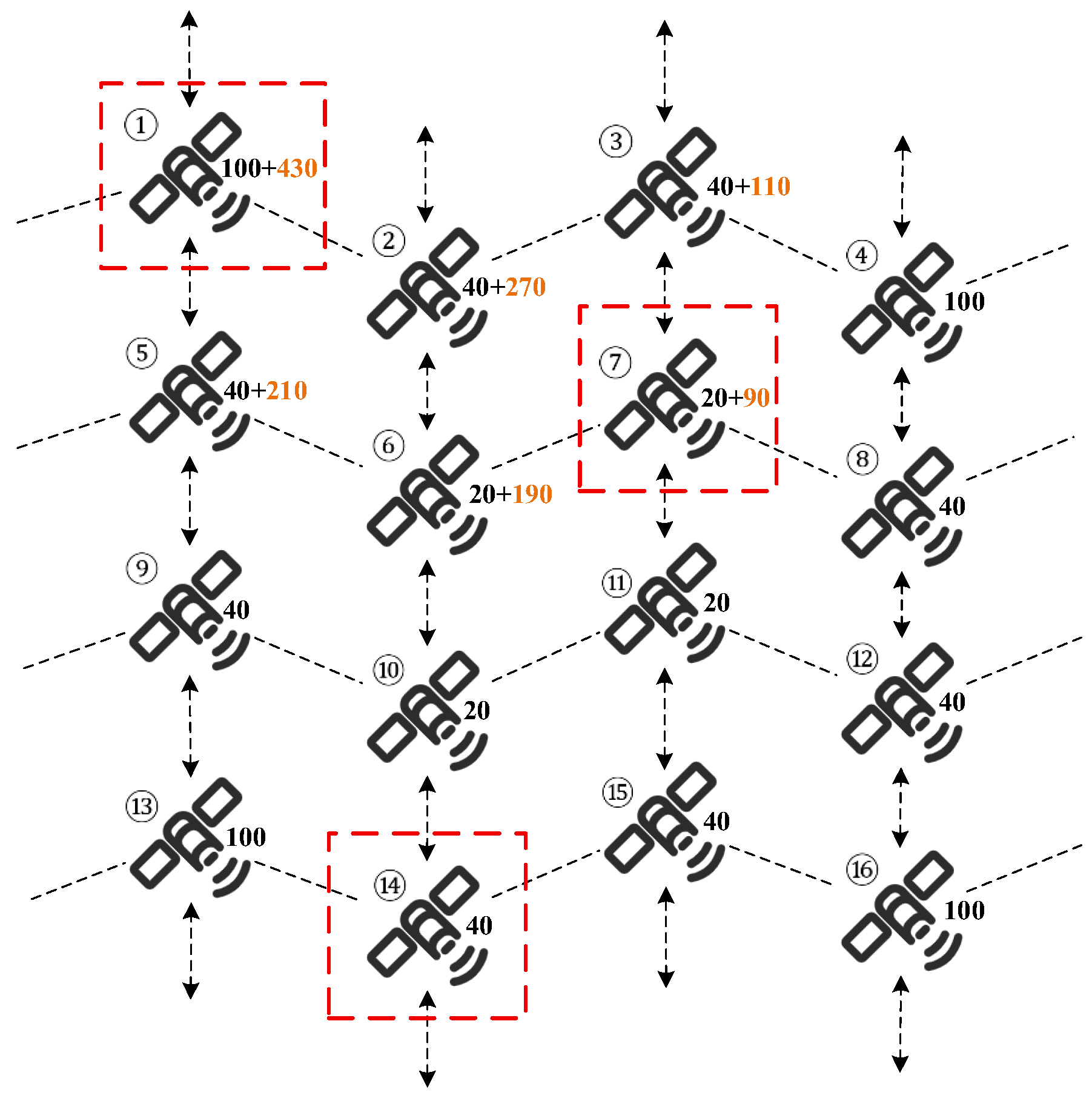
This study first considers the state in which all links are active, with no disconnections between satellites within the same orbit or across different orbits (Figure 2). The interception network modeling method significantly reduces the complexity and computational cost of large-scale network simulation and improves research efficiency by constructing a scale-controllable local model (4 × 4 satellite grid). The local network fully retains the core characteristics and dynamic behavior of the global topology, and it can effectively analyze essential technologies such as network node attributes and resource allocation. The method can also offer detailed insight into the state of a single node and the local interaction mechanism, providing a basis for optimizing the load imbalance problem.

2.2. Analysis of Network Node Attributes

A network efficiency formula is usually used to quantify the overall effectiveness of a network regarding information transmission. The core idea is that network efficiency describes the average value of the difficulty of information transmission between all node pairs in a network [8].
A common definition is the network efficiency formula based on the shortest hop count:
P = n m 1 H m n X 2 X
where X is the total number of nodes in the network; H m n is the shortest hop between node m and node n ; 1 / H m n is called the transmission efficiency between node m and node n . When two nodes are disconnected, 1 / H m n = , and the efficiency is zero.
This method transforms the abstract topology into intuitive performance indicators to further quantitatively evaluate, compare, and optimize the communication capability and robustness of complex networks (such as satellite networks). It is a bridge between theory and practice in network engineering.
If the network efficiency formula is used to judge the responsibility value of the network node, it can be judged by calculating the change in network efficiency after deleting the network node. The greater the decrease in network efficiency, the more critical the node is to the network. The network efficiency formula after deleting node k can be expressed as follows:
P k = n m 1 H m n X k 2 X k
where P k is the network’s efficiency after deleting node k ; X k is the total number of network nodes after deleting node k .
By subtracting the network’s efficiency before and after deleting node k, the quantitative value of the influence of node k on the network can be obtained based on the network’s efficiency, and it is normalized to facilitate the subsequent comparative study, which is expressed as follows:
ε = P P k P
where ε is the quantized influence of the normalized node k on the network.
Centrality is the most intuitive and basic measure of the responsibility value of network nodes. The degree centrality of a node is equal to the number of directly connected edges that the node has [8]. In a network with X nodes, the degree centrality C D ( k ) of a node k is usually expressed as follows:
C D ( k ) = i k
where i is the degree of node k ; that is, the number of nodes directly connected to node k . To compare networks of different sizes, normalization is usually performed:
C D ( k ) = i k X 1
where X 1 is the maximum number of connections that the node may have. Degree centrality quantifies the direct connection size and activity of a node in a local network environment. A node with higher degree centrality means that it has more direct interfaces with other parts of the network, and its influence, connectivity, and potential risks (such as becoming an attack target) are usually higher.
The greatest limitation of centrality is that it only considers direct connections but ignores the global structure of the network. In particular, under the premise that different services result in load imbalance, if a low-centrality node happens to be the only bridge connecting two high-load nodes, its actual responsibility value may far exceed that of other nodes, and the node may also carry higher load tasks.

3. Analysis of Network Node Responsibility Value

3.1. Full-Link Satellite Network Node Modeling

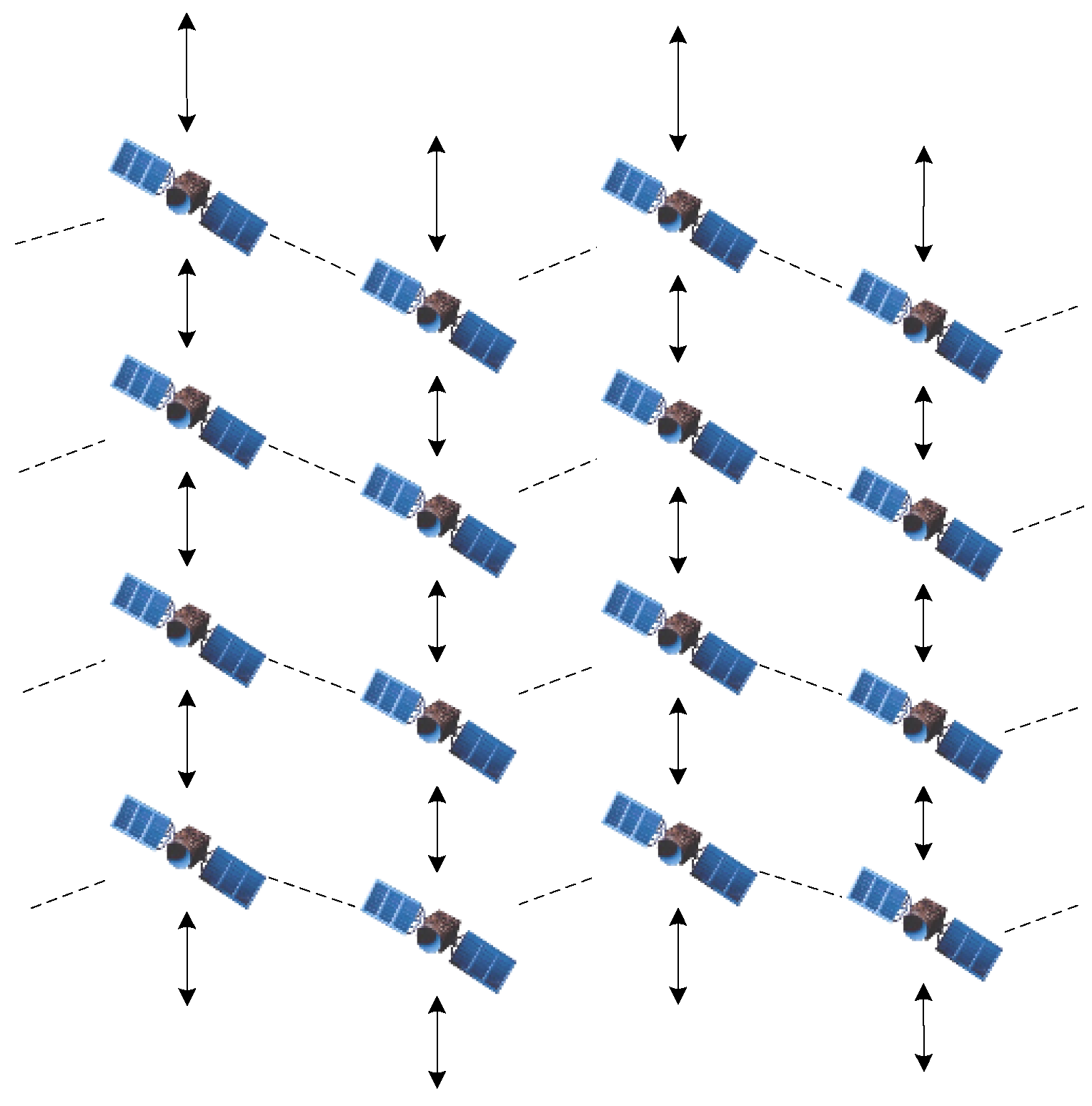
This study first examines the load imbalance of satellite network nodes in the full-link stable state. As observed in Figure 3, it is simplified on the basis of Figure 2, and 16 satellites are numbered.
A node with higher degree centrality means that it has more direct interfaces with other parts of the network, and its influence, connectivity, and potential risks (such as becoming an attack target) are usually higher.
The core contradiction of satellite network load imbalance is that the resources provided by satellites are relatively static in space and time, while the demand of ground users is dynamic and highly concentrated. Load balancing can reduce the heterogeneity of satellite network nodes. From the perspective of security, this improves network reliability. At the same time, load balancing can reduce the loss of satellites with high load nodes and improve their normal on-orbit working life.

3.2. Analysis of Load Imbalance Satellite Network Nodes

The goal of the load distribution task on the satellite network is to efficiently and evenly distribute the dynamically changing data load to each satellite node unit in the network.
Assuming that the initial load distribution on the satellite network node k is L k I , the service application processing load quota is L k P , and E k is the ratio of the load distribution of the satellite network node k to the total load of the entire network. At the same time, it also represents the responsibility value of the node in the network to a certain extent. The relationship between them can be expressed as follows:
E k = L k I + L k P j X L j I + L j P
Based on the satellite network nodes shown in Figure 3, the initial load distribution is performed according to the general network load distribution law. More initial loads are deployed on the edge nodes of the local area network, and fewer initial loads are deployed on the network nodes that carry more forwarding relay responsibilities. For other nodes that do not belong to these two nodes, corresponding reasonable initial loads are deployed accordingly.
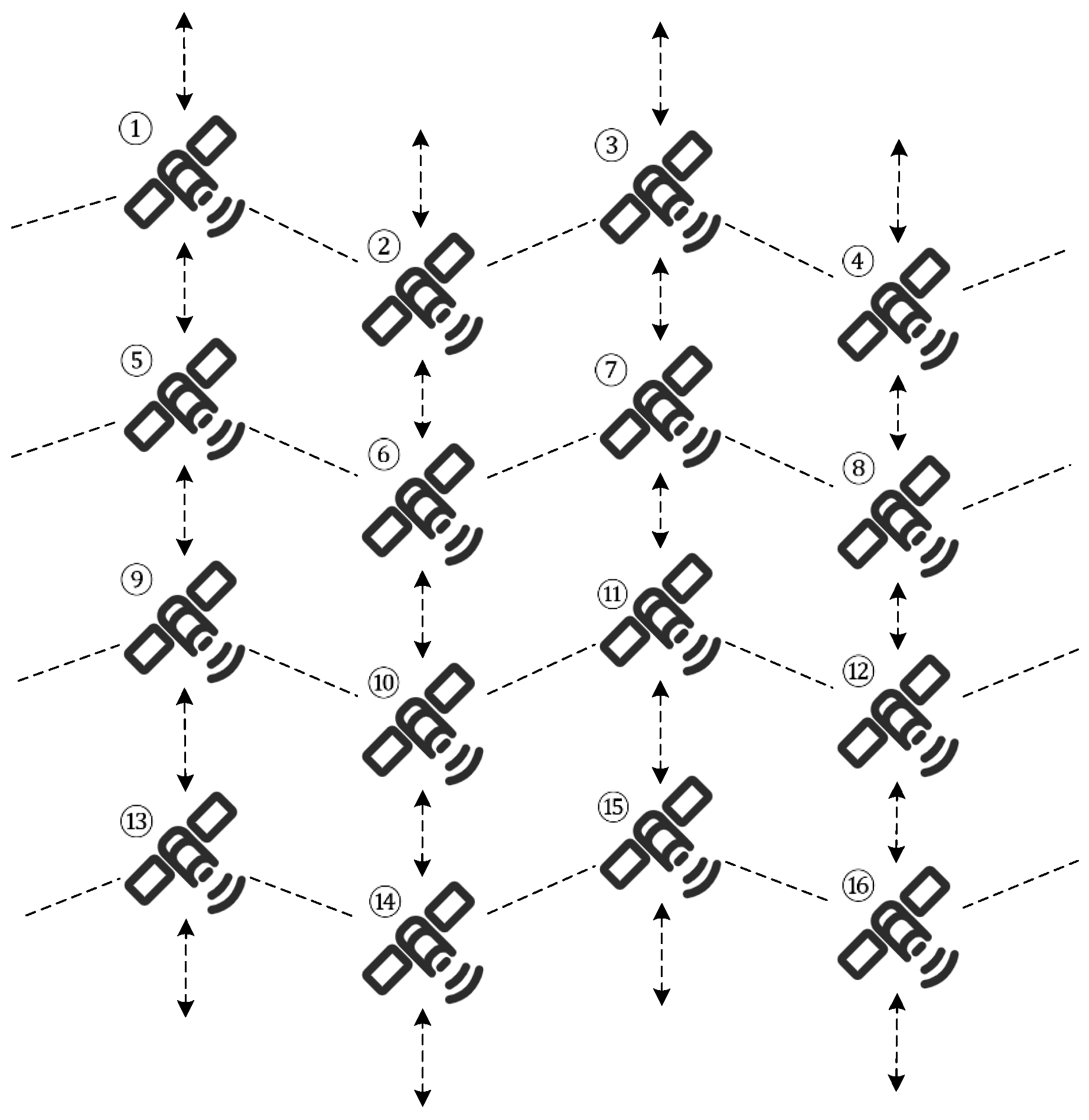
As shown in Figure 4, the No. 1, No. 4, No. 13, and No. 16 nodes all deploy 100 units of load quota; the No. 6, No. 7, No. 10, and No. 11 nodes all deploy 20 units of load quota; and other nodes all deploy 40 units of load quota. At the same time, there is a new real-time service application load distribution involving the No. 1, No. 2, No. 3, No. 5, No. 6, and No. 7 nodes. The specific distribution is marked with yellow numbers in the graph.
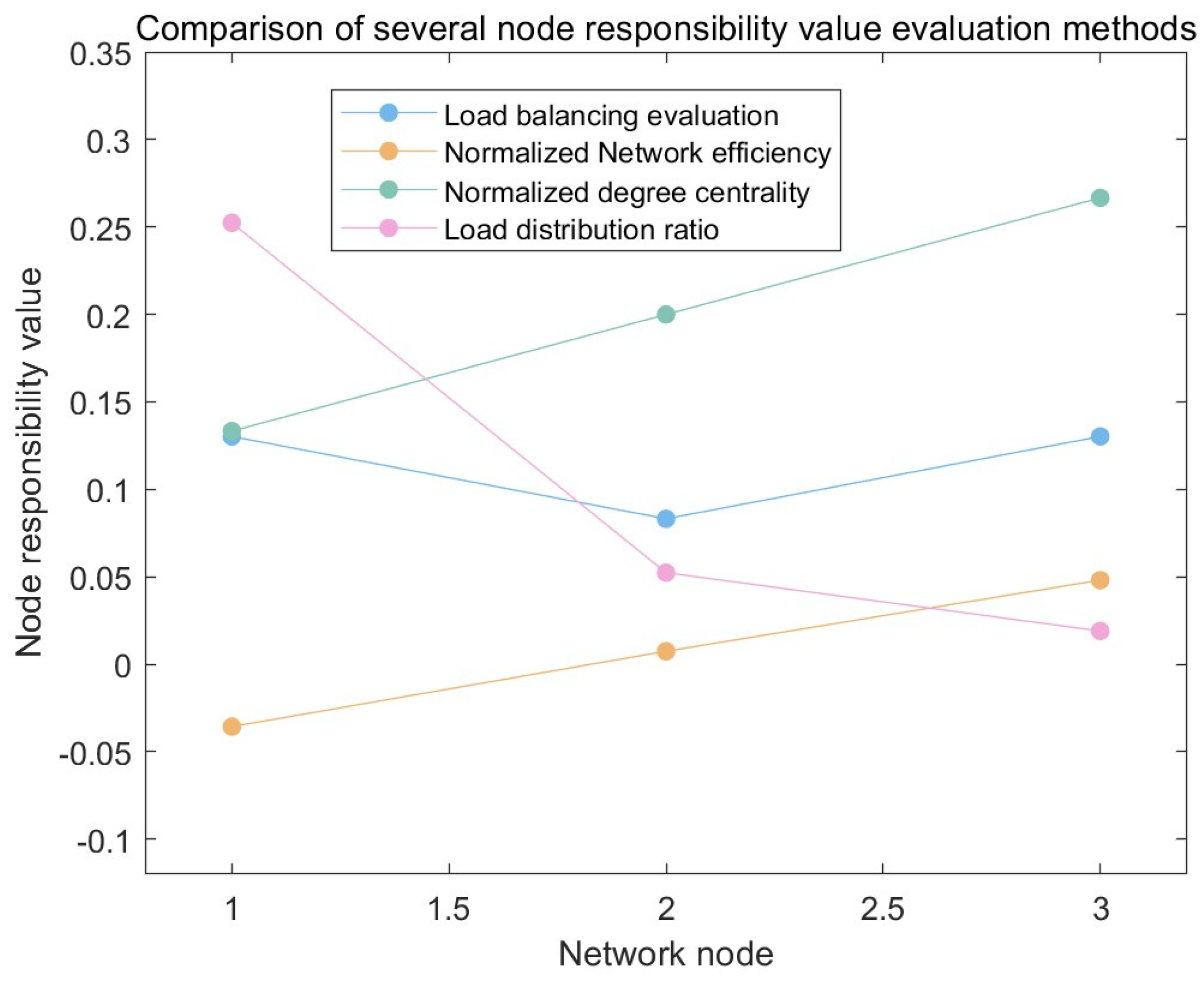
Three representative nodes are selected in the network topology. Node No. 1 represents the edge node, node No. 7 represents the important relay node, and node No. 14 represents the general node. The responsibility value of three representative nodes is evaluated according to the above three methods. The results are shown in Table 1.
From the normalized network efficiency estimation method, it can be observed that for the network, node No. 7 is the most important, and its deletion has the greatest negative impact on the network’s efficiency. Deleting node No. 14 also has a negative impact on the network’s efficiency, but the effect is not as substantial as the impact of node No. 7, and deleting node No. 1 results in a positive impact on the network’s efficiency. That is to say that deleting node No. 1 can improve the network efficiency of the entire network.
From the calculation results of the normalization degree centrality estimation method, it is easy to obtain the relationship between the responsibility values of the three nodes. Node No. 1 is the lowest, node No. 7 is the lowest, and node No. 14 falls in the middle.
The relationship between the three node responsibility values estimated by the above two methods is consistent. According to the results calculated by the load distribution ratio estimation method, the responsibility value of the No. 1 node is the largest, and the responsibility value of the No. 7 node is the lowest. This is contrary to the results of the first two methods. The reason for this result is that the influence factors of the responsibility value considered in this method are based on the load quota.
The normalized network efficiency estimation method and the normalized degree centrality estimation method—both of which only consider the static structure of the network—in addition to the quota estimation method, only consider the load distribution ratio. It can be concluded that, although these three methods can be used to estimate the responsibility value of network nodes, they all have limitations.

4. Responsibility Value Estimation of Load Imbalance

4.1. Node Responsibility Value Estimation Based on Load Imbalance

Aiming at the problem of load imbalance, a network node responsibility value estimation algorithm is proposed. The algorithm introduces a static influence factor and a load influence factor to comprehensively estimate the responsibility value of the node with respect to the entire network.
Assuming that the static factors are α and β , α represents the static impact factor corresponding to the normalized network efficiency, β represents the static impact factor corresponding to the normalized degree centrality, and γ is the load impact factor. The relationship between the three is α + β + γ = 1 . The node responsibility value based on load imbalance can be expressed as follows:
V k R L = α n m 1 H m n X 2 X n m 1 H m n X k 2 X k n m 1 H m n X 2 X + β i k X 1 + γ L k I + Δ L k P j X L j I + Δ L j P
where V k R L is the node responsibility value based on the comprehensive estimation of load imbalance and static network node properties. Δ L j P represents the variable service application processing load quota borne by the No. j node, and it can be observed that Δ L k P represents the variable service application processing load quota borne by the No. k node. To reasonably reallocate the service application processing load quota, a load change step can be set after the initial calculation, thereby further rationalizing the load distribution. The value of the step depends on the urgency of network load allocations and computational costs. A smaller change step should be set to achieve better convergence effects, while a larger change step should be set to ensure timeliness. Ultimately, the responsibilities of each node in the network tend to be consistent, and heterogeneity is reduced.
Using Formulas (1) and (2), (7) can be written as follows:
V k R L = α ( 1 P k P ) + β i k X 1 + γ L k I + Δ L k P j X L j I + Δ L j P
According to Formula (8), the responsibility value of network nodes in Figure 4 is calculated. After sorting the data, Table 1 can be rewritten into Table 2. Before calculation, α is set to 0.3, β is set to 0.3, and γ is set to 0.4.
These three types of influence factors are defined based on different service priorities and different network topology architectures. If the service priority of the current calculation is higher, the value of γ is increased, the values of α and β are decreased, and the estimated result of the responsibility value is more affected by load changes. If the network structure of the current calculation is more complex and the network topology sensitivity is higher, the values of α and β are correspondingly increased, and the value of γ is decreased such that the estimated result of the responsibility value is less affected by load changes. In practical applications, the factor can be dynamically adjusted according to different network topologies and service load requirements.
The calculation data of several node responsibility value evaluation methods in the chart are plotted (Figure 5).
It can be observed in Figure 5 and Table 2 that the node responsibility value evaluation algorithm based on load imbalance is more comprehensive than other evaluation methods, and it can more comprehensively quantify the responsibility shared by nodes for dynamic networks.
By setting the load change step, each Δ L k P can be changed so that the responsibility value of each node tends to be consistent, which will make each node equally important to the network. From the perspective of network security, this result makes it more difficult for attackers to choose their target of attack, and filtering out high-value target nodes for attacks will not be easy. At the same time, load balancing also introduces another benefit: this approach maintains the loss of each satellite in the network as consistently as possible, preventing excessive loss caused by prolonged overloading on several satellites.
In the next section, a broken-link model that more closely reflects practical engineering applications is presented.

4.2. Analysis of Node Responsibility Value Under the Broken-Link Model

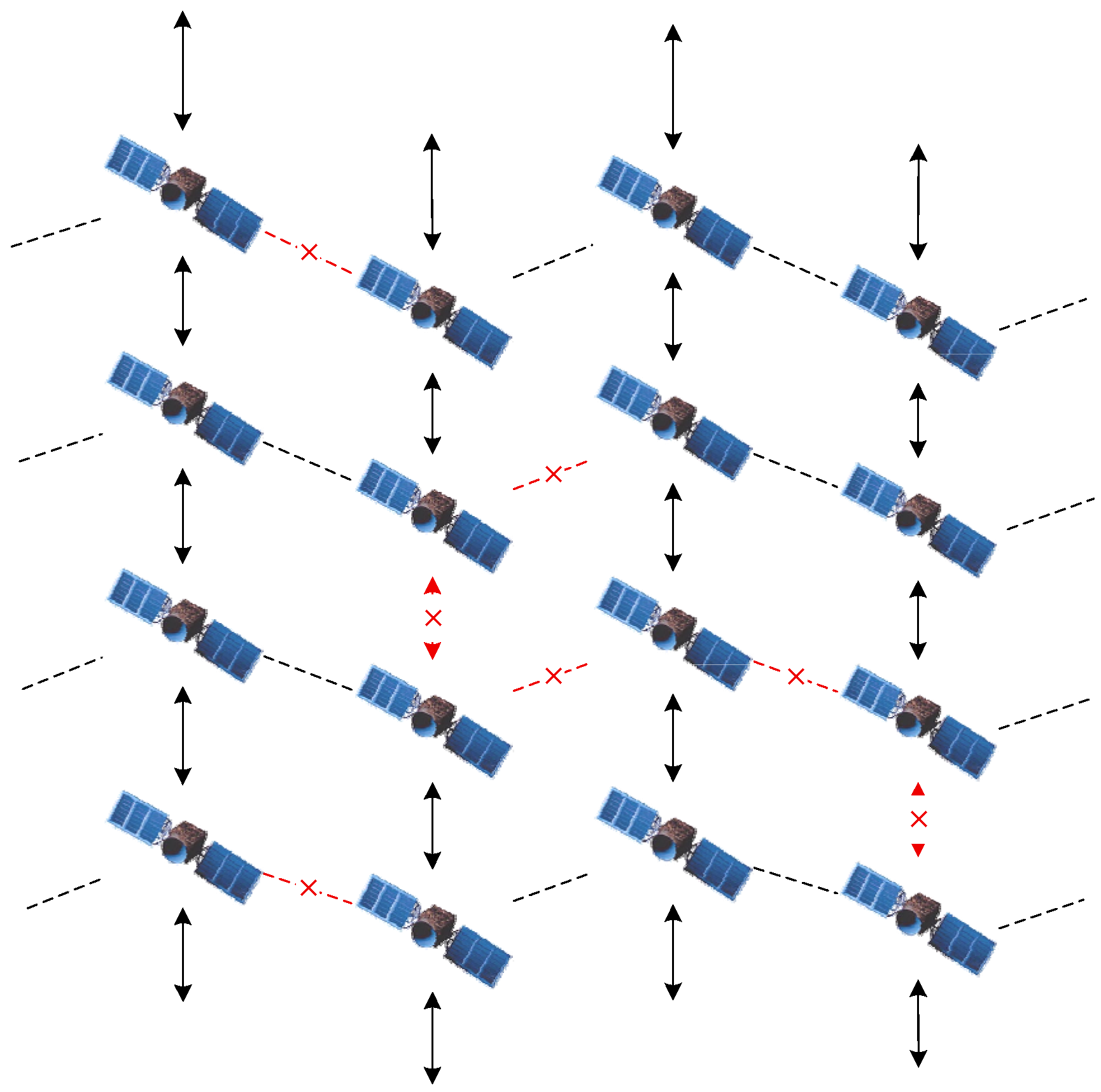
In the satellite constellation network based on inter-satellite links, link interruption is a significant problem affecting network connectivity and service continuity. As shown in Figure 6, according to the relative orbit relationship of satellites, interruptions can be divided into two categories—inter-satellite link interruptions on the same orbit and inter-satellite link interruptions on different orbits—and their scenarios, causes, and effects are significantly different.
An inter-satellite link outage refers to the failure of a connection between adjacent satellites in the same orbital plane. These links are usually established permanently or semi-permanently, forming a “backbone chain” in the orbital plane. The primary causes of same-orbit inter-satellite link interruptions include physical damage or performance degradation of the transmitting or receiving modules and control units of the space-borne laser communication or radio frequency terminals, which can lead to permanent interruption of the link or anomalies in the satellite attitude control system, preventing the antenna or optical telescope from accurately targeting the adjacent satellite and resulting in loss of link lock. It is also possible that strong space radiation events may result in a single-event effect or instantaneous electronic equipment failure, causing link interruptions.
Inter-satellite link interruption refers to the failure of the connection between satellites located on different orbital planes. In specific space regions, such as polar regions, the establishment, maintenance, and dismantling of inter-satellite links are dynamic processes due to the intense relative motion of satellites, and interruptions occur frequently in this process.
The loss of interstellar visibility is the most fundamental reason for the interruption of inter-satellite links. Due to the high-speed operation of satellites in their respective orbits, the inter-satellite line of sight can be interrupted by Earth’s occlusion. In particular, in the polar regions, the relative velocity of satellites on different orbital surfaces is extremely high, and the visual time window is extremely short and changes rapidly. Other causes of inter-satellite link interruptions may include drastic changes in the relative position and velocity vectors between satellites, exceeding the acquisition, tracking, and pointing technical indicators of the links; link-switching failures; or intentional strategic shutdowns of the system. To save on-board energy, the network may strategically and temporarily close some non-critical inter-satellite links.
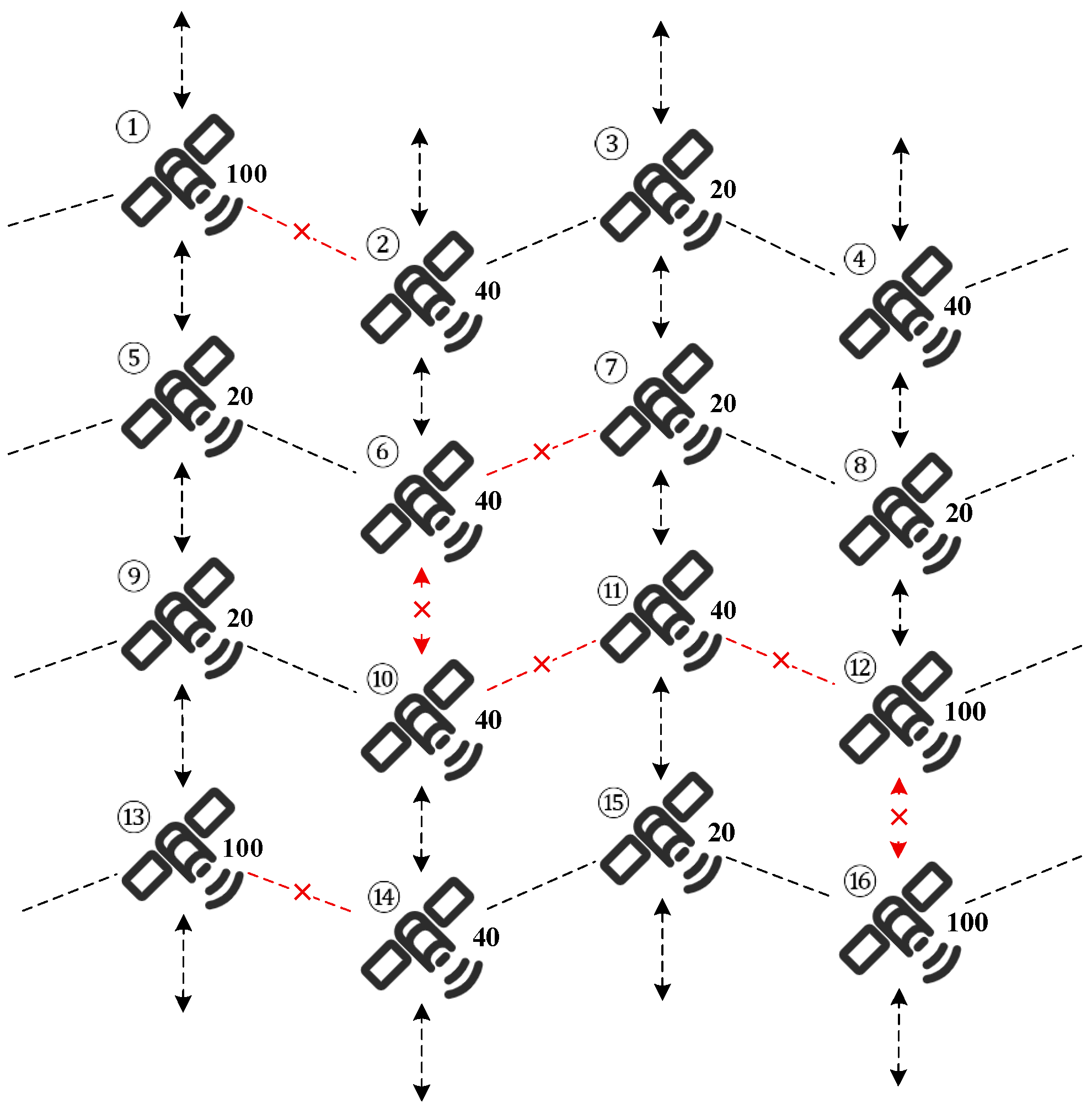
The satellite nodes in Figure 6 are simplified and edited, and the initial load of each satellite node is given according to the load distribution law (Figure 7).
Link outages (especially critical out-of-orbit or co-orbit links) cause the betweenness centrality of nodes to undergo a significant transition after the link is broken. Edge nodes with lighter load may become important bottleneck nodes because they become the only bridge connecting two separate network areas. For network connectivity, local congestion nodes may appear in the network, and their cache queues quickly saturate.
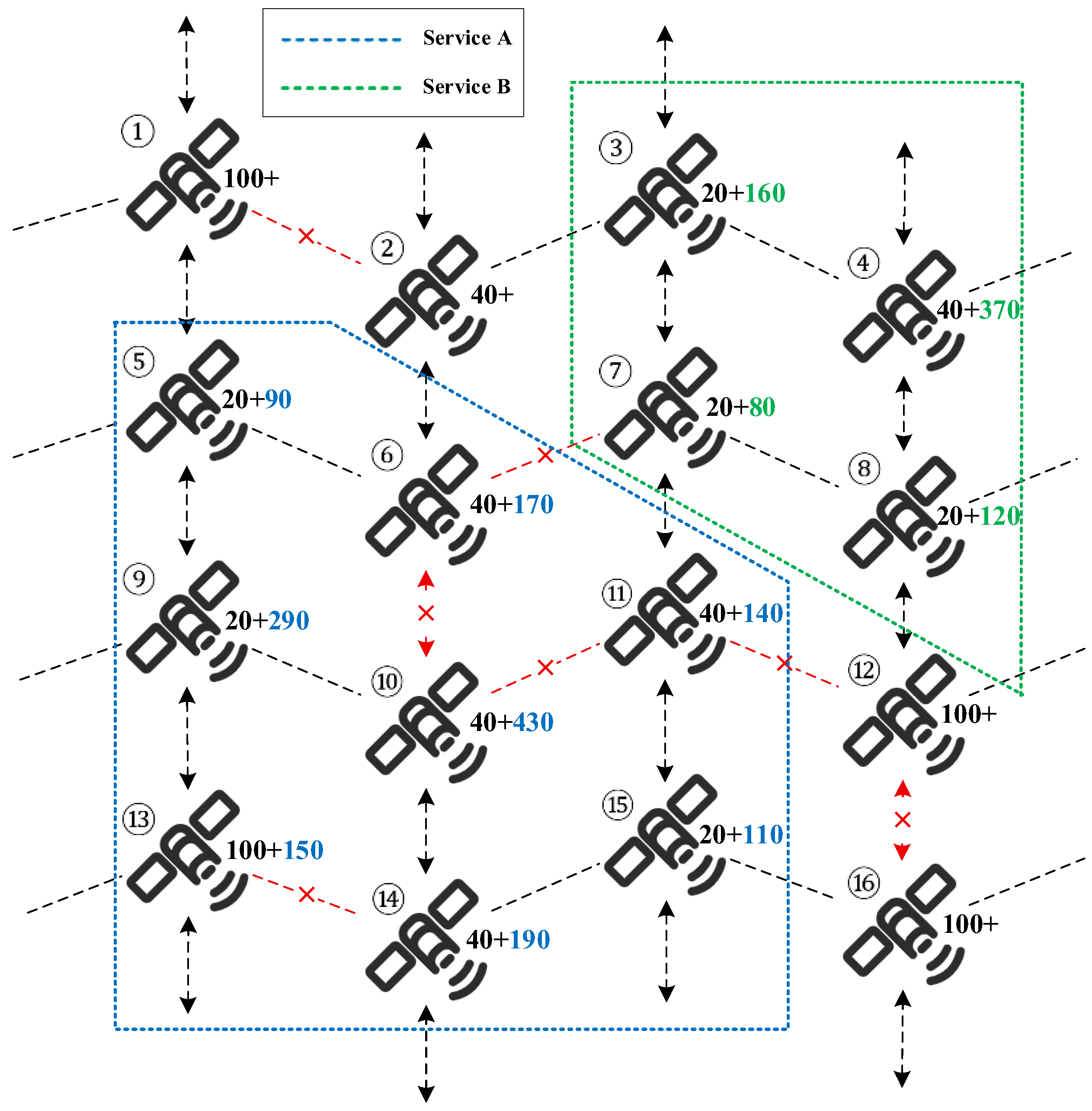
Considering practical engineering situations, multiple real-time services may operate simultaneously within the same time period. Under the constraint of the coexistence of multiple real-time services, the initial load distribution of nodes undergoes severe and non-uniform reconstruction. Under this condition, it is more necessary to combine static and dynamic network node attributes to comprehensively consider the responsibility value of satellite network nodes.
In this study, two real-time services are introduced in the broken-link scenario, as shown in Figure 8. When service A is online, it includes nodes No. 3, No. 4, No. 7, and No. 8 within the load application range. When service B is online, it includes nodes No. 5, No. 6, No. 9, No. 10, No. 11, No. 13, No. 14, and No. 15 within the load application range.
If the general node in the network is transformed into a major relay and overloaded, it can turn into a performance bottleneck and a system vulnerability. Its overload not only results in local service failure but also poses a threat to the global stability and fairness of the network. At the same time, this results in serious differentiations in service quality. Under the differentiated service mechanism, the node scheduler assigns priority to guaranteeing high-priority services. This enables the critical task data flow to be maintained, and a large number of low-priority business traffic suffer serious service degradation and even interruptions. If a general node is transformed into an edge relay and bears a low load, it can be considered to be in a robust state, similar to a silent state. Although its performance does not deteriorate, the idleness of its resources results in a significant opportunity cost and wasted overall capacity.
Although load allocation is an important component of estimating the responsibility value of nodes, it is necessary not only to consider the load factor but also to dynamically adjust the change in load quota in combination with other attributes of the network nodes. Using the results of the node responsibility value evaluation algorithm that integrates multiple factors, the load distribution is further optimized to achieve relative balance.
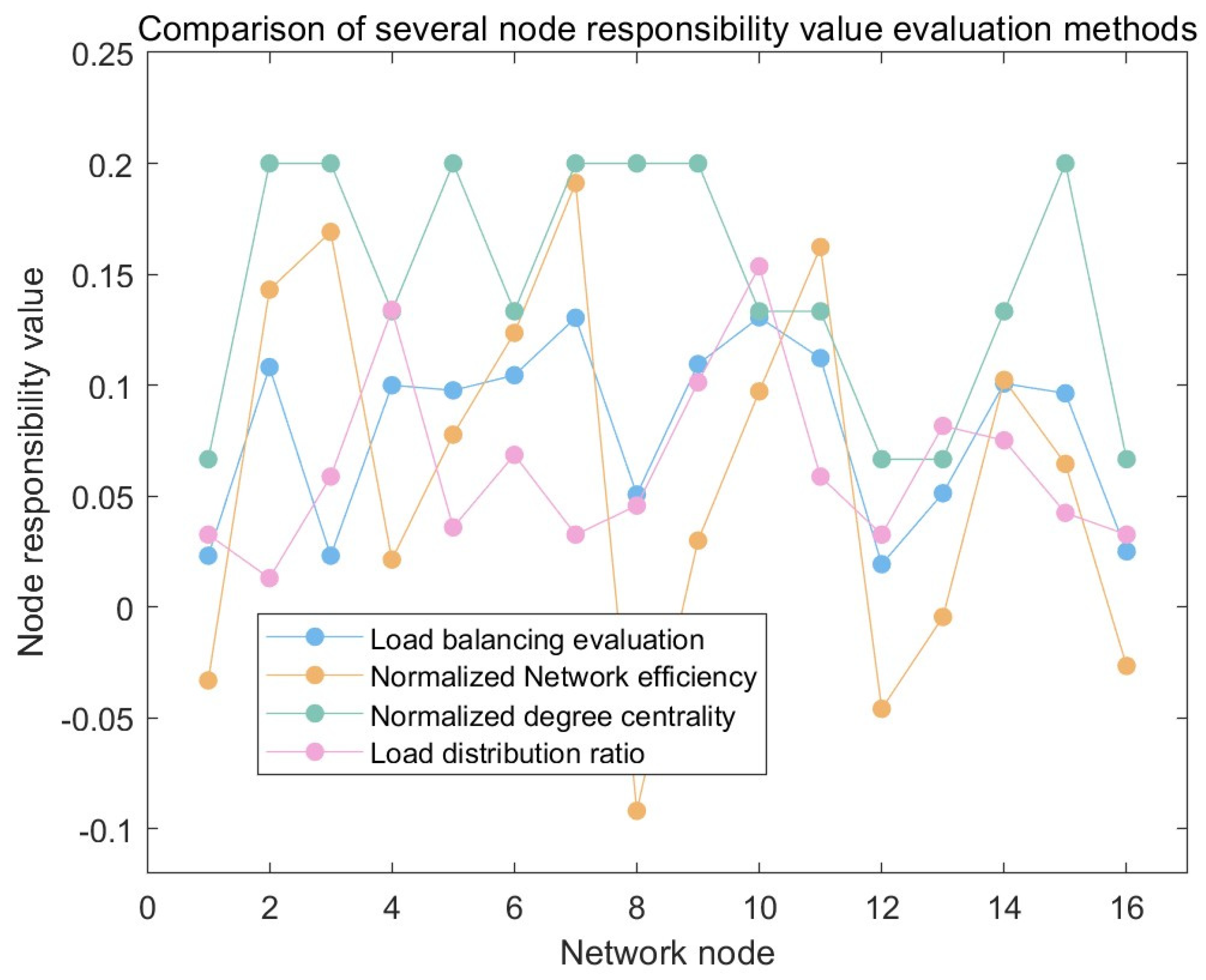
Using the three responsibility calculation methods and the node responsibility algorithm based on the load imbalance proposed in this study, the network node responsibility values under the model are calculated. The results are shown in Table 3. For the responsibility value algorithm proposed in this study, before calculations, α was set to 0.3, β was set to 0.3, and γ was set to 0.4. In practical applications, due to various factors—such as different network topologies and service business priorities—these three impact factors can be dynamically adjusted in real time to ensure the accuracy and real-time performance of node responsibility calculations.
As shown in Table 3, the normalized degree centrality calculation results show that the estimated values of multiple nodes are consistent. If decisions are based solely on this data, it becomes difficult to accurately adjust node attributes and further optimize the network. This method only measures the number of a node’s direct connections and completely ignores the position of nodes in the global topology of the network, while the term N − 1 in the formula represents the maximum possible number of connections. In large, sparse networks, even if the node has the highest degree centrality, its normalized value may be very small, which can easily cause misunderstanding in that not all nodes are important. In reality, such nodes still play a crucial role at the local or global level.
For the normalized network efficiency estimation method, although the nodes can be further optimized using the calculated values, the data index calculated by the method is based on the shortest path on the topology rather than the actual load, resulting in calculated values that are too one-sided. Moreover, this estimation method oversimplifies the true state of the disconnected network. The normalization efficiency of a network with a small number of disconnected nodes may drop sharply to near zero, but this substantially exaggerates the degree of failure of the network because it completely ignores the normal communication capabilities within most connected components that still exist in the network. This index fails to distinguish between local isolation and global collapse.
In practical applications, for most networks, there are key node pairs (such as between data centers and between command centers and sensors) and non-key node pairs. The decrease in normalized network efficiency may be due to the disconnection of non-key nodes, while the significant communication path is still intact. This index cannot reflect the difference between business priority and performance requirements, which may result in a serious disconnection between the evaluation conclusion and the real business experience.
The node responsibility value calculated by the load distribution ratio method can accurately indicate the load difference between nodes, but this method assumes that all nodes have homogeneous resources and processing capabilities. For example, the No. 7 node is unimportant in the estimation result of the load distribution ratio method, yet it serves as a core forwarding relay in the network.
The algorithm proposed in this study comprehensively considers the influence of nodes on the connectivity of the entire satellite network. Combined with the load distribution, the calculated node responsibility value is more accurate and can more effectively reflect the influence of the node in the network.
As observed in Figure 9, the difference between the maximum and minimum values of the node responsibility values obtained using the estimation method proposed in this study is only 0.11129, and the difference between the maximum and minimum values of the node responsibility values obtained using the other three methods is 0.14052. By only relying on the three methods—normalized point degree centrality, normalized network efficiency, and load rate—to estimate the node responsibility value, the node responsibility value varies greatly, and data reliability is low. The use of unreliable data can lead to misjudging the heterogeneity of network nodes as being excessively high. An unreasonable routing planning decision made on this basis affects the stability of network performance. The security strategy based on this data is also unreliable, which introduces risks to network security.
The sensitivity of the algorithm’s estimation results to variations in parameters α , β and γ is further discussed in this study. Quantitative analyses were conducted under three conditions: network efficiency priority, degree centrality priority, and service load priority. Specifically, when network efficiency was prioritized, parameter α was set to 0.6, while parameters β and γ were both set to 0.2. When degree centrality was prioritized, parameter β was assigned a value of 0.6, with parameters α and γ each set to 0.2. When service load was given top priority, parameter γ was fixed at 0.6, and parameters α and β were both set to 0.2. The control variable method was adopted to ensure the reliability of the sensitivity tests.
Node No. 1, node No. 7 and node No. 14 were selected as the research objects. The responsibility value estimation results under the three aforementioned scenarios were compared with those obtained when the three types of parameters were assigned equal values, as shown in Table 4.
For node No. 1, when network efficiency is given top priority ( α = 0.6 , β = γ = 0.2 ), its estimated value decreases significantly. The main reason is that node No. 1 inherently has low network connectivity to the entire network, and its degree centrality and load factors are relatively important factors affecting its responsibility value. When degree centrality is given top priority ( β = 0.6 , α = γ = 0.2 ), its estimated value increases substantially, indicating that node No. 1 has high positive sensitivity to degree centrality. For node No. 7, when network efficiency is prioritized ( α = 0.6 , β = γ = 0.2 ) and when service load is prioritized ( γ = 0.6 , α = β = 0.2 ), its estimated values exhibit the same trend of change with comparable magnitudes of variation. It can be observed that the responsibility value of node No. 7 shows a positive sensitivity to degree centrality, while its sensitivities to network efficiency and service load are nearly identical. Compared with node No. 1 and node No. 7, node No. 14 exhibits smaller magnitudes of variation in its responsibility value estimation results under the three aforementioned scenarios. It can thus be concluded that for any network, different nodes demonstrate heterogeneous sensitivities to these three types of parameters, which depend on the functional role types that the nodes undertake in the network.
For large-scale networks, due to their more complex network topology and a greater number of network nodes, some nodes in the network exhibit higher sensitivity to network efficiency. Moreover, the larger the network scale, the more diverse the service requirements, which leads some nodes to become high-hotspot and high-load nodes—implying that these nodes have stronger sensitivity to service load. Since the estimation results of the algorithm proposed in this paper are affected by heterogeneous sensitivity impacts based on the different functional roles that nodes undertake in the network, this characteristic becomes more prominent in large-scale network scenarios. In the future, the algorithm can be further extended and applied in large-scale network environments to conduct further evaluation and optimization.
Meanwhile, in large-scale network scenarios, to achieve accurate evaluation of the responsibility value of each node using the algorithm proposed in this paper, further exploration still needs to be carried out around the following four directions: first, computational complexity control. It is necessary to reduce the algorithm complexity to a level compatible with the real-time requirements of large-scale networks by means of distributed architectures, lightweight models, or incremental computing strategies. Second, dynamic topology adaptability. A dynamic update mechanism based on topology change perception should be established to avoid evaluation accuracy deviations caused by link switching, node access, or node departure. Third, service-driven indicator weight optimization. It is required to dynamically adjust the weight allocation of evaluation indicators, such as network connectivity and load, in response to heterogeneous service requirements. Fourth, resource constraint compatibility. The algorithm design must be adapted to resource-constrained scenarios, such as on-board satellite nodes. By simplifying the computing logic and optimizing storage overhead, overloading of computing power and energy can be prevented.
The energy-saving strategy can also be continuously optimized according to the estimated accurate node responsibility value. In the light-load period, low-importance nodes can be preferentially placed in sleep or low-power mode, while ensuring that high-importance nodes are always in a ready state to achieve the best balance between energy efficiency and network readiness. In this process, according to the node responsibility value calculated using the algorithm proposed in this study, the load borne by the network nodes is further reasonably allocated such that the task load and loss borne by each satellite node in the network are more consistent.
From the perspective of network security reliability, active defense can be implemented according to accurate and effective node responsibility values to identify and reinforce vulnerable nodes. It can also further achieve resilient routing and rapid self-healing. Before the failure of high-importance nodes, the network can calculate and activate alternate routes in advance to achieve the rapid and smooth migration of services.
The algorithm proposed in this study was experimentally validated under a 4 × 4 network architecture. Its accuracy and performance in larger-scale satellite network architectures still require verification. Currently foreseeable potential research issues include the following: Repeated shortest-path calculations incur high computational costs, and collecting local or global load variations results in substantial delays. In the future, this algorithm can be combined with software-defined networking (SDN) and deep learning to conduct further research, using dynamic network parameters such as network throughput, network latency, and packet loss rate as indicators. This method can be used to estimate local network node responsibility values in a distributed manner while performing centralized estimations of the entire network state at the control layer. The combination of these two approaches can avoid local optima. In the future, further testing can be conducted in large-scale satellite networks (comprising thousands or even tens of thousands of nodes) to further verify the effectiveness and reliability of the algorithm.
A currently popular development direction is to use low-orbit satellite constellations as relay networks to serve low-altitude platforms and other space vehicles in multi-layer space information networks [27,28,29]. In this context, due to the increasing variety of services, node responsibility value estimation based on load imbalance has become more critical, especially for satellite nodes that serve as important gateways [30,31]. In the future, the algorithm proposed here can be improved for applications in this scenario.
Inter-orbit optical inter-satellite links (ISLs) are one of the core technologies enabling low Earth orbit satellite constellations to achieve global seamless coverage and high-speed data interconnection [32]. Due to constraints related to relative motion, pointing, acquisition, and tracking, inter-satellite links in different orbits face greater challenges than inter-satellite links in the same orbit. Future discussions can explore the applicability and performance of the algorithm proposed in this study in such scenarios.


5. Conclusions

In the scenario of satellite network load imbalance, considering the importance of accurately estimating the responsibility value of satellite network nodes, this study first analyzed the limitations of the normalized network efficiency method, the normalized degree centrality method, and the load distribution ratio method. On this basis, a satellite network node responsibility value estimation algorithm based on load imbalance was proposed. This study also modelled full-link and broken-link satellite networks, and it compared the proposed algorithm with several other methods under these two models. The experimental results show that the algorithm proposed in this study can accurately and effectively calculate the responsibility value of satellite network nodes, and it can further adjust the dynamic load to meet the requirements of reducing the heterogeneity of nodes.
The algorithm proposed in this study enables a comprehensive, systematic, and quantitative evaluation of the responsibility value of satellite network nodes. This provides a solid foundation for the transformation of satellite networks from passive response to an active management paradigm, and it further promotes the transformation of network management strategies from homogeneous and static to personalized and dynamically adaptive. The algorithm proposed in this study does not include parameters such as throughput and network latency. In the future, based on the demand for high-dynamic services, these parameters should be introduced to further analyze the relationship between node responsibility values and network performance.

Author Contributions

Conceptualization, J.O. and Y.Y.; methodology, J.O.; software, J.O.; validation, J.O., Z.M. and Z.L.; formal analysis, J.O.; data curation, J.O.; writing—original draft preparation, J.O.; writing—review and editing, J.O., Z.M. and S.L.; visualization, J.O.; supervision, Y.Y. All authors have read and agreed to the published version of the manuscript.

Funding

This research received no external funding.

Data Availability Statement

All original data are included in this manuscript. For any questions, please contact the corresponding author.

Acknowledgments

We thank the editors and reviewers for their constructive comments and appreciate their rigorous and conscientious efforts.

Conflicts of Interest

The authors declare no conflicts of interest.

References

  1. Gu, J.; Zhou, D.; Deng, H.; Huang, B.; Peng, Q.; Zhang, D.; Lv, D.; Liu, Q. Satellite Communication Effectiveness Evaluation Based on Distributed Multi-Node Receptions. Appl. Comput. Electromagn. Soc. J. (ACES) 2022, 37, 335–347. [Google Scholar] [CrossRef]
  2. Mahboob, S.; Liu, L.J. Revolutionizing Future Connectivity: A Contemporary Survey on AI-Empowered Satellite-Based Non-Terrestrial Networks in 6G. IEEE Commun. Surv. Tutor. 2024, 26, 1279–1321. [Google Scholar] [CrossRef]
  3. Minardi, M.; Drif, Y.; Vu, T.X.; Chatzinotas, S. SAST-VNE: A Flexible Framework for Network Slicing in 6G Integrated Satellite-Terrestrial Networks. IEEE J. Sel. Areas Commun. 2025, 43, 234–244. [Google Scholar] [CrossRef]
  4. Qu, J.; Shi, X.; Li, M.; Cai, Y.; Yu, X.; Du, W. Identifying Critical Nodes in Multiplex Complex Networks by Using Memetic Algorithms. Phys. Lett. A 2025, 529, 130079. [Google Scholar] [CrossRef]
  5. Zhang, L.; Du, Y. Cascading Failure Model and Resilience Enhancement Scheme of Space Information Networks. Reliab. Eng. Syst. Saf. 2023, 237, 109379. [Google Scholar] [CrossRef]
  6. Zhang, X.Y.; Liu, J.; Zhang, R.; Huang, Y.D.; Tong, J.C.; Xin, N.; Liu, L.; Xiong, Z.H. Energy-Efficient Computation Peer Offloading in Satellite Edge Computing Networks. IEEE Trans. Mob. Comput. 2024, 23, 3077–3091. [Google Scholar] [CrossRef]
  7. Wang, C.; Xia, Y.; Zhu, L. A Method for Identifying the Important Node in Multi-Layer Logistic Networks. Front. Phys. 2022, 10, 968645. [Google Scholar] [CrossRef]
  8. Yang, P.; Hu, S.; Zhou, S.; Zhang, J. A Topological Sensitive Node Importance Evaluation Method in Aerospace Information Networks. Sensors 2022, 23, 266. [Google Scholar] [CrossRef]
  9. Wang, X.; Wang, Z. Identifying Influential Nodes in Weighted Complex Networks by Considering the Importance of Shortest Paths. J. Big Data 2025, 12, 100. [Google Scholar] [CrossRef]
  10. Zeng, Z.; Zhang, W.; Jin, H. A “C3-Topsis-Pareto” Based Model for Identifying Critical Nodes in Complex Networks. Systems 2025, 13, 138. [Google Scholar] [CrossRef]
  11. Zhang, Y.; Lu, Y.; Yang, G.; Hang, Z. Multi-Attribute Decision Making Method for Node Importance Metric in Complex Network. Appl. Sci. 2022, 12, 1944. [Google Scholar] [CrossRef]
  12. Hua, Z.; Xia, Y.; Chen, Y.; Sun, W. Identification of Critical Nodes in Supply Chain Networks. AIP Adv. 2025, 15, 015224. [Google Scholar] [CrossRef]
  13. Huang, W.; Chen, L.; Li, J. A Critical Candidate Node-Based Attack Model of Network Controllability. Entropy 2024, 26, 580. [Google Scholar] [CrossRef]
  14. Ban Kirigin, T.; Bujačić Babić, S.; Perak, B. Semi-Local Integration Measure of Node Importance. Mathematics 2022, 10, 405. [Google Scholar] [CrossRef]
  15. Qiu, F.; Yu, C.; Feng, Y.; Li, Y. Key Node Identification for a Network Topology Using Hierarchical Comprehensive Importance Coefficients. Sci. Rep. 2024, 14, 12039. [Google Scholar] [CrossRef]
  16. Zhang, J.; Zhao, L.; Sun, P.; Liang, W. Dynamic Identification of Important Nodes in Complex Networks Based on the Kpdn–Incc Method. Sci. Rep. 2024, 14, 5814. [Google Scholar] [CrossRef]
  17. Liu, S.; Gao, H. The Structure Entropy-Based Node Importance Ranking Method for Graph Data. Entropy 2023, 25, 941. [Google Scholar] [CrossRef] [PubMed]
  18. Di Summa, M.; Faruk, S.M.O. Critical node/edge detection problems on trees. 4OR 2023, 21, 439–455. [Google Scholar] [CrossRef]
  19. Hosteins, P.; Scatamacchia, R.; Grosso, A.; Aringhieri, R. The Connected Critical Node Problem. Theor. Comput. Sci. 2022, 923, 235–255. [Google Scholar] [CrossRef]
  20. Du, G.; Zhu, F.; Liu, Q. Vital Node Searcher: Find out Critical Node Measure with Deep Reinforcement Learning. Connect. Sci. 2022, 34, 1519–1539. [Google Scholar] [CrossRef]
  21. Wu, Z.; Zhang, J.; Zhang, L.; Liu, X.; Qiao, H. Bi-HRNet: A Road Extraction Framework from Satellite Imagery Based on Node Heatmap and Bidirectional Connectivity. Remote Sens. 2022, 14, 1732. [Google Scholar] [CrossRef]
  22. Zhu, J.; Dai, F.; Zhao, F.; Guo, W. Integrating Node Importance and Network Topological Properties for Link Prediction in Complex Network. Symmetry 2023, 15, 1492. [Google Scholar] [CrossRef]
  23. Zhao, N.; Wang, H.; Wen, J.-j.; Li, J.; Jing, M.; Wang, J. Identifying Critical Nodes in Complex Networks Based on Neighborhood Information. New J. Phys. 2023, 25, 083020. [Google Scholar] [CrossRef]
  24. Zhao, X.; Zhang, Y.; Zhai, Q.; Zhang, J.; Qi, L. A Multi-Attribute Decision-Making Approach for Critical Node Identification in Complex Networks. Entropy 2024, 26, 1075. [Google Scholar] [CrossRef] [PubMed]
  25. De Santis, G.; Kravtsov, K.; Amairi-Pyka, S.; Grieve, J.A. Parallel Trusted Node Approach for Satellite Quantum Key Distribution. EPJ Quantum Technol. 2025, 12, 50. [Google Scholar] [CrossRef]
  26. Gündoǧan, M.; Sidhu, J.S.; Krutzik, M.; Oi, D.K.L. Time-Delayed Single Satellite Quantum Repeater Node for Global Quantum Communications. Opt. Quantum 2024, 2, 140–147. [Google Scholar] [CrossRef]
  27. Capez, G.M.; Cáceres, M.A.; Armellin, R.; Bridges, C.P.; Fraire, J.A.; Frey, S.; Garello, R. On the Use of Mega Constellation Services in Space: Integrating LEO Platforms Into 6G Non-Terrestrial Networks. IEEE J. Sel. Areas Commun. 2024, 42, 3490–3504. [Google Scholar] [CrossRef]
  28. Capez, G.M.; Cáceres, M.A.; Armellin, R.; Bridges, C.P.; Frey, S.; Garello, R.; Bargellini, P. Characterization of Mega-Constellation Links for LEO Missions With Applications to EO and ISS Use Cases. IEEE Access 2023, 11, 25616–25628. [Google Scholar] [CrossRef]
  29. Chougrani, H.; Kodheli, O.; Georganaki, A.; Thoemel, J.; Turtoro, C.V.; Zeppenfeldt, F.; Pissias, P.; Hofmann, M.; Chatzinotas, S. Connecting Space Missions Through NGSO Constellations: Feasibility Study. Front. Commun. Netw. 2024, 5, 1356484. [Google Scholar] [CrossRef]
  30. Cui, G.; Duan, P.; Xu, L.; Wang, W. Latency Optimization for Hybrid GEO–LEO Satellite-Assisted IoT Networks. IEEE Internet Things J. 2023, 10, 6286–6297. [Google Scholar] [CrossRef]
  31. Cui, G.; Xin, X.; Xu, L.; Wang, W.; Tang, X. Joint Beam Hopping and Precoding for Dense LEO Satellite Communication Systems. IEEE Internet Things J. 2025, 12, 32132–32147. [Google Scholar] [CrossRef]
  32. Wu, C.; Han, S.; Chen, Q.; Wang, Y.; Meng, W.; Benslimane, A. Enhancing LEO Mega-constellations with Inter-Satellite Links: Vision and Challenges. IEEE Wirel. Commun. 2025, 32, 196–202. [Google Scholar] [CrossRef]
Figure 1. Schematic diagram of communication between a satellite network and the ground.
Electronics 15 00147 g001
Figure 2. Schematic diagram of satellite network topology modeling.
Electronics 15 00147 g002
Figure 3. Schematic diagram of network nodes under the full-link scenario.
Electronics 15 00147 g003
Figure 4. The nodes diagram after service load distribution.
Electronics 15 00147 g004
Figure 5. Comparison of several node responsibility value evaluation methods.
Electronics 15 00147 g005
Figure 6. Schematic diagram of a broken-link satellite network.
Electronics 15 00147 g006
Figure 7. Schematic diagram of network nodes under the scenario of broken links.
Electronics 15 00147 g007
Figure 8. Schematic diagram of the initial allocation of dual-service loads based on a broken link.
Electronics 15 00147 g008
Figure 9. Comparison of several node responsibility value evaluation methods in the broken-link state.
Electronics 15 00147 g009
Table 1. Comparison of several evaluation methods for the node responsibility value.
NodeNormalized
Network
Efficiency
Normalized
Degree
Centrality
Load
Distribution
Ratio
No. 1 node−0.035620.133330.25238
No. 7 node0.048130.200000.05238
No. 14 node0.007480.266670.01905
Table 2. Comparison of the load imbalance node evaluation method with other evaluation methods.
NodeLoad Imbalance Node Evaluation MethodNormalized
Network
Efficiency
Normalized
Degree
Centrality
Load
Distribution
Ratio
No. 1 node0.13027−0.035620.133330.25238
No. 7 node0.083200.048130.200000.05238
No. 14 node0.102060.007480.266670.01905
Table 3. Comparison of several node responsibility evaluation methods based on broken links.
NodeLoad Imbalance Node Evaluation MethodNormalized
Network
Efficiency
Normalized
Degree
Centrality
Load
Distribution
Ratio
No. 1 node0.02316−0.033040.066670.03268
No. 2 node0.108150.143070.200000.01307
No. 3 node0.023160.169100.200000.05882
No. 4 node0.100020.021410.133330.13399
No. 5 node0.097700.077740.200000.03595
No. 6 node0.104530.123580.133330.06863
No. 7 node0.130420.191170.200000.03268
No. 8 node0.05076−0.091820.200000.04575
No. 9 node0.109520.029990.200000.10131
No. 10 node0.130610.097240.133330.15359
No. 11 node0.112220.162300.133330.05882
No. 12 node0.01932−0.045840.066670.03268
No. 13 node0.05136−0.004410.066670.08170
No. 14 node0.100790.102410.133330.07516
No. 15 node0.096360.064540.200000.04248
No. 16 node0.02512−0.026500.066670.03268
Table 4. Sensitivity of the algorithm’s estimation results to variations in parameters.
Node α = β = γ = 0.33333 α = 0.6
β = γ = 0.2
β = 0.6
β = γ = 0.2
γ = 0.6
β = γ = 0.2
No. 1 node0.022100.000050.039930.02633
No. 7 node0.141280.097240.164770.09784
No. 14 node0.103630.103140.115510.09225
Disclaimer/Publisher’s Note: The statements, opinions and data contained in all publications are solely those of the individual author(s) and contributor(s) and not of MDPI and/or the editor(s). MDPI and/or the editor(s) disclaim responsibility for any injury to people or property resulting from any ideas, methods, instructions or products referred to in the content.