Article

SAT-GATv2: A Dynamic Attention-Based Graph Neural Network for Solving Boolean Satisfiability Problem

1
School of Software, Henan Polytechnic University, Jiaozuo 454000, China
2
School of Computer Science and Technology, Henan Polytechnic University, Jiaozuo 454000, China
*
Author to whom correspondence should be addressed.
Electronics 2025, 14(3), 423; https://doi.org/10.3390/electronics14030423

Submission received: 16 December 2024 / Revised: 17 January 2025 / Accepted: 17 January 2025 / Published: 22 January 2025

Abstract

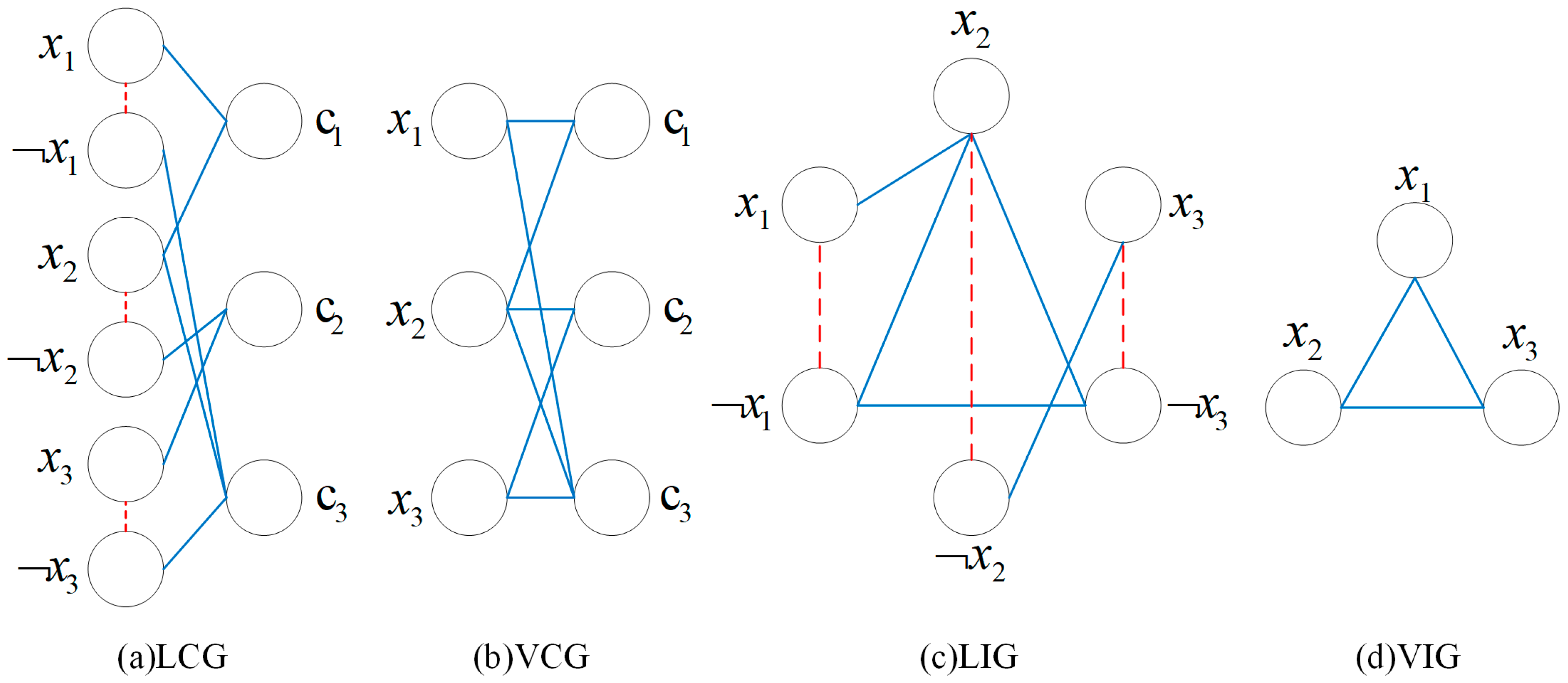
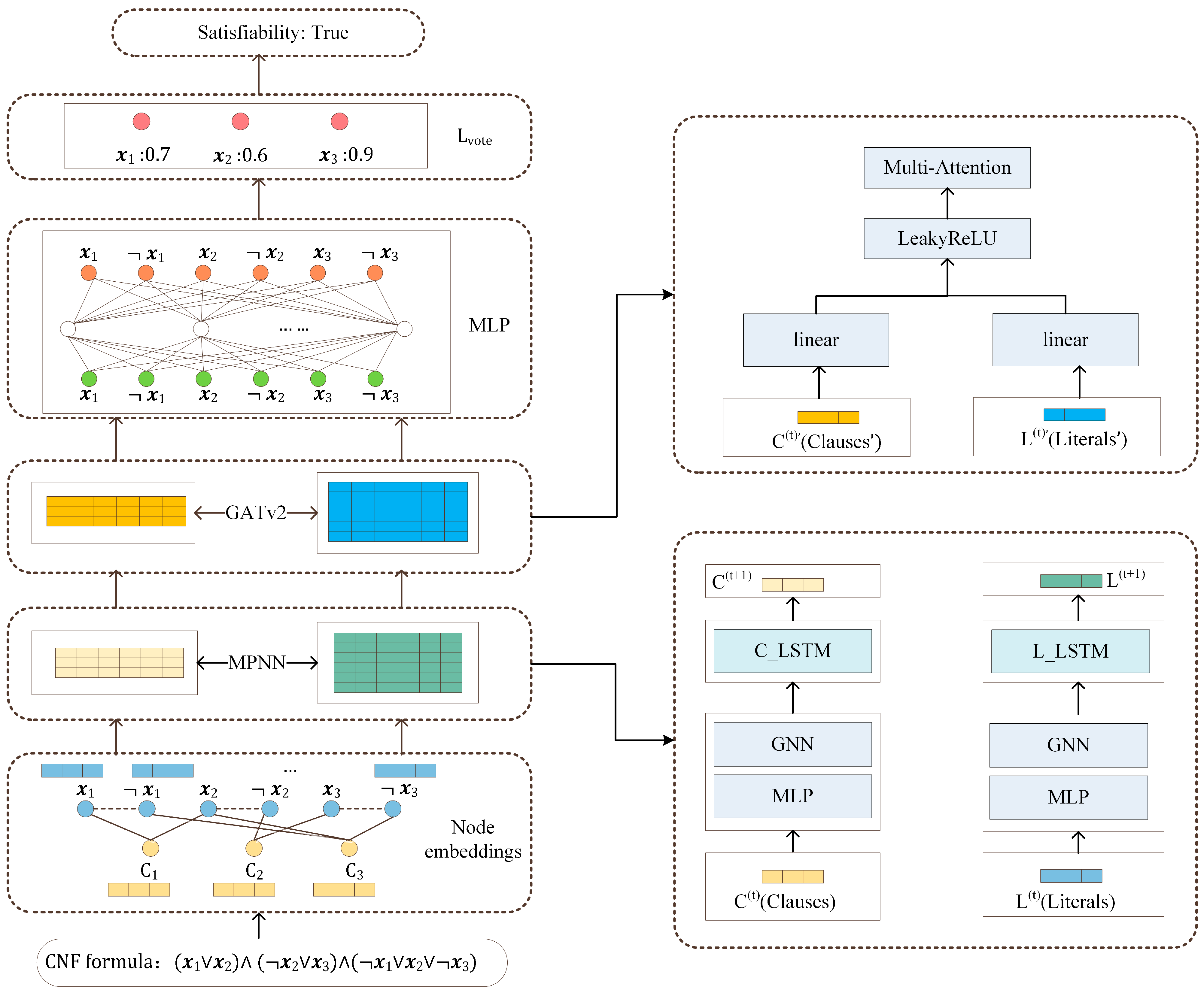
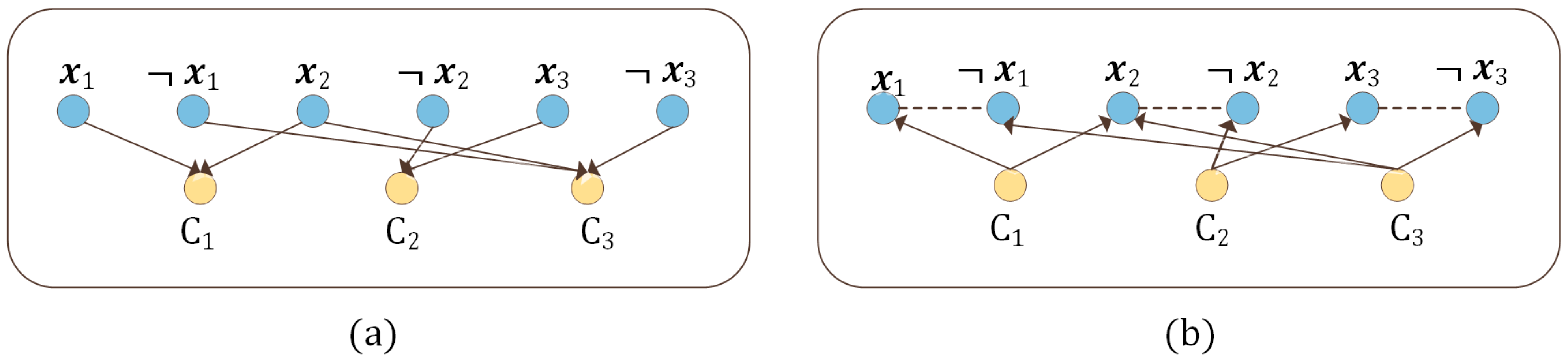
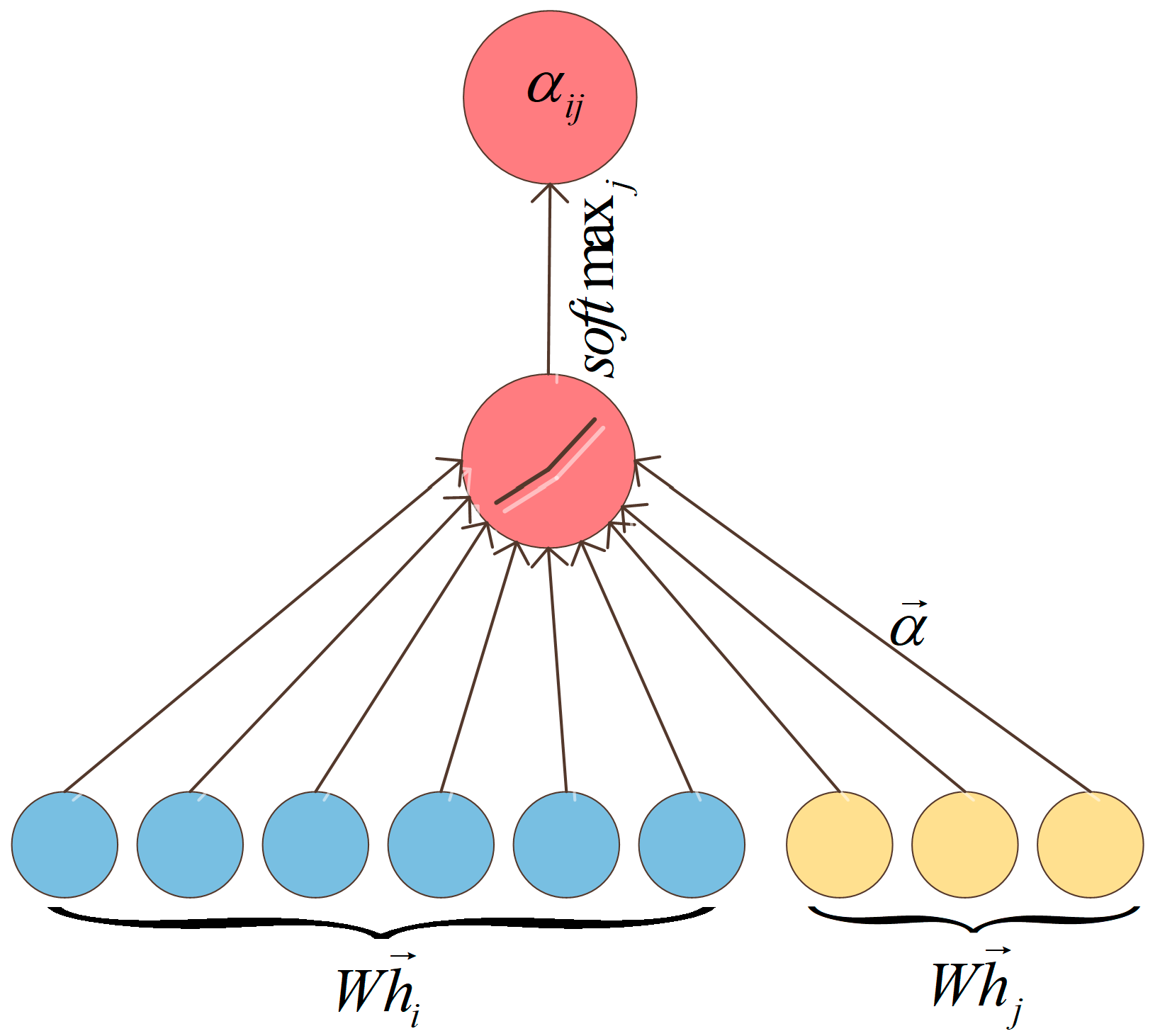
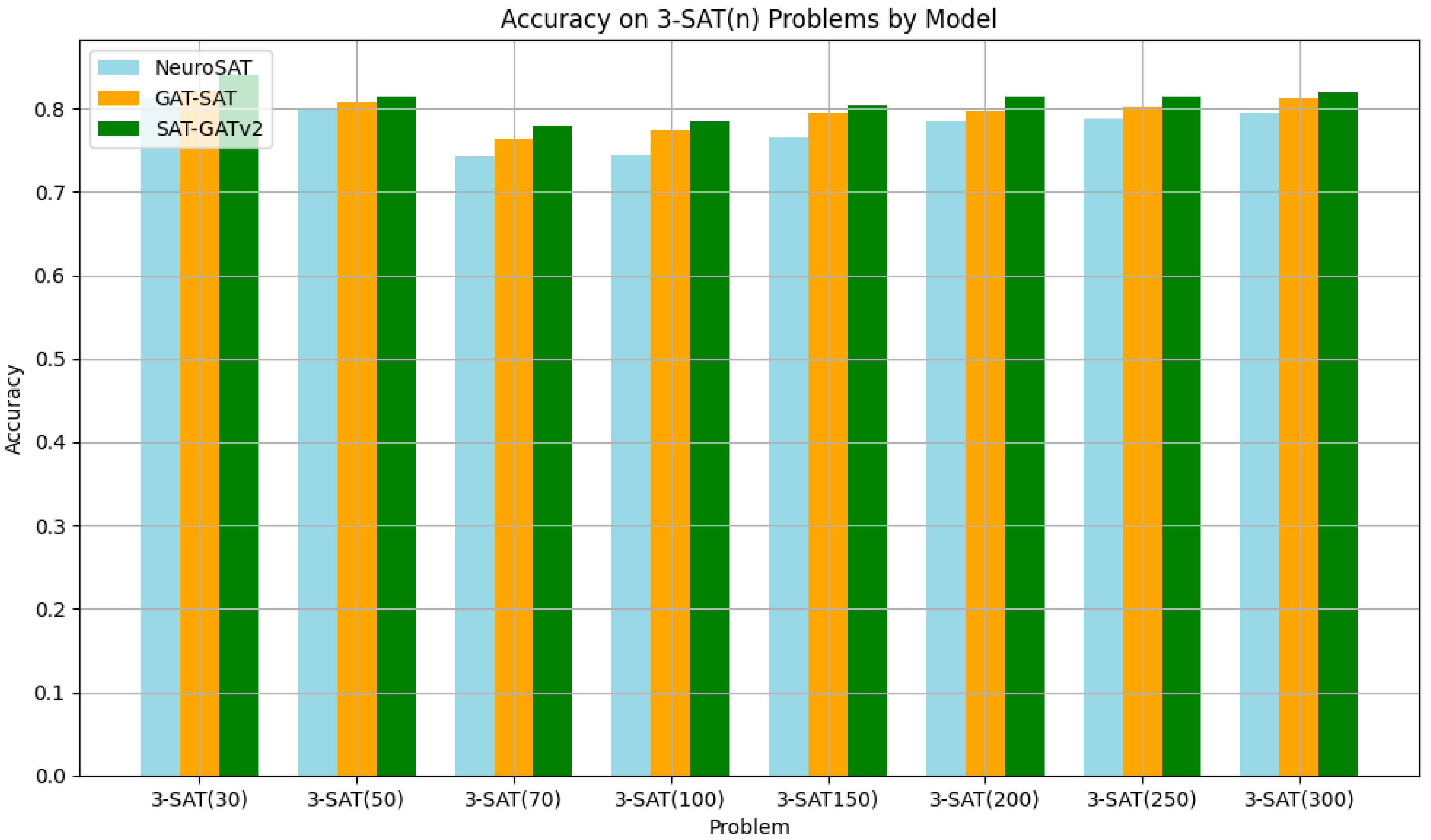
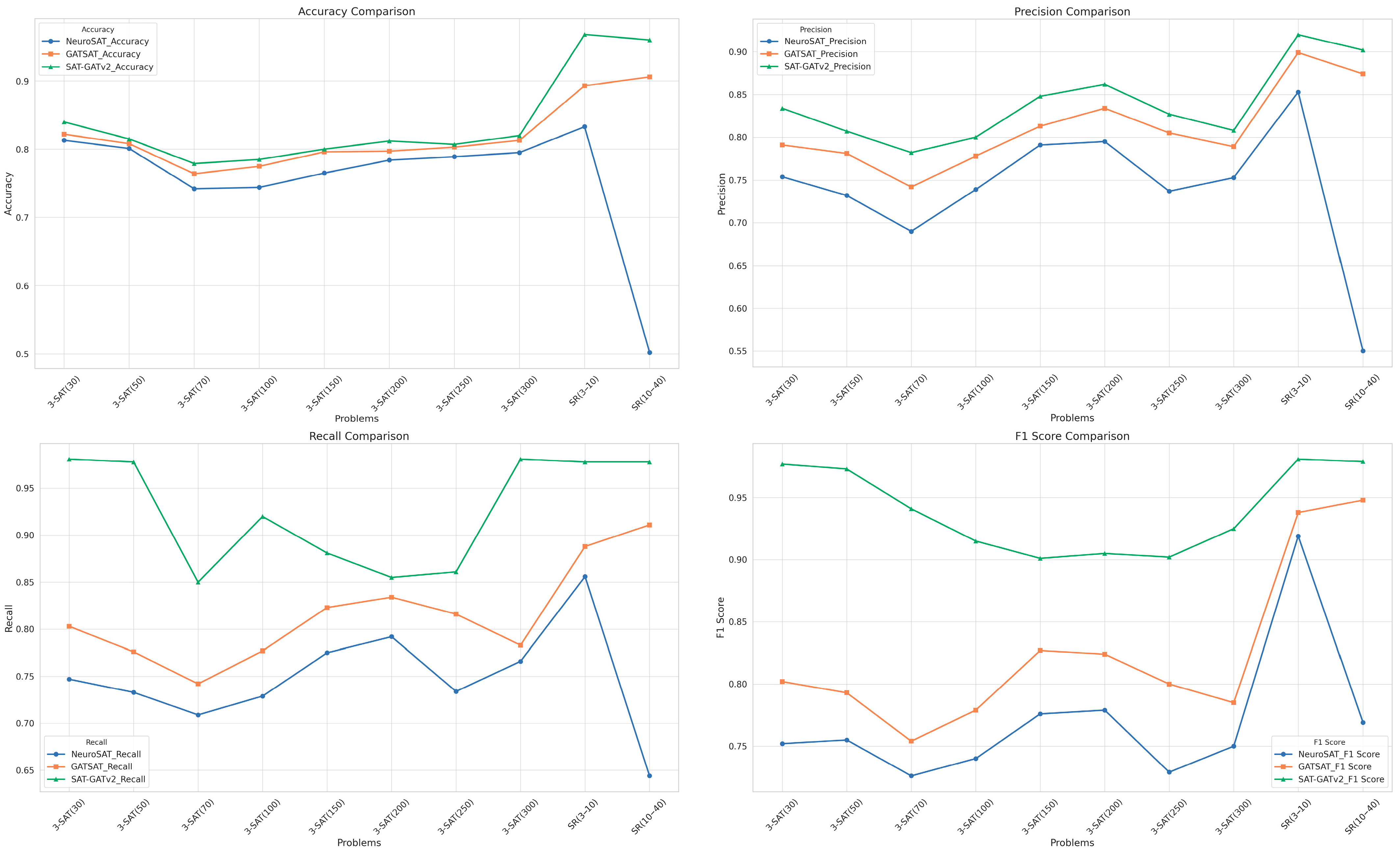
We propose SAT-GATv2, a graph neural network (GNN)-based model designed to solve the Boolean satisfiability problem (SAT) through graph-based deep learning techniques. SAT-GATv2 transforms SAT formulas into graph structures, leveraging message-passing neural networks (MPNNs) to propagate local information and dynamic attention mechanisms (GATv2) to accurately capture inter-node dependencies and enhance node feature representations. Unlike traditional heuristic-driven SAT solvers, SAT-GATv2 adopts a data-driven approach, learning structural patterns directly from graph representations and providing a complementary framework to existing methods. Experimental results demonstrate that SAT-GATv2 achieves an accuracy improvement of 1.75–5.51% over NeuroSAT on challenging random 3-SAT(n) instances, highlighting its effectiveness in handling difficult problem distributions, and outperforms other GNN-based models on SR(n) datasets, showcasing its scalability and adaptability. Ablation studies validate the critical roles of MPNNs and GATv2 in improving prediction accuracy and scalability. While SAT-GATv2 does not yet surpass CDCL-based solvers in overall performance, it addresses their limitations in scalability and adaptability to complex instances, offering an efficient graph-based alternative for tackling larger and more complex SAT problems. This study establishes a foundation for integrating deep learning with combinatorial optimization, emphasizing its potential for applications in artificial intelligence and operations research.
Keywords: Boolean satisfiability problem (SAT); random 3-SAT; graph neural network (GNN); message-passing neural networks (MPNNs); dynamic attention mechanisms (GATv2); artificial intelligence Boolean satisfiability problem (SAT); random 3-SAT; graph neural network (GNN); message-passing neural networks (MPNNs); dynamic attention mechanisms (GATv2); artificial intelligence