Review

The Global Importance of Machine Learning-Based Wearables and Digital Twins for Rehabilitation: A Review of Data Collection, Security, Edge Intelligence, Federated Learning, and Generative AI

1
Faculty of Computer Science, Kazimierz Wielki University, 85-064 Bydgoszcz, Poland
2
Academy of Social and Media Culture, 87-100 Toruń, Poland
3
Higher Education Internationalisation Laboratory, Institute of International Relations, Faculty of Political Science and Journalism, Maria Curie-Skłodowska University, 20-031 Lublin, Poland
4
2nd Clinic of Psychiatry and Psychiatric Rehabilitation, Faculty of Medicine, Medical University of Lublin, 20-059 Lublin, Poland
5
Department of Physiotherapy, Faculty of Health Sciences, Ludwik Rydygier Collegium Medicum, Nicolaus Copernicus University, 87-100 Toruń, Poland
*
Author to whom correspondence should be addressed.
Electronics 2025, 14(23), 4699; https://doi.org/10.3390/electronics14234699
Submission received: 28 October 2025 / Revised: 21 November 2025 / Accepted: 26 November 2025 / Published: 28 November 2025

Abstract

The convergence of wearable technologies and digital twin (DT) systems is transforming rehabilitation engineering, enabling continuous monitoring, personalized therapeutic interventions, and predictive modeling of patient recovery pathways. This review examines the growing role of machine learning (ML) in the development and integration of DTs frameworks in rehabilitation, with a focus on wearable sensor data, security and privacy, edge computing architectures, federated learning paradigms, and generative artificial intelligence (GenAI) applications. We first analyze data collection processes, emphasizing multimodal sensing, signal processing, and real-time synchronization between physical and virtual patient models. We then discuss key challenges related to data security, encryption, and privacy protection, especially in distributed clinical environments. The review then assesses the role of edge computing in reducing latency, improving energy efficiency, and enabling real-time local intelligence feedback in wearable devices. Federated learning approaches are discussed as promising strategies for jointly training ML models without compromising sensitive medical data. Finally, we present new GenAI techniques for generating synthetic data, personalizing digital twins, and simulating rehabilitation scenarios. By mapping current progress and identifying research gaps, this article provides a unified view that connects electronic and biomedical engineering with intelligent, secure, and adaptive DT ecosystems for next-generation rehabilitation solutions. Wearable devices with ML and DTs for rehabilitation are developing rapidly, but their current effectiveness still depends on consistent, high-quality data streams and robust clinical validation. The most promising convergence involves combining edge intelligence with federated learning to enable real-time personalization while preserving patient privacy. GenAI further enhances these systems by simulating patient-specific scenarios, accelerating model adaptation, and treatment planning. Key challenges remain related to standardizing data formats, ensuring comprehensive security, and seamlessly integrating these technologies into clinical processes.

1. Introduction

The origins of machine learning (ML)-based wearables and digital twins (DTs) in rehabilitation stem from the convergence of biomedical engineering, data science, and ubiquitous sensor technologies [1,2]. Early wearables primarily tracked simple physiological parameters, but advances in sensors and artificial intelligence (AI) have enabled more complex, adaptive monitoring of patient health and movement [3]. The concept of DTs was introduced to create dynamic patient models that facilitate personalized rehabilitation and predictive healthcare [4]. With the development of the Internet of Things (IoT) and edge computing, real-time data processing has become possible at the point of care, reducing latency and increasing responsiveness [5]. ML algorithms have begun to extract practical insights from multimodal sensor data, improving the accuracy of anomaly detection and recovery progress [6]. However, the large-scale collection of sensitive medical data has introduced significant privacy and security concerns, motivating the development of privacy-preserving methods [7,8]. Federated learning emerged as a solution that enables decentralized model training without transmitting raw patient data, ensuring confidentiality [9]. At the same time, edge intelligence has improved local decision-making, minimizing dependence on cloud infrastructure and supporting resource-constrained clinical environments [10]. More recently, generative artificial intelligence (GenAI) has expanded capabilities by simulating patient behavior, expanding training datasets, and personalizing treatment scenarios [11]. Together, these innovations mark the beginning of an intelligent, connected rehabilitation ecosystem, where DTs and wearable devices collaborate to enable safe, adaptive, and human-centric recovery pathways.
Wearable devices provide continuous, real-time physiological and biomechanical data, providing the basis for constructing accurate and dynamic digital replicas of patients [12]. DTs integrate this multimodal data to model individual recovery processes, predict outcomes, and optimize therapeutic interventions [13]. Using ML, these systems learn patterns in sensor data to personalize rehabilitation programs and adapt them to the patient’s progress [14]. This synergy enables closed-loop feedback, where DTs guide adjustments to wearable-assisted therapy to increase effectiveness [15]. Edge intelligence enhances this interaction by processing data locally, ensuring short response latencies, crucial for movement control and safety [16]. Federated learning further strengthens this ecosystem, enabling collaborative model training across facilities while protecting patient privacy [17]. The integration also empowers clinicians with decision-making tools, enabling them to visualize patient conditions and simulate alternative rehabilitation strategies [18]. GenAI extends these capabilities by generating synthetic data that enriches model training and simulates complex rehabilitation scenarios [19]. The combination of wearable devices and DTs transforms rehabilitation engineering into a data-driven, intelligent, and human-centric discipline.
Continuous monitoring using advanced sensors enables precise tracking of physiological, biomechanical, and behavioral parameters in real time [20]. This constant flow of data allows clinicians and intelligent systems to dynamically assess patient progress, rather than relying on periodic assessments [21]. ML models interpret these data streams to identify subtle trends and variations, guiding the personalization of therapeutic interventions [22]. Personalized therapy ensures that treatment intensity, duration, and exercises are tailored to each patient’s unique recovery profile [23]. Personalization in ML-based rehabilitation systems refers to therapy plans, exercise intensities, and progression patterns that are dynamically adapted to each patient’s biomechanical, neurological, and behavioral data. Multimodal sensors (inertial measurement units, EMG electrodes, pressure pads, heart rate monitors, and portable kinematic monitors) enable the system to capture detailed, individual movement patterns, fatigue levels, and physiological responses. This allows rehabilitation programs to be tailored to contexts such as stroke recovery, orthopedic rehabilitation following fractures or joint replacements, neuromuscular conditions, and robotic or exoskeleton-assisted upper limb therapy. Furthermore, intelligent data integration allows the system to adapt therapy in real time for home telerehabilitation, clinic-supervised physical therapy, and long-term recovery monitoring, ensuring that personalization is continuous, data-driven, and aligned with clinical needs. DTs complement this process by creating virtual representations of patients, enabling predictive modeling of recovery pathways and early detection of potential setbacks [24]. Edge intelligence provides rapid feedback loops through local data processing, supporting immediate in-session therapy adjustments [25]. Federated learning contributes to system adaptability by collaboratively training models across multiple rehabilitation centers without compromising data privacy [26]. GenAI enhances rehabilitation simulations by generating synthetic patient data and creating diverse training environments to refine models [27].
ML algorithms process massive amounts of data from wearable sensors, enabling precise modeling of patient movements, physiological states, and therapy responses [28]. These intelligent systems transform raw sensor data into actionable insights that improve the accuracy and adaptability of DTs [29,30]. Security and privacy have become key concerns, driving the implementation of ML-based anomaly detection and encryption techniques to protect sensitive medical data [31]. Edge computing architectures further strengthen this ecosystem by enabling local data processing, providing low-latency analysis, and real-time therapeutic feedback [32]. Federated learning extends the impact of ML by enabling distributed model training across multiple healthcare centers without sharing raw patient data, ensuring confidentiality and compliance with privacy regulations [33]. ML-based DTs continuously learn and evolve from patient interactions, supporting predictive analytics to optimize rehabilitation pathways, including future approaches such as Metaverse [34]. GenAI complements this process by creating synthetic yet realistic data that augments training datasets and simulates complex clinical scenarios [35]. Integrating ML, edge intelligence, and federated paradigms increases the resilience, scalability, and personalization of systems in rehabilitation engineering [36].
The aim of this study is to summarize current knowledge and experiences, as well as opportunities and challenges in wearable devices based on machine learning and digital twins for rehabilitation. It also aims to lay the foundations (existing or proposed) for global standards in the areas of data collection, security, edge intelligence, federated learning, and generative AI used in AI-based DTs in physical therapy and rehabilitation.
This article highlights the growing global importance of wearable devices based on ML and DTs in rehabilitation, demonstrating how these technologies are transforming personalized therapy and long-term patient monitoring. By integrating secure data collection, the review highlights how reliable sensor ecosystems ensure clinical reliability while supporting real-time decision-making. A discussion of edge intelligence demonstrates how point-of-care computing reduces latency, protects privacy, and enables continuous rehabilitation support even in resource-constrained settings. The inclusion of federated learning highlights the importance of collaboration between hospitals and countries, protecting privacy while accelerating model development without exposing sensitive patient data. Furthermore, the article explains how GenAI enhances DTs by enabling scenario simulation, adaptive therapy design, and the generation of synthetic data for more secure model validation. Together, these elements contextualize why wearable devices and machine learning-based digital twins represent a key path to globally scalable, equitable, and clinically effective rehabilitation technologies.

2. Materials and Methods

2.1. Dataset

This bibliometric analysis aimed to examine the state of knowledge and practice in planning and implementing AI-based development strategies at various levels to optimize the use of knowledge and experience in current and future healthcare systems, especially from a global perspective and with international practices/standards in mind. The frequent limitation of analyses to local solutions (a single patient or a homogeneous group of patients) underestimates the full potential of this group of solutions, especially from an interdisciplinary perspective. To this end, we used bibliometric methods to analyze recently published (i.e., up to 10 years ago, from January 2016 to October 2025) global scientific publications. We formulated the following research questions (RQs) to identify key areas encompassing the current state of research:
  • RQ1: What is the most common source of publications concerning this topic (research institutions, countries, and, where possible, funding for research and publications)?
  • RQ2: Who are the most influential authors and their teams?
  • RQ3: What are the most popular topics and, where possible, how are these research topics evolving?
To the extent possible, we attempted to answer the following questions:
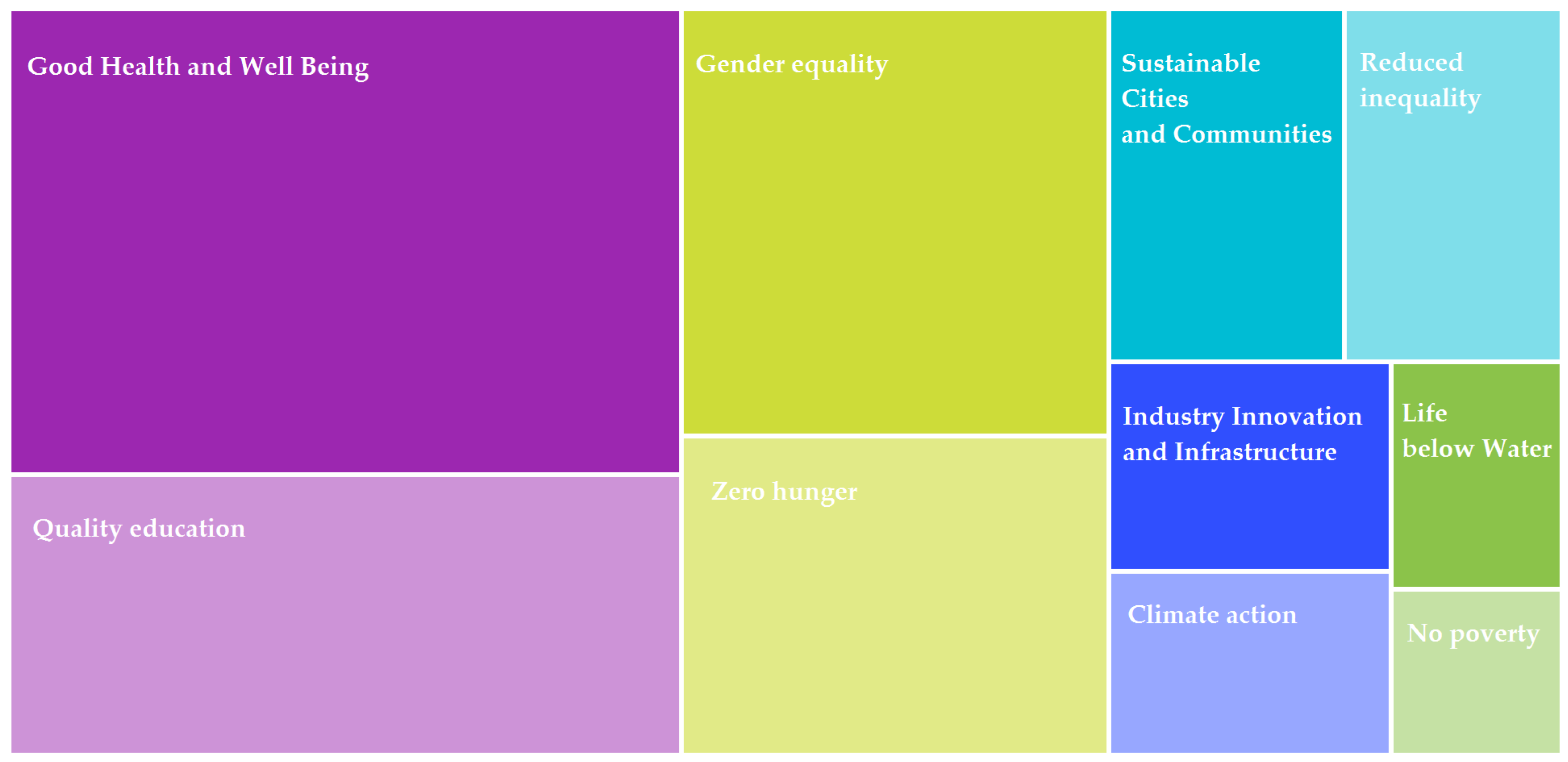
  • RQ4: Which Sustainable Development Goals (SDGs, formulated by the UN) are most frequently associated with the publications included in the review?
RQs focusedon the most common publication sources, leading topics, countries, institutions, researchers, and SDGs were selected to map the global landscape of wearable devices for rehabilitation using machine learning and digital twins. These dimensions reveal where scientific knowledge and innovation are concentrated, helping to identify geographic and institutional factors influencing technological progress and clinical implementation. They also allow for tracing how emerging topics (such as edge intelligence, federated learning, and generative AI) fit into the broader context of sustainable development and health-focused SDGs, demonstrating their societal relevance. Together, these research questions provide a structured framework for understanding not only what is being researched in a given area but also who is developing it and why, offering strategic insights for future research and international collaboration.
The approach and RQs proposed above allow for a more comprehensive understanding of current trends, strategies, and practices in research and industry related to the planning, implementation, and use of digital transformation technologies based on artificial intelligence (AI) in rehabilitation and physiotherapy at various levels—from local to global. It is essential to understand and plan further necessary actions in this area, integrate solutions, and enhance their potential, perhaps through a roadmap. Interpreting bibliometric data will therefore enrich current discussions and provide a solid foundation for future research, publications, and clinical practice development, especially in the face of demographic and other challenges stemming from megatrends.

2.2. Methods

This study searched four major bibliographic databases: Web of Science (WoS), Scopus, PubMed, and dblp. These databases were selected for their wide range of indexed publications (both technical and medical) and rich metadata with global reach and relevance (Table 1). Filters were applied to the search to focus on the relevant literature, limiting results to articles in English. After filtering, each article was manually reviewed by three independent reviewers for inclusion criteria, with two out of three votes deciding on the final sample size. Key features of the dataset were then analyzed, including the most frequently occurring authors, their research groups/institutions, countries, topic areas, and emerging trends. This enabled mapping of key terminology and its evolution, as well as the most important research achievements in the field. Where possible, temporal trends were tracked to monitor changes in the research area over time, and publications were grouped into thematic clusters that demonstrated relationships between different research areas. This process highlighted important themes and subfields emerging across the research area, and the interdisciplinary team of authors of this article allowed for a broad assessment and interpretation of the review findings.
Duplicates were detected by exporting all retrieved records from each database to a unified bibliography management tool (Biblioshiny) and automatically matching entries to identical titles, DOIs, author lists, or publication years. Additional automated checks compared metadata fields such as journal name, volume, issue number, and page numbers to identify cases where titles were similar but not identical. After the automated process, manual verification included checking borderline cases—such as conference versions and extended journal articles—to ensure correct classification. These steps ensured that all duplicate or near-duplicate records were removed before screening, preserving the integrity of the dataset (Table 1).
The study utilized 10 selected elements of the PRISMA 2020 bibliographic review guidelines (Partial PRISMA 2020 Checklist in Supplementary Materials), focusing on the following aspects: rationale (item 3), objectives (item 4), eligibility criteria (item 5), information sources (item 6), search strategy (item 7), selection process (item 8), data collection process (item 9), synthesis methods (item 13a), synthesis results (item 20b), and discussion (item 23a). Tools embedded in the WoS, Scopus, PubMed, and dblp databases were used for bibliometric analysis. This selected review methodology supports research replication by enabling precise classification by concepts, research areas, authors, documents, and sources. Results are presented in tabular form, enabling further flexible analysis and visualization. Given the interdisciplinary scope and complexity of the topic, the most important findings of the review are summarized in a summary table.
The Biblioshiny tool served as an indirect analytical software for the review, processing, cleaning, and standardizing of bibliographic records collected from selected databases. It enabled descriptive bibliometric analyses, including annual publication trends, top authors, influential journals, and keyword co-occurrence patterns. These results supported the synthesis, potentially revealing structural patterns in the research topic under review that might not have been apparent from a qualitative review alone.

3. Results

3.1. Data Sources

To refine the search, advanced filters were applied, limiting the results to articles in English. The search was conducted as follows:
  • in WoS: using the “Subject” field (consisting of title, abstract, keywords, and other keywords);
  • in Scopus: using the article title, abstract, and keywords;
  • in PubMed and dblp: using manual keyword sets.
The databases were searched for articles using the keywords: (“artificial intelligence” OR “machine learning”) AND “digital twin” AND (“rehabilitation” OR “physiotherapy” OR “physical therapy”) (Table 2).
The selected publication set was then further refined (Figure 1) by manually selecting articles, removing irrelevant publications, and duplicates to determine the final sample size.
The aforementioned PRISMA 2020 flowchart provides a clear, step-by-step overview of the process of identifying, selecting, assessing, and ultimately including studies in the review, ensuring methodological accuracy and reproducibility. It begins with the identification phase, which gathers data from databases and other sources to capture the total volume of potentially relevant literature before removing duplicates. The screening phase then filters titles and abstracts based on predefined eligibility criteria, eliminating studies that are clearly not related to ML-based wearables or DTs in rehabilitation. Next, in the eligibility phase, full-text articles are thoroughly assessed for methodological quality, relevance to data collection and security, and relevance to topics such as edge intelligence or federated learning. Finally, the included studies phase shows how many articles remain after exclusion, representing the evidence base used for synthesis and analysis. Interpreting the PRISMA diagram allows for a better understanding of the transparency of the review by showing not only the volume of literature analyzed but also the rationale for each exclusion step, which strengthens the validity of the conclusions.

3.2. General Results of Analysis

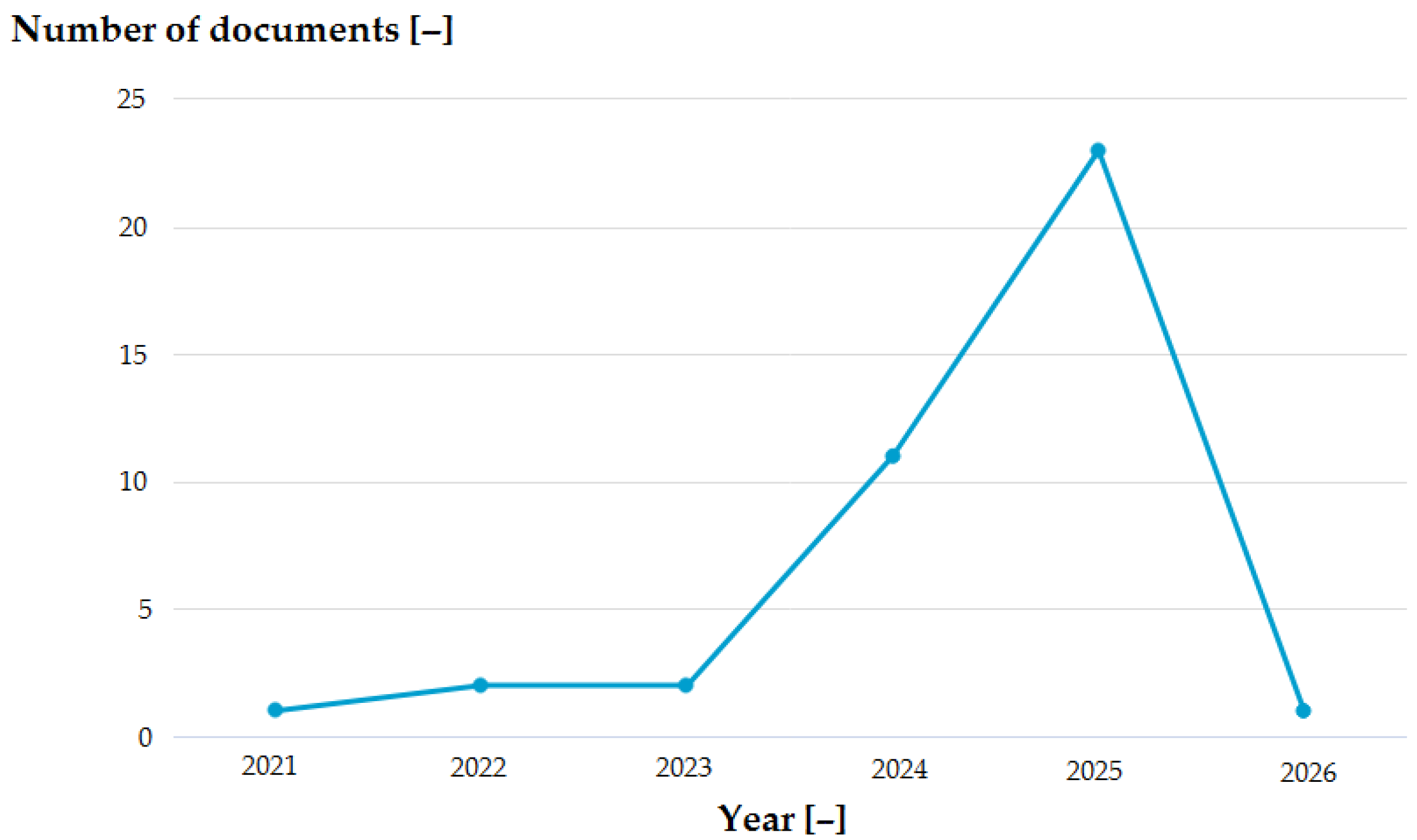
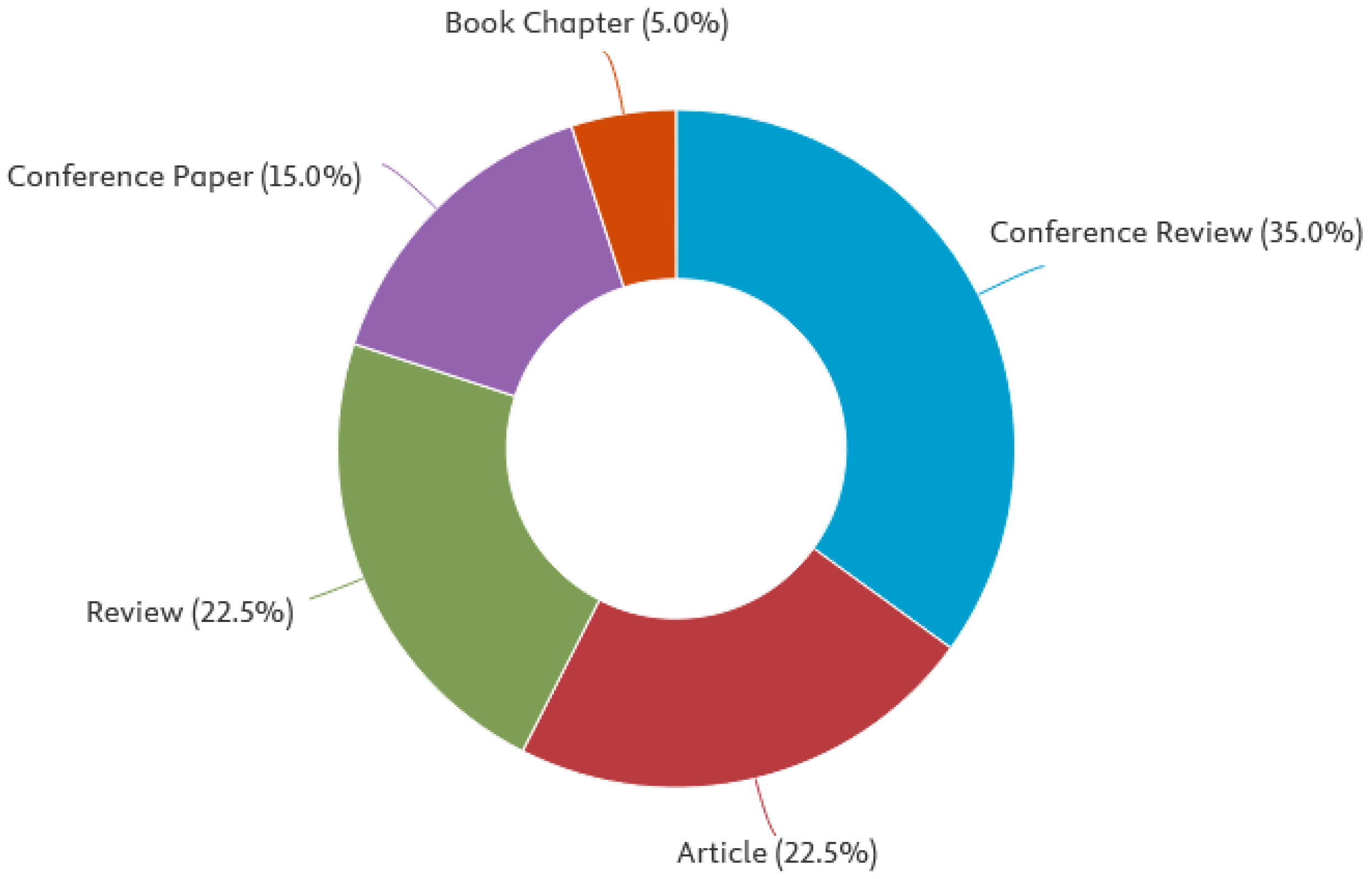
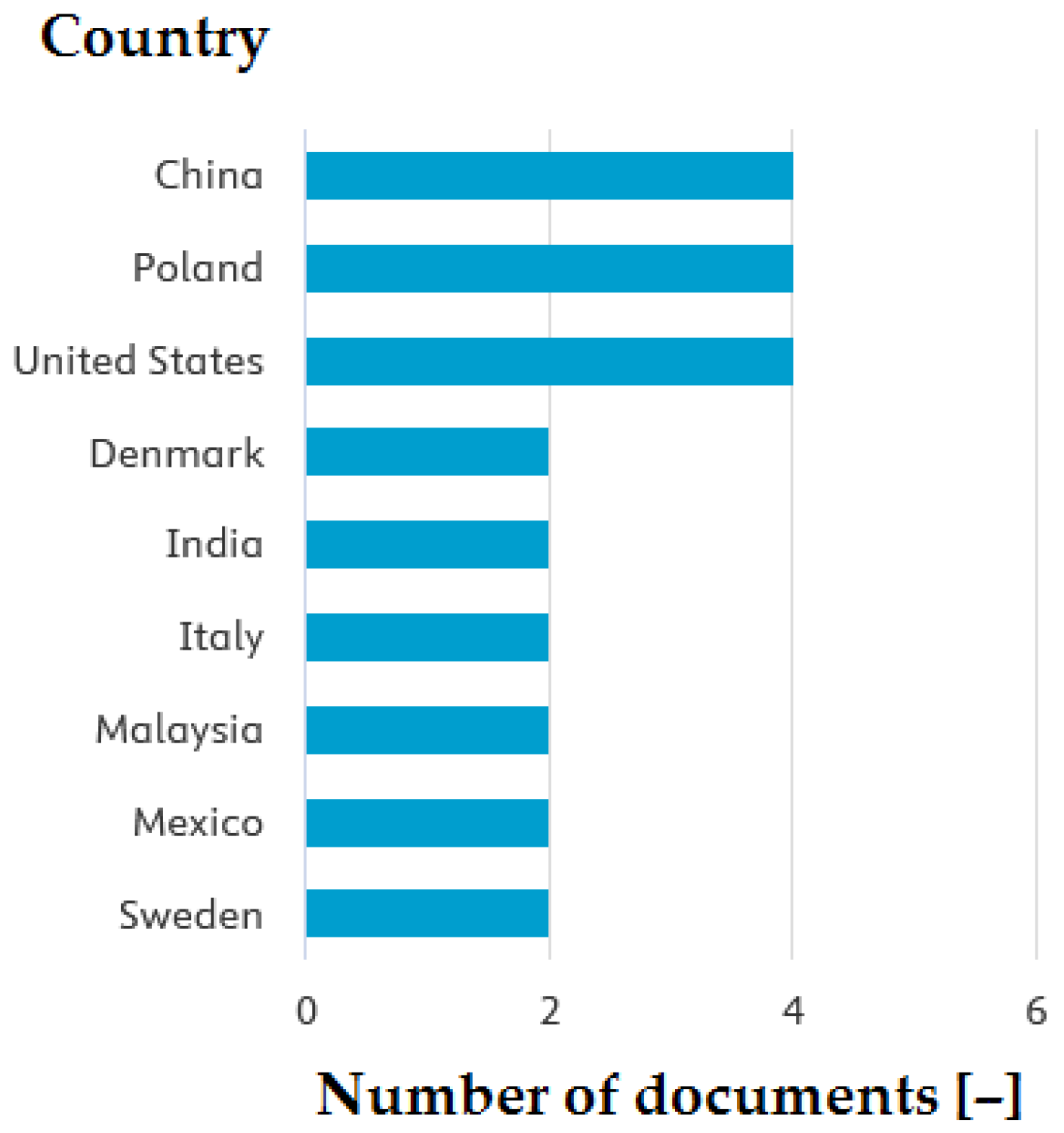
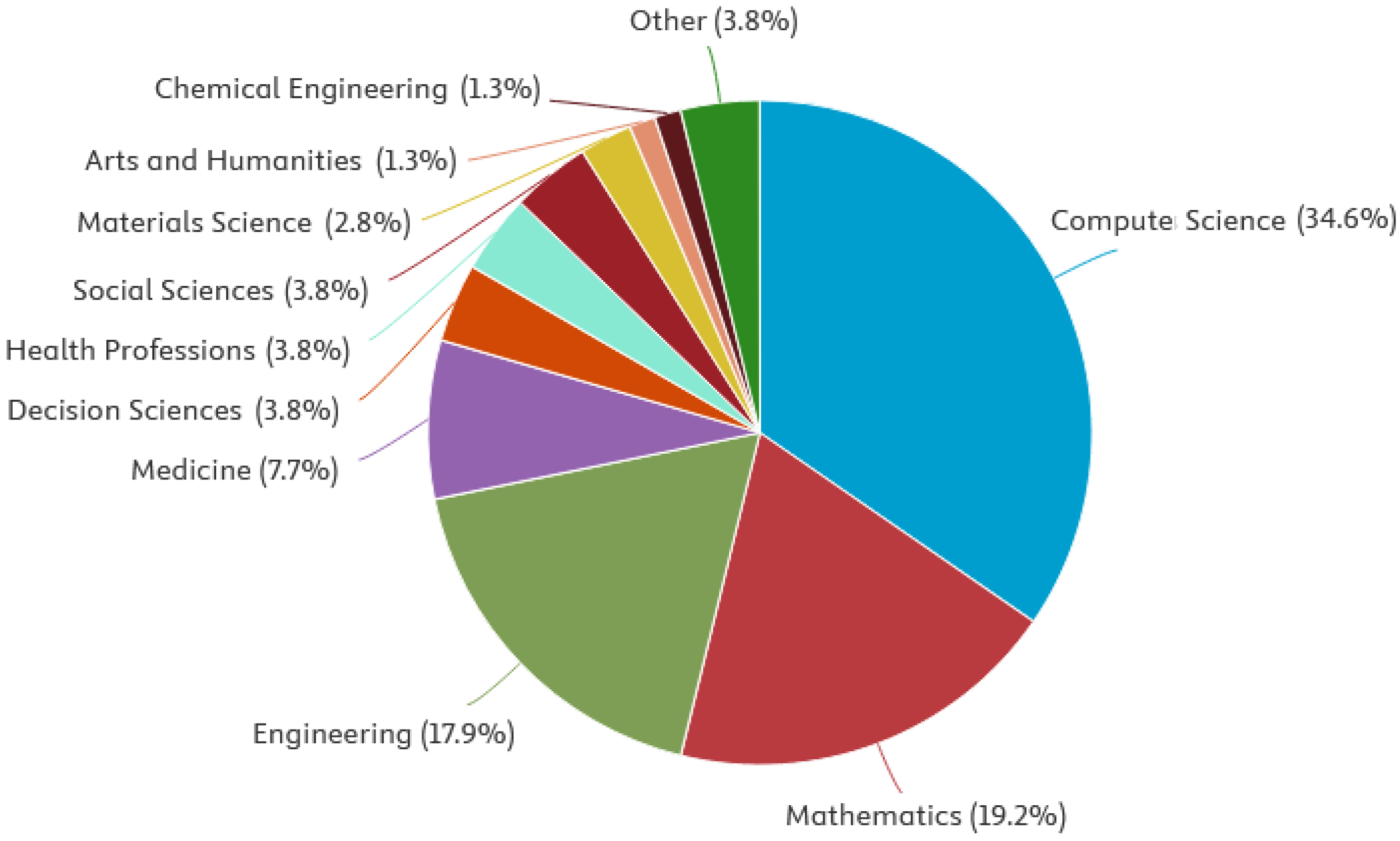
A summary of the bibliographic analysis results is presented in Table 3 and Figure 2, Figure 3, Figure 4, Figure 5 and Figure 6. Forty articles published in the last 10 years (from January 2016 to October 2025) were analyzed, as articles published between 2016 and 2020 were not included due to their absence. Older articles were not included due to the rapid replacement of older knowledge with new knowledge.
The implications of these bibliometric findings suggest that a high percentage of conference reviews may indicate that the field is still in its conceptual phase, which contextualizes the article’s emphasis on proposed architectures rather than their clinical validation. Most research was conducted in computer science and mathematics, suggesting early stages of technological maturity. The leading countries were the USA, China, and Poland, but these countries did not have large publication counts, nor were leading researchers or affiliations observed, suggesting significant research dispersion. However, the most frequently observed SDGs indicate a clear health context, focusing on “good health and well-being.”
Not all publications included in the review had SDGs identified, and this was not an inclusion criterion. We understand that this is not required in some countries/research centers. However, including papers with and without SDGs allows the review to encompass diverse perspectives, including the role of SDGs and possible restrictions imposed voluntarily or involuntarily by researchers/countries/institutions as part of sustainability.
DTs have the potential to revolutionize the entire healthcare sector, providing comprehensive models of patients, healthcare facilities, and clinical processes, while integrating data from various sources, including wearable devices, electronic medical records, and medical imaging systems [36]. In the next few years (by 2030), their use in healthcare, especially in physiotherapy and rehabilitation, will be exemplary, focusing on global problems related to megatrends (e.g., population aging) [37,38], rehabilitation coordination and planning, improving its effectiveness (including hybrid and remote forms), and the development of healthcare facility management. Standardization of these areas, including at the global level, would enable faster improvements and reduce the costs of research and investment [39,40].
Patient-specified DTs are personalized, high-resolution models that reflect the anatomy, physiology, or disease course of an individual patient. They are widely used in fields such as cardiology, oncology, and neurology, as well as in personalized rehabilitation planning. They are continuously updated with real-time data from wearable devices, medical devices, or clinical trials, enabling tailored prognoses, treatment simulations, and therapy optimization for a specific individual. Population-level DTs, on the other hand, model the aggregate behavior of groups, communities, or entire healthcare systems and are used in epidemiology, public health planning, hospital operations, and resource allocation. These population-level models do not track individual clinical courses but capture statistical trends to inform policy, forecast epidemics, and optimize system-wide performance.
In rehabilitation, a true DT should represent a continuously updated, multi-layered model that integrates biomechanical signals, physiological data, behavioral indicators, and treatment outcome measures. It is worth clarifying the hierarchy of structures: from data-acquisition layers, through physics-based or machine-learning-based modeling layers, to decision-support layers. This distinguishes digital twins, electronic medical records, predictive analytics dashboards, and Internet of Things (IoT)-based monitoring systems. The core components of rehabilitation DTs include sensor fusion mechanisms, patient-specific parameterization, adaptive learning modules, and real-time feedback loops. These elements interact to produce practical clinical insights, not just descriptive models. Tensions have emerged between developing highly accurate, computationally intensive cognitive transformation (CT) models and ensuring their usability within the constraints of rehabilitation clinic workflows. This includes the need to optimize models to ensure they remain understandable to researchers and responsive enough to enable real-time therapeutic adjustments. This allows for the assessment of the novelty, scope, or clinical utility of the proposed DT framework. Such a precise definition and analysis of the architecture significantly strengthen the conceptual foundation.
Moving from simply listing available technologies to critically analyzing them requires examining how each tool directly addresses fundamental rehabilitation challenges, such as data scarcity, sensor noise, clinical interpretability, and patient variability. Technologies such as federated learning, edge computing, and DTs offer the opportunity to assess where they succeed, for example, in improving privacy or reducing latency. Furthermore, they fall short in real-world clinical applications. Critical analysis allows us to identify the limitations of these methods, such as poor performance across various rehabilitation datasets, difficulties obtaining real-time insights from devices, and insufficient validation of predictive models against baseline physiological data. The causes of these challenges stem from hardware variability, uncertain patient behavior, regulatory constraints, and computational bottlenecks. This approach allows the text to discuss technologies not as isolated solutions but as components of a complex ecosystem shaped by clinical workflow, ethics, and human factors. Furthermore, it would be worthwhile to highlight potential future breakthroughs, such as personalized federated learning, multimodal sensor fusion layers, or explainable DT architectures tailored to the needs of therapists and clinicians. Predictive insights into how new methods (such as physics-based neural networks or generative physiological simulators) might transform the treatment planning process would also deepen the analysis. A critical perspective must clearly identify the gaps that remain, such as the lack of standardized validation protocols or insufficient interinstitutional interoperability. It should also examine how these gaps hinder implementation in practice and propose realistic paths to overcome them through interdisciplinary collaboration. By focusing on challenges, causes, and future opportunities, this manuscript becomes not only descriptive but also genuinely forward-looking, providing a roadmap for the development of rehabilitation technologies rather than merely cataloging them.

3.3. Data Collection

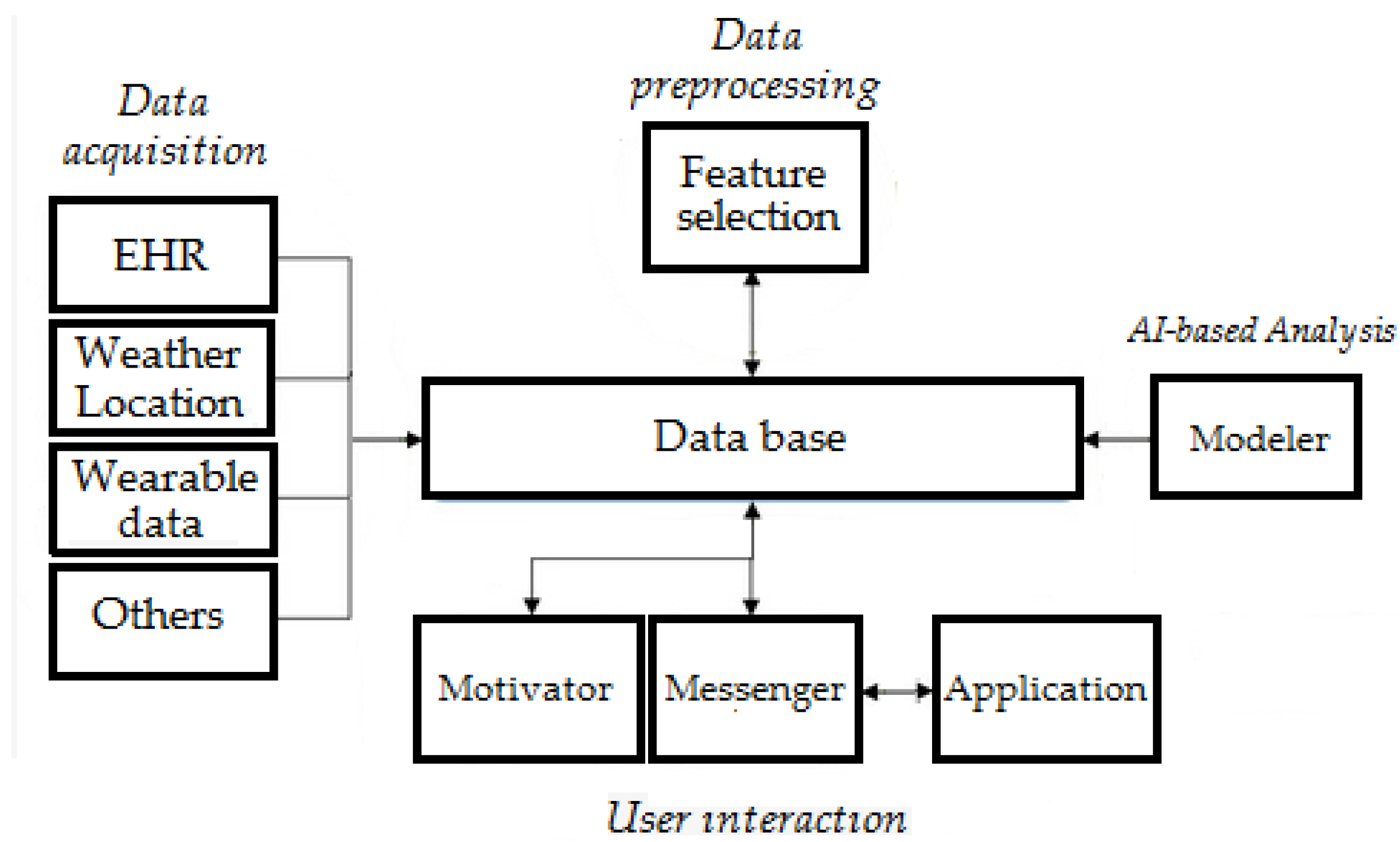
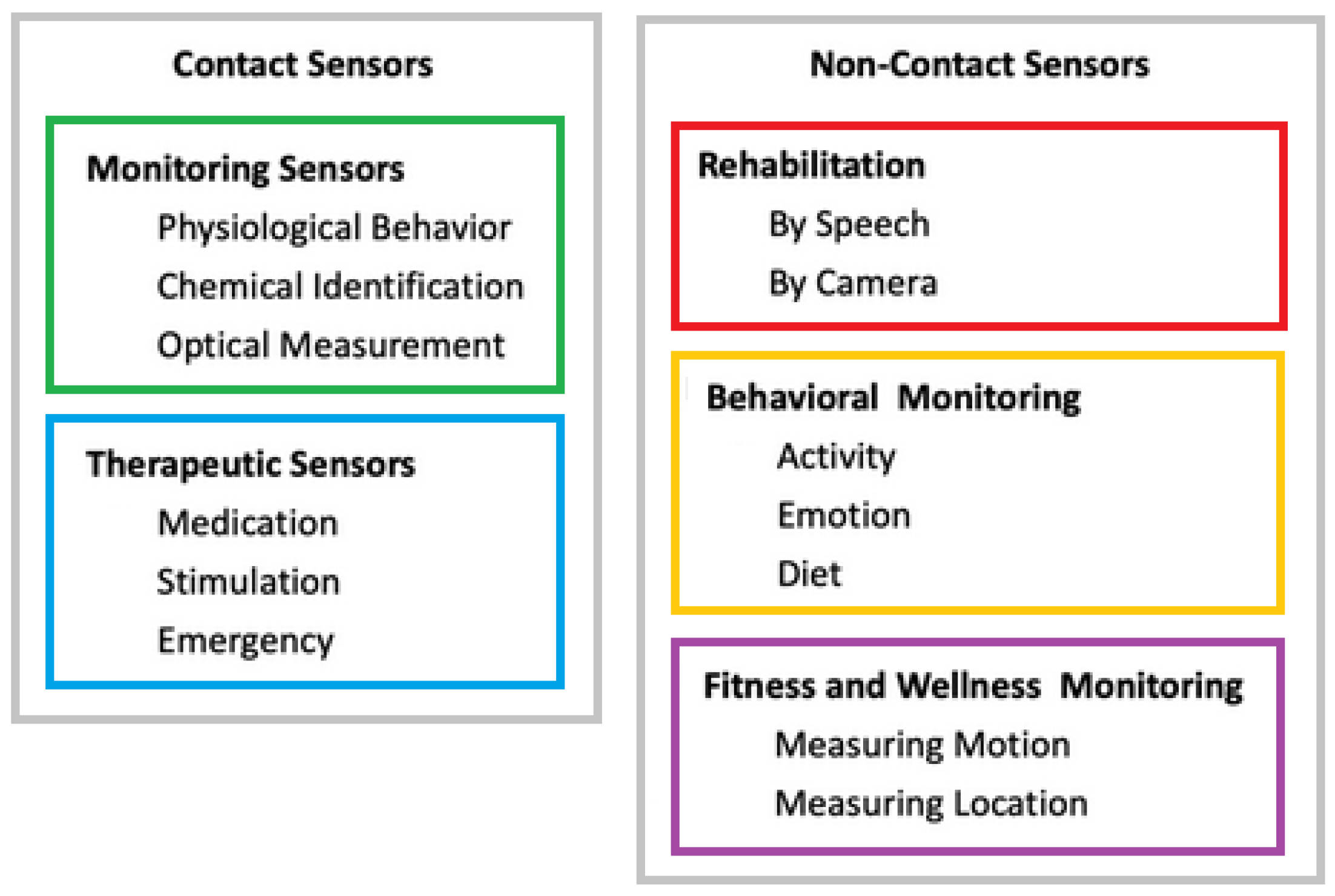
Data collection is a fundamental element in the development of wearable devices based on ML and DTs for rehabilitation. It involves acquiring data such as motion capture, electromyography (EMG), heart rate, and gait patterns from wearable sensors (Figure 7) [41,42,43].
These datasets enable the DTs—virtual replicas of patients—to simulate physiological and biomechanical processes in real time, including those involved in musculoskeletal diseases [44]. High-quality and continuous data streams are essential for providing accurate predictions, personalized therapy, and adaptive rehabilitation programs. The data collection process often integrates edge intelligence for local processing and filtering, reducing latency and dependence on cloud computing [45,46,47]. Federated learning enhances privacy by enabling decentralized model training without transmitting raw data to a central server. Robust encryption and anonymization techniques are crucial for ensuring data security and compliance with healthcare regulations such as HIPAA and GDPR [48,49]. The heterogeneity of sensor devices and data formats creates challenges that require standardized data protocols and interoperability frameworks [50]. Generative AI further supports data augmentation and the creation of synthetic data, helping to overcome limitations or imbalances in datasets. Thus, efficient and ethical data collection underpins the success, scalability, and reliability of smart rehabilitation ecosystems (Figure 8) [51].
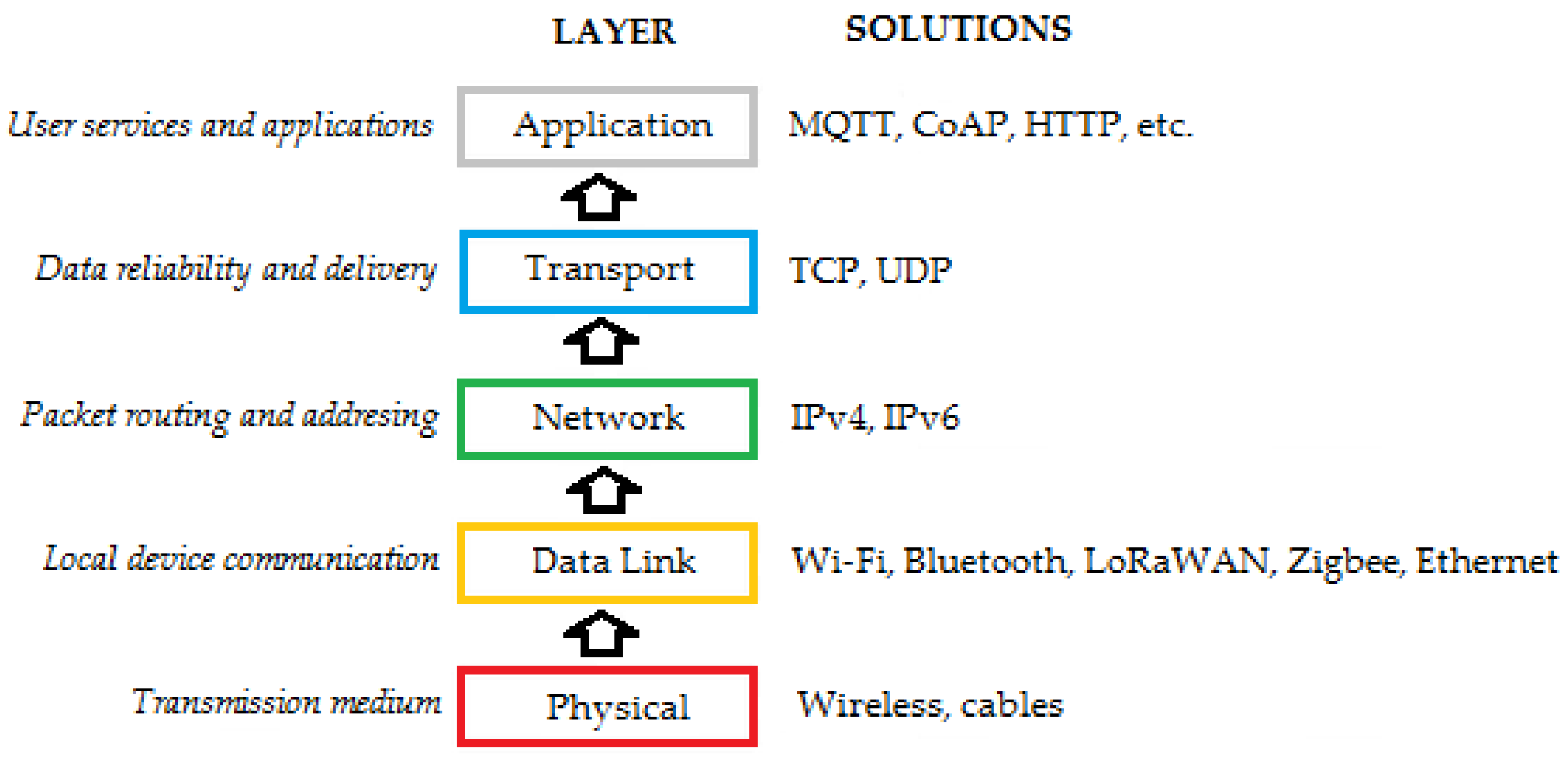
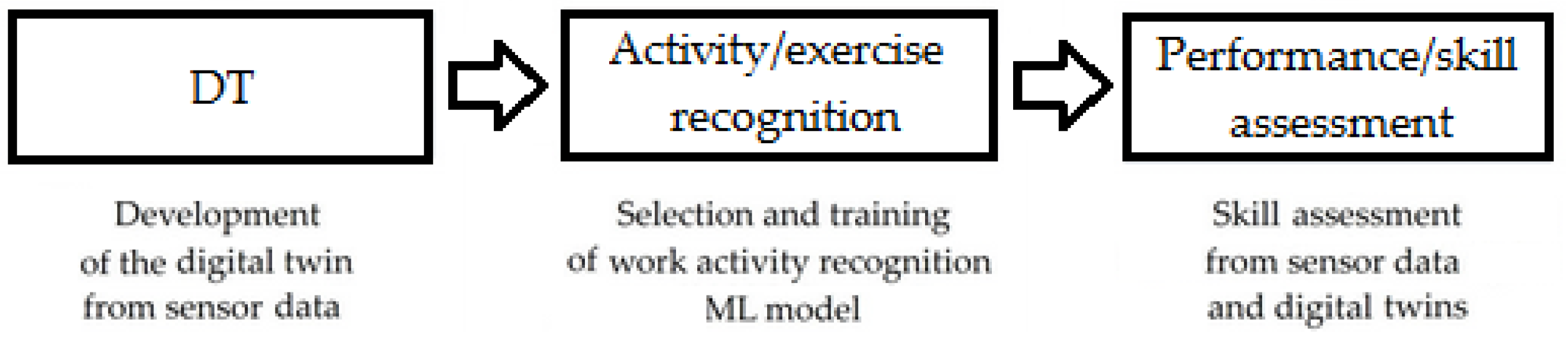
Analysis of data collection processes in ML-based rehabilitation systems highlights the crucial role of multimodal sensors and intelligent data integration. Modern wearable devices capture a variety of physiological, biomechanical, and environmental signals, including movement, muscle activity, heart rate, and neural responses [52]. Multimodal sensors provide a comprehensive understanding of a patient’s condition by combining data from different sensors into a unified framework [53]. Advanced signal processing techniques filter noise, extract key features, and standardize data to ensure accurate modeling and ML applications. Real-time synchronization between wearable devices and DT models is essential to maintaining fidelity between physical actions and their virtual representations [54]. This synchronization enables dynamic feedback loops, allowing DTs to continuously update as the patient’s condition evolves. Edge computing supports this process by enabling real-time data fusion and reducing latency at the point of collection [55]. Data integrity and precise synchronization are crucial, as even minor delays or inconsistencies can disrupt predictive modeling and rehabilitation guidance (Figure 9) [56].
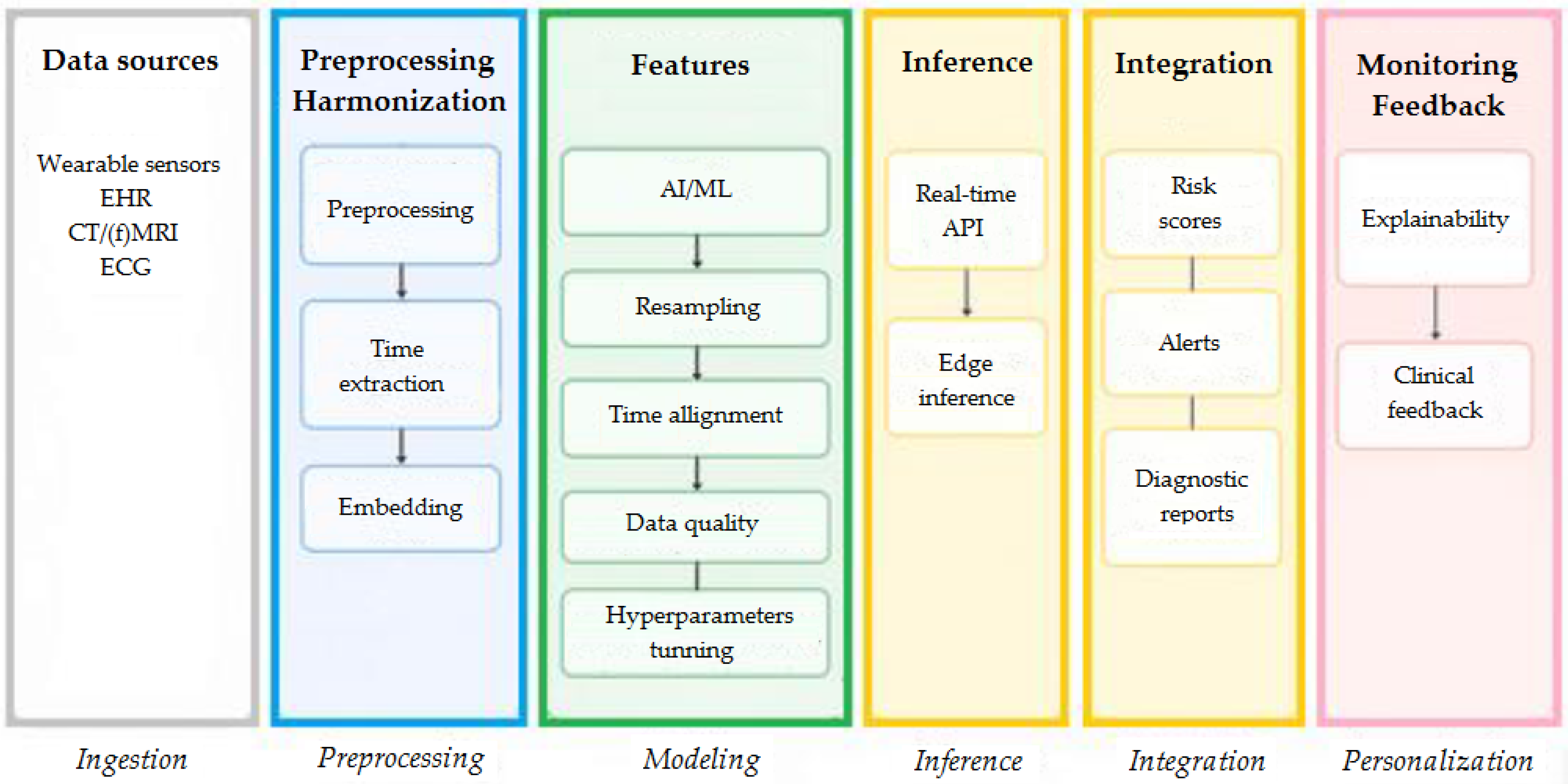
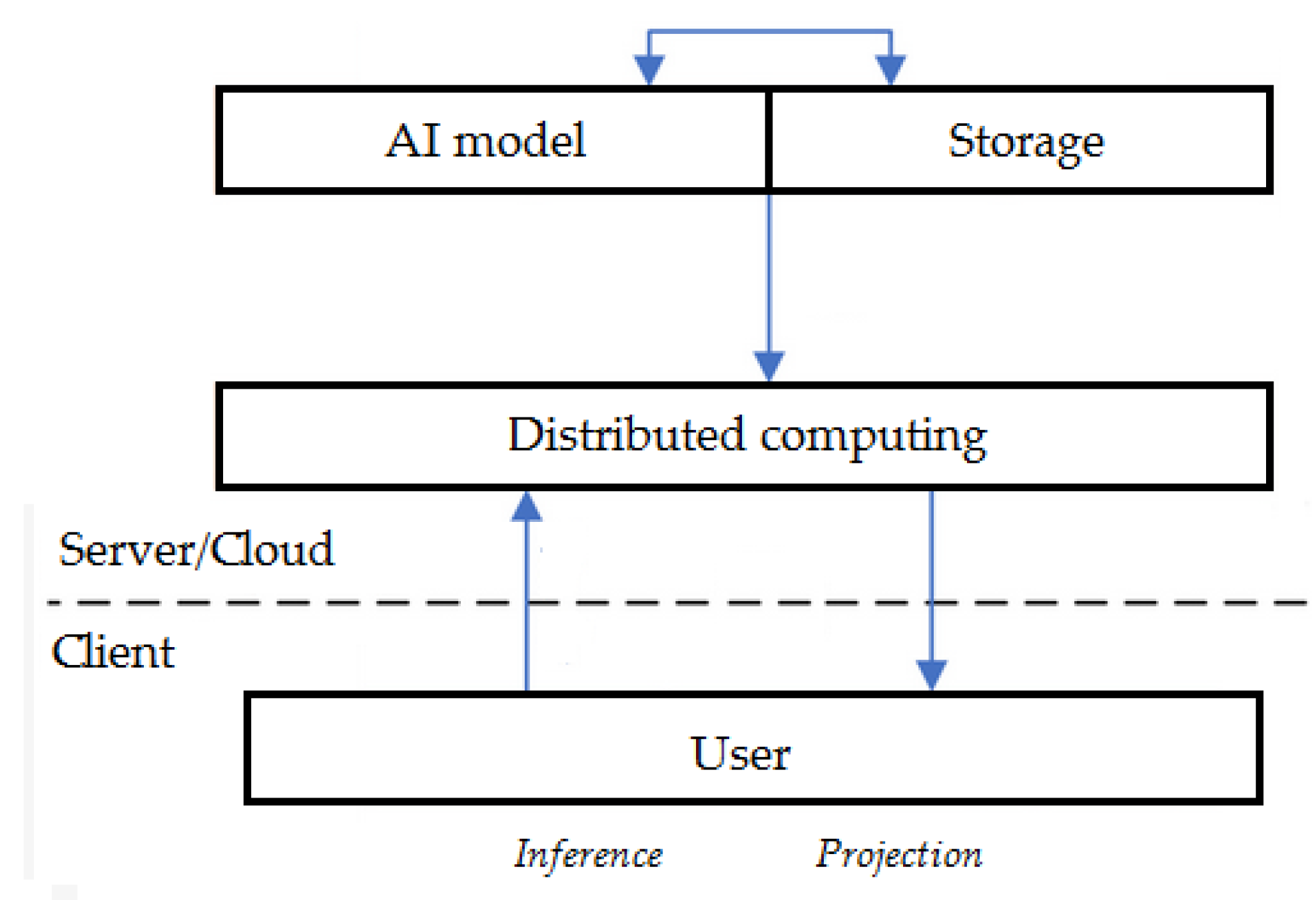
ML algorithms further optimize data collection processes by identifying redundant signals and prioritizing the most informative features [57]. Therefore, the integration of multimodal sensors, robust signal processing, and synchronized, real-time data exchange forms the basis of an intelligent and responsive DTs ecosystem for personalized rehabilitation (Figure 10) [58]. However, it should be noted that the amount of processed data (original and synthetic) may be limited by excessive energy consumption for computational processes and by the emerging Green AI paradigm (cost-effective, energy-efficient AI) [59].
This article highlights data heterogeneity and variable quality, and this subsection examines the causes of these issues and how to systematically mitigate them in the context of rehabilitation. Signal inconsistencies often result from differences in sensor hardware, sampling rates, wearing positions, patient movement patterns, and ambient noise—all of which require dedicated matching algorithms such as sensor fusion, domain adaptation, or calibration-free signal normalization. A deeper discussion is needed on how preprocessing processes could reconcile these differences by using standard reference frames, biomechanical models, or wearable-specific correction layers. The problem of small and unbalanced datasets has already been mentioned. Considering a broader spectrum of learning solutions based on a few trials, transfer learning could leverage pretrained biomechanical or physiological models to improve performance on limited data. Meta-learning could enable models to quickly adapt to individual patients or new rehabilitation tasks, but its sensitivity to noise and outliers may limit its effectiveness. Active learning strategies (which selectively request the most informative data points) are also crucial for minimizing the burden of clinical labeling. Limitations of these approaches include domain shift, overfitting to synthetic data, and difficulties in creating high-quality meta-learning support sets. This necessitates addressing root causes and methodological tradeoffs. Further discussion as a comprehensive approach should connect these advanced paradigms to real-world rehabilitation processes, clarifying their clinical feasibility and outlining practical steps to overcome ongoing data challenges.

3.4. Security and Privacy

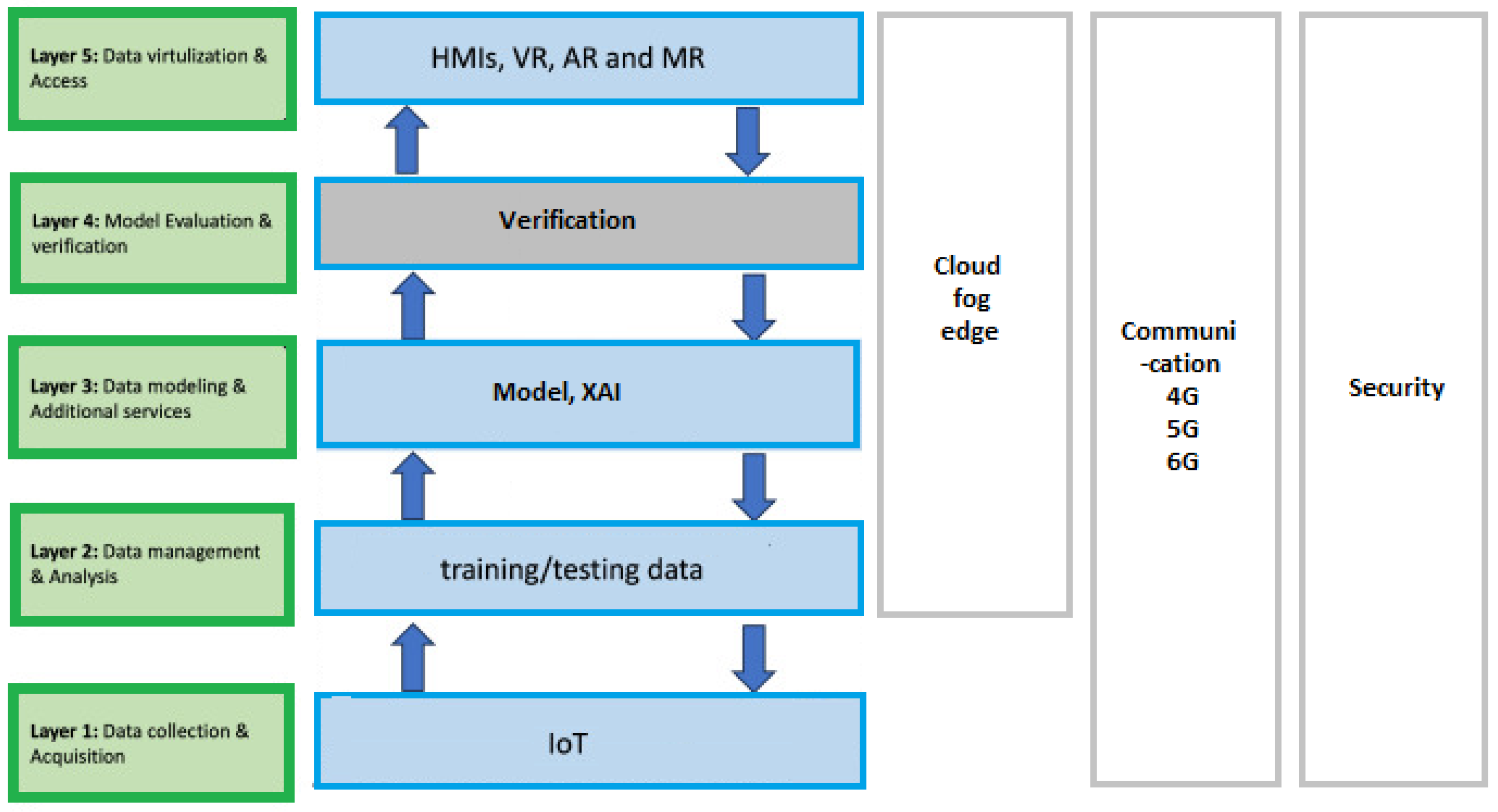
Cybersecurity is a key aspect of wearable devices based on ML and DTs in rehabilitation, ensuring the protection of sensitive medical data. These systems collect vast amounts of personal and physiological data, making them attractive targets for cyberattacks and data breaches. Key challenges related to data security, encryption, and privacy protection in distributed clinical environments stem from the sensitive and high-volume nature of rehabilitation data [60]. Continuous monitoring through wearable devices generates vast streams of personal health information, increasing exposure to potential cyber threats. Ensuring secure data transmission between sensors, edge devices, and cloud servers requires robust encryption protocols that balance confidentiality with computational efficiency [61]. Heterogeneous data sources across institutions complicate the implementation of unified security frameworks, leading to vulnerabilities in interoperability. Distributed clinical settings face the added challenge of maintaining consistent access control and authentication across diverse hardware and software systems [62]. Privacy regulations such as the U.S. The Health Insurance Portability and Accountability Act (HIPAA), the EU General Data Protection Regulation (GDPR), and the AI Act impose strict requirements that demand advanced anonymization and compliance-aware data handling methods. Federated learning offers a promising solution by enabling decentralized model training without transferring raw data, but it introduces new risks such as model inversion and gradient leakage attacks [63]. Edge computing partially mitigates these issues by processing data locally, though it also raises concerns about securing resource-constrained devices. Maintaining trust among patients and healthcare providers depends on transparent security policies and continuous monitoring of potential breaches [64]. Ultimately, achieving robust data protection in distributed rehabilitation ecosystems requires an integrated approach that combines encryption, privacy-preserving ML, secure edge architectures, and regulatory alignment (Figure 11).
Strong encryption methods are essential to secure data during transmission between wearable devices, edge devices, and cloud servers. Authentication and access control mechanisms help prevent unauthorized use or manipulation of patient data [65]. Federated learning enhances cybersecurity by storing raw data locally while sharing only model updates, thereby minimizing the risk of exposure. However, adversarial attacks and model inversion threats remain a concern, requiring continuous monitoring and model hardening [66]. Blockchain and distributed ledger technologies can improve the transparency and traceability of data exchange in rehabilitation ecosystems [67]. Regular software updates, intrusion detection systems, and anomaly detection models are essential to identifying and mitigating potential breaches in real time. Compliance with international cybersecurity standards and healthcare regulations, such as HIPAA and GDPR, ensures the lawful and ethical processing of data. This resilient cybersecurity framework builds trust and security when implementing intelligent rehabilitation systems based on ML and DTs [68].
Due to safety concerns, current patient-specific digital devices often fail to consider factors sensitive to gender, age (and related deficits), and socioeconomic factors. Wider implementation of WCAG 2.2 and similar solutions will improve this situation but likely not enough to stop reinforcing biases and reducing their clinical effectiveness. Hence, it is imperative to consider the aforementioned data gaps and the interdisciplinary connections between technical solutions, clinical relevance, ethical, and societal challenges related to digital accessibility, regardless of these various factors. Especially in the area of privacy protection tools and inclusive frameworks, poorly designed and utilized digital devices can perpetuate existing inequalities rather than mitigate them [69].
Although differential privacy, homomorphic encryption, and federated learning are cited as promising privacy-preserving technologies, the current discussion overlooks the significant challenges they pose in real-world rehabilitation settings. For example, differential privacy introduces statistical noise to protect patient identity, but even minimal perturbations can obscure clinically relevant micro-patterns, such as early tremor, gait irregularities, or subtle EMG changes, essential for rehabilitation assessment. Because rehabilitation relies on tracking small, continuous changes in motor performance, noisy data can lead to misclassification of patient progress or inappropriate treatment modifications. Homomorphic encryption, while theoretically enabling computation on encrypted data, remains computationally expensive, creating delays incompatible with the real-time feedback loops required for wearable and robot-assisted rehabilitation. The discussion also neglects the fact that federated learning often struggles to converge when trained on highly non-IID (independent and identically distributed) datasets, typical of rehabilitation, where patient conditions, device sensors, and treatment protocols vary significantly across facilities. This statistical heterogeneity can lead to unstable training dynamics, model drift, and performance degradation, disproportionately impacting minority or rare disease patient groups. Furthermore, federated aggregation algorithms can inadvertently favor data-rich hospitals, leading to biased models that perform worse in smaller clinics or underrepresented populations. Communication constraints and intermittent connectivity in home rehabilitation further complicate federated learning, making synchronous updates unrealistic in real-world implementations. These limitations require a specific strategy (such as personalized federated learning, cluster-based aggregation, or adaptive differential privacy), but this paper does not address some of them. Therefore, a detailed discussion should highlight that privacy-preserving AI techniques, while essential, face significant unresolved obstacles to maintaining clinical accuracy, fairness, and real-time performance in rehabilitation settings.

3.5. Edge Intelligence

Edge intelligence plays a key role in increasing the efficiency and effectiveness of wearable devices based on ML and DTs in rehabilitation. The role of edge computing in rehabilitation engineering is crucial for increasing the responsiveness, efficiency, and intelligence of wearable therapy systems. By processing data locally on or near wearable devices, edge computing significantly reduces latency, enabling immediate feedback, crucial for real-time rehabilitation adjustments [70]. This low-latency feature ensures synchronization of DT models with patients’ physical movements and physiological responses [71]. Edge architectures also reduce dependence on cloud resources, improving energy efficiency by minimizing continuous data transmission. Local computing enables wearable devices to perform complex analyses, such as motion recognition and anomaly detection, without relying on remote servers. This distributed intelligence supports personalized and adaptive feedback, enabling patients to engage in self-directed, guided rehabilitation exercises [72]. Furthermore, edge computing enhances data privacy by storing sensitive information on the local device or clinical network. When integrated with federated learning, edge nodes can collaboratively update shared models while maintaining confidentiality and reducing bandwidth requirements [73]. The combination of edge intelligence and ML provides real-time adaptability, essential in dynamic rehabilitation environments. From this perspective, edge computing transforms wearable technologies into intelligent, energy-efficient, and secure systems that can provide immediate and context-sensitive feedback for therapy [74].
Edge intelligence involves locally processing and analyzing data on edge devices, such as smart sensors or mobile gateways, instead of relying solely on distant cloud servers. This localized processing significantly reduces latency, enabling real-time feedback, which is crucial for rehabilitation monitoring and adaptive therapy. By minimizing data transmission and associated latency, edge intelligence also helps maintain patient privacy and reduce bandwidth consumption [75]. It enables wearable systems to operate continuously even in environments with limited or unreliable internet connectivity. Integrating lightweight ML models enables on-device decision-making, such as detecting abnormal movements or predicting recovery progress [76]. Edge intelligence works synergistically with federated learning, enabling collaborative model training without compromising data security. It supports the creation of more responsive and autonomous digital twin systems that can dynamically adapt therapeutic interventions [77]. Challenges such as limited computing power, energy efficiency, and model optimization remain key areas of research [78]. Therefore, edge intelligence combines real-time patient interaction with intelligent DT (or multi-DT) simulations, enabling the creation of more personalized and safer rehabilitation solutions.
Discussions about edge computing in rehabilitation technologies tend to be overly optimistic and lack a detailed analysis of the technical challenges associated with implementing complex AI models on resource-constrained wearable and bedside devices. A significant concern is the degradation of accuracy caused by model compression techniques such as pruning, quantization, and knowledge distillation, which can impede clinical decision-making if not rigorously validated. To ensure safety, compressed models must undergo multi-stage validation, including benchmarking against cloud databases, testing on real-world patient data, and verifying performance stability in various rehabilitation settings [79]. Clinically acceptable error margins must be clearly defined (e.g., allowable deviations in gait phase classification or muscle fatigue prediction) to ensure that model simplification does not introduce harmful inaccuracies [80]. Another unresolved issue is the trade-off between power consumption and computational efficiency, particularly for battery-powered wearable rehabilitation devices that must operate continuously. Edge devices require strategies such as dynamic voltage scaling, adaptive inference scheduling, or selective sensor activation to balance power constraints with real-time response. More advanced approaches, such as split learning or hybrid cloud-edge architectures, could offload the most computationally intensive tasks to the cloud while maintaining low-latency processing on the device. However, these solutions require robust connectivity and careful handling of intermittent network conditions to avoid interruptions in therapy monitoring. Security poses another challenge, as edge devices deployed in home rehabilitation are more vulnerable to tampering, requiring strong encryption, secure boot mechanisms, and on-device anomaly detection. In a balanced discussion, it is therefore important to emphasize that while edge computing enables real-time, personalized rehabilitation support, its safe and reliable implementation depends on addressing these practical limitations through rigorous optimization and clinical validation [81,82].

3.6. Federated Learning

Federated learning is a revolutionary approach in wearable devices and ML-based DTs for rehabilitation, enabling collaborative model training without sharing raw patient data. It allows multiple edge devices or healthcare institutions to co-create a global model while storing sensitive data locally [83]. This decentralized learning platform enhances privacy and compliance with regulations such as GDPR and HIPAA. In rehabilitation, federated learning facilitates the creation of personalized treatment models by aggregating knowledge from diverse patient populations and environments [84]. It reduces the risk of data leaks by transmitting only model updates or gradients rather than entire datasets. This approach also improves model generalization by leveraging heterogeneous data collected from different sensors and usage conditions [85]. However, challenges such as communication overhead, model convergence, and protection against adversarial updates remain key issues. Combining federated learning with edge intelligence increases scalability and real-time responsiveness in rehabilitation applications [86]. Security mechanisms such as:
  • differential privacy;
  • homomorphic encryption.
Further enhance data protection in federated systems. Using these mechanisms, federated learning enables the creation of secure, adaptive, and globally informed DT models that support personalized and data-driven rehabilitation outcomes [87].
FL-based approaches are emerging as transformative strategies for co-training ML models in rehabilitation without exposing sensitive medical data. In this decentralized environment, data is securely stored on local devices or institutional servers, and only model updates are shared for global aggregation [88]. This structure protects patient privacy and ensures compliance with data protection regulations such as HIPAA and GDPR. In rehabilitation systems, FL enables hospitals, clinics, and mobile devices to collaboratively improve DT models based on diverse datasets from different populations [89]. The resulting models become more generalizable, capturing a wide range of recovery patterns and physiological variations. Integrating FL with edge computing improves performance by enabling computations to be performed close to the data sources, reducing communication latency and energy consumption [90]. Despite its promising capabilities, FL faces challenges such as communication overhead, data heterogeneity, and potential model poisoning attacks [91]. Recent advances in secure aggregation, differential privacy, and blockchain-based auditing mechanisms are helping to address these vulnerabilities. GenAI can further support FL by synthesizing realistic but anonymized data to balance non-IID datasets and improve model robustness [92]. In this way, federated learning is a key enabler of privacy-preserving intelligence in rehabilitation, supporting collaboration without compromising ethical and security standards.
The discussion of FL in rehabilitation must go beyond generic architectures and consider the statistical heterogeneity inherent in medical data collected in hospitals, clinics, home care facilities, and portable rehabilitation units [93]. Rehabilitation patients vary significantly in terms of injury type, severity, sociodemographic background, and adherence to therapy, meaning that FL models must be explicitly tailored to handle highly heterogeneous data distributions without compromising predictive accuracy. To prevent models from inadvertently biasing data-rich institutions, FL aggregation algorithms should incorporate fairness-based weighting schemes such as contribution balancing, gradient pruning, or group-level normalization, ensuring that smaller centers and underrepresented patient groups contribute to the global model. A related challenge is avoiding bias toward specific rehabilitation pathways (e.g., dominant patterns of recovery from stroke in orthopedic or neuromuscular cases), which would require domain-specific subgroup modeling and hierarchical aggregation strategies. Communication constraints in the context of rehabilitation, particularly when using wearable devices or home sensors, require optimization techniques such as update compression, periodic aggregation, or local adaptive training to balance bandwidth limitations with model fidelity [94]. Specific trade-off strategies should include adaptive communication schedules that adjust data transfer frequency based on clinical relevance, patient stability, or available network resources [95]. Inter-institutional trust can be enhanced by integrating secure aggregation, homomorphic encryption, or differential privacy tailored to physiological signals and movement data used for therapeutic monitoring. Importantly, federated models must be validated against clinically relevant endpoints—such as functional improvement scores, gait symmetry, or muscle activation profiles—to ensure that the chosen aggregation methods support real-world rehabilitation outcomes [96]. Further discussion should also address how FL can support personalized digital twins, enabling models to maintain population-level robustness while adapting locally to each patient’s treatment progress. By explicitly considering these rehabilitation-specific constraints and design strategies, it is possible to move beyond abstract FL concepts and offer a technically and clinically sound roadmap for implementing federated intelligence in next-generation rehabilitation systems.

3.7. Generative AI and Agentic AI

New GenAI techniques are transforming rehabilitation by enabling the creation of synthetic data, personalized DTs, and immersive therapeutic simulations. Generating synthetic data with GenAI helps overcome the limitations of limited or imbalanced medical datasets while protecting patient privacy [89]. Advanced generative models, such as variational autoencoders (VAEs), diffusion models, and generative adversarial networks (GANs), can simulate realistic physiological signals and movement patterns reflecting diverse patient populations. This synthetic data improves the training of ML models used in wearable devices and DT frameworks, increasing their accuracy and generalizability. GenAI also supports the personalization of DTs by generating patient-specific parameters reflecting their anatomy, behavior, and recovery dynamics [90]. These personalized DTs enable precise predictive modeling and adaptive rehabilitation planning tailored to each user’s progress. Furthermore, GenAI-based simulations create virtual rehabilitation environments in which various treatment scenarios can be safely and effectively tested [91]. By integrating multimodal sensor data, GenAI can replicate the complex interactions between the musculoskeletal, neural, and cognitive systems. This capability not only supports clinical trials but also enhances patient engagement through realistic feedback and motivation [92]. In this way, GenAI serves as a catalyst for intelligent, safe, and personalized rehabilitation ecosystems that continuously learn, adapt, and optimize patient recovery pathways.
Generative and agent-based artificial intelligence (Agentic AI) are emerging as powerful technologies in the development of ML-based wearable devices and DTs in rehabilitation. GenAI enables the creation of synthetic yet realistic data that complements limited rehabilitation datasets, improving model training and reducing errors. It can simulate diverse patient scenarios, movement patterns, or physiological signals, improving the accuracy of digital twin models [97]. Generative models, such as GANs and diffusion models, help personalize rehabilitation exercises by adapting them to individual patient profiles. Agentic AI, on the other hand, introduces autonomous decision-making capabilities, enabling intelligent agents to actively plan, reason, and interact within rehabilitation systems [98]. AI agents can monitor patient progress, dynamically adjust treatment protocols, and communicate insights to clinicians in real time. Integrated generative and agent-based Agentic AI supports self-improving and context-aware rehabilitation ecosystems [99]. Security and ethical considerations are crucial, as these systems must ensure transparency, explainability, and protection of sensitive medical data. Edge and federated learning can further support these AI models, enabling decentralized and privacy-preserving intelligence [100]. Together, generative and agent-based AI represent a shift toward intelligent, adaptive, and personalized rehabilitation based on continuous learning and autonomous decision-making.
This article presents a vision for an intelligent, secure, and adaptive rehabilitation ecosystem that seamlessly integrates engineering and AI to create next-generation personalized therapeutic solutions. By mapping current advances and identifying research gaps, this article establishes a unified framework that connects electronic and biomedical engineering with intelligent DT ecosystems for advanced rehabilitation. It highlights how the integration of wearable sensors, edge intelligence, and ML enables continuous, data-driven monitoring and therapy optimization. The review synthesizes advances in multimodal data collection, real-time synchronization, and adaptive feedback mechanisms in distributed rehabilitation environments. It highlights the growing importance of security, privacy, and encryption in protecting sensitive medical information in connected systems. Federated learning is identified as a key method for training collaborative models without compromising patient confidentiality. GenAI is presented as a breakthrough in generating synthetic data, enhancing DT personalization, and simulating realistic rehabilitation scenarios. Despite significant progress, challenges remain in data standardization, cross-platform interoperability, and computing efficiency at the edge [101]. This framework emphasizes the need to harmonize hardware innovation with biomedical knowledge to enable the creation of reliable, patient-specific digital models. Future research directions include scalable architectures, privacy-preserving AI algorithms, and clinically validated DT applications (Figure 12) [102].
Agentic AI’s workflow management solution streamlines the coordination and automation of rehabilitation processes using wearable devices powered by ML and DTs. It enables intelligent agents to autonomously monitor, plan, and optimize tasks across clinical, technological, and patient-centered workflows. These agents can dynamically allocate computing resources, synchronize data collection, and adjust treatment protocols based on real-time feedback. By integrating with DTs, Agentic AI ensures seamless communication between patients, medical professionals, and devices, improving treatment efficiency and outcomes. This transforms rehabilitation management into a proactive, adaptive, and intelligent system that supports continuous optimization and personalized care (Figure 13) [103].
Discussions about GenAI in healthcare have largely emphasized its powerful ability to augment datasets and simulate complex physiological scenarios, but have paid significantly less attention to methods for verifying whether the generated data truly reflects clinically valid patterns or biologically realistic patient responses [105]. This gap exists because most evaluation methods still rely on statistical similarity metrics rather than domain-specific criteria rooted in medical physiology, making it difficult to determine whether synthetic results are clinically valid [106]. A more serious concern is that generative models inherit and often amplify biases embedded in their training datasets, distorting patient representations and leading to systematically unsafe or unfair clinical decisions [107]. Furthermore, because GenAI systems can generate hallucinations (fabricated physiological signals or implausible disease progression) they can introduce false confidence in medical decision support tools, posing a direct threat to diagnosis, treatment planning, and patient safety [108].

4. Discussion

The results of the review confirmed that previous research and publications state that AI-based DTs are widely considered an innovative approach in healthcare, especially in rehabilitation and physiotherapy, involving the creation of digital replicas of physical patients in real time. Previous research and publications indicate that AI-based DTs in physiotherapy and rehabilitation, through the automated creation and updating of virtual replicas of patients, objects (e.g., assistive technologies such as exoskeletons) [109,110], or healthcare systems, have the potential to transform healthcare through personalized and predictive models that provide deeper insights into patient conditions and predict changes in response to therapy. This is supported by the development of wearable, wireless, and non-invasive diagnostic devices. These integrate wireless biosensors to measure physiological changes, mechanical constraints, and tissue topography during normal patient functioning (including during exercise) with computational modeling based on patient history, test results, and medical imaging in the form of finite element analysis or multibody dynamics (DTs) [111]. This already enables reliable simulation of the mechanical behavior of a patient’s musculoskeletal structures, and, with integration with wearable devices, also real-time or near-real-time monitoring and feedback. This allows for the application and prediction of preventive measures and adaptive care strategies. Such DTs already enable rehabilitation process optimization, mechanical analysis (e.g., of joints), and the personalization of interventions (rehabilitation, physiotherapy, surgery) [112]. These capabilities, combined, will streamline therapeutic planning, reduce complications, and allow for more effective adjustments to patient rehabilitation strategies. AI/ML can significantly increase predictive capabilities, including those for pathological changes, and provide evidence for a better understanding of disease and recovery processes [113]. However, this requires effective integration of multimodal data, modeling of damage and natural aging processes, and the efficient use of computational resources to reduce costs and develop clinically effective models [114].

4.1. Limitations

The key limitations observed relate to multiple aspects of the discussed issue, which may have overlapping consequences. Currently, data collection from wearable devices is not standardized and does not ensure interoperability, leading to fragmented datasets and poor model generalization across populations [115]. Small and unbalanced datasets limit the accuracy and reliability of ML models, particularly for rare rehabilitation conditions or minority patient groups. Actual data quality can be compromised by sensor noise, inconsistent device calibration, and limited long-term monitoring outside clinical environments (which are important in home-based rehabilitation) [116]. Data privacy and security remain key concerns, as sensitive patient information can be exposed through insecure communication or model-based inference attacks. Computational limitations of edge devices limit the deployment of advanced ML models with high requirements for accuracy and explainability [117]. Federated learning faces challenges related to data heterogeneity, uneven client participation, and high communication costs, which compromise model convergence and reliability. A lack of transparent and interpretable models to support clinical decision-making reduces trust between healthcare professionals and regulators [118]. DTs often struggle to achieve physiological and biomechanical realism, limiting their reliability in personalized rehabilitation planning. GenAI can generate unrealistic or biased synthetic data, creating potential risks in model training and clinical interpretation [119]. A lack of sufficient multidisciplinary standards and validation frameworks hinders the safe and ethical implementation of AI-based rehabilitation technologies on a large scale [120]. Several validation gaps stem from the insufficient integration of standards and interdisciplinary frameworks in AI-based rehabilitation technologies [121]. The lack of a unified protocol combining clinical validation, engineering safety testing, and AI model performance assessment leads to fragmented evaluations that do not fully reflect real-world therapeutic effectiveness [122]. Many systems lack standardized validation that considers human factors and ergonomics, meaning they are not consistently tested for usability, patient comfort, or integration into the therapist’s workflow. Data management and cybersecurity standards (e.g., ISO 27701 [123], ISO 27001 [124], GDPR [125], medical device regulations such as the MDR [126]) are not uniformly applied, resulting in gaps in privacy protection, consent management, and secure device-to-cloud communication. Current validation frameworks rarely include bias audits, transparency assessments, or robustness testing, which are essential to ensuring fair and secure AI-based decision-making across diverse patient populations [127]. Wide-scale implementation is hampered by the lack of long-term clinical trials and post-market surveillance standards that could verify durability, reliability, and ethical compliance over long periods of rehabilitation (Table 4 and Table 5) [128].
Table 6 below presents a concise, practical summary of the most important research gaps observed in the five areas identified previously (data collection, security, edge intelligence, federated learning, and generative AI). Each gap is accompanied by a short description and two impact metrics:
  • severity (how much damage or impact the gap has if not addressed)—rated as high/medium/low with a short numerical metric;
  • likelihood (how likely it is to occur given the current state of knowledge and practice)—rated as high/medium/low with a short numerical metric;
  • practical mitigation actions or research directions as an element of the proposed road map.

Table 6. Key research gaps observed (own elaboration). Legend: severity = likely impact on security, effectiveness, and implementation if the gap persists (high/medium/low). likelihood = likelihood that teams/projects will encounter this gap now (high/medium/low). The ratings are also based on a rough numerical interpretation: high ≈ (4–5), medium ≈ (2–3), low ≈ (0–1).
Research Gap Number and NameDescriptionSeverityLikelihoodMitigation/Ways to Solve (Research + Engineering)
Data collection
1. Limited labeled clinical datasets and class imbalanceSmall, biased datasets for many rehab conditions; minority classes (rare impairments) under-represented, reducing model generalization.HighHighConsortium data sharing agreements; standardized minimal clinical data schemas; synthetic data augmentation (carefully validated); active learning to prioritize labeling; benchmark datasets with stratified sampling.
2. Heterogeneous sensor modalities and metadata povertyDifferent wearables, placements, sampling rates, missing provenance/metadata make model transfer and reproducibility hard.HighHighDefine and adopt metadata standards (device, sampling, placement, calibration); implement automated pre-processing pipelines; publish raw + preprocessed versions; use domain adaptation techniques.
3. Longitudinal, contextual, ground-truth scarcityLack of long-term follow-up and labeled functional outcomes; outcomes often subjective.HighMediumDesign longitudinal cohorts with standardized outcome measures (e.g., ICF/FAAM); use hybrid ground-truth (clinical assessments + ecological momentary assessment); incentivize multi-site registries.
4. Real-world
deployment / ecological validity gap
Models trained in lab/clinic fail in home environments (noise, activities, adherence).HighHighPrioritize in-the-wild data collection, domain randomization, robust evaluation on home data, and continual learning pipelines to adapt on-device.
Security and privacy
5. Weak threat models for ML componentsInsufficient formal analysis of adversarial, privacy, and misuse risks for wearable-to-digital twin pipelines.HighHighDevelop threat models covering sensor spoofing, model inversion, and data poisoning; adopt ML-specific security audits and red teaming.
6. Privacy leakage from models and DTsModels (or twin outputs) may leak sensitive clinical info (re-identification, membership inference).HighHighUse differential privacy where feasible, DP-SGD for training, rigorous membership-inference testing, output minimization for twins, and privacy-preserving synthetic data evaluations.
7. Secure edge-to-cloud communication and lifecycleLack of end-to-end secure update/authentication, device compromise risks, and insecure model update channels.HighMediumUse hardware root-of-trust (secure enclaves), mutual TLS, signed model updates, secure boot, and supply chain verification for devices and twins.
Edge computing/edge intelligence
8. Resource-constrained ML with clinical guaranteesDifficulty obtaining compact, low-latency models that preserve clinical-level accuracy and calibrated confidence.HighHighResearch on model compression plus uncertainty calibration (quantization-aware training + calibration layers); hybrid approaches where critical inference occurs on edge and heavy processing in secure cloud.
9. Explainability and clinician trust at the edgeBlack-box on-device models hinder adoption by clinicians and regulators.MediumHighDesign explainable model families (attention, concept bottlenecks) with light-weight explanations (saliency + prototypical examples) suitable for edge. Evaluate human-in-the-loop acceptance studies.
10. On-device continual and federated adaptationSafe online updating on-device without catastrophic forgetting or privacy leak is immature.HighMediumCombine on-device incremental learning with replay buffers, elastic weight consolidation, and local validation checks; integrate rollback and audit trails.
FL
11. Statistical heterogeneity and fairness in FLClients (devices/patients) differ strongly—skewed data distributions cause biased global models and poor subgroup performance.HighHighPersonalized FL (per-client models, meta-learning), fairness-aware aggregation, subgroup evaluation, and client selection strategies; open benchmarks for rehab FL heterogeneity.
12. Communication, stragglers, and participation incentivesDevices have intermittent connectivity, variable compute, and participation bias risks.MediumHighAsynchronous FL protocols, update compression/quantization, privacy-preserving incentive mechanisms (e.g., tokens), and simulation frameworks for straggler resilience.
13. Privacy-utility
tradeoff and verifiable compliance
Strong privacy mechanisms (DP, secure aggregation) often reduce utility; also, difficulty proving compliance to regulators.HighMediumOptimize privacy budget allocation per task, hybrid secure enclaves + DP, post hoc auditing tools for compliance, and standardized reporting templates for audits.
GenAI and DTs
14. Fidelity, realism, and clinical validity of synthetic patients/twinsGenerative models (for augmentation or twin simulation) may produce unrealistic or clinically implausible behavior, risking model miscalibration.HighMediumValidate synthetic outputs vs. real longitudinal cohorts, include clinician-in-the-loop validation, use physics-informed generative models for biomechanical fidelity, and provide uncertainty bounds for generated data.
15. Misuse risk: harmful or misleading clinical suggestionsGenerative DTs or assistants may hallucinate clinical states or suggest inappropriate interventions.HighMediumConstrain generative outputs with rule-based clinical guards, retrieval-augmented generation anchored to verified sources, conservative confidence thresholds, and human oversight.
16. Integration and interpretability of twin-derived policiesTranslating twin simulations into safe, personalized therapy policies is underexplored (closed-loop control + human factors).HighLow–MediumResearch safe policy extraction methods (safe RL with constraints), simulate-to-real transfer validation, pilot clinical trials with tight monitoring, and stop conditions.
Scales 0–5 are sometimes used informally in reviews to give a qualitative sense of comparative strength, but without a specific source, they risk being considered arbitrary and may introduce interpretational bias. A 0-to-5 rating scale was developed as a structured, semi-quantitative model to summarize the relative strength of the evidence and maturity of each technology domain under review. Each domain—data collection, security, edge intelligence, federated learning, and generative AI—was independently assessed against three criteria commonly used in narrative technology assessments: (i) evidence robustness (quality and number of published studies), (ii) technology maturity (readiness for implementation in practice), and (iii) clinical relevance (proven or potential impact on rehabilitation outcomes). For each criterion, two reviewers assigned a score from 0 to 5, with 0 indicating no significant evidence or maturity, and 5 indicating strong, consistent evidence or widespread technology readiness. The final score for each domain represented the average consensus across all criteria and reviewers. The thresholds of “low ≈ 0–1,”“medium ≈ 2–3,” and “high ≈ 4–5” were chosen because they naturally correspond to the lower, middle, and upper ends of the scale and are commonly used in rapid assessments to distinguish between early-stage, emerging, and well-established technologies. This grouping also ensures that each category represents a significant difference in evidence strength and practical readiness, rather than arbitrary numerical cutoffs.
The interplay of wearable devices with ML, edge intelligence, federated learning, and GenAI is converging to create a rehabilitation ecosystem that is increasingly personalized, predictive, and responsive to individual patient needs. Together, these technologies have the global potential to accelerate recovery, reduce healthcare inequalities through scalable remote interventions, and improve economic efficiency by minimizing costly hospital visits and optimizing clinician workload. By enabling secure, privacy-preserving data flows and real-time adaptive modeling, they offer a path to more equitable access to high-quality rehabilitation care across diverse populations and settings. GenAI further enhances this paradigm by simulating patient-specific scenarios that improve training, planning, and decision support without overburdening clinical resources. However, these benefits depend on the non-negotiable foundations of ethical governance, robust cybersecurity, transparent model behavior, and fair data practices. Only through long-term interdisciplinary collaboration can this technological convergence responsibly transform rehabilitation into a globally accessible and results-oriented care service.
Practical research methods and suggestions for evaluating and avoiding/mitigating these gaps are as follows:
  • Benchmarking: requires reporting performance, calibration, and resource utilization (memory, latency) for each subgroup in articles;
  • Adversarial and privacy testing: includes membership inference, model inversion, and sensor spoofing tests as standard assessments;
  • Human factors: measuring clinician acceptance, cognitive load, and trust in explainable interventions;
  • Regulatory alignment: early engagement with clinical/regulatory stakeholders; creation of explainable technical documentation and audit trails for model updates.
Short-term, priority actions (practical roadmap) to avoid or mitigate the aforementioned gaps:
  • Development of standards and benchmarks: metadata schema, registration protocols, and open benchmark datasets (high leverage; addresses gaps 1–3, 11 from above Table).
  • Implementation of strong privacy/security by design: threat modeling, signed updates, and secure aggregation (gaps 5–7, 13).
  • Investments in long-term cohorts in the wild: multi-center registries with standardized outcomes (gaps 3–4, 14).
  • FL and edge toolkits for rehabilitation: providing reference implementations (asynchronous FL, personalization, compression) and evaluation suites that simulate device connectivity and heterogeneity (gaps 8, 10–12).
  • Clinical validation protocols for generative twins: clinician-in-the-loop checks, physical constraints, and conservative use cases (gaps 14–16).
AI has the potential to revolutionize the use of DTs in physiotherapy and rehabilitation by improving the flow and clarity of the decision-making process through post hoc eXplainable AI (XAI) [110]. This method isolates the key factors for AI decision-making. XAI techniques in rehabilitation settings are essential to ensure clinicians understand, trust, and respond appropriately to recommendations generated by AI-based wearable devices and DTs. Attention-based models, commonly used in movement analysis and EMG-based predictive systems, highlight salient temporal or spatial features, allowing therapists to determine which movements, muscle activations, or sensory windows influenced the model’s decision. Counterfactual explanation techniques are particularly valuable in rehabilitation because they determine what minimal change in a patient’s movement, posture, or physiological pattern would have led to a different clinical assessment, thus offering practical therapeutic insights. Feature attribution methods such as SHAP or integrated gradients can interpret complex multimodal sensor signals, helping clinicians understand how balance metrics, gait parameters, or muscle synergies contribute to predicted impairment levels. Prototype- and example-based explanations allow DTs to compare a patient’s trajectory with similar historical recovery profiles, making predictions more understandable for clinicians and patients. To integrate XAI into clinical processes, explanations must be embedded directly into rehabilitation dashboards, allowing therapists to view interpretable results during sessions without disrupting their routines. These explanations can also be integrated into telerehabilitation systems, where patients receive simplified feedback (e.g., highlighted movement deviations) generated by XAI models available to clinicians. Evaluating the effectiveness of explanations requires domain-specific metrics, such as clinician comprehension scores, confidence calibration tests, and error detection performance during simulated treatment planning [129]. Human-centered studies involving therapists are crucial for assessing whether XAI results actually support decision-making, reduce uncertainty, or improve agreement between model predictions and clinical judgment [130]. XAI in rehabilitation must strike a balance between clarity, usability, and clinical relevance, ensuring that explanations enhance (not complicate) the therapeutic process while maintaining safety and regulatory compliance [131,132]. Its widespread implementation requires further validation studies, the use of standardized AI frameworks, and ethical governance [133]. This will improve the interpretability, reliability, and accessibility of this group of solutions, accelerate their social acceptance, and build trust among medical professionals [134].

4.2. Technological Implications

The technological implications of implementing wearable devices and ML-based DTs in rehabilitation are profound, transforming how healthcare is delivered and experienced. These systems integrate advanced sensors, edge computing, and AI models, enabling real-time monitoring and personalized therapeutic feedback [135]. Combining wearable technologies with DTs allows medical professionals to simulate patient-specific conditions and optimize rehabilitation strategies virtually [136]. Edge intelligence reduces latency and enhances privacy through local data processing, enabling faster and more secure decision-making. Federated learning helps refine models at scale without compromising sensitive patient data, supporting global collaboration in rehabilitation research [137]. GenAI increases data diversity by creating synthetic rehabilitation scenarios and patient profiles, improving model robustness and adaptability. Integrating these technologies promotes interoperability across devices and platforms, paving the way for unified healthcare ecosystems. However, they also require significant advances in the following areas:
  • cybersecurity;
  • data management;
  • ethical AI implementation;
  • explainability (e.g., post hoc eXplainable AI-XAI).
Continuous updates to the computing infrastructure and network reliability are essential to maintaining the scalability of such intelligent systems. These technological advancements represent a shift toward data-driven, adaptive, and patient-centered rehabilitation that bridges the physical and digital healthcare environments [138].
For future preventive medicine and long-term rehabilitation to prevent disease recurrence, integrating lifestyle factors into AI-based DTs may be crucial: the type and amount of physical activity, stress management, environmental cleanliness, diet, and sleep patterns, as well as factors that change with the seasons or age [139]. This will allow for the optimization of planned responses to modifiable risk factors for stroke or cardiovascular disease as part of counteracting the epidemic of lifestyle diseases. This demonstrates the strong interdisciplinarity and global nature of the issues discussed, which certainly cannot be limited to technological considerations alone [140].

4.3. Economic Implications

The economic implications of implementing wearable devices based on ML and DTs in rehabilitation are multifaceted, impacting healthcare costs, efficiency, and accessibility [141]. Initially, implementing these technologies requires significant investments in infrastructure, sensor devices, data management, and cybersecurity systems. However, over time, they can significantly reduce long-term healthcare costs by enabling early detection, remote monitoring, and personalized therapy. Automated data collection and intelligent analysis reduce the need for frequent in-person consultations, lowering operating costs for clinics and hospitals. Edge intelligence and federated learning optimize resource utilization by minimizing cloud dependency and data transmission costs. These technologies also create new economic opportunities in medical technology development, AI research, and telerehabilitation services [142]. Improved rehabilitation outcomes can shorten patient recovery times, leading to higher productivity and lower disability-related costs. Globally, they can help address healthcare inequalities by making advanced rehabilitation accessible to resource-limited regions [143]. However, maintaining these systems requires the following: an ongoing financial commitment to software updates; staff training; ethical data management; and the use of Green AI instead of Red AI. Ultimately, although the initial costs are high, the long-term economic benefits of integrating AI-based wearables and DTs in rehabilitation are significant, supporting a more efficient, scalable, and inclusive healthcare economy.

4.4. Societal Implications

The societal implications of implementing ML- and DT-based wearable devices in rehabilitation are wide-ranging and affect healthcare accessibility, equity, and well-being. These technologies empower patients by promoting self-care and ongoing engagement in the rehabilitation process [144]. Remote monitoring and AI-generated feedback (as part of eHealth) make rehabilitation more inclusive, particularly for individuals in rural or underserved areas. They also reduce the burden on healthcare systems by reducing hospital visits and enabling physicians to efficiently manage larger patient populations [145]. However, differences in digital literacy and access to smart devices can exacerbate existing social and economic inequalities. The collection and use of personal health data raises concerns about privacy, consent, and trust between patients and institutions. The societal acceptance of AI in healthcare depends on transparency, explainability, and proven benefits in patient outcomes [146]. Generative and agent-based AI can transform the patient-professional relationship within the therapeutic alliance, emphasizing collaboration between humans and intelligent systems [147]. Described further, ethical frameworks must evolve to ensure fairness, accountability, and cultural sensitivity in AI-based rehabilitation. Therefore, from a societal perspective, these technologies have the potential to improve the quality of life worldwide, contributing to a more connected, patient-centered, and health-conscious society.

4.5. Ethical and Legal Implications

The ethical and legal implications of implementing wearable devices based on ML and DTs in rehabilitation are crucial to ensuring responsible and equitable use. These systems collect and process sensitive medical data, raising concerns about privacy, consent, and ownership. Strict compliance with regulations such as HIPAA, GDPR, and other regional data protection laws is essential to protecting patient rights. There are also ethical challenges related to ensuring transparency and explainability of AI-based decisions that directly impact patient care [148]. This implies a focus on the development and implementation of the previously mentioned XAI. Bias in data collection (including historical data collected at a time when current regulations were not in place) or model design can lead to unequal treatment outcomes, exacerbating existing inequalities in healthcare [149]. The use of generative and agent-based AI raises questions about accountability when autonomous systems make or influence treatment decisions [150]. Continuous monitoring and auditing mechanisms are essential to ensure compliance, fairness, and data integrity across platforms [151]. Legal frameworks must evolve to define liability in the event of system failure, data misuse, or algorithmic harm. Informed consent procedures must be strengthened to ensure patients fully understand how their data and DTs will be used. Addressing these ethical and legal implications is crucial to building public trust, ensuring patient safety, and promoting the equitable integration of AI-based rehabilitation technologies into global healthcare systems.

4.6. Key Directions for Further Research

Future research should focus on developing standardized, multimodal data collection frameworks that integrate sensory, clinical, and behavioral data for holistic rehabilitation analysis [152]. Advances in privacy-preserving ML, such as secure federated learning and differential privacy, are essential to enable large-scale inter-institutional collaboration without compromising patient confidentiality [153]. The development of edge intelligence through model compression, adaptive inference, and energy-efficient AI hardware (as part of Green AI) will enable real-time rehabilitation monitoring and device feedback [154]. Research should prioritize the development of explainable and reliable AI models to enhance clinical interpretability, transparency, and regulatory acceptance in rehabilitation [155]. Creating high-quality DTs that accurately simulate human physiology and biomechanics could revolutionize personalized therapy design and outcome prediction, supporting clinical decision-making [156]. GenAI can be further explored to create realistic synthetic datasets that overcome data scarcity while ensuring clinical validity and error control. Integrating systems with human intervention will enable continuous learning from feedback from medical professionals, increasing the adaptability and reliability of AI-based rehabilitation tools. An interdisciplinary framework combining neuroscience, biomechanics, and data science is needed to bridge the gap between digital simulations and real-world patient responses [157]. Future research should incorporate long-term and global datasets to more accurately model recovery pathways and rehabilitation trends at the population level [158]. Ultimately, breakthroughs will come from unified, safe, and ethically governed AI ecosystems, where wearable devices, DTs, and intelligent algorithms seamlessly collaborate to deliver personalized, data-driven rehabilitation worldwide.

5. Conclusions

Rehabilitation-focused wearables with ML and DTs are converging to redefine the recovery process as personalized, predictive, and continuously adaptive. However, their full potential remains limited by data fragmentation, privacy threats, and limited model interpretability. New solutions—including edge intelligence (EI) for real-time processing, federated learning for privacy-preserving collaboration across distributed data sources, and GenAI for standardizing methods for simulating patient-specific recovery pathways—offer a coherent technological response to these barriers and point toward a unified, scalable ecosystem of intelligent rehabilitation tools. As these innovations mature, the industry must prioritize rigorous validation, transparent governance, and secure system design to ensure patient trust and clinical adoption. A key path forward lies in moving from proof-of-concept demonstrations to the development of integrated, globally deployable AI-based rehabilitation infrastructures that are scientifically validated, ethically sound, and robustly secured.
The development of standardized methodologies for generating patient-specific recovery simulations, enabling consistent, reproducible, and clinically interpretable DTs-based predictions for diverse patient profiles, emphasizes process and methodology standardization and allows for individualized simulation pathways based on each patient’s condition, goals, and rehabilitation path.

Supplementary Materials

The following supporting information can be downloaded at: https://www.mdpi.com/article/10.3390/electronics14234699/s1. PRISMA 2020 Checklist (partial only) [159].

Author Contributions

Conceptualization, M.P., A.G., E.P., J.M., D.M., I.R. and E.M.; methodology, M.P., A.G., E.P., J.M., D.M., I.R. and E.M.; software, M.P., D.M. and I.R.; validation, M.P., A.G., E.P., J.M., D.M., I.R. and E.M.; formal analysis, M.P., A.G., E.P., J.M., D.M., I.R. and E.M.; investigation, M.P., A.G., E.P., J.M., D.M., I.R. and E.M.; resources, M.P., A.G., E.P., J.M., D.M., I.R. and E.M.; data curation, M.P., D.M. and I.R.; writing—original draft preparation, M.P., A.G., E.P., J.M., D.M., I.R. and E.M.; writing—review and editing, M.P., A.G., E.P., J.M., D.M., I.R. and E.M.; visualization, M.P., D.M. and I.R.; supervision, E.M.; project administration, E.M.; funding acquisition, D.M. All authors have read and agreed to the published version of the manuscript.

Funding

This research was funded by a grant from the Research Potential Program of Kazimierz Wielki University.

Data Availability Statement

No datasets were generated during the study.

Conflicts of Interest

The authors declare no conflicts of interest.

Abbreviations

The following abbreviations are used in this manuscript:
AIArtificial intelligence
DTDigital twin
GANGenerative adversarial network
GenAIGenerative AI
GDPRGeneral Data Protection Regulation
HIPAAHealth Insurance Portability and Accountability Act
VAEVariational autoencoder

References

  1. Xu, D.; Zhou, H.; Jie, T.; Zhou, Z.; Yuan, Y.; Jemni, Y.; Quan, W.; Gao, Z.; Xiang, L.; Gusztav, F.; et al. Data-driven deep learning for predicting ligament fatigue failure risk mechanisms. Int. J. Mech. Sci. 2025, 301, 110519. [Google Scholar] [CrossRef]
  2. Rietdijk, H.H.; Conde-Cespedes, P.; Dijkhuis, T.B.; Oldenhuis, H.K.E.; Trocan, M. A Survey on Machine Learning Approaches for Personalized Coaching with Human Digital Twins. Appl. Sci. 2025, 15, 7528. [Google Scholar] [CrossRef]
  3. Doungtap, S.; Petchhan, J.; Phanichraksaphong, V.; Wang, J.-H. Towards Digital Twins of 3D Reconstructed Apparel Models with an End-to-End Mobile Visualization. Appl. Sci. 2023, 13, 8571. [Google Scholar] [CrossRef]
  4. Damilos, S.; Saliakas, S.; Karasavvas, D.; Koumoulos, E.P. An Overview of Tools and Challenges for Safety Evaluation and Exposure Assessment in Industry 4.0. Appl. Sci. 2024, 14, 4207. [Google Scholar] [CrossRef]
  5. Mikołajewska, E.; Mikołajewski, D.; Mikołajczyk, T.; Paczkowski, T. Generative AI in AI-Based Digital Twins for Fault Diagnosis for Predictive Maintenance in Industry 4.0/5.0. Appl. Sci. 2025, 15, 3166. [Google Scholar] [CrossRef]
  6. Rojek, I.; Dostatni, E.; Mikołajewski, D.; Pawłowski, L.; Węgrzyn-Wolska, K. Modern approach to sustainable production in the context of Industry 4.0. Bull. Pol. Acad. Sci. Tech. Sci. 2022, 70, e143828. [Google Scholar] [CrossRef]
  7. Fuller, A.; Fan, Z.; Day, C.; Barlow, C. Digital Twin: Enabling Technologies, Challenges and Open Research. IEEE Access 2020, 8, 108952–108971. [Google Scholar] [CrossRef]
  8. Wang, B.; Zhou, H.; Yang, G.; Li, X.; Yang, H. Human Digital Twin (HDT) Driven Human-Cyber-Physical Systems: Key Technologies and Applications. Chin. J. Mech. Eng. (Engl. Ed.) 2022, 35, 11. [Google Scholar] [CrossRef]
  9. Anwar, R.; Kwon, J.-W.; Kim, W.-T. A Deep Reinforcement Learning-Based Concurrency Control of Federated Digital Twin for Software-Defined Manufacturing Systems. Appl. Sci. 2025, 15, 8245. [Google Scholar] [CrossRef]
  10. Kwon, J.-W.; Rubab, A.; Kim, W.-T. A Novel Energy Control Digital Twin System with a Resource-Aware Optimal Forecasting Model Selection Scheme. Appl. Sci. 2025, 15, 7738. [Google Scholar] [CrossRef]
  11. Serôdio, C.; Mestre, P.; Cabral, J.; Gomes, M.; Branco, F. Software and Architecture Orchestration for Process Controlin Industry 4.0 Enabled by Cyber-Physical Systems Technologies. Appl. Sci. 2024, 14, 2160. [Google Scholar] [CrossRef]
  12. Kamruzzaman, M.; Salinas, J.S.; Kolla, H.; Sale, K.L.; Balakrishnan, U.; Poorey, K. GenAI-Based Digital Twins Aided Data Augmentation Increases Accuracy in Real-Time Cokurtosis-Based Anomaly Detection of Wearable Data. Sensors 2025, 25, 5586. [Google Scholar] [CrossRef]
  13. Tasmurzayev, N.; Amangeldy, B.; Imanbek, B.; Baigarayeva, Z.; Imankulov, T.; Dikhanbayeva, G.; Amangeldi, I.; Sharipova, S. Digital Cardiovascular Twins, AI Agents, and Sensor Data: A Narrative Review from System Architecture to Proactive Heart Health. Sensors 2025, 25, 5272. [Google Scholar] [CrossRef]
  14. Krzysztoń, E.; Rojek, I.; Mikołajewski, D. A Comparative Analysis of Anomaly Detection Methods in IoT Networks: An Experimental Study. Appl. Sci. 2024, 14, 11545. [Google Scholar] [CrossRef]
  15. Akter, N.; Molnar, A.; Georgakopoulos, D. Toward Improving Human Training by Combining Wearable Full-Body IoT Sensors and Machine Learning. Sensors 2024, 24, 7351. [Google Scholar] [CrossRef] [PubMed]
  16. Qian, Y.; Siau, K.L. Advances in IoT, AI, and Sensor-Based Technologies for Disease Treatment, Health Promotion, Successful Ageing, and Ageing Well. Sensors 2025, 25, 6207. [Google Scholar] [CrossRef] [PubMed]
  17. Mihai, S.; Yaqoob, M.; Hung, D.V.; Davis, W.; Towakel, P.; Raza, M.; Karamanoglu, M.; Barn, B.; Shetve, D.; Prasad, R.V.; et al. Digital Twins: A Survey on Enabling Technologies, Challenges, Trends and Future Prospects. IEEE Commun. Surv. Tutor. 2022, 24, 2255–2291. [Google Scholar] [CrossRef]
  18. Zhukabayeva, T.; Zholshiyeva, L.; Karabayev, N.; Khan, S.; Alnazzawi, N. Cybersecurity Solutions for Industrial Internet of Things—Edge Computing Integration: Challenges, Threats, and Future Directions. Sensors 2025, 25, 213. [Google Scholar] [CrossRef]
  19. Liu, Y.; Zhang, L.; Yang, Y.; Zhou, L.; Ren, L.; Wang, F.; Liu, R.; Pang, Z.; Deen, M.J. A Novel Cloud-Based Framework for the Elderly Health care Services Using Digital Twin. IEEE Access 2019, 7, 49088–49101. [Google Scholar] [CrossRef]
  20. Adeniyi, A.O.; Arowoogun, J.O.; Okolo, C.A.; Chidi, R.; Babawarun, O. Ethical considerations in healthcare IT: Are view of data privacy and patient consentissues. World J. Adv. Res. Rev. 2024, 21, 1660–1668. [Google Scholar] [CrossRef]
  21. Ding, X.; Gan, Q.; Bahrami, S. A systematic survey of data mining and big data in human behavior analysis: Current datasets and models. Trans. Emerg. Telecommun. Technol. 2022, 33, e4574. [Google Scholar] [CrossRef]
  22. Barricelli, B.R.; Casiraghi, E.; Gliozzo, J.; Petrini, A.; Valtolina, S. Human Digital Twin for Fitness Management. IEEE Access 2020, 8, 26637–26664. [Google Scholar] [CrossRef]
  23. Lin, Y.; Chen, L.; Ali, A.; Nugent, C.; Ian, C.; Li, R.; Gao, D.; Wang, H.; Wang, Y.; Ning, H. Human Digital Twin: A Survey. arXiv 2022, arXiv:2212.05937. [Google Scholar] [CrossRef]
  24. Shengli, W. Is Human Digital Twin possible? Comput. Methods Programs Biomed. Update 2021, 1, 100014. [Google Scholar] [CrossRef]
  25. Alazab, M.; Khan, L.U.; Koppu, S.; Ramu, S.P.; M, I.; Boobalan, P.; Baker, T.; Maddikunta, P.K.R.; Gadekallu, T.R.; Aljuhani, A. Digital Twins for Healthcare 4.0—Recent Advances, Architecture, and Open Challenges. IEEE Consum. Electron. Mag. 2022, 12, 29–37. [Google Scholar] [CrossRef]
  26. Chen, J.; Yi, C.; Okegbile, S.D.; Cai, J.; Shen, X. Networking Architecture and Key Supporting Technologies for Human Digital Twin in Personalized Healthcare: A Comprehensive Survey. IEEE Commun. Surv. Tutor. 2023, 26, 706–746. [Google Scholar] [CrossRef]
  27. Okegbile, S.D.; Cai, J.; Yi, C.; Niyato, D. Human Digital Twin for Personalized Healthcare: Vision, Architecture and Future Directions. IEEE Netw. 2022, 37, 262–269. [Google Scholar] [CrossRef]
  28. Rojek, I.; Kotlarz, P.; Kozielski, M.; Jagodziński, M.; Królikowski, Z. Development of AI-Based Prediction of Heart Attack Risk as an Element of Preventive Medicine. Electronics 2024, 13, 272. [Google Scholar] [CrossRef]
  29. Rózanowski, K.; Sondej, T.; Lewandowski, J.; Łuszczyk, M.; Szczepaniak, Z. Multisensor System for Monitoring Human Psychophysiologic Statein Extreme Conditions with the Use of Microwave Sensor. In Proceedings of the 19th International Conference Mixed Design of Integrated Circuits and Systems MIXDES 2012, Warsaw, Poland, 24–26 May 2012; pp. 417–424. [Google Scholar]
  30. Jannasz, I.; Sondej, T.; Targowski, T.; Mańczak, M.; Obiała, K.; Dobrowolski, A.P.; Olszewski, R. Relationship between the Central and Regional Pulse Wave Velocity in the Assessment of Arterial Stiffness Depending on Gender in the Geriatric Population. Sensors 2023, 23, 5823. [Google Scholar] [CrossRef]
  31. Salvi, S.; Vu, G.; Gurupur, V.; King, C. Digital Convergence in Dental Informatics: A Structured Narrative Review of Artificial Intelligence, Internet of Things, Digital Twins, and Large Language Models with Security, Privacy, and Ethical Perspectives. Electronics 2025, 14, 3278. [Google Scholar] [CrossRef]
  32. Liu, H.; Tian, N.; Song, D.-A.; Zhang, L. Digital Twin-Enabled Multi-Service Task Offloading in Vehicular Edge Computing Using Soft Actor-Critic. Electronics 2025, 14, 686. [Google Scholar] [CrossRef]
  33. Kabashkin, I. Federated Unlearning Framework for Digital Twin–Based Aviation Health Monitoring Under Sensor Drift and Data Corruption. Electronics 2025, 14, 2968. [Google Scholar] [CrossRef]
  34. Bian, Y.; Zhang, X.; Luosang, G.; Renzeng, D.; Renqing, D.; Ding, X. Federated Learning and Semantic Communication for the Metaverse: Challenges and Potential Solutions. Electronics 2025, 14, 868. [Google Scholar] [CrossRef]
  35. Lifelo, Z.; Ding, J.; Ning, H.; Ain, Q.U.; Dhelim, S. Artificial Intelligence-Enabled Metaverse for Sustainable Smart Cities: Technologies, Applications, Challenges, and Future Directions. Electronics 2024, 13, 4874. [Google Scholar] [CrossRef]
  36. Zhang, L.; Du, Q.; Lu, L.; Zhang, S. Overview of the Integration of Communications, Sensing, Computing, and Storage as Enabling Technologies for the Metaverse over 6G Networks. Electronics 2023, 12, 3651. [Google Scholar] [CrossRef]
  37. Pop, E.; Iliuţă, M.E.; Moisescu, M.A. Digital Twin Types and Applications in Healthcare. Stud. Health Technol. Inform. 2024, 321, 32–36. [Google Scholar] [CrossRef]
  38. Adibi, S.; Rajabifard, A.; Shojaei, D.; Wickramasinghe, N. Enhancing Healthcare through Sensor-Enabled Digital Twins in Smart Environments: A Comprehensive Analysis. Sensors 2024, 24, 2793. [Google Scholar] [CrossRef]
  39. Talal, M.; Zaidan, A.A.; Zaidan, B.B.; Albahri, A.S.; Alamoodi, A.H.; Albahri, O.S.; Alsalem, M.A.; Lim, C.K.; Tan, K.L.; Shir, W.L.; et al. Smart Home-based IoT for Real-time and Secure Remote Health Monitoring of Triage and Priority System using Body Sensors: Multi-driven Systematic Review. J. Med. Syst. 2019, 43, 42. [Google Scholar] [CrossRef]
  40. Lozanovic, J.; Petrovic, M. From Concept to Practice: Unlocking the Potential of Digital Twins in Clinical Engineering. Stud. Health Technol. Inform. 2025, 324, 148–149. [Google Scholar] [CrossRef]
  41. Sondej, T.; Zawadzka, S. Influence of cuff pressures of automatics phygmomanometers on pulse oximetry measurements. Measurement 2022, 187, 110329. [Google Scholar] [CrossRef]
  42. Różanowski, K.; Piotrowski, Z.; Ciołek, M. Mobile Application for Driver’s Health Status Remote Monitoring. In Proceedings of the 2023 9th International Wireless Communications and Mobile Computing Conference IWCMC, Cagliari, Italy, 1–5 July 2013; Volume 2013, pp. 1738–1743. [Google Scholar]
  43. Kawala-Janik, A.; Bauer, W.; Al Bakri, A.; Cichoń, K.; Podraża, W. Implementation of low-pass fractional filtering for the purpose of analysis of electroencephalographic signals. Lect. Notes Electr. Eng. 2019, 496, 63–73. [Google Scholar]
  44. Diniz, P.; Grimm, B.; Garcia, F.; Fayad, J.; Ley, C.; Mouton, C.; Oeding, J.F.; Hirschmann, M.T.; Samuelsson, K.; Seil, R. Digital twin systems for musculoskeletal applications: A current concepts review. Knee Surg. Sports Traumatol. Arthrosc. 2025, 33, 1892–1910. [Google Scholar] [CrossRef] [PubMed]
  45. Lloyd, D.G.; Saxby, D.J.; Pizzolato, C.; Worsey, M.; Diamond, L.E.; Palipana, D.; Bourne, M.; De Sousa, A.C.; Mannan, M.M.N.; Nasseri, A.; et al. Maintaining soldier musculoskeletal health using personalised digital humans, wearables and/or computer vision. J. Sci. Med. Sport 2023, 26 (Suppl. S1), S30–S39. [Google Scholar] [CrossRef] [PubMed]
  46. Lloyd, D. The future of in-field sports biomechanics: Wearables plus modelling compute real-time in vivo tissue loading to prevent and repair musculoskeletal injuries. Sports Biomech. 2024, 23, 1284–1312. [Google Scholar] [CrossRef] [PubMed]
  47. Wang, Y.; Shan, G.; Li, H.; Wang, L. A Wearable-Sensor System with AI Technology for Real-Time Biomechanical Feedback Training in Hammer Throw. Sensors 2022, 23, 425. [Google Scholar] [CrossRef]
  48. Ramasamy, L.K.; Khan, F.; Shah, M.; Prasad, B.V.V.S.; Iwendi, C.; Biamba, C. Secure Smart Wearable Computing through Artificial Intelligence-Enabled Internet of Things and Cyber-Physical Systems for Health Monitoring. Sensors 2022, 22, 1076. [Google Scholar] [CrossRef]
  49. Mohsin Khan, M.; Shah, N.; Shaikh, N.; Thabet, A.; Alrabayah, T.; Belkhair, S. Towards secure and trusted AI in health care: A systematic review of emerging innovations and ethical challenges. Int. J. Med. Inform. 2025, 195, 105780. [Google Scholar] [CrossRef]
  50. Yeung, S.; Kim, H.K.; Carleton, A.; Munro, J.; Ferguson, D.; Monk, A.P.; Zhang, J.; Besier, T.; Fernandez, J. Integrating wearables and modelling for monitoring rehabilitation following total knee joint replacement. Comput. Methods Programs Biomed. 2022, 225, 107063. [Google Scholar] [CrossRef]
  51. Watson, J.B.; Quintero-Peña, C.; Moise, A.C.; Lumsden, A.B.; Corr, S.J. From Data to Decision: A Comprehensive Review of Real-Time Analytics and Smart Technologies in the Surgical Suite. Methodist Debakey Cardiovasc. J. 2025, 21, 5–15. [Google Scholar] [CrossRef]
  52. Mikołajewska, E. Associations between results of post-stroke NDT-Bobath rehabilitation in gait parameters, ADL and hand functions. Adv. Clin. Exp. Med. 2013, 22, 731–738. [Google Scholar]
  53. Babarenda Gamage, T.P.; Elsayed, A.; Lin, C.; Wu, A.; Feng, Y.; Yu, J.; Gao, L.; Wijenayaka, S.; Nash, M.P.; Doyle, A.J.; et al. Vision for the 12 LABOURS Digital Twin Platform. In Proceedings of the 2023 45th Annual International Conference of the IEEE Engineering in Medicine & Biology Society, Sydney, Australia, 24–27 July 2023; Volume 2023, pp. 1–4. [Google Scholar] [CrossRef]
  54. Zhao, F.; Wu, Y.; Hu, M.; Chang, C.W.; Liu, R.; Qiu, R.; Yang, X. Current progress of digital twin construction using medical imaging. J. Appl. Clin. Med. Phys. 2025, 26, e70226. [Google Scholar] [CrossRef]
  55. Loewe, A.; Hunter, P.J.; Kohl, P. Computational modelling of biological systems now and then: Revisiting tools and visions from the beginning of the century. Philos. Trans. A 2025, 383, 20230384. [Google Scholar] [CrossRef]
  56. Ali, M.; Naeem, F.; Tariq, M.; Kaddoum, G. Federated Learning for Privacy Preservation in Smart Healthcare Systems: A Comprehensive Survey. IEEE J. Biomed. Health Inform. 2023, 27, 778–789. [Google Scholar] [CrossRef]
  57. Acosta, J.N.; Falcone, G.J.; Rajpurkar, P.; Topol, E.J. Multimodal biomedical AI. Nat. Med. 2022, 28, 1773–1784. [Google Scholar] [CrossRef]
  58. Akbarialiabad, H.; Pasdar, A.; Murrell, D.F.; Mostafavi, M.; Shakil, F.; Safaee, E.; Leachman, S.A.; Haghighi, A.; Tarbox, M.; Bunick, C.G.; et al. Enhancing randomized clinical trials with digital twins. NPJ Syst. Biol. Appl. 2025, 11, 110. [Google Scholar] [CrossRef] [PubMed]
  59. Rojek, I.; Mroziński, A.; Kotlarz, P.; Macko, M.; Mikołajewski, D. AI-Based Computational Model in Sustainable Transformation of Energy Markets. Energies 2023, 16, 8059. [Google Scholar] [CrossRef]
  60. Amofa, S.; Xia, Q.; Xia, H.; Obiri, I.A.; Adjei-Arthur, B.; Yang, J.; Gao, J. Blockchain-secure patient Digital Twin in healthcare using smart contracts. PLoS ONE 2024, 19, e0286120. [Google Scholar] [CrossRef] [PubMed]
  61. Ali, A.; Almaiah, M.A.; Hajjej, F.; Pasha, M.F.; Fang, O.H.; Khan, R.; Teo, J.; Zakarya, M. An Industrial IoT-Based Blockchain-Enabled Secure Searchable Encryption Approach for Healthcare Systems Using Neural Network. Sensors 2022, 22, 572. [Google Scholar] [CrossRef]
  62. Bathalapalli, V.K.V.V.; Mohanty, S.P.; Kougianos, E.; Iyer, V.; Rout, B. PUFchain 3.0: Hardware-Assisted Distributed Ledger for Robust Authentication in Healthcare Cyber-Physical Systems. Sensors 2024, 24, 938. [Google Scholar] [CrossRef]
  63. Hylock, R.H.; Zeng, X. A Blockchain Framework for Patient-Centered Health Records and Exchange (HealthChain): Evaluation and Proof-of-Concept Study. J. Med. Internet Res. 2019, 21, e13592. [Google Scholar] [CrossRef]
  64. Jones, M.; Johnson, M.; Shervey, M.; Dudley, J.T.; Zimmerman, N. Privacy-Preserving Methods for Feature Engineering Using Blockchain: Review, Evaluation, and Proof of Concept. J. Med. Internet Res. 2019, 21, e13600. [Google Scholar] [CrossRef] [PubMed]
  65. Li, K.; Lohachab, A.; Dumontier, M.; Urovi, V. Privacy preservation in blockchain-based healthcare data sharing: A systematic review. Peer-to-Peer Netw. Appl. 2025, 18, 302. [Google Scholar] [CrossRef] [PubMed]
  66. Sahraoui, Y.; Hadjkouider, A.M.; Kerrache, C.A.; Calafate, C.T. Twin FedPot: Honeypot Intelligence Distillation into Digital Twin for Persistent Smart Traffic Security. Sensors 2025, 25, 4725. [Google Scholar] [CrossRef] [PubMed]
  67. Sel, K.; Hawkins-Daarud, A.; Chaudhuri, A.; Osman, D.; Bahai, A.; Paydarfar, D.; Willcox, K.; Chung, C.; Jafari, R. Survey and perspective on verification, validation, and uncertainty quantification of digital twins for precision medicine. NPJ Digit. Med. 2025, 8, 40. [Google Scholar] [CrossRef]
  68. Miedel, M.T.; Schurdak, M.E.; Stern, A.M.; Soto-Gutierrez, A.; Strobl, E.V.; Behari, J.; Taylor, D.L. Integrated Patient Digital and Biomimetic Twins for Precision Medicine: A Perspective. In Seminars in Liver Disease; Thieme Medical Publishers, Inc.: New York, NY, USA, 2025; Volume 23. [Google Scholar] [CrossRef]
  69. Weinberger, N.; Hery, D.; Mahr, D.; Adler, S.O.; Stadlbauer, J.; Ahrens, T.D. Beyond the gender data gap: Co-creating equitable digital patient twins. Front. Digit. Health 2025, 7, 1584415. [Google Scholar] [CrossRef]
  70. Chukhno, O.; Chukhno, N.; Araniti, G.; Campolo, C.; Iera, A.; Molinaro, A. Optimal Placement of Social Digital Twins in Edge IoT Networks. Sensors 2020, 20, 6181. [Google Scholar] [CrossRef]
  71. Hamdan, S.; Ayyash, M.; Almajali, S. Edge-Computing Architectures for Internet of Things Applications: A Survey. Sensors 2020, 20, 6441. [Google Scholar] [CrossRef]
  72. Amin, F.; Abbasi, R.; Rehman, A.; Choi, G.S. An Advanced Algorithm for Higher Network Navigation in Social Internet of Things Using Small-World Networks. Sensors 2019, 19, 2007. [Google Scholar] [CrossRef]
  73. Gil, D.; Ferrández, A.; Mora-Mora, H.; Peral, J. Internet of Things: A Review of Surveys Based on Context Aware Intelligent Services. Sensors 2016, 16, 1069. [Google Scholar] [CrossRef]
  74. Liu, F.; Huang, Z.; Wang, L. Energy-Efficient Collaborative Task Computation Offloading in Cloud-Assisted Edge Computing for IoT Sensors. Sensors 2019, 19, 1105. [Google Scholar] [CrossRef]
  75. Sittón-Candanedo, I.; Alonso, R.S.; García, Ó.; Muñoz, L.; Rodríguez-González, S. Edge Computing, IoT and Social Computing in Smart Energy Scenarios. Sensors 2019, 19, 3353. [Google Scholar] [CrossRef]
  76. Wu, H.; Ji, P.; Ma, H.; Xing, L. A Comprehensive Review of Digital Twin from the Perspective of Total Process: Data, Models, Networks and Applications. Sensors 2023, 23, 8306. [Google Scholar] [CrossRef] [PubMed]
  77. Yao, J.F.; Yang, Y.; Wang, X.C.; Zhang, X.P. Systematic review of digital twin technology and applications. Vis. Comput. Ind. Biomed. Art 2023, 6, 10. [Google Scholar] [CrossRef] [PubMed]
  78. Dihan, M.S.; Akash, A.I.; Tasneem, Z.; Das, P.; Das, S.K.; Islam, M.R.; Islam, M.M.; Badal, F.R.; Ali, M.F.; Ahamed, M.H.; et al. Digital twin: Data exploration, architecture, implementation and future. Heliyon 2024, 10, e26503. [Google Scholar] [CrossRef] [PubMed]
  79. Łukaniszyn, M.; Majka, Ł.; Grochowicz, B.; Mikołajewski, D.; Kawala-Sterniuk, A. Digital Twins Generated by Artificial Intelligence in Personalized Healthcare. Appl. Sci. 2024, 14, 9404. [Google Scholar] [CrossRef]
  80. Callista, M.; Tjahyadi, H. Digital Twin and Big Data in Healthcare. In Proceedings of the 2022 1st International Conference on Technology Innovation and Its Applications (ICTIIA), Tangerang, Indonesia, 23 September 2022; pp. 1–4. [Google Scholar] [CrossRef]
  81. Shrivastava, M.; Chugh, R.; Gochhait, S.; Jibril, A.B. A Review on Digital Twin Technology in Healthcare. In Proceedings of the 2023 International Conference on Innovative Data Communication Technologies and Application (ICIDCA), Uttarakhand, India, 14–16 March 2023; pp. 741–745. [Google Scholar] [CrossRef]
  82. Gardašević, G.; Katzis, K.; Berbakov, L. Digital Twin Architecture for IoT-Based Healthcare Systems: A Preliminary Study. In Proceedings of the 2025 31st International Conference on Telecommunications (ICT), Budva, Montenegro, 28–29 April 2025; pp. 1–5. [Google Scholar] [CrossRef]
  83. Chen, Y.; Esmaeilzadeh, P. Generative AI in Medical Practice: In-Depth Exploration of Privacy and Security Challenges. J. Med. Internet Res. 2024, 26, e53008. [Google Scholar] [CrossRef]
  84. Ali, H.; Alam, T.; Househ, M.; Shah, Z. Federated Learning and Internet of Medical Things—Opportunities and Challenges. Stud. Health Technol. Inform. 2022, 295, 201–204. [Google Scholar] [CrossRef]
  85. Ahmed, J.; Nguyen, T.N.; Ali, B.; Javed, M.A.; Mirza, J. On the Physical Layer Security of Federated Learning Based IoMT Networks. IEEE J. Biomed. Health Inform. 2023, 27, 691–697. [Google Scholar] [CrossRef]
  86. Begum, K.; Mozumder, M.A.I.; Joo, M.I.; Kim, H.C. BFLIDS: Blockchain-Driven Federated Learning for Intrusion Detection in IoMT Networks. Sensors 2024, 24, 4591. [Google Scholar] [CrossRef]
  87. Messinis, S.; Temenos, N.; Protonotarios, N.E.; Rallis, I.; Kalogeras, D.; Doulamis, N. Enhancing Internet of Medical Things security with artificial intelligence: A comprehensive review. Comput. Biol. Med. 2024, 170, 108036. [Google Scholar] [CrossRef]
  88. Oh, W.; Nadkarni, G.N. Federated Learning in Healthcare Using Structured Medical Data. Adv. Kidney Dis. Health 2023, 30, 4–16. [Google Scholar] [CrossRef]
  89. Wang, B.; Asan, O.; Mansouri, M. Perspectives of Patients With Chronic Diseases on Future Acceptance of AI-Based Home Care Systems: Cross-Sectional Web-Based Survey Study. JMIR Hum. Factors 2023, 10, e49788. [Google Scholar] [CrossRef] [PubMed]
  90. Qi, Y.; Hossain, M.S. Semi-supervised Federated Learning for Digital Twin 6G-enabled IIoT: A Bayesian estimated approach. J. Adv. Res. 2024, 66, 47–57. [Google Scholar] [CrossRef] [PubMed]
  91. Chung, H.; Lee, J.S. Federated influencer learning for secure and efficient collaborative learning in realistic medical database environment. Sci. Rep. 2024, 14, 22729. [Google Scholar] [CrossRef] [PubMed]
  92. Brauneck, A.; Schmalhorst, L.; Kazemi Majdabadi, M.M.; Bakhtiari, M.; Völker, U.; Baumbach, J.; Baumbach, L.; Buchholtz, G. Federated Machine Learning, Privacy-Enhancing Technologies, and Data Protection Laws in Medical Research: Scoping Review. J. Med. Internet Res. 2023, 25, e41588. [Google Scholar] [CrossRef]
  93. Lee, K.Y. Medical Healthcare Digital Twin Reference Platform. In Proceedings of the 2024 Fifteenth International Conference on Ubiquitous and Future Networks (ICUFN), Budapest, Hungary, 2–5 July 2024; pp. 597–599. [Google Scholar] [CrossRef]
  94. Ryan, M.; Osinga, S. Digital twins and dietary health technologies: Applying the capability approach. In Digital Transformation in Healthcare 5.0: Volume 1: IoT, AI and Digital Twin; De Gruyter: Berlin, Germany, 2024; pp. 165–184. [Google Scholar]
  95. Sharma, B.; Kaushal, D.; Sharma, M.; Joshi, S.; Gopal, S.; Gupta, P. Integration of AI, Digital Twin and Internet of Medical Things (IoMT) For Healthcare 5.0: A Bibliometric Analysis. In Proceedings of the 2023 International Conference on Advances in Computation, Communication and Information Technology (ICAICCIT), Faridabad, India, 23–24 November 2023; pp. 1313–1318. [Google Scholar] [CrossRef]
  96. Lakhan, A. DT-LSMAS: Digital Twin-Assisted Large-Scale Multiagent System for Healthcare Workflows. IEEE Syst. J. 2024, 18, 1883–1892. [Google Scholar] [CrossRef]
  97. Moura Junior, V.; Kummer, B.R.; Moura, L.M.V.R. Population Health in Neurology and the Transformative Promise of Artificial Intelligence and Large Language Models. Semin. Neurol. 2025, 45, 445–456. [Google Scholar] [CrossRef]
  98. Hao, D.; Fan, C.; Xia, X.; Zhang, Z.; Yang, Y. Hybrid Electromagnetic-Triboelectric Hip Energy Harvester for Wearables and AI-Assisted Motion Monitoring. Small 2025, 21, e2500643. [Google Scholar] [CrossRef]
  99. Cai, F.; Patharkar, A.; Wu, T.; Lure, F.Y.M.; Chen, H.; Chen, V.C. STRIDE: Systematic Radar Intelligence Analysis for ADRD Risk Evaluation with Gait Signature Simulation and Deep Learning. IEEE Sens. J. 2023, 23, 10998–11006. [Google Scholar] [CrossRef]
  100. Chiaramonte, R.; Cioni, M. Critical spatiotemporal gait parameters for individuals with dementia: A systematic review and meta-analysis. Hong Kong Physiother. J. 2021, 41, 1–14. [Google Scholar] [CrossRef]
  101. Jabin, M.S.R.; Yaroson, E.V.; Ilodibe, A.; Eldabi, T. Ethical and Quality of Care-Related Challenges of Digital Health Twins in Older Care Settings: Protocol for a Scoping Review. JMIR Res. Protoc. 2024, 13, e51153. [Google Scholar] [CrossRef] [PubMed]
  102. McCartney, H.; Main, A.; Weir, N.M.; Rai, H.K.; Ibrar, M.; Maguire, R. Professional-Facing Digital Health Technology for the Care of Patients With Chronic Pain: Scoping Review. J. Med. Internet Res. 2025, 27, e66457. [Google Scholar] [CrossRef]
  103. Kosowicz, L.; Tran, K.; Khanh, T.T.; Dang, T.H.; Pham, V.A.; Ta Thi Kim, H.; Thi Bach Duong, H.; Nguyen, T.D.; Phuong, A.T.; Le, T.H.; et al. Lessons for Vietnam on the Use of Digital Technologies to Support Patient-Centered Care in Low-and Middle-Income Countries in the Asia-Pacific Region: Scoping Review. J. Med. Internet Res. 2023, 25, e43224. [Google Scholar] [CrossRef]
  104. Petrušić, I.; Chiang, C.C.; Garcia-Azorin, D.; Ha, W.S.; Ornello, R.; Pellesi, L.; Rubio-Beltrán, E.; Ruscheweyh, R.; Waliszewska-Prosół, M.; Wells-Gatnik, W. Influence of next-generation artificial intelligence on headache research, diagnosis and treatment: The junior editorial board members’ vision—Part 2. J. Headache Pain. 2025, 26, 2. [Google Scholar] [CrossRef]
  105. Mozumder, M.A.I.; Sumon, R.I.; Uddin, S.M.I.; Athar, A.; Kim, H.C. The Metaverse for Intelligent Healthcare using XAI, Blockchain, and Immersive Technology. In Proceedings of the 2023 IEEE International Conference on Metaverse Computing, Networking and Applications (MetaCom), Kyoto, Japan, 26–28 June 2023; pp. 612–616. [Google Scholar] [CrossRef]
  106. Rahman, T.; Mahmud, T.; Roy, S.; Rahman, M.; Muhammad, M.; Islam, D.; Bin, A.A.; Chakma, R.; Hanip, A.H.; Mohammad, S. Digital Twin-Enabled Intelligent IoT Healthcare Systems. In Proceedings of the 2025 International Conference on Electrical, Computer and Communication Engineering (ECCE), Chittagong, Bangladesh, 13–15 February 2025; pp. 1–5. [Google Scholar] [CrossRef]
  107. Kandan, M.; Naveen, P.; Nagarajan, G.; Janagiraman, S. Digital Twin Applications in Healthcare Facilities Management. In Artificial Intelligence-Enabled Blockchain Technology and Digital Twin for Smart Hospitals; John Wiley and Sons: Hoboken, NJ, USA, 2024; pp. 435–449. [Google Scholar] [CrossRef]
  108. Ahmad, M.A.; Chickarmane, V.; Ali Pour, F.S.; Shariari, N.; Roy, T.D. Validation of a Hospital Digital Twin with Machine Learning. In Proceedings of the 2023 IEEE 11th International Conference on Healthcare Informatics (ICHI), Houston, TX, USA, 26–29 June 2023; pp. 465–469. [Google Scholar] [CrossRef]
  109. Li, H.; Zhang, J.; Zhang, N.; Zhu, B. Advancing Emergency Care With Digital Twins. JMIR Aging 2025, 8, e71777. [Google Scholar] [CrossRef]
  110. Uhlenberg, L.; Derungs, A.; Amft, O. Co-simulation of human digital twins and wearable inertial sensors to analyse gait event estimation. Front. Bioeng. Biotechnol. 2023, 11, 1104000. [Google Scholar] [CrossRef]
  111. Xiang, L.; Gu, Y.; Deng, K.; Gao, Z.; Shim, V.; Wang, A.; Fernandez, J. Integrating personalized shape prediction, biomechanical modeling, and wearables for bone stress prediction in runners. NPJ Digit Med. 2025, 8, 1–276. [Google Scholar] [CrossRef]
  112. Imam, N.H. Adversarial Examples on XAI-Enabled DT for Smart Healthcare Systems. Sensors 2024, 24, 6891. [Google Scholar] [CrossRef]
  113. Mikołajczyk, T.; Kłodowski, A.; Mikołajewska, E.; Fausti, D.; Petrogalli, D. Design and control of system for elbow rehabilitation: Preliminary findings. Adv. Clin. Exp. Med. 2018, 27, 1661–1669. [Google Scholar] [CrossRef]
  114. Varrassi, G.; Leoni, M.L.G.; Al-Alwany, A.A.; Sarzi Puttini, P.; Farì, G. Bioengineering Support in the Assessment and Rehabilitation of Low Back Pain. Bioengineering 2025, 12, 900. [Google Scholar] [CrossRef]
  115. Frossard, L.; Langton, C.; Perevoshchikova, N.; Feih, S.; Powrie, R.; Barrett, R.; Lloyd, D. Next-generation devices to diagnose residuum health of individuals suffering from limb loss: A narrative review of trends, opportunities, and challenges. J. Sci. Med. Sport 2023, 26 (Suppl. S1), S22–S29. [Google Scholar] [CrossRef] [PubMed]
  116. Topini, A.; Sansom, W.; Secciani, N.; Bartalucci, L.; Ridolfi, A.; Allotta, B. Variable Admittance Control of a Hand Exoskeleton for Virtual Reality-Based Rehabilitation Tasks. Front. Neurorobot. 2022, 15, 789743. [Google Scholar] [CrossRef] [PubMed]
  117. Rojek, I.; Mikołajewski, D.; Kotlarz, P.; Tyburek, K.; Kopowski, J.; Dostatni, E. Traditional Artificial Neural Networks Versus Deep Learning in Optimization of Material Aspects of 3D Printing. Materials 2021, 14, 7625. [Google Scholar] [CrossRef]
  118. Chavarrias, A.; Rodriguez-Cianca, D.; Lanillos, P. Adaptive Torque Control of Exoskeletons Under Spasticity Conditions via Reinforcement Learning. In Proceedings of the 2025 IEEE/RAS-EMBS International Conference on Rehabilitation Robotics (ICORR 2025), Chicago, IL, USA, 12–16 May 2025; Volume 2025, pp. 705–711. [Google Scholar] [CrossRef]
  119. Sadée, C.; Testa, S.; Barba, T.; Hartmann, K.; Schuessler, M.; Thieme, A.; Church, G.M.; Okoye, I.; Hernandez-Boussard, T.; Hood, L.; et al. Medical digital twins: Enabling precision medicine and medical artificial intelligence. Lancet Digit. Health 2025, 7, 100864. [Google Scholar] [CrossRef]
  120. Simonetti, D.; Hendriks, M.; Koopman, B.; Keijsers, N.; Sartori, M. A wearable gait lab powered by sensor-driven digital twins for quantitative biomechanical analysis post-stroke. Wearable Technol. 2024, 5, e13. [Google Scholar] [CrossRef]
  121. Mohamed, N.; Al-Jaroodi, J.; Jawhar, I.; Kesserwan, N. Leveraging Digital Twins for Healthcare Systems Engineering. IEEE Access 2023, 11, 69841–69853. [Google Scholar] [CrossRef]
  122. Narigina, M.; Romanovs, A.; Bruzgiene, R. Digital Twin Technology in Healthcare: A Literature Review. In Proceedings of the 2024 IEEE 11th Workshop on Advances in Information, Electronic and Electrical Engineering (AIEEE), Valmiera, Latvia, 31 May–1 June 2024; pp. 1–8. [Google Scholar] [CrossRef]
  123. ISO/IEC 27701:2025 Information Security, Cybersecurity and Privacy Protection—Privacy Information Management Systems—Requirements and Guidance, Edition 2. 2025. Available online: https://www.iso.org/standard/27701 (accessed on 25 November 2025).
  124. ISO/IEC 27001:2022 Information Security, Cybersecurity and Privacy Protection—Information Security Management Systems—Requirements, Edition 3. 2022. Available online: https://www.iso.org/standard/27001 (accessed on 25 November 2025).
  125. GDPR-Regulation (EU) 2016/679 of the European Parliament and of the Council of 27 April 2016 on the Protection of Natural Persons with Regard to the Processing of Personal Data and on the Free Movement of Such Data, and Repealing Directive 95/46/EC (General Data Protection Regulation). Available online: https://eur-lex.europa.eu/legal-content/EN/TXT/?uri=CELEX:32016R0679 (accessed on 25 November 2025).
  126. MDR-Regulation (EU) 2017/745 of the European Parliament and of the Council of 5 April 2017 on Medical Devices, Amending Directive 2001/83/EC, Regulation (EC) No 178/2002 and Regulation (EC) No 1223/2009 and Repealing Council Directives 90/385/EEC and 93/42/EEC. Available online: https://eur-lex.europa.eu/eli/reg/2017/745/oj/eng (accessed on 25 November 2025).
  127. Tyagi, A.K. Sensors and Digital Twin Application in Healthcare Facilities Management. In Artificial Intelligence-Enabled Blockchain Technology and Digital Twin for Smart Hospitals; John Wiley and Sons: Hoboken, NJ, USA, 2024; pp. 369–390. [Google Scholar] [CrossRef]
  128. Xie, S.; Zhu, S.; Dai, J. Feasibility Study of Intelligent Healthcare Based on Digital Twin and Data Mining. In Proceedings of the 2021 International Conference on Computer Information Science and Artificial Intelligence (CISAI), Kunming, China, 17–19 September 2021; pp. 906–911. [Google Scholar] [CrossRef]
  129. Vallée, A. Digital Twins for Personalized Medicine Require Epidemiological Data and Mathematical Modeling: Viewpoint. J. Med. Internet Res. 2025, 27, e72411. [Google Scholar] [CrossRef]
  130. Petrušić, I. Digital phenotyping for migraine: A game-changer for research and management. Cephalalgia 2025, 45, 3331024251363568. [Google Scholar] [CrossRef]
  131. Montagna, S.; Stagni, R.; Pierucci, G.; Aceti, A.; Cordelli, D.M.; Bisi, M.C. Digital Twins for Monitoring Neuromotor Development in Preterm Infants: Conceptual Framework and Proof-of-concept Study. J. Med. Syst. 2025, 49, 143. [Google Scholar] [CrossRef]
  132. Saeed, D.K.; Nashwan, A.J. Harnessing Artificial Intelligence in Lifestyle Medicine: Opportunities, Challenges, and Future Directions. Cureus 2025, 17, e85580. [Google Scholar] [CrossRef]
  133. Salvi, M.; Seoni, S.; Campagner, A.; Gertych, A.; Acharya, U.R.; Molinari, F.; Cabitza, F. Explainability and uncertainty: Two sides of the same coin for enhancing the interpretability of deep learning models in healthcare. Int. J. Med. Inform. 2025, 197, 105846. [Google Scholar] [CrossRef]
  134. Leivaditis, V.; Maniatopoulos, A.A.; Lausberg, H.; Mulita, F.; Papatriantafyllou, A.; Liolis, E.; Beltsios, E.; Adamou, A.; Kontodimopoulos, N.; Dahm, M. Artificial Intelligence in Thoracic Surgery: A Review Bridging Innovation and Clinical Practice for the Next Generation of Surgical Care. J. Clin. Med. 2025, 14, 2729. [Google Scholar] [CrossRef]
  135. Steinhubl, S.R.; Sekaric, J.; Gendy, M.; Guo, H.; Ward, M.P.; Goergen, C.J.; Anderson, J.L.; Amin, S.; Wilson, D.; Paramithiotis, E.; et al. Development of a personalized digital biomarker of vaccine-associated reactogenicity using wearable sensors and digital twin technology. Commun. Med. 2025, 5, 115. [Google Scholar] [CrossRef]
  136. Mo, D.H.; Tien, C.L.; Yeh, Y.L.; Guo, Y.R.; Lin, C.S.; Chen, C.C.; Chang, C.M. Design of Digital-Twin Human-Machine Interface Sensor with Intelligent Finger Gesture Recognition. Sensors 2023, 23, 3509. [Google Scholar] [CrossRef]
  137. Hu, K.; Zhou, Y.; Sitaraman, S.K.; Tentzeris, M.M. Additively manufactured flexible on-package phased array antennas for 5G/mm Wave wearable and conformal digital twin and massive MIMO applications. Sci. Rep. 2023, 13, 12515. [Google Scholar] [CrossRef]
  138. Roßkopf, S.; Meder, B. Healthcare 4.0—Medizin im Wandel [Healthcare 4.0-Medicine in transition]. Herz 2024, 49, 350–354. (In German) [Google Scholar] [CrossRef] [PubMed]
  139. Borkenhagen, A.; Babic, A. Developing Lifestyle-Focused Digital Twin Archetypes in Heart Care. Stud. Health Technol. Inform. 2025, 323, 265–269. [Google Scholar] [CrossRef] [PubMed]
  140. Drummond, D.; Gonsard, A. Definitions and Characteristics of Patient Digital Twins Being Developed for Clinical Use: Scoping Review. J. Med. Internet Res. 2024, 26, e58504. [Google Scholar] [CrossRef]
  141. Yu, F.; Yu, C.; Tian, Z.; Liu, X.; Cao, J.; Liu, L.; Du, C.; Jiang, M. Intelligent Wearable System With Motion and Emotion Recognition Based on Digital Twin Technology. IEEE Internet Things J. 2024, 11, 26314–26328. [Google Scholar] [CrossRef]
  142. Nguyen, T.P.; Nguyen, H.; Cao, H.L.; Bui, T.T.; Ngo, H.Q.T. A Digital Twin-Empowered Framework for Interactive Consumers in Manufacturing Using Wearable Device. IEEE Access 2025, 13, 146557–146568. [Google Scholar] [CrossRef]
  143. Ou, H.; Yue, P.; Duan, Q.; Mo, S.; Zhao, Z.; Qu, X.; Hu, X. Development of a low-cost and user-friendly system to create personalized human digital twin. In Proceedings of the 2023 45th Annual International Conference of the IEEE Engineering in Medicine & Biology Society (EMBC), Sydney, Australia, 24–27 July 2023; Volume 2023, pp. 1–4. [Google Scholar] [CrossRef]
  144. Johnson, Z.; Saikia, M.J. Digital Twins for Health care Using Wearables. Bioengineering 2024, 11, 606. [Google Scholar] [CrossRef]
  145. Firouzi, F.; Farahani, B.; Daneshmand, M.; Grise, K.; Song, J.; Saracco, R.; Wang, L.L.; Lo, K.; Angelov, P.; Soares, E.; et al. Harnessing the Power of Smart and Connected Health to Tackle COVID-19: IoT, AI, Robotics, and Blockchain for a BetterWorld. IEEE Internet Things J. 2021, 8, 12826–12846. [Google Scholar] [CrossRef] [PubMed]
  146. Yip, S.S.W.; Ning, S.; Wong, N.Y.K.; Chan, J.; Ng, K.S.; Kwok, B.O.T.; Anders, R.L.; Lam, S.C. Leveraging machine learning in nursing: Innovations, challenges, and ethical insights. Front. Digit. Health 2025, 7, 1514133. [Google Scholar] [CrossRef] [PubMed]
  147. Suraci, C.; Pizzi, S.; Molinaro, A.; Araniti, G. Business-Oriented Security Analysis of 6G for eHealth: An Impact Assessment Approach. Sensors 2023, 23, 4226. [Google Scholar] [CrossRef]
  148. Singh, S.; Kumar, R.; Payra, S.; Singh, S.K. Artificial Intelligence and Machine Learning in Pharmacological Research: Bridging the Gap Between Data and Drug Discovery. Cureus 2023, 15, e44359. [Google Scholar] [CrossRef]
  149. Danelakis, A.; Stubberud, A.; Tronvik, E.; Matharu, M. The Emerging Clinical Relevance of Artificial Intelligence, Data Science, and Wearable Devices in Headache: A Narrative Review. Life 2025, 15, 909. [Google Scholar] [CrossRef]
  150. Li, F.; Hu, C.; Luo, X. Research Status, Hotspots and Perspectives of Artificial Intelligence Applied to Pain Management: A Bibliometric and Visual Analysis. In Updates in Surgery; Springer: Berlin/Heidelberg, Germany, 2025. [Google Scholar] [CrossRef]
  151. Espinoza-Vinces, C.; Martínez, M.C.; Atorrasagasti-Villar, A.; Rodríguez, M.D.M.G.; Ezpeleta, D.; Irimia, P. Artificial intelligence in headache medicine: Between automation and the doctor-patient relationship. A systematic review. J. Headache Pain 2025, 26, 192. [Google Scholar] [CrossRef]
  152. Borkenhagen, A.; Babic, A. Establishing a Digital Twin Archetype Through Climate Concerns and Quality of Life Data. Stud. Health Technol. Inform. 2025, 328, 550–554. [Google Scholar] [CrossRef]
  153. Marino, S.; Cassidy, R.; Nanni, J.; Wang, Y.; Liu, Y.; Tang, M.; Yuan, Y.; Chen, T.; Sinha, A.; Pandian, B.; et al. Medical data sharing and synthetic clinical data generation—Maximizing biomedical resource utilization and minimizing participant re-identification risks. NPJ Digit. Med. 2025, 8, 526. [Google Scholar] [CrossRef]
  154. Zhao, Y.C.; Wang, Z.; Zhao, H.; Yap, N.A.; Wang, R.; Cheng, W.; Xu, X.; Ju, L.A. Sensing the Future of Thrombosis Management: Integrating Vessel-on-a-Chip Models, Advanced Biosensors, and AI-Driven Digital Twins. ACS Sens. 2025, 10, 1507–1520. [Google Scholar] [CrossRef]
  155. Xu, J.; Guo, X.; Zhang, Z.; Liu, H.; Lee, C. Triboelectric Mat Multimodal Sensing System (TMMSS) Enhanced by Infrared Image Perception for Sleep and Emotion-Relevant Activity Monitoring. Adv. Sci. 2025, 12, e2407888. [Google Scholar] [CrossRef]
  156. Birla, M.; Rajan Roy, P.G.; Gupta, I.; Malik, P.S. Integrating Artificial Intelligence-Driven Wearable Technology in Oncology Decision-Making: A Narrative Review. Oncology 2025, 103, 69–82. [Google Scholar] [CrossRef]
  157. Androulakis, I.P.; Cucurull-Sanchez, L.; Kondic, A.; Mehta, K.; Pichardo, C.; Pryor, M.; Renardy, M. The dawn of a new era: Can machine learning and large language models reshape QSP modeling? J Pharmacokinet Pharmacodyn. 2025, 52, 36. [Google Scholar] [CrossRef] [PubMed]
  158. Gillgallon, R.; Bergami, G.; Morgan, G. Federated Load Balancing in Smart Cities: A 6G, Cloud, and Agentic AI Perspective. Appl. Sci. 2025, 15, 10920. [Google Scholar] [CrossRef]
  159. Page, M.J.; McKenzie, J.E.; Bossuyt, P.M.; Boutron, I.; Hoffmann, T.C.; Mulrow, C.D.; Shamseer, L.; Tetzlaff, J.M.; Akl, E.A.; Brennan, S.E.; et al. The PRISMA 2020 statement: An updated guideline for reporting systematic reviews. BMJ 2021, 372, n71. [Google Scholar] [CrossRef]
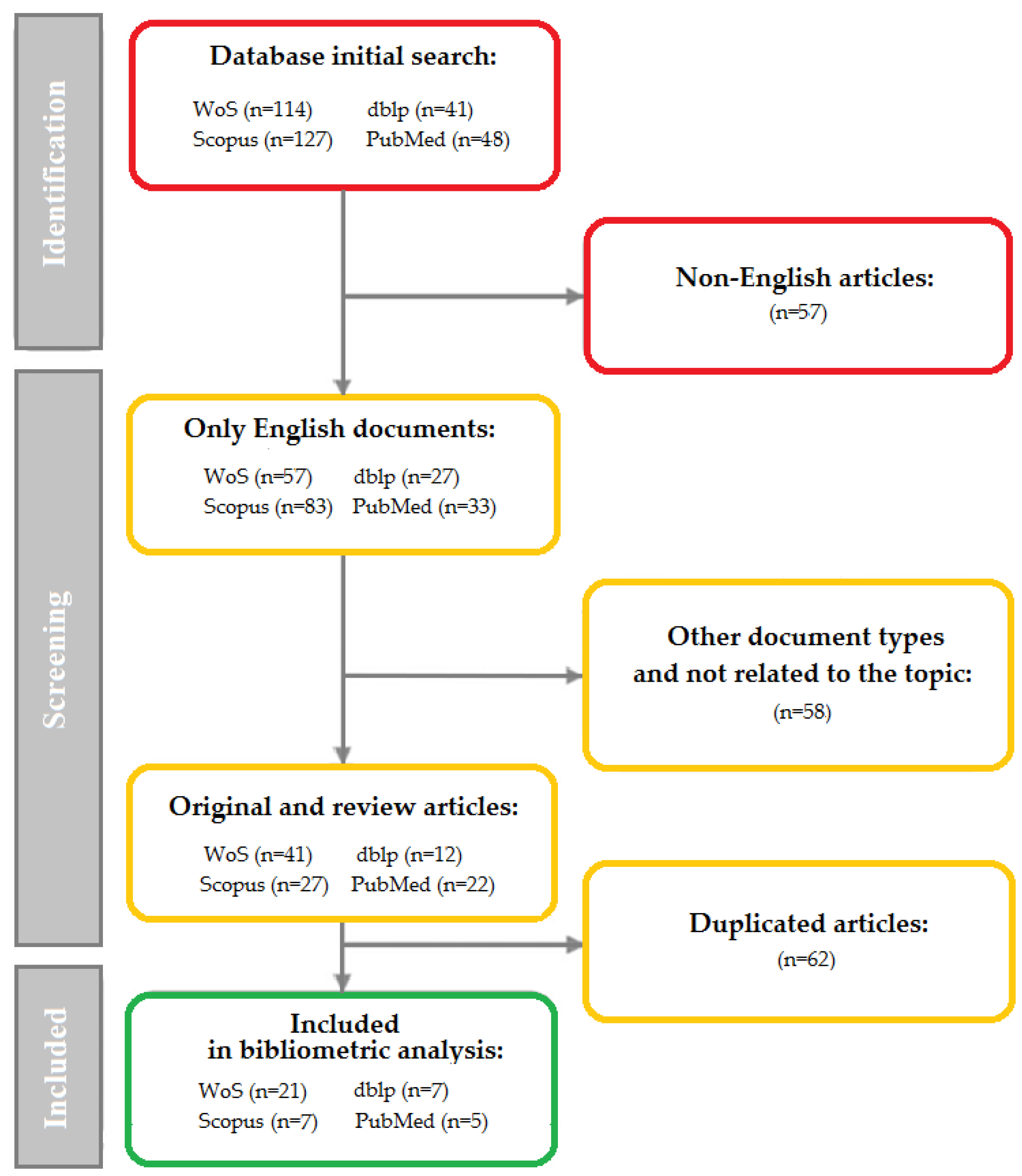
Figure 1. PRISMA flow diagram of the review process based on selected PRISMA 2020 guidelines.
Electronics 14 04699 g001
Figure 2. Documents by year.
Electronics 14 04699 g002
Figure 3. Documents by type.
Electronics 14 04699 g003
Figure 4. Documents by subject area.
Electronics 14 04699 g004
Figure 5. Documents by country/territory.
Electronics 14 04699 g005
Figure 6. Documents by SDGs.
Electronics 14 04699 g006
Figure 7. Basic types of sensors for AI-based DTs for smart rehabilitation systems (own elaboration based partly on [16]).
Electronics 14 04699 g007
Figure 8. Smart rehabilitation ecosystem based on DTs and wearable sensors (own elaboration, partly based on [2]).
Electronics 14 04699 g008
Figure 9. Proposed AI-based DTs recovery/upskilling framework for smart rehabilitation system (own elaboration based partly on [15]).
Electronics 14 04699 g009
Figure 10. Proposed AI-based DTs cloud architecture for smart rehabilitation system (own elaboration based partly on [3]).
Electronics 14 04699 g010
Figure 11. AI-based DTs cloud architecture for a smart rehabilitation system (own elaboration, partly based on [16]).
Electronics 14 04699 g011
Figure 12. Proposed AI-based DT system architecture for smart rehabilitation system (own elaboration based partly on [16]).
Electronics 14 04699 g012
Figure 13. Proposed AI-based DT system architecture for smart rehabilitation system (own elaboration based partly on [104]).
Electronics 14 04699 g013
Table 1. Bibliometric analysis procedure (own approach).
Stage NameTasks
Defining
research goal(s)
Defining goals of the bibliometric analysis
Selecting databases and data collectionsSelecting appropriate dataset(s)
and developing research queries according to the study goals
Data preprocessingCleaning the collected dataset(s)
to remove duplicates and irrelevant records
Bibliometric software selectionChoosing suitable bibliometric software/tools for analysis
Data analysisDescription, author, journal, area, topics, institution, country, etc.
Visualization
(if possible)
Visualizing the analysis results to present insights
Interpretation
and discussion
Interpreting findings in the context of the research goals and RQs
Table 2. Detailed database search query.
Parameter/FeatureDetailed Description
Inclusion criteriaBooks (and chaptersin books), articles (original, reviews, communication, editorials), and conference proceedings, in English
Exclusion criteriaOlder than 10 years, letters, conference abstracts without full text, other languages than English
Exact keywords used(“artificial intelligence” OR “machine learning”) AND “digital twin” AND (“rehabilitation” OR “physiotherapy” OR “physical therapy”)
Used field codes (WoS)“Subject” field (consisting of title, abstract, keyword plus and other keywords): (“artificial intelligence” OR “machine learning”) AND “digital twin” AND (“rehabilitation” OR “physiotherapy” OR “physical therapy”)
Used field codes (Sopus)Article title, abstract, and keywords: (“artificial intelligence” OR “machine learning”) AND “digital twin” AND (“rehabilitation” OR “physiotherapy” OR “physical therapy”)
Used field codes (PubMed)Manually: (“artificial intelligence” OR “machine learning”) AND “digital twin” AND (“rehabilitation” OR “physiotherapy” OR “physical therapy”)
Used field codes (dblp)Manually: (“artificial intelligence” OR “machine learning”) AND “digital twin” AND (“rehabilitation” OR “physiotherapy” OR “physical therapy”)
Boolean operators usedYes, e.g., (“rehabilitation” OR “physiotherapy” OR “physical therapy”)
Applied filtersResults refined by publication year, document type (e.g., articles, reviews), and subject area (e.g., industry, engineering).
Iteration and validation
options
Queries are run iteratively, refined based on results, and validated by ensuring that relevant publications appear among the top results
Leverage truncation
and wildcards used
Used symbols like * for word variations and ? for alternative spellings
Table 3. Summary of bibliographic analysis results (WoS, Scopus, PubMed, dblp).
Parameter/FeatureValue
Leading types of publicationConference review (35.0%), article (22.5%), review (22.5%), conference paper (15.0%)
Leading areas of scienceComputer science (34.6%), Mathematics (19.2%), Engineering (17.9%)
Leading countriesUSA (10%), China (10%), Poland (10%)
Leading scientistsNone observed
Leading affiliationsNone observed
Leading funders (where information is available)Natural Science Foundation of China (5%)
Sustainable development goalsGood health and well-being, Quality education, Gender equality, Zero hunger
Table 4. Technical limitations—data, edge, FL, GenAI.
AreaKey Technical Limitations
Data collectionSensor noise and drift, inconsistent sampling rates, limited multimodal integration, missing or incomplete rehabilitation data, and difficulties capturing complex biomechanics
Security and
privacy
Vulnerable data transmission channels, risks of re-identification even after anonymization, limited on-device encryption capacity, and secure key management challenges
Edge intelligenceConstrained compute, memory, and battery, real-time inference bottlenecks, model compression trade-offs, reducing accuracy, heterogeneous hardware across users
FLPatient data harming convergence, high communication overhead, device dropout, secure aggregation complexity, vulnerability to poisoning or inference attacks
GenAIHallucinations, lack of biomechanical grounding, limited explainability; risk of generating clinically unsafe recommendations, and high computational requirements.
Table 5. Adoption, regulatory, and clinical limitations.
AreaLimitation TypeKey Issues
Adoption and deploymentOrganizational/EconomicHigh cost of devices, integration with hospital IT, low digital literacy among clinicians or patients, and maintenance and calibration burdens.
RegulatoryCompliance/GovernanceUnclear approval pathways for adaptive/continually learning models; cross-border data governance conflicts; lack of standards for wearable-derived biomarkers; auditability requirements.
Clinical UseSafety/EfficacyLimited clinical validation; variability in patient adherence; challenges in personalizing models for diverse conditions; risk of overreliance on algorithmic outputs
Ethical and SocialTrust/FairnessBias in training data leading to unequal outcomes; opaque decision-making; concerns over surveillance; uncertainty about clinician liability.
Disclaimer/Publisher’s Note: The statements, opinions and data contained in all publications are solely those of the individual author(s) and contributor(s) and not of MDPI and/or the editor(s). MDPI and/or the editor(s) disclaim responsibility for any injury to people or property resulting from any ideas, methods, instructions or products referred to in the content.