1. Introduction
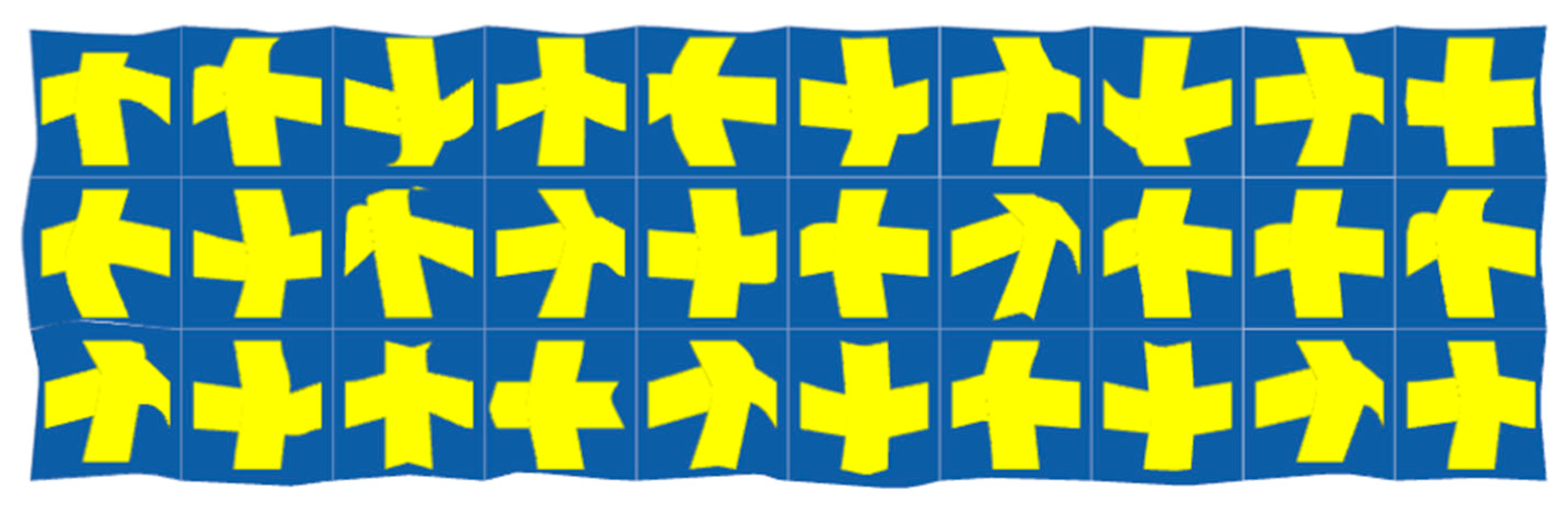
A target’s Radar Cross Section (RCS) is a defining property that represents its capacity to scatter incident radar energy. This value directly dictates a radar system’s ability to identify the target, with a higher RCS correlating to lower detection difficulty. In modern military technology, RCS prediction is crucial for designing stealthy aircraft and ships. A dramatically reduced radar cross-section (RCS) is the cornerstone of the stealth technology employed by the F-22, F-35, and B-2 bomber, helping evade enemy radar and boost battlefield survivability [
1,
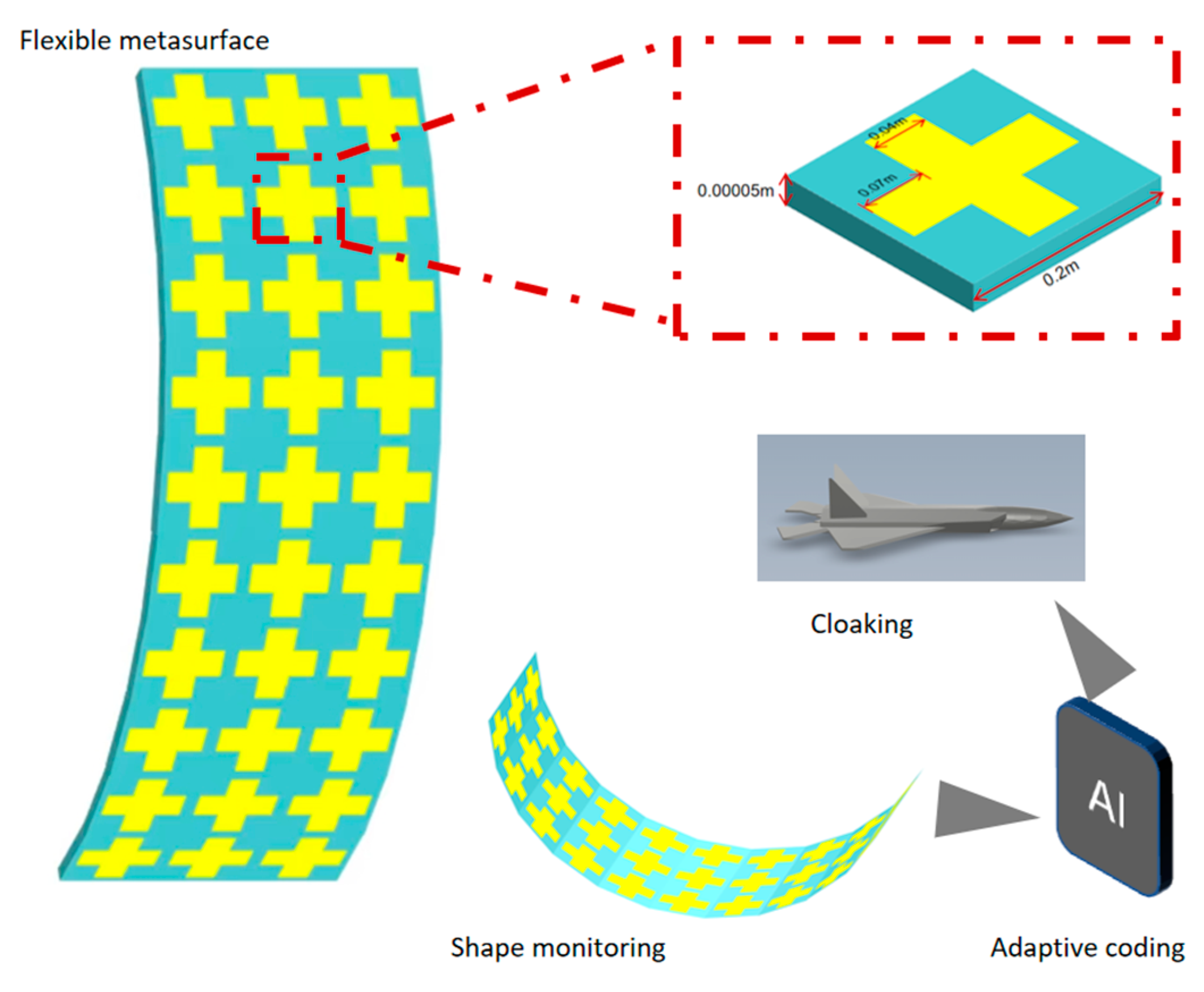
2]. A study optimizing advanced Unmanned Aerial Vehicle (UAV) design through deep learning-based surrogate models also highlights the significance of RCS in military applications. Describing radar flexible targets—which refer to objects with dynamic geometric uncertainties, such as deformable metasurfaces whose shapes are governed by control points—with a fixed RCS is difficult, as shown in
Figure 1 as RCS varies depending on factors like incident angle, frequency, polarization, and materials [
3,
4].
Within the domain of computational electromagnetics, techniques are broadly categorized by their operational frequency range. Approaches designed for the low-frequency regime, including the Finite-Difference Time-Domain (FDTD) technique [
5,
6], such as its application in modeling the effect of switched gradients on the human body in Magnetic Resonance Imaging (MRI) [
7], the Finite Element Method (FEM) [
8], and the Method of Moments (MoM) [
9], are generally recognized for providing solutions of high fidelity. However, they become computationally expensive when applied to electrically large flexible targets, posing challenges in practical applications. When modeling intricate, flexible structures, high-frequency asymptotic methods prove effective. Notable techniques for these applications include Gaussian Beam (GB) [
10,
11], Shooting and Bouncing Ray (SBR) [
12,
13], and Iterative Physical Optics (IPO) [
14]. While these methods are faster than low-frequency methods, they face limitations when simulating complex boundaries and can still be time-consuming. Recent improvements include an SBR method based on a blend-tree for the EM scattering of multiple moving targets and enhanced ray-tracing algorithms for electrically large targets [
15]. The computational efficiency of such methods can be further boosted through hardware acceleration, such as Graphics Processing Unit (GPU) implementation [
16].
In the field of RCS prediction, theoretical calculations, simulation experiments, or experimental measurements are commonly used to evaluate the RCS of flexible targets and verify the effectiveness of optimized designs. The accurate prediction and control of RCS for such targets are fundamentally linked to the manipulation and characterization of their electromagnetic properties. Recent advances in two key areas are particularly relevant: first, in the active control of scattering behavior, where devices like flexible multifunctional active frequency selective surfaces demonstrate dynamic electromagnetic switching and polarization selection on conformal surfaces [
17], directly illustrating the tunable scattering characteristics that prediction methods must capture; and second, in high-fidelity scattering characterization, where advanced signal processing techniques such as efficient near-field radar microwave imaging leverage low-rank and structured sparsity constraints to achieve precise imaging and parameter estimation under low Signal-to-Noise Ratio (SNR) conditions [
18]. These developments underscore the critical need for RCS prediction tools that can model such complex, variable electromagnetic interactions [
19]. Complementary to this, studies combining artificial plasma cloud technology with electromagnetic theory have explored RCS reduction for UAV swarms [
20], while other techniques like radar-absorbing materials and target shape design remain foundational for RCS control. Beyond scattering analysis, NURBS surface modeling technology, combined with electromagnetic theory, has been used to calculate RCS, leveraging its flexibility and precision for accurate simulation [
21]. However, these high-fidelity methods often face challenges of high computational complexity and long calculation times when dealing with electrically large and complex-shaped flexible targets. To address efficiency, various techniques have been developed, including efficient interpolation techniques [
22], the Prony method for military aircraft models in high-frequency bands [
23], and adaptive design-based Gaussian process methods for efficient RCS modeling [
24]. Furthermore, significant research focuses on near-field to far-field RCS prediction, utilizing methods like regression estimation for isotropic-point scattering targets [
25], amplitude estimation based on the state space method [
26], and correction optimization techniques [
27]. Novel electromagnetic-based radar propagation models are also being developed for applications like vehicular sensing [
28] and fine-grained human sensing [
29]. Diagnostic imaging of RCS using parameter extraction techniques of the state space method further enriches the analytical toolkit [
30].
The accelerated advancement of artificial intelligence has introduced novel methodologies for the prediction of Radar Cross Section (RCS). Convolutional Neural Networks (CNNs), for instance, have demonstrated considerable efficacy in tasks related to image analysis [
31]. Meanwhile, Long Short-Term Memory (LSTM) networks, including Bi-LSTM for RCS statistical feature extraction for space target recognition [
32], are particularly well-suited for handling sequential and temporal data [
33]. Furthermore, Transformer-based models utilize self-attention mechanisms to effectively model extended contextual relationships within data sequences [
34,
35]. These technological developments collectively offer enhanced capabilities for accurate RCS estimation. A Frequency-Modulated Continuous-Wave (FMCW) radar system based on self-attention mechanisms has been constructed to capture long-range dependencies in radar signals [
36]. By capturing the spatiotemporal features of RCS sequences, high-precision recognition of space flexible targets has been achieved, providing important inspiration for the further development of RCS prediction [
37]. Reference [
38] combined physical models with machine learning algorithms to optimize the experimental design process, significantly improving the efficiency and accuracy of RCS prediction for flexible metasurface targets. Deep learning-based data-driven approaches have also been integrated with model-based methods for inverse synthetic aperture radar target recognition [
39]. Reference [
40] used machine learning models to learn the mapping relationship from target geometry or electromagnetic parameters to RCS, replacing numerical simulations in traditional computational electromagnetics. This method maintains high prediction accuracy while significantly reducing computation time. Reference [
41] employed a machine learning framework based on decision trees to estimate the RCS values for complex flexible targets. The original training data were generated through simulations using the shooting and bouncing ray (SBR) technique. This machine learning-based prediction approach demonstrated satisfactory predictive performance, effectively mitigating the challenges associated with the substantial computational time and expense inherent in conventional RCS calculation methods.
This research innovatively proposes a hybrid deep learning architecture that combines Transformer encoders, CNNs, and LSTMs to accurately and efficiently predict the RCS of flexible targets with uncertain shapes. In the data preprocessing stage, feature engineering was carefully designed, introducing features such as periodicity, second-order regional enhancement, and mutation regional enhancement, which greatly enhance data expressiveness. Deep learning, with its superior data mining and pattern recognition capabilities, offers a new path to solving complex RCS prediction problems. Its advantages in automatic feature extraction and mapping relationship construction are significant. By harnessing the complementary advantages of NURBS surface modeling, this combined approach promises to achieve higher levels of both computational expediency and predictive accuracy in RCS estimation for flexible targets.
Furthermore, the proposed methodology demonstrates significant potential for application beyond its immediate scope, particularly in high-resolution High-Frequency Surface Wave Radar (HFSWR) systems for maritime target detection [
42,
43]. Accurately modeling the RCS of dynamic targets, such as small vessels, under varying sea conditions could greatly enhance the performance evaluation and target recognition capabilities of these advanced radar systems.
The structure of this paper is organized as follows:
Section 2 presents the NURBS surface modeling and shape parameterization;
Section 3 elucidates the electromagnetic parameter extraction for flexible targets based on RWG basis functions;
Section 4 proposes the hybrid CNN-LSTM-Transformer network architecture;
Section 5 provides the training strategy and evaluation metrics;
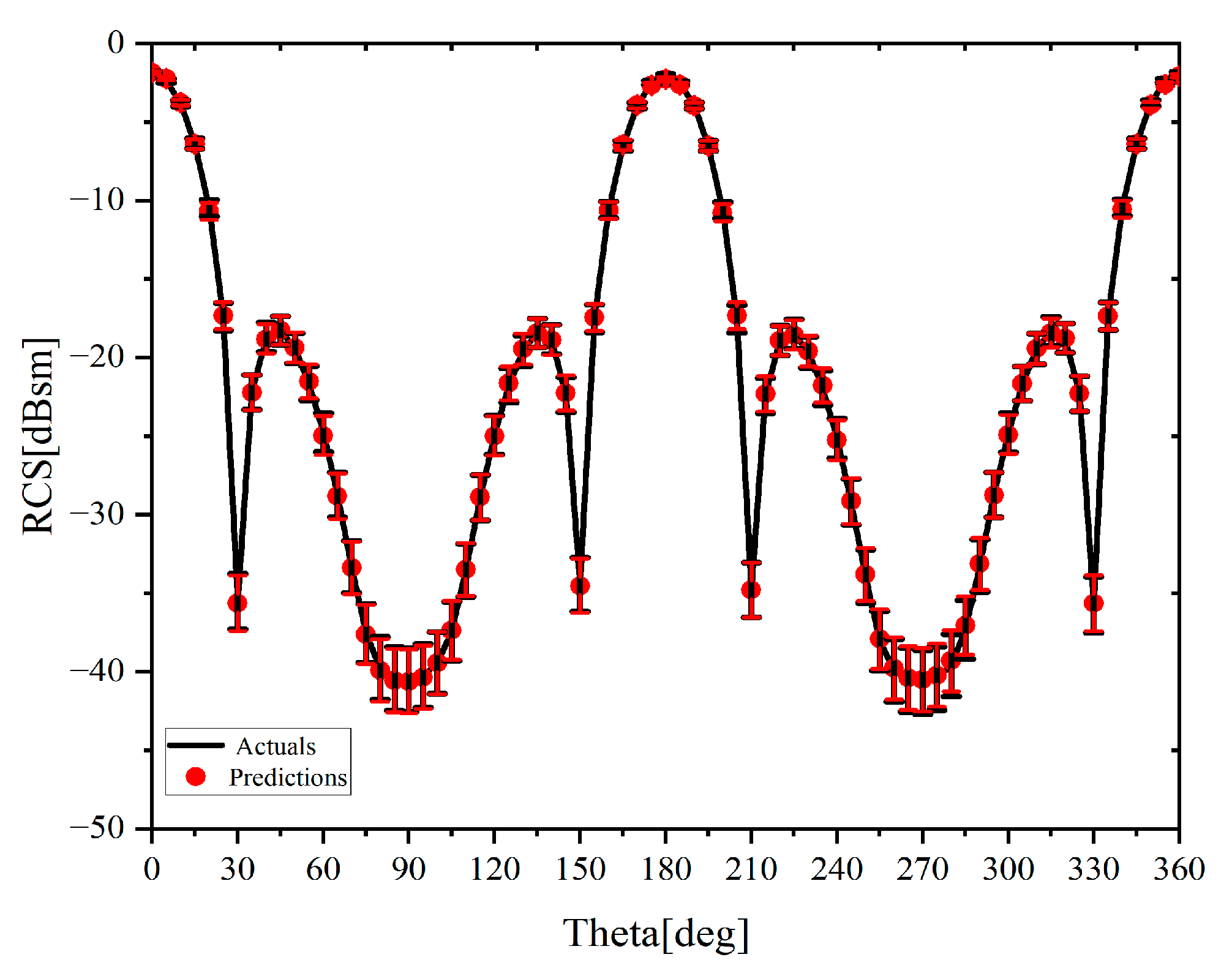
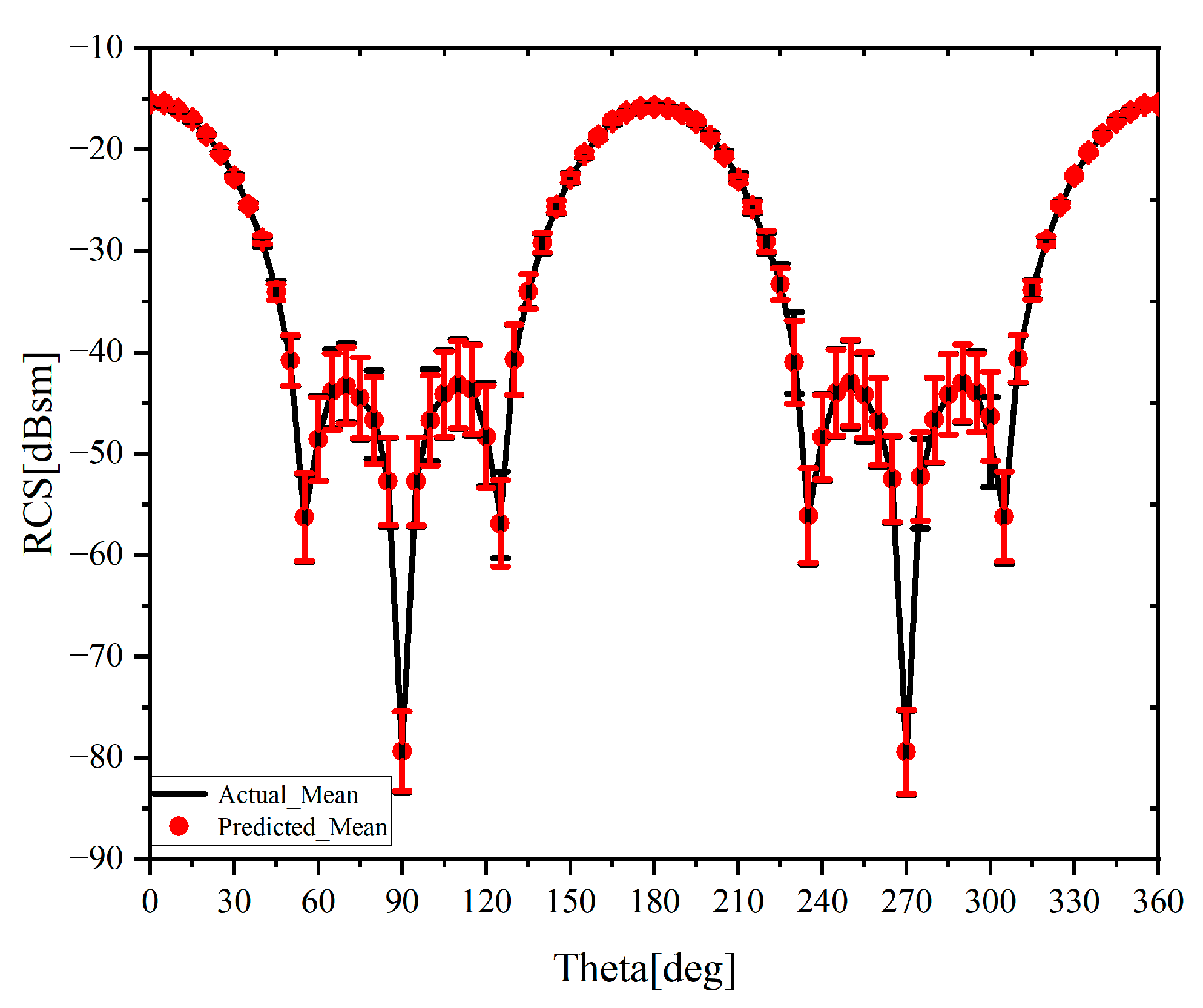
Section 6 validates the method’s accuracy through two numerical examples of flexible metasurfaces; and
Section 7 concludes the paper and outlines future research directions.
2. NURBS-Based TDS Method
The mathematical characterization of a NURBS surface is fundamentally dependent upon the underlying B-spline basis functions. Generally, the standard computational approach for generating B-splines is attributed to the recursive formulation developed by DeBoor and Cox [
44,
45]. Within this framework, let
represent an ordered set of real numbers, which constitutes the knot vector. The terms
and
refer to specific knots within this sequence. Furthermore, let
symbolize the
-th normalized B-spline basis function of
-th degree. The mathematical representation of this function, denoted as
, is as follows (1):
NURBS surfaces can be shaped using a bivariate piecewise rational function controlled by multiple control points. The position of any point on the surface can be represented utilizing a coordinate system:
In the
and
directions, the quantities of control points are specified by the parameters
and
, respectively. The associated polynomial degrees are designated as
for the
direction and
for the
direction. The spatial coordinates of each control point along the
,
, and
axes are defined by the set
, while the term
refers to their respective weighting coefficients. The B-spline basis function of p-th degree in the u-direction, represented as
, is computationally derived through the recursive Cox-DeBoor algorithm. This algorithm operates on a predefined knot vector
, where the maximum knot index
is related to the number of control points
and the degree
by the equation
. Similarly, the basis function in the
-direction,
, is obtained from its knot vector
with
. Consequently, the bivariate rational basis function is given by:
NURBS surface utilizes a specific mathematical framework to define the precise location of any point residing upon it.
From Equation (1), to compute the value of the -th degree B-spline basis function , it is necessary to know the nodes . In the definition of B-spline basis functions, at any position in the direction, there are at most non-zero degree B-spline functions . Other degree B-splines are zero at that point. This indicates that, if a control point of the NURBS surface is moved along the direction, the change in the object’s shape will only manifest on the surface within the defining interval , while other parts of the surface remain unaffected. The same applies when control points are moved along the direction. This is a special property of NURBS surfaces, namely that moving the coordinates of a control point only changes the shape of the surface around that control point but does not cause the entire object to change; this is the local modification property of NURBS surfaces.
3. Parameter Extraction for Flexible Targets with Shape Uncertainty
Set the position coordinates of the control points as the shape vector ( is the number of elements in the shape vector), meaning the uncertainty of the flexible target’s geometric shape is described by the shape vector .
The position vector of any point residing on NURBS surface is defined by its respective parametric coordinates:
To integrate NURBS with the MoM program, Rao–Wilton–Glisson (RWG) basis functions are placed on the NURBS surface. The coordinates of each triangular vertex are represented by the coordinates of the corresponding NURBS control points. Furthermore, the geometric information of the RWG basis function
can be expressed using the shape vector
:
Within the context of this formulation,
denotes the length of the shared edge between neighboring triangles. Meanwhile,
and
correspond to the respective areas of triangles
and
. Furthermore,
represents the vector connecting a vertex of triangle
to a field point on that triangle, whereas
signifies the vector extending from a field point on triangle
to its respective vertex. Combining with the principle of MoM, after discretizing the integral equation using RWG basis functions incorporating the shape vector
, the MoM matrix equation can be regarded as a functional equation with respect to the shape vector
, as shown in Equation (7):
where
and
are the impedance matrix and the right-hand side vector, respectively, both dependent on the shape vector
;
is the current dependent on the shape vector
.
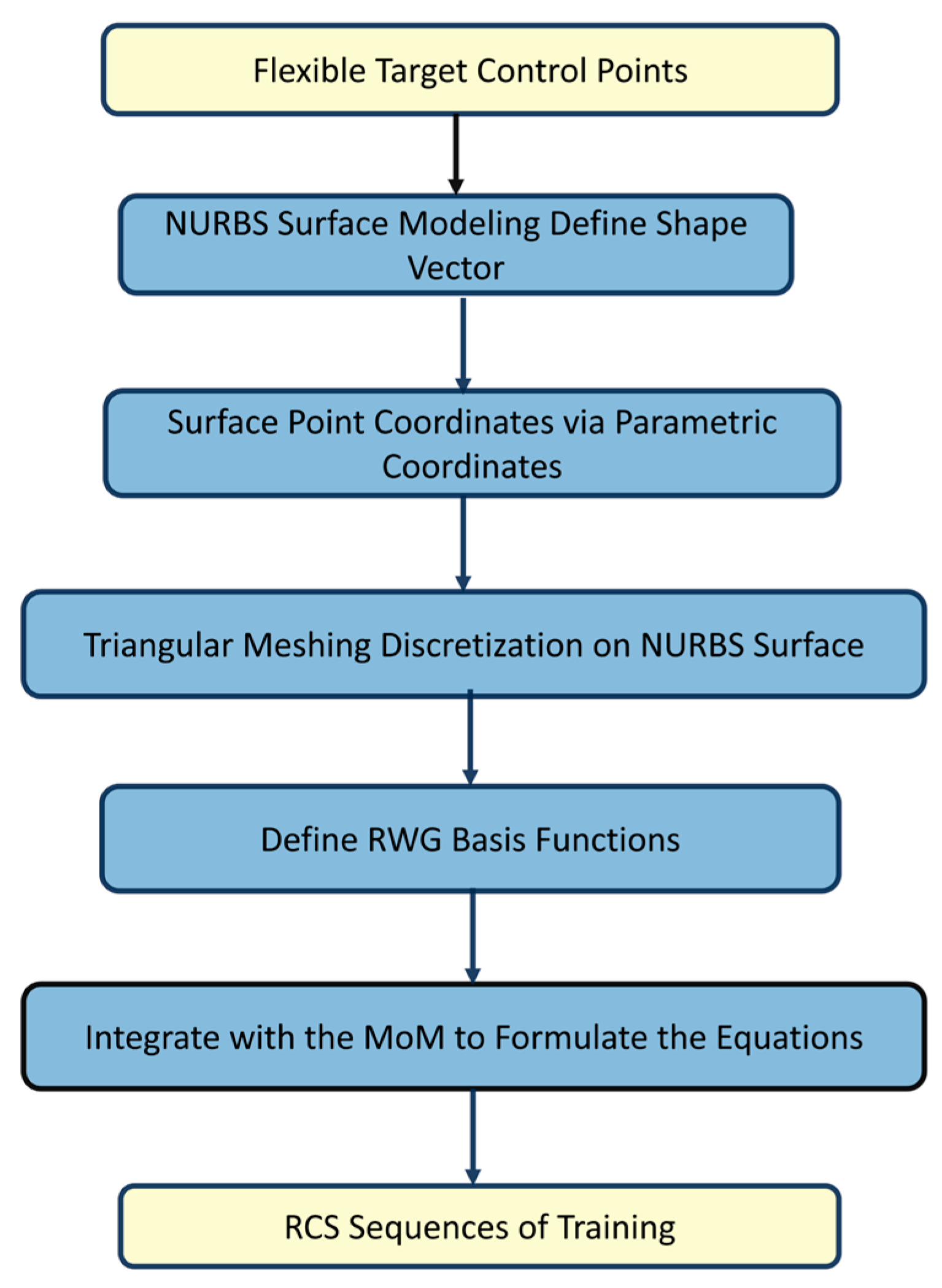
Figure 2 illustrates the integrated workflow encompassing NURBS surface modeling, mesh discretization, RWG basis function definition, and final MoM matrix formulation.
4. Hybrid CNN-LSTM Architecture for RCS Prediction of Canonical Flexible Targets
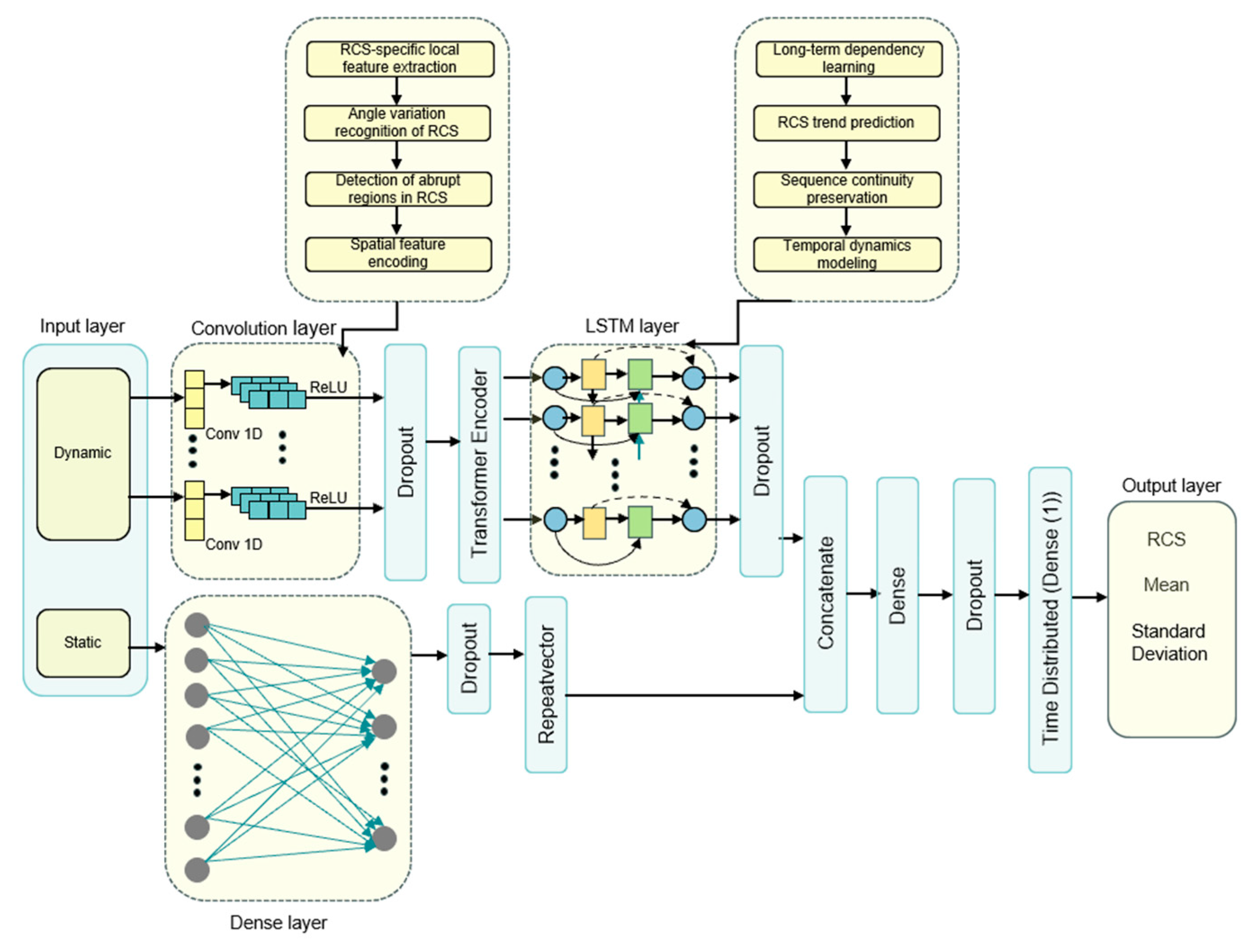
This paper presents a hybrid deep learning model using 1D-CNN and LSTM to estimate flexible target RCS, mean, and standard deviation. Dynamic features captured by 1D-CNN are modeled with LSTM and enhanced by a Transformer encoder. Static features extracted by dense layers are extended to the time dimension via a Repeat Vector layer, which replicates the static feature vector across all time steps to match the temporal length of the dynamic sequence. This operation is crucial for feature fusion, as it transforms the static, non-sequential feature vector into a sequence of identical vectors. This allows it to be concatenated, on a per-time-step basis, with the dynamic feature sequence output by the LSTM-Transformer pathway, ensuring dimensional compatibility for subsequent processing. Finally, these features are concatenated and processed through dense and dropout layers, with results output by a Time Distributed (Dense (1)) layer. The overall architecture is shown in
Figure 3.
4.1. D-CNN-Based Local Feature Extraction
A one-dimensional CNN architecture is employed to process the RCS data sequences, serving as a potent local pattern extractor. The sliding operation of convolutional kernels along the sequence allows the model to capture intricate local fluctuations. The first convolutional layer utilizes a kernel size of 3, which was identified as optimal through an ablation study in
Table 1. This configuration strikes a balance between receptive field size and feature granularity. As evidenced in
Table 1, smaller kernels (e.g., size 1) preserve high-frequency details but suffer from a limited receptive field, failing to capture broader contextual patterns, which results in a higher MSE. Conversely, larger kernels (e.g., size 5 or 7) incorporate broader context at the expense of blurring subtle local fluctuations, leading to diminished local sensitivity and a subsequent increase in prediction error. Furthermore, larger kernels increase computational overhead, as reflected in the longer training time per epoch. Therefore, a kernel size of 3 provides an optimal trade-off, effectively capturing both local details and intermediate-range dependencies without compromising computational efficiency.
The convolution operation is formulated mathematically by the following expression:
where the term
X is defined as the sequence of data provided to the system,
Wk denotes the weights of the k-th convolutional kernel,
b is the bias term, and
σ refers to the Rectified Linear Unit (ReLU) activation function. Multiple convolutional kernels work in parallel, with each kernel extracting specific feature patterns from the input sequence to form feature maps.
This study employs a multi-layer convolutional structure, where the first layer utilizes smaller convolutional kernels to capture subtle local fluctuations, while subsequent layers adopt larger kernels to extract broader patterns. To expedite convergence and improve regularization, the network architecture sequentially employs Layer Normalization following convolutional layers and integrates Dropout during training. The CNN module ultimately outputs a high-dimensional sequence rich in local feature information, providing foundational feature representations for the subsequent LSTM and Transformer modules.
4.2. LSTM-Based Temporal Dependency Modeling
The feature sequences extracted by CNN are fed into the LSTM layer. RCS sequences are essentially a function of angle Theta, with significant long-term dependency and periodicity. LSTM sophisticated gate mechanism addresses vanishing/exploding gradient issues, enabling selective memory and information discard.
The LSTM is structurally organized around three principal gating mechanisms, which serve distinct regulatory functions: the gate controlling information retention, the gate governing the incorporation of new data, and the gate responsible for determining the final output. The mathematical representation is as follows:
The forget gate modulates the extent to which historical information is preserved within the unit:
The assimilation of novel information into the state is governed by the input gate:
Modification of the cellular state is documented as follows:
The function of the output gate is to govern the extent to which the current hidden state is propagated forward:
In this research, a bidirectional LSTM architecture is adopted. By analyzing input sequences concurrently in both temporal directions, forward and reverse, the model captures richer contextual dependencies at every time step. Consequently, the framework achieves a substantial improvement in discerning overall trends and cyclical characteristics within the RCS sequences, leading to more reliable forecasting outcomes.
4.3. The Self-Attention Component Within the Transformer Architecture
The self-attention mechanism integral to the Transformer encoder architecture permits direct interaction between any two elements within a sequence. This structural feature facilitates the modeling of long-range dependencies in RCS sequences, thereby overcoming constraints inherent in conventional recurrent neural networks (RNNs), wherein information is processed incrementally and long-distance contextual relationships may be inadequately captured. The calculation process of the self-attention mechanism is as follows:
This process defines the transformation of the input into distinct query, key, and value representations:
the attention scores are obtained through a linear transformation using a learnable parameter matrix, designated
:
the parameter
denotes the dimensionality of the key vectors, which is used to scale the dot product to stabilize gradients. The present study implements a mechanism of multi-head attention. This design facilitates the simultaneous execution of the described operation h times, in parallel:
Within the multi-head attention framework, computation is distributed across several heads, with each one operating on a specific subspace of the representation to capture unique relational patterns among features, thereby enhancing the model’s expressive power. In this paper, the Transformer encoder is responsible for integrating features extracted by CNN and LSTM, establishing global feature dependencies, making it particularly well-suited for capturing long-range dependencies between distant angles in RCS sequences.
5. Model Architecture and Evaluation for RCS Prediction of Flexible Targets with Uncertain Shape
The core research of this paper is a hybrid architecture that combines CNN, LSTM, and Transformers. The design leverages the complementary strengths of each network: convolutional operations for localized feature detection, recurrent LSTM units for modeling temporal sequences, and attention-based Transformers for encoding global context. This integration aims to achieve a more holistic and powerful feature representation from complex datasets. Static features are mapped to a high-dimensional space via a fully connected network and fused with dynamic features through cross-modal fusion. To generate the predictions for RCS, including estimates of their mean and standard deviation, the ultimate layer of the network applies a linear projection to the consolidated feature set.
In the assessment of predictive model performance, several numerical indicators are frequently utilized, such as Mean Squared Error (MSE), Root Mean Squared Error (RMSE), and the Coefficient of Determination (R
2). The MSE measures the average squared difference between predictions and actual observations, which is mathematically expressed as follows:
the terms are defined as follows:
signifies the ground truth,
is the model’s output, and
signifies the total number of observations in the dataset. RMSE is defined as the square root of MSE. This computation serves to recalibrate the measure of predictive deviation, aligning its dimensional units with those of the initial observations, which ensures dimensional homogeneity for the purpose of interpretation. Its formula is:
The statistic R
2 reflects the fraction of data variability explained by the model. A value approximating 1.0 corresponds to a better-fitting model. Its calculation formula is:
herein, the symbol
denotes the population mean. These quantitative benchmarks offer an objective evaluation of the model’s predictive precision and stability concerning flexible objects with shape uncertainty. The resulting analysis forms a critical foundation for subsequent optimization and refinement efforts.
7. Conclusions
This paper innovatively combines NURBS surface modeling with deep learning. NURBS surfaces can accurately characterize the flexible target’s geometric shape, and using control points to define geometric deformations provides freedom for the design and optimization of the electromagnetic properties of thin dielectric sheets (TDSs). Building upon this, the architecture integrates Transformer encoders, CNNs, and LSTM, combined with refined feature engineering and data augmentation strategies. This effectively addresses problems such as high computational resource consumption and insufficient prediction accuracy encountered by traditional methods in predicting RCS under multidimensional uncertain parameters. Through rigorous numerical assessments, the proposed algorithm has demonstrated outstanding precision and operational efficiency. The method’s consistent outperformance in benchmark comparisons confirms its suitability as a superior and reliable tool for forecasting RCS in practical operational scenarios.
While the proposed method demonstrates high accuracy and efficiency in offline prediction, its practical deployment opens several avenues for future work. The model’s parallelized architecture and optimized kernel design show strong potential for near-real-time inference on specialized hardware (e.g., GPUs), a critical step for operational systems. To transition from laboratory simulation to real-world application, future research must address environmental factors, particularly the impact of varying weather conditions (e.g., rain, fog) on RCS propagation and clutter, which are not accounted for in the current ideal simulation. Systematically, our future efforts will focus on three directions: (1) extending the framework to model moving targets by integrating dynamic parameters like Doppler effects and pose variations; (2) enhancing environmental robustness by incorporating weather and clutter models into the training data; and (3) validating the model’s performance within practical systems, such as high-resolution HFSWR for maritime surveillance, and developing lightweight variants for embedded deployment.