1. Introduction
To ensure the security and quality of electrical supply, as well as the reliable operation of the overall power grid, modern power systems are transitioning from traditional unidirectional power flow structures to multidirectional configurations. This transformation is largely driven by the increasing integration of Distributed Energy Sources (DERs), which significantly influences system operation. Moreover, the performance of active distribution networks is continually challenged by unforeseen events and extreme weather conditions.
The resilience of power systems has emerged as a paramount concern for engineers and system designers, particularly in the face of increasingly frequent and severe weather-related events. While there is no universally agreed-upon definition, resilience is generally understood as the capacity of a power system to endure, adapt to, and recover from a wide range of disruptions, including natural disasters, cyber incidents, and operational malfunctions. Enhancing system resilience serves to minimize both economic losses and societal disruption while maintaining continuity of electrical service [
1,
2,
3].
Historically, the design of electrical distribution networks has prioritized reliability—defined as the ability to maintain consistent power supply under standard operating conditions. However, the growing incidence of weather-induced disturbances has underscored the need to shift the focus toward resilience. This involves not only mitigating the adverse effects of disruptive events but also ensuring the rapid restoration of service following such occurrences [
4,
5,
6,
7].
It is important to distinguish resilience from other related concepts in the context of power distribution systems; resilience refers to a system’s ability to sustain performance during multiple component failures (as per the N-k criterion) and to facilitate rapid recovery following extreme events. Reliability concerns the system’s capacity to cope with one or two concurrent faults (N-1 or N-2 criteria), as well as frequent, low-impact disturbances often characterized as Low Impact High Frequency (LIHF) events [
5,
8,
9,
10,
11,
12,
13]. Robustness denotes the system’s resistance to operational stress using its existing infrastructure. However, robustness does not inherently include the ability to recover post-failure, which is a defining feature of resilience. While enhancing robustness can contribute to resilience, full-scale equipment upgrades are typically neither economically viable nor logistically feasible during crisis conditions [
10]. Finally, security, particularly in the realm of cybersecurity, has become increasingly critical due to the digitization and interconnectivity of modern Electric Power Systems. Security measures aim to prevent and deter malicious intrusions. Unlike resilience, which emphasizes recovery, security is predominantly concerned with threat prevention [
5,
11].
Resilience thus represents a distinct and vital characteristic of power systems, aimed at the cost-effective management of extreme events and the prompt restoration of functionality. Strategies to bolster resilience include the deployment of smart-grid technologies, such as real-time system monitoring, automated control mechanisms, and the integration of DERs [
14,
15,
16]. Moreover, the application of predictive analytics and artificial intelligence (AI) facilitates the identification of system vulnerabilities and enhances response optimization [
5]. A comprehensive approach that combines physical infrastructure reinforcement with robust cybersecurity protocols offers the most effective means of safeguarding modern power distribution systems. In addition, sustained regulatory support and active stakeholder engagement are crucial to the successful development and maintenance of resilient electric distribution networks [
6,
7].
In response to these evolving challenges, it is essential to develop and implement advanced resilience strategies that enhance both the adaptability and robustness of distribution networks. Emphasis is placed on the network’s ability to achieve rapid recovery and maintain operational stability following major disturbances. Central to this objective is the optimal utilization of available resources to reinforce system resilience. In this context, in the current work a genetic algorithm will be employed to optimize network configuration, voltage regulation, and the integration of DERs, thereby enhancing the overall efficiency and resilience of the distribution network.
This work introduces a Genetic Algorithm–based optimization framework designed for distribution networks with high penetration of distributed energy resources (DERs). The approach explicitly integrates resilience as an objective, alongside the traditional goals of voltage support and loss minimization. A multi-objective function is developed that combines voltage regulation, active power loss reduction, and a resilience-oriented penalty, thereby linking conventional power flow optimization with resilience assessment. The framework is demonstrated through a proof-of-concept implementation on a 6-bus radial distribution network with DER integration, highlighting its effectiveness compared to baseline operation. Results show that the optimized configuration improves both steady-state performance—through enhanced voltage profiles and reduced losses—and contingency performance, by maintaining full load service during DER outages. This confirms the value of Genetic Algorithms as a practical tool for enhancing resilience in modern distribution systems.
2. Resilience
In recent years, the rising frequency and severity of extreme weather events, coupled with the growing energy demands of modern societies, have placed significant stress on the infrastructure of electric power systems—particularly on distribution networks. These conditions have led to system malfunctions and widespread power outages. As a result, the development and operation of resilient distribution networks has become imperative to mitigate the impact of such disruptions and to ensure uninterrupted, high-quality electricity supply for end users.
The growing reliance of modern societies on an uninterrupted and reliable power supply underscores the critical importance of electric power system resilience [
17]. In the context of ongoing climate change, the need for resilient power networks infrastructure has become more urgent than ever. Climate-induced phenomena—including hurricanes, heatwaves, wildfires, floods, and heavy snowfall—pose increasing operational challenges and cause extensive damage to the grid [
18]. As a fundamental component of distribution networks are particularly vulnerable to these environmental stressors [
19,
20]. Key climate-related impacts on distribution systems include elevated temperatures [
21], extended heat and drought periods [
22], flooding and landslides [
23], humidity, snow, ice [
22], strong winds [
24] and sea level rise [
22].
In more detail, climate-related factors significantly impact the reliability and efficiency of electrical distribution networks. Elevated ambient temperatures increase the electrical resistance of network components, thereby reducing power transfer efficiency and contributing to greater energy losses. Prolonged periods of heat and drought exacerbate this issue by encouraging the accumulation of pollutants on equipment, which heightens the risk of electrical discharges such as arcing across insulators. These conditions also lead to increased cooling demands, further straining the grid. Geophysical events like flooding and landslides pose additional threats by causing substantial damage to both underground and overhead infrastructure—such as submerged substations and poles toppled due to unstable soil. Similarly, environmental factors including high humidity, snow, and ice can compromise the structural integrity and operational reliability of network components, potentially leading to mechanical failures. Strong winds are another significant hazard, frequently damaging overhead lines either directly or indirectly through the falling of trees and branches, which may result in short circuits or the physical destruction of conductors. Furthermore, rising sea levels increasingly threaten coastal infrastructure, especially substations supporting new generation facilities, as seawater intrusion and tidal surges become more common in low-lying areas.
In addition to environmental hazards, electric power infrastructure is also vulnerable to a range of non-climatic threats. These include natural disasters such as earthquakes, and human-induced risks such as cyberattacks [
23,
25]. Furthermore, geopolitical conflicts and acts of terrorism increasingly target energy infrastructure through both physical attacks (e.g., missile or drone strikes) and digital interference, aiming to inflict widespread societal and economic disruption [
26].
The implementation of advanced smart grid technologies, coupled with AI applications, equips Distribution System Operators (DSOs) with enhanced capabilities for real-time fault detection, analysis, and response. During severe weather events, a key objective is to optimize the utilization of locally generated power from Renewable Energy Sources (RES), thereby minimizing the extent of service disconnections and unpowered areas. This approach ensures the uninterrupted supply of electricity to critical loads and provides a time buffer necessary for executing permanent repair and restoration activities, reducing dependence on temporary or stopgap measures.
A universally accepted definition of resilience within electric power networks remains elusive, primarily due to the complexity and multidimensionality of the concept. This complexity arises from its intersection with related attributes such as reliability, the inherent unpredictability of disruptive events, and the wide range of performance metrics and indicators used to evaluate it [
27,
28]. Despite this ambiguity, the concept of resilience has become increasingly prominent within the domain of Power Distribution Networks.
According to the Intergovernmental Panel on Climate Change (IPCC), resilience is defined as a system’s capacity to anticipate, absorb, and recover from adverse conditions or shocks [
29]. In contrast, the U.S. Federal Energy Regulatory Commission (FERC) places particular emphasis on the system’s ability to facilitate rapid recovery following a disruption [
30]. Historically, distribution networks were primarily designed with reliability in mind—aimed at ensuring consistent energy delivery in the face of routine disturbances. However, the evolving threat landscape, characterized by a transition from High-Impact Low-Frequency (HILF) to High-Impact High-Frequency (HIHF) events, particularly those driven by climate change, has underscored the growing importance of designing for resilience [
31].
The need for resilient power distribution infrastructure is further amplified by its critical role in supporting essential services, including telecommunications, emergency response systems, and healthcare facilities. In the digital era, the uninterrupted delivery of electricity has become indispensable to societal functioning and economic stability [
32].
To effectively visualize the influence of resilience on Electric Power Systems (EPSs), resilience curves have been developed. These graphical representations illustrate the temporal evolution of system performance using key metrics such as the amount of energy delivered or the proportion of consumers served [
33,
34,
35,
36]. The principal advantage of these curves lies in their intuitive interpretability. However, they exhibit limitations in accurately capturing the full complexity of system behavior, including the detailed progression through various operational states and the precise magnitude of service quality degradation [
37].
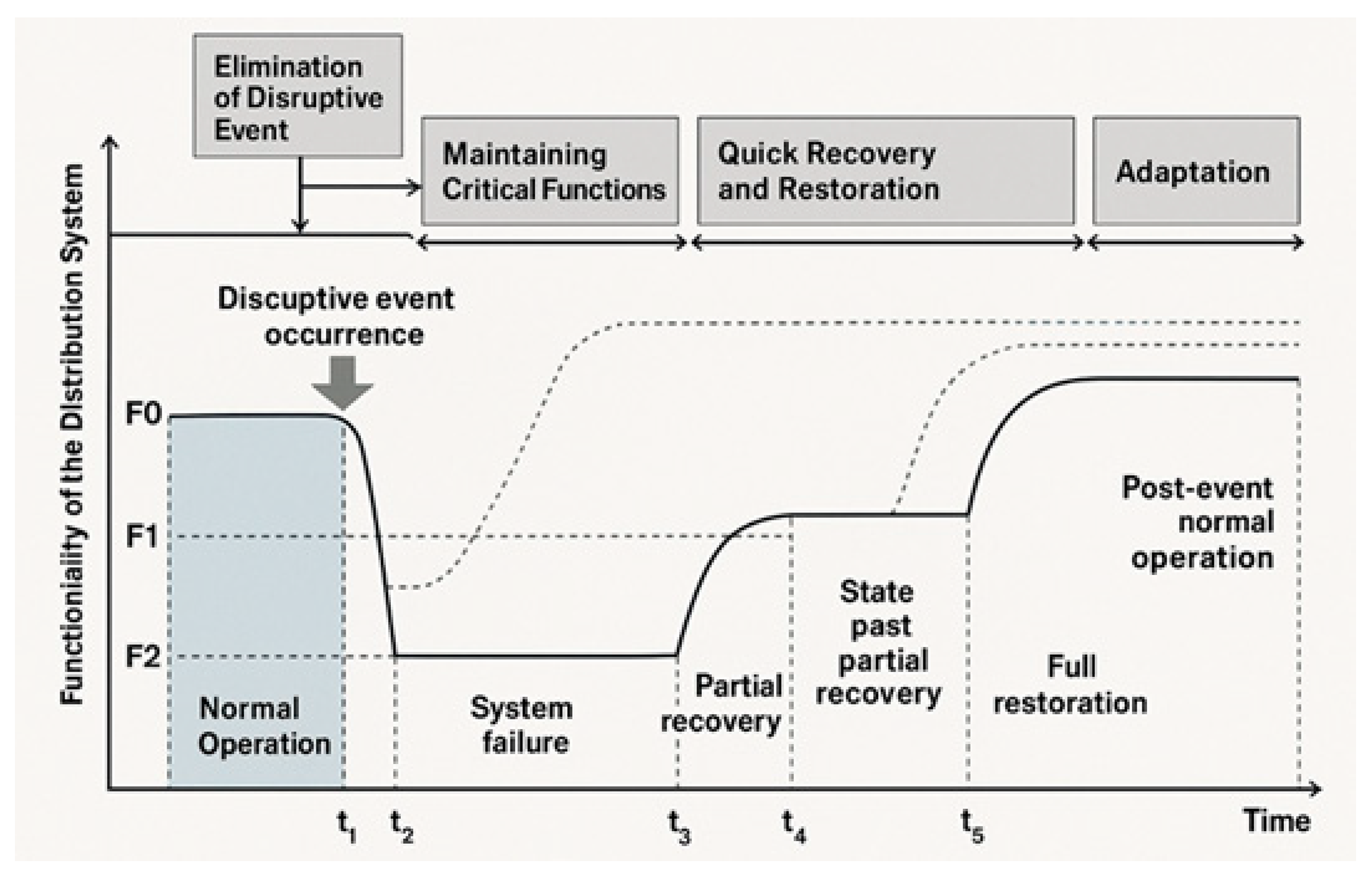
While the “triangular” resilience curve is the most widely adopted format in the literature, this study utilizes the “trapezoidal” variant (
Figure 1) [
21,
38]. This version offers a more nuanced depiction of the stages of degradation and recovery in the aftermath of a disturbance.
The implementation of resilience-enhancing strategies within distribution networks facilitates a comprehensive understanding of system response. Specifically, it enables the identification of major disturbances, assessment of damage severity, localization of affected areas, estimation of impact duration, evaluation of recovery speed, and analysis of the full restoration process. Due to the diversity in network configurations and operational dynamics, different systems respond uniquely to external disruptions, resulting in distinct resilience curve profiles [
33].
Based on the foregoing discussion, resilience in power distribution systems can be broadly categorized into two interrelated dimensions: Operational Resilience and Infrastructure Resilience [
29]. The trapezoidal resilience curve presented in
Figure 1 distinctly illustrates the sequential stages experienced by the distribution grid during and after a disturbance. The initial phases—spanning from the onset of the disturbance to the point of partial service restoration—are indicative of Operational Resilience, reflecting the system’s capability to maintain core functionalities and adapt dynamically. The subsequent period, extending from partial to complete restoration, corresponds to Infrastructure Resilience, which concerns the physical restoration and long-term recovery of grid assets and facilities.
To accurately evaluate the resilience level of a distribution network and to quantify the impacts of extreme events, a range of measurement and modeling methodologies have been developed [
6,
7,
22,
26,
27,
28,
29,
30]. These approaches facilitate a deeper understanding of a system’s capabilities, vulnerabilities, and potential exposure to future risks, thereby supporting more effective planning and mitigation strategies. Given the multidimensional nature of resilience, it cannot be comprehensively assessed using isolated indicators such as system preparedness or short-term stability under adverse conditions. Instead, resilience assessment necessitates the consideration of multiple interdependent parameters, encompassing both dynamic operational performance and long-term structural integrity.
3. AI Techniques—Genetic Algorithms
Artificial Intelligence (AI), particularly Genetic Algorithms (GA), plays a pivotal role in enhancing the resilience of distribution networks under high penetration of DERs. As DERs introduce variability and uncertainty into the grid, maintaining stability and ensuring continuous power delivery becomes increasingly complex. GA, inspired by the principles of natural selection, offers a robust optimization technique that can dynamically adapt control strategies for voltage regulation, reactive power support, and load balancing. By iteratively searching for optimal solutions, GA can reconfigure network topology, adjust control set-points of DERs, and optimize the placement and sizing of energy storage or reactive power devices. This results in a more resilient distribution system that can withstand disturbances, minimize outage impacts, and quickly recover from faults or fluctuations caused by high DER integration.
Genetic algorithms are extensively utilized in science and engineering to address complex search and optimization problems. In the present study, a tailored genetic algorithm is employed to optimize the parameter values of various arrester models. The objective is to minimize the relative error between the residual voltage predicted by each model—under an applied impulse current—and the corresponding residual voltage specified in the manufacturer’s datasheet for each discrete current level. This algorithm has also demonstrated high effectiveness in solving a range of other optimization problems, as reported in previous studies [
37,
38,
39,
40,
41,
42].
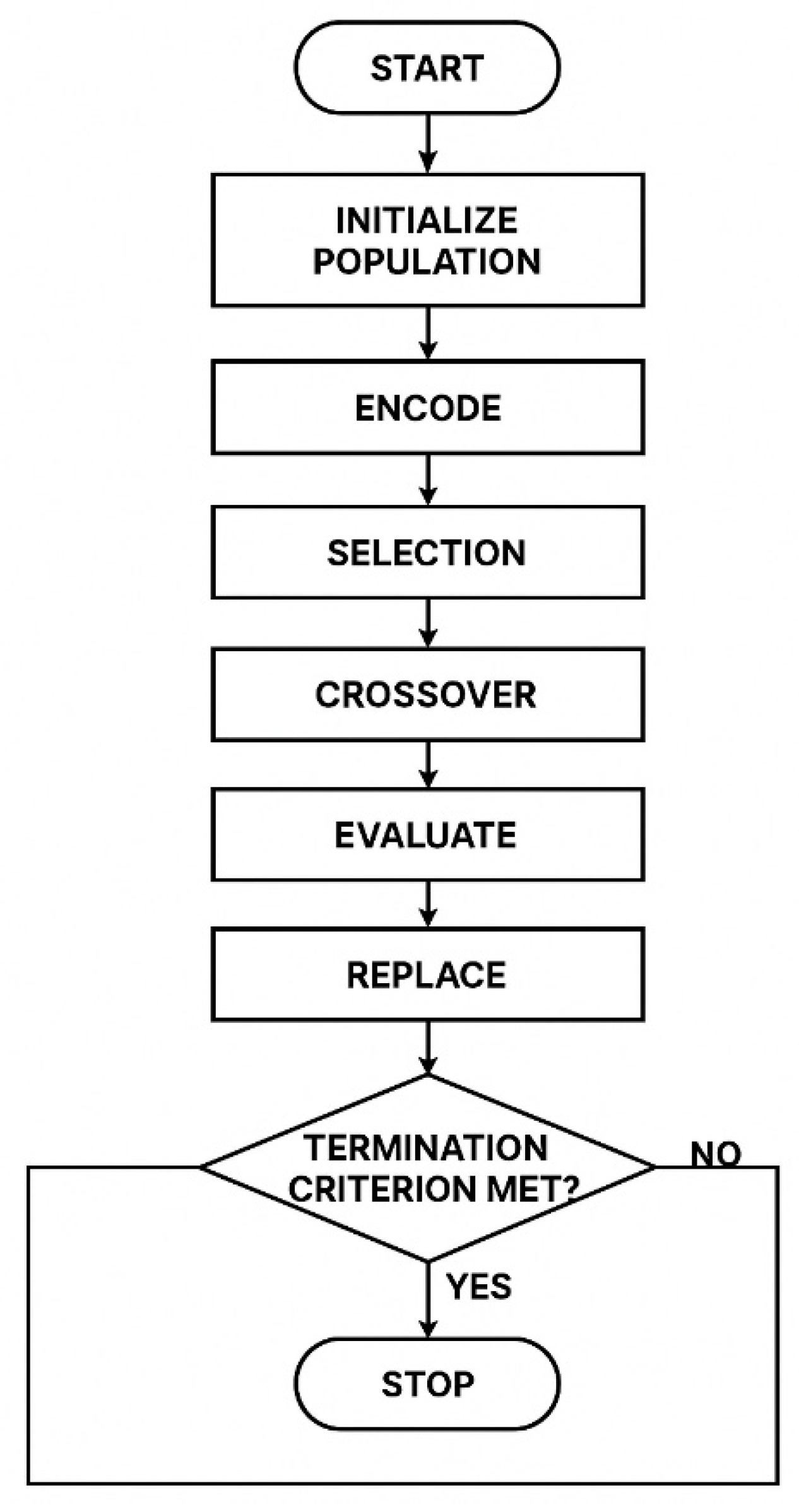
A basic genetic algorithm operates based on the fundamental evolutionary processes of reproduction, crossover, and mutation to converge toward a global or near-global optimum solution.
To initiate the optimization process, the algorithm requires an initial set of candidate solutions, denoted as Ps, commonly referred to as the population, analogous to biological systems. This initial population is generated randomly using a pseudo-random number generator. Each candidate solution is then encoded into a binary format, represented as a chromosome—a sequence of binary digits (“0”s and “1”s). Following initialization, the algorithm selects pairs of chromosomes to act as parents for reproduction. These parents undergo a crossover operation, during which Np parts of their genetic material are exchanged to form new offspring. After crossover, there exists a small probability Pm for mutation, a process in which individual bits within a chromosome may flip (i.e., a “0” becomes a “1” or vice versa), introducing genetic diversity into the population. Assuming each parent pair produces Nc offspring, the algorithm evaluates the objective function for all new candidates, and a new generation is formed. This next generation consists of the existing parent population and the newly generated offspring, effectively expanding the overall population. The total number of members in the new generation becomes Ps + Nc⋅Ps/P, as each of the Ps/2 parent pairs contributes Nc children. This iterative process continues until convergence criteria are met or a satisfactory solution is obtained.
Subsequently, the process of natural selection is applied. In this step, only Ps individuals are retained from the expanded population of P
s + N
c⋅P
s/2 members. The selection is based on the objective of minimizing the error e
e; therefore, the P
s individuals with the lowest error values are chosen to form the next generation. By repeatedly executing the cycle of reproduction, crossover, mutation, and natural selection, the genetic algorithm progressively reduces the value of ee, ultimately converging toward its minimum. As the iterations proceed, the best solutions within the population tend to cluster around the optimal value. The algorithm terminates when a specified termination criterion is met. This occurs either when there is no significant improvement in the mean error e
e across the current population or when the number of generations exceeds the pre-defined maximum number of iterations, N
max. A schematic representation of the core functionality of the genetic algorithm is presented in
Figure 2.
4. Network Under Examination
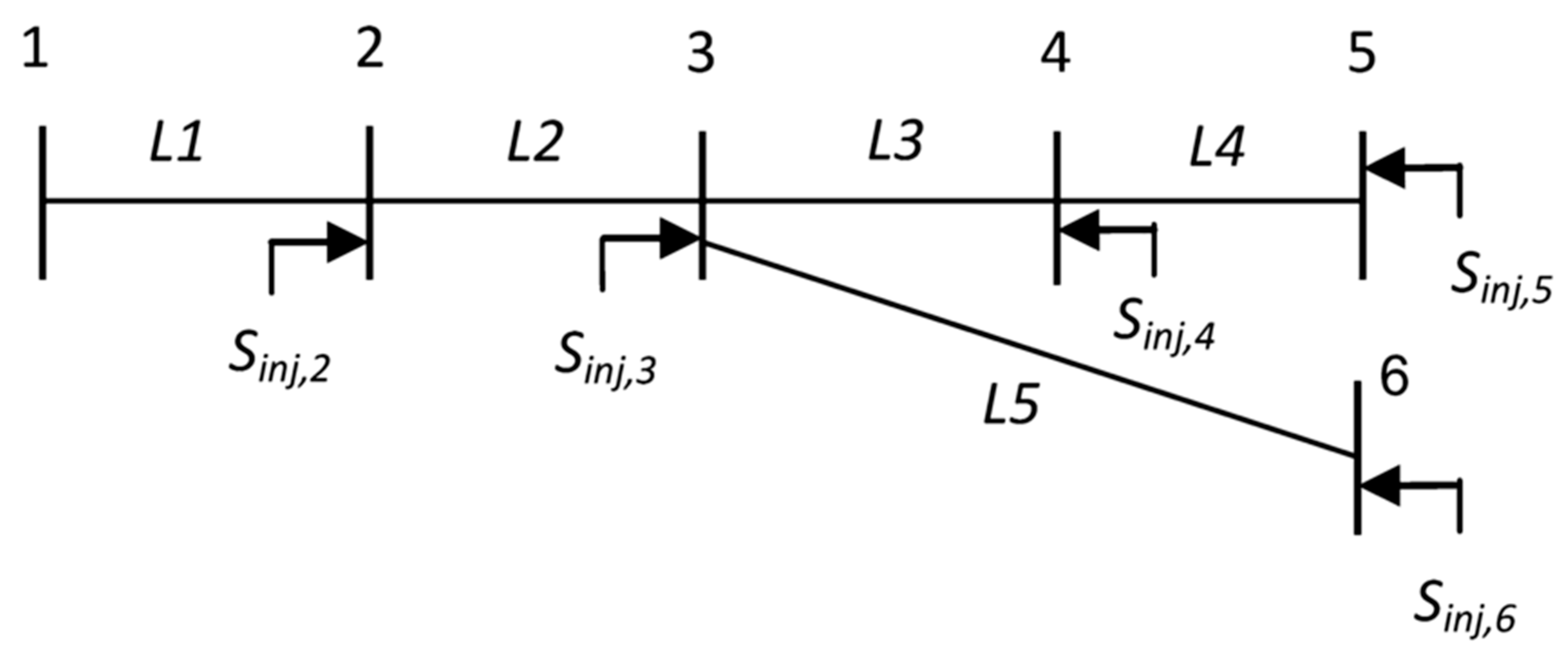
In the current work a typical 6-bus radial network is examined (
Figure 3).
A 6-bus radial distribution network is a simplified representation of an electrical distribution system in which six nodes, or buses, are connected in a radial configuration. In such a setup, there is a single power source—typically at Bus 1—which acts as the substation or feeder supplying the entire network. The remaining buses, labeled Bus 2 through Bus 6, are load buses that represent various consumers such as residential, commercial, or industrial facilities. Power flows unidirectionally from the substation outward through the network branches, with each bus being connected to its upstream neighbor by a single distribution line. This tree-like structure ensures there is only one path for electricity to travel from the source to each load, which simplifies operation and protection schemes.
Loads are distributed across the network, typically connected to Buses 2 through 6. These loads may vary in magnitude and type and can be modeled as constant power demands. Because of its simplicity, the 6-bus radial distribution network is frequently used to analyze voltage profiles, optimize power flows, evaluate loss minimization strategies, and assess the integration of distributed energy resources such as rooftop solar or battery storage. In more advanced models, monitoring and control equipment, such as sensors, smart meters, or switches, can be included at various buses to simulate the behavior of a modern smart grid.
Each line is characterized by resistance R, reactance X, and thermal capacity I
max. The adopted values are shown in
Table 1.
The system includes residential, commercial, and industrial loads, modeled as constant power.
Table 2 summarizes the active (P) and reactive (Q) demand.
DER units are integrated at Buses 2, 3, and 4. They are modeled as controllable sources with specified maximum capacities. DERs can provide both real and reactive power within their inverter limits. For simplicity, PV units are assumed dispatchable, but future work will incorporate variability and stochastic profiles. Power flow calculations and GA optimization were implemented in MATLABR2025 and PowerFactory 2024.
5. Objective Function
In this study, a GA is applied to a 6-bus radial distribution network to optimize power losses and improve the overall voltage profile. The primary objective of the optimization was twofold:
To minimize the total active power losses in the network;
To maintain bus voltages within acceptable operational limits, ideally as close to the nominal value (1 pu) as possible;
To enhance the resilience under high DER penetration.
To achieve this, the genetic algorithm was employed to determine the optimal configuration of control variables, including reactive power injections, tap settings of voltage regulators, and possible reconfiguration actions within the constraints of a radial structure. The test system consists of 6 buses and 5 branches L1–L5, with DERs connected at buses 2, 3, and 4. Bus 1 is the main substation. The objective function to be minimized is:
where
f1 corresponds to the voltage profile improvement .
f2 corresponds to the power loss minimization .
f3 is introduced by penalizing configurations that lead to voltage collapse or overloads during DER faults.
w1, w2, w3 weight factors equal to 0.4, 0.4 and 0.2, respectively.
Ik is the current of each line.
Rk is the resistance of each line.
The constraints taken into consideration are:
Line thermal limits
DER limits:
The GA was implemented with a population size of 50 individuals, a crossover probability of 0.8, and a mutation rate of 0.05. The algorithm was run for 100 generations. The fitness function incorporated a weighted sum of the total power loss and a penalty for voltage deviations outside the 0.95–1.05 pu range.
6. Results
In this study, a Genetic Algorithm (GA) was applied to a six-bus radial distribution network with distributed energy resources connected at buses 2, 3, and 4. The primary objectives were to improve the voltage profile across the system, reduce real power losses and enhance the system resilience under conditions of high DER penetration.
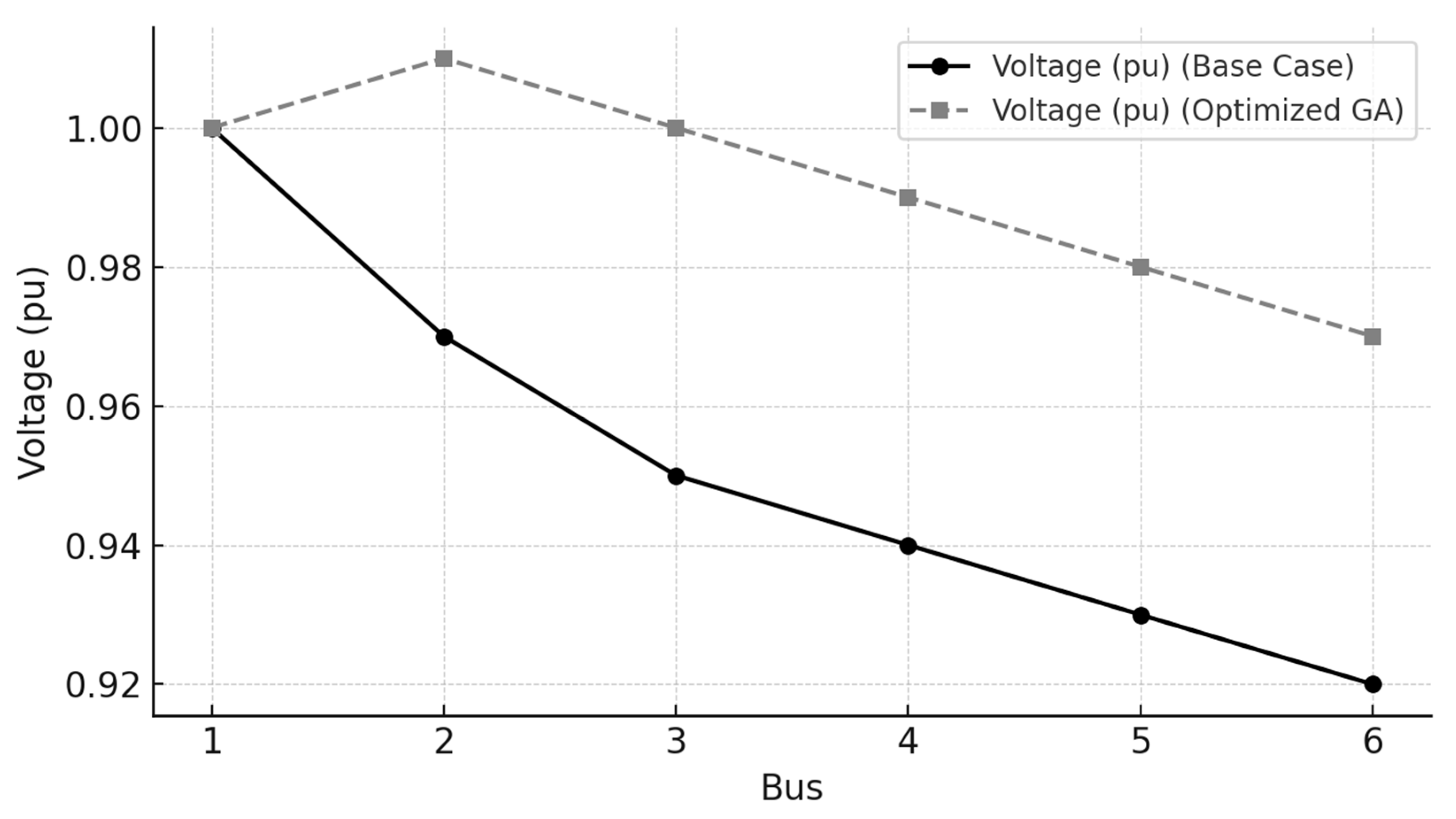
The results showed a marked improvement in the voltage profile (
Table 3,
Figure 4). In the base case, the voltage at the farthest bus dropped to 0.92 per unit, indicating poor voltage regulation. After optimization using GA, the minimum bus voltage improved significantly to 0.97 per unit. This enhancement brought the overall voltage levels closer to the nominal value of 1.00 per unit, ensuring more stable and reliable operation of the network.
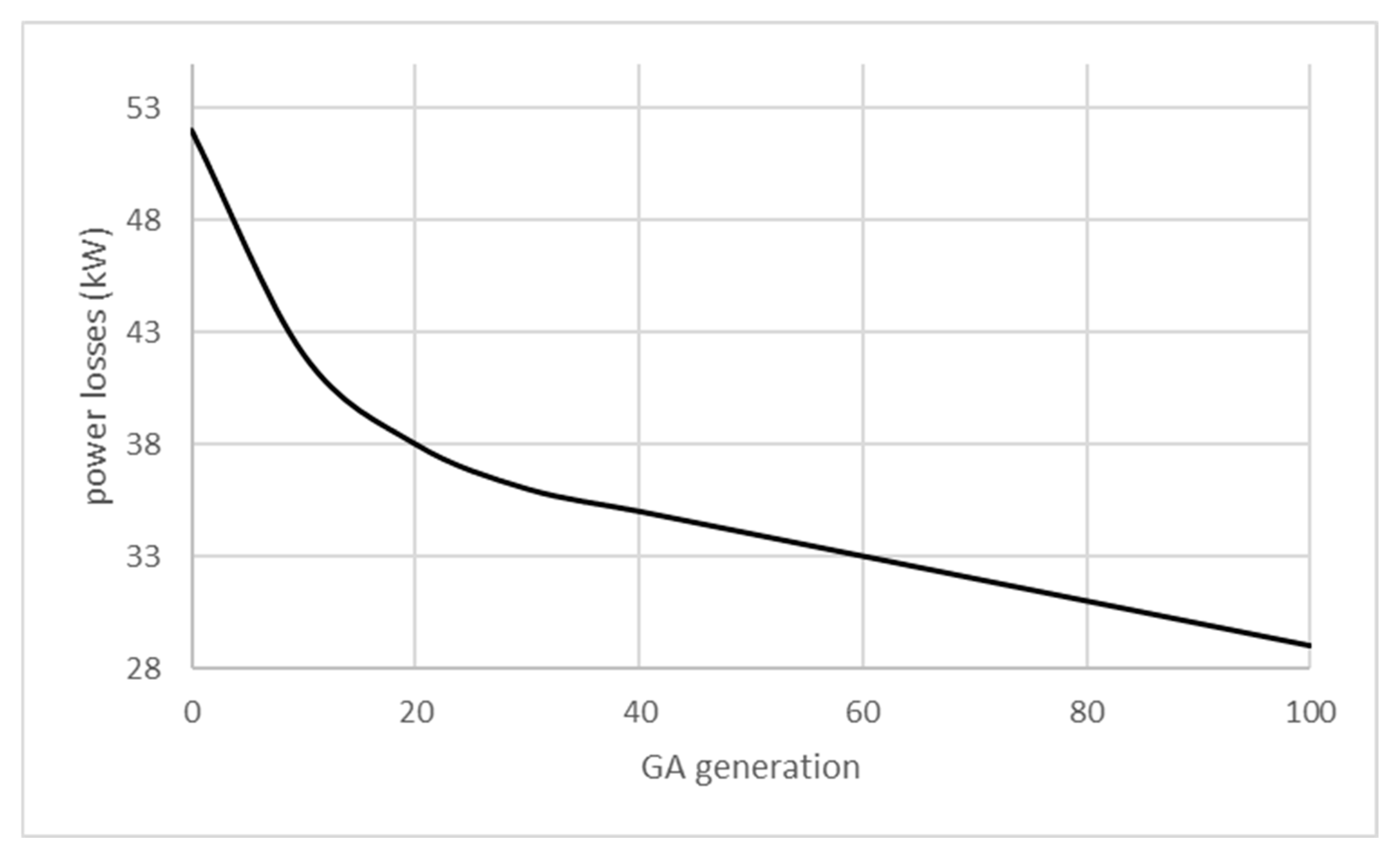
Real power losses were also substantially reduced. Initially, the system experienced total losses of 55.3 kilowatts (
Table 4,
Figure 5). After optimization, these losses dropped to 29.7 kilowatts, representing a reduction of approximately 46.3 percent. The convergence pattern of the GA demonstrated a consistent and smooth decline in losses over successive generations, reflecting the effectiveness of the algorithm in identifying optimal configurations.
These improvements in voltage regulation and power loss minimization directly contributed to enhancing the system’s resilience. With improved voltage stability and reduced energy dissipation, the network became more robust against disturbances and better equipped to maintain critical functions under varying load and generation conditions. The results affirm that GA is a powerful tool for optimizing distribution networks, particularly in scenarios with high penetration of distributed energy resources.
The optimized real and reactive power outputs of DER units at buses 2, 3, and 4 reflect an effective allocation strategy achieved through the GA (
Table 5). Higher real power injection at bus 3 aligns with its central location, which benefits power flow balance across the network. The slight absorption of reactive power (negative Q values) contributes to voltage support by compensating for inductive loads and line reactance. This coordinated DER dispatch ensures both loss reduction and improved voltage regulation without exceeding inverter capacity constraints.
The network’s response to a fault-induced DER trip at bus 3 highlights the resilience gains achieved through optimization. In the base case, such an event led to significant voltage drops and branch overloads, resulting in a loss of load supply (
Table 6). In contrast, the optimized configuration maintained all bus voltages within acceptable limits and avoided overloads, preserving full load delivery. This outcome indicates that the GA not only optimizes normal operating conditions but also enhances the network’s capacity to absorb and recover from disturbances, a key characteristic of a resilient system.
Summarizing the above results, resilience in distribution networks can be quantified using performance indicators that capture both steady-state operation and response to disturbances. In this study, three key metrics were applied: the minimum bus voltage, the load served ratio, and the number of overloaded branches. The minimum bus voltage indicates the depth of service degradation, while the load served ratio measures continuity of supply during contingencies. The number of overloaded branches reflects the structural robustness of the network under stress. In the base case, a DER outage reduced the minimum voltage to 0.88 pu, caused overloads, and limited supply to 89% of the total load. After optimization with the GA, the minimum voltage rose to 0.94 pu, no branches were overloaded, and 100% of the load was served. These results can be mapped to the trapezoidal resilience curve, where the optimized configuration shows a shallower degradation and faster recovery. The analysis confirms that embedding a resilience penalty term in the optimization function strengthens both reliability and recovery capability. Overall, the metrics demonstrate that the proposed approach enhances the network’s capacity to maintain and restore service under adverse events.
7. Conclusions
The application of a Genetic Algorithm (GA) for optimizing the operation of a radial distribution network with high DER penetration has demonstrated clear improvements in network performance. By tuning the real and reactive power outputs of DERs connected at critical buses, the GA successfully enhanced voltage stability, reduced system losses, and increased the network’s resilience to disturbances. The optimized voltage profile showed significantly reduced deviation from nominal values, eliminating potential voltage violations under normal and perturbed conditions. The total real power loss in the system was reduced by approximately 46 percent, indicating a substantial improvement in energy efficiency. This not only leads to operational cost savings but also supports sustainable grid operation. Furthermore, the network’s ability to withstand and recover from DER outages improved markedly, with post-disturbance voltages and load service levels remaining within acceptable thresholds. These results validate the use of evolutionary algorithms as a practical and robust approach for managing complex, multi-objective optimization tasks in distribution systems. As the share of distributed generation continues to grow, such techniques become essential for ensuring reliable, resilient, and efficient power delivery. It is worth mentioning that while the test system is a simplified 6-bus network, the results confirm the effectiveness and practicality of GA for distribution system optimization under high DER penetration. Future work will extend this methodology to standard IEEE test feeders (13-bus, 33-bus) and incorporate time-series simulations to capture dynamic resilience performance under variable renewable generation and load conditions.
Overall, the study highlights that Genetic Algorithms offer a robust, flexible, and efficient tool for improving both the steady-state and contingency performance of distribution networks, thus contributing to the development of more resilient and sustainable power systems.