Article

Tibetan Judicial Event Argument Extraction Based on Machine Reading Comprehension in Low-Resource Scenarios


1
School of Software, Handan University, Handan 056005, China
2
National Language Resources Monitoring & Research Center Minority Languages Branch, Minzu University of China, Beijing 100081, China
*
Authors to whom correspondence should be addressed.
Electronics 2025, 14(19), 3887; https://doi.org/10.3390/electronics14193887

Submission received: 4 August 2025 / Revised: 24 September 2025 / Accepted: 27 September 2025 / Published: 30 September 2025

Abstract

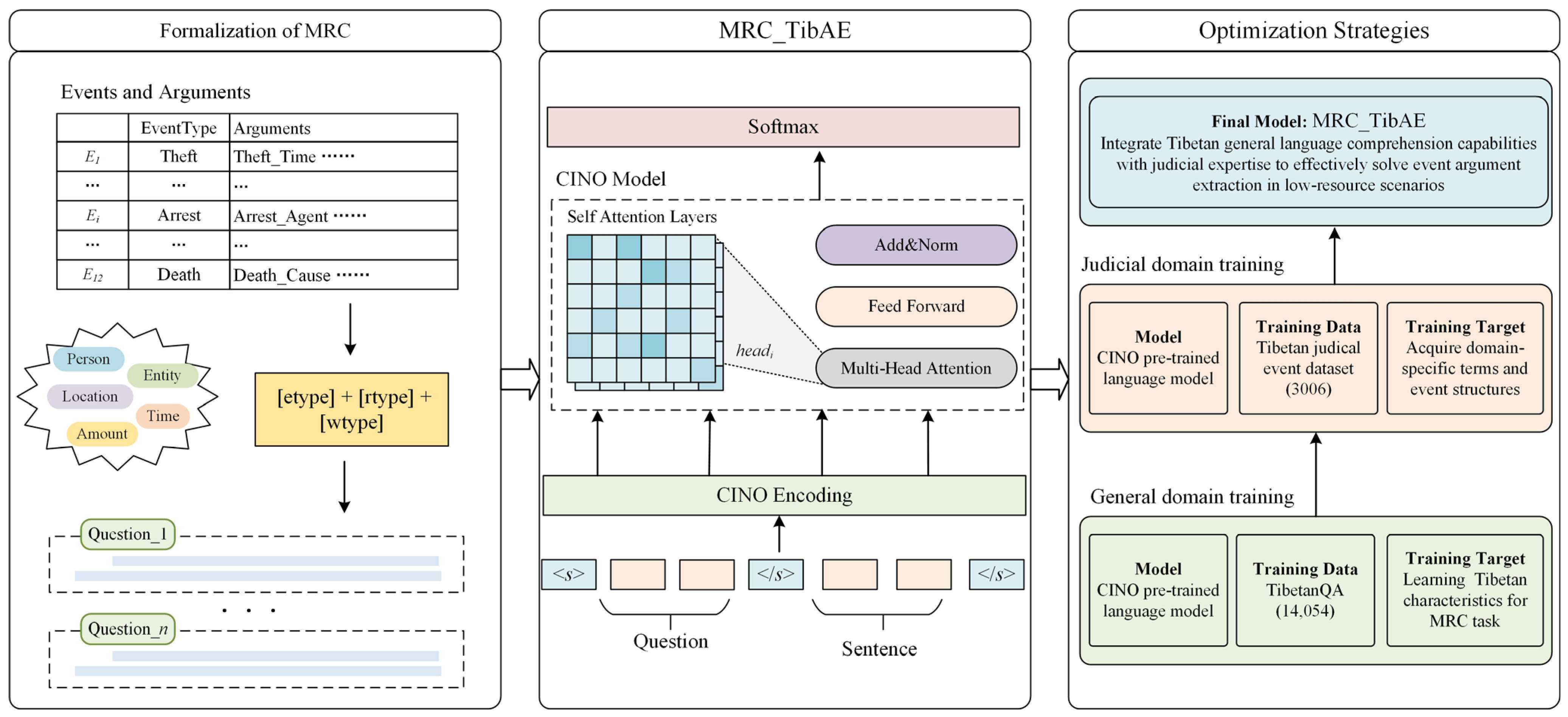
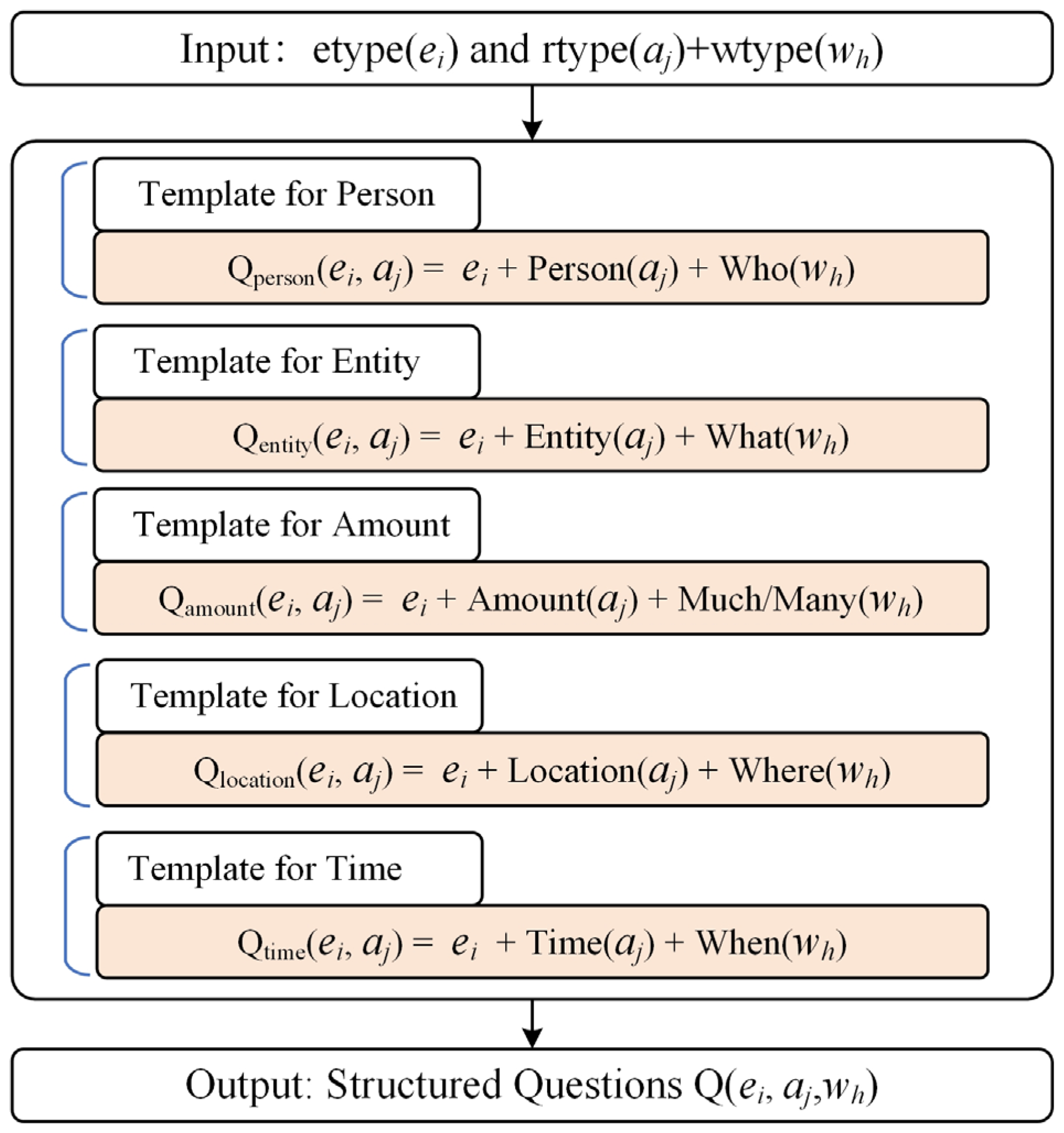
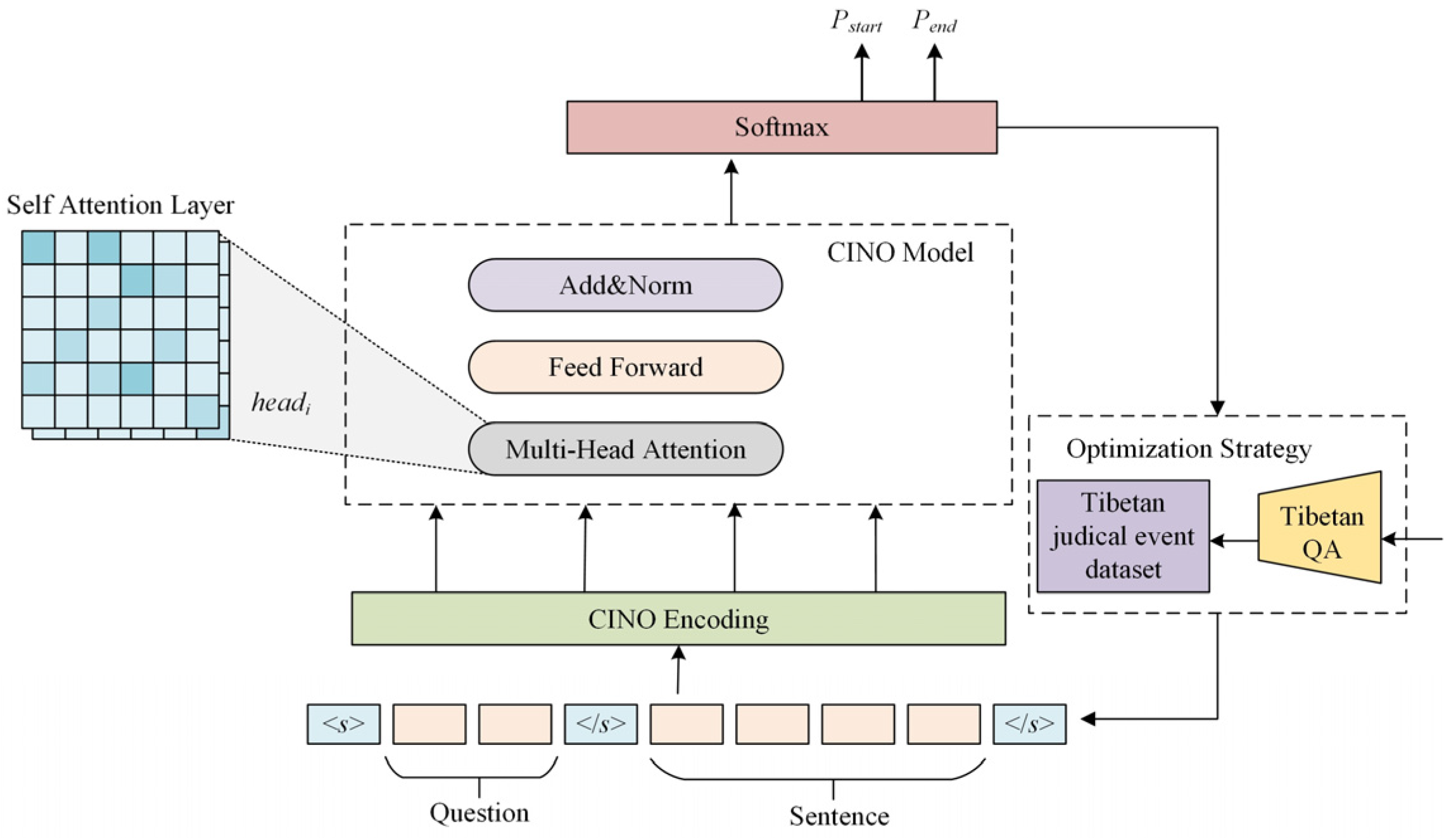
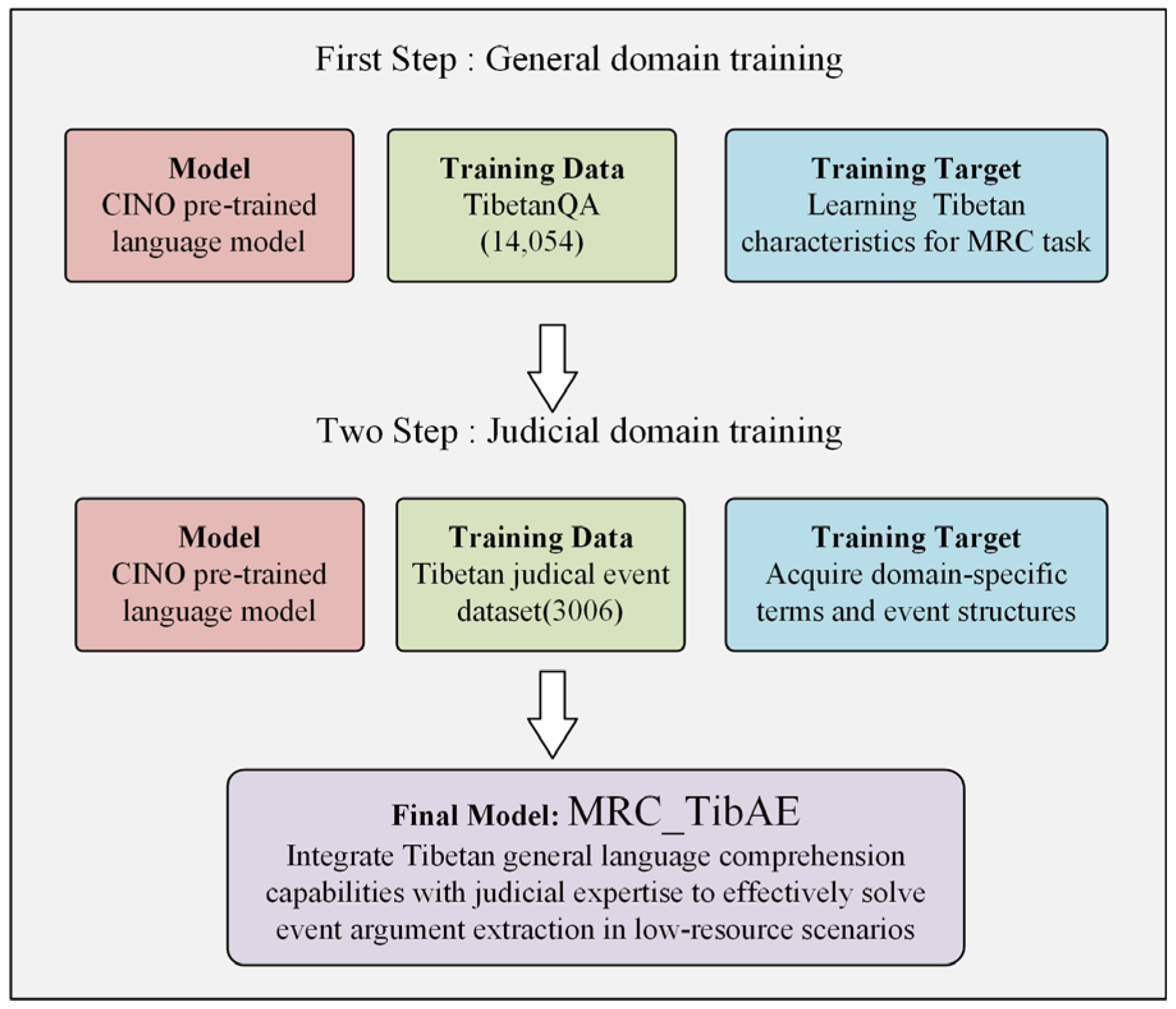
This paper proposes a Tibetan judicial event argument extraction method based on machine reading comprehension (MRC) to address the challenges of data scarcity and insufficient model generalization in low-resource language scenarios. Unlike traditional methods, this work models event argument extraction as an MRC task, progressively identifying and extracting various event arguments through a question-guided approach. First, a strategy for constructing event knowledge-enhanced questions tailored to the Tibetan judicial domain is designed. Specifically, interrogative words are formulated for different types of event arguments, and event semantic information is incorporated into questions to effectively disambiguate questions. Second, a deep semantic understanding architecture for Tibetan judicial events based on the CINO (Chinese Minority Pretrained Language Model) is proposed, incorporating a multi-head self-attention mechanism to enhance semantic alignment and global understanding between event sentences and questions. Finally, a two-stage training strategy is proposed for low-resource languages. Training is performed on a general Tibetan machine reading comprehension dataset, followed by task-adaptive fine-tuning on judicial domain data, effectively alleviating the data scarcity issue. Experimental results show that the proposed method achieved an F1-score of 76.59% in the Tibetan judicial event argument extraction task. This research offers new ideas for low-resource language event extraction and is of great significance for promoting intelligent information processing of minority languages.
Keywords: MRC; Tibetan; event extraction; low-resource language MRC; Tibetan; event extraction; low-resource language