Article

Short Circuit Withstand Time Screening of 1.2 kV Commercial SiC MOSFETs: A Non-Destructive Approach †

1
Department of Electrical & Computer Engineering, The Ohio State University, Columbus, OH 43210, USA
2
Ford Motor Co., Dearborn, MI 48124, USA
*
Author to whom correspondence should be addressed.
This article is a revised and expanded version of a paper entitled “A Non-destructive Short Circuit Withstand Time Screening Methodology for Commercially Available SiC Power MOSFET”, which was presented at 2024 IEEE 11th Workshop on Wide Bandgap Power Devices & Applications (WiPDA), Dayton, OH, USA, 4–6 November 2024.
Electronics 2025, 14(14), 2786; https://doi.org/10.3390/electronics14142786
Submission received: 23 May 2025 / Revised: 1 July 2025 / Accepted: 9 July 2025 / Published: 10 July 2025

Abstract

SiC MOSFETs are becoming increasingly popular due to their superior material properties, but they lack the required reliability and ruggedness for safe applications. One of the biggest challenges in short-circuit (SC) reliability of the commercial devices and hence in the SC protection circuit design is the variability of SC withstand time (SCWT) among the devices from the same vendor, even with the same lot and batch number. In this work, a novel SC screening methodology has been presented to remove devices with lower SCWT from a pool of devices without damaging the reliable ones. The SC screening methodology has been developed using Sentaurus TCAD simulation, which is further verified using commercial devices. This work can potentially reduce field failure and, as a result, can enhance the reliability of the SiC MOSFETs in real-world applications.

1. Introduction

Silicon carbide metal oxide semiconductor field-effect transistors (SiC MOSFETs) are increasingly favored in high-power and high-temperature applications due to their exceptional material properties like wide bandgap, high thermal conductivity, and large critical breakdown field [1]. To successfully implement SiC MOSFETs in practical applications, such as electric vehicles (EVs), it is essential to meet industry reliability and ruggedness standards ensuring safe operation. Short-circuit (SC) ruggedness is extremely critical for the safety of the EVs as SC event can lead to a catastrophic failure within a few microseconds.
Due to the presence of high interface trap density at SiC/SiO2 interface, which is almost two orders higher in magnitude compared to Si [2], commercial SiC MOSFETs utilize shorter channel length (~0.5 µm) to trade-off conduction performance [3]. However, the emerging short channel effects, such as drain induced barrier lowering (DIBL) and channel length modulation (CLM), cause higher peak current, leading to more heat generation during SC events [4,5,6]. A combination of higher heat generation and smaller chip area leads to a poorer SC ruggedness. As a result, the SC withstand time (SCWT) of commercial SiC MOSFETs is significantly lower than that of their Si counterparts [7].
After the investigation of SC failure of commercial 1.2 kV SiC MOSFETs by Castellazia et al. [8], numerous efforts have been made to study the SC reliability of SiC MOSFETs. Wang et al. [9] discussed the effect of temperature and drain bias on SCWT and proposed an electrothermal model to estimate the lattice temperature distribution during SC event. The effect of gate and drain bias on SCWT has been extensively explored in the literature, and depending on the voltage level, two unique failure mechanisms, namely gate oxide failure and thermal runaway [10,11,12,13] have been developed. Yao et al. [14] investigated the SC failure of 1.2 kV SiC MOSFETs with planar and trench gate structures in the light of electrical, thermal, and mechanical stress. Under mid-voltage level (~400 V), the failure happens due to the interlayer dielectric cracking, whereas at ~800 V, the device burns out. Current technological advancements have demanded the application of 1.2 kV SiC MOSFETs under a constant drain voltage (Vds) of 800 V, especially in traction inverters in EVs [15], where the dominant SC failure mechanism is thermal runaway.
Detailed understanding of the SC failure mechanism has further inspired the improvements in device design. Han et al. [16] studied the effect of channel length (Lch) on SCWT of 1.2 kV planar 4H-SiC MOSFET by varying Lch from 0.3 µm to 1.1 µm. A sensitivity study by Nayak et al. [17] revealed a strong dependency of JFET width (WJFET) on SCWT. Yu et al. [18], in a recent work, have demonstrated the impact of device design and fabrication parameters variation in SCWT of a planar MOSFET. The analysis has shown that channel length and gate oxide thickness alteration predominantly affect the SCWT of the device. Even a minor 10% variation in Lch can alter the SCWT by ~0.5 μs. From the perspective of device fabrication, the probability of channel length variation due to misalignment is considerably higher merely due to the complexity of the processing itself which cannot be controlled beyond a certain degree. Xing et al. [3] conducted a comprehensive investigation on commercial devices and discussed different methods to improve SC reliability from the perspective of both device design and circuit design. The device design methods encompass the implementation of shielded MOSFET [19] and MOSFET with an embedded source resistor [20], whereas circuit solutions involve fast SC detection, BaSIC methodology [21], and RSCS method [22]. The Baliga short-circuit improvement concept (BaSIC) [23] in its simplest form utilizes an additional non-linear element to enhance the SCWT of the device without enduring major impact on on-state and switching performance. A non-linear element with lower on-resistance is connected in series with the source electrode of the power SiC MOSFET, facilitating the damping of the saturation current in a smaller value and therefore the SCWT improves. The PCB-based Rogowski current sensor for short circuit protection (RSCS technique) [22] employs a large bandwidth (>20 MHz) Rogowski coil in conjunction with a signal processing circuit. The combination can identify short circuit failures under a sub-microsecond, markedly surpassing the efficacy of typical DeSat protection circuits. Consequently, total reliability enhances. Furthermore, novel MOSFET designs like planar MOSFET with deep p-well structure [24], MOSFET with retrograded channel doping [25], and Schottky barrier diode (SBD)-embedded MOSFET with smaller cell pitch and JFET width [26] have been reported that can further improve SC reliability and SCWT.
To ensure the safe operation of SiC MOSFETs in applications, it is essential to implement a highly sensitive and rapid SC protection circuit. However, device structure, fabrication techniques, and fast switching speed pose significant challenges due to their impact on reliability. Zhang et al. [27] reviewed that the fast-switching speed of SiC MOSFETs demands enhanced noise suppression that often trades-off the protection circuit response time. Developing a reliable and fast SC protection circuit becomes further complicated due to the variability of the SCWT among commercial devices from the same vendor, even with the same batch and lot number. The initial simulation study has demonstrated that this variability can be correlated to the slight variation in Lch caused by the misalignment during the fabrication process [17]. Traditional SC measurement methodology is destructive in nature. Therefore, it is necessary to develop a new non-destructive screening method to screen out the devices having lower SCWT from a batch without damaging the reliable ones.
In this work, a novel SC screening method is proposed and demonstrated by utilizing commercially available 1.2 kV SiC MOSFETs with planar-gate structure. The experimental results show that the proposed method can effectively identify and remove devices with low SCWT. Additionally, the key electrical parameters of the devices experiencing the screening process have been extracted and analyzed. The results indicate that the new method barely degrades the reliability of the devices. Hence, it can be implemented in real-world applications.

2. SCWT Variation

2.1. Device Under Test (DUT)

Commercial 1.2 kV SiC MOSFETs with planar-gate structure from Vendor D and Vendor F have been utilized in this study. The device parameters are presented in Table 1. Before the SC measurement, each device has undergone typical electrical characterization to obtain threshold voltage (Vth) and on-resistance (Ron) using a Keysight B1506A Power Device Analyzer (Keysight Technologies, Colorado Springs, CO, USA). The Vth of these devices has been extracted by using the linear extrapolation method [28] at Vds = 100 mV, whereas Ron is calculated at Vgs = 20 V and Vds = 1.5 V.

2.2. Short Circuit Test Evaluation

A typical short circuit experimental setup [29] is shown in Figure 1. Three 100 µF thick film DC-link capacitors are connected in parallel with the DC source to provide stable DC voltage to the device under test (DUT). A 1 µF decoupling capacitor with low equivalent serial inductance (ESL) and resistance (ESR) is provided to ensure high frequency switching. The turn-on and turn-off times of the DUT are controlled by external gate resistors. To ensure controlled turn-on and turn-off, 10 Ω gate resistors are employed. The drain-to-source transient current (Ids) is measured using a PEM CWT3 Rogowski coil with a sensitivity of 10 mV/A and a rated peak current of 600 A. Additionally, current limiting resistors of 5 kΩ and bleeding resistors of 66 kΩ are utilized in the setup for enhanced safety. SC measurements have been carried out at Vds = 800 V and Vgs = 20 V. The turn-on pulse width started from 0.5 µs and slowly increased with a step of 0.1 µs until the device failure is observed. The failure time is defined as the SCWT for that specific device. The consistency of the measurement is carefully controlled by keeping the experimental setup unchanged for all the devices.

2.3. SCWT Variation in Commercial 1.2 kV SiC MOSFETs

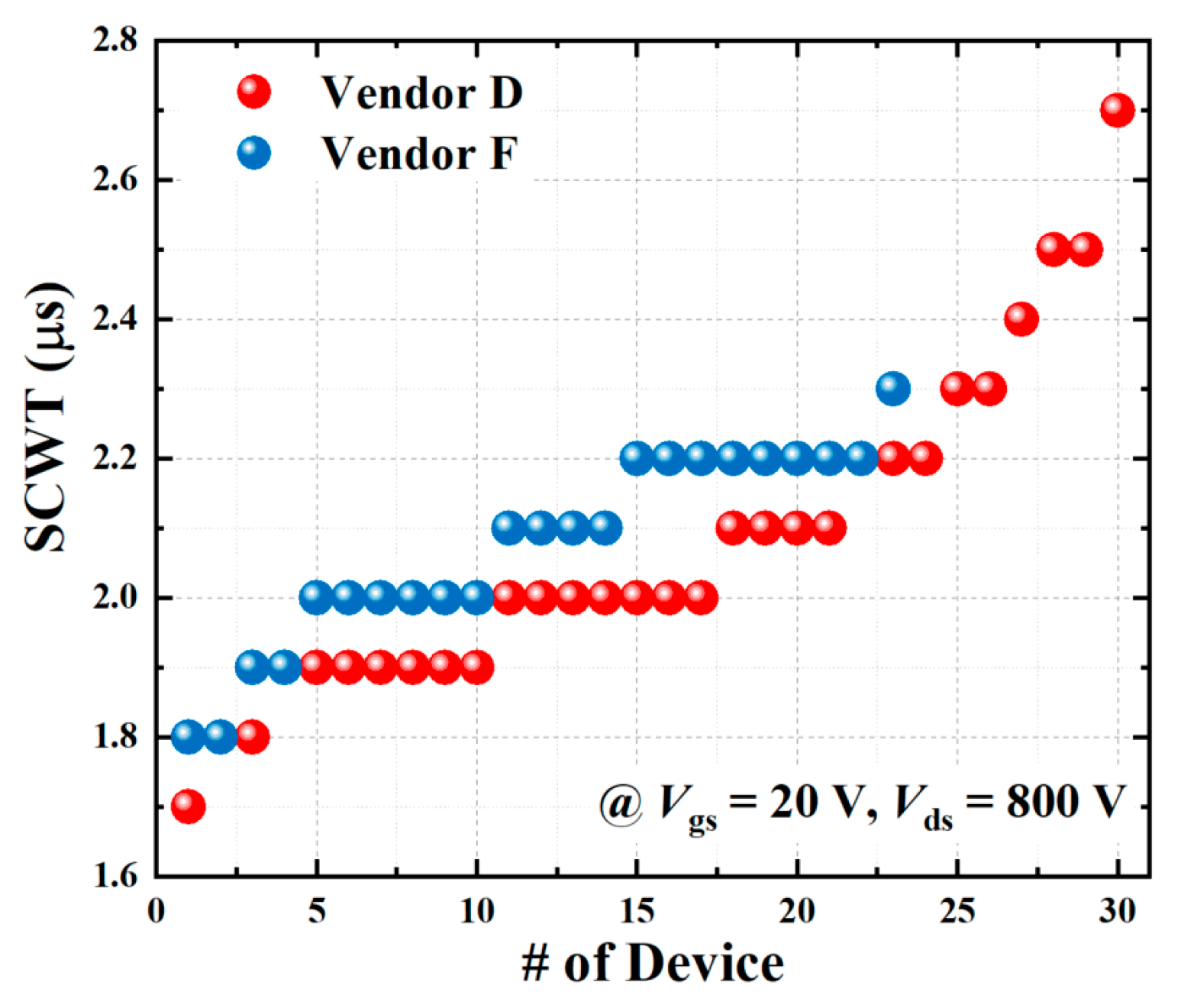
Figure 2 shows the SCWT variation in commercial 1.2 kV SiC MOSFETs from Vendor D and Vendor F. For consistency, DUTs have been carefully selected to have the same lot and batch number. The variation in SCWT for Vendor D and Vendor F are 1.0 µs and 0.5 µs, respectively.
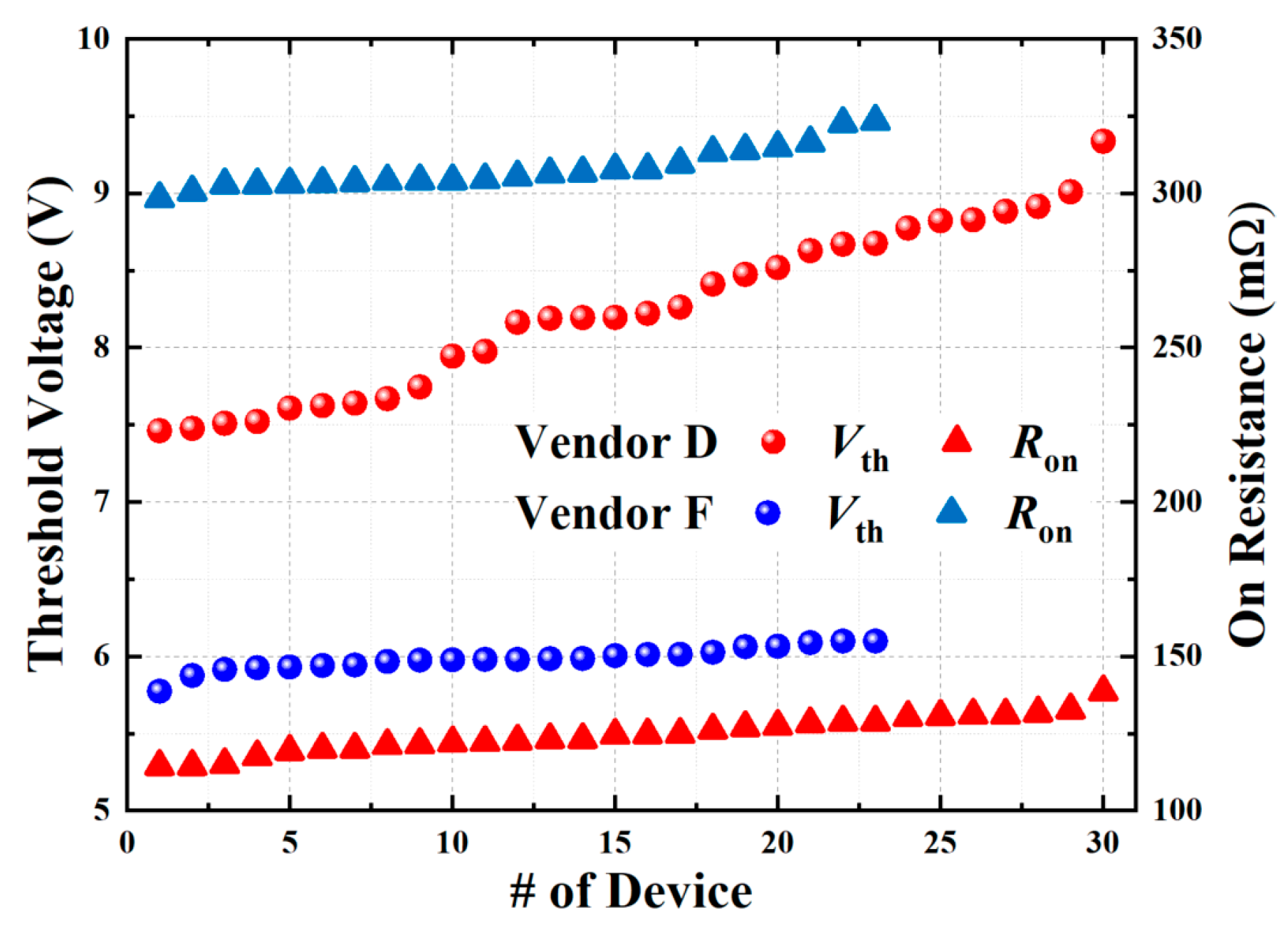
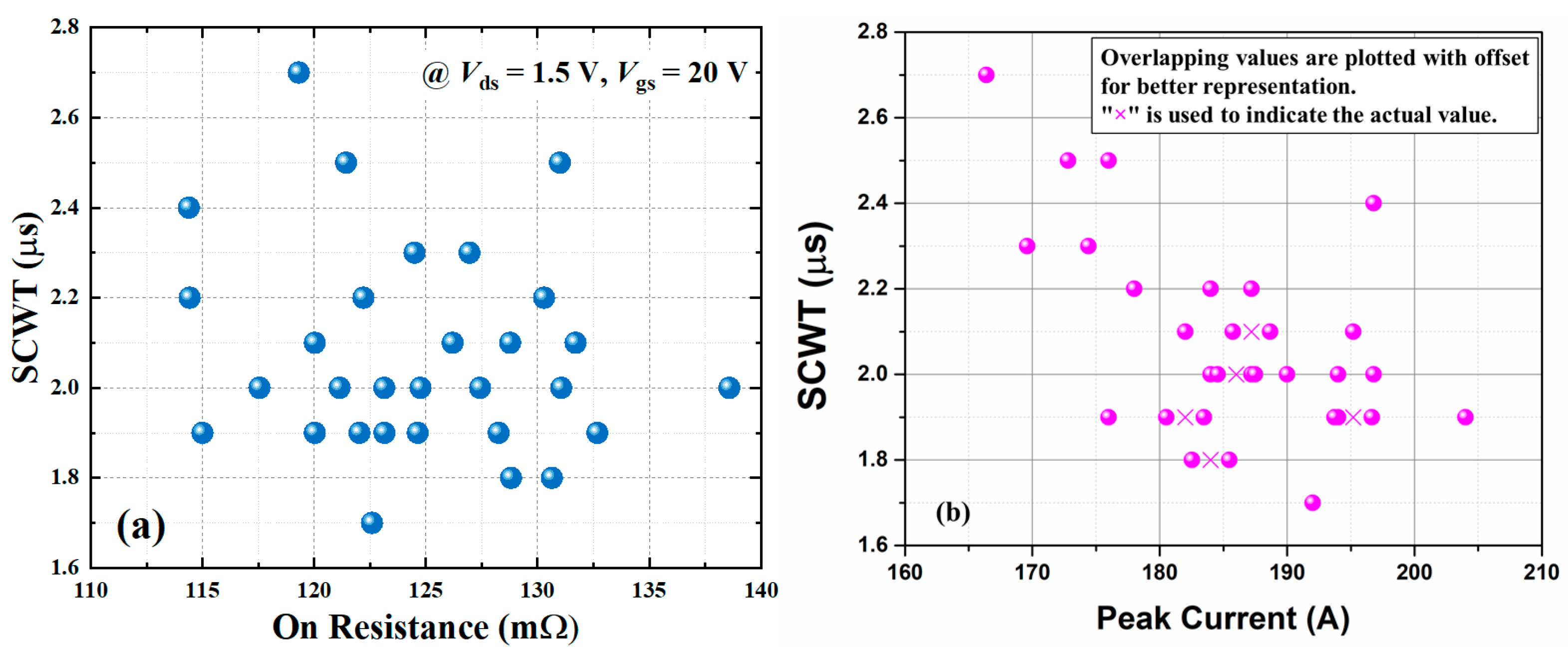
The variations in Vth and Ron across the DUTs are shown in Figure 3. DUTs from Vendor D have Vth variation in ~2 V whereas Vth variation in Vendor F is ~0.3 V. Ron variation is ~25-mΩ for both the vendors across the devices. The variation in SCWT as a function of channel length (Lch) has been initially studied by Han et al. [16]. In this work, a parallel between the Lch with corresponding specific on-resistance (Ron-sp), SCWT, and the peak current during SC event (Ipeak) has been reported. Moreover, Ipeak depends on the Vth of the device. As a result, the variation in SCWT as a function of Ron and Ipeak is considered, as shown in Figure 4. Although Ron and Ipeak impact SCWT, they lack the sensitivity needed to establish a correlation with SCWT of the devices. Hence, it is hard to effectively utilize them for removing devices with low SCWT. Therefore, a novel SC screening method is introduced in this paper.

3. SC Screening Methodology

3.1. Simulation Study of Planar-Gate 1.2 kV SiC MOSFETs

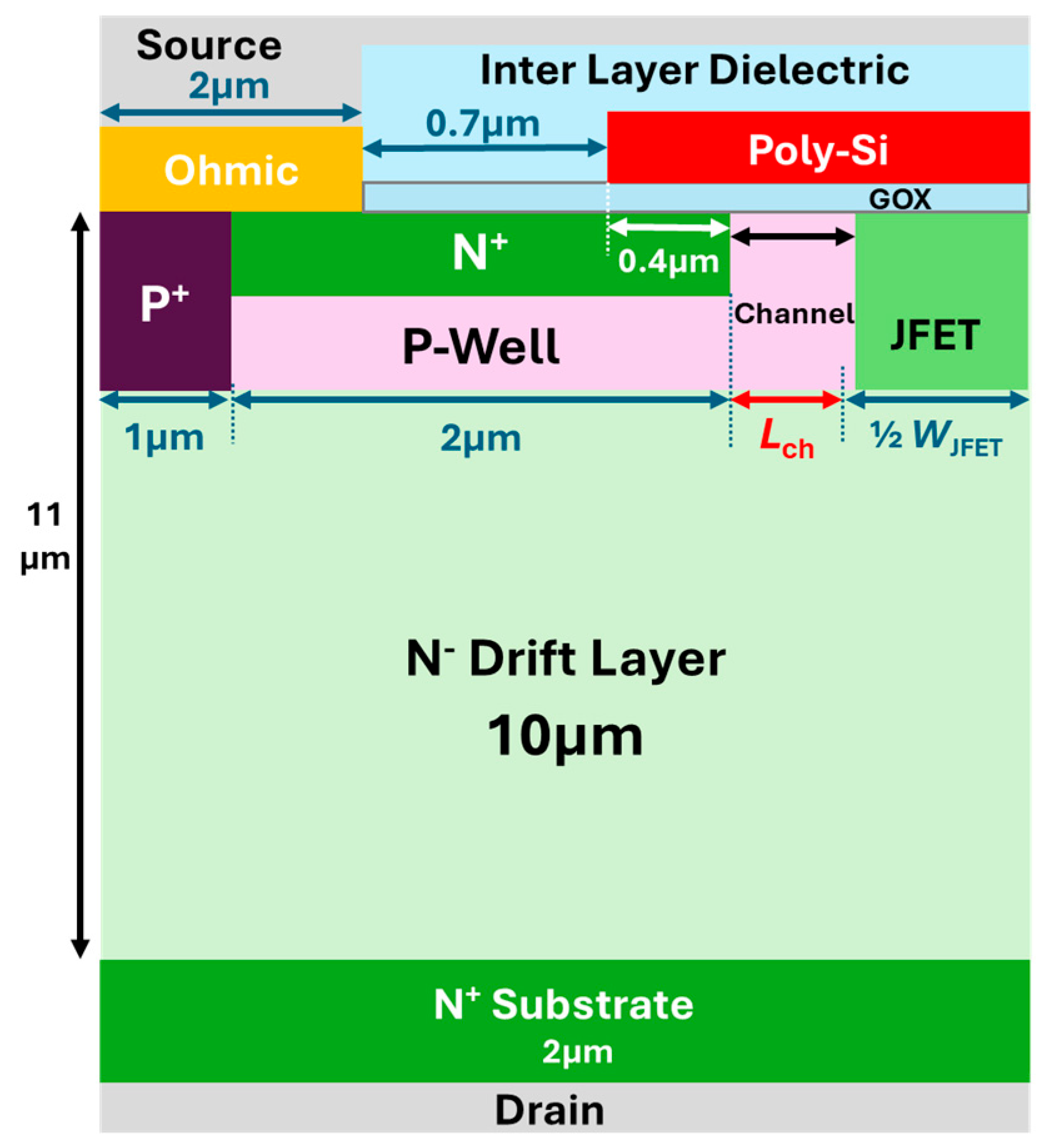
To understand the effect of channel misalignment on SCWT, a simulation study has been performed using Sentaurus TCAD, and the results are discussed below. Figure 5 shows the generic half-cell structure of a 1.2 kV planar-gate SiC MOSFET.
The device has an average Lch of 0.5 µm with a gate oxide thickness (tox) of 50 nm. The misalignment effect has been simulated by considering the Lch variation from 0.35 µm to 0.7 µm with a step of 0.05 µm. The misalignment is considered to be happening during the dry etching process, where the variation occurs at the N+ source side [17]. Therefore, the JFET width (WJFET) and half the cell width are kept constant at 2 µm and 4.5 µm, respectively, under all conditions. The key parameters related to the MOSFET structure are shown in Table 2.
For a reliable short circuit transient electrochemical simulation, thermodynamic models have been considered along with a traditional drift-diffusion model. Fermi statistics, Auger recombination, and the band gap narrowing model have been introduced from the literature. Moreover, to establish non-isothermal simulation, thermal parameters related to thermal conductivity and specific heat capacity have been calibrated using the literature and experimental result [3,17]. Some of the typical models and related parameters [30] are shown in Table 3.
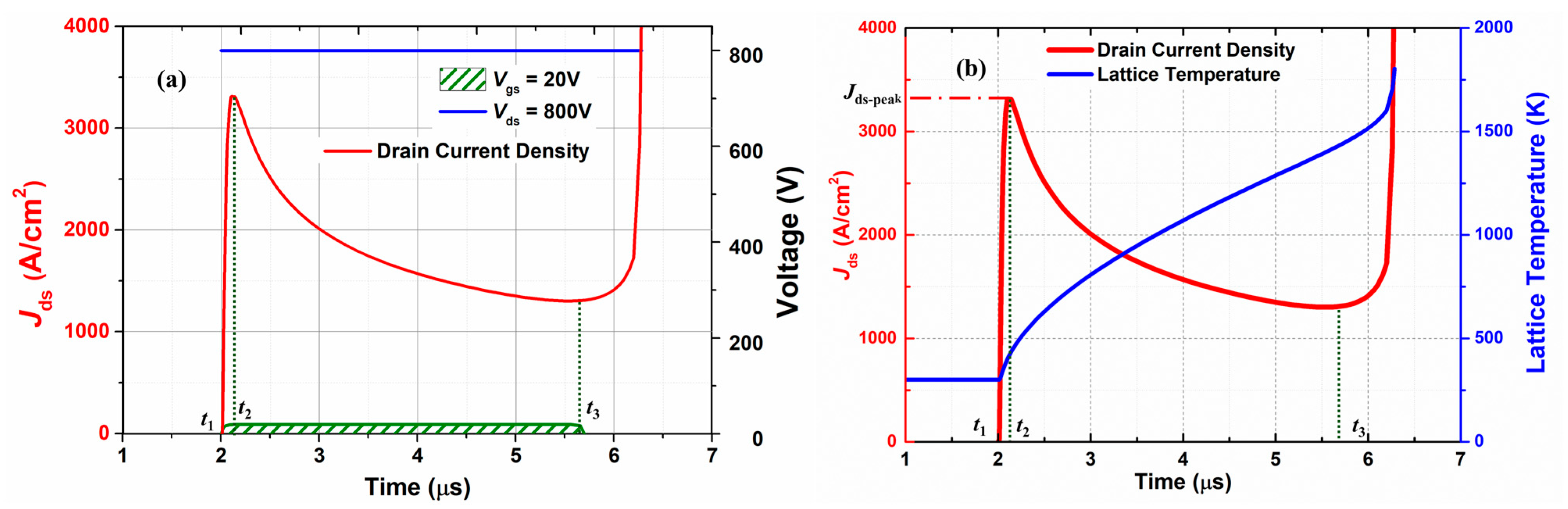
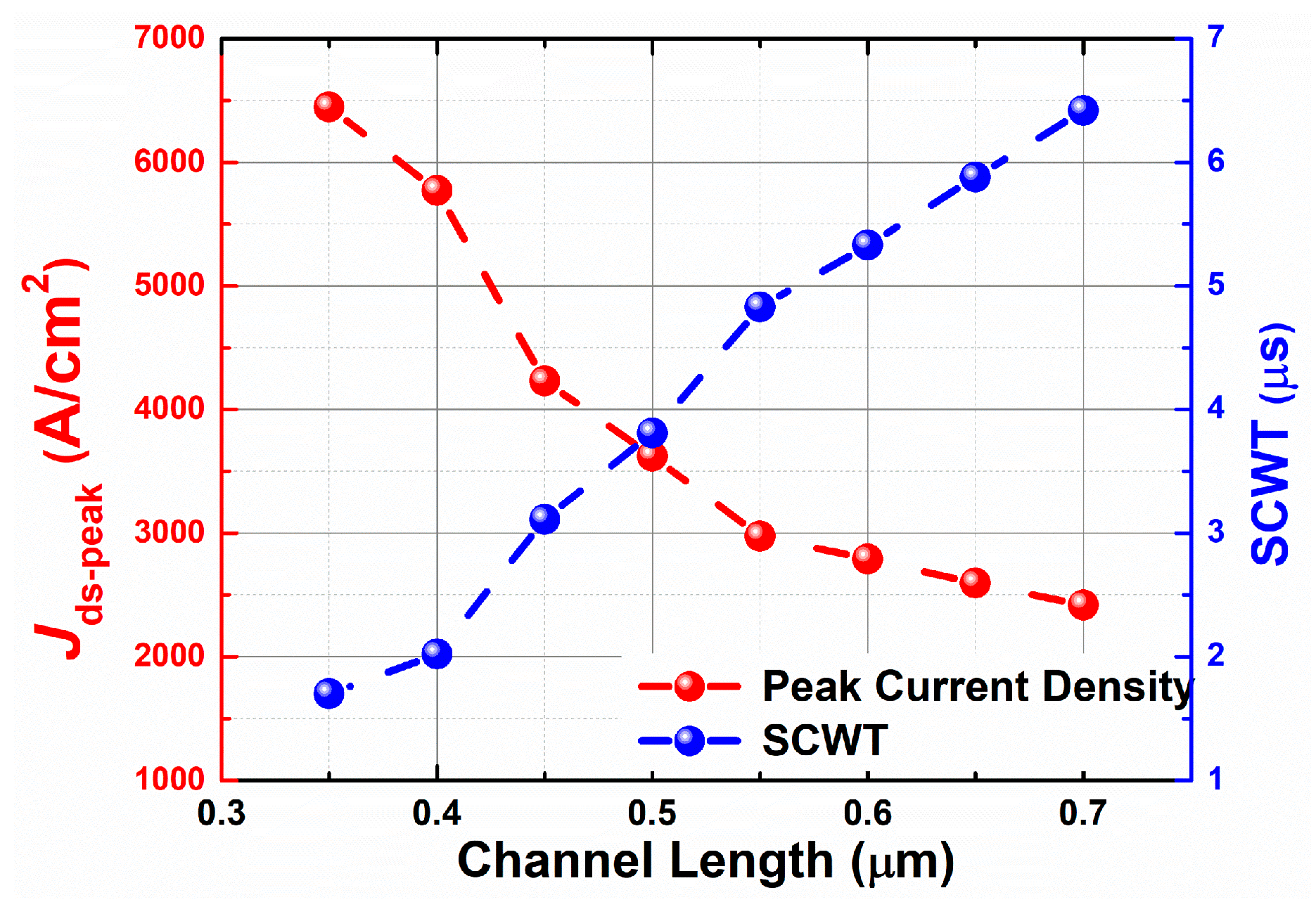
A typical SC characteristic as a function of transient time under Vds = 800 V and Vgs = 20 V is shown in Figure 6a. The red curve shows the drain current density (Jds) in A/cm2, under the described condition. Figure 6b represents the variations in drain current density and junction temperature as functions of transient time. The red curve displays Jds in A/cm2 and the blue curve represents the lattice temperature in K. Initially (t1~t2), Jds increases due to the improvement of the inversion channel mobility with temperature and achieves a maximum value of Jds-peak. Beyond that (t2~t3), Jds reduces as phonon scattering becomes predominant, resulting in a net reduction in carrier mobility [3,31]. When the device is turned off (t3~), the off-state drain leakage current due to thermally generated carriers remains [9,12] in the device, which eventually leads to the failure of the device. The variations in simulated SCWT and Jds-peak as functions of Lch are shown in Figure 7. Under the same applied gate pulse, the device with a higher Jds-peak induces higher temperature. Higher temperature results in more drain leakage current, hence lower SCWT is achieved.
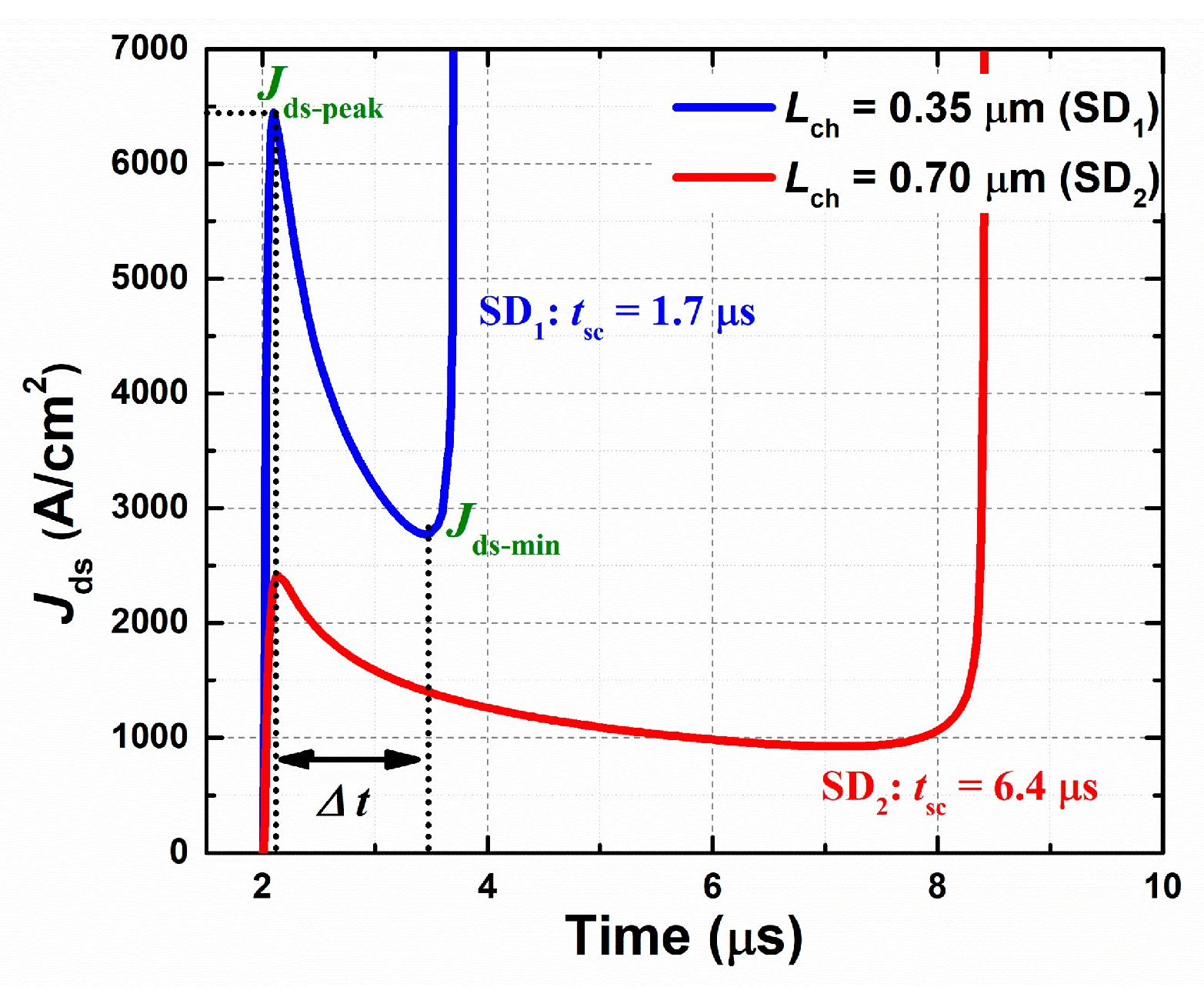
The effect of lattice heating and temperature-dependent mobility during the SC period can be extracted by utilizing the Jds versus transient time characteristics under the SC condition. Figure 8 shows the SC characteristics of two simulated devices with Lch = 0.35 µm (SD1) and 0.7 µm (SD2) having SCWT of 1.7 µs and 6.4 µs, respectively. It can be clearly seen that SD2 has lower Jds-peak and higher SCWT compared to SD1. The degradation of simulated drain current after Jds-peak, which is the drain current slope (slope: A/cm2-s), can be mathematically expressed as
s l o p e = ( J d s p e a k J d s m i n ) t ,
where Jds-min and Δt are the pre thermal runaway current density and the time required to reach from Jds-peak to Jds-min, respectively. The overall effect of the increased lattice temperature and the non-negligible drain leakage current during the SC event can be expressed as a ratio of Jds-peak to the slope and termed as the SCWT correlation parameter PTDM. It can be mathematically represented as
P T D M = J d s p e a k s l o p e .
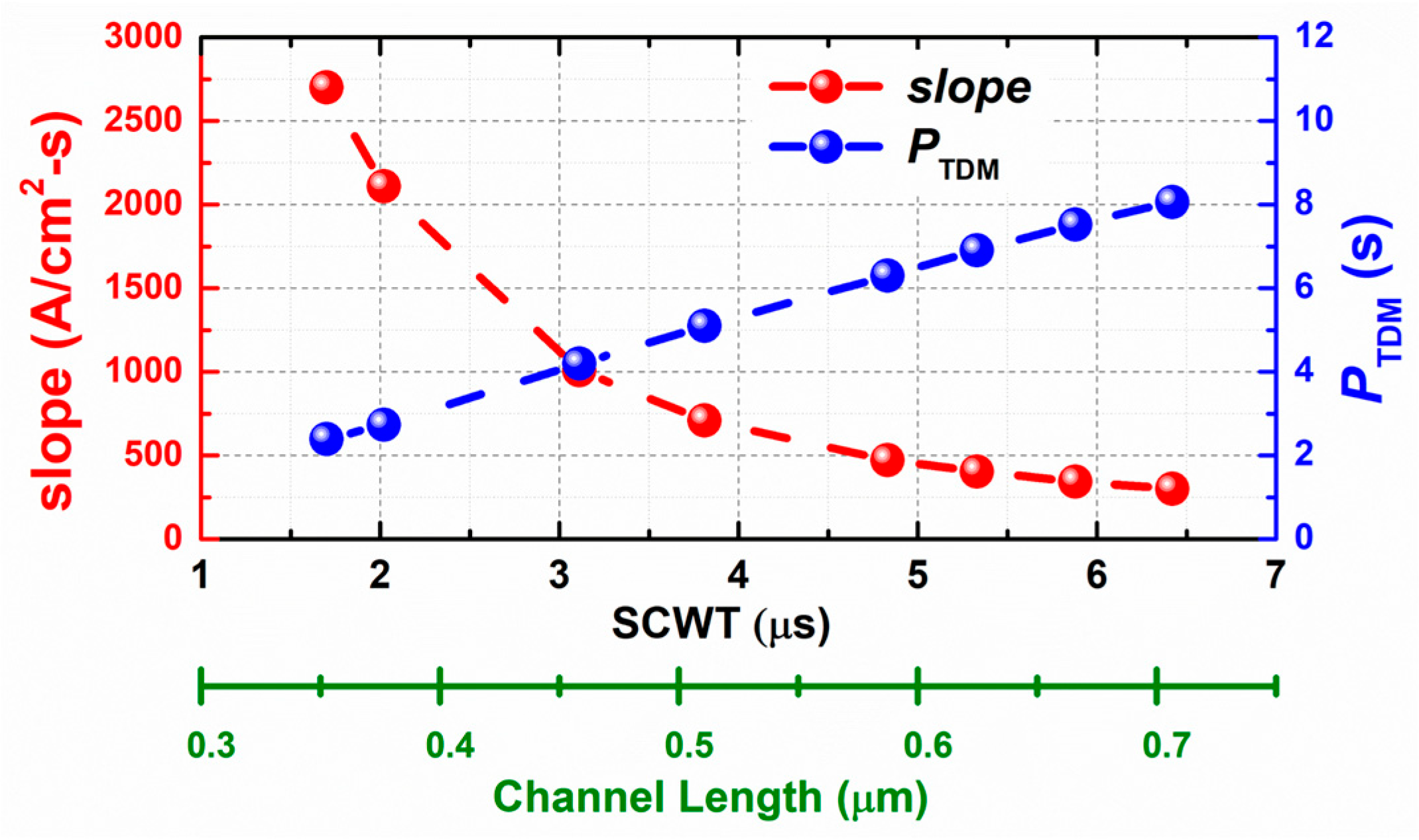
At a device level, for the activation of thermal runaway failure process, the device needs to reach a critical junction temperature (Tj,cri) [32]. As SC is a dynamic process, the junction temperature (Tj) is affected by the drain current density (Jds) and time. Hence, the term PTDM can be considered as an electrical probe that captures the net variation in Tj and can be correlated to the failure time of the device. Figure 9 shows the variations in slope and PTDM as functions of SCWT and Lch. The result illustrates that PTDM and SCWT have strong correlation as Lch varies, indicating the possibility to reliably use PTDM as the screening parameter to remove devices with weak SCWT due to the channel misalignment in commercial SiC MOSFETs.

3.2. Proposed SC Screening Method

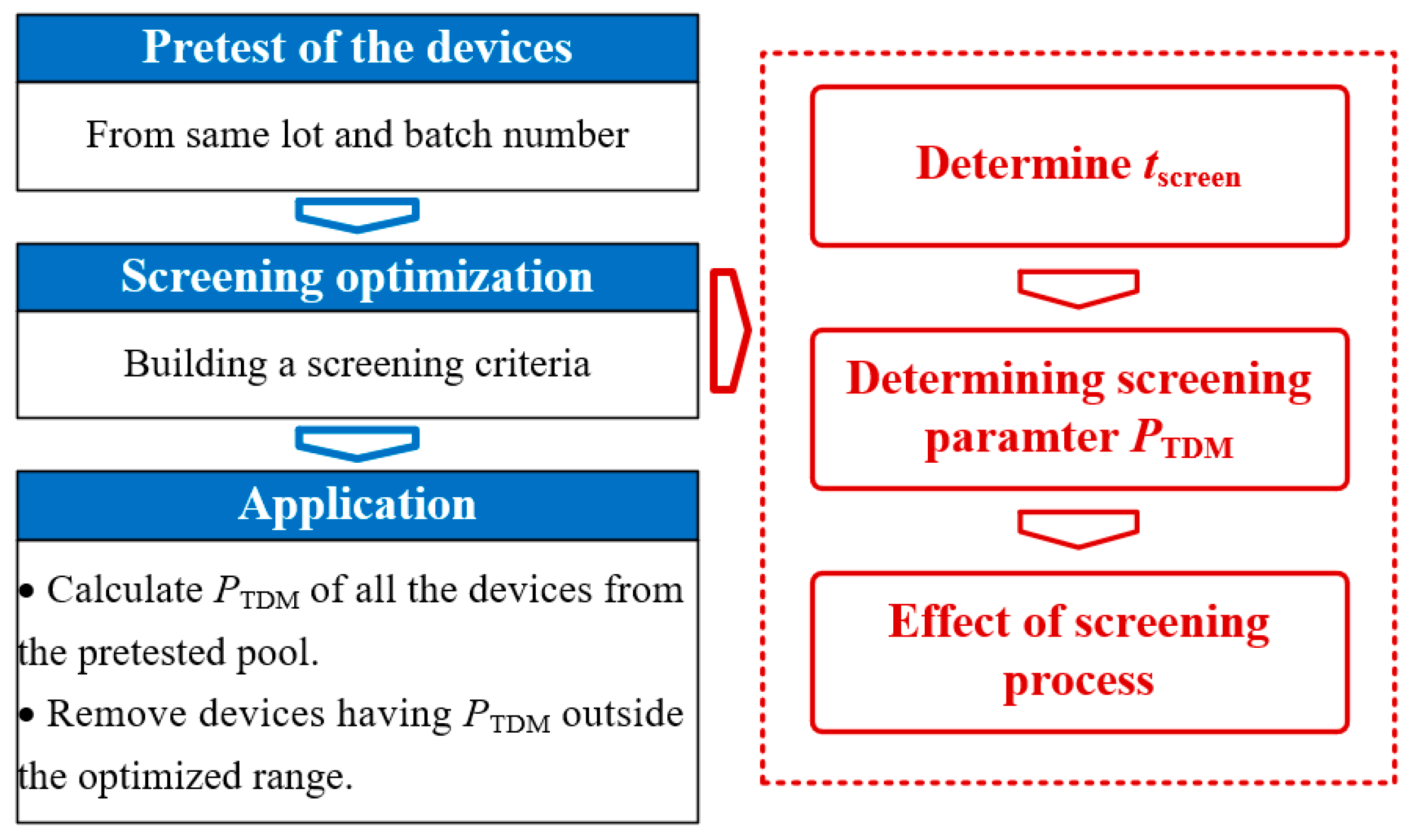
Based on the simulation analysis, a novel non-destructive SC screening methodology for 1.2 kV commercial SiC MOSFETs is proposed and graphically presented in Figure 10. For a successful SC screening, the key component is to establish the optimized screening parameter PTDM using a small batch from a pool of devices having the same lot and batch number. The vital steps of PTDM optimization are determining the test pulse width at which the screening can reliably perform (tscreen) and setting the minimum SCWT to screen out poor devices. Furthermore, the usability of the screened devices needs to be confirmed by comparing different electrical parameters pre- and post-screening. Upon establishing the PTDM range needed for the reliable devices, a single pulse of tscreen can be used to remove devices that have less SCWT than the pre-determined minimum value, without damaging the reliable ones from the same pool. This section discusses the technique to optimize the PTDM for a minimum SCWT of 1.9 µs in 1.2 kV SiC MOSFETs from Vendor D and Vendor F.

3.2.1. Determining Screening Pulse Width

To efficiently screen out devices with lower SCWT, the screening pulse width (tscreen) needs to be optimized. The beginning of the thermal runaway can be detected by the existence of tail current and change in current slope caused by the thermally generated carriers due to the presence of high voltage and temperature [13]. To successfully screen out devices with low SCWT, tscreen should be able to capture this phenomenon without destroying the devices. As a result, in our work, tscreen has been set to (tscmin − 0.2 µs), where tscmin represents the minimum SCWT from the same batch of devices. The tscreen is calculated to be 1.5 µs and 1.6 µs for Vendor D and Vendor F, respectively.

3.2.2. Determining Screening Parameter and SCWT Correlation

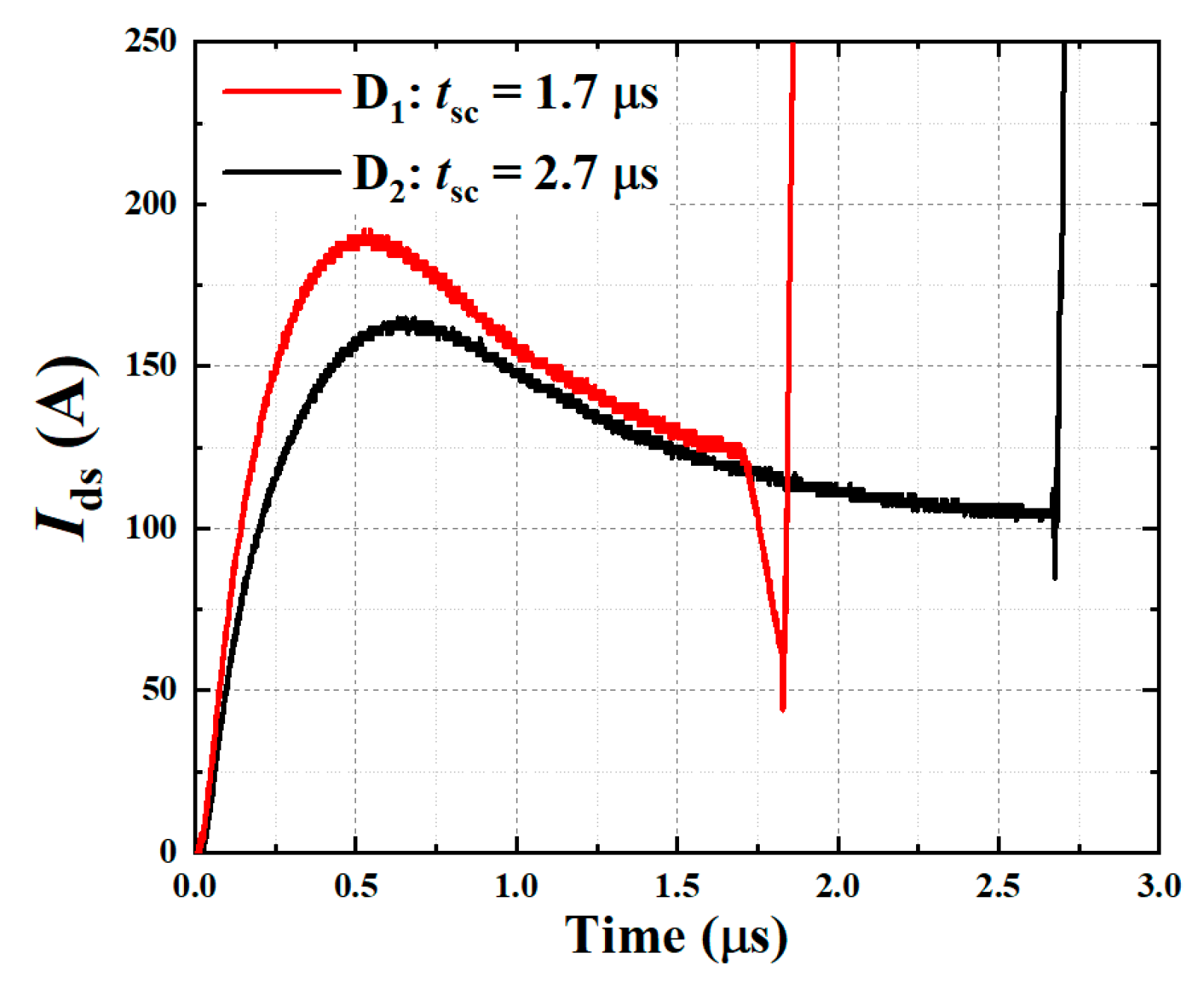
For the next step, each DUT has undergone a traditional SC measurement under Vds = 800 V and Vgs = 20 V. An initial gate pulse of tscreen is applied, which is then incremented by a step of 0.1 µs until failure is observed. The behavior of the commercial devices under screening pulse can be explained by considering two devices from Vendor D with a SCWT of 1.7 µs (D1) and 2.7 µs (D2), as shown in Figure 11.
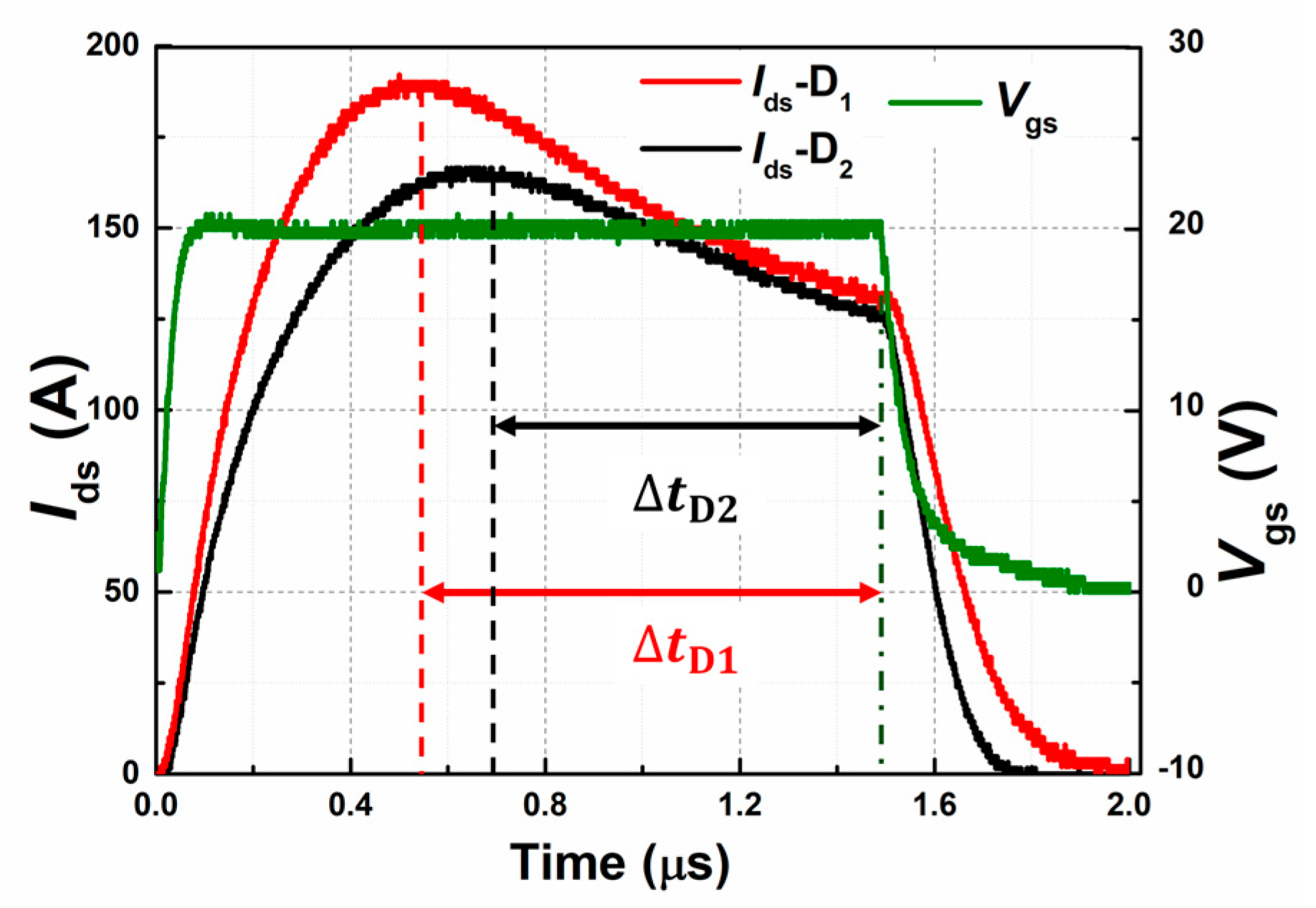
Figure 12 represents the behavior of D1 and D2 when subjected to tscreen = 1.5 µs. It can be clearly seen that, under the same experimental conditions, devices with different SCWT show variations in peak current (Ipeak), peak current position in the time scale (tpeak), and current slope beyond Ipeak. Using the theory developed by the simulation study, PTDM under tscreen can be defined as
P T D M = I p e a k s l o p e ,
where   s l o p e = ( I p e a k I m i n ) t and   Δ t = t s c r e e n t p e a k .
Here, Imin and Δt are the pre-turn-off current and the time required to reach from Ipeak to Imin, respectively. It can be clearly seen that, under a constant tscreen, the value of Δt and hence slope depends on the tpeak. The variation in Δt for D1 and D2 having different tpeak is also presented in Figure 12 as ΔtD1 and ΔtD2, respectively.
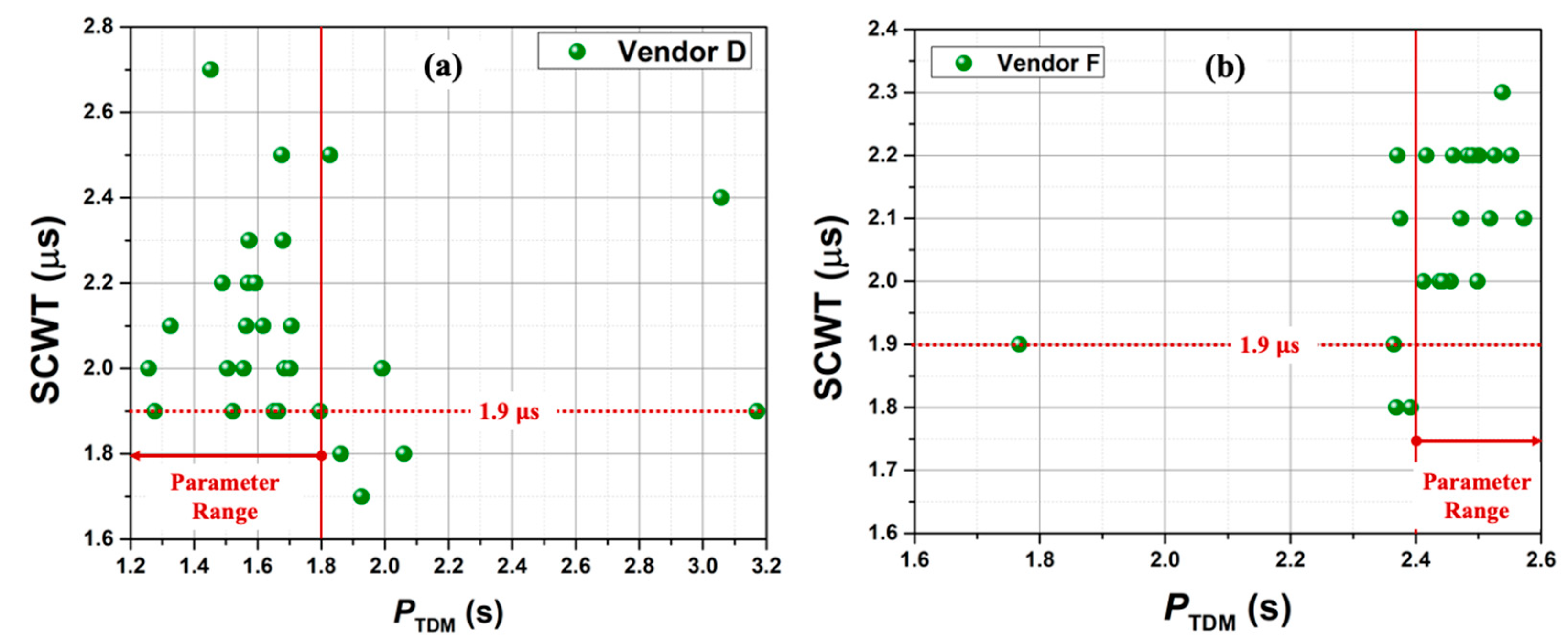
Figure 13a displays the SCWT as a function of PTDM (s) for Vendor D while applying tscreen = 1.5 µs. It is apparent that, to successfully identify devices with SCWT greater than or equal to 1.9 µs, the range of PTDM should be less than 1.8 s, as shown by the arrow. Similar analysis has been carried out for Vendor F while applying tscreen = 1.6 µs, as shown in Figure 13b. To successfully find out devices with SCWT greater than or equal to 1.9 µs for Vendor F, the range of PTDM should be greater than 2.4 s.
It is evident that the range of PTDM is different for different vendors. The variation in PTDM is affected by device design parameters such as die area, die volume, channel design, active area design, gate oxide thickness and quality, interface defect state density, doping profile, device fabrication process, and temperature diffusion process, etc., [33,34,35]. As a result, PTDM needs to be experimentally determined by each vendor.

3.2.3. Effect of Screening Process

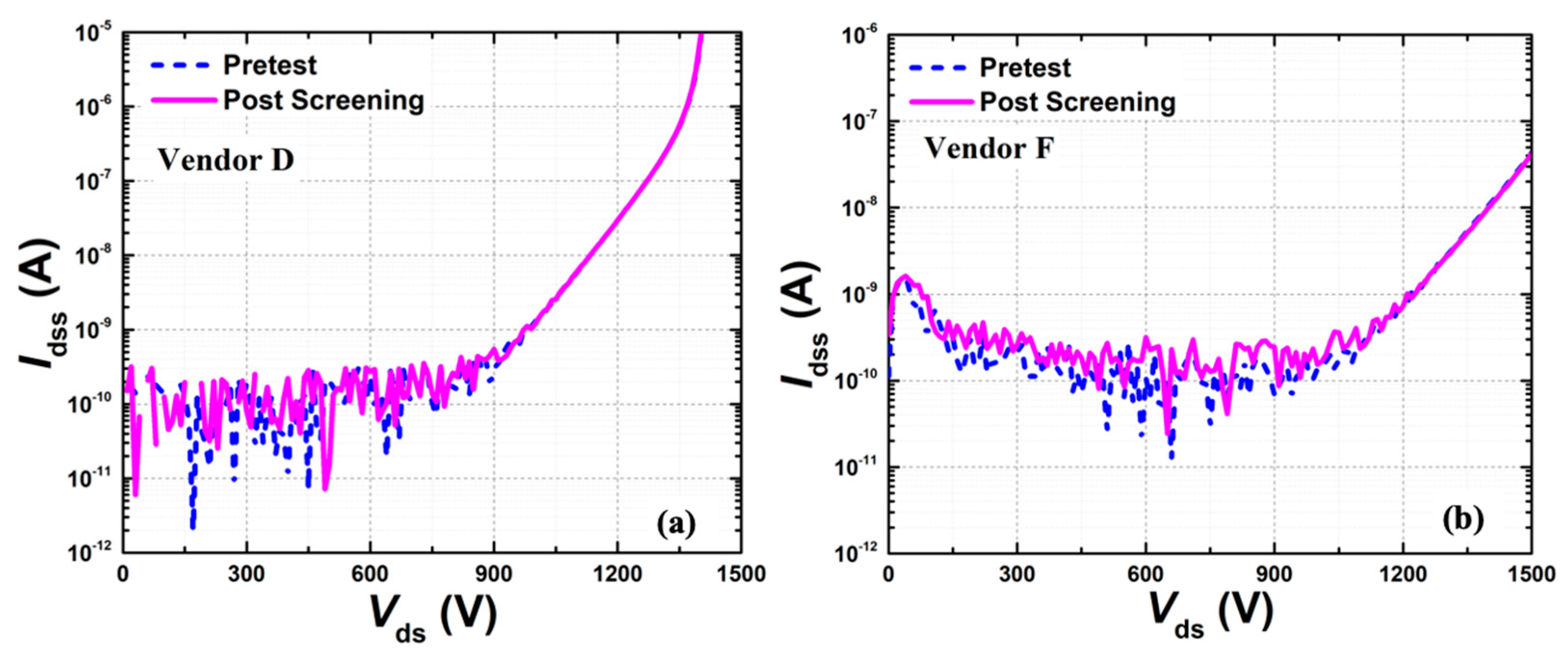
The effect of screening pulse (tscreen) on device characteristics has been examined by measuring and comparing Vth, Ron, gate leakage current (Igss), and drain to source leakage current (Idss) of a small batch of devices from each vendor before and after applying the tscreen. The variation in Idss due to screening is presented in Figure 14. The variations in all the other static parameters have been condensed in Table 4. All results are representative in nature.
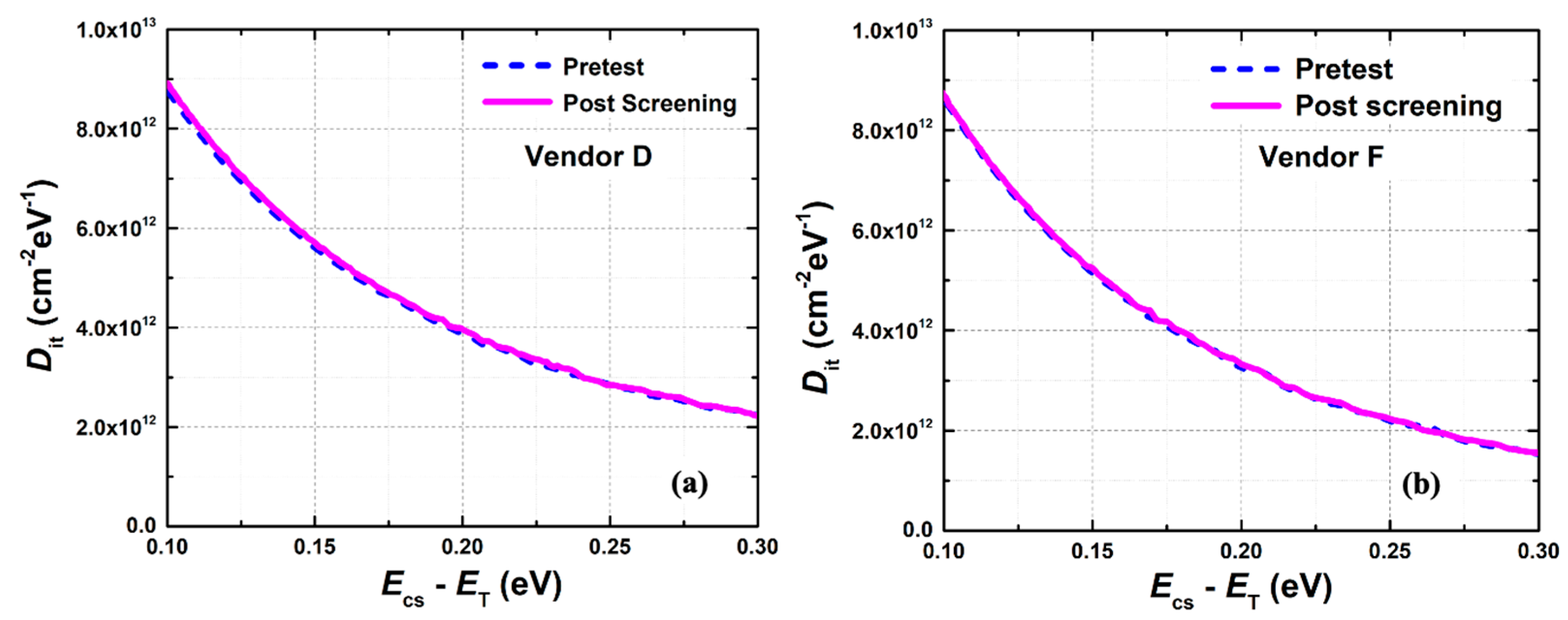
Furthermore, the generation of any additional interface defect states due to the screening has been studied by calculating the energy-dependent interface trap density ( D i t ( φ s ) ) near the SiC/SiO2 interface on the same set of devices. The D i t profiles have been obtained by using the subthreshold region in transfer characteristics [36] at room temperature. The mathematical analysis to calculate D i t ( φ s ) is described below.
The subthreshold region drain current,
I d s = I 0 e q V g s n k T 1 e q V d s k T ,
and the ideality factor n are given as
n = q 2.3 k T ( l o g I D S V g s ) 1 = 1 + C D + C i t C o x ,
where C D is depletion capacitance, C o x is oxide capacitance, and C i t is the interface trap capacitance per unit area.
The energy-dependent interface trap density is given as
D i t φ s = C i t q ,
and the energy distribution of the trap level ( E c s E T ) is
E c s E T = E g 2 q φ F 2.3 k T q log I D S 2 φ F I D S φ s ,
where surface potential ( φ s ) is in the range of φ F < φ s < 2 φ F and φ F is the Fermi potential.
Using (7) and (8), D i t ( φ s ) for sample devices from Vendor D and Vendor F have been extracted before and after applying tscreen, and the representative results are shown in Figure 15. Comparison of different static parameters before and after applying the screening pulse along with the extracted room temperature D i t profile close to the conduction band edge ( E c s E T ~0.1 eV) indicates that no significant degradation happened due to the screening process and the devices can be further utilized in applications safely.

4. Conclusions

This work has successfully demonstrated a novel non-destructive short-circuit (SC) screening methodology for 1.2 kV SiC power MOSFETs to screen out devices with low SC withstand time (SCWT) without damaging the reliable ones. A new screening parameter PTDM has been introduced that captures the SCWT variation during the SC event and shows a strong correlation with SCWT. This theoretically established correlation has been further verified experimentally using state-of-the-art 1.2 kV SiC MOSFETs with a planar-gate structure from commercial vendors. It has been determined that, for each vendor, the screening parameter PTDM needs to be recalibrated for successful screening. Furthermore, the effect of SC screening on the devices’ static characteristics has been studied. The results indicate that the proposed screening method does not degrade or damage the devices under test. Successful implementation of this method at a commercial level will be able to remove the unwanted devices having low SCWT without damaging the reliable ones; hence, it can notably improve the safety and consistency of commercial SiC MOSFETs in real-world applications.

Author Contributions

Conceptualization, M.B., M.H.W. and A.K.A.; methodology, M.B. and H.Y.; software, M.B. and H.Y.; validation, M.B., M.J. and H.Y.; formal analysis, M.B., M.J., H.Y., S.H., J.Q., L.S., M.H.W., A.S. and A.K.A.; investigation, M.B., H.Y. and M.J.; resources, M.B. and M.J.; data curation, M.B.; writing—original draft preparation, M.B.; writing—review and editing, M.B., M.J. and H.Y.; visualization, M.B.; supervision, A.K.A.; project administration, A.S.; funding acquisition, A.S. All authors have read and agreed to the published version of the manuscript.

Funding

This work was supported in part by the Ford Motor Company under the Ford Alliance 2019 Project to The Ohio State University (Funding Number: GR136168) and in part by the Block Gift Grant from the II–VI (Coherent) Foundation (Funding Number: GR135802).

Data Availability Statement

The data is contained within this article.

Conflicts of Interest

The author Atsushi Shimbori is employed by the company Ford Motor Company. The remaining authors declare that this research was conducted in the absence of any commercial or financial relationships that could be construed as potential conflicts of interest. The authors declare that this study received funding from the Ford Motor Company and II–VI (Coherent) Foundation. The funders had no role in the design of this study, in the collection, analyses, or interpretation of data, in the writing of this manuscript, or in the decision to publish the results.

Abbreviations

The following abbreviations are used in this manuscript:
MOSFETmetal oxide semiconductor field-effect transistor
DUTdevice under test
SCshort circuit
SCWTshort circuit withstand time
DIBLdrain induced barrier lowering
CLMchannel length modulation

References

  1. Liu, G.; Tuttle, B.R.; Dhar, S. Silicon carbide: A unique platform for metal-oxide-semiconductor physics. Appl. Phys. Rev. 2015, 2, 021307. [Google Scholar] [CrossRef]
  2. Wu, L.; Liang, J.; Zhang, M.; Liu, M.; Zhang, T.; Yang, G.; Song, X. An approach for extracting the SiC/SiO2 SiC MOSFET interface trap distribution and study during short circuit. Mater. Sci. Semicond. Process. 2023, 163, 107581. [Google Scholar] [CrossRef]
  3. Xing, D.; Hu, B.; Kang, M.; Zhang, Y.; Nayak, S.; Wang, J.; Agarwal, A.K. 1200-V SiC MOSFET Short-Circuit Ruggedness Evaluation and Methods to Improve Withstand Time. IEEE J. Emerg. Sel. Top. Power Electron. 2022, 10, 5059–5069. [Google Scholar] [CrossRef]
  4. Kimoto, T.; Cooper, J.A. In Fundamentals of Silicon Carbide Technology: Growth, Characterization, Devices and Applications; John Wiley & Sons Singapore Pvt. Ltd.: Hoboken, NJ, USA, 2014. [Google Scholar]
  5. Hofstetter, P.; Maier, R.W.; Bakran, M.M. Influence of the Threshold Voltage Hysteresis and the Drain Induced Barrier Lowering on the Dynamic Transfer Characteristic of SiC Power MOSFETs. In Proceedings of the 2019 IEEE Applied Power Electronics Conference and Exposition (APEC), Anaheim, CA, USA, 17–21 March 2019; pp. 944–950. [Google Scholar]
  6. Tachiki, K.; Ono, T.; Kobayashi, T.; Kimoto, T. Short-Channel Effects in SiC MOSFETs Based on Analyses of Saturation Drain Current. IEEE Trans. Electron Devices 2021, 68, 1382–1384. [Google Scholar] [CrossRef]
  7. Sun, J.; Xu, H.; Wu, X.; Sheng, K. Comparison and analysis of short circuit capability of 1200V single-chip SiC MOSFET and Si IGBT. In Proceedings of the 2016 13th China International Forum on Solid State Lighting: International Forum on Wide Bandgap Semiconductors China (SSLChina: IFWS), Beijing, China, 15–18 November 2016; pp. 42–45. [Google Scholar]
  8. Castellazzi, A.; Funaki, T.; Kimoto, T.; Hikihara, T. Short-circuit tests on SiC power MOSFETs. In Proceedings of the 2013 IEEE 10th International Conference on Power Electronics and Drive Systems (PEDS), Kitakyushu, Japan, 22–25 April 2013. [Google Scholar]
  9. Wang, Z.; Shi, X.; Tolbert, L.M.; Wang, F.; Liang, Z.; Costinett, D.; Blalock, B.J. Temperature-Dependent Short-Circuit Capability of Silicon Carbide Power MOSFETs. IEEE Trans. Power Electron. 2016, 31, 1555–1566. [Google Scholar] [CrossRef]
  10. Namai, M.; An, J.; Yano, H.; Iwamuro, N. Investigation of short-circuit failure mechanisms of SiC MOSFETs by varying DC bus voltage. Jpn. J. Appl. Phys. 2018, 57, 074102. [Google Scholar] [CrossRef]
  11. Wang, J.; Jiang, X. Review and analysis of SiC MOSFETs’ ruggedness and reliability. IET Power Electron. 2020, 13, 445–455. [Google Scholar] [CrossRef]
  12. Cui, R.; Xin, Z.; Liu, Q.; Kang, J.; Luo, H.; Zhang, L.; Loh, P.C. Review of Methodologies for Evaluating Short-Circuit Robustness and Reliability of SiC Power MOSFETs. IEEE J. Emerg. Sel. Top. Power Electron. 2022, 10, 4665–4679. [Google Scholar] [CrossRef]
  13. Yu, R.; Jahdi, S.; Alatise, O.; Ortiz-Gonzalez, J.; Munagala, S.P.; Simpson, N.; Mellor, P. Measurements and Review of Failure Mechanisms and Reliability Constraints of 4H-SiC Power MOSFETs Under Short Circuit Events. IEEE Trans. Device Mater. Reliab. 2023, 23, 544–563. [Google Scholar] [CrossRef]
  14. Yao, K.; Yano, H.; Tadano, H.; Iwamuro, N. Investigations of SiC MOSFET Short-Circuit Failure Mechanisms Using Electrical, Thermal, and Mechanical Stress Analyses. IEEE Trans. Electron Devices 2020, 67, 4328–4334. [Google Scholar] [CrossRef]
  15. Hain, S.; Meiler, M.; Denk, M. Evaluation of 800V Traction Inverter with SiC-MOSFET versus Si-IGBT Power Semiconductor Technology. In Proceedings of the PCIM Europe 2019; International Exhibition and Conference for Power Electronics, Intelligent Motion, Renewable Energy and Energy Management, Nuremberg, Germany, 7–9 May 2019; pp. 1–6. [Google Scholar]
  16. Han, K.; Kanale, A.; Baliga, B.J.; Bhattacharya, S. Static, Dynamic, and Short-Circuit Performance of 1.2 kV 4H-SiC MOSFETs with Various Channel Lengths. In Proceedings of the 2019 IEEE 7th Workshop on Wide Bandgap Power Devices and Applications (WiPDA), Raleigh, NC, USA, 29–31 October 2019; pp. 47–52. [Google Scholar]
  17. Nayak, S.; Yu, S.; Maddi, H.L.R.; Jin, M.; Shi, L.; Ganguly, S.; Agarwal, A.K. Non-isothermal simulation of SiC DMOSFET short circuit capability. Jpn. J. Appl. Phys. 2022, 61, 061007. [Google Scholar] [CrossRef]
  18. Yu, H.; Bhattacharya, M.; Jin, M.; Shi, L.; Houshmand, S.; Shimbori, A.; White, M.H.; Agarwal, A.K. Artificial Neural Network-Based Screening Method for Short-Circuit Withstand Time in Packaged SiC MOSFETs to Enhance Device Consistency. IEEE Electron Device Lett. 2025, 46, 1179–1182. [Google Scholar] [CrossRef]
  19. Nguyen, T.-T.; Ahmed, A.; Thang, T.V.; Park, J.-H. Gate Oxide Reliability Issues of SiC MOSFETs Under Short-Circuit Operation. IEEE Trans. Power Electron. 2015, 30, 2445–2455. [Google Scholar] [CrossRef]
  20. Hatta, H.; Tominaga, T.; Hino, S.; Miura, N.; Tomohisa, S.; Yamakawa, S. Suppression of Short-Circuit Current with Embedded Source Resistance in SiC-MOSFET. Mater. Sci. Forum 2018, 924, 727–730. [Google Scholar] [CrossRef]
  21. Kanale, A.; Baliga, B.J. A New User-Configurable Method to Improve Short-Circuit Ruggedness of 1.2-kV SiC Power MOSFETs. IEEE Trans. Power Electron. 2021, 36, 2059–2067. [Google Scholar] [CrossRef]
  22. Wang, J.; Shen, Z.; Burgos, R.; Boroyevich, D. Design of a high-bandwidth Rogowski current sensor for gate-drive shortcircuit protection of 1.7 kV SiC MOSFET power modules. In Proceedings of the 2015 IEEE 3rd Workshop on Wide Bandgap Power Devices and Applications (WiPDA), Blacksburg, VA, USA, 2–4 November 2015; pp. 104–107. [Google Scholar]
  23. Baliga, B.J.; Kanale, A. Introduction. In The BaSIC Topology: A Revolutionary Power Device Control Strategy; Baliga, B.J., Kanale, A., Eds.; Springer Nature: Cham, Switzerland, 2025; pp. 1–5. [Google Scholar]
  24. Kim, D.; Sung, W. Improved Short-Circuit Ruggedness for 1.2kV 4H-SiC MOSFET Using a Deep P-Well Implemented by Channeling Implantation. IEEE Electron Device Lett. 2021, 42, 1822–1825. [Google Scholar] [CrossRef]
  25. Diaz Reigosa, P.; Schulz, N.; Minamisawa, R. Short-circuit robustness of retrograde channel doping 1.2 kV SiC MOSFETs. Microelectron. Reliab. 2021, 120, 114117. [Google Scholar] [CrossRef]
  26. Kono, H.; Asaba, S.; Ohashi, T.; Ogata, T.; Furukawa, M.; Sano, K.; Yamaguchi, M.; Suzuki, H. Improving the specific on-resistance and short-circuit ruggedness tradeoff of 1.2-kV-class SBD-embedded SiC MOSFETs through cell pitch reduction and internal resistance optimization. In Proceedings of the 2021 33rd International Symposium on Power Semiconductor Devices and ICs (ISPSD), Nagoya, Japan, 30 May–3 June 2021; pp. 227–230. [Google Scholar]
  27. Zhang, M.; Li, H.; Yang, Z.; Zhao, S.; Wang, X.; Ding, L. Short Circuit Protection of Silicon Carbide MOSFETs: Challenges, Methods, and Prospects. IEEE Trans. Power Electron. 2024, 39, 13081–13095. [Google Scholar] [CrossRef]
  28. Jouha, W.; Oualkadi, A.E.; Dherbécourt, P.; Joubert, E.; Masmoudi, M. A new extraction method of SiC power MOSFET threshold voltage using a physical approach. In Proceedings of the 2017 International Conference on Electrical and Information Technologies (ICEIT), Rabat, Morocco, 15–18 November 2017; pp. 1–6. [Google Scholar]
  29. Bhattacharya, M.; Jin, M.; Qian, J.; Shi, L.; Houshmand, S.; Yu, H.; White, M.H.; Agarwal, A.K.; Shimbori, A.; Aman, A.; et al. A Non-destructive Short Circuit Withstand Time Screening Methodology for Commercially Available SiC Power MOSFET. In Proceedings of the 2024 IEEE 11th Workshop on Wide Bandgap Power Devices & Applications (WiPDA), Dayton, OH, USA, 4–6 November 2024; pp. 1–5. [Google Scholar]
  30. Synopsys, Inc. Sentaurus Device User Manual; Synopsys, Inc.: Sunnyvale, CA, USA, 2022. [Google Scholar]
  31. Ionita, C.; Nawaz, M.; Ilves, K.; Iannuzzo, F. Short-circuit ruggedness assessment of a 1.2 kV/180 A SiC MOSFET power module. In Proceedings of the 2017 IEEE Energy Conversion Congress and Exposition (ECCE), Cincinnati, OH, USA, 1–5 October 2017. [Google Scholar]
  32. Nguyen, T.A.; Lefebvre, S.; Azzopardi, S.; Chaplier, G. Investigation on the junction temperature of planar power 4H-SiC MOSFET under short circuit operation. Microelectron. Reliab. 2022, 138, 114694. [Google Scholar] [CrossRef]
  33. Romano, G.; Riccio, M.; Maresca, L.; Breglio, G.; Irace, A.; Fayyaz, A.; Castellazzi, A. Influence of design parameters on the short-circuit ruggedness of SiC power MOSFETs. In Proceedings of the 2016 28th International Symposium on Power Semiconductor Devices and ICs (ISPSD), Prague, Czech Republic, 12–16 June 2016; pp. 47–50. [Google Scholar]
  34. Kakarla, B. Short Circuit Behavior of SiC MOSFETs; ETH Zurich: Zurich, Switzerland, 2021. [Google Scholar]
  35. Meng, J.; Sun, P.; Cai, Y.; Zhang, H.; Zhao, Z.; Xin, Z. Influence of Short-Circuit Time on Short-Circuit Failure Modes of Planar Silicon Carbide MOSFETs. IEEE Trans. Device Mater. Reliab. 2024, 1. [Google Scholar] [CrossRef]
  36. Yu, S.; White, M.H.; Agarwal, A.K. Experimental determination of interface trap density and fixed positive oxide charge in commercial 4H-SiC power MOSFETs. IEEE Access 2021, 9, 149118–149124. [Google Scholar] [CrossRef]
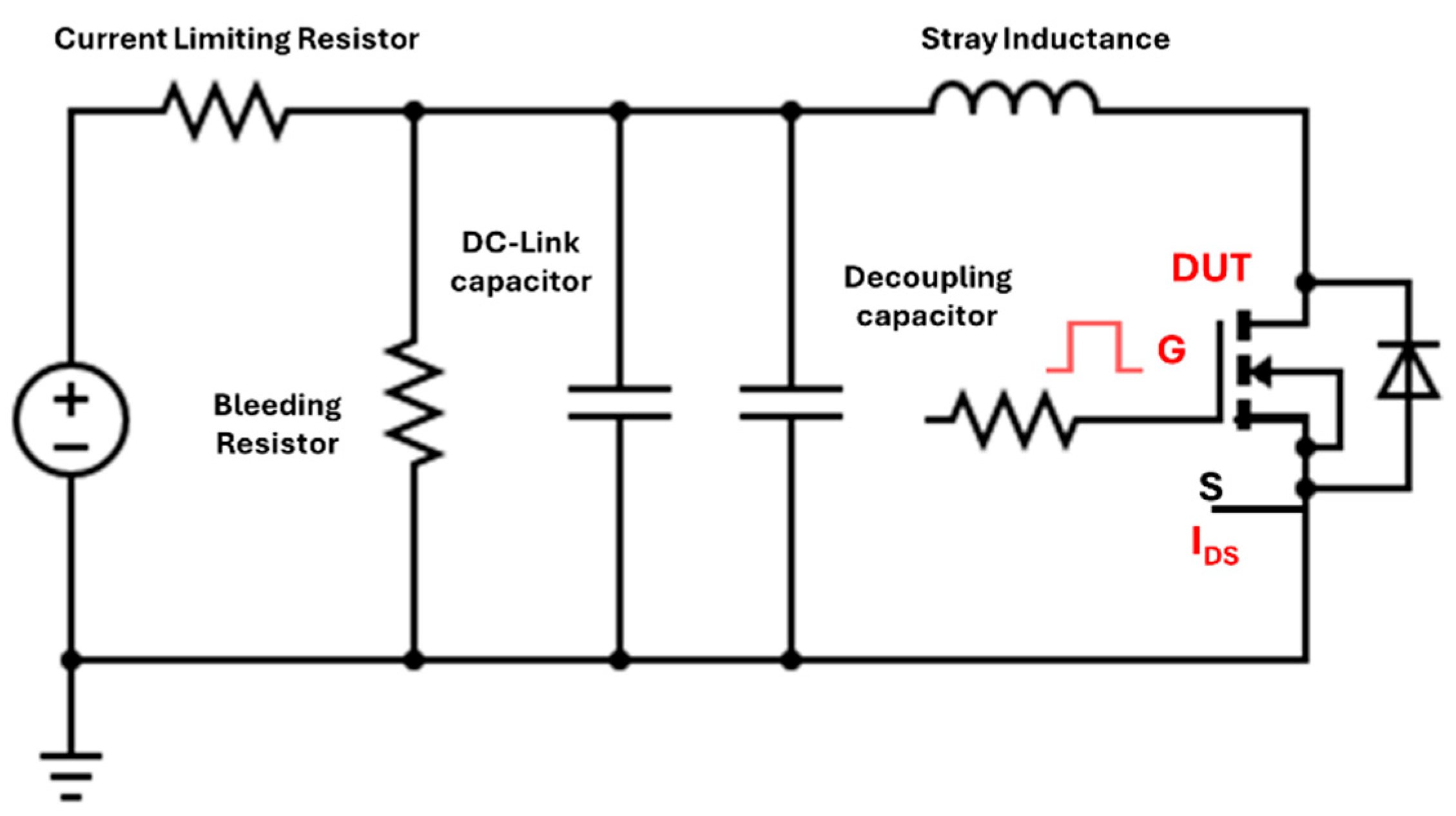
Figure 1. Topology of a typical short circuit test setup.
Electronics 14 02786 g001
Figure 2. Variations in SCWT for Vendor D and Vendor F.
Electronics 14 02786 g002
Figure 3. Variations in Vth and Ron for Vendor D and Vendor F.
Electronics 14 02786 g003
Figure 4. Variation in SCWT with (a) Ron and (b) Ipeak for Vendor D.
Electronics 14 02786 g004
Figure 5. 1.2 kV SiC MOSFET generic half-cell structure.
Electronics 14 02786 g005
Figure 6. Simulated SC waveforms at Vds = 800 V and Vgs = 20 V showing (a) current voltage and (b) current temperature profile.
Electronics 14 02786 g006
Figure 7. Variation in SCWT and peak current density as a function of channel length.
Electronics 14 02786 g007
Figure 8. Simulated SC characteristics for Lch = 0. 35 µm and Lch = 0. 70 µm.
Electronics 14 02786 g008
Figure 9. Variations in slope and PTDM as functions of SCWT and channel length.
Electronics 14 02786 g009
Figure 10. Novel SC screening methodology along with SC screening parameter (PTDM) optimization process.
Electronics 14 02786 g010
Figure 11. Experimental SC waveform of two devices from Vendor D.
Electronics 14 02786 g011
Figure 12. SC waveform of two devices from Vendor D under tscreen = 1.5 µs.
Electronics 14 02786 g012
Figure 13. SCWT as a function of PTDM for (a) Vendor D and (b) Vendor F. Range for PTDM for SCWT ≥ 1.9 µs is shown using the arrow.
Electronics 14 02786 g013
Figure 14. Idss profiles for (a) Vendor D and (b) Vendor F pre- and post-screening.
Electronics 14 02786 g014
Figure 15. D i t profile extracted at room temperature for (a) Vendor D and (b) Vendor F pre- and post-screening.
Electronics 14 02786 g015
Table 1. Datasheet Details of Commercial 1.2 kV SiC Planar MOSFETs.
VendorVendor DVendor F
Device typePlanarPlanar
Rated Voltage (kV)1.21.2
Rated Current (A)207.6
Typical Threshold Voltage (V)3.52.5
Typical On Resistance (mΩ)189350
Number of Devices Tested3023
Table 2. Details of Simulated 1.2 kV SiC Planar MOSFETs.
ParameterValueUnit
Tdrift10µm
NNdrift8 × 1015cm−3
NP+1 × 1019cm−3
NP-well1 × 1018cm−3
NN+1 × 1019cm−3
Nchannel2 × 1017cm−3
NJFET1 × 1016cm−3
NN+substrate2 × 1018cm−3
Lch (avg.)0.5µm
½ WJFET1.0µm
tox50nm
½ Wcell4.5µm
Table 3. Typical Simulation Parameters.
ModelParameterValueUnit
Lattice Heat Capacitycv10J/(K-cm3)
cv_b1.75 × 10−3J/(K2-cm3)
cv_c1 × 10−9J/(K3-cm3)
cv_d−6.6 × 10⁻⁴J/(K3-cm3)
Thermal Conductivity1/kappa1K-cm/W
1/kappa_b4.9662 × 10−4cm/W
1/kappa_c0.35 × 10−6cm/(W-K)
Table 4. Comparison of Static Parameters Before and After the Screening Process for Vendor D and Vendor F.
VendorThreshold Voltage (V)On-Resistance (mΩ)Gate Leakage Current (nA)
PretestPost-
Screening
PretestPost-
Screening
PretestPost-
Screening
D7.27.2116.25116.250.0810.051
F6.116.12318.2321.127.527.1
Disclaimer/Publisher’s Note: The statements, opinions and data contained in all publications are solely those of the individual author(s) and contributor(s) and not of MDPI and/or the editor(s). MDPI and/or the editor(s) disclaim responsibility for any injury to people or property resulting from any ideas, methods, instructions or products referred to in the content.