Article

Cooperative Lane-Change Control Method for Freeways Considering Dynamic Intelligent Connected Dedicated Lanes


1
National Engineering Research Center of Highway Maintenance Technology, Changsha University of Science & Technology, Changsha 410114, China
2
School of Traffic & Transportation Engineering, Changsha University of Science & Technology, Changsha 410114, China
3
Ulanqab Vocational College, Ulanqab 012000, China
*
Author to whom correspondence should be addressed.
Electronics 2024, 13(9), 1625; https://doi.org/10.3390/electronics13091625

Submission received: 29 March 2024 / Revised: 18 April 2024 / Accepted: 22 April 2024 / Published: 24 April 2024
(This article belongs to the Special Issue Control Systems for Autonomous Vehicles)

Abstract

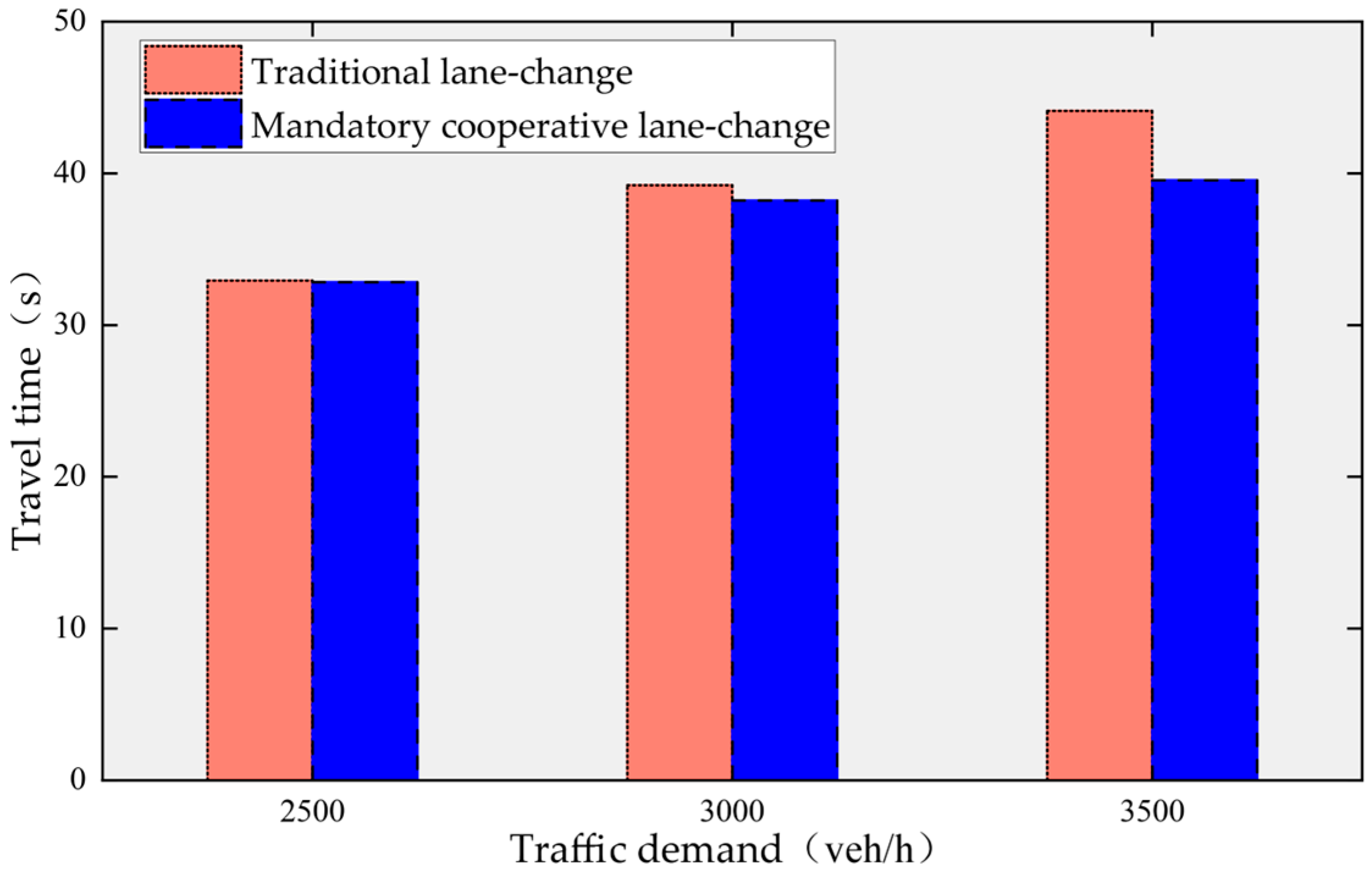
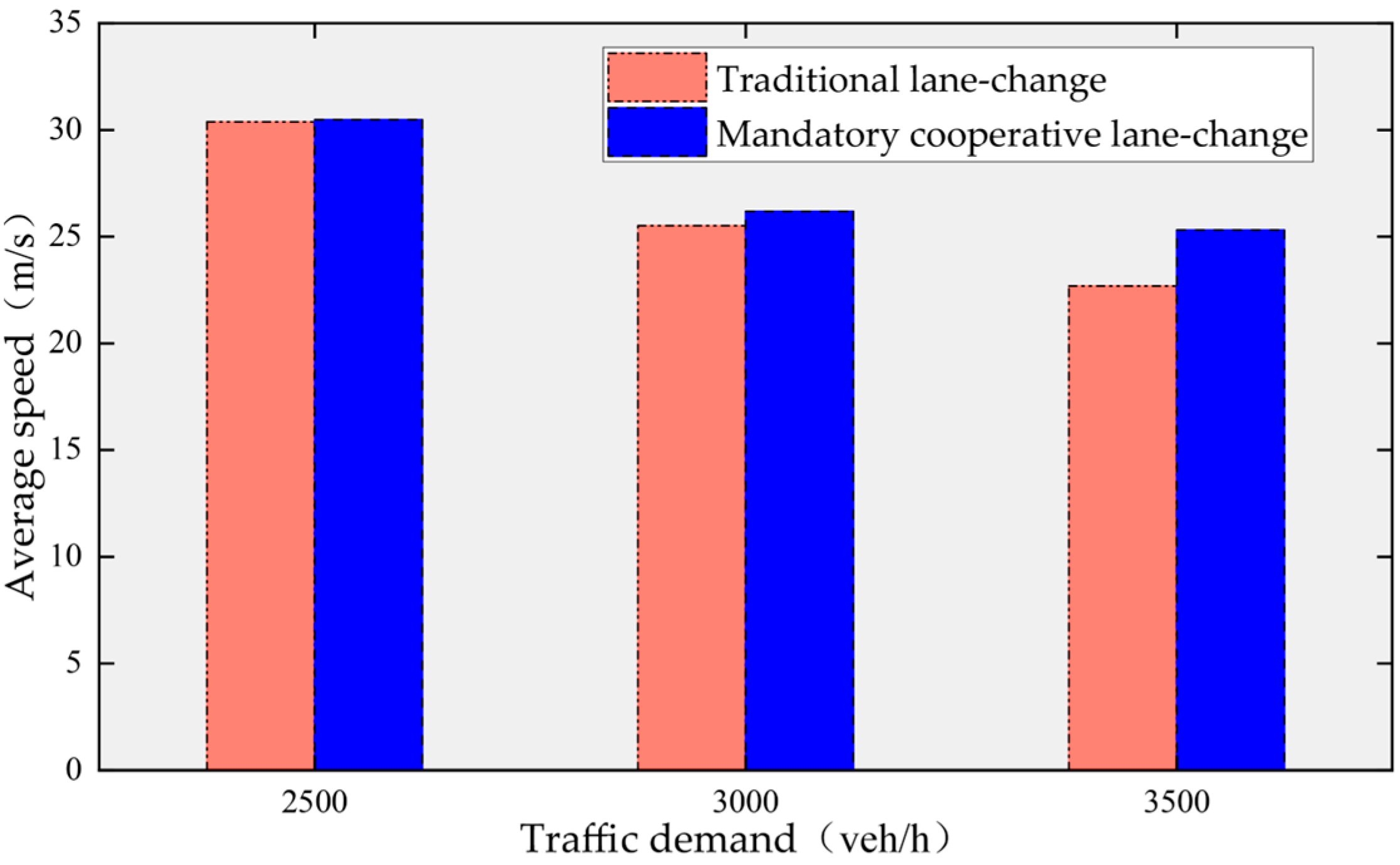
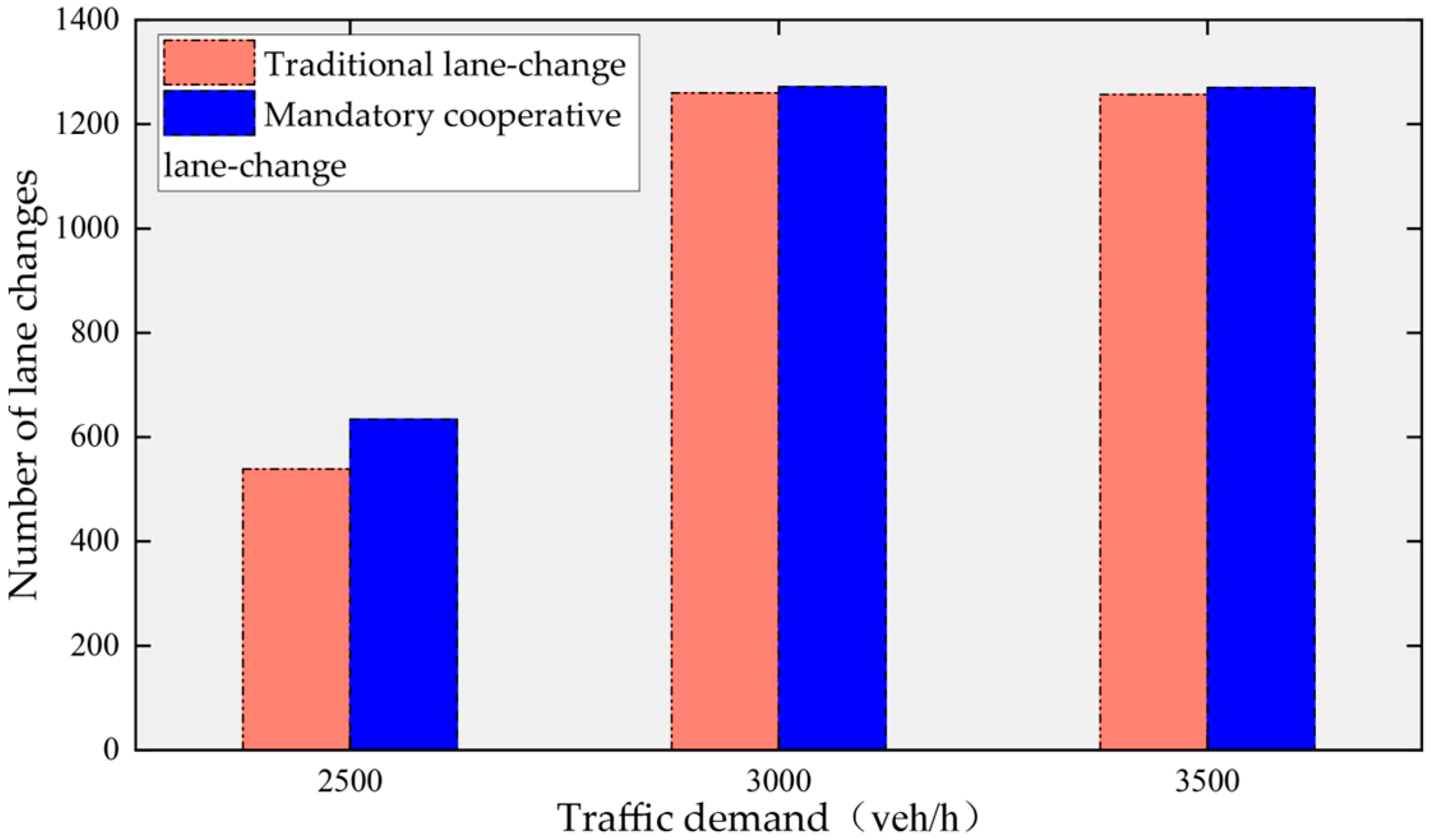
Connected Autonomous Vehicle (CAV) dedicated lanes can spatially eliminate the disturbance from Human-Driven Vehicles (HDVs) and increase the probability of vehicle cooperative platooning, thereby enhancing road capacity. However, when the penetration rate of CAVs is low, CAV dedicated lanes may lead to a waste of road resources. This paper proposes a cooperative lane-changing control method for multiple vehicles considering Dynamic Intelligent Connected (DIC) dedicated lanes. Initially, inspired by the study of dedicated bus lanes, the paper elucidates the traffic regulations for DIC dedicated lanes, and two decision-making approaches are presented based on the type of lane-change vehicle and the target lane: CAV autonomous cooperative lane change and HDV mandatory cooperative lane change. Subsequently, considering constraints such as acceleration, speed, and safe headway, cooperative lane-change control models are proposed with the goal of minimizing the weighted sum of vehicle acceleration and lane-change duration. The proposed model is solved by the TOPSIS multi-objective optimization algorithm. Finally, the effectiveness and advancement of the proposed cooperative lane-changing method are validated through simulation using the SUMO software (Version 1.19.0). Simulation results demonstrate that compared to traditional lane-changing models, the autonomous cooperative lane-changing model for CAVs significantly improves the success rate of lane changing, reduces lane-changing time, and causes less speed disturbance to surrounding vehicles. The mandatory cooperative lane-changing model for HDVs results in shorter travel times and higher lane-changing success rates, especially under high traffic demand. The methods presented in this paper can notably enhance the lane-changing success rate and traffic efficiency while ensuring lane-changing safety.
Keywords: connected environment; dynamic intelligent dedicated lanes for connected vehicles; connected autonomous vehicles; autonomous cooperative lane change; mandatory cooperative lane change connected environment; dynamic intelligent dedicated lanes for connected vehicles; connected autonomous vehicles; autonomous cooperative lane change; mandatory cooperative lane change