


Abstract
This paper proposes a gallium nitride (GaN)-based very-high-frequency (VHF) resonant flyback converter with integrated magnetics, which utilizes the parasitic inductance and capacitance to reduce the passive components count and volume of the converter. Both the primary leakage inductance and the secondary leakage inductance of the transformer are utilized as the resonance inductor, while the parasitic capacitance of the power devices is utilized as the resonance capacitor. An analytical circuit model is proposed to determine the electrical parameters of the transformer so as to achieve zero voltage switching (ZVS) and zero current switching (ZCS). Furthermore, an air-core transformer was designed using the improved Wheeler’s formula, and finite element analyses were carried out to fine-tune the structure to achieve the accurate design of the electrical parameters. Finally, a 30 MHz, 15 W VHF resonant flyback converter prototype is built with an efficiency of 83.1% for the rated power.
1. Introduction
With the continuous pursuit of the high performance, small size, and high integration level of modern electronic devices, the demand for the power density of the switch mode power supply (SMPS) is increasing dramatically [1]. A high switching frequency can reduce the energy storage requirement of the passive components (such as inductors, capacitors, and transformers) in the power converter so as to reduce the volume and improve the power density of the power converter. However, the switching loss in the conventional power converter increases linearly with the switching frequency, which degrades the power efficiency and limits the frequency increase [2]. Additionally, the maximum operational frequency of existing magnetic materials is a few megahertz. Once the operation frequency exceeds the maximum operational frequency, the core loss increases sharply and degrades efficiency.
The development of wide bandgap semiconductor devices and soft switching topologies brings new opportunities for the development of high-frequency power converters. Gallium nitride high-electron-mobility transistors (GaN HEMTs) have much faster switching speeds and a smaller switching loss than silicon transistors, providing a great potential to increase the operation frequency of power converters [3,4]. To further reduce the switching losses, researchers introduced soft switching techniques with resonant topologies. These topologies achieve zero voltage switching (ZVS) and zero current switching (ZCS) based on their resonant network, which can significantly reduce the switching loss and improve the power efficiency of the converter [5,6,7]. With these techniques, the switching frequency of power converters is increased to tens of MHz, which greatly reduces the energy storage requirement of magnetic components [8]. This enables the converter to adopt an air-core inductor and transformers, thus avoiding the limitation of the high-frequency performance of magnetic core materials [9,10].
In recent years, researchers have proposed a variety of very high frequency (VHF) resonant power converter topologies, such as class E topology [11,12,13,14] and class Φ2 topology [15,16]. Study [17] analyzed the VHF class E DC-DC converter in detail, but the voltage stress of the power device in the literature is 3.6 of the input voltage, which is suitable for low-input voltage occasions. Compared with a class E topology, a class Φ2 topology adds an LC resonant tank across the power switch so as to reduce the voltage stress [18]. However, it has an increased number of resonant elements, affecting the power density enhancement, and it is only suitable for non-isolated applications. The literature [19] proposed an isolated type of class Φ2 VHF DC-DC converter using an air-core transformer, but the topology is very complex, and it is hard to optimize the circuit parameters of the converter. Study [20] proposed a design method to optimize the impedance of the switching node, which reduces the component count of the resonant tank but requires additional resonant inductors and capacitors. In the existing literature, the isolated VHF resonant topology mostly directly incorporates a transformer for electrical isolation, with more resonant elements and complex topology, which brings a great challenge to the parameter design. It is important to simplify the circuit structure of the isolated converter and derive the optimal circuit parameters of the VHF resonant converter.
In order to further improve the power density and reduce the number of passive components, this paper proposed a GaN-based VHF resonant flyback converter with integrated air-core magnetics. The resonant inductors of the inverter stage and the rectifier stage are directly integrated into the air-core transformer. Additionally, the parasitic capacitance of the power device and the parasitic capacitance of the rectifier diode are utilized as resonant capacitors. By making full use of the parasitic parameters in the circuit, the number of passive devices in the circuit is reduced to improve the power density of the converter. Then, a fully analytical model of the converter is established to guide the parameter design of the converter. Furthermore, the geometric parameters of the air-core transformer are estimated based on the improved Wheeler formula, and the geometric structure is further adjusted based on the finite element analysis to achieve the accurate design of the air-core transformer. Finally, a 30 MHz, 15 W VHF resonant flyback converter prototype is built to verify the effectiveness of the proposed topology and design method.
The rest of this paper is organized as follows. Section 2 describes the topology and system schema of the proposed VHF resonant flyback converter. Section 3 presents the parameter design of the rectifier stage. Section 4 presents the parameter design of the inverter stage. Section 5 presents the design of the air-core transformer. In Section 6, the experimental prototype is built, and experimental results are presented. Section 7 concludes this paper.
2. Acronyms and Symbols
The acronyms and their corresponding full name used in this article are listed in Table 1. The symbols and their corresponding meanings are listed in Table 2.
Table 1.
Acronyms and their corresponding full names.
Table 2.
Symbols and their corresponding meanings.
3. Topology and System Schema of the VHF Resonant Flyback Converter
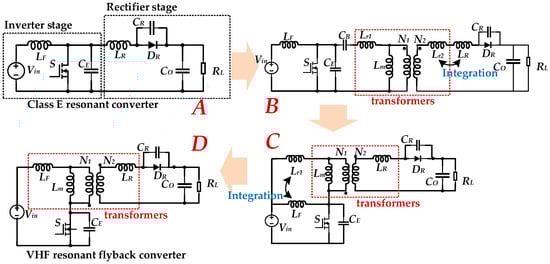
The topology of the VHF resonant flyback converter consists of the inverter stage and the rectifier stage. The inverter stage converts the direct current (DC) input voltage to an alternating current (AC) voltage, while the rectifier stage converts the AC voltage to a DC voltage. The derivation idea from the class E resonant converter to the proposed VHF resonant flyback converter with integrated magnetics is shown in Figure 1. Firstly, a transformer is added across the power switch in the class E resonant converter so as to realize the electrical isolation between the input and output. This step converts the topology from A to B. Then, for topology B in Figure 1, CB is a DC-blocking capacitor; thus, the AC voltage across the primary side of the transformer equals the AC voltage across the power switch. At the same time, the AC voltage across LF also equals the voltage across the power switch. Therefore, the transformer can be connected across LF, as shown in topology C of Figure 1, which saves the DC-blocking capacitor CB. Additionally, the rectifier resonant inductor LR can be integrated into the transformer. Furthermore, the resonant inductor of the inverter stage is integrated with the primary leakage inductance of the transformer, which converts the topology to D in Figure 1.
Figure 1.
Derivative process of proposed VHF resonant flyback converter.
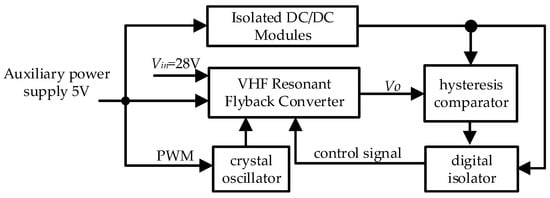
The system schema of the proposed converter is shown in Figure 2, where the controller is realized with the analog circuit. The input voltage of the system is 28 V, the output voltage of the system is 5 V, and the output power of the system is 15 W. The gate drive signal is generated with a 30 MHz active crystal. The output voltage of the converter is regulated with a hysteresis comparator. When the output voltage is lower than the lower threshold voltage, the gate drive signal is a 30 MHz square wave. Once the output voltage exceeds the upper threshold voltage, the gate drive signal is reduced to zero, and the converter is shut down. Therefore, the output voltage is regulated within the range of the lower threshold voltage and upper threshold voltage.
Figure 2.
Block diagram of the overall scheme of the VHF resonant flyback converter.
4. Modeling and Optimal Parameter Design of the Rectifier Stage
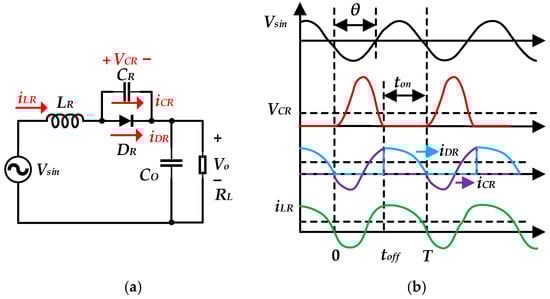
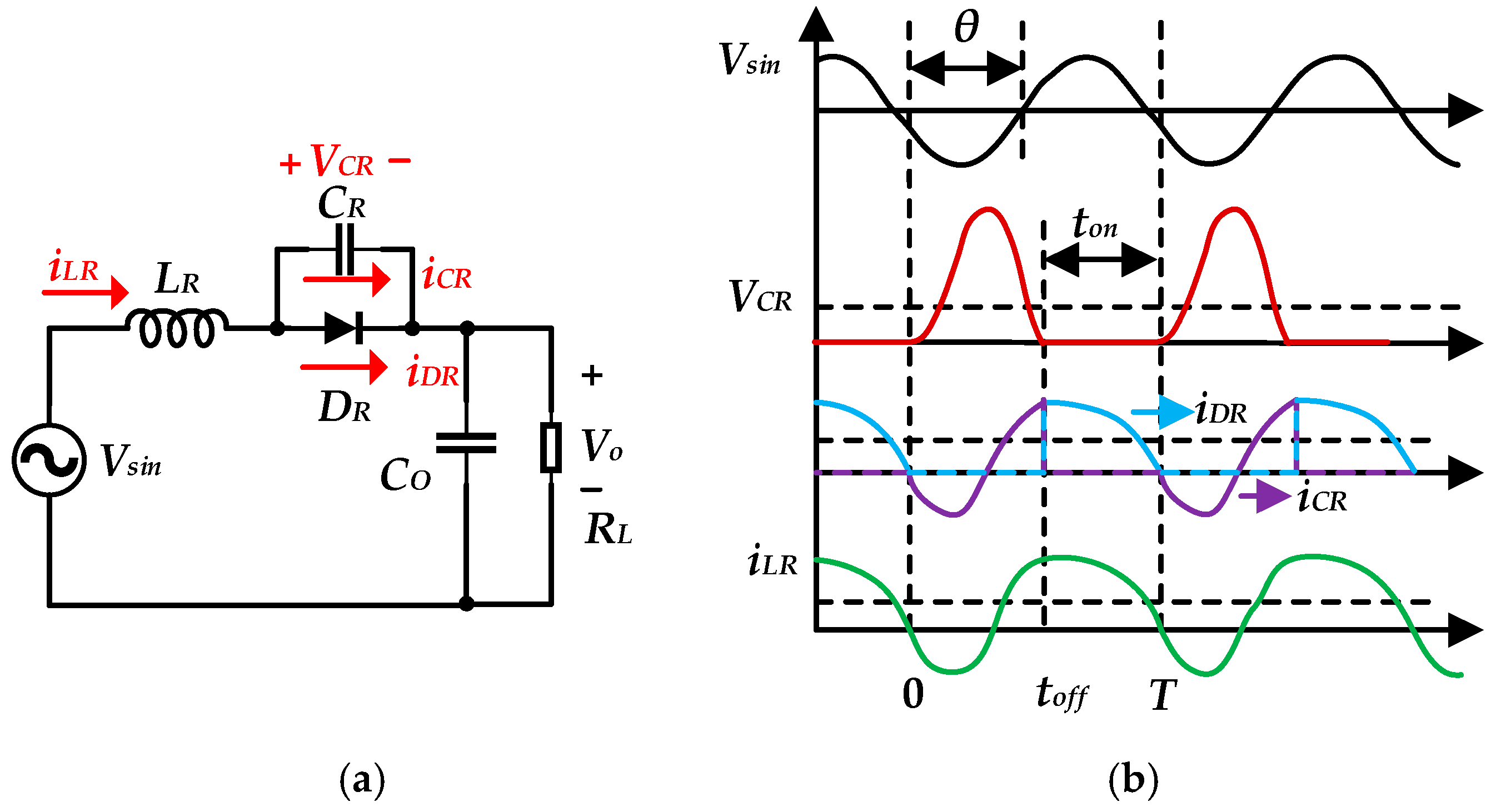
In the proposed VHF resonant flyback converter, a voltage source rectifier is adopted. The circuit and key waveforms of the rectifier are shown in Figure 3. Based on fundamental harmonic approximation, the input voltage is equivalent to a sinusoidal voltage source. Thus, the input voltage of the rectifier stage is given by the following:
where Vrec is the amplitude of the equivalent voltage source, and θ is the initial phase of the equivalent voltage source. The operation of the rectifier is analyzed as follows:
Figure 3.
Circuit and key waveforms of the rectifier. (a) The circuit; (b) key waveforms.
During 0~toff, the diode is off, and the circuit satisfies the following equations:
where VO is the output voltage, and VD is the forward voltage drop of the diode. Additionally, in order to achieve ZCS for the diode, the above differential equations should satisfy the following initial conditions: vCR(0) = VD and ILR(0) = 0. Solving Equation (2) with these initial conditions, the analytical solutions of iLR(t) and vCR(t) are derived as follows:
where and .
During toff~T, the diode is on, and the circuit satisfies the following equation:
The analytical solution of differential Equation (4) is given by the following:
where iLR(toff) represents the resonant inductor current at toff, which can be determined by Equation (3). In addition, when the rectifier operates in a steady state, the resonant inductor current is periodic, i.e., iLR(0) = iLR(T), which can be used as an initial condition to calculate the unknown parameter θ.
Based on the above analytical expressions, the optimal design of resonant parameters can be achieved. Firstly, the rectifier should be purely resistive at the fundamental frequency, which means that the fundamental input current is in phase with the input voltage. Secondly, the rectifier’s fundamental power transfer should meet the output power requirement of the power converter. Based on the above conditions, it can be deduced that the resonant parameters of the circuit should satisfy the following:
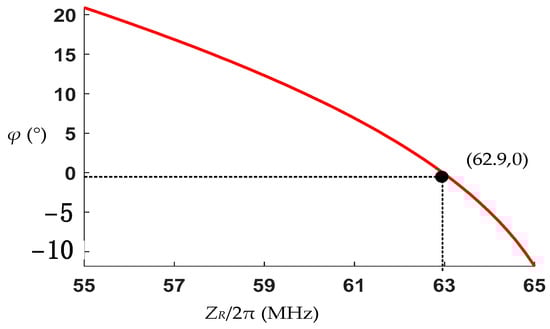
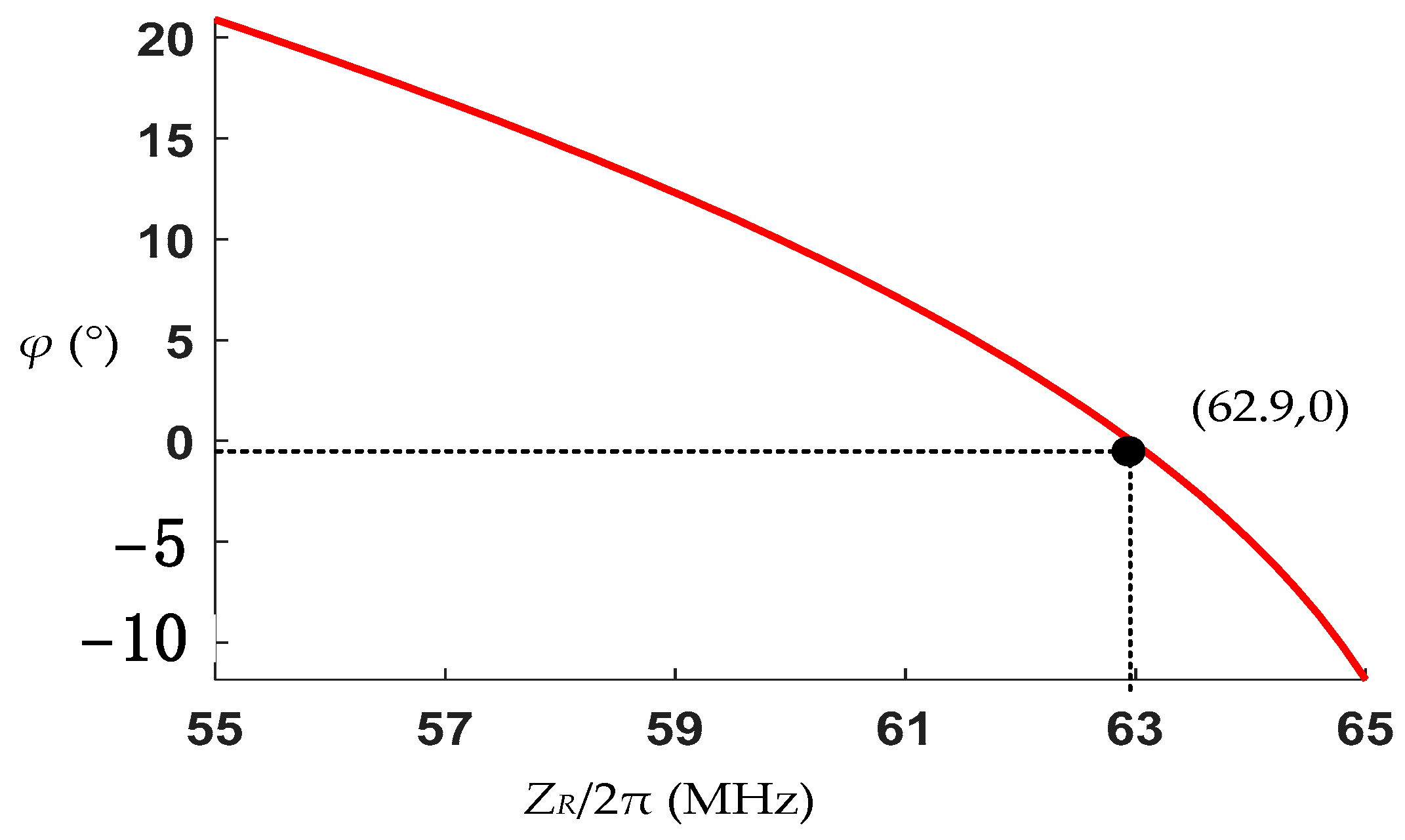
According to Equation (5), the resonance parameters ωR, ZR can be solved, and then the resonance parameters LR and CR can be calculated. However, since the above system of equations is non-linear, it is difficult to find an analytical solution directly, so the solve function in Matlab is used for numerical solving. Vrec is determined by the front-stage inverter, and it is taken as Vrec = 8 V; the switching frequency fs = 30 MHz; ωs = 2π fs; and the output power PO = 15 W. Then, the target value of the output current fundamental amplitude Irecm is set as 5 A to ensure a sufficient margin is maintained. The phase φ of the rectifier input current under a different ωR is shown in Figure 4, and when ωR = 2π∙62.9 MHz, the phase of the rectifier input current is 0, i.e., the rectifier is purely resistive at the fundamental frequency.
Figure 4.
Input current phase φ at different ωR.
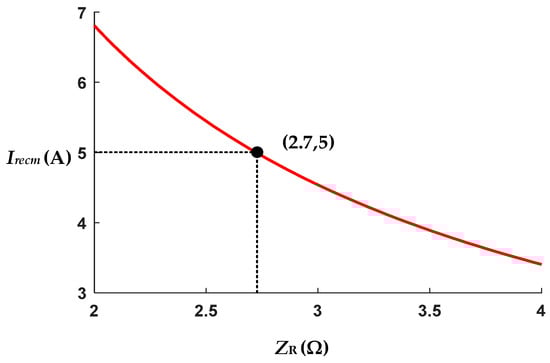
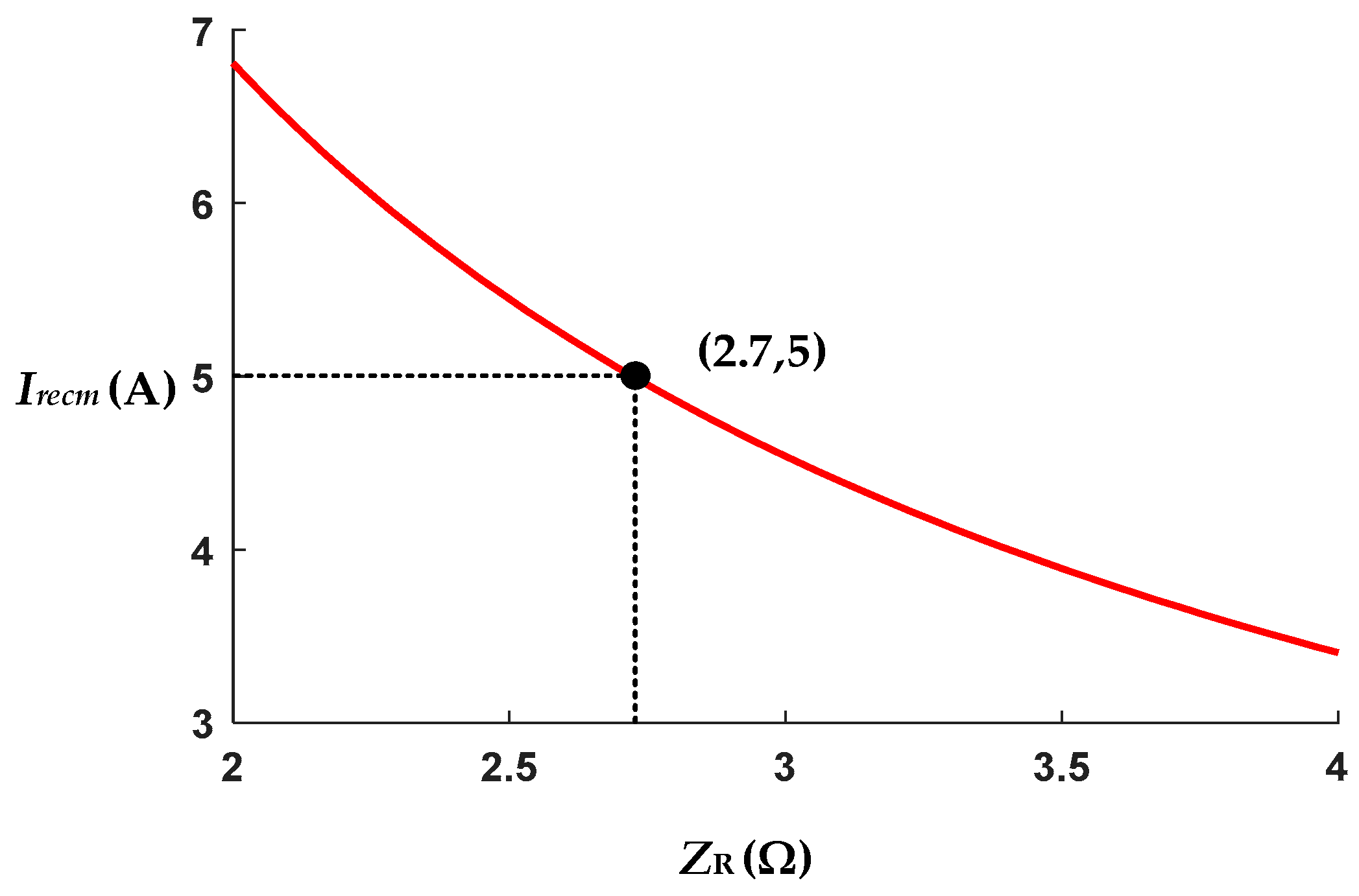
Secondly, the characteristic impedance of the resonant network determines the magnitude of the output power, and the Irecm at different ZR is shown in Figure 5.
Figure 5.
Irecm at different ZR.
In order to meet the output power requirements, ZR is selected as 2.7. Combining the calculation results of ωR and ZR, LR, and CR are calculated as LR = 7.4 nH and CR = 0.94 nF. Due to the fundamental harmonic approximation used in the modeling and the fact that the output capacitance of the diode has a certain degree of non-linearity, the actual circuit parameters need to be fine-tuned based on the results of the circuit-level simulation. The adjusted parameters are LR = 9 nH and CR = 1 nF.
5. Modeling and Optimal Design of the Inverter Stage
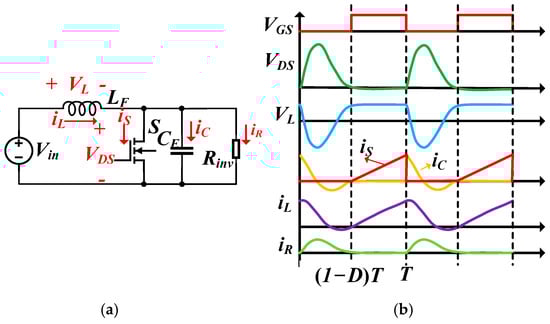
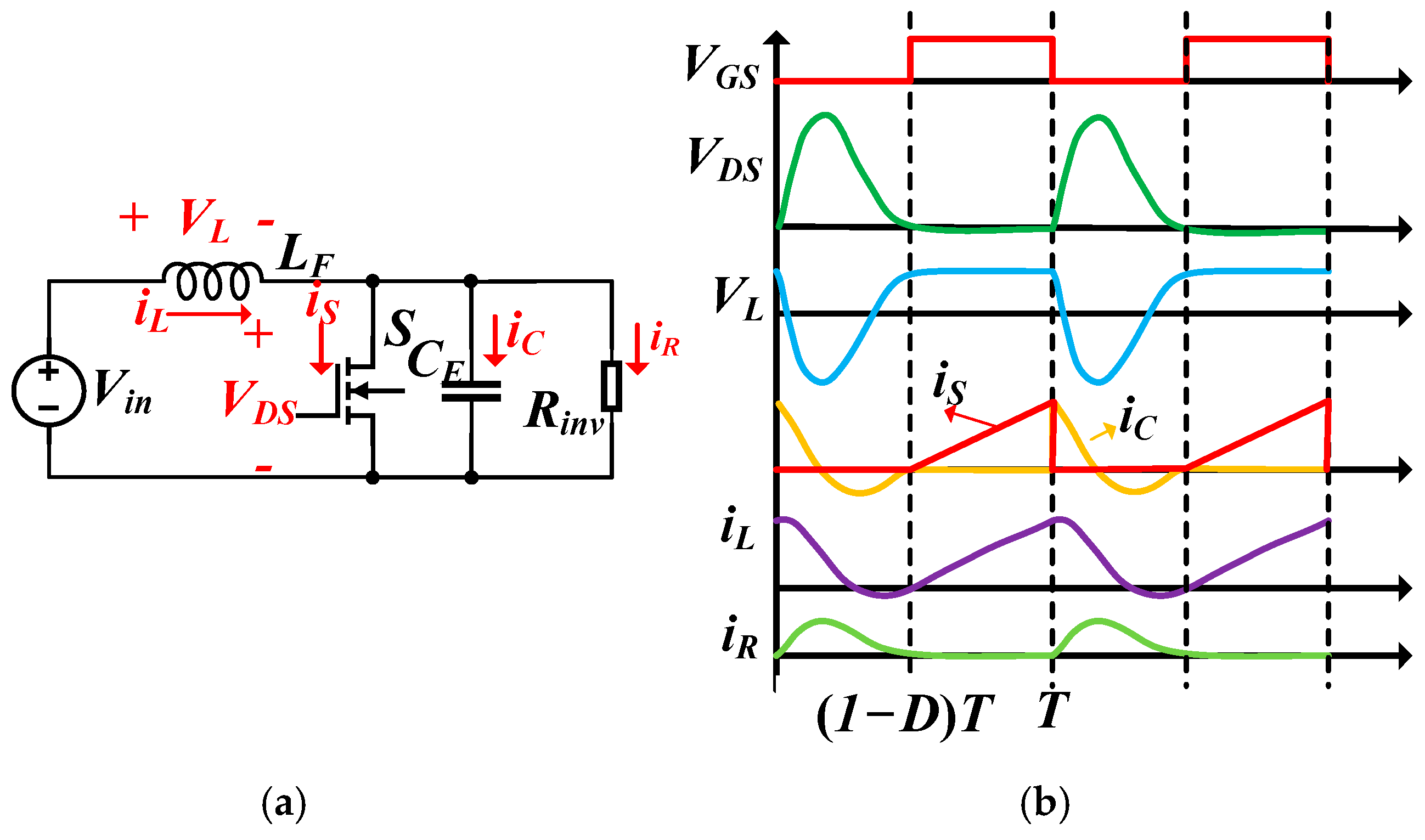
Based on the above design for the rectifier stage, the rectifier presents a pure resistance input characteristic at the fundamental harmonic approximation, where the input resistance equals Vrec2/2 PO. Based on the fundamental harmonic approximation, the rectifier can be equated to a resistance of Rinv = n2 Rrec, where n is the turns ratio of the transformer’s primary and secondary coils. With this approximation, the circuit structure of the inverter stage is shown in Figure 6a, and the key waveforms of the circuit operation are shown in Figure 6b.
Figure 6.
Circuit and key waveforms of the inverter stage. (a) Circuit. (b) Key waveforms.
Assuming the power switch is turned off at t = 0 and the duty ratio is 0.5. When 0 ≤ t ≤ T/2, the power switch is off. Inductor LF resonates with CE during this period; thus, the circuit satisfies the following equations:
Furthermore, by rearranging the equations in (7), it can be obtained that vDS(t) satisfies the following:
The general solution of the differential Equation (8) is given by the following:
where α and β are given by the following:
When T⁄2 ≤ t ≤ T, the power switch is on. During this period, the input voltage charges the resonant inductor LF, and the current through the resonant capacitor CE is zero. Furthermore, to deliver the required power and achieve ZVS for the power switch, the following initial conditions must be satisfied. Firstly, since the average power of the inverter is supplied only by the input DC supply, the average current of the resonant inductor LF equals the average value of the input current, i.e., the following:
The analytical expression of iLF(t) is given by the following:
Secondly, when the inverter operates in a steady state, the average voltage of the resonant inductor is zero in each switching cycle. Therefore, the average voltage of the resonant capacitor equals the input voltage, and the average current of the resonant capacitor is zero, i.e., the following:
The current of the resonant capacitor is given by the following:
Thirdly, the power switch is turned on at t = 0, and turned on with ZVS at t = T/2, i.e., the following equation:
Finally, the power switch is turned on with a zero-voltage derivative at t = T/2. This condition ensures that the current through CE is zero at the switching moment and suppresses the ringing in the circuit.
Substituting (9) into the first row of (15) yields A3 = −A1. Furthermore, by substituting (9) into (12), (13), (15), and (16) and rearranging the equations, the following equation can be obtained:
where M is a 4 × 2 matrix.
For A1 and A2 to have a unique solution, the matrix M must be full rank; thus, the following equation is calculated:
Furthermore, an intermediate variable x is defined as β/2 fs so as to simplify Equation (19). Substituting x into (19), the expressions of α and β are determined as follows:
Meanwhile, the intermediate variable x should satisfy the following:
Combining (17), (20), and (21), A1 and A2 are derived as follows:
Using the iterative method in MATLAB to solve the value of x and substitute it into the design conditions, the final circuit parameters can be obtained as follows:
Based on Equation (23) and the design requirement of the system, the inverter circuit parameters are obtained, where LF is 105 nH, and CE is about 230 pF.
6. Design of the Air-Core Transformer
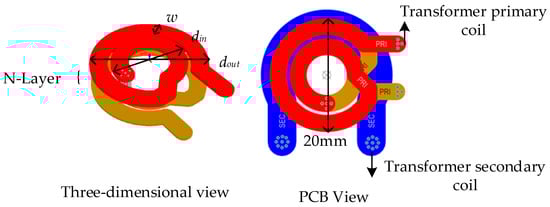
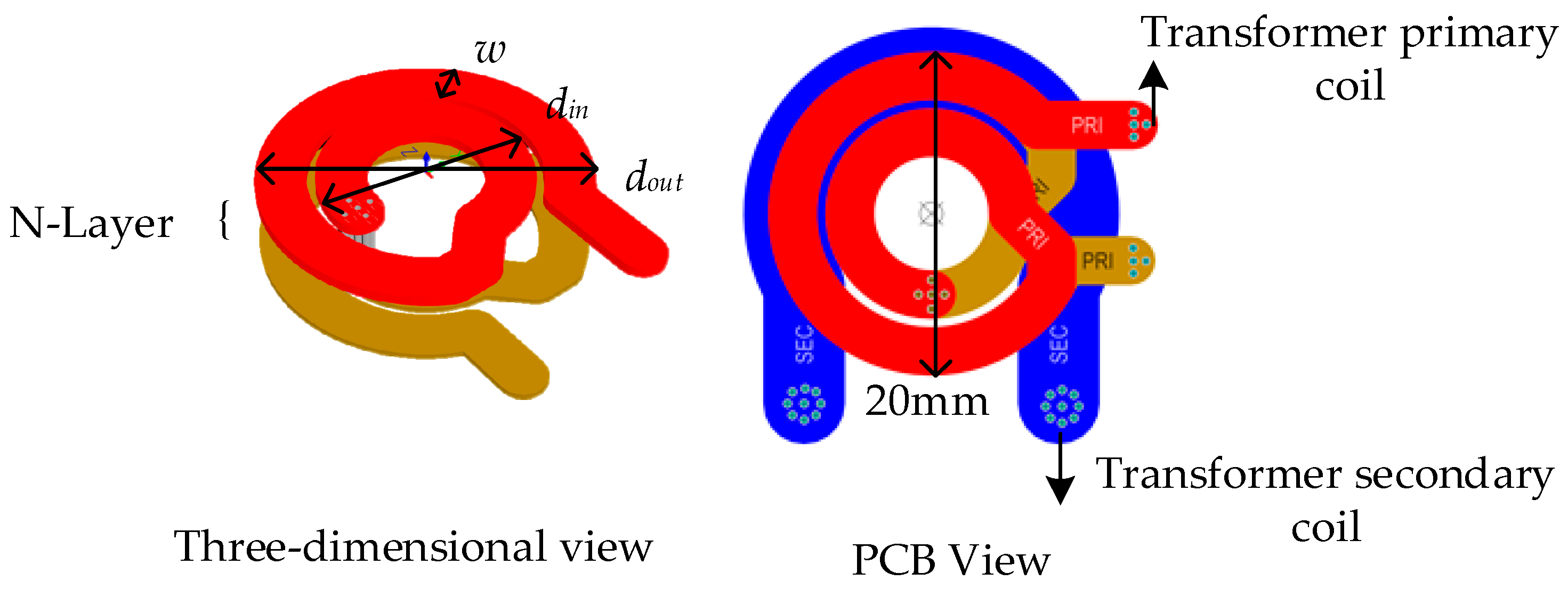
The suitable resonant parameters of the circuit were obtained after the above design method. The primary excitation inductance was 63 nH, the turns ratio of the primary and secondary coils of the transformer was chosen to be 3:1, and the leakage inductance of the secondary coil was 9 nH. Due to the reduction in the turns ratio and the need to utilize the leakage inductance of the transformer, it is necessary to design the transformer as a cascade structure to make it staggered and to control the magnitude of the leakage inductance. A multi-layer circular spiral inductor is selected to construct the air-core transformer, and the structure of the transformer is shown in Figure 7.
Figure 7.
Schematic structure of multi-layer circular spiral inductor.
Based on study [21], the improved multi-layer circular spiral inductance estimation equation is derived as follows:
where μ0 denotes the air permeability; davg = (din + dout)/2; and ρ = (dout − din)/(dout + din). n is the total turn number of the primary coil; N is the total layer number of the primary coil. Substituting the inductance Lwheeler = 105 nH; the turn number n = 3; the average diameter davg = 4.15 mm; and the number of layers N = 2 into the above equation, it can be calculated that ρ = 0.247, which means that din = 3.5 mm and dout = 5.8 mm.
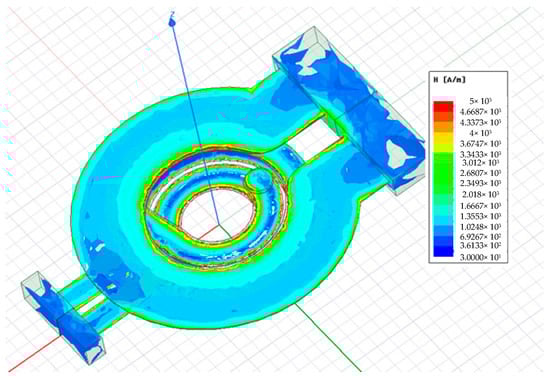
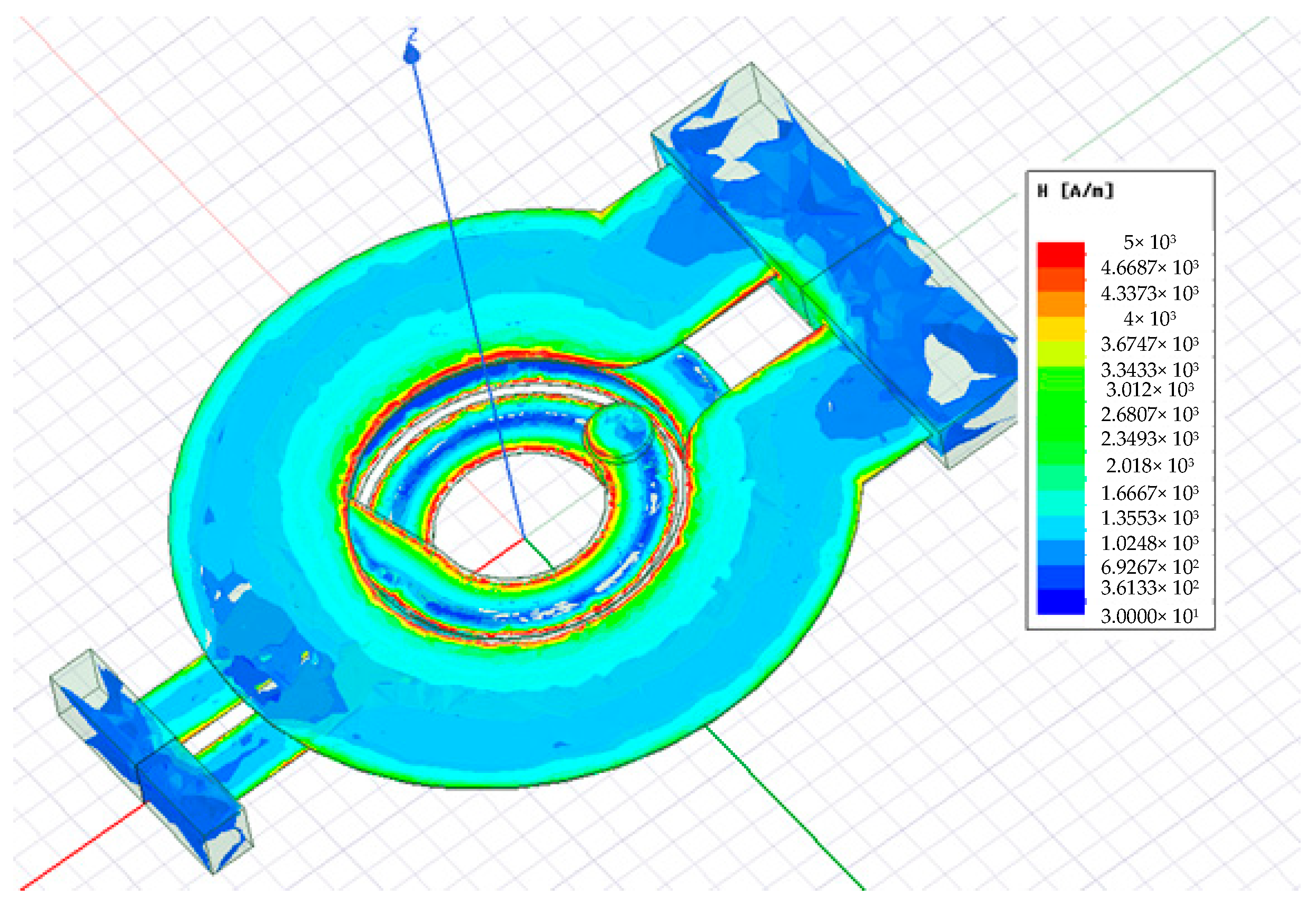
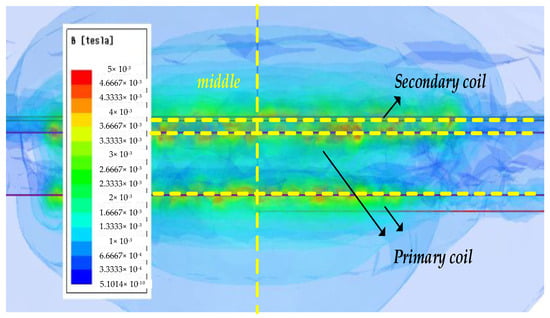
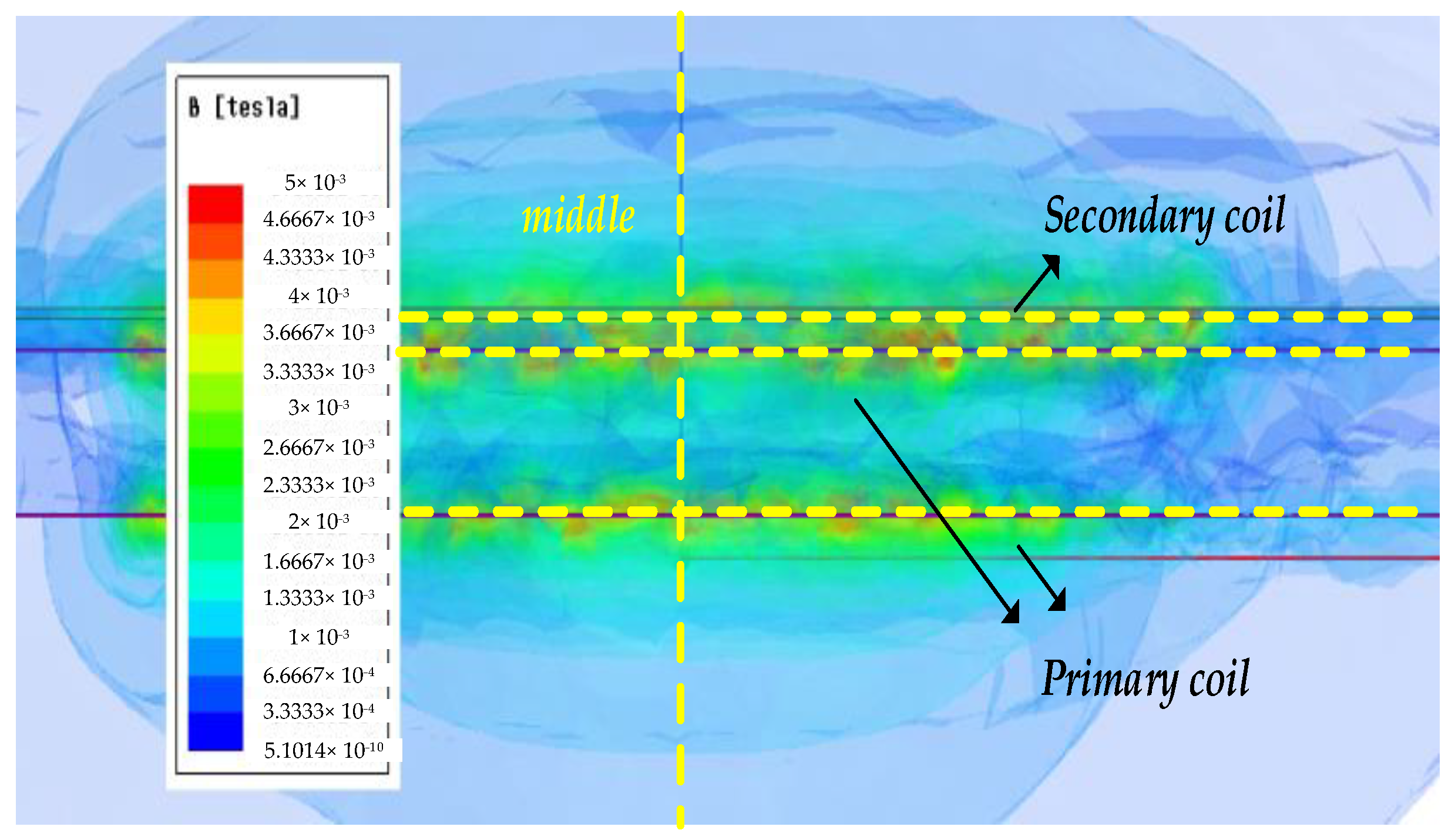
In order to verify the above results and achieve the accurate design of the transformer, finite element analyses (FEA) were carried out in ANSYS Electronics. The excitation current of the primary coil is set at 1 A, the excitation current of the secondary is set at 5 A, and the simulation frequency is set at 30 MHz. The distribution of the magnetic field strength H of the air-core transformer was obtained, as shown in Figure 8. The magnetic induction intensity is shown in Figure 9. It can be seen that the magnetic induction distribution of the transformer is mainly concentrated inside the transformer, so the interference of its electromagnetic field on other parts of the circuit can be ignored.
Figure 8.
Magnetic field strength distribution of the air core transformer.
Figure 9.
Magnetic induction intensity of the air core transformer.
Based on the FEA results, the coupled inductance model can be obtained, where the primary inductance is 74 nH, the secondary inductance is 16 nH, and the mutual inductance is 21 nH. Furthermore, the coupled inductance model is converted to T-model, and the parameters are given by the following equations:
7. Experimental Results
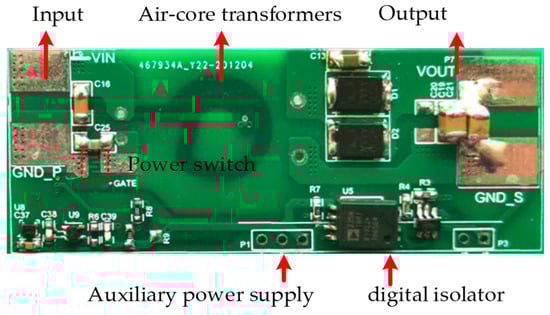
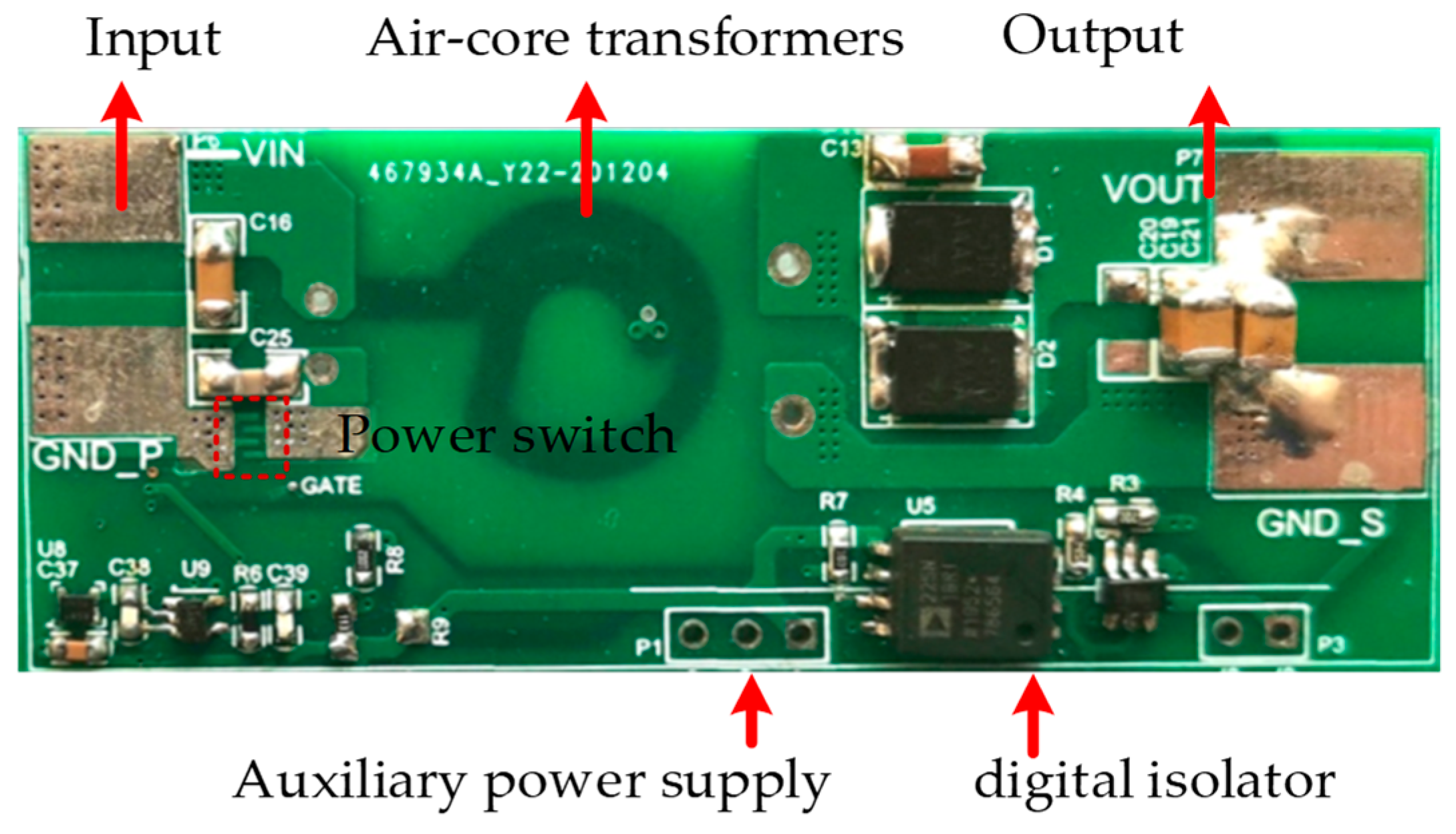
In order to verify the proposed topology and parameter design method, a prototype was built. The switching frequency of the converter is 30 MHz, the input voltage is 28 V, the output voltage is 5 V, and the output power is 15 W. The circuit parameters and key components of the converter are shown in Table 3. A photograph of the prototype is shown in Figure 10. The gate driver chip is the high-speed driver UCC27611 from Texas Instruments (Dallas, TX, USA). The main power switch is GaN HEMT EPC2207 from EPC (Taipei, Taiwan). The diode DR is the Schottky barrier rectifier from Nexperia (Santa Clara, CA, USA), and the part number is PMEG45A10EPD. Two diodes were connected in parallel to reduce the rise in temperature. The key parameters of DR are as follows. The forward voltage is 473 mV, the maximum forward current is 10 A, and the maximum reverse voltage is 45 V.
Table 3.
Circuit parameters of the prototype.
Figure 10.
Prototype of the VHF resonant flyback converter.
Both the Coss of the GaN HEMT and the Cj of the diode were utilized as resonant capacitors. The total value of capacitor CE is 270 pF, which is contributed by two parts: the Coss of the MOSFET (215 pF) and the external connected capacitor (55 pF). The equivalent resonant capacitance value contributed by Coss was calculated based on the followingcharge conservation principle:
In the proposed design, vds,pk = 120 V. Based on the Coss curve provided in the datasheet of EPC2207, and (26), the equivalent resonant capacitance value contributed by Coss is calculated as 215 pF. Furthermore, the externally connected CE is calculated as 270 pF − 215 pF = 55 pF. Secondly, Cj of the diode is used as part of the resonant capacitor CR. Using the same method, the equivalent resonant capacitor contributed by Cj is calculated as 900 pF. Thus, the externally connected resonant capacitor for CR is only 100 pF.
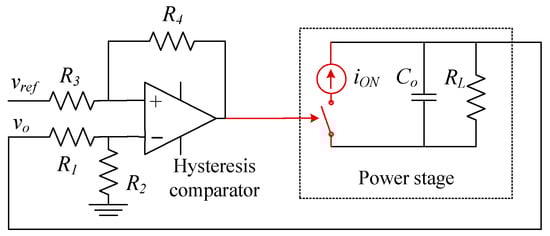
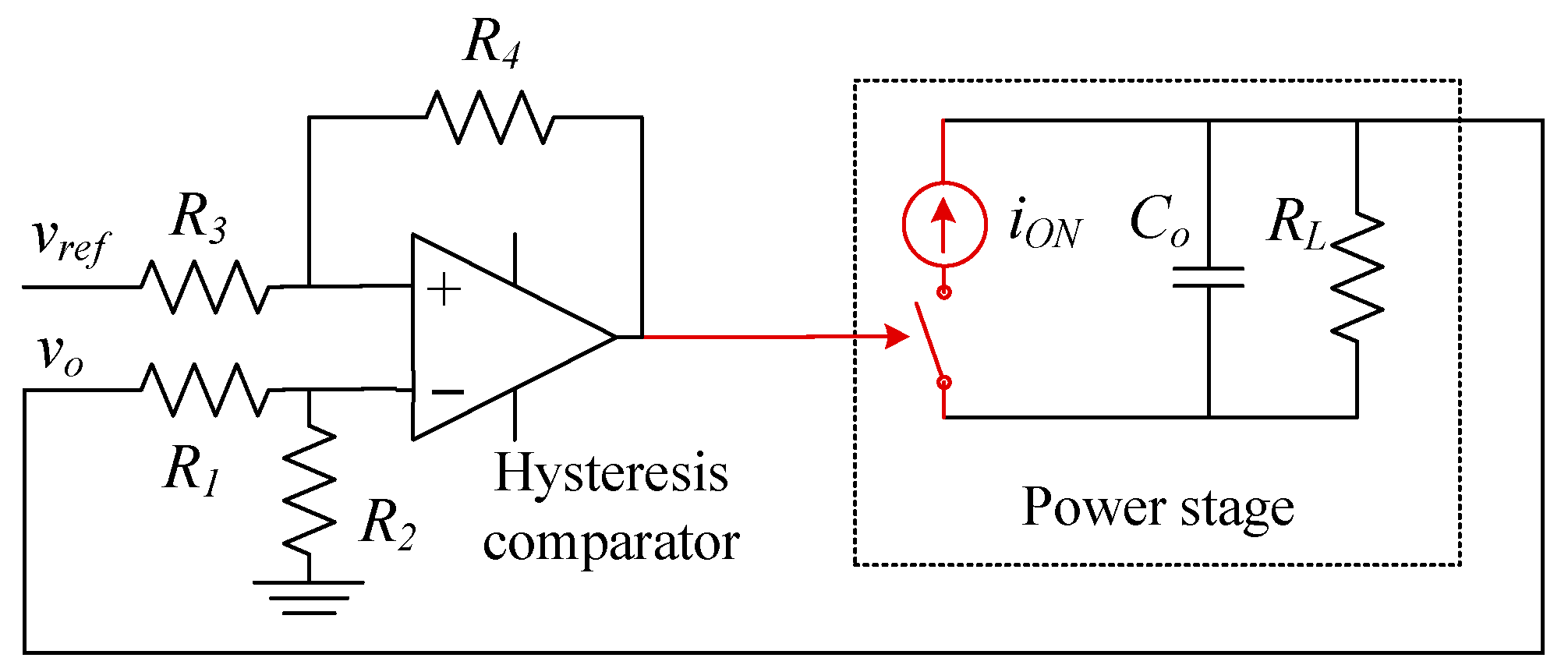
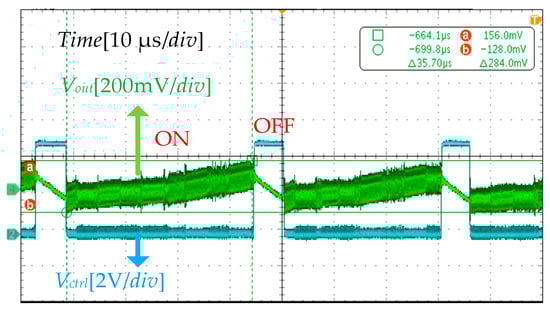
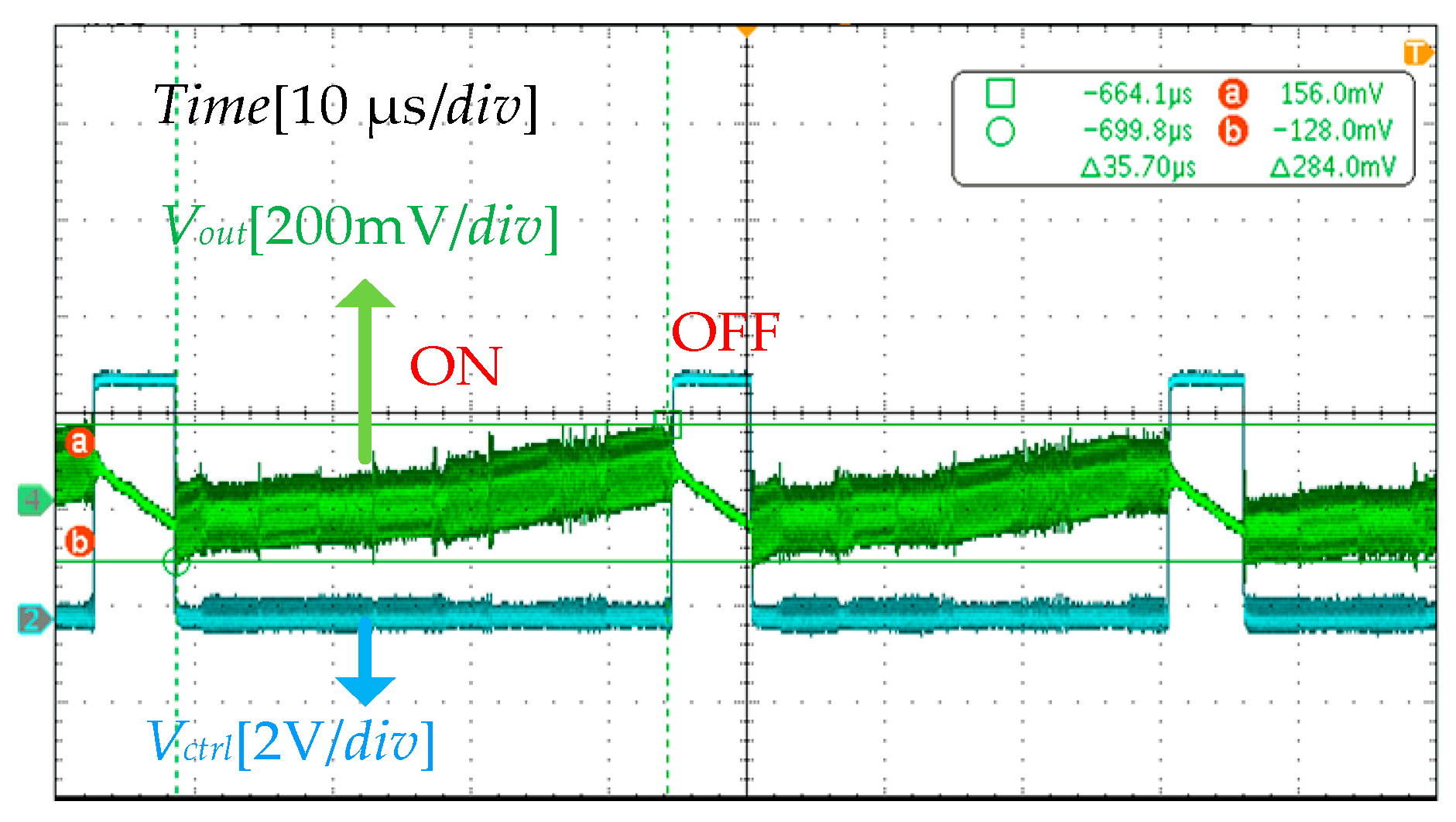
The output voltage is regulated with the ON/OFF control strategy. The equivalent circuit model of the converter under the ON/OFF control is shown in Figure 11, where the power stage is equivalent to a current source controlled by a switch. When the switch is on, the current iON provides a current to RL and charges the output capacitor Co as the output voltage increases. Once the output voltage reaches the upper threshold of the hysteresis comparator, the switch is turned off. During the off state, the load is powered by the output capacitor Co, and the output voltage decreases. Based on the above principle, the ON time and OFF time of the converter are calculated as (27), where VOH and VOL are the lower and upper threshold of the hysteresis comparator. Furthermore, the ON/OFF control frequency is given by 1/(TON + TOFF). The results show that the turn-on and turn-off times can be reduced by increasing Co. Based on the above analysis, this study chose a large Co = 150 μF so as to reduce the mode transient loss.
Figure 11.
Equivalent circuit model of the converter under the ON/OFF control.
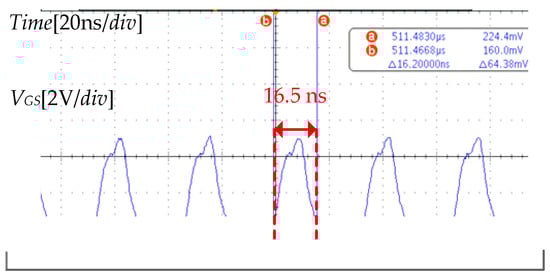
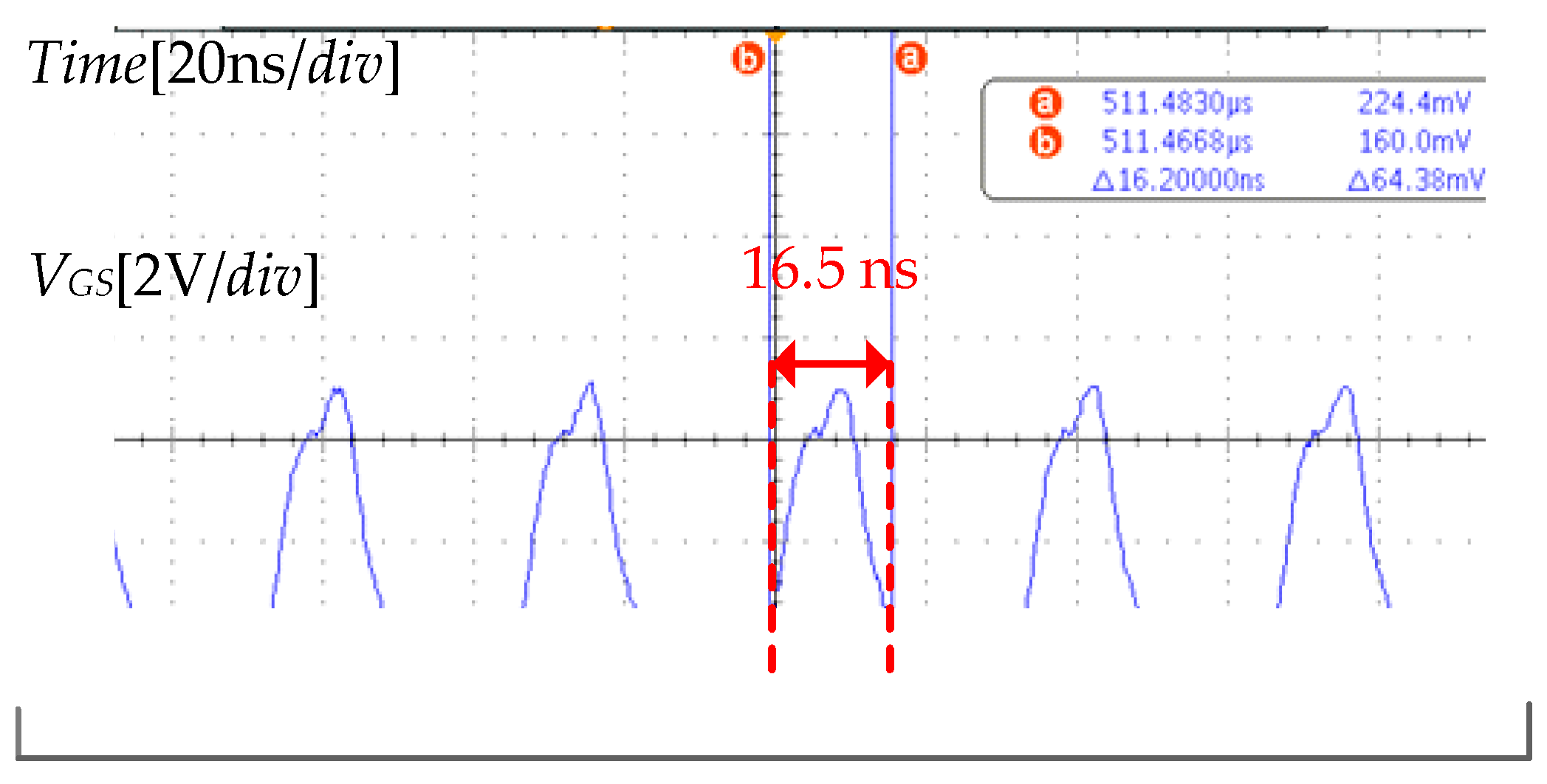
The duty ratio of the gate drive signal is adjusted to 0.5. The gate voltage of the GaN HEMT is shown in Figure 12, where the switching period is 33.3 ns, and the on-time is 16.5 ns.
Figure 12.
Gate voltage VGS of the GaN HEMT.
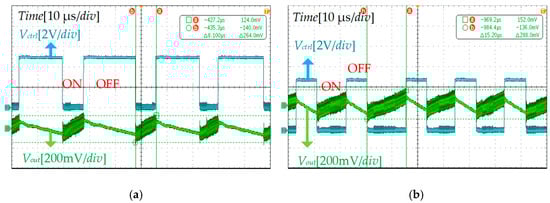
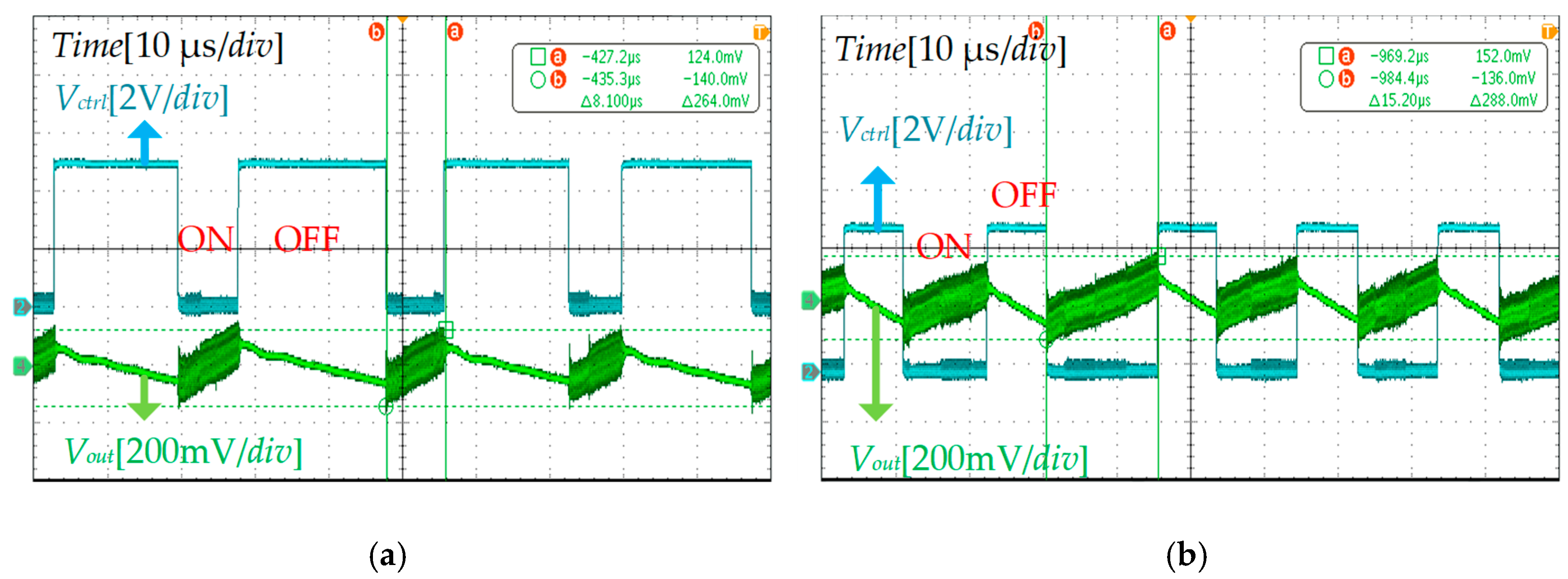
Output voltage waveforms and ON/OFF control signals of the converter at 5 W and 10 W are shown in Figure 13a,b, respectively. The ON/OFF control signal Vctrl is active but low. When the output voltage exceeds the upper threshold of the hysteresis comparator, Vctrl is high, and the gate voltage is clamped to zero. The power converter is completely shut down, and the load is powered by the output capacitor. When the output voltage decreases to the lower threshold, Vctrl is low, the power converter is turned on, and the output voltage increases. The output voltage ripple is 270 mV under the ON/OFF control.
Figure 13.
Output voltage and ON/OFF control signal of the converter under different levels of output power. (a) 5 W; (b) 10 W.
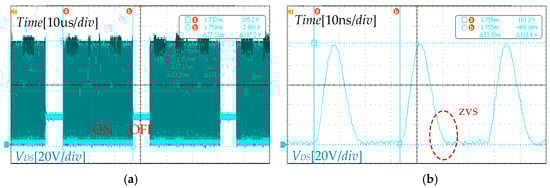
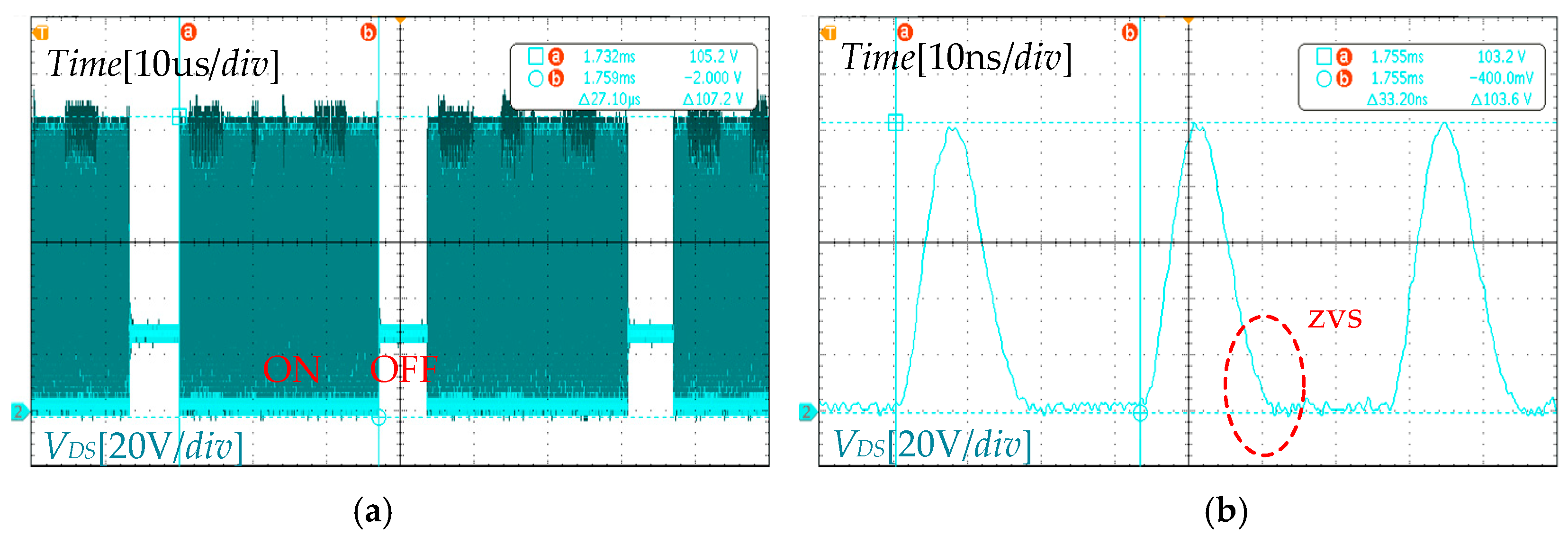
The drain-source voltage waveforms of the GaN HEMT under full load are shown in Figure 14. Figure 14a is the waveform with a time scale of 10 μs/div, while Figure 14b is the waveform with a time scale of 10 ns/div. The GaN HEMT is turned on after the drain-source voltage resonates to zero, indicating that ZVS is achieved.
Figure 14.
Drain-source voltage of the GaN HEMT at full load. (a) With a timescale of 10 μs/div; (b) with a timescale of 10 ns/div.
The output voltage of the converter under full load is shown in Figure 15; the output voltage ripple is 280 mV. It was found that the high-frequency ripple when the converter was working in the ON state was larger than the theoretical value. The reasons for this include the following: (1) characteristics of the output capacitor are deviated at such high frequency; (2) layout and wiring induce parasitic inductance in the output loop. Further improvement can be achieved by adopting capacitors with better high-frequency characteristics and improving the layout.
Figure 15.
Output voltage waveform of the converter at full load.
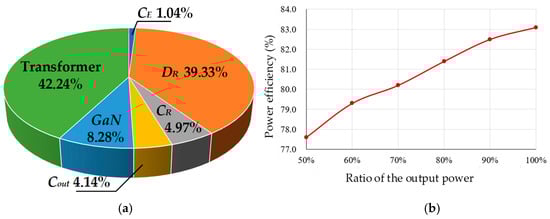
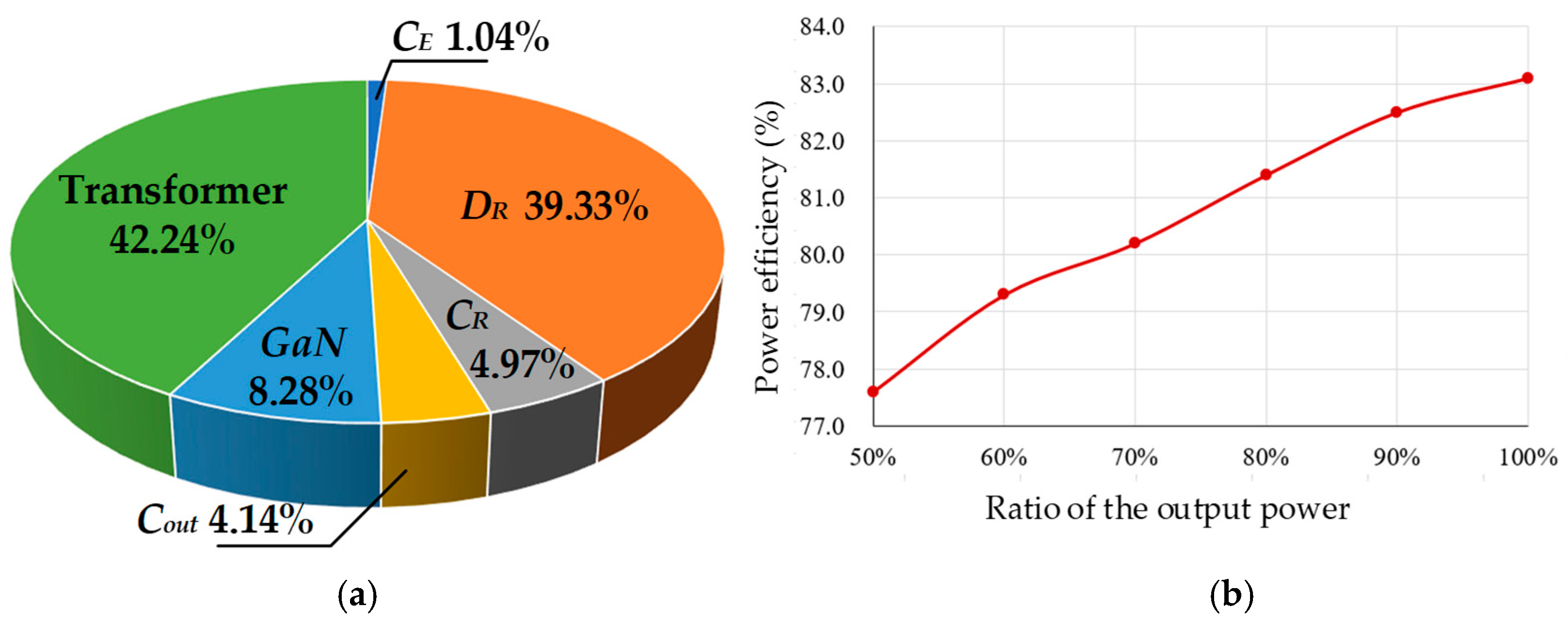
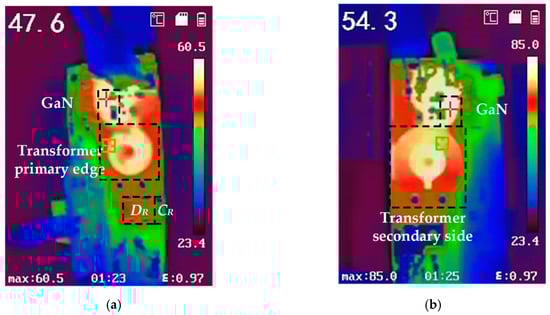
Figure 16a shows the loss breakdown of the VHF resonant flyback converter at 15 W. The loss distribution is obtained by LTspice simulations. The power switch and diode models used in the simulation are level 3 SPICE models provided by the manufacturer. The inductor and capacitor values used in the simulation are the same as in Table 3. The parasitic resistance of the transformer is considered in the simulation, which was measured with the LCR meter and then adopted in the simulation. Furthermore, the losses of the power switch and diode were determined by calculating the average value of the device current and voltage product. The losses of the transformer and capacitor were calculated based on the simulated RMS current and measured parasitic resistance. The total loss was 2.53 W, and the power efficiency was 83.1%. As shown in Figure 16a, the loss of the transformer accounted for 42.24% of the total loss, and the loss of the rectifier diode accounted for 39.33% of the total loss. The loss of the GaN HEMT was 8.28%, owing to the realization of ZVS. Figure 16b shows the power efficiency under different levels of output power. When the load increased from 50% to 100%, efficiency gradually increased. The thermal image of the VHF resonant flyback converter at full load is shown in Figure 17. The temperature of the GaN HEMT was 60.5 °C, the temperature of the diode was 54.3 °C, and all of the devices operated in the safe operating area.
Figure 16.
Loss breakdown and efficiency curve of the converter. (a) The loss breakdown at full load. (b) The power efficiency at different levels of output power.
Figure 17.
Thermal image of the converter. (a) Top side; (b) bottom side.
Table 4 compares the key parameters of the proposed prototype with the prototypes in existing studies. It can be seen that the number of resonant components in the circuit is greatly reduced by making full use of the leakage inductance of the air-core transformer, thus further improving the power density of the VHF resonant power converter.
Table 4.
Comparisons of the key parameters of the proposed prototype with the prototypes in existing studies.
8. Conclusions
This paper presents a VHF resonant flyback converter with integrated magnetics. By using the leakage inductance of the air-core transformer and the parasitic capacitance of the switching devices as resonant elements, the number of passive components in the circuit is significantly reduced, which provides great potential for further improving the power density of the power supply system. An analytical model for the proposed converter was established to guide the design of the circuit parameters. In addition, the estimation formula of the air-core transformer was improved to provide an estimation method for the geometry of the multi-layer circular spiral inductor, which can be combined with finite element simulation to achieve the accurate design of the air-core transformer. Finally, the magnetically integrated resonant flyback converter proposed in this paper was experimentally verified.
Author Contributions
Conceptualization, Y.H.; Formal analysis, K.Y.; Methodology, X.S.; Project administration, D.Z.; Resources, Q.Z.; Software, K.Y.; Validation, Q.L.; Writing—original draft, Y.H.; Writing—review and editing, Q.Z. All authors have read and agreed to the published version of the manuscript.
Funding
This work was funded by the State Administration of Science, Technology, and Industry for the National Defence of the People’s Republic of China under Grant D030303; the National Natural Science Foundation of China under Grant 62074067; and the National Natural Science Foundation of China under Grant 62374067. This work is supported by Wuhan University of Technology.
Data Availability Statement
The datasets used and/or analyzed during the current study are available from the corresponding author upon reasonable request.
Conflicts of Interest
The authors declare that they have no conflicts of interest.
References
- Knott, A.; Andersen, T.M.; Kamby, P.; Pedersen, J.A.; Madsen, M.P.; Kovacevic, M.; Andersen, M.A.E. Evolution of Very High Frequency Power Supplies. IEEE J. Em Sel. Top. Power Electron. 2014, 2, 386–394. [Google Scholar] [CrossRef] [Scilit]
- Perreault, D.J.; Hu, J.Y.; Rivas, J.M.; Han, Y.H.; Leitermann, O.; Pilawa-Podgurski, R.C.N.; Sagneri, A.; Sullivan, C.R. Opportunities and Challenges in Very High Frequency Power Conversion. In Proceedings of the 2009 Twenty-Fourth Annual IEEE Applied Power Electronics Conference and Exposition, Washington, DC, USA, 15–19 February 2009; pp. 1–14. [Google Scholar]
- Lidow, A.; de Rooij, M.; Strydom, J.; Reusch, D.; Glaser, J. GaN Technology Overview. In GaN Transistors for Efficient Power Conversion; Wiley: Hoboken, NJ, USA, 2014; pp. 1–18. [Google Scholar]
- Sun, R.; Lai, J.; Chen, W.; Zhang, B. GaN Power Integration for High Frequency and High Efficiency Power Applications: A Review. IEEE Access 2020, 8, 15529–15542. [Google Scholar] [CrossRef] [Scilit]
- Yao, T.; Nan, C.H.; Ayyanar, R. A New Soft-Switching Topology for Switched Inductor High Gain Boost. IEEE Trans. Ind. Appl. 2018, 54, 2449–2458. [Google Scholar] [CrossRef] [Scilit]
- Xu, D.; Guan, Y.; Wang, Y.; Wang, W. Topologies and control strategies of very high frequency converters: A survey. CPSS Trans. Power Electron. Appl. 2017, 2, 28–38. [Google Scholar] [CrossRef] [Scilit]
- Reusch, D.; Strydom, J.; Lidow, A. A New Family of GaN Transistors for Highly Efficient High Frequency DC–DC Converters. In Proceedings of the 2015 Thirtieth Annual IEEE Applied Power Electronics Conference and Exposition (APEC 2015), Charlotte, NC, USA, 15–19 March 2015; pp. 1979–1985. [Google Scholar]
- Zhang, Z.L.; Xu, K.; Xu, Z.W.; Xu, J.H.; Ren, X.Y.; Chen, Q.H. GaN VHF Converters with Integrated Air-Core Transformers. IEEE Trans. Power Electr. 2019, 34, 3504–3515. [Google Scholar] [CrossRef] [Scilit]
- Xu, K.; Zhang, Z.L.; Xu, Z.W.; Xu, J.H.; Ren, X.Y.; Chen, Q.H.; Yu, F.B. Air-Core Transformer Integration for GaN VHF Converters. In Proceedings of the Thirty-Third Annual IEEE Applied Power Electronics Conference and Exposition (APEC 2018), San Antonio, TX, USA, 4–8 March 2018; pp. 2256–2263. [Google Scholar]
- Zulauf, G.; Rivas-Davila, J.M. Single-Turn Air-Core Coils for High-Frequency Inductive Wireless Power Transfer. IEEE Trans. Power Electr. 2020, 35, 2917–2932. [Google Scholar] [CrossRef] [Scilit]
- Marante, R.; Ruiz, M.N.; Rizo, L.; Cabria, L.; García, J.A. A UHF class E2 DC/DC converter using GaN HEMTs. In Proceedings of the 2012 IEEE/MTT-S International Microwave Symposium Digest, Montreal, QC, Canada, 17–22 June 2012; pp. 1–3. [Google Scholar]
- Li, Y.; Ruan, X.B. Output Current Limitation for ON-OFF Controlled Very-High-Frequency Class E DC-DC Converter. IEEE Trans. Ind. Electron. 2022, 69, 11826–11831. [Google Scholar] [CrossRef] [Scilit]
- Pareschi, F.; Bertoni, N.; Mangia, M.; Massolini, R.G.; Frattini, G.; Rovatti, R.; Setti, G. Class-E Isolated DC–DC Converter with High-Rate and Cost-Effective Bidirectional Data Channel. IEEE Trans. Power Electr. 2020, 35, 5304–5318. [Google Scholar] [CrossRef] [Scilit]
- Zhang, D.S.; Lu, L.L.; Song, W.; Min, R.; Tong, Q.L.; Zhang, Q.; Peng, H.; Zhou, K.L. Optimal Duty Ratio Assisted PFM Control for VHF Isolated Class E DC-DC Converter. IEEE Trans. Power Electr. 2023, 38, 15467–15480. [Google Scholar] [CrossRef] [Scilit]
- Zhang, Z.; Zou, X.W.; Dong, Z.; Zhou, Y.; Ren, X. A 10-MHz eGaN Isolated Class-Φ2 DCX. IEEE Trans. Power Electr. 2017, 32, 2029–2040. [Google Scholar] [CrossRef] [Scilit]
- Zhou, Y.; Zhang, Z.; Zou, X.W.; Dong, Z.; Ren, X. A 10-MHz isolated class-Φ2 synchronous resonant DC–DC converter. In Proceedings of the 2016 IEEE Applied Power Electronics Conference and Exposition (APEC), Long Beach, CA, USA, 20–24 March 2016; pp. 73–78. [Google Scholar]
- Burkhart, J.M.; Korsunsky, R.; Perreault, D.J. Design Methodology for a Very High Frequency Resonant Boost Converter. IEEE Trans. Power Electr. 2013, 28, 1929–1937. [Google Scholar] [CrossRef] [Scilit]
- Rivas, J.M.; Han, Y.H.; Leitermann, O.; Sagneri, A.D.; Perreault, D.J. A high-frequency resonant inverter topology with low-voltage stress. IEEE Trans. Power Electr. 2008, 23, 1759–1771. [Google Scholar] [CrossRef] [Scilit]
- Zhang, Z.L.; Dong, Z.; Zou, X.W.; Ren, X.Y. A Digital Adaptive Driving Scheme for eGaN HEMTs in VHF Converters. IEEE Trans. Power Electr. 2017, 32, 6197–6205. [Google Scholar] [CrossRef] [Scilit]
- Guan, Y.S.; Wang, Y.J.; Wang, W.; Xu, D.G. A High-Performance Isolated High-Frequency Converter with Optimal Switch Impedance. IEEE Trans. Ind. Electron. 2019, 66, 5165–5176. [Google Scholar] [CrossRef] [Scilit]
- Xiao, Q.R.; Luo, T.X.; Shi, Y.L.; Chen, D.W.; Ye, H.B.; Hu, S.J.; Ren, Z. Simple and Accurate Radio Frequency Inductance Expression for On-chip Planar Spiral Inductors. In Proceedings of the ISAPE 2008: The 8th International Symposium on Antennas, Propagation and EM Theory, Kunming, China, 2–5 November 2008; Volume 1–3, pp. 1025–1028. [Google Scholar]
- Bi, X.-J.; He, J.-P.; Cai, S.-Y. A 10-MHz isolated Class DE resonant DC/DC converter based on GaN HEMT. In Proceedings of the 2019 21st European Conference on Power Electronics and Applications (EPE ′19 ECCE Europe), Genova, Italy, 3–5 September 2019; pp. 1–8. [Google Scholar]

Disclaimer/Publisher’s Note: The statements, opinions and data contained in all publications are solely those of the individual author(s) and contributor(s) and not of MDPI and/or the editor(s). MDPI and/or the editor(s) disclaim responsibility for any injury to people or property resulting from any ideas, methods, instructions or products referred to in the content. |
© 2024 by the authors. Licensee MDPI, Basel, Switzerland. This article is an open access article distributed under the terms and conditions of the Creative Commons Attribution (CC BY) license (https://creativecommons.org/licenses/by/4.0/).