


Dense Object Detection Based on De-Homogenized Queries



Abstract
1. Introduction
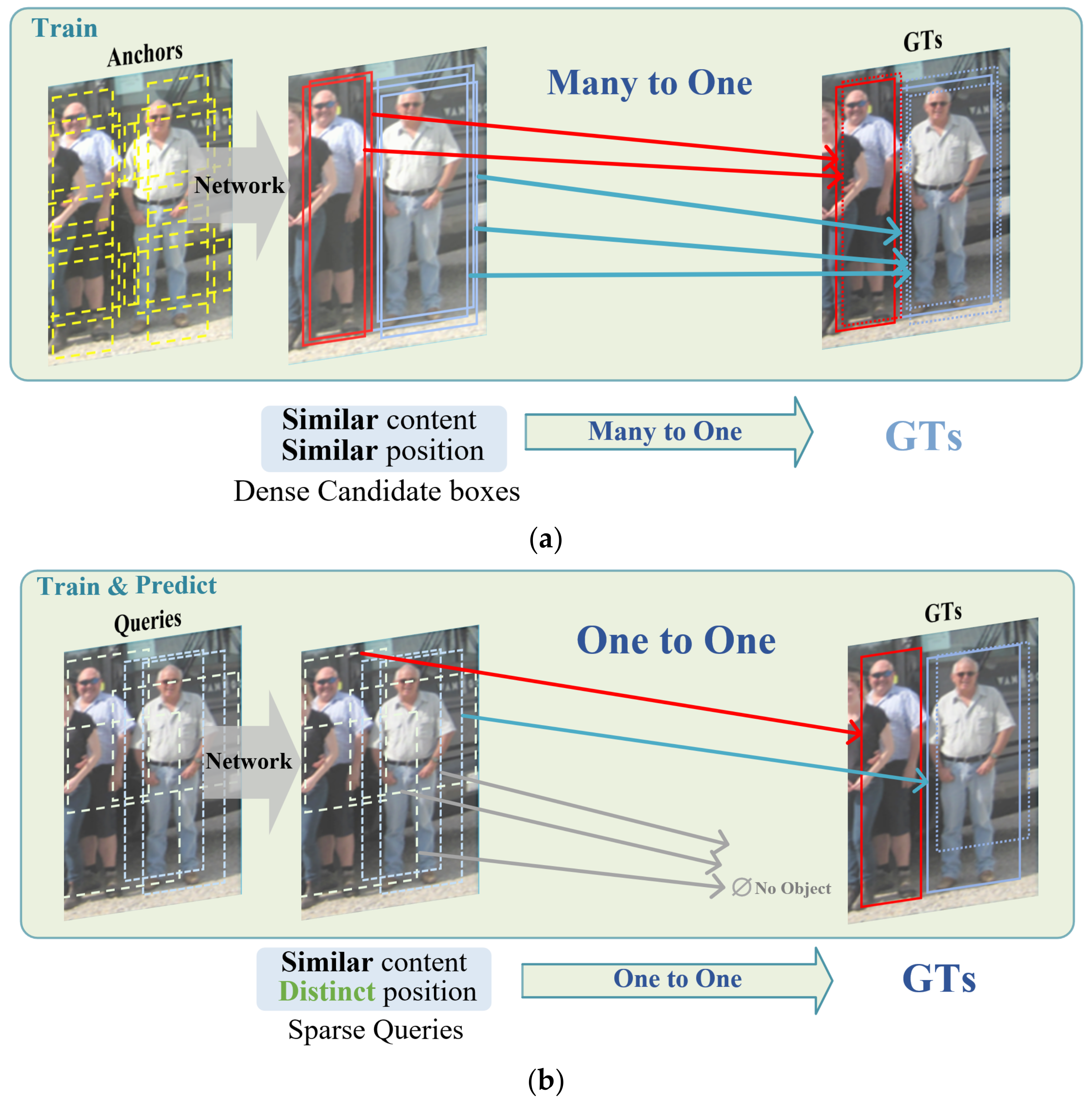
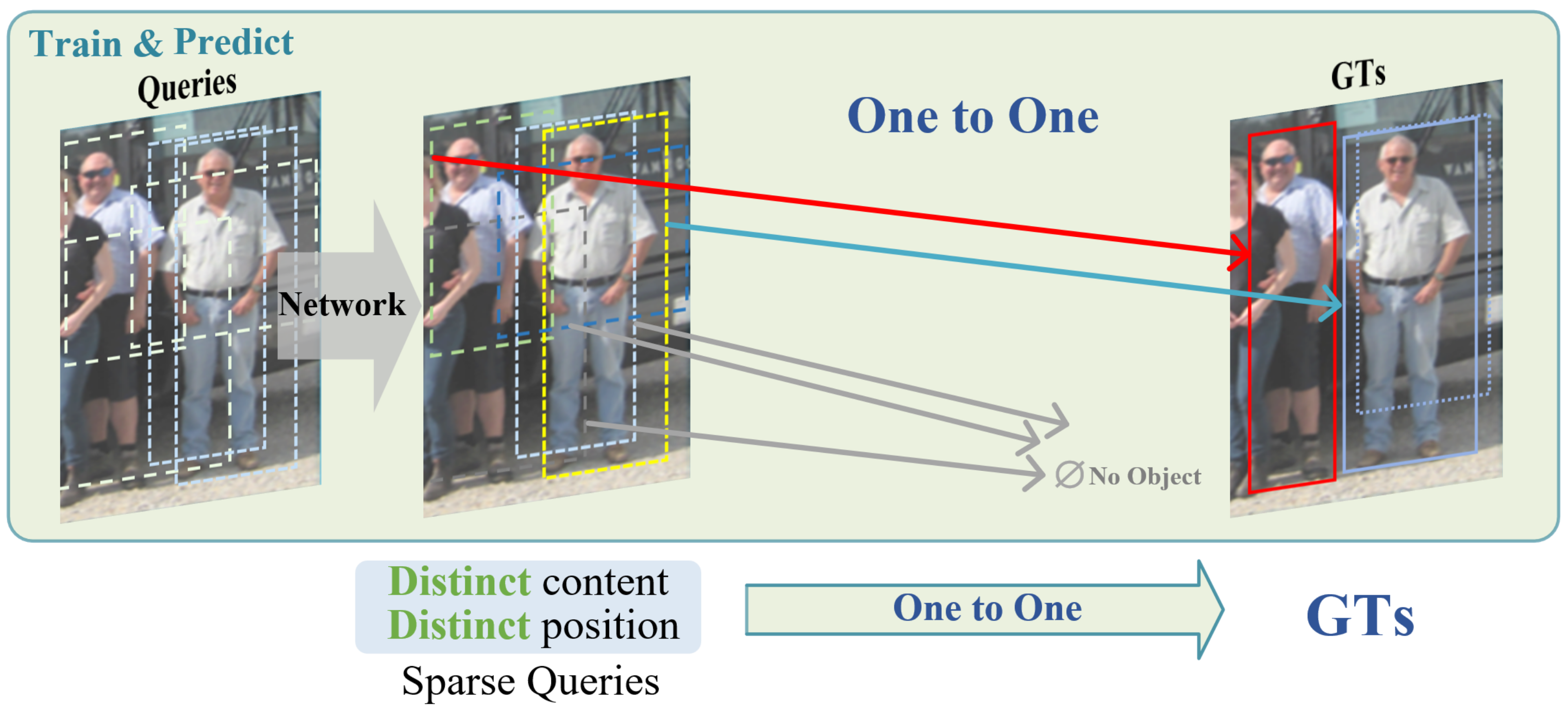
1.1. Solving the Query Homogenization Problem
1.2. Alligned Decoder
1.3. Query Initialization Considering Both Position and Confidence
1.4. Our Contribution
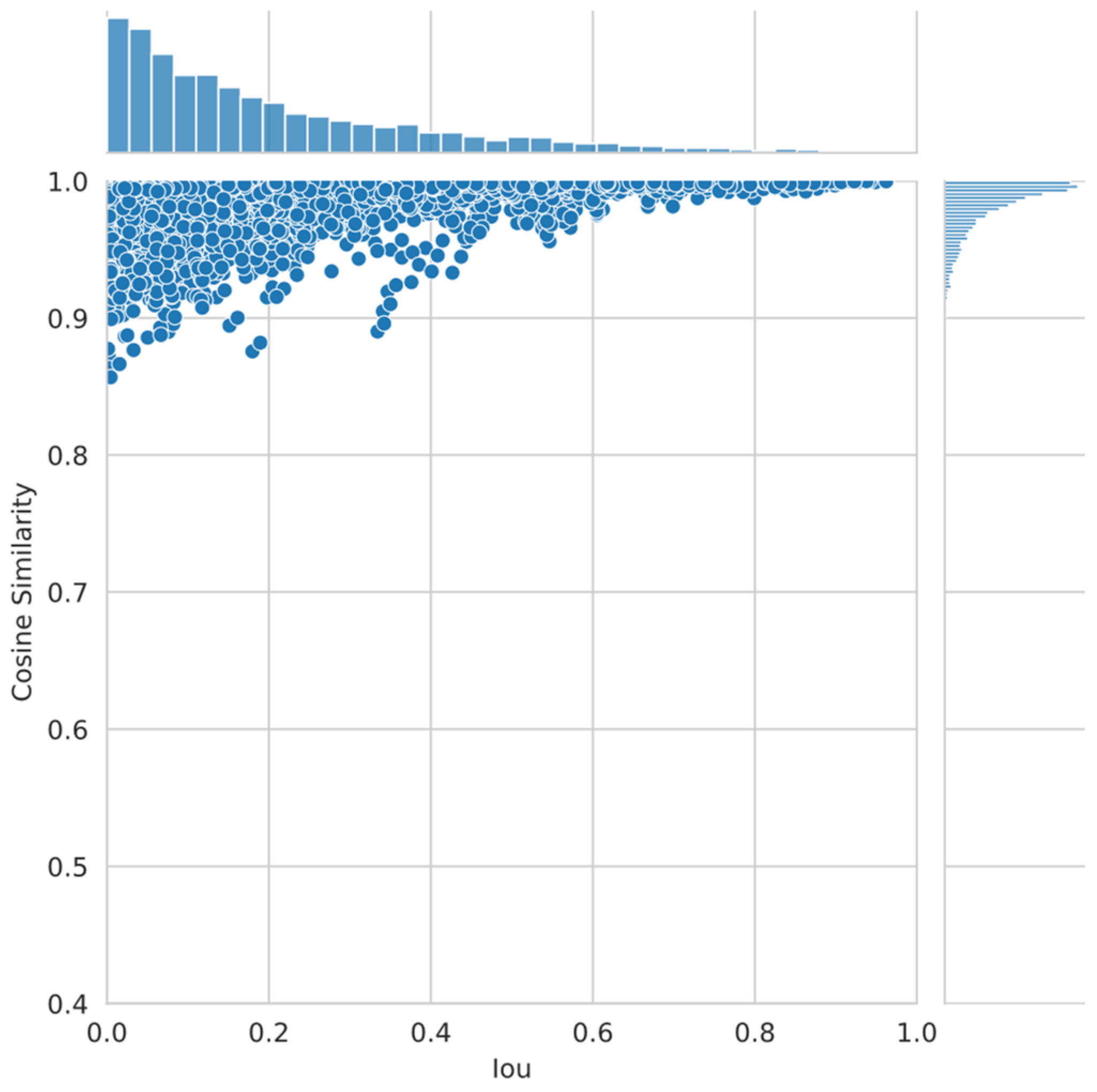
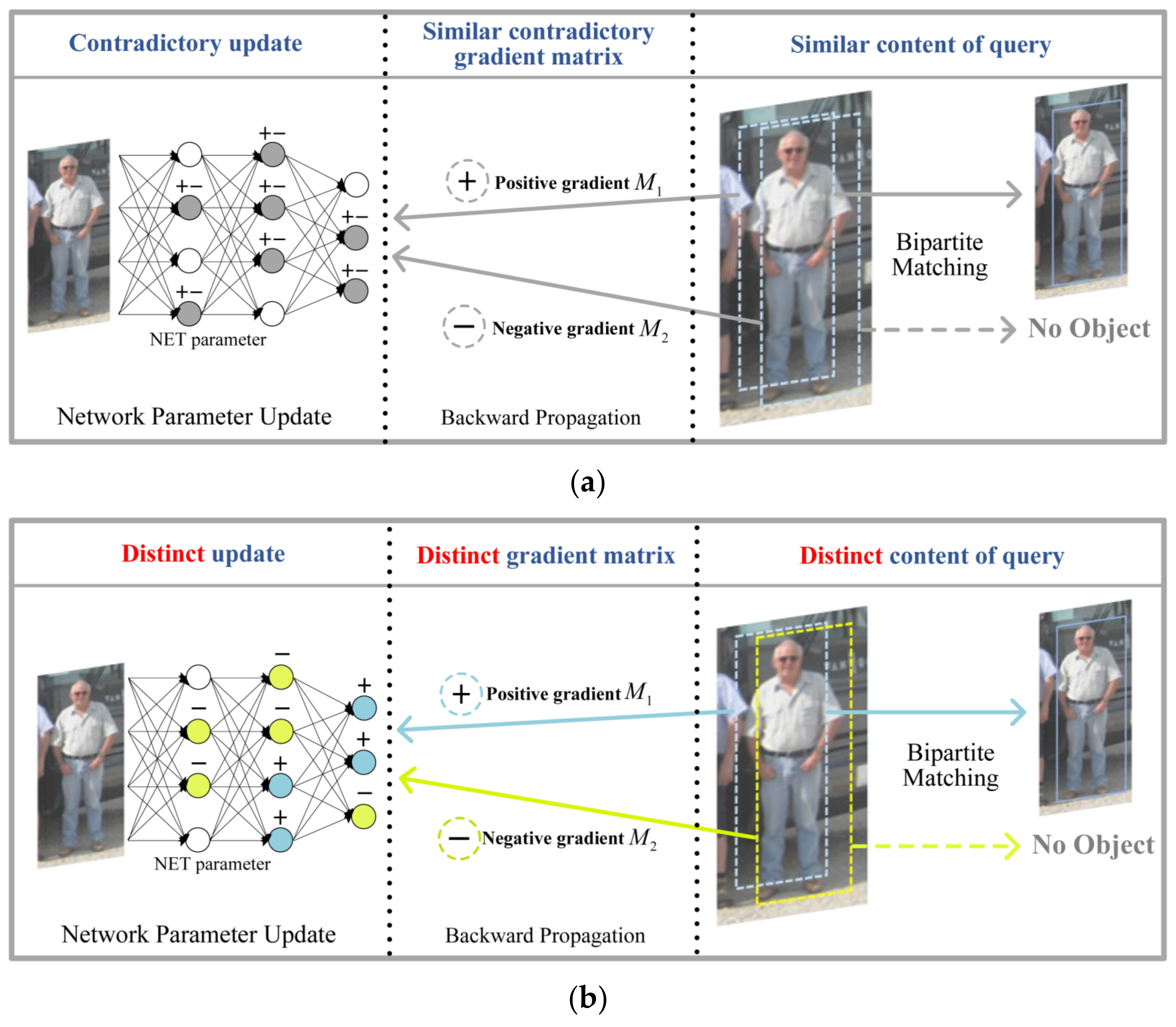
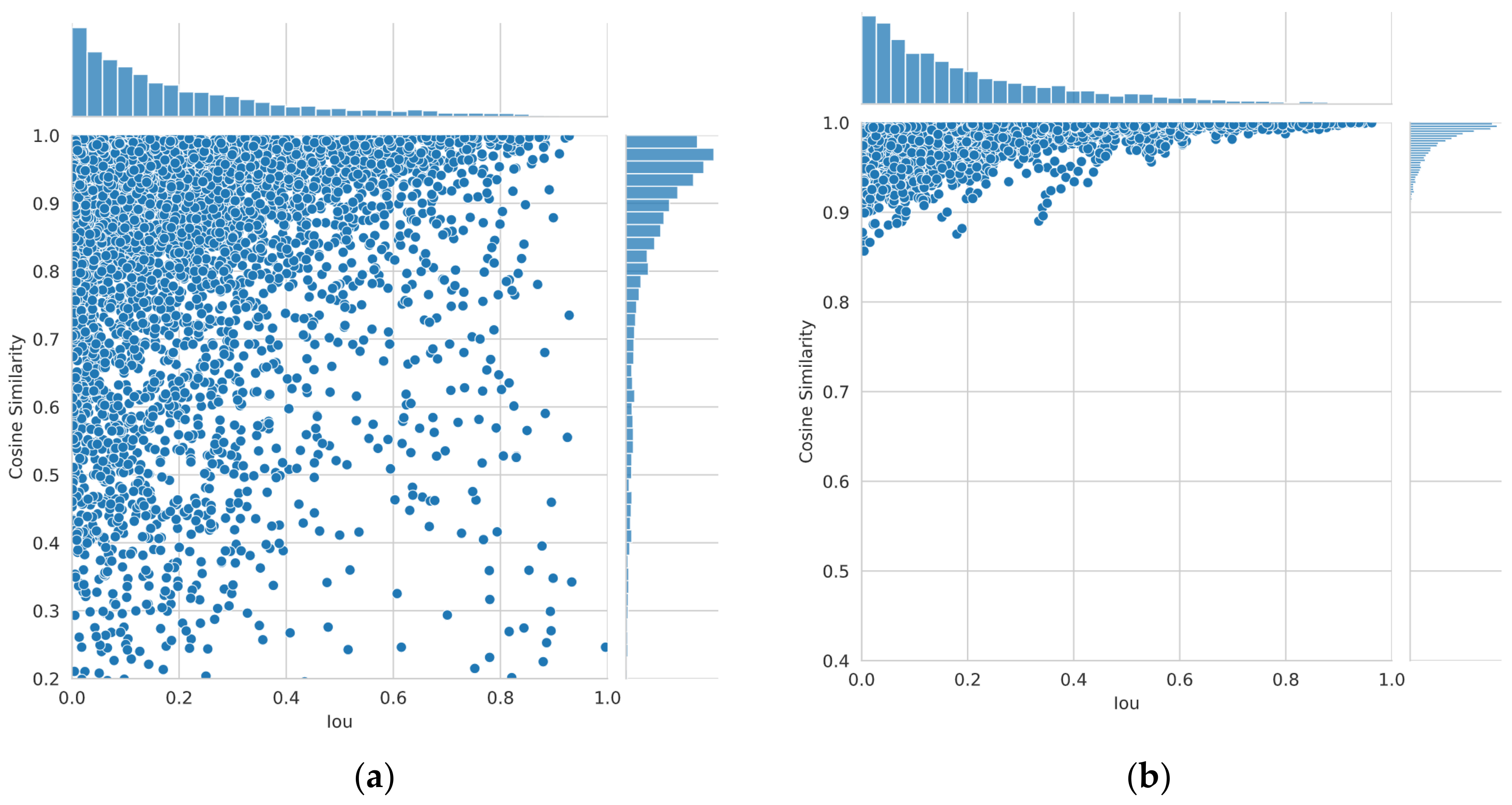
2. Analysis of Similar and Differentiated Queries
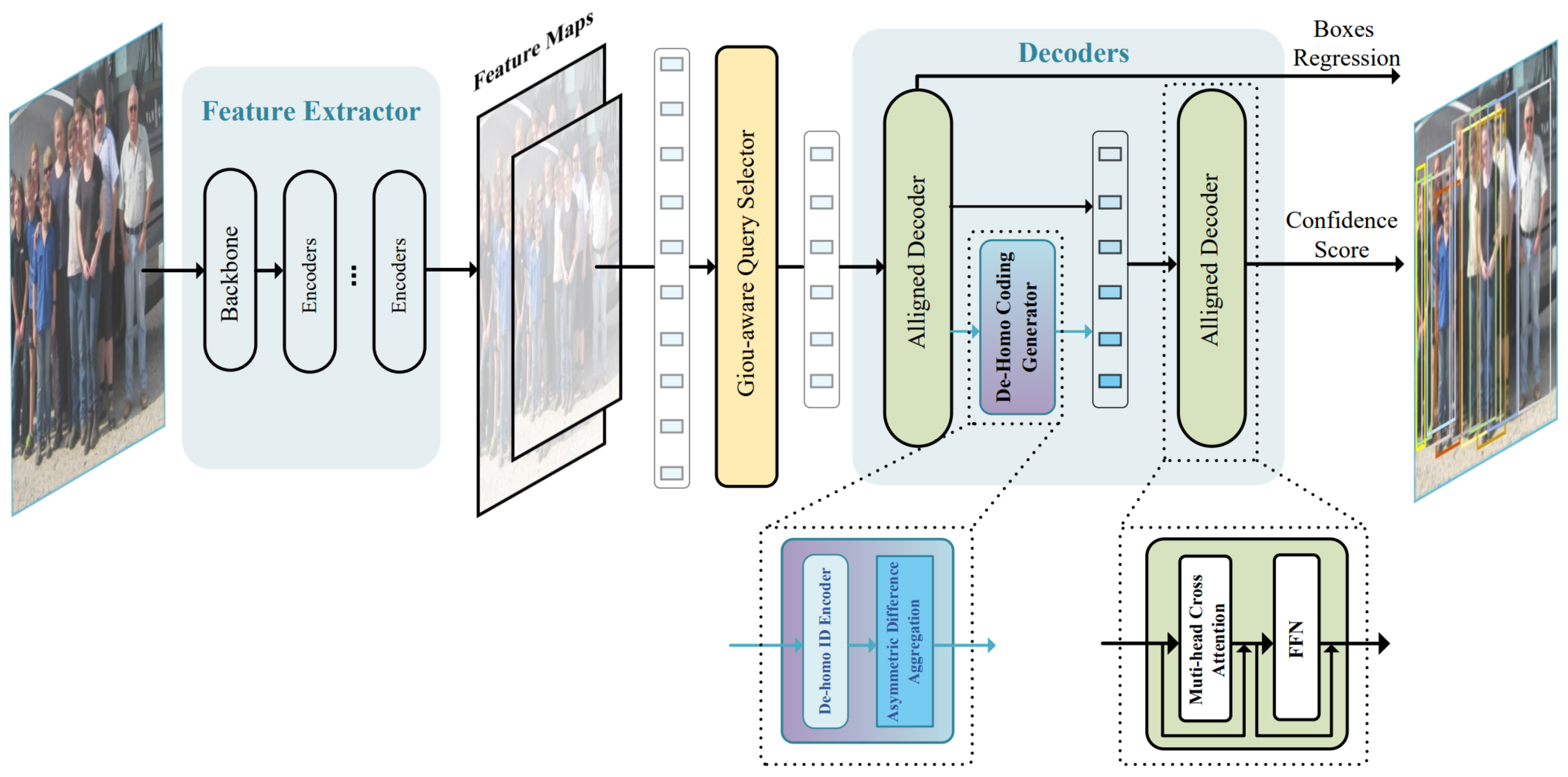
3. Our Method
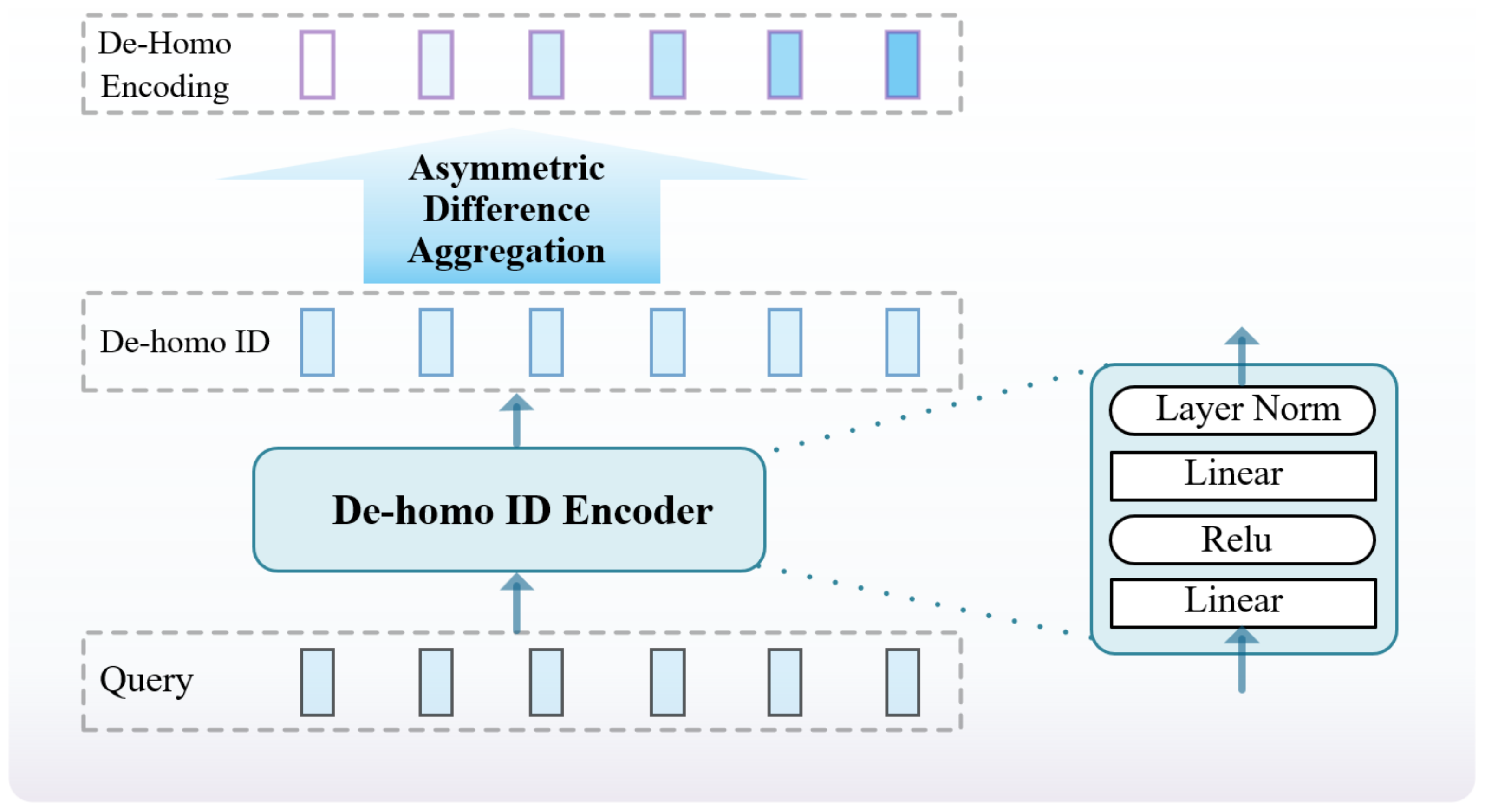
3.1. De-Homo Coding Generator
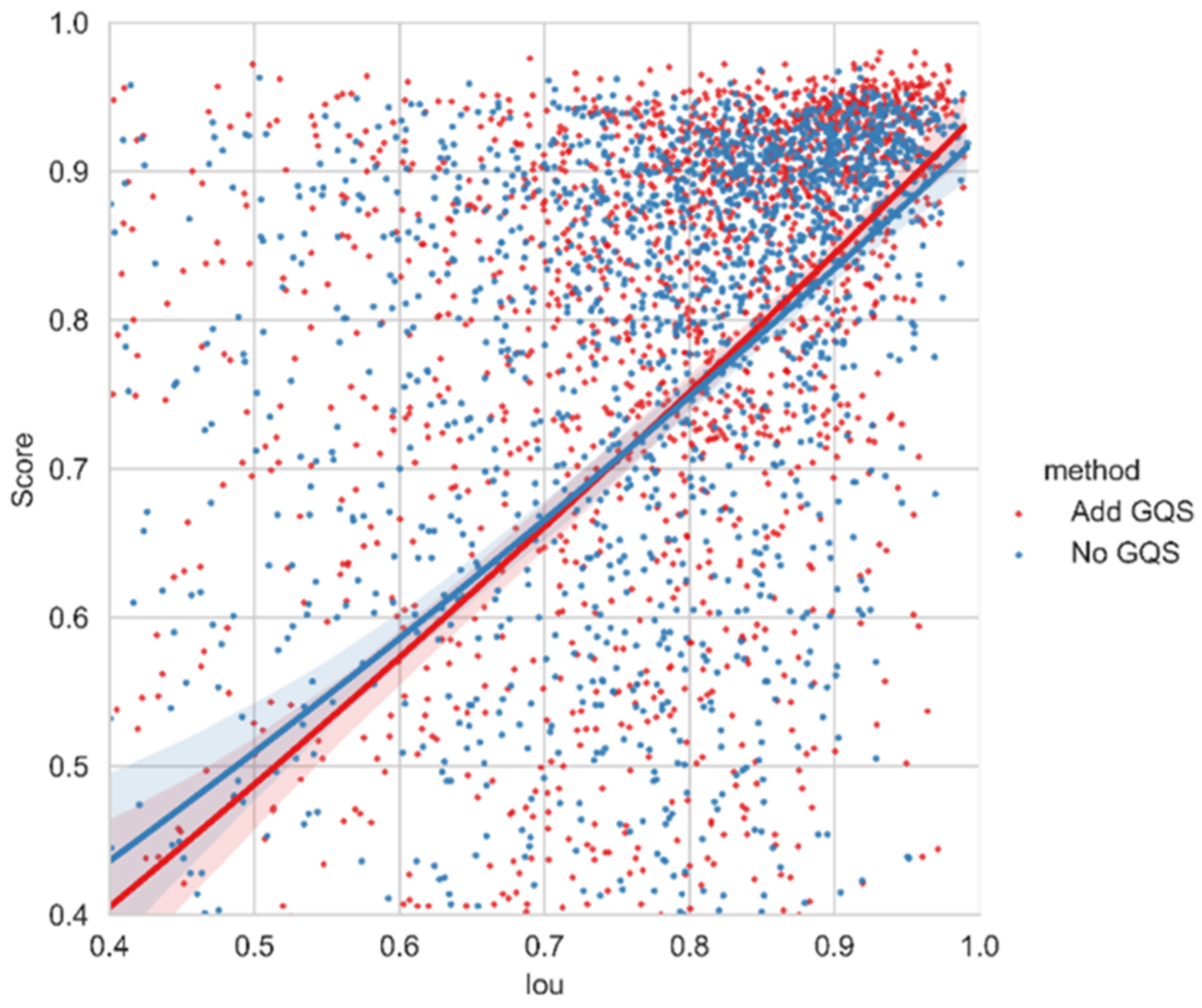
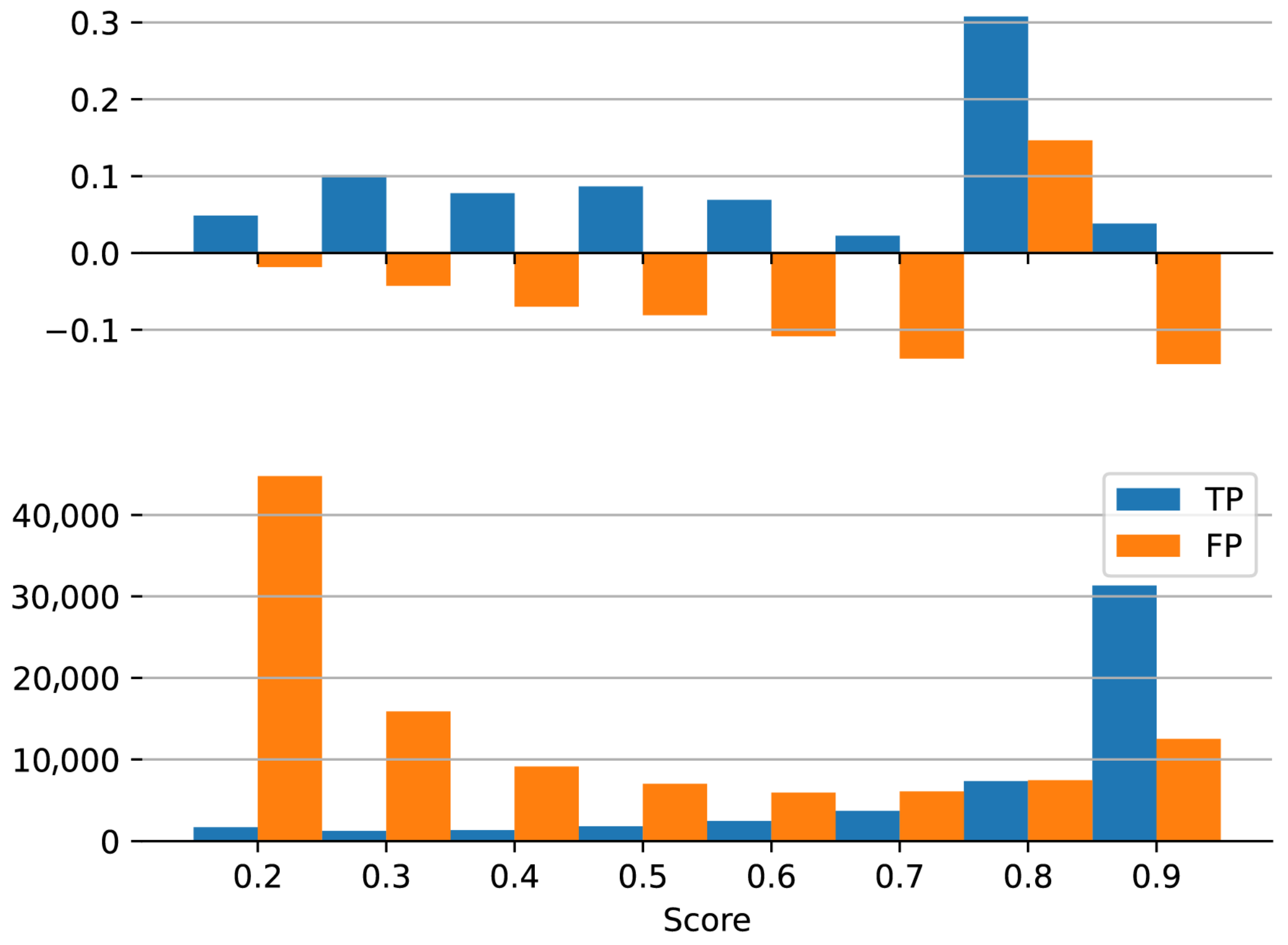
3.2. GIoU-Aware Query Selector
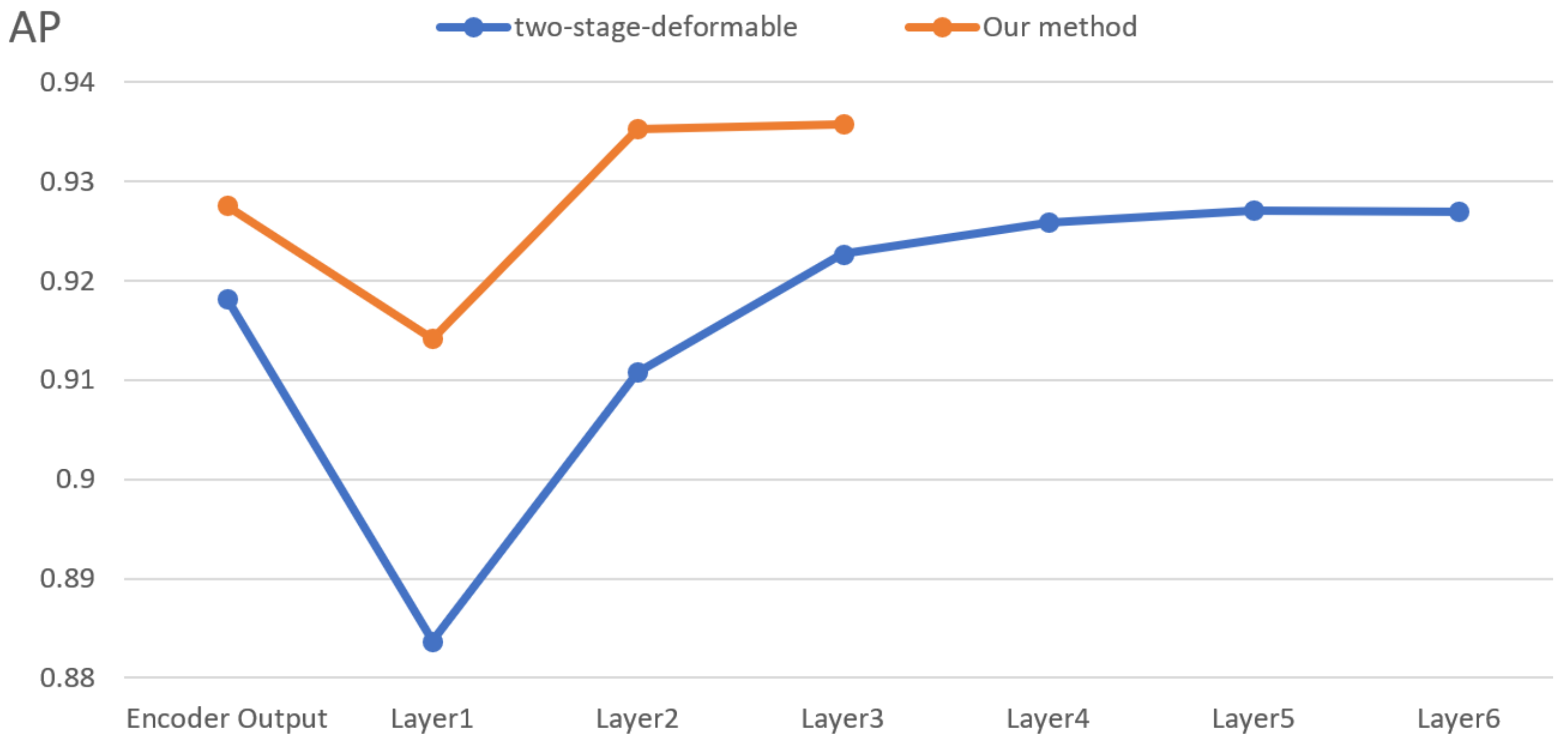
3.3. Alligned Decoder
4. Experiment and Analysis
4.1. Experiment Dataset
- Average precision (AP): Expressed by the area enclosed by the precision–recall curve and coordinates. In object detection, AP is often used to reflect precision and recall, and a larger AP indicates better detection performance.
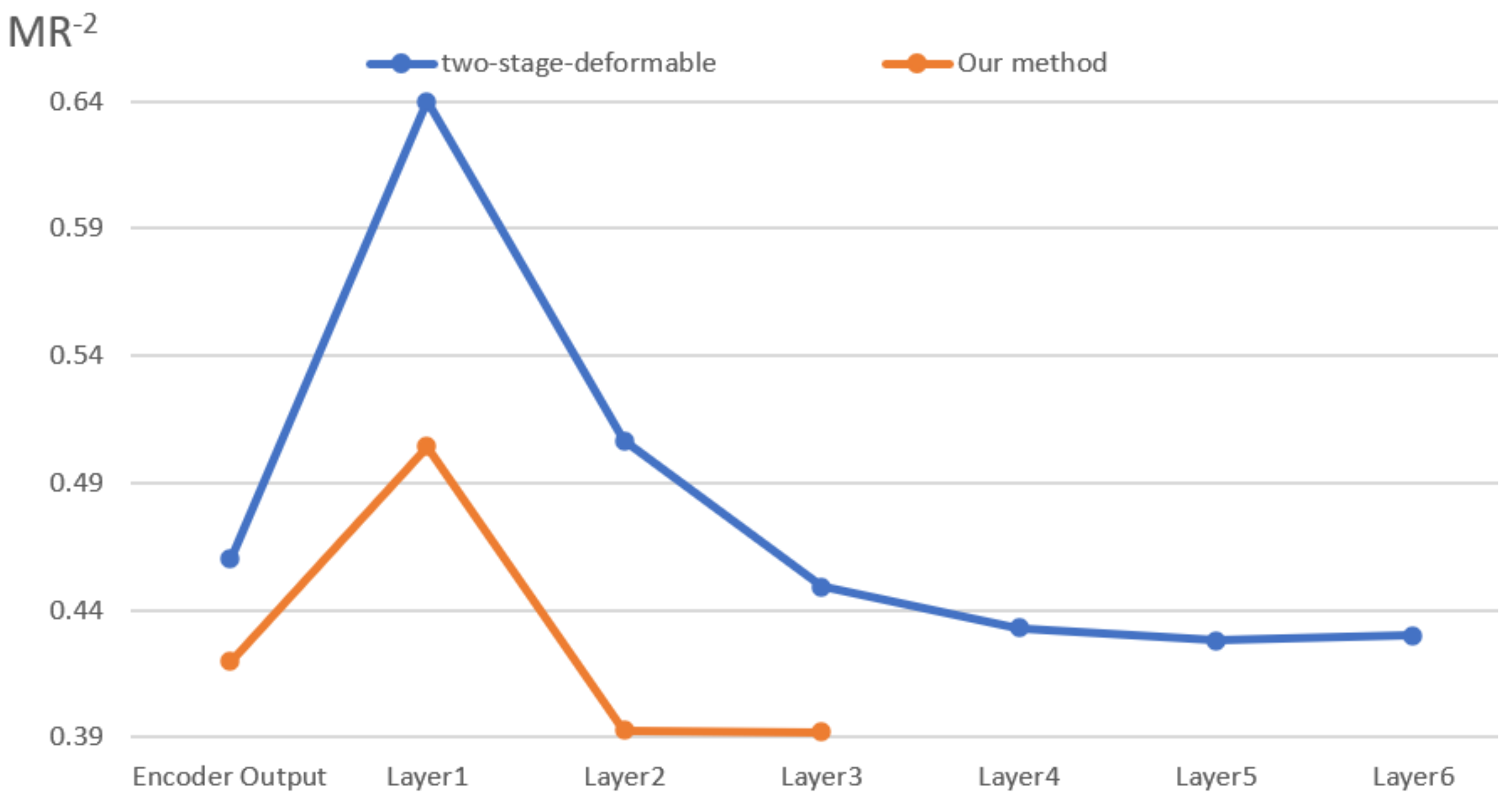
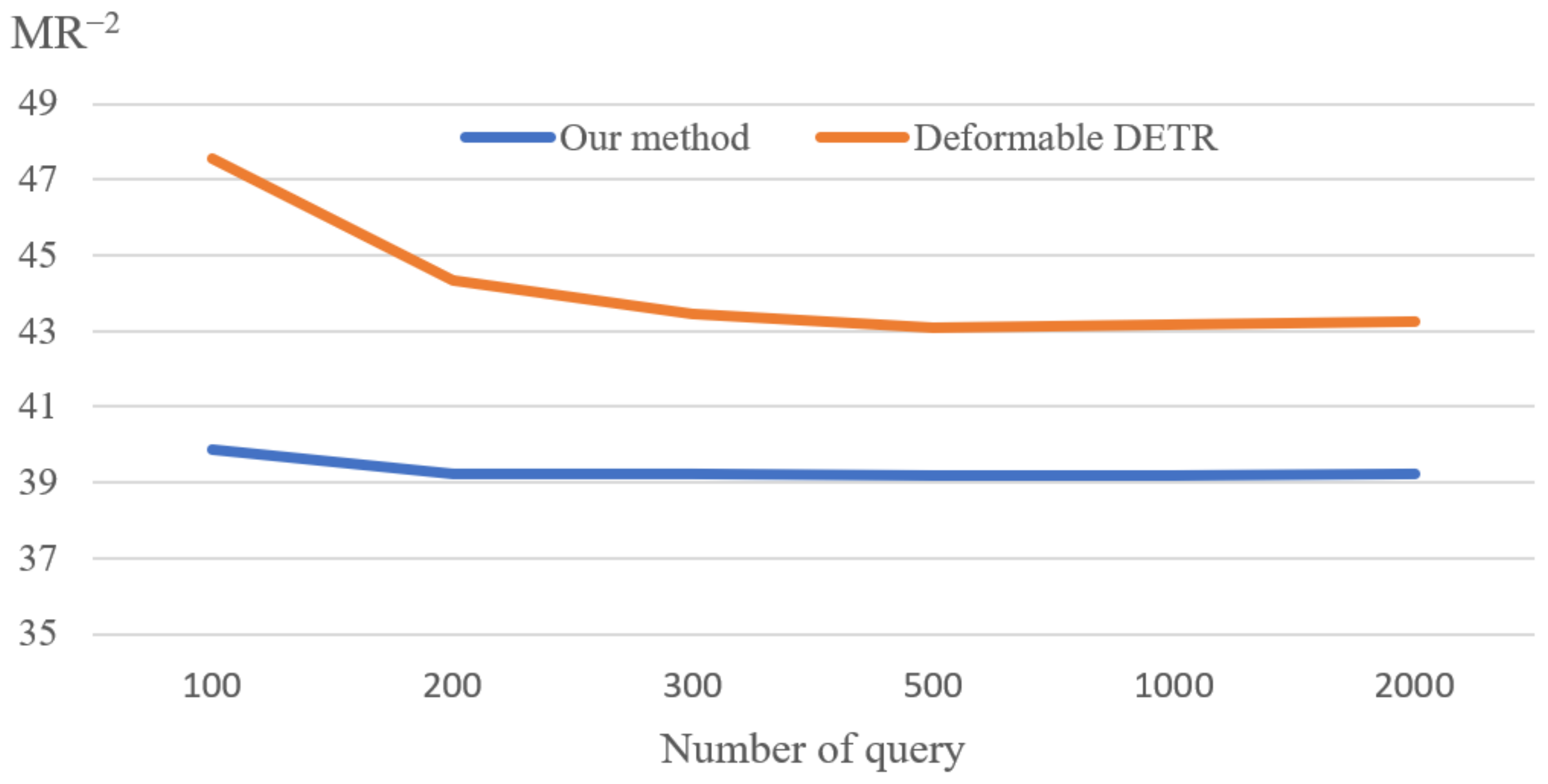
- MR−2: The average missing detection rate is calculated on the logarithmic scale of the false detection rate for each image. This metric is often used in pedestrian detection because it reflects the false and missed detection, and a smaller MR−2 indicates better detection performance.
- Jaccard index (JI): The index mainly evaluates the degree of overlap between the predicted set and the GTs. It reflects the overall distribution similarity between the prediction boxes set and the actual GTs, and a higher JI indicates better detection performance.
4.2. Experiment Details
4.3. Comparative Experiments with Other Advanced Detectors
4.4. Ablation Experiment
4.5. Hyperparameter Analysis
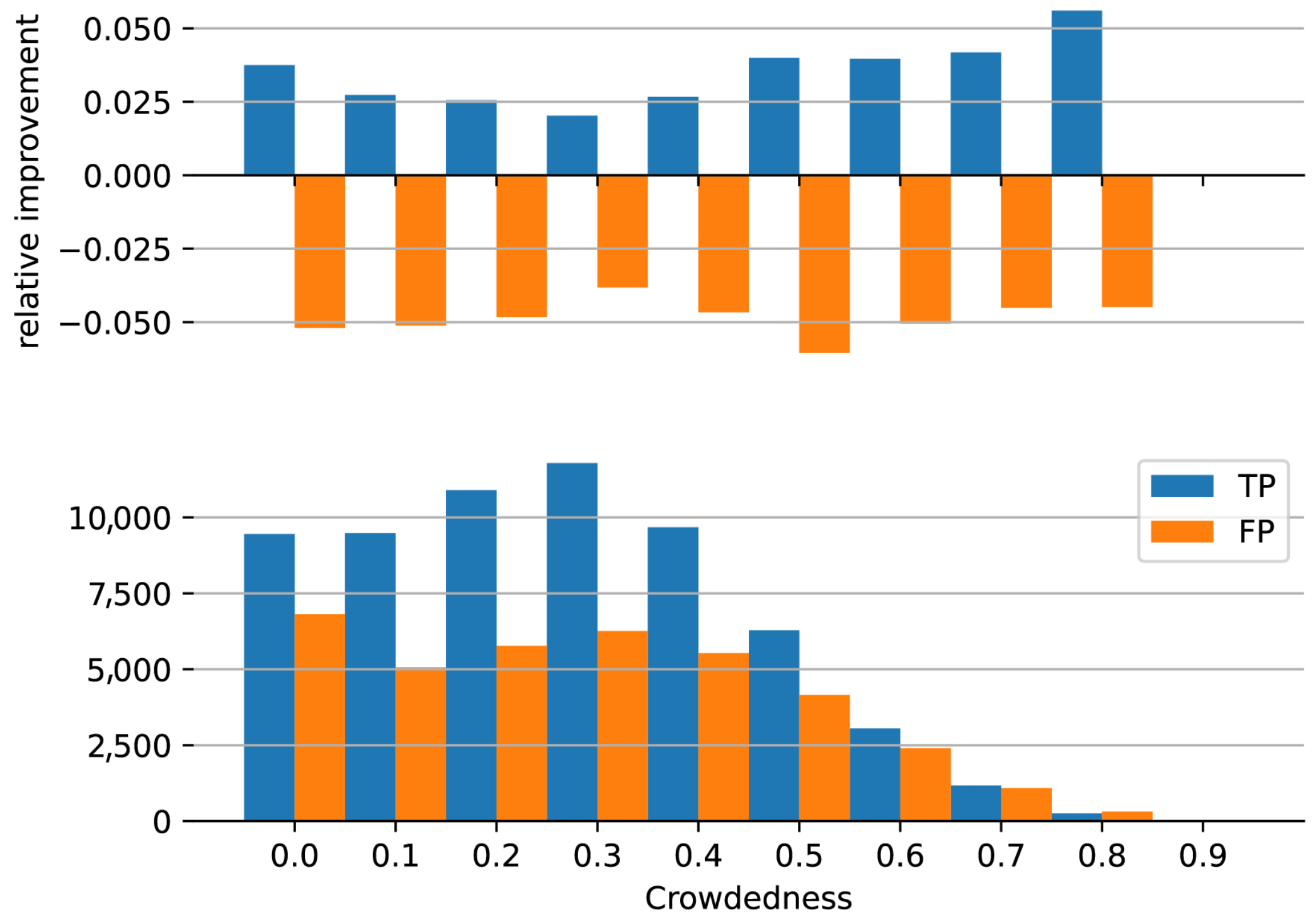
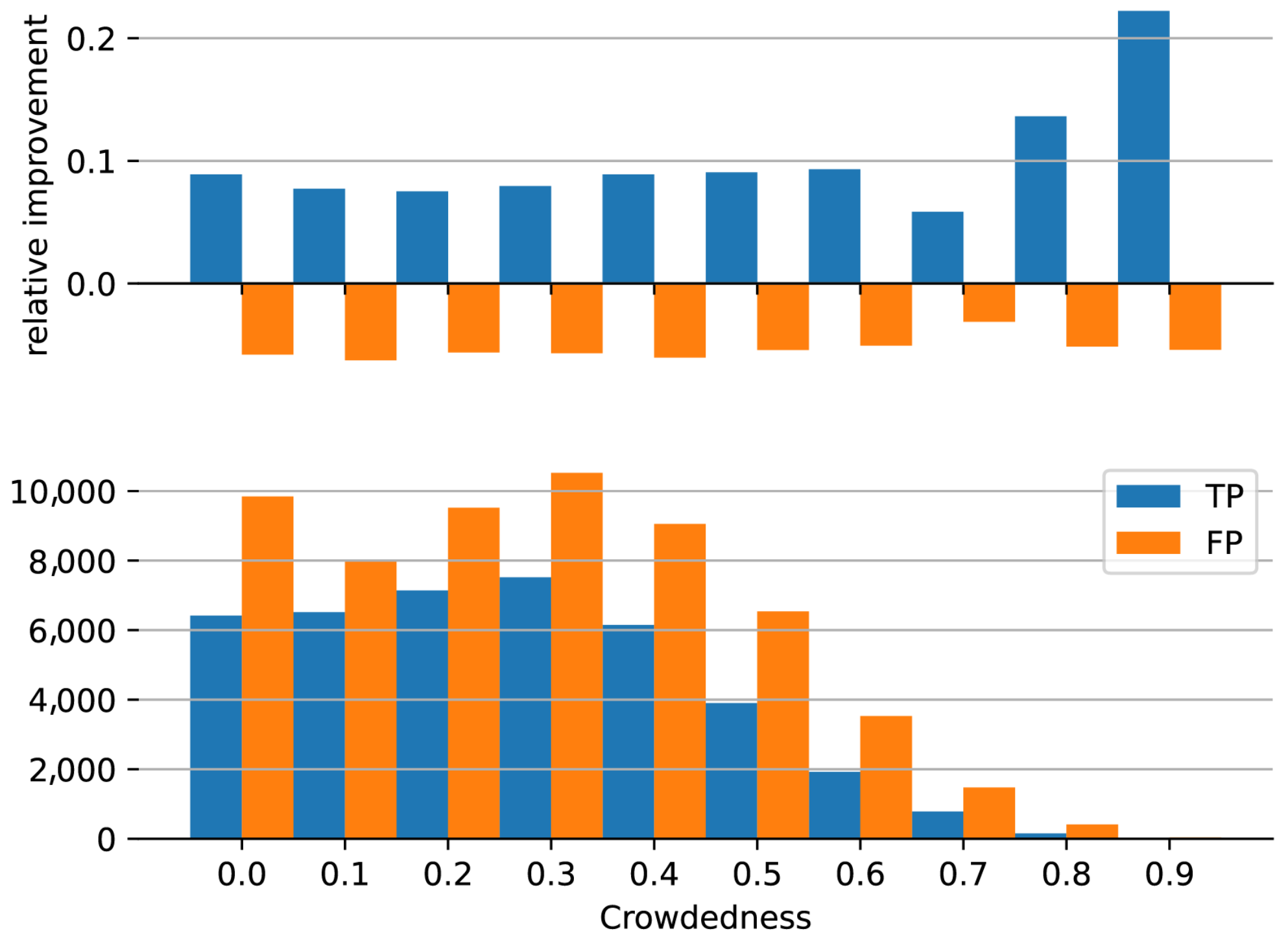
4.6. Analysis of Detection Results
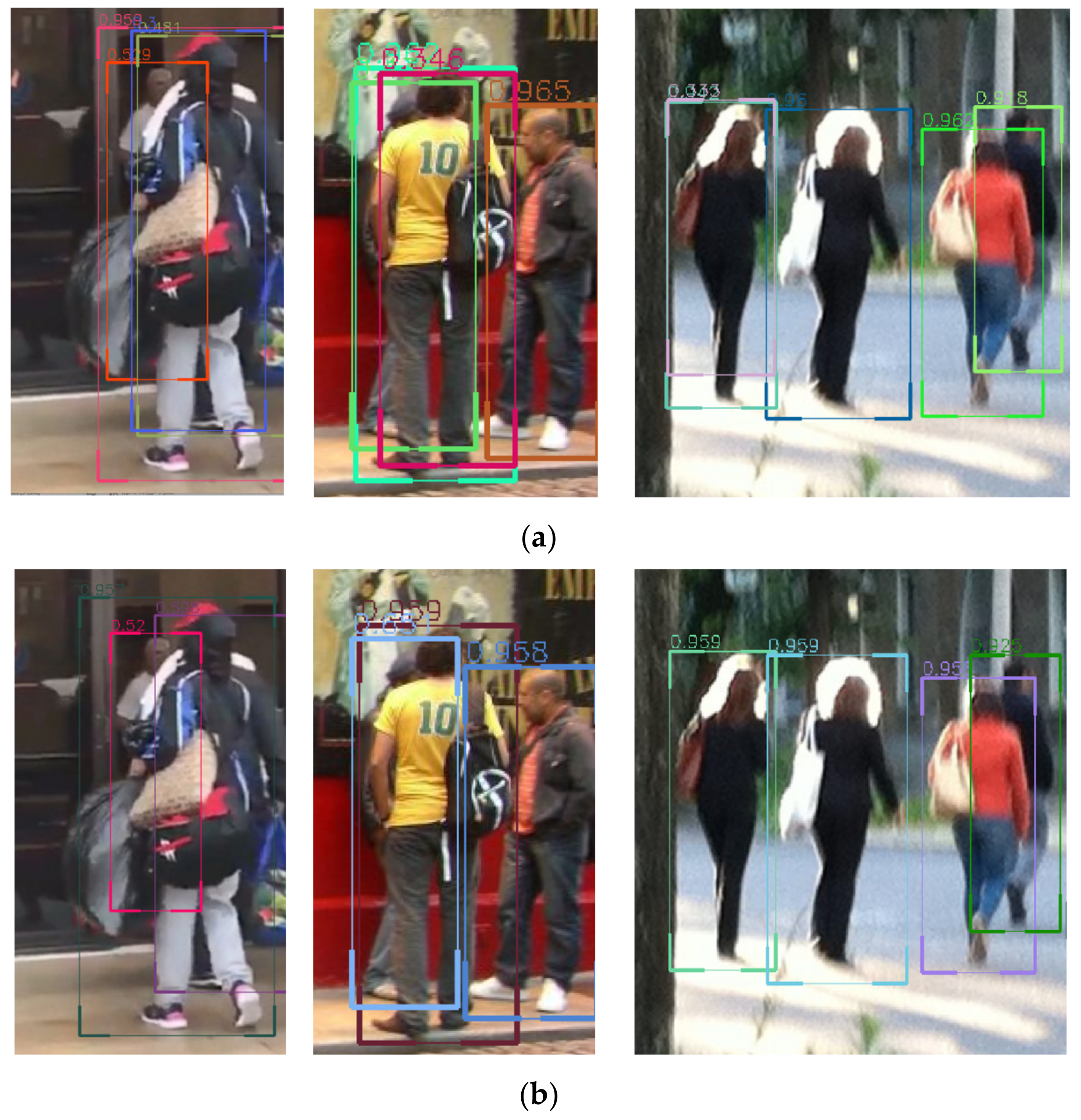
4.7. Comparison of Actual Test Result Images
5. Discussion
Author Contributions
Funding
Data Availability Statement
Conflicts of Interest
References
- Redmon, J.; Divvala, S.; Girshick, R.; Farhadi, A. You only look once: Unified, real-time object detection. In Proceedings of the IEEE Conference on Computer Vision and Pattern Recognition, Las Vegas, NV, USA, 27–30 June 2016; pp. 779–788. [Google Scholar]
- Wang, C.-Y.; Bochkovskiy, A.; Liao, H.-Y.M. YOLOv7: Trainable bag-of-freebies sets new state-of-the-art for real-time object detectors. In Proceedings of the IEEE/CVF Conference on Computer Vision and Pattern Recognition, Vancouver, BC, Canada, 17–24 June 2023; pp. 7464–7475. [Google Scholar]
- Ren, S.; He, K.; Girshick, R.B.; Sun, J. Faster R-CNN: Towards Real-Time Object Detection with Region Proposal Networks. In Proceedings of the Advances in Neural Information Processing Systems (NIPS), Montreal, QC, Canada, 4–9 December 2017; pp. 91–99. [Google Scholar]
- Cai, Z.; Vasconcelos, N. Cascade r-cnn: Delving into high quality object detection. In Proceedings of the IEEE Conference on Computer Vision and Pattern Recognition, Salt Lake City, UT, USA, 18–23 June 2018; pp. 6154–6162. [Google Scholar]
- Bodla, N.; Singh, B.; Chellappa, R.; Davis, L.S. Soft-NMS—Improving Object Detection with One Line of Code. In Proceedings of the IEEE International Conference on Computer Vision (ICCV), Venice, Italy, 22–29 October 2017; pp. 5562–5570. [Google Scholar]
- Liu, S.; Huang, D.; Wang, Y. Adaptive nms: Refining pedestrian detection in a crowd. In Proceedings of the IEEE/CVF Conference on Computer Vision and Pattern Recognition, Long Beach, CA, USA, 15–20 June 2019; pp. 6459–6468. [Google Scholar]
- Carion, N.; Massa, F.; Synnaeve, G.; Usunier, N.; Kirillov, A.; Zagoruyko, S. End-to-End Object Detection with Transformers. In Proceedings of the European Conference on Computer Vision (ECCV), Glasgow, UK, 23–28 August 2020; pp. 213–229. [Google Scholar]
- Sun, P.; Zhang, R.; Jiang, Y.; Kong, T.; Xu, C.; Zhan, W.; Tomizuka, M.; Li, L.; Yuan, Z.; Wang, C.; et al. Sparse R-CNN: End-to-End Object Detection With Learnable Proposals. In Proceedings of the IEEE Conference on Computer Vision and Pattern Recognition (CVPR), Nashville, TN, USA, 20–25 June 2021; pp. 14454–14463. [Google Scholar]
- Li, F.; Zhang, H.; Liu, S.; Guo, J.; Ni, L.M.; Zhang, L. DN-DETR: Accelerate DETR Training by Introducing Query DeNoising. In Proceedings of the IEEE/CVF Conference on Computer Vision and Pattern Recognition (CVPR), New Orleans, LA, USA, 20–25 June 2021; pp. 13609–13617. [Google Scholar]
- Zhang, H.; Li, F.; Liu, S.; Zhang, L.; Su, H.; Zhu, J.; Ni, L.M.; Shum, H. DINO: DETR with Improved DeNoising Anchor Boxes for End-to-End Object Detection. arXiv 2022, arXiv:2203.03605. [Google Scholar]
- Zhang, S.; Wang, X.; Wang, J.; Pang, J.; Chen, K. What Are Expected Queries in End-to-End Object Detection? arXiv 2022, arXiv:2206.01232. [Google Scholar]
- Lv, W.; Xu, S.; Zhao, Y.; Wang, G.; Wei, J.; Cui, C.; Du, Y.; Dang, Q.; Liu, Y. DETRs Beat YOLOs on Real-time Object Detection. arXiv 2023, arXiv:2304.08069. [Google Scholar] [CrossRef] [Scilit]
- Liu, S.; Li, F.; Zhang, H.; Yang, X.; Qi, X.; Su, H.; Zhu, J.; Zhang, L. DAB-DETR: Dynamic Anchor Boxes are Better Queries for DETR. In Proceedings of the Tenth International Conference on Learning Representations(ICLR), Virtual, 25–29 April 2022. [Google Scholar]
- Meng, D.; Chen, X.; Fan, Z.; Zeng, G.; Li, H.; Yuan, Y.; Sun, L.; Wang, J. Conditional detr for fast training convergence. In Proceedings of the IEEE/CVF International Conference on Computer Vision, Montreal, QC, Canada, 10–17 October 2021; pp. 3651–3660. [Google Scholar]
- Zheng, A.; Zhang, Y.; Zhang, X.; Qi, X.; Sun, J. Progressive End-to-End Object Detection in Crowded Scenes. In Proceedings of the IEEE/CVF Conference on Computer Vision and Pattern Recognition (CVPR), New Orleans, LA, USA, 18–24 June 2022; pp. 847–856. [Google Scholar]
- Chu, X.; Zheng, A.; Zhang, X.; Sun, J. Detection in Crowded Scenes: One Proposal, Multiple Predictions. In Proceedings of the IEEE/CVF Conference on Computer Vision and Pattern Recognition (CVPR), Seattle, WA, USA, 13–19 June 2020; pp. 12211–12220. [Google Scholar]
- Huang, Y.; Yuan, G. AD-DETR: DETR with asymmetrical relation and decoupled attention in crowded scenes. Math. Biosci. Eng. 2023, 20, 14158–14179. [Google Scholar] [CrossRef] [Scilit] [PubMed]
- Zhu, X.; Su, W.; Lu, L.; Li, B.; Wang, X.; Dai, J. Deformable DETR: Deformable Transformers for End-to-End Object Detection. In Proceedings of the International Conference on Learning Representations, Virtual, 3–7 May 2021. [Google Scholar]
- Rezatofighi, H.; Tsoi, N.; Gwak, J.; Sadeghian, A.; Reid, I.; Savarese, S. Generalized Intersection over Union: A Metric and A Loss for Bounding Box Regression. arXiv 2019, arXiv:1902.09630. [Google Scholar] [CrossRef] [Scilit]
- Lin, T.; Goyal, P.; Girshick, R.B.; He, K.; Dollr, P. Focal Loss for Dense Object Detection. In Proceedings of the IEEE International Conference on Computer Vision (ICCV), Venice, Italy, 22–29 October 2017; pp. 2999–3007. [Google Scholar]
- Shao, S.; Zhao, Z.; Li, B.; Xiao, T.; Yu, G.; Zhang, X.; Sun, J. CrowdHuman: A Benchmark for Detecting Human in a Crowd. arXiv 2018, arXiv:1805.00123. [Google Scholar]
- Russakovsky, O.; Deng, J.; Su, H.; Krause, J.; Satheesh, S.; Ma, S.; Huang, Z.; Karpathy, A.; Khosla, A.; Bernstein, M.S.; et al. ImageNet Large Scale Visual Recognition Challenge. Int. J. Comput. Vis. 2015, 115, 211–252. [Google Scholar] [CrossRef] [Scilit]
- He, K.; Zhang, X.; Ren, S.; Sun, J. Deep residual learning for image recognition. In Proceedings of the IEEE Conference on Computer Vision and Pattern Recognition (CVPR), Las Vegas, NV, USA, 27–30 June 2016; pp. 770–778. [Google Scholar]
- Zhang, S.; Chi, C.; Yao, Y.; Lei, Z.; Li, S.Z. Bridging the gap between anchor-based and anchor-free detection via adaptive training sample selection. In Proceedings of the IEEE/CVF conference on computer vision and pattern recognition, Seattle, WA, USA, 13–19 June 2020; pp. 9759–9768. [Google Scholar]
- Lin, T.; Dollr, P.; Girshick, R.B.; He, K.; Hariharan, B.; Belongie, S.J. Feature Pyramid Networks for Object Detection. In Proceedings of the IEEE Conference on Computer Vision and Pattern Recognition (CVPR), Honolulu, HI, USA, 21–26 July 2017; pp. 936–944. [Google Scholar]
- Huang, X.; Ge, Z.; Jie, Z.; Yoshie, O. NMS by Representative Region: Towards Crowded Pedestrian Detection by Proposal Pairing. In Proceedings of the IEEE/CVF Conference on Computer Vision and Pattern Recognition (CVPR), Seattle, WA, USA, 13–19 June 2020; pp. 10747–10756. [Google Scholar]
- Dollr, P.; Wojek, C.; Schiele, B.; Perona, P. Pedestrian Detection: An Evaluation of the State of the Art. IEEE Trans. Pattern Anal. Mach. Intell. 2012, 34, 743–761. [Google Scholar] [CrossRef] [Scilit] [PubMed]
- Ci, Y.; Wang, Y.; Chen, M.; Tang, S.; Bai, L.; Zhu, F.; Zhao, R.; Yu, F.; Qi, D.; Ouyang, W. Unihcp: A unified model for human-centric perceptions. In Proceedings of the IEEE/CVF Conference on Computer Vision and Pattern Recognition, Vancouver, BC, Canada, 17–24 June 2023; pp. 17840–17852. [Google Scholar]

| Method | #Queries | AP ↑ | MR−2 ↓ | JI ↑ | Params |
|---|---|---|---|---|---|
| Anchor-based detectors | |||||
| RetinaNet [20] | - | 85.3 | 55.1 | 73.7 | |
| ATSS [24] | - | 87.0 | 55.1 | 75.9 | |
| ATSS [24] + MIP [16] | - | 88.7 | 51.6 | 77.0 | |
| Faster R-CNN [3] | - | 85.0 | 50.4 | - | |
| Cascade R-CNN [4] | 86.0 | 44.1 | - | ||
| FPN [25] + Adaptive-NMS [6] | - | 84.7 | 47.7 | - | |
| FPN [25] + Soft-NMS [5] | - | 88.2 | 42.9 | 79.8 | |
| FPN [25] + MIP [16] | - | 90.7 | 41.4 | 82.3 | |
| PBM [26] | - | 89.3 | 43.3 | - | |
| Query-based detectors | |||||
| DETR [7] | 100 | 75.9 | 73.2 | 74.4 | |
| PED [27] | 1000 | 91.6 | 43.7 | 83.3 | |
| Sparse-RCNN [8] | 500 | 90.7 | 44.7 | 81.4 | |
| D-DETR (one-stage) [18] | 500 | 89.1 | 50.0 | 37.7 M | |
| 1000 | 91.3 | 43.8 | 83.3 | 37.7 M | |
| D-DETR (two-stage) [18] | 500 | 92.6 | 43.1 | 82.9 | 37.7 M |
| 1000 | 92.8 | 43.2 | 83.0 | 37.7 M | |
| UniHCP (direct eval) [28] | 90.0 | 46.6 | 82.2 | 109.1 M | |
| UniHCP (finetune) [28] | 92.5 | 41.6 | 85.8 | 109.1 M | |
| Iter-E2EDet [15] | 500 | 91.2 | 42.6 | 84.0 | 38.0 M |
| 1000 | 92.1 | 41.5 | 84.0 | 38.0 M | |
| Ours(6-3) * | 500 | 93.6 | 39.2 | 84.3 | 34.6 M |
| Ours(6-3(2)) * | 500 | 93.5 | 39.3 | 84.1 | 33.7 M |
| DCG | AD | GQS | AP ↑ | MR−2 ↓ | JI ↑ | Params(M) |
|---|---|---|---|---|---|---|
| 92.8 | 43.2 | 83.0 | 37.7 | |||
| ✓ | 93.3 | 40.2 | 83.8 | 35.4 | ||
| ✓ | ✓ | 93.5 | 40.0 | 84.0 | 34.6 | |
| ✓ | ✓ | ✓ | 93.6 | 39.2 | 84.3 | 34.6 |
| Decoders (before) | Decoders (after) | AP ↑ | MR−2 ↓ | JI ↑ | Params (M) |
|---|---|---|---|---|---|
| 1 | 1 | 93.3 | 40.1 | 84.1 | 33.7 |
| 2 | 1 | 93.4 | 40.3 | 84.2 | 34.4 |
| 1 | 2 | 93.6 | 39.2 | 84.3 | 34.6 |
| 1 | 2(1) 1 | 93.5 | 39.3 | 84.1 | 33.7 |
| #Queries | Our Method | Deformable DETR | ||
|---|---|---|---|---|
| AP ↑ | MR−2 ↓ | AP ↑ | MR−2 ↓ | |
| 100 | 88.93 | 39.87 | 87.59 | 47.56 |
| 200 | 92.53 | 39.24 | 91.40 | 44.35 |
| 300 | 93.26 | 39.21 | 92.23 | 43.44 |
| 500 | 93.58 | 39.20 | 92.61 | 43.10 |
| 1000 | 93.75 | 39.20 | 92.77 | 43.19 |
| 2000 | 93.77 | 39.21 | 92.79 | 43.25 |
Disclaimer/Publisher’s Note: The statements, opinions and data contained in all publications are solely those of the individual author(s) and contributor(s) and not of MDPI and/or the editor(s). MDPI and/or the editor(s) disclaim responsibility for any injury to people or property resulting from any ideas, methods, instructions or products referred to in the content. |
© 2024 by the authors. Licensee MDPI, Basel, Switzerland. This article is an open access article distributed under the terms and conditions of the Creative Commons Attribution (CC BY) license (https://creativecommons.org/licenses/by/4.0/).
Share and Cite
Huang, Y.; Ma, C.; Zhou, H.; Wu, H.; Yuan, G. Dense Object Detection Based on De-Homogenized Queries. Electronics 2024, 13, 2312. https://doi.org/10.3390/electronics13122312
Huang Y, Ma C, Zhou H, Wu H, Yuan G. Dense Object Detection Based on De-Homogenized Queries. Electronics. 2024; 13(12):2312. https://doi.org/10.3390/electronics13122312
Chicago/Turabian StyleHuang, Yueming, Chenrui Ma, Hao Zhou, Hao Wu, and Guowu Yuan. 2024. "Dense Object Detection Based on De-Homogenized Queries" Electronics 13, no. 12: 2312. https://doi.org/10.3390/electronics13122312
APA StyleHuang, Y., Ma, C., Zhou, H., Wu, H., & Yuan, G. (2024). Dense Object Detection Based on De-Homogenized Queries. Electronics, 13(12), 2312. https://doi.org/10.3390/electronics13122312

