


Abstract
The KM3NeT Collaboration is building an underwater neutrino observatory at the bottom of the Mediterranean Sea, consisting of two neutrino telescopes, both composed of a three-dimensional array of light detectors, known as digital optical modules. Each digital optical module contains a set of 31 three-inch photomultiplier tubes distributed over the surface of a 0.44 m diameter pressure-resistant glass sphere. The module also includes calibration instruments and electronics for power, readout, and data acquisition. The power board was developed to supply power to all the elements of the digital optical module. The design of the power board began in 2013, and ten prototypes were produced and tested. After an exhaustive validation process in various laboratories within the KM3NeT Collaboration, a mass production batch began, resulting in the construction of over 1200 power boards so far. These boards were integrated in the digital optical modules that have already been produced and deployed, which total 828 as of October 2023. In 2017, an upgrade of the power board, to increase reliability and efficiency, was initiated. The validation of a pre-production series has been completed, and a production batch of 800 upgraded boards is currently underway. This paper describes the design, architecture, upgrade, validation, and production of the power board, including the reliability studies and tests conducted to ensure safe operation at the bottom of the Mediterranean Sea throughout the observatory’s lifespan.
1. Introduction
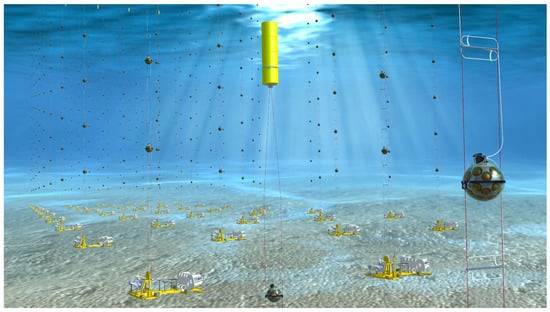
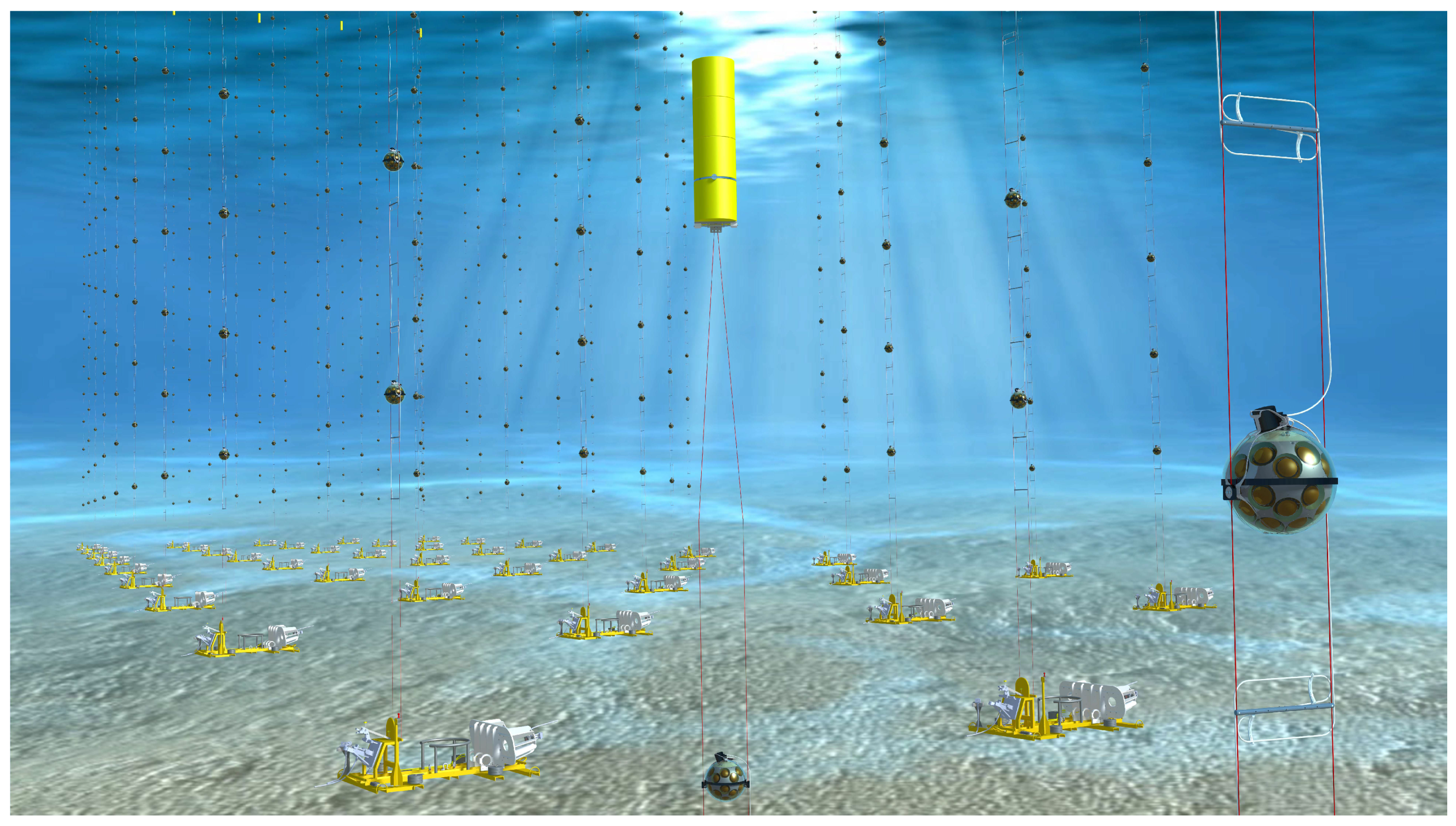
The KM3NeT Collaboration is building two underwater neutrino telescopes in the Mediterranean Sea for the detection of astrophysical neutrinos and the study of the fundamental neutrino properties, measuring the oscillation patterns of atmospheric neutrinos [1]. These detectors, known as Astroparticle Research with Cosmics in the Abyss (ARCA) and Oscillation Research with Cosmics in the Abyss (ORCA), are located off the southern coast of Sicily, Italy, and near the coast of Toulon, France, respectively, at depths of approximately 3500 m and 2450 m. The telescopes are built in the form of 3D lattices of light detectors called Digital Optical Modules (DOMs) [2], each containing 31 three-inch photomultiplier tubes (PMTs) [3], instrumentation for calibration and positioning, and all associated electronics boards. The DOMs are used to reconstruct the trajectory and energy of the primary neutrino by measuring the arrival times and positions of the Cherenkov photons induced by the relativistic charged particles produced in the interaction of neutrinos with matter inside and nearby the telescopes. The designed instrumented volume is around 1 km3 for ARCA and 7 × 10⁶ m3 for ORCA. The DOMs are distributed along lines called Detection Units (DUs), each containing 18 DOMs. The DUs are anchored on the seafloor and kept vertical by the buoyancy of the DOMs and buoys at the top. The horizontal spacing between DUs is approximately 90 m in ARCA and 20 m in ORCA, whereas the vertical spacing is around 36 m in ARCA and 9 m in ORCA. The different spatial configurations of ARCA and ORCA correspond to the different scientific scopes and neutrino energy ranges, with ARCA being optimized for the detection of cosmic neutrinos (TeV—PeV) and ORCA for atmospheric neutrinos (1 GeV—1 TeV). ARCA will consist of 230 DUs distributed in two separated blocks, while ORCA will be formed by only one block of 115 DUs. As of October 2023, the number of DUs deployed was 28 in ARCA and 18 in ORCA. See Figure 1 for a sketch view of the KM3NeT detector.
Figure 1.
Artistic view of the KM3NeT detector. The illustration is not to scale: sunlight does not reach the depths at which the KM3NeT detector is deployed. The total instrumented volume of the KM3NeT detectors, once completed, will be around 1 km3 for ARCA and 7 × 10⁶ m3 for ORCA.
The main data-acquisition electronic board of the DOM is the Central Logic Board (CLB) [4], which mainly performs the readout of the 31 PMT channels. The power board (PB) is mounted on the bottom of the CLB and provides power to all the DOM elements. This includes generating the high voltage for the 31 PMTs and for all the instrumentation devices located inside the DOM, including the compass, accelerometer, gyroscope, pressure, humidity, and temperature sensors, and the power for the time and positioning calibration devices, including the the Nanobeacon flasher [5] and the acoustic piezo sensor.
The PB has to generate different voltages for the Field Programmable Gate Array (FPGA) of the CLB in the proper startup sequence. The Xilinx FPGA needs a monotonic startup sequence for all the voltages to avoid an increasing inrush current. The PB also includes the readout interface to monitor all the voltages and currents generated. To isolate the power circuit, reduce noise, and enhance reliability in the CLB, it was decided to build a separate power board in the KM3NeT acquisition electronics. This approach has also been adopted by other physics experiments such as ALICE [6] or ATLAS TileCAL [7]; however, it is different from the design of IceCube, where the power supply is embedded in the main acquisition board [8].
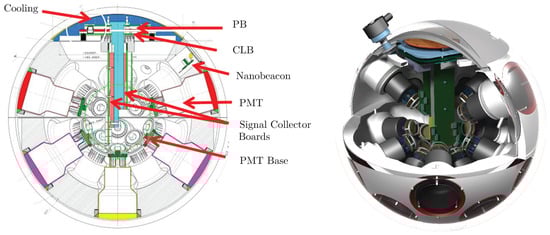
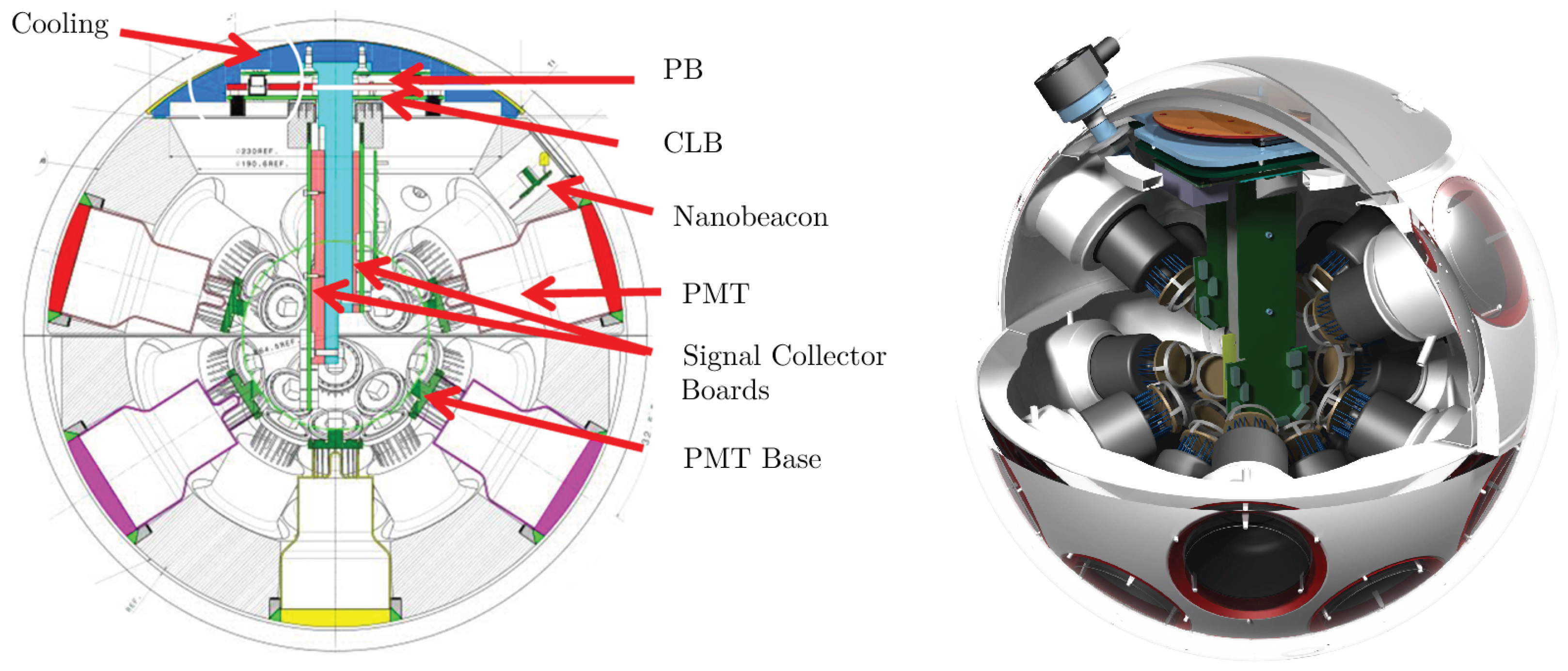
The PB is located in the shielded part of the aluminum cooling frame in the DOM to protect the sensitive electronics inside the DOM from interference caused by the high-frequency noise produced by the DC/DC converters of the PB. This location also provides better cooling for the PB. The frame at this point is shaped like a solid spherical cap that makes full contact with the inner surface of the DOM glass sphere. This helps maximize the heat flow to the surrounding seawater, where the ambient temperature is around 13 °C, acting as a heat sink for the thermal losses of the converters of the PB. Figure 2 shows the different elements inside the DOM as well as the location of the PB.
Figure 2.
(Left) Two-dimensional vertical cross-section of the DOM showing the position of the PB and the main elements of the DOM indicated with arrows. (Right) Three-dimensional representation of the DOM.
The initial design of the power board was completed in 2013. A pre-series of prototypes was built and submitted to numerous and rigorous tests, such as HALT tests [9], efficiency tests, etc. After an extensive validation process across various laboratories within the KM3NeT Collaboration, more than 1200 power boards were manufactured. These were integrated into the DOMs which have already been deployed in the sea, numbering 828 as of October 2023. An upgrade of the power board began in 2017 with the aim of improving efficiency and reliability. Following the validation of the pre-production series, a production batch of 800 improved boards is currently being worked on.
This paper is organized as follows: The design and architecture of the KM3NeT power board are detailed in Section 2, while the upgrade of the PB, primarily through a better selection of converters to improve efficiency and reduce consumption, is presented in Section 3. Section 4 describes the analysis of reliability. The production, control, and the functional tests applied are discussed in Section 5 and Section 6, while in Section 7, the results on production and reliability are presented. Finally, conclusions are drawn in Section 8.
2. Design and Architecture of the Power Board
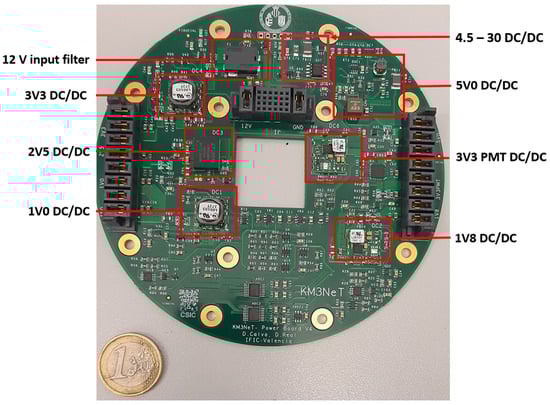
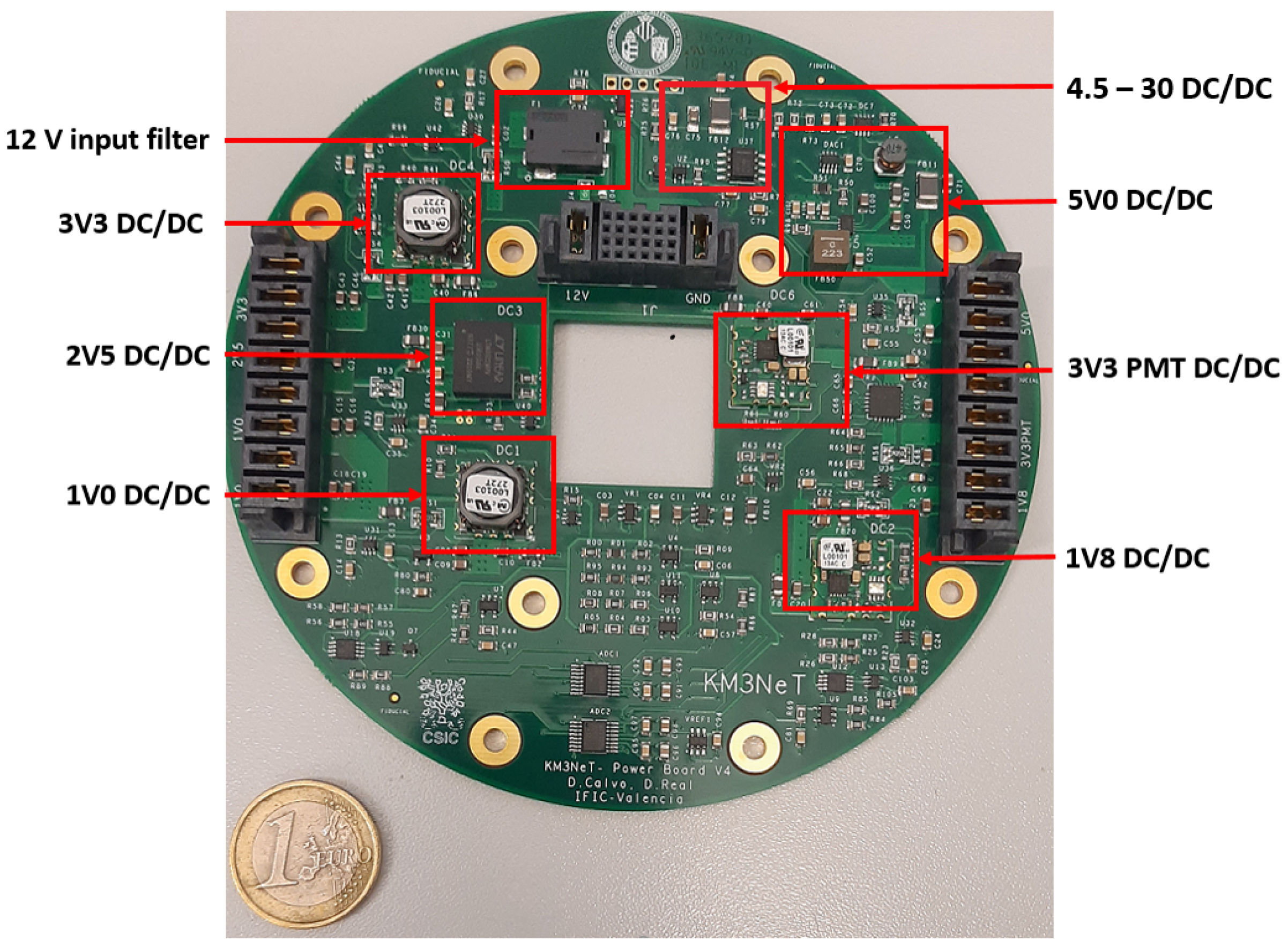
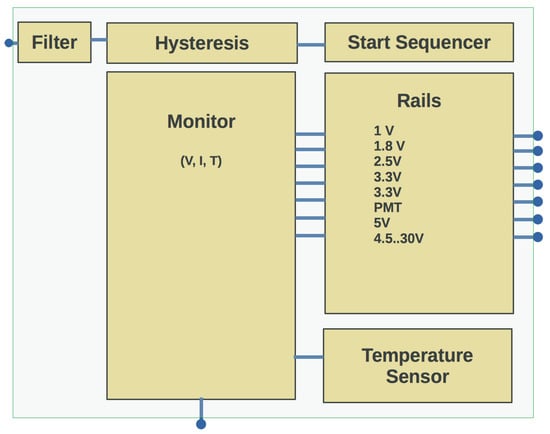
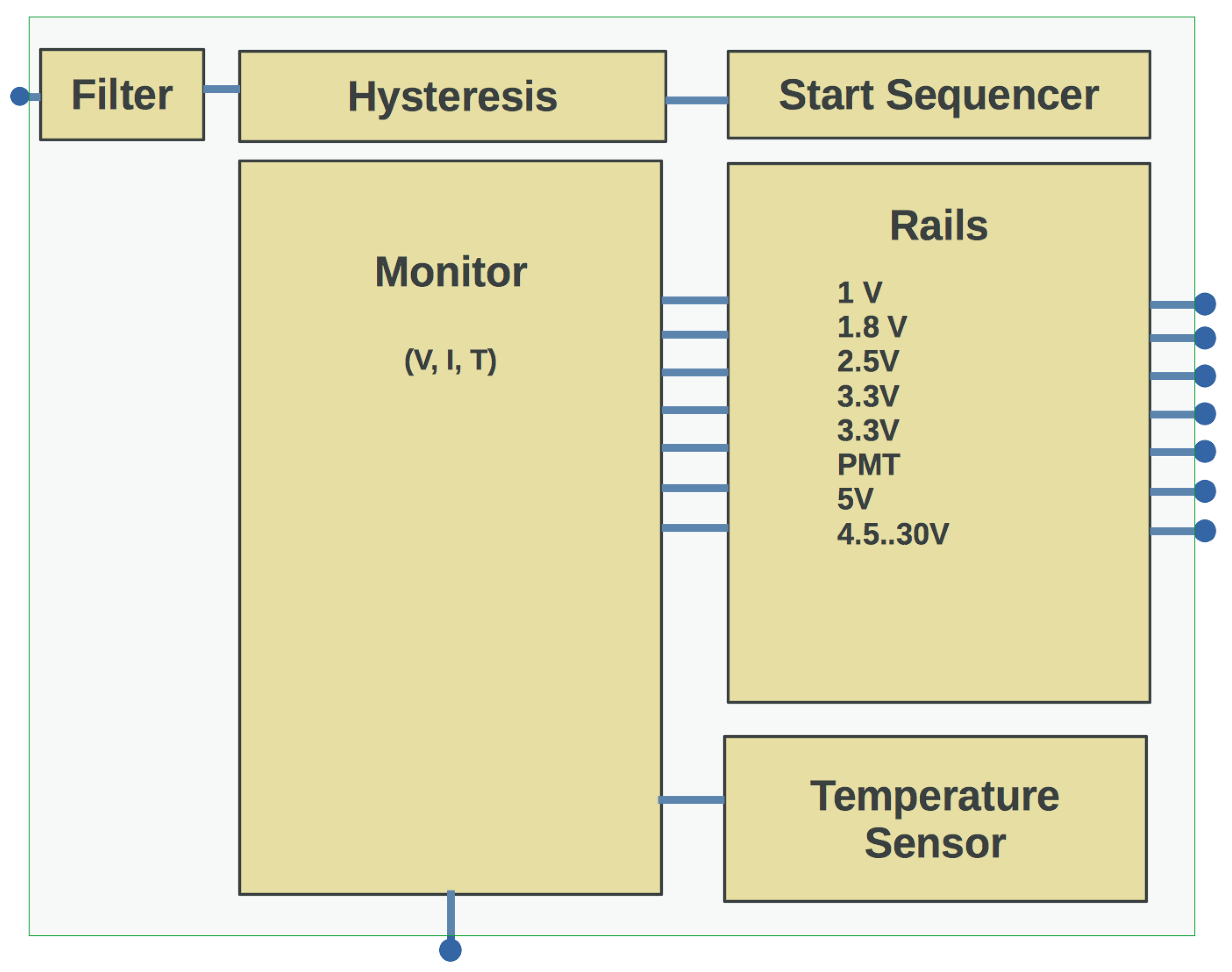
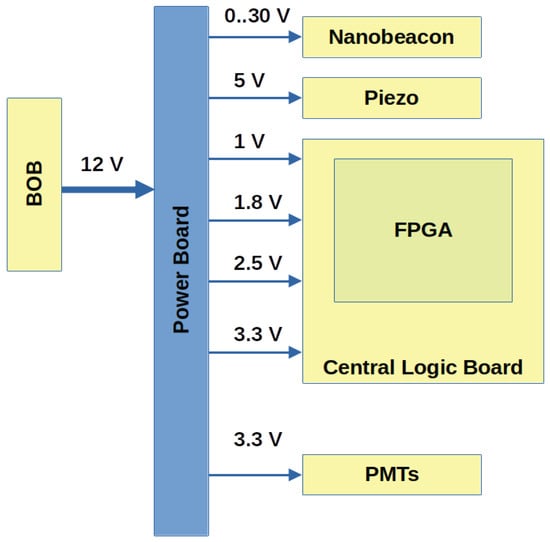
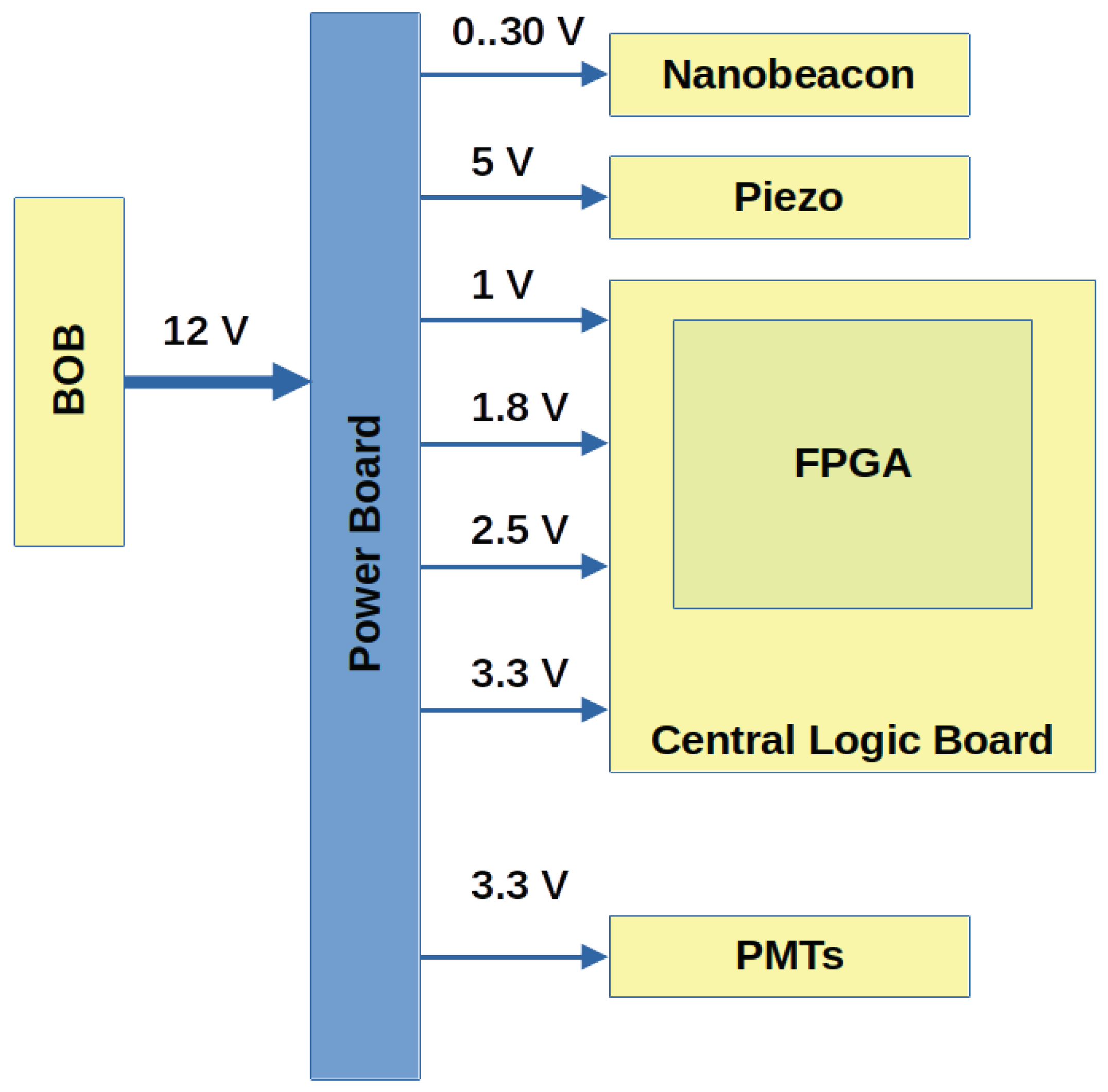
The PB (Figure 3) is a crucial component of the KM3NeT detector, as it provides power to the CLB and to the rest of the DOM elements. Because of the remote location of KM3NeT in the deep sea, the PB design goals for the power board were low power consumption and high reliability. This is crucial because the maintenance of the deployed structures involves complex and costly operations. The architecture of the PB, including its various functionalities, is shown in Figure 4. The PB is supplied with 12 V, which is generated with a DC/DC converter from 400 V at the BreakOut Box (BOB), a waterproof enclosure at the input of the DOM that can withstand the harsh conditions of the deep sea. The breakout box is connected, via the DU backbone, to the DU base to receive the high voltage. The PB provides power supply (See Figure 5) to the piezo (5 V), to the Nanobeacon (the 0 to 30 V variable power rail), to the PMTs (3.3 V), and to the CLB (1 V, 1.8 V, 2.5 V, and 3.3 V).
Figure 3.
View of the PB of the DOM (upgraded version). The different DC/DC converters to generate the voltages needed by the FPGA and the remaining components of the CLB are marked.
Figure 4.
Architecture of the PB. The rails, which provide the different power supplies needed by the DOM, are managed by the start sequencer, which generates at startup the monotonic power sequence requested by the CLB FPGA. The monitor subsystem surveys the voltages and currents of the different rails, as well as the temperature sensor installed on the board. The 12 V is filtered at the input and the hysteresis system prevents instabilities while powering up and down the PB.
Figure 5.
Diagram of the power supply distribution at the DOM. The BOB of the DOM provides 12 volts to the power board, where the power rails for the Nanobeacon, Piezo, CLB and PMTs are generated. Note that two 3.3 V rails are available, one for the CLB and another for the PMTs.
The main blocks of the PB are as follows:
- The filter block at the input voltage of the PB, which removes the high-frequency noise generated by the power converters at the DU base and breakout board;
- The hysteresis block, which prevents the PB from entering into an unstable state during startup and shutdown;
- The startup block, which allows the different voltages to start up monotonically as needed by the FPGA of the CLB;
- The Nanobeacon power supply controller, which controls the power supply of the Nanobeacon and can be configured through I2C;
- The monitoring system, which reads out the voltages and currents of every power rail, in addition to the temperature sensor.
The main characteristics and functionalities of the PB blocks are detailed in the following subsections.
2.1. Input High-Frequency Filter
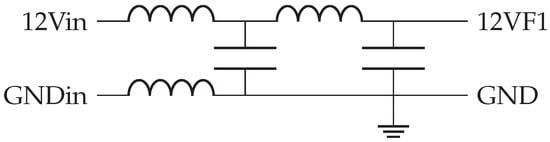
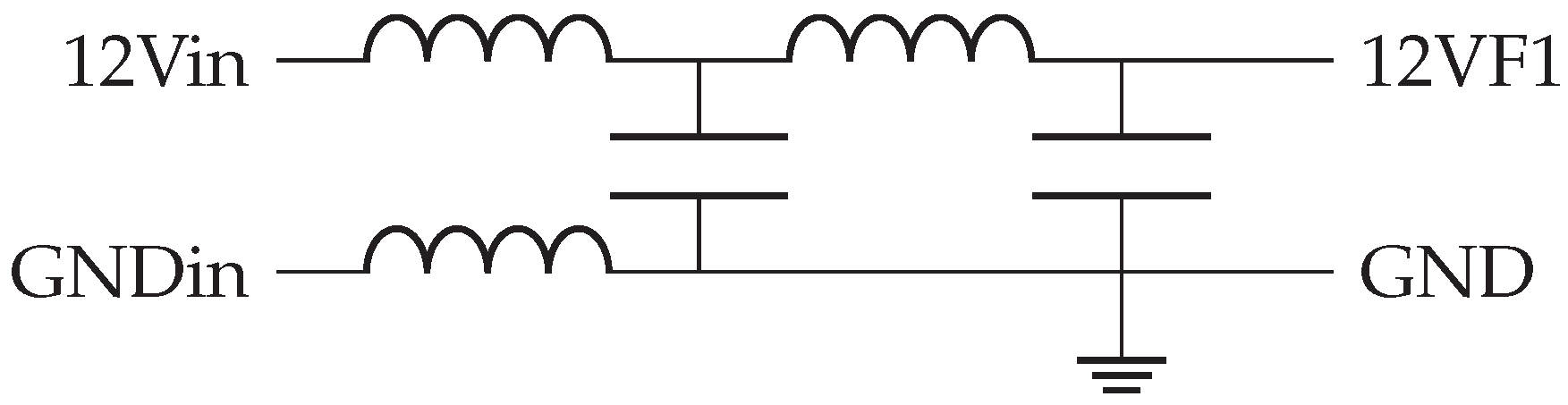
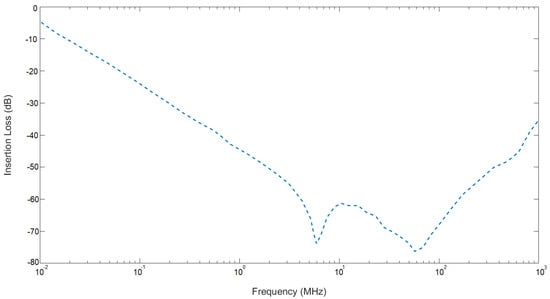
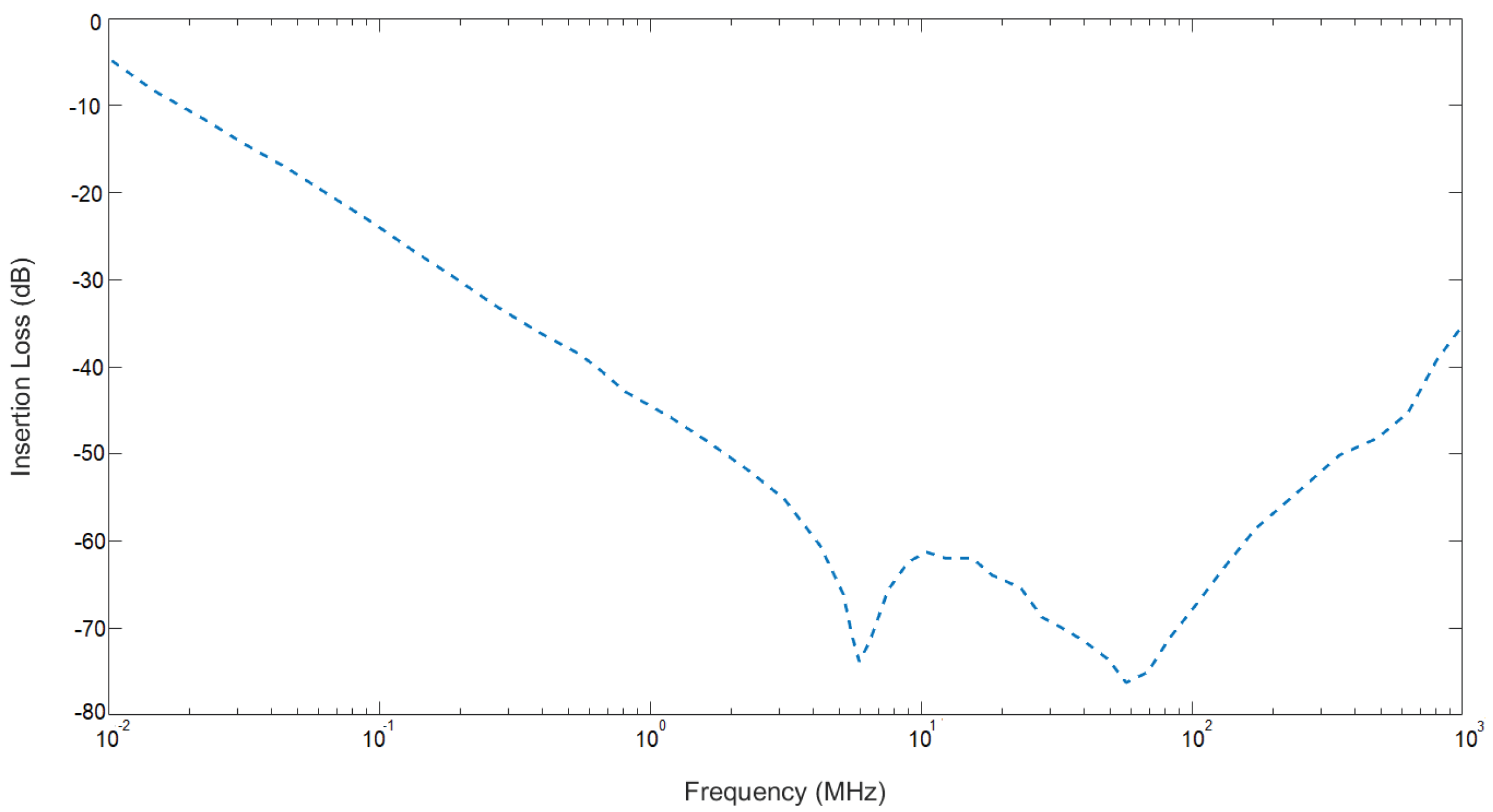
The PB incorporates an Electro-Magnetic Interference (EMI) filter to remove high-frequency noise from the 12 V DC input signal, providing a low-impedance path for the noise and allowing the desired signal to pass through with minimal attenuation. The filter consists of a Pi filter (see Figure 6) with two capacitors connected to the ground and an inductor connected between the two capacitors [10]. Two inductors connected between the power terminals and the inputs of the Pi filter are also included. The insertion losses of the filter have a minimum of 35 dB from 1 MHz to 1 GHz with a maximum drop of 30 mV. The filter can withstand a maximum voltage of 125 V (DC) and has a rated voltage of 50 V (DC) with a nominal operation of 12 V. The bode diagram of the filter is shown in Figure 7. Overall, the use of the filter improves the performance and reliability of the PB by reducing the impact of EMI noise on its operation.
Figure 6.
Scheme of the Pi filter functioning as input high-frequency filter on the PB.
Figure 7.
Bode diagram of the Pi filter at the PB to filter out high-frequency noise. From 1 MHz up to 1 GHz, the insertion losses are below −35 dB.
2.2. Hysteresis
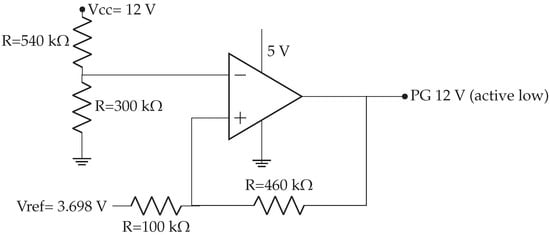
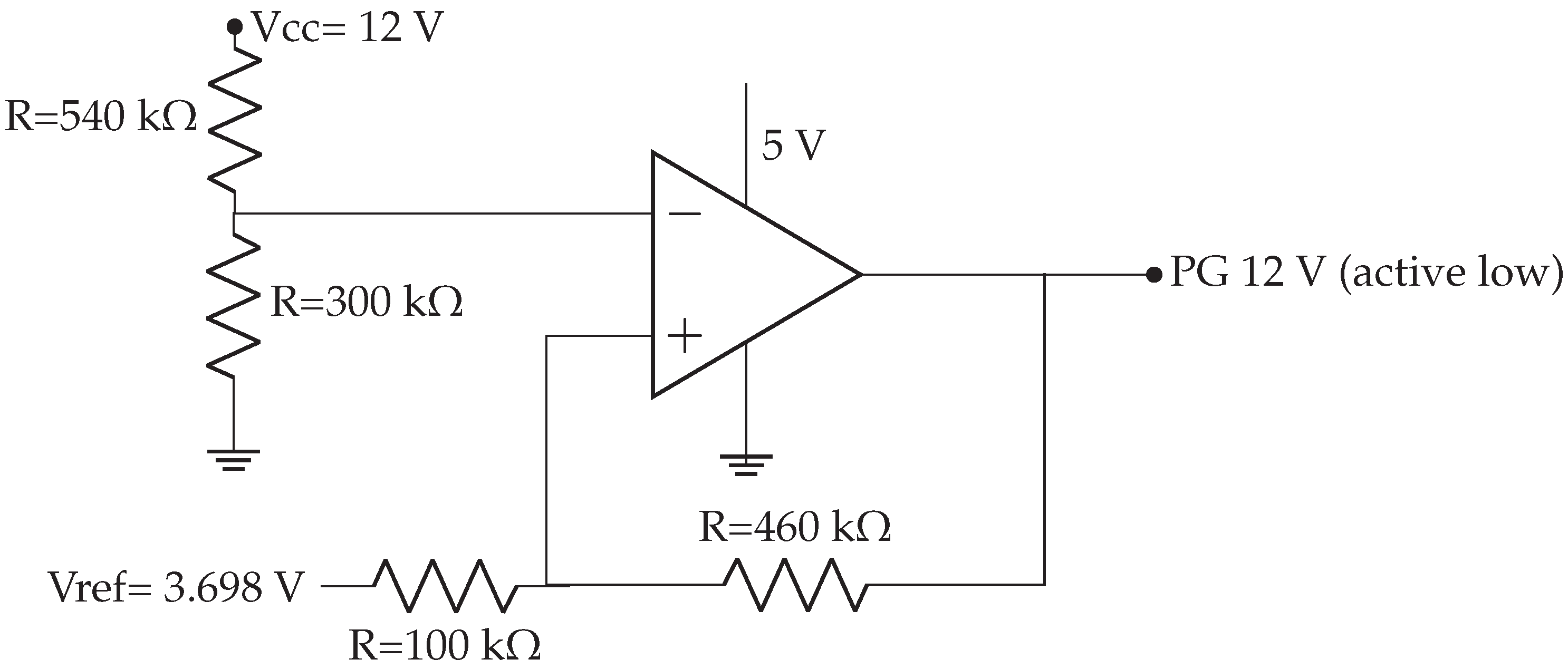
The PB implements a hysteresis loop to avoid instabilities at the startup [11]. The DC/DC converters of the PB are enabled only when the input voltage exceeds 11 V and are disabled when the input value drops below 9.5 V. In this way, the fluctuations in the PB regulators are avoided during power on/off. The scheme of the hysteresis subsystem is presented in Figure 8. To provide hysteresis functionality, an operational amplifier is used in comparator mode with positive feedback. The input voltage is compared to a reference voltage (3.698 V), and the output is either high or low, depending on whether the input is above or below the reference. The input voltage is supplied to the operational amplifier after a voltage divider circuit, enabling a range of operation from 0 to 5 V. The non-inverting input of the operational amplifier is connected to the operational amplifier output through a resistor. The inverting input of the operational amplifier is connected to the input reference voltage. The resistor values in the voltage divider circuit at the input are chosen to set the reference voltage to the desired switching thresholds. When the input voltage is between 9.5 V and 11 V, the output will be either low (active) or high depending on the current state of the system. If the output is low, the reference voltage will be 9.5 V, and the system will switch off when the input voltage drops below 9.5 V. If the output is high (inactive), the reference voltage will be 11 V, and the system will switch on when the input voltage rises above 11 V. This creates the desired hysteresis effect, where the switching threshold depends on the current state of the system, avoiding fluctuations in the switching up and down of the system.
Figure 8.
Scheme of the hysteresis subsystem. The configuration of the operational amplifier allows it to start at 11 V and to disconnect when the input voltage drops below 9.5 V. In this way, instabilities are prevented at power up and power down.
2.3. Power Startup
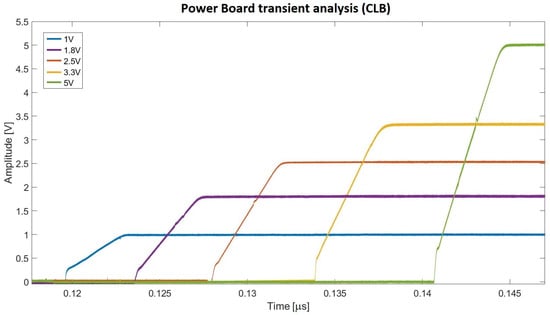
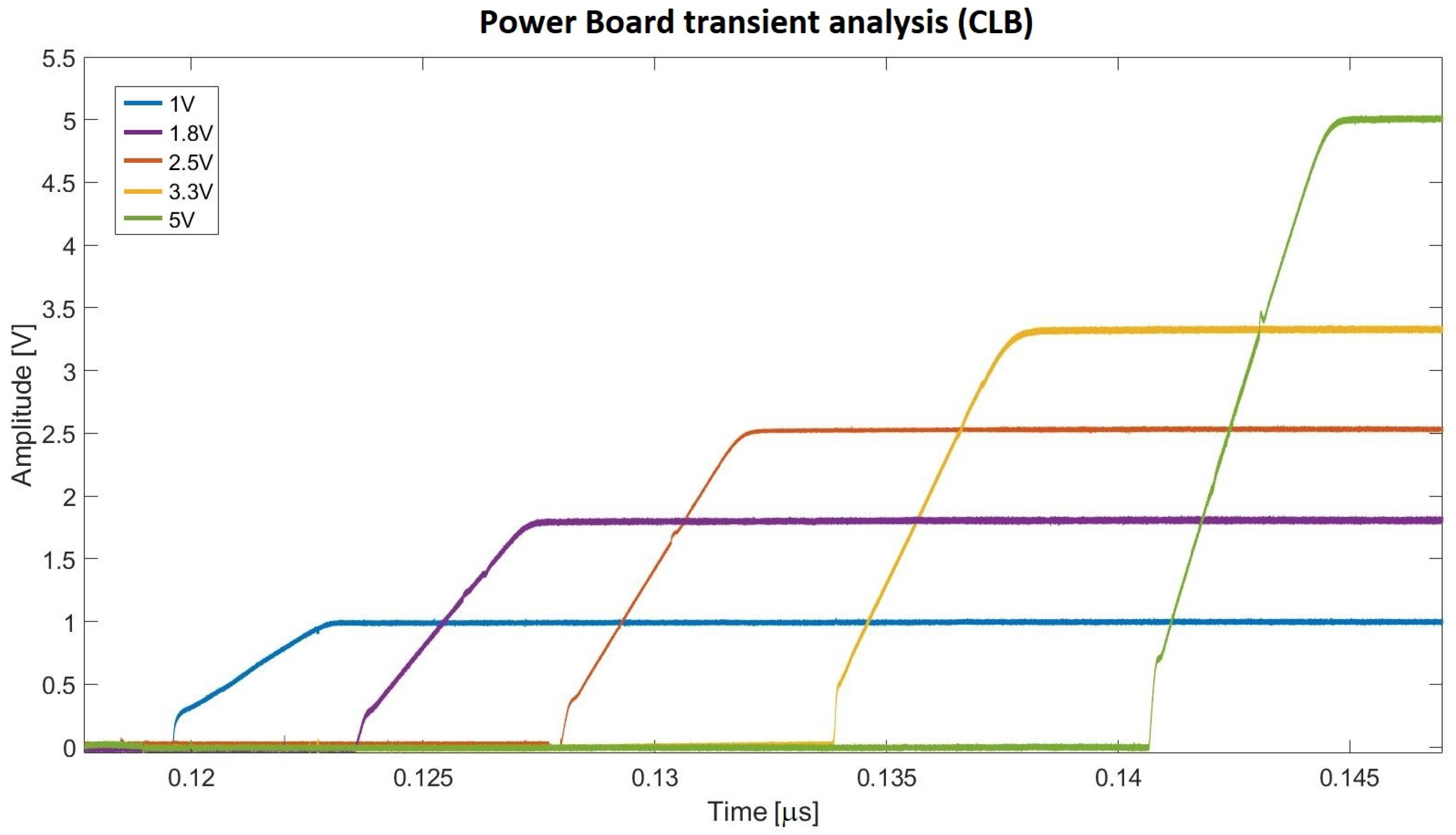
One of the functions of the PB is to provide a proper voltage startup sequence for the FPGA of the CLB (https://docs.xilinx.com/v/u/en-US/ds182_Kintex_7_Data_Sheet (accessed on 15 January 2024)). Providing a power startup sequence for FPGAs is crucial for ensuring reliability, functionality, performance, and seamless integration within other systems [12]. To achieve this, the PB includes a sequencer that generates the required sequence of voltages, which starts monotonically, as shown in Figure 9. The output of the hysteresis block initiates the sequence by starting the lower voltage rail (1 V). Then, the power-good signal of the lower voltage rail is connected in a cascading manner to prevent the higher voltage rails from starting until the previous rail has started successfully. In this way, a monotonically increasing sequence is produced. Two power-good signals are sent outside by the PB for monitoring and control purposes. The first one indicates that the voltage for PMTs has been successfully started (power-good PMT). The second one indicates the completion of the entire power-up sequence when the 5 V starts successfully.
Figure 9.
Startup sequence of the PB. The figure shows that the PB indeed generates the various voltages in the sequence needed by the Xilinx FPGA on the CLB.
2.4. DC/DC Rails
The PB generates six regulated voltages (1 V, 1.8 V, 2.5 V, 3.3 V, 3.3 V PMT, and 5 V) from the 12 V input using five non-isolated point-of-load (POL) DC/DC converters [13] and a linear regulator. The modular POL approach is easy and fast to implement and leads to a compact design with a small footprint and a simple Printed Circuit Board (PCB) layout. These designs are optimized by the manufacturer for size, heat flow, and EMI protection. They are also reliable in terms of initial assembly errors, response to fault conditions, and component lifetime failures. In addition, they include sophisticated protection mechanisms like low-pressure molding or chemical protection to avoid corrosion or moisture. The PB employs high-efficiency DC/DC converters to minimize power consumption in the DOM with the exception of the 3.3 V PMT linear regulator used to reduce noise on the PMT voltage rail. The efficiencies of these DC/DC converters are listed in Table 1 for both the original and upgraded versions.
Table 1.
PB efficiency for each rail output for both the original and upgraded versions.
2.5. Nanobeacon
The PB has a configurable output which is used by the Nanobeacon, a time-calibration device mounted in the DOM. This configurable output consists of a DC/DC converter that operates in a buck–boost configuration and can provide a voltage that is adjustable between 4.5 V and 30 V through an I2C-controlled 10 bit DAC. When the output voltage of the DAC changes, the control voltage of the DC/DC converter is modified, and the voltage of the Nanobeacon power rail is adjusted accordingly. This voltage determines the amount of current supplied to the LED and, therefore, the intensity of the generated optical pulse.
2.6. Monitoring System
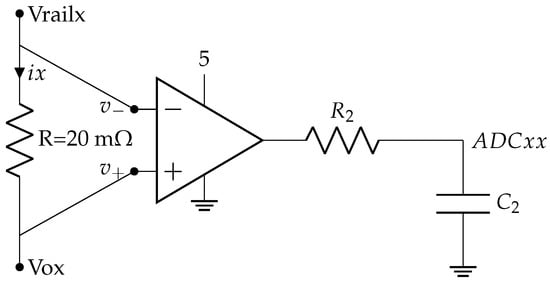
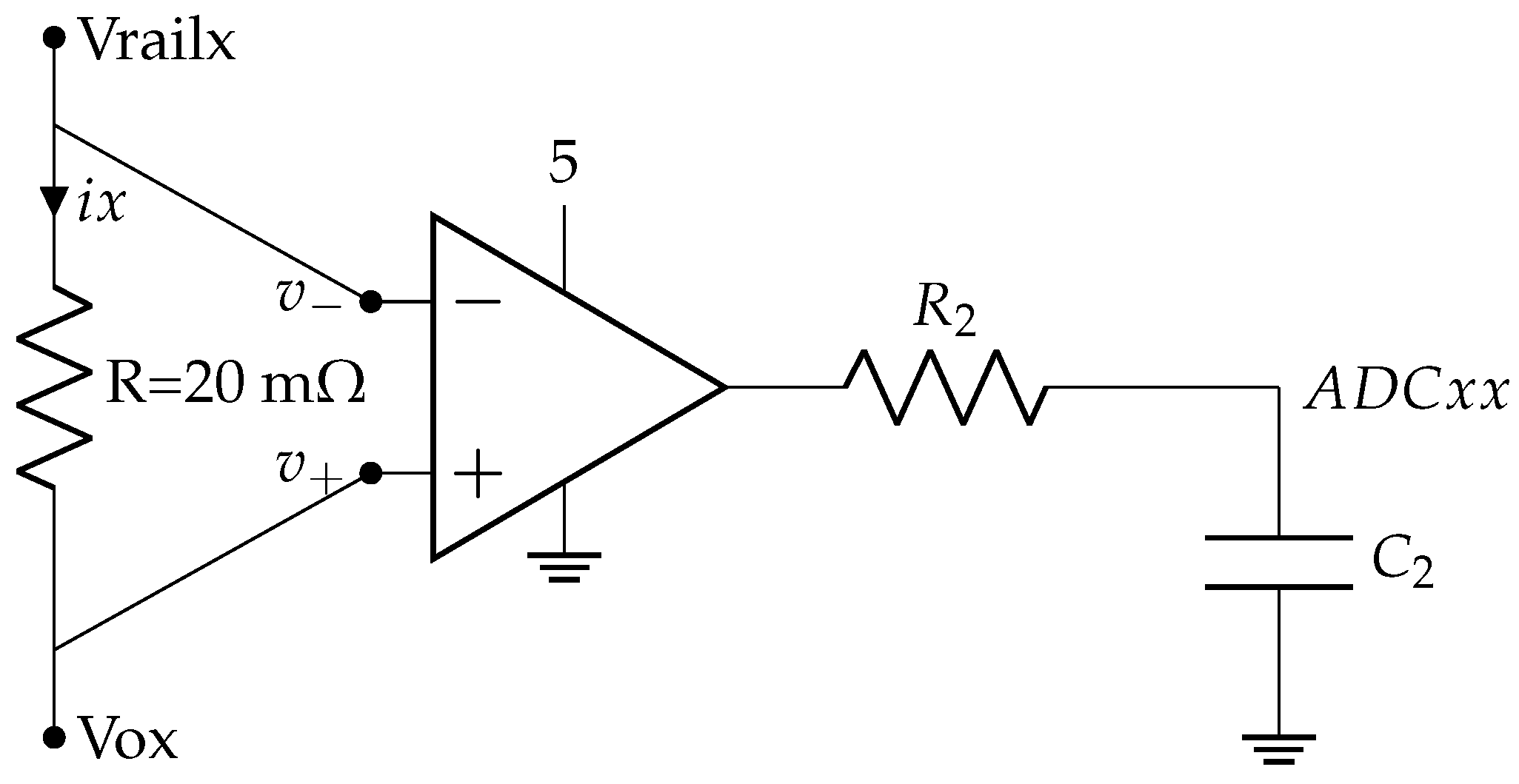
The currents and voltages of the PB are monitored in real time using two 12 bit ADCs of 12 inputs mounted on the board. In order to read out the current, resistance of low value, 20 mΩ, is mounted in series in the rail where the current is measured. The two pads of the resistor are connected to a high-precision current-sense amplifier, also called a current-shunt monitor, with a fixed gain of 50. As an example, a 0.5 A DC current causes a voltage drop of 10 mV at the 20 mΩ shunt resistor, which is amplified to 0.5 V by the operational amplifier. This voltage is digitized by an ADC channel, which is read out via I2C. Figure 10 shows the design of the circuit used to read out the rail intensity. Some rails, such as the 1.8 V, 2.5 V, and the regulated 5 V, use a shunt resistor of 50 mΩ because the current circulating is lower than in the other rails. The conversion ratio (voltage to current) for each rail is taken into account by the monitoring software. The PB also includes a temperature LM45BIM3 sensor (https://www.ti.com/lit/gpn/lm45 (accessed on 15 January 2024)), which is read out by one of the ADC channels. The voltages are adapted to the ADC voltage scale and connected to a voltage follower for readout. Voltages, currents, and temperature are read using two MAX1239 ADCs (https://www.analog.com/media/en/technical-documentation/data-sheets/MAX1236-MAX1239M.pdf (accessed on 15 January 2024)). In Table 2, the different ratios are shown.
Figure 10.
Template of the circuit to read out the current. The output line of a power rail passes through a 20 mΩ resistor, where the drop voltage is amplified in a high-precision amplifier. The output of the amplifier is read out in an ADC channel and sent via I2C outside of the PB to the CLB.
Table 2.
Conversion ratios and associated process variable. The ratios are used to convert the voltage value read by the ADC channel either to volts or amperes. In the case of the current readout, the values of the shunt resistance are provided too.
2.7. Layout
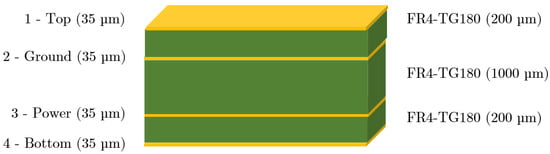
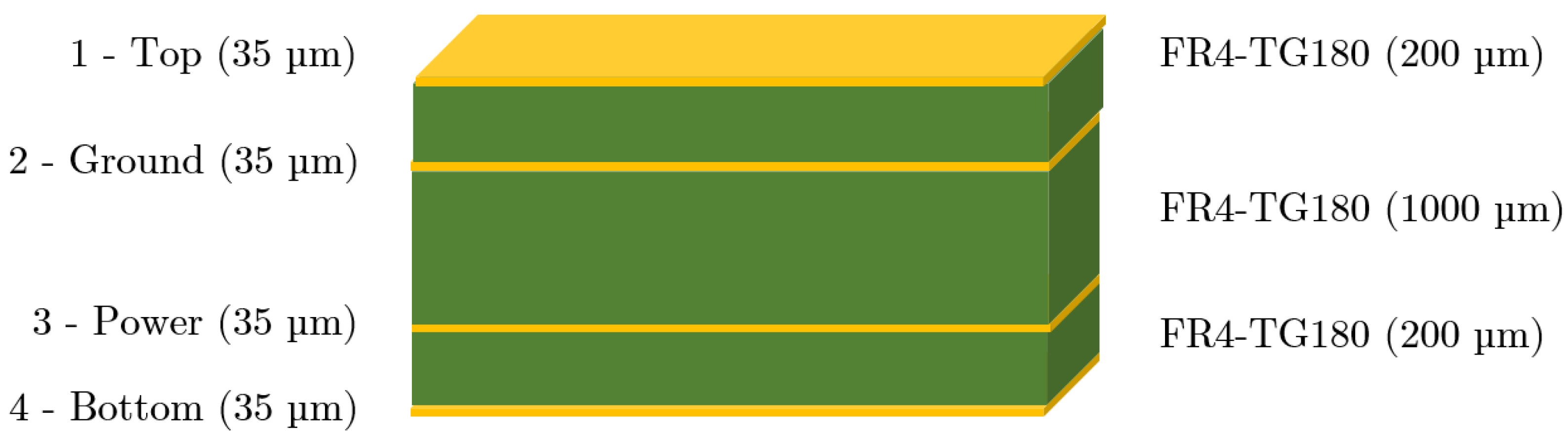
The layout of the PB has four layers: two for signals, placed on the top and bottom layers, one for power planes, and one for ground. The layer distribution and the stackup chosen for the PB are shown in Figure 11. The bottom of the board has no components, so a thermal interface pad can be placed between it and the aluminum frame onto which it is mounted.
Figure 11.
Stackup of the PB PCB. It contains four layers, all of them being copper and with a width of 35 m. The dielectric material is FR4, with a core of 1000 m and two external frames of 200 m. For a better representation, the image is not to scale.
2.8. Firmware
The CLB firmware reads the PB’s voltages, currents, and temperature. The CLB firmware is a combination of gateware and embedded software, with the gateware made up of logic coded in Hardware Description Language (HDL) and the embedded software written in C [14]. The gateware includes two LatticeMico32 (LM32) microprocessors (https://www.latticesemi.com/en/Products/DesignSoftwareAndIP/IntellectualProperty/IPCore/IPCores02/LatticeMico32.aspx (accessed on 15 January 2024)): the White Rabbit processor to manage the optical link traffic and tuneable oscillators, and the other to manage the communication interfaces for the instrumentation devices. The software is organized in three distinct layers—Common, Platform, and Application—where the Application layer holds code for detectors, peripherals, and slow control. This layer manages the ADCs and temperature sensor of the PB.
3. Power Board Upgrade
In 2017, an upgrade of the PB was initiated with the aim of improving its overall efficiency. The PB was modified to operate more efficiently by replacing some of the DC/DC converters. These modifications reduce the power consumption, thermal losses [15], and temperature inside the DOM, thereby increasing the overall reliability of the DOM electronics. A set of new DC/DC converters was chosen, paying particular attention to their efficiency at the PB’s operating point and to their reliability. The original Murata DC/DC converters (https://www.murata.com/products/productdata/8807038189598/okl-t3-w12.pdf?1583754815000 (accessed on 15 January 2024)) of the 2.5 V, 3.3 V, and 5 V rails were changed. For 3.3 V, a similar DC/DC model from Murata with the proper current output was selected. For 2.5 V and 5 V, new models from Analog Devices were chosen. After implementing these modifications, a decrease of more than one Watt in the power consumption of the DOM acquisition electronics was achieved (see Table 1).
4. Reliability: FIDES and HALT
The reliability of both versions of the PB has been evaluated using a FIDES analysis [16], and in the case of the upgraded version also by using a Highly Accelerated Life Test (HALT) procedure. These methods are used by KM3NeT to increase the reliability of the boards in the early stages of the development process. An investigation approach into the reliability of the power system is proposed as the most cost-effective option for enhancing system integrity against failures [17].
4.1. FIDES
FIDES is the method selected by KM3NeT Collaboration to assess the reliability of electronic boards [18]. It provides a handbook for predicting the reliability of components and a guide for auditing the manufacturing process. Using this method, it is possible to compute an estimate of the Failure In Time (FIT, given in failures per 109 h) or the Mean Time Between Failure (MTBF) of the analyzed board. The FIDES method takes into account the expected operational conditions or stress, the life profile, and the technological factors that affect the reliability of the board. In addition to the estimated FIT, the method can identify weak points in the design of the board at a very early stage, saving time and costs in the development process for electronic boards. The reliability of the PB has been evaluated, providing a FIT value of 947, while the upgraded version has increased its reliability up to a FIT value of 783. This FIT number means that around 90% of the PB will not have any issues during the total KM3NeT operation time. The value calculated refers to the complete board, but there are subsystems that are not critical, such as the piezo sensor or the Nanobeacon power subsystem, the loss of which would not harm the operation of the DOM, so the expected failure rate of boards after the total KM3NeT operation time will be lower than 10%.
4.2. HALT
The HALT method [19] is used to assess the reliability of electronic boards by applying various forms of stress to a small number of boards, usually four to six, at an early design stage. HALT tests are implemented by putting the PBs under extreme temperatures and under extreme rates of temperature change (1 °C/min). The goal of these tests is to ensure the functionality of the product and to optimize the test setup for maximum functional test coverage. The test setup should also allow for remote operation outside the environmental chamber. In KM3NeT, this approach has been introduced and has been used on the upgraded version of the PB. The temperature step stress tests involve decreasing and increasing the temperature of the boards in steps, while the extreme temperature stress tests involve rapid changes in the temperature to the minimum and to the maximum. A total of six PBs have undergone HALT tests in combination with six CLBs. The minimum temperature reached by the PBs was −40 °C, the limit of the climatic chamber used. The maximum temperature was 95 °C, the temperature at which the PB still worked. The tests were stopped when the FPGA had to be switched off as a precaution because the internal temperature was over its operational limit. The results of the HALT tests allow us to set the limits for the Highly Accelerated Stress Screening (HASS) tests, which are used during mass production to filter infant mortality.
5. Production Control
More than six thousand PBs have to be produced for the construction of the DOMs and DUs to be deployed at the bottom of the Mediterranean Sea. To ensure their reliability, a series of production requirements have been established as follows:
- The PCB production and assembly process must comply with standard IPC 6011 Class 3 [20].
- Solder paste masks should be generated using the given gerber files, choosing the pad-shrinking factor based on the solder paste and the mask thickness.
- Solder paste must be deposited on the PCB using automatic machines and the aforementioned masks for good uniformity.
- Solder paste deposition must be inspected before the PCB is populated.
- All surface-mounted device components must be placed using automatic pick and place machines.
- A reflow oven must be used for soldering the components.
- The boards must be identifiable. If the PCBs also have an individual identifying code from the producing company, an electronic file with the correspondence between the board label and the PCB label must be provided.
- The production must provide traceability of all procured components in accordance with IPC1782 [21] level 2 (M2), with level 3 (M3) traceability as a second option.
After production, a series of tests are required as part of the procurement process. The data from these tests are stored in electronic format. Finally, appropriate packaging for shipment to the integration sites should be implemented.
5.1. PCB Test Control
Before the PBs are assembled, the following tests are carried out on the PCBs:
- 100% electrical continuity tests;
- Control of correspondence to IPC Class 3 on a sample of boards performing metallographic micro sections.
5.2. Component Assembly Test Control
The following activities are carried out during the assembly of components on the PCB:
- Identification of the board with an appropriate label;
- Automatic optical inspection on the positioning and soldering of components on all boards;
- X-ray inspection and verification of very thin quad flat non-leaded package components.
6. Functional Tests
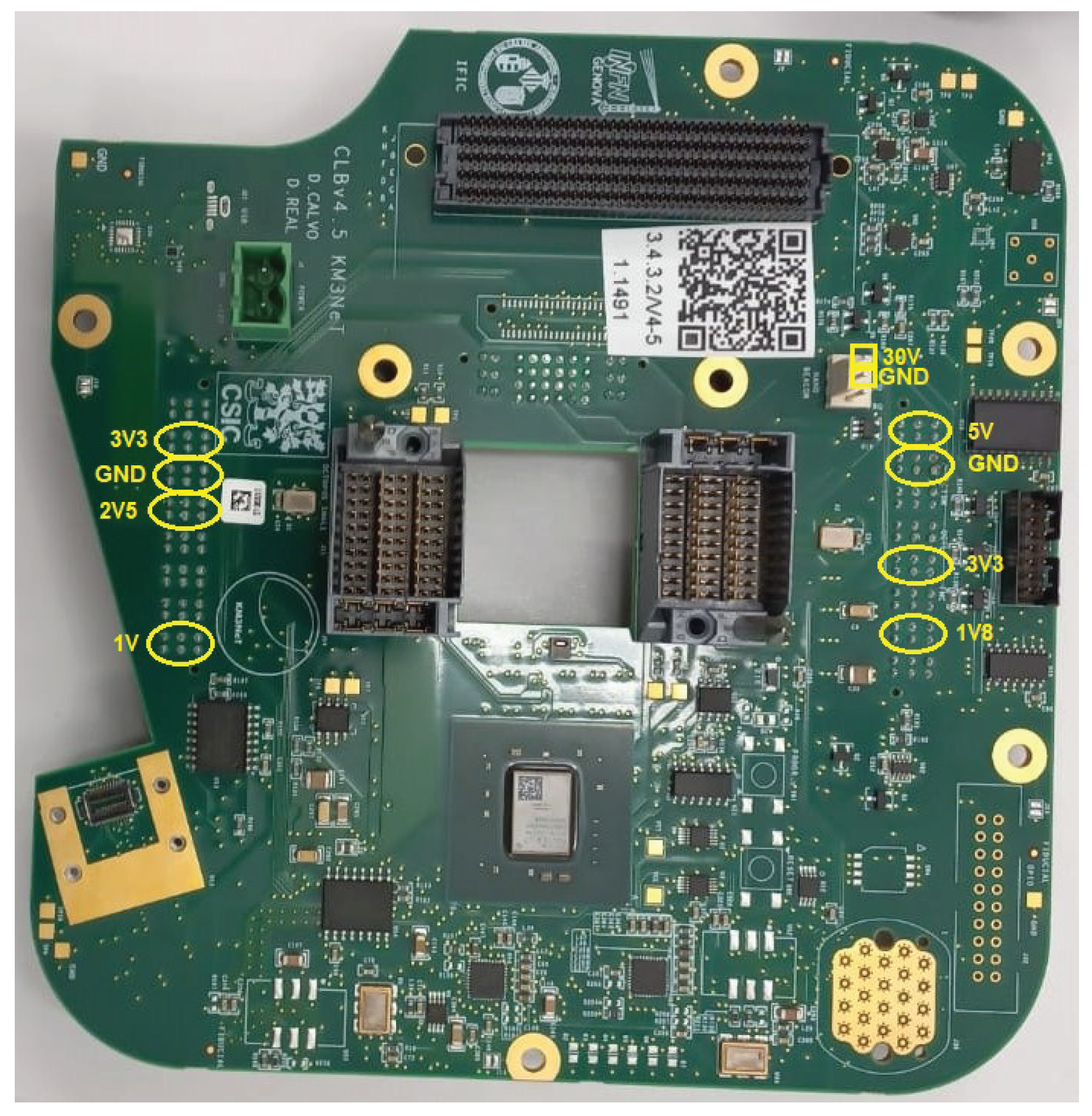
Functional tests are performed immediately after the production of the boards to check their correct behavior and identify faulty boards. During these tests, the PB is connected to a CLB. The CLB is programmed to provide a maximum voltage of 30 V on the Nanobeacon device.
The following actions are required for the tests:
- Set the input voltage to 12 V and power-on the system;
- Write down the measurements after 1 min and 5 min from power-on, and finally, once the test are finished and the boards are powered off, the results of the tests are stored in an electronic file.
Table 3.
Nominal values of voltage for each rail and the percentage of variation allowed in the functional test.
Figure 12.
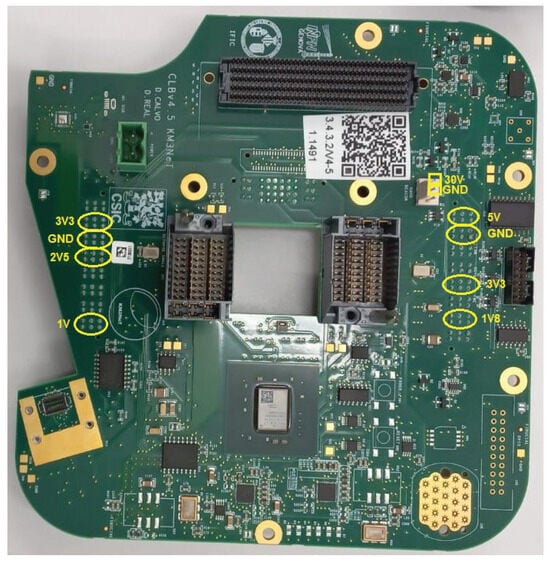
Picture of a CLB with the test points for production functional tests. The different power rail test points are marked on the picture. A CLB running operational firmware is used as load and for measuring the voltages.
7. Production and Reliability Results
According to the production control process outlined in the previous sections, a total of 2100 PBs have been produced in nine different batches. The production yield has been very high (>99%), with only a few malfunctioning PBs detected during the production tests.
Eight hundred of the produced PBs have been mounted and tested in their corresponding DOMs. During this process, only a few minor issues related to the component assembly process on the PCB were found, and this experience was used to improve the packaging and handling instructions.
8. Conclusions
The architecture of the KM3NeT power board, together with the different functional blocks, has been presented. The power boards will be used for more than a decade in conditions where access and maintenance are very difficult, making their efficiency and reliability crucial. To ensure the quality and reliability of these boards, specific requirements have been established. The present work outlines the measures taken by KM3NeT Collaboration to enhance the reliability of the power boards during production. Additionally, a test bench has been implemented to filter any non-functional boards after production. A total of 6000 of these boards will be produced for the completion of the KM3NeT infrastructure. As of April 2024, 2100 power boards were successfully produced with a high yield. A total of 828 power boards are already working in the 46 detection units deployed at this time. The research to improve reliability and power consumption as well as to address the obsolescence of components continues.
Author Contributions
Conceptualization, D.R. and D.C.; methodology, D.R., D.C., S.C. (Stephane Colonges), P.M. (Paolo Musico) and P.J.; software, D.C., D.R., C.B., V.v.B., O.G. and T.C. (Tommaso Chiarusi); validation, D.R., D.C., P.M. (Paolo Musico), G.P. (Giuliano Pellegrini), P.J. and S.C. (Stephane Colonges); formal analysis, S.C. (Stephane Colonges), D.C., G.P. (Giuliano Pellegrini) and P.J.; investigation, D.C. and D.R.; resources, D.R. and D.C.; data curation, D.R. and D.C.; writing—original draft preparation, D.R. and D.C.; writing—review and editing, all the authors; visualization, D.C., D.R., C.B., V.v.B. and O.G.; supervision, D.R. and D.C.; project administration, D.R.; funding acquisition, J.d.D.Z., J.Z. and D.R. All authors have read and agreed to the published version of the manuscript.
Funding
The authors acknowledge the financial support of the funding agencies: Agence Nationale de la Recherche (contract ANR-15-CE31-0020), Centre National de la Recherche Scientifique (CNRS), Commission Européenne (FEDER fund and Marie Curie Program), LabEx UnivEarthS (ANR-10-LABX-0023 and ANR-18-IDEX-0001), Paris Île-de-France Region, France; Shota Rustaveli National Science Foundation of Georgia (SRNSFG, FR-22-13708), Georgia; The General Secretariat of Research and Innovation (GSRI), Greece; Istituto Nazionale di Fisica Nucleare (INFN), Ministero dell’Università e della Ricerca (MIUR), PRIN 2022 program (Grant PANTHEON 2022E2J4RK); Ministry of Higher Education, Scientific Research and Innovation, Morocco, and the Arab Fund for Economic and Social Development, Kuwait; Nederlandse organisatie voor Wetenschappelijk Onderzoek (NWO), the Netherlands; The National Science Centre, Poland (2021/41/N/ST2/01177); The grant “AstroCeNT: Particle Astrophysics Science and Technology Centre”, carried out within the International Research Agendas programme of the Foundation for Polish Science financed by the European Union under the European Regional Development Fund; National Authority for Scientific Research (ANCS), Romania; Grants PID2021-124591NB-C41, -C42, -C43 funded by MCIN/AEI/ 10.13039/501100011033 and, as appropriate, by “ERDF A way of making Europe”, by the “European Union” or by the “European Union NextGenerationEU/PRTR”, Programa de Planes Complementarios I+D+I (refs. ASFAE/2022/023, ASFAE/2022/014), Programa Prometeo (PROMETEO/2020/019) and GenT (refs. CIDEGENT/2018/034, /2019/043, /2020/049. /2021/23) of the Generalitat Valenciana, Junta de Andalucía (ref. SOMM17/6104/UGR, P18-FR-5057), EU: MSC program (ref. 101025085), Programa María Zambrano (Spanish Ministry of Universities, funded by the European Union, NextGenerationEU), Spain; The European Union’s Horizon 2020 Research and Innovation Programme (ChETEC-INFRA - Project no. 101008324).
Data Availability Statement
The data presented in this study are available in this article.
Conflicts of Interest
The authors declare no conflicts of interest.
References
- Adrián-Martínez1, S.; Ageron, M.; Aharonian, F.; Aiello, S.; Albert, A.; Ameli, F.; Anassontzis, E.; Andre, M.; Androulakis, G.; Anghinolfi, M.; et al. Letter of Intent for KM3NeT 2.0. J. Phys. G 2016, 43, 084001. [Google Scholar] [CrossRef] [Scilit]
- Aiello1, S.; Albert, A.; Alshamsi, M.; Garre, S.A.; Aly, Z.; Ambrosone, A.; Ameli, F.; Andre, M.; Androulakis, G.; Anghinolfi, M.; et al. The KM3NeT multi-PMT optical module. J. Instrum. 2022, 17, P07038. [Google Scholar] [CrossRef] [Scilit]
- Aiello1, S.; Akrame, S.E.; Ameli, F.; Anassontzis, E.G.; Andre, M.; Androulakis, G.; Anghinolfi, M.; Anton6, G.; Ardid, M.; Aublin, J.; et al. Characterisation of the Hamamatsu photomultipliers for the KM3NeT Neutrino Telescope. JINST 2018, 13, P05035. [Google Scholar] [CrossRef] [Scilit]
- Aiello, S.; Ameli, F.; Margiotta, A.; Andre, M.; Androulakis, G.; Anghinolfi, M.; Marinelli, A.; Anton, G.; Ardid, M.; Markou, C.; et al. KM3NeT front-end and readout electronics system: Hardware, firmware, and software. J. Astron. Telesc. Instrum. Syst. 2019, 5, 046001. [Google Scholar] [CrossRef] [Scilit]
- Aiello, S.; Albert, A.; Alshamsi, M.; Garre, S.A.; Aly, Z.; Ambrosone, A.; Ameli, F.; Andre, M.; Androulakis, G.; Anghinolfi, M.; et al. Nanobeacon: A time calibration device for the KM3NeT neutrino telescope. Nucl. Instrum. Methods Phys. Res. Sect. A 2022, 1040, 167132. [Google Scholar] [CrossRef] [Scilit]
- Saini, J.; Singaraju, R.N.; Santra, G.C.; Bhaskar, P. Low Voltage Distribution Board (LVDB) for ALICE Photon Multiplicity Detector. DAE Symp. Nucl. Phys. 2010, 55, 762–763. [Google Scholar]
- Hibbard, M.; Moayedi, S.; Hadavand, H.; Davoudi, A.; on behalf of the ATLAS Tile Calorimeter System. ATLAS TileCal low voltage power supply upgrade hardware and testing. Nucl. Instrum. Methods A 2019, 936, 112–114. [Google Scholar] [CrossRef] [Scilit]
- Aartsen, M.G.; Ackermann, M.; Adams, J.; Aguilar, J.A.; Ahlers, M.; Ahrens, M.; Altmann, D.; Andeen, K.; Anderson, T.; Ansseau, I.; et al. The IceCube Neutrino Observatory: Instrumentation and Online Systems. JINST 2017, 12, P03012. [Google Scholar] [CrossRef] [Scilit]
- Doertenbach, N. Highly Accelerated Life Testing—Testing with a Different Purpose. S.V. Sound Vib. 2001, 35, 18–23. [Google Scholar]
- Tanaka, M.; Shimura, K.; Sato, M.; Mizuno, T.; Matsuoka, T. Hybrid inductor for improving gain attenuation characteristics of a Pi filter circuit. Energy Rep. 2020, 6 (Suppl. S9), 446–451. [Google Scholar] [CrossRef] [Scilit]
- Schild, A.; Lunze, J.; Krupar, J.; Schwarz, W. Design of Generalized Hysteresis Controllers for DC–DC Switching Power Converters. IEEE Trans. Power Electron. 2009, 24, 138–146. [Google Scholar] [CrossRef] [Scilit]
- Shi, Y.; Li, Y.; Zhou, Y.; Xu, R.; Feng, D.; Yan, Z.; Fang, C. Optimal scheduling for power system peak load regulation considering short-time startup and shutdown operations of thermal power unit. Int. J. Electr. Power Energy Syst. 2021, 31, 107012. [Google Scholar] [CrossRef] [Scilit]
- Yin, J.; Beville, E. Chapter 183: Simple and compact 4-output point-of-load DC/DC μModule system. In Analog Circuit Design; Elsevier: Amsterdam, The Netherlands, 2015; pp. 385–386. [Google Scholar] [CrossRef] [Scilit]
- Aiello, S.; Albert, A.; Garre, S.A.; Aly, Z.; Ambrosone, A.; Ameli, F.; Andre, M.; Androutsou, E.; Anghinolfi, M.; Anguita, M.; et al. Embedded Software of the KM3NeT Central Logic Board. arXiv 2023, arXiv:2308.01032v2. [Google Scholar] [CrossRef] [Scilit]
- Texas Instruments. Application Report SNVA848A–October 2018–Revised November 2019; Texas Instruments: Dallas, TX, USA, 2019. [Google Scholar]
- Eurocopter, AIRBUS, Nexter, MBDA, and Thales. Reliability Methodology for Electronic Systems. Edition A. 2010. Available online: http://www.embedded.agh.edu.pl/www/fpga/dydaktyka/MPiMS/Data/UTE_FIDES_Guide_2009_-_Edition_A%20-%20September%202010_english_version.pdf (accessed on 15 January 2024).
- Martino, E.; Fairbrother, A.; Ghosh, R.; Schuderer, J. Data-driven and physics-based reliability tests to failure of a power electronics converter. Microelectron. Reliab. 2023, 150, 115063. [Google Scholar] [CrossRef] [Scilit]
- Real, D.; Calvo, D.; Musico, P.; Jansweijer, P.; van Beveren, V.; Colonges, S.; Pellegrini, G.; Díaz, A.F. KM3NeT Acquisition Electronics: New Developments and Advances in Reliability. In Proceedings of the 37th International Cosmic Ray Conference (ICRC2021), Berlin, Germany, 12–23 July 2021; p. 1108. [Google Scholar] [CrossRef] [Scilit]
- Porter, A. Chapter 9—Highly Accelerated Life Testing (HALT). In Accelerated Testing and Validation; Newnes: Oxford, UK, 2004; pp. 123–138. [Google Scholar]
- IPC-6011 Generic Performance Specification for Printed Boards. 1996. Available online: https://www.ipc.org/TOC/IPC-6011.pdf (accessed on 15 January 2024).
- IPC-1782 Standard for Manufacturing and Supply Chain Traceability of Electronic Products. 2019. Available online: https://www.ipc.org/TOC/IPC-1782.pdf (accessed on 15 January 2024).

Disclaimer/Publisher’s Note: The statements, opinions and data contained in all publications are solely those of the individual author(s) and contributor(s) and not of MDPI and/or the editor(s). MDPI and/or the editor(s) disclaim responsibility for any injury to people or property resulting from any ideas, methods, instructions or products referred to in the content. |
© 2024 by the authors. Licensee MDPI, Basel, Switzerland. This article is an open access article distributed under the terms and conditions of the Creative Commons Attribution (CC BY) license (https://creativecommons.org/licenses/by/4.0/).