Article

Intelligent Cognitive Radio Ad-Hoc Network: Planning, Learning and Dynamic Configuration

1
Agency for Defense Development, Daejeon 34060, Korea
2
School of Electronics Engineering, Kyungpook National University, Daegu 41566, Korea
3
Department of Information and Communication Engineering, Inha University, Incheon 22212, Korea
*
Author to whom correspondence should be addressed.
Electronics 2021, 10(3), 254; https://doi.org/10.3390/electronics10030254

Submission received: 3 December 2020 / Revised: 7 January 2021 / Accepted: 20 January 2021 / Published: 22 January 2021
(This article belongs to the Special Issue Mobile Ad Hoc Networks: Recent Advances and Future Trends)

Abstract

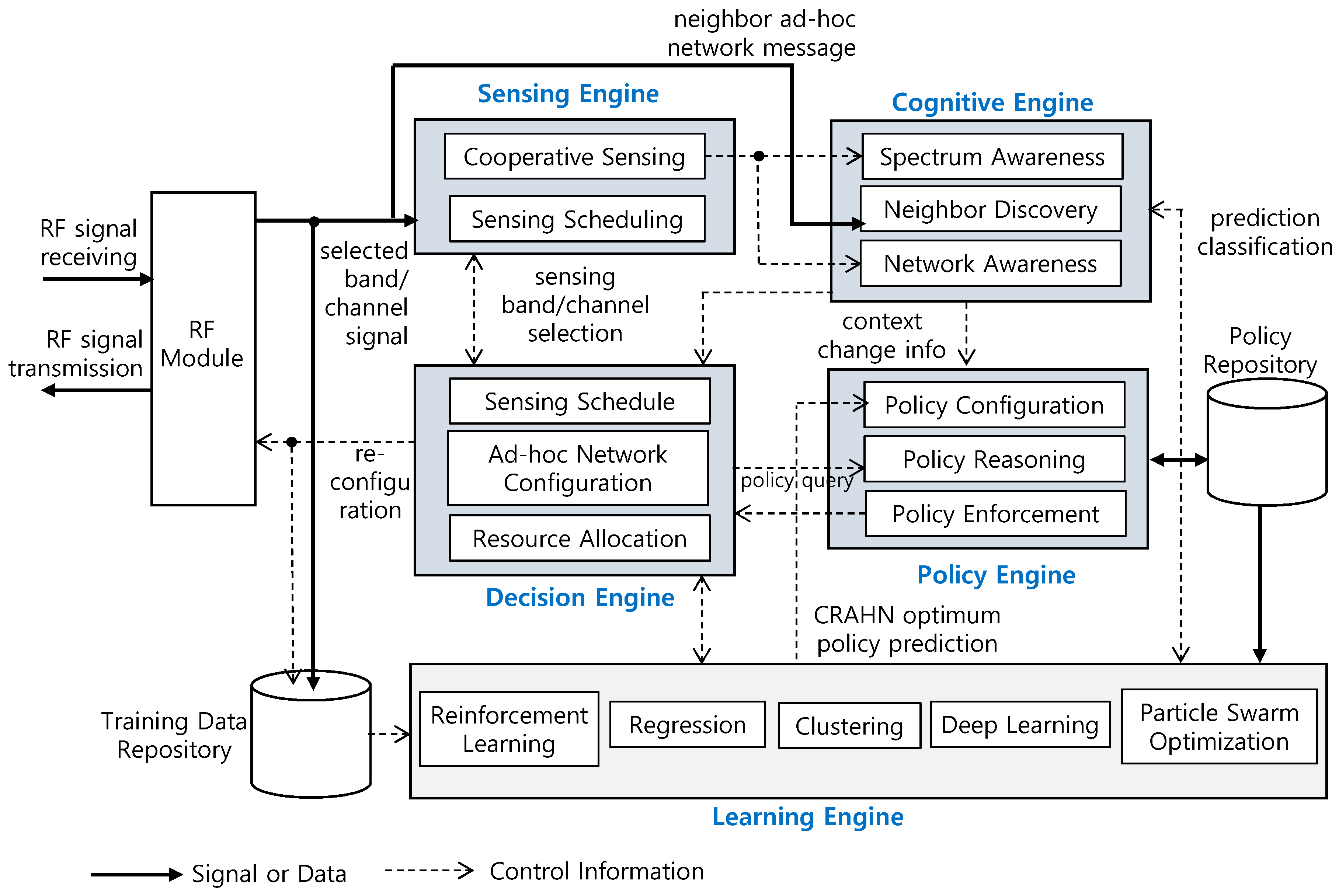
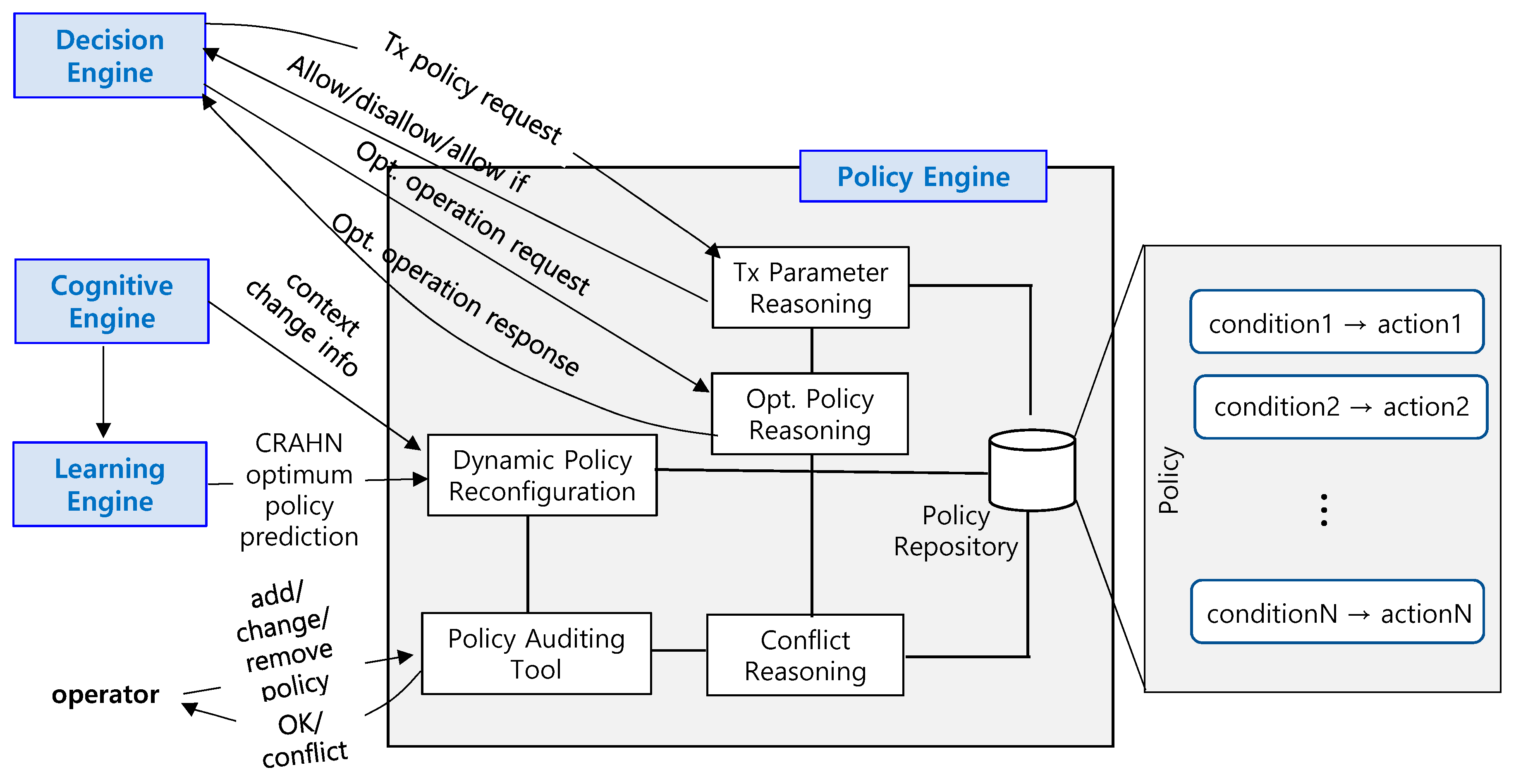
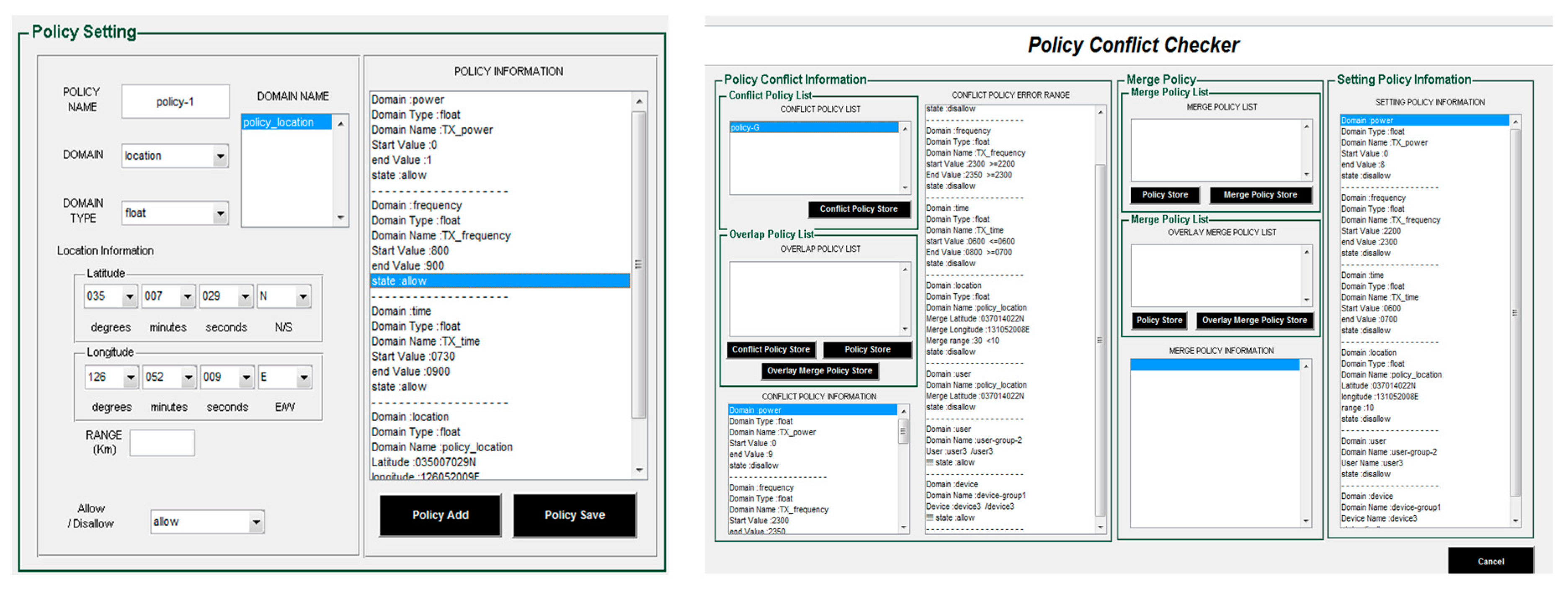
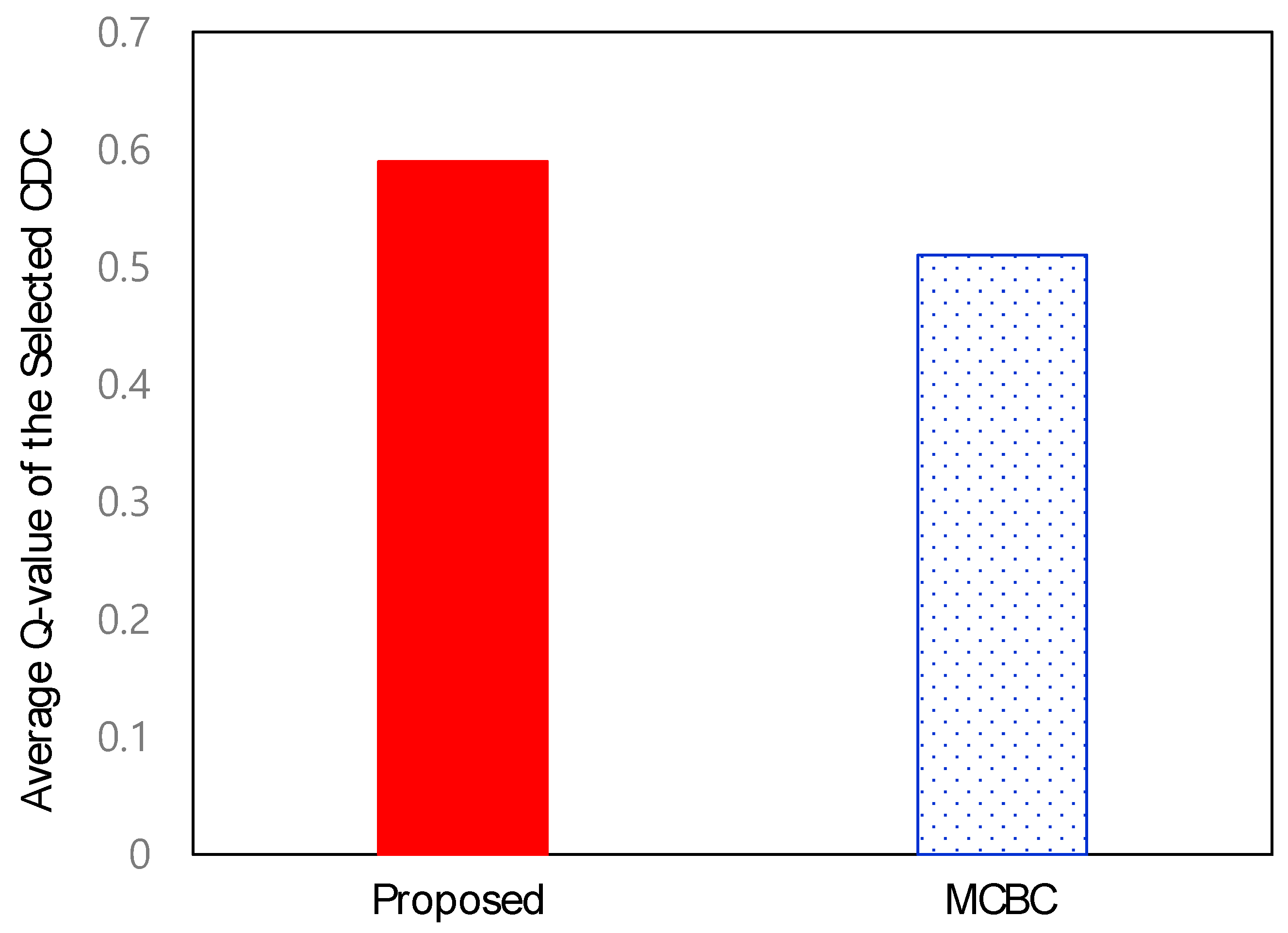
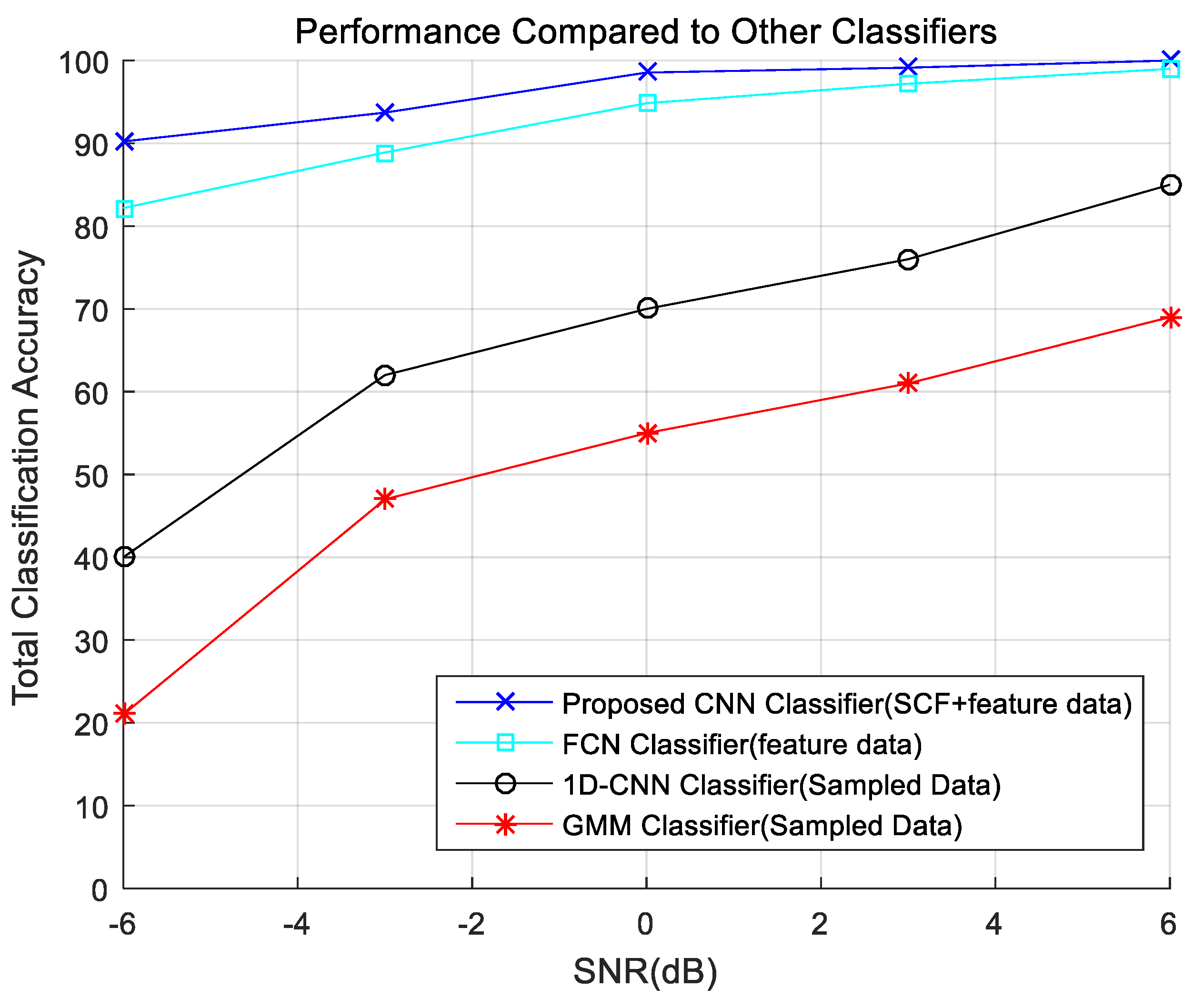
Cognitive radio (CR) is an adaptive radio technology that can automatically detect available channels in a wireless spectrum and change transmission parameters to improve the radio operating behavior. A CR ad-hoc network (CRAHN) should be able to coexist with primary user (PU) systems and other CR secondary systems without causing harmful interference to licensed PUs as well as dynamically configure autonomous and decentralized networks. Therefore, an intelligent system structure is required for efficient spectrum use. In this paper, we present a learning-based distributed autonomous CRAHN network system model for network planning, learning, and dynamic configuration. Based on the system model, we propose machine learning-based optimization algorithms for spectrum sensing, cluster-based ad-hoc network configuration, and context-aware signal classification. Using the sensing engine and the cognitive engine, the surrounding spectrum usage and the neighbor network operation status can be analyzed. The proposed policy engine can create network operation policies for the dynamically changing surrounding wireless environment, detect policy conflicts, and infer the optimal policy for the current situation. The decision engine finally determines and configures the optimal CRAHN configuration parameters through cooperation with a learning engine, in which we implement the proposed machine-learning algorithms. The simulation results show that the proposed machine-learning CRAHN algorithms can construct CR cluster networks that have a long network lifetime and high spectrum utility. Additionally, with high signal context recognition performance, we can ensure coexistence with neighboring systems.
Keywords: cognitive radio; ad-hoc network; machine learning; optimization; coexistence cognitive radio; ad-hoc network; machine learning; optimization; coexistence