Article

Energy-Efficient Virtual Network Function Reconfiguration Strategy Based on Short-Term Resources Requirement Prediction
1
School of Electronic Engineering, Beijing University of Posts and Telecommunications, Beijing 100876, China
2
School of Information and Communication Engineering, Beijing University of Posts and Telecommunications, Beijing 100876, China
*
Author to whom correspondence should be addressed.
Electronics 2021, 10(18), 2287; https://doi.org/10.3390/electronics10182287

Submission received: 18 August 2021 / Revised: 10 September 2021 / Accepted: 14 September 2021 / Published: 17 September 2021
(This article belongs to the Section Networks)

Abstract

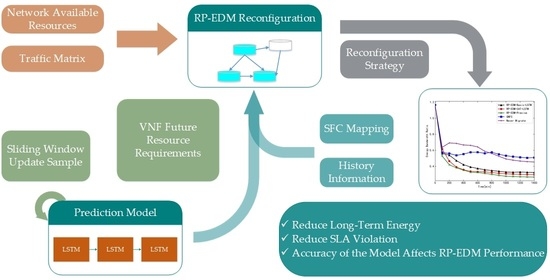
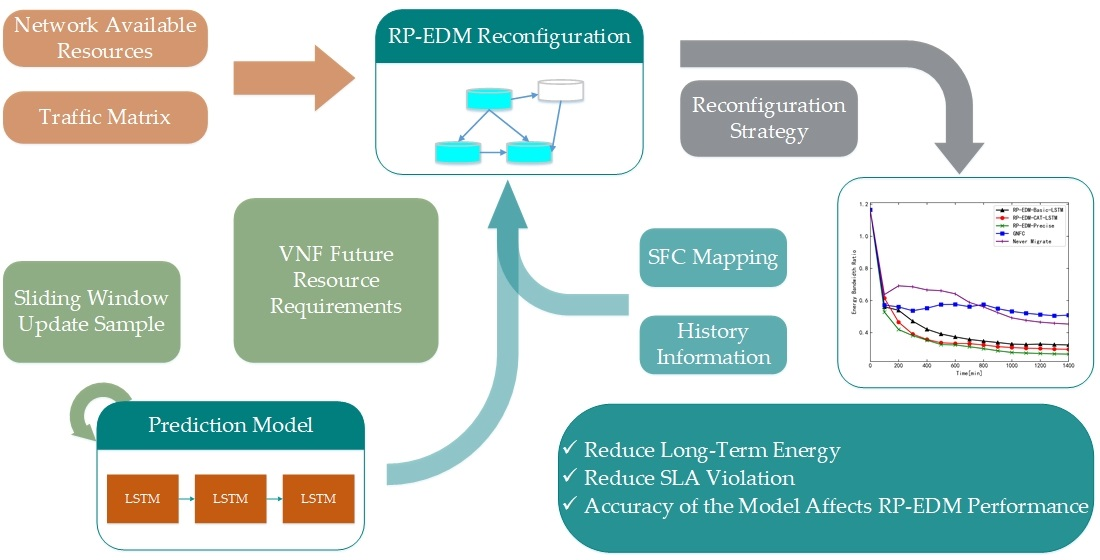
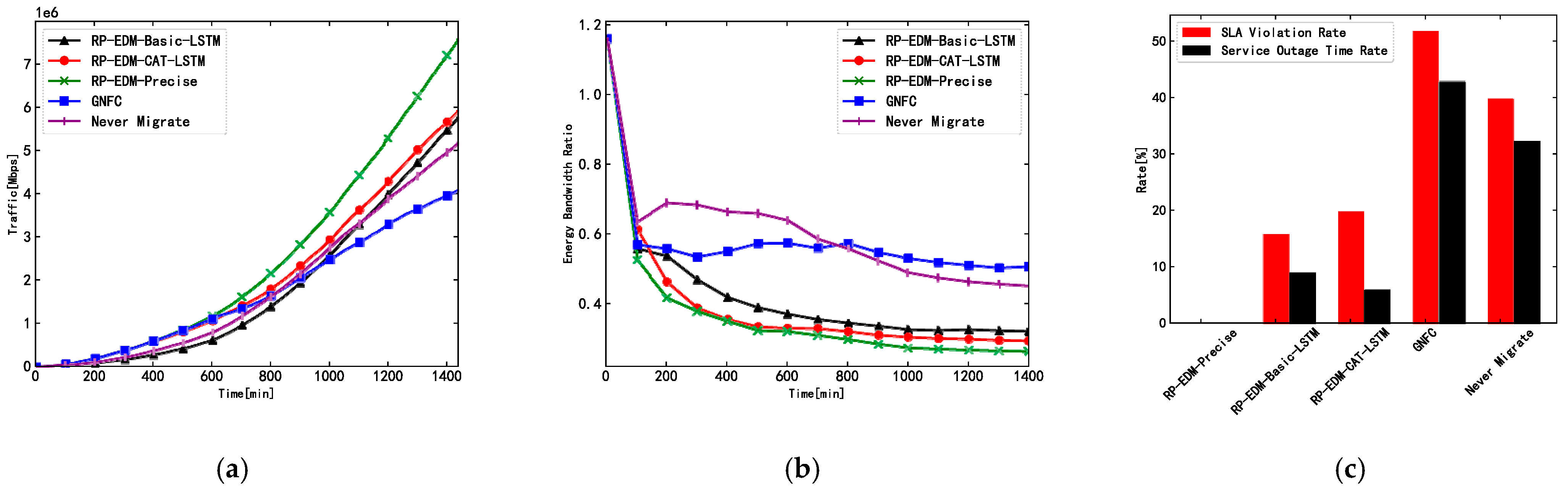
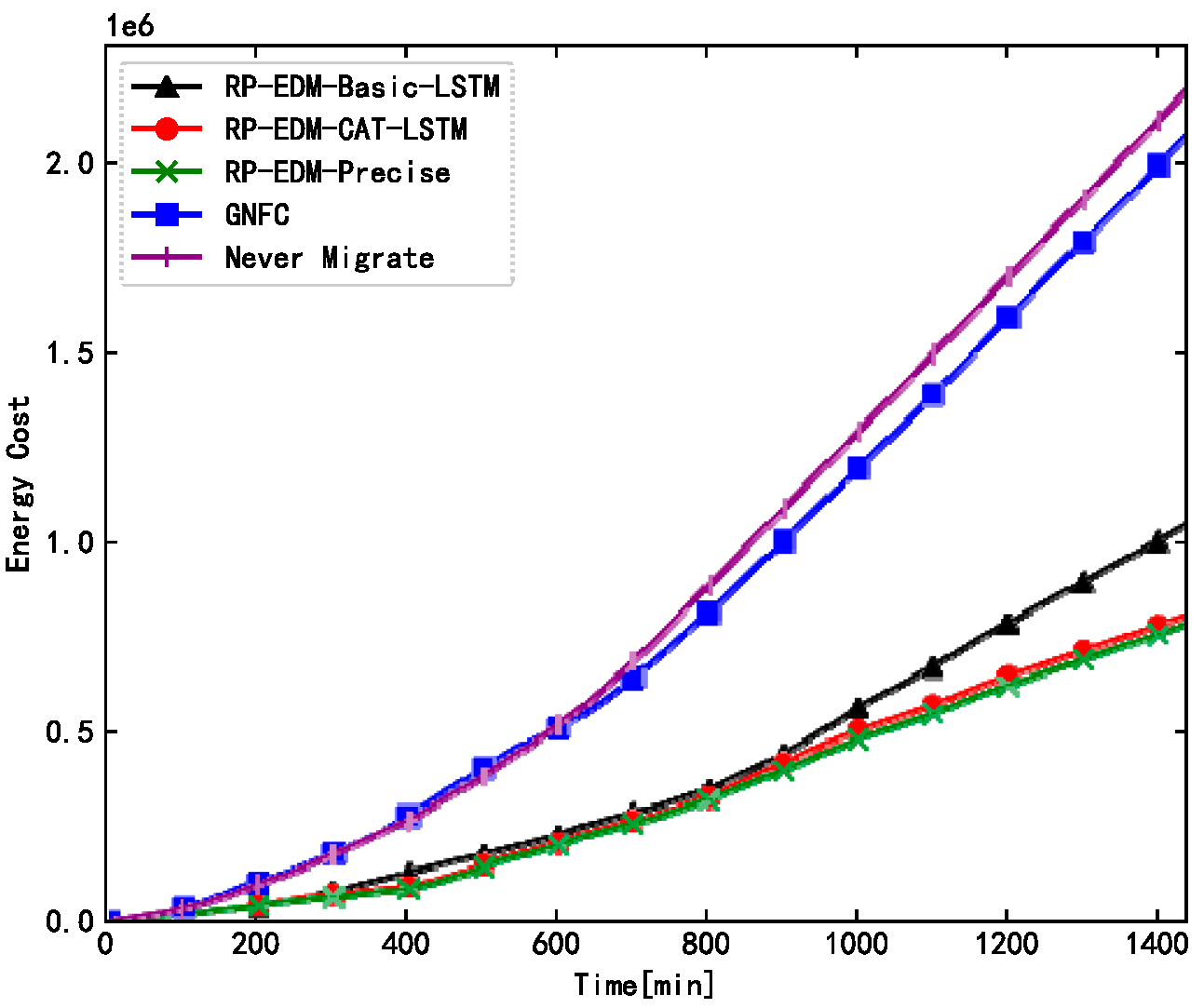
In Network Function Virtualization, the resource demand of the network service evolves with the change of network traffic. VNF dynamic migration has become an effective method to improve network performance. However, for the time-varying resource demand, how to minimize the long-term energy consumption of the network while guaranteeing the Service Level Agreement (SLA) is the key issue that lacks previous research. To tackle this dilemma, this paper proposes an energy-efficient reconfiguration algorithm for VNF based on short-term resource requirement prediction (RP-EDM). Our algorithm uses LSTM to predict VNF resource requirements in advance to eliminate the lag of dynamic migration and determines the timing of migration. RP-EDM eliminates SLA violations by performing VNF separation on potentially overloaded servers and consolidates low-load servers timely to save energy. Meanwhile, we consider the power consumption of servers when booting up, which is existing objectively, to avoid switching on/off the server frequently. The simulation results suggest that RP-EDM has a good performance and stability under machine learning models with different accuracy. Moreover, our algorithm increases the total service traffic by about 15% while ensuring a low SLA interruption rate. The total energy cost is reduced by more than 20% compared with the existing algorithms.
Keywords: Network Function Virtualization; service function chaining; power consumption; machine learning Network Function Virtualization; service function chaining; power consumption; machine learning
Graphical Abstract