1. Introduction
In freshwater systems under high environmental pressure, environmental management and public health strategies are often based primarily on biophysical indicators, while the perceptions of local resource users receive comparatively little attention [
1]. The perspectives of artisanal fishers can increase social vulnerability, particularly when pollution threatens food security and human health [
2]. Understanding how fishers perceive environmental degradation is therefore not merely descriptive; it is a core component of socio-environmental governance [
3] and is grounded in risk- perception research, which examines how people evaluate and respond to hazards [
4]. Risk perception is shaped not only by technical estimates of probability and magnitude but also by qualitative attributes such as dread, controllability, and observability [
5]. This distinction is especially relevant in freshwater pollution: contaminants such as heavy metals are imperceptible to human senses, whereas visible pollution elicits immediate sensory aversion.
Freshwater bodies play a fundamental role in providing ecosystem services, supporting food security, and sustaining the livelihoods of local communities, particularly in regions where artisanal fishing is an important economic, social, and cultural activity [
6]. However, accelerated urban, industrial, and agricultural growth has increased pollutant loads in these freshwater ecosystems, which are especially sensitive to environmental disturbance, thereby compromising water quality and the health of aquatic organisms [
7,
8]. Industrial, urban, and agricultural activities are notable sources of pollution in aquatic ecosystems and continuously introduce a wide variety of physical, chemical, and biological pollutants into surface waters [
9]. Heavy metals are among the main contaminants affecting aquatic ecosystems and create major environmental problems due to their persistence and toxicity [
10]. These contaminants can accumulate in fish tissues, posing potential risks to human health through consumption of fish [
11].
In Mexico, a considerable proportion of rivers and lakes show some degree of environmental degradation due to various anthropogenic pressures [
12,
13]. Indeed, heavy metals in freshwater environments are a growing problem that affects both terrestrial and aquatic communities in the country [
14]. These elements are not biodegradable and can trigger cumulative environmental impacts [
15,
16]. Lake Chapala, the largest freshwater body in Mexico, provides a clear example of this problem. In addition to being a strategic water source for the Guadalajara Metropolitan Area, the lake sustains productive activities, such as artisanal fishing, upon which numerous regional communities depend [
17].
Fishing for tilapia (
Oreochromis niloticus; 54%), carp (
Cyprinus carpio; 34%), and charal (
Chirostoma spp.; 12%) [
18] in Lake Chapala provides hundreds of families with economic income and sustenance [
2]. Both tilapia and carp are introduced species with a high adaptive capacity, whereas charal shows a stronger dependence on habitat conditions, meaning that fluctuations in its catch are more closely associated with perceptible environmental changes [
19]. Accordingly, increases in tilapia and carp catch volumes have been linked to declines in native fish populations in the lake [
18]. In this context, charal is a strategically important resource from ecological, social, and food security perspectives. In addition, charal is an emblematic regional resource and a key component of local food security, embodying a biocultural heritage deeply rooted in the productive and gastronomic identity of the region [
20]. Furthermore, charal serves as a critical indicator of lake health because it is sensitive to changes in water quality, unlike more tolerant species that persist in degraded riparian zones [
21]. Given that the genus
Chirostoma is endemic to Mexico [
22], those who fish for charal maintain a specialized socio-ecological link with the lake’s natural conditions. Charal fishers can detect subtle ecological signals of environmental change, making them highly accurate informants whose perceptions are crucial for understanding how environmental degradation and risks are locally interpreted in this lake ecosystem. However, fishers in Lake Chapala face multiple challenges, including excessive water extraction, the overexploitation of fishery resources, illegal fishing, the introduction of exotic and predatory species, and contaminant accumulation [
17,
23]. Several studies have documented the presence of heavy metals in aquatic organisms, particularly in fish, such as carp and catfish (
Ictalurus ochoterenai) [
24,
25], raising concerns about the environmental quality of Lake Chapala and the safety of its fishery products. These conditions have created a complex scenario for fishers and their families, who depend on fishing as their main source of income and food [
2].
Beyond analyzing physicochemical and biological data, a comprehensive understanding of the environmental problems associated with Lake Chapala requires evaluating the perceptions of actors directly linked to this freshwater resource. The fishers of Lake Chapala are key stakeholders and view the lake as an extension of their homes [
26]. As such, these fishers draw on empirical knowledge to identify visible changes in the ecosystem, routinely assess water quality, and evaluate the condition of target species [
26]. Since the charal is a sensitive indicator of environmental quality, its life cycle is intrinsically linked to the stability of the ecosystem’s physical and chemical conditions [
19]. However, knowledge about how these perceptions are distributed across different sectors of the local population, how they relate to social vulnerability and perceptions of environmental risk, and how they can inform environmental governance processes and decision-making remains limited. The livelihoods of fishers depend directly on water quality, which is also central to socio-environmental interactions, given their long-standing and functional relationships with aquatic ecosystems. Importantly, the perceptions influence both their practices and how environmental and health risks are socially constructed, especially for non-visible contaminants [
27].
A comprehensive understanding of the environmental problems facing Lake Chapala requires complementing traditional environmental assessments with analyses of stakeholder perceptions of water quality and its potential effects on human health [
28]. Thus, the perceptions and knowledge of fishers regarding anthropogenic impacts on their freshwater resources are essential for sound decision-making and for developing effective policies to mitigate these threats and manage aquatic biodiversity [
8]. Likewise, understanding the concerns, observations, and beliefs of fishers is important for identifying gaps in environmental communication and for strengthening management and monitoring strategies from a socially relevant public health perspective [
29]. Thus, this study aimed to evaluate the perceptions of Lake Chapala fishers regarding water pollution and the health risks associated with the consumption of charal (
Chirostoma spp.).
2. Materials and Methods
2.1. Study Area
Lake Chapala (20°13′ N, 103°03′ W) is the largest natural freshwater lake in Mexico (total surface area: 114,659 ha) and is found at an elevation of ~1510 m a.s.l. [
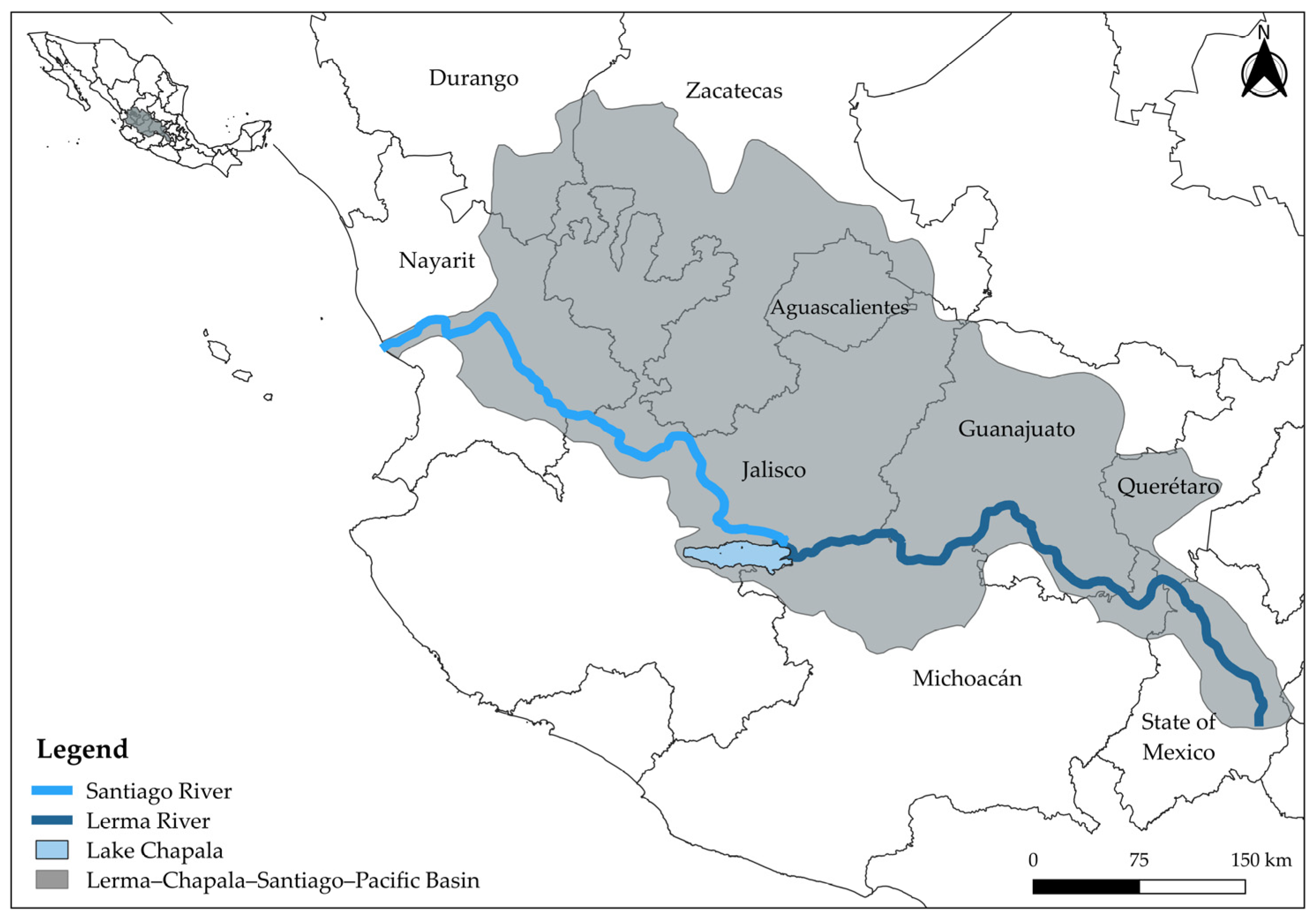
30], approximately 42 km south of the Guadalajara Metropolitan Area. This neotectonic, tropical, mesotrophic, shallow, and alkaline lake exhibits an average depth of 7 m. The predominant regional climate of Lake Chapala is temperate sub-humid with summer rains, with annual precipitation ranging from 700 to 1200 mm, mean evaporation close to 1700 mm, and temperatures ranging between 5 and 29 °C. Hydrologically, Lake Chapala is part of the Lerma–Chapala–Santiago–Pacific basin, one of the most developed river basins in Mexico. The drainage area of the basin exceeds 140,000 km
2 and partially covers nine states: The State of Mexico, Querétaro, Michoacán, Guanajuato, Jalisco, Aguascalientes, Zacatecas, Durango, and Nayarit. Given its extension, the basin area is critical for the economic development of the country [
26,
31]. Lake Chapala plays a strategic role in the regional water supply, providing nearly 60% of the water used in the Guadalajara Metropolitan Area [
24]. The main tributary of Lake Chapala is the Lerma River, given that it accounts for approximately 80% of the volume of water entering the lake. The Lerma River has an estimated annual discharge rate of 68.2 m
3·s
–1 and receives ~2.4 m
3·s
–1 from direct wastewater discharges [
30]. The natural outlet of the system is the Santiago River, which flows into the Pacific Ocean [
30] (
Figure 1). From an environmental perspective, the Lerma River is also the main source of anthropogenic pollution in the basin. Indeed, ~3500 industries discharge effluents throughout the basin, leading to the input of contaminants, including heavy metals, into the lake [
25].
Lake Chapala has experienced a decline in environmental quality due to major urban, industrial, agricultural, and livestock areas, making it one of the most impacted bodies of water in Mexico [
32]. Chemical, metallurgical, textile, thermoelectric, petrochemical, and tannery industries operate throughout the basin, and their discharges, along with untreated domestic wastewater, contribute to the system’s pollutant load [
33]. Because the lake receives water from approximately 12.5% of the country’s irrigated land [
31,
34], fertilizer and agrochemical pollution represent an additional source [
35]. In addition, waste products from tourism are discharged into rivers by communities along rivers [
36,
37]. These conditions create a scenario of cumulative pollution that explains the environmental complexity of the lake system.
2.2. Social Perception Analysis: Methodological Design and Survey Implementation
The social perceptions of fishers regarding pollution in Lake Chapala were evaluated through an observational, cross-sectional analysis that employed a mixed-methods approach. This approach is appropriate when the primary interest is not statistical inference at the population level, but rather an understanding of interpretive frameworks, local knowledge, and adaptive practices within specific socio-environmental contexts [
38]. The study population consisted of active charal fishers from Lake Chapala who were over 18 years old, provided informed consent to participate voluntarily, and had direct, daily, and long-standing interactions with the lake and charal.
Participants were selected using non-probabilistic purposive sampling, which identifies individuals with experience in the topic of interest [
39]. Fishers with direct experience in capturing charal and consuming this resource were prioritized during the selection process. This strategy is methodologically appropriate for social perception studies, as it maximizes the relevance of the collected information by focusing on actors with accumulated empirical knowledge rather than seeking numerical representativeness [
39].
Participants were characterized by extensive fishing experience, with most having fished for more than 11 years, as well as by their diversity in fishing frequency, techniques, and charal consumption patterns. The final sample size (
n = 24) was determined based on the criterion of thematic saturation, defined as the point at which the inclusion of new participants no longer yields new relevant data or categories, and the information becomes recurrent [
40]. Saturation was assessed by continuously reviewing responses and comparing questionnaires throughout the survey process. The repetition of key thematic axes, even after surveying fishers with different levels of experience and different practices, indicated that the additional information was conceptually redundant. In this context, the administration of 24 surveys was considered methodologically adequate, allowing the relevant variability to be covered and consistent patterns of social perception to be documented.
Given the methodological approach, the results were interpreted as contextual findings specific to the group of Lake Chapala fishers who participated in this study and are not intended to be statistically extrapolated to the entire population of fishers. The survey instrument (
Supplementary Material S1) was structured into the following sections: (1) privacy and confidentiality policy, which ensured the anonymity of individual responses; (2) sociodemographic characteristics (gender, age, and years of fishing experience); (3) fishing and consumption practices; (4) perceptions of water quality in Lake Chapala; (5) perceptions of pollution and risks to human health; and (6) proposals, participation, and post-questionnaire evaluation, which aimed to identify potential changes in the perceptions of fishers.
Responses were recorded using a Likert scale with the following values: strongly disagree (1), disagree (2), neither agree nor disagree (3), agree (4), and strongly agree (5). Questions related to perceived changes in water quality, level of concern of potential health effects, and the importance of conducting medical studies were structured as ordinal categorical Likert-type scales, with response options ordered from lower to higher intensity or valuation. In addition, multiple-response items were included, allowing participants to select more than one option simultaneously. Responses to open-ended questions were analyzed using thematic content analysis.
The study was conducted in accordance with the ethical principles of social research, ensuring voluntary participation, anonymity, and confidentiality of the information provided by participants, which was used exclusively for scientific purposes. The research protocol was reviewed and approved by the Bioethics Committee of Centro Universitario de Ciencias Biológicas y Agropecuarias, Universidad de Guadalajara, and received official approval (C.INV.030/2025).
2.3. Validity and Reliability of the Questionnaire
The validity and reliability of the questionnaire items were evaluated to ensure the robustness of the measurement instrument. To assess the reliability of the multi-item scales in terms of internal consistency, several criteria were evaluated, including Cronbach’s alpha coefficient, composite reliability (CR), and the average variance extracted (AVE). Cronbach’s alpha is a widely used estimate of the reliability of a scale based on inter-item correlations [
41]. Cronbach’s alpha values ≥ 0.70 are indicative of acceptable reliability. Composite reliability reflects the internal consistency of the constructs, with values > 0.70 considered adequate [
42], while AVE represents the proportion of variance explained by the construct relative to measurement error, with values > 0.50 accepted as evidence of convergent validity [
43]. The values for Cronbach’s alpha, CR, and AVE were 0.70, 0.87, and 0.53, respectively, indicating acceptable reliability and adequate convergent validity of the questionnaire items.
2.4. Data Analysis
Questionnaire responses were analyzed using a mixed-methods approach, combining descriptive quantitative analysis for closed-ended questions and qualitative thematic content analysis for open-ended questions to achieve a comprehensive understanding of the perceptions of fishers regarding the pollution in Lake Chapala and its potential implications. Closed-ended questions, including those formulated using Likert-type scales, ordinal frequency scales, and dichotomous questions, were analyzed using descriptive statistics. For these variables, relative frequencies (%) were calculated to characterize the distribution of responses and to describe general trends in perception, knowledge, and concern among participants.
For questions that allowed participants to select multiple options (e.g., perceived sources of pollution), each option was treated as an independent variable, and the proportion of participants selecting each option was reported without assuming exclusivity among categories. The thematic content analysis used to evaluate open-ended questions was conducted in several stages. In the first phase, all responses were read thoroughly to allow the evaluator to become familiar with the content and language used by participants. Subsequently, open coding was performed to identify units of meaning related to perceptions of changes in charal characteristics, consumption practices, the measures adopted to reduce risks, and explanations of lake contamination.
In the second stage, the initial codes were grouped into broader thematic categories based on conceptual similarity, allowing the identification of the recurrent patterns, interpretive frameworks, and adaptive practices expressed by fishers. Qualitative analysis was conducted using an interpretive approach that prioritized understanding local knowledge and the narratives associated with the direct experiences of the participants with the lake and with fishing, rather than quantifying discourse. The results of the thematic analysis were integrated in a complementary manner with the descriptive findings from the closed-ended questions to enrich data interpretation and provide a sociocultural context for the perceptions identified.
Statistical analysis evaluated sociodemographic variables (gender, age, years of fishing experience, and municipality of residence). Because the dataset included ordinal (Likert-type), dichotomous, and categorical variables, a dissimilarity matrix was constructed using Gower’s coefficient [
44], which integrates variables of different types without altering the original scale order. Perception variables formed the multivariate response block, while sociodemographic variables served as explanatory factors. Responses were coded as ordered factors, and dichotomous variables as binary factors. Open-ended responses were classified into thematic categories and then transformed into binary variables (presence/absence) for inclusion in the multivariate analysis. A Permutational Multivariate Analysis of Variance (PERMANOVA) [
45] was applied to the dissimilarity matrix using the adonis2() function from the vegan package in the R statistical environment (R Core Team, 4.5.1, 2025-06-13 ucrt). 9999 permutations were performed under a free permutation scheme at a significance level of
p ≤ 0.05. Because the design included groups of unequal size, multivariate dispersion homogeneity was evaluated using the betadisper() function, followed by an analysis of variance on distances to the group centroids.
3. Results
The surveyed population consisted predominantly of men (88%), while women represented 12% of the total. Participants aged 65 years or older constituted the largest age group (29%), followed by the 55–64 (21%), 25–34 (17%), 35–44 (17%), 45–54 (13%), and 18–24 (4%) age groups. Most participants had 11 or more years of experience (71%), reflecting long-standing fishing trajectories, while 17% had less than 3 years of experience. The remaining participants (4%) reported 3–4, 5–6, or 9–10 years of experience. The statistical analysis revealed no significant differences in perception patterns by gender, age, years of fishing experience, or municipality of residence (F = 0.953; R2 = 0.51; p = 0.556). The model explained 50.9% of the total observed variation; this proportion was not statistically significant, suggesting that perceptions remain relatively consistent across the diverse demographic strata of the fishing community. Furthermore, assessment of multivariate dispersion homogeneity showed no significant differences among the analyzed groups (ANOVA on distances to centroids: p = 0.737). This lack of significant dispersion is a critical finding, as it confirms that the PERMANOVA results were not confounded by internal group heterogeneity. These results provide a statistically sound basis for concluding that the observed consensus in perceptions is a genuine reflection of the community’s views rather than an artifact of data distribution or internal variability.
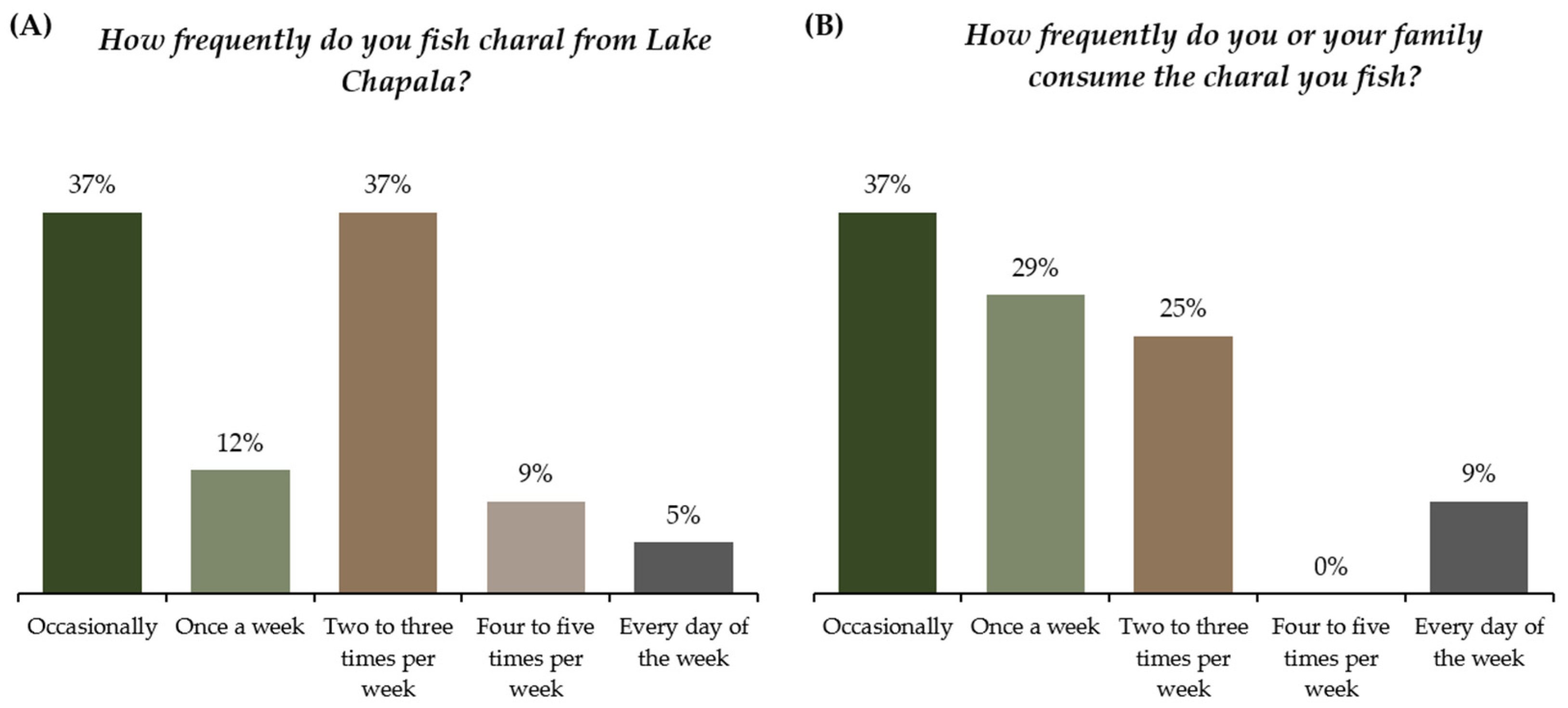
Participants reported that charal fishing is mostly carried out occasionally (i.e., a few times a month; 37%) or two to three times per week (37%), indicating that it is a relatively consistent but not daily activity for most fishers. However, fewer participants reported fishing for charal once a week (12%), four to five times per week (9%), or every day of the week (5%) (
Figure 2A). Regarding the consumption patterns of fishers and their families, most reported they consumed charal at least occasionally (37%), while 29% consumed charal once per week, and 25% consumed charal two to three times per week (
Figure 2B).
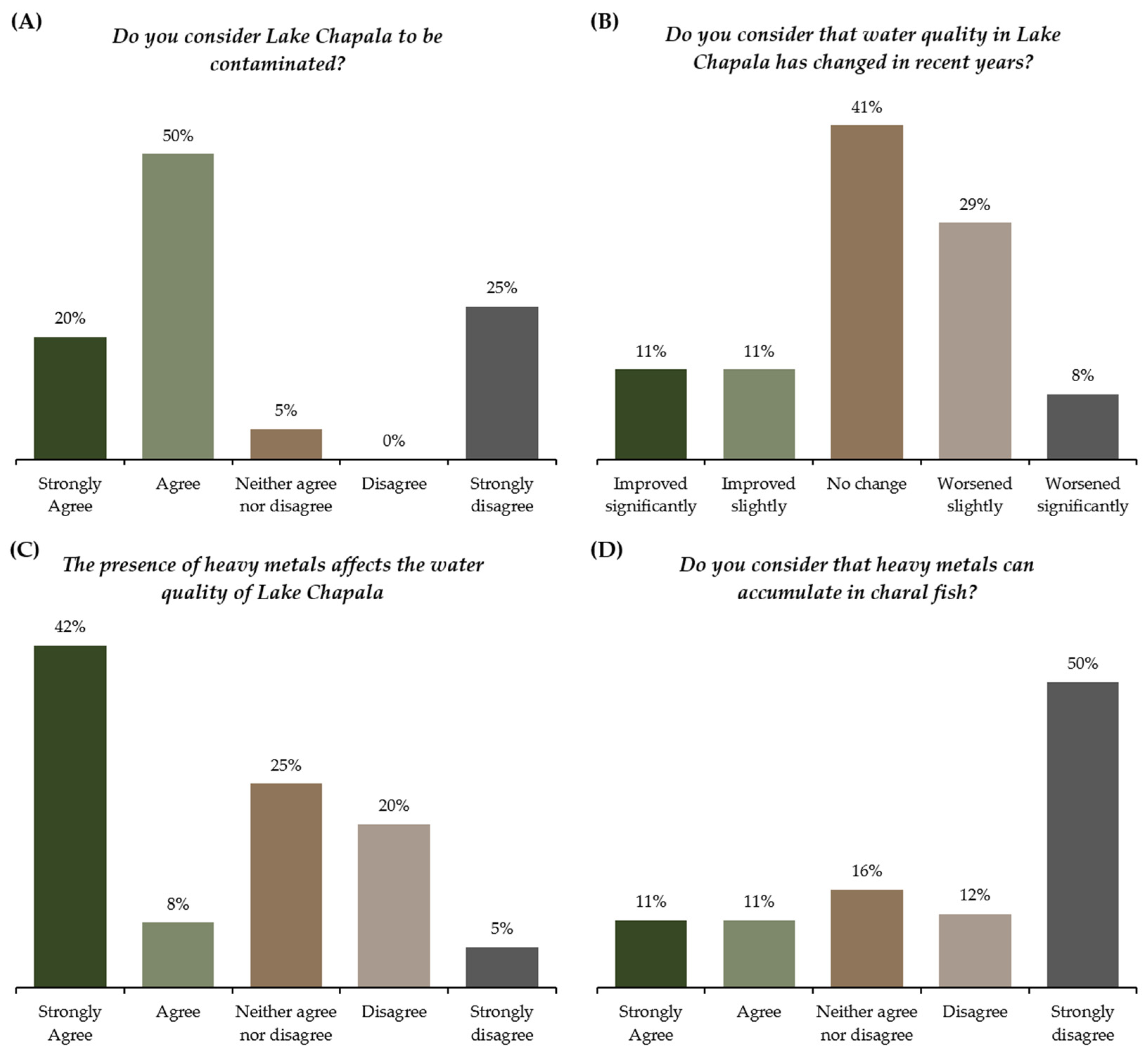
Regarding the level of environmental knowledge among the surveyed fishers, the results indicated that most participants perceived Lake Chapala as contaminated. Overall, 70% agreed or strongly agreed with this statement, reflecting a widely shared perception of environmental deterioration. In contrast, a smaller proportion expressed an opposing view, as 25% indicated that they strongly disagreed (
Figure 3A). Regarding perceived sources of contamination, fishers identified the accumulation of solid waste as the most relevant factor (50%), followed by domestic wastewater discharges and industrial residues (33%) and the use of agrochemicals (29%). In contrast, tourism-related activities (4%) and deforestation (8%) were mentioned by a considerably smaller proportion of respondents, suggesting that these sources were perceived as less important than urban, industrial, or agricultural contaminants. Notably, 41% of fishers reported having observed changes in the characteristics of charal as a fishing resource. Among those who noted changes, a reduction in charal size was the most frequently mentioned observation (60%), followed by a perceived scarcity of charal (10%) and changes in taste (10%). The remaining 20% of participants did not report specific changes in the resource.
On the other hand, perceptions of recent changes in the water quality of Lake Chapala showed heterogeneous opinions among respondents. Most fishers reported no change in water quality (41%), although 29% considered it had slightly worsened. In contrast, 22% perceived some degree of improvement (11% substantial and 11% slight), while 8% considered that water quality had notably worsened (
Figure 3B).
The knowledge held by fishers of the presence of heavy metals in Lake Chapala was fragmented. Indeed, 50% indicated being aware of these contaminants, 34% reported not being aware, and 16% stated they did not know whether heavy metals were present in the lake. Regarding whether heavy metals affected the water quality of Lake Chapala, 42% of respondents strongly agreed, and 8% agreed, while 20% disagreed and 5% strongly disagreed (
Figure 3C). With respect to whether heavy metals could accumulate in charal, 62% of respondents rejected this possibility (strong disagreement: 50%; disagreement: 12%), while 22% agreed (strong agreement: 11%; agreement: 11%) and 16% adopted a neutral stance (
Figure 3D).
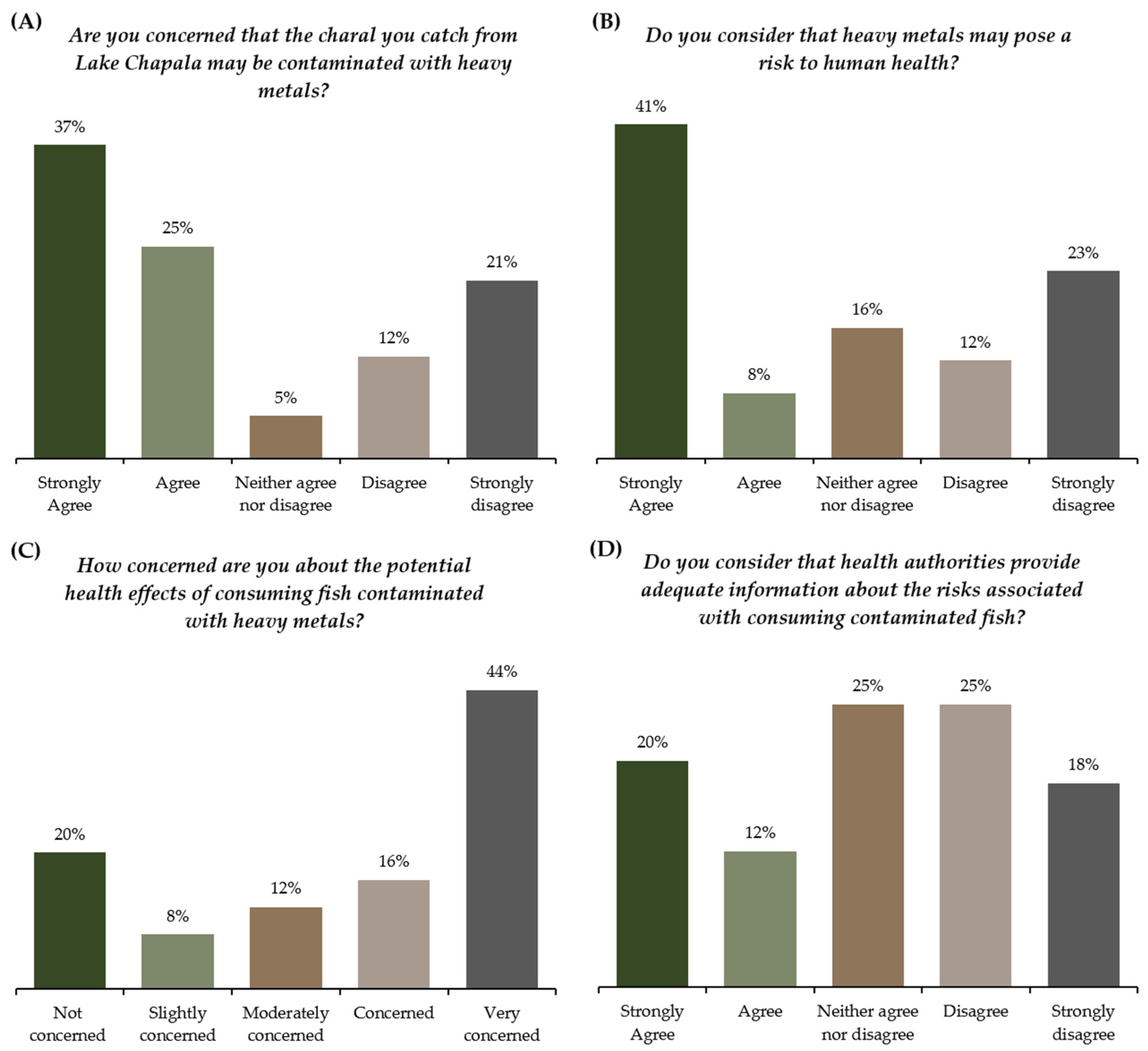
The possibility of charal contamination with heavy metals elicited a predominantly concerned response among surveyed fishers. Overall, 62% strongly agreed (37%) or agreed (25%) with this possibility, while 33% strongly disagreed (21%) or disagreed (12%); the remaining 5% adopted a neutral position (
Figure 4A). Perceptions of the risk that heavy metals pose to human health were more balanced (
Figure 4B). A total of 49% either strongly agreed or agreed that heavy metals represent a health risk, whereas 35% disagreed and 16% remained neutral. A high degree of concern predominated among participants regarding the potential health effects derived from the consumption of contaminated fish (
Figure 4C). Sixty percent of participants reported being very concerned (44%) or concerned (16%), whereas 20% were not concerned; the remaining 20% were either slightly concerned (8%) or moderately concerned (12%). Finally, opinions regarding the adequacy of information provided by health authorities about the risks associated with consuming contaminated fish revealed marked heterogeneity. Thirty-two percent of fishers considered the available information to be adequate, 43% disagreed with this statement, and 25% adopted a neutral position (
Figure 4D).
The adoption of safety measures for charal consumption, 50% of fishers reported implementing some type of preventative action. The practices mentioned included implementing general hygiene and food safety measures (without specifying concrete procedures), separating fish in poor condition, selecting charal that were as fresh as possible, and employing basic preparation practices such as washing, cooking thoroughly, and adding salt.
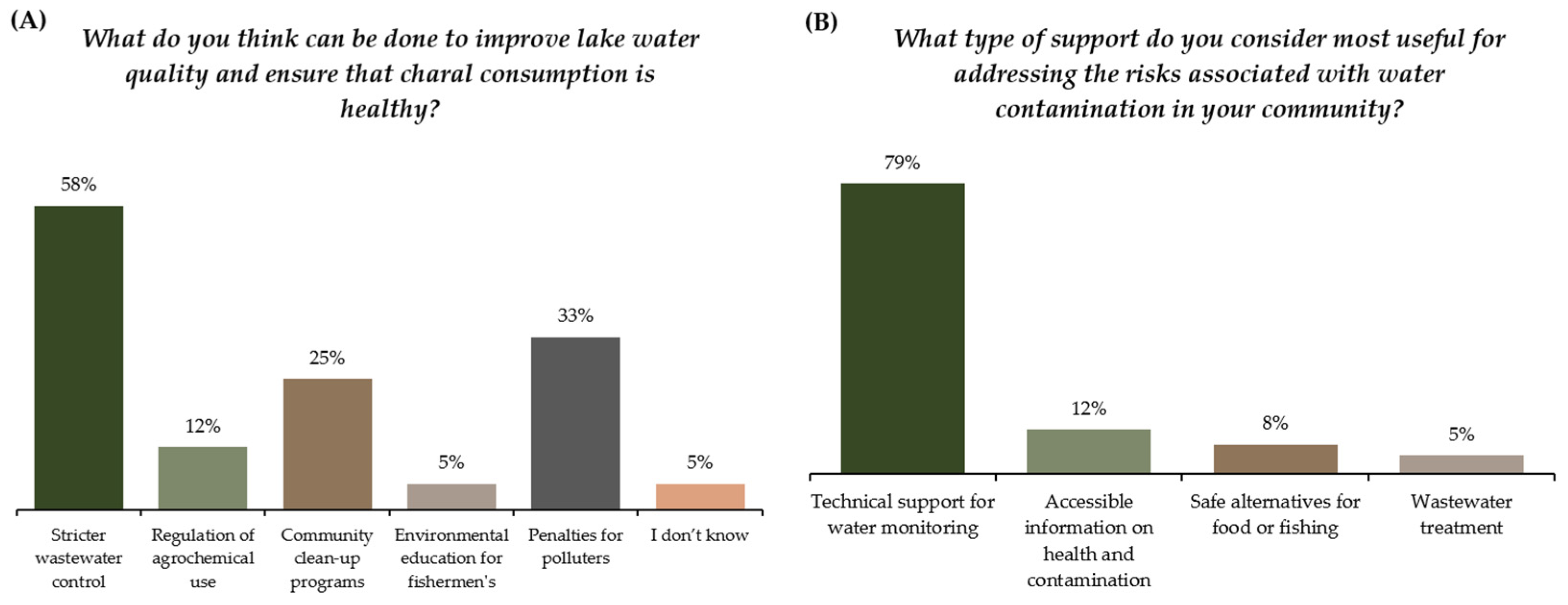
Regarding the proposed actions to improve the water quality of Lake Chapala and ensure the safe consumption of charal, the responses of fishers varied. The most frequently mentioned action was stricter wastewater control (58%), followed by penalties for polluters (33%) and community-based cleanup programs (25%). Other actions were mentioned less frequently, including the regulation of agrochemical use (12%) and specific community cleanup programs (5%). Five percent of participants indicated they had no opinion on the matter (
Figure 5A). With respect to the type of support considered most useful to address the risks associated with water contamination in the community, 79% of fishers identified technical support for water quality monitoring as their primary need, while others mentioned accessible information on health and contamination (12%), safe alternatives for food or fishing (8%), and wastewater treatment (5%) (
Figure 5B). In addition, interest in participating in training activities related to water contamination, health, and the safe consumption of charal was predominantly positive. A total of 66% of fishers reported being interested in participating in workshops, courses, or training activities, while 26% indicated that their participation would depend on availability, and 8% reported not being interested.
4. Discussion
The experiences and insights people gain through everyday interactions within their territories constitute a form of knowledge fundamental to understanding local socio-environmental dynamics [
46]. In this context, the absence of statistically significant differences between sociodemographic variables suggests that the fishermen’s perceptions indicate that daily interactions with the lake contribute to the construction of shared interpretive frameworks within the fishing community. In environments where livelihoods and food security depend directly on a natural resource, exposure to similar environmental conditions can foster the consolidation of collective narratives about risk and environmental degradation. For charal fishers from Lake Chapala, these perceptions are closely tied to their productive practices and direct experiences with the lake, which together shape how they interpret contamination, health risks, and their potential implications. Regarding charal fishing in Lake Chapala and its consumption, it is important to note that charal is targeted by only a subset of fishers. Studies indicate that only 12% of the lake’s total catch is charal [
47], and only 5–9% of fishers preferentially target this species [
48,
49]. In addition, demand for charal as a local and tourist product favors its sale over household consumption [
17], with commercialization emerging as a key factor modulating its direct consumption in fishing households [
50].
Perceptions of the environmental status of Lake Chapala were predominantly based on directly observable elements. The convergence between a generalized perception of contamination and the prioritization of visible sources (e.g., solid waste) suggests that assessments of the environmental deterioration by Lake Chapala fishers were strongly conditioned by visual and sensory perception, reinforcing a visibility-based hierarchy of contaminants [
26]. In contrast, less perceptible sources, such as wastewater discharges or agrochemicals, were inconsistently linked to perceived water quality deterioration and impacts on aquatic organisms, suggesting partial normalization or underestimation of invisible risks [
51]. This situation highlights the importance of strengthening environmental communication strategies that make the risks associated with contaminants understandable and socially meaningful when they are not directly perceptible through the senses [
52].
In this context, the perception that water quality has remained relatively unchanged in recent years suggests the normalization of current environmental conditions and difficulty in identifying its gradual deterioration. Nonetheless, some fishers recognized worsening water quality, indicating detectable negative environmental signals that not all fishers interpret as critical or persistent changes. In the Chapala region of Michoacán, Pedroza-Gutiérrez and Chavolla [
17] noted that fishers constructed their perceptions of environmental deterioration primarily based on visual and sensory cues. For example, the formation of algae mats, unpleasant odors, and physical discomfort resulting from contact with the water served as empirical indicators of declining water quality. Nevertheless, although these signals allowed some fishers to recognize environmental deterioration, this evidence was not always interpreted as critical, persistent, or indicative of structural ecosystem changes, but rather as punctual or transitory manifestations of the current conditions of Lake Chapala [
17].
The results of this study indicated that a subset of fishers reported changes in charal characteristics, primarily reduced size, with less common observations of altered texture (fish without flesh), changes in taste, and, in isolated cases, scarcity. These assessments reinforce the idea that environmental deterioration is primarily interpreted through directly observable physical and sensory attributes, consistent with findings from other studies showing that fishers associate contamination with visible changes in the environment and fisheries resources [
53]. The reduction in charal size aligns with ecological shifts perceived by fishers, independent of environmental degradation. The National Commission of Aquaculture and Fisheries (CONAPESCA) records for Jalisco confirm this decline: after a stable period (2015–2018; 2277–2923 t), production plummeted by 63% in 2019 and reached a historical minimum in 2021 (493 t), an 83% drop from 2019 levels. Despite a modest recovery since 2022 (avg. ~709 t), current yields remain significantly below pre-2019 figures. [
54]. Although these data correspond to the entire state of Jalisco and cannot be attributed exclusively to Lake Chapala, the general trend of reduced charal production is consistent with local perceptions of declining fishery resources.
In contrast, the absence of perceived changes in some of these areas could indicate a normalization of the lake’s current conditions, in which gradual deterioration goes unnoticed or is minimized [
55]. Furthermore, among the fishermen, knowledge about the presence of heavy metals in Lake Chapala’s water was varied and limited. While some acknowledged the existence of this type of contaminant, a significant proportion showed a lack of knowledge or uncertainty, highlighting an information gap. These perceptions contrast with the available evidence, which has documented the presence of heavy metals in both the water and the sediments of the lake. Studies have repeatedly identified elements in the water, including Cu, Cd, Pb, Zn, Al, As, and Cr [
13,
35,
56], as well as As, Cd, Cr, and Pb, in both the water and the sediments [
57]. In addition to metal contamination, persistent organic pollutants (POPs), such as polychlorinated biphenyls (PCBs) and polybrominated diphenyl ethers (PBDEs), have been documented in water and sediments [
31]. Furthermore, total concentrations of polycyclic aromatic hydrocarbons (PAHs), along with those of PCBs and PBDEs, are indicators of contamination levels in lake sediments [
58].
Likewise, although some fishers acknowledged that heavy metals affect water quality, most denied that they could accumulate in charal. This suggests a disconnection between documented bioaccumulation processes and how fishers perceive risk in their daily lives. Moreover, acknowledging bioaccumulation also implies accepting the potential for direct risks to human health and, consequently, repercussions for the economic stability of fishing households. Although fishers were aware of lake contamination, knowledge of the implications of consuming contaminated fish for human health was limited, underscoring the need to improve environmental communication targeted at fishers, including information on the potential health risks [
59].
Concern among fishers about possible heavy metal contamination of charal was high but not uniform. A notable subset of fishers did not adopt any specific safety measures when consuming charal, citing the absence of perceived illness or complaints, or uncertainty about the sanitary status of the product, which together minimized or dismissed the risk. Conversely, fishers who reported adopting preventive measures relied predominantly on basic handling and hygiene practices, such as washing the fish, separating poor-quality specimens, checking for freshness, salting, or ensuring adequate cooking. Pedroza-Gutiérrez and Chavolla [
17] reported that fishers washed the fish after filleting to remove any unpleasant odor or taste. These preventive actions focused on the visible aspects of the food and did not address risks posed by imperceptible contaminants. This reinforces the notion that risk is only partially integrated into daily life, leading to strategies that do not necessarily account for chronic or cumulative effects, as risk perception is socially constructed from experience, beliefs, and familiarity with the environment [
4].
The actions proposed by fishers to improve the water quality of Lake Chapala were closely tied to their interpretation of lake contamination. Although contaminant identification relies mainly on visible elements (e.g., waste), the suggested measures go beyond this immediate dimension and point toward holding polluting actors accountable. The emphasis on sanctions and stricter control of wastewater discharges indicates that, beyond recognizing contamination as an environmental problem, fishers considered effective mechanisms necessary for regulation, monitoring, and enforcement. This suggests that contamination is not perceived solely as a daily condition to be endured but as a problem that can be managed through institutional and collective actions, closely related to participation in risk management and decision-making [
60]. The proposals from fishers can be translated into a package of concrete, transferable measures for Lake Chapala and comparable lake systems: (1) joint monitoring of water and fish pollution accessible to communities; (2) risk communication adapted to low-relevance hazards (e.g., heavy metals), clarifying which household practices can and cannot mitigate; (3) control of upstream sources through inspection, regulatory compliance, and sanitation actions; (4) preventive public health monitoring for the exposed population; and (5) participatory governance mechanisms that increase trust and legitimacy in the interventions [
52,
61].
Lastly, the preference of fishers for technical support for water monitoring, together with demands for accessible information and sanitation actions, revealed expectations for greater institutional involvement in managing lake contamination. The perceptions of fishers, who are key actors in the socio-environmental dynamics of Lake Chapala, constitute a strategic input for environmental management and public policy, particularly in productive systems that depend on the quality of aquatic ecosystems. Their daily experience can provide situated knowledge that complements technical–scientific evidence, helping shed light on how environmental problems are addressed at the local scale [
55]. Integrating these perceptions into decision-making fosters more contextualized and socially legitimate interventions and strengthens environmental governance and management models that integrate conservation, public health, and long-term productive viability [
61].
This study provides a theoretical foundation for understanding environmental governance through a perceptual lens. The case of Lake Chapala exemplifies ‘invisibility paralysis,’ in which risks invisible to resource users fail to trigger collective responses as effectively as observable biophysical changes (such as reduced fish size). This analysis shows that water management should not be limited to disseminating technical data; instead, it must incorporate local perception as a critical indicator. We introduce the ‘actionable risk translation’ framework to integrate fishers’ knowledge into community praxis. These findings offer transferable insights for other lacustrine ecosystems, bridging the gap between local perceptions and effective decision-making.
6. Conclusions
The present study showed that charal fishers from Lake Chapala hold an environmental perception built primarily from everyday experience and visual and sensory cues, which condition how they interpret environmental contamination. Although fishers generally acknowledged lake pollution, perceptions of environmental deterioration tended to become normalized when changes occurred gradually or did not produce immediate impacts. The identification of contaminants focused mainly on observable elements, while less evident factors, such as the presence and effects of heavy metals, were less well known. This situation likely contributed to the partial incorporation of risks into daily life associated with charal consumption, leading to practices and strategies that did not always account for chronic or cumulative effects.
The improvement proposals of the fishers reflected a clear expectation of regulation, surveillance, and control of pollution sources, as well as greater technical and institutional intervention in lake management. In this sense, their perceptions provide key elements for understanding how contamination and risk are interpreted and addressed in everyday practice, which is relevant for guiding management strategies and public actions aligned with the local context. Considering these perceptions enables identification of gaps between technical knowledge and social experience, as well as points of convergence that can be leveraged to strengthen the implementation of environmental management measures. Thus, articulating local knowledge with technical–scientific evidence represents a pathway toward management schemes that coherently integrate ecosystem protection, public health, and the continuity of productive activities associated with Lake Chapala, thereby contributing to its long-term sustainability.



 ,
,