Article

Fruit and Vegetable Loss in Markets in the North of Lebanon: Drivers, Challenges, and Prevention


1
Department of Fundamental and Applied Earth and Environmental Sciences, Doctoral School of Science and Technology, Lebanese University, Beirut P.O. Box 6573/14-5, Lebanon
2
Department of People and Society, Swedish University of Agricultural Sciences (SLU), Box 190, SE 234 22 Lomma, Sweden
3
Department of Environmental Sciences and Natural Resources, Faculty of Agricultural Engineering and Veterinary Medicine, Lebanese University, Dekwaneh 6573, Lebanon
4
Water and Environment Science Laboratory, Lebanese University, Tripoli 1300, Lebanon
5
Department of Statistics, The Higher Institute of Applied and Economic Sciences (ISSAE/Cnam Lebanon), Hamra BP 113-6175, Lebanon
*
Author to whom correspondence should be addressed.
Resources 2025, 14(8), 132; https://doi.org/10.3390/resources14080132

Submission received: 27 May 2025 / Revised: 17 August 2025 / Accepted: 18 August 2025 / Published: 21 August 2025

Abstract

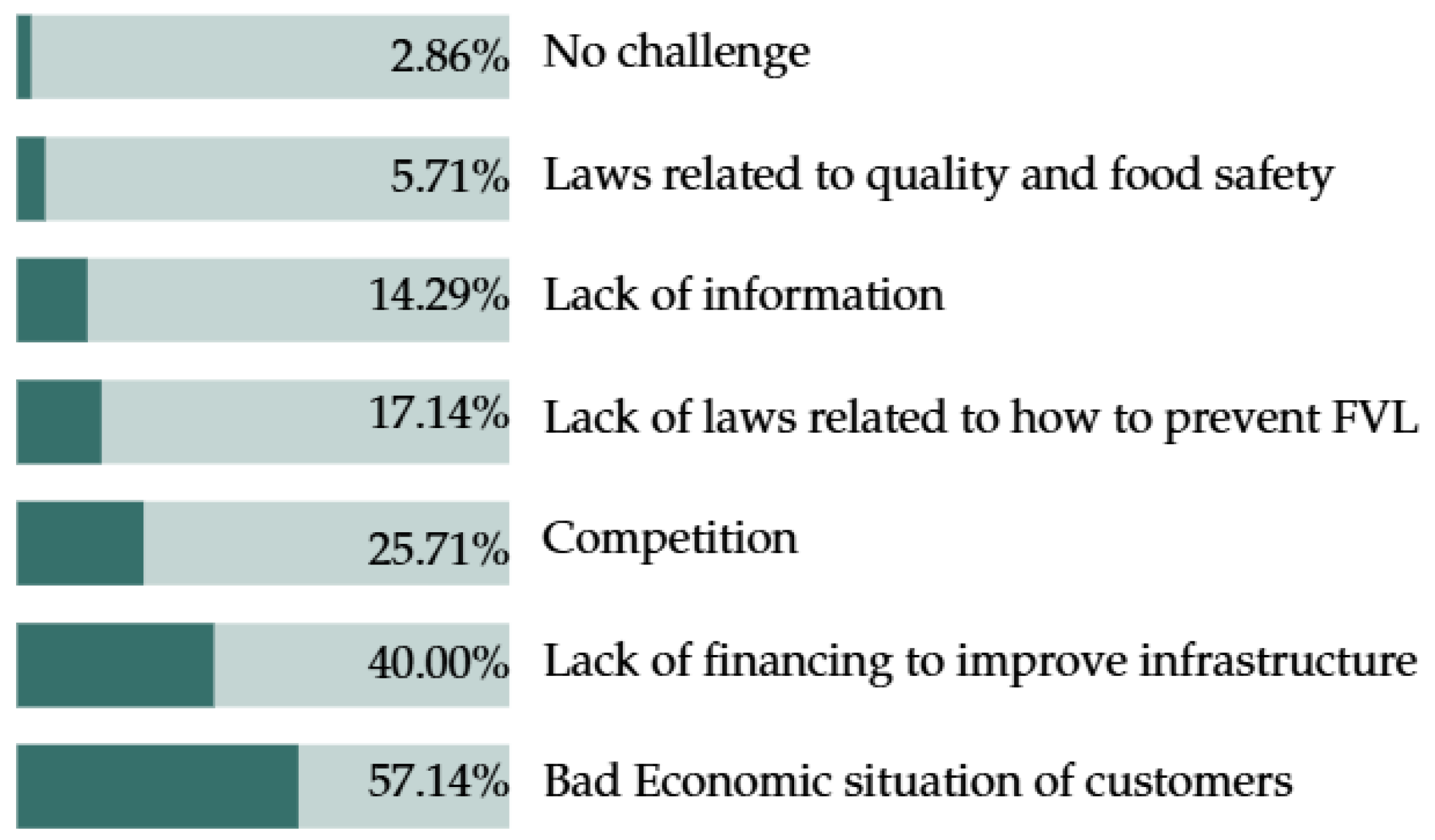
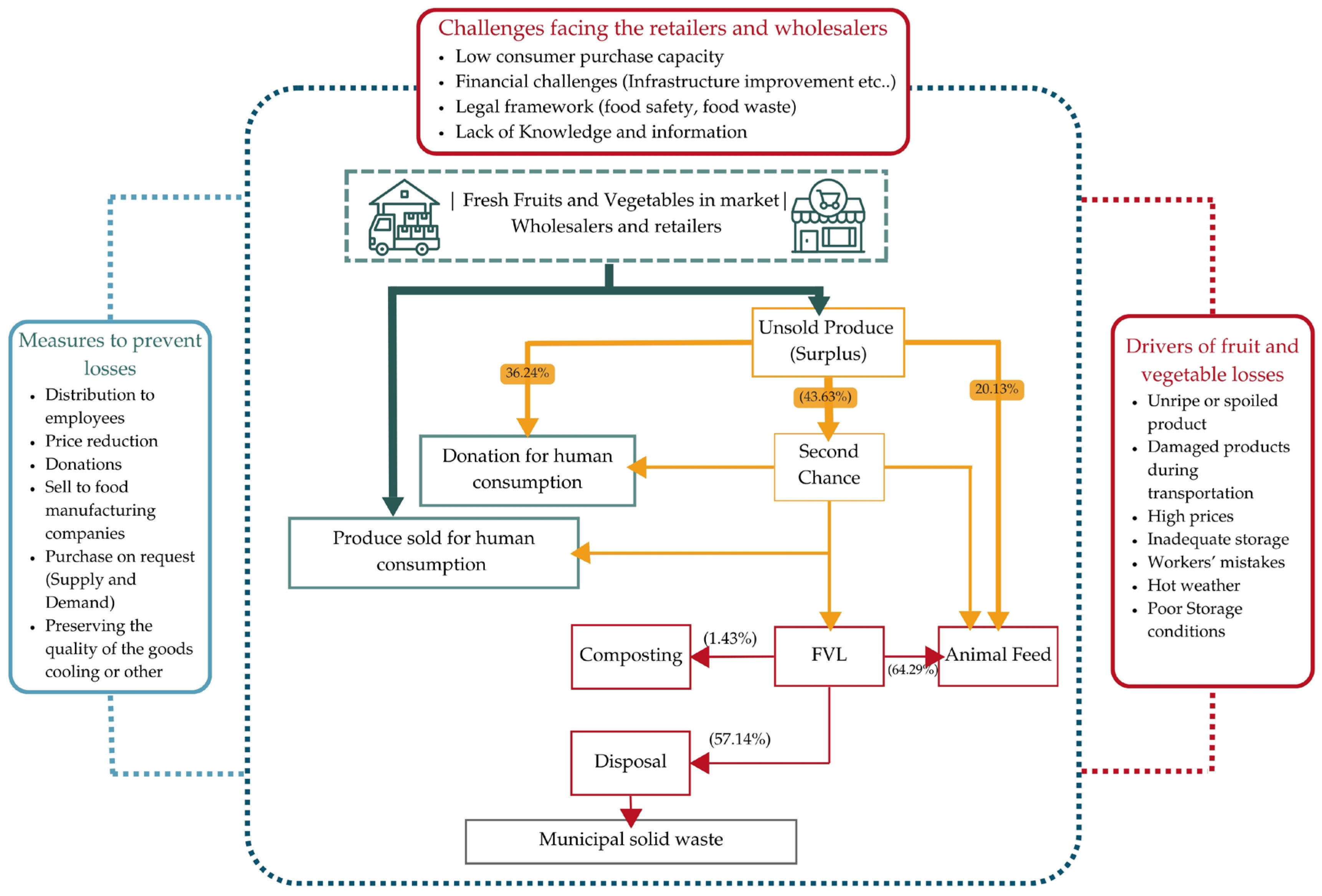
Food loss and waste are critical global issues, particularly in developing economies where they exacerbate food insecurity and environmental degradation. This study focuses on fruit and vegetable loss (FVL) in retail and wholesale markets in North Lebanon, a region marked by socio-economic challenges and infrastructural deficiencies. The research aims to identify the underlying drivers of FVL, assess current management practices, and identify aspects impacting it. Data was collected through surveys of seventy wholesalers and retailers employing descriptive statistics and multinomial logistic regression for analysis. The findings reveal that 85.7% of the sample generate little or no FVL. Being a retailer or wholesaler, operating on a small or large scale, or being open 24/7 or part-time does not affect FVL. Conversely, inadequate display and storage, hot weather, and pricing practices significantly impact FVL. The market faces challenges such as low consumer purchasing capacity, financial difficulties, legal constraints, and lack of knowledge. Various practices are used to prevent FVL, including strategic supply chain decisions, price reductions, and donations to charities. The study underscores the need for improved infrastructure, financial support, and regulatory frameworks to mitigate FVL, thereby enhancing food security and environmental sustainability in North Lebanon.
Keywords: food system; food waste and loss; food security; environmental sustainability; green economy; retail; wholesale food system; food waste and loss; food security; environmental sustainability; green economy; retail; wholesale