


Abstract
Provider payment reform is widely regarded as an important policy instrument for improving medical service efficiency, while empirical evidence on mixed provider payment systems remains limited. Taking China’s Sanming healthcare reform as a case, this study examines the effects of a mixed provider payment system that combines global budgets with diagnosis-related group (DRG)-based payment, referred to as the “double-bundling” reform, on medical service performance. Using a balanced panel dataset of public medical institutions in Sanming from 2014 to 2023, we exploit the staggered rollout of the reform as a quasi-natural experiment and estimate its effects using a staggered difference-in-differences approach. The results show that the reform significantly reduced the inpatient-to-outpatient admission ratio while increasing average length of stay and bed occupancy rate. These findings suggest that the reform was associated with higher admission thresholds, fewer potentially avoidable hospitalizations, and improved bed utilization within county-level medical institutions. Additional results indicate that the reform contributed to outpatient cost containment without a statistically significant increase in the average cost per inpatient admission. Overall, the evidence suggests that the provider payment reform helped strengthen cost-control incentives and improve the alignment between expenditure restraint and service delivery efficiency within vertically integrated county-level medical alliances. This study provides empirical evidence from China for the design of mixed provider payment reforms in integrated delivery systems.
1. Introduction
Enhancing medical service efficiency is a pivotal objective for countries striving toward universal health coverage (UHC). Under conditions of fiscal constraint, simply expanding healthcare investment is insufficient to achieve UHC goals; instead, existing resources must be used more effectively to generate greater health gains and improve service delivery performance [1]. This concern has increasingly been interpreted through the lens of value-based healthcare, which emphasizes that health system success should be assessed not only by the volume of services delivered, but also by the value created for patients, defined as the health outcomes achieved relative to the costs incurred [2]. Nevertheless, substantial inefficiencies persist across many health systems. Recent evidence indicates that roughly 20 percent of health spending is lost to inefficiency, including low-value care, avoidable hospital use, administrative fragmentation, and weak coordination in resource allocation [3]. Improving medical service efficiency, therefore, is not merely a matter of cost containment; it is also a broader governance challenge of aligning financing, service delivery, and organizational incentives to maximize health outcomes within limited budgets [1].
Provider payment systems serve as a fundamental policy lever through which purchasers shape provider behavior and influence medical service efficiency. Among the available policy instruments, provider payment systems are important because they shape incentives for service volume, care pathways, and resource allocation across levels of care. By shaping healthcare providers’ incentives, payment arrangements can affect service volume, case mix, quality of care, and cost containment [4,5]. Traditional fee-for-service (FFS) payment tends to reward greater service volume and treatment intensity, thereby encouraging the overuse of diagnostic tests, procedures, and high-margin drugs [4]. To mitigate these perverse incentives, prospective payment systems have been introduced across different healthcare settings. In the United States, for instance, early global budget pilots yielded immediate fiscal relief [6], while long-term evaluations of the Massachusetts Alternative Quality Contract suggest that this global payment arrangement may slow spending growth without compromising clinical outcomes [7]. Evidence from rural China indicates that global budget reform has effectively controlled healthcare costs while maintaining stable readmission rates [8]. Furthermore, evaluations of Beijing’s Diagnosis-Related Group (DRG) pilots suggest that case-based payment methods may improve clinical pathway standardization and cost efficiency for specific acute conditions, such as myocardial infarction [9]. In this context, governments—particularly in low- and middle-income settings—have increasingly leveraged provider payment reform as a primary mechanism to improve medical service efficiency [10,11].
A substantial body of empirical work has examined the consequences of these payment reforms. Studies of global budget and population-based payment arrangements in high-income settings generally find that such schemes are associated with lower rates of expenditure growth and, in some cases, with improvements in specific measures of care quality. For example, substantial savings are reported during the first two years of a global budget pilot between Blue Shield of California and a provider network [6]. A global payment contract in Massachusetts also reduces spending growth while maintaining or improving the measured quality of healthcare [7]. Evidence from Taiwan indicates that the introduction of an outpatient dialysis global budget cap curbs volume growth and changes utilization patterns, although some services shift across settings [12]. Evaluations of Maryland’s hospital global budget program suggest more modest effects: limited changes in overall hospital utilization are observed three years after implementation [13], whereas reductions in potentially avoidable hospital use are reported in rural areas [14]. Among vulnerable Medicare beneficiaries, global budgets did not adversely affect utilization patterns, but neither did they produce substantial improvements in measured outcomes [15]. Taken together, these studies suggest that prospective population-based payment can help contain spending and, in some cases, enhance hospital efficiency, but that its impact on utilization and quality is heterogeneous across settings and accompanied by concerns about possible under-provision or shifting of care.
Case-based payments such as DRGs represent another widely adopted reform. By prospectively setting a fixed payment per case, DRGs decouple provider revenue from the volume of individual services within an episode and encourage hospitals to reduce unnecessary inputs. Empirical evaluations in various settings have documented reductions in average inpatient costs and length of stay, alongside changes in the composition of spending. Subsequent work has highlighted potential incentives for upcoding, early discharge, risk selection, and cost shifting if effective regulation and monitoring are not in place [16,17]. DIP-type refinements to case-based payment use more granular groupings and adjustable point values, and early evidence suggests that they may influence provider behavior and inpatient resource allocation, although their broader system-level effects remain uncertain [18].
Studies of alternative provider payment systems such as global budgets, bundled payments, and DRG-based reimbursement systems suggest that their effects are frequently complex and highly context-dependent. For example, evidence from the United States indicates that bundled payments may improve care coordination and spending control, while their effects remain contingent on specific clinical and organizational settings [19]. Evidence from rural China suggests that global budget reform is associated with slower expenditure growth, but may also generate unintended responses such as higher patient out-of-pocket payments and “decomposing hospitalization” [8]. At a broader level, an overview of systematic reviews finds that no single payment model consistently outperforms others across all dimensions of patient care and system performance [20]. Taken together, these studies suggest that provider payment reform may improve cost control and service efficiency, but its effects vary across settings, implementation arrangements, and outcome dimensions.
However, in practice, national provider payment systems for health services rarely rely on a single provider payment mechanism [21]. Instead, they typically function as mixed provider payment systems in which providers face several payment methods and contractual rules at the same time, linked to different population groups, benefit packages, and services [4,5]. These mixed arrangements may generate complementary and conflicting incentives, because providers respond not to one stylized payment rule but to the combined signals of multiple payment streams. This implies that the effects of mixed payment systems cannot be inferred directly from studies of single payment instruments in isolation. Recent work suggests that such mixed systems can induce resource, service, and cost shifting and have negative implications for efficiency, equity, and quality [5,11]. Comparative assessments of alternative provider payment methods embedded in such mixed systems indicate that they embody distinct incentive structures and can generate both efficiency gains and unintended distortions in service volume, quality, and cost growth, with no single method emerging as universally superior in improving efficiency [4,20].
China provides an important context for examining the efficiency implications of provider payment systems. Since 2009, China has implemented a series of financing and delivery reforms aimed at expanding insurance coverage, containing the rapid growth of medical expenditures, and reshaping incentives for public hospitals [10]. Within this broader reform agenda, provider payment reform serves as a major policy lever, especially in county-level and municipal health systems. Existing Chinese evidence suggests that global budget reforms can strengthen cost control and alter hospital behavior. Specifically, the introduction of a global budget in rural China is associated with slower growth in inpatient expenditure and changes in readmission patterns [8]. A global budget payment system for cardiovascular diseases in Shanghai significantly moderates expenditure trends [22]. In a secondary hospital, global budgeting reduces daily expenditure and length of stay and is also associated with lower readmission rates and less multiple-antibiotic use [23]. In contrast to these studies of global budget alone, a mixed payment system combining global budget with pay-for-performance improves selected quality indicators in county hospitals [24].
In parallel, a series of pilots introduce DRG-based and DIP-based payment schemes in Chinese cities. Evidence on case-based payment reforms in China also points to important efficiency gains. An evaluation of a DRG-based payment reform for acute myocardial infarction in Beijing shows that hospitalization costs decline without any deterioration in measured quality of care [9]. Similarly, an analysis of DRG-based payment for myocardial infarction highlights both efficiency gains and potential behavioral responses [25]. A recent systematic review synthesizes the emerging evidence on DRGs in China, concluding that case-based payment tends to reduce costs and ALOS, although the robustness of its effects on quality remains less clear [26]. At a broader level, DRG payment systems can reduce unwarranted variation in hospitalization expenditure, suggesting a move towards more standardized and potentially more efficient inpatient care [27]. Existing research has explored the impact of DIP reform on inpatient volume and bed resources, showing that case-based payment mechanisms can reshape hospital service patterns and resource allocation [18]. Beyond these disease-specific assessments, studies have also examined how global budget schemes affect the medical specialty workforce, thereby illustrating the capacity of payment reforms to reconfigure human resource distribution across hospital departments [28].
Overall, China’s experience provides rich yet fragmented evidence on provider payment reforms. Existing empirical evaluations have focused primarily on expenditure growth and service utilization outcomes. As a result, relatively limited attention has been paid to systematic measures of inpatient service efficiency or to how mixed provider payment systems operate within integrated county-level health systems. In particular, most studies examine single payment instruments in isolation rather than assessing how combinations of payment methods jointly shape inpatient efficiency in county hospital systems. In response to long-standing concerns about “kan bing gui, kan bing nan” (expensive and difficult access to healthcare), many localities have shifted away from pure FFS toward various combinations of global budgets, case-based payments, and performance-based components under social health insurance schemes.
Despite this growing literature, rigorous evidence on how deliberately designed mixed provider payment systems affect healthcare service efficiency at the facility level remains scarce and is still dominated by experiences from high-income countries, with only a handful of case studies from low- and middle-income settings. Unlike prior studies that mainly rely on reviews, disease-specific evaluations, or analyses of single payment instruments, this study uses hospital-level panel data and exploits the staggered rollout of Sanming’s mixed provider payment reform as a quasi-natural experiment.
This study aims to fill this gap by empirically assessing the impact of Sanming’s mixed provider payment system on medical service efficiency. We exploit panel data from county public hospitals in Sanming city, China, to examine whether the introduction of the mixed provider payment system is associated with improved inpatient service capacity, enhanced efficiency, and better cost control. This study contributes to the literature in three ways. First, it provides empirical evidence on how a deliberately designed mixed provider payment system, embedded in a broader reform package, is associated with changes in efficiency in a large developing economy context. Second, by focusing on the Sanming model—widely cited as an influential local reform and increasingly promoted as a national template [29,30]—our findings may inform the ongoing nationwide rollout of similar reforms in China and offer lessons for other low- and middle-income countries considering mixed payment strategies [31]. Third, by explicitly linking the literature on mixed provider payment systems with empirical evidence from a national health system, the study helps advance conceptual and methodological discussions on how to conduct systems-oriented evaluations of provider payment reforms.
The remainder of this paper is organized as follows. Section 2 introduces the institutional background of Sanming’s healthcare reform, the design of the double-bundling payment system, and develops the research hypotheses. Section 3 describes the data, variables, and staggered-DID strategy. Section 4 reports the empirical results. Section 5 discusses the main findings, outlines the policy implications, and acknowledges the limitations of the study. Section 6 concludes by summarizing the main results.
2. Sanming’s Mixed Provider Payment Reform
2.1. Sanming’s Healthcare Reform
Sanming, located in Fujian Province, is widely recognized as one of the most influential local experiments in China’s healthcare reform. In 2012, the city initiated a broad package of reform intended to slow the rise in medical spending, ease patients’ financial burden, and restructure the incentive system facing public hospitals [29,32]. This reform agenda has commonly been characterized as a “three-medicals linkage” initiative, because it advanced coordinated changes in healthcare delivery and hospital governance, medical insurance financing and payment, and pharmaceutical procurement and pricing.
On the service delivery front, Sanming promoted the development of compact county medical alliances centred on county-level general hospitals, with township health centres and village clinics incorporated into a unified management system. Under this arrangement, county hospitals assumed a leading role in budget administration, human resources, and technical support, whereas lower-level providers were expected to concentrate more on primary care and the management of chronic diseases. The purpose of this organizational restructuring was to strengthen the primary-care system, improve referral efficiency, and reduce unnecessary reliance on higher-level hospitals [31,32].
These organizational changes are accompanied by corresponding adjustments in provider payment policy. Sanming established the Integrated Medicare Payment Methods, a city-wide framework that coordinates multiple payment policies across different insurance schemes, service types, and levels of care. Within this framework, inpatient services have mainly been financed through a combination of global budgets and case-based payments, while population-based payments and performance-related subsidies have been used to support primary care and chronic disease services [29]. In essence, the reform sought to make payment incentives more consistent across providers within county medical alliances, thereby fostering coordination, discouraging fragmented competition, and reorienting service delivery away from volume expansion and toward value creation and population health improvement.
Both domestic and international evaluations have identified Sanming as a prominent reform model for other regions. The World Bank and Chinese authorities have regarded Sanming’s reforms as one of the most successful pilot cases for broader replication, particularly with respect to integrated service delivery and the coordination of medical insurance payment arrangements [33].
2.2. The Reform Policy of the Mixed Provider Payment System
Sanming has developed a mixed provider payment system for public hospitals that combines a county-level global budget with DRG-based payment, alongside performance assessment and internal fund allocation rules. In Chinese policy discussions, this arrangement is commonly described as the “double-bundling” (shuang dabao) reform, reflecting the fact that both the medical insurance fund and inpatient services are incorporated into bundled payment.
For reimbursement, Sanming gradually transitioned from a limited case-based payment to a more comprehensive DRG-based payment system. In 2013, the city introduced a fixed payment approach for 30 common inpatient conditions in 22 public hospitals at or above the county-level, as a transitional step toward DRG-based reform. A pivotal milestone occurred in 2015, when Sanming integrated its fragmented insurance schemes by merging the urban employee, urban resident, and new rural cooperative medical programs. This consolidation created the basis for a unified DRG-based payment framework. In January 2016, this DRG-based payment model was further extended to township health centers, thereby broadening its coverage across both rural and urban areas. Building on its designation as a national pilot city, Sanming launched the C-DRG (China’s DRG) reform in 2018. This new round of reform expanded the settlement scope to include out-of-pocket expenditures, removed deductibles and distinctions based on reimbursement catalogues, and promoted the principle of “same disease, same treatment, same quality, and same price” [27]. Under this prospective design, DRG tariffs are determined in advance, so hospitals bear the cost of any overspending but are allowed to retain savings generated through more efficient management.
On the financing side, Sanming implements a county-level global budget for each Compact County Medical Alliance (CCMA). The Healthcare Security Administration sets an annual expenditure ceiling for basic medical insurance expenditure allocated to each alliance, drawing on factors such as historical spending, service capacity, demographic structure, and expected healthcare needs. This budget is prospectively allocated as a lump-sum package to the CCMA—usually through the county general hospital as the leading institution, under the principle of “total pre-payment, surplus retention, and shared deficit responsibility”. This framework imposes a hard or semi-hard budget constraint at the alliance level, thereby engendering fiscal discipline to curb redundant expenditures and rationalize resource allocation across the county-township-village service network. The reform followed a staggered rollout: Jiangle and Youxi counties jointly pioneered the global budget system as a pilot initiative in 2017; by 2018, the reform had been extended to all 12 counties in Sanming.
The interaction between the county-level global budget and DRG-based payment is at the core of Sanming’s mixed payment system. The global budget caps total reimbursable expenditure for the alliance, while DRGs determine how the budget is allocated across hospitals and cases. In practical terms, DRG weights and case volume drive each hospital’s share of the global budget, and ex-post adjustments are made based on performance indicators and compliance with clinical pathways [29,32]. At the same time, the “double-bundling” model is integrated with internal performance contracts and physician compensation reforms, so that cost control, service volume, and quality indicators are simultaneously reflected in hospital and clinician incentives.
Previous Chinese studies have shown that Sanming’s provider payment system reform has helped reduce drug expenditure shares, optimize hospital revenue structures, and improve certain indicators of service efficiency and cost control within county medical alliances [29,34]. Nevertheless, existing evidence remains largely descriptive or constrained to single-policy and single-facility analyses, leaving the causal mechanisms underlying these efficiency gains under-explored. This study builds on this institutional background by treating Sanming’s global-budget-plus-DRG design as a mixed provider payment system, and empirically evaluates its impact on medical service efficiency in county-level public hospitals by employing a staggered difference-in-differences approach within a quasi-experimental framework.
2.3. Research Hypotheses
The mixed provider payment system in Sanming is expected to reshape hospital incentives in a more coordinated and efficiency-oriented manner. From the perspective of value-based healthcare and strategic purchasing, provider payment reform is not only a cost-containment tool but also an institutional arrangement for improving the allocation of health resources and service performance [2,21]. Existing studies further suggest that the effects of payment reform depend on whether different reimbursement arrangements can be aligned within the broader health system [4]. In this regard, Sanming’s reform is particularly important because it combines a county-level global budget with DRG-based payment within the organizational framework of Compact County Medical Alliances [29].
Compared with traditional retrospective payment methods, this mixed payment model is more likely to improve selected dimensions of medical service efficiency in county-level public hospitals. The county-level global budget introduces a fixed spending limit on reimbursable expenditure, thereby strengthening budgetary discipline and encouraging hospitals to curb unnecessary spending [8]. At the same time, DRG-based payment prospectively standardizes reimbursement by case groups rather than actual expenditure, which weakens incentives for overprovision and promotes more standardized clinical management [17,26]. Although these effects of payment reform may vary across institutional settings, Sanming’s model is implemented together with integrated delivery, performance assessment, and internal allocation rules, which may help align hospital behavior with efficiency goals.
A major channel through which these effects may operate is the restructuring of service utilization. Under a county-level global budget, providers within the medical alliance share responsibility for total fund expenditure, which strengthens incentives to coordinate care across levels and reduce avoidable hospital use [31]. Meanwhile, DRG-based payment reduces the incentive to expand inpatient admissions merely for revenue generation because reimbursement is linked to case classification rather than itemized service growth [35]. Evidence from previous reforms indicates that prospective payment can alter hospital utilization patterns and service volume [13]. In the context of Sanming, these arrangements are expected to reduce the inpatient-to-outpatient admission ratio and promote a more rational distribution of services across levels of care.
Another important channel concerns internal hospital management and operational performance. When hospitals are simultaneously constrained by a global budget and case-based reimbursement, they face stronger pressure to improve cost accounting, optimize clinical pathways, and strengthen the management of beds and cases. Previous studies have shown that global budget and DRG reforms can contribute to expenditure control and improvements in selected indicators of quality and operational efficiency [10,23]. In Sanming, these incentives are further reinforced by physician compensation reform and internal performance contracts, which connect hospital management objectives with cost, service, and quality outcomes [30]. Thus, this study proposes the following hypotheses:
Hypothesis 1.
The mixed provider payment system is expected to improve the medical service efficiency of county-level public hospitals.
Hypothesis 2.
The mixed provider payment system is expected to reduce unnecessary inpatient utilization and promote a more rational pattern of service use in county-level public hospitals.
Hypothesis 3.
The mixed provider payment system is expected to improve the operational efficiency of county-level public hospitals by strengthening cost control and resource utilization.
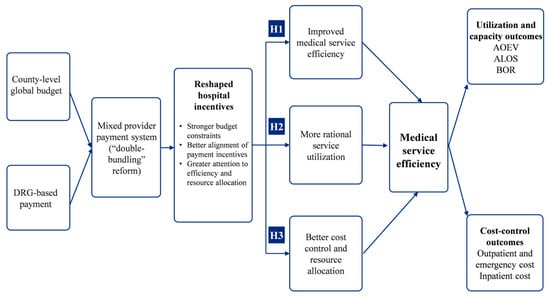
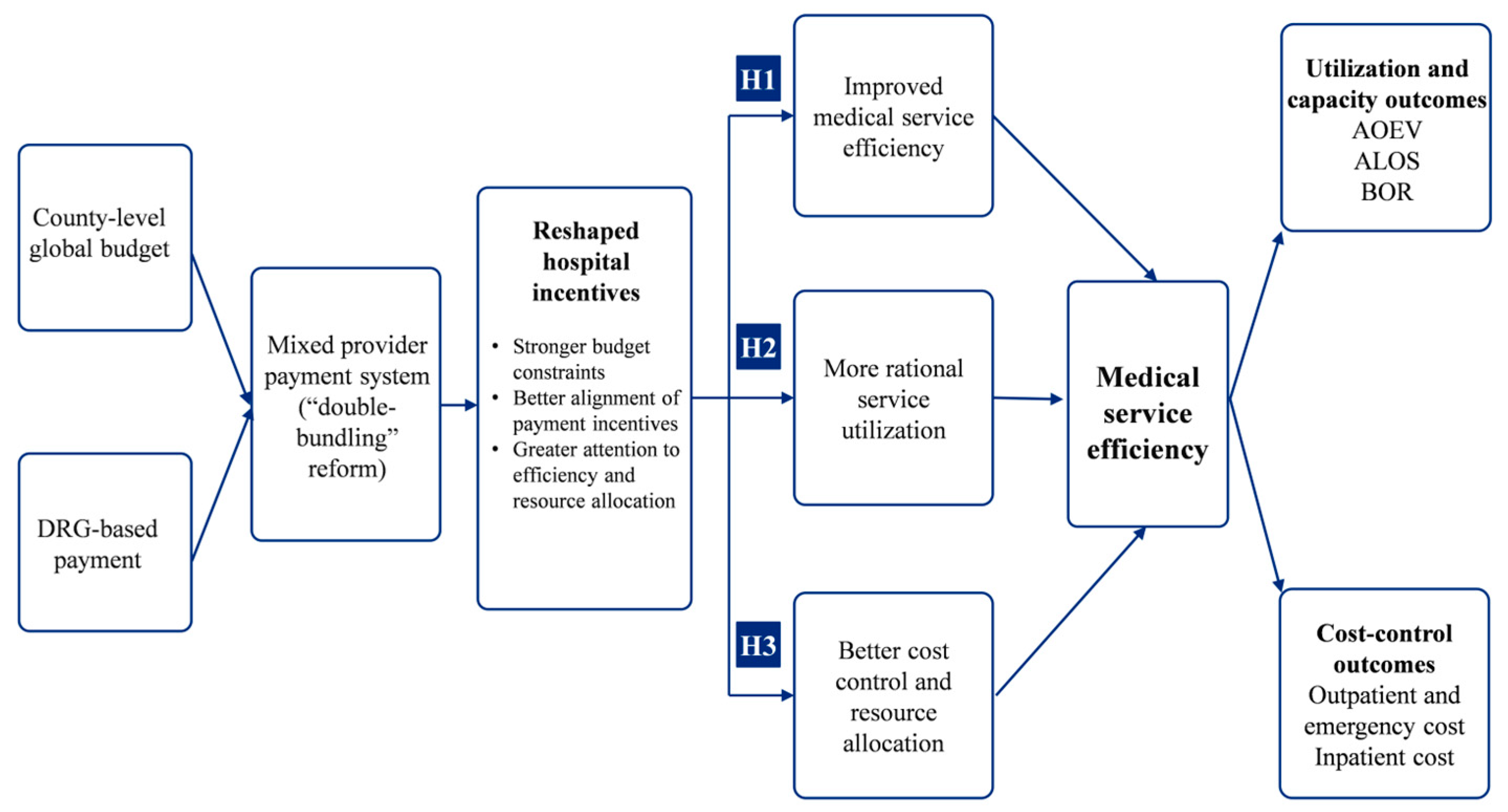
Figure 1 presents the conceptual framework of the study. It illustrates how the mixed provider payment reform reshapes hospital incentives and influences medical service efficiency through three main pathways: improved medical service efficiency, more rational service utilization, and better cost control and resource allocation. It also maps these pathways onto the key outcome indicators examined in the empirical analysis, including AOEV, ALOS, BOR, outpatient cost, and inpatient cost.
Figure 1.
Conceptual Framework.
3. Methodology
3.1. Data
The data used in this study are drawn from routine administrative records on the operation of public medical institutions in Sanming city, China, covering the period 2014–2023. The sample period ends in 2023 because administrative records for 2024–2025 were not yet fully available and comparable at the time of data collection. The dataset reports, for each county-level medical institution, total and itemized medical revenues as well as key indicators of service delivery, including inpatient admissions per 100 outpatient and emergency visits, average length of stay, and bed occupancy rate. County-level macro indicators such as the number of beds in hospitals and primary health institutions, and GDP per capita are taken from the China County Statistical Yearbook and the China Regional Economic Statistical Yearbook. Continuous control variables are transformed using natural logarithms for the analysis.
3.2. Model
To identify the causal impact of the “double-bundling” reform on medical service efficiency, we employ a difference-in-differences framework. This approach effectively isolates policy-induced shifts from confounding temporal trends by benchmarking outcomes in treated counties against a contemporaneous control group. Given the sequential rollout of Sanming’s reform whereby counties adopted the global budget and DRG-based systems at different times, we exploit this staggered rollout as a quasi-natural experiment. Our staggered difference-in-differences design leverages cross-county variation in treatment to improve estimation precision while mitigating bias from unobserved time-varying heterogeneity.
The primary identification strategy relies on a two-way fixed effects specification:
where represents the medical service efficiency indicator for hospital in year . is the focal indicator of treatment status, taking a value of 1 if county has implemented the “double-bundling” reform by year , and 0 otherwise. denotes a vector of time-varying control variables. and denote hospital and year fixed effects, respectively, which absorb time-invariant local heterogeneity and common macroeconomic shocks. is the error term.
3.3. Variables
3.3.1. Dependent Variable
This study examines the impact of provider payment reform on medical service efficiency within county-level medical alliances. In this context, efficiency is conceptualized as the productive efficiency of health resource allocation—defined as the level of output achieved for a given set of institutional inputs [36], subsuming dimensions of service structure, operational performance, and cost control.
To capture systemic efficiency and resource utilization, we employ three primary metrics: (i) the inpatient-to-outpatient admission ratio (measured as inpatient admissions per 100 outpatient and emergency visits), (ii) average length of stay (ALOS), and (iii) the bed occupancy rate. These indicators are widely recognized in recent evaluations of DRG reforms and health system capacity [35].
Specifically, the admission ratio serves as a proxy for gatekeeping capacity and service-mix optimization within the alliance; a downward shift in this ratio suggests a reduction in unnecessary or avoidable hospitalizations. ALOS and bed occupancy rates jointly reflect the throughput and technical efficiency of inpatient services. Regarding cost containment, we utilize the average expenditure per inpatient episode and the average cost per outpatient visit as indicators of the alliance’s capacity to moderate medical expenditures in response to the “double-bundling” financial incentives.
3.3.2. Independent Variable
The key independent variable is the “double-bundling” provider payment reform, which combines global budget payment from the insurance fund with DRG-based case payment. Following previous studies, we construct a “dual pilot” policy dummy: medical institutions that simultaneously implemented both the global budget reform and the DRG-based payment reform are classified as the treatment group, while those that did not implement both reforms in the same period serve as the control group. For the time dimension, the years in which a county implemented the “double-bundling” reform are coded as 1, and all other years are coded as 0.
3.3.3. Control Variables
To mitigate potential omitted variable bias and ensure the conditional independence of our treatment, we incorporate a vector of time-varying covariates that reflect both institutional structures and regional economic landscapes. Institutional controls include the composition of hospital revenue—specifically the shares derived from medical service fees and pharmaceuticals/consumables—to capture provider-side financial incentives. Regional-level controls comprise log-transformed GDP per capita to account for local economic development, alongside hospital bed density in both county and township facilities as a proxy for healthcare supply capacity. Table 1 reports the definitions and descriptive statistics of the variables used in the empirical analysis.
Table 1.
Definition of Variables.
4. Results
4.1. Regression Results
Table 2 presents the baseline estimation results for the effects of the “double-bundling” reform on the efficiency of medical institutions. All specifications include hospital and year fixed effects, and standard errors are clustered at the county level. In Column (1), the coefficient on the DID term is negative and statistically significant (β = −0.847, p < 0.05), indicating that the reform significantly reduced the inpatient-to-outpatient admission ratio (AOEV). This result supports Hypothesis 2, which predicts that the reform would help reduce unnecessary hospitalizations and promote a more rational pattern of service use. A lower AOEV indicates that county medical alliances may have become more inclined to strengthen primary gatekeeping, effectively shifting lower-severity cases to outpatient and emergency settings and mitigating unnecessary hospitalizations.
Table 2.
Regression results for the effects of the double-bundling reform.
Column (2) reports the estimated effect on the average length of stay (ALOS). The coefficient is positive and statistically significant (β = 0.945, p < 0.1). This finding provides preliminary support for Hypothesis 1. Rather than indicating a deterioration in efficiency, the increase in ALOS may reflect a shift in the composition of hospitalized patients. With less severe cases increasingly diverted to outpatient settings, those remaining in inpatient care are likely to have more serious or complex conditions and therefore require longer treatment periods. In this sense, the increase in ALOS is consistent with the broader expectation in Hypothesis 1 that the reform would improve selected dimensions of medical service efficiency through a more rational reorganization of service delivery.
Column (3) shows a highly significant increase in the bed occupancy rate (BOR) (β = 0.100, p < 0.01). This finding supports Hypothesis 3, which suggests that the reform would improve the use of inpatient resources. Under the joint incentives created by global budgeting and DRG-based payment, providers appear to have adjusted their internal service arrangements in ways that raised the utilization of existing bed capacity. The positive coefficient on BOR therefore points to a more intensive and potentially more efficient use of hospital beds under the reform.
Overall, the baseline results demonstrate that the “double-bundling” reform contributed to improvements in the structural efficiency of healthcare delivery within county-level medical alliances. More specifically, the decline in AOEV supports the argument that the reform reduced avoidable inpatient admissions and strengthened the hierarchical allocation of services. The increase in BOR further indicates more efficient use of bed resources. Although ALOS also increased, this pattern is more plausibly interpreted as reflecting a change in inpatient case severity rather than a simple decline in performance. Taken together, these findings provide overall support for the hypotheses proposed in Section 2.3 and suggest that the reform promoted a more rational allocation of healthcare services across outpatient and inpatient settings.
4.2. Mechanism Analysis
Columns (4) and (5) of Table 2 provide further insight into the cost-control mechanism associated with the reform. The coefficient on the DID term is negative and highly significant (β = −0.198, p < 0.01) for the log of average total expenditure per outpatient and emergency visit, whereas the estimated effect on the log of average expenditure per inpatient admission is statistically insignificant (β = 0.026, p > 0.10). This pattern is consistent with the incentive structure of the “double-bundling” system. As prior studies have noted, prospective and mixed payment systems tend to exert stronger pressure on providers to contain spending, although their effects may differ across service settings and types of care [20,37]. Under the joint constraints of a tight global budget and DRG-based payments, county-level medical institutions face heightened pressure to curb discretionary expenditures, particularly in ambulatory settings where diagnostic tests and prescriptions offer greater flexibility for downward adjustment on a per-visit basis. Conversely, inpatient care is subject to more rigid DRG-based tariffs and stringent clinical oversight, which circumscribes the scope for aggressive cost-cutting without triggering regulatory scrutiny or compromising standardized treatment protocols.
When considered together with the earlier findings on AOEV, ALOS, and BOR, the insignificant change in average inpatient expenditure suggests that the reform did not simply induce hospitals to shift costs from outpatient care to inpatient care. Instead, the evidence points to a process of service reallocation within county medical alliances. Specifically, lower-severity cases appear increasingly likely to be managed in outpatient departments, while inpatient beds are reserved for more clinically complex patients. This leads to higher occupancy and marginally longer stays for the residual inpatient pool, but without a material rise in the average cost per case. A similar tension between cost containment and changes in treatment patterns has also been documented in earlier research on payment reform in China, which found that expenditure control may coexist with adjustments in provider behavior across care settings [8]. In other words, the “double-bundling” reform improved allocative efficiency by reallocating resources toward patients with greater need, while at the same time slowing expenditure growth in ambulatory care.
4.3. Robustness Checks
4.3.1. Test of the Parallel Trends Assumption
The validity of the staggered DID estimates depends on the parallel trend assumption, which implies that in the absence of the “double-bundling” reform, outcome variables in the treated and control counties would have followed a common counterfactual trajectory. To empirically assess this assumption and trace the dynamic evolution of the policy’s impact, we estimate the following event-study specification:
where denotes the outcome variable for medical institution in year . and represent a series of dummy indicators for the -th period prior to and the k-th period after the reform’s implementation, respectively. and denote hospital and year fixed effects; captures time-varying control variables; is the error term. To avoid perfect collinearity and account for potential anticipatory effects following the policy’s announcement, the period immediately preceding the implementation () is omitted as the reference category.
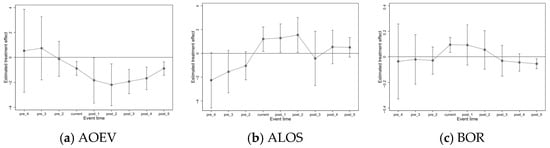
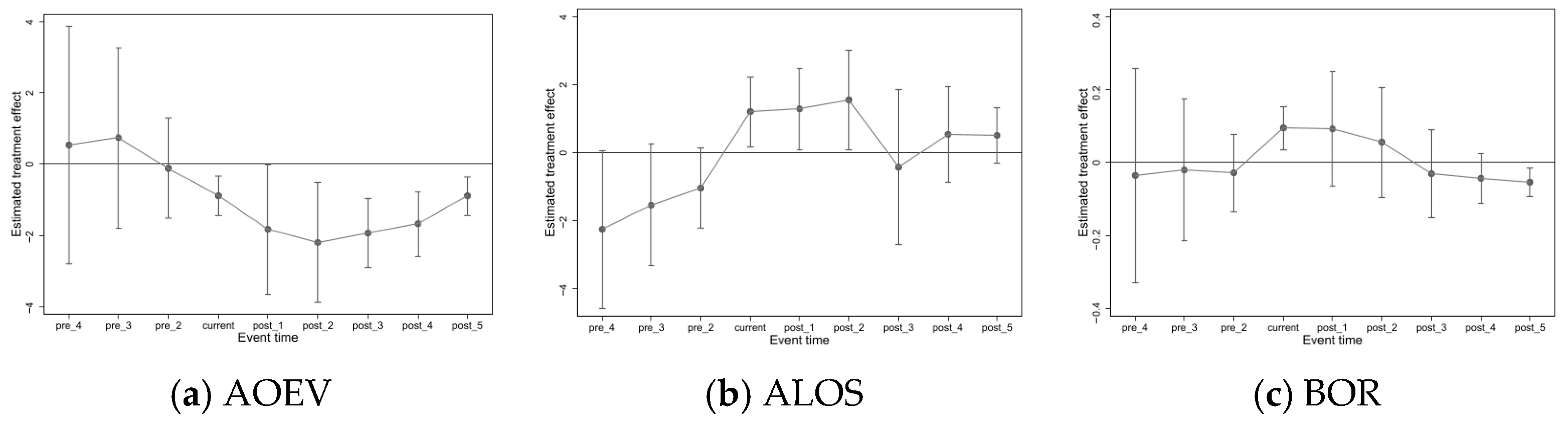
Figure 2 presents the dynamic effects of the “double-bundling” reform on three dimensions: (a) the inpatient-to-outpatient admission ratio (AOEV), (b) the average length of stay (ALOS), and (c) the bed occupancy rate (BOR). The plots display estimated coefficients and their 95% confidence intervals relative to the year before the reform. For all three outcomes, the coefficients during the pre-reform periods are generally small and statistically insignificant. This absence of systematic divergence before the intervention suggests that the parallel-trend assumption is satisfied. Upon the onset of the reform (period 0), the indicators exhibit distinct systemic responses: the AOEV shows an immediate and sustained decline, suggesting a prompt shift toward outpatient-based care, while the ALOS displays a sharp upward shift, consistent with an increase in case-mix complexity among the residual inpatient pool. Additionally, the BOR shows an initial positive response, indicating improved utilization of existing bed capacity. Collectively, these event-study results support the causal identification of our model and highlight the multi-dimensional impact of the mixed payment system on healthcare delivery.
Figure 2.
Event-study estimates for the impact of the double-bundling reform.
4.3.2. Placebo Test
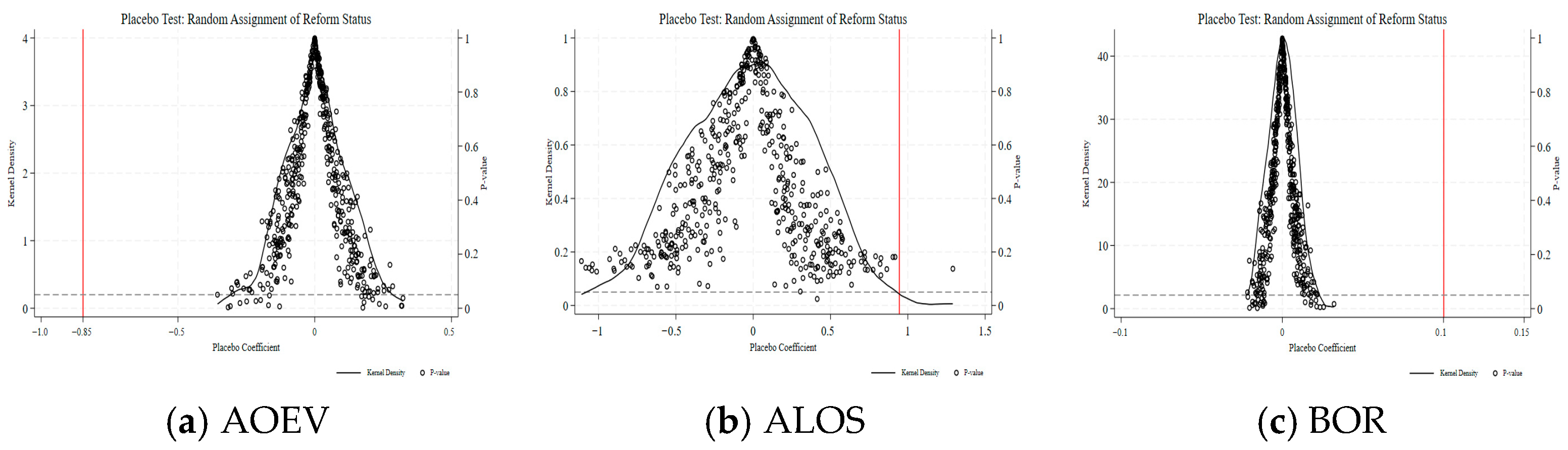
To further alleviate concerns that the estimated effects may be driven by unobserved factors, we perform a placebo test based on randomly assigned treatment status. Specifically, since the global budget and DRG-based payment reforms were implemented citywide in Sanming in 2017 and 2018, respectively, we focus on the pre-reform year 2016. Given that approximately 60% of our total observations were eventually exposed to the reform, we randomly select a 60% subsample from the 2016 data and designate them as the “pseudo-treated” group, with the remaining 40% serving as controls.
This permutation procedure is repeated 500 times. For each iteration, we estimate the baseline specification using the pseudo-treatment variable. Figure 3 presents the results for three outcome variables. In Figure 3, the red solid line indicates the true baseline estimate obtained from the actual treatment assignment, while the grey dotted line indicates the conventional significance threshold. The distribution of the 500 placebo coefficients is centered around zero, and the vast majority of their corresponding p-values (represented by the scatter points) lie well above the 0.05 threshold. Crucially, our true baseline estimate is clearly separated from the placebo distribution, falling in the extreme lower tail. This pattern suggests that the observed policy effect is highly unlikely to be driven by random chance or omitted confounders, thereby lending additional support to the robustness of our primary findings.
Figure 3.
Placebo Test: Random Assignment of Reform Status.
4.3.3. Addressing Potential Confounding from Concurrent Reforms
Sanming’s double-bundling reform took place within a broader transformation of the local healthcare system. Notably, between 2013 and 2015, the municipality rolled out concurrent reforms targeting pharmaceutical supply chains and public hospital governance. Because these initiatives were universally implemented across all 12 counties, they may introduce time-varying confounders not exclusively attributable to the “double-bundling” policy. Furthermore, the onset of the COVID-19 pandemic in 2020 introduced unprecedented exogenous shocks to healthcare delivery. Although our baseline specification incorporates year fixed effects to absorb common macroeconomic shocks, we conduct a sensitivity analysis by excluding these transitional and anomalous years to better identify the net effect of the payment reform.
Specifically, we restrict our sample window by trimming observations before 2016 and after 2020, and then re-estimate the baseline staggered DID model. As reported in Table 3, the estimated DID coefficients across all three primary outcomes—AOEV, ALOS, and BOR—retain their statistical significance and exhibit high consistency with the baseline estimates in both sign and theoretical implications. For instance, the coefficient for AOEV remains negative and significant at the 5% level (−0.499, p < 0.05). Similarly, the estimates for ALOS (1.492, p < 0.1) and BOR (0.095, p < 0.01) preserve their expected trajectories, confirming that our main findings are robust to the exclusion of periods characterized by concurrent systemic reforms and extreme exogenous disruptions.
Table 3.
Robustness check results.
4.4. Further Analysis
To further explore the divergences and potential synergies arising from global budget and DRG-based provider payment reforms, we isolated the distinct impacts of standalone DRG reforms versus the integrated “double-bundling” approach. Specifically, we compared: (i) the net impact of implementing solely a DRG-based payment system; and (ii) the combined effect of adding global budget constraints (the “double-bundling” system). The estimation results are presented in Table 4.
Table 4.
Further analysis results.
The first row of Table 4 reports the estimates for hospitals exposed only to the DRG-based payment reform. The results indicate that the standalone DRG reform marginally reduces the inpatient-to-outpatient admission ratio (AOEV, β = −0.907, p < 0.1) and shortens the average length of stay (ALOS, β = −0.044, p < 0.1). However, its impact on BOR is negative and statistically insignificant (β = −2.022, p > 0.1). From a systems perspective, this suggests a pattern of fragmented efficiency: while the DRG mechanism successfully incentivizes faster patient turnover and discourages marginal hospitalizations, it does not appear to improve aggregate capacity utilization, potentially leaving hospital beds idle and fixed costs insufficiently absorbed.
The second row reports the effects of the “double-bundling” reform. Compared to the standalone DRG model, the mixed-payment system strengthens the gatekeeping effect, yielding a more statistically robust reduction in AOEV (β = −0.908, p < 0.05). Crucially, the mixed system also generates a highly significant increase in bed utilization (BOR, β = 0.089, p < 0.01), while its effect on ALOS becomes statistically indistinguishable from zero (β = 0.781, p > 0.1). This contrast highlights a profound behavioral shift under the dual-constraint architecture. When a tight global budget is superimposed onto case-based payments, hospitals are compelled to move beyond merely accelerating discharges; at the same time, they must continuously optimize internal throughput and coordinate patient flows to maximize the productive use of existing bed capacity within the predetermined funding cap.
These comparative findings provide strong empirical evidence that global budgets and DRG-based payment systems are strict policy complements rather than substitutes. A standalone DRG system may induce localized efficiencies (e.g., shorter stays) but risks suboptimal systemic resource allocation. By contrast, the “double-bundling” mixed payment system harmonizes macroeconomic fiscal discipline with micro-level clinical incentives. For policymakers, particularly in transitioning health systems, these results underscore that successful health financing reform requires the coherent integration of multiple payment mechanisms. Only through such systemic synergy can county medical alliances achieve holistic improvements in both resource allocation and service delivery efficiency.
Our findings show that different payment designs have heterogeneous impacts on hospital services and that combining global budgets with DRG-based case payment can alter the distribution of costs and efficiency gains across inpatient and outpatient sectors. The contrasting effects of the single-payment DRG and mixed-payment reforms on AOEV, in particular, provide empirical support for the view that global budget constraints and case-based payments are policy complements rather than substitutes. From a policy perspective, these results suggest that health insurance payment reform should focus on the coherent integration of global budget and DRG-based mechanisms and, through appropriate supporting management measures, fully leverage the synergistic advantages of mixed payment systems to improve the efficiency of county medical alliances.
5. Discussion, Implications, and Limitations
5.1. Discussion
This study contributes to the provider payment literature in both methodological and empirical terms. Methodologically, previous studies on payment reform have largely followed three lines. First, review-based studies have emphasized that the effects of provider payment reform are highly context-dependent, varying with policy design, local implementation capacity, and provider autonomy rather than arising mechanically from the payment formula itself [20,38]. Second, many empirical studies have examined a single payment instrument or a narrowly defined clinical population, such as bundled payment in cardiovascular care or DRG-based payment among specific inpatient groups [19,25]. Third, recent studies have evaluated provider payment reforms using a wide range of methods, including realist reviews [38], systematic reviews [20], meta-analyses [39], and quasi-experimental designs such as difference-in-differences [24] and interrupted time-series analysis [34]. In comparison, our study uses hospital-level panel data and exploits the staggered rollout of the mixed provider payment reform as a quasi-natural experiment, thereby extending the literature from broad synthesis and single-reform evaluation toward a more integrated assessment of combined payment arrangements. This design allows us to identify the institutional effects of a combined payment arrangement over time, rather than only the short-term or disease-specific effects of a single payment reform.
Our findings are broadly consistent with the strand of literature showing that prospective or budget-constrained payment reforms are more likely to affect resource use and expenditure patterns than to generate uniform improvements across all dimensions of care. In particular, the observed decline in the inpatient-to-outpatient admission ratio and the reduction in average outpatient and emergency costs are in line with earlier evidence that global budget and DRG-type reforms can restrain cost growth and discourage excessive or low-value utilization [8]. Our results, therefore, reinforce the view that payment reform works primarily by reshaping provider incentives and treatment patterns, rather than by producing a simple across-the-board efficiency gain.
At the same time, our results also differ from part of the prior literature, and these differences are theoretically meaningful. Some studies have reported that DRG-based payment is associated with shorter length of stay, while its effects on quality indicators such as readmission and mortality are often limited or statistically insignificant [26]. Our estimates indicate that the mixed payment system reduced potentially avoidable admissions but increased ALOS and significantly improved bed occupancy. Rather than interpreting this pattern as a contradiction, we argue that it likely reflects a reallocation effect within county-level medical alliances. When global budgets impose an overall expenditure ceiling and DRG-based payment standardizes reimbursement at the case level, providers may become more selective about hospitalization and concentrate inpatient resources on relatively more severe or appropriate cases. Under such circumstances, fewer marginal admissions may coexist with a longer average stay and higher bed utilization among the remaining inpatients. This interpretation is also compatible with recent evidence from county medical community reform and from Sanming’s standalone global budget reform, both of which suggest that payment reform may alter service structure, institutional coordination, and patient flow, rather than merely compressing every utilization indicator in the same direction.
Taken together, our study suggests that the effects of mixed provider payment reform should be understood at the system level. Unlike studies that focus solely on expenditures, disease-specific outcomes, or single institutions, we examine a broader set of inpatient indicators, including admission structure, length of stay, bed occupancy, and cost control. This broader perspective helps explain why the reform may appear to produce “mixed” effects when assessed using a single outcome, yet reveals a more consistent pattern when evaluated across capacity, efficiency, and expenditure management. More broadly, the findings indicate that payment reform is not merely a technical change in reimbursement, but a governance intervention whose effects depend on how payment instruments are combined and embedded in local institutional arrangements and provider behavior.
5.2. Implications
Drawing on these empirical findings, several policy implications can be identified for health system governance. First, policymakers must prioritize the synergistic integration of composite payment mechanisms and the optimization of incentive structures. Standalone payment instruments frequently generate heterogeneous or unintended behavioral distortions. For instance, an isolated DRG system may perversely incentivize admission splitting or diagnostic upcoding, whereas a rigid global budget might discourage the provision of necessary care. By contrast, Sanming’s “double-bundling” model shows that combining a macro-level fund cap with micro-level, case-based risk sharing can help contain overall expenditure while also improving provider-level efficiency.
Second, financial reforms must be closely connected to capacity-building in primary care and the vertical integration of county-level medical networks. Strong primary-level institutions are essential to the effective operation of a hierarchical healthcare delivery system. The Sanming reform underscores that the allocative efficiency gains derived from mixed payment systems are closely tied to internal resource consolidation and vertical coordination within the medical alliance. Furthermore, the observed persistence of prolonged inpatient stays highlights an important systemic constraint: insufficient post-acute rehabilitation services and limited capacity for downward patient referral. Consequently, policymakers must supplement payment reforms with targeted investments in human capital, medical infrastructure, and digital information systems across township health centers and community clinics.
Third, advancing sustainable health system transformation requires better coordination across medical service delivery, pharmaceutical policies, and health insurance. Provider payment reform cannot be designed in isolation from drug pricing policies, benefit packages, and public hospital governance. Strengthening institutional coordination among Healthcare Security Administrations, Health Commissions, and county medical alliances, while aligning payment mechanisms with centralized drug procurement policies, is essential for building a more efficient, equitable, and resilient healthcare system.
5.3. Limitations
Despite its contributions, this study has several limitations that should be acknowledged. First, the analysis focuses on a single prefecture-level city. Although Sanming’s healthcare reform is widely regarded as an influential national model, its institutional context, administrative capacity, and baseline performance differ from those of many other regions. Accordingly, caution is warranted when extending the estimated effect sizes to other settings, especially where governance capacity or data systems are weaker. Second, due to data constraints, the study relies on institution-level indicators of service volume, efficiency, and costs. It does not directly observe patient-level health outcomes, quality of care, or patient satisfaction. As a result, we cannot fully assess whether efficiency gains are achieved without compromising quality or equity; future research could therefore incorporate quality indicators and patient outcomes to provide a more comprehensive evaluation of mixed provider payment systems. In addition, as more recent administrative records become fully available, future research may extend the observation window to examine whether the effects of the reform remain stable under newer rounds of policy adjustment and system-level change.
6. Conclusions
This paper uses panel data from public medical institutions in Sanming City between 2014 and 2023 and adopts a staggered difference-in-differences method to evaluate the impact of a mixed provider payment system on healthcare service efficiency and costs in county-level medical institutions. The reform, commonly referred to as the “double-bundling” reform, combines county-level global budgets for basic medical insurance funds with DRG-based case payment for inpatient care.
The empirical analysis produces three main findings. First, the mixed provider payment reform is associated with improvements in the medical service efficiency of county-level medical institutions. On the service side, the double-bundling reform improves both outpatient and inpatient efficiency, as reflected in more rational admission patterns (fewer admissions per 100 outpatient and emergency visits), higher bed occupancy rates, and more intensive use of existing capacity. On the cost side, the reform significantly reduces average outpatient and emergency costs per visit, indicating that efficiency gains are accompanied by better cost control rather than simple cost shifting. This suggests that the mixed payment system helps alleviate the dual challenge often described in China as “expensive and difficult access to healthcare”.
Second, the analysis shows that the mixed payment reform exhibits clear synergy compared with single-instrument pilots. Single-payment DRG pilots improve inpatient service efficiency, confirming the expected episode-level efficiency effect of case-based payment. However, when DRG-based payment is embedded within a county-level global budget, the efficiency and cost-saving effects are stronger and more systematic. The “double-bundling” reform is effective in reducing avoidable admissions, raising bed occupancy in county-level medical institutions, and lowering outpatient and emergency unit costs. These results indicate that combining global budgets with DRG-based payment can better align incentives across institutions and levels of healthcare than relying on either instrument alone.
Third, the pattern of results is broadly consistent with a systems perspective on provider payment reform. From the perspective of value-based healthcare proposed by Porter and Teisberg, an effective payment system should promote the achievement of better health outcomes at lower cost rather than merely expand service volume. In this sense, the double-bundling model embeds endogenous cost-control incentives within vertically integrated county-level medical institutions: the global budget constrains total expenditure at the county level and encourages internal resource reallocation, while the DRG component rewards efficient management of individual episodes and discourages unnecessary intensity of care. By jointly constraining aggregate spending and improving episode-level efficiency, this policy mix helps shift provider incentives from volume expansion toward value creation, thereby contributing to a more coherent balance between efficiency improvement and cost containment. At the same time, the limited changes in some indicators reveal bottlenecks in rehabilitation capacity and constraints on downward referral, highlighting that payment reform alone cannot fully substitute for investments in service capacity and delivery system reform.
Author Contributions
Conceptualization, Y.H. and Z.L.; methodology, Z.L.; formal analysis, Z.L. and Y.H.; writing—original draft preparation, Z.L.; writing—review and editing, Y.H. and Z.L.; supervision, Y.H. All authors have read and agreed to the published version of the manuscript.
Funding
This research received no external funding.
Data Availability Statement
The data presented in this study are available on request from the corresponding author due to privacy reasons.
Conflicts of Interest
The authors declare no conflicts of interest.
References
- Mbau, R.; Musiega, A.; Nyawira, L.; Tsofa, B.; Mulwa, A.; Molyneux, S.; Maina, I.; Jemutai, J.; Normand, C.; Hanson, K.; et al. Analysing the Efficiency of Health Systems: A Systematic Review of the Literature. Appl. Health Econ. Health Policy 2023, 21, 205–224. [Google Scholar] [CrossRef] [Scilit]
- Porter, M.E.; Teisberg, E.O. Redefining Health Care: Creating Value-Based Competition on Results; Harvard Business School Press: Boston, MA, USA, 2006. [Google Scholar]
- OECD. Health at a Glance 2023: OECD Indicators; OECD Publishing: Paris, France, 2023. [Google Scholar]
- Feldhaus, I.; Mathauer, I. Effects of Mixed Provider Payment Systems and Aligned Cost Sharing Practices on Expenditure Growth Management, Efficiency, and Equity: A Structured Review of the Literature. BMC Health Serv. Res. 2018, 18, 996. [Google Scholar] [CrossRef] [Scilit]
- Barasa, E.; Mathauer, I.; Kabia, E.; Ezumah, N.; Mbau, R.; Honda, A.; Dkhimi, F.; Onwujekwe, O.; Phuong, H.T.; Hanson, K. How Do Healthcare Providers Respond to Multiple Funding Flows? A Conceptual Framework and Options to Align Them. Health Policy Plan. 2021, 36, 861–868. [Google Scholar] [CrossRef] [Scilit]
- Markovich, P. A Global Budget Pilot Project Among Provider Partners and Blue Shield of California Led to Savings in First Two Years. Health Aff. 2012, 31, 1969–1976. [Google Scholar] [CrossRef] [Scilit]
- Song, Z.; Rose, S.; Safran, D.G.; Landon, B.E.; Day, M.P.; Chernew, M.E. Changes in Health Care Spending and Quality 4 Years into Global Payment. N. Engl. J. Med. 2014, 371, 1704–1714. [Google Scholar] [CrossRef] [Scilit]
- He, R.; Miao, Y.; Ye, T.; Zhang, Y.; Tang, W.; Li, Z.; Zhang, L. The Effects of Global Budget on Cost Control and Readmission in Rural China: A Difference-in-Difference Analysis. J. Med. Econ. 2017, 20, 903–910. [Google Scholar] [CrossRef] [Scilit] [PubMed]
- Jian, W.; Lu, M.; Liu, G.; Chan, K.Y.; Poon, A.N. Beijing’s Diagnosis-Related Group Payment Reform Pilot: Impact on Quality of Acute Myocardial Infarction Care. Soc. Sci. Med. 2019, 243, 112590. [Google Scholar] [CrossRef] [Scilit]
- Yip, W.; Fu, H.; Chen, A.T.; Zhai, T.; Jian, W.; Xu, R.; Pan, J.; Hu, M.; Zhou, Z.; Chen, Q.; et al. 10 Years of Health-Care Reform in China: Progress and Gaps in Universal Health Coverage. Lancet 2019, 394, 1192–1204. [Google Scholar] [CrossRef] [Scilit] [PubMed]
- Dkhimi, F.; Honda, A.; Hanson, K.; Mbau, R.; Onwujekwe, O.; Phuong, H.T.; Mathauer, I.; Akhnif, E.H.; Jaouadi, I.; Kiendrébéogo, J.A.; et al. Examining Multiple Funding Flows to Public Healthcare Providers in Low- and Middle-Income Countries. Health Policy Plan. 2023, 38, 1139–1153. [Google Scholar] [CrossRef] [Scilit] [PubMed]
- Chang, R.E.; Hsieh, C.J.; Myrtle, R.C. The Effect of Outpatient Dialysis Global Budget Cap on Healthcare Utilization by End-Stage Renal Disease Patients. Soc. Sci. Med. 2011, 73, 153–159. [Google Scholar] [CrossRef] [Scilit]
- Roberts, E.T.; Hatfield, L.A.; McWilliams, J.M.; Chernew, M.E.; Done, N.; Gerovich, S.; Gilstrap, L.; Mehrotra, A. Changes in Hospital Utilization Three Years into Maryland’s Global Budget Program for Rural Hospitals. Health Aff. 2018, 37, 644–653. [Google Scholar] [CrossRef] [Scilit]
- Done, N.; Herring, B.; Xu, T. The Effects of Global Budget Payments on Hospital Utilization in Rural Maryland. Health Serv. Res. 2019, 54, 526–536. [Google Scholar] [CrossRef] [Scilit]
- Masters, S.H.; Rutledge, R.I.; Morrison, M.; Beil, H.A.; Haber, S.G. Effects of Global Budget Payments on Vulnerable Medicare Subpopulations in Maryland. Med. Care Res. Rev. 2022, 79, 535–548. [Google Scholar] [CrossRef] [Scilit]
- Moreno-Serra, R.; Wagstaff, A. System-wide Impacts of Hospital Payment Reforms: Evidence from Central and Eastern Europe and Central Asia. J. Health Econ. 2010, 29, 585–602. [Google Scholar] [CrossRef] [Scilit]
- Mathauer, I.; Wittenbecher, F. Hospital Payment Systems Based on Diagnosis-Related Groups: Experiences in Low- and Middle-Income Countries. Bull. World Health Organ. 2013, 91, 746–756A. [Google Scholar] [CrossRef] [Scilit]
- Ding, Y.; Yin, J.; Zheng, C.; Dixon, S.; Sun, Q. The Impacts of Diagnosis-Intervention Packet Payment on the Providers’ Behavior of Inpatient Care—Evidence from a National Pilot City in China. Front. Public Health 2023, 11, 1069131. [Google Scholar] [CrossRef] [Scilit]
- Shih, T.; Chen, L.M.; Nallamothu, B.K. Will Bundled Payments Change Health Care? Examining the Evidence Thus Far in Cardiovascular Care. Circulation 2015, 131, 2151–2158. [Google Scholar] [CrossRef] [Scilit] [PubMed]
- Wagenschieber, E.; Blunck, D. Impact of Reimbursement Systems on Patient Care—A Systematic Review of Systematic Reviews. Health Econ. Rev. 2024, 14, 22. [Google Scholar] [CrossRef] [Scilit] [PubMed]
- Hanson, K.; Barasa, E.; Honda, A.; Panichkriangkrai, W.; Patcharanarumol, W. Strategic Purchasing: The Neglected Health Financing Function for Pursuing Universal Health Coverage in Low- and Middle-Income Countries: Comment on “What’s Needed to Develop Strategic Purchasing in Healthcare? Policy Lessons from a Realist Review”. Int. J. Health Policy Manag. 2019, 8, 501–504. [Google Scholar] [CrossRef] [Scilit] [PubMed]
- Dou, G.; Zhang, Y.; He, Y.; Huang, Q.; Ye, Y.; Zhang, X.; Wang, W.; Ying, X. Impact of the Global Budget Payment System on Expenditure of Cardiovascular Diseases: An Interrupted Time Series Analysis in Shanghai, China. Int. J. Environ. Res. Public Health 2019, 16, 1385. [Google Scholar] [CrossRef] [Scilit] [PubMed]
- Guan, X.; Zhang, C.; Hu, H.; Shi, L. The Impact of Global Budget on Expenditure, Service Volume, and Quality of Care Among Patients with Pneumonia in a Secondary Hospital in China: A Retrospective Study. BMC Public Health 2020, 20, 522. [Google Scholar] [CrossRef] [Scilit]
- Zhou, W.; Jian, W.; Wang, Z.; Pan, J.; Hu, M.; Yip, W. Impact of Global Budget Combined with Pay-for-Performance on the Quality of Care in County Hospitals: A difference-in-differences study design with a propensity-score-matched control group using data from Guizhou province, China. BMC Health Serv. Res. 2021, 21, 1296. [Google Scholar] [CrossRef] [Scilit]
- Yuan, S.; Su, Y.; He, L.; Li, J.; Hu, H.; Wang, Z. Impacts of Hospital Payment Based on Diagnosis Related Groups (DRGs) for Acute Myocardial Infarction in a City in China. Iran. J. Public Health 2019, 48, 238–246. [Google Scholar] [CrossRef] [Scilit]
- Zou, K.; Li, H.Y.; Zhou, D.; Liao, Z.J. The Effects of Diagnosis-Related Groups Payment on Hospital Healthcare in China: A Systematic Review. BMC Health Serv. Res. 2020, 20, 112. [Google Scholar] [CrossRef] [Scilit]
- Li, Q.; Fan, X.; Jian, W. Impact of Diagnosis-Related-Group (DRG) Payment on Variation in Hospitalization Expenditure: Evidence from China. BMC Health Serv. Res. 2023, 23, 688. [Google Scholar] [CrossRef] [Scilit] [PubMed]
- Lin, K. Effects of a global budget payment scheme on medical specialty workforces. Soc. Sci. Med. 2022, 309, 115254. [Google Scholar] [CrossRef] [Scilit]
- Zhong, Z.; Yao, Q.; Chen, S.; Jiang, J.; Lin, K.; Yao, Y.; Xiang, L. China Promotes Sanming’s Model: A National Template for Integrated Medicare Payment Methods. Int. J. Integr. Care 2023, 23, 15. [Google Scholar] [CrossRef] [Scilit]
- McCall, C. The Sanming Model: Reforming China’s Health System. Lancet 2025, 405, 2193–2194. [Google Scholar] [CrossRef] [Scilit]
- Zhang, L.; Yu, X.; Fang, Y. Does Global Budget Promote the Construction of Integrated Healthcare Delivery System? Evidence from Sanming, China. BMC Public Health 2025, 25, 2418. [Google Scholar] [CrossRef] [Scilit]
- Lin, K.; Liu, X.; Xiang, L.; Luo, F. Sanming Model of Medical Service Integration: Impact on Medical Expenditures, Service Provision, and Resource Allocation in China. Risk Manag. Healthc. Policy 2025, 18, 205–216. [Google Scholar] [CrossRef] [Scilit] [PubMed]
- World Bank. Healthy China: Deepening Health Reform in China: Building High-Quality and Value-Based Service Delivery; World Bank: Washington, DC, USA, 2022; Available online: http://documents.worldbank.org/curated/en/690791553844042874 (accessed on 25 April 2026).
- Fu, R.; Chen, Q.; Lin, Y.; Lin, Z.; Zheng, Z.; Hu, Z. Short-term and Long-term Effects of Sanming Healthcare System Reform on Drug-Related Expenditures for Rural Patients with Cancer in public hospitals: An interrupted time series analysis using segmented regression model in China. BMJ Open 2023, 13, e065586. [Google Scholar] [CrossRef] [Scilit] [PubMed]
- Zhang, H.; Fu, X.; Wu, Y.; Tang, Y.; Jin, H.; Xie, B. The impact of DRG-based payment reform on inpatient healthcare utilization: Evidence from a natural experiment in China. Healthcare 2025, 13, 2424. [Google Scholar] [CrossRef] [Scilit] [PubMed]
- Evans, D.B.; Etienne, C. Health Systems Financing and the Path to Universal Coverage. Bull. World Health Organ. 2010, 88, 402. [Google Scholar] [CrossRef] [Scilit]
- Hanson, K.; Brikci, N.; Erlangga, D.; Alebachew, A.; De Allegri, M.; Balabanova, D.; Blecher, M.; Cashin, C.; Esperato, A.; Hipgrave, D.; et al. The Lancet Global Health Commission on financing primary health care: Putting people at the centre. Lancet Glob. Health 2022, 10, e715–e772. [Google Scholar] [CrossRef] [Scilit]
- Tan, S.Y.; Melendez-Torres, G.J.; Pang, T. Implementation of provider payment system reforms in the age of universal health coverage: A realist review of evidence from Asian developing countries. J. Health Serv. Res. Policy 2019, 24, 279–287. [Google Scholar] [CrossRef] [Scilit]
- Chen, Y.J.; Zhang, X.Y.; Yan, J.Q.; Tang, X.; Qian, M.C.; Ying, X.H. Impact of diagnosis-related groups on inpatient quality of health care: A systematic review and meta-analysis. Inquiry 2023, 60, 00469580231167011. [Google Scholar] [CrossRef] [Scilit] [PubMed]

Disclaimer/Publisher’s Note: The statements, opinions and data contained in all publications are solely those of the individual author(s) and contributor(s) and not of MDPI and/or the editor(s). MDPI and/or the editor(s) disclaim responsibility for any injury to people or property resulting from any ideas, methods, instructions or products referred to in the content. |
© 2026 by the authors. Licensee MDPI, Basel, Switzerland. This article is an open access article distributed under the terms and conditions of the Creative Commons Attribution (CC BY) license.