The Decentralized AI Ecosystem in Healthcare: A Systematic Review of Technologies, Governance, and Implementation

 ,
,  , ,
, , 
Abstract
1. Introduction
2. Background and Theoretical Framework
2.1. The Imperative for Decentralization: Overcoming the Limits of Traditional AI in Healthcare
2.2. The Governance and Economic Layer: New Models for Collaboration
3. Methodology
3.1. Research Design and Methodological Approach
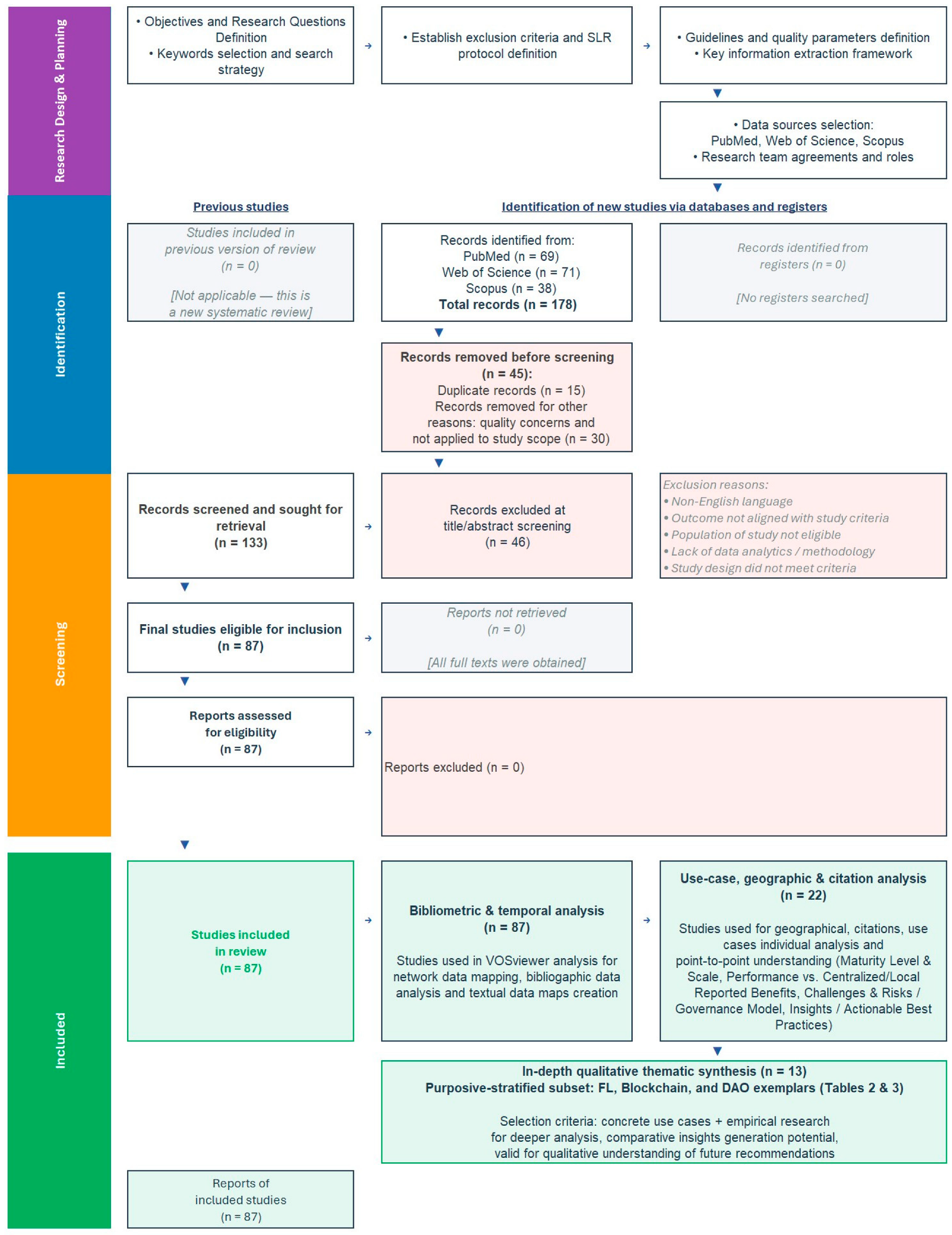
3.2. Data Collection and Study Selection
- Decentralization Concepts: The following terms are relevant to the subject: “decentralized AI,” “federated learning,” “distributed AI,” “agentic AI”, “multi-agent system,” “decentralized autonomous organization,” “blockchain,” “distributed ledger technology,” “local AI”, “dePAI infrastructure”, “Edge AI”, “Edge computing”, “off cloud computing”, “dePAI” and “DeSci.”
- In the context of Healthcare: The following terms are relevant to the field of healthcare: “healthcare,” “medical,” “clinical,” “hospital,” “patient data,” “drug discovery,” “medical imaging,” “data protection,” and “population health.”
- AI Model Concepts: The following terms are used in this text: “foundation model,” “large language model,” “LLM,” and “multimodal model.”
- The study must be a peer-reviewed article published in English.
- The study is required to describe an implemented or tested application of a dAI system or framework.
- The application context must pertain to the domains of healthcare, biomedical engineering, or clinical practice.
- The study is required to report empirical results, which can be quantitative (e.g., performance metrics) or qualitative (e.g., case study findings, user feedback).
- Theoretical, conceptual, or mathematical models that lack practical implementation or empirical evaluation.
- General AI applications that are not explicitly decentralized.
- Review articles, editorials, conference abstracts, opinions, and non-peer-reviewed literature.
3.3. Data Analysis
- Study Characteristics: author, year of publication, publication type, study design, and geographic location.
- Healthcare setting: the specific problem that is being addressed; the rationale for choosing a decentralized approach.
- The technical solution: the specific decentralization approach (e.g., FL, blockchain), the technology stack used, the system architecture, and the privacy and security measures implemented are the primary factors to be considered.
- Subjects of governance and implementation: the governance model, economic framework, and change management strategies that have been employed are of particular interest.
- Impact and Outcomes: quantitative results, including performance metrics, cost savings, and scale, as well as qualitative benefits, such as improved clinical outcomes and enhanced collaboration.
- Challenges and limitations: technical, operational, and regulatory challenges that were encountered during the implementation process.
4. Results
4.1. Evidence of Importance and Preliminary Findings
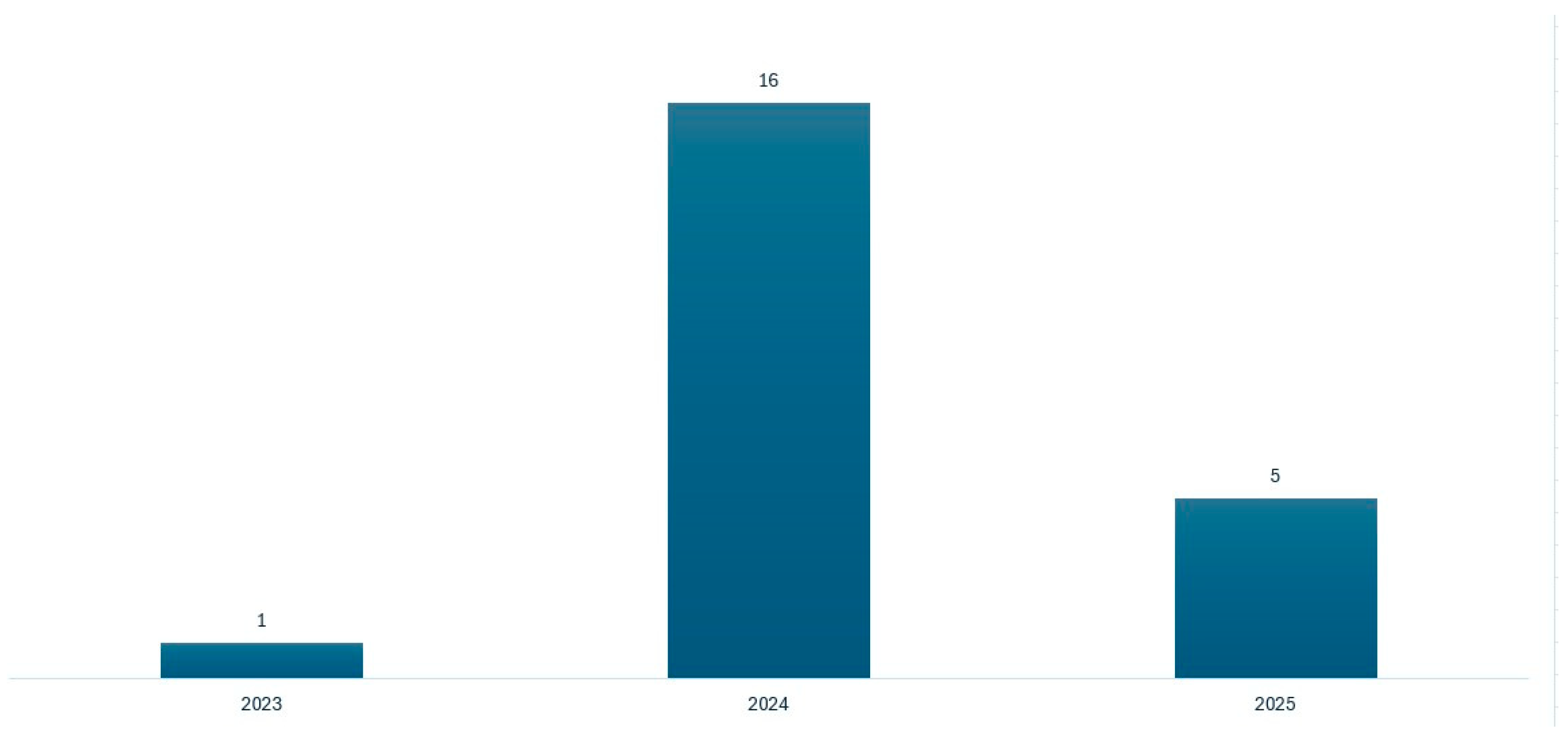
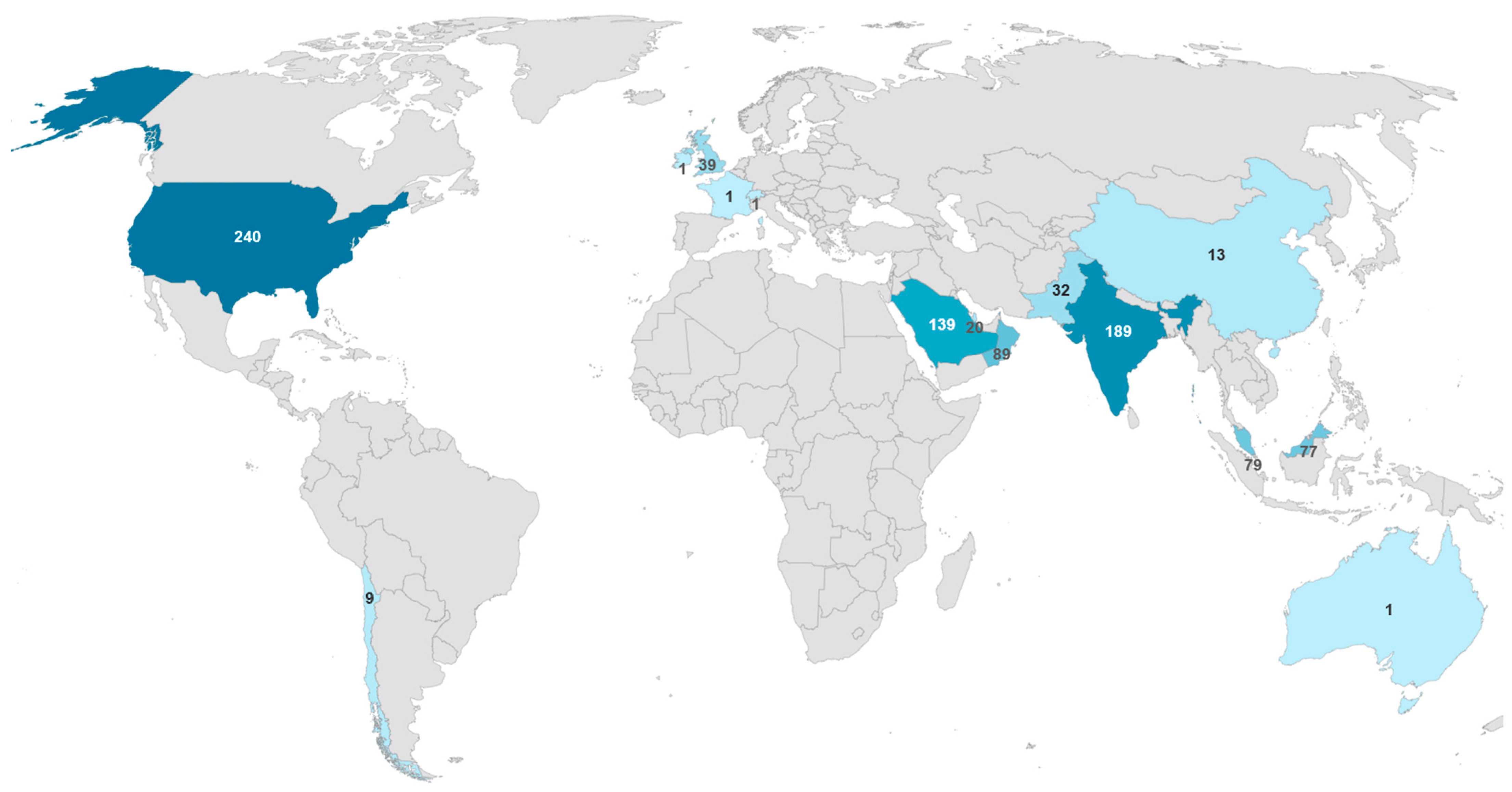
4.2. Geographic and Time Data Analysis
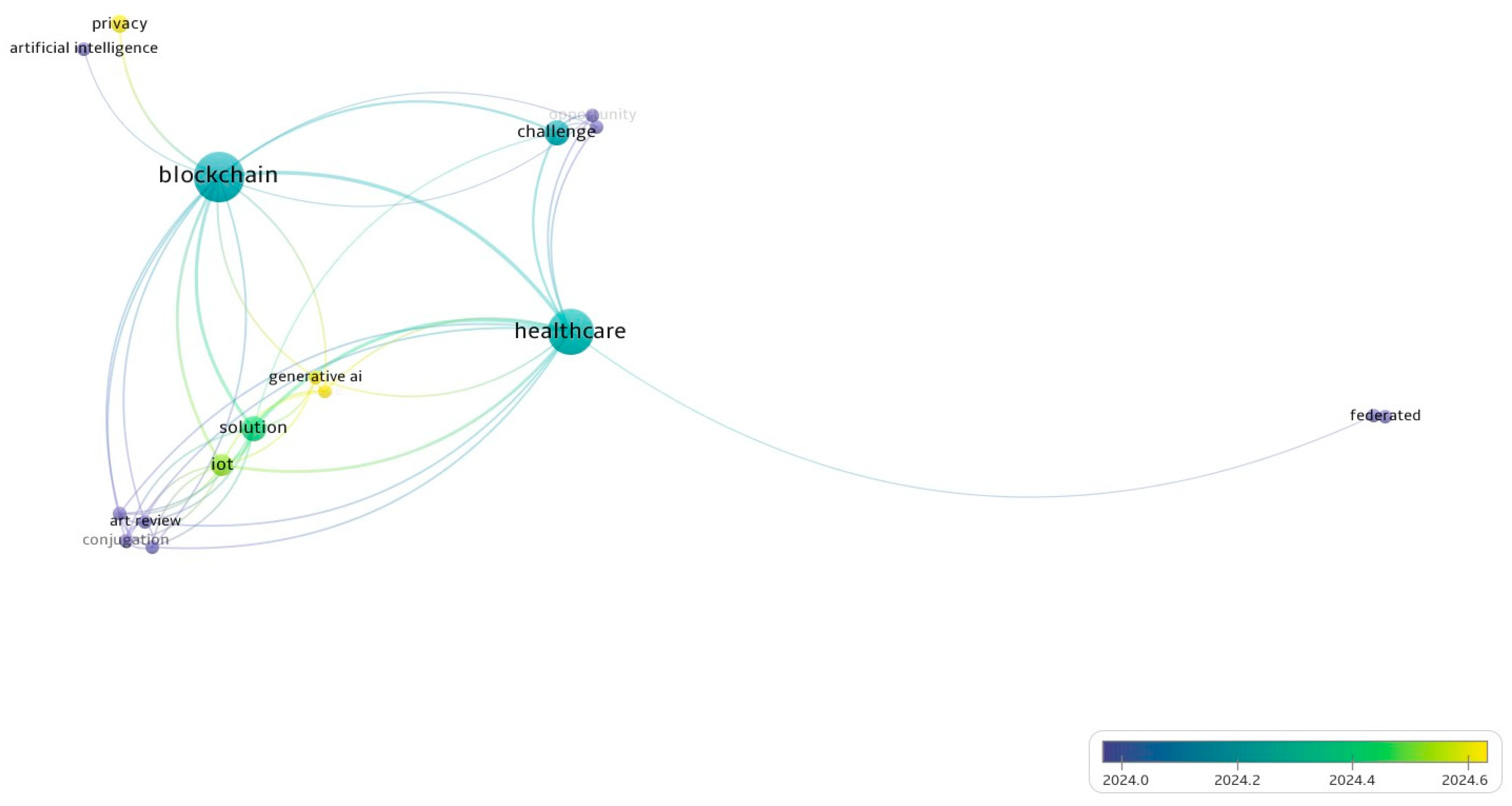
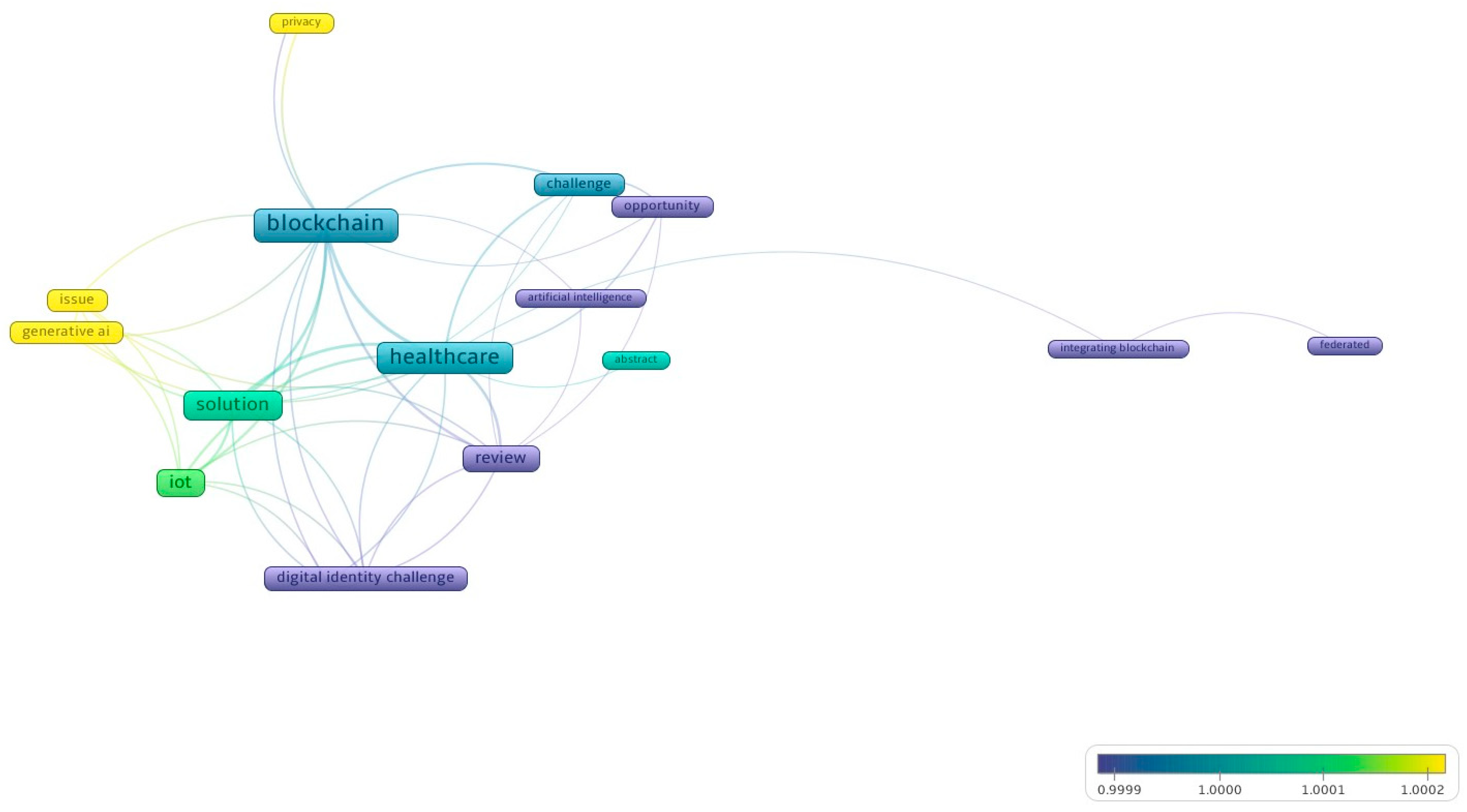
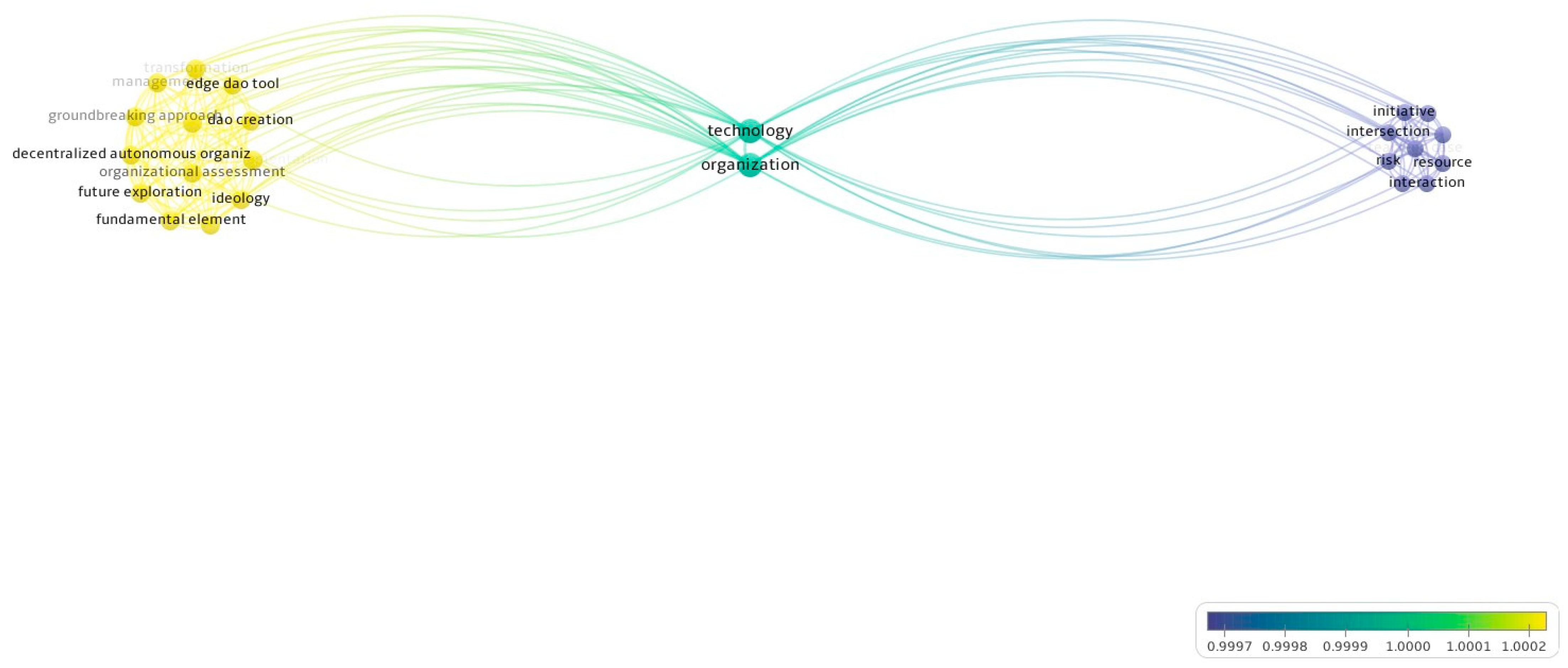
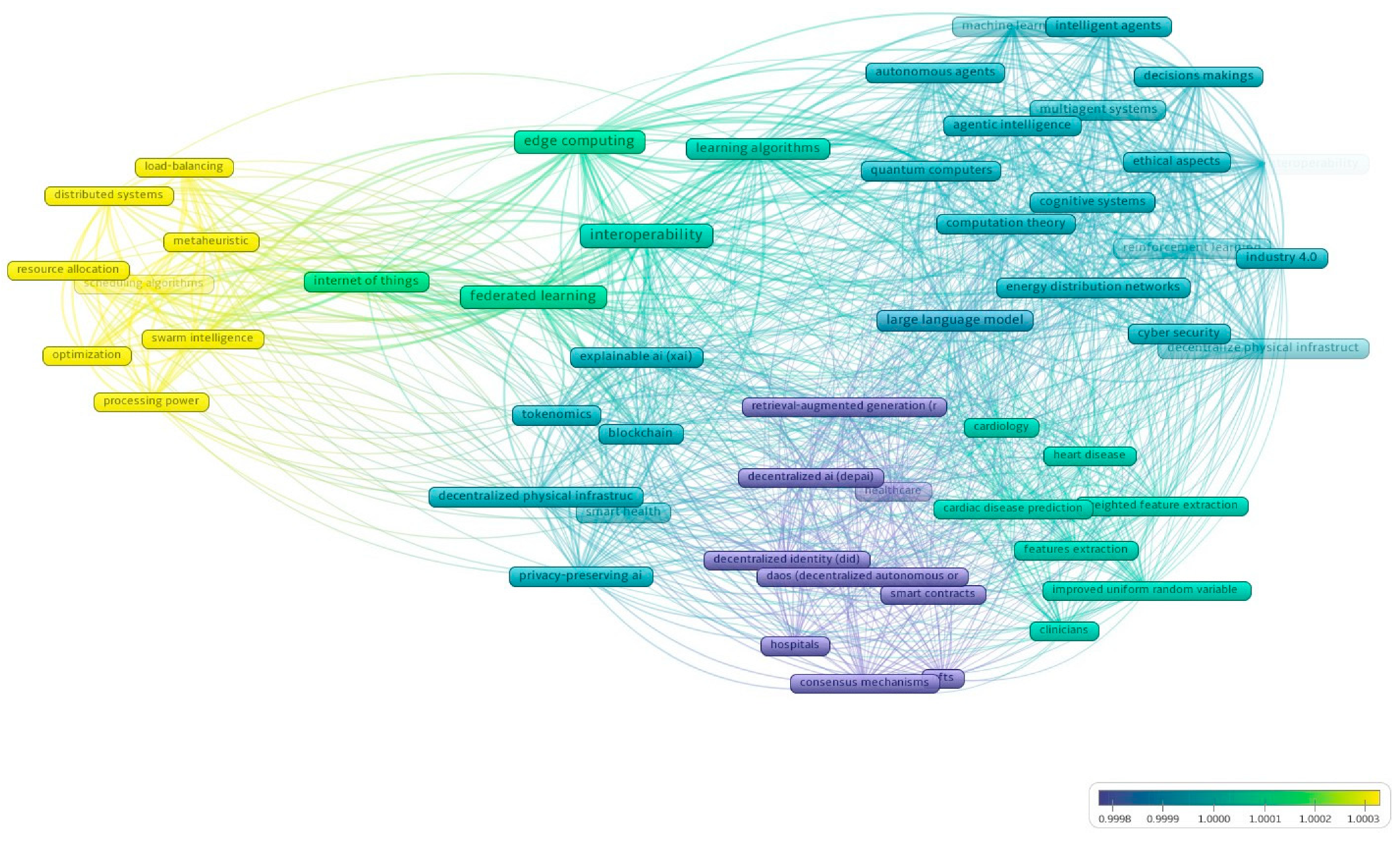
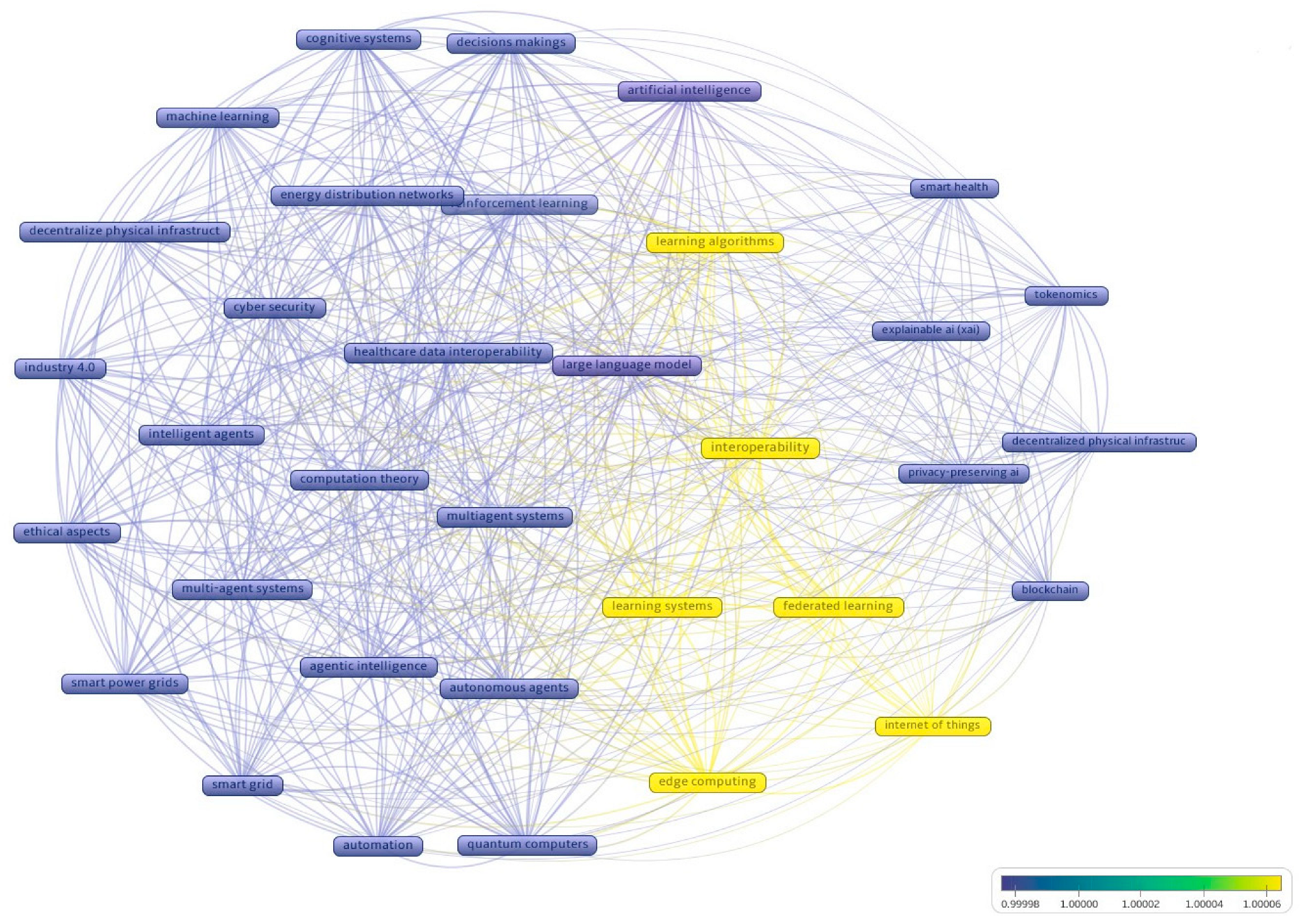
4.3. Bibliometric Mapping and Influential Publications Analysis
4.4. Detailed Final Selection Analysis

| Author, Year | Architecture | Use Case(s) | Key Computational Methods |
|---|---|---|---|
| [66] | Primarily horizontal FL. Architectures include client-server (centralized coordinator) and, less commonly, peer-to-peer (decentralized). | Medical Imaging (brain tumor segmentation, diabetic retinopathy, chest X-ray analysis), EHR Data Analysis (mortality prediction, disease diagnosis). | Models: CNNs (U-Net, ResNet), LSTMs. Aggregation: Primarily FedAvg. Some use of FedProx, FedMA. |
| [25] | FL + Blockchain: Integration of FL for collaborative training and Blockchain for auditability, security, and access control. | IoMT/Wearables Data Analysis, Secure Medical Record Sharing, Disease Prediction. | FL for ML, Smart Contracts for access control and reward mechanisms, IPFS for off-chain data storage, various consensus protocols (PoW, PoA). |
| [17] | Blockchain + Multi-Agent Reinforcement Learning (MARL) | Resource Management in Healthcare Systems: Optimizing task allocation (e.g., patient requests to hospital resources) securely and efficiently. | Deep Q-Networks (DQN) for agent learning, PoA consensus on a permissioned blockchain (Hyperledger Besu). |
| [50] | FL + Blockchain | IoT-based Healthcare 4.0: Remote patient monitoring, real-time health data analysis from connected devices. | Not specified in detail, but describes a generic framework with layers for data acquisition, edge computing, FL, and blockchain. |
| [67] | FL | Primarily focused on the implementation process across various healthcare domains rather than a single use case. | Focuses on methods to address challenges: FedProx, Scaffold, FedNova for non-IID data; DP, Homomorphic Encryption for privacy. |
| [31] | Blockchain | Clinical Trials Management: Patient recruitment, informed consent, data integrity, results traceability, and supply chain for trial medications. | Smart Contracts for consent management, cryptographic hashing for data integrity, and decentralized identifiers (DIDs) for patient identity. |
| [70] | DAO: A framework for a civic data trust. | Civic Medical Data Management: Governing collective access to and use of patient data for research by stakeholders (patients, researchers, clinicians). | Smart contracts for policy enforcement; governance tokens for voting; data access protocols. |
| [61] | DAO + AI: Synergy between DAOs for funding and AI for project evaluation in DeSci. | Life Sciences R&D Financing: Creating decentralized ecosystems for funding early-stage biotech and pharmaceutical research. | Tokenization of intellectual property (IP-NFTs); AI for due diligence; smart contracts for funding distribution. |
| [68] | (General) DAO: A comprehensive review and proposed design framework for DAOs across sectors. | Not specific to healthcare. Principles are directly applicable to designing a healthcare DAO (e.g., for a hospital network or research consortium). | Tokenomics (incentive design), on-chain vs. off-chain voting mechanisms, smart contracts. |
| [47] | DAO: A detailed case study of the MakerDAO project. | Not healthcare-related (Domain: Decentralized Finance). Its relevance is as a real-world analogy for understanding mature DAO operations and challenges. | Ethereum smart contracts, MKR governance token, formal proposal, and on-chain voting systems. |
| [30] | (General) DAO: Architectural analysis of DAOs using enterprise frameworks. | Not specific to healthcare. A high-level analysis of DAO structures is useful for integrating them into large, existing organizations like hospital systems. | Enterprise Architecture (EA) modeling languages (ArchiMate), TOGAF framework. |
| [26] | DAO: Explores DAO governance for social impact and non-profit organizations. | Not specific to healthcare (Domain: Human Rights). Principles are directly applicable to non-profit healthcare organizations or patient advocacy groups. | Cardano blockchain, governance tokens, staking, and delegative voting mechanisms. |
| [53] | (General) DAO: A review of DAO applications in managing physical infrastructure. | Not specific to healthcare (Domain: Built Environments). Analogous to managing physical hospital infrastructure or a “smart hospital” campus. | Smart contracts for property management; IoT integration; tokenization of real estate assets. |
| Author, Year | Reported Benefits | Reported Challenges and Risks | Best Practices |
|---|---|---|---|
| [66] | Data Privacy: Enables model training without sharing raw patient data. Access to Diverse Data: Breaks down data silos, leading to more generalizable and robust models. | Statistical Heterogeneity (Non-IID data), high communication costs, system heterogeneity (hardware/software variance), vulnerability to model poisoning attacks. | Need for benchmarks on diverse, real-world datasets. Recommends privacy-enhancing techniques like Differential Privacy (DP) and Secure Multi-Party Computation (SMC). |
| [25] | Enhanced Security and Trust: Blockchain provides an immutable audit trail of model updates and data access. Incentivization: Smart contracts can automate rewards for data contributors. | Scalability issues of blockchain, high computational/energy cost of PoW and integration complexity between FL and blockchain systems. | Proposes a layered architecture (Perception, Edge, Blockchain-FL) as a reference model. Highlights the opportunity for tokenomics to encourage participation. |
| [17] | Decentralized Decision-Making: Agents learn optimal policies without a central controller. Security and Auditability: Blockchain records all actions and decisions transparently. | Simulation may not capture real-world complexity. High setup complexity for MARL systems. | Demonstrates the potential of agentic AI for optimizing dynamic healthcare operations, moving beyond just data analysis. |
| [50] | Improved data security for sensitive IoT data, enhanced privacy for remote monitoring, and created a trusted ecosystem for data sharing. | Interoperability of diverse IoT devices, data quality from consumer-grade sensors, and managing network latency. | Provides a high-level architectural blueprint for integrating these technologies in an IoT context. |
| [67] | Privacy preservation is the primary benefit. Also cites improved fairness and reduced bias by including data from diverse populations. | “Data-centric” challenges (non-IID, missing data) and “Model-centric” challenges (communication bottlenecks, security). Highlights “pitfalls” like data leakage risks. | Recommends a “checklist” for FL implementation: Define the clinical problem, characterize data, select appropriate FL algorithms, and plan for ethical review. |
| [31] | Enhanced Data Integrity and Transparency: Immutable record of trial data and protocol adherence. Patient Empowerment: Patients can control access to their data via smart contracts. | Interoperability with existing hospital EMR systems, regulatory uncertainty (e.g., FDA/EMA acceptance), and data privacy concerns if not designed correctly (Right to be Forgotten). | Highlights the potential to reduce fraud and improve reproducibility in clinical research. Emphasizes starting with non-critical applications like consent tracking. |
| [70] | Democratic Control: Gives citizens a direct voice in how their data is used. Transparency: All governance decisions are on a public ledger. | Legal and Regulatory Uncertainty: DAOs lack a clear legal status. Scalability of Governance: Ensuring efficient decision-making with many participants. | Provides a blueprint for establishing a “Data DAO,” emphasizing the need for a clear constitution encoded into smart contracts. |
| [61] | Access to Capital: Opens new, global funding avenues. Community Ownership: Allows patients/researchers to own a stake in the research they support. | Valuation of IP: Difficulty in accurately valuing early-stage research. Regulatory Compliance (securities law). | Highlights the potential for DAOs to create more equitable R&D ecosystems, especially for rare or less commercially viable diseases. |
| [68] | Automation of Governance: Reduces administrative overhead. Censorship Resistance: Decisions cannot be easily overturned by a central party. | Plutocracy: Risk of governance being dominated by large token holders. Smart Contract Vulnerabilities. | Offers a structured methodology for any DAO design: define purpose, design tokenomics, then structure governance. |
| [47] | Resilience and Decentralization: Has operated for years without central control, allowing community engagement. | Centralization Risks from early token distributions. High Complexity for new users. Regulatory Scrutiny. | Provides critical real-world lessons: the need for both on-chain voting and off-chain discussion forums, and dedicated teams for risk assessment. |
| [30] | Provides a structured language for describing DAOs, making them more understandable to enterprise architects and IT managers. | Highlights a cultural and methodological gap between formal enterprise structures and the fluid nature of DAOs. | Useful for integrating DAOs into existing enterprises, providing tools to bridge traditional IT governance with decentralized models. |
| [26] | Global and Inclusive Governance: Allows members worldwide to participate. Transparent Funding: Donors can track fund usage on-chain. | Member Apathy: Ensuring sustained participation from a non-financially motivated membership base. Technical Barriers for users. | Provides a governance model well-suited for mission-driven organizations where stakeholder alignment is paramount. |
| [53] | Transparent and Efficient Management: Automating tasks like maintenance requests and access control. Shared Ownership of physical assets. | Legal Integration: Connecting on-chain ownership to real-world legal titles. IoT Security: Ensuring the integrity of sensor data. | Explores how DAOs can move from governing digital systems to governing complex physical infrastructure. |
5. Discussion
5.1. Results: Architectural Specialization and the “Concept-to-Practice” Gap
5.2. Core Drivers, Restraining Forces, and Inherent Tensions
- Transparency vs. Privacy: The immutable and often public nature of blockchain ledgers, designed for transparency, is in direct conflict with the principle of data minimization and the “right to be forgotten” enshrined in regulations like GDPR. Architectures that combine these technologies must carefully manage what data is stored on-chain versus off-chain to reconcile this tension.
- Decentralized Governance vs. Clinical Accountability: The democratic ideal of a DAO, where decisions are made by a distributed network of token-holders, poses a challenge to traditional models of clinical governance and legal accountability. In a high-stakes medical environment, establishing clear lines of responsibility for an AI model’s recommendation is non-negotiable, a requirement that purely decentralized systems struggle to meet without hybrid models incorporating expert oversight.
5.3. Actionable Frameworks and the Interdisciplinary Mandate
6. Conclusions
6.1. Findings
6.2. Limitations
Supplementary Materials
Author Contributions
Funding
Data Availability Statement
Conflicts of Interest
Appendix A. Full Search Strategies
References
- ElBaih, M. The Role of Privacy Regulations in AI Development (A Discussion of the Ways in Which Privacy Regulations Can Shape the Development of AI). Available at SSRN 4589207. 2023. Available online: https://ssrn.com/abstract=4589207 (accessed on 30 January 2026).
- Jalil, S.; Rafi, S.; LaToza, T.D.; Moran, K.; Lam, W. ChatGPT and software testing education: Promises & perils. In Proceedings of the 2023 IEEE International Conference on Software Testing, Verification and Validation Workshops (ICSTW), Dublin, Ireland, 16–20 April 2023; IEEE: Piscataway, NJ, USA, 2023; pp. 4130–4137. [Google Scholar]
- Kwok, A.O.; Treiblmaier, H. Blockchain technology as a driver of economic development in small economies: A dynamic capabilities framework. J. Decis. Syst. 2024, 33, 413–438. [Google Scholar] [CrossRef]
- Patil, A.; Kamble, S.; Shinde, S.; Hanfode, S.; Tanvashi, A.; Kore, P. Utilization of Artificial Intelligence in Healthcare System, Pharmaceutical Industry & Education. Int. J. Adv. Res. Sci. Commun. Technol. 2022, 2, 414–420. [Google Scholar] [CrossRef]
- Megahed, F.M.; Chen, Y.J.; Ferris, J.A.; Knoth, S.; Jones-Farmer, L.A. How generative AI models, such as ChatGPT, can be (mis) used in spc practice, education, and research? An exploratory study. Qual. Eng. 2024, 36, 287–315. [Google Scholar] [CrossRef]
- Tanniru, M.R.; Woo, C.; Dutta, K. A Conceptual Model to Share Resources and Align Goals: Building a Blockchain Application to Support Care Continuity Outside a Hospital. J. Risk Financ. Manag. 2023, 16, 247. [Google Scholar] [CrossRef]
- Zekiye, A.; Özkasap, Ö. Decentralized Healthcare Systems with Federated Learning and Blockchain. arXiv 2023, arXiv:2306.17188. [Google Scholar] [CrossRef]
- Vlasta, M. Methodological Framework for European Regulation of (Artificial) Intelligence and Its Limits. Master’s Thesis, Charles University, Prague, Czech Republic, 2023. [Google Scholar]
- Tordjman, M.; Liu, Z.; Yuce, M.; Fauveau, V.; Mei, Y.; Hadjadj, J.; Bolger, I.; Almansour, H.; Horst, C.; Parihar, A.S.; et al. Comparative benchmarking of the DeepSeek large language model on medical tasks and clinical reasoning. Nat. Med. 2025, 31, 2550–2555. [Google Scholar] [CrossRef]
- Agrawal, K.; Aggarwal, M. Blockchain Applications in Healthcare: Recent Advancements. In Proceedings of the 2023 International Conference on Computer Communication and Informatics (ICCCI), Coimbatore, India, 23–25 January 2023; IEEE: Piscataway, NJ, USA, 2023; pp. 1–6. [Google Scholar]
- Lee, H. The rise of ChatGPT: Exploring its potential in medical education. Anat. Sci. Educ. 2024, 17, 926–931. [Google Scholar] [CrossRef]
- Kumar, M. Blockchain Technology—An Algorithm for Drug Serialization. Univ. J. Pharm. Pharmacol. 2022, 1, 61–67. [Google Scholar] [CrossRef]
- Banu, A.; Annette, R.; Chandran, S. A Framework for Securing Health Information Using Blockchain in Cloud-Hosted Cyber-Physical Systems. arXiv 2023, arXiv:2306.17084. [Google Scholar] [CrossRef]
- Brauneck, A.; Schmalhorst, L.; Kazemi Majdabadi, M.M.; Bakhtiari, M.; Völker, U.; Baumbach, J.; Baumbach, L.; Buchholtz, G. Federated machine learning, privacy-enhancing technologies, and data protection laws in medical research: Scoping review. J. Med. Internet Res. 2023, 25, e41588. [Google Scholar] [CrossRef]
- Guan, H.; Yap, P.T.; Bozoki, A.; Liu, M. Federated learning for medical image analysis: A survey. Pattern Recognit. 2024, 151, 110424. [Google Scholar] [CrossRef]
- Beauchemin, D.; Tremblay, Y.; Youssef, M.A.; Khoury, R. A Set of Quebec-French Corpus of Regional Expressions and Terms. arXiv 2025, arXiv:2510.05026. [Google Scholar] [CrossRef]
- Al-Marridi, A.Z.; Mohamed, A.; Erbad, A. An optimized blockchain-based healthcare framework empowered by mixed multi-agent reinforcement learning. J. Netw. Comput. Appl. 2024, 224, 103834. [Google Scholar] [CrossRef]
- Ali, S.; Abdullah; Armand, T.P.T.; Athar, A.; Hussain, A.; Ali, M.; Yaseen, M.; Joo, M.-I.; Kim, H.-C. Metaverse in healthcare integrated with explainable AI and blockchain: Enabling immersiveness, ensuring trust, and providing patient data security. Sensors 2023, 23, 565. [Google Scholar] [CrossRef]
- Almarzouqi, A.; Aburayya, A.; Salloum, S. Prediction of User’s Intention to Use Metaverse System in Medical Education: A Hybrid SEM-ML Learning Approach. IEEE Access 2022, 10, 43421–43434. [Google Scholar] [CrossRef]
- Al-Nbhany, W.A.; Zahary, A.T.; Al-Shargabi, A.A. Blockchain-IoT healthcare applications and trends: A review. IEEE Access 2024, 12, 4178–4212. [Google Scholar] [CrossRef]
- Barr, N.; Cucul, C.; Moutinho, J. How Can Decentralized Technologies, Digital Twins, and Ethical AI Empower Rare Disease Patients? In Navigating Privacy, Innovation, and Patient Empowerment Through Ethical Healthcare Technology; IGI Global Scientific Publishing: Hershey, PA, USA, 2025; pp. 83–106. [Google Scholar]
- Bazel, M.A.; Ahmad, M.; Mohammed, F.; Al-Kumaim, N.H.; Mater, W.; Yasin, A. The Factors Influencing Blockchain Adoption in Hospitals: A Pilot Study. In International Conference on Computing and Informatics; Springer Nature: Singapore, 2023; pp. 15–29. [Google Scholar]
- Feng, X.; Wang, X.; Su, Y. An analysis of the current status of metaverse research based on bibliometrics. Libr. Hi Tech 2024, 42, 284–308. [Google Scholar] [CrossRef]
- Bhattacharya, P.; Obaidat, M.; Savaliya, D.; Sanghavi, S.; Tanwar, S.; Sadoun, B. Metaverse-assisted telesurgery in healthcare 5.0: An interplay of blockchain and explainable AI. In Proceedings of the 2022 International Conference on Computer, Information and Telecommunication Systems (CITS), Piraeus, Greece, 3–15 July 2022; pp. 1–5. [Google Scholar]
- Myrzashova, R.; Alsamhi, S.H.; Hawbani, A.; Curry, E.; Guizani, M.; Wei, X. Safeguarding patient data-sharing: Blockchain-enabled federated learning in medical diagnostics. IEEE Trans. Sustain. Comput. 2024, 10, 176–189. [Google Scholar] [CrossRef]
- Farry, G. DAO Governance Models for Social Impact and the Potential for a Human Rights Token for the Global Amnesty International Movement on the Cardano Blockchain. Available at SSRN 5332134. 2025. Available online: https://ssrn.com/abstract=5332134 (accessed on 30 January 2026).
- Gazendam, A.M.; Slawaska-Eng, D.; Nucci, N.W.; Bhatt, O.; Ghert, M. The Impact of Industry Funding on Randomized Controlled Trials of Biologic Therapies. Medicines 2022, 9, 18. [Google Scholar] [CrossRef]
- Bhattamisra, S.K.; Banerjee, P.; Gupta, P.; Mayuren, J.; Patra, S.; Candasamy, M. Artificial intelligence in pharmaceutical and healthcare research. Big Data Cogn. Comput. 2023, 7, 10. [Google Scholar] [CrossRef]
- Hoang, L.C.; Do, M.H.T.; Quang, H.T.; Hoang, T.H. Blockchain technology applications in retail branding: Insights from retailers in the developing world. Thunderbird Int. Bus. Rev. 2024, 66, 3–18. [Google Scholar] [CrossRef]
- Hue, J.; Rychkova, I.; Herbaut, N. On the Alignment of DAO with Socio-political Principles of Decentralised Governance Using TOGAF and ArchiMate. In International Conference on Enterprise Design, Operations, and Computing; Springer Nature: Cham, Switzerland, 2024; pp. 117–136. [Google Scholar]
- Castro, C.; Leiva, V.; Garrido, D.; Huerta, M.; Minatogawa, V. Blockchain in clinical trials: Bibliometric and network studies of applications, challenges, and prospects based on data analytics. Comput. Methods Programs Biomed. 2024, 255, 108321. [Google Scholar] [CrossRef]
- Cerchione, R.; Centobelli, P.; Riccio, E.; Abbate, S.; Oropallo, E. Blockchain’s coming to hospitals to digitalize healthcare services: Designing a distributed electronic health record ecosystem. Technovation 2023, 120, 102480. [Google Scholar] [CrossRef]
- Kshetri, N. Facilitation of Entrepreneurial Activities. In Blockchain in the Global South: Opportunities and Challenges for Businesses and Societies; Springer Nature: Cham, Switzerland, 2023; pp. 57–82. [Google Scholar]
- Jena, S.K.; Barik, R.C.; Priyadarshini, R. A systematic state-of-the-art review on digital identity challenges with solutions using the conjunction of IOT and blockchain in healthcare. Internet Things 2024, 25, 101111. [Google Scholar] [CrossRef]
- Liu, X.; Shah, R.; Shandilya, A.; Shah, M.; Pandya, A. A systematic study on integrating blockchain in healthcare for electronic health record management and tracking medical supplies. J. Clean. Prod. 2024, 447, 141371. [Google Scholar] [CrossRef]
- Chen, X.; Cheng, Q.; Luo, T. The economic value of blockchain applications: Early evidence from asset-backed securities. Manag. Sci. 2024, 70, 439–463. [Google Scholar] [CrossRef]
- Liang, W.; Liu, Y.; Yang, C.; Xie, S.; Li, K.; Susilo, W. On identity, transaction, and smart contract privacy on permissioned and permissionless blockchain: A comprehensive survey. ACM Comput. Surv. 2024, 56, 1–35. [Google Scholar] [CrossRef]
- Jaime, F.J.; Muñoz, A.; Rodríguez-Gómez, F.; Jerez-Calero, A. Strengthening privacy and data security in biomedical microelectromechanical systems by IoT communication security and protection in smart healthcare. Sensors 2023, 23, 8944. [Google Scholar] [CrossRef] [PubMed]
- Jung, D.H. Enhancing Competitive Capabilities of Healthcare SCM through the Blockchain: Big Data Business Model’s Viewpoint. Sustainability 2022, 14, 4815. [Google Scholar] [CrossRef]
- Kataria, B.; Jethva, H.B. Decentralized Security Mechanisms for AI-Driven Wireless Networks: Integrating Blockchain and Federated Learning. Int. J. Sci. Res. Sci. Eng. Technol. 2024, 11, 342–352. [Google Scholar] [CrossRef]
- Lin, H.; Wan, S.; Gan, W.; Chen, J.; Chao, H. Metaverse in education: Vision, opportunities, and challenges. In Proceedings of the 2022 IEEE International Conference on Big Data (Big Data), Osaka, Japan, 17–20 December 2022; pp. 2857–2866. [Google Scholar]
- Mhlanga, D. Blockchain for Digital Financial Inclusion Towards Reduced Inequalities. In FinTech and Artificial Intelligence for Sustainable Development: The Role of Smart Technologies in Achieving Development Goals; Springer Nature: Cham, Switzerland, 2023; pp. 263–290. [Google Scholar]
- Odeh, A.; Keshta, I.; Al-Haija, Q.A. Analysis of blockchain in the healthcare sector: Application and issues. Symmetry 2022, 14, 1760. [Google Scholar] [CrossRef]
- Mahammad, A.B.; Kumar, R. Scalable and Secure Framework to Secure and Maintain Healthcare Data using Blockchain Technology. In Proceedings of the 2023 International Conference on Computational Intelligence and Sustainable Engineering Solutions (CISES), Greater Noida, India, 28–30 April 2023; IEEE: Piscataway, NJ, USA, 2023; pp. 417–423. [Google Scholar]
- Meisami, S.; Meisami, S.; Yousefi, M.; Aref, M.R. Combining Blockchain and IOT for Decentralized Healthcare Data Management. arXiv 2023, arXiv:2304.00127. [Google Scholar] [CrossRef]
- Mirdad, A.; Hussain, F.K. Blockchain-based pharmaceutical supply chain: A literature review. In Advances on P2P, Parallel, Grid, Cloud and Internet Computing: Proceedings of the 16th International Conference on P2P, Parallel, Grid, Cloud and Internet Computing (3PGCIC-2021); Springer International Publishing: Cham, Switzerland, 2022; pp. 106–115. [Google Scholar]
- Ellinger, E.W.; Mini, T.; Gregory, R.W.; Dietz, A. Decentralized autonomous organization (DAO): The case of MakerDAO. J. Inf. Technol. Teach. Cases 2024, 14, 265–272. [Google Scholar] [CrossRef]
- Falcetta, F.S.; de Almeida, F.K.; Lemos, J.C.S.; Goldim, J.R.; da Costa, C.A. Automatic documentation of professional health interactions: A systematic review. Artif. Intell. Med. 2023, 137, 102487. [Google Scholar] [CrossRef] [PubMed]
- Rospigliosi, P.A. Artificial intelligence in teaching and learning: What questions should we ask of ChatGPT? Interact. Learn. Environ. 2023, 31, 1–3. [Google Scholar] [CrossRef]
- Puri, V.; Kataria, A.; Sharma, V. Artificial intelligence-powered decentralized framework for Internet of Things in Healthcare 4.0. Trans. Emerg. Telecommun. Technol. 2024, 35, e4245. [Google Scholar] [CrossRef]
- Page, M.J.; McKenzie, J.E.; Bossuyt, P.M.; Boutron, I.; Hoffmann, T.C.; Mulrow, C.D.; Shamseer, L.; Tetzlaff, J.M.; Akl, E.A.; Brennan, S.E.; et al. The PRISMA 2020 statement: An updated guideline for reporting systematic reviews. BMJ 2021, 372, n71. [Google Scholar] [CrossRef] [PubMed]
- Mozumder, M.A.I.; Sheeraz, M.M.; Athar, A.; Aich, S.; Kim, H.-C. Overview: Technology roadmap of the future trend of the metaverse based on IoT, blockchain, AI techniques, and medical domain metaverse activity. In Proceedings of the 2022 24th International Conference on Advanced Communication Technology (ICACT), Pyeongchang, Republic of Korea, 13–16 February 2022; pp. 256–261. [Google Scholar]
- Ly, R.; Shojaei, A. Decentralized autonomous organization in built environments: Applications, potential and limitations: R. Ly and A. Shojaei. Inf. Syst. e-Bus. Manag. 2025, 23, 577–622. [Google Scholar] [CrossRef]
- Mazhar, T.; Khan, S.; Shahzad, T.; Khan, M.A.; Saeed, M.M.; Awotunde, J.B.; Hamam, H. Generative AI, IoT, and blockchain in healthcare: Application, issues, and solutions. Discov. Internet Things 2025, 5, 5. [Google Scholar] [CrossRef]
- Park, S.-M.; Kim, Y.-G. A Metaverse: Taxonomy, Components, Applications, and Open Challenges. IEEE Access 2022, 10, 4209–4251. [Google Scholar] [CrossRef]
- Quayson, M.; Bai, C.; Sun, L.; Sarkis, J. Building blockchain-driven dynamic capabilities for developing circular supply chain: Rethinking the role of sensing, seizing, and reconfiguring. Bus. Strategy Environ. 2023, 32, 4821–4840. [Google Scholar] [CrossRef]
- Peres, R.; Schreier, M.; Schweidel, D.; Sorescu, A. On ChatGPT and beyond: How generative artificial intelligence may affect research, teaching, and practice. Int. J. Res. Mark. 2023, 40, 269–275. [Google Scholar] [CrossRef]
- Qu, Y.; Ma, L.; Ye, W.; Zhai, X.; Yu, S.; Li, Y.; Smith, D. Towards Blockchain-Assisted Privacy-Aware Data Sharing For Edge Intelligence: A Smart Healthcare Perspective. arXiv 2023, arXiv:2306.16630. [Google Scholar]
- Zhang, F.; Kreuter, D.; Chen, Y.; Dittmer, S.; Tull, S.; Shadbahr, T. BloodCounts! Consortium Recent methodological advances in federated learning for healthcare. Patterns 2024, 5, 101006. [Google Scholar] [CrossRef]
- Tahir, N.U.A.; Rashid, U.; Hadi, H.J.; Ahmad, N.; Cao, Y.; Alshara, M.A.; Javed, Y. Blockchain-based healthcare records management framework: Enhancing security, privacy, and interoperability. Technologies 2024, 12, 168. [Google Scholar] [CrossRef]
- Savioz, G.; Honer, K.; Pesqueira, A. The Impact and Potential of AI and DAO in Life Sciences R&D Financing. In Navigating Privacy, Innovation, and Patient Empowerment Through Ethical Healthcare Technology; IGI Global Scientific Publishing: Hershey, PA, USA, 2025; pp. 217–254. [Google Scholar]
- Saleh, A.M.S. Blockchain for secure and decentralized artificial intelligence in cybersecurity: A comprehensive review. Blockchain Res. Appl. 2024, 5, 100193. [Google Scholar] [CrossRef]
- Shah, V.; Thakkar, V.; Khang, A. Electronic health records security and privacy enhancement using blockchain technology. In Data-Centric AI Solutions and Emerging Technologies in the Healthcare Ecosystem; CRC Press: Boca Raton, FL, USA, 2023; pp. 1–13. [Google Scholar]
- Wamba, S.F.; Queiroz, M.M.; Jabbour, C.J.C.; Shi, C.V. Are both generative AI and ChatGPT game changers for 21st-century operations and supply chain excellence? Int. J. Prod. Econ. 2023, 265, 109015. [Google Scholar] [CrossRef]
- Kumar, M.; Raj, H.; Chaurasia, N.; Gill, S.S. Blockchain-inspired secure and reliable data exchange architecture for cyber-physical healthcare system 4.0. Internet Things Cyber-Phys. Syst. 2023, 3, 309–322. [Google Scholar] [CrossRef]
- Teo, Z.L.; Jin, L.; Liu, N.; Li, S.; Miao, D.; Zhang, X.; Ting, D.S.W. Federated machine learning in healthcare: A systematic review on clinical applications and technical architecture. Cell Rep. Med. 2024, 5, 101419. [Google Scholar] [CrossRef]
- Li, M.; Xu, P.; Hu, J.; Tang, Z.; Yang, G. From challenges and pitfalls to recommendations and opportunities: Implementing federated learning in healthcare. Med. Image Anal. 2025, 101, 103497. [Google Scholar] [CrossRef]
- Saurabh, K.; Upadhyay, P.; Rani, N. Towards blockchain decentralized autonomous organizations (DAO) design. Inf. Syst. Front. 2025, 27, 659–681. [Google Scholar] [CrossRef]
- Wahdain, E.A.; Abdullah, N.L. Data Integration in Big Data Environment: A Review. In Proceedings of the 2024 4th International Conference on Emerging Smart Technologies and Applications (eSmarTA), Sana’a, Yemen, 6–7 August 2024; IEEE: Piscataway, NJ, USA, 2024; pp. 1–8. [Google Scholar]
- Cunningham, J.; Davies, N.; Devaney, S.; Holm, S.; Harding, M.; Neumann, V.; Ainsworth, J. The application of distributed autonomous organization governance mechanisms to civic medical data management. Iet Blockchain 2024, 4, 507–525. [Google Scholar] [CrossRef]




| Domain | Key Insight |
|---|---|
| Technological Foundations | The technological architecture primarily consists of two pillars: FL for privacy-preserving machine learning, and Blockchain technology, with its associated Smart Contracts, for data integrity, auditable access control, and governance. |
| Primary Application Areas | Prominent applications are categorized into clinical domains, with a focus on Medical Imaging Analysis, and operational domains, targeting EHR Management and the integrity of the pharmaceutical Supply Chain. |
| Implementation Maturity | The field remains at a nascent stage of development. The body of literature is dominated by Conceptual Frameworks and Proofs-of-Concept, with a discernible absence of large-scale, longitudinal studies conducted in real-world clinical environments. |
| Core Motivation | The principal driver for research and development is the potential of dAI to overcome the limitations of centralized systems. This is achieved by enabling Enhanced Data Privacy and establishing Trust and Transparency, which in turn facilitates collaborative research across previously siloed datasets. |
| Principal Barriers | Significant barriers to widespread adoption are multifaceted. They include technical challenges (scalability, interoperability with established health information standards), regulatory and legal ambiguity, and the intrinsic complexity of designing robust and equitable decentralized governance models. |
| Emerging Governance Models | An emergent trend within the literature is the exploration of DAOs as a novel governance framework to create equitable, stakeholder-driven ecosystems for health data sharing and collaborative research initiatives. |
Disclaimer/Publisher’s Note: The statements, opinions and data contained in all publications are solely those of the individual author(s) and contributor(s) and not of MDPI and/or the editor(s). MDPI and/or the editor(s) disclaim responsibility for any injury to people or property resulting from any ideas, methods, instructions or products referred to in the content. |
© 2026 by the authors. Licensee MDPI, Basel, Switzerland. This article is an open access article distributed under the terms and conditions of the Creative Commons Attribution (CC BY) license.
Share and Cite
Pesqueira, A.; Cucul, C.; Egelhof, T.; Fuchs, S.; Tang, L.; Sofia, N.; de Bem Machado, A. The Decentralized AI Ecosystem in Healthcare: A Systematic Review of Technologies, Governance, and Implementation. Systems 2026, 14, 414. https://doi.org/10.3390/systems14040414
Pesqueira A, Cucul C, Egelhof T, Fuchs S, Tang L, Sofia N, de Bem Machado A. The Decentralized AI Ecosystem in Healthcare: A Systematic Review of Technologies, Governance, and Implementation. Systems. 2026; 14(4):414. https://doi.org/10.3390/systems14040414
Chicago/Turabian StylePesqueira, Antonio, Carmen Cucul, Thomas Egelhof, Stephanie Fuchs, Leilei Tang, Natalia Sofia, and Andreia de Bem Machado. 2026. "The Decentralized AI Ecosystem in Healthcare: A Systematic Review of Technologies, Governance, and Implementation" Systems 14, no. 4: 414. https://doi.org/10.3390/systems14040414
APA StylePesqueira, A., Cucul, C., Egelhof, T., Fuchs, S., Tang, L., Sofia, N., & de Bem Machado, A. (2026). The Decentralized AI Ecosystem in Healthcare: A Systematic Review of Technologies, Governance, and Implementation. Systems, 14(4), 414. https://doi.org/10.3390/systems14040414