1. Introduction
Tourism is fundamentally an experiential industry involving people’s movements. UN Tourism identifies “movement of people” as a core element of tourism, defining it as a “social, cultural and economic phenomenon” [
1,
2]. While this industry generates substantial revenue for local economies (global tourism’s GDP contribution in 2024 is USD 10.9 trillion), it also produces negative environmental impacts, including carbon emissions from travel, traffic congestion, and natural degradation [
3,
4]. The tourism sector accounts for 8–9% of global carbon emissions [
5,
6], most of which is associated with tourist mobility. Tourism transport alone is projected to increase carbon emissions by 25% by 2030 compared to 2016 [
1,
2].
The dominance of aviation- and automobile-centered transport in tourism mobility poses urgent sustainability challenges, demanding fundamental transitions toward low-carbon alternatives [
7]. Non-motorized mobility, which includes walking, cycling, and water-based activities, emerged as a critical component of sustainable tourism development. However, despite the growing recognition of its potential, non-motorized mobility infrastructure in many countries remains fragmented and disconnected. Walking trails, bicycle routes, and waterway networks are often developed as isolated facilities by different government agencies and lack systematic integration with broader transportation networks.
The effectiveness of non-motorized mobility systems depends on multiple factors, including the quality and continuity of physical infrastructure, integration with public transportation and land use, and contextual conditions such as topography, climate, and culture [
8]. Among these, network structure and spatial connectivity play a particularly foundational role, as discontinuous or poorly integrated networks constrain accessibility regardless of individual facility quality [
9]. Discontinuous networks are associated with lower utilization rates and reduced accessibility [
9], while well-connected systems exhibit higher usage and broader practical accessibility [
10]. These results highlight an important policy gap: most countries have non-motorized infrastructure through sectoral initiatives, resulting in administrative fragmentation and lost opportunities for synergistic integration [
11].
International benchmarks demonstrate that coordinated national frameworks can generate substantial benefits. Switzerland’s integrated mobility system includes more than 20,000 km of signposted routes developed at the national, regional, and local levels [
12]. The network incorporates over 65,000 km of bike trails and connects multiple recreational modes, including walking, cycling, mountain biking, inline skating, canoeing, and kayaking. Nationwide accessibility is supported by free digital platforms that operate in real time and are linked to public transportation systems [
12]. Recent policy developments reflect the growing recognition that non-motorized mobility should be treated as essential infrastructure for sustainable development. The European Union in 2024 included active modes of transport (walking, cycling, etc.) as core objectives of the Trans-European Transport Network (TEN-T) for the first time [
13]. In the tourism sector, the European Union and UN Tourism established a voluntary commitment framework through the Glasgow Declaration on Climate Action in Tourism, announced at COP26, to reduce tourism-sector carbon emissions by half by 2030, setting low-carbon mobility-based tourism product development as a priority task [
14].
However, existing research focuses primarily on urban contexts and regional-scale interventions [
9,
10]. Questions about how dispersed facilities can collectively function as a coherent system at broader spatial scales remain largely unexplored amid the challenges in integrating fragmented policies. Few studies offer comprehensive frameworks for integrating non-motorized infrastructure on a national scale. Empirical research examining how network structure, spatial connectivity, and accessibility to major transportation nodes collectively shape the functionality of national non-motorized mobility systems remains limited.
Korea provides a relevant case because national and regional governments have actively developed walking trails, bicycle routes, and water-based recreational infrastructure over the past decade through tourism development and outdoor recreation initiatives. Examples include the Korea Dulle-gil walking trail system and the national cycling route network supported by the Ministry of Culture, Sports and Tourism and the Korea Tourism Organization. Despite these developments, systematic evaluations of how these resources function as an integrated national mobility network remain limited.
To address this gap, this study investigates the spatial connectivity of Korea’s non-motorized mobility infrastructure by examining how walking, cycling, and water-based resources function collectively as an integrated spatial network. Using GIS-based spatial network analysis, the study evaluates how the structural configuration of this network influences regional accessibility patterns and multimodal mobility integration.
To guide the analysis, the study addresses two research questions:
RQ1. How are walking, cycling, and water-based mobility resources spatially connected within Korea’s non-motorized mobility network?
RQ2. How does the spatial configuration of this network influence regional accessibility patterns?
Addressing these questions provides a system-level evaluation of national non-motorized mobility infrastructure. By conceptualizing infrastructure as an interconnected spatial network, this study links sustainability discourse with measurable geospatial analysis and establishes a foundation for evidence-based integrated mobility planning. The findings contribute theoretically, methodologically, and practically by demonstrating how connectivity and accessibility outcomes emerge from relational network configurations rather than from the mere presence of isolated facilities.
4. Results
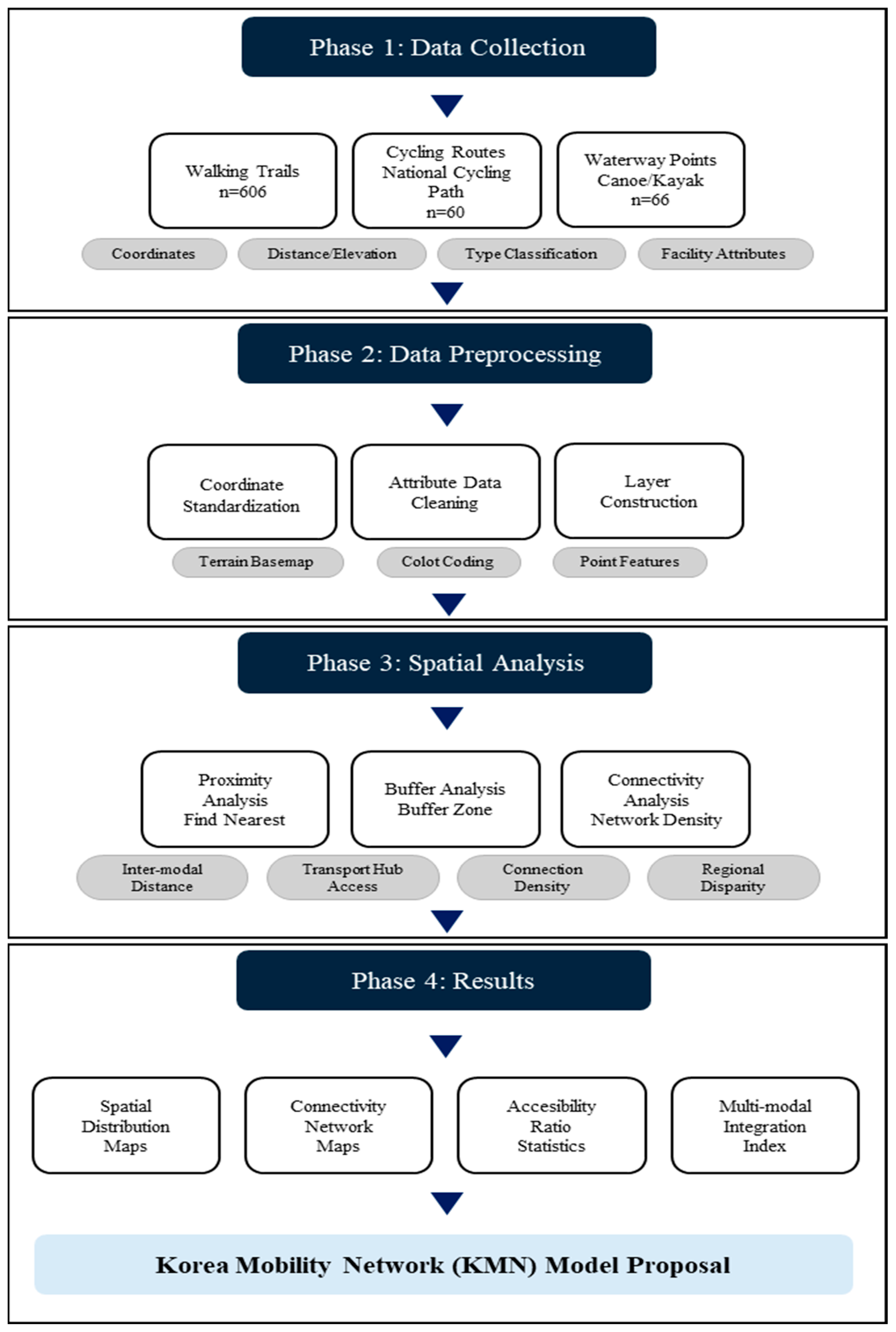
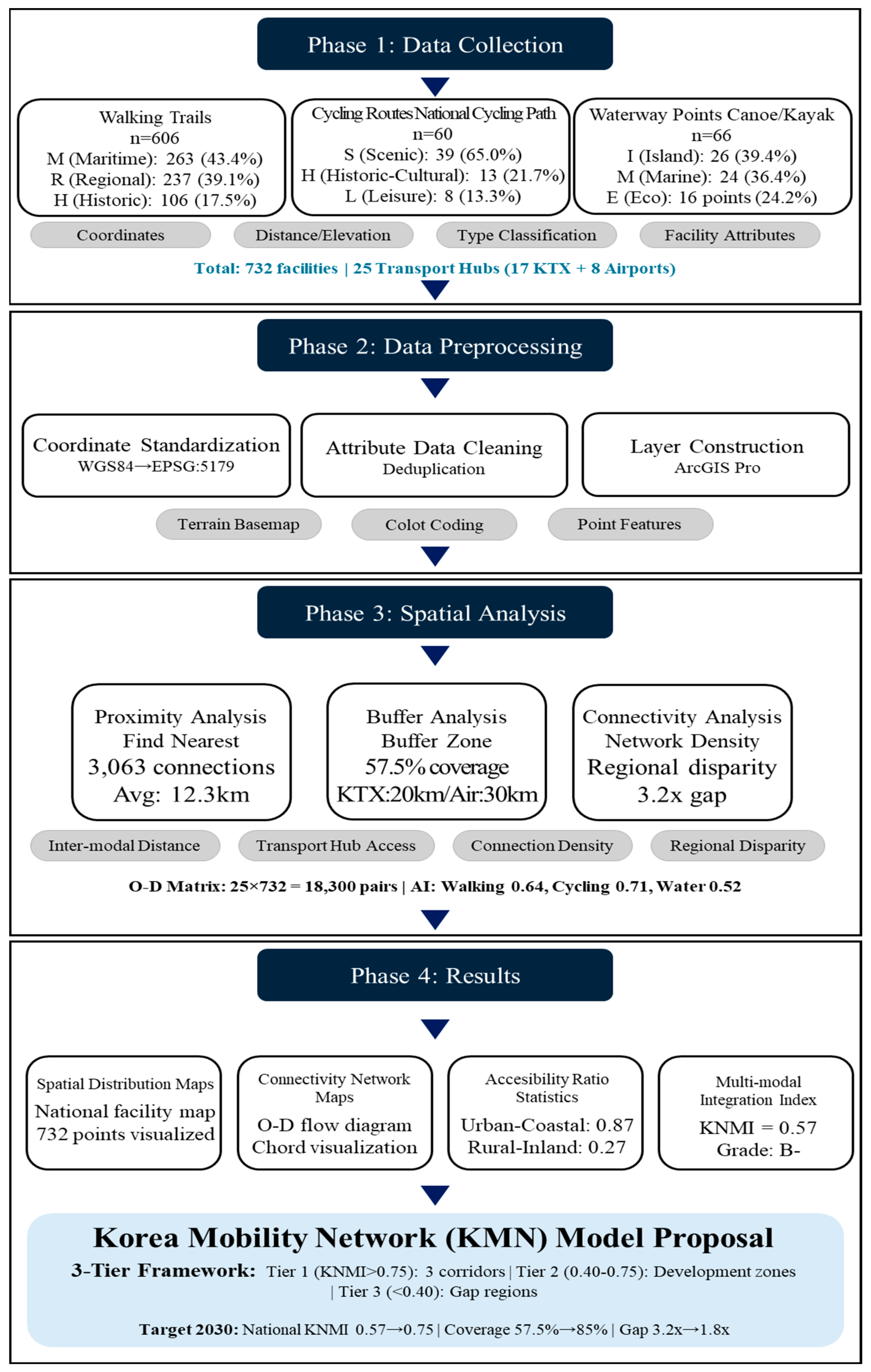
Figure 2 presents the complete GIS-based analytical workflow applied in this study, integrating the data collection, preprocessing, spatial analysis procedures, and key quantitative outputs that structure the results reported below.
4.1. Intermodal Network Distance Structure
To evaluate whether Korea’s non-motorized mobility resources operate as a structurally coherent system, intermodal network distances were examined using the OD cost matrix framework. The analysis focuses on the relational distance patterns between the walking trails and other mobility modes. These intermodal distances provide a structural indicator of whether facilities function as isolated assets or an integrated network and reveal whether multimodal recreational mobility is supported by spatial proximity or constrained by territorial discontinuities.
4.1.1. Walking–Cycling Network Structure
Table 1 summarizes the structural distance characteristics derived from the OD cost matrix of walking trails and cycling routes. The mean inter-resource distance was 10.55 km, indicating that the two mobility systems operate within comparable spatial scales. This distance range suggests that transitions between walking and cycling are frequently feasible in recreational travel contexts, supporting the potential of layered multimodal experiences.
The minimum distances approach zero, reflecting localized clustering in which walking and cycling nodes coexist within minimal network distance. These clusters are multimodal anchors that increase the functional density of recreational spaces and strengthen intermodal continuity. In contrast, the maximum distances approach the 30 km analytical threshold, revealing extended regional gaps. The coexistence of clustering and separation indicates uneven spatial integration across territories.
The network contains 2010 walking–cycling OD links within the defined 30 km spatial threshold, indicating a high number of potential spatial interactions among mobility nodes. In this study, network density refers to the number of potential spatial connections identified through the OD network distance matrix within the defined proximity threshold rather than traffic flow or actual usage intensity. This configuration can therefore be interpreted as a “dense relational structure,” in which numerous mobility nodes are connected within feasible distance ranges. Here, it is operationalized as the number of OD-based intermodal connections identified within the defined spatial threshold. From a systems perspective, this density implies latent integration capacity embedded within the national configuration. Even when direct physical continuity is incomplete, the spatial arrangement suggests the potential for targeted corridor linking rather than large-scale infrastructure reconstruction.
Table 1 summarizes the statistical characteristics, while
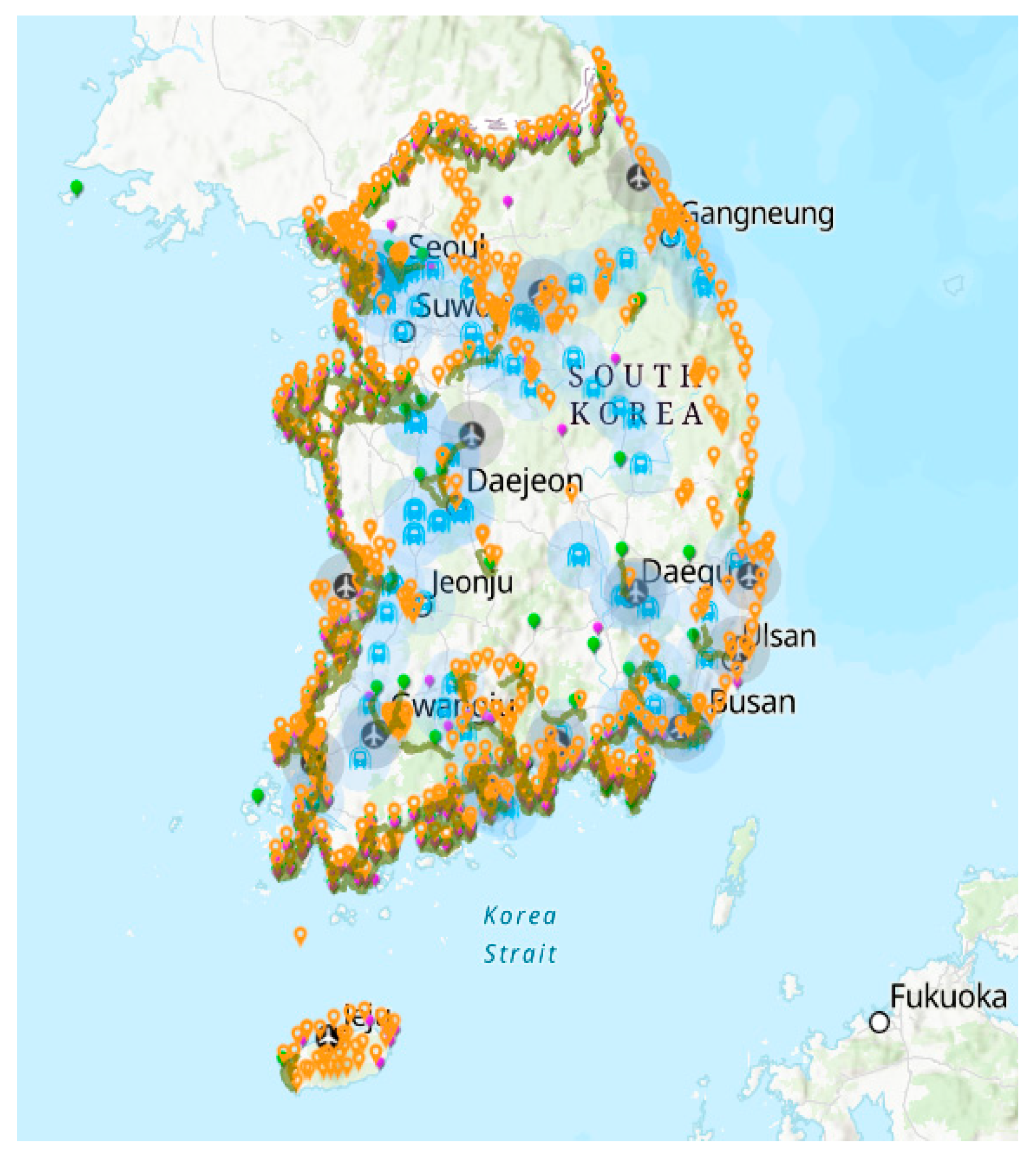
Figure 3 provides a spatial illustration. The map reveals dense multimodal clustering in the metropolitan regions, particularly around Seoul and the southern coastal corridor, where walking and cycling nodes overlap within transportation accessibility buffers. These areas are integration anchors supporting continuous recreational movements. In contrast, inland regions exhibited more dispersed spatial patterns, indicating structural discontinuities in intermodal connectivity.
Taken together, the walking–cycling system has partial structural coherence, characterized by strong localized clusters coexisting alongside measurable regional gaps. In this study, the term hybrid network structure refers to the coexistence of high-density intermodal clusters and extended low-density spatial segments, identified through a bimodal distribution of inter-resource distances in which localized proximity peaks coexist with long-distance gaps across the national system. The presence of simultaneous clustering and fragmentation suggests that the system performance is shaped more by spatial arrangement than by infrastructure quantity alone.
4.1.2. Walking–Canoe Network Structure
Table 2 presents the intermodal distance structure between walking trails and canoe activity sites. The mean inter-resource distance of 10.89 km is comparable to the walking–cycling system, indicating that land–water mobility operates within a similar spatial envelope. This proximity suggests that walking routes are frequently located within feasible transitional distances from canoeing facilities, supporting the possibility of combined terrestrial and aquatic recreational experiences.
The minimum distances again approach zero, revealing that land–water integration hubs are concentrated in coastal regions. These hubs enable immediate transitions between land-based and water-based activities, enhancing experiential diversity and strengthening the functional density of the tourism environment. In contrast, the maximum distances near the analytical threshold indicate selective integration, with inland walking routes frequently lacking nearby canoe facilities.
The network includes 1948 walking–canoe OD links, indicating dense relational connectivity despite regional discontinuities. From a systems perspective, this density implies a latent integration potential embedded within the spatial configuration. Even in regions with limited direct proximity, the underlying network structure suggests expansion strategies capable of improving connectivity without requiring large-scale infrastructure investment.
Table 2 reports the statistical characteristics, and
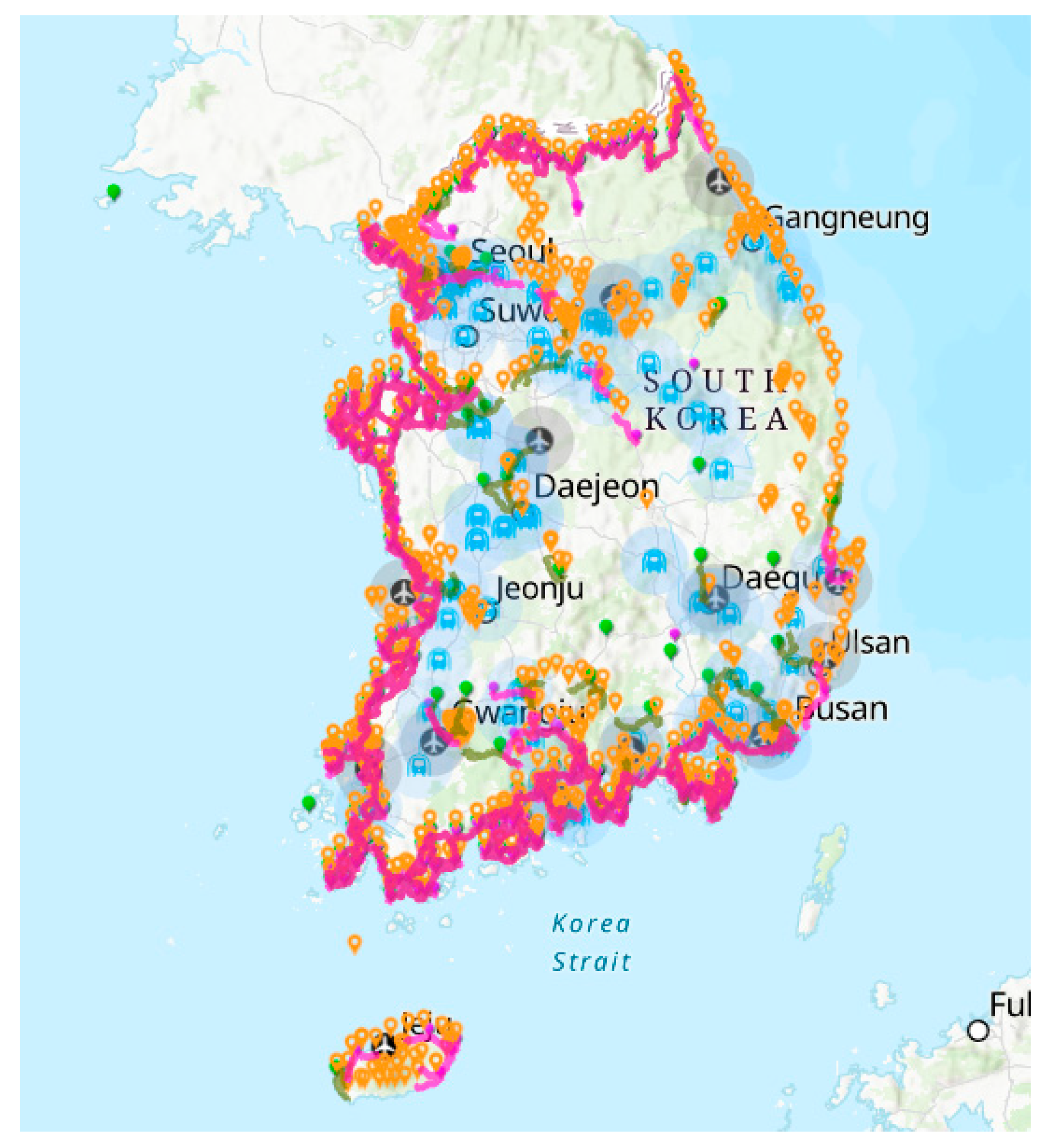
Figure 4 depicts them spatially. The map reveals a strong coastal concentration of land–water integration, particularly along the southern and eastern shorelines, where walking routes and canoe sites form continuous recreational corridors. These coastal clusters function as integration zones that support combined terrestrial and aquatic mobility. By contrast, inland walking routes frequently lack nearby canoe facilities, revealing selective rather than uniform intermodal integration.
Taken together, the walking–canoe system has a spatial configuration comparable to that observed in the walking–cycling network. Dense coastal integration hubs coexist with inland accessibility gaps, indicating that environmental geography plays a significant role in shaping multimodal connectivity. This contrast highlights the importance of spatial configuration in land–water mobility planning and suggests opportunities for targeted interventions to reduce regional disparities.
4.1.3. Comparative Intermodal Network Statistics
Table 3 summarizes the network distance statistics for the walking–cycling and walking–canoe OD links to provide a direct comparison. The mean distances are similar (10.55 km and 10.89 km), indicating that both intermodal connections operate within a comparable spatial envelope. The comparable medians further suggest that typical intermodal proximity is consistent across mobility modes.
The similar standard deviations indicate that the same national-scale clustering and gap structure drive dispersion patterns, rather than by mode-specific infrastructure layouts. That is, intermodal accessibility is shaped by the territorial organization embedded within the broader mobility network, rather than by individual facility characteristics.
These comparative patterns support the interpretation that the observed hybrid configuration reflects a systemic spatial organization. Both networks show simultaneous clustering and separation, confirming that Korea’s non-motorized mobility facilities operate as a partially integrated system structured by geography and infrastructure distribution.
4.2. Hierarchical Accessibility Structure of Bicycle Facilities
Table 4 presents the rank-based accessibility structure of bicycling facilities derived from the proximity analysis. For each origin node, the five nearest bicycle facilities were identified and ranked by walking distance and estimated travel time. Negative routing artifacts were truncated to zero before statistical summarization to ensure physically meaningful accessibility estimates. This ranking framework allows us to examine how accessibility declines across successive facility tiers rather than treating proximity as a single-point estimate.
The first-ranked facilities have a mean walking time of 16.28 min and a mean distance of 1.39 km. These averages indicate that many origin locations lie within the practical range of at least one bicycle facility. However, the large standard deviations reflect strong spatial heterogeneity rather than statistical anomalies. Accessibility is concentrated in localized proximity clusters, whereas peripheral areas remain structurally distant. Some locations benefit from near-adjacent facilities, whereas others experience substantially greater travel requirements even at the nearest rank.
Accessibility declines sharply between the first and second rankings. The mean walking time and distance increase to 97.66 min and 8.14 km, respectively, revealing a pronounced accessibility gradient. This discontinuity indicates that the nearest bicycle facility functions as the dominant access anchor. Once the immediate proximity zone is exceeded, alternative facilities require disproportionately greater travel effort. Therefore, accessibility appears structured around localized cores rather than being smoothly distributed across space.
Subsequent ranks show progressive increases in both distance and travel time. The walking time estimates assume an average pedestrian speed of 5 km/h, a common benchmark in accessibility modeling [
10,
24]. In the accessibility analysis, walking speed was assumed at 5 km/h—a standard benchmark widely used in pedestrian accessibility research [
10,
24]. The first-rank proximity threshold of approximately 1 h (representing ~5 km at this speed) reflects the practical upper limit of spontaneous walking access and is consistent with established thresholds in active travel accessibility studies. Third-ranked facilities average 11.77 km, fourth-ranked facilities at 14.59 km, and fifth-ranked facilities at 16.88 km. The relatively regular expansion across higher ranks suggests that beyond immediate proximity zones, facilities follow a broader regional distribution, rather than forming dense secondary clusters. Accessibility moves from local concentration to regional dispersion.
The strong correlation between walking time and distance confirms the internal consistency of the routing model and indicates that the observed hierarchy reflects a genuine spatial structure. From a systems perspective, the bicycle network exhibits a dual configuration composed of localized high-accessibility cores surrounded by wider low-density peripheries. This pattern is consistent with the intermodal structure identified in the OD analysis in which clustered hubs coexist with measurable territorial gaps.
These findings highlight the functional importance of first-rank proximity in shaping accessibility. Although the national inventory includes numerous bicycle facilities, effective accessibility depends largely on the spatial distribution of first-rank proximity clusters rather than on total facility count. Infrastructure performance is therefore governed more by spatial configuration than facility quantity. The targeted placement of additional nodes near accessibility gaps suggests potential improvements in network usability without requiring large-scale system expansion.
4.3. Hierarchical Accessibility Structure of Canoe Facilities
Table 5 presents the rank-based accessibility structure of the canoe facilities derived from the proximity analysis. For each origin node, the five nearest canoe activity sites were identified and ranked by walking distance and estimated travel time. Negative routing artifacts were truncated to zero before statistical summarization to ensure physically meaningful accessibility estimates. This ranking framework reveals how accessibility declines across successive facility ranks rather than assuming uniform access within the network.
The first-ranked facilities have a mean walking time and distance of 11.63 min and 0.97 km, respectively. These values indicate that many locations of origin lie within close, practical reach of at least one canoe facility. However, relatively large standard deviations reflect strong spatial heterogeneity rather than a statistical anomaly. Accessibility is concentrated in shoreline clusters, whereas inland areas are structurally distant from each other. Some locations benefit from immediate proximity to water-based recreation, whereas others require substantially longer travel times, even at the nearest site.
Accessibility declines sharply between the first and second rankings. The mean walking time and distance increase to 95.19 min and 7.93 km, respectively, revealing a pronounced accessibility gradient. This discontinuity indicates that the nearest canoe facility functions as the dominant access anchor. Once the immediate proximity zone is exceeded, alternative options require disproportionately greater travel effort. This gradient is steeper than that of the bicycle network, suggesting that the canoeing facilities are spatially more dispersed and less redundant.
Subsequent ranks show progressive increases in both distance and travel time. Third-ranked facilities average 11.62 km, fourth-ranked facilities at 14.59 km, and fifth-ranked facilities at 17.07 km. This gradual expansion suggests that beyond immediate proximity zones, canoe facilities follow a regional distribution pattern shaped by environmental constraints, rather than dense clustering. Therefore, accessibility transitions from localized concentrations to geographically constrained regional dispersion.
The strong correlation between walking time and distance confirms the internal consistency of the routing model and indicates that the observed hierarchy reflects a genuine spatial structure. From a systems perspective, the canoe network has a spatial contrast between high-accessibility shoreline cores and inland gaps. This pattern mirrors the hybrid structure identified in the intermodal OD analysis, in which strong coastal integration coexists with selective territorial exclusion.
These findings highlight the functional importance of first-rank proximity in water-based recreation. Although the national inventory includes numerous canoe sites, effective accessibility depends heavily on whether origin locations fall within immediate land–water interface zones. Therefore, infrastructure performance is governed more by spatial configuration than facility count. Targeted expansion of inland transition corridors suggests potential improvements in accessibility without requiring large-scale system reconstruction.
4.4. Integrated National Non-Motorized Mobility Structure
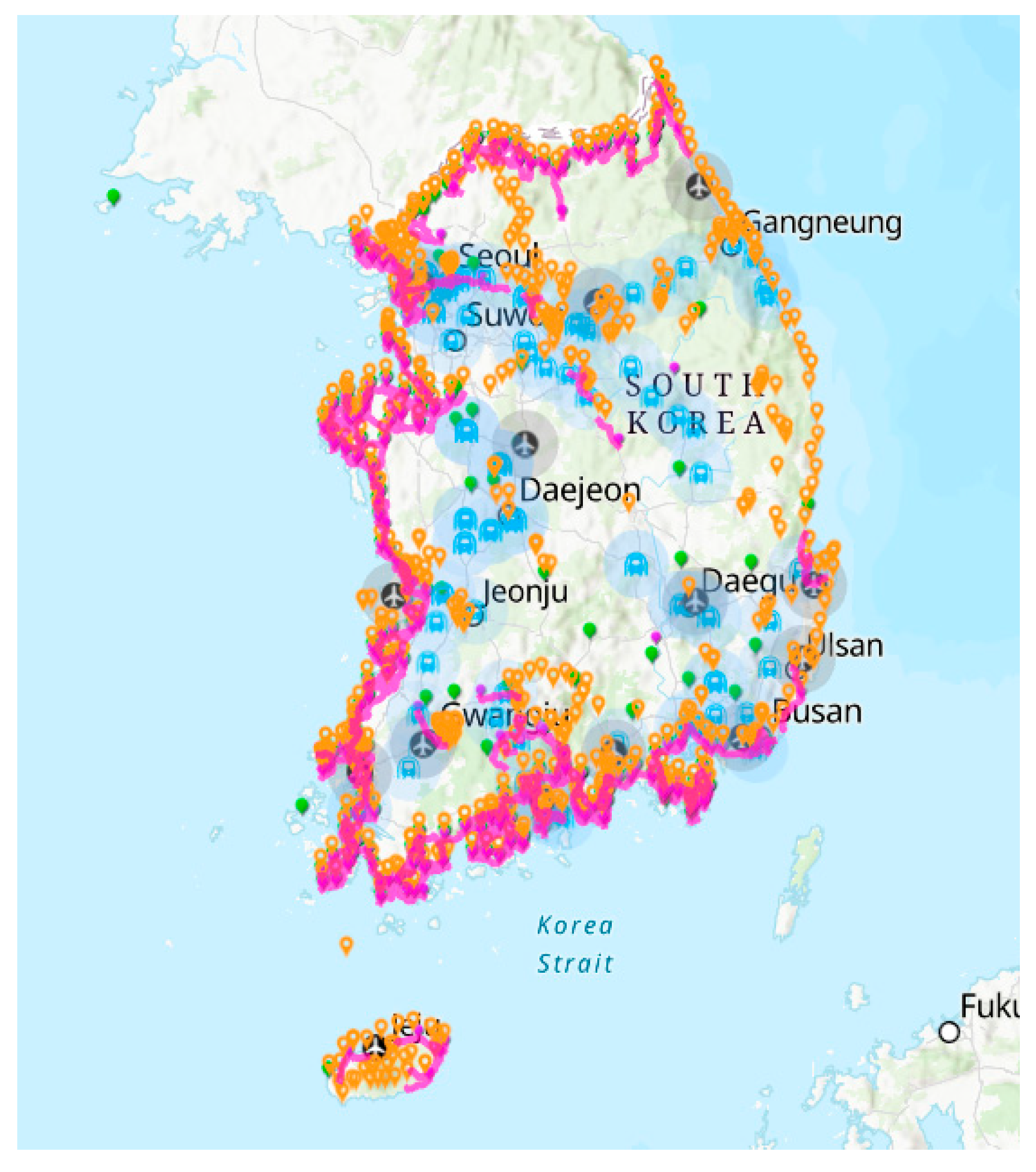
Figure 5 presents the fully integrated spatial configuration of Korea’s non-motorized mobility system, which combines walking trails, cycling routes, canoe activity sites, and major transportation hubs into a unified spatial network. In the visualization, walking trails are shown in yellow, cycling routes in green, canoe activity sites in pink, and KTX transportation hubs are represented as blue nodes within the national network layer. The underlying lines indicate the spatial mobility network structure derived from GIS-based analysis. This integrated representation synthesizes the intermodal patterns identified above and reveals the emergent structural organization of the national mobility system.
The integrated map highlights the formation of multimodal clusters in metropolitan regions and along coastal corridors where walking, cycling, and water-based facilities converge within transportation accessibility zones. These areas are system anchors that support continuous recreational flow across mobility modes. Their spatial concentration indicates that the existing infrastructure already contains partially integrated cores capable of sustaining layered tourism experiences without requiring entirely new infrastructure systems.
The national configuration simultaneously exhibits extended peripheral segments, where multimodal overlap is limited. Certain inland regions and remote coastal zones appear weakly connected to the broader network, revealing structural discontinuities in intermodal accessibility. Importantly, these gaps do not reflect a complete absence of infrastructure. Rather, they indicate insufficient relational linkages between existing resources. Therefore, the issue is not a scarcity of facilities, but the fragmentation of spatial connections.
From a systems perspective, the integrated structure demonstrates that Korea’s non-motorized mobility network operates as a partially coherent spatial system characterized by strong regional hubs coexisting with uneven connectivity gradients. The coexistence of clustered anchors and dispersed segments reveals the latent integration capacity embedded in the current configuration. Targeted corridor linking, intermodal node enhancement, and strategic bridging of inland gaps suggest the potential to improve the national network performance without requiring large-scale infrastructure expansion.
Overall,
Figure 5 confirms that the national mobility system has a hybrid spatial structure shaped by geography, urban concentration, and infrastructure distribution. Accessibility hierarchies and intermodal distance structures are not independent phenomena but mutually reinforcing components of the same system. This finding underscores the importance of system-level planning that prioritizes network coherence and relational connectivity over the development of isolated infrastructure. The results suggest that non-motorized mobility is a structured territorial system whose performance is associated with spatial configuration rather than facility quantity.
5. Discussion
5.1. Summary
The findings provide a system-level interpretation of Korea’s non-motorized mobility infrastructure by examining how walking trails, cycling routes, and water-based activity sites are spatially organized and interconnected across the national territory. By applying a GIS-based OD network framework and proximity analysis, the study evaluates both the structural connectivity among mobility resources and their accessibility in relation to transportation infrastructure.
First, the results demonstrate that Korea’s non-motorized mobility infrastructure forms a partially integrated spatial network linking walking, cycling, and water-based resources (RQ1). The OD cost matrix analysis reveals moderate intermodal distances and a large number of potential spatial connections within feasible transition ranges. In this study, network density refers to the number of potential spatial connections identified through the OD distance matrix within the defined proximity threshold rather than actual travel flows. The analysis shows that many mobility resources occur within transition distances that enable multimodal recreational mobility. However, the spatial structure is uneven. Metropolitan areas and coastal corridors exhibit stronger multimodal clustering, whereas inland regions display greater separation between mobility resources. This pattern indicates a hybrid network configuration, characterized by the coexistence of high-density intermodal clusters and extended low-density spatial segments.
Second, the results show that the spatial configuration of the network generates uneven regional accessibility patterns (RQ2). Proximity analysis reveals a hierarchical accessibility structure in which effective access is largely determined by the nearest mobility resource. Accessibility declines sharply beyond the first proximity tier, indicating that localized proximity anchors play a decisive role in shaping practical mobility opportunities. This finding suggests that accessibility within the national mobility network is influenced more strongly by spatial configuration than by the simple presence or quantity of infrastructure facilities.
Taken together, the findings indicate that the effectiveness of non-motorized mobility infrastructure depends primarily on the relational structure of the network rather than on infrastructure quantity alone. Even when facilities are widely distributed, weak spatial linkages may limit functional accessibility and reduce the potential for integrated tourism mobility.
Methodologically, this study contributes by introducing a GIS-based OD network analytical framework for evaluating national-scale non-motorized mobility systems. While previous research has frequently examined walking or cycling infrastructure separately and primarily at local scales, this study integrates multiple mobility modes within a unified spatial network model. This framework enables a system-level evaluation of spatial connectivity and accessibility across an entire national territory and provides a replicable analytical approach for evaluating integrated mobility systems in tourism and regional planning contexts.
5.2. Theoretical Implications
Beyond its practical relevance, this study contributes theoretically by reframing non-motorized mobility infrastructure as a relational spatial system whose performance emerges from the configuration of network relationships rather than from isolated infrastructure assets. By empirically demonstrating how structural connectivity influences accessibility outcomes, the findings reinforce network-theoretical perspectives that emphasize relational structure as a fundamental determinant of spatial performance [
27,
30]. In this sense, tourism mobility systems should therefore be interpreted as interconnected spatial networks whose functionality depends on the strength and distribution of linkages among nodes.
The findings also extend accessibility theory within tourism and spatial planning research. Previous studies have primarily conceptualized accessibility in terms of distance, travel cost, or proximity to specific facilities. While these approaches provide valuable insights into localized access conditions, they often overlook the structural relationships that shape broader spatial opportunities. By integrating accessibility analysis with network-based spatial metrics, this study situates tourism mobility within broader debates on spatial opportunity structures and network organization [
32,
53]. The results demonstrate that accessibility outcomes are strongly conditioned by the configuration of mobility networks, suggesting that tourism accessibility should be interpreted as a systemic property of spatial networks rather than solely as a function of individual locations.
A further theoretical contribution lies in expanding the scale of network-based accessibility analysis. Much of the existing literature focuses on urban environments or corridor-level mobility systems [
23,
34]. In contrast, the present study demonstrates how structural connectivity analysis can be applied at a national territorial scale to evaluate the integration of multiple mobility infrastructures. This multiscalar perspective reveals that accessibility inequalities are not merely local phenomena but reflect broader spatial organization patterns across regions. The findings, therefore, highlight the importance of system-level analytical frameworks in understanding tourism mobility systems.
Finally, by integrating walking trails, cycling routes, and water-based recreational resources into a unified analytical framework, this research contributes to emerging scholarship that conceptualizes tourism infrastructure as a multimodal experiential ecosystem. The results suggest that tourism accessibility should be understood not only as physical reachability but also as the structural capacity of spatial networks to support interconnected and layered recreational experiences. By linking insights from transport geography, tourism systems research, and spatial network theory, this study provides a conceptual foundation for future interdisciplinary research on tourism mobility systems and spatial connectivity.
5.3. Policy and Practical Implications
The findings suggest that non-motorized mobility infrastructure should be planned as a cohesive network rather than as isolated recreational projects. Regions with high connectivity demonstrate how integrated walking, cycling, and water-based resources form multimodal tourism corridors that generate layered recreational opportunities and enhance regional attractiveness. Conversely, areas characterized by low connectivity represent priority zones for targeted infrastructure investments. The strategic linking of existing assets in these regions can significantly enhance accessibility without requiring large-scale new development.
From a planning perspective, the Korea Mobility Network (KMN) framework is a practical tool for identifying spatial gaps and guiding evidence-based resource allocation. Composite accessibility indicators enable planners to move beyond descriptive inventories for the structural evaluation of network performance. Embedding GIS-driven analytics into policy processes supports more transparent and data-informed decision-making in line with contemporary approaches to spatial governance and sustainable mobility planning. Such tools allow national and local authorities to prioritize interventions that strengthen network cohesion, reduce regional inequalities, and promote environmentally responsible tourism systems.
The results highlight the importance of cross-sector coordination in tourism development. Non-motorized mobility infrastructure intersects transportation planning, environmental management, and regional tourism policies. Considering these domains as interconnected systems can foster more resilient and adaptive planning strategies. By leveraging structural connectivity insights, policymakers can design tourism environments that encourage low-impact travel, diversify regional experiences, and support long-term sustainability.
From a practical perspective, the findings provide useful insights for several stakeholder groups involved in tourism and infrastructure planning. Tourism planners can use the connectivity analysis to identify regions where integrated walking, cycling, and water-based tourism experiences can be developed. Regional policymakers may apply the framework to prioritize infrastructure investments that improve spatial accessibility and reduce regional disparities. Infrastructure managers and destination developers can also use the analysis to identify potential intermodal corridors and strengthen connections between existing recreational assets.
5.4. Limitations
This study had several limitations to acknowledge when interpreting the findings. First, the OD cost matrix analysis captures structural connectivity based on the minimum network distance rather than the observed travel behavior. Although this approach is appropriate for evaluating potential spatial integration, it does not consider actual user preferences, temporal constraints, or travel demand patterns. Future research should incorporate behavioral data, such as visitor flows, GPS tracking, or mobility surveys, to examine how structural connectivity translates into real-world usage.
Second, accessibility was assessed using fixed spatial thresholds and Euclidean buffer assumptions around the transportation hubs. Although these measures are common in accessibility research, they simplify the complexity of multimodal travel conditions, including travel time variability, public transit availability, and terrain constraints. More advanced modeling approaches that incorporate time-based accessibility and route-choice simulations would provide a more nuanced understanding of experiential access.
Third, this study provides a cross-sectional snapshot of mobility networks. Infrastructure systems evolve over time, and future longitudinal analyses would be valuable for examining how policy interventions, infrastructure expansion, and regional development reshape the network structure. Expanding the analytical framework to comparative international contexts would also increase the generalizability of the findings.
Despite these limitations, this study establishes a replicable GIS-based framework for evaluating non-motorized mobility systems at the national scale and provides a methodological foundation for future interdisciplinary research on sustainable tourism mobility.
6. Conclusions
This study evaluated Korea’s non-motorized mobility infrastructure as a national-scale spatial system using a GIS-based OD network framework. The findings identify a partially integrated network of walking, cycling, and water-based mobility resources characterized by localized multimodal clusters and regional discontinuities. While many resources operate within feasible intermodal distance ranges, structural gaps persist between coastal and urban hubs and inland–rural areas. These patterns indicate that network configuration, rather than infrastructure quantity, determines national accessibility performance.
By extending network-based accessibility analysis to a multimodal tourism context, this study demonstrates how GIS-driven system evaluations can inform evidence-based mobility planning. Conceptualizing non-motorized mobility infrastructure as a relational spatial system enables policymakers and planners to identify latent integration potential and prioritize strategic corridor development across regions.
Despite its limitations, the proposed analytical framework provides a replicable foundation for evaluating non-motorized mobility infrastructure on the national scale. Future research should incorporate behavioral data and longitudinal perspectives to examine how structural connectivity translates into actual mobility practices. Expanding this analytical framework to comparative international contexts would further strengthen the understanding of sustainable tourism mobility systems and spatial integration processes.
The findings provide clear answers to the research questions. First, the analysis indicates that Korea’s non-motorized mobility infrastructure forms a partially integrated national network linking walking, cycling, and water-based mobility resources (RQ1). Second, the spatial analysis reveals that the configuration of this network generates uneven regional accessibility patterns, with stronger multimodal clusters in metropolitan and coastal regions and more pronounced spatial gaps in inland areas (RQ2). These results highlight the importance of coordinated spatial planning to strengthen intermodal connectivity and support the development of integrated national non-motorized mobility systems.