1. Introduction
As a key part of strategic decision-making, corporate risk-taking directly reflects a firm’s willingness to take risks when evaluating and selecting investment projects [
1]. In today’s complex and changing market environment, enterprises are not only the main drivers of economic growth. Their level of risk-taking also plays a vital role in strengthening core competitiveness and promoting high-quality economic development [
2]. Taking appropriate risks helps firms seize investment opportunities and pursue excess returns. This, in turn, leads to better performance and greater competitiveness [
3]. With the ongoing advancement of new-generation information technologies, both the context and meaning of corporate risk-taking are changing significantly. For intelligent manufacturing enterprises, factors such as technological change, market fluctuations, and policy adaptation create a set of uncertainties. These factors must be managed and directly shape how firms approach risk.
The drivers of corporate risk-taking have received considerable attention in recent research. Academic discussions focus mainly on macro-level institutions [
4], financial markets [
5], and micro-level technological change [
6,
7]. Governments influence firms’ risk decisions through various policy tools. For example, fiscal subsidies ease resource constraints. They provide financial support for firms to take risks [
8]. The tax system also plays a role. Longer loss carryforward periods can increase a firm’s willingness to take risks [
9]. Financial markets and investor structures shape corporate risk behavior from the outside. Supply chain finance offers enterprises an effective way to expand financing channels and ease liquidity pressures [
10]. At the same time, green investors can help reduce excessive risk aversion among management. By strengthening corporate governance and external oversight, they encourage firms to pursue risk activities with greater long-term value [
11]. Digital transformation reshapes the organizational foundation of corporate risk-taking from within. On one hand, digitalization drives the systematic restructuring of organizational forms and business processes [
12]. On the other hand, it improves information transparency and decision-making speed. This significantly reduces agency costs [
13]. As a result, it creates a more supportive operational environment for corporate risk-taking at the structural level. Although related research is substantial, studies exploring how the synergy and conflict of institutional logics affect corporate risk-taking remain relatively limited.
In management practice, organizations often face complex relationships among multiple institutional logics. These relationships are marked by both conflict and coexistence. Besharov et al. (2014) categorized multiple institutional logics within organizations based on their compatibility and centrality [
14]. They analyzed how these logics influence individual actions. However, their study did not explore how institutional logics interact across different actors. This limits its applicability to complex institutional fields. Wang (2017) noted that enterprise management practices are shaped by technological, economic, and socio-political logics at the same time [
15]. Hierarchical relationships exist among these logics. Nevertheless, this study did not systematically explain how multiple logics interact in different contexts. In recent years, scholars have also attempted to identify multiple institutional logics within specific scenarios [
16]. However, single-case studies face limitations in the generalizability of their findings. They lack the strong external explanatory power typically associated with multi-case or large-sample studies [
17]. Therefore, this paper adopts the fuzzy-set Qualitative Comparative Analysis (FsQCA) method and focuses on intelligent manufacturing enterprises as the research subjects, aiming to reveal the common patterns and differentiated pathways exhibited by such enterprises under the intertwined influence of multiple institutional logics.
To address this research gap, this study raises three specific questions:
Question 1: Do government logic and technology logic have a complementary effect and work together to influence corporate risk-taking?
Question 2: Does market logic play a complementary role to government logic, with both jointly shaping corporate risk-taking?
Question 3: Can government logic demonstrate centrality and, together with the other two logics, shape corporate risk-taking?
To address these questions, this study uses a FsQCA method, focusing on smart manufacturing enterprises. This approach is well-suited for examining the non-linear configurational effects of multiple institutional logics on corporate risk-taking. The findings reveal three distinct configurational pathways that enable high corporate risk-taking: (1) The innovation-driven transformation pathway, which features a strong synergy between government logic and technology logic. (2) The green transformation pathway, characterized by a structure led by government logic, with coordinated support from market logic and technology logic. (3) The resource synergy pathway, distinguished by the high-level integration of all three logics.
This study offers several key contributions: (1) Theoretical contributions. This study makes two main advances. First, it builds a multi-institutional analytical framework that includes government, market, and technology logics. This moves beyond previous research, which often focused on only one logic. The framework offers a fresh theoretical lens for systematically understanding what drives corporate risk-taking. Second, it identifies how firms allocate resources strategically when faced with multiple institutional logics. This deepens our understanding of how these logics work together in practice. It also helps apply and refine institutional complexity theory within business management research. (2) Methodological contribution. This study uses FsQCA to examine the combined effects of multiple institutional logics. This approach effectively identifies the key conditions that lead to high levels of corporate risk-taking. It strengthens the explanatory power of research on institutional logics by providing a more systematic view.
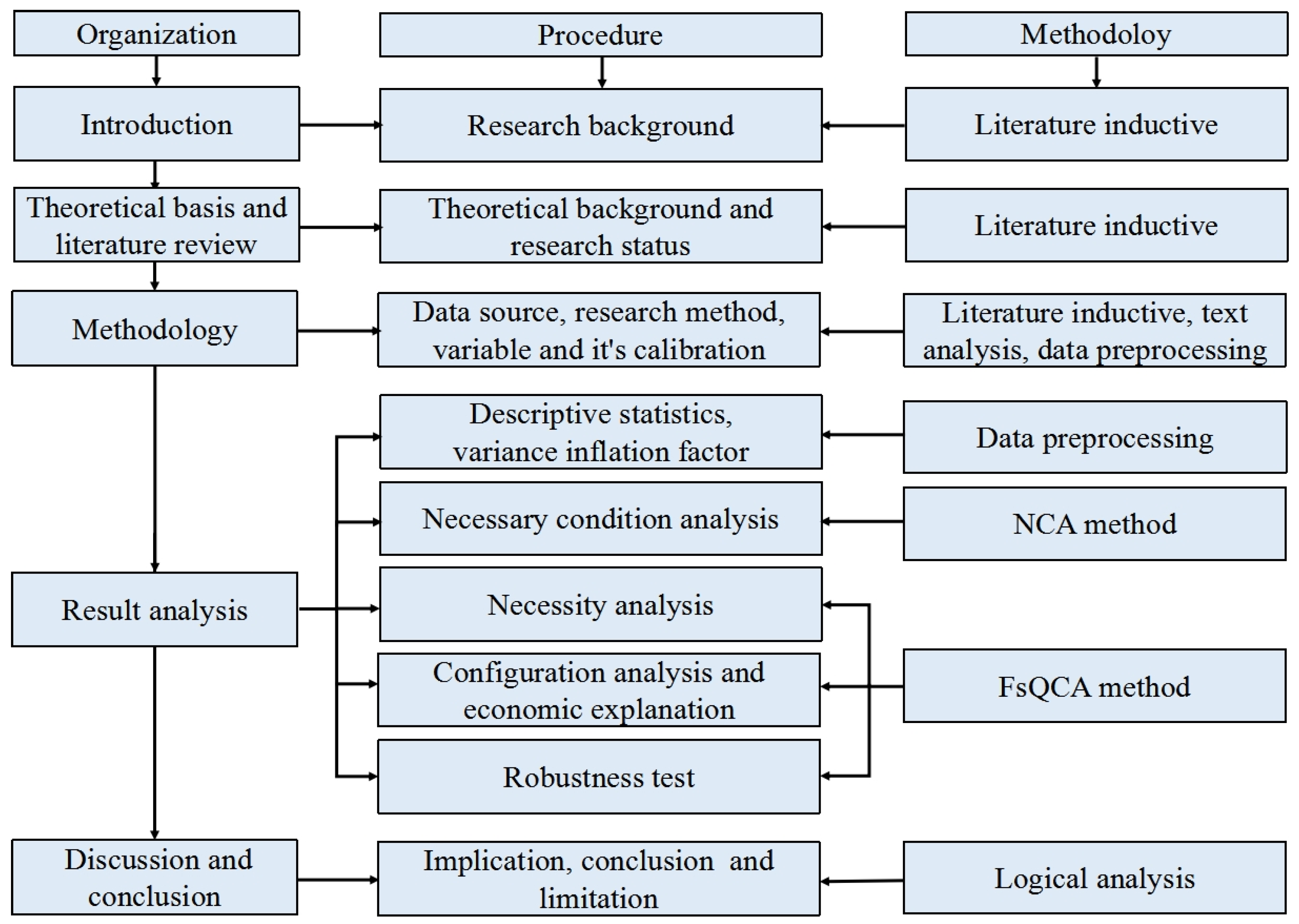
This paper is structured as follows:
Section 2 explains the theoretical foundation and reviews related literature.
Section 3 describes the research design.
Section 4 presents the results.
Section 5 shows theoretical and practical implications.
Section 6 concludes the study and its limitations.
Figure 1 presents the overall structure of this paper.
3. Methodology
3.1. Data Source
This study selects smart manufacturing companies in the computer sector as the research sample. This choice is mainly due to the strong influence of policy, market, and technology logics in this industry. First, these firms are at the forefront of industrial upgrading and technological innovation. They benefit directly from various industrial policies. As a result, their risk-taking behavior often reflects how policy logic guides and shapes decisions. Second, this industry faces intense competition and rapid technological change. Companies deal with multiple market pressures. These include capital market constraints, supply chain coordination, and shifts in customer demand. Their risk decisions clearly show the influence of market logic. Third, these firms actively pursue digital transformation. Their adoption and integration of technology offer a useful setting to observe how technology logic affects risk-taking. For these reasons, this industry provides an ideal sample for studying corporate risk-taking under the combined influence of multiple institutional logics.
This study selects 2023 as the sample observation period for the following reasons. First, 2023 is a key year for the implementation of the 14th Five-Year Plan. It provides a good opportunity to observe corporate strategic responses under long-term policy guidance. Second, 2023 witnessed the accelerated adoption of a new wave of technologies. The influence of technology logic on corporate strategic decision-making became more prominent. In summary, selecting 2023 as the observation period effectively captures the key characteristics of corporate risk-taking behavior. These behaviors are shaped by the interaction of government, market, and technology logics.
The data for this study were obtained from CSMAR, Wind, and the National Intellectual Property Administration. After removing samples with missing variables, valid data from 125 enterprises were collected.
3.2. Research Method
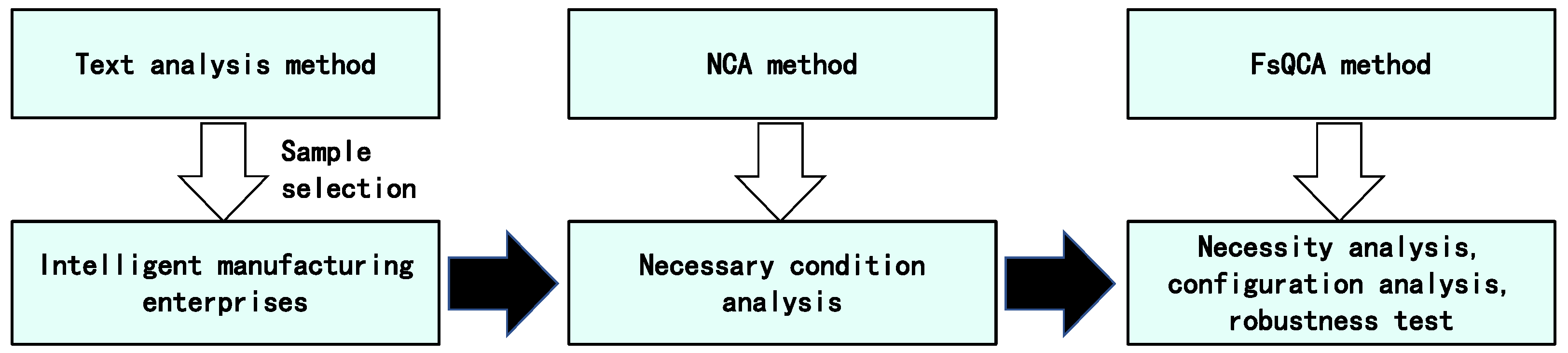
This study adopts three core methods. The technical process is shown in
Figure 2. Text analysis is used to identify smart manufacturing enterprises. The NCA method is applied to test whether necessary conditions exist between the dependent and independent variables. The fsQCA method is systematically used to explore how the three institutional logic jointly shape different pathways in corporate risk-taking behavior. A detailed description of each research method is provided below. The selection of this methodological combination is based on the following considerations. First, this study focuses on the configurational effects of multiple institutional logics rather than their net effects. This aligns closely with the methodological foundation of FsQCA. Second, the sequential use of NCA and FsQCA provides a comprehensive understanding of synergistic relationships. It does so by examining both necessary conditions and sufficiency configurations.
3.2.1. Text Analysis Method
Corporate annual reports were processed using Chinese word segmentation. The Harbin Institute of Technology stopword list was used to filter out stopwords and extract meaningful terms. Then, industry-specific terms in the reports were identified based on a predefined professional lexicon. The absolute frequency of relevant terms in each firm’s annual report was calculated [
68,
69]. This allowed for the screening of smart manufacturing enterprises. Similarly, this study adopts the same text analysis method to measure the digital transformation technology and digital application indicators. Specifically, we first extract the “Management Discussion and Analysis” (MD&A) section from listed companies’ annual reports as the analysis text. Next, we expand the keywords from the relevant terminology dictionary into the “jieba” Chinese word segmentation library in Python 3.11. Using text analysis, we then segment the MD&A content and count the frequency of these keywords within that section. It should be noted that the construction of the supply chain finance indicator differs slightly. To ensure comprehensive information capture, we count the total frequency of relevant keywords appearing throughout the entire annual report.
3.2.2. NCA Method
The NCA method is a relatively new analytical technique. It is mainly used to address causal inference problems and identify necessary conditions in datasets. Its goal is not to analyze the average relationship between variables. Instead, it indicate the presence of necessary conditions. It is often utilized to support necessity testing in FsQCA method.
Effect Size. By comparing the proportion of the area above the observed region to the total possible area in the scatter plot, the formula is as follows:
where 0 ≤ d ≤ 1. A larger value of
indicates that the condition is more likely to be a necessary condition for the outcome.
Moreover, the total possible area refers to the area of the entire rectangle formed by the theoretical range of values for X and Y in the scatter plot.
Accuracy. This represents the proportion of observed cases that conform to the necessary condition pattern. The formula is as follows:
3.2.3. FsQCA Method
The fsQCA method offers several distinct advantages over traditional regression methods, making it well-suited for this research context.
First, it captures configurational effects. Traditional regression methods rely on the net effect assumption. They attempt to estimate the independent impact of single variables. However, multiple institutional logics influence corporate behavior through specific combinations. The same logic may play different roles in different configurations. FsQCA can identify different combinations of conditions that lead to the same outcome [
70]. This aligns well with H1, H2, and H3 in this study, all of which address typical configurational questions.
Second, it embraces equifinality. FsQCA allows multiple distinct causal paths to lead to the same outcome. Traditional regression methods struggle to capture this kind of equifinality. In contrast, FsQCA systematically reveals structures where multiple pathways coexist [
71,
72].
Third, it helps alleviate endogeneity concerns. FsQCA is based on set theory rather than correlation. Its causal logic asks whether a combination of conditions is sufficient to produce an outcome. This differs from the traditional regression logic, which asks whether a variable affects an outcome on average. This sufficiency-based analysis offers a fundamentally different approach from conventional causal inference models.
The formal expression of this approach is as follows:
where
denotes consistency,
represents coverage, a determines the slope, and b indicates the crossover point.
3.3. Research Variable
(1) Government subsidies (X1) ease the financial burden on firms during the early stages of R&D through direct capital support. They help share the costs of innovation. This study measures government green subsidies as the ratio of total government green subsidies to operating revenue [
73].
(2) Tax incentives (X2) encourage innovation by reducing the tax burden on firms. Following existing research [
74], this study measures tax relief as the ratio of tax refunds to the sum of tax refunds and taxes paid.
(3) Supply chain finance (X3) helps lower corporate transaction costs. It also reduces external financing constraints. This study measures this variable using text analysis. It counts the frequency of relevant keywords. The keyword lexicon is adapted from established measurement scales in prior research [
75]. This lexicon has been repeatedly applied and validated in the supply chain finance literature.
(4) Green investors (X4) play a key role in supporting the long-term development of firms. Following established research methods [
76], this study obtains fund profile information and corresponding stock investment details from the fund market database. A fund is identified as a green investor if its investment objective or scope explicitly includes terms such as “environmental protection”, “ecology”, or “green”. A listed company is considered to have a green investor if such a fund holds shares in it. This lexicon has been repeatedly applied and validated in the green investor literature.
(5) Digital Application (X5) emphasizes the deep integration of digital technology with complex business scenarios. This study employs text analysis to measure this variable by counting the frequency of relevant keywords. The keyword lexicon was developed with reference to established research [
31]. This study is widely cited in the field of digital transformation. Its lexicon was developed through a rigorous literature review and expert validation. The technology lexicon emphasizes R&D-related technical terms.
(6) Digital Technology (X6) focuses on technology-driven transformation and upgrading of existing production systems. This study employs text analysis to measure this variable by counting the frequency of relevant keywords. The keyword lexicon was developed with reference to established research [
31]; the technology application lexicon focuses on application scenario terminology.
(7) Corporate Risk-Taking (Y). This study measures a firm’s level of risk-taking using the volatility of return on assets (ROA) over each observation period [
77]. Specifically, the annual ROA of each firm is adjusted by the industry average. Then, the standard deviation of the adjusted ROA is calculated for each observation period.
Here, N represents the year, EBIT denotes the earnings before interest and taxes for the corresponding year, ASSET refers to the total assets at the end of the year, and X indicates the total number of enterprises in a specific industry.
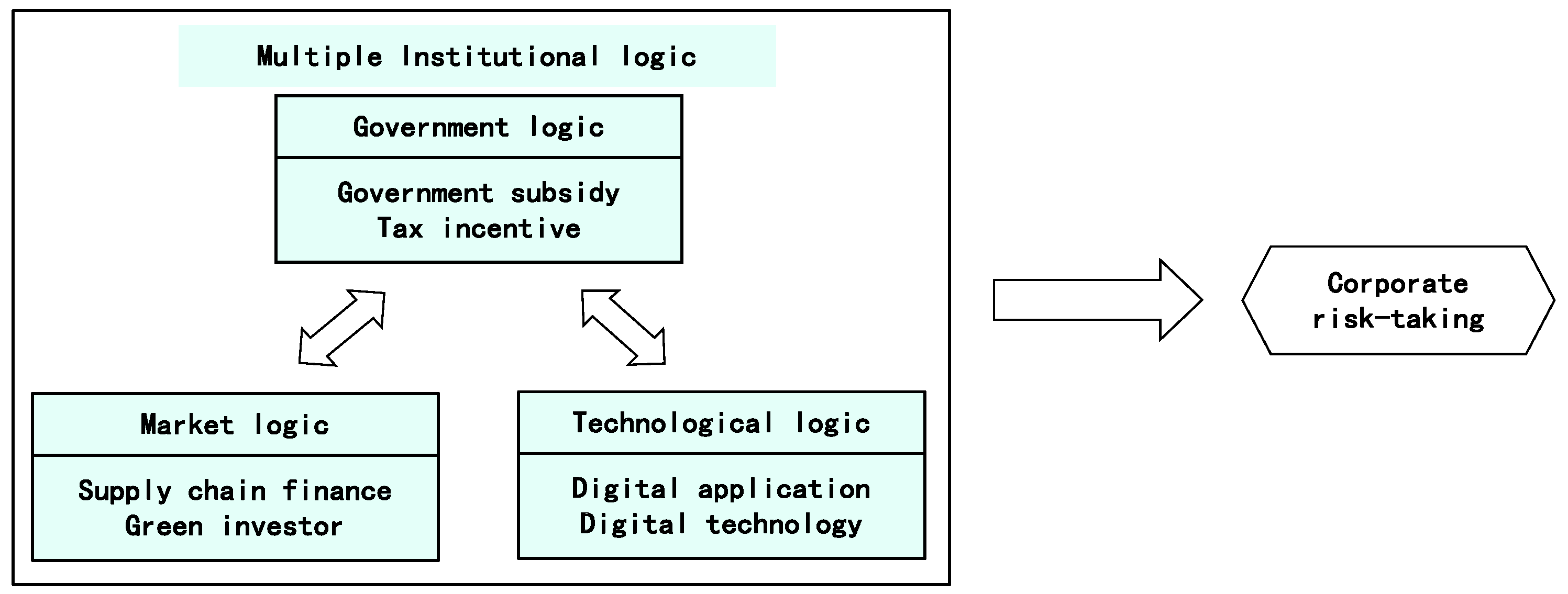
The relationships among these variables are illustrated in
Figure 3.
3.4. Variable Calibration
This study applies direct calibration to convert raw values into fuzzy-set membership scores. The calibration uses three anchors: 0.95 for full membership, 0.50 for the crossover point, and 0.05 for full non-membership. Note that X4 is a binary variable, so it is not calibrated. Also, the analytical software automatically excludes cases with a membership score of exactly 0.500. To retain all eligible observations, borderline cases (0.500) were adjusted to 0.501 [
78]. This ensures they are included in the configurational path analysis. The results are shown in
Table 1.
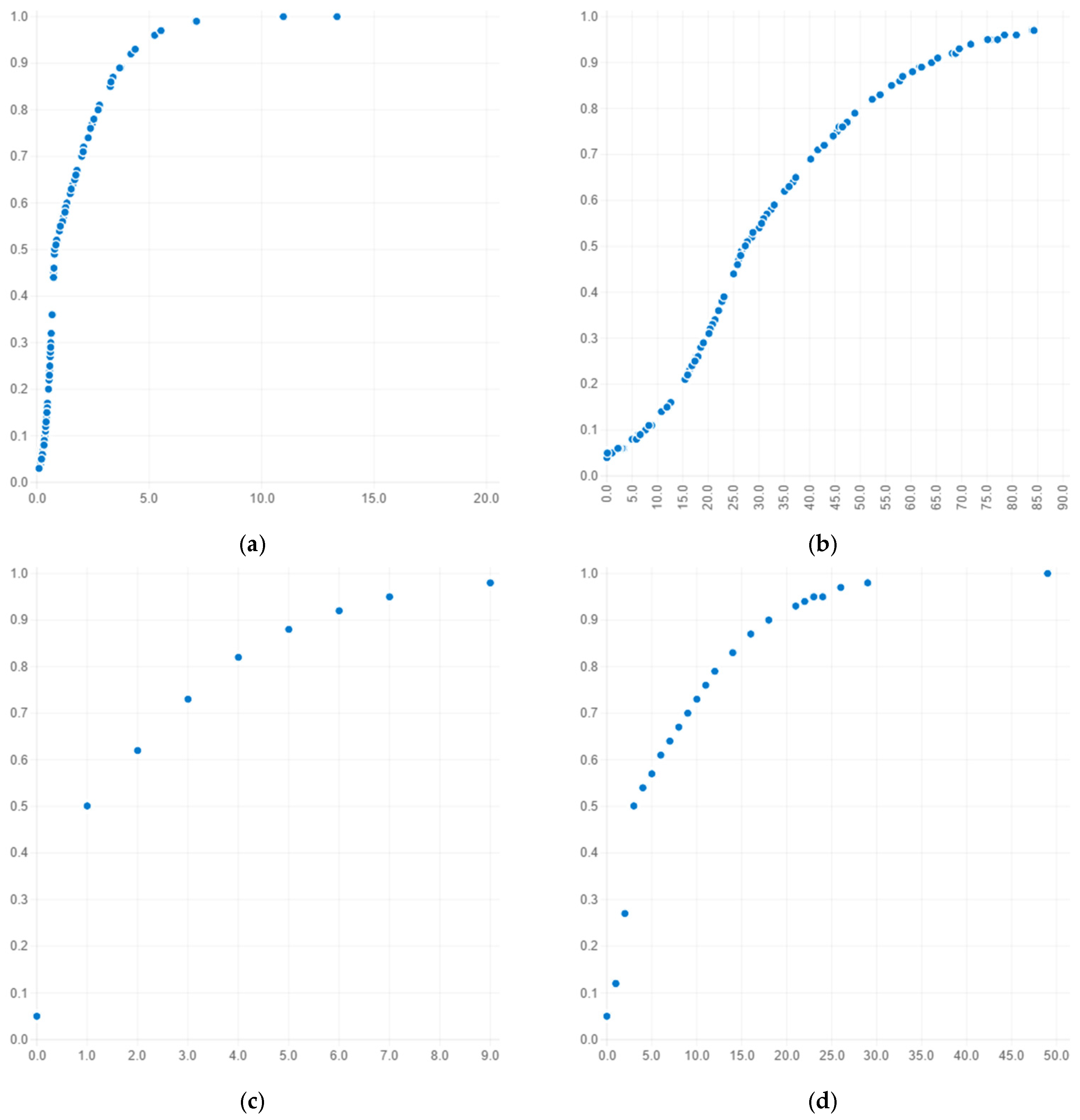
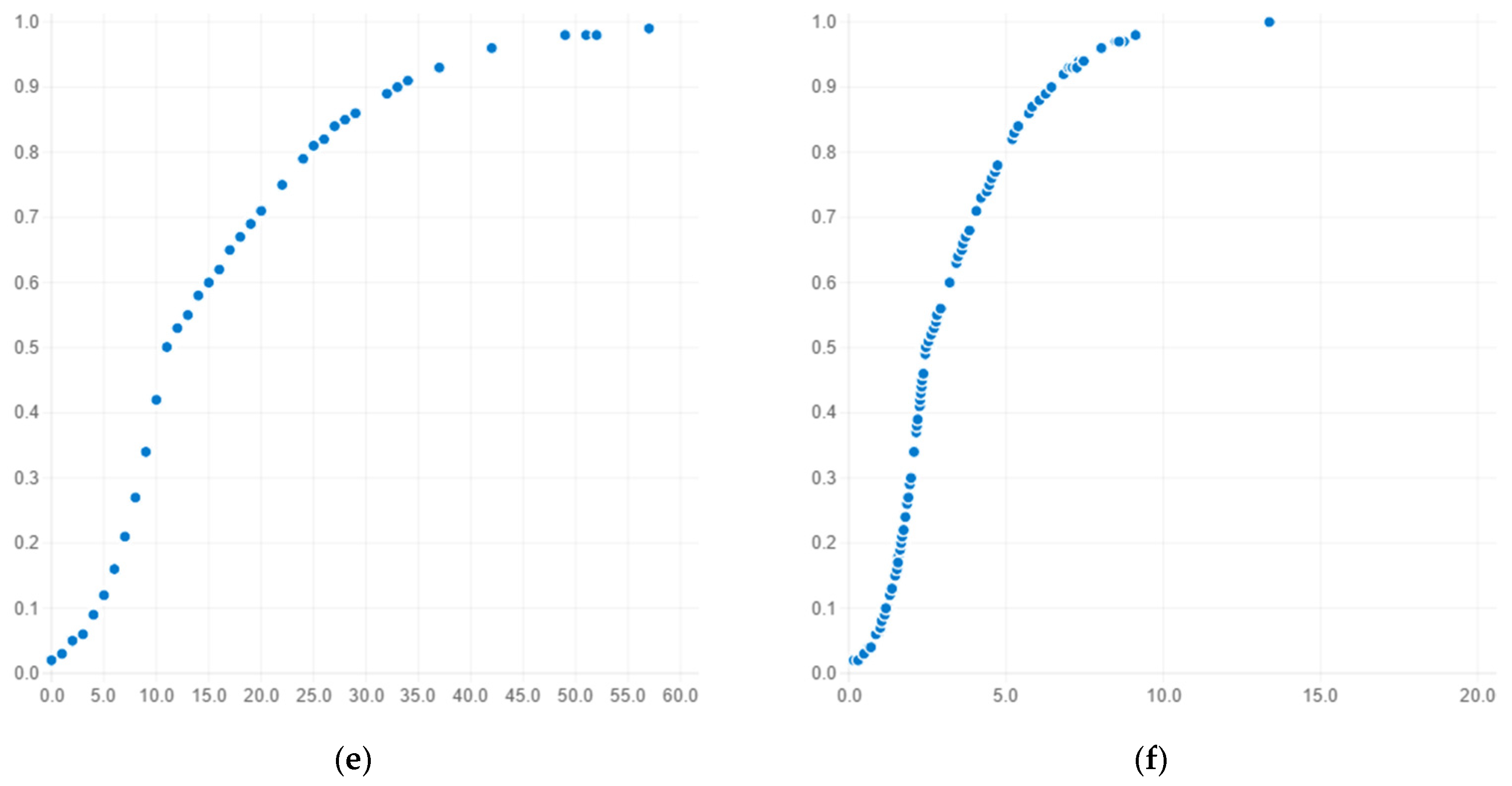
To better illustrate the validity of the fuzzy-set calibration, this paper analyzes the six relationship curves shown in
Figure 4. These curves show the connection between the raw values and their calibrated membership scores for the six variables: X1, X2, X3, X5, X6, and Y. As the figure shows, when raw values are near full non-membership or full membership, the corresponding curve segments become relatively flat. This pattern fits the conceptual features of membership in fuzzy-set theory. It also supports the reasonableness of the calibration process.
4. Result Analysis
4.1. Descriptive Statistics
This study is based on 125 valid observations. Descriptive statistics for each variable are shown in
Table 2. The mean values range from 0.43 to 0.60. X4 has the highest mean (0.60), and X1 has the lowest (0.43). Standard deviations range from 0.29 to 0.49. This reflects moderate dispersion in the data. X4 shows the greatest variability (0.49). Minimum values range from 0.00 to 0.05. Maximum values range from 0.97 to 1.00. This indicates that the data are generally well distributed within their ranges, with no extreme outliers. Overall, the sample data have good statistical representativeness and are suitable for further analysis.
In addition, this study uses the variance inflation factor (VIF) to check for multicollinearity among the explanatory variables. The results are shown in
Table 3. All VIF values range from 1.05 to 1.27. These are well below the common threshold of 5. This indicates that no serious multicollinearity exists among the variables.
4.2. Necessary Condition Analysis
This study uses the NCA method to test whether each condition is necessary for corporate risk-taking. Based on the variable types, both ceiling regression (CR) and ceiling envelopment (CE) are applied. CR is used for continuous variables, and CE for discrete variables [
32]. The results are shown in
Table 4. They indicate that none of the conditions meet the threshold for being necessary for corporate risk-taking.
The economic implication of this result is that, in the risk-taking decisions of smart manufacturing enterprises, no single institutional logic element constitutes a necessary condition for achieving high risk-taking. In other words, to build risk-taking capacity, corporate managers need to adopt a systematic approach to resource allocation.
4.3. Necessary Analysis
The results in
Table 5 show that none of the variables reach the consistency threshold of 0.9. This reflects the limited explanatory power of any single variable in accounting for corporate risk-taking. The finding is consistent with the NCA results. It confirms that corporate risk-taking is not driven by isolated necessary conditions.
4.4. Configuration Analysis
The case frequency threshold was set to 2. Raw consistency and PRI consistency thresholds were set at 0.80 and 0.50, respectively. As shown in
Table 6, the analysis identifies five configurations for achieving corporate risk-taking. The overall solution consistency is 0.812, and the coverage is 0.449. Both values exceed their respective critical thresholds. This confirms the reliability and validity of the findings.
The consistency indicator reflects the reliability of each path as a sufficient condition for high risk-taking. In this study, the consistency scores for the five paths range from 0.807 to 0.877, all exceeding the critical threshold of 0.80. In economic terms, the combinations of institutional logics revealed by these paths offer strategic references with practical guidance for corporate managers.
The coverage indicator reflects the empirical importance of each path in explaining cases of high risk-taking. Raw coverage scores range from 0.127 to 0.231. This means each path explains approximately 13% to 23% of high risk-taking cases. In economic terms, this range of coverage is considered moderate in configurational research. It indicates that multiple equivalent paths lead to high risk-taking. No single path explains the vast majority of cases. This finding precisely confirms that firms can respond to multiple institutional pressures in different ways.
Unique coverage reflects the proportion of cases uniquely explained by each path. S3 has the highest uniqueness score (0.041). This indicates that this path explains about 4% of high risk-taking cases that cannot be covered by other paths, highlighting its distinctive value. S1 has the lowest uniqueness score (0.013). This suggests that most of the cases it explains can also be covered by other paths, making its uniqueness relatively weaker.
This study explores the strategic configurations of firms operating under multiple institutional logics. By analyzing five configurations (S1–S5), it shows how organizations selectively combine elements from different logics. These combinations form pathways that enhance risk-taking capacity. This section groups the five configurations into three development paths. It then offers a detailed interpretation from the perspective of institutional theory.
4.4.1. The Innovation-Driven Transformation Pathway
This pathway reflects a strategic choice based on tax incentives and supported by digital technology. In this pathway, supply chain finance serves only as a liquidity supplement, not as a core driver. It also excludes the involvement of green investors. This indicates that firms focus on improving the efficiency of traditional operations rather than shifting toward green initiatives. The limited use of digital technology further suggests a focus on application rather than R&D. From an institutional logic perspective, government logic and technology logic show a strong synergy. Together, they shape the strategic direction. Market logic plays a supporting role. It mainly relies on traditional financing channels to meet funding needs. Overall, this pathway supports a moderate level of risk-taking. It shows how firms respond to policy guidance and technology trends while managing risk through cautious financing choices. This finding answers H1. Although both S1 and S2 belong to this pathway, they differ slightly in policy dependence and risk structure. S1 fully relies on tax incentives and is supported by supply chain finance. S2 is very similar but explicitly excludes the use of government subsidies.
The S1 configuration is built on policy incentives and focuses on digital application. This creates a relatively controllable risk structure. Firms gain basic liquidity support through supply chain finance. At the same time, they exclude both green investors and digital technology R&D. This reflects a strategic choice to avoid high-risk areas like green transformation and technology development. Instead, firms focus on improving efficiency and applying technology within their existing operations. In this setup, tax incentives help lower operating costs. Digital application becomes the core strategy, though technology R&D has not yet started. Market logic plays a supporting role, mainly through traditional supply chain finance. Risk sources remain relatively spread out. This shows how firms carefully balance policy support, technology use, and market financing.
Compared to S1, the S2 configuration shows a similar reliance on policy and technology drivers. However, it reflects stronger self-sustainability and market-oriented financing. This is achieved by actively avoiding dependence on direct government subsidies. Firms mainly use tax incentives as the key form of policy support. They also strengthen digital applications and rely on supply chain finance for liquidity. This approach improves their ability to respond to market changes. Although S2 may face slightly higher risk from policy shifts, it still represents a clear and stable development path. Its risk sources are more market-oriented, and resource allocation is more flexible.
4.4.2. The Green Transformation Pathway
In this pathway, tax incentives serve as the core policy tool. They provide key economic motivation for firms pursuing green transformation. In response to institutional pressures, firms actively engage with green investors. This helps them access specialized market resources. They also use digital applications to support the transformation process. By deliberately avoiding traditional supply chain finance, firms show a clear intention to move away from conventional models. They focus on building a sustainable competitive advantage in the green sector. In this process, digital applications play a supporting role rather than a fundamental one. They function as an aid and not a primary driver. From an institutional logic perspective, government logic takes the lead as the dominant force. Market logic and technology logic form a responsive support system. This creates a structure with one core logic and two complementary ones. This finding answers H2. This pathway supports a moderately high level of risk-taking. It reflects the multiple risks firms face when pursuing structural change under policy guidance.
The S3 configuration is mainly driven by tax incentive policies. It actively promotes green transformation through the involvement of green investors. At the same time, firms deliberately exclude traditional supply chain finance and digital technology. This reflects a clear shift from conventional models toward green and sustainable pathways. During this process, firms face several challenges. These include market acceptance of green business models, the alignment of technology with operations, and financial risks from changes in funding sources. Under policy guidance, firms connect with green capital markets to gain targeted support. They also use digital applications to ease the transition. This pathway shows strong signs of structural transformation. Although implementation risks are high, strong policy support provides a clear and feasible logic for change.
4.4.3. The Resource Synergy Pathway
This pathway is marked by high-level resource integration and coordinated efforts. It allows firms to pursue strategic breakthroughs by combining resources in structured ways under multiple institutional logics. This requires significant resource input and involves considerable strategic risk. However, through synergy and risk sharing, firms can build lasting advantages under complex institutional pressures. They move from relying on external support to developing internal capabilities. This finding answers H3. Although both S4 and S5 belong to this pathway, they differ in resource use and policy choices. S4 focuses on advancing digital R&D while also drawing on green capital markets as support. In contrast, S5 depends more on government subsidies and traditional financing. It clearly avoids tax incentives and digital applications. These differences reflect varying approaches to resource dependence and risk management.
In the S4 configuration, tax incentives and digital technology serve as the core strategic drivers. Green investors play a mainly supportive role. This indicates that firms are pursuing a deep transformation with high investment and high potential returns. Although this path involves significant strategic and operational risks, strong synergy exists among policy tools, technology resources, and supporting capital. As a result, firms show strong structural resilience in resource allocation and risk sharing. Specifically, firms rely on tax incentives and digital technology as dual drivers. At the same time, they bring in green capital as supplementary support. They also continue to advance digital technology R&D. This creates a tripartite development system with taxation and technology at the center and green capital playing a supporting role. This pathway reflects a complex decision-making process. It shows how firms achieve risk-taking by systematically combining resources under multiple institutional logics.
In the S5 configuration, digital technology R&D, government subsidies, and diversified financing from both traditional and green markets form a strong alliance. Together, they provide firms with substantial external support and technological momentum. At the same time, firms explicitly exclude tax incentives and digital applications. This reflects a strategic choice to rely on external resources to directly drive technology R&D. It creates a development path that balances external inputs with core innovation. Although this resource-heavy structure helps firms advance digital R&D quickly and achieve breakthroughs, it also brings significant risks. Firms become more vulnerable to policy changes and market shifts. Overall, this pathway follows a resource-driven logic. It uses strong policy and market support to push digital technology R&D. However, this also leads to concentrated risks from resource dependence. In the short term, firms may find it hard to turn digital advances into rapid performance gains.
4.5. Economic Explanation of Configuration Pathway
4.5.1. Economic Explanation of the Innovation-Driven Transformation Pathway
Configurations S1 and S2 describe innovation-driven firms. These firms rely on tax incentives as their core policy tool and digital applications as their technological foundation. In terms of prevalence, the raw coverage scores for S1 and S2 are 0.131 and 0.138, respectively. This indicates that this path is a common pattern for achieving risk-taking among smart manufacturing enterprises. These firms share three typical characteristics. First, in terms of policy response, they rely on tax incentives rather than government subsidies. This reflects a certain level of policy sensitivity, but they have not yet established deep resource exchange relationships with the government. Second, regarding technology strategy, they focus on the application layer of digital technologies rather than cutting-edge R&D. This suggests their technological positioning is as technology adopters rather than creators. Third, in terms of financing structure, they rely on traditional supply chain finance as a liquidity supplement. They have not yet introduced green investors. This indicates their financing channels are relatively limited but stable.
4.5.2. Economic Explanation of the Green Transformation Pathway
Configuration S3 describes strategic transformation firms. These firms are led by tax incentives and supported by green investors and digital applications. In terms of prevalence, S3 has a raw coverage score of 0.231. This is the highest coverage among all single configurations, indicating its strong generalizability. The core feature of these firms lies in their proactive structural adjustments. First, in policy orientation, they use tax incentives as a strategic lever. They are highly sensitive to market-based policy tools. Second, in capital engagement, they actively introduce green investors. Their financing structure is shifting from traditional channels toward green channels. Third, in technology deployment, they leverage digital applications to drive business restructuring. However, they explicitly exclude digital technology R&D. This indicates their transformation path focuses on business model innovation rather than technological breakthroughs.
4.5.3. Economic Explanation of the Resource Synergy Pathway
Configurations S4 and S5 describe firms pursuing strategic breakthroughs. These firms are characterized by the integration of multiple resources. In terms of prevalence, S4 and S5 have raw coverage scores of 0.211 and 0.127, respectively. This indicates their strong explanatory power. Firms following Configuration S4 are driven by both tax incentives and digital technology. They are supported by green investors. This configuration reflects a pattern of technological accumulation. These firms typically have a certain level of existing technological expertise. A relatively high proportion of their R&D investment goes into basic research. Their transformation path is relatively stable. Firms following Configuration S5 combine multiple financing sources. This strong combination drives their digital technology R&D. This configuration reflects a resource-driven pattern. The R&D investment growth of these firms is more sensitive to policy cycles and market cycles.
4.6. Robustness Test
To test the robustness of the findings, this study conducted additional analyses by adjusting key parameters. If the core configurations obtained through FsQCA under different parameter settings show a clear inclusion relationship with the original results, the findings are considered robust [
79].
In this study, the case frequency threshold was increased from 2 to 3. The PRI consistency threshold was also raised from 0.5 to 0.55. In addition, we conducted a supplementary analysis of the core configurations using stock price volatility and stock idiosyncratic volatility as proxy indicators. For stock price volatility, this study draws on existing research [
80] and calculates the variance of monthly stock returns from May of the current year to April of the following year, taking its annual average as the proxy indicator. For stock idiosyncratic volatility, this study follows prior research [
81] and applies the Capital Asset Pricing Model to regress individual stock returns, extracting the standard deviation of the regression residuals as the estimated value of idiosyncratic volatility.
In
Table 7 and
Table 8, the analysis under adjusted parameters revealed that the core configurations remained consistent with the original results, thereby confirming the reliability of the research conclusions.
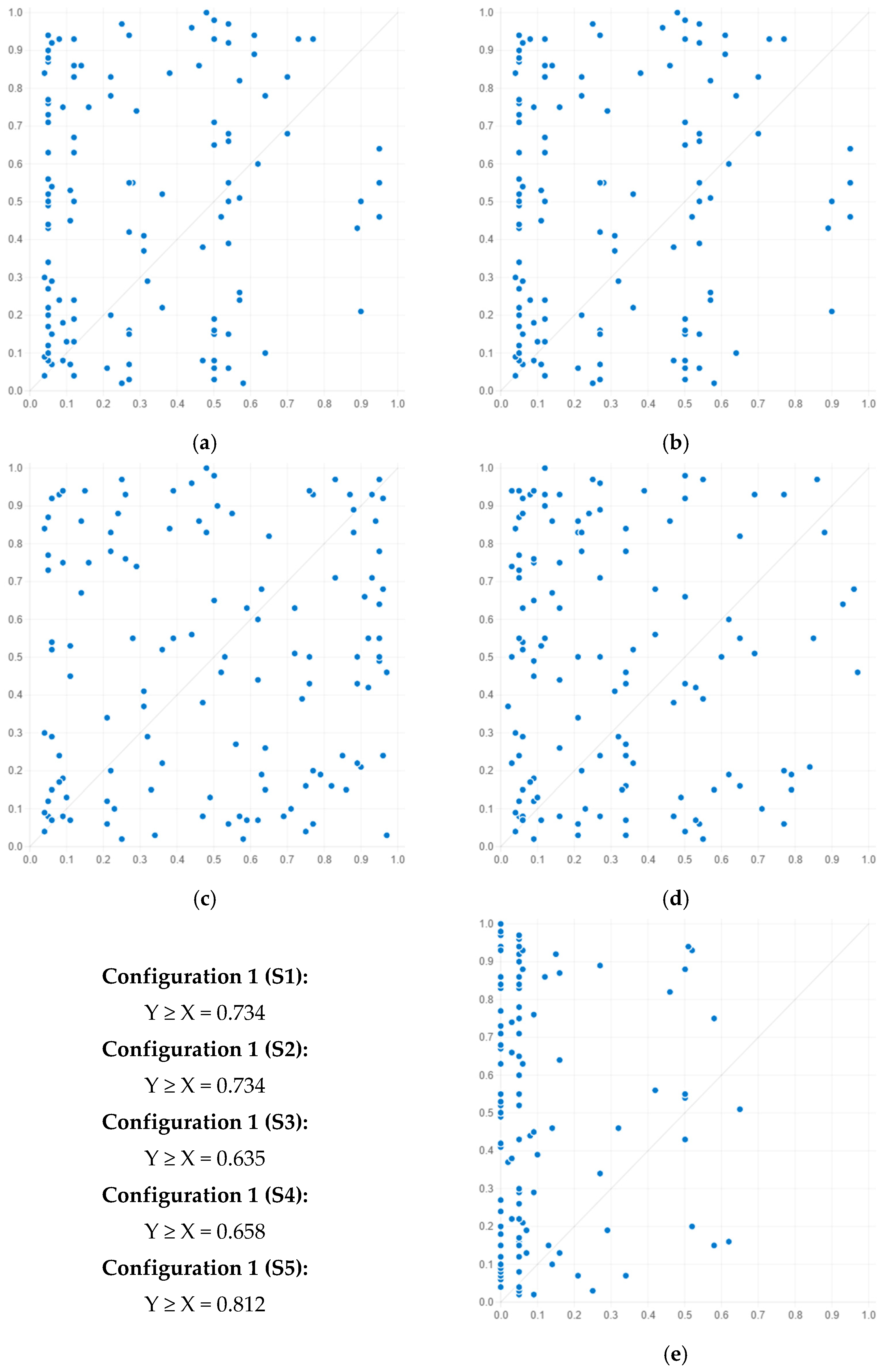
Furthermore, this study uses visualization analysis.
Figure 5 presents a diagram of equivalent pathways to corporate risk-taking. The vertical axis (Y) shows the membership degree of the risk-taking level in each configuration. The horizontal axis (R) shows the membership degree of cases within the configuration. The formula used to calculate case membership degree is as follows:
where min denotes the selection of the minimum value from the fuzzy set scores of the core existing conditions in the corresponding configuration; i indicates that this formula is applied individually to each case.
Through research calculations, it was found that the number of observed values in the upper triangular region is relatively larger than that in the lower triangular region, i.e., Y ≥ X = 0.5. This indicates that the identified conditional solutions are sufficient. It also supports the robustness of the research findings mentioned above.
5. Discussion
5.1. Theoretical Implications
First, this study further validates the synergistic relationship between government logic and technology logic. The existing literature presents debates on this relationship. Some studies suggest that government support plays a positive role in corporate technological innovation [
59,
60,
61]. Other studies point out that government intervention may lead to strategic innovation behavior or crowd out a firm’s own R&D investment [
62,
63]. This study finds that when government logic operates through tax incentives and forms synergy with digital applications within technology logic, it can build a stable development path with controllable risks. This finding offers a new perspective for understanding the boundary conditions of the relationship between government and technology logics. Their synergistic effect depends on the choice of policy tools and the choice of technological positioning. In Configuration S2, firms actively avoid direct subsidies. This further confirms that excessive reliance on direct government intervention may weaken the efficiency of market mechanisms in resource allocation.
Second, this study deepens the understanding of multiple institutional logics. Wang (2017) points out that there is a hierarchical relationship among technological, economic, and socio-political logics in corporate practice [
15]. However, that study does not systematically explain how these logics interact in different contexts. Configuration S3 reveals that government logic plays a leading and guiding role. Market logic and technology logic form a responsive support system. This finding concretizes the theoretical framework of logic compatibility and centrality proposed by Besharov et al. (2014) [
14]. It suggests that in policy-led transformation contexts, the centrality of government logic can effectively coordinate the direction of resource allocation guided by other logics [
82].
Third, this study responds to the research call to uncover the integration mechanisms of multiple institutional logics. Yang et al. (2025) emphasize the need to identify multiple institutional logics and reveal their interaction mechanisms in specific contexts [
16]. Mugerman et al. (2018) point out that understanding risk-taking requires clarifying the judgment basis of decision-makers [
83]. This study places corporate risk-taking within a framework of three institutional logics. Management makes integrated judgments based on policy signals, market feedback, and technological feasibility. The combined result of these judgments is reflected in the level of risk-taking. Configurations S4 and S5 show that when firms have strong resource integration capabilities, the three logics can form a high level of synergy. Together, they drive corporate risk-taking. This finding not only identifies how multiple institutional logics interact in a specific context, but it also reveals the conditions for achieving their synergistic effects. It thereby responds to the aforementioned research calls.
Fourth, this study extends the boundaries of institutional logic research. The previous literature has revealed the impact of compensation contracts on risk-taking [
38]. This study finds that in the innovation-driven path, tax incentives work by increasing the after-tax returns of risky projects. In the resource synergy path, government subsidies work by reducing the costs of failure. This suggests that external institutional incentives can both strengthen and complement the effects of compensation contracts. In addition, green investors in Configurations S3, S4, and S5 are diversified institutional investors with strong risk-taking capacity. This finding echoes previous findings in the field of finance.
5.2. Practical Implications
The following are suggestions for corporate managers: First, for firms on the innovation-driven pathway, managers can prioritize the use of tax incentives to reduce transformation costs. They should focus limited resources on the application layer of digital technologies rather than cutting-edge R&D. At the same time, they should maintain stable cooperation with traditional financing channels. Supply chain finance should serve as a liquidity supplement rather than a core driver. On this basis, firms can establish pilot projects for digital applications within the organization. They can accumulate experience through gradual progression, avoiding operational risks from radical transformation. If a firm has strong market financing capabilities, it can actively reduce reliance on direct subsidies. This further enhances the autonomy and sustainability of its development pathway. Second, for firms on the green transformation pathway, managers can use tax incentives as a strategic lever. They should actively engage with green investors. This promotes a gradual transition of financing channels from traditional supply chain finance toward green financing. In terms of digital deployment, they should prioritize application modules that align closely with green business scenarios. If a firm has a certain level of policy sensitivity and access to green capital markets, it can achieve green transformation through the coordinated support of green investors and digital applications, guided by tax incentives. Third, for firms on the resource synergy pathway, managers can choose an appropriate path based on their existing technological accumulation. For firms with a certain level of technological expertise, tax incentives and digital technology can serve as dual core drivers. They can introduce green capital as a synergistic resource. This enables the coordinated advancement of both technological breakthroughs and business restructuring.
The following are suggestions for policy makers: First, governments should abandon a one-size-fits-all approach to subsidies. They should design differentiated policy toolkits based on firm heterogeneity. For firms with a weak technological foundation, direct subsidies can ease R&D funding constraints. For firms with existing technological accumulation, tax incentives can stimulate endogenous innovation momentum. Second, attention should be paid to the synergistic effects among policy tools. Configuration S3 reveals a positive interaction mechanism between policy and the market. When introducing industrial policies, governments should also improve green finance infrastructure. This creates an institutional environment where firms can access both policy resources and market resources simultaneously. Third, a dynamic evaluation mechanism for policy effectiveness should be established. Configuration S2 exhibits a feature of light policy dependence. This suggests that excessive reliance on direct subsidies may lead to insufficient endogenous motivation in firms. It is recommended to establish a dynamic evaluation system. Such a system can guide firms toward market self-reliance.
The following are suggestions for investors: First, when cooperating with firms, green investors need to assess whether these firms have the ability to respond to policy guidance and the readiness for technology application. Second, Configuration S3 shows that firms deliberately avoid traditional supply chain finance. This indicates that in the context of green transformation, traditional financing tools may conflict with a firm’s strategic direction. It is recommended that financial institutions actively develop green supply chain finance products. This would align financing tools with policy guidance and create synergy.
6. Conclusions
From a configurational perspective, this study systematically reveals the equivalent pathways to corporate risk-taking. The findings show the following: First, when government logic and technology logic work together strongly, market logic plays a supporting role. It mainly supports operations through traditional financing channels. This forms a stable, policy-and-tech-driven pathway with relatively controllable risks. Second, when government logic takes a leading role, market logic and technology logic act as a responsive support system. This creates a layered risk structure with policy at the core and the other two logics playing auxiliary roles. Third, when government logic and market logic form a strong alliance, they together replace the role of technology logic in driving strategy. This reflects a high-risk, high-integration pathway driven by strong resource support. These findings clarify how multiple institutional logics interact at the firm level. They also extend institutional theory in the study of corporate risk-taking. The results offer systematic guidance for understanding how firms build different risk-taking capacities under complex institutional conditions.
This study has several limitations. First, the sample focuses on smart manufacturing firms. Whether the findings apply to other institutional settings or firm types needs further testing. Second, the variable design centers on government, market, and technology logics. It does not include other possible institutional forces, such as sociocultural or international factors. Third, the study mainly uses cross-sectional data. Future research could adopt longitudinal data to strengthen causal inference. These limitations also point to directions for further exploration.