Article

Dynamic Responses of Green Securities Market and Traditional Financial Market to Economic Policy Uncertainty in China: A TVP-SVAR-SV Approach

School of Economics and Management, Nanjing Tech University, Nanjing 211816, China
*
Author to whom correspondence should be addressed.
Systems 2026, 14(3), 246; https://doi.org/10.3390/systems14030246
Submission received: 27 January 2026 / Revised: 21 February 2026 / Accepted: 24 February 2026 / Published: 27 February 2026
(This article belongs to the Section Complex Systems and Cybernetics)

Abstract

The research employs principal component analysis to construct composite indices for China’s economic policy uncertainty (EPU), the green stock market, and the traditional stock market. Using nonlinear Granger causality tests and a Time-Varying Parameter Structural Vector Autoregression with Stochastic Volatility (TVP-SVAR-SV) model, it systematically examines the dynamic time-varying impact mechanism of China’s EPU on price volatility in the green securities and traditional financial markets. This research provides a crucial theoretical foundation and empirical reference, grounded in a nonlinear and time-varying perspective, for coordinating policy interventions to stabilize both traditional and emerging financial markets during the transition towards a green economy. The findings indicate: (1) An asymmetric risk transmission mechanism exists between the traditional financial and green securities markets in China, with the influence from the traditional financial market to the green securities market being stronger. (2) The influence of EPU in China on the green securities market exhibits time-varying characteristics that differ across periods. For instance, the Russia–Ukraine Conflict saw the green stock market’s most notable short-term negative response to EPU shocks. (3) The traditional financial market shows varied responses to China’s EPU shocks. China’s money market demonstrated a highly similar negative response pattern across three distinct periods.

1. Introduction

With the in-depth advancement of China’s “Dual Carbon” strategy, the green securities market has expanded rapidly, while the traditional financial market—as the cornerstone of China’s financial system—plays a pivotal role in maintaining macroeconomic stability and supporting green industry development [1]. Policy guidance under the “Dual Carbon” goals, such as the People’s Bank of China’s Carbon Emission Reduction Support Facility and the China Securities Regulatory Commission’s improved green bond standards, has directly channeled funds toward green sectors. It also indirectly affects the pricing of traditional assets by altering market expectations [2,3,4]. On the other hand, volatility in the green securities market can influence investor sentiment toward ESG assets, thereby indirectly affecting market sentiment in related sectors of the traditional financial market and triggering its fluctuations [5,6,7]. However, against the backdrop of advancing green transition policies and intensifying geopolitical uncertainty, the impact of EPU on price volatility between the traditional financial and green securities markets shows complex and shifting characteristics over time. As a key factor influencing market price volatility, China’s EPU significantly affects risk transmission and price linkages between these markets [8,9,10,11]. Therefore, studying the time-varying impact of EPU on price volatility between these markets in China holds significant importance for optimizing investor asset allocation, mitigating investment risks, and ensuring the stable development of financial markets.
China’s dual carbon strategy represents its steadfast commitment to and implementation of the global Sustainable Development Goals (SDGs), particularly Climate Action (SDG 13) and Affordable and Clean Energy (SDG 7). Compared with developed economies such as the United States, Germany, and France, China’s green finance development exhibits stronger characteristics of a state-driven strategy and top-level design [12]. For instance, the United States’ Environmental Protection Units (EPUs) primarily stem from congressional political debates and fiscal–monetary policy discussions, with its green market markedly driven by technological innovation and capital-seeking profit. Conversely, EPUs in European Union member states are frequently linked to EU-level policy coordination and energy security concerns, where the development of green finance markets is profoundly influenced by stringent environmental regulations and carbon trading systems. Compared to nations such as India and Japan, the scale and pace of development in China’s green securities market are particularly prominent [13]. This is intrinsically linked to China’s formidable infrastructure construction capabilities and its efficiency in centralized resource allocation.
The dynamic interplay between China’s green securities market and the traditional financial market under economic policy uncertainty (EPU) can be conceptualized through the lens of complex socio-economic systems theory, where economic systems function as adaptive networks and policy shocks propagate nonlinearly across subsystems, leading to emergent behaviors such as asymmetric risk spillovers [14]. In China’s context, EPU acts as a critical external perturbation to the financial system, triggering feedback loops between the green and traditional markets, consistent with sustainable business frameworks that emphasize how systemic resilience arises from multi-stakeholder interactions [15,16]. Unlike Western economies such as the U.S. and Germany, where market forces predominantly drive EPU responses and policy impacts are more dispersed, China’s top-down policy structure amplifies the coupling between EPU and market volatility. By integrating principles from the General Theory of Systems (GTS), this study frames EPU transmission as a multi-scale process, where short-term market reactions and long-term structural shifts reflect hierarchical system adaptation and goal-oriented resilience.
Uncertainty shocks affecting green securities markets and traditional financial markets have attracted significant scholarly attention. The research in this area mainly covers three dimensions. First, studies examine the transmission mechanisms and effects of endogenous shocks within and between traditional financial and green securities markets [17,18]. For example, Su et al. [19] systematically analyzed how green bonds transmit shocks to other assets in terms of returns, volatility, and tail risk. Second, researchers investigate the differing impacts of various external uncertainties—such as economic policy, geopolitical events, and climate policy—on these markets [20,21]. For instance, Liu et al. [22] explored how climate policy uncertainty affects risk spillovers between green financial and traditional energy markets. Third, studies analyze the heterogeneous effects of external shocks based on variations in transmission mechanisms, including price volatility analysis and time-varying response analysis [23,24]. For example, Arif et al. [25] studied the dynamic correlations between green and traditional investments within equity, fixed-income and energy markets during the COVID-19 crisis. However, the existing studies often rely on singular representative indices for China’s EPU, green stock market, and traditional stock market, lacking a comprehensive consideration of multiple indicators. Addressing this gap, this paper innovatively constructs composite indices for China’s EPU, green stock market, and traditional stock market, effectively overcoming the limitation of singular indicators in prior research.
When examining risk transmission relationships within and across financial markets, the existing literature often employs models like VAR or time-varying parameter VAR, with variable causal relationships typically identified using linear Granger causality tests to investigate inter-market linkages and risk transmission paths [26,27,28]. For example, Wu and Wang [29] used a TVP-VAR model to study the dynamic linkages between financialization and the real economy. These methods provide important references. However, given the current frequency of policy shocks and heightened market volatility, traditional models often assume constant or simplified variance structures, inadequately accounting for the randomness of volatility. This limitation hinders the accurate characterization of risk transmission mechanisms during high-volatility periods. Therefore, this study presents a TVP-SVAR-SV model with a stochastic volatility structure, combined with nonlinear Granger causality tests. This approach more precisely captures the dynamic response mechanisms and structural change patterns of price volatility in the green securities and traditional financial markets under EPU shocks in China. Based on the above research background and existing gaps, this paper explicitly formulates three core research questions to sharpen the analytical focus: (1) Is there an asymmetric risk transmission mechanism between China’s traditional financial market and green securities market, and what are the key drivers behind this asymmetry? (2) How does China’s EPU affect the price volatility of the green securities and traditional financial markets, and do these impacts exhibit time-varying and heterogeneous characteristics across different market segments and extreme events? (3) What are the underlying economic mechanisms for the heterogeneous responses of different financial sub-markets to EPU shocks?
In summary, addressing the shortcomings of the existing research, this paper employs PCA to construct composite indices for China’s EPU, green stock market, and traditional stock market. Combining nonlinear Granger causality tests with the TVP-SVAR-SV model, it analyzes the risk transmission paths of EPU between the traditional financial and green securities markets in China and further investigates its time-varying impact. The key contributions of this study are: (1) To overcome the issue of singular index selection, this study constructs composite indices for China’s green stock market, traditional stock market, and EPU, providing new tools for a more comprehensive and scientific assessment of EPU’s time-varying impact. (2) Differing from previous studies that mostly used linear models with constant parameters, this research employs a TVP-SVAR-SV model combined with nonlinear Granger causality tests, more accurately revealing the characteristics of the risk transmission mechanism and time-varying impact of China’s EPU on these markets. (3) This paper yields several new findings: An asymmetric risk transmission mechanism exists between the traditional financial and green securities markets in China. EPU affects the green securities market in ways that vary over time in China. The reaction to EPU shocks is divergent within the traditional financial market in China.
The remainder of this paper is structured as follows: Section 2 discusses the impact mechanism of EPU on the green securities and traditional financial markets in China. Section 3 constructs the TVP-SVAR-SV model. Section 4 describes the data sample and estimation methods for the model parameters and analyzes the time-varying impact of China’s EPU on price volatility in these markets. Section 5 presents the main conclusions.

2. Impact Mechanism and Theoretical Analysis

2.1. Analysis of the Impact Mechanism Between Traditional Financial and Green Securities Markets

The green securities market in China includes the green stock and green bond markets, while the core of its traditional financial market comprises the traditional bond, traditional stock, and money markets. Both the green securities and traditional financial markets exhibit clear multi-dimensional and multi-scale characteristics [30]. Simultaneously, both markets are affected by a range of elements, like national policies and key events [31]. Therefore, the interaction between the traditional financial and green securities markets in China is notably complex. The impact mechanisms primarily include complementarity and synergy within the green securities market, interlinkages and transmission within the traditional financial market, and capital flows and information transmission between the two (as shown in Figure 1), detailed as follows:
  • Within the green securities market, complementarity and synergy are evident. As a tool for debt financing, the green bond market provides substantial long-term funding for well-established green projects [32,33], such as renewable energy power stations and green transportation infrastructure. Meanwhile, the green stock market serves as an equity financing tool, supporting green innovative enterprises in their start-up or growth phases [34], e.g., energy storage technology and hydrogen energy R&D. Together, they form a continuous financing support chain covering the entire lifecycle of enterprises. On the other hand, the synergistic development of these two markets fosters financial innovations such as green ETFs and ESG derivatives, attracting more intermediary services, including certification and consulting, thereby promoting the development of a more mature and efficient green financial market [35].
  • Linkages and transmission mechanisms also operate within the traditional financial market. The money market, as the short-term liquidity hub of the financial system, influences the pricing basis of the traditional bond market through interest rate transmission [36]. Furthermore, liquidity conditions in the money market directly affect the overall funding availability in the traditional stock market [37]. When liquidity is abundant, surplus funds flow into the stock market via institutional allocation and leveraged trading, pushing up asset prices. Conversely, liquidity tightening triggers capital outflows, exerting pressure on the stock market. Finally, there is significant interaction between the traditional bond and stock markets, often manifesting as a “seesaw effect” [38]. When economic expectations are positive, risk appetite rises, and capital tends to flow from the low-risk bond market to the higher-risk stock market. When economic uncertainty rises or market panic occurs, capital flows reversely into the bond market for safety.
  • Capital flows and information transmission occur between traditional financial and green securities markets. The green securities market primarily focuses on environmental governance and green transition, while the traditional financial market manages conventional resource allocation. A clear bidirectional interaction mechanism exists between them [39,40,41]. Driven by the national “Dual Carbon” strategy, market capital shows a clear structural shift, gradually flowing from the traditional financial market to the green securities market. Simultaneously, the green securities market transmits key information about the future economic structure to the traditional market, influencing valuation methods [42]. For example, the “green premium” of green bonds provides a new pricing benchmark for the entire market, forcing traditional asset pricing to consider an “environmental risk premium” [43].

2.2. Analysis of the Influence Mechanism of EPU on Traditional Financial and Green Securities Markets

In recent years, with frequent geopolitical events such as intensified U.S.–China strategic competition and the escalation of the Russia–Ukraine Conflict, EPU not only significantly affects market sentiment but also profoundly influences the interaction between traditional financial and green securities markets [44,45]. When EPU rises, investors, based on the firm belief in the national “Dual Carbon” strategy, may anticipate long-term support for green industries, thus “chasing green returns” and injecting capital into the green securities market. Sustained capital inflows and strong demand can create a green premium, meaning green assets enjoy lower financing costs or higher valuations compared to similar traditional assets [46]. The emergence of this green premium reinforces market optimism, attracting more capital and further elevating the premium. Concurrently, rising EPU leads investors to worry about policy risks facing traditional high-carbon industries, such as production restrictions and increased carbon costs, prompting them to “avoid transition risks” and divest from the traditional financial market. Capital outflows cause oversupply, leading to a brown discount, meaning high-carbon assets must offer higher risk compensation to attract capital [47]. The formation of this brown discount exacerbates market pessimism, accelerating capital flight from the traditional market and deepening the discount (as shown in Figure 1).

2.3. Research Hypotheses and Flowcharts

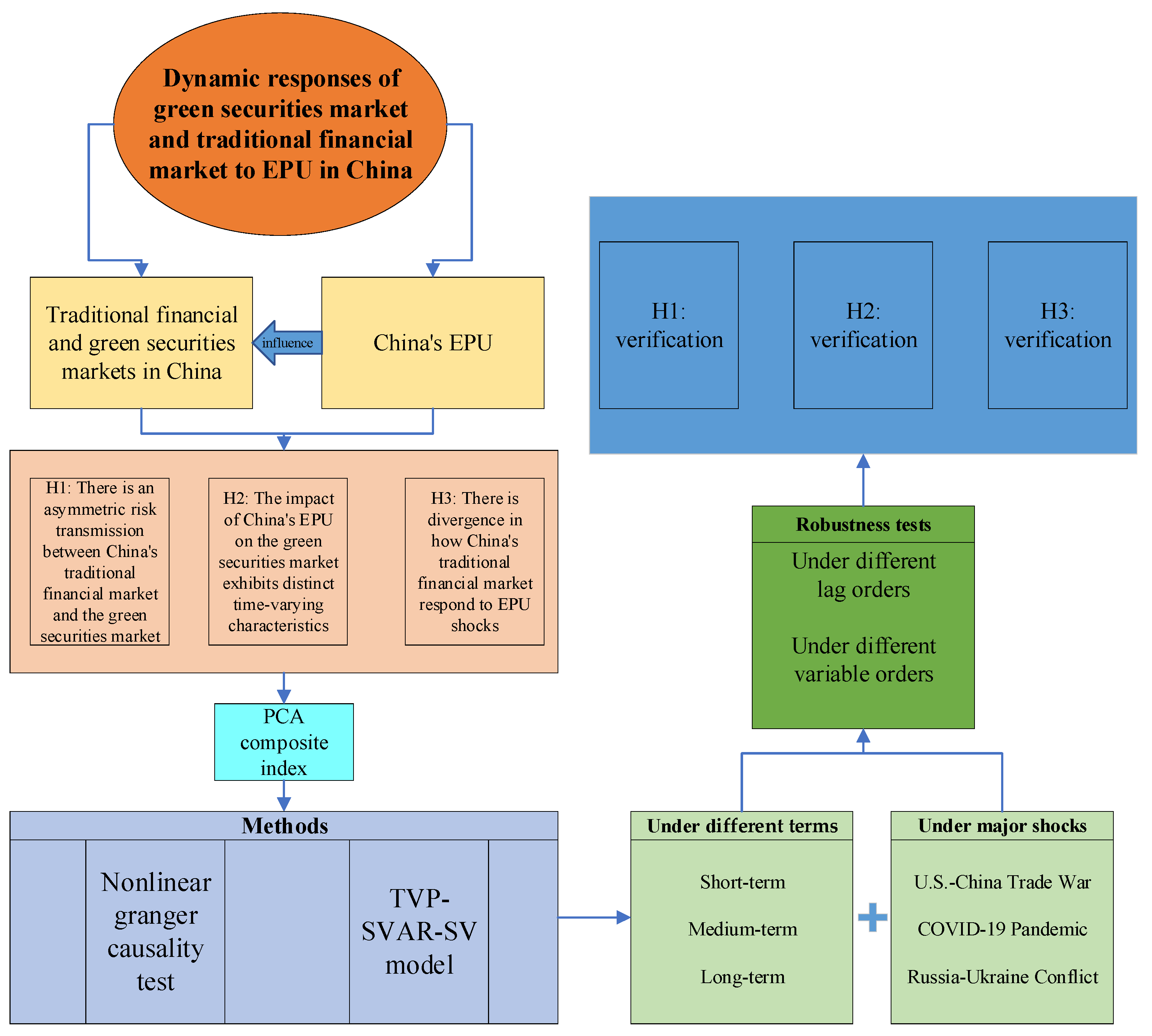
This study proposes the following three testable hypotheses to guide the subsequent empirical analysis, based on the theoretical analysis of the interaction mechanisms between traditional financial and green securities markets, as well as the transmission pathways of EPU shocks (as shown in Figure 2).
H1. 
There is an asymmetric risk transmission between China’s traditional financial market and the green securities market.
H2. 
The impact of China’s EPU on the green securities market exhibits distinct time-varying characteristics.
H3. 
There is divergence in how China’s traditional financial market responds to EPU shocks.

3. TVP-SVAR-SV Model Construction

Drawing on the fixed-parameter SVAR model framework of Chen et al. [48], this paper constructs a TVP-SVAR-SV model by introducing time-varying parameters (TVPs) and stochastic volatility (SV). The model can grasp the time-varying correlation features among financial variables in real time and precisely capture the dynamic evolution of shock volatility. Its core advantage lies in enabling simultaneous time-varying estimation of parameters and volatility without relying on sample segmentation. Particularly in analyzing market transmission mechanisms under extreme scenarios like geopolitical conflicts or major public health events, this model demonstrates unique empirical value, allowing more effective exploration of the dynamic impact mechanism of EPU on the traditional financial and green securities markets in China [49,50].

3.1. Observation Equation

Let y t R 5 denote the five endogenous variables: green stock, green bond, traditional stock, money market, and traditional bond, whose dynamic evolution follows the structural form:
y t = c t + p i = 1 A i , t y t i + C t x t + A t 1 ε t , ε t N 0 , I n
where c t is the time-varying intercept. A i , t is the time-varying coefficient for the i-th lag. x t = E P U t is the exogenous shock variable, i.e., China’s EPU index. A t 1 is the structural matrix. C t is time-varying coefficient. ε t is the structural shock term.

3.2. State Equation

To characterize the dynamic evolution of model parameters, define the state variables, including the time-varying coefficient vector as β t = v e c c t , A 1 , t , , A p , t , C t K . The non-zero elements of the structural matrix are expressed in vector form as α t = v e c h A 1 n n + 1 / 2 . The log form of the market volatilities is defined as h t = h 1 , t , , h n , t n .
All state variables are presumed to follow a process of random walk:
β t = β t 1 + u β , t , u β , t N 0 , Q β α t = α t 1 + u α , t , u α , t N 0 , Q α h t = h t 1 + u h , t , u h , t N 0 , Σ h
where Q α and Q β are the covariance matrices of state noise, reflecting slow structural changes. h is a diagonal matrix indicating the intensity of volatility changes for each variable.

3.3. Covariance Structure and Identification Setting

The structural shocks’ variance–covariance matrix ε t is
H t = A t 1 d i a g e h 1 , t , , e h n , t A t 1
The model employs a recursive (Cholesky) identification strategy. The specific form of the structural identification matrix is
A t 1 = 1 0 0 0 a 21 , t 1 0 0 a 31 , t a 32 , t 1 0 a n 1 , t a n 2 , t a n 3 , t 1

3.4. Joint Distribution Structure of System Errors

To unify all structural error terms in the system, the observation errors and state evolution errors are jointly modeled. Their covariance structure is as follows:
ε t u β , t u α , t u h , t N 0 , I n 0 0 0 0 β 0 0 0 0 α 0 0 0 0 h
where ε t is the observation error, corresponding to the structural shock term, with a covariance of the identity matrix I n . μ β , t , μ α , t and μ h , t are the random disturbance terms of the state variables, reflecting the slow random changes of the coefficient vector, structural identification matrix, and market volatility parameters, respectively. β = Q β , α = Q α and h are the corresponding diagonal covariance matrices, indicating the stability and degree of change of the respective parameters. All error terms are statistically independent.

4. Empirical Results Analysis

4.1. Data

The present paper uses monthly data from January 2015 to August 2025 to thoroughly analyze the time-varying influence of China’s EPU on price volatility between the traditional financial and green securities markets. This study selects January 2015 as the start of the sample period, primarily because China issued the ‘Overall Plan for Reforming the Ecological Civilization System’ in 2015, which first proposed the establishment of a green financial system. The sample period is extended to August 2025 to ensure that the data encompasses the latest market dynamics and major exogenous shocks, such as the U.S.–China Trade War, COVID-19 pandemic and Russia–Ukraine Conflict. The green securities market is divided into the green stock and bond markets, while the traditional financial market is divided into the traditional stock, traditional bond, and money markets. Specifically, the green bond market is represented by China’s Green Bond Index; the traditional bond market by the 10-year treasury bond yield; and the money market by the interbank pledged repo rate. Given the complex structure of China’s stock market, encompassing both traditional sectors and emerging green fields, this paper applies Principal Component Analysis (PCA) to construct composite indices for the green and traditional stock markets. For the green stock market composite index, representative green stock indices, such as the CSI Green Investment Index, CSI Environmental Protection Industry Index, and CSI New Energy Index, are selected to form a matrix of a multi-dimensional time series. The CSI Green Investment Index, CSI Environmental Protection Industry Index and CSI New Energy Index, respectively, capture different dimensions of China’s green economy theme: the Green Investment Index covers broadly defined sustainability-related sectors, the Environmental Protection Industry Index focuses on pollution control and environmental services segments, while the New Energy Index concentrates on core industrial chains driving energy structure transformation. After standardization, the number of principal components is determined using the Kaiser criterion (eigenvalue > 1). The first two principal components are retained and weighted by their variance contribution rates to synthesize the green stock market composite index in China.
For the traditional stock market composite index, representative indices such as the CSI 300, CSI 500, CSI 1000, and ChiNext are selected. The CSI 300 Index represents large-cap blue-chip stocks in the A-share market, the CSI 500 Index covers mid-cap growth companies, the CSI 1000 Index focuses on small-cap stocks, while the ChiNext Index specifically tracks innovative growth enterprises. Together, these four indices form a multi-tiered market observation system spanning large-cap to small-cap stocks, encompassing both traditional and innovative sectors. The same PCA procedure (standardization and Kaiser criterion) is applied, and the first two principal components are retained and weighted by their variance contribution rates to synthesize China’s traditional stock market composite index. The innovation of PCA lies in two aspects: First, it overcomes the limitation of using a single index by combining indicators from different sub-sectors, dynamically reflecting the overall industry trends through multi-dimensional market data. Second, it replaces subjective weighting with objective PCA-based weighting, effectively eliminating multicollinearity among indices and ensuring the statistical robustness and economic interpretability of the composite indices. The specific formulas are as follows:
G r e e n S t = λ 1 λ 1 + λ 2 × F 1 , t + λ 2 λ 1 + λ 2 × F 2 , t ÷ C
T r a d i t i o n a l S t = λ 1 λ 1 + λ 2 × F 1 , t + λ 2 λ 1 + λ 2 × F 2 , t ÷ C
where F 1 , t and F 2 , t represent the first and second principal component scores in period t, λ 1 and λ 2 are the corresponding eigenvalues, and C is a base-period adjustment constant.
Additionally, when constructing China’s EPU composite index, this paper selects the EPU (MN) index based on the People’s Daily and GuangMing Daily, and the EPU (SCMP) index based on the South China Morning Post. PCA is used to construct China’s EPU composite index. Since both EPU (MN) and EPU (SCMP) reflect China’s EPU from different perspectives but are systematically related, linear regression is employed to impute missing data for EPU (SCMP) after December 2023. China’s EPU composite index effectively captures the co-movement characteristics of China’s EPU and market sentiment, providing quantitative support for analyzing its impact on traditional financial and green securities markets. Furthermore, the PCA-constructed EPU composite index is more comprehensive, effectively capturing the common trend of multi-dimensional risk factors and avoiding bias from a single indicator. The specific formula is as follows:
E P U t = λ 1 Z 1 , t + λ 2 Z 2 , t
Table 1 presents the variable framework for the traditional financial markets and green securities markets employed in this empirical analysis, along with the definitions of the selected variables.
Table 2 sets out the descriptive statistics for the traditional financial and green securities markets in China. It shows that the green stock market (Green-S) has the highest mean return at 0.0046, followed by the traditional stock market (Traditional-S) at 0.0020. In terms of market volatility, the money market (DR007) exhibits the most intense volatility with a standard deviation of 0.2030, far exceeding the other markets, consistent with its characteristic of short-term rates being directly influenced by policy and liquidity. DR007 denotes the 7-day repo rate for interbank deposit-taking institutions using interest-bearing bonds as collateral. Skewness reflects the direction and degree of asymmetry in a data distribution, while kurtosis reflects the concentration of the distribution and the thickness of its tails. Regarding skewness, the green bond market (Green-B) shows left-skewness, and DR007 exhibits extreme left-skewness with a skewness of −3.5984, indicating the presence of extremely low-yield scenarios. For kurtosis, DR007 has extremely high kurtosis at 26.9377, showing a markedly leptokurtic distribution. The ADF test is used to determine whether a time series contains a unit root, i.e., to test for stationarity. The ADF test findings reveal that all the variables maintain stationarity at the 1% significance level.
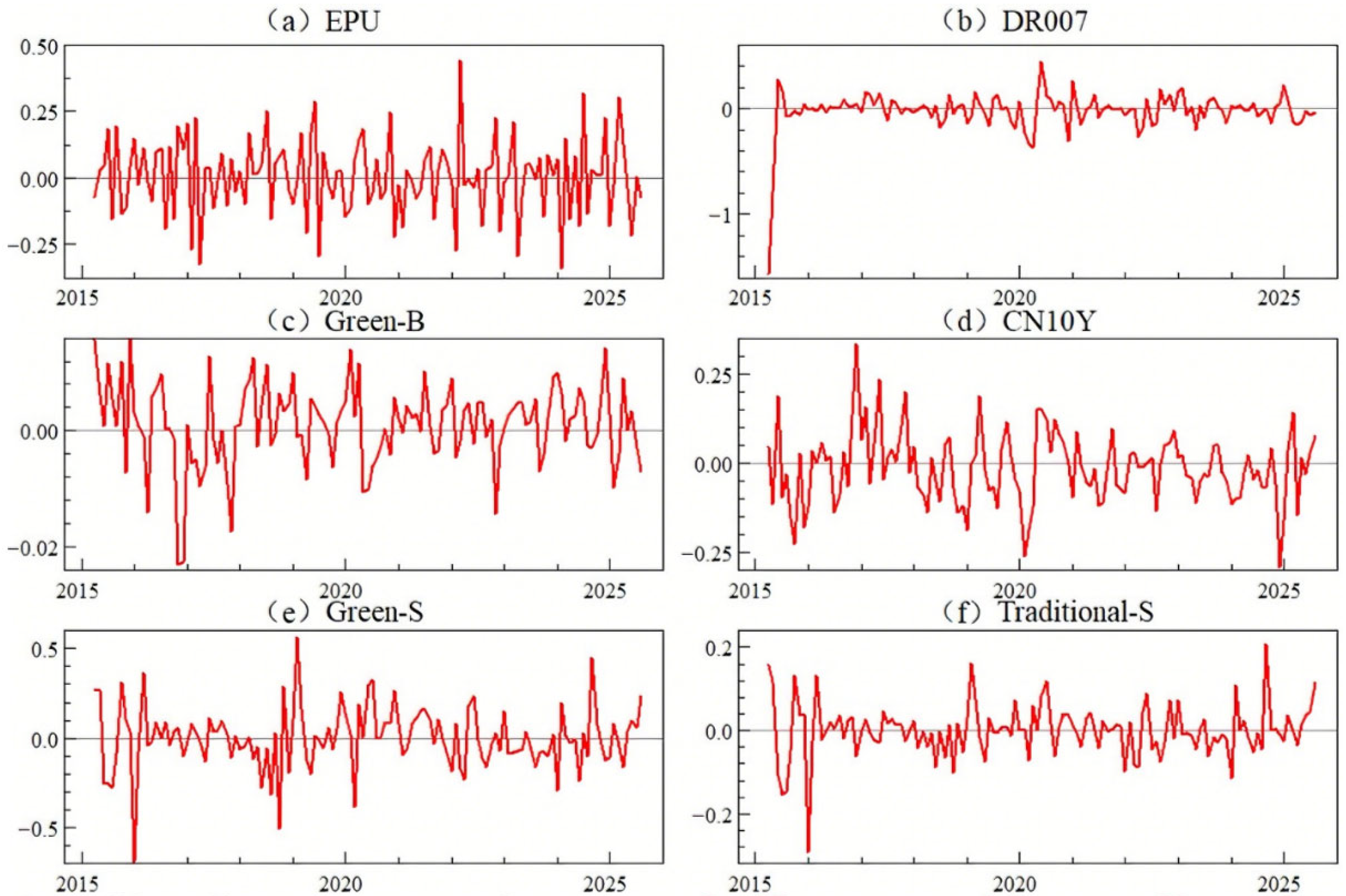
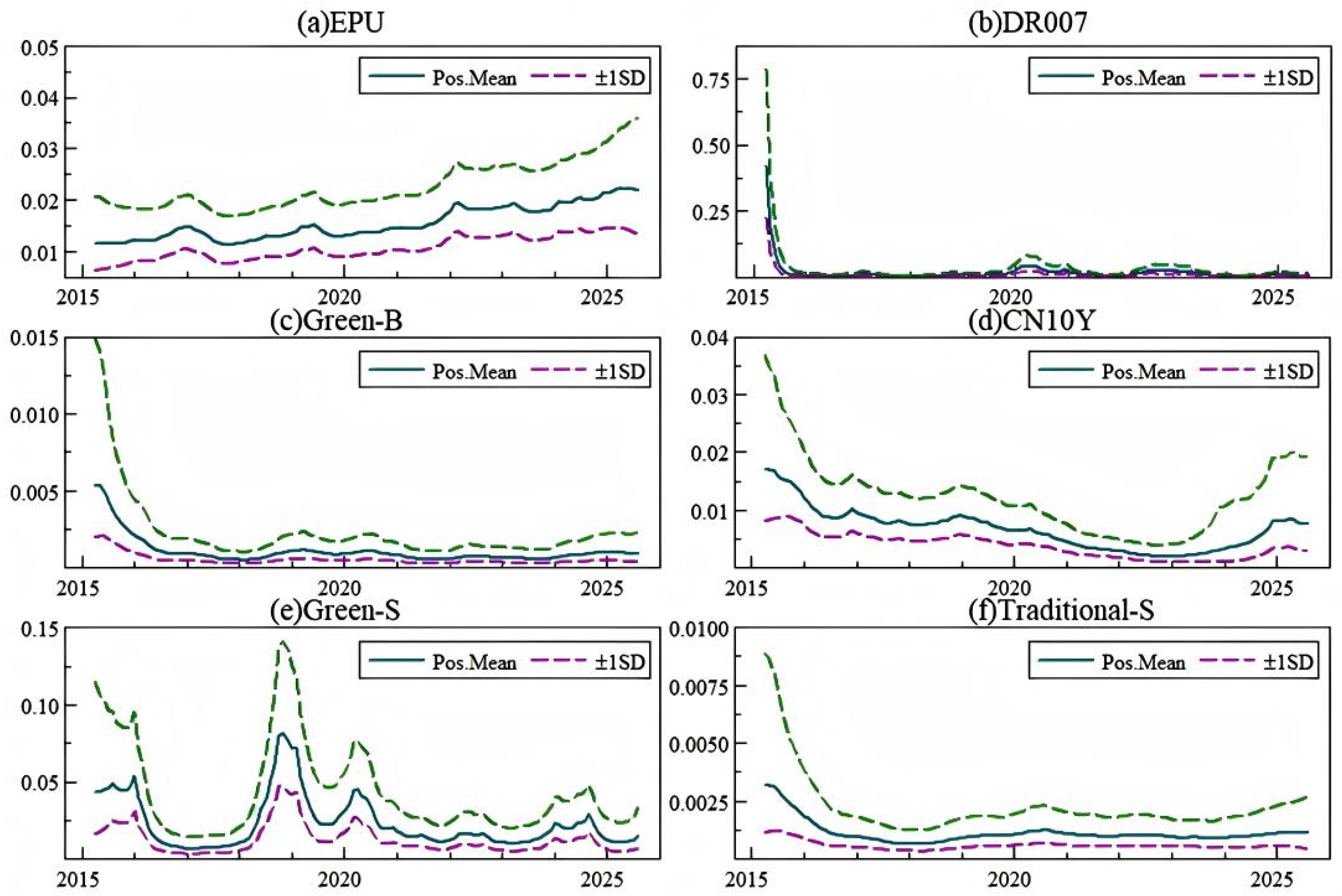
Figure 3 illustrates the volatility characteristics of the indices. From Figure 3a, China’s EPU experienced significant volatility, with notable peaks during 2022–2023, related to global macroeconomic policy adjustments at the time. Figure 3b shows that DR007 rose rapidly and then fell sharply in 2015, directly linked to the short-term liquidity crisis triggered by the abnormal stock market volatility and the central bank’s emergency interventions. Figure 3c indicates that Green-B exhibited relatively stable overall volatility, consistent with the basic characteristics of fixed-income bonds. Figure 3d shows that the traditional bond market (CN10Y) experienced intense volatility, with a sharp decline in 2020 due to the influence of the COVID-19 pandemic. Figure 3e reveals that Green-S exhibited the most intense volatility, possibly due to its long-term and uncertain investment nature. Figure 3f indicates that Traditional-S also showed significant volatility, with a particularly sharp decline in 2016, related to the lingering effects of the 2015 stock market bubble burst.

4.2. Nonlinear Granger Causality Test

To more accurately characterize the complex relationship between EPU and the traditional financial and green securities markets in China, this paper employs nonlinear Granger causality tests. It tests whether the past information of one sequence (especially after nonlinear transformation) can significantly enhance the nonlinear predictive capability for another sequence. Compared to traditional linear causality tests, nonlinear tests can capture potential nonlinear dependencies, helping to more comprehensively reveal the interaction mechanisms between markets.
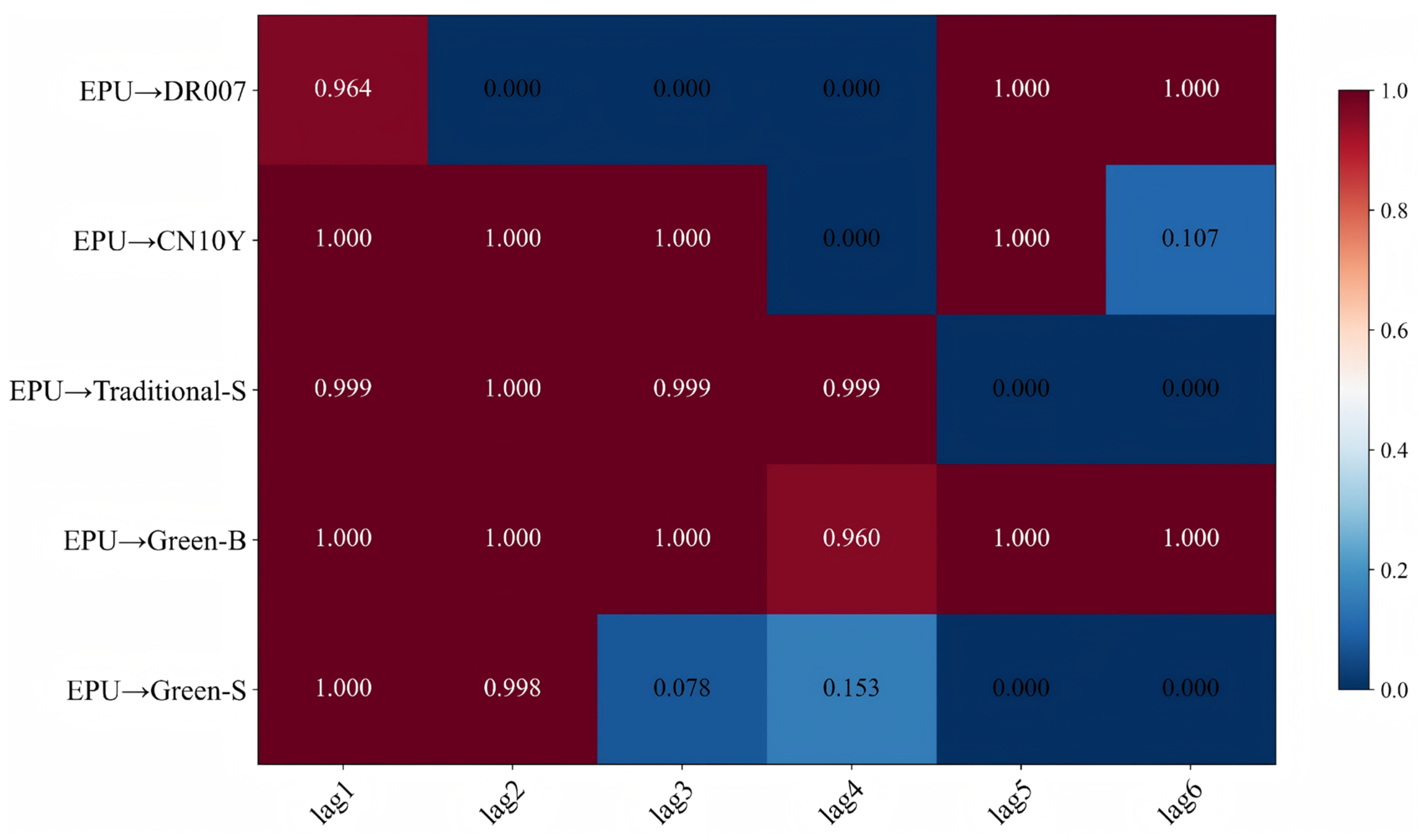
Figure 4 presents the empirical results of the nonlinear Granger causality from EPU to the traditional financial and green securities markets in China. Specific analysis shows:
First, EPU has a significant, broad, and long-lasting impact on the traditional financial market in China. The impact of EPU on the Traditional-S is most pronounced. This influence begins at lag 1 and continues through lag 4, indicating that Traditional-S is clearly driven by EPU, and the impact of EPU shocks does not subside quickly.
Second, the influence of EPU on the Green-B is the most significant in China, spanning from lag 1 through lag 6. The reason is that the policy environment plays a core role in the valuation of the green bond market in China, and the market’s lower liquidity results in slower price reactions to information.
Third, over a brief period, the EPU significantly affects the Green-S in China, but this effect diminishes rapidly in the medium- to long-term. The influence is strong at lags 1 and 2, with causality statistics reaching 1.000 and 0.998, but the test value quickly drops close to zero as the lag order increases. The reason is that green stocks are growth assets. Their long-term trends often depend on industry trends, technological fundamentals, corporate earnings, etc., factors that may weaken the impact of EPU shocks on the Green-S.
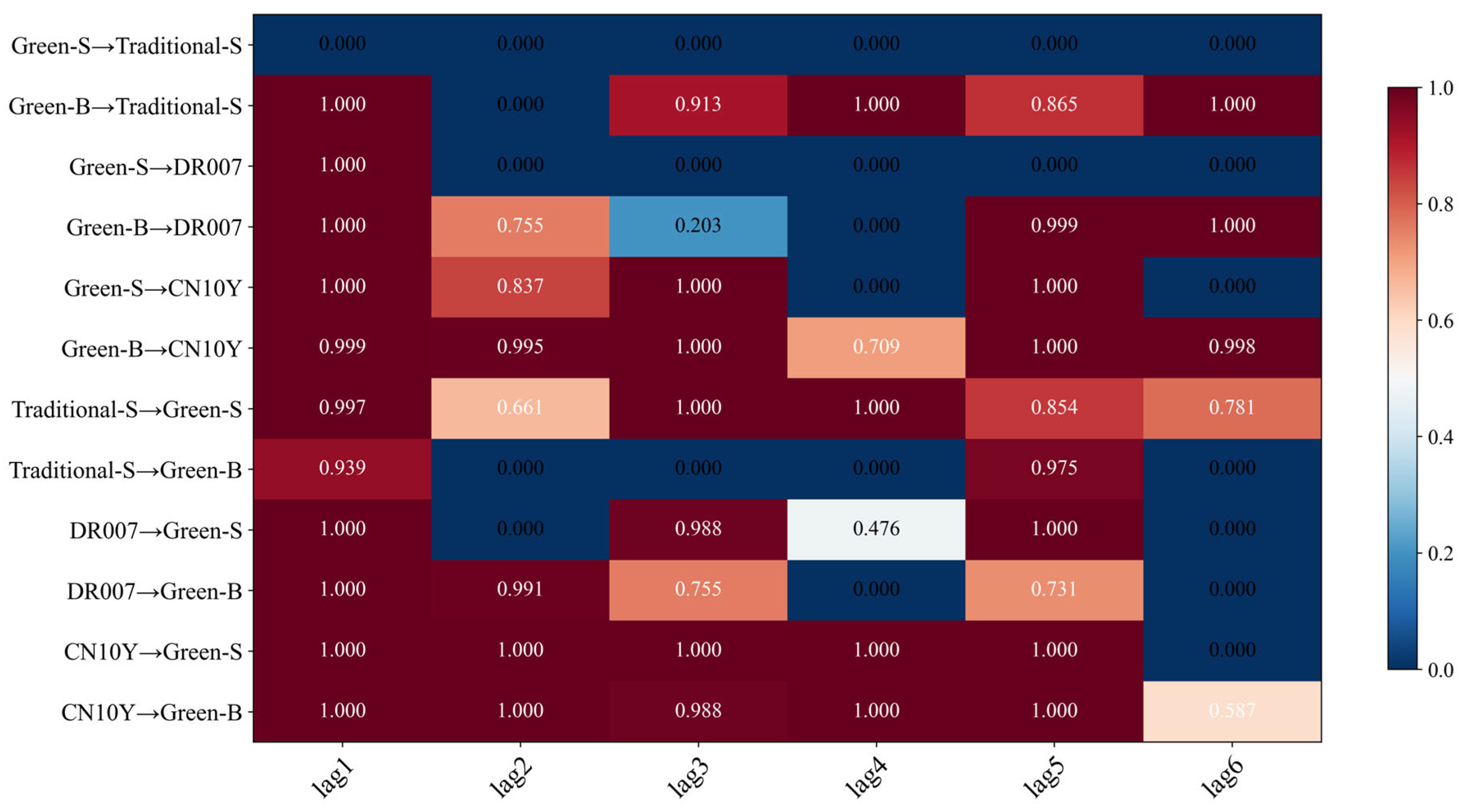
Figure 5 presents the results of the nonlinear Granger causality test between the traditional financial and green securities markets in China. Specific analysis shows:
First, the influence of Green-B on the Traditional-S is both significant and persistent in China. It is significant at lag 1 and lags 3–6, indicating that dynamic changes in the Green-B can stably predict the future trends of the Traditional-S. The reason is that issuance and trading activity of green bonds reflect the intensity of national policies and long-term capital flows, transmitting forward-looking signals about policy support and industry investment prospects to the Traditional-S.
Second, China’s CN10Y has a significant causal relationship with the green securities market. For example, the nonlinear causality statistic from the CN10Y to the Green-S reaches 1 at lags 1–5. At the same time, the causality from the CN10Y to the Green-B is also essentially 1 at lags 1–5. This indicates that the traditional bond market drives volatility in the green securities market, particularly price changes in the Green-S. The reason is that valuation of green stocks relies partly on forecasts of their future cash flows, and the 10-year treasury bond yield from the traditional bond market serves as the long-term interest rate benchmark followed by the green securities market.
Third, the causality between Traditional-S and Green-S in China exhibits asymmetric characteristics. The influence of Traditional-S on Green-S is particularly pronounced at lags 1, 3, and 4, with nonlinear causality statistics reaching 0.997, 1.000, and 1.000, respectively. This finding indicates that volatility in the Traditional-S significantly impacts the Green-S. In contrast, the impact of Green-S on Traditional-S is not significant at any lag. This shows that linkage between the traditional stock and green stock markets is asymmetric in China. The reason is that the green stock market is still somewhat viewed as a “derivative market” of the traditional stock market and its independent status has yet to be fully established.
From an economic perspective, this asymmetric characteristic is jointly driven by three factors: First, market maturity. China’s green securities market is in the developmental stage, with a smaller scale, fewer listed companies, and weaker independent pricing power compared to the mature traditional financial market, making it passively influenced by traditional markets. Second is investor composition. The traditional financial market has a diverse structure, whose trading behavior dominates market trends, while the green securities market is dominated by policy-oriented investors, with insufficient participation of market-oriented capital, limiting its ability to drive market changes. Third is policy credibility. Although China’s “Dual Carbon” strategy is long-term, short-term policy adjustments and uneven implementation create uncertainty, leading investors to rely more on traditional market trends when making decisions—strengthening one-way risk transmission.

4.3. Assessment of Specific Parameters

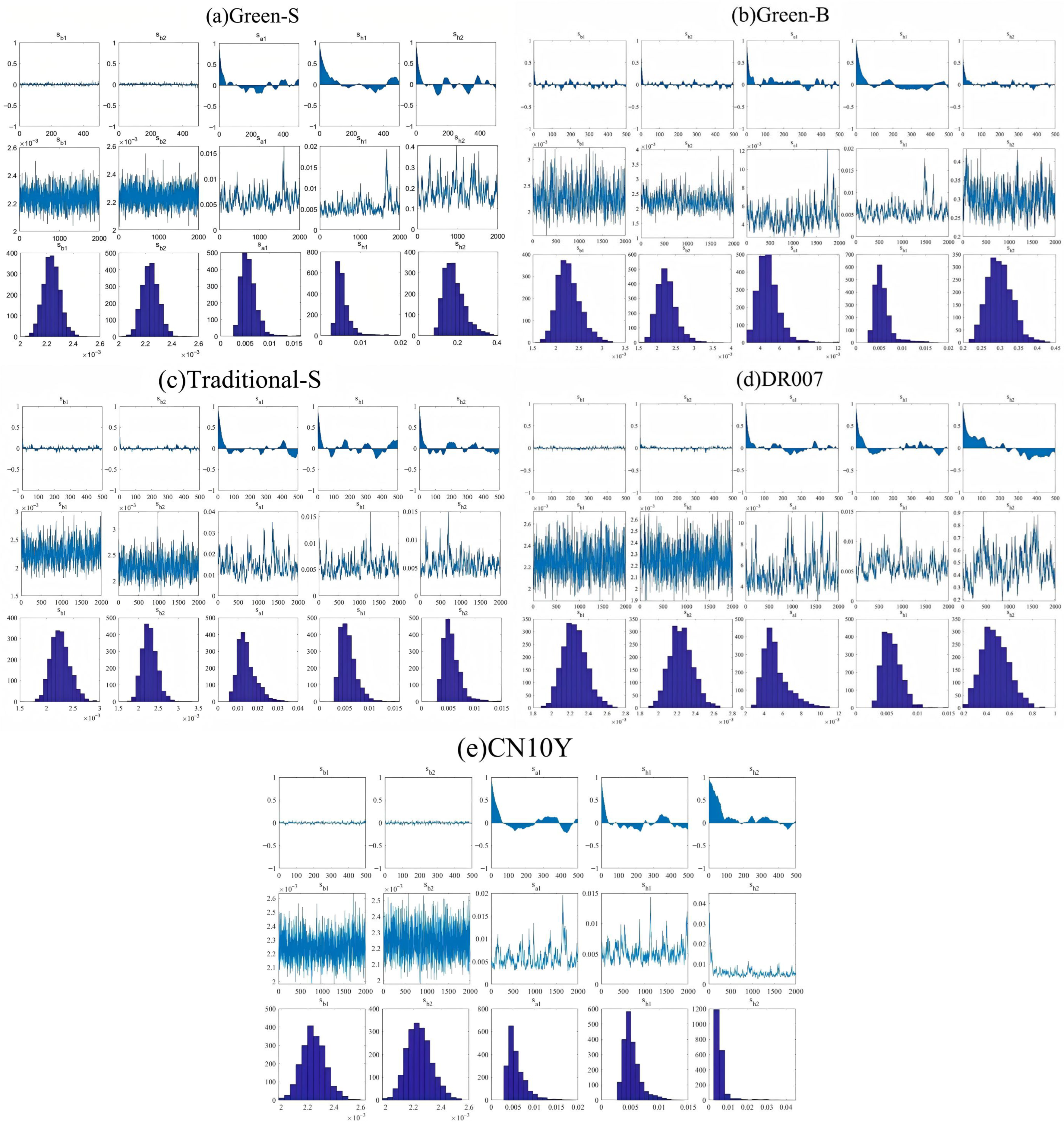
This research employs the AIC and BIC criteria to identify the best lag order for the TVP-SVAR-SV model. As shown in Table 3 and Table 4, all the parameters’ posterior mean estimates are significant and lie within the 95% confidence intervals. According to the Geweke test, the null hypothesis that time-varying parameters converge to the posterior distribution is not rejected in most cases (p > 0.05). This suggests that Markov Chain Monte Carlo (MCMC) simulation has reached a stable state. Regarding sampling efficiency, the low inefficiency factor values indicate that most parameters maintain low levels, validating the high efficiency of MCMC sampling and thus ensuring the reliability of parameter estimates.
Figure 6 presents the parameter estimation results, including sample autocorrelation functions, sample paths, and posterior density 0 distributions. It shows stable sample paths and declining autocorrelation functions. These empirical features indicate that the MCMC sampling method can effectively generate convergent posterior distribution samples, validating the reliability of the model estimation results [51].
Figure 7 illustrates the posterior estimates of stochastic volatility for structural shocks in the traditional financial and green securities markets in China. Notably, Figure 7e reveals a sharp increase in the volatility of the Green-S in early 2020, attributed to the COVID-19 pandemic. Significant volatility spikes also occurred in 2015–2016 and 2018, corresponding to policy shifts during those periods. A comparison of Figure 6c,e with Figure 7d,f indicates that the volatility trajectories of China’s green securities market align closely with those of the Traditional-S and the CN10Y. This alignment suggests that broad financial shocks, including macroeconomic factors and policy changes, predominantly influence volatility in China’s green securities market. Additionally, Figure 7a,b demonstrate that peaks in volatility for EPU and DR007 frequently precede or coincide with volatility fluctuations in various financial markets. This observation further underscores the significant role of policy factors in driving and transmitting volatility.

4.4. Time-Varying Responses to EPU Shocks Across Different Temporal Perspectives

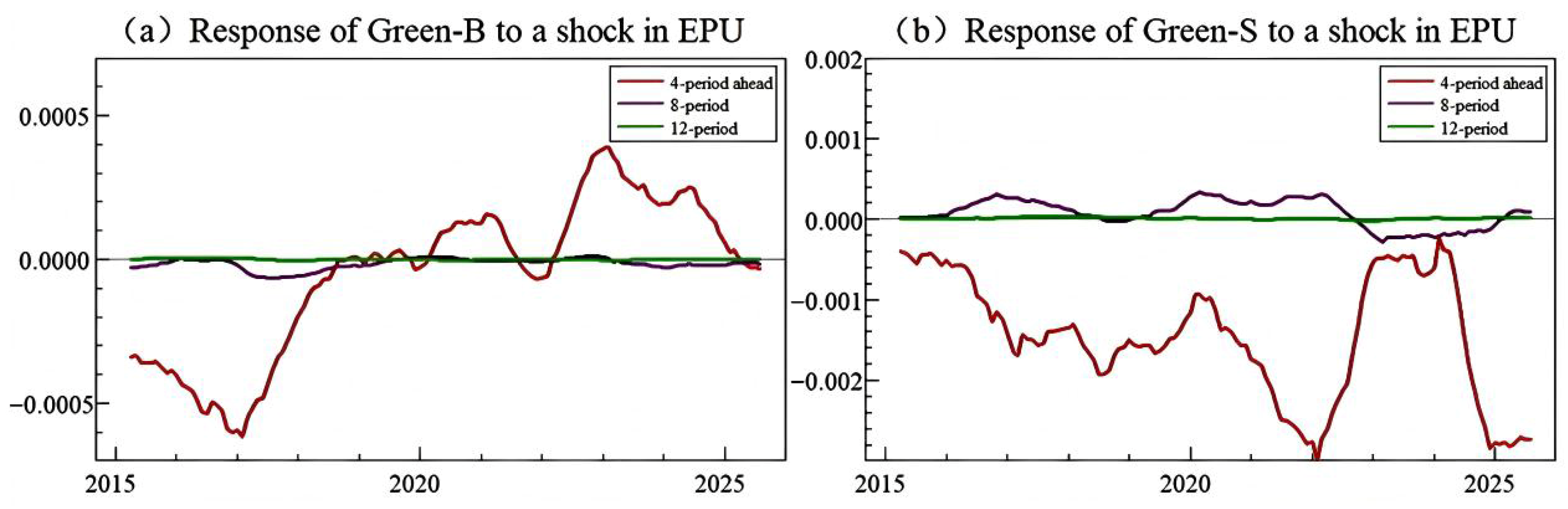
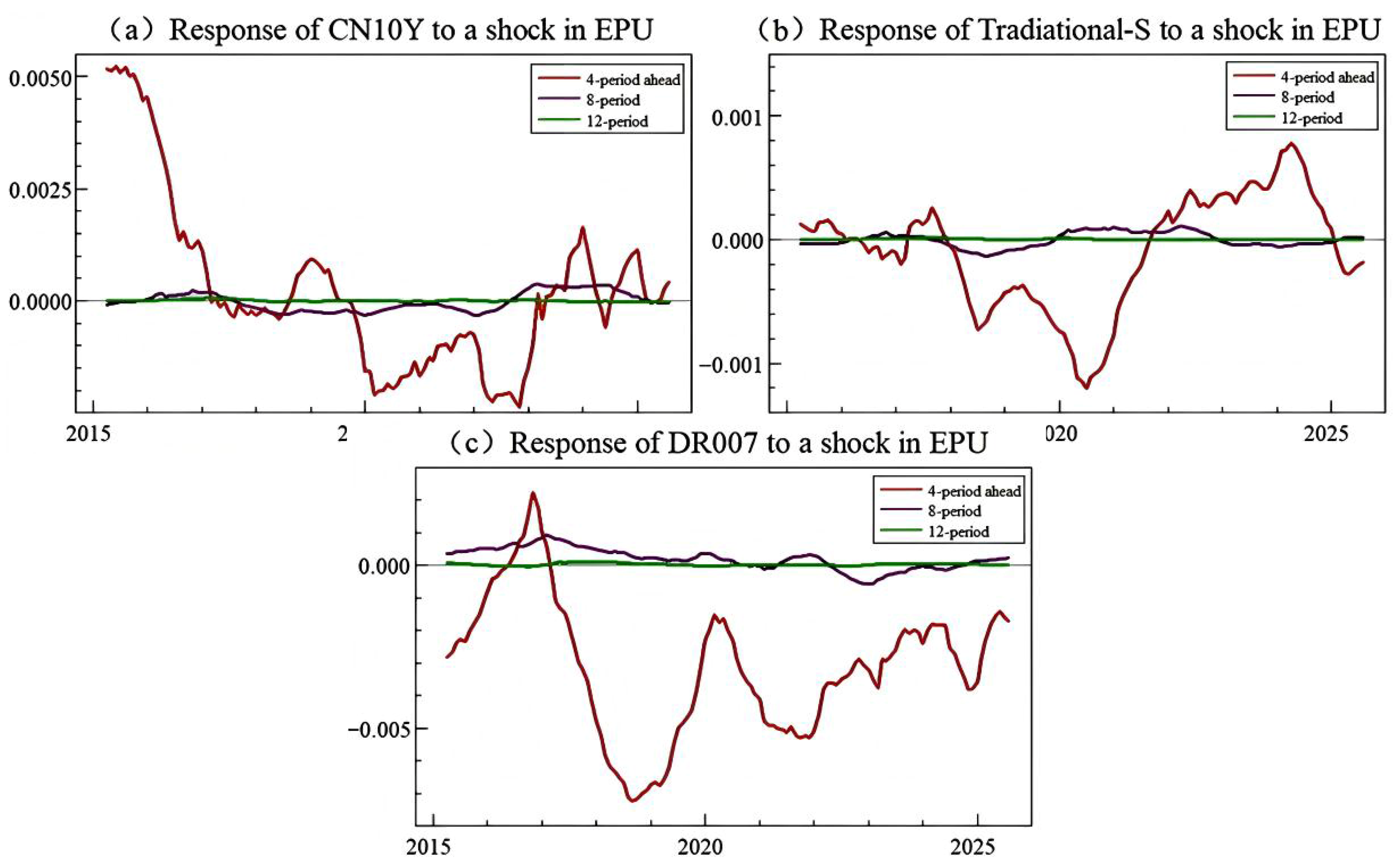
To analyze the dynamic responses of the traditional financial and green securities markets to EPU shocks in China, Figure 7 and Figure 8 present time-varying impulse responses at 4-month, 8-month, and 12-month horizons, corresponding to short-term, medium-term, and long-term response characteristics, respectively. The x-axis shows the months following the shock, while the y-axis indicates the standardized response value of each variable to the shock. Given the time-varying nature of the model, impulse responses are calculated point-by-point over the entire sample period, combining the estimated parameters and structural matrix at each time point to construct dynamic contemporaneous impulse responses, thereby precisely capturing the structural response process of variables over time [52].
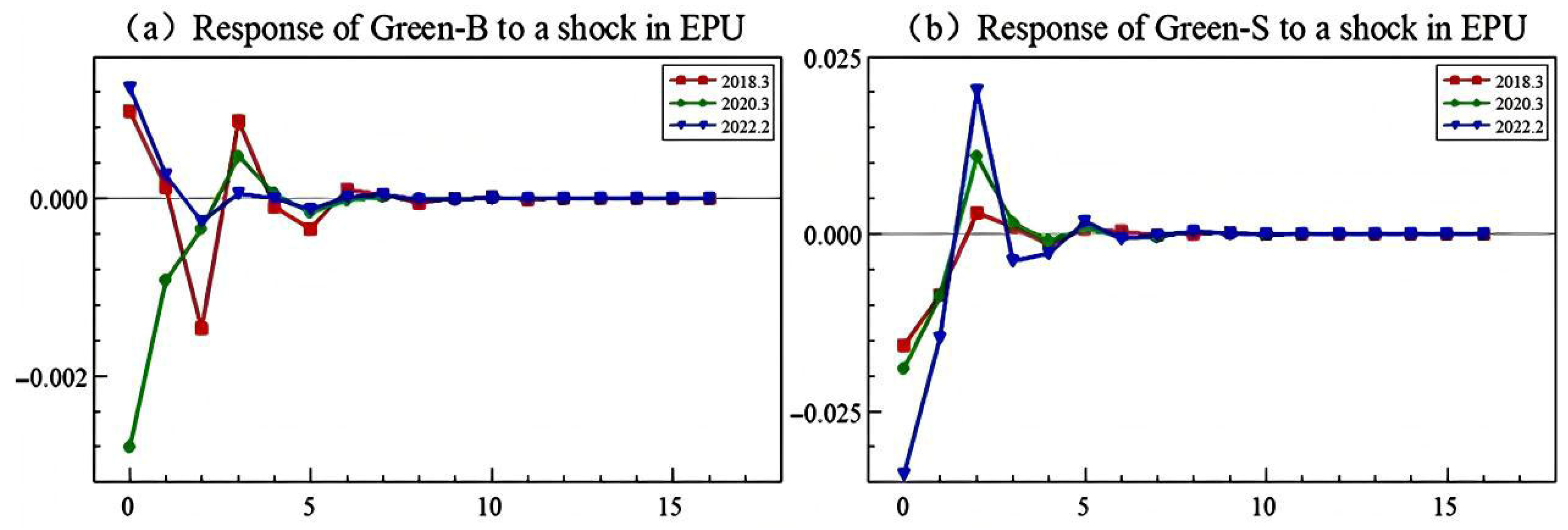
Figure 8 illustrates the time-varying impulse responses of the green securities market to EPU shocks in China over four, eight, and twelve periods, corresponding to short-term, medium-term, and long-term dynamics. Figure 8a shows that Green-B exhibits relatively intense short-term response fluctuations to EPU shocks, while the medium-term response is predominantly negative. This suggests that EPU shocks typically have a dampening influence on the green bond market over the medium-term. Figure 8b shows that Green-S exhibits even more intense response fluctuations to EPU shocks, with short-term impulse responses consistently negative. This indicates that, in the short-term, Green-S cannot escape the volatility characteristics of traditional risk assets and is significantly affected by EPU.
Figure 9 illustrates the time-varying impulse responses of the traditional financial market to EPU shocks in China over four, eight, and twelve periods, corresponding to short-term, medium-term, and long-term dynamics. Figure 9a shows that CN10Y exhibits intense short-term impulse response fluctuations to EPU shocks. The response was positive in 2015–2016, quickly turned negative thereafter, and oscillated significantly during 2020–2023, related to the influence of the COVID-19 pandemic. Figure 9b shows that Traditional-S exhibits intense short-term impulse response fluctuations to EPU shocks. The response gradually shifted from negative to positive during 2020–2025. The reason may be that high-quality development and technological self-reliance progressively reduced market sensitivity to policy fluctuations. Figure 9c shows that DR007 exhibits intense short-term impulse response fluctuations to EPU shocks. The response was positive in 2016–2017, turned from positive to negative afterwards, and remained below 0 for an extended period. This indicates that, after 2018, unforeseen impacts such as the U.S.–China trade friction and COVID-19 pandemic brought economic downward pressure.

4.5. Responses to EPU Shocks at Several Time Points

To explore the differential impact of EPU shocks on the traditional financial and green securities markets across different periods in China, this paper selects three key time points for response analysis [53]: March 2018 (U.S.–China Trade War), March 2020 (COVID-19 pandemic), and February 2022 (Russia–Ukraine Conflict).
Figure 10 demonstrates the reaction of the green securities market to EPU at several temporal markers in China. Specific analysis shows:
First, the impulse responses of the Green-B exhibit clear heterogeneity across different periods. Figure 10a shows a significant negative response during the COVID-19 pandemic in March 2020. However, during the U.S.–China Trade War (March 2018) and the Russia–Ukraine Conflict (February 2022), the responses were initially positive before gradually turning negative, with similar trends observed for both latter events. The reason is that the COVID-19 pandemic was a global public health crisis directly causing systemic demand contraction and liquidity tightening. In contrast, the trade war and conflict involved geopolitical economic competition and energy supply shocks, initially prompting capital to flow into green bonds as a safe haven.
Second, Figure 10b illustrates that Green-S exhibited significant negative responses under all three shocks. The negative response was most significant during the Russia–Ukraine Conflict (February 2022), followed by the COVID-19 pandemic, and relatively smallest during the trade war. This indicates that, as the green industry scales up, Green-S becomes more sensitive to shocks directly affecting cost structures and supply chain security. However, the recovery speed was significantly faster during the Russia–Ukraine Conflict, likely because the market quickly realized that the energy crisis instead strengthened the urgency of long-term energy autonomy and transition, thus accelerating value recovery.
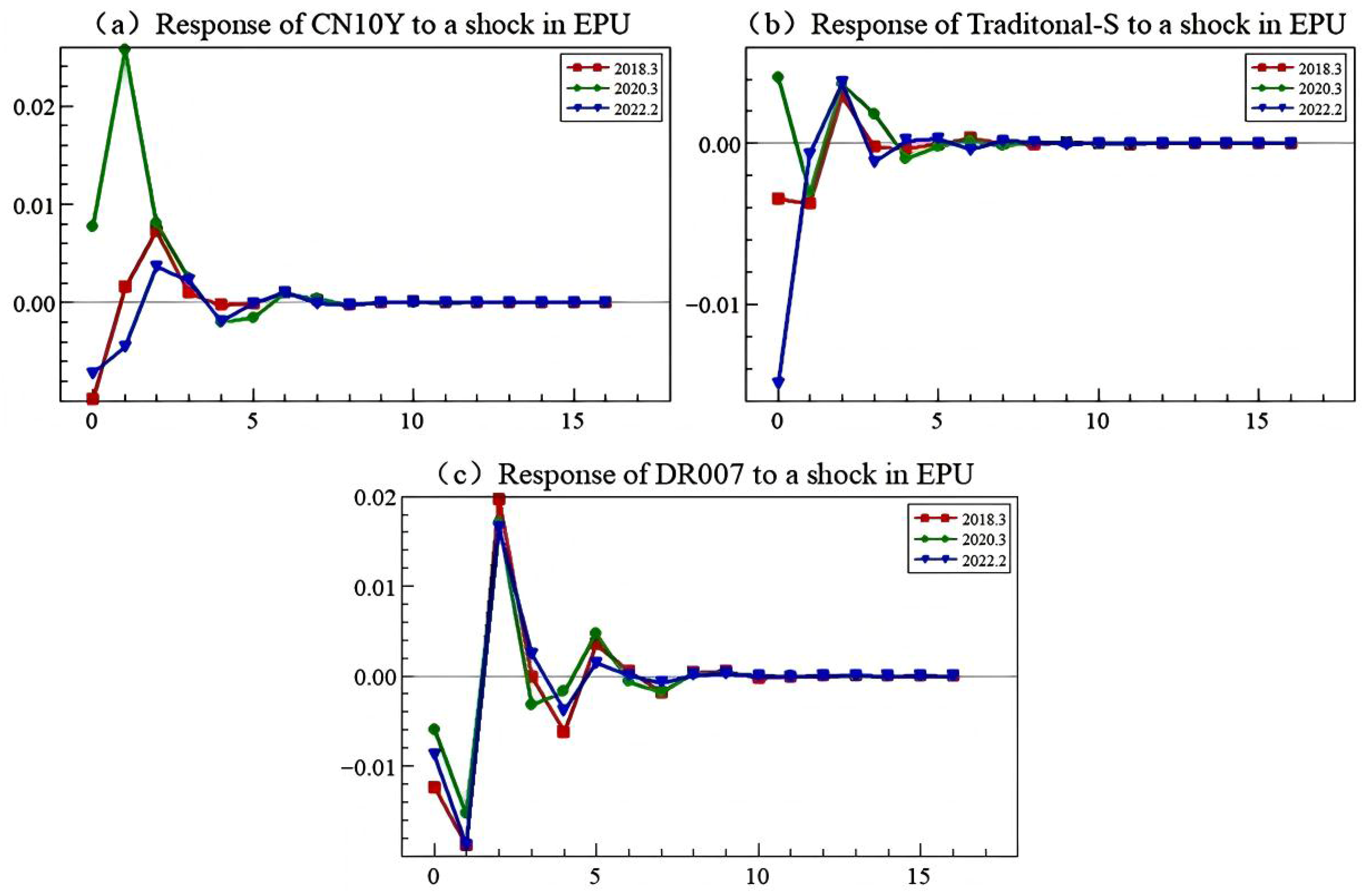
Figure 11 demonstrates the reaction of the traditional financial market to EPU at several temporal markers in China. Specific analysis shows:
First, Figure 11a shows that CN10Y exhibited a notable positive impulse response during the COVID-19 pandemic (March 2020), with the largest magnitude. The reason is that the pandemic triggered market panic and sharply rising uncertainty, leading to strong risk aversion. However, during the trade war and Russia–Ukraine Conflict, the responses were relatively moderate negative impulse responses, with the smallest magnitude during the conflict. Despite the conflict causing energy price surges, the traditional bond market demonstrated greater resilience.
Second, Figure 11b shows that Traditional-S exhibited significant negative responses initially under all three shocks. The decline was largest during the Russia–Ukraine Conflict as it triggered rapid global increases in energy, food, and key metal prices, significantly pushing up production costs for traditional industries like manufacturing, transportation, and chemicals. The response was relatively limited during the trade war as China’s economy demonstrated stronger adaptability and adjustment capacity to trade shocks, and long-term growth expectations were not fundamentally altered.
Third, Figure 11c shows that DR007 exhibited significant negative responses initially under all three shocks, and the dynamic response paths were highly similar across the three periods. This indicates that, when facing sudden uncertainty shocks, the liquidity supply mechanism of China’s money market possesses a high degree of automatic stabilization function. It also reflects improved transmission efficiency and exceptionally stable market expectations. EPU shocks are increasingly less likely to cause trend-based disorder in the money market.

5. Robustness Tests

This paper employs two methods to examine the stability of the results. First, it assesses sensitivity to different lag orders by adjusting them in the TVP-SVAR-SV model [54]. Second, it evaluates whether the conclusions are sensitive to the ordering of the five endogenous variables in the model, i.e., the robustness of the structural shock identification assumptions [55].

5.1. Time-Varying Responses Under Different Lag Orders

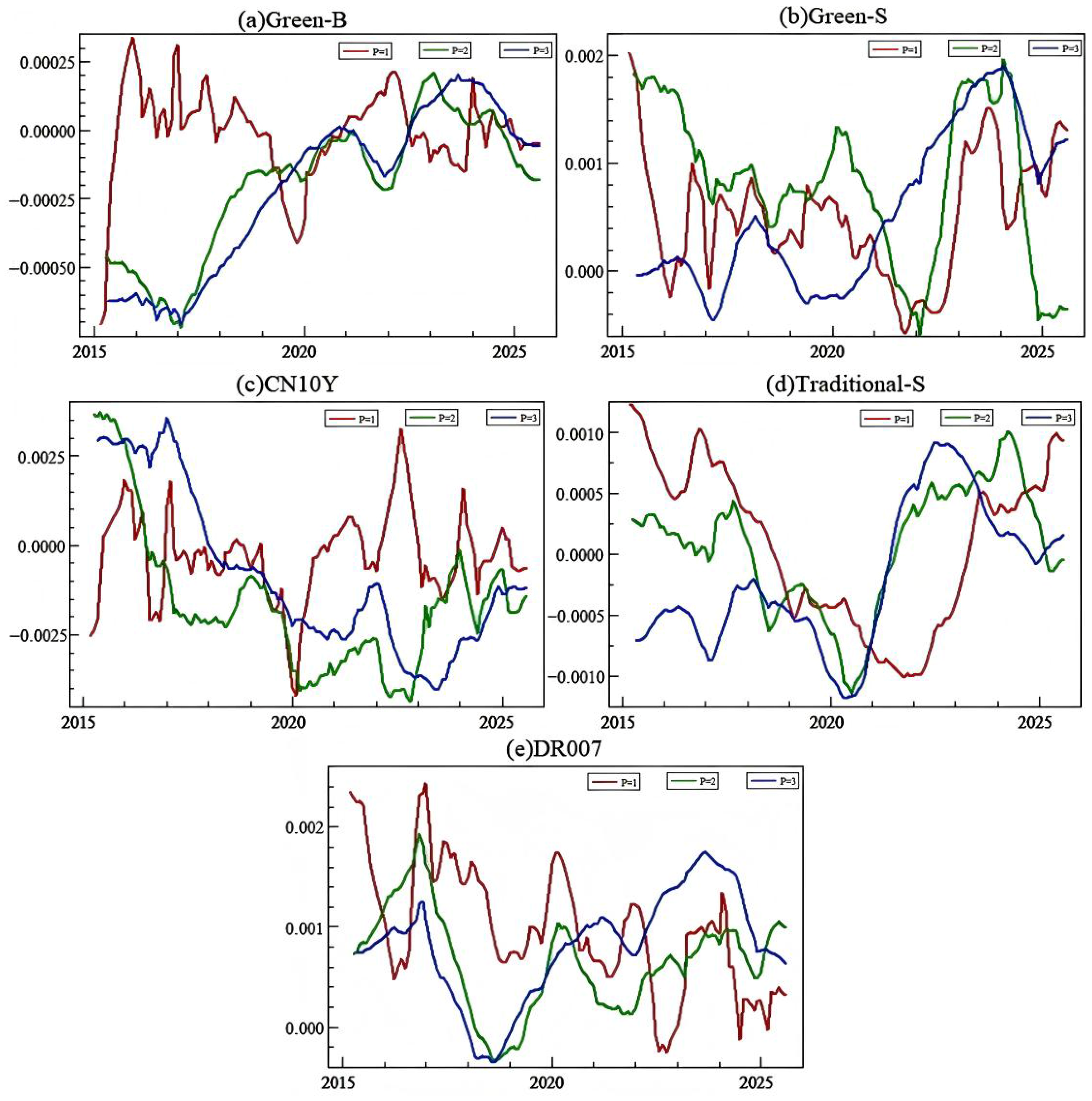
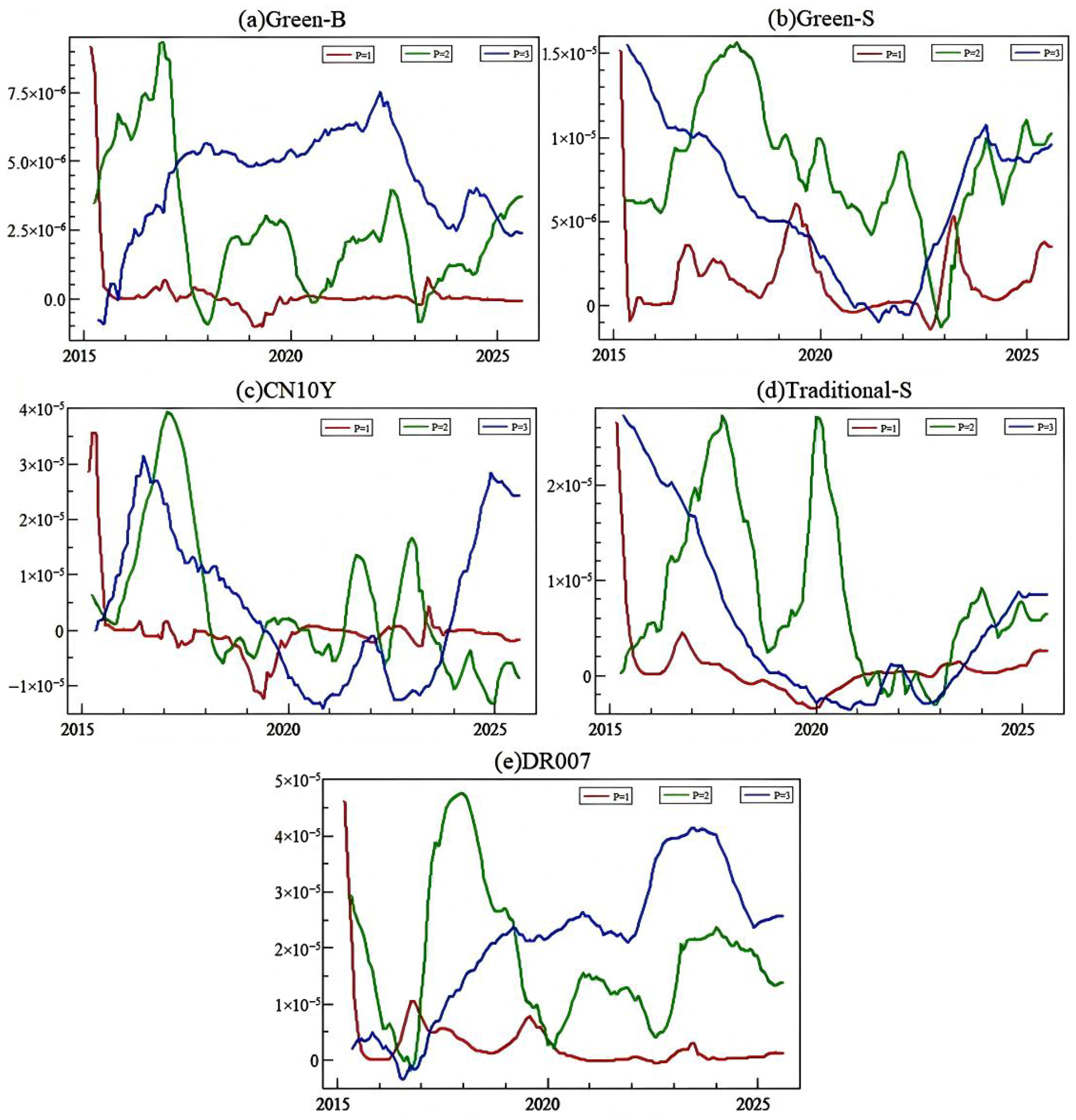
Figure 12 illustrates the time-varying responses of the traditional and green securities markets in China to EPU shocks, examining the impact of these at various lag orders in the short-term.
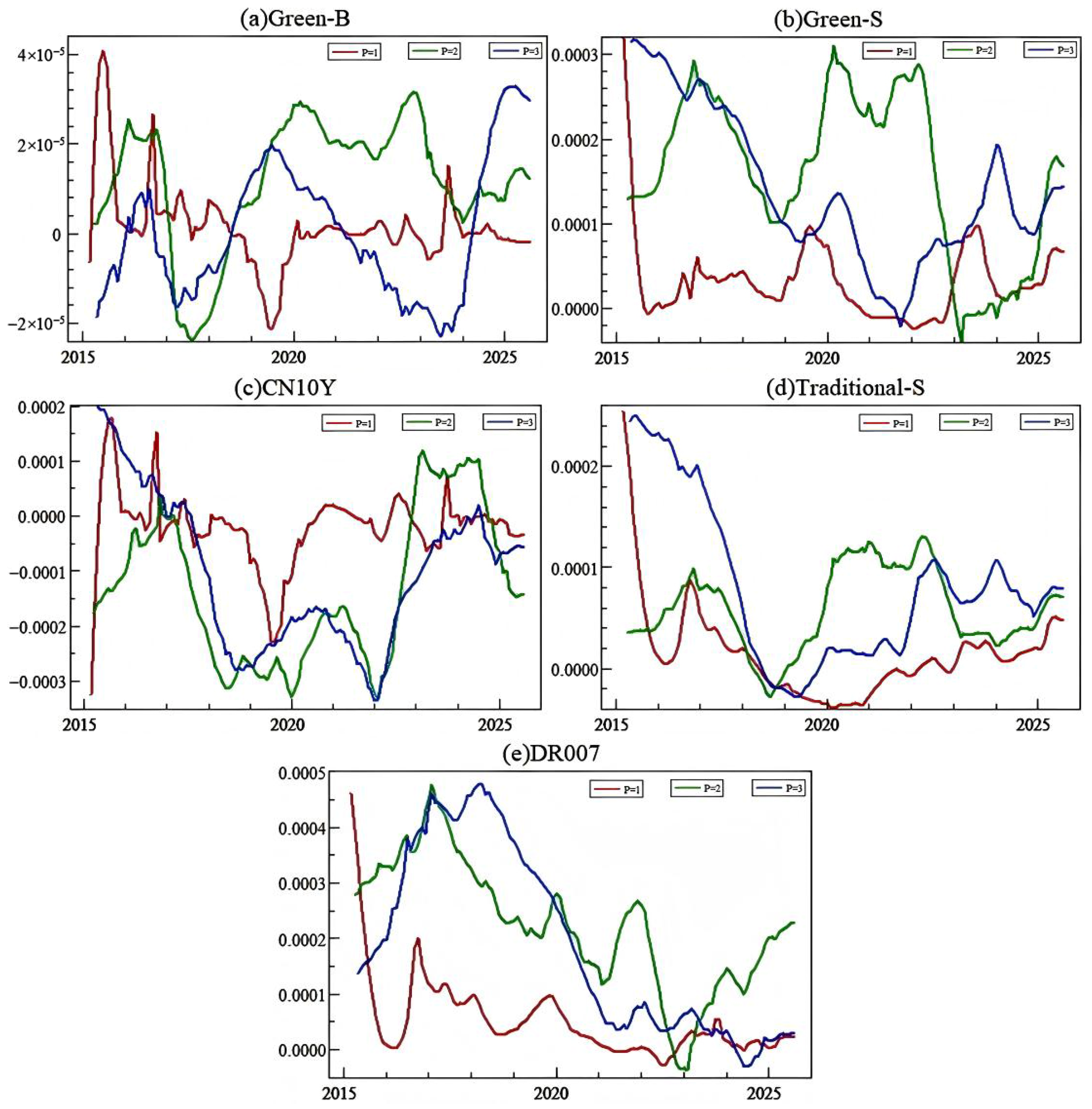
Figure 13 illustrates the time-varying responses of the traditional and green securities markets in China to EPU shocks, examining the impact of these at various lag orders in the medium-term.
Figure 14 illustrates the time-varying responses of the traditional and green securities markets in China to EPU shocks, examining the impact of these at various lag orders in the Long-Term.
Figure 12, Figure 13 and Figure 14 present the time-varying responses of traditional financial and green securities markets to EPU shocks under different lag orders across short-, medium-, and long-term horizons in China. Responses under different lags are represented by lines of different colors. The results indicate that the response trends under various lag orders are highly consistent across all the horizons, demonstrating the high robustness of this study’s findings.

5.2. Time-Varying Responses Under Different Variable Orderings

To ensure the robustness of the conclusions under different causal identification assumptions, this paper conducts robustness tests based on two different variable orderings derived from distinct economic hypotheses based upon Kilian [56]. The benchmark ordering is: EPU → DR007 → Green-B → CN10Y → Green-S → Traditional-S. The alternative orderings are:
(1) Traditional-Financial-Market-Priority Ordering: Based on monetary policy transmission mechanisms [57], assume that China’s EPU shocks first affect DR007 and then transmit from the traditional financial market to green securities market: EPU → DR007 → CN10Y → Traditional-S → Green-B → Green-S.
(2) Stock-Market-Priority Ordering: Based on financial accelerator theory and market expectation theory [58], assume that China’s EPU shocks first affect Green-S and Traditional-S, then transmit through the money market to bond markets: EPU → Green-S → Traditional-S → DR007 → Green-B → CN10Y.
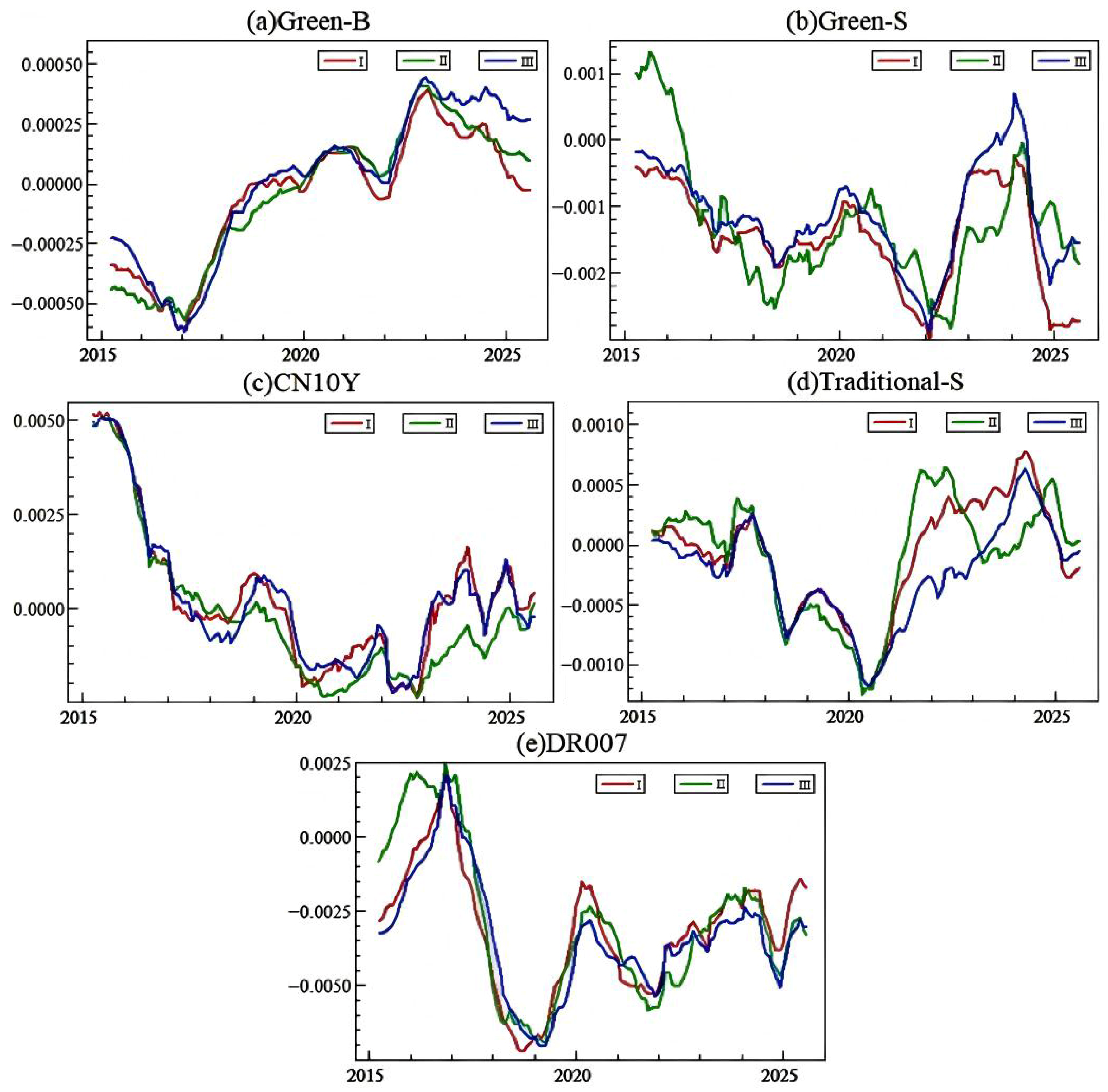
Figure 15 illustrates the time-varying responses of the traditional and green securities markets in China to EPU shocks, examining the impact of these under different variable orderings in the short-term.
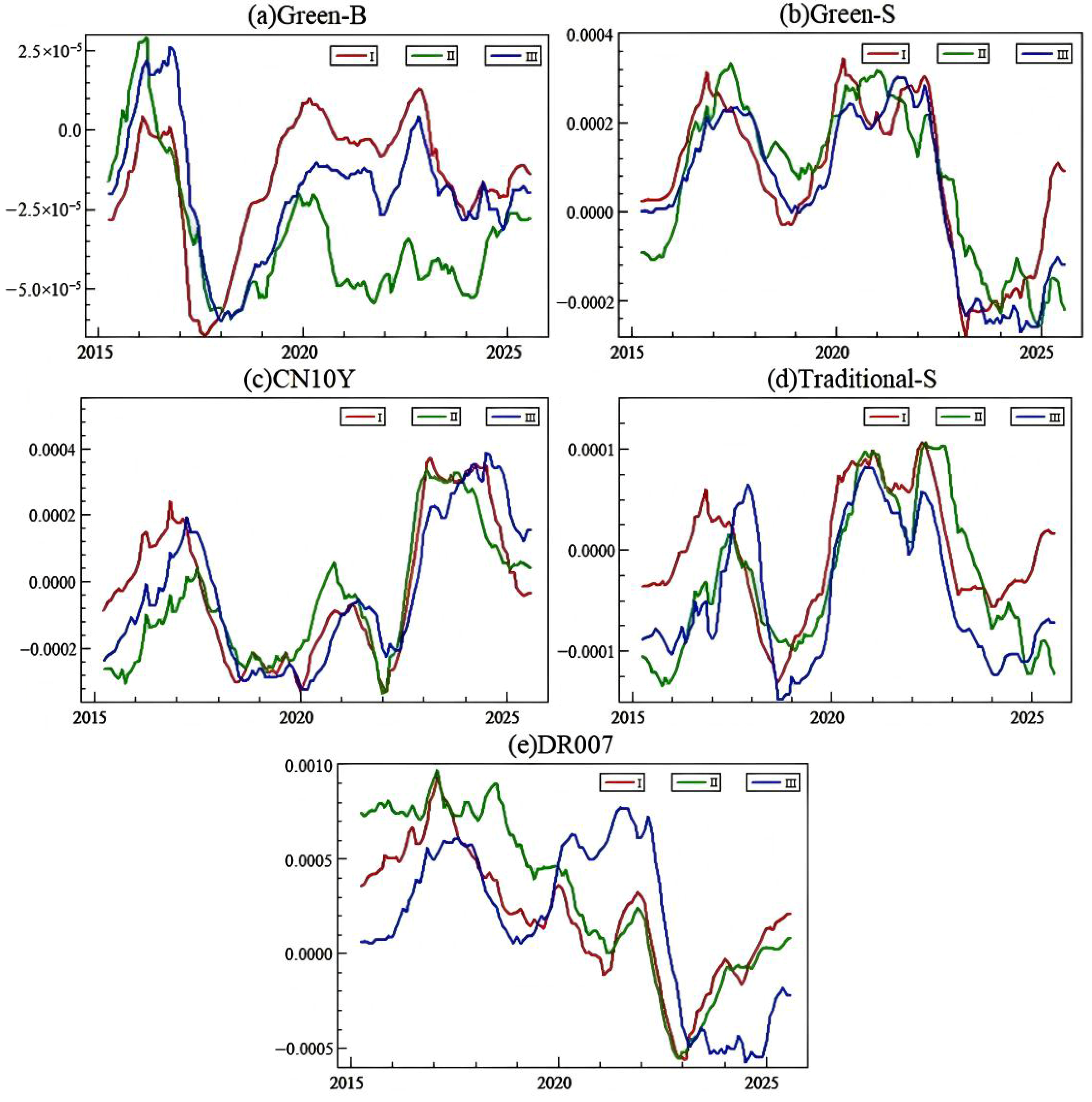
Figure 16 illustrates the time-varying responses of the traditional and green securities markets in China to EPU shocks, examining the impact of these under different variable orderings in the medium-term.
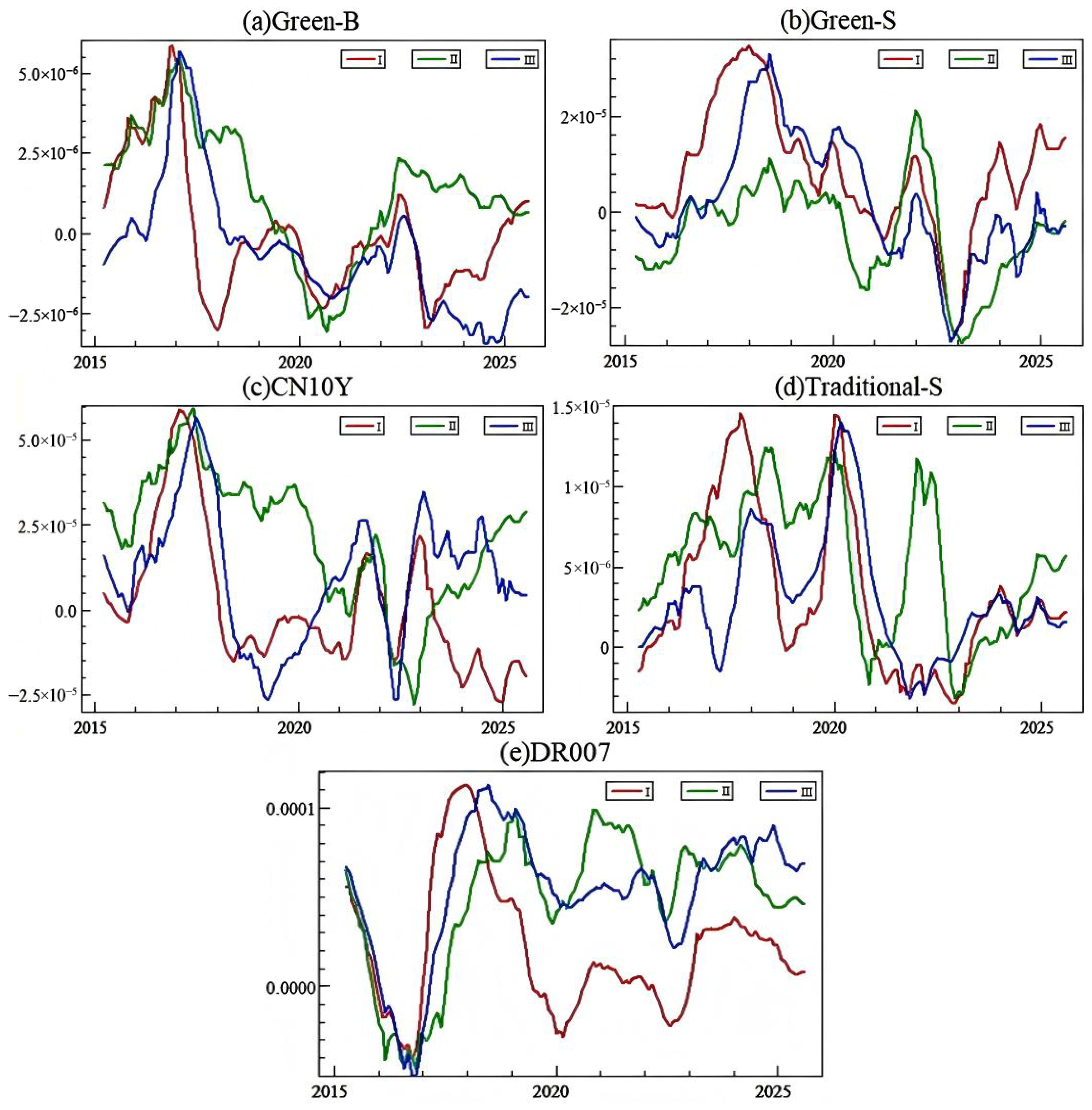
Figure 17 illustrates the time-varying responses of the traditional and green securities markets in China to EPU shocks, examining the impact of these under different variable orderings in the long-term.
Figure 15, Figure 16 and Figure 17 present the dynamic responses of the traditional financial and green securities markets to EPU shocks under different variable orderings across short-, medium-, and long-term horizons in China. Responses under different orderings are represented by lines of different colors. The findings indicate that the patterns of short-, medium-, and long-term time-varying responses are very consistent across various sequences. This indicates that the research conclusions of this paper possess high robustness.

6. Conclusions

This paper aims to examine the time-varying impact of China’s EPU on price volatility in the green securities market and the traditional financial market. Using PCA-constructed composite indices for EPU, the traditional stock market, and the green stock market, along with a TVP-SVAR-SV model and nonlinear Granger causality tests, it thoroughly examines how the transmission paths of EPU shocks, which vary over time, affect these markets structurally. This study yields several key conclusions, which correspond directly to the hypotheses proposed in Section 2. All the hypotheses have been confirmed. The study yields the following conclusions:
4.
An asymmetric risk transmission mechanism exists between the traditional financial and green securities markets in China. The influence from the traditional market to the green market is stronger, while the reverse is weaker. Specifically, the influence of the traditional stock market on the green stock market is notably significant in the short- to medium-term. In contrast, the green stock market does not significantly affect the traditional stock market at any lag.
5.
The influence of EPU on the green securities market exhibits differentiated time-varying characteristics in China. EPU shocks mainly exert a medium-term inhibitory effect on the green bond market. However, during the initial phases of the Russia–Ukraine Conflict and the U.S.–China Trade War, brief positive responses occurred. The green stock market shows short-term negative responses to EPU shocks, with the most significant negative response occurring during the Russia–Ukraine Conflict period.
6.
The response to EPU shocks is divergent within the traditional financial market in China. The traditional bond market showed notable positive reactions to EPU shocks during the COVID-19 pandemic, whereas, during the U.S.–China Trade War and Russia–Ukraine Conflict, it showed relatively moderate negative responses. The money market exhibited negative responses to EPU shocks during the pandemic, trade war, and conflict, with highly similar response patterns across all three periods.
This research provides a theoretical foundation and practical tools for predicting price change trends in traditional financial and green securities markets, offering valuable decision-making references for a wide range of beneficiaries in China. Theoretically, it advances the understanding of nonlinear risk transmission mechanisms under time-varying conditions, contributing to academic fields such as financial economics and sustainable finance. Pragmatically, the findings directly support investors in optimizing asset allocation, policy makers in designing stabilization measures during geopolitical events, and financial institutions in enhancing risk assessment for green finance initiatives under the “Dual Carbon” goals. However, the current study is limited to China’s markets. EPU transmission mechanisms may differ across countries with varying policy frameworks. The specific channels and intensity of transmission are often shaped by domestic institutions, yet the core tendency to delay investment and increase precautionary savings during periods of high uncertainty is a near-universal economic response. Therefore, future research will consider extending the analysis to countries along the “Belt and Road” to reveal the commonalities and differences in EPU shock transmission mechanisms across nations.

Author Contributions

J.W.: Conceptualization, Methodology and Project Administration. Y.X.: Data Curation, Writing—Original Draft Preparation and Analysis. L.W.: Formal Analysis, Writing—Review and Editing, Funding Acquisition and Supervision. All authors have read and agreed to the published version of the manuscript.

Funding

This research is supported by Later-Stage Funding Project of the National Social Science Fund (24FGLB100), Youth Project of the National Social Science Foundation (25CJY108), Major Strategic and Policy-Oriented Bidding Projects in Jiangsu Province’s Educational Science Planning (JS/2024/ZD0104-01849), Youth Project of Jiangsu Provincial Social Science Foundation (25GLC003), General Project of Basic Science (Natural Science) Research in Higher Education Institutions in Jiangsu Province (25KJB630008) and Project of the Jiangsu Provincial Decision-making Consultation Base (25SSL085).

Institutional Review Board Statement

Not applicable.

Informed Consent Statement

Not applicable.

Data Availability Statement

The original contributions presented in this study are included in the article. Further inquiries can be directed to the corresponding author.

Conflicts of Interest

The authors declare no conflict of interest.

References

  1. Mo, B.; Yi, J.; Yu, K. How do FinTech impact China’s traditional and clean energy markets? A time-frequency quantile analysis. Energy 2025, 335, 137809. [Google Scholar] [CrossRef]
  2. Feng, W.; Liu, Y.; Liu, Z. Policy Coordination and Green Transformation of STAR Market Enterprises Under “Dual Carbon” Goals. Sustainability 2025, 17, 8790. [Google Scholar] [CrossRef]
  3. Yu, X.; Wu, Q.; Zhou, K.; Zhou, D.; Wang, Q.; Sang, X. How can Chinese petrochemical companies achieve the “Dual Carbon” goal? A scenario-based system dynamics analysis. Environ. Dev. Sustain. 2025, 1–27. [Google Scholar] [CrossRef]
  4. Zheng, G.; He, Y.; Lu, Z.; Wu, Y. Research on Spatial and Temporal Divergence and Influencing Factors of the Coal Industry Transformation and Development Under Energy Security and Dual-Carbon Target. Sustainability 2025, 17, 2709. [Google Scholar] [CrossRef]
  5. Ren, M.; Zhou, J.; Si, J.; Wang, G.; Guo, C. The impact of ESG performance on green innovation among traditional energy enterprises—Evidence from listed companies in China. Sustainability 2024, 16, 3542. [Google Scholar] [CrossRef]
  6. He, P.; Chen, Q.; Chen, L. The Impact of ESG on Corporate Value Under the ‘Dual Carbon’Goals: Empirical Evidence from Chinese Energy Listed Companies. Energies 2025, 18, 4811. [Google Scholar] [CrossRef]
  7. Lin, W.; Wang, J. Sustainable finance and carbon Neutrality: The role of green bonds, ESG investments, and carbon pricing. J. Environ. Manag. 2025, 395, 127731. [Google Scholar] [CrossRef]
  8. Ullah, A.; Zhao, X.; Ye, C.; Kamal, M.A. Impact of Economic Policy Uncertainty Shocks on China’s Stock Market Development: Evidence from Nonlinear Autoregressive Distributed Lag and Spectral Causality Approaches. SAGE Open 2024, 14, 21582440241266026. [Google Scholar] [CrossRef]
  9. Wang, J.; Dai, P.F.; Chen, X.H.; Nguyen, D.K. Examining the linkage between economic policy uncertainty, coal price, and carbon pricing in China: Evidence from pilot carbon markets. J. Environ. Manag. 2024, 352, 120003. [Google Scholar] [CrossRef] [PubMed]
  10. Xie, L. Stock illiquidity and economic policy uncertainty in Chinese security market. Res. Int. Bus. Financ. 2025, 78, 103021. [Google Scholar] [CrossRef]
  11. Chen, T.; Zheng, X.; Wang, L. Systemic risk among Chinese oil and petrochemical firms based on dynamic tail risk spillover networks. North Am. J. Econ. Financ. 2025, 77, 102404. [Google Scholar] [CrossRef]
  12. Zheng, Y.; Zhang, B. Does China’s national carbon market function well? A perspective on effective market design. J. Chin. Gov. 2023, 8, 563–592. [Google Scholar] [CrossRef]
  13. Liu, S.; Qi, H.; Wan, Y. Driving factors behind the development of China’s green bond market. J. Clean. Prod. 2022, 354, 131705. [Google Scholar] [CrossRef]
  14. Samuelson, P.A.; William, D.N. Economics: An Introductory Analysis, 19th ed.; McGraw-Hill: New York, NY, USA, 2009. [Google Scholar]
  15. Polman, P.; Andrew, W. Net Positive: How Courageous Companies Thrive by Giving More Than They Tak; Harvard Business Review: Boston, MA, USA, 2021. [Google Scholar]
  16. Tulder, V.R.; Mil, V.E. Principles of Sustainable Business: Frameworks for Corporate Action on the SDGs; Routledge: London, UK, 2022. [Google Scholar]
  17. Naveed, H.M.; Sharif, A.; Bashir, M.F.; Al-Faryan, M.A.S.; Pan, Y. Assessing the connectedness between green finance, financial developments, traditional energy consumption, economic growth, population aging and environmental degradation in RECP economies: A deep learning-based analysis. J. Environ. Manag. 2025, 393, 126963. [Google Scholar] [CrossRef] [PubMed]
  18. Wang, L.; Wang, Y.; Wang, J.; Yu, L. Forecasting Nonlinear Green Bond Yields in China: Deep Learning for Improved Accuracy and Policy Awareness. Financ. Res. Lett. 2025, 85, 107889. [Google Scholar] [CrossRef]
  19. Su, T.; Zhang, Z.J.; Lin, B. Green bonds and conventional financial markets in China: A tale of three transmission modes. Energy Econ. 2022, 113, 106200. [Google Scholar] [CrossRef]
  20. Zhang, H.; Wei, S.; Guo, Y. Long-term correlation between the green and conventional bond markets: The roles of categorical EPU indices and structural changes. Res. Int. Bus. Financ. 2025, 77, 102882. [Google Scholar] [CrossRef]
  21. Zhou, Y.; Xie, C.; Wang, G.J.; Zhu, Y. The role of uncertainty in return spillovers among digital, green, and traditional financial assets: New insights from the shock of unprecedented events. Int. Rev. Financ. Anal. 2025, 103, 104225. [Google Scholar] [CrossRef]
  22. Liu, J.; Guo, J.; Man, Y. Ripple Effects of Climate Policy Uncertainty: Risk Spillovers Between Traditional Energy and Green Financial Markets. Sustainability 2025, 17, 5500. [Google Scholar] [CrossRef]
  23. Zhou, X.; Zhang, R.; Polochova, V. The dependence of Chinese green and conventional bond markets under extreme and normal market conditions. Environ. Sci. Pollut. Res. 2021, 28, 53208–53223. [Google Scholar] [CrossRef] [PubMed]
  24. Jimenez, A.; Rodríguez, G.; Arellano, M.A. Time-varying impact of fiscal shocks over GDP growth in Peru: An empirical application using hybrid TVP-VAR-SV models. Struct. Change Econ. Dyn. 2023, 64, 314–332. [Google Scholar] [CrossRef]
  25. Arif, M.; Hasan, M.; Alawi, S.M.; Naeem, M.A. COVID-19 and time-frequency connectedness between green and conventional financial markets. Glob. Financ. J. 2021, 49, 100650. [Google Scholar] [CrossRef]
  26. Ha, L.T.; Bouteska, A.; Sharif, T.; Abedin, M.Z. Dynamic interlinkages between carbon risk and volatility of green and renewable energy: A TVP-VAR analysis. Res. Int. Bus. Financ. 2024, 69, 102278. [Google Scholar] [CrossRef]
  27. Polat, O.; Ertuğrul, H.M.; Sakarya, B.; Akgül, A. TVP-VAR based time and frequency domain food & energy commodities connectedness an analysis for financial/geopolitical turmoil episodes. Appl. Energy 2024, 357, 122487. [Google Scholar] [CrossRef]
  28. Liu, L.; Shahrour, M.H.; Wojewodzki, M.; Rohani, A. Decoding energy market turbulence: A TVP-VAR connectedness analysis of climate policy uncertainty and geopolitical risk shocks. Technol. Forecast. Soc. Change 2025, 210, 123863. [Google Scholar] [CrossRef]
  29. Wu, J.; Wang, Y. The measurement of financialization and its dynamic relevance with the real economy growth: A TVP-VAR analysis. Int. Rev. Financ. Anal. 2025, 106, 104545. [Google Scholar] [CrossRef]
  30. Li, Y.; Chen, S.; Sensoy, A.; Wang, L. Over-expected shocks and financial market security: Evidence from China’s markets. Res. Int. Bus. Financ. 2024, 68, 102194. [Google Scholar] [CrossRef]
  31. Jiang, W.; Dong, L.; Liu, X. How does COVID-19 affect the spillover effects of green finance, carbon markets, and renewable/non-renewable energy markets? Evidence from China. Energy 2023, 281, 128351. [Google Scholar] [CrossRef]
  32. Tsipas, F.; Elrashidy, Z.; Sandretto, D. Green bonds efficiency and renewable energy: Insights from the Covid-19 pandemic. J. Environ. Manag. 2024, 371, 123090. [Google Scholar] [CrossRef]
  33. Zioło, M.; Bąk, I.; Spoz, A. The Nexus Between Green Bonds, Green Credits, and the Energy Transition Toward Renewable Energy Sources: State of the Art. Energies 2025, 18, 4370. [Google Scholar] [CrossRef]
  34. Noussan, M.; Raimondi, P.P.; Scita, R.; Hafner, M. The role of green and blue hydrogen in the energy transition—A technological and geopolitical perspective. Sustainability 2020, 13, 298. [Google Scholar] [CrossRef]
  35. Fu, C.; Yu, C.; Guo, M.; Zhang, L. ESG rating and financial risk of mining industry companies. Resour. Policy 2024, 88, 104308. [Google Scholar] [CrossRef]
  36. Afshan, S.; Yaqoob, T.; Zaied, Y.B.; Mishra, S.; Mishra, S. Oil shocks and currency behavior: A dual approach to digital and traditional currencies. Glob. Financ. J. 2024, 62, 101002. [Google Scholar] [CrossRef]
  37. Konstantinov, G.S. Emerging Market Bonds: Expected Returns and Currency Impact. J. Portf. Manag. 2022, 48, 139. [Google Scholar] [CrossRef]
  38. Zhang, H.; Gong, Z.; Yang, Y.; Chen, F. Dynamic connectedness between China green bond, carbon market and traditional financial markets: Evidence from quantile connectedness approach. Financ. Res. Lett. 2023, 58, 104473. [Google Scholar] [CrossRef]
  39. Dong, X.; Xiong, Y.; Nie, S.; Yoon, S. Can bonds hedge stock market risks? Green bonds vs conventional bonds. Financ. Res. Lett. 2023, 52, 103367. [Google Scholar] [CrossRef]
  40. Gök, R.; Şenol, Z.; Durgun, B.; Bouri, E. Green bonds and financial markets: Interdependence across different market situations. J. Environ. Manag. 2025, 373, 123408. [Google Scholar] [CrossRef] [PubMed]
  41. Yang, W.; Che, Z. Shadow banking risk exposure and green new quality productivity forces resilience: Pathways to development for Chinese firms. Int. Rev. Financ. Anal. 2025, 102, 104057. [Google Scholar] [CrossRef]
  42. Duan, K.; Zhao, Y.; Wang, Z.; Chang, Y. Asymmetric spillover from Bitcoin to green and traditional assets: A comparison with gold. Int. Rev. Econ. Financ. 2023, 88, 1397–1417. [Google Scholar] [CrossRef]
  43. Chan, K.J.D.; Liao, V.Y. Sustainability commitment, environmental achievement, and green bond premium. J. Environ. Manag. 2025, 392, 126875. [Google Scholar] [CrossRef] [PubMed]
  44. Raghavendra, C.; Joshi, K.P.; Ramkumar, M.; Heggede, S. Financial stress, economic policy uncertainty, and market volatility: Implications for cross-border acquisition activity. Res. Glob. 2025, 11, 100327. [Google Scholar] [CrossRef]
  45. Kotsompolis, G.; Prelorentzos, A.G.N.; Xidonas, P.; Konstantakis, K.N.; Michaelides, P.G. European financial markets, energy returns and geopolitical risk: A frequency domain spectral analysis. Energy Econ. 2025, 150, 108856. [Google Scholar] [CrossRef]
  46. Sun, M.; Chen, M.; Ding, X.; Cai, Z.; Imran, M. The financial cost of the net-zero transition: Green-premium effects of corporate transition-risk disclosure. Energy Rep. 2025, 14, 3878–3887. [Google Scholar] [CrossRef]
  47. Raheem, I.D.; Akinkugbe, O.; Yusuf, A.H.; Asl, M.G. Hedging strategies among financial markets: The case of green and brown assets. Empir. Econ. 2023, 65, 831–873. [Google Scholar] [CrossRef] [PubMed]
  48. Chen, J.; Zhu, X.; Li, H. The pass-through effects of oil price shocks on China’s inflation: A time-varying analysis. Energy Econ. 2020, 86, 104695. [Google Scholar] [CrossRef]
  49. Qian, J. Time-varying effects of economic policy uncertainty on commodity prices in China: An empirical analysis based on the TVP-SVAR-SV model. Acad. J. Bus. Manag. 2023, 5, 133–140. [Google Scholar] [CrossRef]
  50. Che, Z.; Wu, C.; Liu, X. A four-factor model of knowledge agglomeration. Asia Pac. J. Manag. 2024, 42, 1411–1452. [Google Scholar] [CrossRef]
  51. Riaz, A.; Ullah, Z.; Hashmi, S.H. A temporal exploration of resilience of renewable energy consumption to the energy-related uncertainty shocks in the US. J. Clean. Prod. 2025, 493, 144946. [Google Scholar] [CrossRef]
  52. Jia, Y.; Dong, Z. Characteristics and influencing factors of risk spillover effects across clean energy stock prices: A comparative analysis during four periods of the COVID-19 pandemic. Energy Econ. 2024, 135, 107644. [Google Scholar] [CrossRef]
  53. Boufateh, T.; Saadaoui, Z. The time-varying responses of financial intermediation and inflation to oil supply and demand shocks in the US: Evidence from Bayesian TVP-SVAR-SV approach. Energy Econ. 2021, 102, 105535. [Google Scholar] [CrossRef]
  54. Pavlova, I.; De Boyrie, M.E.; Parhizgari, A.M. A dynamic spillover analysis of crude oil effects on the sovereign credit risk of exporting countries. Q. Rev. Econ. Financ. 2018, 68, 10–22. [Google Scholar] [CrossRef]
  55. Miranda-Agrippino, S.; Ricco, G. The transmission of monetary policy shocks. Am. Econ. J. Macroecon. 2021, 13, 74–107. [Google Scholar] [CrossRef]
  56. Kilian, L. Not All Oil Price Shocks Are Alike: Disentangling Demand and Supply Shocks in the Crude Oil Market. Am. Econ. Rev. 2009, 99, 1053–1069. [Google Scholar] [CrossRef]
  57. Wang, O. Banks, low interest rates, and monetary policy transmission. J. Financ. 2025, 80, 1379–1416. [Google Scholar] [CrossRef]
  58. Ding, X.; Ma, G.; Cao, J. The Emission-Reduction Effect of Green Demand Preference in Carbon Market and Macro-Environmental Policy: A DSGE Approach. Sustainability 2024, 16, 6741. [Google Scholar] [CrossRef]
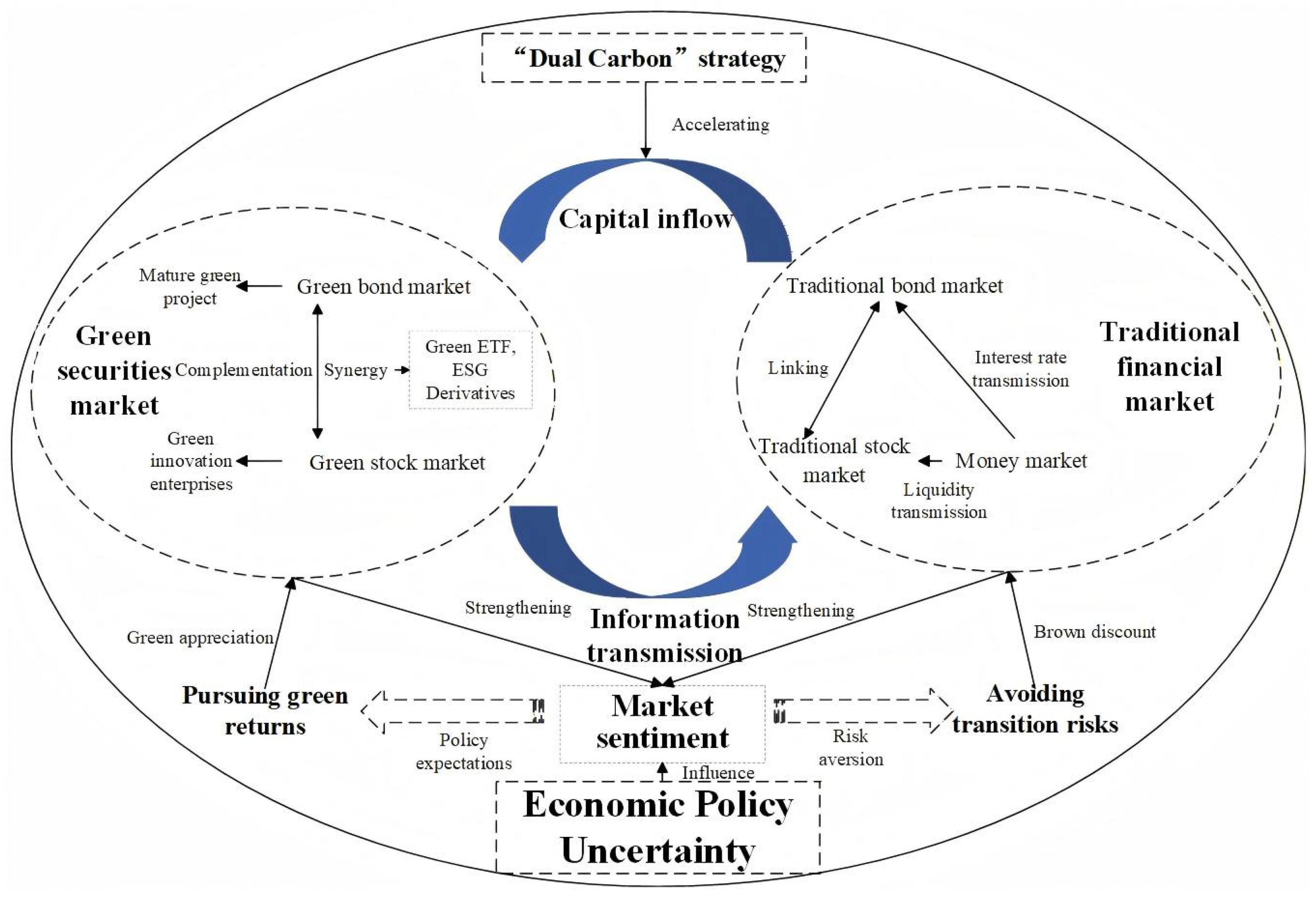
Figure 1. Schematic diagram of the interaction mechanism between traditional financial and green securities markets and the EPU impact mechanism (drawn by the authors).
Systems 14 00246 g001
Figure 2. Flowchart of the entire study (drawn by the authors).
Systems 14 00246 g002
Figure 3. (a) Index volatility of EPU; (b) index volatility of money market; (c) index volatility of green bond market; (d) index volatility of traditional bond market; (e) index volatility of green stock market; (f) index volatility of traditional stock market (drawn by the authors).
Systems 14 00246 g003
Figure 4. Nonlinear Granger causality from EPU to the traditional financial and green securities markets (drawn by the authors). (Note: significance of Granger causality (p-value): darker red indicates stronger significance (larger p)).
Systems 14 00246 g004
Figure 5. Nonlinear Granger causality between traditional financial and green securities markets (drawn by the authors). (Note: significance of Granger causality (p-value): darker red indicates stronger significance (larger p)).
Systems 14 00246 g005
Figure 6. (a) Green stock market’s sample autocorrelation, sample paths, and posterior densities of parameters; (b) green bond market’s sample autocorrelation, sample paths, and posterior densities of parameters; (c) traditional stock market’s sample autocorrelation, sample paths, and posterior densities of parameters; (d) money market’s sample autocorrelation, sample paths, and posterior densities of parameters; (e) traditional bond market’s sample autocorrelation, sample paths, and posterior densities of parameters (drawn by the authors).
Systems 14 00246 g006
Figure 7. (a) Posterior estimates of stochastic volatility for structural shocks in the EPU; (b) posterior estimates of stochastic volatility for structural shocks in the money market; (c) posterior estimates of stochastic volatility for structural shocks in the green bond market; (d) posterior estimates of stochastic volatility for structural shocks in the traditional bond market; (e) posterior estimates of stochastic volatility for structural shocks in the green stock market; (f) posterior estimates of stochastic volatility for structural shocks in the traditional stock market (drawn by the authors). (Note: The green dot line represents the predicted mean under the positive scenario).
Systems 14 00246 g007
Figure 8. (a) Time-varying impulse responses of green bond market to EPU; (b) time-varying impulse responses of green stock market to EPU (drawn by the authors).
Systems 14 00246 g008
Figure 9. (a) Time-varying impulse responses of traditional bond market to EPU; (b) time-varying impulse responses of traditional stock market to EPU; (c) time-varying impulse responses of money market to EPU (drawn by the authors).
Systems 14 00246 g009
Figure 10. (a) Impulse responses of green bond market to EPU at several temporal markers; (b) impulse responses of green stock market to EPU at several temporal markers (drawn by the authors).
Systems 14 00246 g010
Figure 11. (a) Impulse responses of traditional bond market to EPU at several temporal markers; (b) impulse responses of traditional stock market to EPU at several temporal markers; (c) impulse responses of money market to EPU at several temporal markers (drawn by the authors).
Systems 14 00246 g011
Figure 12. (a) Green bond market’s short-term time-varying responses under different lag orders; (b) green stock market’s short-term time-varying responses under different lag orders; (c) traditional bond market’s short-term time-varying responses under different lag orders; (d) traditional stock market’s short-term time-varying responses under different lag orders; (e) money market’s short-term time-varying responses under different lag orders (drawn by the authors).
Systems 14 00246 g012
Figure 13. (a) Green bond market’s medium-term time-varying responses under different lag orders; (b) green stock market’s medium-term time-varying responses under different lag orders; (c) traditional bond market’s medium-term time-varying responses under different lag orders; (d) traditional stock market’s medium-term time-varying responses under different lag orders; (e) money market’s medium-term time-varying responses under different lag orders (drawn by the authors).
Systems 14 00246 g013
Figure 14. (a) Green bond market’s long-term time-varying responses under different lag orders; (b) green stock market’s long-term time-varying responses under different lag orders; (c) traditional bond market’s long-term time-varying responses under different lag orders; (d) traditional stock market’s long-term time-varying responses under different lag orders; (e) money market’s long-term time-varying responses under different lag orders (drawn by the authors).
Systems 14 00246 g014
Figure 15. (a) Green bond market’s short-term time-varying responses under different variable orderings; (b) green stock market’s short-term time-varying responses under different variable orderings; (c) traditional bond market’s short-term time-varying responses under different variable orderings; (d) traditional stock market’s short-term time-varying responses under different variable orderings; (e) money market’s short-term time-varying responses under different variable orderings (drawn by the authors). (Note: I represents the benchmark ordering; II represents the Traditional-Financial-Market-Priority ordering; III represents the Stock-Market-Priority ordering).
Systems 14 00246 g015
Figure 16. (a) Green bond market’s medium-term time-varying responses under different variable orderings; (b) green stock market’s medium-term time-varying responses under different variable orderings; (c) traditional bond market’s medium-term time-varying responses under different variable orderings; (d) traditional stock market’s medium-term time-varying responses under different variable orderings; (e) money market’s medium-term time-varying responses under different variable orderings (drawn by the authors). (Note: I represents the benchmark ordering; II represents the Traditional-Financial-Market-Priority ordering; III represents the Stock-Market-Priority ordering).
Systems 14 00246 g016
Figure 17. (a) Green bond market’s long-term time-varying responses under different variable orderings; (b) green stock market’s long-term time-varying responses under different variable orderings; (c) traditional bond market’s long-term time-varying responses under different variable orderings; (d) traditional stock market’s long-term time-varying responses under different variable orderings; (e) money market’s long-term time-varying responses under different variable orderings (drawn by the authors). (Note: I represents the benchmark ordering; II represents the Traditional-Financial-Market-Priority ordering; III represents the Stock-Market-Priority ordering).
Systems 14 00246 g017
Table 1. Framework of traditional financial and green securities markets (drawn by the authors).
VariableVariable
Symbol
Definition
Green
Securities
Market
Green StockGreen-SGreen stock market composite index
Green BondGreen-BGreen bond index
Traditional
Financial
Market
Traditional StockTraditional-STraditional stock market composite index
Money MarketDR0077-day repo rate for interbank
Traditional BondCN10Y10-year treasury bond yield
——EPU IndexEPUEPU composite index
Table 2. Descriptive statistics for traditional financial and green securities markets (drawn by the authors).
VariableVariable
Symbol
MeanMaxMinStd.DevSkewnessKurtosisADF
Statistic
Green
Securities Market
Green StockGreen-S0.00460.5640−0.68770.1761−0.20332.1414−9.8735 ***
Green BondGreen-B0.00100.0159−0.02310.0073−0.75411.3858−9.5827 ***
Traditional
Financial
Market
Traditional StockTraditional-S0.00200.2073−0.29470.0658−0.27573.4051−9.5099 ***
Money MarketDR007−0.01950.6445−1.56490.2030−3.598426.9377−5.8637 ***
Traditional BondCN10Y−0.01400.3341−0.28920.10000.25040.7506−8.2153 ***
——EPU IndexEPU−0.00380.4422−0.34230.14330.04840.1157−9.4197 ***
Note: *** indicates significance at the 1% levels.
Table 3. Assessment of specific parameters for green securities market (drawn by the authors).
Green-SParameterMeanStdev95%U95%LGewekeInef.
( β ) 1 0.00220.00010.00210.00240.1982.62
( β ) 2 0.00220.00010.00210.00240.3231.52
( α ) 1 0.00540.00150.00340.00940.85541.79
( h ) 1 0.00540.00150.00340.00910.81125.73
( h ) 2 0.00550.00140.00340.00890.60033.32
Green-BParameterMeanStdev95%U95%LGewekeInef.
( β ) 1 0.00230.00020.00190.00260.8583.80
( β ) 2 0.00230.00020.00190.00260.0764.88
( α ) 1 0.00530.00120.00340.00810.48629.78
( h ) 1 0.00570.00170.00350.00980.34241.52
( h ) 2 0.37250.04370.29880.46900.71832.38
Table 4. Assessment of specific parameters for traditional financial market (drawn by the authors).
Traditional-SParameterMeanStdev95%U95%LGewekeInef.
( β ) 1 0.00220.00010.00210.00240.8481.11
( β ) 2 0.00220.00010.00210.00240.1961.51
( α ) 1 0.00560.00170.00340.00990.01152.98
( h ) 1 0.00570.00170.00330.00990.90841.31
( h ) 2 0.00580.00190.00340.01060.68564.57
DR007ParameterMeanStdev95%U95%LGewekeInef.
( β ) 1 0.00230.00030.00180.00290.9008.89
( β ) 2 0.00230.00030.00180.00290.7665.74
( α ) 1 0.00550.00160.00330.00940.91333.50
( h ) 1 0.00550.00170.00330.00990.04655.69
( h ) 2 0.41480.11080.23020.66390.08059.77
CN10YParameterMeanStdev95%U95%LGewekeInef.
( β ) 1 0.00220.00010.00200.00250.6081.77
( β ) 2 0.00220.00010.00200.00250.5962.95
( α ) 1 0.00540.00150.00340.00910.01932.94
( h ) 1 0.00550.00160.00330.00950.73440.35
( h ) 2 0.00550.00150.00340.00940.90127.59
Disclaimer/Publisher’s Note: The statements, opinions and data contained in all publications are solely those of the individual author(s) and contributor(s) and not of MDPI and/or the editor(s). MDPI and/or the editor(s) disclaim responsibility for any injury to people or property resulting from any ideas, methods, instructions or products referred to in the content.