Article

Digital Empowerment of Rural Emergency Management Under the Rural Revitalization Strategy: Influencing Factors and Driving Pathways
1
School of Marxism, Xi’an University of Science and Technology, Xi’an 710054, China
2
School of Political Science and International Relations, Tongji University, Shanghai 200092, China
*
Author to whom correspondence should be addressed.
Systems 2026, 14(3), 242; https://doi.org/10.3390/systems14030242
Submission received: 10 January 2026 / Revised: 7 February 2026 / Accepted: 24 February 2026 / Published: 27 February 2026
(This article belongs to the Section Systems Practice in Social Science)

Abstract

Against the backdrop of China’s integrated rural revitalization and digitalization strategies, advancing the digital transformation of rural emergency management has become crucial for enhancing grassroots governance capabilities. This study aims to systematically examine the underlying mechanisms through which digital technologies empower rural emergency management. By developing an analytical framework that integrates digital infrastructure, collaborative governance networks, emergency response capacity, and comprehensive rural resilience, and applying a multi-criteria decision-making model, we identify the causal structures and driving pathways among key factors. The findings indicate that residents’ safety resilience, the level of digital equipment in rescue teams, and industrial recovery capacity serve as core drivers within the system. Meanwhile, the intelligent dispatch capability of emergency supplies acts as a central hub linking technological application with operational effectiveness. Pathway analysis further reveals a progressive empowerment logic described as “strengthening foundational resilience, enhancing coordinated dispatch, improving industrial recovery.” This study not only deepens the understanding of the complex process of digital empowerment but, more importantly, offers policymakers a clear action plan: in resource allocation and capacity building, priority should be given to synergistically advancing the above key drivers and hub elements to achieve systemic improvement in the effectiveness and resilience of rural emergency management.

1. Introduction

The Rural Revitalization Strategy serves as the overarching priority for China’s national modernization. Enhancing rural emergency management capabilities represents an essential requirement within this strategy. However, traditional approaches still face significant challenges in areas such as monitoring and early warning, resource dispatch, and multi-actor coordination [1]. Digital technologies offer new opportunities to address these issues [2]. Yet, their empowering effect should not be viewed simply as “technology overlay”; rather, it triggers systemic changes in governance processes, organizational models, and capacity frameworks [3]. While existing studies have separately examined the application of digital technologies in emergency management or the enhancement of rural resilience, research that integrates “rural revitalization–digital empowerment–emergency management” into a coherent framework to systematically reveal the composition of enabling factors, causal structures, and driving pathways remains scarce. This gap leads to a key knowledge deficit: it is still unclear through which critical factors and complex interactions digital technologies ultimately drive the evolution of rural emergency management capabilities.
To address this gap, this study aims to systematically answer three progressively related research questions: (1) What constitutes the key influencing factor system through which digital empowerment enhances rural emergency management capabilities? (2) How do these key factors interact with one another? (3) Through which pathways do digital technologies ultimately drive the improvement of rural emergency management capabilities? Answering these questions holds important theoretical value and practical urgency for building a modern rural public safety governance system.
To this end, this study develops an analytical framework integrating four dimensions: technological infrastructure, governance networks, emergency capacity, and comprehensive resilience. From this framework, a system of 16 influencing indicators is derived. Empirically, the study innovatively applies a hybrid decision-making model that combines fuzzy sets, the Decision-Making Trial and Evaluation Laboratory (DEMATEL), and Maximum Mean Discrepancy Entropy (MMDE). Drawing on a knowledge network of 10 experts from academia, government practice, and industry—whose backgrounds cover emergency management, digital rural development, and public policy, and who represent diverse regional contexts in rural China—the research processes fuzzy expert judgments, quantifies causal influences among factors, objectively determines influence thresholds, and finally visualizes the key driving pathways of digital empowerment. These findings provide a theoretical basis and practical reference for optimizing digital-empowerment strategies and precisely improving the effectiveness of rural emergency management.
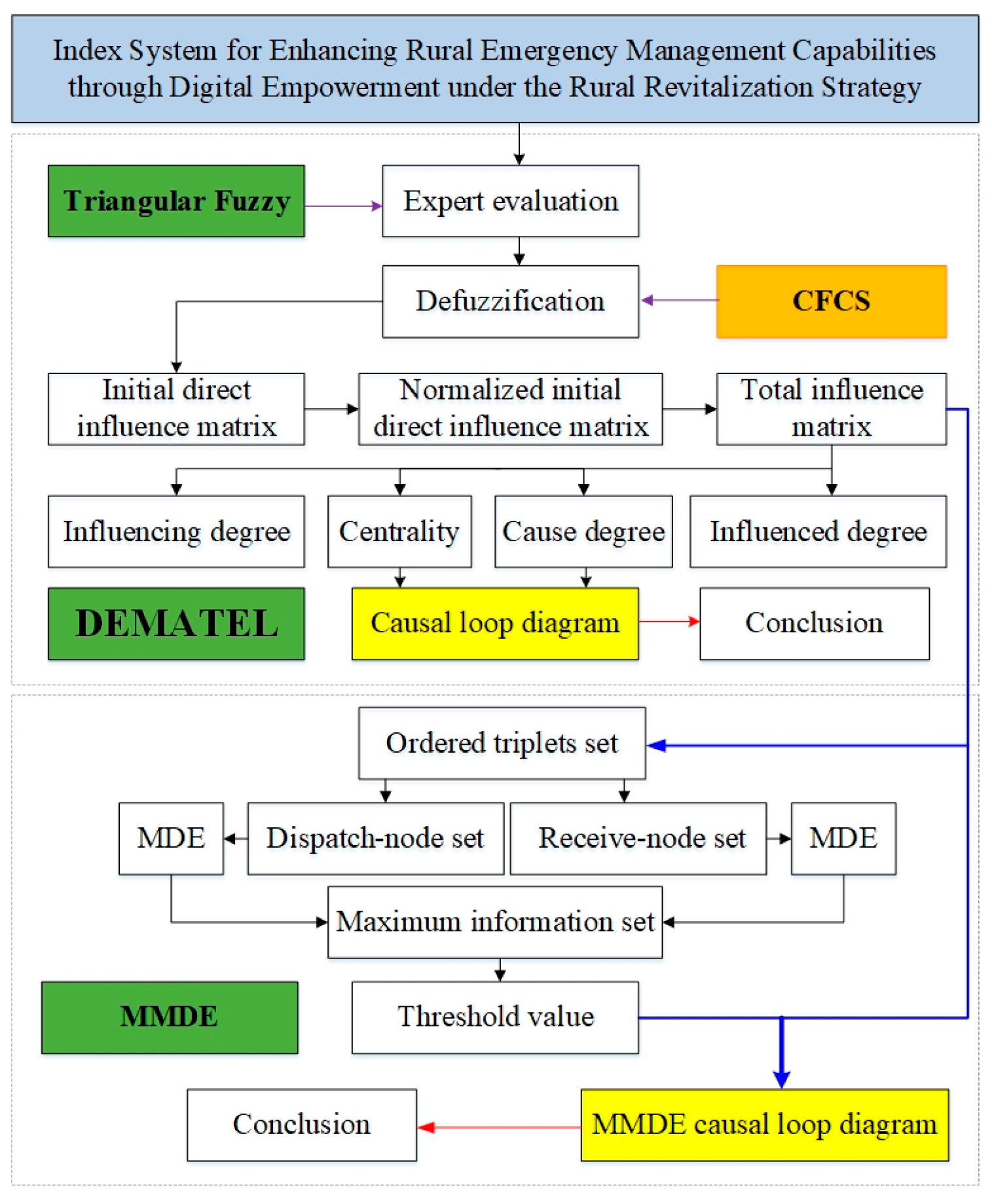
The contributions of this study are threefold: Theoretically, it proposes a systematic integrated analytical framework that addresses the limitations of earlier single-focus or one-dimensional studies and offers a new perspective for understanding the complex mechanisms of digital empowerment. Methodologically, it integrates the Fuzzy-DEMATEL-MMDE model to analyze fuzzy causal relationships in complex systems, with the objective determination of thresholds notably enhancing the reliability of the findings. The technical roadmap of this study is illustrated in Figure 1.

2. Literature Review

This study explores the influencing factors and driving pathways through which digital empowerment enhances rural emergency management capabilities under the Rural Revitalization Strategy. To achieve this, we develop an integrated analytical framework encompassing four dimensions: digital technology infrastructure, collaborative governance networks, digital emergency capacity, and comprehensive rural resilience. This chapter systematically reviews international scholarly progress at the intersection of rural emergency management, digital technology, and resilient governance. Through critical comparisons, it identifies consensus, disagreements, and gaps in existing research. It also clarifies the methodological choices and theoretical foundations for the specific indicators in this study.

2.1. Digital Technology Infrastructure

Digital technology has become a cornerstone of modern emergency management. Its role has evolved from an early-stage information transmission tool to a core enabler for comprehensive situational awareness, intelligent analysis, and decision support. Early research primarily focused on the role of communication technologies like broadcasting in disseminating early warning information [4]. With the rise in the Internet of Things (IoT), big data, and artificial intelligence (AI), scholarly focus has shifted to building integrated, intelligent digital infrastructure to overcome the rural “digital divide.” For example, Gasco-Hernandez et al. (2019) proposed a socio-technical framework for bridging this divide in rural emergency contexts, emphasizing the need to integrate technology, user adoption, and optimization methods [5]. This provides a basis for understanding the social dimension of digital infrastructure. Shah et al. (2019) explored how IoT and big data analytics contribute to building disaster-resilient smart cities through real-time monitoring and data-driven decision-making [6]. Their principles are equally applicable to smart villages, offering theoretical support for concepts like “sensor networks” and “intelligent tool application.”
A consensus exists that isolated technological systems are insufficient for complex rural disaster risks. Effective smart emergency models rely on integrated “space-air-ground” monitoring systems that combine satellite remote sensing, ground sensor networks, drones, and mobile terminals for real-time, dynamic perception of risks across areas [7]. However, disagreements persist regarding priorities. Some scholars emphasize that investment in “hard” infrastructure (e.g., sensor network coverage) is the primary prerequisite. Others argue that, with limited resources, “soft” data governance and platform integration can better enhance the collaborative efficiency of existing facilities. This debate highlights the importance of balancing physical coverage with data value extraction.
In summary, literature in this dimension focuses on overcoming the digital divide and building integrated intelligent systems. Based on discussions of core issues—physical sensing coverage, data integration, intelligent decision support, and effective terminal reach—and reconciling the “hard investment” vs. “soft governance” debate, this study extracts four key influencing factors: (1) Sensor Network Coverage, (2) Data Platform Integration, (3) Intelligent Tool Application, and (4) Digital Terminal Penetration. These indicators collectively form the physical and data foundation for digital empowerment.

2.2. Collaborative Governance Network

The deeper significance of digital empowerment lies in its reshaping of social relations and governance structures in emergency management. Traditional models emphasize hierarchical command and control, while the digital era fosters a networked, collaborative governance model centered on data sharing, platform coordination, and community participation. Kapucu (2006) noted that effective emergency collaboration networks feature flat structures, flexibility, and high trust [8]. In practice, conflicting goals among multiple stakeholders (government, businesses, community organizations, farmers) pose a major challenge [9]. In this regard, Yeganegi et al. (2025) developed a silent negotiation process based on the Simos procedure, providing a decision-making tool for resolving priority conflicts [10]. This directly supports the operationalization of concepts like data collaboration mechanisms and villager digital participation [10]. Butakov et al. (2018) demonstrated how social media empowers the public to become “digital volunteers,” reflecting technology-driven efficient mobilization [11]. The case of Australia’s “Bushwire” community warning platform offers another paradigm: co-developed with residents, it integrates not only official data but also local knowledge provided by the community, transforming villagers’ roles from “passive information receivers” to “active knowledge producers.” This profoundly indicates that sustainable collaboration relies not only on the efficiency of technological tools but is rooted in endogenous community participation capacity and the strength of multi-directional connections with external networks.
In summary, literature in this dimension reveals the logic of digitalization driving the transformation of governance models towards networking. Focusing on themes like multi-actor collaboration, efficient mobilization, and deep participation, and based on dialectical consideration of technological empowerment and social capital cultivation, this study extracts four key influencing factors: (1) Data Collaboration Mechanism, (2) Efficiency of Platform-based Social Mobilization, (3) Villager Digital Participation, and (4) Strength of External Network Connections. These collectively characterize the reshaping of governance relations by digital empowerment.

2.3. Digital Emergency Capacity

Digital technology is redefining core operational capabilities for emergency preparedness, response, and recovery by changing how information is processed and resources are allocated. This shift requires emergency management to move from relying on static documents and experiential judgment to a new capacity system based on dynamic data, model simulation, and real-time optimization. The digital transformation of emergency plans is a typical example. Using technologies like digital twins and scenario simulation, plans can be exercised and stress-tested, developing dynamic simulation capabilities.
Regarding the classic challenge of resource dispatch, the “leader-follower” game model constructed by Nahirniak et al. (2021) provides a rigorous theoretical reference for “intelligent emergency supply dispatch capability” and emphasizes that capacity building must consider grassroots behavioral patterns [12]. Should digital emergency capacity focus more on “centralized intelligent decision-making” or “distributed autonomous response”? Abdel-Basset et al. (2023) proposed and applied an integrated fuzzy DEMATEL-fuzzy EDAS hybrid MCDM framework to evaluate smart disaster response systems [13]. This work directly supports this paper’s choice of the Fuzzy-DEMATEL method, demonstrating its effectiveness and contemporary relevance in assessing smart emergency system performance. Kankanamge et al. (2020)’s study on public self-help and mutual aid using digital technologies demonstrates the potential of “crowdsourced” emergency response, where capacity resides at the individual and community levels [14]. Bharosa et al. (2010)’s analysis of multi-agency information sharing barriers reminds us that, regardless of system intelligence, cross-departmental data integration and collaboration remain foundational prerequisites for capacity realization [15]. Therefore, capacity is the product of the combined action of technical equipment, intelligent algorithms, and closed-loop management processes.
In summary, literature in this dimension describes the process of digitalization reconstructing core emergency operational capabilities. Focusing on issues like optimized resource dispatch, dynamic plan simulation, equipment empowerment at the front lines, and closed-loop process management, and integrating an understanding of the complementarity between centralized intelligence and distributed response, this study extracts four key influencing factors: (1) Dynamic Simulation Capability of Emergency Plans, (2) Intelligent Dispatch Capability of Emergency Supplies, (3) Digital Equipment Level of Rescue Teams, and (4) Online Closed-loop Rate of Hazard Management. These are key manifestations of how digital effectiveness translates into practical operational capability.

2.4. Integrated Rural Resilience

The ultimate goal of enhancing emergency management is to strengthen the socio-ecological resilience of rural communities—their ability to resist, absorb, adapt to, and transform from disaster shocks. The Baseline Resilience Indicators for Communities (BRIC) developed by Cutter et al. (2008), which integrates social, economic, institutional, infrastructural, and community capital dimensions, provides an authoritative assessment framework reference for this dimension [16]. Manyena (2006) systematically analyzed the concept of “resilience,” advocating for its expansion from engineering-focused rapid recovery to sustainable adaptation encompassing social learning and adaptive capacity [17].
Digital technology can enhance overall resilience by empowering industries, finance, and social networks. For example, digital platforms can promote e-commerce for agricultural products to improve industrial recovery capacity; digital inclusive financial tools can increase “emergency financial accessibility.” However, most current research discusses the one-way links between technology, governance, capacity, and resilience in a dispersed manner, lacking integrated analysis of their interactive structures and causal pathways. Aldrich (2012)’s case study strongly demonstrates that social capital is the most critical factor for post-disaster community recovery, providing core theoretical support for the “digital community mutual aid level” indicator [18]. Kappel et al. (2023) analyzed key factors of rural emergency capability based on rural emergency preparedness and response plans, offering optimal decisions for each stage of disaster emergency response [19]. The “Rural Computing” initiative proposed by Lang et al. (2025) represents a rare integrated exploration aimed at systematically enhancing rural resilience through the synergy of planning, design, construction, and governance pathways [20]. This provides a macro-framework for this study to understand how the four dimensions form a driving pathway from technological input to resilience output. However, the specific causal relationships, relative importance, and transmission mechanisms among elements within this framework still lack refined empirical identification and measurement.
In summary, literature in this dimension integrates multi-dimensional resilience measurement, the core theory of social capital, and explorations of technology-enabled pathways. Based on this, and aiming to integrate dispersed resilience drivers into a systematic framework, this study extracts four key outcome-influencing factors: (1) Industrial Recovery Capacity, (2) Emergency Financial Accessibility, (3) Digital Community Mutual Aid Level, and (4) Resident Safety Resilience. These together constitute comprehensive outcome indicators for assessing rural system resilience.

2.5. Review of Factor Relationship Analysis Methods

Through systematic literature review and synthesis, this study establishes a four-dimensional, sixteen-indicator analytical framework. However, a core research gap emerges: there is still a lack of systematic empirical identification and verification of the complex interactions among factors within the framework, their respective causal attributes, and the key transmission pathways influencing system resilience. Existing research often uses case descriptions, correlation analysis, or models focused on a single dimension. These approaches fail to provide a method capable of simultaneously handling multi-factor interactions, fuzzy judgments, and objectively revealing structures to comprehensively analyze this complex system. This methodological gap directly informs the methodological considerations of this study. Multi-Criteria Decision-Making (MCDM) models compare feasible alternatives against a set of conflicting criteria, ranking them from best to worst [21]. Among these, Interpretive Structural Modeling (ISM) is adept at establishing hierarchical structures but struggles to quantify influence strength and direction. The Analytic Network Process (ANP) can handle dependencies but has weak causal directionality. Structural Equation Modeling (SEM) requires large sample sizes to test preset paths and is unsuitable for exploratory construction of causal networks. In contrast, the Decision-Making Trial and Evaluation Laboratory (DEMATEL) method is particularly suitable for handling interdependencies among factors in complex systems. It can visualize causal networks and quantify factor centrality and causality based on expert knowledge [22], making it suitable for the exploratory goals of this study.
In many cases, judgments in DEMATEL are often given specific numerical values, which may be insufficient to reflect real-world fuzziness. In fact, human judgments about preferences are often unclear and difficult to estimate with precise numbers. Therefore, extending the DEMATEL method with fuzzy logic is necessary for better decision-making in fuzzy environments [23]. Using Fuzzy DEMATEL can handle inherent bias and fuzziness in human judgment, addressing group decision-making problems organizations face under fuzzy conditions [24]. For example, Ahmadi et al. (2020) mapped Fuzzy DEMATEL outputs to Bayesian networks to construct a Bayesian network of risk factors, employing pairwise comparison to solicit expert opinions [25]. Secondly, a suitable threshold is needed during DEMATEL analysis to obtain sufficient information for further analysis and decision-making. In existing research, thresholds are mostly determined through joint expert deliberation [26], which has limitations of subjective judgment. Some scholars use the mean method to determine thresholds [27,28], but this leads to nearly half of the influence relationships being artificially deleted, preventing accurate threshold calculation. Other scholars use statistical distribution methods [29], which essentially assume a normal distribution that may not match reality. The Maximum Mean De-Entropy (MMDE) method is used to reduce information volume and determine thresholds. Integrating DEMATEL with MMDE effectively analyzes problems and provides recommendations [30]. For instance, Behera and Mukherjee (2015) applied an integrated DEMATEL and MMDE method to study key factors influencing supply chain coordination scheme selection [31]. Singh and Bhanot (2019) used MMDE to determine the threshold in an integrated method, analyzing barriers to IoT implementation in manufacturing by combining multiple decision-making methods [32]. However, in the field of rural emergency management research, most existing scholars use questionnaire surveys and model analysis to study influencing factors for capacity improvement. For example, Zhang et al. (2023), based on questionnaires and data collection, analyzed the emergency capabilities of urban, town, and rural communities [33]. They suggested that focusing on community-level resilience and analyzing its influencing factors has potential value in addressing disaster emergency issues [33]. Li et al. (2024) established a model from a compound risk perspective to analyze factors influencing rural community emergency capacity, identifying key factors for improving overall rural community emergency management capability [34]. Yet, few scholars have utilized MCDM to deeply analyze influencing factors and their interrelationships in rural emergency management. There is even less exploration of digital empowerment, making it difficult to adapt to the demands of the digital economy era and modernization.

2.6. Literature Gap and Contribution

In summary, international literature widely recognizes the transformative potential of digital technology for rural emergency management and rural resilience building, accumulating rich results in technology application, collaborative governance, capacity building, and resilience assessment. MCDM methods like DEMATEL have been widely researched and applied by scholars, laying the theoretical foundation for this study. However, existing research still has the following gaps: First, most studies focus on a single dimension or technical solution, lacking systematic integration of technological infrastructure, governance networks, emergency capacity, and comprehensive resilience. Second, there is a lack of structured causal analysis regarding how elements within this framework interact, what the key driving factors are, and the specific pathways of influence. Third, few scholars have considered comprehensively addressing the various objective shortcomings in the process of integrating decision-making methods. The application of the MMDE method to determine a single objective threshold is also rare. Simultaneously, few scholars have comprehensively applied such integrated methods to the study of influencing factors in rural emergency management.
Therefore, this study aims to address these gaps. We construct a four-dimensional influencing factor system, which is a concretization of the “technology-organization-capability-outcome” logical chain. Employing the Fuzzy-DEMATEL-MMDE method can not only handle fuzziness in expert judgments but, more crucially, can quantitatively identify fundamental driving factors, key mediating factors, and core outcome indicators in the system by calculating the centrality and causality of each influencing factor. This helps reveal the internal driving pathways for enhancing rural emergency management capacity through digital empowerment under the Rural Revitalization Strategy, providing a scientific basis for formulating precise intervention policies.

3. Indicator System Construction

3.1. Data Foundation

To ensure the study is grounded in practice and possesses high reliability, this study strictly follows the requirements of the Delphi method and DEMATEL for expert consultation, forming an evaluation panel of 10 experts. Expert selection adhered to the following criteria: (1) Possess over 10 years of research or practical experience in emergency management, digital rural construction, or public policy; (2) Be familiar with the current state of rural development and digital transformation processes in China; (3) Be capable of providing professional, independent judgments on complex system factor relationships.
Based on this, the final expert composition is: 4 academic researchers, specializing in emergency management and digital governance, with an average professional experience of 15 years. Their main contribution is providing theoretical frameworks, indicator system construction, and validity assessment. 3 government managers, working in provincial/county-level emergency management and agriculture/rural affairs departments, with an average professional experience of 10 years. Their main contribution is providing policy and practical perspectives, assessing the practical feasibility of indicators. 3 technical practitioners, working in digital technology companies or rural smart project consulting agencies, with an average professional experience of 8 years. Their main contribution is providing perspectives on the forefront of technology application, assessing technology-enabled pathways. Data collection was conducted using the classic Delphi method process through anonymous questionnaire surveys, primarily assessing the influencing factors and interrelationships related to digital empowerment for enhancing rural emergency management capacity.

3.2. The Fuzzy-DEMATEL Method

The Decision-Making Trial and Evaluation Laboratory (DEMATEL) method is effective in identifying factors within complex systems and exploring their causal relationships [35,36]. However, a key limitation of the conventional DEMATEL is that judgments are typically assigned specific numerical values, which may not adequately capture the inherent fuzziness and uncertainty present in real-world decision-making [37]. To address this, we employ a modification based on triangular fuzzy number theory [38]. The fundamental procedural steps are as follows:
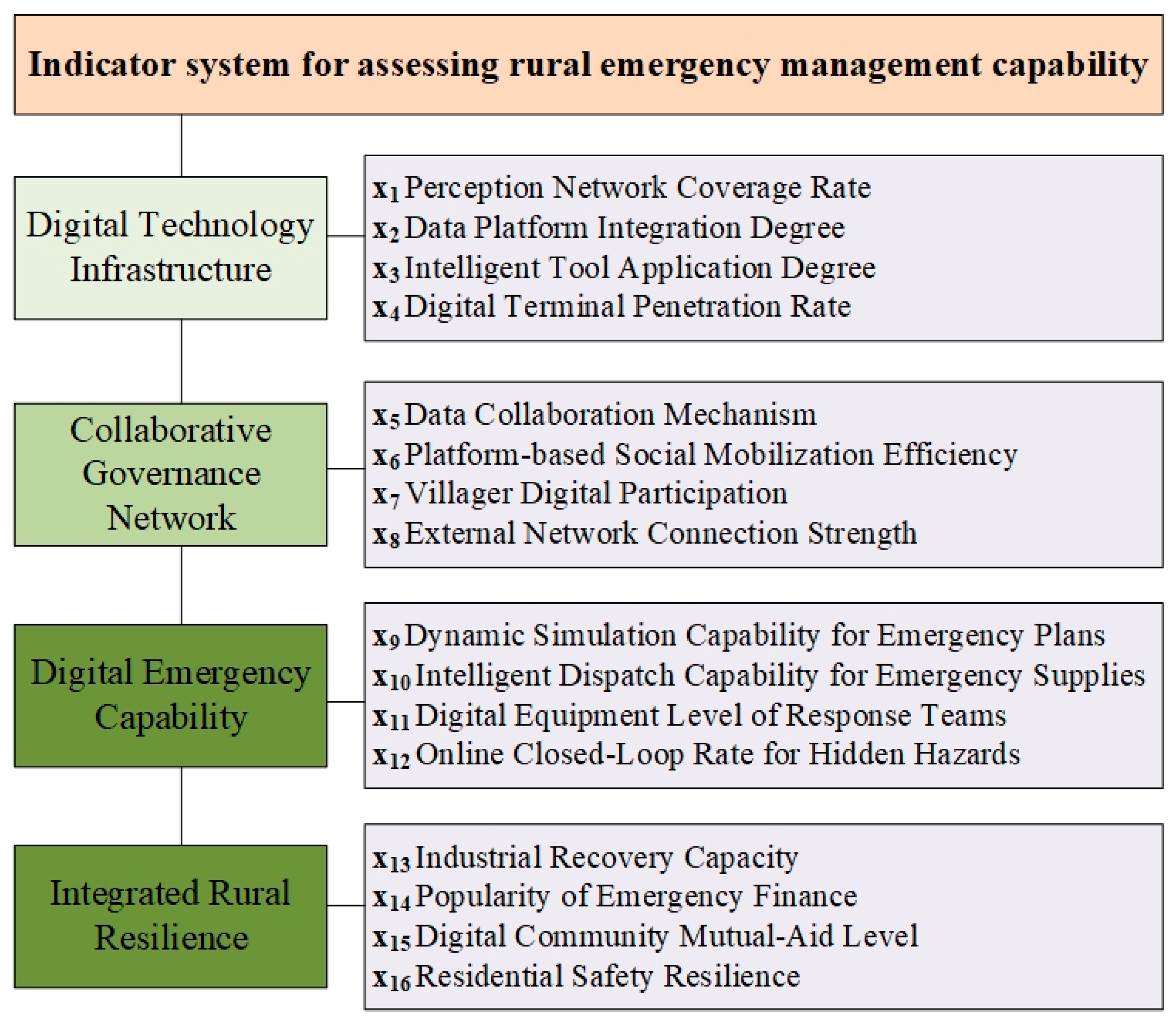
Step1: Establish the indicator system for assessing rural emergency management capability under the Rural Revitalization Strategy. This system is defined as a set of factors {x1, x2, x3, …, xn}. Through a comprehensive literature review and expert evaluation, we constructed this framework. It comprises the following four dimensions and sixteen influencing factors, as shown in Figure 2.
(1)
Digital Technology Infrastructure
Sensor Network Coverage Rate (x1): This indicator measures the physical coverage of real-time monitoring in key risk areas. These areas include flood-prone channels, sites prone to geological hazards, and clusters of old buildings. Monitoring is achieved through IoT sensors, cameras, and other intelligent devices.
Data Platform Integration Degree (x2): This indicator evaluates the extent to which operational data from multiple departments is interconnected, standardized, and shared in real-time on a unified county-level emergency command platform. The involved departments typically include emergency management, natural resources, meteorology, and transportation. It measures whether “data silos” have been effectively broken down.
Intelligent Tool Application Degree (x3): This reflects the frequency and depth of using big-data disaster models for loss estimation or AI algorithms for automatic damage identification from satellite imagery during actual decision-making processes. These processes include emergency consultation and early warning issuance. It indicates a shift from technology being a demonstration tool to becoming core decision support.
Digital Terminal Penetration Rate (x4): This specifically refers to the online operational readiness rate of emergency broadcasting systems. It also includes the proportion of households that have installed and use official county-level emergency apps or mini-programs. These platforms must have core functions such as receiving warnings and reporting information. This indicator relates to the socio-technical framework for bridging the rural digital divide.
(2)
Collaborative Governance Network
Data Collaboration Mechanism (x5): This refers to the completeness of formal, pre-established data-sharing agreements among government, enterprises, and social organizations for emergency response. It also assesses the existence of standardized data exchange processes that support cross-organizational collaboration. Its theoretical basis involves decision analysis methods for coordinating conflicts among multiple stakeholders.
Platform-based Social Mobilization Efficiency (x6): This measures the average time required after a disaster to successfully recruit, organize, and assign clear tasks to the first batch of social emergency volunteers or local corporate rescue forces through digital platforms. Theoretical support for this indicator comes from research on the flat and high-trust characteristics of efficient emergency collaboration networks.
Villager Digital Participation (x7): This indicates the monthly average number of potential hazards (e.g., blocked rivers, cracks in unsafe houses) that villagers proactively report via digital channels like apps or WeChat groups. It also captures their enthusiasm for regularly participating in online emergency knowledge quizzes and simulation drills.
External Network Connection Strength (x8): This refers to the capability of township-level emergency command platforms to synchronize live video and disaster data with higher-level platforms with one click. It also measures the smoothness of horizontal coordination for resource dispatch and information exchange with neighboring townships. This concept extends from practices related to communities establishing multi-directional connections with external systems.
(3)
Digital Emergency Capability
Dynamic Simulation Capability for Emergency Plans (x9): This describes a complete process. It involves using digital means (e.g., electronic sand tables, simulation software) to conduct visual, interactive exercises of emergency plans. It also includes the immediate revision of plan documents based on problems exposed during these exercises. It embodies the trend of transforming emergency plans from static documents into dynamic simulation tools.
Intelligent Dispatch Capability for Emergency Supplies (x10): This is the ability to automatically or semi-automatically generate optimal distribution routes and vehicle allocation plans. These plans route supplies from multiple storage depots to multiple disaster sites. The generation is based on GIS maps, real-time traffic conditions, and optimization algorithm models. Its theoretical model references stem from research on optimal emergency resource allocation based on game theory.
Digital Equipment Level of Response Teams (x11): This assesses the proportion and sophistication of intelligent equipment available to and proficiently used by frontline rescue forces. These forces include local fire rescue stations and militia emergency units. The equipment includes portable video transmission devices, drones, and life detectors.
Online Closed-Loop Rate for Hidden Hazards (x12): This measures the proportion of the entire hazard management process that is recorded, tracked, and supervised through a digital platform. The process spans from hazard discovery and reporting to task assignment, on-site handling, and re-inspection for closure. The goal is to eliminate “offline handling with post-facto data entry.”
(4)
Integrated Rural Resilience
Industrial Recovery Capacity (x13): This refers to the average time required after a disaster for the main production facilities of characteristic agricultural products or the core businesses of rural tourism to restore 80% of their pre-disaster operational capacity. Its theoretical foundation lies in the economic dimension of baseline community resilience indicators. It also connects to the expanded concept of resilience, which moves from engineered recovery towards adaptive development.
Emergency Financial Accessibility (x14): This indicates the number and coverage rate of successful online applications and payouts for agricultural disaster insurance or emergency micro-credit obtained by farming households within a disaster-affected area. It relates to the role of digital inclusive finance in post-disaster recovery.
Digital Community Mutual-Aid Level (x15): This measures the number of spontaneous online groups formed through digital social networks like village WeChat groups or community apps. It also assesses the digital coverage rate of assistance provided to vulnerable groups such as the elderly, weak, sick, or disabled.
Resident Safety Resilience (x16): This reflects the enhanced level of protection for residents’ lives and property achieved directly through digital means. Examples include installing intelligent settlement or crack monitors in old houses, or providing one-click emergency call devices to vulnerable households. Its theoretical framework derives from comprehensive community resilience assessment and explorations of pathways for technology to empower resilience building.
Step2: Experts are invited to evaluate the influence relationships between each pair of factors using linguistic terms and their corresponding scores. The linguistic variables and fuzzy scales for expert judgment are presented in Table 1 [39]. The linguistic evaluations are then converted into triangular fuzzy numbers, denoted as w i j k = ( l i j k , m i j k , r i j k ) , representing the k-th expert’s assessment of the influence degree of factor i on factor j. Each triangular fuzzy number satisfies the condition l ≤ m ≤ r.
Step3: The CFCS (Converting Fuzzy data into Crisp Scores) method is applied to defuzzify the initial expert evaluations [40]. This process yields an n × n direct influence matrix D [41]. The detailed calculation steps are shown in Appendix A.1.
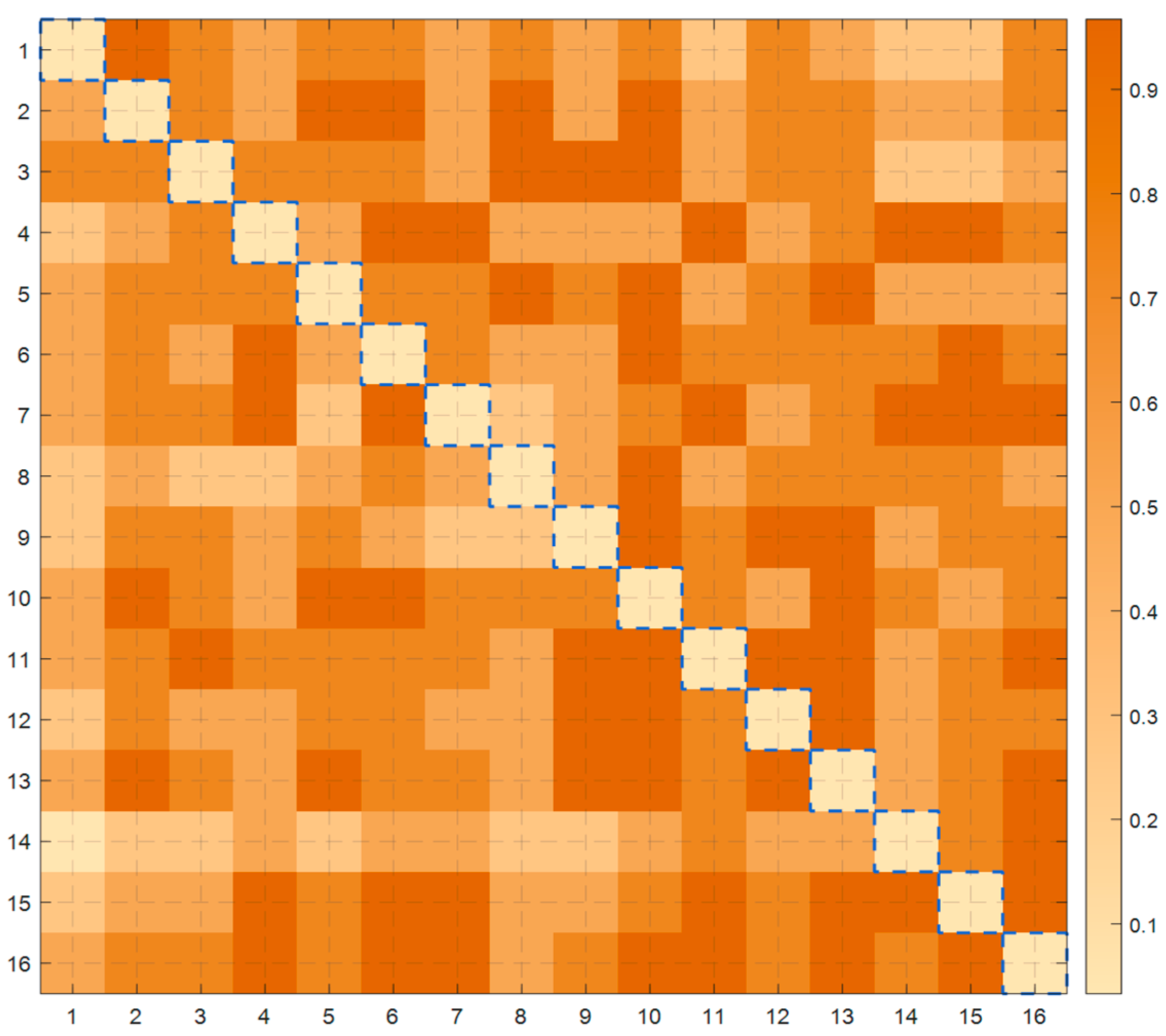
Step4: The normalized direct influence matrix N is calculated. The defuzzified direct influence matrix D is visualized in Figure 3, where color intensity indicates the degree of influence, providing an intuitive display of inter-factor relationships.
N = D max max j = 1 n d i j , max i = 1 n d i j
Step5: The total influence matrix T is computed. The identity matrix of order n × n is denoted as I. After continuous self-multiplication, there is lim k N k = 0 . The total influence matrix T is shown in Table A1 of Appendix A.2.
T = ( N + N 2 + + N k ) = k = 1 N k = N ( I - N ) - 1
Step6: For each element, the influencing degree (Di), the influenced degree (Ri), the centrality, and the cause degree are calculated. Centrality, the sum of Di and Ri, represents the element’s importance and position within the system. The cause degree is derived by subtracting Ri from Di. Results are presented in Table 2, calculated as follows:
D i = j = 1 n x i j , ( i = 1 , 2 , , n )
R i = j = 1 n x i j , ( i = 1 , 2 , , n )
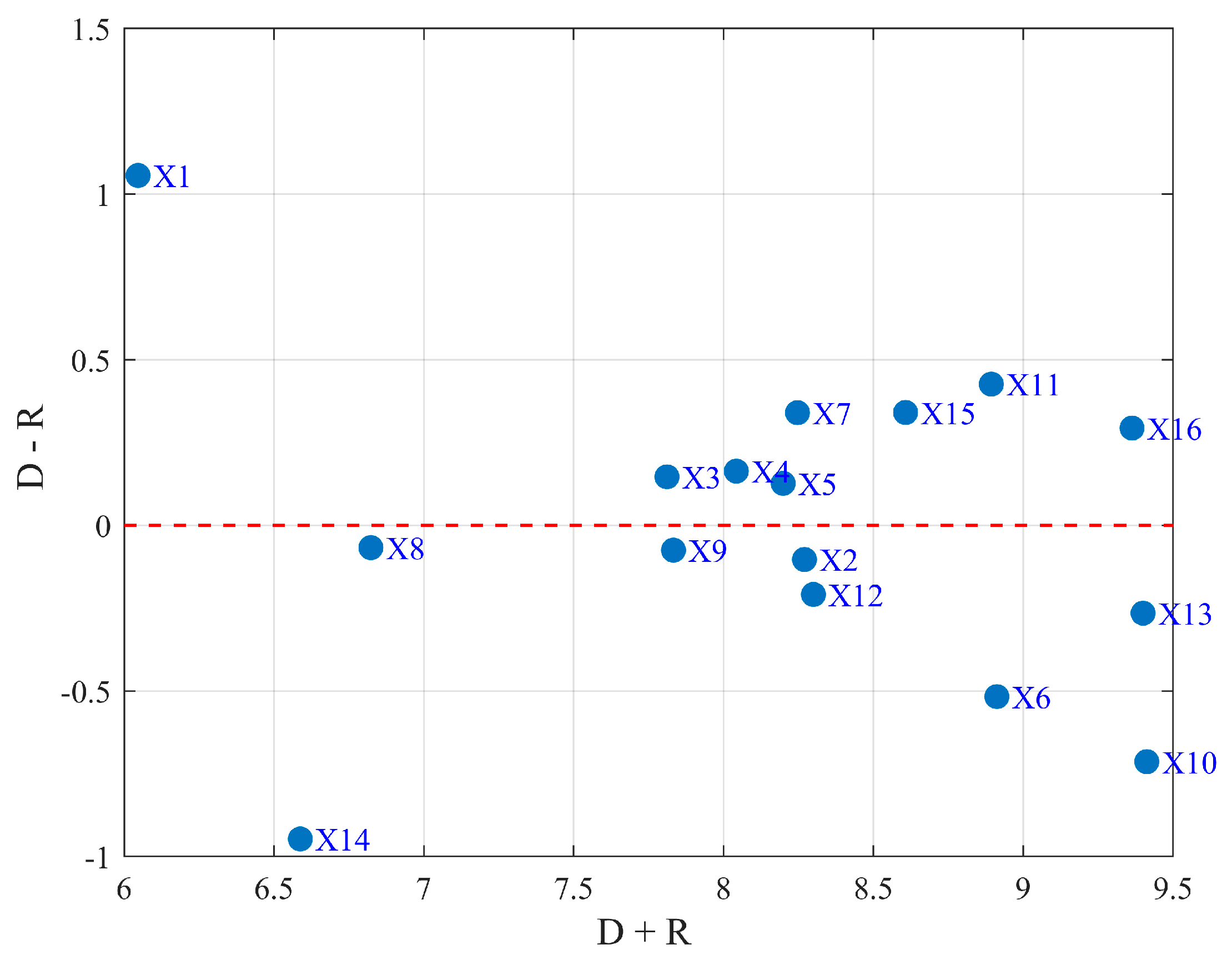
Step7: A causal diagram is plotted using centrality as the horizontal axis and cause degree as the vertical axis, as shown in Figure 4.
The following primary conclusions are drawn from Table 2 and Figure 4:
Ranking by Influence Degree: Factors x16 (Resident Safety Resilience), x11 (Digital Equipment Level of Response Teams), and x13 (Industrial Recovery Capacity) exert the greatest influence on other factors within the system. This finding is grounded in practical reality. First, resident safety resilience forms the very foundation of emergency management. In rural areas, measures like improving housing disaster resistance and promoting household emergency kits yield direct and significant mitigation effects. In practice, regions with weak safety foundations often experience substantially reduced effectiveness in subsequent digital rescue operations. Second, the driving role of rescue team equipment reflects the practical necessity of “human-machine integration.” Equipping personnel with tools like drones and individual communication terminals directly enhances their situational awareness, communication, and operational capabilities on the ground. This serves as a crucial translator from the “digital system” to the “physical world.” Third, the high influence of industrial recovery capacity confirms that modern emergency management must serve sustainable development goals. Rapid restoration of production after a disaster is central to preventing disaster-induced poverty and consolidating rural development achievements.
Ranking by Centrality Degree: Overall, Factor x10 (Intelligent Dispatch Capability for Emergency Supplies) exhibits the highest centrality. This directly addresses the common disconnect between information/decision flows and material/personnel flows in rural emergency responses. In scenarios such as mountainous terrain or where disasters disrupt road access, delivering limited rescue forces and supplies to the right locations at the right time relies entirely on the optimization algorithms and coordinated command capabilities of an intelligent dispatch system. Therefore, enhancing x10 represents the most effective short-term intervention for bridging the “last mile” of emergency response and maximizing the overall efficiency of the system.
Within the four dimensions, x2 (Data Platform Integration Degree), x6 (Platform-based Social Mobilization Efficiency), x10 (Intelligent Dispatch Capability), and x13 (Industrial Recovery Capacity) emerge as the factors with the highest centrality in their respective areas. This provides clear priorities for targeted policy across different domains: the core of digital infrastructure development should be breaking down data barriers rather than merely increasing sensor quantities; the focus of collaborative network optimization should be creating efficient and executable platform-based mobilization processes; the immediate priority for capacity building is upgrading the intelligent dispatch system; the ultimate measure for all efforts is whether they tangibly enhance the recovery capacity of industries and communities.
Ranking by Cause Degree: Factor x14 (Emergency Financial Accessibility) has the smallest cause degree, indicating it is the factor most susceptible to influence from others. This reveals a key policy insight: public acceptance and use of emergency financial products is more a result of broader systemic improvements than an independently promotable starting point. If disaster assessments are inaccurate or claim processes are not user-friendly, promotional campaigns for insurance products alone often yield limited results. Therefore, policy should prioritize improving the upstream supporting conditions for these financial tools.

3.3. The Maximum Mean De-Entropy Method (MMDE)

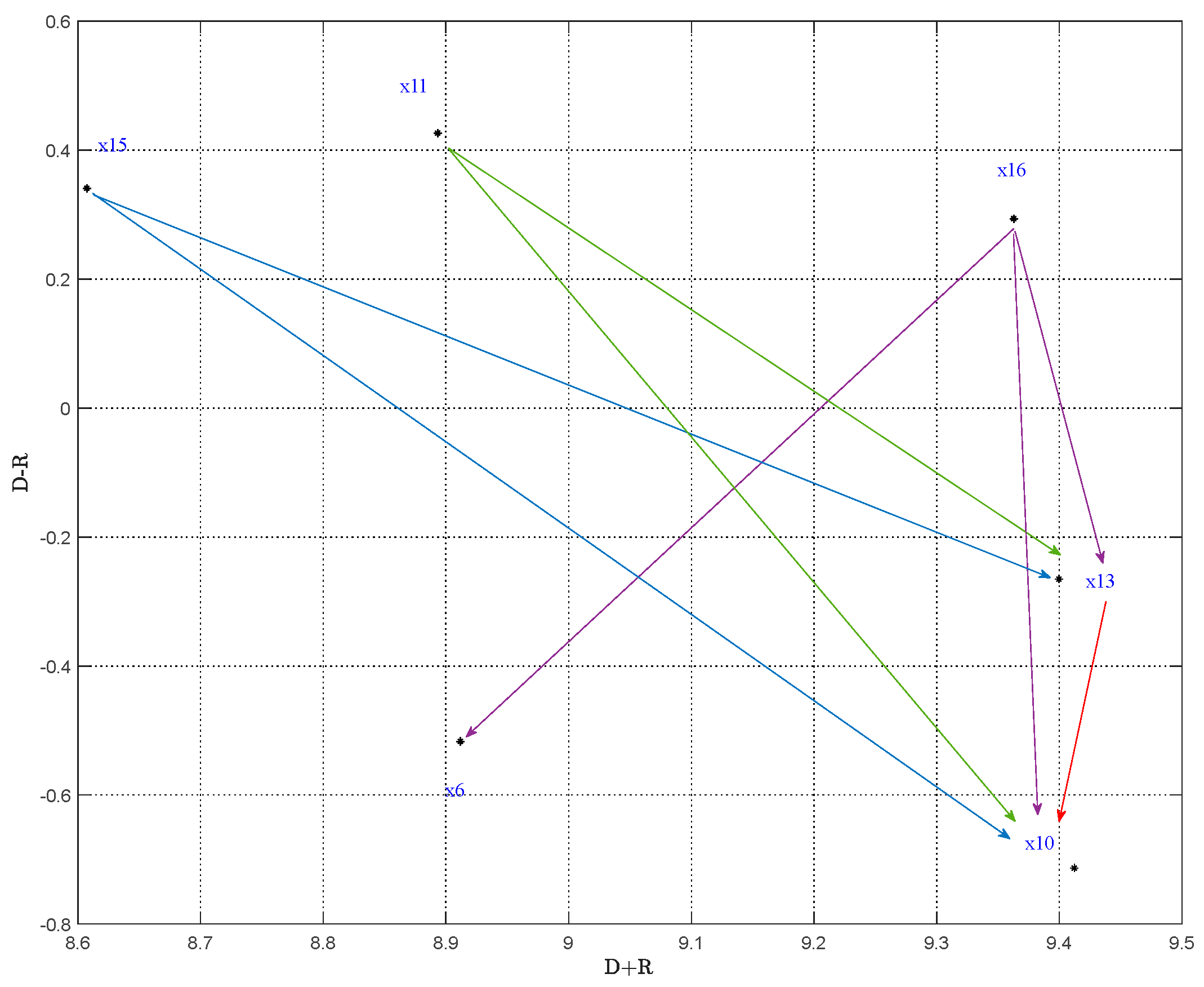
The DEMATEL method requires an appropriate threshold to filter key influencing factors and relationships, facilitating further analysis and decision-making. Existing studies often rely on expert consensus to determine this threshold [26], which introduces subjectivity. To address this, the Maximum Mean De-Entropy (MMDE) method is introduced [30]. This method determines an objective and unique threshold by filtering out non-essential information from the total influence matrix [3,42]. Extract the factors corresponding to values in the total influence matrix T that are greater than or equal to the threshold. Based on the causal diagram, directed arrows are drawn to represent the reachable influence relationships among these key factors, as illustrated in Figure 5. The detailed calculation steps are shown in Appendix A.3.
Following the computational steps, the MMDE method determined a threshold value of 0.3347. We applied this threshold to filter out weak relationships within the comprehensive influence matrix. This process allowed us to distill the most significant influence pathways within the system, as visualized in Figure 5. It should be noted that using a fixed threshold is a necessary simplification when dealing with continuous influence relationships. While the MMDE method offers a data-driven and objective approach for determining this value, the specific numerical threshold may slightly influence the detailed structure of the identified network.
Key factors were identified by selecting all elements in the total influence matrix with values greater than or equal to this threshold. The subsequent analysis focused on the reachable influence relationships among these key factors. As Figure 5 illustrates, factor x16 (Resident Safety Resilience) influences rural emergency management capability within the rural revitalization and digital empowerment framework by affecting x6 (Platform-based Social Mobilization Efficiency), x10 (Intelligent Dispatch Capability), and x13 (Industrial Recovery Capacity). Both x11 (Digital Equipment Level of Response Teams) and x15 (Digital Community Mutual-Aid Level) influence the target capability by affecting x10 and x13. Furthermore, x13 exerts an additional influence by affecting x10. Consequently, the core pathway can be summarized as follows: “Empowerment through Foundational Resources and Rules, Transformation via Collaborative Mobilization and Intelligent Dispatch, and Realization/Enhancement of System Resilience.”
First, resources and intelligent rules initiate the pathway. Resident Safety Resilience (x16) and the Dynamic Simulation Capability for Emergency Plans are important initial sources of influence. The former creates a safer and more efficient foundational environment for rescue operations. The latter functions as a “digital sandbox,” transforming abstract plans into concrete resource requirements and actionable checklists. This provides precise input for subsequent stages.
Second, the influence is transmitted and amplified through platform-based collaboration and dispatch. The aforementioned foundational factors primarily propagate their effects by influencing Platform-based Social Mobilization Efficiency (x6) and Intelligent Dispatch Capability (x10). Specifically, safer communities and intelligent plans enable digital platforms to organize and mobilize social forces more efficiently. Concurrently, these elements, together with the high-frequency, precise on-site information provided by the Digital Community Mutual-Aid Level (x15), collectively empower the intelligent dispatch system. This shifts decision-making from a reliance on “experiential estimation” to a “data-driven” paradigm.
Finally, achieving and enhancing resilience represents the endpoint and feedback mechanism of the pathway. Efficient dispatch directly accelerates the recovery process. More importantly, the model reveals a positive feedback loop. Stronger industrial and community recovery capacity (x13) signifies richer local resources and greater inherent resilience. This, in turn, can reduce absolute dependence on external dispatch, thereby making the entire system more resilient to future shocks. This insight profoundly illustrates the synergistic relationship between building emergency response capacity and pursuing long-term sustainable development.

4. Conclusions

4.1. Main Findings

This study systematically analyzes the influencing factors and internal mechanisms of digital empowerment for rural emergency management under the Rural Revitalization Strategy by employing an integrated Fuzzy-DEMATEL-MMDE model. The principal conclusions and contributions are summarized as follows: Identification of Three Deep Drivers and One Central Hub. Factor attribute analysis reveals that Resident Safety Resilience (x16), Digital Equipment Level of Response Teams (x11), and Industrial Recovery Capacity (x13) act as the most influential deep drivers within the system. In contrast, the Intelligent Dispatch Capability for Emergency Supplies (x10) possesses the highest centrality. It functions as the critical hub connecting technology, collaborative governance, and execution outcomes, thereby determining the overall response efficiency. Revelation of a Digital Empowerment Pathway. The analysis of key influence pathways delineates a progressive logic: foundational reinforcement, collaborative dispatch, and recovery enhancement. Digitally enhanced safety foundations, equipment, and mutual-aid networks ultimately drive the systematic strengthening of industrial and community recovery capacity by improving the efficacy of platform-based mobilization and intelligent dispatch. Clarification of Factor Attributes for Differentiated Strategy. The research distinguishes factors with different attributes, such as high influence, high centrality, and high susceptibility. This distinction provides a basis for precise intervention in emergency management. Notably, as a highly susceptible factor, improvements in Emergency Financial Accessibility (x14) should be pursued by optimizing upstream conditions like dispatch efficiency and service experience.

4.2. Theoretical Contribution and Practical Implications

The primary theoretical contribution of this study lies in constructing a systematic analytical framework that integrates “Technological Infrastructure, Organizational Networks, Core Capabilities, Comprehensive Resilience.” It empirically reveals the causal structures and functional pathways among these components, offering a new theoretical perspective for understanding complex rural governance systems in the digital era. Based on these findings, we propose the following management implications: (1) For Local Governments and Policymakers: Systemic planning is essential to avoid fragmented investments. Priority should be given to securing long-term strategic investment in deep drivers (e.g., resident safety resilience, industrial resilience). Concurrently, focused support should be directed toward building core hub capabilities (e.g., intelligent dispatch) to enhance overall system performance. (2) For Emergency Management Agencies: Short-term efforts should concentrate on optimizing the high-centrality factor of “Intelligent Dispatch Capability.” This involves breaking down data silos and redesigning workflows to overcome the bottleneck of precise resource allocation. Efforts should also be made to enhance “Platform-based Social Mobilization Efficiency,” transforming digital platforms into operational hubs that integrate information, resources, and command functions. (3) For Rural Communities and Grassroots Organizations: The key is to leverage digital tools to activate endogenous resilience. Actively developing digital mutual-aid networks and integrating them with routine industrial development and environmental governance can elevate community-based collaborative governance. This approach helps genuinely embed digital technology into rural governance practices.

4.3. Limitations and Future Research

This study has certain limitations. First, the cross-sectional analysis based on expert cognition clearly presents a static causal structure but cannot capture the dynamic evolution of relationships between factors. Second, the conclusions depend to some extent on the subjective judgments of the selected expert panel. Future research can advance this work in three main directions. First, methods such as system dynamics could be introduced to enable dynamic simulation and prediction. Second, comparative case studies across different regions in China could be conducted to test the adaptability of the proposed framework. Third, the indicator system developed in this study could be applied to practical assessments. Furthermore, exploring how to test and adapt this analytical framework in similar global contexts would contribute to the broader knowledge base on rural governance.

Author Contributions

J.W., conceptualization, methodology, writing—original draft preparation, writing—review and editing, and project administration. B.L., formal analysis, investigation, resources, and writing—review and editing. All authors have read and agreed to the published version of the manuscript.

Funding

This research was funded by the Ministry of Education Humanities and Social Science Fund Youth Project (Grant No. 22YJCZH171) and supported by the Fundamental Research Funds for the Central Universities, as well as the Research Center for the Theory of Socialism with Chinese Characteristics, Tongji University. The funding was awarded to Boying Li.

Institutional Review Board Statement

This study did not require ethics committee or institutional review board approval because it involves anonymous questionnaires with no intervention and does not collect any personally identifiable information. According to Article 32 of the “Measures for the Ethical Review of Life Science and Medical Research Involving Humans” (2023), jointly issued by the National Health Commission, the Ministry of Education, the Ministry of Science and Technology, and the National Administration of Traditional Chinese Medicine, “The following types of life science and medical research involving humans, which use information data or biological samples, may be exempt from ethical review if they cause no harm to humans and do not involve sensitive personal information or commercial interests.” https://www.gov.cn/zhengce/zhengceku/2023-02/28/content_5743658.htm (accessed on 8 September 2025).

Informed Consent Statement

Informed consent was obtained from all subjects involved in the study.

Data Availability Statement

The anonymized aggregated data and the model code used for analysis are available from the corresponding author upon reasonable request.

Conflicts of Interest

The authors declare no conflicts of interest.

Appendix A

Appendix A.1

(1)
Normalization of Triangular Fuzzy Numbers:
x l i j k = l i j k min l i j k / Δ min max
x m i j k = m i j k min l i j k / Δ min max
x r i j k = r i j k min l i j k / Δ min max
Δ m i n m a x = max r i j k min l i j k
(2)
Calculation of Normalized Left-Side (ls) and Right-Side (rs) Values:
x l s i j k = x m i j k / 1 + x m i j k x l i j k
x r s i j k = x r i j k / 1 + x r i j k x m i j k
(3)
Computation of Crisp Values:
x i j k = x l s i j k 1 x ls i j k + x rs i j k x rs i j k / 1 x ls i j k + x rs i j k
z i j k = min l i j k + x i j k Δ min max
(4)
Aggregation of Expert Judgments (Crisp Average):
z i j = 1 k z i j 1 + z i j 2 + + z i j k

Appendix A.2

Table A1. Total Influence Matrix.
x1x2x3x4x5x6x7x8
x10.11390.25650.22320.21060.23350.26270.21120.2088
x20.16480.21580.24780.23700.27610.30980.23830.2472
x30.17810.26270.19240.24650.25510.28680.23160.2424
x40.14770.24960.24910.20620.24150.31100.27380.2109
x50.16690.27140.25200.25640.21210.29800.25800.2494
x60.16710.27190.23770.27700.24830.24980.26210.2164
x70.17040.27640.25900.28320.23610.32290.21580.2032
x80.12460.21330.18090.18620.20750.25190.20390.1461
x90.14170.25710.23990.22730.25160.26520.21230.1883
x100.17320.29720.26140.25060.28910.32490.26740.2412
x110.18290.29780.29350.28270.28950.32740.28320.2373
x120.14650.26550.23120.23570.25900.29110.23670.2105
x130.17990.30930.27270.26170.30140.32200.27820.2341
x140.09080.16690.15550.17810.16200.20380.17880.1394
x150.15910.26960.25100.29170.27690.33300.29270.2267
x160.18740.30540.28490.30850.29620.35400.30920.2433
x9x10x11x12x13x14x15x16
x10.21250.27890.20640.24160.25100.18620.20240.2521
x20.23890.32860.25150.26990.29980.22850.24700.2825
x30.26690.32200.24530.26490.29340.20620.22460.2600
x40.23880.29510.28890.25430.30050.26480.28370.2873
x50.25920.33290.25630.27410.32050.23260.25140.2716
x60.24350.33330.27690.27500.30650.25260.28740.2919
x70.24800.32280.29900.26410.31170.27340.29300.3145
x80.20350.28310.21630.23240.25770.21330.22840.2289
x90.19610.31570.25860.27650.30530.21820.25250.2727
x100.26800.27740.28220.26830.33160.25700.26110.2988
x110.30170.36460.24860.31740.35160.25540.29350.3328
x120.27080.32610.26780.21760.31520.22710.26240.2824
x130.29640.35920.29460.31250.27870.25090.28840.3273
x140.16010.21470.20570.18650.20830.13690.20170.2313
x150.25770.33470.30890.29000.33950.28240.23580.3244
x160.29170.37360.32640.30910.36100.28170.31990.2760

Appendix A.3

Step1: Convert the total influence matrix T into an ordered set: {t11, t12, …, t21, t22, …, tnn}. Sort the elements in descending order and transform them into an ordered triplet set denoted as T*, containing elements (tij, xi, xj).
Step2: From the set (tij, xi, xj), derive two new ordered sets: the dispatched node set (TDi) and the received node set (TRe):
T D i = x i = x 1 , x 2 , , x n × n
T R e = x j = x 1 , x 2 , , x n × n
Step3: Take the first t elements of TDi to form a new subset TDit. Calculate the probability for different elements and compute the Mean De-Entropy (MDE) value. Increment t from 1 to the cardinality of C(TDi). Process TRe in the same manner. The formulas are as follows:
H t D i = H 1 N T D i , 1 N T D i , , 1 N T D i H k 1 C T D i , k 2 C T D i , , k t C T D i
H t R e = H 1 N T R e , 1 N T R e , , 1 N T R e H k 1 C T R e , k 2 C T R e , , k t C T R e
M D E t D i = H t D i N T t D i
M D E t R e = H t R e N T t R e
Step4: Identify the maximum MDE value and the elements preceding its corresponding position. Remove any duplicate elements.
T max D i = max M D E t D i = x 1 , x 2 , , x t max
T max R e = max M D E t R e = x 1 , x 2 , , x t max
Step5: Construct the maximum information set and determine the threshold. Form a subset TTh containing the T max D i and T max R e . The smallest numerical value within TTh is defined as the threshold.
T T h = t i j , T max D i x i , T max R e x j

References

  1. Kreibich, H.; Müller, M.; Schröter, K.; Thieken, A.H. New insights into flood warning reception and emergency response by affected parties. Nat. Hazards Earth Syst. Sci. 2017, 17, 2075–2092. [Google Scholar] [CrossRef]
  2. Feng, K.; Sun, S. Understanding and strengthening the emergency management and comprehensive disaster reduction in China’s rural areas: Lessons from coping with the COVID-19 epidemic. Sustainability 2021, 13, 3642. [Google Scholar] [CrossRef]
  3. Cheng, F.; Zhao, N.; Su, C.; Wang, D.; Chen, X. Research on the construction and evaluation of urban emergency management capability index system from the perspective of digital intelligence empowerment. Sustain. Cities Soc. 2026, 137, 107148. [Google Scholar] [CrossRef]
  4. Yuan, X.; Fan, J.; Zhang, Y. Research on the influence of MW on situation awareness in shearer monitoring tasks in intelligent coal mines. Exp. Brain Res. 2026, 244, 23. [Google Scholar] [CrossRef] [PubMed]
  5. Gasco-Hernandez, M.; Zheleva, M.; Bogdanov, P.; Gil-Garcia, J.R. Towards a socio-technical framework for bridging the digital divide in rural emergency preparedness and response: Integrating user adoption, heterogeneous wide-area networks, and advanced data science. In Proceedings of the 20th Annual International Conference on Digital Government Research, Dubai, United Arab Emirates, 18–20 June 2019; pp. 51–59. [Google Scholar]
  6. Shah, S.A.; Seker, D.Z.; Hameed, S.; Draheim, D. Towards disaster resilient smart cities: Can internet of things and big data analytics be the game changers? IEEE Access 2019, 7, 91885–91903. [Google Scholar] [CrossRef]
  7. Fosso Wamba, S.; Queiroz, M.M.; Trinchera, L. Dynamics between blockchain adoption determinants and supply chain performance: An empirical investigation. Int. J. Prod. Econ. 2021, 229, 107791. [Google Scholar] [CrossRef]
  8. Kapucu, N. Interagency communication networks during emergencies: Boundary spanners in multiagency coordination. Am. Rev. Public Adm. 2006, 36, 207–225. [Google Scholar] [CrossRef]
  9. Kang, F.; Song, J.; Deng, J.; Wang, D.; Tian, R.; Bai, Z.; Ren, S.; Su, C. Synthesis and Fire Suppression Performance of Thermosensitive Microelncapsulated Cis-Hexafluoro-2-Butene. J. Vinyl Addit. Technol. 2026. early view. [Google Scholar] [CrossRef]
  10. Yeganegi, M.R.; Komendantova, N.; Danielson, M. Engaging and conflict-resolution preference elicitation in Multi-Criteria Decision Analysis for localized mitigation actions in disaster risk management. In Proceedings of the EGU General Assembly 2025, Vienna, Austria, 27 April–2 May 2025; p. EGU25-18473. [Google Scholar]
  11. Butakov, N.; Fatkulin, T.; Voloshin, D. Measuring Social Responsiveness for Improved Handling of Extreme Situations. In Lecture Notes in Computer Science (Including Subseries Lecture Notes in Artificial Intelligence and Lecture Notes in Bioin-Formatics); Springer: Berlin/Heidelberg, Germany, 2018; Volume 10860, pp. 341–351. [Google Scholar]
  12. Nahirniak, M.; Cojocaru, M.; Migot, T. A leader-followers game of emergency preparedness for adverse events. Math. Appl. Sci. Eng. 2021, 2, 10–21. [Google Scholar] [CrossRef]
  13. Abdel-Basset, M.; Chakrabortty, R.; Gamal, A. An intelligent approach for assessing smart disaster response systems. In Intelligent Systems for Crisis Management: Trends and Applications; CRC Press: Boca Raton, FL, USA, 2023; pp. 35–52. [Google Scholar]
  14. Kankanamge, N.; Yigitcanlar, T.; Goonetilleke, A. How do crowdsourcing and social media contribute to disaster management? A systematic review. Int. J. Disaster Risk Reduct. 2020, 48, 101597. [Google Scholar]
  15. Bharosa, N.; Lee, J.; Janssen, M. Challenges and obstacles in sharing and coordinating information during multi-agency disaster response: Propositions from field exercises. Inf. Syst. Front. 2010, 12, 49–65. [Google Scholar] [CrossRef]
  16. Cutter, S.L.; Barnes, L.; Berry, M.; Burton, C.; Evans, E.; Tate, E.; Webb, J. A place-based model for understanding community resilience to natural disasters. Glob. Environ. Change 2008, 18, 598–606. [Google Scholar] [CrossRef]
  17. Manyena, S.B. The concept of resilience revisited. Disasters 2006, 30, 434–450. [Google Scholar] [CrossRef]
  18. Aldrich, D.P. Building Resilience: Social Capital in Post-Disaster Recovery; University of Chicago Press: Chicago, IL, USA, 2012. [Google Scholar]
  19. Kappel, R.; Chavez, A.; Melnick, M.; Siegfried, A.L. Supporting rural community emergency planning, response, and recovery. J. Public Health Manag. Pract. 2023, 30, 130–132. [Google Scholar] [CrossRef] [PubMed]
  20. Lang, W.; Hui, E.C.; Chen, T.; Huang, Y. A pathway to empower rural resilience through rural computing: An exploratory study. Appl. Geogr. 2025, 176, 103530. [Google Scholar] [CrossRef]
  21. Boral, S.; Chaturvedi, S.K.; Howard, I.; Naikan, V.; McKee, K. An integrated interval type-2 fuzzy sets and multiplicative half quadratic programming-based MCDM framework for calculating aggregated risk ranking results of failure modes in FMECA. Process Saf. Environ. Prot. 2021, 150, 194–222. [Google Scholar] [CrossRef]
  22. Gardas, B.B.; Mangla, S.K.; Raut, R.D.; Narkhede, B.; Luthra, S. Green Talent Management to Unlock Sustainability in the Oil and Gas Sector. J. Clean. Prod. 2019, 229, 850–862. [Google Scholar] [CrossRef]
  23. Chen, L.H.; Chiou, T.W. A fuzzy credit-rating approach for commercial loans: A Taiwan case. Omega Int. J. Manag. Sci. 1999, 27, 407–419. [Google Scholar] [CrossRef]
  24. Reyes, F.; Cerpa, N.; Candia-Vejar, A.; Bardeen, M. The optimization of success probability for software projects using genetic algorithms. J. Syst. Softw. 2011, 84, 775–785. [Google Scholar] [CrossRef]
  25. Ahmadi, O.; Mortazavi, S.B.; Mahabadi, H.A.; Hosseinpouri, M. Development of a dynamic quantitative risk assessment methodology using fuzzy DEMATEL-BN and leading indicators. Process Saf. Environ. Prot. 2020, 142, 15–44. [Google Scholar] [CrossRef]
  26. Li, Y.; Hu, Y.; Zhang, X.; Deng, Y.; Mahadevan, S. An evidential DEMATEL method to identify critical success factors in emergency management. Appl. Soft Comput. 2014, 22, 504–510. [Google Scholar] [CrossRef]
  27. Hsu, C.C. Evaluation criteria for blog design and analysis of causal relationships using factor analysis and DEMATEL. Expert Syst. Appl. 2012, 39, 187–193. [Google Scholar] [CrossRef]
  28. Wu, H.H.; Chen, H.K.; Shieh, J.I. Evaluating performance criteria of employment service outreach program personnel by DEMATEL method. Expert Syst. Appl. 2010, 37, 5219–5223. [Google Scholar] [CrossRef]
  29. Tzeng, G.H.; Huang, C.Y. Combined DEMATEL technique with hybrid MCDM methods for creating the aspired intelligent global manufacturing & logistics systems. Ann. Oper. Res. 2012, 197, 159–190. [Google Scholar]
  30. Li, C.W.; Tzeng, G.H. Identification of a threshold value for the DEMATEL method using the maximum mean de-entropy algorithm to find critical services provided by a semiconductor intellectual property mall. Expert Syst. Appl. 2009, 36, 9891–9898. [Google Scholar] [CrossRef]
  31. Behera, P.K.; Mukherjee, K. Application of DEMATEL and MMDE for Analyzing Key Influencing Factors Relevant to Selection of Supply Chain Coordination Schemes. Int. J. Inf. Syst. Supply Chain. Manag. 2015, 8, 49–69. [Google Scholar] [CrossRef]
  32. Singh, R.; Bhanot, N. An integrated DEMATEL-MMDE-ISM based approach for analyzing the barriers of IoT implementation in the manufacturing industry. Int. J. Prod. Res. 2019, 58, 2454–2476. [Google Scholar] [CrossRef]
  33. Zhang, X.; Luo, Y.; Liu, Y.; Han, Z.; Wang, F. Resilience in urban, rural, and transitional communities: An empirical study in Guangdong, China. Int. J. Disaster Risk Reduct. 2023, 84, 103396. [Google Scholar] [CrossRef]
  34. Li, Z.; She, J.; Guo, Z.; Du, J.; Zhou, Y. An evaluation of factors influncing the community emergency management under compounding risks perspective. Int. J. Disaster Risk Reduct. 2024, 100, 104179. [Google Scholar] [CrossRef]
  35. Fontela, E.; Gabus, A. The DEMATEL Observer, DEMATEL 1976 Report; Battelle Geneva Research Center: Geneva, Switzerland, 1976. [Google Scholar]
  36. Keskin, G.A. Using integrated fuzzy DEMATEL and fuzzy c: Means algorithm for supplier evaluation and selection. Int. J. Prod. Res. 2015, 53, 3586–3602. [Google Scholar] [CrossRef]
  37. Bellman, R.E.; Zadeh, L.A. Decision-making in a fuzzy environment. Manag. Sci. 1970, 17, 141–164. [Google Scholar] [CrossRef]
  38. Lin, R.J. Using fuzzy DEMATEL to evaluate the green supply chain management practices. J. Clean. Prod. 2013, 40, 32–39. [Google Scholar] [CrossRef]
  39. Venkatesh, V.G.; Zhang, A.; Luthra, S.; Dubey, R.; Subramanian, N.; Mangla, S. Barriers to coastal shipping development: An Indian perspective. Transp. Res. Part D Transp. Environ. 2017, 52, 362–378. [Google Scholar] [CrossRef]
  40. Opricovic, S.; Tzeng, G.H. Defuzzification within a multicriteria decision model. Int. J. Uncertain. Fuzziness Knowl.-Based Syst. 2003, 11, 635–652. [Google Scholar] [CrossRef]
  41. Wu, W.W.; Lee, Y.T. Developing global managers’ competencies using the fuzzy DEMATEL method. Expert Syst. Appl. 2007, 32, 499–507. [Google Scholar] [CrossRef]
  42. Lee, P.T.W.; Lin, C.W. The cognition map of financial ratios of shipping companies using DEMATEL and MMDE. Marit. Policy Manag. 2013, 40, 133–145. [Google Scholar] [CrossRef]
Figure 1. Technical Roadmap. Note: Colors distinguish key steps and results. Blue arrows indicate the three main transitions (fuzzy processing, causal analysis, and threshold determination). The purple arrow denotes CFCS defuzzification. Red arrows highlight the two core outputs: the DEMATEL causal loop diagram and the MMDE-based threshold path result. Colored cells mark major methods.
Systems 14 00242 g001
Figure 2. Indicator System Diagram. Note: Different cell colors are used to distinguish the four primary dimensions of the indicator system: Digital Technology Infrastructure, Collaborative Governance Network, Digital Emergency Capability, and Integrated Rural Resilience. The color variation serves only to visually separate these dimensions and does not imply differences in weight or priority.
Systems 14 00242 g002
Figure 3. Gradient Map of the Defuzzified Direct Influence Matrix. Note: The boxes on the diagonal are marked with emphasis on the diagonal and have no other meaning.
Systems 14 00242 g003
Figure 4. Causal Diagram. Note: The red dashed line at the horizontal axis 0 has no practical significance.
Systems 14 00242 g004
Figure 5. Relationship Diagram Based on MMDE Results. Note: Different arrow colors are used to distinguish causal paths identified under the MMDE threshold. Each color represents a separate core transmission path among key indicators, serving only to visually differentiate the main influence routes without implying differences in strength beyond the threshold criterion.
Systems 14 00242 g005
Table 1. Expert Linguistic Variable Conversion Table.
Linguistic VariableInfluence ScoreTriangular Fuzzy Number
Very High Influence (VH)4(0.75,1.0,1.0)
High Influence (H)3(0.5,0.75,1.0)
Low Influence (L)2(0.25,0.5,0.75)
Very Low Influence (VL)1(0,0.25,0.5)
No Influence (No)0(0,0,0.25)
Table 2. Centrality and Cause Degree Results.
FactorsDRCentrality (D + R)Cause Degree (D-R)
x13.55152.49506.04651.0565
x24.08354.18648.2699−0.1029
x33.97893.83227.81110.1467
x44.10323.93948.04260.1638
x54.16284.03598.19870.1269
x64.19744.71438.9117−0.5169
x74.29353.95328.24670.3403
x83.37803.44526.8232−0.0672
x93.87903.95387.8328−0.0748
x104.34945.06279.4121−0.7133
x114.65994.23348.89330.4265
x124.04564.25428.2998−0.2086
x134.56734.83239.3996−0.2650
x142.82053.76726.5877−0.9467
x154.47414.13328.60730.3409
x164.82834.53459.36280.2938
Disclaimer/Publisher’s Note: The statements, opinions and data contained in all publications are solely those of the individual author(s) and contributor(s) and not of MDPI and/or the editor(s). MDPI and/or the editor(s) disclaim responsibility for any injury to people or property resulting from any ideas, methods, instructions or products referred to in the content.