1. Introduction
With the increasing pressure from climate change and the global energy transition, green and low-carbon development has become a central policy objective for governments worldwide. In this context, new energy vehicles (NEV) have emerged as a critical technological alternative to traditional fuel vehicles and a key driver of transformation in the global automotive industry [
1]. According to the International Energy Agency (IEA), NEVs accounted for approximately 18% of global vehicle sales in 2023. China, as the world’s largest NEV market, plays a pivotal role in this transition. Data from the China Association of Automobile Manufacturers (CAAM) show that NEV sales in China reached about 9.5 million units in 2023, ranking first globally for nine consecutive years.
Despite rapid market expansion, the NEV industry continues to face substantial technological and structural challenges. Core technologies—particularly batteries and electric drive systems—still suffer from limitations related to driving range, low-temperature performance, safety, charging infrastructure, and charging speed [
2]. Additionally, the NEV industrial chain remains immature, particularly in terms of supply, recovery, and recycling of key battery materials. Existing projections indicate that demand for lithium, cobalt, and nickel, driven by NEV development, may increase dramatically between 2021 and 2050 [
3]. The growing dependence on critical materials such as lithium, cobalt, and nickel further amplifies uncertainty and cost pressure, exposing firms to geopolitical and technological risks.
Against this background, technological innovation has become a central strategic response for NEV enterprises [
4]. Policy initiatives such as China’s 14th Five-Year Plan and the New Energy Vehicle Industry Development Plan (2021–2035) explicitly emphasize innovation-driven development and enterprise-led technological upgrading. At the firm level, innovation is widely viewed as a key means to enhance competitiveness, improve production efficiency, and sustain long-term growth [
5]. Most studies suggest that investment in research and development (R&D) helps enterprises accumulate new technologies and knowledge. Regardless of company size or ownership structure, firms that do not engage in R&D and technological innovation are bound to face decline and failure. For instance, Baumann and Kritikos [
6] used a sample of German enterprises and found that investment in R&D improves productivity for both small and medium-sized enterprises (SMEs) and large enterprises. However, technological innovation requires substantial R&D investment, which may divert resources from other potential investment opportunities. Crowley and McCann [
7] also pointed out that differences in firm characteristics, industry conditions, external economic environments (such as resource endowment), and national contexts may lead to varying research outcomes. However, innovation in the NEV industry is also associated with intensive R&D expenditure, high uncertainty, and delayed returns. Many firms are simultaneously navigating the transition from traditional vehicles to NEVs, with organizational routines, production processes, and cost structures still undergoing adjustment [
8].
As a result, an important question arises: does enterprise innovation necessarily enhance enterprise value, or can it exert adverse effects at certain stages of the innovation process? Existing studies provide mixed evidence: while innovation investment may enhance productivity and long-term growth, it also involves substantial costs, long development cycles, and uncertain returns [
9,
10]. In the NEV industry, where enterprises often operate under rapid technological change and transitional production systems, innovation activities may disrupt existing organizational routines and resource allocations, potentially suppressing firm performance in the short term [
11]. These conflicting effects suggest that the innovation–value relationship may be nonlinear, context-dependent, and shaped by internal organizational mechanisms.
From a systems perspective, enterprises can be viewed as adaptive systems composed of interrelated subsystems—such as innovation activities, operational processes, governance structures, and market interactions. Innovation may initially generate shocks to these subsystems, with enterprise value emerging only through subsequent adjustment, learning, and feedback processes [
12]. Yet, current research rarely integrates nonlinearity, internal transmission mechanisms, and contextual conditions into a unified framework, particularly at the firm level within the NEV sector.
Against this background, the primary objective of this study is to systematically examine how enterprise innovation affects enterprise value in the NEV industry by explicitly accounting for nonlinear effects, internal mechanisms, and contextual moderators. To achieve this objective, this study addresses the following research questions: (1) Does innovation input exhibit a nonlinear relationship with enterprise value in NEV firms, and how does this differ from the effect of innovation output? (2) Through what internal mechanism does innovation influence enterprise value, and what role does operational efficiency play in this process? (3) How do internal control costs and external market competition condition the innovation–value relationship in NEV enterprises?
To address these questions, this study employs firm-level panel data from Chinese listed NEV enterprises and distinguishes between innovation input and innovation output. This analysis develops a unified framework to explain the nonlinear effects of innovation and the mediating role of operational efficiency. In addition, the study incorporates both internal organizational factors and external market conditions to capture the broader system within which enterprise innovation operates. This study offers several incremental yet substantive contributions to the literature on innovation and enterprise value. First, rather than focusing on a single dimension of innovation, the analysis explicitly distinguishes between innovation input and innovation output and examines their asymmetric effects on enterprise value. By allowing for nonlinear dynamics, the study provides evidence that innovation investment may initially constrain firm value before generating positive outcomes, while realized innovation outputs contribute more directly and consistently [
13]. This distinction helps clarify previously mixed findings in innovation–performance research, particularly in innovation-intensive industries. Second, the study goes beyond direct innovation–value linkages by identifying operational efficiency as an internal transmission mechanism. Viewing firms as adaptive systems, the analysis shows how innovation-induced disruptions are absorbed through organizational adjustment and efficiency reconfiguration, offering a process-oriented explanation for how innovation translates into value over time. This perspective complements existing theories by emphasizing internal feedback and adaptation rather than static resource accumulation. Third, the study incorporates both internal governance conditions and external market environments into a unified analytical framework. By examining the moderating roles of control costs and market competition, the findings illustrate that innovation outcomes are contingent on organizational and competitive contexts. In addition, the firm-level evidence from China’s NEV industry—characterized by high uncertainty, long innovation cycles, and strong system interdependencies—extends empirical understanding of innovation-driven value creation in emerging and technology-intensive sectors.
The remaining parts of the study proceedings are as follows:
Section 2 provides a literature review and proposes the research hypotheses.
Section 3 describes the methodology, including the sample, data, variable selection and model construction.
Section 4 presents the empirical results.
Section 5 further develops the mechanism of action test and moderating effect analysis.
Section 6 discusses the theoretical and managerial implications, and
Section 7 concludes the study.
2. Literature Background and Research Hypotheses
2.1. Innovation and Enterprise Value
Existing research on the relationship between innovation and enterprise value presents mixed findings. Some studies suggest that innovation significantly enhances firm value by strengthening competitiveness and supporting long-term growth potential [
14,
15]. Others argue that innovation does not always generate positive effects and may even reduce enterprise value in the short term [
16]. A third stream emphasizes the possibility of nonlinear effects, including threshold effects or U-shaped and inverted U-shaped relationships between innovation and enterprise value [
13,
17].
In the context of NEV enterprises, innovation investment is often accompanied by substantial uncertainty and long payback periods. On the one hand, innovation activities require continuous financial support and are usually associated with rising expenditures on human capital [
18], administrative coordination [
19], and technological safety and security [
20]. These costs may crowd out resources for production and market expansion, resulting in short-term pressure on profitability. On the other hand, despite the rapid growth of the NEV industry, firms exhibit significant heterogeneity in their innovation capabilities and strategic orientations. Enterprises with insufficient innovation capacity or weak absorptive ability often face financial distress or even exit the market [
21]. Moreover, NEV firms typically operate under conditions of high R&D intensity, long innovation cycles, and elevated technological risks. In the early stages of innovation, firms frequently encounter technological bottlenecks, managerial inexperience, and limited cost-control effectiveness. As a result, innovation input may initially suppress enterprise value.
However, the negative impact of innovation input on enterprise value is unlikely to persist over time. As innovation activities accumulate, enterprises gradually transform R&D investment into technological capability and organizational experience. Innovation theory suggests that sustained innovation is a fundamental source of long-term competitiveness and value creation. Empirical evidence also shows that increased R&D investment enables firms to develop proprietary technologies and intellectual property, strengthen market positioning, and enhance value creation capacity [
22]. In addition, technological accumulation and learning effects derived from innovation activities can improve production efficiency and managerial coordination, reduce operating costs, and ultimately support the sustainable growth of enterprise value [
23].
Compared with innovation input, innovation output more directly reflects the effectiveness and quality of a firm’s innovation activities. Innovation output, often measured by patents, captures the extent to which R&D investment is transformed into economically valuable knowledge. Prior studies indicate that innovation output can improve sales performance, profitability, and product differentiation, thereby generating higher commercial returns [
24]. According to the theory of knowledge-based view, knowledge is a critical strategic resource that underpins sustained competitive advantage due to its value, scarcity, and difficulty of imitation [
25]. For NEV enterprises, innovation output represents an important channel through which technological knowledge is embedded into products and production processes. On the one hand, patents help firms establish technological leadership and improve the matching between technology, products, and markets. On the other hand, strong innovation output enhances corporate reputation and signals technological capability to investors and customers, which supports long-term enterprise value growth [
26].
Based on the above analysis, innovation input and innovation output may influence enterprise value through distinct pathways. Innovation input is likely to exhibit an “inflection point,” whereby its impact on enterprise value shifts from negative to positive as innovation activities mature. In contrast, innovation output is expected to have a stable and positive effect on enterprise value. Accordingly, we propose the following hypotheses:
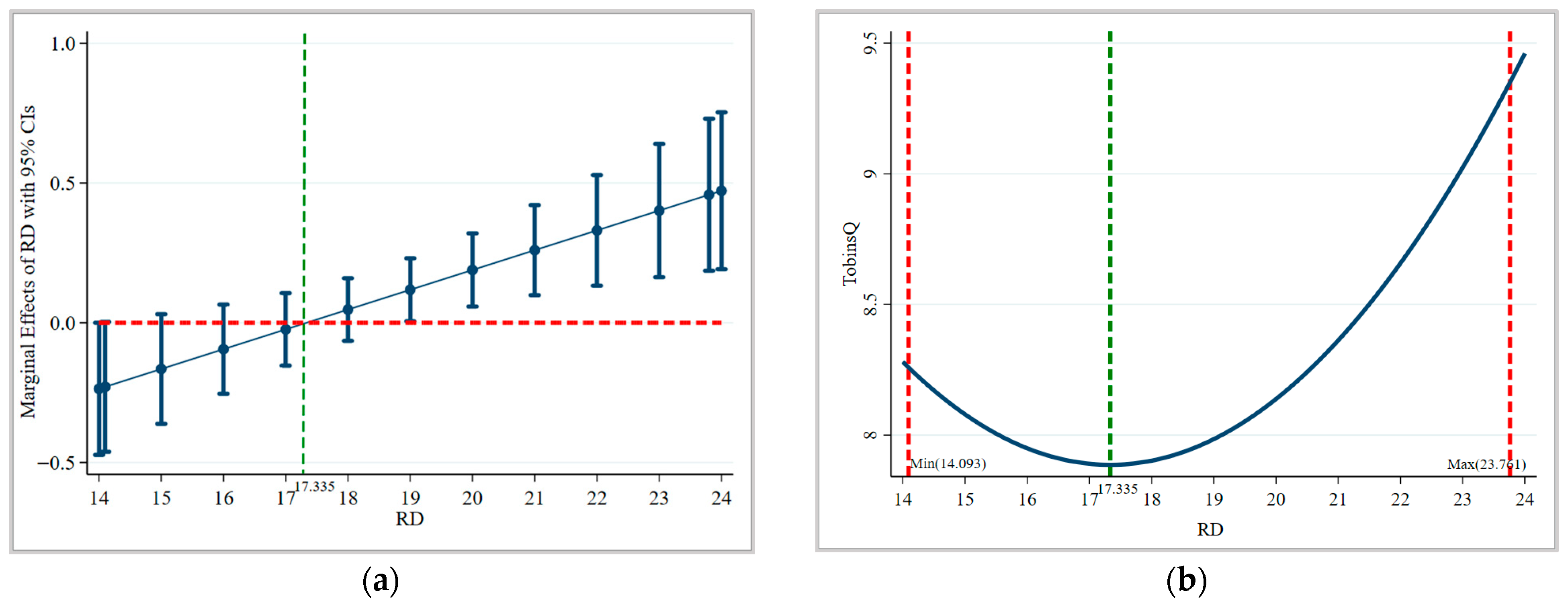
Hypothesis 1a (H1a): Innovation input of NEV enterprises has a U-shaped effect on enterprise value.
Hypothesis 1b (H1b): Innovation output of NEV enterprises significantly increases enterprise value.
2.2. The Influence Mechanism of Innovation on Enterprise Value
This study constructs its theoretical framework by integrating the resource-based view, endogenous growth theory, and Schumpeterian innovation theory. The resource-based view emphasizes that enterprise value depends on the effective allocation and utilization of internal resources, with operational efficiency reflecting firms’ capability to reorganize resources. Endogenous growth theory highlights the cumulative and path-dependent nature of innovation investment, suggesting that its economic effects emerge gradually over time. Schumpeterian theory focuses on the disruptive nature of innovation, indicating that innovation activities may temporarily disturb existing production structures before generating new value. The integration of these perspectives provides a theoretical explanation for the nonlinear effect of innovation input and the value-enhancing role of innovation output.
At the firm level, innovation reshapes production processes, resource allocation, and organizational routines. These changes directly affect operational efficiency, which represents a firm’s ability to transform inputs into outputs effectively. Therefore, operational efficiency can be viewed as a critical internal mechanism linking innovation activities to enterprise value. From the perspective of innovation input, existing studies suggest that the long-term and uncertain nature of R&D investment may temporarily undermine operational efficiency. When a substantial proportion of firm resources is allocated to R&D rather than production and sales, firms may face liquidity pressure and reduced asset utilization efficiency [
27]. Cai et al. [
28] further argue that increasing R&D investment often triggers a reallocation of internal resources, which may disrupt established production routines and weaken operational efficiency in the short run. For NEV enterprises, this effect is particularly pronounced. In the early stages of innovation, firms are often engaged in exploratory technological activities, while key technical barriers have not yet been overcome. R&D investment at this stage may not translate into immediate production expansion or revenue growth [
4]. Moreover, innovation activities usually require the adjustment of production processes, organizational structures, and equipment, which reduces coordination efficiency and increases internal complexity [
29]. As a result, operational efficiency may initially decline.
In the long run, however, sustained innovation input becomes an important driver of efficiency improvement. As firms accumulate technological knowledge and organizational experience, learning effects and scale effects gradually emerge. R&D investment enables firms to optimize factor allocation, improve process management, and reduce unit costs [
30]. For NEV enterprises, continuous innovation enhances technological maturity, product performance, and market acceptance, which strengthens competitive advantage and supports higher operational efficiency [
31]. At this stage, the productivity gains from innovation outweigh the initial coordination and adjustment costs.
Innovation output influences enterprise value through a more direct efficiency-enhancing channel. Innovative outcomes, such as patents, reflect successful knowledge creation and technological application. Prior research shows that innovation output can improve production processes, upgrade management models, and enhance overall operational performance [
32]. Firms with strong innovation output are more capable of attracting external resources and high-quality inputs, which further reinforces operational efficiency [
33]. According to the resource-based view, both tangible and intangible resources, including technological knowledge, are fundamental sources of value creation [
34]. Improvements in operational efficiency indicate that firms are effectively integrating and utilizing these resources in response to external environmental changes. Consequently, higher operational efficiency facilitates the achievement of strategic objectives and contributes to enterprise value enhancement. From this perspective, operational efficiency captures the internal state of the firm during the innovation process. Changes in operational efficiency reflect how effectively firms absorb innovation input and output, and transform innovation into coordinated production and management activities. As such, operational efficiency serves as a key transmission channel linking innovation activities to enterprise value.
Taken together, innovation input does not influence operational efficiency in a static or linear manner. Instead, it initiates an internal adjustment process within the firm. In the early stage, innovation activities disrupt existing production routines and organizational coordination, leading to temporary inefficiencies. As innovation investment accumulates, firms gradually adapt their internal structures through learning, experimentation, and managerial adjustment. Over time, this adaptive process allows firms to reconfigure resources more effectively, transforming initial inefficiencies into productivity gains. The resulting U-shaped pattern therefore reflects a dynamic trade-off between short-term coordination costs and long-term efficiency improvement. Additionally, innovation output can promote operational efficiency more directly. Operational efficiency acts as an important transmission channel through which innovation affects enterprise value. Therefore, we propose the following hypotheses:
Hypothesis 2a (H2a): Operational efficiency mediates the relationship between innovation input and enterprise value, such that innovation input initially reduces operational efficiency, which gradually improves as innovation activities accumulate.
Hypothesis 2b (H2b): Operational efficiency mediates the positive effect of innovation output on enterprise value, such that higher innovation output improves operational efficiency, which in turn enhances enterprise value.
2.3. Moderating Effects of Control Costs and Degree of Market Competition
The relationship between innovation and enterprise value does not operate in isolation but is influenced by both internal organizational conditions and the external market environment. This study examines the moderating roles of internal control costs and the degree of market competition.
- (1)
Moderating effect of internal control costs
According to cost management theory, control costs refer to the expenses incurred by firms in supervising, coordinating, and controlling internal production and organizational activities. These costs reflect managerial efficiency and governance quality and thus shape the effectiveness of innovation activities. On the one hand, innovation re-quires flexibility and timely decision-making, particularly in industries characterized by rapid technological change, such as the NEV sector [
35]. Excessive control costs are often associated with rigid organizational structures and complex approval processes, which reduce decision-making efficiency and delay in-novation implementation [
36]. On the other hand, rising control costs may divert managerial attention away from core innovation and market-oriented activities [
37]. This misallocation of managerial resources weakens the ability of innovation input and output to translate into economic value.
According to the above analysis, when the control cost is too high, innovation activities may face inhibitory effects from management efficiency and decision-making flexibility. This inhibitory effect weakens the role of innovation activities on enterprise value through inefficient resource allocation and decision delay. When a certain control cost threshold is reached, an enterprise’s innovation investment may no longer be an effective driver of enterprise value growth, but may become a burden, leading to a decline in enterprise value. Therefore, we propose the following hypotheses:
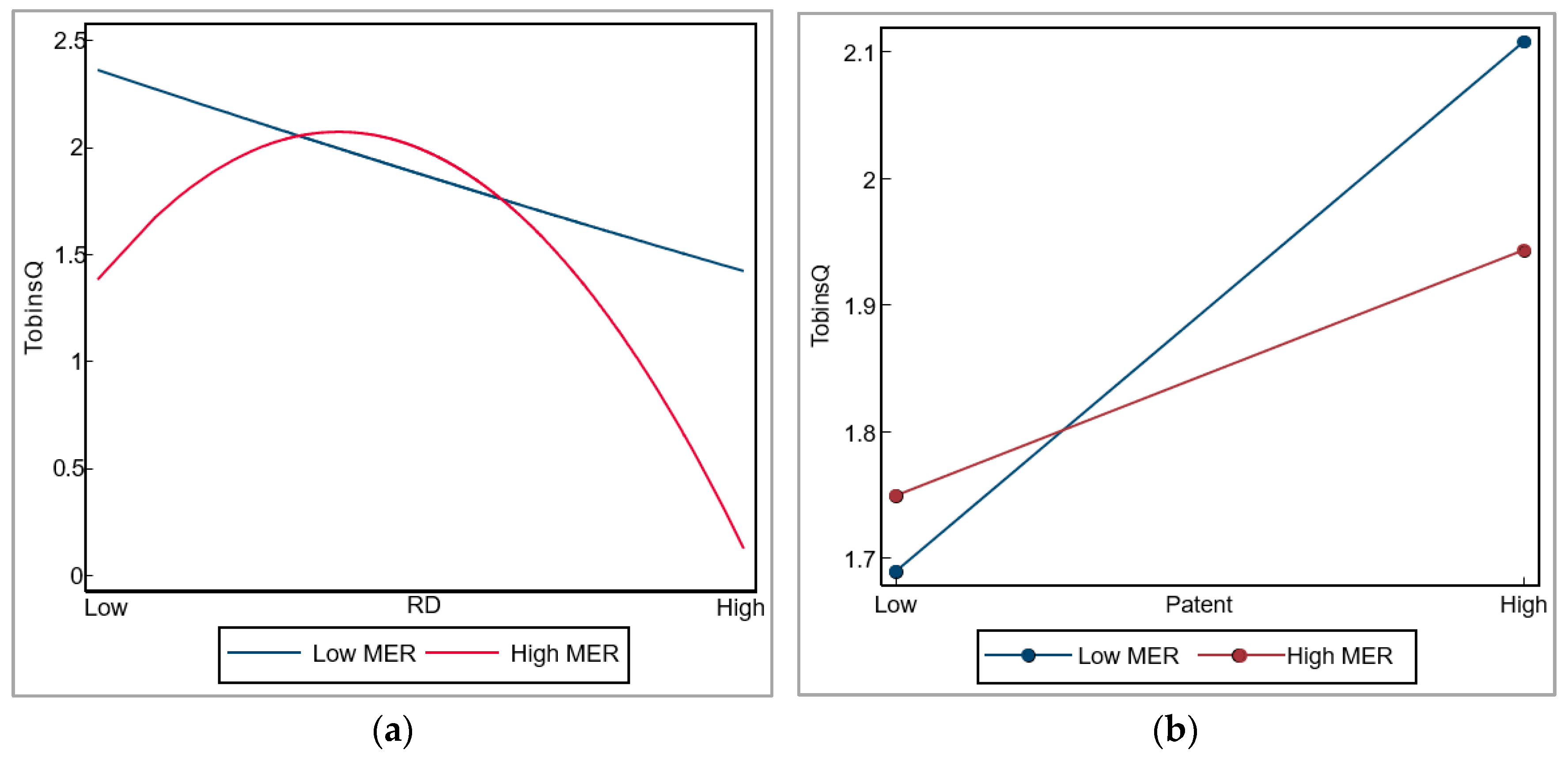
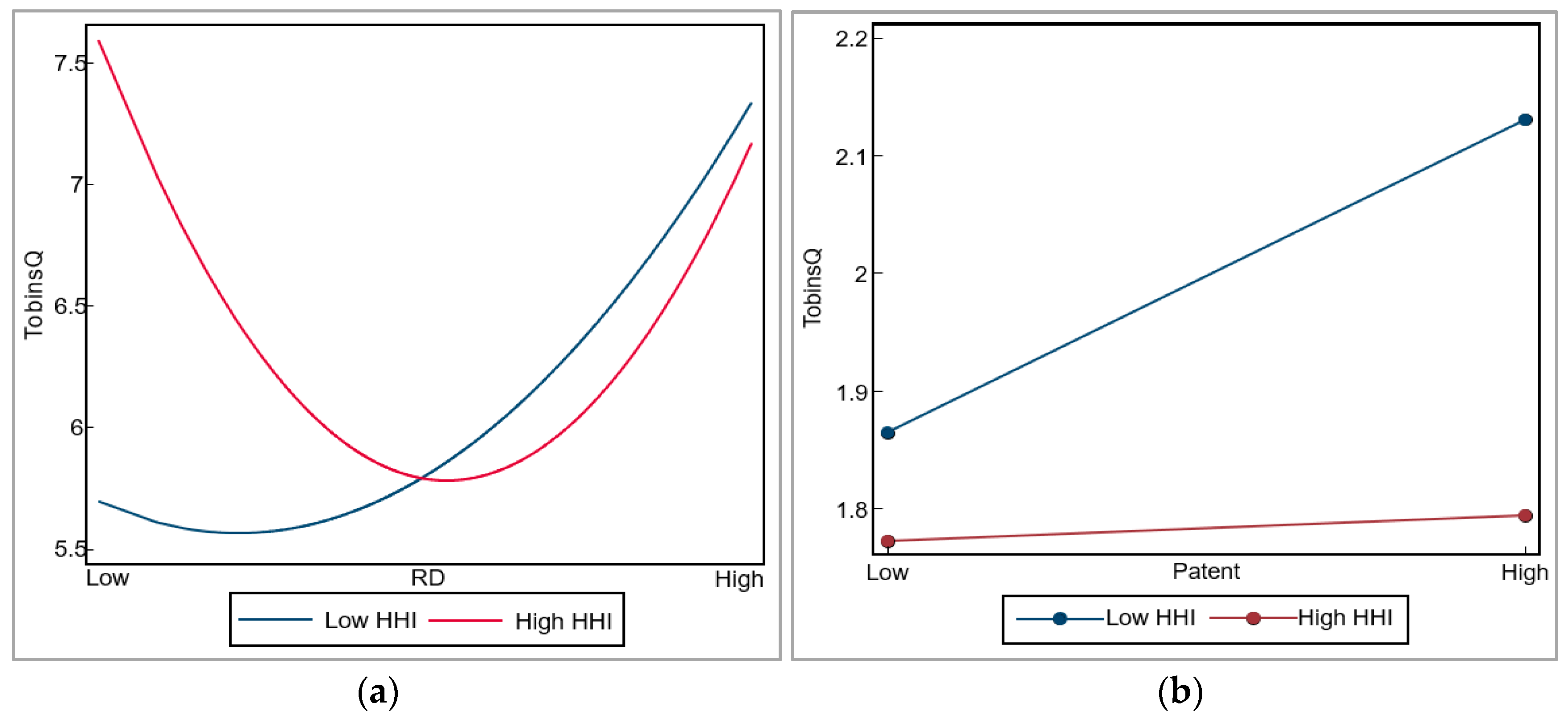
Hypothesis 3a (H3a): Control costs weaken the U-shaped relationship between innovation input and enterprise value.
Hypothesis 3b (H3b): Control costs weaken the positive relationship between innovation output and enterprise value.
- (2)
Moderating effects of the degree of external market competition
Market competition represents a key external condition shaping the innovation–value relationship. In highly competitive markets, innovation remains essential, but its value-creation effect may vary. Some studies argue that intense competition can weaken the impact of innovation input on enterprise value due to technological homogeneity [
38], price competition [
39], and diminishing marginal returns to innovation [
40]. Under such conditions, excessive innovation investment may crowd out resources needed for marketing, supply chain management, or strategic flexibility [
41]. As a result, the value-enhancing effect of innovation input may be weakened.
In contrast, market competition may strengthen the relationship between innovation output and enterprise value. In competitive environments, patents serve as effective tools for protecting technological advantages and differentiating products from competitors [
42]. Innovation output also plays a strong signaling role, conveying information about a firm’s technological capability and growth potential to investors and customers [
43]. Firms with strong patent portfolios are more likely to gain market recognition, attract capital, and enhance brand value, thereby improving enterprise value.
Based on the above analysis, the following hypotheses are proposed:
Hypothesis 4a (H4a): The degree of market competition can weaken the U-shaped relationship between innovation input and enterprise value.
Hypothesis 4b (H4b): The degree of market competition can enhance the positive relationship between innovation output and enterprise value.
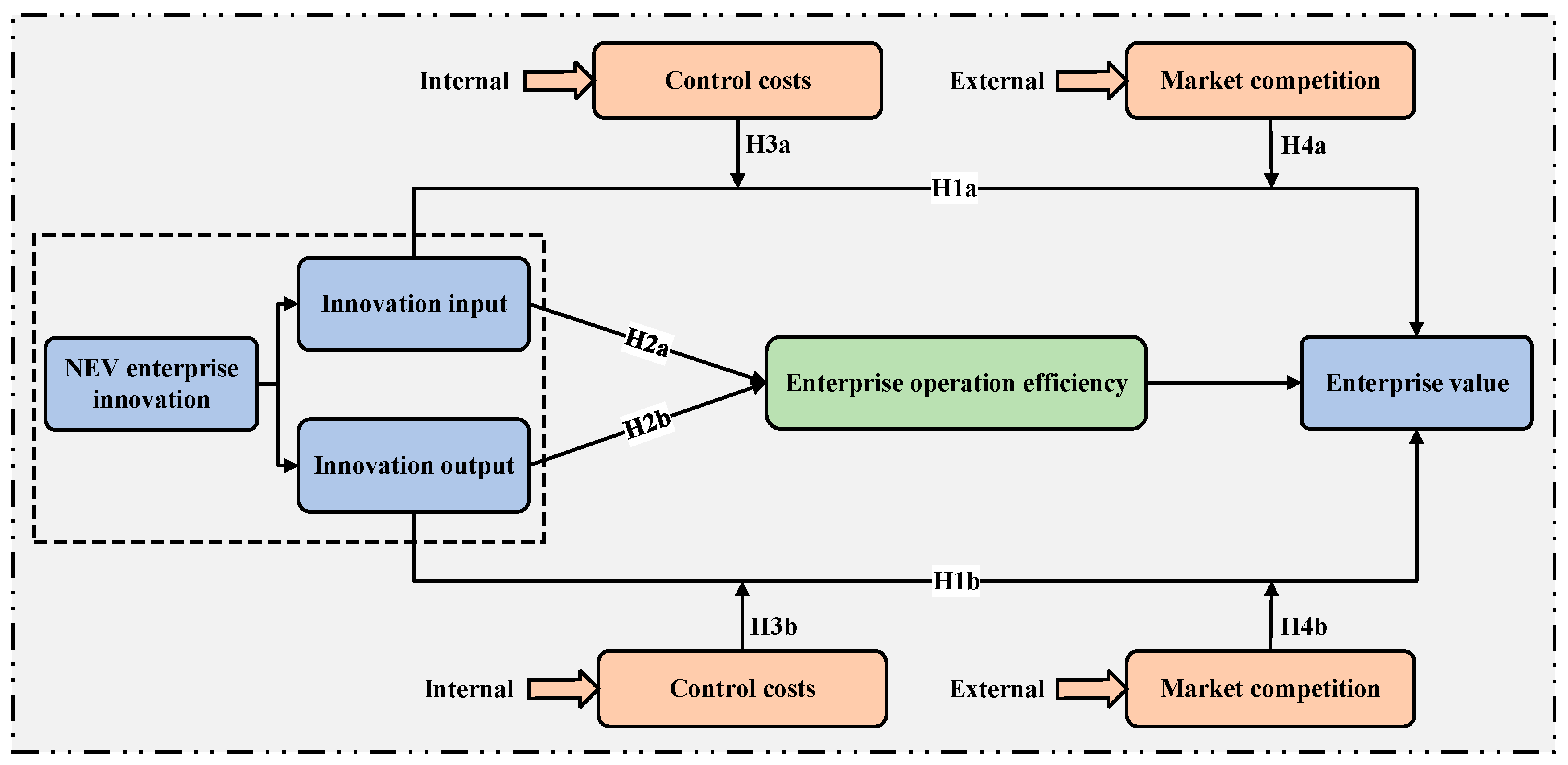
Despite extensive research on the impact of innovation on enterprise value, several issues remain. First, most studies focus on a single form of innovation, such as R&D expenditure or innovation mode, and pay limited attention to a systematic analysis of both innovation input and output, as well as the potential nonlinear effects of innovation input. Second, existing empirical studies are largely concentrated on traditional manufacturing industries or macro-level analyses, while firm-level evidence in the NEV sector remains scarce. NEV enterprises are characterized by high R&D intensity, long innovation cycles, and substantial technological uncertainty, which may cause innovation input to temporarily suppress enterprise value in the early stages before generating positive effects later. Finally, although previous research has suggested that operational efficiency, control costs, and market competition may influence the relationship between innovation and firm value, the combined effects of these internal and external factors in NEV enterprises have not been systematically examined. Building on these considerations, this study analyzes firm-level data from Chinese NEV listed companies, investigating the differential impacts of innovation input and output on enterprise value, the nonlinear characteristics of innovation input, the mediating role of operational efficiency, and the moderating effects of control costs and market competition. Based on this analysis, a theoretical research model is developed, as illustrated in
Figure 1.
6. Discussion
6.1. Theoretical Implications
This study advances theoretical understanding of enterprise innovation and value creation by framing NEV enterprises as adaptive systems rather than static entities. Firstly, it highlights the nonlinear nature of innovation effects, showing that innovation input may initially constrain performance due to disruptions in organizational routines and resource allocations, but ultimately enhances enterprise value through accumulated knowledge and process adaptation [
56]. This dynamic pattern underscores the importance of incorporating feedback mechanisms and path-dependent processes into models of innovation, moving beyond conventional linear or descriptive approaches.
Secondly, by identifying operational efficiency as a mediating mechanism, the study demonstrates how internal organizational capacities translate innovation into measurable performance outcomes. From a systems perspective, operational efficiency reflects the firm’s ability to reorganize internal subsystems—production, coordination, and resource allocation—in response to innovation-induced shocks [
57,
58]. The findings thus extend the resource-based view and endogenous growth theory by linking innovation investment to internal adaptive processes, illustrating how firms achieve sustained value creation over time.
Thirdly, the study reveals that contextual conditions moderate innovation effects, with internal control costs limiting resource flexibility and market competition shaping the external recognition of innovation outcomes [
59]. These results illustrate that innovation performance depends not solely on investment magnitude but on the alignment between internal governance structures and the external environment, emphasizing a systemic view where enterprise value emerges from the interaction of multiple interdependent factors [
60]. By integrating nonlinear effects, internal mechanisms, and contextual moderators, this research provides a more comprehensive conceptualization of innovation as a complex organizational phenomenon.
6.2. Managerial Implications
The findings offer actionable insights for managers and policymakers seeking to enhance enterprise value through innovation. Firstly, firms should recognize the dynamic, non-linear relationship between innovation input and performance, ensuring sufficient investment scale and duration to overcome initial inefficiencies. Managers need to monitor the early-stage impact of innovation on operational efficiency, mitigating potential disruptions through targeted process adjustments and resource allocation strategies.
Secondly, improving operational efficiency is critical for translating innovation into value. Firms can strengthen internal feedback loops by optimizing production processes, enhancing managerial coordination, and fostering organizational learning. Strategic interventions that support adaptive capabilities—such as cross-functional collaboration and technology absorption—can amplify the benefits of both innovation input and output.
Thirdly, innovation strategies must be context-sensitive. High internal control costs can impede value creation, while competitive market conditions influence how innovation outcomes are rewarded externally. Managers should calibrate innovation efforts according to the internal capacity and the competitive landscape, balancing investment intensity with outcome realization. For policymakers, supporting frameworks that reduce operational bottlenecks and encourage knowledge dissemination can enhance the systemic effectiveness of innovation across the industry.
Although the analysis focuses on the NEV industry, the underlying mechanisms identified in this study are not industry-specific. Industries characterized by high technological uncertainty, long innovation cycles, and strong system interdependencies—such as renewable energy, advanced manufacturing, biotechnology, and digital platforms—may exhibit similar nonlinear innovation–value dynamics. The framework proposed in this study can therefore be extended to other sectors to explore how innovation-induced disruptions, organizational adaptation, and feedback processes jointly shape long-term value creation.
7. Conclusions
Based on firm-level data from Chinese listed NEV enterprises (2012–2022), this study examines the nonlinear effects of enterprise innovation on enterprise value, the mediating role of operational efficiency, and the moderating influences of internal and external contextual factors.
The findings show that innovation does not exert a uniform or immediate effect on enterprise value. Innovation input displays a U-shaped relationship with enterprise value, while innovation output has a stable and positive effect. This nonlinearity reflects a dynamic adjustment process within enterprises, where early-stage innovation investment disrupts existing organizational routines and resource allocations, temporarily constraining performance. As innovation accumulates and firms adapt their internal processes, feedback mechanisms gradually restore coordination and efficiency, allowing innovation input to generate value-enhancing outcomes. Innovation output, by contrast, represents realized technological capabilities and signals organizational maturity, enabling a more direct contribution to enterprise value.
Operational efficiency is identified as a key internal transmission channel through which innovation affects enterprise value. From a systems perspective, operational efficiency captures the firm’s capacity to reconfigure internal subsystems—such as production, coordination, and resource utilization—in response to innovation-induced shocks. The mediating results suggest that innovation-driven value creation is not linear but emerges through iterative feedback between technological activities and organizational efficiency.
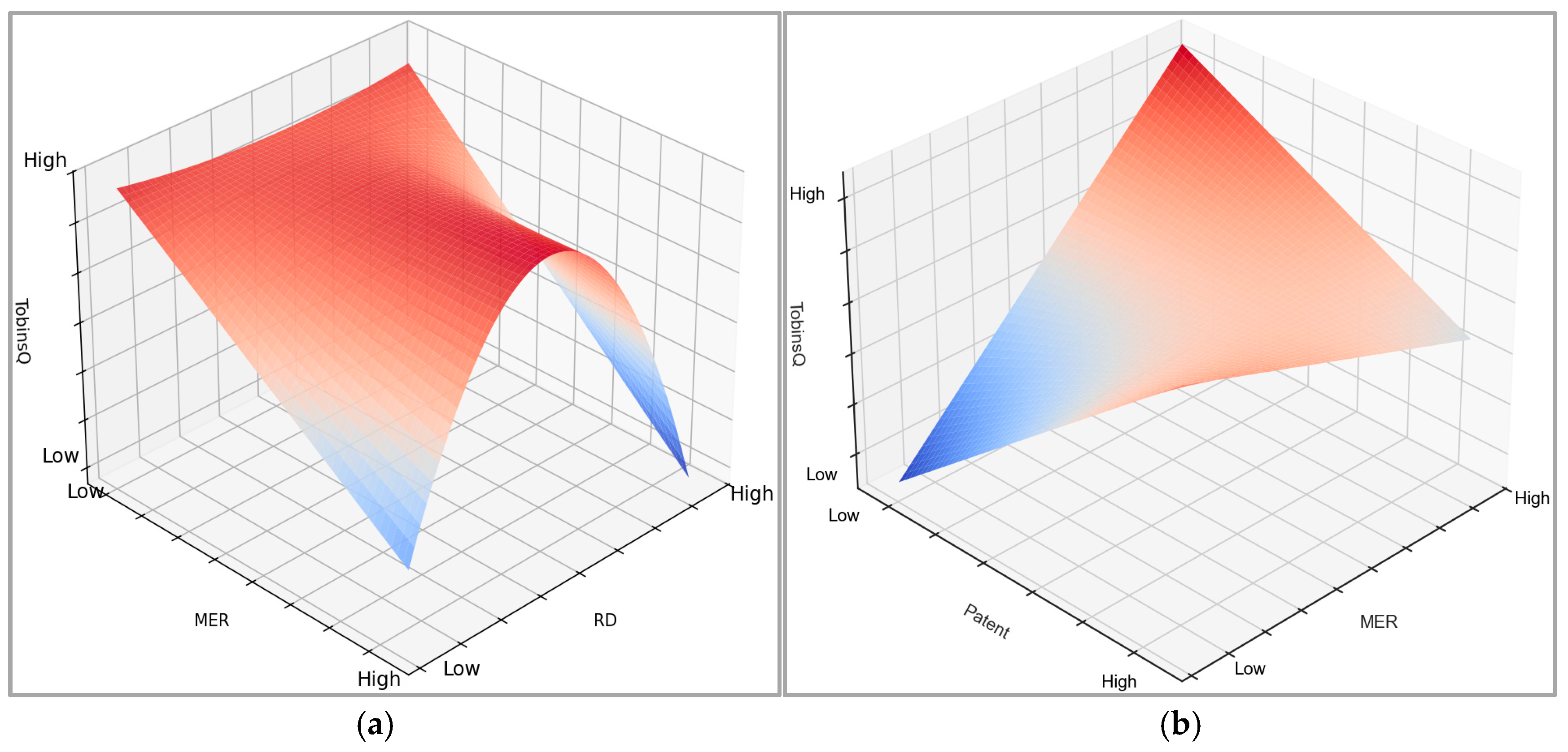
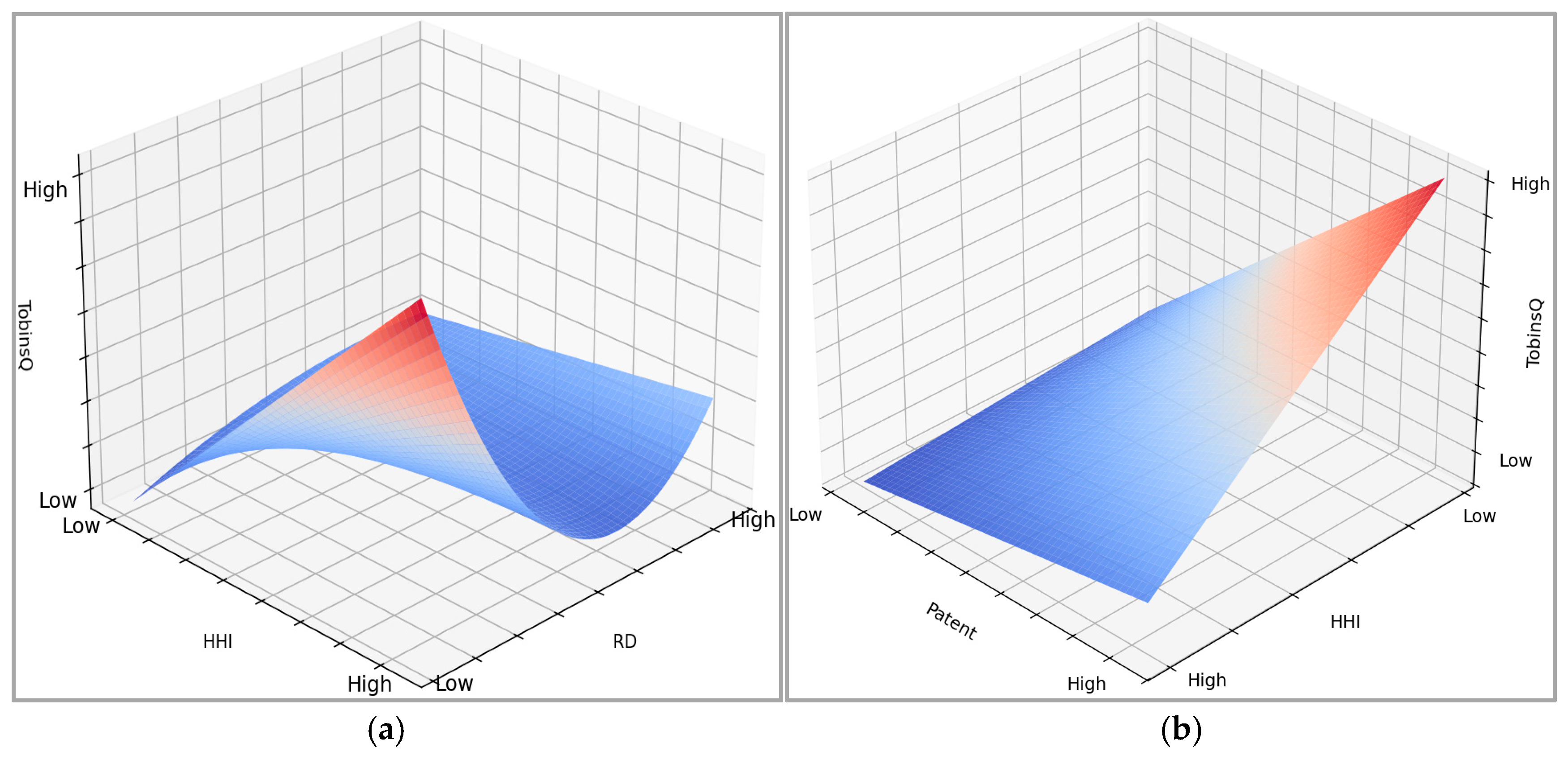
The moderating roles of internal control costs and market competition illustrate that the effectiveness of innovation is context-dependent. High control costs can constrain the efficient use of resources and reduce the value created from innovation, while intense market competition influences how innovation outcomes are rewarded and recognized. These findings suggest that enterprise value is shaped not only by the level of innovation investment but also by the surrounding internal and external conditions that facilitate or hinder the translation of innovation into performance.
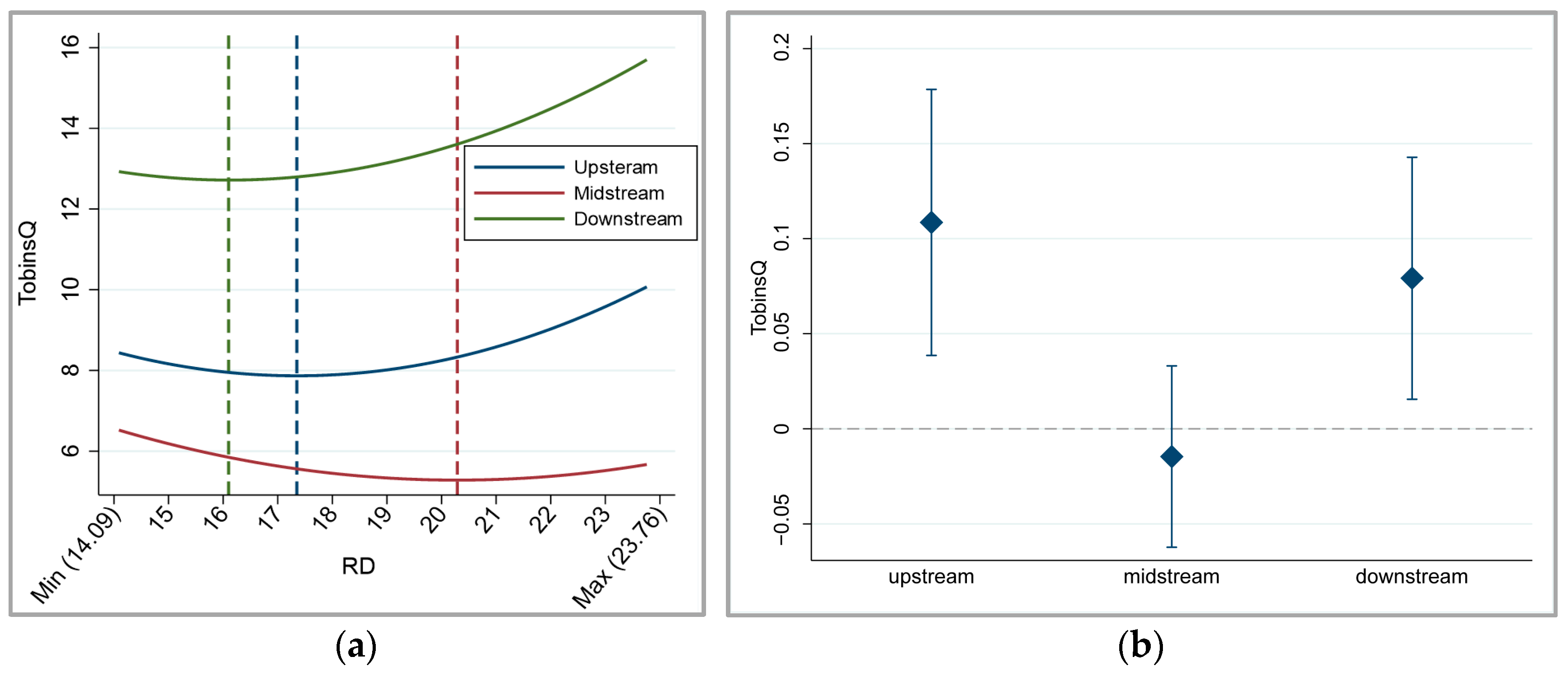
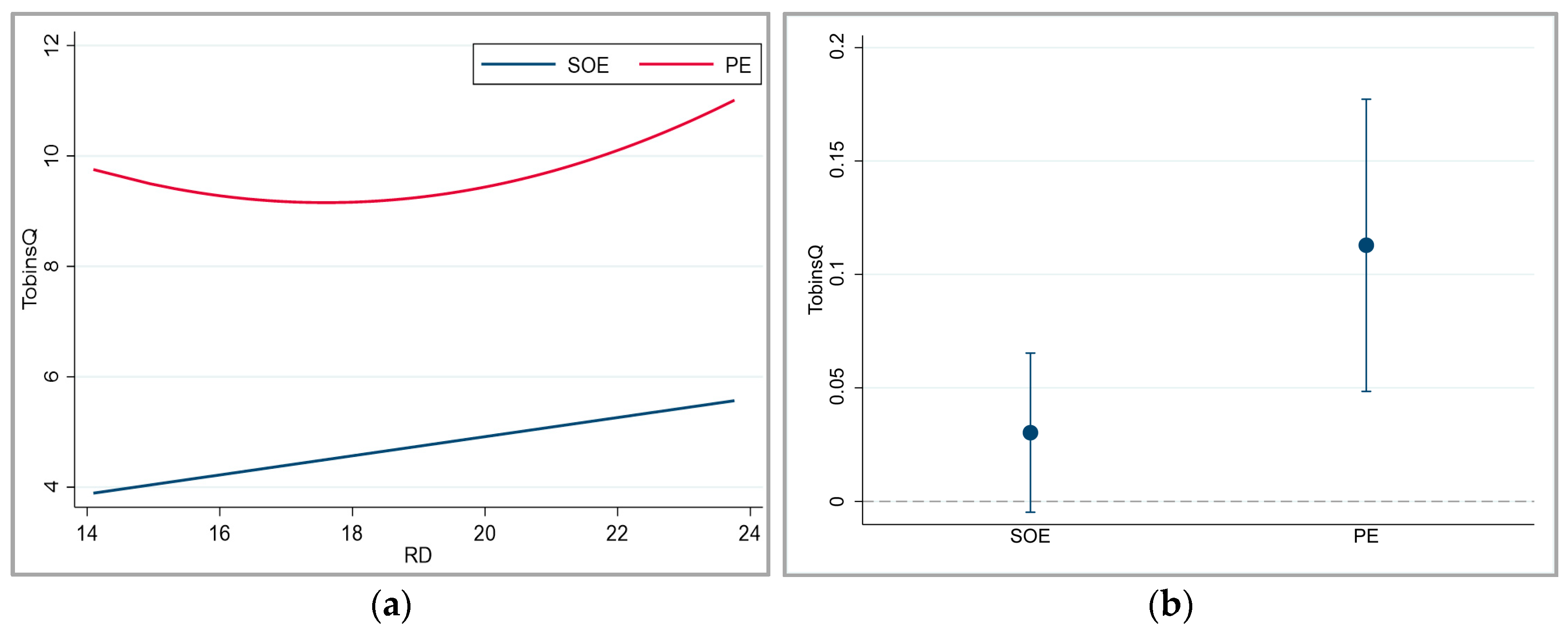
Additionally, the impact of innovation varies across stages of the industrial chain and ownership types. The results show that for both innovation input and output, upstream enterprises—such as component suppliers—experience the greatest value-enhancing effects, while midstream firms, primarily vehicle manufacturers, exhibit smaller impacts. This reflects differences in innovation demands and strategic positioning, with upstream firms needing continuous innovation to secure competitive advantages, whereas midstream firms face lower innovation intensity requirements.
Importantly, the added value of this study lies in integrating nonlinear innovation effects, internal efficiency mechanisms, and contextual moderators into a unified analytical framework. By treating enterprises as adaptive systems rather than static decision-making units, the study advances understanding of why innovation may initially hinder performance yet ultimately enhance enterprise value.
This study has several limitations that suggest avenues for future research. First, the analysis focuses solely on A-share listed NEV enterprises, which excludes unlisted but potentially highly innovative firms, and this may limit the generalizability of the findings to the broader NEV sector and other emerging industries. Second, the study is based on Chinese enterprises, and specific factors such as market structure, regulatory frameworks, and technological maturity may shape the observed relationships. Future research could extend this framework to other countries and high-tech industries, including renewable energy, advanced manufacturing, and biotechnology, to examine whether similar nonlinear innovation–value dynamics and internal mechanisms exist. Finally, while key mediating and moderating factors are explored, innovation remains a complex process, and additional elements such as organizational culture, collaboration networks, or policy support could be investigated to deepen the understanding of how enterprise innovation translates into sustainable value creation.