Article

Research on User Experience of Hotel Service Robots from the Perspective of Human–Machine Collaborative Value Creation

School of Business Administration, Jimei University, Xiamen 361021, China
*
Author to whom correspondence should be addressed.
Systems 2026, 14(2), 177; https://doi.org/10.3390/systems14020177
Submission received: 21 December 2025 / Revised: 20 January 2026 / Accepted: 28 January 2026 / Published: 5 February 2026

Abstract

Although research on hotel service robots has been continuously increasing, the existing literature still lacks a systematic exploration of the multiple concurrent mechanisms involved in the formation of user experience. Based on the theory of value co-creation, this study first extracted the key service robot attributes that affect user experience by analyzing 3200 online user notes from the Chinese platform Xiaohongshu. Then, using 433 valid questionnaires, it employed SEM and fsQCA to examine the influence mechanism of service robot comprehensively attributes on user experience. The results of the SEM study showed that the attributes of perceived usefulness, perceived ease of use, anthropomorphism, and service remediation ability of service robots positively influenced customers’ willingness to co-create value, thereby further enhancing the user experience. The perceived privacy risk attribute did not significantly affect customers’ willingness to co-create value. The fsQCA analysis further identified multiple effective configurations, including antecedent configurations with high customer willingness to co-create value, high usage intention, high satisfaction, and high forgiveness intention as outcome variables. This study, through a combination of methods, revealed the complex experiences users encounter during interactions with service robots and regarded customers’ willingness to participate in value creation as a front-end psychological mechanism, providing a new theoretical perspective on the value co-creation process in human–machine collaboration. At the same time, this study, from the user perspective, provided strategies for optimizing user experience and service deployment for Chinese hotel managers.

1. Introduction

The global service sector is changing due to rapid advances in robotics and artificial intelligence. For example, the hotel industry is increasingly using service robots to improve customer satisfaction and operational efficiency. Due to advancements in computer vision and natural language processing, which have turned robots from purely functional tools into socially interactive service actors, the global service robot market is anticipated to increase from USD 41.5 billion to USD 84.8 billion between 2023 and 2028, according to Markets and Markets [1]. Meanwhile, rising labor costs, labor shortages, and the demand for contactless services following public health events have further accelerated their adoption in hotels [2,3]. Together, technological progress, cost pressures, and external shocks have jointly propelled the rapid diffusion of hotel service robots.
Despite this growth, large-scale implementation of service robots in hotels faces persistent challenges, with insufficient user acceptance and mismatched experience perceptions emerging as key bottlenecks. Even leading hotel brands have encountered high investment costs, limited scenario adaptability, and complex interaction logic, resulting in lower-than-expected usage rates and underutilized equipment [4]. This contradiction between high investment and low efficiency reflects not only a misalignment between technology deployment and hotel operations but also a limited understanding of customer service needs and the mechanisms that shape the customer experience. Consequently, improving the effectiveness of digital transformation in hotels requires identifying the core capabilities of service robots and optimizing their design around the customer experience.
Service-dominant logic (SDL) asserts that value is not solely provided by enterprises but is co-created through service interactions and resource integration [5]. SDL’s notion of value co-creation influences this study, although it does not concentrate on the dynamic progression of the value co-creation process itself. The focus is on elucidating the reasons and conditions under which customers are inclined to engage in co-creation at a perceptual level, specifically examining how the attributes of service robots, as perceived by customers, trigger their psychological mechanisms for co-creation and subsequently connect to user experience outcomes. The incorporation of artificial intelligence into hotel service operations is transforming the primary interactive unit of value co-creation from the conventional “customer-employee” dynamic to a “customer-robot” collaborative relationship [4]. In this context, customers’ perception of service robots as collaborative service partners is primarily contingent on their holistic assessment of the robots’ capabilities and interaction quality [6], encompassing both functional and social interaction attributes, as well as privacy concerns and fault response capabilities [7,8,9]. Despite existing research indicating that partial capabilities can improve customer satisfaction and value co-creation [10], there is a lack of systematic examination of the interplay between multi-dimensional attributes—whether they function complementarily, substitutively, or compensatorily—and their impact on customers’ co-creation psychology and multi-stage experiences through configuration effects.
Capturing the synergistic, complementary, or substitutive interactions among robotic attributes is difficult, as most contemporary research uses symmetry-based methodologies that emphasize the aggregate effects of individual variables. Fuzzy-set qualitative comparative analysis (fsQCA), which emphasizes causal complexity, asymmetry, and equifinality by detecting multiple configurations that lead to the same conclusion, is introduced in this study to address this problem [11]. This study uses a combined SEM–fsQCA methodology to provide a more thorough explanation of intricate mechanisms of human–robot interaction, as fsQCA and structural equation modeling (SEM) complement each other methodologically [12].
This research contributes to three areas: methodology, theory, and practice. This study methodologically integrates SEM and fsQCA to identify various equivalent configurations that can lead to elevated co-creation intentions and favorable experience outcomes, surpassing insights from average net effects and uncovering combinatorial mechanisms that single-path reasoning may overlook. A theoretical framework for derived structural relationships is proposed, inspired by SDL, to integrate the connections among service robot attributes, customer value co-creation willingness, and multi-stage user experience, which is categorized into three dimensions: willingness to use, satisfaction, and willingness to forgive. This framework embodies the rationale for the proposed conceptual sequence, derived from established theories, rather than providing a direct depiction of the temporal evolution of actual service interactions. This study, utilizing user data from Chinese platforms (Xiaohongshu and Credamo), elucidates the effective integration of multi-dimensional robotic attributes within the context of hotel service robots in China, offering hotel managers and robot designers a user experience-focused optimization strategy that underscores contextual alignment. The pertinent findings should primarily be regarded as inspirations for the hotel service environment in China, rather than being immediately applied to the entire hotel business.

2. Literature Review

2.1. Capability Attributes of Hotel Service Robots

Service robots are autonomous systems that perform beneficial tasks for humans in non-industrial service environments (International Federation of Robotics). In hospitality settings, prior studies conceptualize service robots as intelligent and adaptive service interfaces capable of interacting with customers and supporting hotel operations through customer-oriented tasks and natural interaction [13,14]. Emphasizing their social and experiential roles, scholars further note that hotel service robots facilitate information exchange, emotional expression, and relationship building, thereby enhancing customer experience [15]. Drawing on this literature, this study defines hotel service robots as AI-enabled service agents designed for hotel environments that assist or replace human labor and optimize customer experience through intelligent interaction. This study defines hotel service robots as non-autonomous, negotiable collaborators in the hotel environment, rather than as structured, interactive service carriers aimed at promoting customer-driven value creation.
The capabilities of service robots form the foundation for customer service evaluations and user experience [16]. The perceptual attributes of service robots reflect customers’ cognitive assessment of their instrumental value and usage cost. Among them, perceptual usefulness focuses on whether the robot can improve service efficiency and task completion quality [17], while perceptual ease of use focuses on the cognitive and operational burdens required for interacting with the robot [18]. These two types of judgments are not overall attitudes but rather functional and cost-based judgments that constitute customers’ early experience assessment. Based on prior research, this study classifies hotel service robot capabilities into three categories: functional ability, social interaction ability, and trust-building ability [13,15,19]. Functional ability reflects users’ perceptions of usefulness and ease of use, which are central to technology acceptance [20,21]. In hotel contexts, robots that effectively improve service efficiency and reduce interaction effort are more likely to be accepted and continuously used.
Beyond functional performance, the value of hotel service robots also derives from social interaction experiences [22]. Anthropomorphic and perceived social presence represent key social attributes. Appropriate human-like cues can enhance emotional connection and engagement, whereas excessive anthropomorphism may trigger discomfort, requiring a balance between affinity and authenticity [23]. When robots convey social presence through verbal and nonverbal signals, functional interaction can evolve into relational interaction, improving experience quality and satisfaction [24,25]. Anthropomorphism focuses on customers’ attributions of human-like appearance, behavioral patterns, language styles, or personality traits to service robots [26]. At the same time, perceived social presence emphasizes whether customers form social connections during the interaction [8].
Trust-building ability further underpins customers’ evaluations and long-term interaction with service robots [27]. Privacy and data security reduce perceived risk associated with data collection and processing, while effective service recovery helps restore confidence after service failures [28,29]. In experience-oriented hotel settings, robots that ensure data protection and provide reliable recovery responses can mitigate negative experiences and reinforce customers’ trust in both the robot and the hotel brand.

2.2. Value Co-Creation in Human–Computer Interaction

Service-Dominant Logic (SDL) defines value as a procedural phenomenon formed through multi-agent interaction and resource integration in a specific context, rather than the result of unidirectional delivery by the enterprise [5]. From this perspective, customers are regarded as active co-creators of value, and value is generated through continuous interaction, collaboration, and usage practices. Value co-creation has significant procedural, relational, and contextual characteristics, and is difficult to reduce to a single result variable at a single point in time.
However, with the entry of artificial intelligence and service robots into high-contact service scenarios such as hotels, the interactive basis of value co-creation has expanded from the traditional interpersonal service relationship to human–machine service interaction [4]. Unlike human employees with genuine intentions and emotional adaptability, service robots are essentially algorithm-based technical agents, and their interaction patterns are largely preset and programmed [13]. This feature poses a key challenge to the application of classic SDL in human–machine scenarios: whether customers are willing to incorporate service robots into their service collaboration framework. This is a crucial but often overlooked prerequisite. The value co-creation willingness of customers is a voluntary psychological state of preparedness that more directly reflects their readiness to invest cognitive resources, provide information, and adjust their behavior during collaboration with service robots [28,29,30,31,32]. This study limits its research focus to customers’ willingness to co-create value with service robots, defining it as an initial psychological threshold for initiating human–machine collaborative relationships. In the context of service robots, the willingness to co-create value does not occur automatically. Still, it is nested within the structural tension between the logic of automation and the logic of co-creation. The former emphasizes efficiency and task substitution, while the latter stresses customer active participation and meaning construction. Therefore, whether customers regard service robots as collaborative partners rather than automated tools constitutes a key prerequisite for the realization of value co-creation. In the context of technology intermediary services, especially in cross-sectional studies, the construct of value co-creation willingness is widely regarded as the most direct and stable psychological antecedent of subsequent interaction and experience evaluation [29,33].
Based on the above logic, this study aims to explore how the perceptual attributes of hotel service robots shape customers’ willingness to co-create value and regards this willingness as the key proximal mechanism linking the robot’s capabilities to user experience outcomes.

2.3. User Experience

User experience refers to users’ subjective, context-dependent perceptions formed during interactions with products or services [34].In service contexts, it is defined as a multifaceted, multistage construct encompassing cognitive, emotional, and behavioral responses throughout the interaction [23,35]. With the diffusion of intelligent technologies, research has extended this concept to user intelligent experience, which captures individuals’ internal responses when interacting with AI-enabled services and highlights the complexity of experience formation in intelligent service environments [36,37].
Given its dynamic nature, user experience should be examined throughout the service journey [38]. In hotel service robot contexts, experience unfolds across three stages. At the initial contact stage, willingness to use reflects users’ psychological tendency to adopt robot services. It serves as an indicator of early experience quality, shaped by functional perceptions and value co-creation [27,39]. In this study, the intention to use does not merely point to a specific future behavior but rather reflects a behavioral orientation indicating whether customers are prepared to incorporate service robots into their actual service contact process, under the premise of having accepted the collaborative framework. It represents a key node in the transition from mental preparation to action decision-making, rather than the result of use [40]. This construct reflects the judgment of participation threshold formed by customers after they comprehensively perceive usefulness, ease of use, and readiness for value co-creation, and plays a key role in connecting the pre-assessment with the subsequent experience in the process of experience formation. Satisfaction during service consumption reflects users’ comprehensive assessment of service performance and is enhanced when consumers experience autonomy and significant involvement in value co-creation [10,41]. At the feedback evaluation stage, willingness to forgive represents users’ tolerance toward service failures. It reflects experience resilience, which is enhanced when customers understand system limitations and perceive themselves as co-creators rather than passive recipients [41,42,43]. The willingness to forgive is the tendency of customers to accept and move past a service failure caused by a service robot, without developing persistent negative behavioral intentions. This tendency mainly stems from customers’ understanding of the robot’s technical limitations and their self-perception of their role in the collaborative service process [44].

3. Research Design

Customer–robot collaboration lies at the core of value co-creation, making it essential to identify combinations of robot attributes that facilitate customer participation [45]. Most prior studies on service robot user experience rely on symmetric, variable-centered methods such as SEM or regression, which estimate the average net effects of individual predictors and are effective for testing directional hypotheses [46]. However, these approaches are limited in their ability to capture the complexity and heterogeneity of customer responses in robot service contexts. Conversely, fuzzy-set qualitative comparative analysis (fsQCA) is an asymmetric, configuration-centric approach that examines how combinations of variables yield the same conclusion, rather than focusing on individual net effects [47,48]. By revealing multiple causal pathways and interaction patterns, fsQCA complements symmetric methods and enables a more comprehensive understanding of value co-creation mechanisms. Accordingly, this study combines symmetric and asymmetric approaches to jointly uncover both the net effects of key variables and their configuration effects across alternative causal scenarios [49].

3.1. Study 1 Identifies the Core Capability Attributes of Hotel Service Robots Based on Text Evidence

3.1.1. Sample Selection and Data Collection

In accordance with [50]’s suggestions for researching naturally occurring data on digital platforms, this study used user comments on Xiaohongshu as the data source. This platform is built on the sharing of real experiences. It features rich user content and detailed scenarios, making it suitable for extracting customers’ genuine perceptions and evaluations of service robots. Screen texts containing keywords such as “restaurant robots”, “service robots”, “hotel robots”, and “intelligent services”, and construct a research corpus. As of 24 April 2025, we have collected a total of 3072 published notes, deleted some duplicate notes, and obtained 2989 notes, totaling 564,981 words.

3.1.2. Topic Identification and Data Encoding

This study employed the six-stage inductive thematic analysis proposed by [51]. The research team first familiarized itself with the data through repeated readings, followed by open coding of textual comments using Excel to identify meaningful semantic units. These initial codes were then integrated through axial coding to form higher-order themes and sub-themes, guided by both data content and relevant literature to ensure theoretical saturation. To improve coding rigor, two researchers independently coded 10% of the data, resulting in a Cohen’s Kappa of 0.90, indicating exceptional inter-coder reliability [52]. Discrepancies were addressed through dialogue, leading to the refinement of the coding framework. This iterative process ultimately yielded five key themes, which were reported with representative excerpts to ensure transparency and analytical robustness.

3.1.3. Results

Examining user comments on the domestic Xiaohongshu platform about hotel service robots revealed three primary areas of customer concern: functionality, sociality, and safety. This procedure ensures that the study model is grounded in customers’ genuine perceptions and experiences, rather than the researchers’ subjective interpretations. When using hotel robot services, customers’ perceptions of six attributes were considered: perceived usefulness, perceived ease of use, Anthropomorphism, perceived social presence, perceived privacy risks, and service recovery capabilities, as shown in Table 1.
This provides a clear basis for variable measurement for the model construction of Study 2. Therefore, Study 2 will construct a structural equation model based on the above six attributes and the value co-creation theory to verify its mechanism of action.

3.2. Study 2: SEM Analysis of the Attributes of Hotel Service Robots on User Experience

3.2.1. Research Model and Hypothesis Development

Attributes of Service Robots and Willingness to Co-Create Value
(1)
Functional attributes
Perceived usefulness and ease of use are common characteristics of service robots, according to the Technology Acceptance Model [20,21]. Perceived ease of use gauges the effort required to interact with robots, whereas perceived utility reflects consumers’ perceptions of robots’ potential to enhance service performance and efficiency. Prior studies identify these perceptions as core technical factors shaping user interaction experience and behavioral responses in service robot contexts [14,27,53]. Beyond influencing acceptance, ease of use reduces users’ cognitive burden and facilitates active interaction, while perceived usefulness enhances trust in robot-assisted services and motivates deeper engagement. Together, these functional perceptions stimulate users’ participation motivation and provide a cognitive foundation for value co-creation, transforming users from passive recipients into active contributors [13,54,55]. Therefore, it is expected that perceived usefulness and perceived ease of use will favorably influence customers’ inclination to co-create value.
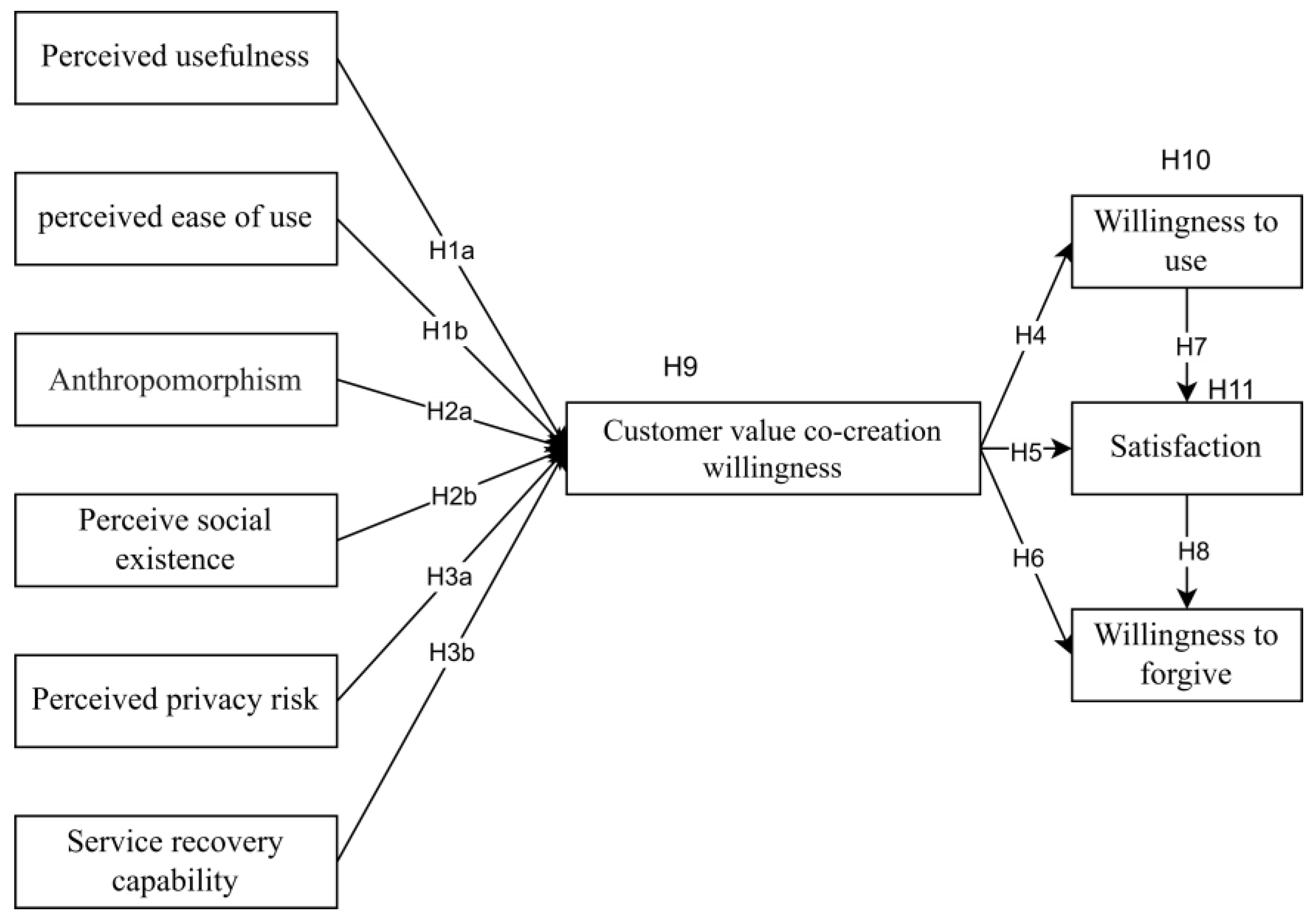
H1a. 
Perceived usefulness has a favorable impact on customers’ value co-creation willingness.
H1b. 
Perceived ease of use has a favorable impact on customers’ value co-creation willingness.
(2)
Social interaction attribute
Beyond functional roles, service robots also act as social interaction agents. Social interaction attributes are commonly conceptualized as Anthropomorphic and perceived social presence. Anthropomorphic is the extent to which robots display human-like behaviors, appearances, and emotional indicators, which can boost users’ trust and willingness to engage in more in-depth interactions [14,56]. Human-like interaction encourages customers to express preferences, provide feedback, and actively participate in service adjustments, thereby facilitating value co-creation, particularly in experience-oriented contexts such as hotels [57,58,59]. Perceived social presence reflects users’ feelings of presence and companionship during interaction with robots and is shaped by interactive cues such as voice, responsiveness, and feedback quality [24,60]. By enhancing social identification and transforming robot-assisted services from one-way delivery to a collaborative process, high levels of perceived social presence increase interaction satisfaction and motivate clients to engage in value co-creation [54,60] actively. Accordingly, Anthropomorphic and perceived social presence are expected to influence customers’ value co-creation positively. In the context of human–machine services, perceived ease of use creates feasible conditions for customers to participate in robot services by reducing cognitive burden and operational friction. Perceived usefulness enhances customers’ judgment of the significance of their participation by strengthening their understanding of the robot’s functional value. These two types of functional evaluations do not directly represent participation behaviors but provide cognitive prerequisites for whether customers are willing to enter the co-creation process.
H2a. 
Anthropomorphism positively affects customers’ willingness to co-create value.
H2b. 
Perceiving social existence has a favorable impact on customers’ value co-creation willingness.
(3)
Trust security attributes
Trust is a critical prerequisite for customers’ participation in value co-creation in human–robot interaction contexts. Customers often perceive risks related to privacy, information security, and potential service failures when interacting with service robots, which can undermine their willingness to engage [61,62]. Because personalized robot services require the collection and processing of personal data, concerns about privacy and data protection are particularly salient [61]. In addition, service recovery capability—defined as robots’ ability to promptly and effectively respond to service failures—plays a crucial role in sustaining trust in automated service settings [62]. Effective and caring recovery responses can strengthen customers’ emotional bonds and tolerance toward service robots, encouraging continued interaction and active participation in service improvement [63]. It is expected that consumers’ willingness to co-create value will be enhanced by privacy protection and service recovery capabilities.
H3a. 
Perceived privacy risk has a negative impact on customers’ value co-creation willingness.
H3b. 
Service recovery capability positively affects customers’ willingness to co-create value.
User Experience
User experience in service scenarios is a value analysis system centered on users that covers the entire process and results [38]. The value co-creation willingness and usage willingness in this study are not equivalent in terms of theoretical level and function. Value co-creation willingness reflects customers’ willingness to engage with service robots in a collaborative mindset. It is a pre-interactive preparation state, while usage willingness is the decision-making orientation of customers toward specific interactive behaviors after the activation of this collaborative framework [4,8]. A high level of willingness to co-create value means that customers are mentally prepared to invest cognitive and behavioral resources in collaborative interactions. This state of preparation makes them more inclined to actively understand and use the system functions, thereby strengthening their willingness to do so. Therefore, we assume:
H4. 
In theory, customers’ willingness to co-create value has a positive impact on their willingness to use.
When customers participate in services within a collaborative framework, their interactions are more autonomous and participatory. This kind of co-creation-based experience can better meet customers’ psychological needs, thereby enhancing their overall evaluation of the service. Therefore, we assume:
H5. 
Customers’ willingness to co-create value has a positive impact on their satisfaction.
The willingness to co-create value not only influences immediate usage and evaluation but also lays the foundation for long-term relationships. Customers with a co-creation orientation often have more reasonable expectations and a better understanding of the service robots’ capability boundaries, which makes them more likely to adopt an inclusive interpretation when facing service failures. Therefore, we assume:
H6. 
Customers’ willingness to co-create value has a positive impact on their willingness to forgive.
In relevant research on interactive scenarios, satisfaction is often treated as the independent variable for willingness to continue using the system. However, this study focuses on the early interaction stage between users and service robots, where customers often have not yet formed stable experience evaluations. In this context, the intention to use is closer to an interactive orientation than to a behavioral outcome [64,65]. From a cognitive psychology perspective, users’ initial willingness to use service robots is driven by positive anticipation of technical efficiency, ease of use, and interaction value. This anticipation forms a cognitive baseline. When the actual usage experience meets or exceeds this baseline, it triggers a positive confirmation effect, thereby strengthening satisfaction. Based on expectation confirmation theory [66], satisfaction depends on the cognitive comparison of system performance with the user’s prior expectations. High matching or positive differences will reduce the cognitive resistance to forming a satisfaction judgment, thereby increasing satisfaction and subsequent behavioral intentions. At this stage, users’ willingness to interact and accept precedes the formation of satisfaction evaluations. Under the premise that the collaboration framework has been activated, a higher willingness to use it is usually accompanied by stronger motivation to participate and a more positive attitude towards the experience [67]. This orientation will affect customers’ emotional investment during the interaction process and, in turn, manifest as a positive structural correlation between usage intention and satisfaction in cross-sectional data. Higher satisfaction, on the other hand, accumulates goodwill, making customers more inclined to forgive when they encounter problems. Therefore, we propose:
H7. 
The initial willingness to use has a positive impact on customer satisfaction.
H8. 
Customer satisfaction positively influences the willingness to forgive.
The Mediating Role of Value Co-Creation
Drawing on Service-Dominant Logic, value is not embedded by firms but co-created through customers’ active participation during use [5]. This logic is especially salient in service robot contexts, where the realization of robot value depends on customers’ engagement in interaction and resource integration [24]. Unlike interpersonal services, service robots operate through standardized, programmed mechanisms and therefore rely on customers to input information, cooperate with service processes, and provide feedback, which constitutes value co-creation behavior [4]. Accordingly, the perceived attributes of service robots do not directly translate into customer outcomes; instead, they first stimulate a willingness to co-create value, thereby activating the potential value embedded in robot attributes. This willingness, in turn, promotes positive usage intentions and experience evaluations, mediating the effects of robot attributes on customers’ willingness to use, satisfaction, and forgiveness. Moreover, customer responses follow a progressive process from behavioral intentions to emotional evaluations and relational attitudes: willingness to co-create value enhances willingness to use, which contributes to higher satisfaction through accumulated interaction experiences, and greater satisfaction subsequently increases customers’ tolerance and forgiveness toward service failures or limitations. Based on the above logic, the following assumptions are thus proposed:
H9a. 
Customer value co-creation mediates the relationship between perceived attributes and the willingness to use service robots.
H9b. 
Customer value co-creation and the willingness to use play a sequential mediating role between the perceived attributes and satisfaction of service robots.
H9c. 
Customer value co-creation mediates the chain linking the perceived attributes of service robots to their willingness to forgive.
H10. 
The willingness to use plays a mediating role between the willingness to co-create customer value and satisfaction.
H11. 
Satisfaction plays a mediating role between the willingness to use and the forgiveness of hospitals.
Based on the previously described study hypotheses, a model was constructed using structural equations to analyze the characteristics of the hotel service robot user experience mechanism from the perspective of human–machine collaborative co-creation of value, as shown in Figure 1:

3.2.2. Questionnaire Design and Collection

This research questionnaire is divided into two sections: the first section discusses basic demographic traits, such as gender, age, and educational attainment. Perceived usefulness (three items) and perceived ease of use (four items) [20,21], anthropomorphism (four items) [68], privacy security (four items) [69], service recovery capability (three items) [70], and customer value co-creation (five items) [71].User experience value is composed of three variables: willingness to use (3 items) [72], satisfaction (3 items) [72], and willingness to forgive (3 items) [70], as shown in Table 2.
It should be noted that the measurement items for value co-creation willingness in this study mainly reflect customers’ psychological preparation and behavioral tendencies towards participating in collaboration, such as expressing willingness to cooperate, providing feedback, or recommending services. These items aim to capture an anticipatory sexual orientation towards future interactions rather than a post-event evaluation of existing service outcomes.

3.2.3. Research Samples

An online poll on Credamo served as the foundation for the primary study. A total of 131 individuals were recruited by Credamo, a Chinese research site that offers paid data-gathering services [73]. From the end of June to the beginning of July 2025, this study performed a survey. The survey questionnaire was designed and distributed via a fillable link and QR code on the “Credamo” platform. Users were invited to complete the questionnaire one-on-one, and the questionnaire was distributed via the data mart to assess the reliability and validity of each variable. To ensure the authenticity and validity of the research results, a brief description of hotel service robots and relevant images of the robots in action were included at the beginning of the questionnaire. Have the respondents immerse themselves in a specific scenario: staying in a smart hotel and experiencing the interactive services provided by service robots. Throughout the process, the service robots, powered by artificial intelligence, aim to understand your needs and respond accordingly. Sometimes it can react quickly to your instructions and complete the task. Still, there may also be situations where there is a misunderstanding or inadequate service (such as incorrect delivery, slow response, etc.). In such cases, the robot will try to make amends through voice, screen, or other means, such as apologizing, explaining, or re-executing the service process. Finally, the respondents completed the questionnaire honestly. A total of 476 questionnaires were gathered for this survey. After excluding respondents with excessively brief response times, those who did not pass the screening item test, and those exhibiting evident logical inconsistencies in their data, a total of 433 valid questionnaires were ultimately collected for this study. The questionnaire’s validity rate is 83%. Table 3 presents the demographic data of the respondents.

3.2.4. Evaluation of Reliability and Convergent Validity

According to the suggestions of [46], the reliability and validity of the measurement model were evaluated in this study (Table 2). All project loads were greater than 0.7; the combined reliability of the planes and Cronbach’s α were both greater than 0.7; and the average extracted variance for each plane was greater than 0.5, indicating that the model has good reliability and convergence validity [46]. This research utilized the heterotrait–monotrait ratio (HTMT) and the Fornell-Larcker criterion to evaluate discriminant validity [74]. Table 4 shows that the square roots of the Average Variance Extracted (AVE) exceed the correlation coefficients, and all HTMT ratios are below the 0.90 threshold, indicating that the measurement model exhibits discriminant validity [46,75]. The study also assessed the bias of the data related to the homologous approach. The single-factor Harman analysis revealed that the first factor accounted for 32.351% of the variance, which did not meet the 40% threshold, and no substantial common method variance was identified. CMV [76].

3.2.5. Exploratory Factor Analysis

To test the scale’s structural validity and the discriminant validity of the latent variables, this study conducted an exploratory factor analysis (EFA) of all 36 measurement items. Firstly, the KMO test and Bartlett’s sphericity test are used to determine whether the data are suitable for factor analysis. The results show that the KMO value is 0.924, exceeding the 0.7 threshold. The approximate chi-square value for the Bartlett sphericity test was 9271.398 (df = 630, p = 0.000), indicating a significant level of correlation among the variables and making it suitable for factor analysis. The principal component analysis method was adopted to extract the factors, and the maximum variance method was used for rotation. Eventually, 10 factors with feature roots greater than 1 were extracted, and the cumulative interpreted variance was 74.233%. Among them, the three constructs of the willingness to co-create value, VC, WU, and SA, belong to different factors, respectively, indicating that the scale has good discriminative validity. The three constructs are statistically independent latent variables. In addition, the common factor variances (commonalities) across all items are greater than 0.5 (range 0.573–0.865), indicating that the extracted factors can effectively explain each item’s variation and further supporting the stability and explanatory power of the factor structure.

3.2.6. Structural Model Evaluation

Before evaluating and validating the structural equation model’s path, the model’s fit must be assessed. A higher degree of fit indicates a stronger correspondence between the factor structure model and the original data. The chi-square to degrees of freedom ratio (χ2/df) for this model is 1.461, indicating an optimal fit as it is below 3. The GFI, IFI, TLI, and CFI indices all surpass 0.90. The RMSEA index is 0.033, beneath the threshold of 0.08, indicating a robust model fit (see Table 5).
Path analysis was performed in AMOS 25.0 to estimate the structural equation model, and the results are presented in Table 6. PU positively influences VC (β = 0.189, p < 0.01), and PE positively influences VC (β = 0.221, p < 0.001), hence corroborating H1a and H1b. PSP has a positive impact on VC (β = 0.163, p < 0.01); AN has a positive impact on VC (β = 0.170, p < 0.01); PS has a negative impact on VC (β = −0.021, p > 0.5). These results support H2a and H2b. It does not significantly support H3a. SR positively affects VC (β = 0.263, p < 0.001), supporting H3b. VC positively affects willingness to use (β = 0.742, p < 0.001) and satisfaction (β = 0.322, p < 0.001). VC positively affects WF (β = 0.467, p < 0.001), supporting H4, H5 and H6. WU positively affects satisfaction (β = 0.355, p < 0.001), and satisfaction positively affects WF (β = 0.313, p < 0.001), supporting H7 and H8. Most of the hypotheses proposed in this study have been supported. Overall, except for the PS and VC paths, all other preset paths hold. Among them, SR and PE are the core elements that stimulate VC, and VC’s effect on willingness to use is the most significant. This provides empirical support for understanding the interaction mechanism between variables and formulating relevant strategies. The significant paths observed in the structural equation model do not imply empirical confirmation of the true temporal sequence between constructs. These results indicate that the proposed path structure is consistent with the inferences of existing theories regarding the sequence of customers’ psychological responses.

3.2.7. Mediating Effect Test

Based on the structural equation model, the research verified the mediating effect of VC across multiple paths using 5000 self-sampling responses (see Table 7). Among the three logical chains with “willingness to use”, “satisfaction”, and “willingness to forgive” as the outcome variables, PU, PE, AN, and SR all have significant positive mediating effects through VC. Their 95% confidence intervals do not include 0, and all p values are less than 0.05. Among them, the mediating effect of SR on the WU was the largest (β = 0.195, 95%CI = [0.069, 0.332]), followed by the mediating effect of PU on SA (β = 0.071, 95%CI = [0.014, 0.170]); The two paths of PSP and PS failed the significance test, with their confidence intervals spanning 0 and p-values much greater than 0.05. Furthermore, VC further positively influences SA through the WU (β = 0.264, 95%CI = [0.123, 0.444]). WU also positively influences the WF through SA (β = 0.111, 95%CI = [0.022, 0.251]). Overall, VC is a key hub that connects system attributes with subsequent psychological and behavioral responses, whereas PS and PSP have limited activation effects on this hub. The results support a theoretically consistent pathway in which perceived attributes are sequentially associated with value co-creation willingness, which in turn is associated with usage intention, satisfaction, and forgiveness. This conclusion reveals the intrinsic mechanism by which the technical attributes of service robots enhance customers’ user experience and brand tolerance by stimulating their active participation in co-creation behavior.

3.3. Study 3: fsQCA Analysis of the Impact of Service Robot Attributes on Customer User Experience

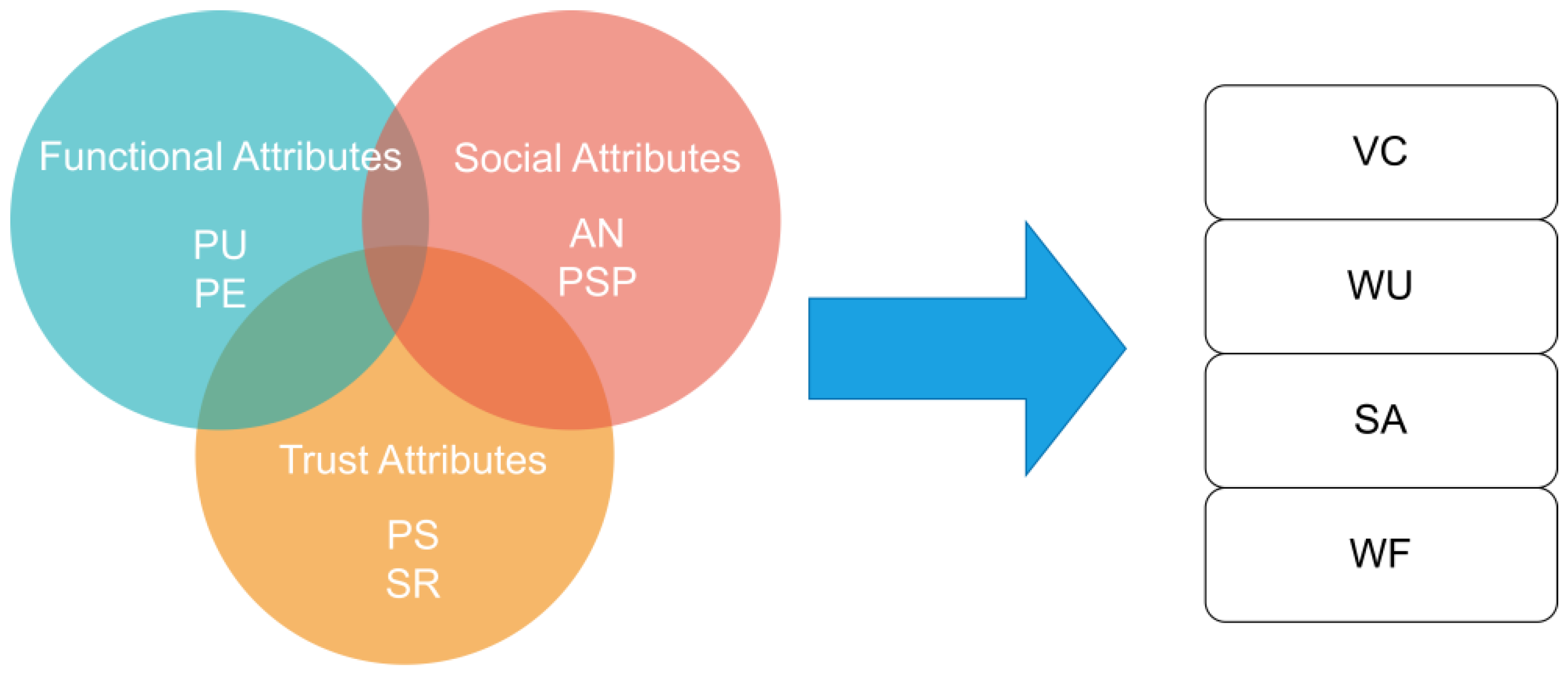
The introduction of the fsQCA method in this study is not merely a supplement to SEM, but rather is based on the fact that, in the context of service robots, the formation mechanism of user experience may simultaneously involve equivalent paths, condition complementarity/substitution, and asymmetry. Compared with SEM, which emphasizes the average net effect, fsQCA is better suited for testing whether different combinations of conditions can yield the same experience outcome under the theoretical assumption, thereby being closer to the complex reality of human–machine collaborative services (Figure 2).

3.3.1. Variable Calibration

This study adopts the direct calibration method (calibrate function) in the fsQCA 4.1 software. The calibration process requires setting three anchor points: the complete non-membership threshold, the intersection point, and the complete membership threshold. Based on the actual distribution of the sample data, we set these three anchor points as the 5th percentile, the 50th percentile (median), and the 95th percentile for each variable, respectively [11]. In the absence of clear exogenous standards or objective critical values, quantile calibration can preserve sample distribution characteristics while avoiding extreme values from dominating the calibration results, thereby providing a relatively robust basis for membership classification in configuration analysis. To ensure that all cases were included in the subsequent analysis, a fine-tuning of +0.001 was made to the cases whose membership degree after calibration was exactly 0.500. The anchor points set in this article are shown in Table 8.

3.3.2. Necessity Analysis

The analysis of necessary conditions indicates that the consistency of all condition variables is less than 0.9 (see Table 9), and there are no essential conditions that constitute high willingness to co-create value, high willingness to use, high satisfaction, and high willingness to forgive [11].

3.3.3. Sufficiency Analysis

Using Boolean minimization based on counterfactual analysis, three types of solutions were generated: complex, intermediate, and parsimonious [12]. Conditions appearing in both the intermediate and parsimonious solutions were identified as core conditions, whereas those appearing only in the intermediate solution were treated as peripheral [77]. Due to the varying proportions of cases with high degrees of membership in the results, different frequency thresholds are used for other outcome variables in this study. Variables with fewer cases and high scores require lower frequency cutoffs to ensure the analysis captures relevant configurations without being limited by overly high thresholds [78,79].
Antecedent Configuration with High-Value Co-Creation as the Outcome Variable
Following prior studies, the frequency threshold was set at 6, the consistency threshold at 0.85, and the PRI consistency at 0.75 [47]. The fsQCA results are reported following [77] (see Table 10). The overall solution consistency for high-value co-creation was 0.9246, with all configurations exceeding 0.93, indicating strong explanatory power. Overall coverage reached 0.5825, accounting for approximately 58.3% of high co-creation cases.
As shown in Table 10, fsQCA has identified three configuration paths to achieve a high willingness to co-create customer value. The results show that perceived usefulness (PU) is the core condition in all three paths, indicating that functional value is the fundamental prerequisite for driving customers into collaborative relationships. Meanwhile, perceived social presence (PSP) is the core condition in Path 1 and Path 2, while service recovery capability (SR) is the key condition in Path 1 and Path 3. Based on this, two dominant configuration patterns can be summarized.
(1)
Function-relationship driven value co-creation (VC1a, VC1b)
Both VC1a and VC1b jointly present “PU + PSP” as the core condition, indicating that, in a typical situation, customers’ willingness to co-create value primarily stems from the synergy between functional value and social interaction. PU provides a rational basis for value co-creation. At the same time, PSP reduces the psychological distance in human–machine collaboration by enhancing a sense of interaction reality and companionship, making it easier for customers to assume the collaborative role. This discovery echoes the positive impact of PSP on the willingness to co-create value as mentioned in the previous SEM. However, fsQCA further points out that PSP does not work alone; it must be combined with PU to form a core condition to activate the willingness to co-create truly. On this basis, the two sub-paths reveal different situational supplementation mechanisms: In the VC1a path, anthropomorphism (AN) and service recovery capability (SR) exist as marginal conditions. anthropomorphism features and error correction guarantees can further enhance customers’ emotional security, but they are not necessary conditions for the formation of co-creation willingness. In the VC1b path, perceived ease of use (PE), anthropomorphism (AN), and perceived risk (PS) exist as marginal conditions, indicating that even if customers are aware of particular risks, as long as the functional value and social interaction sense are clear, their willingness to co-create can still be activated. This result provides a key supplement to the SEM finding that “PS has no significant impact on the willingness to co-create value”: risk perception does not generally inhibit the willingness to co-create. Still, it is absorbed as a background factor when the “function-relationship” mechanism is stable.
(2)
Function-Reliability driven Value Co-creation (VC2)
The VC2 path exists with PU + SR as the core condition, while perceived ease of use (PE), anthropomorphism (AN), and perceived risk (PS) only function as marginal conditions. In situations lacking a strong sense of social interaction, customers may still actively participate in value co-creation based on their trust in the stability of system functions and the repairability of problems. In this mode, PU ensures that the robot has the instrumental value for continuous cooperation. At the same time, the core existence of SR indicates that whether customers are willing to engage in collaboration largely depends on their judgment of whether system errors can be fixed. When customers believe that robots can effectively remedy deviations, the psychological threshold for their participation in co-creation will be significantly reduced. It is worth noting that although PS has not become a core condition on this path, it remains a marginal condition, further indicating that the risk has not been ignored but has been incorporated into a reliability assessment framework. This once again shows that perceived risk is not a direct inhibitory factor in the value co-creation stage, but rather a situational condition that depends on whether the reliability mechanism is sufficient.
A Factorial Configuration with High Willingness to Use as the Outcome Variable
In this study, the frequency threshold was set at 6. The consistency threshold and PRI consistency were set at 0.85 and 0.75, respectively [47]. Configuration analysis was conducted using fsQCA, with results presented following [77] (see Table 11). The overall solution consistency for high usage intention reached 0.882, with all configuration paths exceeding 0.89, indicating strong explanatory power. The overall coverage was 0.6217, accounting for approximately 62.2% of high-intention cases. fsQCA identified five effective configurational paths.
From the fsQCA results with high usage intention, it can be seen that the consensus solution identifies five configuration paths (WU1a, WU1b, WU2a, WU2b, WU3). The results show that the path presents a significant differentiation in the core condition structure. Both WU1a and WU1b take perceived ease of use (PE) and anthropomorphism (AN) as the core conditions. Both WU2a and WU2b take perceived social presence (PSP), anthropomorphism (AN), and service resilience (SR) as their core conditions. WU3, on the other hand, takes PE and PSP as its sole core conditions. Based on this, three types of patterns for the formation of usage intentions can be summarized.
(1)
Low-threshold affinity-driven type (WU1a, WU1b)
Both WU1a and WU1b take perceived ease of use (PE) and anthropomorphism (AN) as the core conditions, while in the path of WU1b, perceived social existence (PSP) is regarded as the marginal non-existence condition. This indicates that in the initial adoption stage, a strong willingness to use can form in situations that do not rely on intense social interaction experiences. From the perspective of the Technology Acceptance Model (TAM), PE, as a cognitive assessment dimension, plays a key role in reducing users’ operational costs and cognitive burdens. When users perceive the system as easy to use, their willingness to act significantly increases. Meanwhile, anthropomorphic features, as heuristic cues, can enhance users’ emotional connection and interactive affinity, thereby reducing users’ psychological resistance to technology. The combination of the two forms a low-threshold, easily triggered path to usage intention. It is worth noting that in this mode, perceived usefulness (PU), privacy risk (PS), and SR exert only marginal contextual influence, indicating that cognitive convenience and affinity cues are sufficient to stimulate willingness to use. In contrast, the marginal effects of other conditions are relatively weak. This result is consistent with the significant main effect of PE and AN on the intention to use in SEM, verifying the key role of these two variables in reducing psychological friction and enhancing perceived value.
(2)
Interactivity–Trust Guarantee-driven Type (WU2a, WU2b)
Both WU2a and WU2b take perceived social presence (PSP), anthropomorphism (AN), and service recovery capability (SR) as core conditions, while perceived ease of use (PE) in the WU2b path is an edge non-existence condition. This indicates that, in some scenarios, the high willingness to use mainly stems from a sense of interactive response and trust guarantee mechanisms rather than operational convenience. PSP enhances users’ perception that the system provides genuine, immediate interaction feedback, thereby reducing feelings of isolation. AN provides social cues for emotional connection, and SR offers error-correction guarantees when obstacles or incorrect feedback arise during interaction, thereby enhancing users’ belief in the system’s stability. In the SEM results, PSP, AN, and SR all showed significant positive effects on willingness to use, consistent with the model’s core conditions. This indicates that, in interactive situations, the willingness to use no longer depends on ease of use but instead on processes of social cognition and trust-building. Furthermore, the marginal presence of PU or PS across different paths indicates that this mechanism still has contextual flexibility when instrumental value reinforcement or risk awareness is present.
(3)
Low-friction interactive type (WU3)
WU3 takes PE and PSP as its sole core conditions and can still achieve a high willingness to use it even in the absence of AN, PU, and PS. This path indicates that even in the absence of strong anthropomorphism cues and clear functional value, when users perceive that the basic interaction process is smooth and that there is a sense of social response, a high willingness to use can still form. A smooth operation process and perceptible interactive responses jointly reduce users’ psychological friction, enabling them to more easily enter a positive usage cycle and thereby enhancing their behavioral willingness. This mechanism is consistent with the interactive flow experience theory: low cognitive load and positive interactive feedback can directly stimulate the willingness to use.
Antecedent Configuration with High Satisfaction as the Outcome Variable
In this study, the frequency threshold was set at 6, while the consistency and PRI thresholds were set at 0.85 and 0.70, respectively [80]. As shown in Table 12, the overall solution consistency for high user satisfaction reached 0.867, with all configuration paths exceeding 0.88. The overall coverage was 0.557, indicating good explanatory power. fsQCA identified three configurational paths leading to high user satisfaction with service robots.
From the high-satisfaction fsQCA results, it can be known that the consensus solution has identified three effective configuration paths (SA1, SA2a, SA2b) for achieving high satisfaction. Different paths show clear differentiation in the core condition structure, indicating that a single factor does not linearly drive customer satisfaction but rather stems from the synergistic effects of multidimensional perceptual elements across different situations. Overall, these configuration results not only reveal multiple mechanisms for the formation of high satisfaction, but also further complement and deepen the net effect relationship revealed by SEM in the previous text. Based on the combined characteristics of core conditions, the formation mechanisms of high satisfaction can be classified into two typical models.
(1)
Function-Safety-driven Satisfaction (SA1)
The SA1 path takes perceived usefulness (PU), perceived risk (PS), and service recovery capability (SR) as core conditions, while anthropomorphism (AN) is only an edge existence condition. This configuration indicates that in the process of high satisfaction formation, when customers can clearly perceive the instrumental value of the robot in terms of task completion efficiency and problem-solving ability, and at the same time pay attention to potential risks, satisfaction is mainly based on the coexistence of rational assessment and risk control. From a mechanism perspective, PU, as a core condition, reflects the fundamental position of functional performance in satisfaction evaluation. The core existence of SR further indicates that when uncertainties or potential faults arise in the service process, the ability to promptly and effectively restore services is a key guarantee for maintaining, or even enhancing, satisfaction. It is worth noting that PS does not act as an inhibitory factor in this path but participates in the configuration as one of the core conditions. This indicates that risk perception does not necessarily weaken satisfaction, and its effect depends heavily on whether it is “absorbed” and “offset” by the corresponding remedial and control mechanisms. This discovery forms an essential supplement to the SEM results. Although in SEM, the net effect of perceived risk on value co-creation and satisfaction is negative and not significant, the fsQCA results show that in the context of “high functional value + strong remediation ability”, risk perception does not block the formation of satisfaction, but instead becomes an integral part of customers’ rational weighing. This indicates that perceived risk is not a universal inhibitory variable but rather a context-activating condition that only plays a role in specific configurations.
(2)
Efficiency—Interactive Experience-driven Satisfaction (SA2a, SA2b)
The core condition structures of the SA2a and SA2b paths are highly consistent, both taking perceived usefulness (PU), perceived ease of use (PE), and perceived social presence (PSP) as core conditions, indicating that in another type of context, high satisfaction mainly stems from an efficient, smooth, and interactive usage experience. In this mode, PU provides a clear functional value foundation, while PE reduces cognitive and operational costs during use. At the same time, PSP enhances the overall experience quality through interactive responses and a sense of companionship. The coexistence of these three elements constitutes the “experience backbone” of high satisfaction, enabling users to form continuous positive evaluations during the service process. On this basis, the combination of different edge conditions further reveals the situational flexibility of this model: in the SA2a path, anthropomorphism (AN) and perceived risk (PS) are regarded as edge existence conditions, indicating that when high efficiency and strong interactive experience have been met, moderate anthropomorphism cues can enhance emotional experience, while risk perception does not significantly weaken satisfaction. In the SA2b path, anthropomorphism (AN) and service recovery capability (SR) are considered edge conditions, indicating that when the usage process itself is smooth, the remediation mechanism plays a more “implicit guarantee” role than an explicit trigger. This pattern is highly consistent with the SEM results, which show a significant positive impact of PU, PE, and PSP on satisfaction. However, fsQCA further indicates that these variables do not act in isolation but must work together, thereby revealing the interaction logic that linear models cannot capture.
Antecedent Configuration with High Willingness to Forgive as the Outcome Variable
In this study, the frequency threshold was set at 3, retaining 75% of cases, while the consistency and PRI thresholds were set at 0.85 and 0.60, respectively [80]. As shown in Table 13, the overall solution consistency for high forgiveness willingness reached 0.86, with all configuration paths exceeding 0.87. The overall coverage was 0.534, indicating good explanatory power. fsQCA identified three configurational paths leading to high willingness to forgive service robots.
From the fsQCA results on high forgiveness willingness, the consensus solution identifies three effective configuration paths (WF1a, WF1b, WF2) for achieving it. Different paths show clear differentiation in the core condition structure, indicating that customers’ forgiving responses to service robot mistakes or service deviations do not stem from a single psychological factor, but are based on the interaction of multiple mechanisms such as functional rationality, interactive cognition, and risk assessment. Based on the combined characteristics of core conditions, the formation mechanism of a high willingness to forgive can be classified into two typical models.
(1)
Functional Rational-controllability-driven forgiveness (WF1a, WF1b)
WF1a and WF1b jointly take perceived usefulness (PU), perceived ease of use (PE), and service recovery capability (SR) as core conditions, indicating that in a certain situation, customers’ willingness to forgive is mainly based on the assessment of the functional value, operational controllability, and error correction ability of the robot. PU ensures the tool value foundation of robots throughout the service process, PE reduces the cost of reuse after service failure, and SR, as a core condition, directly determines whether service failure is repairable. The coexistence of the three makes customers more inclined to attribute service failures to technical contingencies or situational deviations rather than systemic flaws, thereby significantly enhancing their willingness to forgive. On this basis, two sub-paths further reveal the contextual differences of edge conditions: In the WF1a path, perceived social presence (PSP) and anthropomorphism (AN) serve as marginal presence conditions, indicating that when the functional and controllable mechanisms have been fully satisfied, the sense of interactive response and humanized cues can further buffer negative emotions, but they are not necessary prerequisites for the formation of forgiveness. In the WF1b path, anthropomorphism (AN) and perceived risk (PS) serve as marginal existence conditions, indicating that even when customers are aware of potential risks, their trust in the system’s functionality and remediation capabilities remains sufficient to support forgiveness judgments.
This result is highly consistent with the SEM conclusion that PU, PE, and SR have a significant positive impact on user experience. It also explains why the net effect of PS on the willingness to forgive is not significant in SEM—in a situation dominated by functional rationality, risk perception does not become a decisive factor.
(2)
Interactivity–Trust Integrated Forgiveness (WF2)
The WF2 path takes perceived usefulness (PU), perceived social presence (PSP), perceived risk (PS), and service recovery capability (SR) as core conditions, and anthropomorphism (AN) as marginal presence conditions. Compared with the WF1 model, this path embodies a forgiveness formation mechanism that is more relationship-oriented and integrates trust. In this model, forgiveness is not merely based on functional rational judgment, but is established on the customer’s comprehensive assessment of the robot’s social response ability and the boundary of risk responsibility. The core existence of PSP indicates that when customers form a willingness to forgive, they will significantly pay attention to whether the robot shows a sense of presence and interactive responsiveness. The continuous core role of SR ensures that, even when risks are clearly perceived, the system can still take responsibility and correct mistakes. Particularly crucial is that perceived risk (PS) exists as a core condition in this path. This discovery does not contradict the SEM results but reveals its deeper situational mechanism. In the forgiveness judgment, dominated by relational assessment, customers do not ignore risks; instead, they incorporate them into a manageable, remediable trust framework. Anthropomorphism (AN) plays only a marginal role in this path, suggesting that emotional cues are more reinforcing than the core triggering mechanism in the formation of forgiveness.


3.3.4. Robustness Test

To test the robustness of the conclusion, a robustness test was conducted on the factorial configuration of high-value co-creation willingness. The threshold was raised from 0.70 to 0.75 for reanalysis. The obtained configuration had a subset relationship with the original result. The substantive meaning of the research conclusion remained unchanged, and the robustness of the results was verified.

4. Discussion

With the development of intelligent service systems, hotel service robots are becoming a key force in reshaping service delivery and experience. Although existing studies have extensively explored the influence of individual robot attributes, there remains a lack of a systematic understanding of how multiple attributes jointly shape the user experience in collaborative, complementary, or alternative ways. This study, from the perspective of human–machine value co-creation, integrates SEM and fsQCA to reveal the dual mechanisms by which robot attributes affect user experience: on the one hand, there is a symmetrical influence path based on average effect, and on the other hand, there is an asymmetric configuration path based on combinational logic. The research results show that the formation of customer experience does not follow a single optimal path; instead, there is a multi-factor phenomenon in which multiple attribute combinations can lead to high experience outcomes.
SEM analysis confirms that perceived usefulness, ease of use, anthropomorphism, perceived social presence, and service remediation ability are the key antecedents that drive customers’ willingness to co-create value. This willingness, as a proximal psychological mechanism, significantly drives the user experience from usage intention to satisfaction to forgiveness intention. This finding situates the traditional technology acceptance model within a collaborative interaction framework, emphasizing that, in interactions between humans and robots, the psychological transformation of customers from passive recipients to active co-creators is crucial. However, the direct impact of perceived privacy risk on the willingness to co-create value did not reach statistical significance. This is because, in current hotel service scenarios, the tasks performed by robots are relatively standardized, and the data is low in sensitivity. Customers regard them as basic guarantee terms rather than a core evaluation dimension when making decisions [81]. Value co-creation signifies a preliminary psychological condition wherein customers prioritize immediate functional and interactional aspects over latent risk assessments [82]. Privacy concerns may become more pronounced in later phases of service utilization or in situations with greater perceived data sensitivity [83]. In hospitality environments where robots generally execute standardized and low-risk tasks [84], privacy protection may be seen as a passive condition rather than an active decision-making criterion [85].
The results of fsQCA provide more profound insights from the perspective of causal complexity. The study found that all of high value co-creation, high usage intention, high satisfaction, and high forgiveness willingness can be achieved through various attribute combinations. This reveals the flexible functional substitution and situational complementarity relationships among the attributes of robots. Particularly crucially, the findings of SEM and fsQCA regarding the role of privacy risk are contradictory, yet they have profound theoretical significance. SEM indicates that its net effect is not significant. In contrast, fsQCA shows that when the perception of privacy risk and the ability to provide service remedies occur simultaneously, they can become core conditions. This precisely indicates that privacy risk is not a universal inhibitory variable but a context-activated regulatory condition. This discovery challenges the binary view of risk as a purely negative factor. It redefines it as a contextual cognitive element that can be absorbed or counteracted by management mechanisms [86].

4.1. Theoretical and Methodological Contribution

In conventional human–human service interactions, value co-creation is inherent in interpersonal engagement. Customers anticipate that staff will demonstrate adaptability, articulate aims, and accept accountability when issues occur. Consequently, co-creation frequently emerges organically through social conventions and emotional interactions, without requiring formal consumer assessment. Conversely, value co-creation in human–robot services follows a distinct rationale. Robots do not possess human goals or moral accountability, and consumers do not inherently regard them as complete social partners. Customers initially evaluate the value of engaging with a robot, considering functional and control-related factors such as utility, operational simplicity, and predictability [87,88]. Thus, human–robot co-creation is more contingent and necessitates intentional client involvement.
This study reconstructs the development logic of human–machine interaction from the perspective of value co-creation, positioning the willingness to co-create value as the key antecedent driving the experience sequence. It emphasizes that the decision-making in human–machine interaction is not merely a functional or rational calculation, but is grounded in the psychological question of whether the customer is ready to enter a collaborative relationship. By defining co-creation willingness as an interactive preparatory state [89], this paper shows how the customer’s participation mindset shapes usage orientation and experience evaluation, providing a more detailed, process-oriented theoretical explanation of service robot usage behavior.
This study introduces relational results into the user experience research of automated services. It incorporates forgiveness into the user experience sequence, indicating that customers’ evaluations of service robots do not remain at the functional or satisfaction level but also extend to attitudinal responses to system failures, thereby expanding the explanatory boundaries of traditional technology acceptance and service evaluation models in the context of intelligent services.
This study, from the perspective of human–machine collaborative value co-creation, integrates a three-stage user experience model. It divides the interaction between users and service robots into three logical stages: initial contact, service usage, and service feedback, corresponding to the three core experience dimensions of usage intention, satisfaction, and forgiveness intention, respectively. Although this study uses cross-sectional data and cannot directly verify temporal evolution, the model theoretically systematically explains users’ psychological focus at different interaction stages and the phased changes in the value co-creation mechanism. This theoretical framework breaks through the traditional single-dimensional user experience research paradigm, viewing value co-creation as a phased psychological activation process and emphasizing the interaction of users’ cognitive and emotional mechanisms across different service contact points.
Methodologically, this study combines three methods: text analysis, structural equation modeling, and fuzzy set qualitative comparative analysis. Firstly, it extracts the core capability attributes of service robots from real user comments to ensure the research is grounded in users’ real perceptions; secondly, it examines the net effects and mediating paths among variables using SEM; finally, it introduces fsQCA to reveal the equivalent paths and causal complexity of multi-variable combinations. It breaks through the limitations of a single method for explaining complex human–machine interaction mechanisms. It reveals multiple equivalent paths [90,91], further supporting the theoretical inference that different stages may have various combinations of driving mechanisms, providing a theoretical basis and analytical framework for subsequent longitudinal studies and contextualized design.

4.2. Practical Implications

First, prioritizing the functional value of robots is a prerequisite for activating customer participation and positive experiences [92]. Whether in the stages of value co-creation, willingness to use, satisfaction, or willingness to forgive, customers first focus on whether the service robot can reliably and efficiently complete its core tasks. This indicates that when hotels deploy robots, they should prioritize task success rate, path stability, and service accuracy as the basic configuration, rather than pursuing complex interactions or appearance design from the very beginning. For high-frequency, standardized service scenarios (such as room delivery and information guidance), a design oriented towards functional stability is more conducive to improving overall experience evaluation.
Second, the interactive response sensing generated by robots is selectively strengthened according to service scenarios [26]. In experience-oriented scenarios such as front desk reception, restaurant service, or resort hotels, customers are more likely to view robots as interactive objects rather than pure tools. At this point, enhancing robots’ responsiveness and sense of companionship during interactions can improve customer satisfaction and emotional experience. However, research findings indicate that a high degree of anthropomorphism is not a necessary condition. Managers can create a sense of social presence through concise language feedback, immediate responses, and contextualized prompts, thereby enhancing the quality of experience while controlling costs.
Thirdly, service recovery capability is a key management lever that affects the evaluation of long-term relationships. If service failures or operational anomalies cannot be avoided entirely, whether customers are willing to continue tolerating and forgiving robot services depends on their judgment of whether the problem can be fixed. Research shows that when robots provide clear error prompts, remedial mechanisms, or manual takeover paths, customers are more likely to forgive service mistakes [93]. Therefore, hotel managers should regard service recovery capabilities as core operational capabilities rather than merely technical additional functions, and design standardized failure response procedures in advance.
Fourth, customers’ risk perception should not be regarded as a negative factor, but should be incorporated into management mechanisms [94]. Although perceived risk does not show a significant negative impact on the overall statistical relationship, in specific situations, customers will incorporate risk into their comprehensive assessment of the robot’s reliability and responsibility assumption capacity. Rather than attempting to eliminate risk perception, it is better to enhance customers’ confidence in the system’s controllability by clearly informing the robot of its capability boundaries, strengthening service recovery mechanisms, and providing alternative solutions, thereby preventing risks from turning into experience losses.

4.3. Limitations and Suggestions for Future Research

First, although existing research generally holds that behavioral intention is an essential antecedent of subsequent behavior, the research design, based on a contextualized cross-sectional questionnaire, prevents this paper from directly observing the actual integration of resources, situational adaptation, and feedback interactions between customers and service robots. Therefore, the value co-creation mechanism revealed in this article should be understood as the psychological preparation state of customers before they enter the human–machine collaborative relationship, rather than a direct depiction of the continuous and repetitive collaborative practice process. Furthermore, although this study was theoretically inspired by service-led logic (SDL) and proposed a process-oriented experience sequence framework, cross-sectional data cannot capture the evolutionary trajectory of value co-creation across multiple human–computer interactions, nor can it verify the stability of this sequence relationship over time. Future research can be conducted through longitudinal diary studies, experience sampling methods, behavioral observations, or system interaction logs to systematically track the psychological changes and actual collaborative behaviors of customers during multiple rounds of human–computer interactions, thereby more precisely revealing the dynamic evolution process of value co-creation from psychological activation to behavioral implementation and then to experience accumulation.
Secondly, the operationalization of the willingness to forgive in this study is relatively simplified and fails to cover its rich theoretical connotations. This paper defines the willingness to forgive as the customer’s tendency to tolerate failures in robot services and analyzes it as a single outcome variable. This treatment fails to fully reflect the complex mechanisms, such as moral judgment, responsibility attribution, and emotional regulation, which are central to forgiveness in existing studies. Future research can adopt more sophisticated measurement tools and combine experiments or longitudinal designs to systematically examine the existence or absence of different types of robot errors, customer responsibility attribution, and remedial mechanisms, as well as how they interact and shape a more dynamic human–machine service forgiveness process.
Thirdly, the conclusion of this study is limited by the cultural context and sample characteristics. The qualitative data is sourced from the Xiaohongshu platform, and the quantitative survey samples are mainly from the Chinese context. Its users are relatively young, highly educated, and highly engaged with digital media. Therefore, the relationship between robot attributes, value co-creation, and user experience revealed in this paper should be understood as an empirical discovery within a specific cultural and demographic context, rather than a universal conclusion. Furthermore, under the current design, it is not easy to fully distinguish the influence of cultural factors from that of robots’ technical attributes on users’ cognition. Future research can conduct cross-cultural comparisons across countries, cultures, and hotel service scenarios to test the external validity of the model in this study and further clarify the boundaries of the roles of cultural, institutional, and technological environments in shaping human–machine experiences.
Fourth, the method of sample acquisition may introduce self-selection bias. Using paid online sample libraries for data collection may lead to an overrepresentation of individuals with a more positive attitude towards technology, thereby overestimating perceived ease of use, willingness to co-create value, and overall acceptance. Future research should verify by adopting diverse sampling strategies, such as conducting on-site interception surveys of hotel guests, collaborating with hotel groups to obtain real customer samples, or presenting robot service scenarios to a broader population through experimental methods. Comparing response differences between the general population and the sample of technology enthusiasts can also help more accurately assess the extent of the self-selection effect.
Fifth, this study did not directly measure key issues such as ethical concerns, perception of labor substitution, and emotional deficiency. Although these issues are of great significance in contemporary hotel and service research, this paper, due to its research design limitations, failed to test their mechanisms of action at the empirical level. Therefore, the conclusion of this paper on the value co-creation and experience effects of service robots should be understood as a phased discovery process that does not explicitly incorporate these critical factors. Future research needs to adopt a multi-stakeholder perspective, incorporate the viewpoints of employees, managers, and customers into the same analytical framework, and, through longitudinal studies, examine the long-term evolution of the nature of service work, the interaction relationship between customers, employees, and robots, and the definition of value in the process of service automation.
Sixth, the structural equation model has a good fit, but excellent fit indicators do not necessarily indicate the model’s theoretical superiority. The model in this paper includes multiple paths and mediation relationships, which increases the risk of overfitting. Therefore, the research results are only the consistency test of the theory-driven relationship structure, rather than the final verification of the theoretical correctness. This article does not systematically compare alternative models and minimalist structure settings and thus cannot rule out the possibility of good fitting by other models. Future research can further test the theoretical simplicity and robustness of the relationship structure in this study through nested model comparisons, alternative model settings, or cross-sample validation.
Seventh, although the willingness to co-create value scale demonstrates good reliability and validity, one of its items (Willingness to Recommend) is conceptually overlapping with willingness to generate word-of-mouth. While we interpret this item as reflecting an anticipatory and collaboration-supportive orientation, this overlap suggests that future research could benefit from developing and validating measurement tools that focus more on the dimensions of immediacy and interactive readiness, as well as the willingness to co-create value in human–robot interaction contexts, thereby further sharpening the discriminant validity of this construct.

Author Contributions

All authors of this article consented to participate. Conceptualization, S.L. and X.L.; methodology, S.L.; software, S.L.; validation, S.L. and X.L.; formal analysis, X.L.; investigation, S.L.; resources, X.L.; data curation, S.L.; writing—original draft preparation, S.L.; writing—review and editing, S.L. and X.L.; visualization, S.L.; supervision, X.L.; project administration, X.L.; funding acquisition, X.L. All authors have read and agreed to the published version of the manuscript.

Funding

This work was supported by the Fujian Provincial Philosophy and Social Sciences Planning Project (under Grant No. FJ2022B080).

Institutional Review Board Statement

This study was conducted in accordance with the Declaration of Helsinki and approved by the Institutional Review Board of the School of Business Administration, Jimei University (approval code: 2024100101; approval date: 8 January 2024).

Informed Consent Statement

Informed consent was obtained from all subjects involved in the study.

Data Availability Statement

The datasets used and/or analyzed during the current study are available from the corresponding author upon reasonable request.

Conflicts of Interest

The authors declare that there are no conflicts of interest.

References

  1. Conversational AI Market Size, Statistics, Growth Analysis & Trends. Available online: https://www.marketsandmarkets.com/Market-Reports/conversational-ai-market-49043506.html (accessed on 1 January 2025).
  2. Xiong, X.; Wong, I.A.; Yang, F.X. Are We Behaviorally Immune to COVID-19 through Robots? Ann. Tour. Res. 2021, 91, 103312. [Google Scholar] [CrossRef]
  3. Gursoy, D.; Cai, R. Artificial Intelligence: An Overview of Research Trends and Future Directions. Int. J. Contemp. Hosp. Manag. 2025, 37, 1–17. [Google Scholar] [CrossRef]
  4. Zhang, X.; Balaji, M.S.; Jiang, Y. Robots at Your Service: Value Facilitation and Value Co-Creation in Restaurants. Int. J. Contemp. Hosp. Manag. 2022, 34, 2004–2025. [Google Scholar] [CrossRef]
  5. Vargo, S.L.; Lusch, R.F. Evolving to a New Dominant Logic for Marketing. J. Mark. 2004, 68, 1–17. [Google Scholar] [CrossRef]
  6. Lutz, C.; Schöttler, M.; Hoffmann, C.P. The Privacy Implications of Social Robots: Scoping Review and Expert Interviews. Mob. Media Commun. 2019, 7, 412–434. [Google Scholar] [CrossRef]
  7. Collins, G.R. Improving Human–Robot Interactions in Hospitality Settings. Int. Hosp. Rev. 2020, 34, 61–79. [Google Scholar] [CrossRef]
  8. Kim, H.; So, K.K.F.; Wirtz, J. Service Robots: Applying Social Exchange Theory to Better Understand Human–Robot Interactions. Tour. Manag. 2022, 92, 104537. [Google Scholar] [CrossRef]
  9. Sun, S.; Ye, H.; Law, R. Cognitive–Analytical and Emotional–Social Tasks Achievement of Service Robots through Human–Robot Interaction. Int. J. Contemp. Hosp. Manag. 2024, 37, 180–196. [Google Scholar] [CrossRef]
  10. Balaji, M.S.; Jiang, Y.; Zhang, X. Robots in Service: How Robot Capabilities and Personalities Drive Customer Value Co-Creation and Satisfaction. Int. J. Contemp. Hosp. Manag. 2025, 37, 1016–1035. [Google Scholar] [CrossRef]
  11. Woodside, A.G. Moving beyond Multiple Regression Analysis to Algorithms: Calling for Adoption of a Paradigm Shift from Symmetric to Asymmetric Thinking in Data Analysis and Crafting Theory. J. Bus. Res. 2013, 66, 463–472. [Google Scholar] [CrossRef]
  12. Pappas, I.O.; Woodside, A.G. Fuzzy-Set Qualitative Comparative Analysis (fsQCA): Guidelines for Research Practice in Information Systems and Marketing. Int. J. Inf. Manag. 2021, 58, 102310. [Google Scholar] [CrossRef]
  13. Wirtz, J.; Patterson, P.G.; Kunz, W.H.; Gruber, T.; Lu, V.N.; Paluch, S.; Martins, A. Brave New World: Service Robots in the Frontline. J. Serv. Manage. 2018, 29, 907–931. [Google Scholar] [CrossRef]
  14. Lu, L.; Cai, R.; Gursoy, D. Developing and Validating a Service Robot Integration Willingness Scale. Int. J. Hosp. Manag. 2019, 80, 36–51. [Google Scholar] [CrossRef]
  15. De Kervenoael, R.; Hasan, R.; Schwob, A.; Goh, E. Leveraging Human-Robot Interaction in Hospitality Services: Incorporating the Role of Perceived Value, Empathy, and Information Sharing into Visitors’ Intentions to Use Social Robots. Tour. Manag. 2020, 78, 104042. [Google Scholar] [CrossRef]
  16. Qiu, H.; Li, M.; Shu, B.; Bai, B. Enhancing Hospitality Experience with Service Robots: The Mediating Role of Rapport Building. J. Hosp. Mark. Manag. 2020, 29, 247–268. [Google Scholar] [CrossRef]
  17. Alma Çallı, B.; Çallı, L.; Sarı Çallı, D.; Çallı, F. The Impact of Different Types of Service Robots Usage in Hotels on Guests’ Intention to Stay. J. Hosp. Tour. Technol. 2022, 14, 53–68. [Google Scholar] [CrossRef]
  18. Seo, K.H.; Lee, J.H.; Seo, K.H.; Lee, J.H. The Emergence of Service Robots at Restaurants: Integrating Trust, Perceived Risk, and Satisfaction. Sustainability 2021, 13, 4431. [Google Scholar] [CrossRef]
  19. Della Corte, V.; Sepe, F.; Gursoy, D.; Prisco, A. Role of Trust in Customer Attitude and Behaviour Formation towards Social Service Robots. Int. J. Hosp. Manag. 2023, 114, 103587. [Google Scholar] [CrossRef]
  20. Davis, F.D. Perceived Usefulness, Perceived Ease of Use, and User Acceptance of Information Technology. Manag. Inf. Syst. Q. 1989, 13, 319. [Google Scholar] [CrossRef]
  21. Venkatesh, V.; Morris, M.G.; Davis, G.B.; Davis, F.D. User Acceptance of Information Technology: Toward a Unified View. Manag. Inf. Syst. Q. 2003, 27, 425. [Google Scholar] [CrossRef]
  22. Chang, C.; Shao, B.; Li, Y.; Zhang, Y. Factors Influencing Consumers’ Willingness to Accept Service Robots: Based on Online Reviews of Chinese Hotels. Front. Psychol. 2022, 13, 1016579. [Google Scholar] [CrossRef]
  23. Tung, V.W.S.; Au, N. Exploring Customer Experiences with Robotics in Hospitality. Int. J. Contemp. Hosp. Manag. 2018, 30, 2680–2697. [Google Scholar] [CrossRef]
  24. Van Doorn, J.; Mende, M.; Noble, S.M.; Hulland, J.; Ostrom, A.L.; Grewal, D.; Petersen, J.A. Domo Arigato Mr. Roboto: Emergence of Automated Social Presence in Organizational Frontlines and Customers’ Service Experiences. J. Serv. Res. 2017, 20, 43–58. [Google Scholar] [CrossRef]
  25. Yu, C.-E.; Ngan, H.F.B. The Power of Head Tilts: Gender and Cultural Differences of Perceived Human vs Human-like Robot Smile in Service. Tour. Rev. 2019, 74, 428–442. [Google Scholar] [CrossRef]
  26. Blut, M.; Wang, C.; Wünderlich, N.V.; Brock, C. Understanding Anthropomorphism in Service Provision: A Meta-Analysis of Physical Robots, Chatbots, and Other AI. J. Acad. Mark. Sci. 2021, 49, 632–658. [Google Scholar] [CrossRef]
  27. Gursoy, D.; Chi, O.H.; Lu, L.; Nunkoo, R. Consumers’ Acceptance of Artificially Intelligent (AI) Device Use in Service Delivery. Int. J. Inf. Manag. 2019, 49, 157–169. [Google Scholar] [CrossRef]
  28. Chen, X.; Zhou, Y. User Behavior on Value Co-Creation in Human–Computer Interaction: A Meta-Analysis and Research Synthesis. Electronics 2025, 14, 1071. [Google Scholar] [CrossRef]
  29. Heidenreich, S.; Handrich, M. Adoption of Technology-Based Services: The Role of Customers’ Willingness to Co-Create. J. Serv. Manag. 2015, 26, 44–71. [Google Scholar] [CrossRef]
  30. Jiang, H.; Meng, F.; Zhang, X. Breaking the Mold: Is There a Gender Stereotype When Robot Service Failures Happen? Int. J. Hosp. Manag. 2025, 129, 104210. [Google Scholar] [CrossRef]
  31. Song, J.; Gao, Y.; Huang, Y.; Chen, L. Being Friendly and Competent: Service Robots’ Proactive Behavior Facilitates Customer Value Co-Creation. Technol. Forecast. Soc. Change 2023, 196, 122861. [Google Scholar] [CrossRef]
  32. Xie, L.; Liu, C.; Li, D. Proactivity or Passivity? An Investigation of the Effect of Service Robots’ Proactive Behaviour on Customer Co-Creation Intention. Int. J. Hosp. Manag. 2022, 106, 103271. [Google Scholar] [CrossRef]
  33. Heidenreich, S.; Jordanow, S.; Kraemer, T.; Obschonka, M. Together Forever? How Customer Co-Creation Affects the Adoption of Digital Service Innovations over Time. J. Prod. Innov. Manag. 2024, 41, 1062–1090. [Google Scholar] [CrossRef]
  34. Alben, L. Quality of Experience: Defining the Criteria for Effective Interaction Design. Interactions 1996, 3, 11–15. [Google Scholar] [CrossRef]
  35. Gao, W.; Fan, H.; Li, W.; Wang, H. Crafting the Customer Experience in Omnichannel Contexts: The Role of Channel Integration. J. Bus. Res. 2021, 126, 12–22. [Google Scholar] [CrossRef]
  36. Roy, S.K.; Singh, G.; Hope, M.; Nguyen, B.; Harrigan, P. The Rise of Smart Consumers: Role of Smart Servicescape and Smart Consumer Experience Co-Creation. J. Mark. Manag. 2019, 35, 1480–1513. [Google Scholar] [CrossRef]
  37. Fan, H.; Gao, W.; Han, B. Are AI Chatbots a Cure-All? The Relative Effectiveness of Chatbot Ambidexterity in Crafting Smart Experiences with Hedonic and Cognitive Aspects. J. Bus. Res. 2023, 156, 113526. [Google Scholar] [CrossRef]
  38. Lemon, K.N.; Verhoef, P.C. Understanding Customer Experience Throughout the Customer Journey. J. Mark. 2016, 80, 69–96. [Google Scholar] [CrossRef]
  39. Bu, Y.; Parkinson, J.; Thaichon, P. Influencer Marketing: Homophily, Customer Value Co-Creation Behaviour and Purchase Intention. J. Retail. Consum. Serv. 2022, 66, 102904. [Google Scholar] [CrossRef]
  40. Molinillo, S.; Rejón-Guardia, F.; Anaya-Sánchez, R. Exploring the Antecedents of Customers’ Willingness to Use Service Robots in Restaurants. Serv. Bus. 2023, 17, 167–193. [Google Scholar] [CrossRef]
  41. Busser, J.A.; Shulga, L.V. Co-Created Value: Multidimensional Scale and Nomological Network. Tour. Manag. 2018, 65, 69–86. [Google Scholar] [CrossRef]
  42. Carvalho, P.; Alves, H. Customer Value Co-Creation in the Hospitality and Tourism Industry: A Systematic Literature Review. Int. J. Contemp. Hosp. Manag. 2022, 35, 250–273. [Google Scholar] [CrossRef]
  43. Cao, B.; Li, Z.; Jiang, L.C. When Chatbots Make Errors: Cognitive and Affective Pathways to Understanding Forgiveness of Chatbot Errors. Telemat. Inform. 2024, 94, 102189. [Google Scholar] [CrossRef]
  44. Luo, L.; Wang, K.; Hu, J.; Xu, S. When artificial intelligence faces human emotions: The impact mechanism of emotion expression in AI-empowered service robots on user experience. Adv. Psychol. Sci. 2025, 33, 1006. [Google Scholar] [CrossRef]
  45. Cai, D.; Li, H.; Law, R. Anthropomorphism and OTA Chatbot Adoption: A Mixed Methods Study. J. Travel Tour. Mark. 2022, 39, 228–255. [Google Scholar] [CrossRef]
  46. Hair, J.F.; Sarstedt, M.; Pieper, T.M.; Ringle, C.M. The Use of Partial Least Squares Structural Equation Modeling in Strategic Management Research: A Review of Past Practices and Recommendations for Future Applications. Long Range Plan. 2012, 45, 320–340. [Google Scholar] [CrossRef]
  47. Ragin, C.C. Redesigning Social Inquiry: Fuzzy Sets and Beyond; University of Chicago Press: Chicago, IL, USA, 2008; ISBN 978-0-226-70273-5. [Google Scholar]
  48. Duarte, P. A Mixed Methods UTAUT2-Based Approach to Assess Mobile Health Adoption. J. Bus. Res. 2019, 102, 140–150. [Google Scholar] [CrossRef]
  49. Foroughi, B.; Senali, M.G.; Iranmanesh, M.; Khanfar, A.; Ghobakhloo, M.; Annamalai, N.; Naghmeh-Abbaspour, B. Determinants of Intention to Use ChatGPT for Educational Purposes: Findings from PLS-SEM and fsQCA. Int. J. Hum.-Comput. Interact. 2024, 40, 4501–4520. [Google Scholar] [CrossRef]
  50. Kozinets, R.V.; Gretzel, U. Netnography Evolved: New Contexts, Scope, Procedures and Sensibilities. Ann. Tour. Res. 2024, 104, 103693. [Google Scholar] [CrossRef]
  51. Braun, V.; Clarke, V. Using Thematic Analysis in Psychology. Qual. Res. Psychol. 2006, 3, 77–101. [Google Scholar] [CrossRef]
  52. McHugh, M.L. Interrater Reliability: The Kappa Statistic. Biochem. Med. 2012, 22, 276–282. [Google Scholar] [CrossRef]
  53. Huang, M.-H.; Rust, R.T. A Strategic Framework for Artificial Intelligence in Marketing. J. Acad. Mark. Sci. 2021, 49, 30–50. [Google Scholar] [CrossRef]
  54. Heerink, M.; Kröse, B.; Evers, V.; Wielinga, B. Assessing Acceptance of Assistive Social Agent Technology by Older Adults: The Almere Model. Int. J. Soc. Robot. 2010, 2, 361–375. [Google Scholar] [CrossRef]
  55. Lin, H.; Chi, O.H.; Gursoy, D. Antecedents of Customers’ Acceptance of Artificially Intelligent Robotic Device Use in Hospitality Services. J. Hosp. Mark. Manag. 2020, 29, 530–549. [Google Scholar] [CrossRef]
  56. Kim, S.Y.; Schmitt, B.H.; Thalmann, N.M. Eliza in the Uncanny Valley: Anthropomorphizing Consumer Robots Increases Their Perceived Warmth but Decreases Liking. Mark. Lett. 2019, 30, 1–12. [Google Scholar] [CrossRef]
  57. Lin, V.S.; Zhang, X.; Ren, Y.; Huang, W.-J.; Xiao, H. Tourists’ Value Co-Creation With Service Robots: Antecedents and Mechanisms. J. Hosp. Tour. Res. 2024, 48, 949–963. [Google Scholar] [CrossRef]
  58. Wong, A.; Wong, J. How Anthropomorphic Features in Service Robots Foster Co-Creation and Wellbeing among Gen Z Consumers? Young Consum. Insight Ideas Responsible Mark. 2025, 26, 420–440. [Google Scholar] [CrossRef]
  59. Tian, M.; Yan, J.; Li, X. Anthropomorphism of Service-Oriented AI and Customers’ Propensity for Value Co-Creation. Mark. Intell. Plan. 2024, 43, 50–72. [Google Scholar] [CrossRef]
  60. Jin, S.V.; Ryu, E. Instagram Fashionistas, Luxury Visual Image Strategies and Vanity. J. Prod. Amp Brand. Manag. 2019, 29, 355–368. [Google Scholar] [CrossRef]
  61. Chuah, S.H.-W.; Aw, E.C.-X.; Yee, D. Unveiling the Complexity of Consumers’ Intention to Use Service Robots: An fsQCA Approach. Comput. Hum. Behav. 2021, 123, 106870. [Google Scholar] [CrossRef]
  62. Choi, S.; Mattila, A.S.; Bolton, L.E. To Err Is Human(-Oid): How Do Consumers React to Robot Service Failure and Recovery? J. Serv. Res. 2021, 24, 354–371. [Google Scholar] [CrossRef]
  63. Chih, W.-H.; Wang, K.-Y.; Banda, H.W. Chatbots at the Frontline: Unveiling Antecedents of Customers’ Willingness to Accept Chatbot Intervention in Service Recovery. J. Retail. Consum. Serv. 2025, 84, 104254. [Google Scholar] [CrossRef]
  64. Maruping, L.M.; Bala, H.; Venkatesh, V.; Brown, S.A. Going Beyond Intention: Integrating Behavioral Expectation into the Unified Theory of Acceptance and Use of Technology. J. Assoc. Inf. Sci. Technol. 2025, 68, 623–637. [Google Scholar] [CrossRef]
  65. Wu, J.; Du, H. Toward a Better Understanding of Behavioral Intention and System Usage Constructs. Eur. J. Inf. Syst. 2012, 21, 680–698. [Google Scholar] [CrossRef]
  66. Oliver, R.L. A Cognitive Model of the Antecedents and Consequences of Satisfaction Decisions. J. Mark. Res. 1980, 17, 460–469. [Google Scholar] [CrossRef]
  67. Bennett, D.; Mekler, E.D. Beyond Intrinsic Motivation: The Role of Autonomous Motivation in User Experience. ACM Trans. Comput.-Hum. Interact. 2024, 31, 1–41. [Google Scholar] [CrossRef]
  68. Bartneck, C.; Kulić, D.; Croft, E.; Zoghbi, S. Measurement Instruments for the Anthropomorphism, Animacy, Likeability, Perceived Intelligence, and Perceived Safety of Robots. Int. J. Soc. Robot. 2009, 1, 71–81. [Google Scholar] [CrossRef]
  69. McLean, G.; Osei-Frimpong, K. Hey Alexa … Examine the Variables Influencing the Use of Artificial Intelligence In-Home Voice Assistants. Comput. Hum. Behav. 2019, 99, 28–37. [Google Scholar] [CrossRef]
  70. Xing, X.; Song, M.; Duan, Y.; Mou, J. Effects of Different Service Failure Types and Recovery Strategies on the Consumer Response Mechanism of Chatbots. Technol. Soc. 2022, 70, 102049. [Google Scholar] [CrossRef]
  71. Yi, Y.; Gong, T. Customer Value Co-Creation Behavior: Scale Development and Validation. J. Bus. Res. 2013, 66, 1279–1284. [Google Scholar] [CrossRef]
  72. Bhattacherjee, A. Understanding Information Systems Continuance: An Expectation-Confirmation Model. Manag. Inf. Syst. Q. 2001, 25, 351–370. [Google Scholar] [CrossRef]
  73. Zhang, J.; Wang, X.; Lu, J.; Liu, L.; Feng, Y. The Impact of Emotional Expression by Artificial Intelligence Recommendation Chatbots on Perceived Humanness and Social Interactivity. Decis. Support Syst. 2024, 187, 114347. [Google Scholar] [CrossRef]
  74. Henseler, J.; Ringle, C.M.; Sarstedt, M. A New Criterion for Assessing Discriminant Validity in Variance-Based Structural Equation Modeling. J. Acad. Mark. Sci. 2015, 43, 115–135. [Google Scholar] [CrossRef]
  75. Fornell, C.; Larcker, D.F. Evaluating Structural Equation Models with Unobservable Variables and Measurement Error. J. Mark. Res. 1981, 18, 39. [Google Scholar] [CrossRef]
  76. Tang, W.; Fang, J.; Jiang, X.; Zhang, M. Review of the Application of Longitudinal Study Method in Psychological Research in China. Psychol. Dev. Educ. 2014, 30, 216–224. [Google Scholar]
  77. Fiss, P.C. Building Better Causal Theories: A Fuzzy Set Approach to Typologies in Organization Research. Acad. Manag. J. 2011, 54, 393–420. [Google Scholar] [CrossRef]
  78. Liu, Y.; Mezei, J.; Kostakos, V.; Li, H. Applying Configurational Analysis to IS Behavioural Research: A Methodological Alternative for Modelling Combinatorial Complexities. Inf. Syst. J. 2017, 27, 59–89. [Google Scholar] [CrossRef]
  79. Nikou, S.; Mezei, J.; Liguori, E.W.; El Tarabishy, A. FsQCA in Entrepreneurship Research: Opportunities and Best Practices. J. Small Bus. Manag. 2024, 62, 1531–1548. [Google Scholar] [CrossRef]
  80. Greckhamer, T.; Furnari, S.; Fiss, P.C.; Aguilera, R.V. Studying Configurations with Qualitative Comparative Analysis: Best Practices in Strategy and Organization Research. Strateg. Organ. 2018, 16, 482–495. [Google Scholar] [CrossRef]
  81. Choi, Y.; Choi, M.; Oh, M.; Kim, S. Service Robots in Hotels: Understanding the Service Quality Perceptions of Human-Robot Interaction. J. Hosp. Mark. Manag. 2020, 29, 613–635. [Google Scholar] [CrossRef]
  82. Jeon, H.M.; Sung, H.J.; Kim, H.Y. Customers’ Acceptance Intention of Self-Service Technology of Restaurant Industry: Expanding UTAUT with Perceived Risk and Innovativeness. Serv. Bus. 2020, 14, 533–551. [Google Scholar] [CrossRef]
  83. Jozani, M.; Ayaburi, E.; Ko, M.; Choo, K.-K.R. Privacy Concerns and Benefits of Engagement with Social Media-Enabled Apps: A Privacy Calculus Perspective. Comput. Hum. Behav. 2020, 107, 106260. [Google Scholar] [CrossRef]
  84. Lee, W.J.; Kwag, S.I.; Ko, Y.D. Optimal Capacity and Operation Design of a Robot Logistics System for the Hotel Industry. Tour. Manag. 2020, 76, 103971. [Google Scholar] [CrossRef]
  85. Barth, S.; De Jong, M.D.T. The Privacy Paradox—Investigating Discrepancies between Expressed Privacy Concerns and Actual Online Behavior—A Systematic Literature Review. Telemat. Inform. 2017, 34, 1038–1058. [Google Scholar] [CrossRef]
  86. Perdomo-Verdecia, V.; Garrido-Vega, P.; Sacristán-Díaz, M. An fsQCA Analysis of Service Quality for Hotel Customer Satisfaction. Int. J. Hosp. Manag. 2024, 122, 103793. [Google Scholar] [CrossRef]
  87. Li, Y.; Wang, C. Effect of Customer’s Perception on Service Robot Acceptance. Int. J. Consum. Stud. 2022, 46, 1241–1261. [Google Scholar] [CrossRef]
  88. Chatzoglou, P.D.; Lazaraki, V.; Apostolidis, S.D.; Gasteratos, A.C. Factors Affecting Acceptance of Social Robots Among Prospective Users. Int. J. Soc. Robot. 2024, 16, 1361–1380. [Google Scholar] [CrossRef]
  89. Saha, V.; Goyal, P.; Jebarajakirthy, C. Value Co-Creation: A Review of Literature and Future Research Agenda. J. Bus. Ind. Mark. 2021, 37, 612–628. [Google Scholar] [CrossRef]
  90. Poorkavoos, M.; Duan, Y.; Edwards, J.S.; Ramanathan, R. Identifying the Configurational Paths to Innovation in SMEs: A Fuzzy-Set Qualitative Comparative Analysis. J. Bus. Res. 2016, 69, 5843–5854. [Google Scholar] [CrossRef]
  91. Douglas, E.J.; Shepherd, D.A.; Prentice, C. Using Fuzzy-Set Qualitative Comparative Analysis for a Finer-Grained Understanding of Entrepreneurship. J. Bus. Ventur. 2020, 35, 105970. [Google Scholar] [CrossRef]
  92. Wu, L.; Fan, A.; Yang, Y.; He, Z. Robotic Involvement in the Service Encounter: A Value-Centric Experience Framework and Empirical Validation. J. Serv. Manag. 2021, 32, 783–812. [Google Scholar] [CrossRef]
  93. Liu, Y.; Wang, X. Can Service Robots Recover Themselves? The Effect of Service Recovery Agents and Robot Service Failure Types on Customer Response. Int. J. Hosp. Manag. 2025, 124, 103951. [Google Scholar] [CrossRef]
  94. Paluch, S.; Wünderlich, N.V. Contrasting Risk Perceptions of Technology-Based Service Innovations in Inter-Organizational Settings. J. Bus. Res. 2016, 69, 2424–2431. [Google Scholar] [CrossRef]
Figure 1. An impact model of service robot attributes on customer user experience.
Systems 14 00177 g001
Figure 2. Proposed configurational model.
Systems 14 00177 g002
Table 1. Text content analysis results.
ClassificationAbility AttributeDefinitionComment Example
FunctionPerceived usefulnessThe extent to which users believe that the information provided by the service robot is accurate and reliable.“I tried to ask it to introduce the hotel’s fitness facilities and opening hours, and it answered quickly and in detail, which was a great help.”
Perceived ease of useThe degree to which users find the interface or process of interacting with robots (calling, placing orders, and obtaining services) convenient and straightforward.“Contactless food delivery, thumbs up.” “Place an order simply on your phone, and you’ll receive a call from it in no time.”
Social interactionAnthropomorphismThe extent to which users believe that robots have behaviors or personalities similar to those of humans.“Once when I was in the elevator, it said it wanted to perform a gesture of pressing the elevator button from a distance for me. What a burst of performance desire!” “Wherever they go, they are the focus of everyone, showing a cute and silly smile.”
Perceive social existenceThe “presence” feeling created by robots in interaction includes the ability to co-image, walk together, and provide interactive feedback, etc.“The interactivity throughout the season is powerful. It would say it would take a photo with me. Kids like it even more.” “The food delivery robot walked beside me. It got into the elevator with me.”
Trust securityPerceived privacy risksThe degree to which users are concerned about the potential privacy violations and security risks that the system may bring.“The hotel said the data would be encrypted, but if the robot system were hacked, wouldn’t my room number and travel habits be leaked?” The robot has always had cameras and sensors in operation. Although it’s said to be for navigation, when it passes by my room door, I’m still a little worried that something might be recorded.”
Service recovery capabilityThe ability of a robot to solve problems and improve user experience in a closed loop by proactively apologizing, filling in process gaps, and providing compensatory feedback when service malfunctions occur.After reaching the fifth floor, a food delivery robot was about to enter, but it got stuck, leaving the elevator door neither fully closed nor fully open. So I pressed the emergency call button inside the elevator, but there was no response at all. During this period, the elevator kept making abnormal noises and giving off alarms!”
Table 2. Reliability and convergent validity of the scale.
ItemLoadingCRAVECronbach α
Perceived usefulness, PU 0.8140.5940.800
PU1 The information supplied by robots is very beneficial.0.820
PU2 The information supplied by the robot is very accurate0.717
PU3 The information supplied by the robot is what I need0.772
Perceived ease of use, PE 0.8430.5740.838
PE1 I think it’s very easy to use robots0.811
PE2 I think interacting with robots is very easy to understand0.746
PE3 I think the interaction with the robot is very clear0.659
PE4 I don’t think guidance is needed when using robots0.805
Perceive social existence, PSP. 0.855 0.597 0.8530.597 0.853
PSP1 I feel that interacting with robots is just like communicating with service staff0.849
PSP2, I think the interaction with robots feels very real0.718
PSP3 I think interacting with robots has a social feel0.779
PSP4, I think when robots interact, they are user-centered0.738
Anthropomorphism, AN 0.9120.7210.909
AN1 How do you perceive service robots? 1 Fake…… 7 = Nature0.879
AN2 1 = unconscious…… 7 = Consciousness0.837
AN3 1 = class machine…… 7 = Human-like0.850
AN4 1 = move stiffly…… 7 = Move gracefully0.830
Perceived privacy risks, PS 0.9400.7980.940
PS1 I’m worried that the service robot might collect too much information about me.0.889
PS2 I am concerned that the personal information stored in the service robot may be compromised.0.910
PS3, I am apprehensive that the deployment of service robots may lead to privacy infringements.0.915
PS4, I’m worried that the service robot might be hacked to monitor and attack me.0.858
Service recovery capability, SR 0.7970.5680.794
SR1 When solving problems, robots can express concern and apology through language or behavior.0.726
SR2 I think the robot’s remediation gave me a satisfactory experience.0.711
SR3 I think the remedial measures of robots can solve this problem very well.0.820
Customer’s value co-creation, VC 0.8590.5490.858
VC1I am prepared to collaborate with the robot to finalize the service procedure.0.764
VC2 I am prepared to express my opinions regarding the utilization of the robotic service.0.766
VC3, I am willing to offer suggestions for improvement regarding the use of robot services0.740
VC4 I am willing to take the initiative to co-create a service experience with robots0.731
VC5, I am inclined to endorse robotic services to others.0.701
Willingness to use, WU 0.8490.6530.849
WU1I am prepared to accept the services rendered by the robot.0.803
WU2I intends to utilize service robots in the future.0.778
WU3 It’s a good idea to use service robots.0.841
Satisfaction, SA 0.8350.6290.830
SA1 The service provided by the service robot makes me satisfied.0.843
SA2 Utilizing the service robot has led me to conclude that selecting one is both prudent and judicious.0.717
SA3 Overall, I am satisfied with the service robot.0.814
Willingness to forgive, WF 0.8240.6100.823
WF1 Following the failure of the robotic service, I can acquiesce to the robot’s restoration.0.764
WF2 I choose to forgive the robots for their failed service.0.809
WF3 I do not condemn the negligent failure of this service.0.769
Table 3. Demographic data.
Demographic CharacteristicsCategoryFrequency(%)
GenderMale17841.2
Female25458.8
Age0–20 years4911.3
21–30 years18442.6
31–40 years15836.6
41–50 years306.9
51–60 years102.3
Over 60 years old10.2
EducationUndergraduate24556.7
Doctor296.7
Junior high school51.2
General high schools/technical secondary schools194.4
Master’s degree9321.5
Junior college419.5
Monthly income (NTD)3000 and below7316.9
3001–600010724.8
6001–900011225.9
9001–12,0007116.4
12,000 and above6916.0
Table 4. Distinction validity.
WFSAWUVCSRPSANPSPPEPU
WF0.781
SA0.5830.793
WU0.5730.5900.808
VC0.6010.5400.7120.741
SR0.5640.5760.5200.5350.754
PS0.3330.2840.1730.2270.2770.893
AN0.3750.3850.4010.5170.4200.2970.849
PSP0.4640.3570.4180.4810.4330.3590.5290.773
PE0.4200.4400.4870.5430.4620.2090.4290.3220.758
PU0.4920.4100.4760.5440.4790.2480.4140.4340.5770.771
(Note: PU = Perceived usefulness, PE = Perceived ease of use, PSP = Perceived social existence, AN = Anthropomorphism, PS = Perceived privacy risks, SR = Service recovery capability, VC = Customer’s value co-creation, WU = Willingness to use, SA = Satisfaction, WF = Willingness to forgive).
Table 5. Result of the structure model comparison.
Common Indicatorsχ2/dfRMSEAGFIIFITLICFI
Judgment criteria<3<0.08>0.8>0.9>0.9>0.9
1.4610.0330.9040.9710.9670.971
Table 6. Path test results of the structural equation model.
PathStandard Path CoefficientNon-Standard Path CoefficientS.E.C.R.pDecision
PU → VC0.1890.1990.0653.0680.002Supported
PE → VC0.2210.1880.0503.774***Supported
PSP → VC0.1630.1280.0442.9230.003Supported
AN → VC0.1700.1080.0343.2020.001Supported
PS → VC−0.021−0.0110.023−0.4820.630Not Supported
SR → VC0.2630.2540.0564.540***Supported
VC → WU0.7420.7630.06012.692***Supported
VC → SA0.3220.3420.0873.917***Supported
VC → WF0.4670.4920.0697.129***Supported
WU → SA0.3550.3670.0864.280***Supported
SA → WF0.3130.3100.0624.957***Supported
(Note: *** indicates p < 0.001).
Table 7. Mediation effect test.
PathMediating Effect ValueBoot SEBoot LLCIBoot ULCIpDecision
PU → VC → WU0.1400.0670.0280.2940.018Supported
PE → VC → WU0.1640.0590.0580.2940.003Supported
PSP → VC → WU0.1210.090−0.0340.3290.128Not Supported
AN → VC → WU0.1260.0630.0100.2630.032Supported
PS → VC → WU−0.0150.037−0.0910.0530.614Not Supported
SR → VC→ WU0.1950.0670.0690.3320.002Supported
PU → VC → SA0.0610.0380.0100.1710.014Supported
PE → VC → SA0.0710.0390.0140.1700.005Supported
PSP → VC → SA0.0530.041−0.0060.1690.080Not Supported
AN → VC → SA0.0550.0330.0050.1400.026Supported
PS → VC→ SA−0.0070.017−0.0470.0220.524Not Supported
SR → VC → SA0.0850.0440.0180.1940.005Supported
PU → VC → WF0.0880.0480.0200.2200.013Supported
PE → VC → WF0.1040.0490.0310.2210.003Supported
PSP → VC→ WF0.0760.067−0.0160.2560.119Not Supported
AN → VC → WF0.0790.0380.0130.1690.022Supported
PS → VC → WF−0.0100.024−0.0570.0370.584Not Supported
SR → VC → WF0.1230.0510.0430.2480.002Supported
VC → WU → SA0.2640.0800.1230.4440.001Supported
WU → SA → WF0.1110.0580.0220.2510.005Supported
Table 8. Anchor points of each antecedent condition.
Causative ConditionAnchor Point
Complete Affiliation PointIntersection PointCompletely Non-Subordinate Points
PU764.67
PE6.756.254.25
PSP764.25
AN6.755.52.25
PS6.7561.75
SR764
VC764.8
WU764.67
SA764.534
WF764.33
Table 9. Necessary analysis.
VariablesHigh VCHigh WUHigh SAHigh WF
ConsistencyCoverageConsistencyCoverageConsistencyCoverageConsistencyCoverage
PU0.7360.8280.6870.8190.7270.8000.6870.819
~PU0.6000.6140.6190.6710.6060.6060.6190.671
PE0.7730.8280.7160.8130.7470.7840.7160.813
~PE0.5880.6300.6000.6810.5910.6190.6000.681
PSP0.7430.8160.6990.8120.7150.7680.6990.812
~PSP0.5910.6190.6050.6710.6140.6290.6050.671
AN0.7990.8080.7310.7830.7630.7550.7310.783
~AN0.5260.6000.5490.6630.5410.6030.5490.663
PS0.7390.7650.7070.7750.7360.7460.7070.775
~PS0.5770.6410.5820.6850.5600.6080.5820.685
SR0.7610.7880.7280.7980.7550.7650.7280.798
~SR0.5650.6280.5800.6820.5840.6340.5800.682
Table 10. Configuration analysis of high customer value co-creation.
Condition\PathVC1aVC1bVC2
PU
PE
PSP
AN
PS
SR
Coverage0.4890.4410.437
Unique coverage0.0980.0490.045
Consistency0.9410.9450.938
Overall coverage0.583
Overall consistency0.925
Note: ● and • indicate the existence of this condition; Blank space suggests that the condition has both the possibility of existence and non-existence. Among them, ● is a core condition, while • is a marginal condition.
Table 11. Configuration analysis of high usage willingness.
Condition\PathWU1aWU1bWU2aWU2bWU3
PU
PE
PSP
AN
PS
SR
Coverage0.4560.3270.4440.3270.247
Unique coverage0.0610.0120.0460.0130.033
Consistency0.8980.9250.9050.9310.952
Overall coverage0.622
Overall consistency0.882
Note: ● and • indicate the existence of this condition; ⊗ indicates that the condition does not exist; Blank space suggests that the condition has both the possibility of existence and non-existence. Among them, ● is a core condition, while • and ⊗ are marginal conditions.
Table 12. Configuration analysis of high satisfaction.
Condition\PathSA1SA2aSA2b
PU
PE
PSP
AN
PS
SR
Coverage0.4650.4250.426
Unique coverage0.0860.0450.047
Consistency0.8820.8900.892
Overall coverage0.557
Overall consistency0.867
Note: ● and • indicate the existence of this condition; Blank space suggests that the condition has both the possibility of existence and non-existence. Among them, ● is a core condition, while • is a marginal condition.
Table 13. Configuration analysis of high forgiveness propensity.
Condition\PathWF1aWF1bWF2
PU
PE
PSP
AN
PS
SR
Coverage0.4510.4570.437
Unique coverage0.0460.0520.032
Consistency0.8730.8880.877
Overall coverage0.535
Overall consistency0.861
Note: ● and • indicate the existence of this condition; Blank space suggests that the condition has both the possibility of existence and non-existence. Among them, ● is a core condition, while • is a marginal condition.
Disclaimer/Publisher’s Note: The statements, opinions and data contained in all publications are solely those of the individual author(s) and contributor(s) and not of MDPI and/or the editor(s). MDPI and/or the editor(s) disclaim responsibility for any injury to people or property resulting from any ideas, methods, instructions or products referred to in the content.