1. Introduction
Leadership lies at the core of public administration’s mission in collaborative governance. Huxham and Vangen [
1] conceptualize leadership as the capacity to “make things happen” within collaborative settings. Indeed, the importance of governing collaboration through boundary-spanning leadership has become a broad consensus in public administration scholarship [
2]. Leadership plays a critical role in catalyzing collaborative processes [
3], driving collaborative dynamics [
4], and leveraging collaborative advantages [
5]. As public administration increasingly extends beyond organizational boundaries into complex, shared-power environments, policymakers, administrators, and other decision-makers must engage in collaborative governance to address public problems that cannot be effectively managed by a single public organization or even a single sector. In such contexts, leadership integrates the multiple dimensions of cross-sector collaboration into a coherent whole and facilitates the achievement of collective outcomes in the absence of hierarchical authority and control [
6]. Therefore, leadership provides a key governance mechanism through which collaborations can be effectively steered to realize their public purposes.
Although boundary-spanning leadership is widely recognized as critical to collaborative governance, research on micro-level leadership behaviors remains relatively limited. Existing studies often rest on the assumption that collaborative governance networks are led by clearly identifiable leaders and that leadership is exercised through traditional bureaucratic and hierarchical mechanisms [
7]. Accordingly, prior research has primarily focused on identifying the leadership behaviors of such single leaders within collaborative arrangements [
8]. However, in self-organizing collaborative settings, leadership behaviors are inherently ambiguous and cannot be reduced to the actions of any single actor. The dynamic processes of collaborative governance, therefore, cannot be fully captured through a single-leader perspective. As a result, the complex and distributed nature of leadership behaviors in collaborative governance has yet to be fully revealed.
Further, in regional collaborative governance (RCG), which involves the joint management of regional public affairs by local governments that are not hierarchically affiliated, multiple types of leadership behaviors are intertwined and emerge simultaneously. RCG emphasizes interaction among leaders occupying different roles within horizontal networks to create public value [
9]. Local administrative officials, officials in regional collaborative organizations, and champions without formal administrative positions all act as collaborative leaders in RCG, and their leadership behaviors are correspondingly diverse. Consequently, a significant gap exists between practical developments and theoretical accounts: while multiple leaders operate simultaneously in RCG practice, existing theory continues to privilege a single-leader perspective. The interactive processes through which leadership behaviors unfold among multiple leadership actors, therefore, remain underexplored.
Given the high degree of interaction among multiple leadership entities in RCG networks and the absence of hierarchical relationships among them, cross-regional leadership is inherently relationship-oriented [
10]. In this context, collaborative leaders employ soft meta-governance behaviors to enact relational leadership, which facilitates the renewal of governance regimes and collaborative relationships and contributes to the achievement of the public purposes of RCG [
11]. Accordingly, drawing on a relational perspective, this study operationalizes relational leadership as a set of observable relational leadership behaviors (RLBs) within RCG. It addresses three core theoretical questions: Who are the collaborative leaders in regional collaborative governance? What types of relational leadership behaviors do they enact? And whether—and how—these behaviors influence the effectiveness of collaborative governance.
3. Research Design
This study adopts an exploratory sequential mixed-methods design. In the first stage, grounded theory analysis is employed to inductively identify relational leaders and types of RLBs in RCG. Building on these qualitative insights, a quantitative measurement instrument is developed and administered through a survey. An ordered logit model is then used to examine the effects of different types of RLBs on perceived collaborative governance effectiveness, thereby empirically testing and extending the qualitative findings. Finally, qualitative and quantitative results are integrated to explain the mechanisms through which different types of RLBs operate across varying governance contexts.
3.1. Sample Selection
Within the context of RCG, interprovincial adjacent areas in China are typically characterized by relatively underdeveloped economies and pronounced administrative fragmentation. These areas also experience cross-boundary economic frictions arising from administrative divisions, border effects, and high transaction costs [
28]. As such, interprovincial adjacent areas represent both a critical and particularly challenging arena for the practice of RCG. Accordingly, this study examines RLBs within these interprovincial adjacent areas.
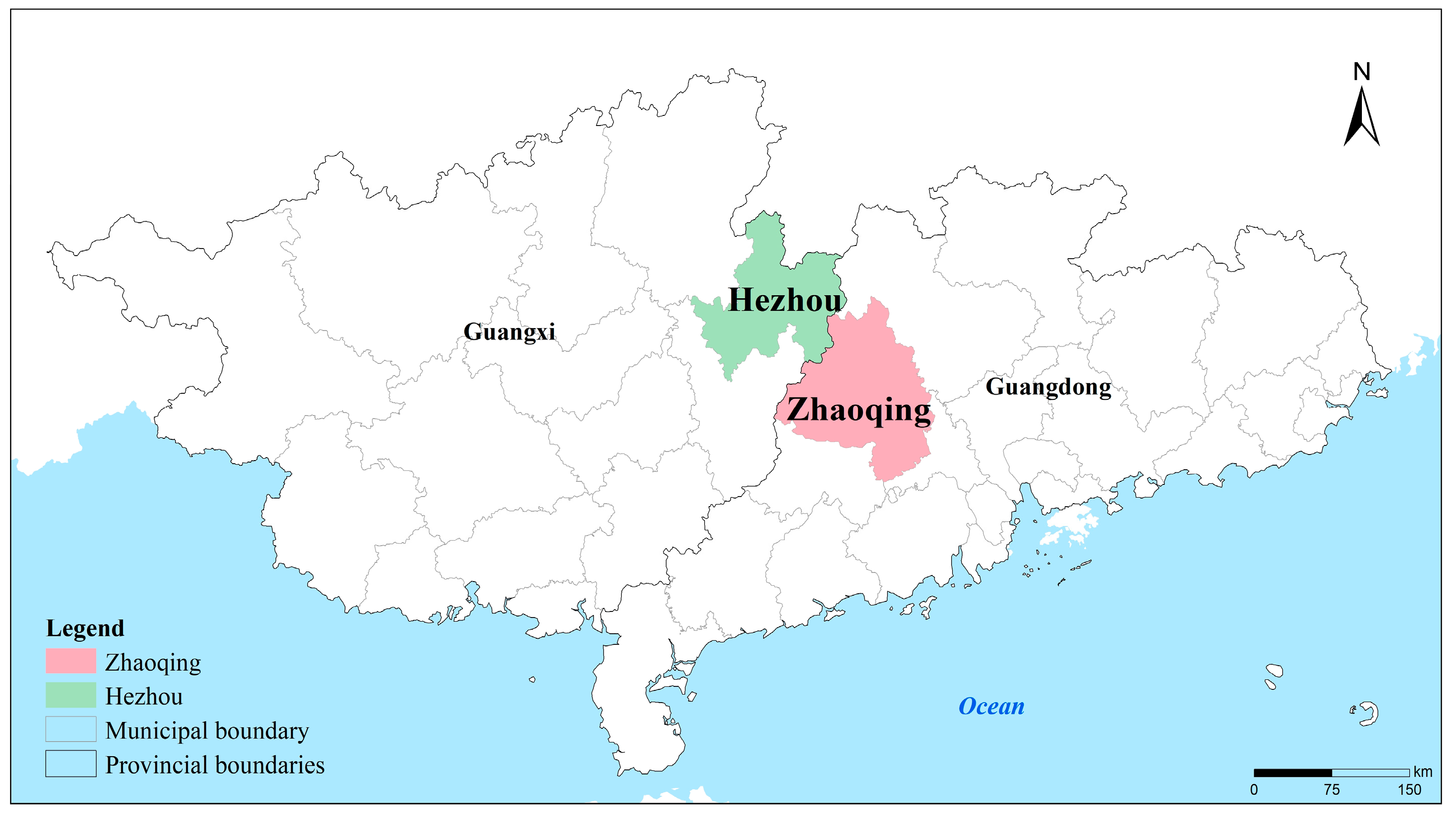
Building on these considerations, this study selects the Guangdong–Guangxi East–West Cooperation Zone (G–G Zone; see
Figure 1) as the focal case for three main reasons. First, the G–G Zone is highly representative of governance complexity and coordination challenges. Pronounced disparities in administrative hierarchies and regional economic development have long generated substantial institutional friction and coordination difficulties in cross-provincial public affairs collaboration. Second, the G–G Zone offers strong analytical value because its collaborative governance arrangements are both well established and highly observable. As the first interprovincial adjacent area in China to independently initiate a cooperation framework under the East–West Collaboration strategy, it provides a comprehensive setting for examining horizontal collaboration and multi-actor coordination. Third, RCG involves complex task environments in which leadership behaviors are deeply embedded in practice. Our long-term participatory research in the G–G Zone has produced rich process data, enabling detailed reconstruction of action processes and micro-level leadership behaviors and thus providing a solid empirical basis for inductively deriving generalizable theoretical insights.
3.2. Grounded Theory
This study employs a grounded theory approach to inductively identify RLBs enacted by collaborative leaders in the context of RCG. Given the multi-layered and dynamic nature of leadership in RCG, the strengths of grounded theory in factor identification and process explanation make it particularly suitable for developing an explanatory framework of relational leadership in this context.
To ensure methodological rigor, we developed a semi-structured interview protocol prior to fieldwork, covering key topics such as cross-regional collaboration, cross-boundary leadership roles, and coordination and conflict processes. From 2021 to 2024, the research team conducted multiple rounds of fieldwork in the G–G Zone. To identify key actors and core institutions involved in RCG, we first reviewed relevant policy documents, official reports, and organizational materials. This process led us to the Guangdong–Guangxi Collaboration Office and several specialized coordination departments, which served as initial points of entry. Principal officials from these organizations were selected as “seed respondents.” Building on these initial interviews, we expanded the sample through a combination of snowball and theoretical sampling. Cross-recommendations across cities and departments were used to ensure diversity in organizational types, governance levels, functional roles, and positional orientations. As data collection progressed, new data were continuously compared with existing codes. Theoretical saturation was reached when no new conceptual categories or properties emerged. In total, 90 interviewees took part in interviews and focus groups, generating over 250,000 words of transcripts (see
Table 1 for interviewee characteristics).
Grounded theory analysis was conducted through a three-stage coding process. Open coding was used to extract initial concepts and generate preliminary categories; axial coding was then applied to refine subcategories and establish relationships among major categories; and selective coding was employed to integrate categories, identify core themes, and develop an explanatory framework [
29]. Throughout this process, coding decisions were repeatedly discussed with domain experts to enhance analytical rigor. To assess coding reliability, two coders independently analyzed the data using a double-coding procedure, achieving an inter-coder agreement rate of 83.9%. Methodological research suggests that an agreement level above 80% indicates acceptable reliability in qualitative analysis [
30].
To address researcher positionality and potential bias, this study incorporated reflexive practices throughout the qualitative research process. The research team entered the G–G Zone as external academic researchers, with no administrative affiliation, cooperative ties with local governments, or involvement in policy implementation. Data were collected through formal interview requests, publicly available official sources, and snowball sampling, without privileged access. To further mitigate bias, multiple methodological safeguards were employed, including triangulation across interviews, documents, internal materials, and media reports; independent double coding; the use of reflexive memos; and peer debriefing to assess alternative interpretations. Together, these measures enhanced the credibility and transparency of the qualitative analysis.
3.3. Ordered-Logic
This study employs an ordered logit regression model to examine the effects of RLBs on collaborative governance effectiveness in interprovincial adjacent areas. Given that the dependent variable is an ordinal measure based on subjective evaluations with a clear rank ordering, the ordered logit model is well suited to the analytical objectives of this study.
Regarding model construction, the explanatory variables are primarily derived from the types of RLBs identified in the preceding grounded theory analysis. Based on these qualitative findings, a survey instrument was developed to collect data on RLBs in RCG, as well as collaborative leaders’ subjective evaluations of collaborative governance effectiveness. The survey consisted of three sections: (1) background information on collaborative leaders; (2) the use of RLBs; and (3) evaluations of perceived collaborative governance effectiveness in interprovincial adjacent areas. Background information on collaborative leaders includes years of organizational tenure, educational, administrative rank, and age (see
Table 2).
The research team conducted a questionnaire survey among leaders involved in regional collaboration in Zhaoqing City, Guangdong Province, and Hezhou City, Guangxi Zhuang Autonomous Region, both of which are located within the G–G Zone. A total of 350 questionnaires were distributed, of which 339 were returned. After excluding 23 invalid responses due to omissions or incorrect completion, 316 valid questionnaires were retained for analysis, yielding an effective response rate of 90.3%.
4. Results
4.1. Types of Collaborative Leaders in RCG
Drawing on grounded theory analysis of the G–G Zone, we identify three main types of leaders that play leadership roles in the collaborative governance process.
The first type consists of leaders embedded in networks of administrative organizations (NAOs) within the collaborative regions. In the G–G Zone, these NAOs include the Office of the Guangdong–Guangxi East–West Interprovincial Coordination, the Guangxi Eastward Integration Office, the Zhaoqing–Hezhou East–West Collaboration Office, and the Guangxi Office in the Guangdong–Hong Kong–Macao Greater Bay Area. Leaders within these NAOs are drawn from Zhaoqing, Guangdong Province, and Hezhou, Guangxi Zhuang Autonomous Region, with administrative ranks ranging from section-level officers to division-level officials. Although these officials work together in shared offices dedicated to interprovincial collaboration, they do not possess independent administrative establishments. Instead, their formal organizational affiliations remain with their original home departments. Functionally, NAOs are responsible for coordinating and facilitating interorganizational interactions to achieve network-level objectives [
31]. Accordingly, leaders within NAOs in the collaborative regions primarily serve as initiators, champions, and sponsors in RCG.
The second type consists of leaders from specialized collaborative departments. In the G–G Zone, such departments include, among others, the Public Security Bureau and the Market Supervision and Administration Bureau. RCG involves a wide range of task-specific collaborations, such as joint legislation, joint approval, and joint law enforcement. These specialized collaborative tasks are typically initiated, coordinated, and advanced by leaders from the relevant functional departments. Such leaders may be department heads or designated officials responsible for specific policy domains. Within their respective administrative fields, they proactively establish cross-regional linkages, build consensus around collaborative tasks, and mobilize collective action. Since 2019, the G–G Zone has jointly addressed 27 cases of cross-jurisdictional crime and launched 118 interprovincial government services. Thus, leaders from specialized collaborative departments function as process catalysts and network mediators in the collaborative governance of interprovincial adjacent areas.
The third type consists of leaders exchanged between regions. To promote effective interregional collaboration, China’s central government has instituted a policy of leadership exchange. Through leader exchange, leaders engage in administrative leadership activities across regions and policy domains, thereby enhancing information transmission between cities, increasing the density of relational networks, and strengthening coordination in collective action [
32]. Since September 2020, the two cities have implemented cross-posting arrangements involving 39 Party and government leaders and 410 professional and technical personnel. In these exchanges, 12 division-level and 27 section-level leaders have participated. Exchanged leaders typically assume deputy positions at the county or district level, as well as roles within municipal departments such as the Development and Reform Commission, the Agriculture and Rural Affairs Bureau, and the Market Supervision. Each cross-posting assignment generally lasts more than two years. By reducing administrative segmentation and fostering sustained interpersonal connections across jurisdictions, the leader exchange mechanism facilitates cross-boundary coordination. Accordingly, leaders participating in cross-regional exchanges function as boundary spanners in the collaborative governance of interprovincial adjacent areas.
4.2. Types of Relational Leadership Behaviors in RCG
In the horizontally structured RCG network, a top-down power hierarchy is inapplicable. Leaders must employ relationship-oriented, flexible soft power rather than rigid command and control to reconcile the interests of various governance entities and enhance the effective operation of the collaborative governance network. Based on grounded findings, the study divides RLBs into four categories: relational initiative, relational reconciliation, relational catalysis, and relational linkage.
Relational initiatives influence collaboration primarily by advocating legitimacy and mobilizing resource support for RCG. Such initiatives are most salient during the initiation phase of collaboration, when leaders seek to mobilize diverse stakeholders by identifying, integrating, and aligning the actors and governance resources required to achieve shared collaborative goals. In the early stage of RCG, collaborative leaders, guided by their strategic missions, step across administrative boundaries to engage in advocacy-oriented actions. They actively search for opportunities for collaboration, effectively opening “collaborative windows of opportunity.” By articulating clear collaborative missions, leaders cultivate shared understandings among diverse stakeholders, leverage their complementary strengths, and encourage active participation in collaborative processes. This dynamic is evident in the case of Hezhou City in Guangxi, whose level of economic development is relatively lower than that of Zhaoqing City and which therefore exhibits a strong incentive for regional collaboration. As the Party Secretary of Hezhou City explained: “Our city’s economic development started late and rests on a weak foundation. Only by closely connecting with the Guangdong–Hong Kong–Macao Greater Bay Area—actively integrating into it, absorbing its spillover effects, undertaking industrial transfers, and linking with its markets to form complementary regional advantages—can we achieve high-quality economic and social development in Hezhou.” (Records: 33HZ2101)
Relational reconciliation influences collaboration by managing conflicts and tensions among participants. It requires collaborative leaders to reconcile individual organizational interests with broader regional interests and to seek a workable balance among competing demands. In RCG, interests constitute a core governance challenge. Leaders, therefore, employ relational reconciliation to integrate and balance diverse interests, manage tensions within the collaborative network, and prevent feelings of relative deprivation among stakeholders. Leaders achieve interest integration through stakeholder analysis, open channels for interest articulation, and the continuous communication of a public value orientation. As the leader of the Joint Office explained: “In coordinating and advancing initiatives, an important value judgment is always involved. First, if an action benefits both sides, we must resolutely pursue it, because it will receive support from both. Second, if it benefits one side and causes little or no harm to the other, we can move forward through negotiation. However, if it benefits only one side while harming the other, it must not be pursued.” (Records: 33LX3202)
Relational catalysis facilitates collaborative governance by integrating diverse collaborative elements and mobilizing support from both network participants and external stakeholders. Through relational catalysis, collaborative leaders actively secure external governance resources and establish legitimacy for the operation of collaborative networks. Such externally mobilized resources help reduce the convening and coordination costs of collaboration, transforming centrifugal forces into centripetal ones [
33]. In the G–G Zone, collaborative governance encompasses a wide array of actors from two cities, making relational catalysis essential for creating platforms that enable constructive communication among entities without hierarchical relationships. By promoting interaction, building shared understanding, and facilitating consensus formation, relational catalysis lays a critical foundation for coordinated collective action. As the leader of the Joint Office explained: “First and foremost, our role is to set the stage so that everyone can sit together face-to-face to jointly discuss and solve problems. For every issue we encounter, participants need to sit at the same table and coordinate on an equal footing. Our responsibility is to build and maintain such platforms.” (Records: 33LX1204)
Relational linkage enhances collaborative stickiness by cultivating relational capital. It refers to the creation of a synergistic environment and enabling conditions that support productive and mutually beneficial interactions among participants. Through these interactions, relational ties are strengthened, information flows more smoothly, and collaboration becomes more durable. At its core, relational linkage consists of a set of actions and practices through which collaborative leaders promote sustained and effective interaction among network participants, enhancing coordination and interdependence among collaborative stakeholders. In RCG, leaders frequently cross traditional administrative boundaries to engage in repeated interactions with participating entities, densify collaborative networks, deepen mutual trust, and foster the emergence of collaborative intentions. The importance of relational linkage is illustrated by a leader from the Market Supervision and Administration Bureau of Hezhou City who participated in specialized collaborative tasks: “Beyond formal working relationships, it is also necessary to build personal relationships. Especially in the Chinese cultural context, such relationships help us advance our work more effectively and make it easier for participants to develop shared practices.” (Records: 33SC2308)
Although the four RLBs identified in this study were inductively derived from grounded analysis of the G–G Zone, they are closely connected to established constructs in existing studies. What this study contributes is a systematic integration and contextual reconstruction of these behaviors within interprovincial adjacent areas, a setting marked by pronounced institutional fragmentation and governance complexity. Relational initiative parallels Page’s (2010) [
34] work on agenda setting and collaborative advocacy, but our findings highlight that leaders must actively cross administrative boundaries and mobilize diverse actors to create “windows of collaboration.” Relational reconciliation aligns with Bryson, Crosby, and Stone’s (2006) [
35] emphasis on integration and conflict management, while our study underscores its importance in coordinating cross-provincial interests, risks, and rules. Relational catalysis resembles the mobilization and action-enabling mechanisms discussed by Wegner and Verschoore (2022) [
36], but we specify it as a process that transforms consensus into sustained joint action. Relational linkage echoes Ospina’s (2010) [
37] notions of relational weaving and trust building, yet in interprovincial areas it additionally performs a dual linking function—mobilizing vertical policy support while consolidating horizontal collaborative networks.
4.3. Effects of Relational Leadership Behaviors on Governance Effectiveness
Based on survey data from 316 collaborative leaders in the G–G Zone, we conducted an ordered logit regression analysis. The regression results (see
Table 3) show that relational initiative, relational catalysis, and relational linkage are statistically significant at the 5% level, while relational reconciliation reaches significance at the 10% level. These findings indicate that collaborative leaders’ RLBs are positively associated with perceived effectiveness in RCG, although the effect of relational reconciliation is comparatively weaker.
The proportional odds assumption was examined using the parallel lines test. As reported in
Table 4, the
p-value is 0.587, exceeding the conventional 0.05 threshold. Accordingly, the null hypothesis cannot be rejected, indicating that the model satisfies the parallelism assumption and that the ordered logit regression results are appropriate and robust.
The overall model fit was evaluated using a likelihood ratio test. As reported in
Table 5, the null hypothesis that the inclusion of the independent variables does not improve model fit was rejected (
χ2 =1363.157,
p < 0.001). This result indicates that incorporating the independent variables significantly enhances the explanatory power of the model.
To further assess model robustness, two alternative specifications were employed. First, the baseline results were re-estimated using an ordered Probit model. Second, alternative operationalizations of the dependent variable were adopted by collapsing perceived collaborative governance effectiveness into three ordered categories and re-estimating the model using ordered Logit. The results, reported in Models (1) and (2) in
Table 6, show that the signs and significance levels of the core relational leadership variables remain largely consistent, indicating that relational initiative, relational catalysis, and relational linkage exert robust effects on perceived effectiveness.
5. The Mechanisms of RLBs
Building on the preceding analysis of the G–G Zone in China, this study further explores the mechanisms through which RLBs operate in RCG.
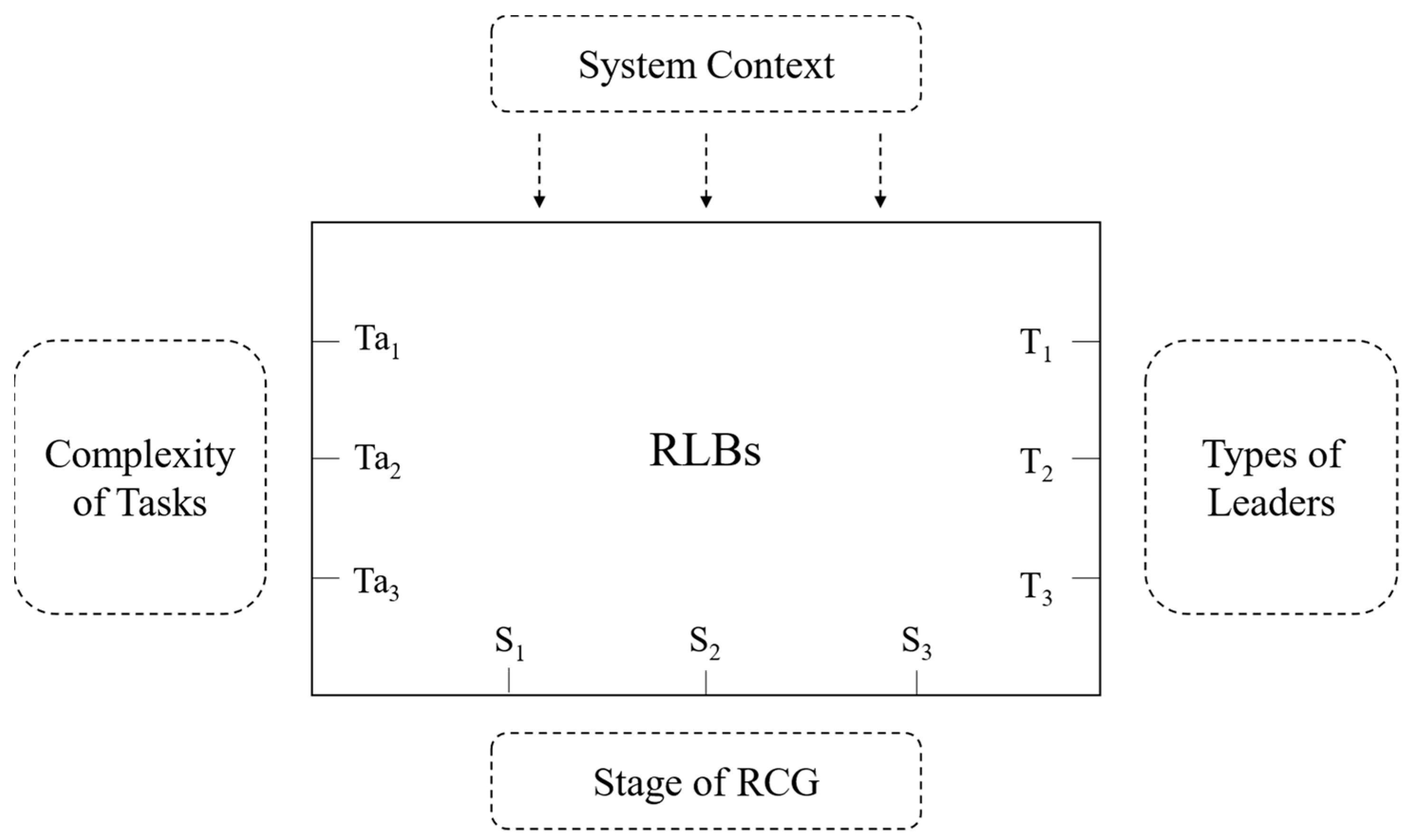
5.1. System Context and RLBs
The system context refers to the policies, institutional arrangements, and resources that shape how collaborative leaders foster collaborative governance in RCG. According to Ostrom’s Institutional Analysis and Development (IAD) framework, objective system conditions—including biophysical settings, socioeconomic conditions, and generalized institutional rules—significantly influence the emergence of collective action in collaborative governance [
38]. Within such contexts, collaborative leaders must deploy RLBs to effectively integrate available resources and, in doing so, enhance the functioning of RCG.
The first is Natural Geographic Conditions. RCG is closely intertwined with natural geographic conditions, as collective action in public affairs is inherently shaped by physical spatial constraints. Zhaoqing City functions as a key transportation hub linking the Guangdong–Hong Kong–Macao Greater Bay Area with the Pearl River–Xijiang Economic Belt. Leveraging its geographic proximity to the Greater Bay Area, Hezhou City has developed into a strategic hinterland for industrial relocation and an important node in Guangxi’s eastward integration strategy. Located along the interprovincial boundary between Guangdong and Guangxi, Zhaoqing and Hezhou have long played a pivotal role as commercial and logistical corridors linking the Central Plains with the Lingnan region.
The second is socioeconomic conditions. Socioeconomic conditions constitute critical determinants of collective action in RCG. Zhaoqing and Hezhou share broadly congruent ethno-cultural foundations as multi-ethnic convergence zones inhabited by Yao, Zhuang, and Han communities. Long-standing population mobility and cultural interaction have fostered deep integration among Central Plains, Xiang–Chu, Lingnan, and Hakka cultural traditions, providing a social basis for cross-regional collaboration. In 2023, Hezhou’s regional GDP amounted to roughly one-third of Zhaoqing’s. However, Hezhou holds comparative advantages in areas such as cross-jurisdictional infrastructure co-development, industrial integration, ecological conservation, and collaborative poverty alleviation. Consequently, industrial spillovers from Zhaoqing have created substantive opportunities for industrial linkage and coordinated development between the two cities.
The third is generic institutional rules. Institutional rules constitute the foundation of public affairs governance and exert a decisive influence on collective action in RCG [
39]. The G-G collaborative governance mechanism operates within China’s national strategy for regional coordination, integrating both the East–West Pairing Assistance policy and Guangxi’s “Eastern Integration” strategic orientation. In April 2018, Guangxi launched a comprehensive open development framework emphasizing “Southern Orientation, Northern Connectivity, Eastern Integration, and Western Cooperation,” with eastern integration designated as a strategic priority. The promulgation of the Outline Development Plan for the Guangdong–Hong Kong–Macao Greater Bay Area in 2019 further accelerated Guangxi’s integration with the Greater Bay Area. Following the national renewal of East–West collaboration in 2021, the G–G Interprovincial Collaboration Joint Conference Mechanism was established, marking a new phase of cross-provincial cooperation. Through the convergence of these institutional arrangements, collaborative windows of opportunity emerged in the G–G Zone, propelling this area into more formalized collaborative governance arrangements.
5.2. Leader Types and RLBs
In RCG, leadership is enacted by three distinct types of leaders, each of which deploys RLBs in different ways. Through the strategic use of RLBs, collaborative leaders integrate resources, cultivate trust, and articulate a shared vision, thereby enhancing the overall effectiveness of collaborative governance.
5.2.1. Leaders in the NAOs
Leaders within NAOs typically assume the roles of champions in RCG. They proactively cross administrative boundaries to initiate collaborative actions within their respective policy domains. Driven by the practical demands of regional coordinated development and supported by the convergence of two regional strategies, Zhaoqing and Hezhou effectively “met each other halfway” and jointly promoted collaborative governance in interprovincial adjacent areas. Through frequent and sustained interactions among NAO leaders, a dense and positive interactive network was formed between officials from the two jurisdictions. In addition, NAO leaders coordinated governance resources by linking vertical administrative relationships and actively seeking support from higher-level authorities for RCG, thereby securing policy incentives and financial support. As one leader from the G–G Collaboration Office explained: “We frequently approach higher-level authorities to seek policy support. They have proposed positioning our city as a pilot demonstration area for Guangxi’s integration into the eastern region. This represents a significant opportunity to advance regional development, and we must make full use of these policy advantages to actively promote cooperation.” (Records: 33FG2201)
Sponsors constitute a critical leadership role within NAOs. Recognition of and commitment to collaborative goals are essential for maintaining cohesion among network members, enhancing internal stability, mitigating potential conflicts among participating entities, and sustaining collaboration over time. Accordingly, collaborative leaders must skillfully employ diverse strategies to foster shared recognition and commitment to collective goals, thereby ensuring the effective implementation of collaborative tasks across the region. As one leader from the G–G Collaboration Office emphasized: “Our counterpart collaboration must focus on concrete cross-regional issues. From advancing key projects to ultimately establishing standards and institutional mechanisms, the core lies in achieving consensus. We must bring all parties to the same table and push issues forward together. Once consensus is reached, it is no longer sufficient to merely sign symbolic agreements and act at will. Instead, agreements must be formalized, and all parties must be urged to jointly implement them.” (Records: 33XZ1203)
Within regional collaboration networks, leaders in NAOs typically occupy a relatively neutral position. Drawing on the authority conferred by the collaborative network and their own professional expertise, they facilitate an orderly division of labor among diverse participating entities. This perceived neutrality enables NAO leaders to coordinate horizontally without being seen as favoring particular actors, thereby reinforcing their legitimacy and coordinating capacity. As one leader from the Joint Office explained: “When we engage in coordination, the first question is whether we can maintain impartiality. If we cannot, and if participants develop grievances toward this so-called neutral party, then authority is lost. Once that happens, all horizontal coordination loses its foundation, and leadership collapses. Horizontal coordination therefore depends on professionalism and on maintaining a relatively neutral position to establish authority.” (Records: 33LX1309)
5.2.2. Leaders in the Special Collaboration Departments
Leaders from specialized collaborative departments function as process catalysts and network mediators in the collaborative governance of interprovincial adjacent areas. A representative case is the cross-jurisdictional control of water pollution in the He River. The He River is a first-order tributary of the Xi River—the main stream of the Pearl River system—with major tributaries flowing through both Hezhou and Zhaoqing. Over a long period, industrial and domestic wastewater discharges, combined with the river’s location along a provincial boundary, have hindered effective governance, resulting in persistently poor water quality. Moreover, differing functional positioning and regulatory standards for the shared water body across the two regions have made it difficult to reach consensus on protection objectives. In the absence of effective incentives, river governance departments in both jurisdictions have often struggled to implement pollution control measures. To address conflicts of interest and divergent perspectives among multiple governance actors, a leader from the Hezhou Municipal Water Resources Bureau proposed an innovative leadership practice. He suggested a role-reversal approach in coordination meetings, asking upstream and downstream leaders to temporarily adopt each other’s perspectives. As he explained: “Today, let’s change how we hold this meeting. You are the leader from the upstream area—do not speak from the upstream perspective; instead, take the role of the downstream water resources bureau. And you, as the downstream leader, assume the upstream perspective. Sometimes upstream areas are concerned with livelihoods, while downstream areas focus on water quality. By thinking from each other’s positions, we can better identify solutions. The key is mutual understanding—once that is achieved, many problems become much easier to resolve.” (Records: 33SL2208)
Promoting coordinated development between the two regions constitutes the core public value orientation underpinning collaboration between Zhaoqing and Hezhou, and it also serves as a fundamental guiding principle for the actions of leaders and officials across departments in both jurisdictions. Within the constraints of existing administrative affiliations, officials from the two regions employ RLBs to transcend administrative boundaries and engage in joint action aimed at mutual benefit and win–win outcomes. As a leader from the Hezhou Municipal Transportation Bureau noted: “For example, although I am an official from Hezhou, when advancing transportation infrastructure projects, I cannot focus solely on Hezhou’s interests. I also have to consider the benefits that Zhaoqing can gain. Only then will there be motivation to help connect the roads. When both sides gain something, better development becomes possible.” (Records: 33JT2201)
5.2.3. Leaders Exchanged Between Regions
Through the mechanism of cross-regional leader exchanges, the central government participates directly in local governments’ regional collaborative decision-making processes, thereby playing a “hands-on” meta-governance role. Such exchanges not only contribute to the professional development of leaders but also introduce new ideas and resources into RCG. Leaders who participate in cross-regional exchanges function as boundary spanners in the collaborative governance of interprovincial adjacent areas. Specifically, leaders involved in cross-regional exchanges recount historical interactions and developmental trajectories between the two regions in various settings and emphasize the commonalities of their shared ethnic and cultural backgrounds. Through these narrative practices, they evoke emotional resonance among leaders and the public in both regions, thereby contributing to improvements in formal interregional relations. As members of the counterpart support working team from Zhaoqing City stationed in Hezhou City repeatedly noted: “Guangdong and Guangxi drink from the same river, and the two places are like one family. My hometown is Huangdong Township in Hezhou, so I have a special affection for this area and a strong sense of identification in my work here.” (Records: 33SL3302)
Trust building aims to construct trust relationships among entities through means such as identity recognition, consensus establishment, and commitment fulfillment [
40]. Leaders involved in cross-regional exchanges break through the forces of multiple entities and effectively promote the improvement of inter-entity relationships through trust-building, transforming it into an important supporting element for regional collaborative governance. Based on continuous commitment fulfillment, collaborative leaders lay a solid foundation of trust for cooperation between the two regions, constantly working with other participating entities to build a resilient collaborative governance network, and driving RCG towards substantial progress. As a leader participating in the counterpart exchange assignment said, “When I came here two years ago, the leadership in the meeting said they wanted to connect this dead-end road. Now it’s fully accessible. The leaders of both regions have shown a very positive attitude towards cooperation. I feel that the cooperation between the two regions will continue to deepen, and our town’s economic development will surely benefit greatly from this collaboration.” (Records: 33NY3203)
5.3. Complexity of Tasks and RLBs
Task complexity may influence the deployment of RLBs. While some RCG issues are complex and multifaceted, others are relatively simple and confined to specific policy domains. Task complexity shapes the transaction costs and collaborative risks associated with governance processes, thereby affecting how RLBs are applied.
Highly complex regional collaborative governance issues often require the combined use of multiple RLBs. Cross-jurisdictional administrative case handling and the exercise of discretionary penalties provide a representative example. Differences in business environments, levels of economic development, and the proliferation of local regulations across provinces make it difficult to achieve coordination and consistency in legal application and discretionary decision-making. During a joint law-enforcement action targeting the sale of expired food in interprovincial adjacent areas, the Food Safety Law of the People’s Republic of China stipulates that operators selling expired food should be fined no less than CNY 50,000. In Zhaoqing, this penalty is strictly applied at CNY 50,000. By contrast, for the same violation, the Market Supervision and Administration Department of Hezhou City—considering the region’s relatively lower level of economic development—reduced the fine to approximately CNY 5000 after collective deliberation, constituting a mitigated penalty. As a result, identical violations committed by two shops in neighboring villages could lead to markedly different penalty outcomes. As one enforcement officer explained: “Guangxi is relatively underdeveloped, especially in rural areas where people face economic hardship. Small grocery stores are often run by elderly individuals, since younger people have migrated for work. Their management capacity is limited, and problems such as expired food may occur unintentionally. After collective discussion, we reduced the fine to several thousand yuan as a more humane approach. If we imposed a fine of over 50,000 yuan, it could create additional impoverished households. However, if a fine of 50,000 yuan is imposed across the street or river while only 5000 yuan is imposed here, the public would perceive this as unfair.” (Records: 33SC2302)
To address inconsistent administrative penalty standards in interprovincial adjacent areas, Zhaoqing and Hezhou developed an innovative model of joint law enforcement in market supervision, driven by the leadership of the Hezhou Municipal Market Supervision and Administration Bureau. During multiple joint enforcement meetings, leaders from Hezhou repeatedly emphasized that the fundamental purpose of administrative penalties is to safeguard public interests and social order, and that serving the people must remain the core guiding principle of regulatory action. On the basis of this shared value consensus, Hezhou proposed the establishment of a case jurisdiction consultation and voting mechanism covering five counties (districts) in the interprovincial adjacent areas. Under this mechanism, when disputes arise between counties or districts regarding case jurisdiction or the exercise of administrative discretion, the principal leaders of the five county- and district-level market supervision bureaus collectively deliberate and determine both jurisdiction and penalty standards through a joint voting process. As one leader explained: “We have reached an agreement that, when such cases arise in the future, we will bring the specific circumstances forward for collective discussion and joint voting. The principal leaders of the five county- and district-level bureaus will vote together to determine a unified jurisdictional authority and standard for administrative discretion.” (Records: 33SC2203)
Within this institutional framework, collaborative leaders also place strong emphasis on cultivating shared value awareness among diverse governance actors, framing collaborative governance in interprovincial adjacent areas as a mission- and responsibility-driven endeavor. As one enforcement official explained: “If we strictly follow the rules, we would have to impose a fine of more than 50,000 yuan. Through collective deliberation, however, we chose to mitigate the penalty, effectively breaking through that threshold. Of course, this entails risk—both the disciplinary inspection authorities and the procuratorate are paying close attention. But this is ultimately a matter of responsibility. If you are doing this job, you must consider the interests of the people, and sometimes that means bearing the risk yourself.” (Records: 33SC2302)
This case clearly demonstrates that, in the highly complex governance context of interprovincial adjacent areas, effective collaborative governance does not rely on a single type of RLB. Instead, it requires the combined and sequential deployment of multiple RLBs. First, through relational initiative, collaborative leaders proactively reframed cross-jurisdictional enforcement issues as shared governance problems and proposed joint enforcement and consultation mechanisms, breaking through entrenched administrative routines and departmental boundaries. Second, by exercising relational reconciliation, leaders employed an explicit public value framework to balance the tension between legal uniformity and regional socioeconomic disparities. This approach not only eased cross-regional tensions but also reduced grassroots perceptions of “unfair punishment” arising from divergent enforcement outcomes. Under highly complex task conditions, the effective functioning of relational catalysis and relational linkage often depends on relational reconciliation. Third, collaborative leaders utilized relational catalysis to transform value-based consensus into concrete institutional arrangements. By convening joint meetings and facilitating collective deliberation, they advanced the establishment of mechanisms such as cross-county (district) consultation and voting on case jurisdiction and administrative discretion. Finally, through relational linkage, leaders stabilized the collaborative relationship network by institutionalizing ongoing cross-regional interactions and coordination procedures, providing both relational and institutional foundations for sustained joint action.
5.4. Cross-Temporal Nature and RLBs
The cross-temporal nature of RCG shapes how RLBs are deployed. RLBs play critical roles in initiating collaboration, fostering shared governance consensus, and facilitating effective collaborative outcomes. Accordingly, the form and emphasis of RLBs vary across different stages of RCG development.
In the initiation phase of collaboration in interprovincial adjacent areas, collaborative leaders, based on their strategic missions, step across administrative boundaries to advocate for collaboration. Proactively seeking collaborative opportunities, they open the “Collaborative Windows of Opportunity,” and through clear mission statements, actively cultivate a consensus for collaboration among diverse collaborative entities. They leverage the different strengths of these entities and guide them to participate actively.
In the implementation phase of collaborative governance, sustained multi-actor interaction enables participants to learn through a shared logic of practice and gradually form collective action. Previous collaborative experience constitutes a crucial component of such practice, as positive cooperation histories reinforce actors’ willingness to continue trusting partners from other departments or organizations. Over time, repeated cooperation combined with favorable trust experiences generates a virtuous cycle between trust and collaboration, thereby increasing the likelihood of successful cross-regional network construction. As a leader from Zhaoqing City’s Agriculture and Rural Affairs Bureau explained: “For every task, the first step is to break through a single point. We start by establishing one focal issue, and once that works, we gradually expand from point to surface. We follow the principle of prioritizing urgent needs, then progressively connect multiple subfields and key areas. As everyone participates in this practical process, shared practices naturally take shape.” (Records: 33NY2202)
In the conflict-resolution phase of collaborative governance, collaborative leaders play a central role in addressing divergent views and tensions among participating actors. Because intergovernmental collaboration often involves overlapping jurisdictions and competing territorial interests, collective action dilemmas are difficult to avoid. Conflict is therefore an inherent feature of collaborative governance and must be actively managed to sustain effective collaboration. To this end, collaborative leaders engage in relational reconciliation to balance competing interests across actors in cross-domain governance. By integrating resources within the collaborative network and continuously addressing emerging disputes, they help align actors’ actions and foster coordinated collective engagement. Through this process, collaborative leaders enable the coupling of actions among diverse entities, thereby stabilizing the collaborative network and supporting the effective functioning of RCG.
The four types of RLBs exhibit varying degrees of prominence across different stages of RCG. As collaboration unfolds over time, the relative importance and emphasis of these behaviors shift accordingly. In the early stages of collaboration, relational initiative and relational catalysis tend to be more salient, as leaders focus on activating collaborative issues, opening action windows, and mobilizing joint action across administrative boundaries. As collaboration deepens and interdependence among participating actors increases, relational reconciliation and relational linkage become increasingly important, playing a critical role in managing accumulated tensions, stabilizing interaction patterns, and embedding collaboration within more durable institutional arrangements.
However, these stage-related differences do not imply a rigid linear sequence or a substitutional relationship among the four RLBs. Instead, they often operate in parallel, overlap, and mutually reinforce one another, forming a dynamic and interactive repertoire of leadership behaviors. Relational initiative creates space for collaborative action, relational catalysis translates shared understandings into sustained collective efforts, relational reconciliation buffers tensions arising from divergent interests and institutional differences, and relational linkage stabilizes these interactions through institutionalization. In practice, these behaviors display strong functional complementarity, while also generating potential tensions—for example, excessive catalysis without adequate reconciliation may intensify conflict, whereas overreliance on linkage may constrain the flexibility required for initiative.
Based on the preceding discussion, the conceptual framework of RLBs in RCG is illustrated in
Figure 2.
6. Conclusions and Discussion
RCG has become a prominent focus in contemporary theoretical research. However, existing studies have rarely undertaken a systematic analysis of the micro-level leadership mechanisms operating within RCG processes, particularly the public leadership roles enacted in horizontally structured interregional collaboration. Drawing on in-depth interviews and questionnaire surveys with collaborative leaders in the G–G Zone, this study identifies and conceptualizes RLBs in RCG within the Chinese institutional context. The findings reveal that:
First, although RCG has developed extensive institutionalized collaboration mechanisms, these arrangements often suffer from a “designed but not enacted” dilemma. The findings suggest that institutional design alone is insufficient to ensure effective collaboration. Instead, it is the presence of multiple collaborative leaders distributed across the governance network—including NAO leaders, leaders of specialized collaborative departments, and leaders exchanged between regions—that activates these institutions in practice. Thus, the driving force of RCG lies not in the automatic operation of institutions, but in the activation of institutional mechanisms through micro-level leadership behaviors.
Second, in horizontally distributed and non-hierarchical collaborative networks, leadership emerges through relationships and interactions rather than formal hierarchy. The findings show that four relational leadership behaviors form an observable set of behaviors that support collaborative governance from initiation to ongoing operation. These behaviors reflect the interdependence among network participants and constitute the basis of relational leadership. The essence of relational leadership lies not in the exercise of power or influence, but in enabling participants to reach shared understandings and engage in coordinated action through collaborative processes.
Third, RLBs influence not only the initiation of collaboration but also the structure and processes of collaboration, supporting the effective functioning of RCG. Different RLBs enhance collaborative effectiveness through distinct mechanisms. Relational initiative secures legitimacy and mobilizes resources for regional cooperation; relational reconciliation manages conflicts and mitigates tensions; relational catalysis integrates key elements for collective action; and relational linkage strengthens collaborative cohesion by cultivating relational capital. Rather than functioning independently, these behaviors interact in non-linear and mutually reinforcing ways, forming dynamic coupling pathways that shape collaborative governance outcomes.
In addition, this study identifies an important phenomenon in RCG: managers and leaders are not interchangeable in horizontally structured collaborative networks. Although most participants hold formal administrative positions, they do not automatically exercise leadership by virtue of their official roles. Grounded analysis shows that while some managers’ influence remains confined to hierarchical structures, leadership in RCG is enacted by actors who are able to cross organizational boundaries, mobilize resources, coordinate interests, catalyze collective action, and sustain collaborative ties. In this sense, leadership in RCG emerges from relational influence processes rather than hierarchical authority or positional power. This finding suggests that managers become leaders in a substantive sense only when they demonstrate relational influence within collaborative networks.
The theoretical contributions of this paper are as follows:
First, this study extends the theoretical boundaries of RCG by integrating relational leadership theory into the RCG context. Focusing on micro-level interactions, it explains how collaborative networks are initiated, sustained, and operated through a dynamic process of relational leadership. The findings show that cross-regional collaboration is not automatically driven by institutional arrangements or resource dependence but is activated through leaders’ relational behaviors—such as initiative, reconciliation, catalysis, and linkage. By shifting attention from static institutional design to the process through which institutions are enacted in practice, this study advances theoretical understanding of how regional collaborative governance actually works.
Second, this study broadens the scope of public leadership theory. The relational leadership framework developed in this study shifts attention away from formal authority, hierarchical positions, and individual traits toward the interactional and integrative processes through which collaboration is enacted in governance networks. The findings show that in RCG networks without hierarchical command structures, leadership emerges through ongoing processes of meaning-making, interest integration, and collective action facilitation, exhibiting distributed, relational, and processual characteristics. This not only deepens public leadership theory’s understanding of how leadership emerges through collaboration but also shifts its research paradigm from an individual-centered focus toward interactional processes within collaborative governance networks.
Third, this study advances the application of meta-governance theory in the Chinese context. While existing research has emphasized the design of governance structures and institutional instruments, it has paid limited attention to how these arrangements are activated in practice. Drawing on evidence from China’s interprovincial adjacent areas, this study finds that the effective operation of meta-governance depends on leaders’ micro-level relational practices, through which institutional arrangements are embedded in collaborative networks and made operative. By revealing the coupling between institutional arrangements and relational practices, this study extends the operational logic of meta-governance theory and provides new empirical support for its application in complex collaborative settings.
This study offers the following practical implications.
First, it calls for strengthening leaders’ strategic management capacity. Leaders should be guided to place public value creation at the core of their strategic orientation, cultivate an awareness of collaborative development, and articulate a shared vision for cooperation. Effective collaborative leaders need strong integrative capacity and strategic foresight, enabling them to identify opportunities for high-quality regional development through collaborative governance and to foster more dynamic and sustainable regional development communities.
Second, leaders’ cross-boundary communication capacity needs to be strengthened. Collaborative leaders must facilitate the two-way flow of information and knowledge among participants, promote mutual understanding, and support the development of collaborative partnerships. By actively creating communication platforms and enabling effective interaction among diverse governance actors, leaders can advance collective goals through inclusive dialogue and reciprocal engagement.
Third, leaders’ process-catalyzing capacity needs to be cultivated. In collaborative governance, leaders often assume multiple roles—as advocates, catalysts, implementers, and mediators. They are required to guide participants in clarifying objectives, identifying problems, setting rules, building consensus, formulating agreements, and resolving conflicts. By strategically leveraging informal institutions and relational strategies, leaders can effectively facilitate the progression of collaboration from intention to implementation.
This study also has certain limitations. First, as an exploratory study based on grounded theory, this article identifies and explains the core types of RLBs in RCG and the process mechanisms through which they generate public value. However, the more fine-grained and dynamic interactions among different types of RLBs remain to be further explored and elaborated in future research. Second, given the external validity limitations of single-case research, future studies should further test and refine the theoretical model across broader regional collaborative governance contexts. Specifically, comparative multi-case studies could be conducted in different types of interprovincial adjacent areas. Large-sample surveys or behavioral experiments may be employed to statistically validate the key mechanisms identified here. In addition, longitudinal data could be used to trace how RLBs evolve over time, thereby enriching the understanding of their underlying process mechanisms.