
Article

Smart Urban Synergy: A Systems-Based Approach to Assessing Smart and Sustainable Cities
by
Ocotlán Díaz-Parra
1,
Jorge A. Ruiz-Vanoye
1,*,
Juan M. Xicoténcatl-Pérez
1,
Alejandro Fuentes-Penna
2,
Ricardo A. Barrera-Cámara
3,
Francisco R. Trejo-Macotela
1,
Jaime Aguilar-Ortiz
1 and
Marco A. Vera-Jiménez
1
1
Dirección de Investigación, Innovación y Posgrado, Universidad Politécnica de Pachuca, Carretera Pachuca—Cd. Sahagún Km 20, Ex-Hacienda de Santa Bárbara, Zempoala 43830, HGO, Mexico
2
El Colegio de Morelos, Av. Morelos Sur 154, Esquina con Amates, Colonia Las Palmas, Cuernavaca 62050, MOR, Mexico
3
Facultad de Ciencias de la Información, Universidad Autónoma del Carmen, Calle 56 No. 4, Esquina con Avenida Concordia, Colonia Benito Juárez, Ciudad del Carmen 24180, CAM, Mexico
*
Author to whom correspondence should be addressed.
Systems 2026, 14(1), 74; https://doi.org/10.3390/systems14010074
Submission received: 30 November 2025 / Revised: 6 January 2026 / Accepted: 7 January 2026 / Published: 9 January 2026
(This article belongs to the Section Systems Practice in Social Science)

Abstract

Smart cities aim to integrate technological, infrastructural, and socio-environmental systems in order to improve urban sustainability and quality of life. To qualify as both smart and sustainable, a city is generally expected to pursue self-sufficiency through the adoption of sustainable practices in energy production, water supply, and food systems. Such cities also seek to reduce operational costs for both private operators and municipalities, while aiming to enhance the quality of life of their residents. Within this context, the relevance of a web-based application becomes particularly apparent. An application equipped with predefined indicators can provide a structured and measurable framework for assessing the current status of a city or town in relation to smart and sustainable development. This framework allows for the evaluation of the extent to which a city aligns with established criteria associated with smart and sustainable urban models. This paper introduces a Python-based web application, developed using Python version 3.10, designed to assess or support the self-assessment of a city’s alignment with identified smart and sustainable development indicators. This study does not claim empirical validation or benchmarking performance; the proposed system is presented as a proof-of-concept framework. The work does not propose new smart city indicators. Rather, it presents an integrative system that seeks to operationalise existing smart and sustainable city indicators within a unified and modular web-based assessment framework, designed to support cross-domain evaluation and citizen-accessible self-assessment.

1. Introduction

The smart city concept has been gaining popularity and has generated expectations in the business world as well as in the political and academic spheres [1], driven by the European Commission’s Smart Cities and Communities initiative, through which research projects are funded under the Horizon 2020 Programme.
From the field of urban planning, the prevailing vision of smart cities is marked by scepticism and reticence due to the apparent lack of connection between the aims of smart initiatives and the current concerns of urban planners [1]. Technologies are perceived as playing an excessively prominent role in guiding urban development.
Given the growing debate surrounding smart city initiatives, it is timely to reflect upon their present and future validity and feasibility. This debate underscores the potential need for operational frameworks that may help to bridge technological innovation and practical urban governance.
The city has consistently displayed a recurrent ambivalence: on the one hand, it has acted as a powerful exchanger of ideas and opportunities for collaboration; on the other, it has generated significant levels of conflict and isolation.
Cities simultaneously function as engines of economic exchange, innovation, and social interaction, while also concentrating environmental pressures, social inequality, and governance complexity [2]. These intertwined dynamics position urban environments as particularly salient arenas for addressing sustainability and governance challenges.
Cities have historically functioned as territorial hubs and catalysts of economic and social transformation while also concentrating a wide range of environmental pressures. They host a substantial share of the world’s highly qualified, creative, and entrepreneurial population [3], yet they simultaneously generate significant social and environmental challenges. Achieving a balance between these contrasting dynamics depends largely on the actions, priorities, and aspirations of the individuals and communities that inhabit urban environments.
This article introduces the Smart Urban Synergy conceptual framework, which is intended to examine the synergies required as cities transition towards smart and sustainable models. This transition depends on how cities manage water resources, digital technologies, energy systems, mobility, public transport, transport network distribution, road safety, infrastructure development, industry, education, healthcare, public safety, governance, civil protection, food systems, environmental pollution, and waste management practices, with the aim of supporting the optimisation of urban living conditions.
The contribution of this work does not lie in redefining smart city indicators, but rather in integrating heterogeneous indicators from multiple urban domains into a single operational system. Existing standards and dashboards are often fragmented, institution-centred, or static in nature. By contrast, the proposed system emphasises modular integration, system-level assessment, and accessibility for non-expert users.
From a scientific perspective, the contribution resides primarily in the system architecture and the associated evaluation workflow, which are designed to facilitate cross-domain integration, rather than in the definition of new indicators.
In this context, a Python-based web application is presented to assess, or support the self-assessment of, a city’s alignment with the identified indicators of smart and sustainable development.
The objective of this work is not to validate smart city performance metrics using real-world datasets, nor to compare cities through benchmarking. Instead, the contribution lies in the design of an integrative system architecture and evaluation workflow that seeks to operationalise existing smart and sustainable city indicators in a modular and transparent manner. Empirical validation through case studies and comparative analysis is identified as a necessary next step beyond the scope of the present study.

2. Software Description

2.1. Knowledge Acquisition

A wide range of software solutions developed by service providers is currently available across multiple domains, including smart economy, smart government, smart living, and smart mobility [4].
Urban Data Platforms support a variety of applications for analysing and monitoring data originating from multiple sources, such as IoT sensors, cloud computing systems, mobile devices, social networks, and analytical tools, all of which are associated with urban challenges. These activities are often conducted in real time to detect emerging issues and support decision-making processes. In addition, such platforms may be deployed across different sectors through service-based architectures or application programming interfaces (APIs).
Examples of these tools include IBM Intelligent Operations Center (IOC) [5], SAP HANA [6], Schneider Electric EcoStruxure [7], Siemens City Performance Tool [8], ArcGIS Urban [9], Sentilo [10], Urban Observatory [11], FIWARE [11], AWS Sustainable Cities Accelerator [12], AWS technologies [13], TIBCO Software [14], and Urban Platform [15].
A broad range of frameworks and platforms is already available to support smart city assessment and urban data analysis. International standards, such as ISO 37122 [16] and ISO 37120 [17], together with European Union smart city KPI initiatives and various national or regional urban dashboards, provide structured indicator sets and benchmarking mechanisms that are widely adopted in policy and institutional contexts [16]. While these initiatives offer substantial value, they are primarily designed for formal reporting and compliance. As a result, their application often remains sector-specific or fragmented.
In parallel, a number of commercial and semi-commercial solutions, including IBM Intelligent Operations Center, SAP HANA-based urban platforms, the Siemens City Performance Tool, ArcGIS Urban, and Schneider Electric EcoStruxure, place strong emphasis on large-scale data integration, operational monitoring, and advanced visualisation for municipal authorities. These platforms provide extensive analytical capabilities; however, they are typically vendor-dependent, technically complex, and largely oriented towards expert or institutional users. Consequently, support for cross-domain evaluation and direct citizen engagement tends to remain limited.
Rather than proposing new indicators or positioning itself as an alternative to existing platforms, the Smart Urban Synergy system consolidates heterogeneous indicators from multiple urban domains into a unified assessment workflow. Its design prioritises cross-domain evaluation and configurability, while maintaining a lightweight, web-based architecture that is accessible to both expert users and non-expert stakeholders, including citizens, for exploratory self-assessment.

Positioning Relative to Indicator Standards and Analytics Platforms

ISO 37120 and ISO 37122 are international standards that define a fixed set of indicators for reporting urban services and smart city performance. Their primary purpose is to support standardised measurement and comparability across cities by prescribing uniform indicator definitions, data sources, and calculation methodologies. In this sense, ISO standards function mainly as reference frameworks for compliance, reporting, and longitudinal benchmarking based on officially validated municipal data, such as census statistics, budgetary records, and agency reports.
The strength of ISO-based approaches lies in their global consistency and methodological transparency. However, this standardisation also limits flexibility. The indicator sets are largely predefined and oriented towards institutional data availability, offering limited capacity to incorporate locally specific priorities, emerging practices, or ad hoc data sources beyond the scope of the standard.
Commercial smart city analytics platforms adopt a markedly different orientation. These proprietary systems emphasise real-time monitoring, operational control, and the integration of Internet-of-Things (IoT) data streams to support day-to-day urban management. Typical use cases include infrastructure monitoring, incident management, performance dashboards, and operational decision support. While such platforms offer advanced technical capabilities, they often require substantial investment in software licences, hardware infrastructure, and system integration. In addition, their closed architectures may introduce significant vendor lock-in, making long-term migration or reconfiguration costly for municipalities.
Several recent reviews have analysed smart city assessment frameworks and indicator-based approaches, highlighting differences in scope, data requirements, and intended use cases [18,19,20].
The proposed system occupies a complementary and distinct position relative to both approaches. Rather than functioning as a compliance-oriented reporting standard or as an operational management platform, it is framed as an exploratory, cross-domain assessment framework. Its objective is not validated benchmarking or real-time control, but the structured integration of existing smart and sustainable city indicators into a modular workflow that is intended to support self-assessment, comparative scenario analysis, and reflective discussion at the local level. This positioning allows greater configurability and accessibility, while explicitly acknowledging the methodological limitations associated with normative weighting and non-validated indicators.
A comparative summary of these three approaches is provided in Table 1.

2.2. Indicators

The indicator set and weighting scheme adopted in this study follow a normative design approach informed by existing literature, international standards, and institutional frameworks for smart and sustainable cities. The proposed weights are derived from commonly accepted priorities reflected in ISO standards, European Union KPI initiatives, and national urban assessment frameworks. They are not the result of empirical optimisation, statistical calibration, or expert elicitation.
Consequently, the weighting scheme should be interpreted as a configurable and illustrative mechanism intended to support integrated assessment, rather than as a definitive or universally optimal representation of urban priorities. In this paper, we use indicators (Table 2) to determine whether a city is smart and sustainable.
In these weightings, greater emphasis is placed on sections such as Smart Infrastructure, Energy Infrastructure, Conditions and Health Services, Transportation Services, and Smart Water, reflecting the critical importance of these areas for the development and sustainability of a city. Other aspects, such as Smart Tourism, Cultural Facilities, and Animal Protection, while still important, tend to have a more indirect impact on sustainability and overall quality of life and therefore receive a lower weighting.

2.2.1. Limitations and Future Calibration

A key limitation of the present framework concerns the absence of empirical calibration for indicator weights. Although the normative approach adopted in this study aims to promote transparency and flexibility, it does not account for contextual variation across cities or differences in stakeholder preferences. Future work will seek to address this limitation through the incorporation of structured expert elicitation techniques, multi-criteria decision analysis (MCDA) methods, and data-driven calibration strategies based on real-world urban data. These approaches are expected to contribute to the refinement of indicator weights, the enhancement of reproducibility, and the support of context-aware assessment tailored to diverse urban environments.

2.2.2. Comparison with Existing Smart City Platforms

Several web-based platforms and frameworks have been proposed to support smart city data analysis and visualisation. A recent and highly relevant example is the work by Karampakakis et al. [21], which presents a web-based application focused on the aggregation, exploration, and visual representation of heterogeneous urban data. Their platform is primarily oriented towards data analytics and visualisation, enabling users to explore indicators through interactive dashboards and comparative views across cities.
In terms of scope, the platform proposed by Karampakakis et al. concentrates on data-driven analytics and visual exploration of urban indicators, whereas the present work focuses on an integrated assessment framework that aggregates indicators across multiple domains to produce system-level evaluation results. Regarding the target user, Karampakakis et al. mainly address expert users, researchers, and institutional stakeholders interested in analysing urban data. With respect to evaluation logic, the platform by Karampakakis et al. emphasises exploratory analytics and visual comparison, without implementing a unified scoring or assessment mechanism. Finally, the two approaches differ in their overarching objectives, with the present framework focusing on integrated assessment rather than on analytical exploration alone.

2.3. System Modularity

The system is composed of the following modules: user interface, evaluation logic, and database management layer.

2.3.1. User Interface (UI)

The user interface (UI) of Smart Urban Synergy is implemented using a combination of front-end technologies, including HTML, CSS, and JavaScript, which are used to structure, design, and render an interactive interface. This setup is complemented on the server side by Flask and Jinja2, which manage application logic and support the integration of dynamic data. Together, this configuration supports a rich and functional UI capable of displaying smart city and sustainability indicators in an efficient manner, while offering an interactive and contemporary user experience. The interface is designed with particular attention to usability, accessibility, and compatibility across a wide range of devices.

2.3.2. Evaluation Logic

The evaluation logic of the proposed system is designed to be transparent, reproducible, and interpretable, while remaining intentionally simple given the exploratory nature of the framework.
Theoretical Rationale for Binary Representation and Weighting
The use of binary indicators in the proposed framework is grounded in governance-oriented assessment practices, where many relevant variables represent the presence or absence of institutional capacities, regulatory instruments, or policy commitments, rather than continuous performance measures. In urban governance contexts, binary representations are commonly adopted to capture structural readiness, compliance with baseline conditions, and the existence of enabling mechanisms, particularly when the objective is system-level alignment rather than fine-grained quantitative optimisation.
This design choice is intended to reflect the exploratory nature of the proposed assessment framework. Binary inputs may reduce reporting burden, help to minimise ambiguity in interpretation, and can enhance transparency for non-expert stakeholders, including policy-makers and citizens. The approach prioritises interpretability and comparability across heterogeneous domains, while explicitly avoiding claims of precision or validated benchmarking.
The aggregation of indicators through a weighted scheme follows established practices in multi-criteria decision analysis and policy assessment frameworks, where weighting is used to reflect the relative importance of heterogeneous dimensions that are not directly comparable. In this context, weights are employed as normative parameters that are intended to encode commonly accepted strategic priorities derived from international standards and institutional smart city frameworks, rather than empirically calibrated coefficients.
The combination of binary indicator representation and normative weighting, formalised in Equations (1) and (2), is therefore framed as a means of supporting transparent, interpretable, and configurable cross-domain assessment. This approach is consistent with the governance-oriented objectives of the proposed system, which place emphasis on exploratory evaluation, scenario analysis, and informed discussion, rather than automated decision-making or validated city ranking.
At the indicator level, each evaluated item is assigned a binary score xi, where xi = 1 indicates that the corresponding condition or requirement is met, and xi = 0 indicates that it is not met. If no reliable information is available for a given item, the value is treated as “unknown” and excluded from aggregation, rather than being interpreted as negative evidence.
Indicators are grouped into thematic domains. Within each domain, all evaluated items are assigned equal weight. This design choice reflects the absence of empirical evidence supporting differential weighting at the indicator level and prioritises transparency and interpretability in the current proof-of-concept implementation.
For each domain d, the domain score Sd is computed as the arithmetic mean of the available indicator scores within that domain:
S d = 1 n d i = 1 n d x i
where nd is the number of indicators with valid data in domain d. Domain scores are therefore normalized to the 0, 1 Interval. The global score Sg is obtained by aggregating the domain scores using a weighted sum:
S g = d = 1 D w d s d
where wd denotes the weight assigned to domain d, and the set of domain weights is normalized such that d w d= 1. For presentation and interpretability purposes, the global score may be rescaled to a percentage of 0 , 100 .
This evaluation logic does not claim to provide validated benchmarking or objective ranking of cities. Instead, it supports exploratory assessment and comparative scenario analysis by making all assumptions, scales, and aggregation step explicit. Within each domain, all evaluated items are equally weighted in the current implementation.
The domain weights used in the current implementation are normative and illustrative. They reflect a synthesis of existing smart and sustainable city frameworks rather than empirically calibrated importance coefficients. Consequently, the resulting scores are not intended to support validated benchmarking or ranking of cities. Cross-city benchmarking is therefore considered out of scope until weights are calibrated using empirical data or expert elicitation methods.
Output Interpretation and Decision Scenarios
The outputs generated by the proposed system are intended to support exploratory assessment and informed discussion rather than definitive benchmarking or automated decision-making. For this purpose, the evaluation produces scores at two levels: domain-level scores and an aggregated global score.
At the indicator level, each assessment item is evaluated using a binary scheme, where a score of 1 indicates that the corresponding condition or requirement is met, and 0 indicates that it is not met. Domain-level scores are computed by aggregating the indicator scores within each domain using the predefined domain weights. The resulting domain scores are normalised to a range of [0, 1], where higher values indicate greater alignment with the selected smart and sustainable development criteria. The global score is obtained by aggregating the weighted domain scores and can be expressed either on a scale of [0, 1] or rescaled accordingly to a percentage of [0, 100] for interpretability.
Importantly, interpretations of the results should consider both global and domain-level scores. A moderate or high global score does not necessarily imply balanced performance across all domains. For example, a city may achieve an overall score of 0.72 while exhibiting a substantially lower score in a specific domain such as mobility (0.40). In such cases, the results may suggest that mobility-related policies, infrastructure, or services represent a priority area for further analysis, despite relatively stronger performance in other domains.
In this sense, the system supports scenario-based reasoning rather than prescriptive conclusions. Differences between domain scores can be used to explore trade-offs, identify asymmetries in development, and inform discussions among stakeholders regarding prioritisation, sequencing of actions, or resource allocation.
To increase transparency and contextual understanding of the results, the system also reports an indicator coverage metric. This metric reflects the proportion of indicators for which valid input data are available, expressed as a percentage of the total indicator set. Coverage information allows users to assess the confidence and completeness of the evaluation. A score derived from a high coverage level provides a more comprehensive picture than a score based on sparse inputs. Missing data are treated as “unknown” rather than as negative evidence, and no assumptions are made about unmet indicators in the absence of data.
Overall, the proposed output structure is designed to balance simplicity, interpretability, and analytical usefulness, while explicitly acknowledging the exploratory nature of the assessment and the limitations associated with normative weighting and incomplete data.

2.3.3. Database Management

Smart Urban Synergy utilises SQLite, or a comparable lightweight solution, to store user data and indicator results. The database layer incorporates functionalities for creating, reading, updating, and deleting records. In addition, it is designed to support data integrity, security, and efficient data access.

2.3.4. Interactions Between Modules

This subsection outlines the mechanisms through which the components of the Smart Urban Synergy system communicate and coordinate, with the aim of facilitating information management and supporting urban sustainability assessment. This subsection describes how the different components of the Smart Urban Synergy system communicate and operate together to support information management and urban sustainability assessment.
The User Interface (UI) and the Evaluation Logic are closely integrated. The UI collects user input and transmits it to the Evaluation Logic module, where the data are processed. The resulting outputs are then returned to the UI for visualisation. This interaction is intended to provide users with timely feedback and updated assessment results.
The interaction between the UI and Database Management is equally essential. The UI accesses the database to store and retrieve user information, preferences, and historical results. Any updates made by the user through the UI are directly reflected in the database, ensuring consistency and timely availability of the stored information.
Finally, the Evaluation Logic and Database Management modules interact to store and retrieve data required for more complex calculations and analyses. The outputs of these analyses are stored in the database, allowing their use in historical assessments and long-term evaluations. This interaction plays a central role in maintaining data availability for longitudinal analysis and comparison over time, thereby contributing to an improved understanding of progress towards urban sustainability goals.

2.4. Software Architecture

The proposed Smart Urban Synergy system is conceived as a modular, web-based assessment framework that separates data acquisition, evaluation logic, and presentation layers. This separation is intended to support transparency of the evaluation process, reproducibility of results, and flexibility for future extensions.
At the conceptual level, the system operates on a structured data model in which each assessment item is represented by an indicator identifier, a response value (binary or extended), an associated domain weight, and contextual metadata such as city profile and timestamp. This abstraction allows the evaluation logic to remain independent of the specific implementation technology or data source.
The evaluation pipeline follows a clearly defined sequence. Indicator responses are first collected through user input or, where available, optional system-acquired data sources. These responses are then normalised to a unified numerical scale and aggregated into domain-level scores using predefined weights. Finally, an overall score is computed and reported together with a coverage metric reflecting the proportion of indicators for which data are available. This explicit pipeline is designed to prioritise interpretability rather than opaque optimisation.
Modularity represents a central contribution of the proposed system. Indicators, weights, and aggregation rules are implemented as configurable components, enabling adaptation to different local contexts without modifying the core evaluation logic. While the present work focuses on a proof-of-concept implementation, the architecture is designed to accommodate future extensions, including alternative scoring schemes, validated weighting methods, empirical calibration, and comparative case studies.

2.5. Software Functionalities

2.5.1. Home Page and Instructions

The home page is designed to guide users through the evaluation process while emphasising the relevance of their participation for urban sustainability. Clear instructions and an intuitive layout support user interaction and are intended to contribute to an efficient experience when engaging with the application.

2.5.2. Evaluator

The application relies on a structured set of evaluation indicators to determine whether a city may be characterised as smart and sustainable. These indicators are organized into thematic dimensions and sub-dimensions that reflect key domains of smart city development.
In the current proof-of-concept implementation, assessment items are evaluated using a simplified binary scheme. A value of 1 (“Yes”) indicates that the specified condition is met, while a value of 0 (“No”) indicates that it is not met. If reliable information is not available, the item is treated as “Unknown” and excluded from aggregation, rather than being interpreted as negative evidence. When data required to evaluate a given indicator are not available or cannot be reliably provided, the corresponding item is marked as “Unknown” rather than being assigned a negative value. Unknown items are excluded from aggregation, ensuring that missing data do not artificially penalise domain or global scores.
The choice of a binary scheme is not intended to suggest methodological superiority over multi-level or continuous scoring approaches. Instead, it reflects a deliberate design decision intended to reduce reporting burden, enhance transparency, and improve interpretability in an exploratory assessment context. Binary inputs allow users to focus on the presence or absence of key conditions without requiring fine-grained quantitative measurements at this stage.
More granular scoring schemes, such as Likert-type scales or continuous quantitative indicators, are widely recognised as methodologically preferable for capturing degrees of performance and enabling validated benchmarking. Accordingly, the extension of the system towards multi-level or continuous scoring represents a clear direction for future development once empirical calibration and validation data become available.
The evaluator framework is summarised in Table 3, which outlines the hierarchical organisation of dimensions, sub-dimensions, and the associated indicators applied in the assessment process.

2.5.3. Tabulator of Ratings of the Different Types of Smart and Sustainable Cities

This section introduces a core analytical and comparative instrument: a tabulated rating framework designed to categorise and evaluate different types of smart and sustainable cities. The purpose of this framework is to support urban planners, policy-makers, and researchers in systematically identifying strengths, weaknesses, and priority areas for intervention within an urban context.
The tabulated framework offers an objective and quantifiable representation of a city’s current performance as it progresses towards higher levels of sustainability and urban intelligence. By linking each city type to explicit subsets of evaluation indicators, the framework enables cross-city comparison, the identification of relative leaders and laggards across multiple dimensions, and the development of evidence-based strategies for urban development.
The seven city types are intended to be interpreted as functional archetypes rather than as mutually exclusive categories. A given city may simultaneously exhibit characteristics associated with more than one type, depending on its stage of development and prevailing policy priorities. The classification is derived from the dominant configuration of indicators addressed, allowing partial overlap between types while maintaining analytical clarity and methodological consistency.
Representative cities are included for illustrative purposes only and do not constitute prescriptive or definitive benchmarks. Their inclusion serves to contextualise the classification framework and to facilitate interpretation of the results presented in Table 4, which summarises the city types and their associated indicator subsets.

3. Illustrative Examples

This section provides illustrative examples that are intended to demonstrate the operational workflow and functional characteristics of the proposed system. These examples are not intended to constitute an experimental evaluation, a benchmarking exercise, or a quantitative validation of the framework.
A practical example is presented to illustrate how the proposed web application may be used to assess and support improvements in the sustainability and smartness of cities. Through this example, the functionality and potential implications of the tool are highlighted in relation to urban transitions towards smarter and more sustainable development.
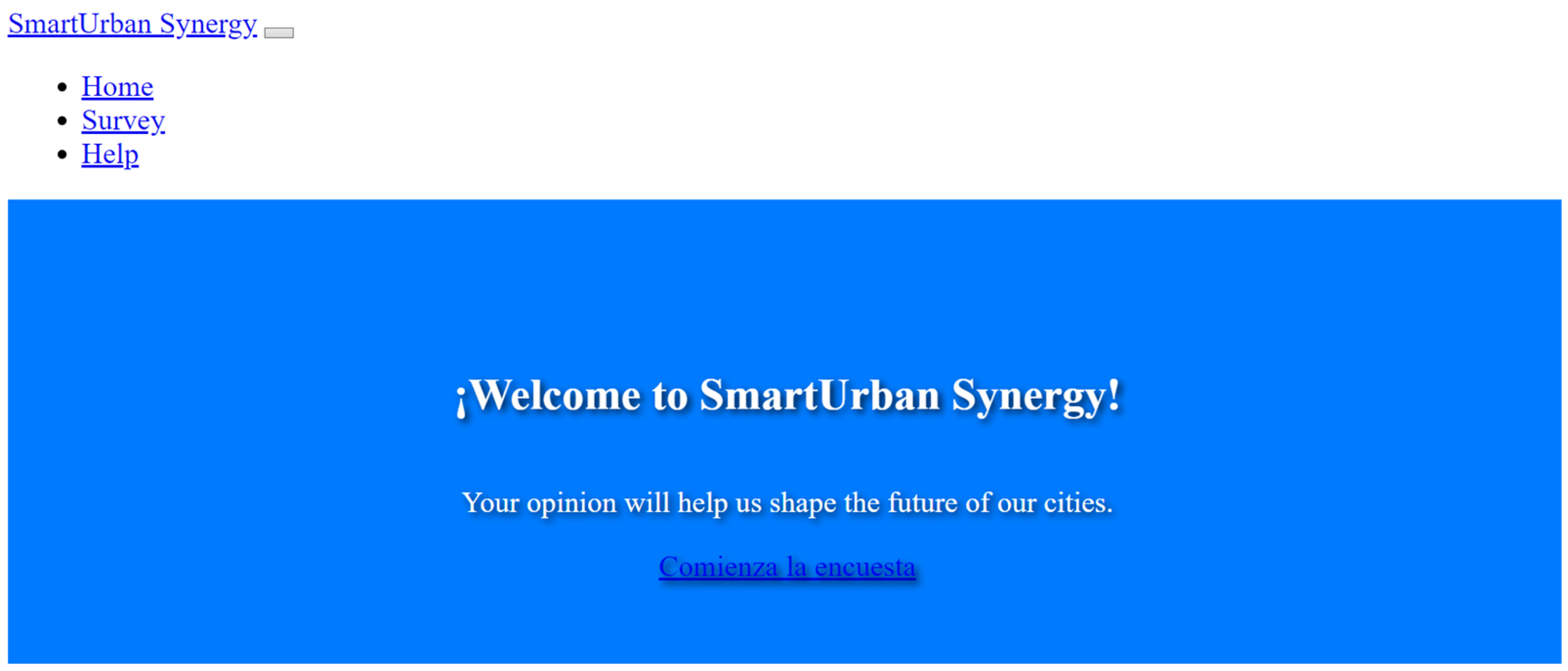
Figure 1 depicts the initial interface of the SmartCitiesPro web application, which introduces users to the platform and invites their participation through a survey-based interaction. The main menu includes navigation options such as Home, Survey, and Help, indicating a site structure oriented towards usability and user experience. The Start Survey button serves as a visible call to action, encouraging users to contribute their perceptions and experiences to enrich the application’s database. This interface represents the entry point for user engagement in the evaluation and potential improvement of the urban environment, reflecting both ease of interaction and an emphasis on citizen participation in the context of smart and sustainable city development.
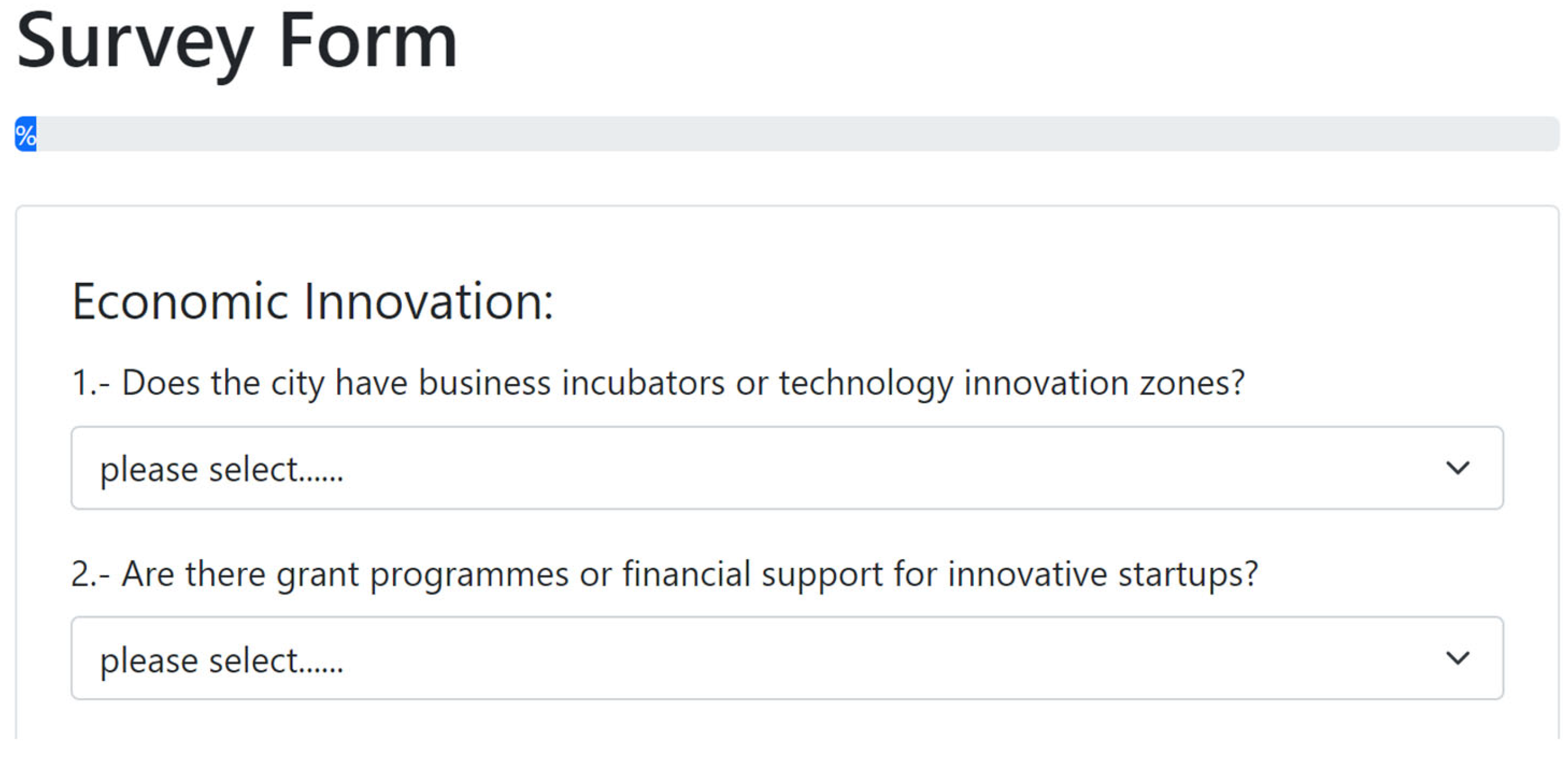
In Figure 2, we present a segment of our survey form, designed to collect critical data on economic innovation in the smart cities domain. This form is part of the Smart Urban Synergy web application, which aims to evaluate and improve urban development strategies.
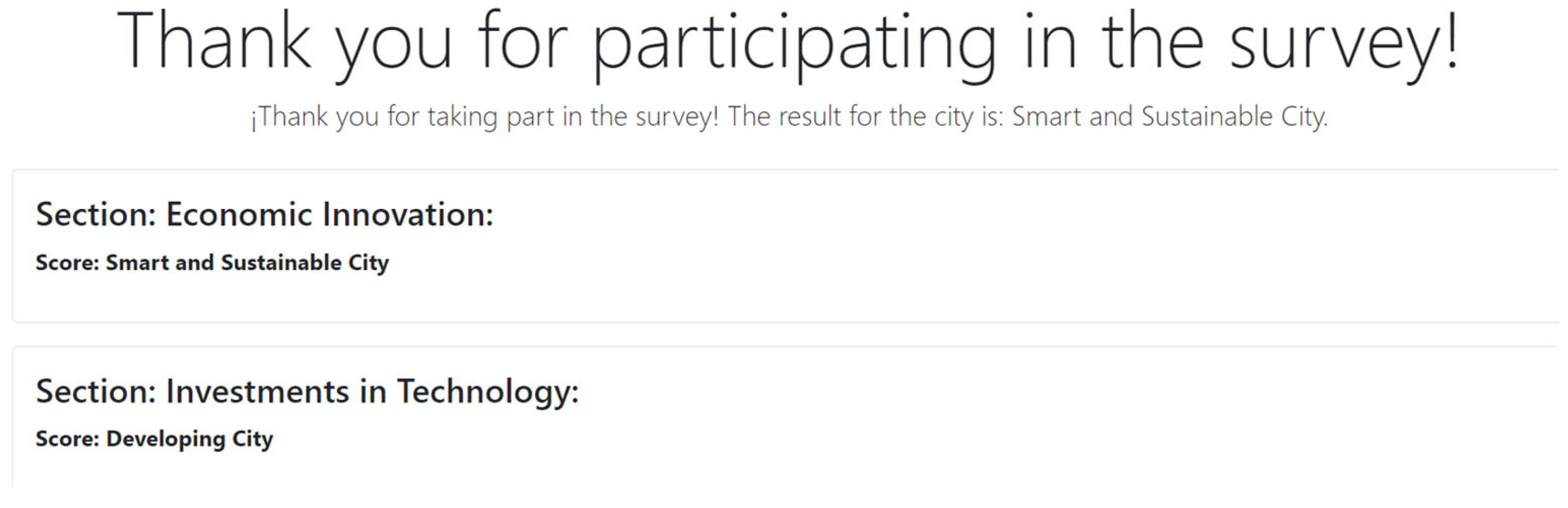
Figure 3 shows the feedback screen provided to participants after completing the survey designed to assess a city’s progression towards becoming a smart and sustainable city. The screen thanks users with a prominent message: “Thank you for participating in the survey!”, and provides immediate acknowledgement of their city’s overall score, which in this case is “Smart and Sustainable City”.
Table 5 presents a classification of city types according to their defining characteristics, development requirements, and key assessment questions. The table supports the identification of priority areas for intervention and strategic planning within the proposed smart and sustainable city assessment framework. Each city type, from ‘Developing City’ to ‘Smart and Sustainable City’, is associated with specific requirements and key questions to guide the assessment of its progress towards sustainability and urban intelligence. This analytical tool facilitates the identification of priority areas for intervention and strategic planning in the context of urban development.
The examples should therefore be interpreted as a proof of concept, illustrating how the system integrates indicators, applies the evaluation logic, and generates assessment outputs. Empirical validation, comparative benchmarking, and performance evaluation are beyond the scope of the present study and are identified as priorities for future work.

4. Conclusions and Future Works

This study presented a Python-based, web-oriented system designed to integrate existing smart and sustainable city indicators into a unified, modular assessment workflow. Rather than proposing new indicators or claiming validated benchmarking capabilities, the contribution lies in the system-level integration of heterogeneous indicator domains into an accessible framework that is intended to support exploratory assessment, cross-domain comparison, and reflective discussion at the local level. As such, the system is positioned as a proof-of-concept that illustrates how established smart city metrics can be operationalised within a configurable and transparent evaluation architecture.
At the same time, several methodological limitations must be explicitly acknowledged. First, the weighting scheme applied to indicators and domains is normative and illustrative. Different weighting choices may lead to different evaluation outcomes, which limits the interpretability of aggregated scores as objective measures of performance. Future work should therefore explore weight calibration through expert elicitation methods, multi-criteria decision analysis, or data-driven approaches.
Second, the use of binary (yes/no) indicator scoring represents a deliberate simplification intended to enhance transparency and reduce reporting burden in an exploratory context. While this approach supports interpretability, it cannot capture degrees of performance or incremental progress. More granular scoring schemes, such as Likert-type scales or continuous quantitative indicators, are methodologically preferable for validated evaluations and are identified as a priority direction for further system development.
Third, the current framework does not include empirical validation based on real-world case studies or systematic comparison with existing smart city assessment tools. Consequently, the results produced by the system should not be interpreted as validated benchmarks or rankings. Empirical validation using real urban datasets, comparative studies across cities, and longitudinal analyses represent essential next steps to assess robustness and practical utility.
Finally, the framework relies partly on self-reported or user-provided data, which introduces the risk of subjectivity and incomplete information. To address this, the system explicitly reports indicator coverage and treats missing data as “unknown” rather than as negative evidence. Future extensions may integrate automated data acquisition from open data portals or sensor infrastructures and incorporate uncertainty measures to further improve result reliability.
Beyond methodological limitations, the practical use of the proposed system in real governance contexts entails several potential risks that should be explicitly acknowledged. As the framework produces aggregated scores at domain and global levels, there is a risk of oversimplification or misinterpretation if results are detached from their underlying assumptions, indicator coverage, and contextual constraints.
In particular, aggregated assessment outcomes may be selectively mobilised to legitimise policy narratives or support predetermined political decisions, despite the exploratory nature of the framework. For this reason, the proposed system is not intended to support automated decision-making, prescriptive policy formulation, or validated city ranking, but rather to facilitate reflective discussion and scenario exploration among stakeholders.
Furthermore, reliance on self-assessment and user-provided inputs introduces governance-related risks associated with institutional bias, strategic reporting, or uneven data availability across cities. Differences in administrative capacity, transparency, and organisational culture may influence both data quality and the interpretation of results. Although the system explicitly reports indicator coverage and treats missing data as “unknown”, assessment outputs should be interpreted with caution, particularly in low-coverage scenarios.
Finally, the adoption of such assessment tools may be constrained by institutional resistance, limited technical capacity, or reluctance to engage with transparent evaluation mechanisms. The framework should therefore be understood as a complementary governance support instrument, rather than a substitute for participatory processes, expert judgement, or political deliberation.
Despite these limitations, the proposed system demonstrates the feasibility of a modular, cross-domain assessment approach that bridges formal indicator frameworks and local self-assessment needs. By clearly delimiting its scope and assumptions, this work provides a foundation for subsequent methodological refinement, empirical validation, and practical deployment in diverse urban contexts.

Author Contributions

Conceptualization, O.D.-P. and J.A.R.-V.; methodology, O.D.-P. and J.A.R.-V.; software, O.D.-P., J.A.-O. and M.A.V.-J.; validation, O.D.-P., J.A.R.-V. and J.M.X.-P.; formal analysis, O.D.-P. and R.A.B.-C.; investigation, O.D.-P., J.M.X.-P. and A.F.-P.; resources, J.M.X.-P. and A.F.-P.; data curation, O.D.-P. and F.R.T.-M.; writing—original draft preparation, O.D.-P.; writing—review and editing, J.A.R.-V., R.A.B.-C. and F.R.T.-M.; visualization, O.D.-P. and M.A.V.-J.; supervision, J.A.R.-V.; project administration, J.A.R.-V.; funding acquisition, J.A.R.-V. and J.M.X.-P. All authors have read and agreed to the published version of the manuscript.

Funding

This research received no external funding.

Data Availability Statement

No new data were created or analyzed in this study. Data sharing is not applicable to this article.

Conflicts of Interest

The authors declare no conflicts of interest.

References

  1. Townsend, A. Smart Cities: Big Data, Civic Hackers and the Quest for a New Utopia; W. W. Norton & Company: New York, NY, USA, 2013. [Google Scholar]
  2. UN-Habitat. Cities and Climate Change: Global Report on Human Settlements 2011; United Nations Human Settlements Programme: Nairobi, Kenya, 2011. [Google Scholar]
  3. Florida, R. The Rise of the Creative Class and How It’s Transforming Work, Leisure, Community and Everyday Life; Basic Books: New York, NY, USA, 2002. [Google Scholar]
  4. Saborido, R.; Alba, E. Software systems from smart city vendors. Cities 2020, 101, 102690. [Google Scholar] [CrossRef]
  5. IBM Corporation. IBM Intelligent Operations Center. 2026. Available online: https://www.ibm.com/docs/en/ioc/5.2.0?topic=solution-overview (accessed on 4 January 2026).
  6. SAP. SAP HANA Cloud Features. 2026. Available online: https://www.sap.com/products/technology-platform/hana/features.html (accessed on 4 January 2026).
  7. Schneider Electric. Plataforma EcoStruxure. 2026. Available online: https://www.se.com/mx/es/work/campaign/innovation/platform.jsp (accessed on 4 January 2026).
  8. Siemens. Siemens City Performance Tool. 2026. Available online: https://assets.new.siemens.com/siemens/assets/api/uuid:db110593-0bf9-4008-a6ad-0a1b2c01c9e3/city-performance-tool-siemens-advanta-en.pdf (accessed on 4 January 2026).
  9. Esri. ArcGIS Urban. 2026. Available online: https://www.esri.com/en-us/arcgis/products/arcgis-urban/overview (accessed on 4 January 2026).
  10. Barcelona City Council. Sentilo. 2026. Available online: https://www.sentilo.io/ (accessed on 4 January 2026).
  11. Newcastle University. Urban Observatory. 2026. Available online: https://newcastle.urbanobservatory.ac.uk/ (accessed on 4 January 2026).
  12. Freshwater Advisors, Amazon Web Services. AWS Sustainable Cities Accelerator. 2026. Available online: https://awssustainablecities.com (accessed on 4 January 2026).
  13. Amazon Web Services. Amazon Web Services. 2026. Available online: https://aws.amazon.com (accessed on 4 January 2026).
  14. Cloud Software Group. Smart Cities TIBCO. 2026. Available online: https://www.tibco.com (accessed on 4 January 2026).
  15. Latinno. Plataforma Urbana. 2026. Available online: https://latinno.net/es/case/4061/ (accessed on 4 January 2026).
  16. ISO 37122:2019; Sustainable Cities and Communities—Indicators for Smart Cities. International Organization for Standardization: Geneva, Switzerland, 2019.
  17. ISO 37120:2018; Sustainable Cities and Communities—Indicators for City Services and Quality of Life. International Organization for Standardization: Geneva, Switzerland, 2018.
  18. Ahvenniemi, H.; Huovila, A.; Pinto-Seppä, I.; Airaksinen, M. What are the differences between sustainable and smart cities? Cities 2017, 60, 234–245. [Google Scholar] [CrossRef]
  19. Sharifi, A. A critical review of selected smart city assessment tools and indicator sets. J. Clean. Prod. 2019, 233, 1269–1283. [Google Scholar] [CrossRef]
  20. Yigitcanlar, T.; Kamruzzaman, M.; Foth, M.; Sabatini-Marques, J.; da Costa, E.; Ioppolo, G. Can cities become smart without being sustainable? A systematic review of the literature. Sustain. Cities Soc. 2019, 45, 348–365. [Google Scholar] [CrossRef]
  21. Karampakakis, P.; Ioakeimidou, D.; Chatzimisios, P.; Tsintotas, K. A web-based application for smart city data analysis and visualization. Future Internet 2025, 17, 217. [Google Scholar] [CrossRef]
Figure 1. Index page of the SmartUrban Synergy web platform. The interface includes multilingual elements; the Spanish text “Comienza la encuesta” corresponds to “Start the survey”.
Systems 14 00074 g001
Figure 2. Survey form.
Systems 14 00074 g002
Figure 3. Output view of the proposed web application illustrating the classification results by thematic section.
Systems 14 00074 g003
Table 1. Comparison between ISO smart city standards, commercial vendor platforms, and the proposed assessment system.
AspectISO 37120 and ISO 37122 (Standards)Commercial Vendor PlatformsProposed System
Primary purposeStandardised reporting of urban performance indicators to support comparability and compliance across cities.Operational monitoring and analytics to support day-to-day city management and service optimisation.Exploratory, cross-domain assessment framework intended to support self-evaluation, reflection, and scenario analysis.
Typical use casePeriodic reporting and benchmarking based on predefined indicators and methodologies.Real-time dashboards for infrastructure, mobility, energy, and public services.Context-aware evaluation of smart and sustainable development dimensions at city or community level.
Data requirementsOfficial and validated datasets provided by public authorities (census data, budgets, utility records).Continuous data streams from IoT devices, sensors, and integrated enterprise systems.Configurable combination of official data, open datasets, and user-provided inputs, depending on local availability.
Flexibility and adaptabilityLow—indicator sets and methodologies are fixed to ensure standardisation and comparability.Medium—extensible through proprietary modules and integrations, often vendor-dependent.High—indicators, weights, and workflows can be adapted to local priorities and policy contexts.
TransparencyHigh—methodologies and indicators are publicly documented.Variable—internal algorithms and data processing are often opaque or proprietary.High—evaluation logic and configuration are explicit and modifiable.
Cost structureLow technological cost, although institutional and reporting effort may be significant.High—licensing fees, infrastructure investment, and integration costs.Low to moderate—based on open or low-cost tools, with effort focused on configuration and engagement rather than licensing.
Role in urban governanceReference framework for reporting and comparison.Operational decision support for city managers.Support tool for exploratory assessment and informed discussion rather than validated benchmarking.
Table 2. Indicators for smart and sustainable cities.
DimensionSub-Dimension/DomainIndicator Groups (Representative)Weight (%)
Smart Economy Smart economics indicators Economic innovation; investments in technology; development of digital skills in the workforce; infrastructure for start-ups and entrepreneurship; sustainable economic development policies; smart decision-making/participation; smart service/public services 4.505
Smart Governance Smart open data (transparent government) Structured and open government data; data usability; open government information available to citizens (access, understanding, transparency in communication) 3.604
Smart Infrastructure Smart infrastructure Energy grids; transport network; telecommunications; civil works and priority services 5.405
Resilience and Risk Management Smart disasters Prevention and mitigation investment planning; shelter location; evacuation planning; relief delivery; casualty transportation; stakeholders’ coordination; recovery operations; refugee camp location/coordination/management; refugee resettlement; big data for disaster management; disaster information systems; resilient land use and agriculture; epidemics control supply chain management 4.505
Smart Tourism Smart tourism Total natural attractions; total cultural events; accessibility by transportation; amenities characteristics; ancillary services; innovative hub for electrical vehicles with mobile app; infrastructure of professional sports 2.703
Smart Governance E-Government International trade; justice online; tax administration; e-procurement; electronic democracy; virtual parliament; electronic voting; collaborative governance and citizen participation 4.505
Energy Systems Energy infrastructure Advanced meter infrastructure (AMI); distribution grid management; high voltage transmission systems; demand response to intelligent/integrated transmission and distribution; solar farm to reduce carbon emission 5.405
Health and Well-being Conditions and health services Electronic-health (eHealth); mobile-health (mHealth); intelligent systems to connect medical devices; policies encouraging health/wellness/well-being; health monitoring and diagnostics as opposed to treatment 5.405
Mobility and Transport Transportation services Environment protection; traffic management; public transport; freight management; automotive telematics; road safety and security; parking management and road user charging; intelligent transportation system (ITS: ATMS, ATPS, APTS, ATIS) 5.405
Built Environment Advanced automated infrastructure Lighting and temperature management; security in buildings and homes; energy consumption management; street lighting; sustainable urban planning and management 3.604
Digital Connectivity Innovative and integrated technologies Low emission cars and multimodal transport systems; connectivity of home/office/mobile phone/car on a single wireless IT platform; adoption of the smart grid system; smart home solutions; high-speed broadband connection; roll out of 5G technology 4.505
Education and Human Capital Smart education Affinity for lifelong learning; social and ethnic diversity; flexibility and creativity; cosmopolitanism and participation in public life; citizen science; technology and innovation system; e-learning; training of highly skilled human capital; open science; major scientific infrastructure; connectivity and digital access; social inclusion and equity 4.505
Food Systems Food production Technology to save water/energy and reduce food waste; optimal seeding management; harvest optimisation; distribution of agricultural, livestock and fishery products 3.604
Economy and Labour Enterprise services Local self-employment rate; GDP per person employed; regional unemployment rate; share of labour market in part-time employment; companies headquartered in the city listed on the national stock market; number of passenger operations; number of air cargo operations; innovation and circular economy 3.604
Water Systems Smart water Water saving technology in toilets (dry toilets); showers with water saving technology; optimised irrigation for plants/vertical gardens in buildings; optimised irrigation in agricultural fields 5.405
Waste and Materials Smart waste Optimal solid waste management; special waste management; hazardous waste management; management of electronic and electrical waste 3.604
Natural Endowments Attractive natural conditions Sunshine hours; number of spaces with green areas 2.703
Environmental Health The pollution Level of suspended particulate matter in the air; damage to the ozone layer; people with respiratory diseases caused by pollution 4.505
Animal Welfare Animal protection Participation in individual animal protection actions; participation in animal protection associations or groups 2.703
Environmental Governance Sustainable management Water resources management; efficient use of electricity; reclamation of contaminated soils; air quality and noise management; biodiversity and green spaces; climate resilience and adaptation to climate change 4.505
Inclusive Urban Design Smart age-friendly Strong and durable benches in public areas; traffic lights with countdown clocks and increased crossing times; signage in the metro with larger lettering; agreements with gyms for discounts and free classes; established schedules for senior citizens in swimming pools; accessible courses for older people in universities; campaigns against age discrimination in the workplace; accessibility of train and public transport stops; ease of requesting bus stops in residential areas 3.604
Public Safety Smart security (safe city) Social prevention (educational/cultural/urban actions or policies); environmental or situational prevention; neighbourhood watch 4.505
Culture and Leisure Cultural facilities Number of cinemas; number of theatres 2.703
Social Development Social cohesion Ending poverty; zero hunger; health and well-being; quality education; gender equality; clean water and sanitation; affordable and clean energy; decent work and economic growth; industry, innovation and infrastructure; reducing inequalities; sustainable cities and communities; responsible consumption and production; climate action; underwater life; terrestrial ecosystem life; peace, justice and strong institutions 4.505
Table 3. Structure of the evaluator for smart and sustainable city assessment.
DimensionSub-Dimension/Thematic AreaEvaluated ItemsBinary Indicators (Yes/No)
Smart EconomyEconomic innovation1–2Presence of business incubators or technological innovation zones; Availability of grants or financial support for start-ups
Investment in technology3–4Recent technological modernisation projects; Public policies encouraging investment in emerging technologies
Digital skills development5–6Digital skills training programmes for the workforce; Up-to-date technology and digitalisation courses in schools and universities
Entrepreneurship infrastructure7–8Availability of co-working spaces and entrepreneurship centres; Access to mentoring networks and advisory services
Smart GovernanceSustainable economic policies9–10Policies promoting sustainable economic development; Initiatives supporting the circular economy and sustainable resource use
Decision-making and participation11–12Use of digital platforms for citizen participation; Mechanisms for citizen feedback on urban policies
Smart Public ServicesEfficiency and automation13–14Digital technologies improving service efficiency; Automated systems for urban service management
Accessibility and connectivity15–16Online and mobile access to public services; Free public internet access points
Citizen response and feedback17–18Efficient citizen reporting channels; Use of citizen feedback to improve services
EnvironmentEnvironmental sustainability19–20Environmentally sustainable practices in public services; Renewable energy programmes in public spaces
Social InclusionUniversal accessibility21–22Accessibility for persons with disabilities; Consideration of diverse demographic groups
Open GovernmentOpen data23–26Regular provision of open data; Accessible data formats; Dedicated open data portals; Support tools for data use
Government information27–30Publication of budgets and plans; Transparent communication channels; Information accessibility for diverse populations
InfrastructureEnergy grids31–32Modernised energy grids; Smart energy management systems
Transport networks33–35Quality public transport; Infrastructure for electric and non-motorised transport; Intelligent traffic systems
Telecommunications36–37High-speed networks and mobile coverage; Preparedness for 5G deployment
Urban ResilienceDisaster prevention and response40–50Prevention strategies, early warning systems, evacuation planning, inter-stakeholder coordination, and big data use
Smart HealthHealth services73–77Use of ICT in health management; Mobile health applications; Preventive health monitoring
Smart EducationEducation and knowledge97–108Lifelong learning; Inclusion and diversity; Digital access; Open scientific resources
Resource ManagementWater121–124Water-saving technologies; Efficient irrigation systems
Waste125–128Solid, hazardous, and electronic waste management technologies
Smart SecuritySafe city and social sustainability151–171Crime prevention, social inclusion, equity, well-being, sustainability, and SDG-related indicators
Table 4. City types and associated indicator subsets.
City TypeRequirementsFunctional FocusIndicator IDs
Developing City Infrastructure Fundamentals: Development of resilient and sustainable basic infrastructure, potentially encompassing improvements in sanitation, water provision, housing, and connectivity.
Training and Education: Programmes aimed at strengthening basic and technical education, with the objective of fostering a skilled workforce capable of transitioning towards a more digital and sustainable economy.
Inclusive Economic Development Policies: The design and implementation of policies that support economic development while promoting inclusion and reducing inequalities.
Health and Social Welfare: Enhancements to health and social welfare services intended to support the development of a healthy population, which is considered important for urban progress and resilience.
Initial Environmental Management: The implementation of environmental management and conservation policies and practices as an initial step towards sustainability.
Basic infrastructure, education, inclusive growth, health, early environmental management.1–2, 5–6, 9–10, 19–22, 31–37, 49–53
Green City Sustainability and Environment: Promotion of renewable energy sources and environmentally responsible practices.
Sustainable Economic Development Policies: The formulation and implementation of policies aimed at supporting sustainable economic development.
Sustainable Management: Efficient management of water and electricity resources, together with the remediation of contaminated land.
Biodiversity and Green Spaces: The preservation and enhancement of green spaces and urban biodiversity.
Environmental sustainability, renewable energy, resource efficiency, biodiversity.19–20, 31–32, 66–73
Knowledge City Development of Digital Skills in the Workforce: Provision of digital skills training programmes for the workforce.
Smart Education: Promotion of lifelong learning, together with social and ethnic diversity within educational systems.
Major Scientific Infrastructure: Investment in scientific research infrastructure and facilities.
Open Science: Support for open access to scientific resources and scholarly publications.
Education, research, digital skills, open science. 5–6, 54–65, 23–26
Safe City Smart Security (Safe City): Social and environmental prevention measures, together with neighbourhood watch initiatives.
Civil Works and Priority Services: Maintenance and development of essential public works and priority urban services.
Social Prevention: Educational, cultural, and urban initiatives intended to enhance quality of life and contribute to crime prevention.
Public safety, social prevention, essential civil works, resilience. 38–48, 74–171
Sustainable City Sustainable Economic Development Policies: Policies aimed at supporting sustainable economic development.
Energy Grids: Modernisation of energy grids, together with the adoption of smart energy management systems.
Transport Network: Provision of high-quality public transport, along with infrastructure supporting electric vehicles.
Food Production: Technologies supporting efficient food production and optimised plantation management.
Sustainable development, energy, transport, food systems. 9–10, 31–35, 66–73
Smart City Investments in Technology: Implementation of technological modernisation projects.
Efficiency and Automation: Use of digital technologies to support improvements in the efficiency of public services.
Smart Decision/Participation: Digital platforms that facilitate citizen participation in decision-making processes.
Innovative and Integrated Technologies: Adoption of smart grid systems and smart home solutions to support integrated and advanced technological infrastructure.
Digitalisation, automation, citizen participation, smart infrastructure. 3–8, 11–18, 23–30, 31–37
Smart and Sustainable City Energy Infrastructure—Advanced Metering Infrastructure (AMI): Use of smart metering systems to support efficient monitoring of energy consumption.
Sustainable Urban Planning and Management: Integration of automated infrastructure systems within urban planning and management processes.
Integrated and cross-domain smart and sustainable development. 1–171 (all indicators)
Table 5. Classification of city types and their associated characteristics, requirements, and key assessment questions.
Type of CityRequirementKey Questions
Developing CityCritical infrastructure development and basic sustainability, education and skills development, inclusive economic development policies, health and well-being initiatives, early environmental strategies.All questions related to the fundamentals of urban development, with emphasis on infrastructure and basic services, and strategies for moving towards a sustainable and digital economy.
Green CitySustainability and environment, sustainable economic development, sustainable resource management, biodiversity and green spaces.All questions related to sustainability and environment.
City of KnowledgeDigital skills development, smart education, increased scientific infrastructure, open science.All questions related to education and scientific knowledge.
Safe CitySmart security, civil works and priority services, social prevention.All questions related to safety and prevention.
Sustainable CitySustainable economic development, energy networks, transport network, food production.All questions related to sustainable development.
Smart CityInvestments in technology, efficiency and automation, smart decision-making/participation, innovative and integrated technologies.All questions related to technology and citizen participation.
Smart and Sustainable CityAll of the indicators mentioned above, advanced energy infrastructure, sustainable urban planning and management, smart water and waste management.All questions related to the integration of technologies for sustainable development.
Disclaimer/Publisher’s Note: The statements, opinions and data contained in all publications are solely those of the individual author(s) and contributor(s) and not of MDPI and/or the editor(s). MDPI and/or the editor(s) disclaim responsibility for any injury to people or property resulting from any ideas, methods, instructions or products referred to in the content.