
Review

Fifty Years of Knowledge Management Research: A System-Level Analysis of Intellectual, Conceptual and Social Structures


by
Sebastian-Emanuel Stan
1,*,
Cristina-Maria Bătușaru
2,
Tiberiu Giurgiu
1,
Alina-Teodora Ciuhureanu
2 and
Ioana-Raluca Sbârcea
3
1
Faculty of Military Management, Nicolae Bălcescu Land Forces Academy, 550170 Sibiu, Romania
2
Faculty of Economic Sciences, Nicolae Bălcescu Land Forces Academy, 550170 Sibiu, Romania
3
Faculty of Economics, Lucian Blaga University of Sibiu, 550024 Sibiu, Romania
*
Author to whom correspondence should be addressed.
Systems 2026, 14(1), 38; https://doi.org/10.3390/systems14010038 (registering DOI)
Submission received: 19 November 2025 / Revised: 22 December 2025 / Accepted: 25 December 2025 / Published: 30 December 2025
(This article belongs to the Section Complex Systems and Cybernetics)

Abstract

Knowledge Management (KM) has evolved over the last five decades as a complex socio-technical system shaped by interactions between organizational processes, technologies and social actors. This study maps the systemic evolution of KM research between 1975 and 2025 by examining its intellectual, conceptual and social subsystems. Using a large-scale bibliometric science-mapping approach that combines performance indicators and network-based techniques, we analyze 33,153 documents indexed in the Web of Science Core Collection. The results reveal a pronounced post-1995 expansion of the field, marked by a consolidated core of specialized journals and influential scholars, alongside an increasingly global research network. The analysis shows that KM research is structured around four interdependent dimensions: organizational processes, strategic orientations, technological infrastructures and socio-cultural factors. More recent developments indicate the emergence of new system trajectories associated with digital transformation, knowledge governance and sustainability. Viewed through a system-level lens, these findings position KM as an evolving research system characterized by adaptive and cross-domain dynamics.

1. Introduction

In the context of the global knowledge-based economy, Knowledge Management (KM) has become a central research and practice domain due to its role in shaping innovation, organizational learning and long-term competitiveness. Organizations recognize knowledge as an essential strategic resource for innovation and competitive advantage [1]. Investments in intellectual capital and the ability to create and use knowledge have been correlated with superior economic performance and organizational resilience in the face of dynamic change [2,3]. Consequently, the KM literature has expanded significantly in recent decades, with thousands of papers published, reflecting the growing interest in how knowledge can be effectively managed in organizations [4]. This growth highlights the practical relevance of KM: in a complex and uncertain business environment, the ability of firms to leverage internal and external knowledge is vital for innovation, informed decision making and continuous adaptation [2].
Beyond its managerial relevance, KM can be conceptualized as an open and dynamic system, continuously interacting with technological, organizational and institutional environments [5]. From this perspective, KM does not operate as a linear set of practices, but as a socio-technical system in which human actors, digital infrastructures, organizational routines and governance mechanisms are tightly interconnected [6]. Knowledge creation, sharing and utilization emerge from these interactions rather than from isolated components. This systemic view is increasingly relevant as organizations face accelerated digitalization, distributed work arrangements and growing inter-organizational interdependencies [7].
Recent technological developments, such as artificial intelligence, Big Data analytics and collaborative digital platforms, have further increased the complexity of the KM system. These technologies reshape how knowledge flows are generated, codified and recombined, while simultaneously amplifying challenges related to tacit knowledge transfer, coordination and trust in virtual environments [8]. Industry leaders report increased investment in KM solutions and digital platforms, motivated by their positive impact on employee experience and innovation capacity [9]. As a result, KM research has progressively expanded toward themes such as digital transformation, analytics-enabled knowledge processes and sustainability-oriented knowledge strategies. This evolution reflects the behavior of KM as a complex adaptive system, in which new structures and practices emerge through non-linear interactions and feedback loops between technological innovation, organizational design and social dynamics [10,11].
Despite its growth, the KM literature still faces notable conceptual challenges, notably the absence of a universally accepted definition and the coexistence of multiple theoretical perspectives. These perspectives range from process-oriented approaches centered on knowledge creation and organizational learning to managerial-pragmatic and technology-driven views. Seminal contributions emphasize different components of the broader KM system: process-based models focus on the dynamic interaction between tacit and explicit knowledge [12], whereas managerial approaches underline the importance of organizational culture and information infrastructures in supporting effective knowledge flows [13,14]. While this plurality has enriched the field, it has also contributed to theoretical fragmentation, characterized by inconsistent terminology and heterogeneous frameworks that hinder the cumulative development of KM knowledge [15]. Moreover, KM research is distributed across multiple disciplinary domains, including management, information systems, organizational studies and computer science, each applying distinct conceptual assumptions and methodological traditions. As a result, conceptual integration remains limited, complicating both the systematic understanding of the field’s long-term evolution and the translation of KM insights into coherent managerial practice [16].
In this context, bibliometric science-mapping approaches offer a system-level analytical lens capable of capturing the structural properties and evolutionary dynamics of large research domains. By examining citation networks, keyword co-occurrences and collaboration patterns, bibliometric methods allow researchers to identify intellectual foundations, conceptual clusters and social structures that jointly constitute the research system of a field [3]. Rather than synthesizing empirical findings, this approach focuses on revealing interdependencies, emergent themes and multi-level structures within scientific knowledge production, making it particularly suitable for analyzing KM as a complex and evolving research system.
The research gap addressed in this study lies in the absence of a recent, integrative and longitudinal mapping of the KM field. While previous reviews and bibliometric studies have examined specific subtopics or limited time spans, they do not fully capture the systemic transformation of KM research in the context of post-2020 digitalization and sustainability challenges. For example, Shashi et al. (2021) [17] conducted an extensive bibliometric analysis of KM, but it covers literature up to 2018 and does not capture the impact of the latest trends (such as post-2020 digital transformation). To fill this gap, this article conducts a large-scale bibliometric analysis of KM research published between 1975 and 2025, guided by the following research questions (RQs):
RQ1: How has the intellectual structure of Knowledge Management research evolved over time (i.e., the development of themes and the influence of fundamental works)?
RQ2: What is the current conceptual and thematic structure of the KM field and where does it seem to be heading?
RQ3: What is the structure of the KM research social network (e.g., who are the major authors, institutions and collaborations that form the scientific community in this field)?
RQ4: Which emerging themes signal adaptive trajectories and future directions of the KM research system?
To address these research questions, this study adopts a rigorous bibliometric methodology aligned with established best practices in bibliometric research and science mapping [1,4,18]. The analysis includes both performance analysis (publication and citation indicators) and science mapping through techniques such as co-citation, and keyword and co-authorship analysis, in order to capture both the structural components and the relational dynamics of the KM research domain. Specialized software tools—the Bibliometrix/BiblioShiny 4.40 package [2]—were used to extract and visualize bibliometric data, allowing for transparent interpretation of the extensive publication dataset. Rather than focusing on individual empirical findings, this methodological approach allows for the examination of knowledge production at the system level, revealing patterns of connectivity, centrality and evolution within the KM research landscape.
This study makes several contributions at the methodological and theoretical levels. From a longitudinal perspective, it provides a comprehensive mapping of KM research over a fifty-year period (1975–2025), capturing the field’s progression from early conceptual formation to scientific institutionalization, maturation and increasing interdisciplinary diversification. Such long-term dynamics are difficult to apprehend through narrative reviews or short time-window analyses, yet they are essential for understanding KM as an evolving research system. Methodologically, the study illustrates the value of combining performance analysis with science-mapping techniques to obtain a holistic and system-oriented view of complex and fragmented research domains. By integrating multiple bibliometric tools, the analysis highlights not only dominant knowledge streams but also their interdependencies and relative positioning within the broader research system. In doing so, our research is part of recent efforts to increase the rigor of literature reviews in management sciences by using reliable quantitative tools (e.g., [19]).
At the theoretical level, the study clarifies and consolidates the conceptual foundations of KM by empirically identifying the intellectual cores and conceptual subsystems that structure the field. Through the identification of influential works, thematic clusters and citation networks, the analysis clarifies how strategic, technological, organizational and socio-cultural perspectives have co-evolved and interacted over time. This system-level perspective advances existing understandings of KM by moving beyond isolated theoretical traditions and highlighting the relational architecture that underpins the field’s development. Moreover, by revealing areas of convergence and fragmentation, the study points to theoretical gaps and underexplored linkages that may inform future theory-building efforts.
The study also offers relevant practical implications. By conceptualizing KM as a socio-technical and multi-level system, the findings underscore that effective KM initiatives cannot be reduced to isolated tools or practices. Instead, they depend on the alignment of leadership, organizational culture, processes and digital infrastructures. The growing intersection between KM, digital transformation, sustainability and organizational resilience further suggests that knowledge-based capabilities play a central role in enabling organizations to adapt to technological and societal change.
Thus, the study provides practitioners and policymakers with a structured reference framework for designing and evaluating KM strategies and policies that support long-term adaptability and systemic coherence.
The remainder of the paper is organized as follows. Section 2 presents the theoretical background, positioning Knowledge Management within a systemic and socio-technical perspective. Section 3 describes the data sources, selection criteria and bibliometric methods employed in the analysis. Section 4 reports the results of the performance analysis and science-mapping procedures. Section 5 discusses the findings from a system-level perspective and outlines their theoretical and managerial implications. Finally, Section 6 concludes the paper and identifies directions for future research.

2. Knowledge Management: Theoretical Background and Literature Review

2.1. Knowledge Management as a Socio-Technical and Systemic Concept

Knowledge Management (KM) emerged as a distinct field in the early 1990s, at the intersection of organizational theory, information science and strategic management. A simplified definition describes KM as the set of systematic processes through which an organization captures, creates, stores, transfers and applies knowledge to achieve its strategic objectives [17]. Unlike raw information management, KM focuses on leveraging knowledge, which involves human interpretation, context and experience. Knowledge is often classified into two categories: tacit—informal, personal, difficult to articulate—and explicit—formalized, systematically documented [16].
From a theoretical perspective, KM can be conceptualized as an open socio-technical system, composed of interdependent human, technological and organizational components [6,20]. This view is consistent with General Systems Theory, which emphasizes interaction, feedback and emergence as defining properties of complex systems, as well as with socio-technical systems theory, which highlights the joint optimization of social and technical subsystems in organizational contexts [21]. From a system-level perspective, digital KM practices constitute a set of routines and technologies that shape knowledge processes and, ultimately, organizational performance, often via serial mediation paths involving knowledge sharing, innovation capability or organizational learning [22]. Within KM, knowledge processes do not operate in isolation; rather, they emerge from continuous interactions between individuals, digital infrastructures, routines and governance mechanisms [23]. Consequently, KM outcomes, such as innovation, learning and performance, are best understood as emergent properties of a multi-level system rather than as the result of isolated managerial interventions [24,25]. Within this systemic and socio-technical view of KM, intellectual property management can be understood as a complementary governance mechanism that regulates knowledge appropriation and protection in the knowledge-based economy, reinforcing the link between KM practices and sustainable competitive advantage [26].
One of the most influential theoretical models capturing the dynamic nature of knowledge processes is the SECI model proposed by [12]. The model conceptualizes knowledge creation as a continuous spiral driven by interactions between tacit and explicit knowledge through four modes: socialization, externalization, combination and internalization. While the SECI framework has been widely adopted as a foundational reference in KM research, empirical evidence suggests that these processes may vary significantly across organizational and cultural contexts and may not always unfold in a linear or uniform manner [16]. This variability further reinforces the need to approach KM as a complex adaptive system characterized by non-linear dynamics and context-dependent configurations.

2.2. Core Perspectives and Fragmentation in KM Research

Classic works in the field outline complementary yet distinct perspectives on how knowledge is generated and mobilized within organizations. Early work on the “knowledge-creating company” highlighted the social and dynamic nature of knowledge creation, emphasizing collective learning and continuous innovation as key organizational capabilities [12]. In contrast, managerial-pragmatic approaches conceptualized KM as a set of practices and infrastructures designed to collect, distribute and use knowledge effectively, with particular attention to organizational culture and information technologies [13,17]. Together, these perspectives established two enduring pillars of KM research: the human-centered dimension of knowledge creation and sharing and the technological and structural dimension supporting these processes.
While this plurality has contributed to the richness of the field, it has also resulted in conceptual fragmentation. KM research spans multiple disciplinary domains, including management, information systems, organizational studies and computer science, each introducing distinct assumptions, terminologies and methodological approaches. Empirical studies often focus on specific components of the KM system, such as tacit knowledge sharing or technological platforms, or are confined to particular organizational contexts, limiting the generalizability of their findings (e.g., [6,27,28]). As a result, the cumulative structure and long-term evolution of KM research remain difficult to integrate into a coherent theoretical framework.
Recent literature increasingly recognizes these limitations and calls for more integrative and systemic perspectives [24,29]. Contemporary studies emphasize the need to align technological infrastructures, organizational culture, leadership and governance mechanisms in order to realize the full potential of KM initiatives [30]. This shift reflects a broader movement toward systems thinking in organizational research, in which KM is viewed as a configuration of interacting subsystems rather than as a collection of isolated practices [31].

2.3. Emerging Directions: Digital Transformation, Artificial Intelligence and Sustainability

Over the past decade and particularly since 2020, KM research has expanded in response to major technological and societal transformations. Digital transformation has reshaped knowledge processes by enabling new forms of data-driven decision-making, real-time collaboration and distributed knowledge creation [32,33]. Emerging research highlights the growing role of artificial intelligence and advanced analytics in augmenting KM systems, for example by supporting knowledge discovery, personalization and automation, while simultaneously raising challenges related to transparency, trust and the preservation of tacit knowledge [34,35].
At the organizational level, AI-based HRM systems that embed ‘empathetic’ AI into people management illustrate these emerging trajectories, showing how AI can reconfigure knowledge sharing, engagement and performance in ways that raise new governance and ethical questions.
In parallel, sustainability and organizational resilience have become increasingly prominent themes in the KM literature. Recent studies explore how knowledge capabilities contribute to sustainable innovation, responsible governance and the achievement of broader societal goals [36,37,38]. This line of research positions KM not only as a managerial tool, but as a systemic capability embedded in wider socio-economic and environmental systems [39]. From this perspective, KM acts as a critical mechanism through which organizations adapt to complexity, uncertainty and long-term sustainability pressures [40].
Taken together, these developments signal an ongoing transition in KM research from fragmented, component-based analyses toward more holistic and system-oriented approaches [41]. Understanding KM as a complex socio-technical system provides a unifying lens through which established theories and emerging research streams can be integrated, thereby offering a more coherent foundation for both theoretical advancement and empirical investigation [6].

3. Materials and Methods

3.1. Research Design and Analytical Scope

This study adopts a bibliometric science-mapping research design aimed at examining the structure and long-term evolution of Knowledge Management (KM) research at the system level. The analytical focus is not on synthesizing empirical findings or evaluating study-level evidence, but on mapping the intellectual, conceptual and social structures that collectively shape the KM research domain through the quantitative analysis of bibliographic metadata [42].
The purpose of this bibliometric analysis is to provide a systematic, quantitative and visual examination on the scientific evolution of the field of Knowledge Management (KM) over the last fifty years (1975–2025). The analysis captures the temporal dynamics of scientific production, the geographical and author-based distribution of contributions and the relational structures that underpin the KM research domain. In line with a system-level perspective, the study examines the intellectual, conceptual and social subsystems of the field and their evolution over time.
The bibliometric approach employed in this study is systematic in procedure but does not constitute a systematic review as defined by the PRISMA 2020 guidelines; therefore, PRISMA reporting standards do not apply. Rather than assessing the quality or outcomes of individual empirical studies, the analysis focuses on identifying structural patterns, interdependencies and emergent trajectories within a large scientific corpus.
From a systems perspective, the KM literature is treated as an open and evolving research system, composed of interacting subsystems operating at multiple levels. Citation relations, keyword co-occurrence patterns and collaboration networks are used as analytical proxies for these subsystems, enabling the identification of central nodes, structural configurations and dynamic linkages over time. This system-level analytical scope supports the investigation of both stability and change within the KM research landscape across an extended temporal horizon.

3.2. Data Source and Selection Criteria

The bibliometric dataset was retrieved from the Web of Science Core Collection (WoSCC), a database extensively used in bibliometric and scientometric research due to the quality, standardization and stability of its bibliographic metadata [3,43]. WoSCC provides structured citation links, controlled indexing and consistent coverage across time, which are essential prerequisites for network-based analyses such as co-citation, co-word and co-authorship mapping.
Alternative databases, including Scopus and Dimensions, offer broader coverage in terms of journal inclusion, conference proceedings and regional publications. However, they also exhibit higher heterogeneity in indexing practices, citation formats and metadata completeness, which can affect the robustness and reproducibility of longitudinal bibliometric analyses. Given the objectives of this study (namely, the identification of stable intellectual cores, conceptual clusters and long-term evolutionary patterns within the KM research system), WoSCC was selected as the most appropriate data source. This choice prioritizes analytical consistency and comparability over maximal coverage.
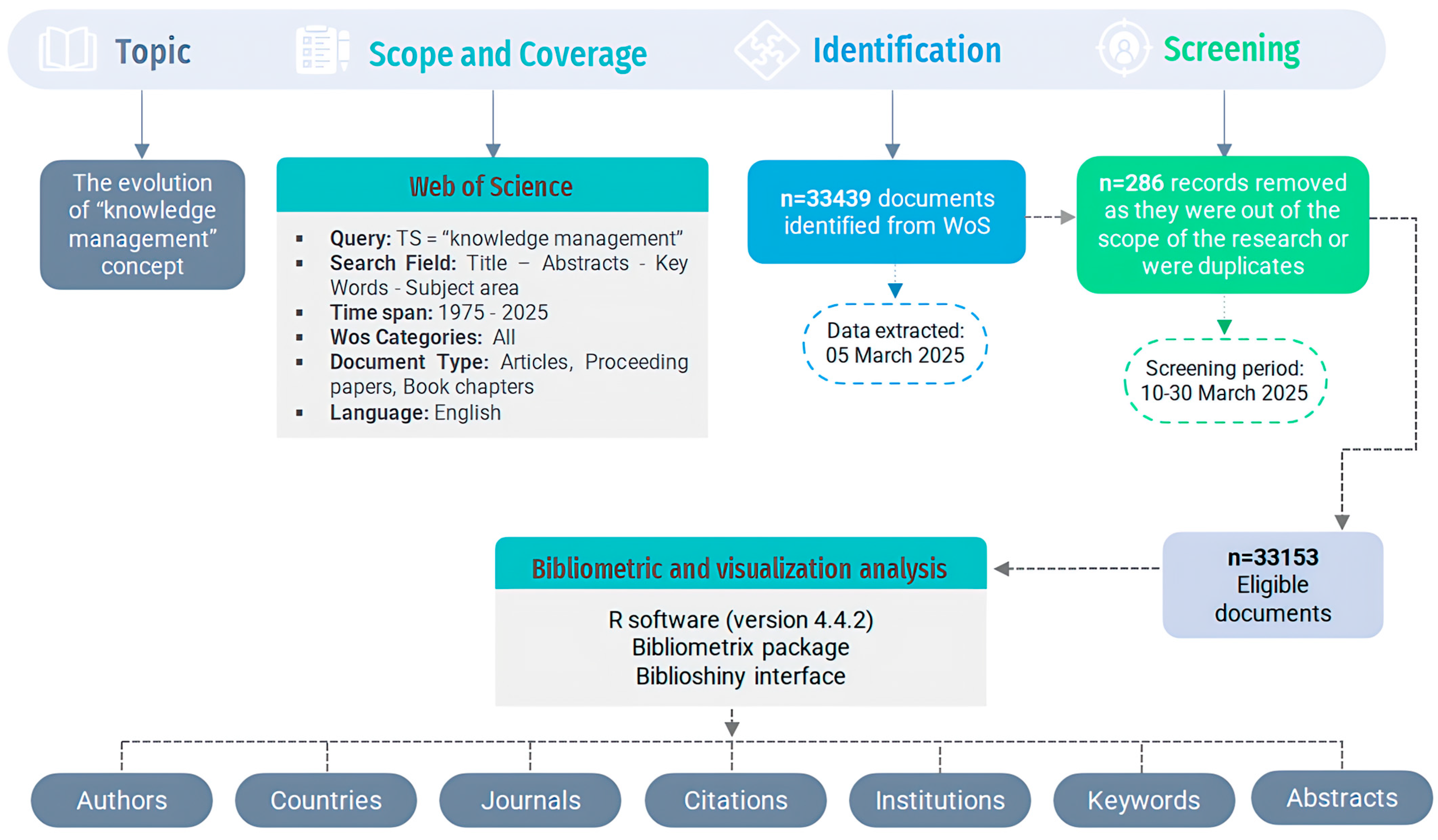
The search strategy consisted of a topic search (TS) for the term “Knowledge Management”, applied to titles, abstracts and author keywords. The time window covered the period from 1975 to April 2025, allowing for the capture of the complete historical trajectory of KM research. The search was restricted to documents published in English and included articles, proceedings papers and book chapters. No disciplinary restrictions were imposed, ensuring the inclusion of contributions from management, information systems, organizational studies and related fields. The extraction process was carried out on 5 March 2025, resulting in an initial set of 33,439 records. Following the application of screening and data-cleaning procedures described in the subsequent section, a final dataset of 33,153 documents was retained for analysis.

3.3. Data Screening and Cleaning Procedures

Following data retrieval, a multi-step screening and cleaning procedure was applied to ensure the relevance, consistency and analytical integrity of the bibliometric dataset. First, duplicate records were identified and removed based on document identifiers, titles and publication metadata. Second, titles, abstracts and keywords were manually inspected to exclude documents that were clearly unrelated to the Knowledge Management (KM) field despite matching the search query. As a result of this process, 286 records were excluded, resulting in a final set of 33,153 eligible documents used for bibliometric analysis.
Data cleaning focused primarily on metadata consistency rather than on extensive semantic normalization. Minor inconsistencies in author names, institutional affiliations and country/region designations were corrected where unambiguous matches could be established. Standardization procedures were applied to harmonize country/region names (e.g., unifying country/region labels) and publication source titles, thereby improving the accuracy of performance indicators and collaboration analyses.
No aggressive keyword unification or thesaurus-based merging was conducted. This decision was intentional and aligned with the objective of preserving the terminological and conceptual diversity of the KM literature. While keyword normalization can reduce redundancy, it also risks imposing ex ante conceptual structures and obscuring emerging or niche topics. By retaining variations in keyword expressions, the analysis reflects the actual linguistic and thematic heterogeneity of the field as it appears in the published literature.
The authors acknowledge that keyword-based and abstract-based analyses may introduce certain biases, including the over-representation of generic terms and the potential under-representation of emerging or highly specialized concepts. These limitations are inherent to large-scale bibliometric studies and are addressed explicitly in the limitations section. However, within the context of a system-level science-mapping approach, such variations are treated as meaningful signals of conceptual fragmentation and evolution rather than as sources of error.
The entire data selection and filtering process is illustrated in Figure 1, which summarizes the steps of defining the research scope, identifying documents, screening records and preparing the dataset for bibliometric analysis.

3.4. Bibliometric Techniques and Units of Analysis

The bibliometric analysis integrates two complementary methodological dimensions: performance analysis and science mapping, which together allow for a comprehensive examination of the structure and evolution of the Knowledge Management (KM) research system. While performance analysis focuses on the productivity and impact of research constituents, science mapping examines the relational patterns among these constituents, enabling the identification of intellectual, conceptual and social structures within the field.
From a system-level perspective, these two dimensions address different but interdependent analytical layers. Performance indicators capture the distribution and concentration of scientific activity, whereas science-mapping techniques reveal how knowledge is structured, connected and transformed over time through networks of citations, concepts and collaborations.

3.4.1. Performance Analysis

Performance analysis was employed to assess the contribution and impact of key research constituents involved in the development of the KM field, including authors, publication sources, countries/regions and institutions [1]. Production indicators were used to measure scientific output, while impact indicators captured citation-based influence within the literature (as in [44]). Specifically, the analysis included the temporal evolution of publications, allowing the identification of growth phases and changes in research intensity over time. Country/region-level production and citation indicators were calculated to examine the geographical distribution of scientific contributions and their relative visibility. Author- and source-level indicators were used to identify the most influential scholars and journals shaping the KM research domain.
International collaborations patterns were also evaluated by the ratio between publications by authors from the same country/region (SCP—Single-Country Publications) and those resulting from international collaborations (MCP—Multiple-Country Publications). The SCP/MCP ratio provides insight into the degree of internationalization of KM research and the extent to which knowledge production is embedded in transnational collaboration networks. Together, these indicators offer a quantitative overview of how scientific activity and influence are distributed across the KM research system.

3.4.2. Science Mapping and System-Level Structures

Science mapping techniques were applied to examine the relational architecture of the KM research domain, focusing on three interrelated system-level structures: intellectual, conceptual and social [45]. These structures are treated as interacting subsystems whose co-evolution shapes the overall dynamics of the field.
Intellectual Structure
The intellectual structure of KM research was analyzed using co-citation analysis and historiographic mapping, two established bibliometric techniques for identifying the theoretical foundations and historical development of a scientific field [46]. Co-citation analysis was applied at the level of sources and documents, tracking the frequency with which they are cited together and allowing the identification of clusters that represent shared intellectual bases and canonical knowledge cores [47].
In parallel, historiographic analysis was used to reconstruct the chronological development of KM research by tracing direct citation links among influential publications [48]. This approach highlights pivotal works and knowledge transmission paths, providing insight into how foundational ideas have evolved and diversified over time. Unlike bibliographic coupling, which mainly captures recent literature and the research frontier [49], co-citation and historiographical analysis are more suitable for delimiting the long-term knowledge base and evolutionary trajectory of the field.
Conceptual Structure
The conceptual structure of the KM field was examined through co-word analysis, a widely used method for identifying dominant themes and emerging research directions [50,51]. Co-word analysis was applied to author keywords, Keywords Plus, titles and abstracts, using co-occurrence frequencies to construct semantic networks that represent relationships among key concepts.
To further characterize the organization and development of research themes, thematic mapping and thematic evolution analysis were employed. These techniques classify themes according to their centrality and density, distinguishing between basic, motor, niche and emerging or declining themes and track their transformations over time [48]. In addition, Multiple Correspondence Analysis (MCA) was applied to explore latent conceptual dimensions underlying the KM literature [50]. The combined use of co-word networks, thematic maps and factorial analysis enables a robust identification of conceptual clusters and provides a structured view of the semantic evolution of KM research.
Social Structure
The social structure of the KM research system was analyzed using co-authorship analysis, a standard method in bibliometrics for examining scientific collaboration networks [47]. Collaboration networks were constructed at both the author and country/region levels to identify research communities, collaboration hubs and patterns of connectivity within the field.
At the author level, co-authorship networks reveal the degree of collaboration, centrality and clustering among individual researchers. At the country/region level, these networks capture the geographical configuration of scientific collaboration and the extent of international knowledge exchange. Analyzing both levels allows for the investigation of collaboration dynamics at the micro level (individual researchers) and the macro level (national research systems), providing insight into how social interactions shape the production and diffusion of KM knowledge.
Table 1 summarizes the bibliometric techniques and units of analysis employed in the study.

3.4.3. Analytical Tools and Reproducibility

To perform the bibliometric analysis, the Bibliometrix package and its web-based interface Biblioshiny were used, implemented in R software (version 4.4.2). Bibliometrix is an open-source tool specifically designed for bibliometric and scientometric research and provides a comprehensive set of functions for analyzing scientific production, citation patterns, co-authorship and international collaboration networks, as well as keyword co-occurrence structures [2,45]. The choice of this package is justified by its accessibility, transparency and reproducibility, as well as its full compatibility with the BibTeX format used for data export from the Web of Science Core Collection allowed for seamless integration and processing of the dataset without loss of information.
An additional advantage of using R-based and open-source tools lies in the reproducibility and transparency of the analytical workflow. The entire analysis can be replicated through scripted procedures, ensuring compliance with methodological standards and best practices in bibliometric research. Moreover, the active user community and extensive documentation associated with Bibliometrix support continuous methodological refinement and facilitate the reliable application of advanced bibliometric techniques [45].

4. Results

4.1. Descriptive Overview of the Dataset

An initial descriptive analysis was conducted to characterize the scope, composition and basic properties of the Knowledge Management (KM) research corpus. This step provides a quantitative overview of the dataset used for subsequent performance and science-mapping analyses. Table 2 summarizes the main bibliometric indicators related to the temporal coverage, size, authorship structure and citation characteristics of the analyzed literature.
The final dataset comprises 33,153 documents published between 1975 and April 2025, extracted from the Web of Science Core Collection after screening and data-cleaning procedures. These documents were published across 9379 sources and authored by 60,044 unique authors, indicating a large and diverse scientific community. Single-authored documents account for 4841 publications, while the average number of co-authors per document is three, reflecting a predominantly collaborative research environment.
With respect to international collaboration, 19.54% of the publications involve co-authorship between researchers affiliated with different countries/regions. This indicator provides an overview of cross-national research activity within the KM literature. The dataset includes 44,819 author keywords, highlighting the breadth of terminological usage across studies and references a total of 683,074 cited sources, underscoring the extensive bibliographic foundations of the field.
In terms of citation characteristics, the average number of citations per document is 15.01, while the average document age is 11.5 years, reflecting the longitudinal nature of the dataset. The annual scientific production exhibits a steady growth pattern over the analyzed period, with an average annual growth rate of 9.97%. Together, these indicators provide a descriptive baseline for understanding the size, diversity and temporal evolution of the KM research corpus prior to more detailed performance and network-based analyses.

4.2. Performance Analysis Results

Performance analysis examines the distribution of scientific output and citation impact across time, publication sources, authors and countries/regions within the Knowledge Management (KM) research domain. The results presented in this section are descriptive and provide a quantitative overview of productivity, collaboration and visibility patterns in the analyzed corpus.

4.2.1. Temporal Evolution of Publications

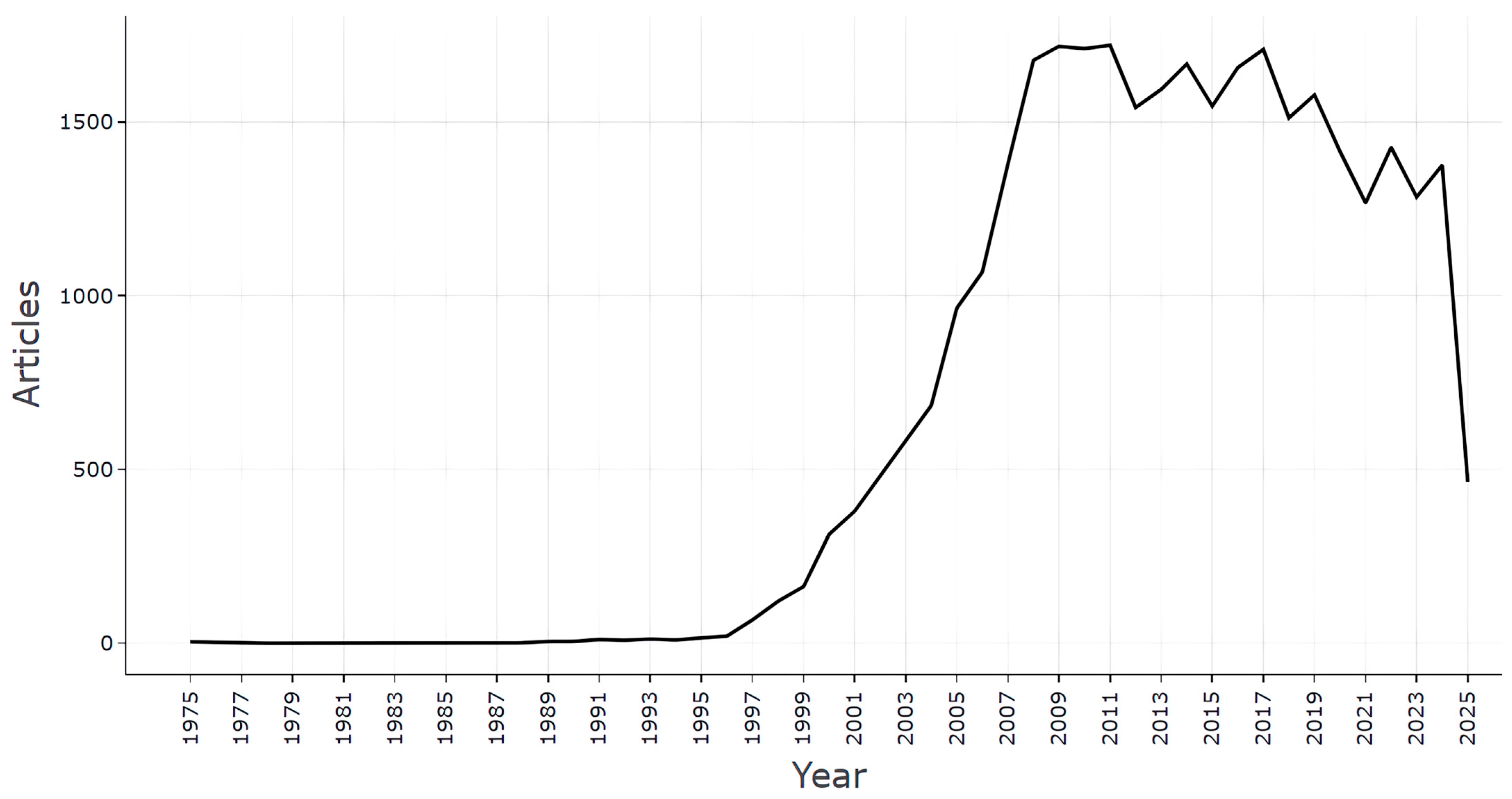
According to the data presented in Figure 2, scientific production in the field of Knowledge Management remained at low levels between 1975 and the mid-1990s, with a limited number of publications recorded annually. From approximately 1995 onward, the volume of publications increases markedly, indicating a sustained growth phase. The highest levels of annual scientific output are observed between 2008 and 2015, when the number of published documents exceeds 1500 per year. After 2015, the annual production shows moderate fluctuations, while remaining at relatively high levels compared to earlier periods.

4.2.2. Country/Region Production over Time

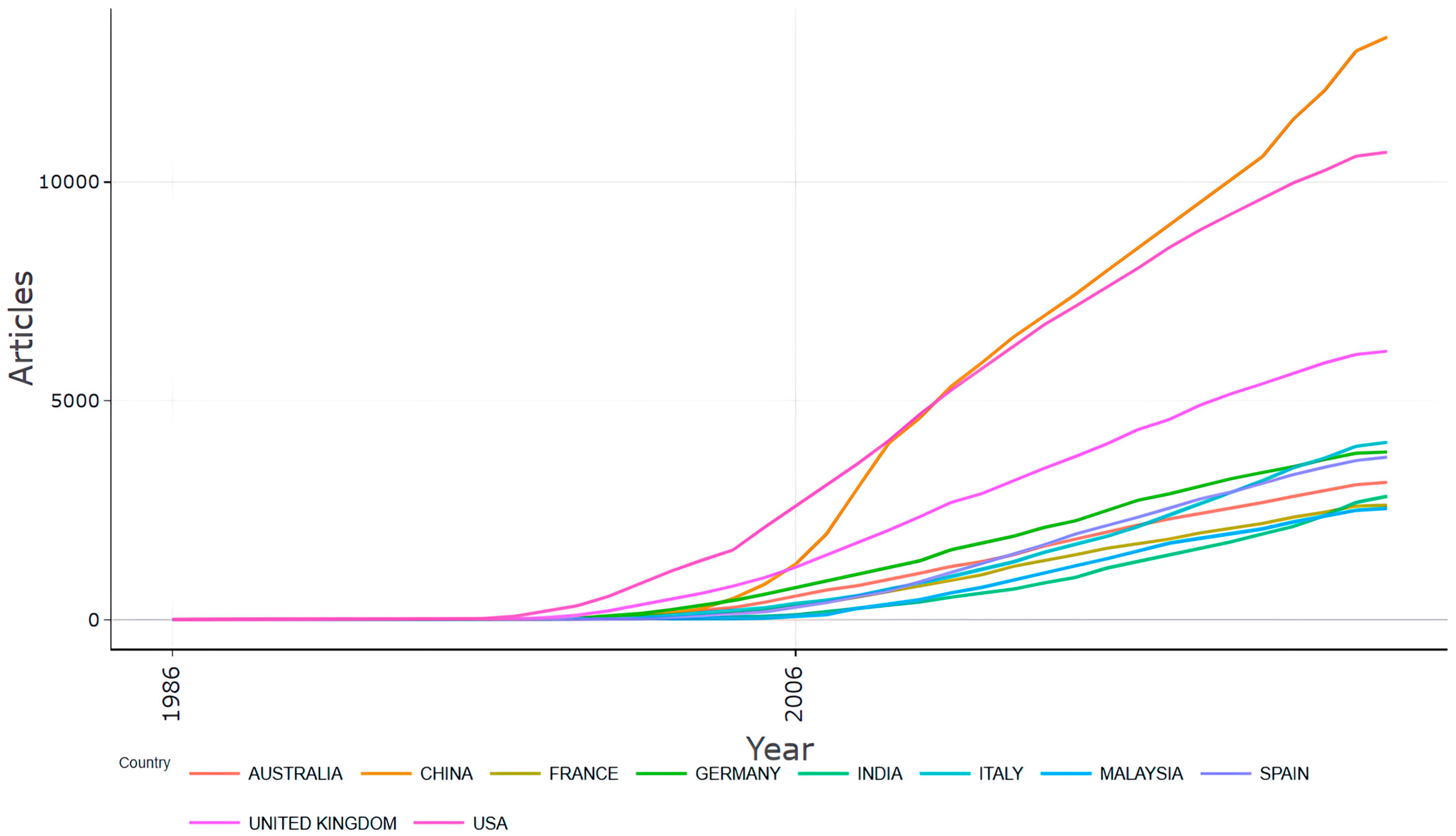
Figure 3 illustrates the temporal evolution of scientific production by country/region. The United States, the United Kingdom and China account for the highest publication volumes throughout the analyzed period. Several other countries also exhibit increasing levels of scientific output in more recent years, reflecting a broadening geographical distribution of KM research activity.

4.2.3. Sources and Authors Performance

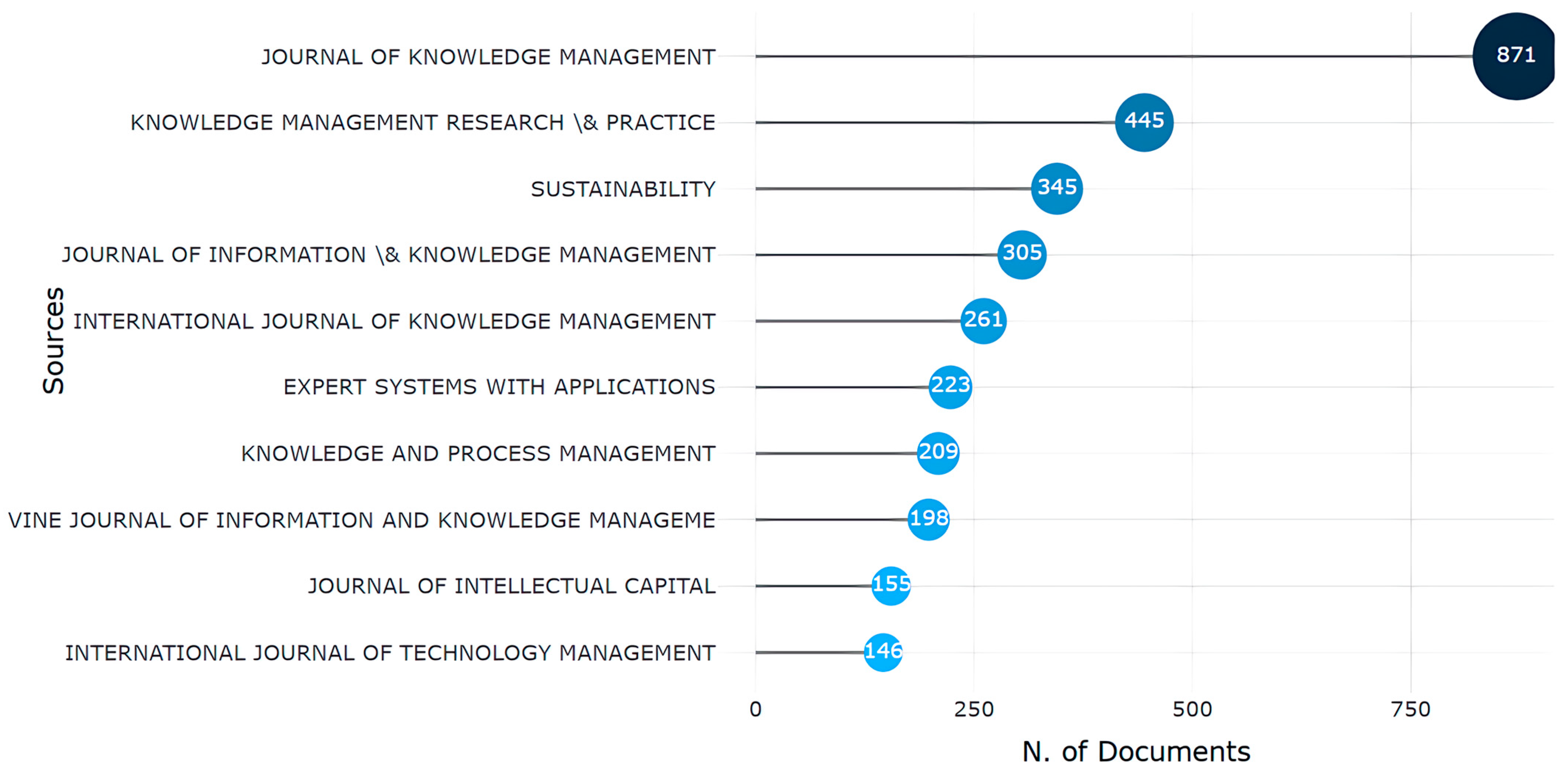
The analysis of publication sources identifies the journals with the highest number of KM-related publications. Figure 4 displays the most productive sources ranked by document count. The Journal of Knowledge Management records the highest number of publications (871 documents) followed by Knowledge Management Research & Practice (445 documents) and Sustainability (345 documents). Together, these sources account for a substantial share of the total KM literature.
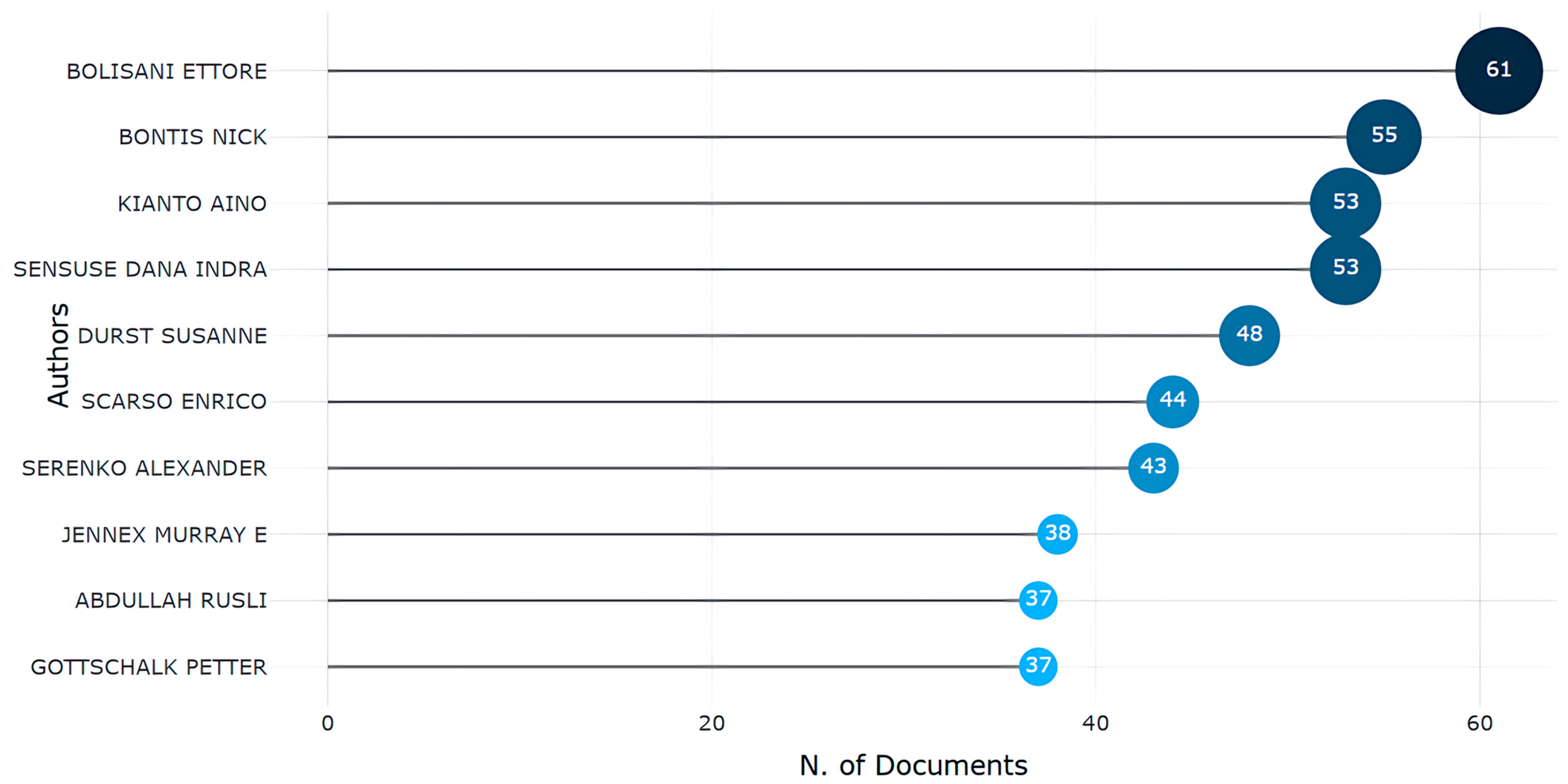
Figure 5 presents the most productive authors in the KM field based on the number of published documents. Among the analyzed authors, Bolisani E., Bontis N. and Kianto A. record the highest publication counts. The distribution of author productivity shows that a relatively small group of researchers contributes a larger number of publications, while the majority of authors appear with fewer contributions.

4.2.4. International Collaboration Patterns and Citation Impact by Country/Region

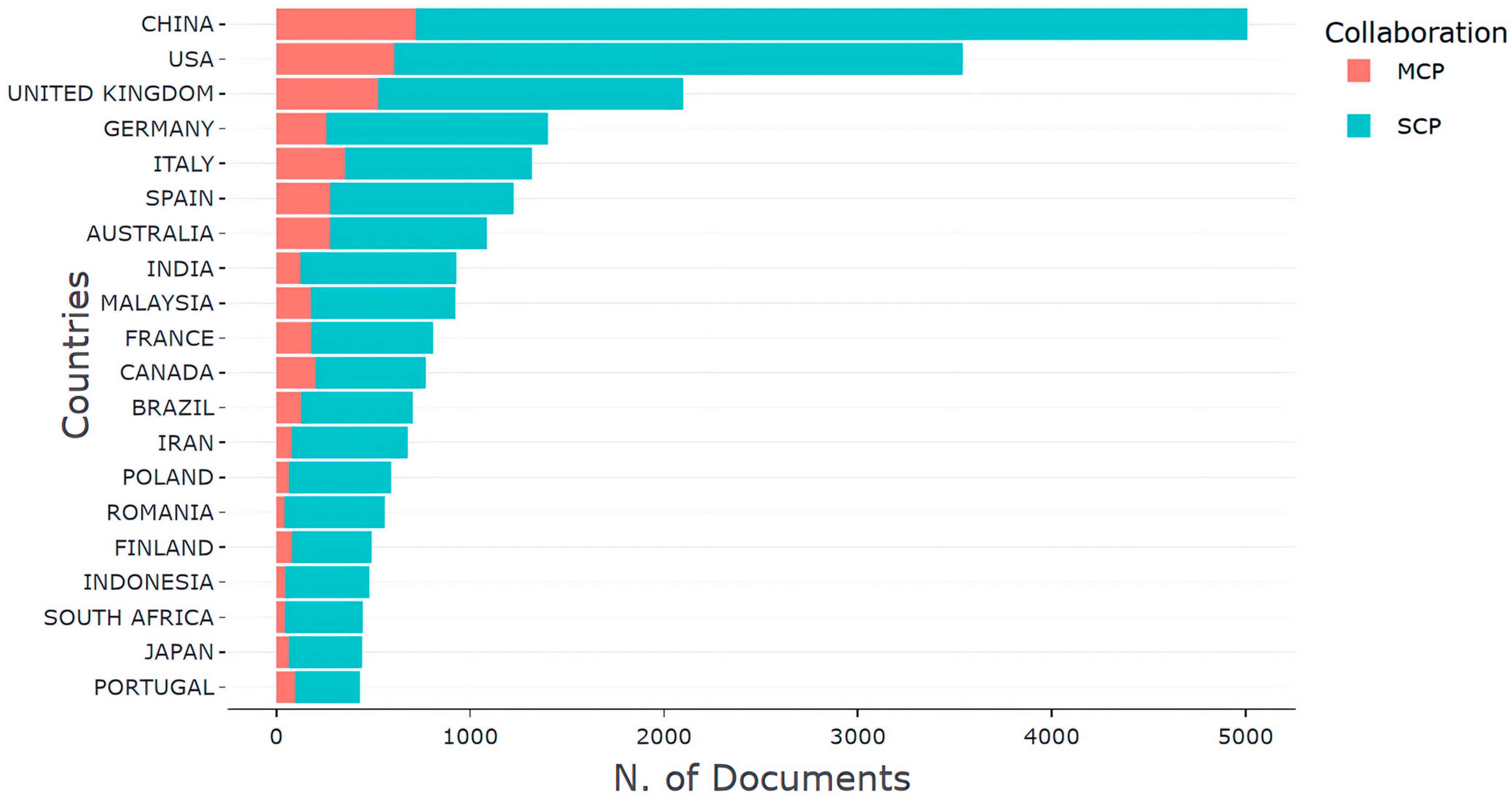
Figure 6 presents the distribution of Single-Country Publications (SCP) and Multiple-Country Publications (MCP) across countries/regions, providing an overview of international collaboration patterns in KM research. The proportion between SCP and MCP varies substantially across countries, indicating different configurations of domestic and cross-country co-authorship.
For some countries, a larger share of publications is authored by researchers affiliated with institutions from the same country/region. In particular, China exhibits a predominance of SCP, indicating that a substantial proportion of its KM research output is produced through domestic collaborations. In contrast, the United States and the United Kingdom display a more balanced distribution between SCP and MCP, with comparable shares of domestically authored and internationally co-authored publications.
Several European countries, including Germany, Italy and Spain, show relatively higher proportions of MCP compared to SCP. Similar patterns are observed for some emerging research systems, such as India and Malaysia, where internationally co-authored publications account for a notable share of total output. These differences highlight the heterogeneity of collaboration structures across national research systems within the KM literature.
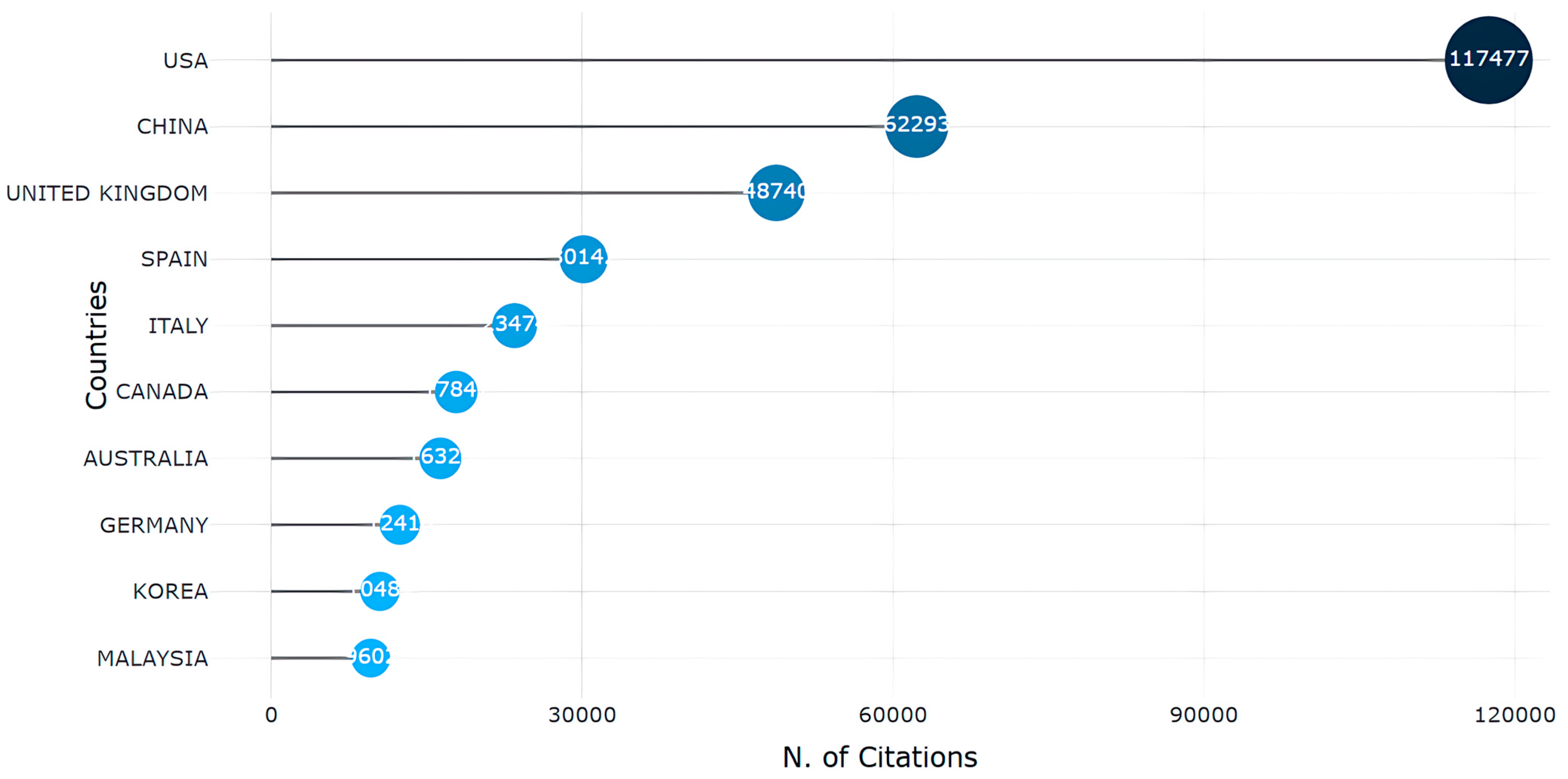
In addition, Figure 7 highlights the countries with the highest scientific impact measured by the number of citations. The United States leads the ranking by a wide margin, with 117,477 citations, followed by China (62,293) and the United Kingdom (48,740). These countries account for a substantial share of the total citation volume within the analyzed corpus, indicating their prominent position in terms of citation-based visibility.

4.3. Science Mapping

4.3.1. Intellectual Structure of Knowledge Management Research

The intellectual structure of the Knowledge Management (KM) research domain was examined using co-citation analysis and historiographic mapping, two established bibliometric techniques for identifying the theoretical foundations and evolutionary pathways of a scientific field. This analysis focuses on how frequently sources and documents are cited together, thereby revealing shared intellectual bases and dominant knowledge streams within the KM literature.
Co-citation analysis
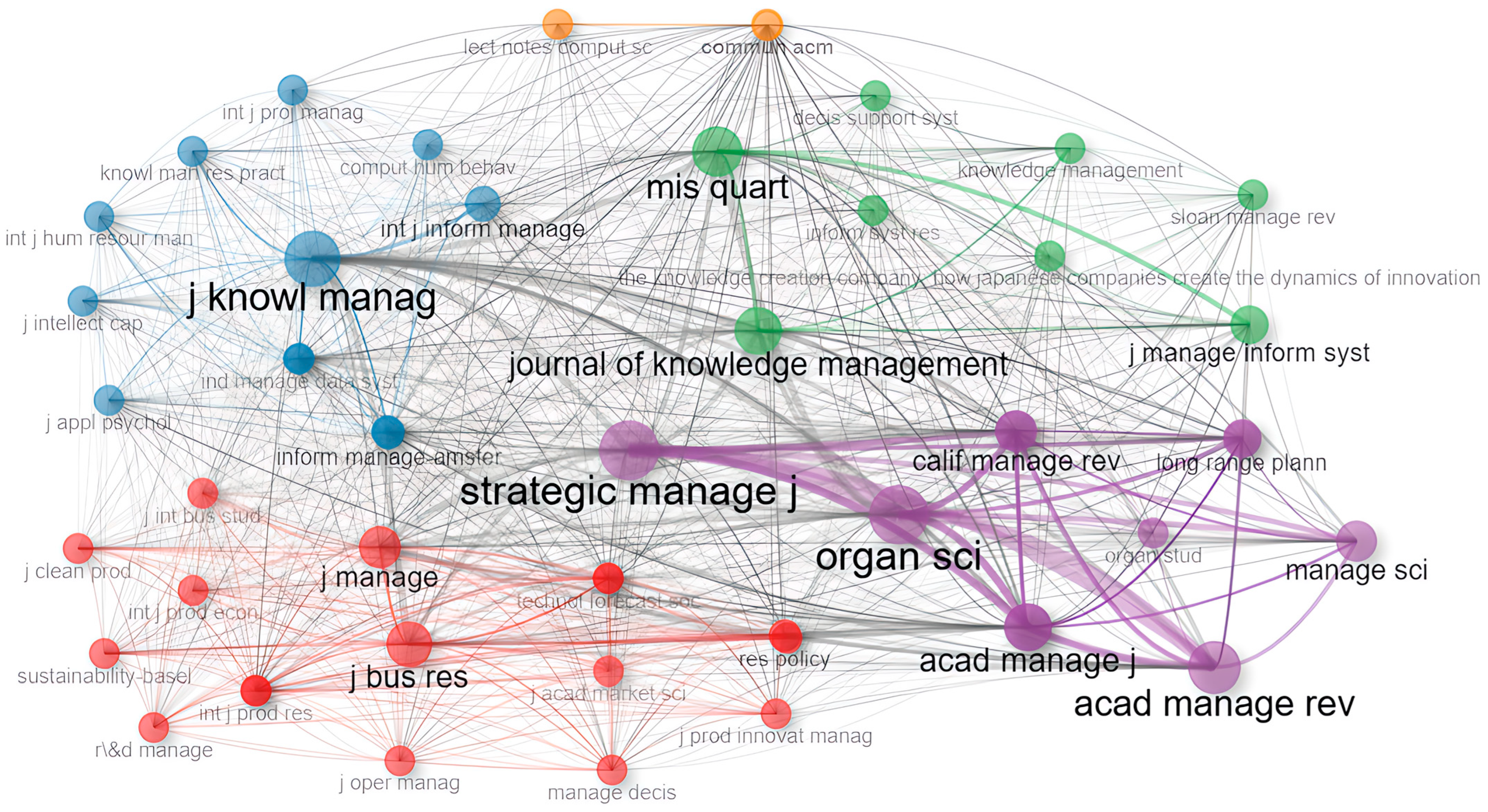
Figure 8 illustrates a co-citation network of sources in the KM literature, structured into several thematic clusters, each representing a core of frequently cited journals and thus an interconnected research area. The largest cluster (blue) is centered on the Journal of Knowledge Management and includes journals such as the International Journal of Information Management and Knowledge Management Research & Practice. These journals occupy central positions in the network and exhibit strong co-citation links with multiple other sources. The second prominent cluster (red) revolves around the Journal of Business Research and the Journal of Management. This cluster shows dense internal connectivity and multiple links to other clusters within the network. The green cluster, centered around MIS Quarterly magazine, brings together information systems publications such as Information Systems Research and Journal of Information Systems. These sources form a distinct group characterized by frequent mutual co-citations. Another cluster (purple) includes journals such as Organization Science, Academy of Management Review and Management Science. These sources appear as highly interconnected nodes and maintain co-citation relationships with journals across several clusters. Finally, a smaller orange cluster is located at the upper part of the network and includes journals such as Research Policy and Econometrica. Although smaller in size, this cluster maintains citation links with other parts of the network, indicating its integration into the broader KM co-citation structure.
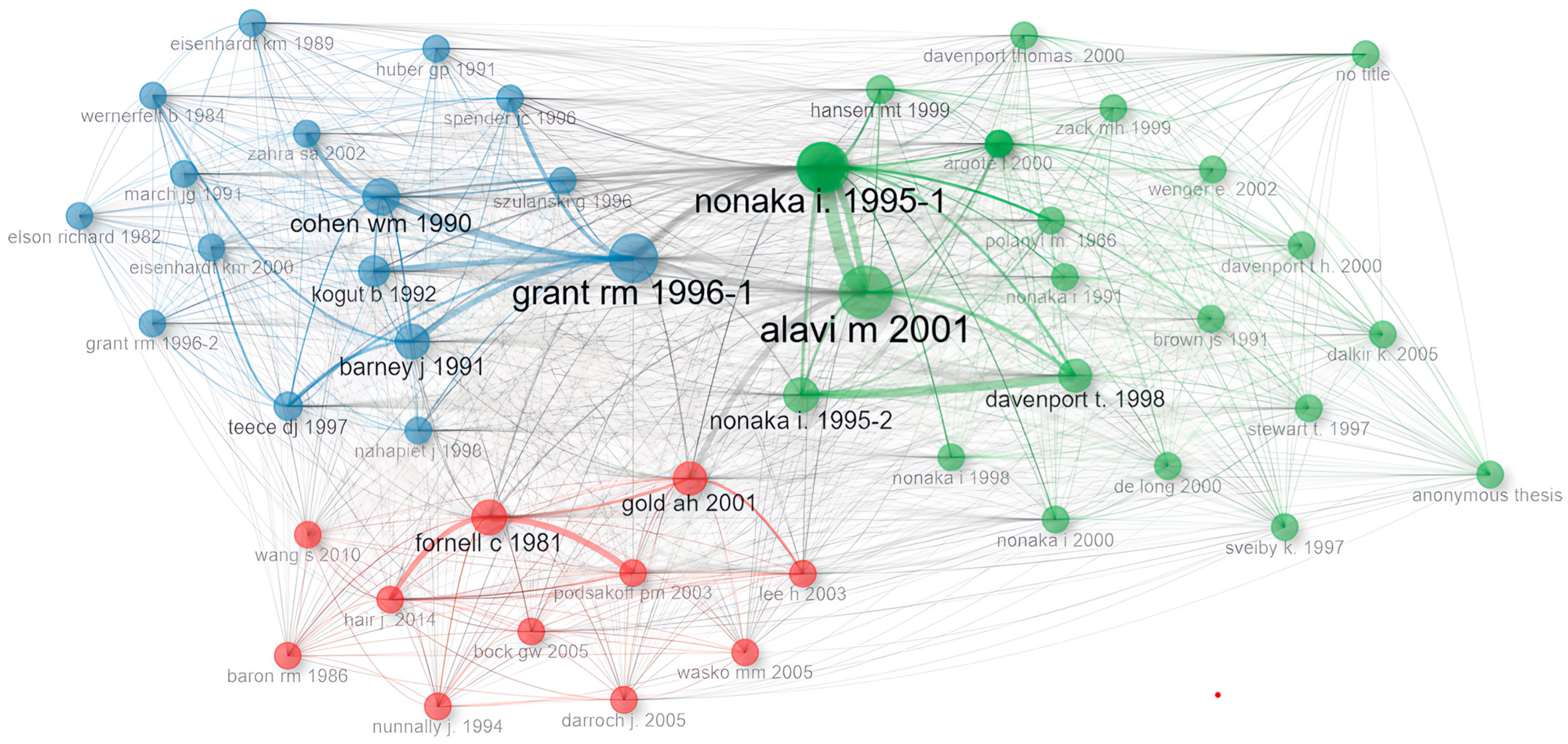
Figure 9 illustrates the document co-citation network in the Knowledge Management (KM) literature, highlighting highly cited articles and their co-citation relationships. In the network, larger nodes correspond to publications with higher citation frequencies, while links represent the frequency with which pairs of articles are cited together. The clustering structure indicates the presence of several distinct groups of closely co-cited works. The first major cluster (green) is centered on highly cited articles by Nonaka (1994) [52], Alavi și Leidner (2001) [53], and Davenport and Prusak (1998) [13]. These publications occupy central positions within the network and exhibit strong co-citation links with one another, forming a dense cluster of foundational KM literature. The second prominent cluster (blue) revolves around the articles by Grant (1996) [14], Cohen and Levinthal (1990) [54], and Barney (1991) [55]. These articles are strongly interconnected through co-citation links and maintain multiple connections with other clusters in the network, indicating their recurrent joint citation in KM-related studies. The third cluster (red) consists primarily of methodological and empirically oriented publications, including highly cited works by Fornell and Larcker (1981) [56] and Gold et al. (2001) [57]. Articles in this cluster show dense internal co-citation patterns and are frequently cited together with publications from other clusters, reflecting their widespread use across different strands of KM research.
Historiographic Analysis
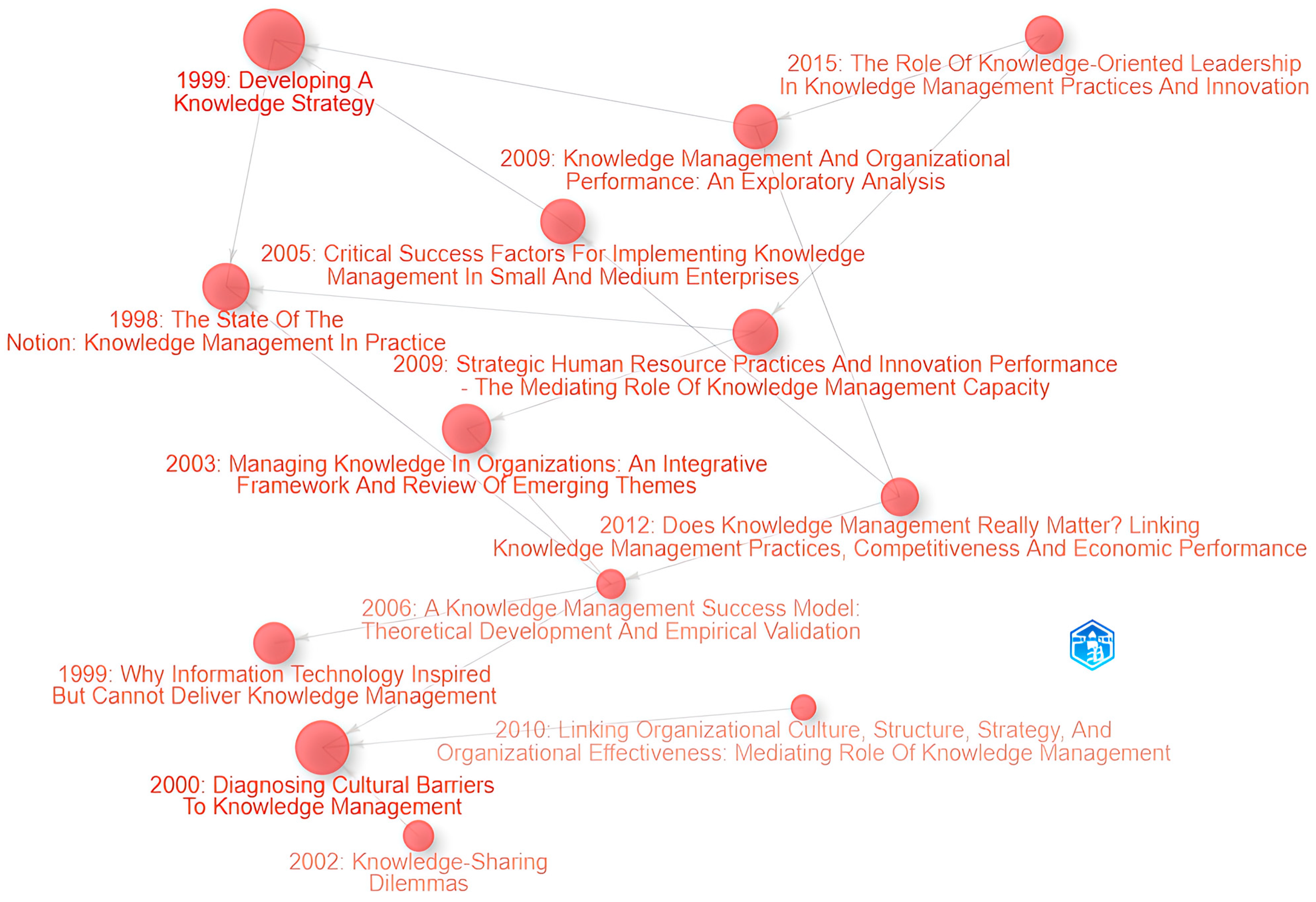
Figure 10 presents a historiographical map of the Knowledge Management (KM) literature, i.e., a chronological representation of key documents and the citation relationships between them. Unlike co-citation networks, which highlight the thematic structure of the field at a given point in time, this map captures the evolution of ideas and lines of research over time. The historiographic analysis reveals a structured temporal progression of KM research, which can be organized into five consecutive stages based on the appearance and citation linkages of influential works: (1) conceptual foundation, (2) theoretical consolidation, (3) methodological validation, (4) strategic integration and (5) leadership and innovation orientation.
The first stage (1998–2000) corresponds to the initial appearance of foundational KM publications that define core concepts and early reference frameworks. During this period, works such as The State of the Notion: Knowledge Management in Practice [58] and Developing a Knowledge Strategy [59] appear as early nodes in the historiographic network. At the same time, the first criticisms emerged, highlighting the limitations of an exclusively technological approach (Why Information Technology Inspired but Cannot Deliver Knowledge Management) [60], as well as the difficulties related to cultural barriers in the adoption of KM (Diagnosing Cultural Barriers to Knowledge Management) [61].
The second stage (2001 and 2005) is characterized by the emergence of publications that synthesize and systematize earlier contributions. This phase sees the emergence of works that systematize the accumulated knowledge and offer integrative frameworks, such as Managing Knowledge in Organizations: An Integrative Framework and Review of Emerging Themes [62]. During the same period, the literature expands toward specific organizational contexts and issues, as reflected in studies such as Critical Success Factors for Implementing KM in SMEs (Wong 2005) [63] and Knowledge-Sharing Dilemmas (Cabrera & Cabrera 2002) [64].
The third stage (2006 and 2009) is characterized by an increased presence of publications focused on empirical testing and validation of KM-related constructs. A notable example is A Knowledge Management Success Model: Theoretical Development and Empirical Validation [65], which shows citation links to both conceptual and integrative studies from previous stages. Additional publications from this period, including Strategic Human Resource Practices and Innovation Performance: The Mediating Role of KM Capacity [66] and KM and Organizational Performance: An Exploratory Analysis [67], further extend citation chains toward performance- and innovation-related outcomes.
The fourth stage (2010 to 2012) reflects the appearance of studies examining KM in relation to organizational structure, culture and strategy. Publications such as Linking Organizational Culture, Structure, Strategy and Organizational Effectiveness: Mediating Role of KM [68] are positioned in the historiographic map as successors to earlier empirical works. Citation links during this phase connect KM practices to broader organizational and strategic variables, as also illustrated by Does KM Really Matter? [69].
The fifth stage (from 2015 onward) is characterized by the emergence of publications focusing on leadership and innovation-related dimensions of KM. In this period, works such as The Role of Knowledge-Oriented Leadership in KM Practices and Innovation [70] appear as recent nodes in the historiographic network, receiving citations from prior studies while extending the literature toward leadership-oriented perspectives.

4.3.2. Conceptual Structure

In addition to evaluating scientific output, impact and networks, an essential dimension of bibliometric analysis is the examination of document content in order to understand how scientific discourse around the concept of KM has been structured and has evolved. This section aims to analyze the main themes, keywords and terms in titles and abstracts, identifying major research directions, dominant concerns and conceptual changes that have occurred in the literature over time. By integrating these results, the analysis contributes to shaping not only a quantitative but also a qualitative perspective on how KM has consolidated as an academic field and responded to emerging theoretical and practical challenges.
Co-Word Analysis and Keyword Co-Occurrence Networks
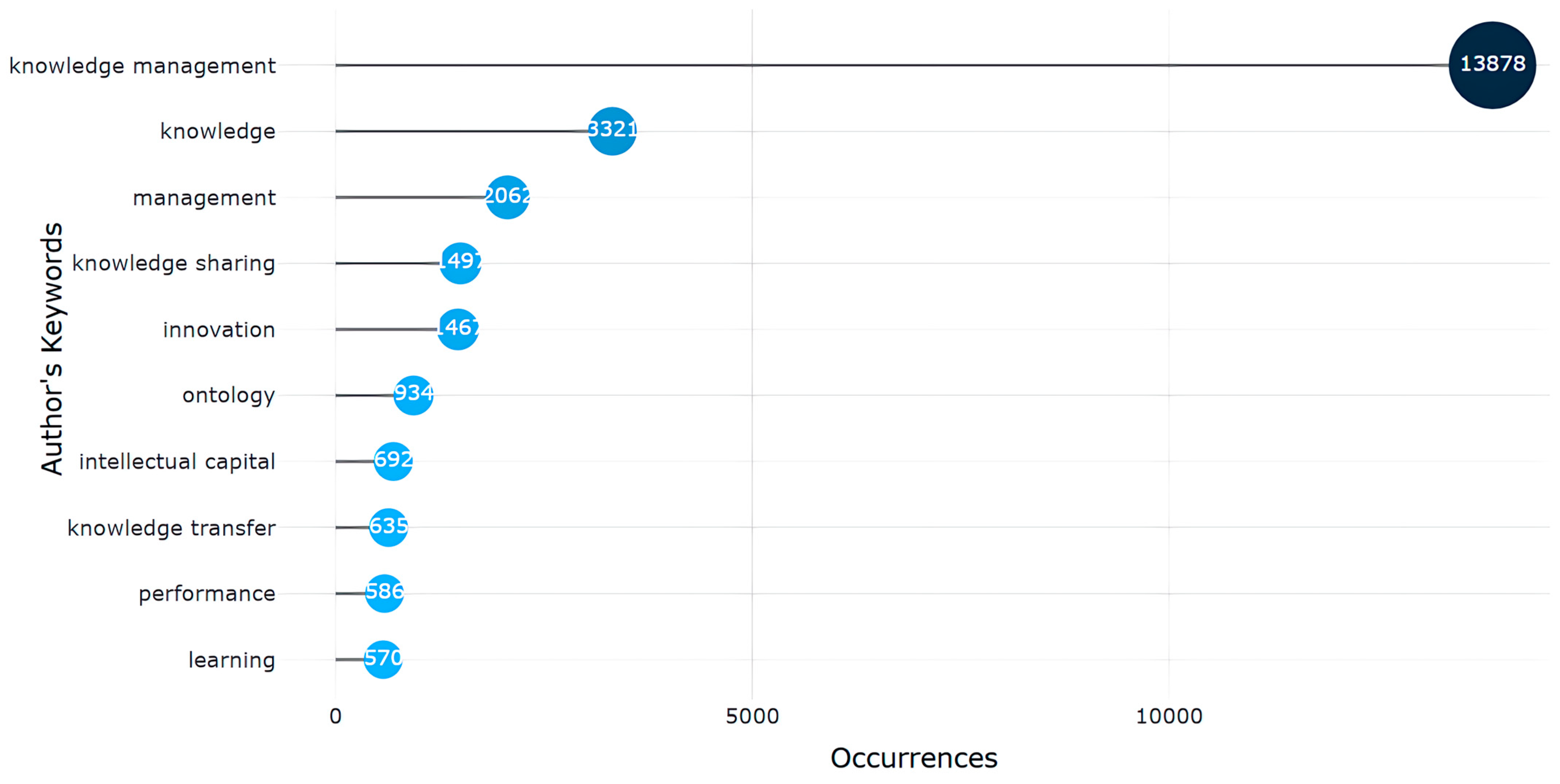
Figure 11 presents the most frequent authors’ keywords in Knowledge Management research. The term Knowledge Management appears as the most frequent keyword in the dataset, with 13,878 occurrences, followed by knowledge (3321 occurrences) and management (2062 occurrences). These terms occupy central positions in the co-occurrence network and are connected to a large number of other keywords. A set of frequently occurring process-related terms is also visible, including knowledge sharing (1497 occurrences), learning (570 occurrences) and knowledge transfer (635 occurrences), which appear as recurrent elements in the keyword structure of the field.
In addition, several outcome- and application-related terms appear with relatively high frequencies, such as innovation (1467 occurrences), performance (586 occurrences) and intellectual capital (692 occurrences). These keywords are interconnected with both core and process-related terms in the network. A group of technology-related terms is also present, including ontology (934 occurrences), which appears in association with other keywords in the co-occurrence structure.
Overall, the keyword co-occurrence network reveals a structured distribution of frequently used terms, with high-frequency keywords occupying central positions and less frequent keywords positioned toward the periphery of the network.
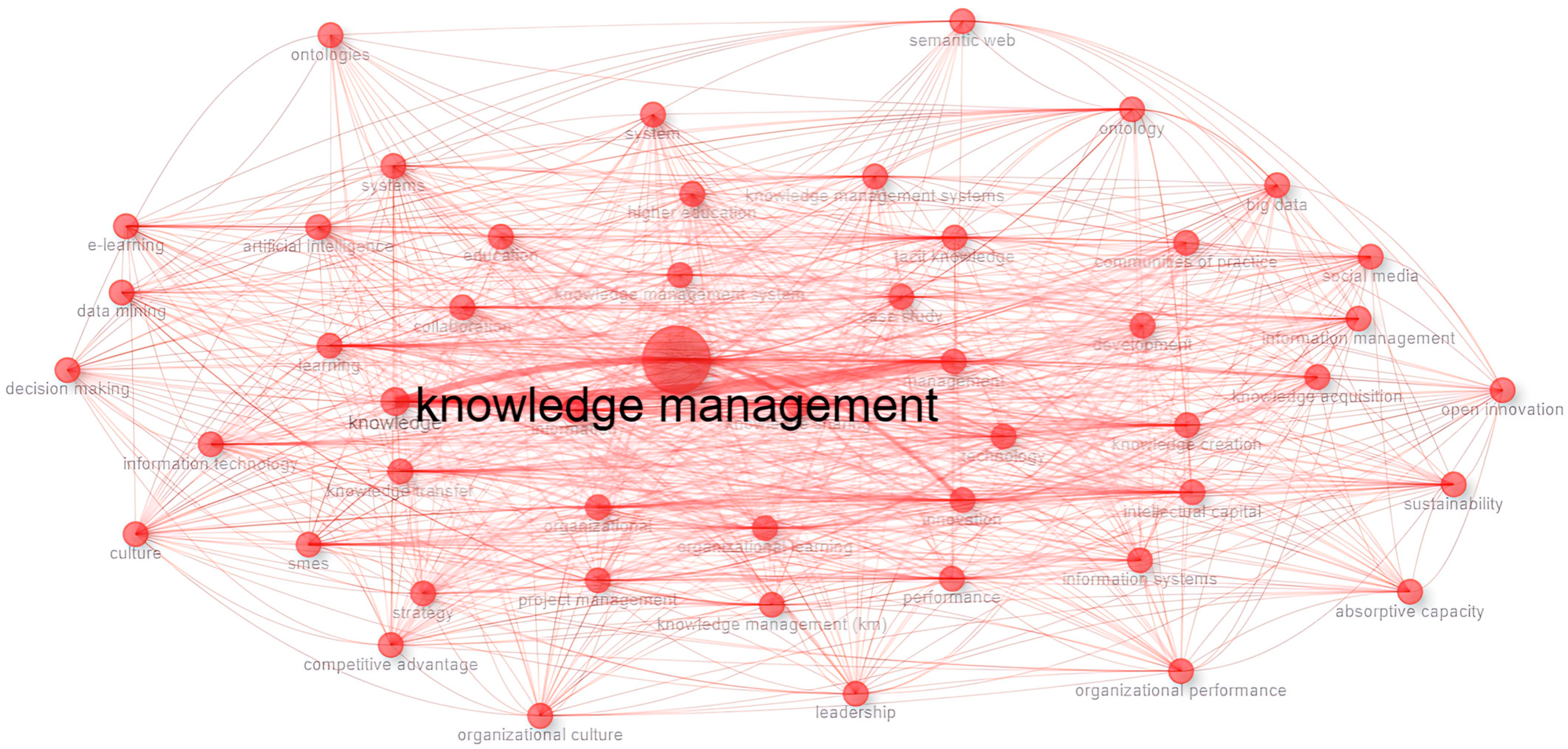
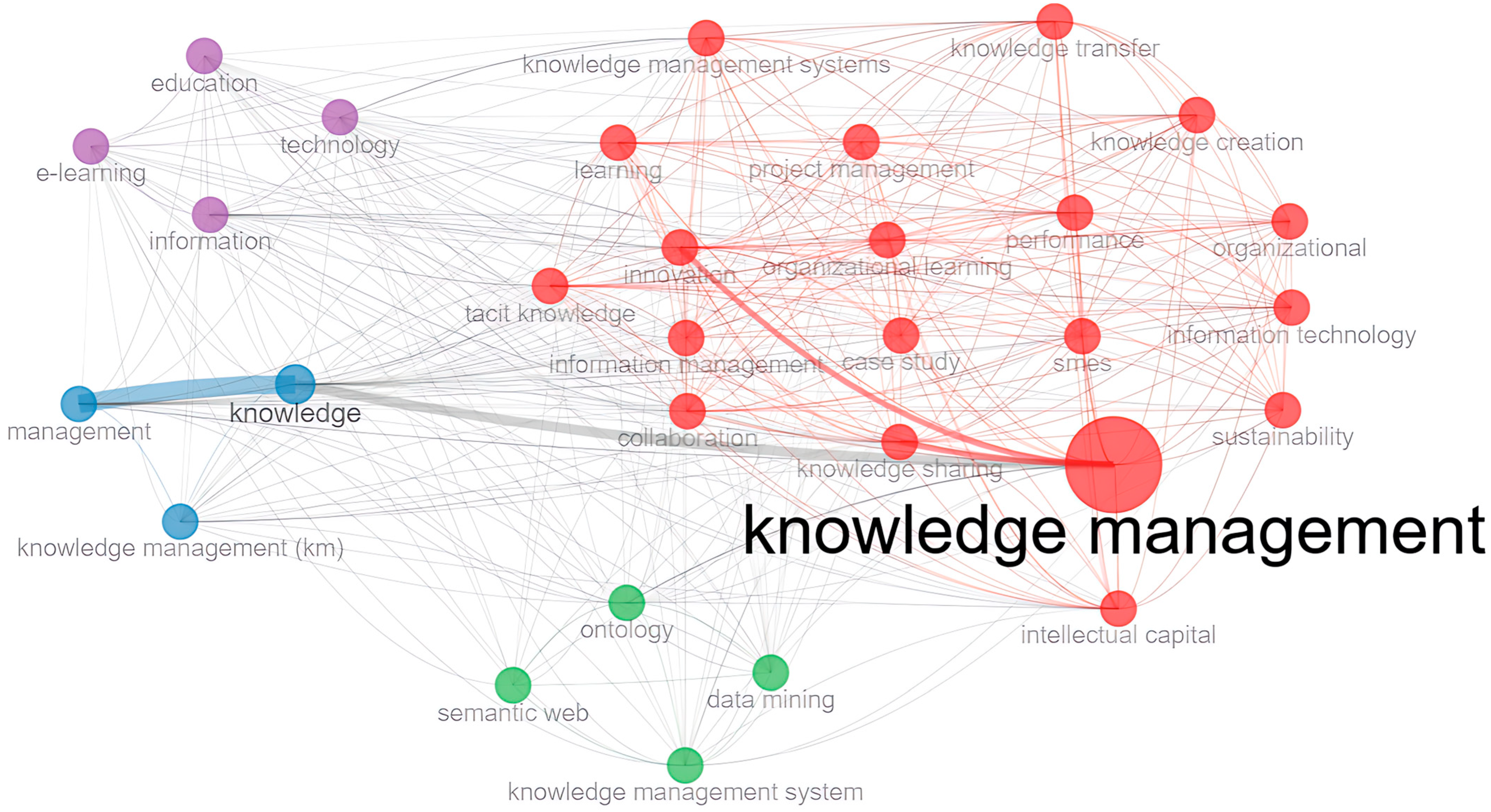
The keyword co-occurrence network (Figure 12) highlights how the main concepts in the Knowledge Management (KM) literature are interconnected. The term Knowledge Management occupies a central position in the network and displays multiple direct connections with a wide range of frequently occurring keywords, including knowledge sharing, innovation, performance, intellectual capital, sustainability and absorptive capacity.
Around this central node, several thematic groupings can be identified based on patterns of keyword co-occurrence. One prominent grouping includes terms related to organizational processes, such as knowledge sharing, knowledge transfer, learning and absorptive capacity. These keywords appear closely connected to one another and to the central node, forming a dense sub-network within the overall structure.
A second grouping consists of keywords associated with outcomes and results, including innovation, performance and competitiveness. These terms are positioned in proximity to both the central node and to process-related keywords, reflecting frequent joint usage within the same documents.
The network also contains a group of technology-related keywords, such as information systems, ontology, semantic web and e-learning. These terms form a distinct cluster characterized by internal connections and multiple links to other parts of the network.
In addition, a set of keywords related to organizational and social aspects can be observed, including leadership, trust and organizational culture. These terms appear interconnected and linked to both process-oriented and outcome-oriented keywords.
Finally, the network includes several keywords that appear with lower frequencies and occupy more peripheral positions, such as sustainability and digital transformation. These terms are connected to the central and intermediate nodes through a limited number of co-occurrence links, indicating their presence within the broader conceptual structure of the KM literature. The presence of overlaps across clusters reflects conceptual proximity and frequent joint usage of keywords rather than analytical duplication.
Building on the overall keyword co-occurrence network shown in Figure 12 and Figure 13, a clustering algorithm is applied to partition the network into groups of keywords that exhibit stronger internal co-occurrence links than connections with other parts of the network. This procedure reveals the modular organization of the Knowledge Management (KM) conceptual space. Figure 13 displays several clearly distinguishable clusters, each composed of keywords that frequently co-occur across the analyzed corpus. The largest cluster, represented by red nodes, is centered on the keyword Knowledge Management, which appears as the most prominent and connected node within the network. This cluster includes terms such as knowledge sharing, knowledge transfer, learning, performance, innovation, sustainability, SMEs and information technology. The density of links within this cluster indicates a high level of co-occurrence among these terms. The green cluster includes terms such as ontology, semantic web, data mining and Knowledge Management systems. These terms form a relatively compact sub-network, characterized by strong internal connections and fewer links to other clusters. The blue cluster, centered around the terms knowledge, management, information management and tacit knowledge, captures the fundamental and theoretical dimension of the field. These terms are closely interconnected and positioned adjacent to the central cluster, reflecting frequent joint usage within the literature. Finally, the purple cluster brings together terms such as education, e-learning and technology, representing a niche application focused on education and training. This cluster is more peripheral in the network and displays fewer connections compared to the larger clusters.
Thematic Mapping and Thematic Evolution
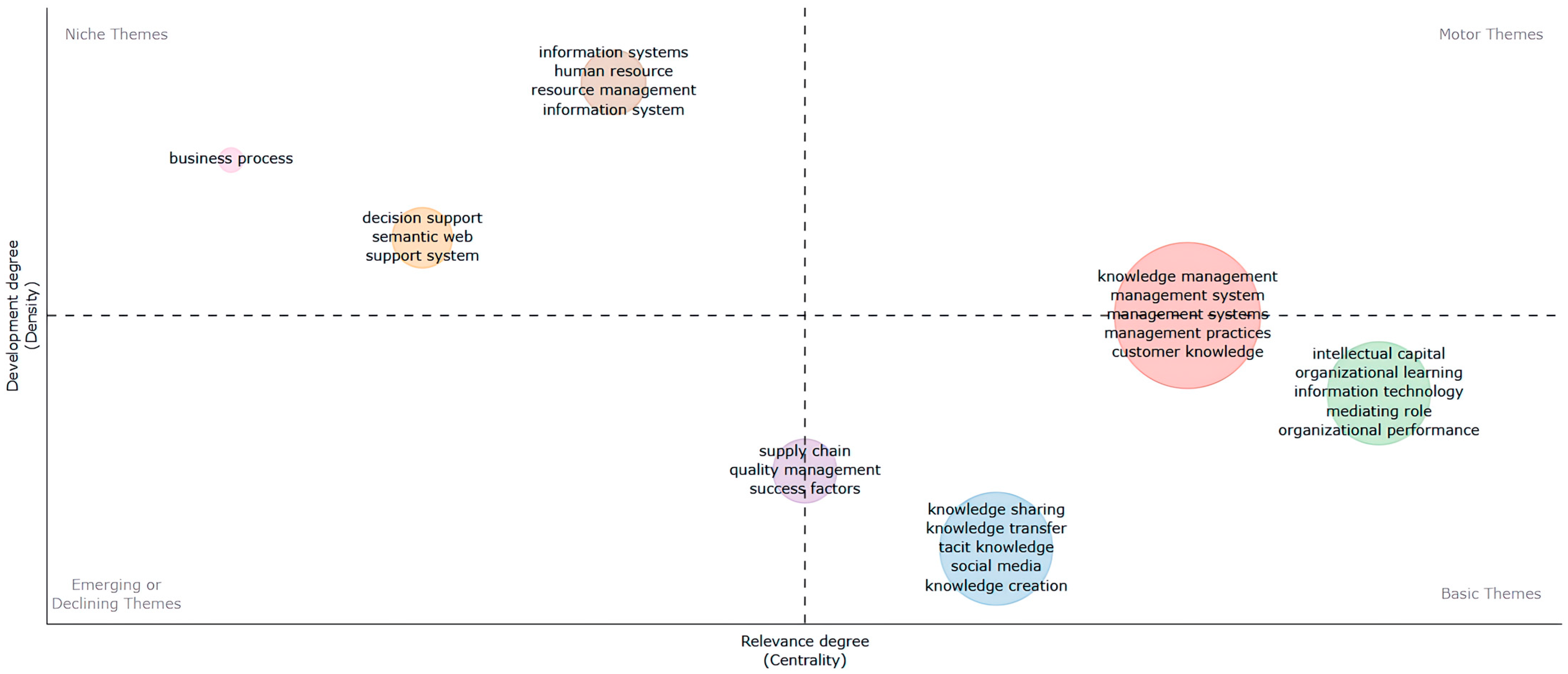
Given the complexity and interdisciplinary scope of Knowledge Management research, as well as developments related to the practical approach to this field, this bibliometric analysis is complemented by a thematic map analysis, which allows the identification of central themes, emerging areas, specialized niches and areas in decline, providing an overview of the maturity and diversity of research areas. Figure 14 provides a thematic map based on Keywords Plus, in which themes are positioned according to two dimensions: degree of development (density) on the vertical axis and degree of relevance (centrality) on the horizontal axis. This representation allows the identification of themes with different structural roles within the KM literature.
In the motor themes quadrant, (high density and high centrality), a cluster composed of Knowledge Management, management system, management practices and customer knowledge occupies a central position. These keywords are characterized by strong internal cohesion and high levels of connectivity with other themes in the field. A second cluster, including information systems and human resource management, is positioned close to this quadrant, indicating comparable levels of centrality and internal development.
The basic themes quadrant (low density and high centrality) highlights two main groupings. The first includes intellectual capital, organizational learning, information technology, mediating role and organizational performance. The second group is formed by knowledge sharing, knowledge transfer, tacit knowledge, knowledge creation and social media. These themes display high relevance within the overall thematic structure, while showing lower levels of internal cohesion.
The niche themes quadrant (high density and low centrality) contains business process, a theme that is well developed but peripheral, with strong internal cohesion but weaker connections with other thematic clusters in the map.
The emerging or declining quadrant includes themes such as decision support, semantic web and support system, as well as supply chain, quality management and success factors. These themes are characterized by relatively limited internal development and lower levels of centrality within the KM thematic structure.
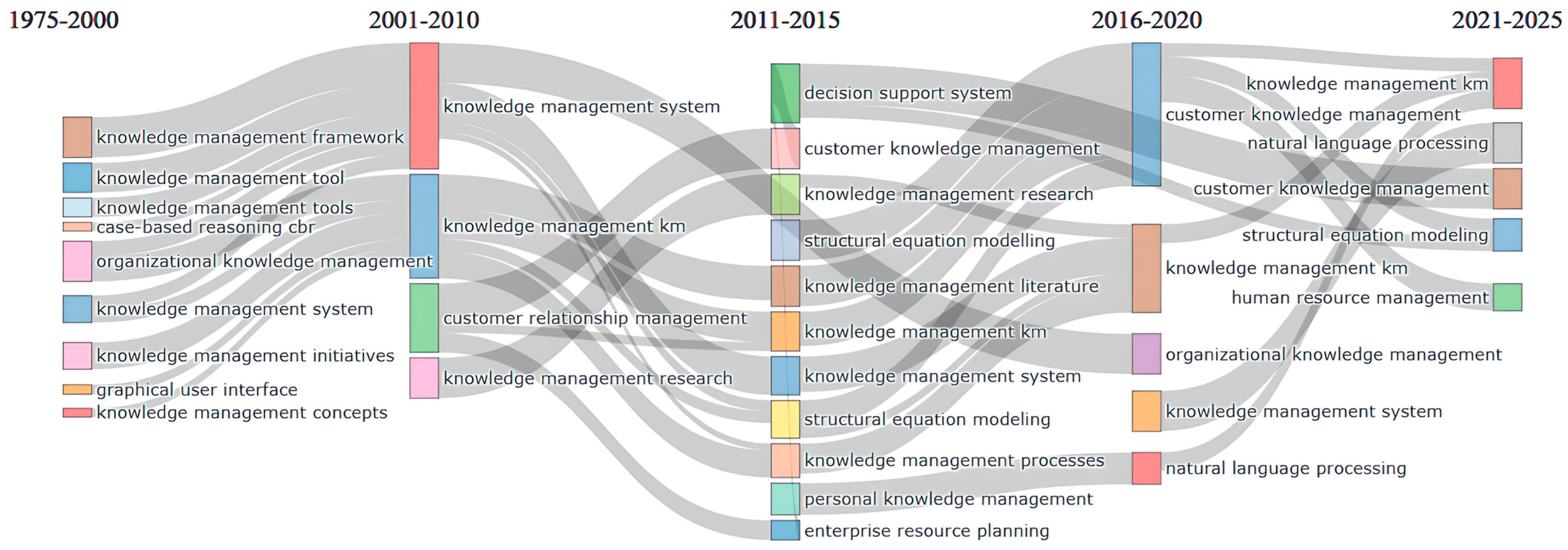
To analyze the longitudinal dynamics of research themes, we employed a thematic evolution analysis, which tracks how topics emerge, persist, split, or converge across predefined time periods. The visualization is represented through a Sankey diagram (Figure 15), where nodes correspond to thematic clusters (extracted from abstracts) and flows indicate conceptual continuity or transformation between consecutive time intervals. Abstracts were used as the textual basis for this analysis, as they provide a more comprehensive representation of research content than titles or author keywords. The analysis covers five major time intervals: 1975–2000, 2001–2010, 2011–2015, 2016–2020 and 2021–2025, with the size of nodes reflecting the volume of scientific production associated with each theme.
In the period 1975–2000, the themes are still scattered and pioneering, dominated by terms such as Knowledge Management framework, Knowledge Management tool, organizational Knowledge Management and graphical user interface. These themes appear with modest continuity into subsequent periods.
During 2001 and 2010, several themes from the previous period converge into larger and more connected clusters. The term Knowledge Management system becomes a central node, with visible links to themes such as customer relationship management, Knowledge Management research and Knowledge Management initiatives. These themes display continuity into later periods, as indicated by sustained flows in the diagram.
The 2011–2015 interval shows further diversification of thematic clusters. Methodologically oriented themes such as structural equation modeling, decision support systems and enterprise resource planning appear alongside themes related to customer Knowledge Management and Knowledge Management literature. Multiple flows indicate the coexistence and partial convergence of methodological and application-oriented themes.
In the 2016–2020 period, several previously established themes maintain continuity, including structural equation modeling, organizational Knowledge Management, personal Knowledge Management and customer Knowledge Management. These themes are represented by larger nodes, reflecting their increased presence in the literature, and show strong links to both earlier and later periods.
Finally, in the 2021–2025 interval, new thematic clusters emerge while established themes persist. The appearance of natural language processing forms a distinct node connected to earlier KM-related themes. At the same time, themes such as Knowledge Management, human resource management, organizational Knowledge Management and structural equation modeling continue to display strong continuity, as evidenced by sustained flows from previous periods.
Factorial Analysis (Multiple Correspondence Analysis—MCA)
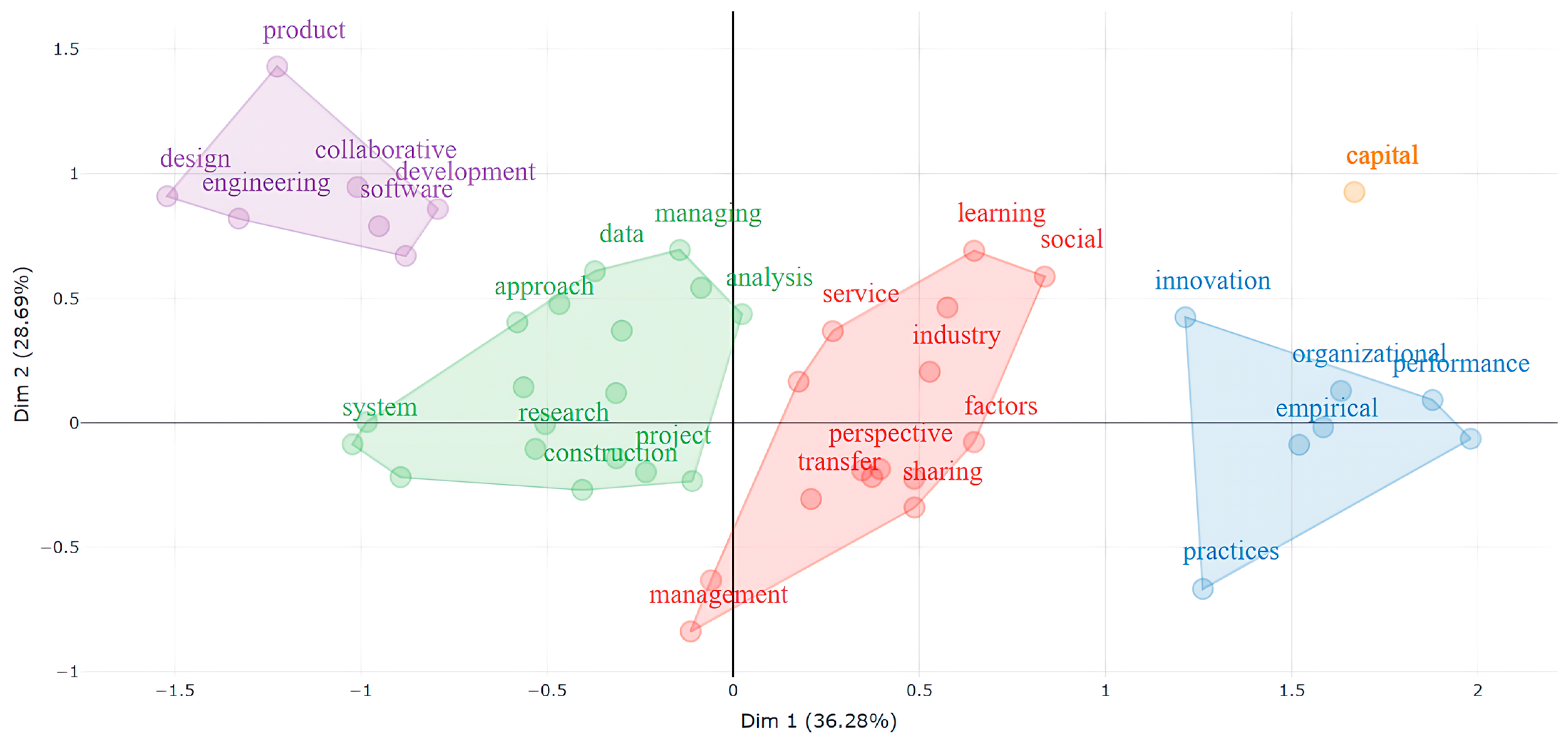
After identifying the thematic structures and their evolution over time, Multiple Correspondence Analysis (MCA) is employed to explore latent associations among terms used in the abstracts of the analyzed documents. MCA provides a complementary representation of the conceptual space by projecting co-occurring terms onto a reduced number of dimensions. Figure 16 illustrates the conceptual distribution of terms in abstracts, projected on two main dimensions: Dim 1 (36.28%) and Dim 2 (28.95%), which together explain a significant proportion of the data variation.
The projection reveals the presence of four distinct clusters, each suggesting a dominant thematic area in the analyzed literature, along with one isolated theme, indicating a differentiated conceptual configuration within the KM literature. The green cluster groups terms such as system, research, construction, project, analysis, data and approach. These terms appear in close proximity within the factorial space, reflecting frequent co-occurrence patterns in the analyzed abstracts. The purple cluster, represented in purple, includes terms such as design, engineering, product, collaborative development and software. These terms form a compact grouping, positioned separately from the other clusters in the factorial plane. The blue cluster is represented by terms such as innovation, organizational performance, empirical and practices. These terms are closely associated within the MCA space and occupy a distinct area along the first dimension. The red cluster concentrates terms such as management, learning, social, service, industry, actors, sharing, perspective and transfer. This cluster is characterized by a dense grouping of terms located near the center of the factorial space, indicating frequent joint usage across abstracts. In addition to these clusters, the term capital appears as an isolated point in the MCA projection, positioned at a distance from the main groupings, indicating a distinct pattern of association relative to other terms.

4.3.3. Social Structure of Knowledge Management Research

In line with the science-mapping framework presented in Table 1, the social structure of the Knowledge Management (KM) literature is examined through co-authorship analysis. This approach allows the identification of collaboration patterns among researchers and countries, as well as the structural properties of scientific collaboration networks within the KM research domain.
Author Collaboration Network
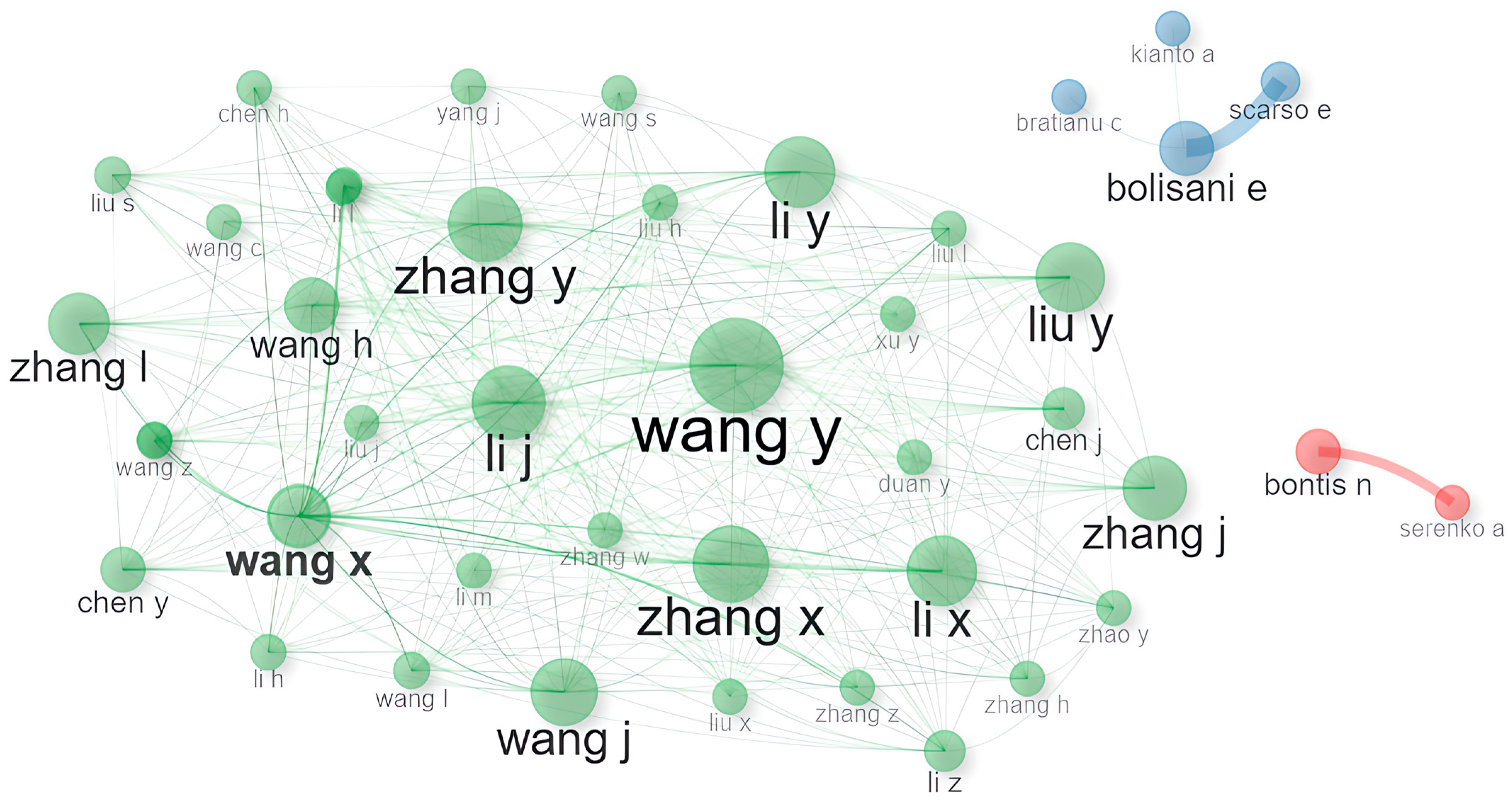
The analysis of collaboration networks at the author level highlights how researchers interact and form scientific communities within the field of Knowledge Management (KM). Figure 17 presents the co-authorship network, where the central nodes correspond to authors with intensive collaborative activity. The size of the nodes reflects the authors’ productivity (number of publications), while the thickness of the links indicates the strength of collaborations (frequency of co-authorship).
The structure of the network reveals the presence of multiple collaboration clusters with varying degrees of internal connectivity. A densely connected central cluster, highlighted in green, is characterized by a high concentration of authors linked through repeated co-authorship relationships. Within this cluster, authors such as Wang Y., Li J., Zhang Y., Wang X., Li X. and Liu Y. occupy prominent positions, as indicated by their relatively large node sizes and numerous collaborative links. This cluster exhibits strong internal cohesion, with frequent co-authorship ties among its members.
On the other hand, the presence of peripheral sub-networks can be observed, showing missing connections to the dominant core. One such cluster, shown in blue, is structured around authors including Bolisani E., Scarso E., Kianto A. and Bratianu C. These authors form a distinct collaboration group, characterized by repeated co-authorships within the cluster and fewer links connecting them to the central core. In addition, the network contains a small and weakly connected cluster, represented in red, composed primarily of Bontis N. and Serenko A. This cluster is characterized by a limited number of co-authorship links with other parts of the network, resulting in a more isolated positioning within the overall structure. The author-level co-authorship network displays a heterogeneous configuration, combining a dense central collaboration core with several smaller and more weakly connected clusters. This structure highlights the coexistence of highly collaborative author groups and more autonomous collaboration patterns within the KM research community.
Collaboration Networks—Countries
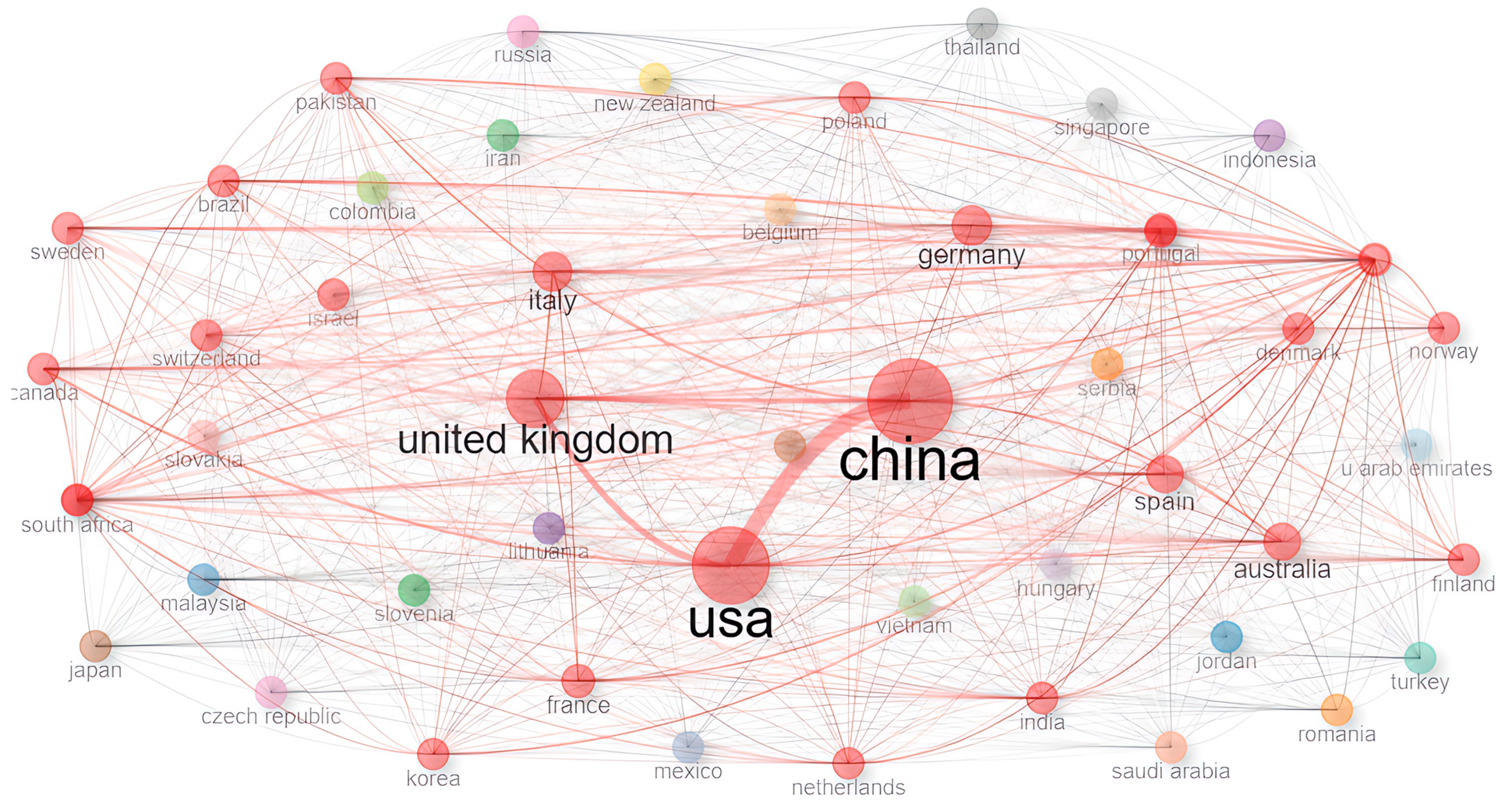
At the macro level, the country-level collaboration network provides an overview of international co-authorship patterns in Knowledge Management (KM) research. Figure 18 depicts this network, where nodes represent countries and links indicate co-authored publications involving researchers affiliated with different countries. Node size reflects the volume of publications attributed to each country/region, while link thickness represents the intensity of collaborative ties.
The network exhibits a high degree of connectivity, with several countries occupying central positions characterized by large node sizes and numerous collaborative links. Among these, the United States, China and the United Kingdom appear as the most prominent nodes, maintaining extensive co-authorship connections with a wide range of other countries. These countries are connected through both strong bilateral links and multiple indirect collaboration paths across the network.
In addition to these central nodes, the network displays a dense web of connections among a broad set of countries, indicating widespread international collaboration. Several groups of countries appear closely interconnected, forming clusters of frequent co-authorship, while other countries occupy more peripheral positions with fewer collaborative ties.

5. Discussion

This study set out to examine the long-term evolution of Knowledge Management (KM) research through a comprehensive bibliometric analysis. Beyond describing publication patterns and thematic structures, the findings allow for a deeper interpretation of KM as a complex, evolving socio-technical research system. In this section, the main results are discussed from a system-level perspective, highlighting their theoretical and managerial implications.

5.1. Synthesis of Data-Driven Findings

The analysis addressing the first research question showed that the intellectual structure of KM research has evolved progressively over time. Early stages were characterized by a concentration on information management and organizational learning, followed by an expansion toward organizational strategy, innovation and intellectual capital. More recent phases indicate a further extension toward digital transformation, sustainability and governance-related issues. This trajectory suggests that KM has undergone a process of scientific maturation, moving from foundational conceptualization toward broader integration with organizational and societal challenges.
The second research question concerned the current conceptual and thematic structure of the field. From a science mapping perspective, the results of the scientific mapping show that the KM literature is organized around several dominant conceptual clusters. Specifically, four major thematic directions have emerged: (1) the process-oriented dimension, focused on the mechanisms of knowledge sharing, transfer, learning and creation; (2) the strategic dimension, which examines the relationship between KM, innovation, performance and competitiveness; (3) the technological dimension, centered on digital infrastructures, KM systems, the semantic web and ontologies; and (4) the cultural-organizational dimension, which includes the role of leadership, organizational culture and social factors in supporting Knowledge Management behaviors. The coexistence of these clusters highlights both the consolidation of core KM themes and the diversification of research directions. The thematic evolution analysis further showed that certain themes persist across time periods, while others emerge, split, or decline, reflecting ongoing reconfiguration of the conceptual landscape.
The third research question focused on the structure of the social network within KM research. The analysis revealed a shift from an Anglo-Saxon concentration to a polycentric distribution, in which Asia and Europe have become major centers of contribution. At present, the community is global and is characterized by intensified international collaborations and the formation of author clusters connected beyond disciplinary and geographical boundaries. The answer to this question highlights the role of certain authors and institutions that act as “epistemic brokers”, facilitating the transfer of paradigms across subfields and accelerating the diffusion of knowledge.
The final research question aimed to identify the emerging themes and future directions in Knowledge Management (KM). Following previous studies that employed thematic mapping, thematic evolution and keyword analysis to generate forward-looking insights [4,71], the present study also outlines several avenues for further investigation in the field of KM. Our thematic mapping and evolution analysis revealed several emerging clusters that are likely to shape the future of KM research. Among these, three stand out as particularly promising:
  • Digital transformation and KM integration, highlighting how emerging technologies such as AI, Big Data and, more sporadically, blockchain are reshaping knowledge processes and infrastructures.
  • KM and organizational resilience, focusing on how knowledge capabilities enable organizations to adapt to crises, uncertainty and disruptive environments.
  • Sustainability and KM, exploring how knowledge processes contribute to advancing the UN Sustainable Development Goals (SDGs) and to embedding sustainability into organizational practices.
These frontiers suggest an ongoing shift of KM from a predominantly managerial construct to a highly interdisciplinary field embedded in digitalization, resilience, sustainability and innovation [72]. Therefore, the thematic horizon of the KM field is continuously expanding, encompassing both the traditional pillars confirmed by the bibliometric analysis and new research directions shaped by contextual and technological changes.

5.2. System-Level Interpretation: KM as a Complex Adaptive Research System

Taken together, these findings suggest that KM research can be interpreted as a complex adaptive system, composed of interacting intellectual, conceptual and social subsystems. The intellectual structure (foundational theories and highly cited works), the conceptual structure (themes and keywords) and the social structure (collaboration networks) do not evolve independently, but rather co-evolve through reciprocal feedback mechanisms.
From a systems perspective, the emergence of new themes, such as digital transformation, artificial intelligence, or sustainability, can be interpreted as adaptive responses of the KM research system to changes in its external environment, including technological advances, organizational transformations and societal challenges. At the same time, the persistence of core themes related to knowledge sharing, learning and intellectual capital reflects a degree of structural stability within the system.
The observed fragmentation of the field into multiple thematic clusters does not necessarily indicate weakness or lack of coherence. Instead, it can be interpreted as a form of functional differentiation, typical of mature scientific systems, where specialized subsystems develop in response to increasing complexity. The presence of both dense cores and peripheral clusters in collaboration networks further supports this interpretation, revealing a balance between integration and differentiation.

5.3. Theoretical, Managerial and Practical Implications

This study contributes to KM theory in several ways. First, by mapping the long-term evolution of the field, it empirically demonstrates that KM is not a static managerial concept but a multi-level socio-technical construct that integrates organizational processes, technological infrastructures and human and cultural factors.
Second, the results support theoretical views that position KM at the intersection of multiple disciplines, including management, information systems, organizational theory and innovation studies. The bibliometric evidence confirms that no single theoretical framework dominates the field, reinforcing the view of KM as an interdisciplinary system of knowledge production.
Third, the system-level interpretation offered in this study contributes to the literature by framing KM research as an evolving research system characterized by emergence, path dependence and coevolution. This perspective complements existing KM theories by providing a macro-level understanding of how knowledge-related concepts and practices develop over time.
From a managerial perspective, the findings suggest that KM should be approached not merely as a set of isolated tools or practices, but as a systemic organizational capability. Effective KM initiatives require alignment between technological infrastructures, organizational processes, leadership practices and cultural conditions.
The increasing prominence of themes related to digital transformation and resilience indicates that organizations are progressively embedding KM into broader strategies aimed at coping with uncertainty, disruption and sustainability challenges. Managers can use the insights from this study to better understand how KM practices are interconnected and how they evolve in response to changing organizational environments.
Moreover, the identification of fragmented and underexplored areas, such as the links between KM, leadership and sustainability, highlights opportunities for organizations to experiment with integrated KM strategies that address both performance and non-financial outcomes.

5.4. Limitations

Despite the breadth of the dataset and the robustness of the bibliometric techniques employed, this study is subject to several limitations that should be acknowledged when interpreting the results. These limitations mainly relate to data selection, thematic extraction procedures, database coverage and analytical tools and are common to large-scale bibliometric analyses.
First, the study relies on keyword-based and abstract-based thematic extraction, which may introduce semantic bias. Keywords provided by authors reflect subjective choices and may vary across disciplines, journals and time periods. As a result, certain concepts may be overrepresented or underrepresented depending on authors’ terminology preferences rather than their substantive importance. Similarly, abstract-based analyses depend on how comprehensively authors describe their contributions, which can vary substantially across publications.
Second, the co-word and thematic analyses may lead to an amplification of generic or highly recurrent terms, such as “Knowledge Management,” “performance,” or “innovation.” While these terms are central to the field, their high frequency can overshadow more specific or nuanced concepts, potentially masking fine-grained thematic distinctions. This effect is particularly relevant in long-term analyses spanning several decades, where terminological convergence tends to increase over time.
Third, the long temporal scope of the analysis, spanning five decades, introduces specific challenges related to data consistency and terminology. Over extended time periods, bibliographic metadata may exhibit inconsistencies due to changes in indexing standards, journal practices, and author affiliations. Moreover, terminological drift may occur, as concepts evolve, merge, or are relabeled over time. While the present study applied standardized preprocessing procedures, incomplete normalization across such a long time span may cumulatively affect the granularity of thematic patterns and the comparability of concepts across periods.
Fourth, the approach may result in the underrepresentation of niche, emerging, or rapidly evolving concepts, especially those that appear infrequently or have only recently entered the literature. Although thematic evolution techniques help identify emerging themes, bibliometric methods are inherently retrospective and tend to privilege well-established terms and research streams over nascent ones.
Fifth, this study is based exclusively on the Web of Science Core Collection (WoSCC). While WoS is widely recognized for its rigorous indexing standards and strong coverage of high-impact journals, it does not capture the full spectrum of KM-related research. Relevant publications indexed in other databases, such as Scopus or Dimensions, as well as books, practitioner-oriented outlets, or non-English sources, may be underrepresented. Consequently, the results reflect the structure of KM research as indexed in WoS, rather than the entirety of global knowledge production on the topic.
Finally, the study relies on bibliometric software tools, specifically the Bibliometrix/Biblioshiny package. Although these tools are well established and widely used, they involve algorithmic choices related to clustering, normalization, layout algorithms and threshold selection. Different parameter settings or alternative software packages may yield slightly different network configurations or thematic structures. While care was taken to follow best practices and ensure transparency and reproducibility, some degree of methodological subjectivity is unavoidable. These constraints also affect the visual appearance of network maps, which should therefore be interpreted as heuristic representations rather than exact structural depictions.
Taken together, these limitations do not invalidate the findings of the study but rather delineate the scope and boundaries within which the results should be interpreted. Future research could address these limitations by integrating multiple databases, combining bibliometric analyses with qualitative approaches and further refining methods for capturing emerging and context-specific KM concepts.

6. Conclusions

6.1. Summary of Key Findings

This study provides a comprehensive bibliometric synthesis of fifty years of Knowledge Management (KM) research, offering a structured understanding of the field’s evolution, current configuration and broader significance.
First, the analysis demonstrates that KM has evolved from an initial focus on information systems and knowledge storage into a mature, interdisciplinary research domain. Over time, KM has integrated perspectives from organizational learning, intellectual capital, strategy and innovation, confirming its consolidation as a core area of management and information systems research.
Second, the study clarifies the conceptual architecture of KM. The identification of four interrelated pillars: processual (sharing, transfer, creation), strategic (innovation, performance, competitiveness), technological (KM systems, ontologies, digital platforms) and cultural and organizational (leadership, trust and organizational culture), provides a more structured framework for theorizing KM. The coexistence and interaction of these pillars highlight KM as a socio-technical system, in which knowledge processes emerge from the alignment of human, organizational and technological elements rather than from isolated mechanisms.
Third, the emergence of themes such as sustainability, digital transformation and organizational resilience indicates that KM theory is expanding beyond traditional managerial and organizational boundaries toward contemporary organizational and societal challenges. This shift positions KM as a relevant contributor to broader debates on adaptation, innovation and long-term value creation in complex environments.
Finally, by adopting a longitudinal and system-level bibliometric perspective, this study contributes to a more integrated understanding of KM as an evolving and adaptive research system, characterized by both thematic continuity and differentiation. This perspective helps reconcile the apparent fragmentation of the field with its theoretical coherence and practical relevance.
Taken together, these conclusions confirm that Knowledge Management remains a dynamic and impactful field of inquiry, whose relevance continues to expand in response to technological change and societal transformation.

6.2. Future Research Directions

The future research agenda proposed in this section is directly grounded in the research gaps identified through the bibliometric analysis and synthesized in Table 3. Rather than presenting isolated suggestions, the following directions are explicitly derived from structural limitations observed in the current KM literature, including conceptual fragmentation, methodological constraints, geographical concentration and incomplete integration of digital and sustainability perspectives.

6.2.1. Systems-Oriented Knowledge Management Research

One of the central research gaps identified in this study concerns the fragmented treatment of KM dimensions, particularly the limited integration of leadership, organizational culture and knowledge processes (Table 3). Future research should therefore adopt a systems-oriented perspective, conceptualizing KM as an integrated socio-technical system composed of interacting subsystems rather than isolated practices or mechanisms.
Such an approach would enable scholars to examine how leadership, culture, technology and organizational processes jointly shape KM outcomes through feedback loops and non-linear interactions. By framing KM as a multi-level system, future studies can move beyond siloed analyses and better explain emergent properties such as innovation capacity, learning capability and organizational resilience.

6.2.2. Digital Transformation and AI-Enabled Knowledge Management

Another major gap highlighted by the analysis is the incomplete and fragmented treatment of digital transformation in KM research (Table 3). Although technologies such as AI, Big Data analytics and collaborative platforms are increasingly discussed, they are often examined in isolation, without considering their systemic integration into KM infrastructures.
Future research should therefore focus on how digital technologies reconfigure KM systems as a whole, including knowledge creation, storage, sharing and governance processes. In particular, AI-enabled KM raises new questions regarding automation, augmentation of human knowledge work, transparency and ethical governance, which remain underexplored. For example, future research could extend AI- and media-ecology-based KM models to system-level analyses that capture their position within the broader intellectual and social structures of KM research [73]. Addressing these issues requires a socio-technical perspective that connects technological capabilities with organizational and institutional contexts.

6.2.3. Knowledge Management, Sustainability and Organizational Resilience

The bibliometric results reveal that, despite growing attention to sustainability, the theoretical and empirical link between KM and sustainability-oriented transformations remains underdeveloped (Table 3). This gap is particularly evident in relation to non-financial outcomes such as resilience, adaptability and societal impact.
Future studies could examine how KM supports sustainability transitions by enabling organizations to integrate environmental and social knowledge into decision-making processes, contribute to the Sustainable Development Goals (SDGs) and foster circular economy practices. Furthermore, research on organizational resilience could benefit from exploring how KM systems help organizations anticipate, absorb and adapt to disruptions in uncertain environments.

6.2.4. Methodological Advances in Knowledge Management Research

Several of the gaps identified in this study are methodological in nature (Table 3). The predominance of cross-sectional and quantitatively oriented studies limits the ability of KM research to capture long-term dynamics and causal mechanisms. Future research should therefore prioritize longitudinal, comparative and mixed-method designs capable of tracing the evolution of KM systems over time.
In addition, the lack of standardized and multidimensional KM outcome metrics represents a significant barrier to cumulative knowledge development. Future methodological efforts should focus on developing indicators that capture both financial and non-financial impacts, including innovation, resilience and sustainability. Integrating bibliometric approaches with qualitative methods, such as case studies and content analysis, would further strengthen interpretive depth and theoretical robustness.
To consolidate the relationship between identified research gaps and the proposed agenda, Table 3 provides a structured mapping between key limitations in the current literature and corresponding future research directions. Together, these directions aim to advance KM research toward a more integrative, dynamic and systemically grounded field of inquiry.
By explicitly linking future research directions to empirically identified gaps, this agenda reinforces the view of Knowledge Management as a maturing yet adaptive research system. Addressing these gaps through systems-oriented, digitally informed and methodologically robust research will be essential for strengthening the coherence, relevance and societal impact of KM scholarship.

Author Contributions

Conceptualization supervision and methodology, S.-E.S.; methodology, software and data curation, C.-M.B.; validation, and formal analysis, T.G.; investigation, and resources, A.-T.C.; writing—original draft preparation, writing—review and editing and visualization, I.-R.S. All authors have read and agreed to the published version of the manuscript.

Funding

This research received no external funding.

Data Availability Statement

The data supporting the findings of this study are available from the corresponding author upon reasonable request.

Conflicts of Interest

The authors declare no conflicts of interest.

Abbreviations

The following abbreviations are used in this manuscript:
KMKnowledge Management
RQsResearch Questions
SCPSingle-Country Publications
MCPMultiple-Country Publications
MCAMultiple Correspondence Analysis
WoSCCWeb of Science Core Collection

References

  1. Donthu, N.; Kumar, S.; Mukherjee, D.; Pandey, N.; Lim, W.M. How to conduct a bibliometric analysis: An overview and guidelines. J. Bus. Res. 2021, 133, 285–296. [Google Scholar] [CrossRef]
  2. Aria, M.; Cuccurullo, C. bibliometrix: An R-tool for comprehensive science mapping analysis. J. Informetr. 2017, 11, 959–975. [Google Scholar] [CrossRef]
  3. Alaassar, A.; Mention, A.-L.; Kryzhanivska, K. Digital innovation: A bibliometric review and research agenda. Rev. Manag. Sci. 2025. [Google Scholar] [CrossRef]
  4. Öztürk, O.; Kocaman, R.; Kanbach, D. How to design bibliometric research: An overview and a framework proposal. Rev. Manag. Sci. 2024, 18, 3333–3361. [Google Scholar] [CrossRef]
  5. Ul-Durar, S.; Awan, U.; Varma, A.; Memon, S.; Mention, A.-L. Integrating knowledge management and orientation dynamics for organization transition from eco-innovation to circular economy. J. Knowl. Manag. 2023, 27, 2217–2248. [Google Scholar] [CrossRef]
  6. Thomas, A. Digitally transforming the organization through knowledge management: A socio-technical system (STS) perspective. Eur. J. Innov. Manag. 2024, 27, 437–460. [Google Scholar] [CrossRef]
  7. Massa, S.; Annosi, M.C.; Marchegiani, L.; Petruzzelli, A.M. Digital technologies and knowledge processes: New emerging strategies in international business. A systematic literature review. J. Knowl. Manag. 2023, 27, 330–387. [Google Scholar] [CrossRef]
  8. Swart, K.; Bond-Barnard, T.; Chugh, R. Challenges and critical success factors of digital communication, collaboration and knowledge sharing in project management virtual teams: A review. Int. J. Inf. Syst. Proj. Manag. 2022, 10, 59–75. [Google Scholar] [CrossRef]
  9. Opland, L.E.; Pappas, I.O.; Engesmo, J.; Jaccheri, L. Employee-driven digital innovation: A systematic review and a research agenda. J. Bus. Res. 2022, 143, 255–271. [Google Scholar] [CrossRef]
  10. Zanker, M.; Bureš, V. Knowledge Management as a Domain, System Dynamics as a Methodology. Systems 2022, 10, 82. [Google Scholar] [CrossRef]
  11. Zhang, W.; Zhang, W.; Daim, T.; Yalçın, H. AI challenges conventional knowledge management: Light the way for reframing SECI model and Ba theory. J. Knowl. Manag. 2025, 29, 1618–1654. [Google Scholar] [CrossRef]
  12. Nonaka, I.; Takeuchi, H. The Knowledge-Creating Company: How Japanese companies Create the Dynamics of Innovation; Oxford University Press: New York, NY, USA, 1995. [Google Scholar] [CrossRef]
  13. Davenport, T.H.; Prusak, L. Working Knowledge: How Organizations Manage What They Know; Harvard Business School Press: Brighton, MA, USA, 1998. [Google Scholar]
  14. Grant, R.M. Toward a knowledge-based theory of the firm. Strat. Manag. J. 1996, 17, 109–122. [Google Scholar] [CrossRef]
  15. Teece, D.J. Explicating Dynamic Capabilities: The Nature and Microfoundations of (Sustainable) Enterprise Performance. Strat. Manag. J. 2007, 28, 1319–1350. [Google Scholar] [CrossRef]
  16. Pasipamire, E. Exploring the Interplay Between Tacit and Explicit Knowledge in Organizational Settings. Eur. Conf. Knowl. Manag. 2025, 26, 773–781. [Google Scholar] [CrossRef]
  17. Shashi, S.; Centobelli, P.; Cerchione, R.; Merigo, J.M. Mapping Knowledge Management Research: A Bibliometric Overview. Technol. Econ. Dev. Econ. 2021, 28, 239–267. [Google Scholar] [CrossRef]
  18. Hael, M.; Belhaj, F.A.; Zhang, H. Organizational learning and innovation: A bibliometric analysis and future research agenda. Heliyon 2024, 10, e31812. [Google Scholar] [CrossRef]
  19. Passas, I. Bibliometric Analysis: The Main Steps. Encyclopedia 2024, 4, 1014–1025. [Google Scholar] [CrossRef]
  20. Ruiz, L.; Benitez, J.; Castillo, A.; Braojos, J. Digital human resource strategy: Conceptualization, theoretical development, and an empirical examination of its impact on firm performance. Inf. Manag. 2024, 61, 103966. [Google Scholar] [CrossRef]
  21. Pacheco, C.; Paul, B. Applying complexity theory perspective to knowledge management in the innovation context. VINE J. Inf. Knowl. Manag. Syst. 2025, 55, 421–444. [Google Scholar] [CrossRef]
  22. Erzurum, E.; Eryarsoy, E.; Naqvi, F.; Zaim, S.; Zaim, H. Linking Digital Knowledge Management Practices to Organizational Performance: A Serial Mediation Perspective. Systems 2025, 13, 1073. [Google Scholar] [CrossRef]
  23. Alghamdi, A.M.; Pileggi, S.F.; Sohaib, O. Social Media Analysis to Enhance Sustainable Knowledge Management: A Concise Literature Review. Sustainability 2023, 15, 9957. [Google Scholar] [CrossRef]
  24. Durst, S.; Edvardsson, I.R.; Foli, S. Knowledge management in SMEs: A follow-up literature review. J. Knowl. Manag. 2023, 27, 25–58. [Google Scholar] [CrossRef]
  25. Tariq, A.; Sumbal, M.S.U.K.; Dabic, M.; Raziq, M.M.; Torkkeli, M. Interlinking networking capabilities, knowledge worker productivity, and digital innovation: A critical nexus for sustainable performance in small and medium enterprises. J. Knowl. Manag. 2024, 28, 179–198. [Google Scholar] [CrossRef]
  26. Țîțu, A.M.; Pop, A.B.; Oprean-Stan, C.; Stan, S.E. Specific Aspects of Intellectual Property Management in the Knowledge-Based Economy. Manag. Sustain. Dev. 2020, 12, 21–30. [Google Scholar] [CrossRef]
  27. Dzenopoljac, A.; Dzenopoljac, V.; Muhammed, S.; Abidi, O.; Kraus, S. Intra-organizational knowledge sharing, ambidexterity and firm performance: Evaluating the role of knowledge quality. J. Knowl. Manag. 2024, 28, 155–178. [Google Scholar] [CrossRef]
  28. Malik, A.; Nguyen, M.; Budhwar, P.; Chowdhury, S.; Gugnani, R. Leveraging high-performance HRM practices and knowledge sharing for managing technological and social change in emerging market healthcare providers. Technol. Forecast. Soc. Change 2024, 205, 123463. [Google Scholar] [CrossRef]
  29. Alkathiri, N.A.; Ben Said, F.; Meyer, N.; Soliman, M. Knowledge management and sustainable entrepreneurship: A bibliometric overview and research agenda. J. Innov. Entrep. 2024, 13, 38. [Google Scholar] [CrossRef]
  30. Ayana, S.D.; Mengesha, G.H.; Musa, P.F.; Negash, S. Investigating the Effect of Organizational Culture on Knowledge Management Across a Large Banking Network in Sub-Saharan Africa. J. Glob. Inf. Manag. 2025, 32, 1–32. [Google Scholar] [CrossRef]
  31. Santos, E.; Carvalho, M.; Martins, S. Sustainable Enablers of Knowledge Management Strategies in a Higher Education Institution. Sustainability 2024, 16, 5078. [Google Scholar] [CrossRef]
  32. Vomberg, A.; de Haan, E.; Fabian, N.E.; Broekhuizen, T. Digital knowledge engineering for strategy development. J. Bus. Res. 2024, 177, 114632. [Google Scholar] [CrossRef]
  33. Ali, A.; Pitafi, A.H. Bridging People and Technology: The Influence of AI-Driven HRM Empathy on Workplace Outcomes. Systems 2025, 13, 1129. [Google Scholar] [CrossRef]
  34. Alavi, M.; Leidner, D.; Mousavi, R. Knowledge Management Perspective of Generative Artificial Intelligence. J. Assoc. Inf. Syst. 2024, 25, 1–12. [Google Scholar] [CrossRef]
  35. Yan, L.; Greiff, S.; Teuber, Z.; Gašević, D. Promises and challenges of generative artificial intelligence for human learning. Nat. Hum. Behav. 2024, 8, 1839–1850. [Google Scholar] [CrossRef]
  36. Gorski, A.-T.; Ranf, E.-D.; Badea, D.; Halmaghi, E.-E.; Gorski, H. Education for Sustainability—Some Bibliometric Insights. Sustainability 2023, 15, 14916. [Google Scholar] [CrossRef]
  37. Smuts, H.; van der Merwe, A. Embedding Sustainability: Sociotechnical Knowledge Management Guidelines for Digital Decarbonization in the Society 5.0 Era. Sustainability 2025, 17, 953. [Google Scholar] [CrossRef]
  38. Asbeetah, Z.; Alzubi, A.; Khadem, A.; Iyiola, K. Harnessing Digital Transformation for Sustainable Performance: Exploring the Mediating Roles of Green Knowledge Acquisition and Innovation Performance Under Digital Transformational Leadership. Sustainability 2025, 17, 2285. [Google Scholar] [CrossRef]
  39. Chakraborty, D.; Oberoi, S.S.; Rana, N.P.; Rajan, R. Navigating Technological Uncertainty. J. Glob. Inf. Manag. 2025, 33, 1–22. [Google Scholar] [CrossRef]
  40. Al-Husain, R.A.; Jasim, T.A.; Mathew, V.; Al-Romeedy, B.S.; Khairy, H.A.; Mahmoud, H.A.; Liu, S.; El-Meligy, M.A.; Alsetoohy, O. Optimizing sustainability performance through digital dynamic capabilities, green knowledge management, and green technology innovation. Sci. Rep. 2025, 15, 24217. [Google Scholar] [CrossRef] [PubMed]
  41. Sumbal, M.S.; Amber, Q.; Tariq, A.; Raziq, M.M.; Tsui, E. Wind of change: How ChatGPT and big data can reshape the knowledge management paradigm? Ind. Manag. Data Syst. 2024, 124, 2736–2757. [Google Scholar] [CrossRef]
  42. Vlase, I.; Lähdesmäki, T. A bibliometric analysis of cultural heritage research in the humanities: The Web of Science as a tool of knowledge management. Humanit. Soc. Sci. Commun. 2023, 10, 84. [Google Scholar] [CrossRef]
  43. Yan, L.; Zhiping, W. Mapping the Literature on Academic Publishing: A Bibliometric Analysis on WOS. SAGE Open 2023, 13, 21582440231158562. [Google Scholar] [CrossRef]
  44. Lim, W.M.; Kumar, S. Guidelines for interpreting the results of bibliometric analysis: A sensemaking approach. Glob. Bus. Organ. Excel. 2024, 43, 17–26. [Google Scholar] [CrossRef]
  45. Klarin, A. How to conduct a bibliometric content analysis: Guidelines and contributions of content co-occurrence or co-word literature reviews. Int. J. Consum. Stud. 2024, 48, e13031. [Google Scholar] [CrossRef]
  46. Judijanto, L.; Halim, C. Exploring the Intellectual Structure of Islamic Education in Distance Learning with Bibliometric Analysis. Es J. Learn. Educ. 2024, 2, 97–110. [Google Scholar] [CrossRef]
  47. Ng, J.Y.; Liu, H.; Masood, M.; Syed, N.; Stephen, D.; Ayala, A.P.; Sabé, M.; Solmi, M.; Waltman, L.; Haustein, S.; et al. Guidance for the Reporting of Bibliometric Analyses: A Scoping Review. medRxiv 2024. [Google Scholar] [CrossRef]
  48. Sabri, K.N.; Mohamad, S.F.; Abidin, U.F.U.Z.; Ghazali, H.; Ali@Hamid, M.H. A Four-decade Bibliometric Analysis of Social Entrepreneurship. Int. J. Acad. Res. Bus. Soc. Sci. 2024, 14, 825–840. [Google Scholar] [CrossRef] [PubMed]
  49. Klavans, R.; Boyack, K.W. Which Type of Citation Analysis Generates the Most Accurate Taxonomy of Scientific and Technical Knowledge? J. Assoc. Inf. Sci. Technol. 2017, 68, 984–998. [Google Scholar] [CrossRef]
  50. Bonilla-Chaves, E.F.; Palos-Sánchez, P.R. Exploring the Evolution of Human Resource Analytics: A Bibliometric Study. Behav. Sci. 2023, 13, 244. [Google Scholar] [CrossRef]
  51. Liang, M.; Liang, Y. Hot spot analysis of big data visualization research in China based on co-word network. Adv. Eng. Technol. Res. 2023, 7, 55. [Google Scholar] [CrossRef]
  52. Nonaka, I. A Dynamic Theory of Organizational Knowledge Creation. Organ. Sci. 1994, 5, 14–37. [Google Scholar] [CrossRef]
  53. Alavi, M.; Leidner, D.E. Knowledge Management and Knowledge Management Systems: Conceptual Foundations and Research Issues. MIS Q. 2001, 25, 107–136. [Google Scholar] [CrossRef]
  54. Cohen, W.M.; Levinthal, D.A. Absorptive Capacity: A New Perspective on Learning and Innovation. Adm. Sci. Q. 1990, 35, 128–152. [Google Scholar] [CrossRef]
  55. Barney, J.B. Firm Resources and Sustained Competitive Advantage. J. Manag. 1991, 17, 99–120. [Google Scholar] [CrossRef]
  56. Fornell, C.; Larcker, D.F. Evaluating Structural Equation Models with Unobservable Variables and Measurement Error. J. Mark. Res. 1981, 18, 39–50. [Google Scholar] [CrossRef]
  57. Gold, A.H.; Malhotra, A.; Segars, A.H. Knowledge Management: An Organizational Capabilities Perspective. J. Manag. Inf. Syst. 2001, 18, 185–214. [Google Scholar] [CrossRef]
  58. Ruggles, R. The State of the Notion: Knowledge Management in Practice. Calif. Manag. Rev. 1998, 40, 80–89. [Google Scholar] [CrossRef]
  59. Zack, M.H. Developing a Knowledge Strategy. Calif. Manag. Rev. 1999, 41, 125–145. [Google Scholar] [CrossRef]
  60. McDermott, R. Why Information Technology Inspired but Cannot Deliver Knowledge Management. Calif. Manag. Rev. 1999, 41, 103–117. [Google Scholar] [CrossRef]
  61. De Long, D.W.; Fahey, L. Diagnosing cultural barriers to knowledge management. Acad. Manag. Perspect. 2000, 14, 113–127. [Google Scholar] [CrossRef]
  62. Argote, L.; McEvily, B.; Reagans, R. Managing Knowledge in Organizations: An Integrative Framework and Review of Emerging Themes. Manag. Sci. 2003, 49, 571–582. [Google Scholar] [CrossRef]
  63. Wong, K.Y. Critical success factors for implementing knowledge management in small and medium enterprises. Ind. Manag. Data Syst. 2005, 105, 261–279. [Google Scholar] [CrossRef]
  64. Cabrera, A.; Cabrera, E.F. Knowledge-Sharing Dilemmas. Organ. Stud. 2002, 23, 687–710. [Google Scholar] [CrossRef]
  65. Kulkarni, U.R.; Ravindran, S.; Freeze, R. A Knowledge Management Success Model: Theoretical Development and Empirical Validation. J. Manag. Inf. Syst. 2006, 23, 309–347. [Google Scholar] [CrossRef]
  66. Chen, C.-J.; Huang, J.-W. Strategic human resource practices and innovation performance—The mediating role of knowledge management capacity. J. Bus. Res. 2009, 62, 104–114. [Google Scholar] [CrossRef]
  67. Zack, M.; McKeen, J.; Singh, S. Knowledge management and organizational performance: An exploratory analysis. J. Knowl. Manag. 2009, 13, 392–409. [Google Scholar] [CrossRef]
  68. Zheng, W.; Yang, B.; McLean, G.N. Linking organizational culture, structure, strategy, and organizational effectiveness: Mediating role of knowledge management. J. Bus. Res. 2010, 63, 763–771. [Google Scholar] [CrossRef]
  69. Andreeva, T.; Kianto, A. Does knowledge management really matter? Linking knowledge management practices, competitiveness and economic performance. J. Knowl. Manag. 2012, 16, 617–636. [Google Scholar] [CrossRef]
  70. Donate, M.J.; de Pablo, J.D.S. The role of knowledge-oriented leadership in knowledge management practices and innovation. J. Bus. Res. 2015, 68, 360–370. [Google Scholar] [CrossRef]
  71. Kraus, S.; Durst, S.; Ferreira, J.J.; Veiga, P.; Kailer, N.; Weinmann, A. Digital transformation in business and management research: An overview of the current status quo. Int. J. Inf. Manag. 2022, 63, 102466. [Google Scholar] [CrossRef]
  72. Del Giudice, M.; Scuotto, V.; Papa, A. Knowledge Management and AI in Society 5.0; Routledge: London, UK, 2023. [Google Scholar] [CrossRef]
  73. Balaram, A.; Kannan, K.N.; Čepová, L.; Kumar, M.K.; Rani, B.S.; Schindlerova, V. Artificial Intelligence for Media Ecological Integration and Knowledge Management. Systems 2023, 11, 222. [Google Scholar] [CrossRef]
Figure 1. Workflow of the search strategy and data selection process. Source: Authors’ own elaboration.
Systems 14 00038 g001
Figure 2. Annual scientific production on Knowledge Management (1975–April 2025). Source: Authors’ own elaboration.
Systems 14 00038 g002
Figure 3. Countries’ scientific production over time in the field of Knowledge Management. Source: Authors’ own elaboration.
Systems 14 00038 g003
Figure 4. Most productive publication sources in the Knowledge Management literature. Source: Authors’ own elaboration.
Systems 14 00038 g004
Figure 5. Most productive authors in the field of Knowledge Management. Source: Authors’ own elaboration.
Systems 14 00038 g005
Figure 6. Distribution of Single-Country Publications (SCP) and Multiple-Country Publications (MCP) by country/region. Source: Authors’ own elaboration.
Systems 14 00038 g006
Figure 7. Most-cited countries/regions in the field of KM. Source: Authors’ own elaboration.
Systems 14 00038 g007
Figure 8. Source co-citation network in Knowledge Management research. Source: Authors’ own elaboration.
Systems 14 00038 g008
Figure 9. Document co-citation network in Knowledge Management research. Source: Authors’ own elaboration.
Systems 14 00038 g009
Figure 10. Historiographic map of Knowledge Management research. Source: Authors’ own elaboration.
Systems 14 00038 g010
Figure 11. Most frequent authors’ keywords in Knowledge Management research. Source: Authors’ own elaboration.
Systems 14 00038 g011
Figure 12. Keyword co-occurrence network in Knowledge Management research. Source: Authors’ own elaboration.
Systems 14 00038 g012
Figure 13. Co-occurrence network with clusters (keywords). Source: Authors’ own elaboration.
Systems 14 00038 g013
Figure 14. Thematic map of the Knowledge Management field (Keywords Plus). Source: Authors’ own elaboration.
Systems 14 00038 g014
Figure 15. Thematic evolution map of Knowledge Management research based on abstracts (Sankey diagram). Source: Authors’ own elaboration.
Systems 14 00038 g015
Figure 16. Factorial analysis of Knowledge Management research (MCA—abstracts). Source: Authors’ own elaboration.
Systems 14 00038 g016
Figure 17. Collaboration network—authors. Source: Authors’ own elaboration.
Systems 14 00038 g017
Figure 18. Collaboration network—countries. Source: Authors’ own elaboration.
Systems 14 00038 g018
Table 1. Analyses carried out in the bibliometric study.
MethodUnit of Analysis
Performance Analysis
Publication and growth trendsAnnual scientific production (documents)
Countries’ production
Sources and authors performanceMost relevant sources
Most relevant authors
International contributions and impactCorresponding authors (SCP/MCP)
Most cited countries
Science Mapping
Intellectual structure
Co-citation analysisCo-citation network of sources
Co-citation network of documents
Historiographic mappingDocuments (titles)
Conceptual structure
Co-word analysis/networksMost frequent words (keywords)
Co-occurrence network of author (keywords)
Co-occurrence network with clusters (keywords)
Thematic mapping & evolutionKeywords Plus
Sankey diagram (Abstracts)
Factorial analysis (MCA)Abstracts
Social structure
Co-authorship analysisCollaboration networks—authors
Collaboration networks—countries
Source: Authors’ own elaboration.
Table 2. Dataset information (compiled by Biblioshiny).
DescriptionResults
Timespan1975–April 2025
Data extraction date5 March 2025
Initial dataset33,439 documents
After screening33,153 eligible documents
Sources (Journals)9379
Authors60,044
Single-authored documents4841
Average co-authors per doc3
International co-authorships19.54%
Author’s keywords (DE)44,819
References683,074
Average citations per document15.01
Average document age11.5 years
Annual growth rate9.97%
Document typesArticles, Proceedings papers, Book chapters
(English only)
Source: Authors’ own elaboration.
Table 3. Research gaps and suggested future research directions in Knowledge Management.
Research GapSuggested Future Research Directions
Geographical concentration on few leading countries (USA, China, UK)Expand cross-country comparative studies, focusing on underrepresented regions (Africa, Eastern Europe, Latin America) to enhance contextual and institutional diversity.
Limited exploration of KM–leadership–culture nexusInvestigate how knowledge-oriented leadership and organizational culture jointly shape innovation, organizational resilience and sustainability outcomes within KM systems.
Lack of standardized KM outcome metricsDevelop multidimensional indicators that capture both financial (e.g., performance, competitiveness) and non-financial impacts (e.g., innovation, resilience, sustainability).
Predominance of cross-sectional studiesConduct longitudinal and mixed-method studies to assess the dynamic and long-term effects of KM initiatives.
Over-reliance on quantitative bibliometric approachesIntegrate bibliometric analyses with qualitative methods (e.g., content analysis, case studies) to generate deeper interpretive and system-level insights.
Incomplete transition to digital KMExplore how AI, Big Data and digital platforms (including social media and collaborative tools) reconfigure KM practices and socio-technical infrastructures.
Weak link between KM and sustainabilityExamine how KM supports sustainability transitions, including SDGs, circular economy practices and societal resilience.
Source: Authors’ own elaboration.
Disclaimer/Publisher’s Note: The statements, opinions and data contained in all publications are solely those of the individual author(s) and contributor(s) and not of MDPI and/or the editor(s). MDPI and/or the editor(s) disclaim responsibility for any injury to people or property resulting from any ideas, methods, instructions or products referred to in the content.