Article

The Imperative of Digital Transformation and SMEs’ Inbound Open Innovation Strategies: The Moderating Role of Partner Diversity and Technological Uncertainty

Department of Business Administration, School of Management, Kyung Hee University, Seoul 02447, Republic of Korea
*
Author to whom correspondence should be addressed.
Systems 2026, 14(1), 19; https://doi.org/10.3390/systems14010019
Submission received: 19 November 2025 / Revised: 19 December 2025 / Accepted: 22 December 2025 / Published: 24 December 2025
(This article belongs to the Section Systems Practice in Social Science)

Abstract

Digital transformation (DT) has become an unavoidable imperative for small- and medium-sized enterprises (SMEs), not only as a technological adoption but also as a strategic motivation that guides their innovation choices. This study aims to investigate how the strategic motivation for digital transformation (DT) drives the firms’ choice of inbound open innovation (IOI) strategies, focusing on the breadth and depth of external search. Drawing on firm-level data from the 2022 Korea Innovation Survey (KIS), we find that DT decreases search breadth while increasing search depth. Moreover, partner diversity intensifies the negative effect of DT on search breadth, whereas technological uncertainty amplifies the positive effect of DT on search depth. From these findings, we show that SMEs with stronger strategic motivation for digital transformation tend to deepen their inbound OI search rather than broaden it, and in the Discussion Section, we highlight the potential risk of overemphasizing depth at the expense of breadth, which may constrain their long-term innovation potential.

1. Introduction

In the contemporary business environment, digital transformation (DT) has emerged as an indispensable pathway for firms seeking to achieve sustainable growth and competitiveness [1,2]. The increasing integration of digital technologies not only reshapes internal operations but also compels firms to reconsider how they generate and access knowledge for innovation [3]. The benefits of DT are widely acknowledged, as it improves efficiency, enhances decision-making, and fosters new business models [4,5]. Moreover, external institutional pressures from competitors, industry standards, and government initiatives further intensify the urgency for firms, particularly small- and medium-sized enterprises (SMEs), to embark on digital transformation [6,7,8,9].
One of the most profound consequences of DT is its influence on strategic choices concerning how firms engage with external knowledge. In recent years, many organizations undergoing digital transformation have placed particular emphasis on breaking organizational boundaries and leveraging external knowledge flows, a practice conceptualized as open innovation (OI). Open innovation highlights the permeability of firm boundaries and emphasizes the strategic management of inflows and outflows of knowledge to overcome resource limitations and enhance internal innovation processes [10,11]. Among its three primary modes, which include inbound, outbound, and coupled [12]. We focus on inbound open innovation (IOI), which captures how firms acquire and integrate external knowledge to enhance internal innovation [13,14]. IOI is critical because it allows firms, especially SMEs with limited internal R&D capabilities, to benefit from diverse external sources of expertise. Prior research highlights two key dimensions of IOI: search breadth, referring to the number of external sources accessed, and search depth, reflecting the extent to which an enterprise conducts in-depth research on external search sources [13,15]. Both are essential for innovation, but SMEs often struggle to pursue them simultaneously due to limited resources. Since digital transformation is highly resource-intensive, SMEs with strong DT motivation may be inclined to deepen engagement with selected knowledge sources rather than broadly explore a wide range of external channels.
Moreover, the impact of SMEs’ strategic motivations for digital transformation on inbound open innovation choices (whether breadth-oriented or depth-oriented) does not occur in isolation. External environmental conditions can amplify the trade-offs inherent in these strategies. A key factor is partner diversity (PD), which reflects the heterogeneity embedded in a firm’s network of external collaborators [16,17]. High partner diversity increases coordination needs and information complexity, thereby reinforcing the negative relationship between digital transformation and search breadth while highlighting the potential advantages of focusing on a small number of trusted sources [18,19,20]. Another key factor is technological uncertainty, characterized by rapid obsolescence and unpredictable development trajectories [21,22]. In this context, the disruptive nature of change increases the risk of distraction and reinforces the strategic value of deep engagement with reliable knowledge channels.
Overall, while the transformative potential of digital transformation (DT) has been increasingly recognized, prior research offers limited understanding of how DT influences firms’ strategic choices in inbound open innovation (IOI). Existing studies often treat DT as a technological capability or process, overlooking its role as a strategic motivation of firms’ inbound open innovation decisions. Moreover, the contextual contingencies that shape these effects remain underexplored. To address these gaps, this study aims to develop and empirically test an integrative framework that examines how DT affects SMEs’ IOI strategies, with particular attention to the dimensions of search breadth and search depth, while further exploring the moderating roles of partner diversity and technological uncertainty. By doing so, our research advances understanding of DT not only as a technological process but also as a strategic motivation of firms’ inbound open innovation choices. It further enriches the open innovation literature by identifying boundary conditions under which DT’s impact on inbound open innovation strategies may be amplified or attenuated. Finally, in the discussion, our study provides practical guidance for SMEs, highlighting the importance of strategically allocating resources between search breadth and search depth, while considering partner diversity and technological uncertainty.

2. Theoretical Background and Hypothesis Development

2.1. Inbound Open Innovation in SMEs: The Salience of Search Breadth and Depth

Open innovation, originally proposed by Chesbrough (2003), emphasizes the purposeful inflow and outflow of knowledge to accelerate internal innovation and expand external applications [10,14,23]. Among its sub-types, inbound open innovation is particularly critical, as it focuses on acquiring and integrating external knowledge to enhance internal innovation processes [12,24]. Especially for SMEs, which often face constraints in financial resources, R&D capacity, and knowledge bases, inbound open innovation provides a cost-effective mechanism to complement internal capabilities with external expertise [25,26,27].
Building on Laursen and Salter’s (2006) framework of external search, inbound open innovation is typically characterized by two dimensions: search breadth and search depth [13]. In their framework, search breadth refers to the number of external knowledge sources or search channels that a firm engages with during the innovation process, whereas search depth reflects the intensity with which firms draw upon these sources. These dimensions reflect distinct strategic orientations: search breadth captures the exploratory pursuit of heterogeneous ideas, whereas search depth embodies the exploitative integration of specialized knowledge [28,29].
Both search breadth and search depth entail benefits and risks. A broader search scope enables exposure to diverse knowledge and enhances opportunities for recombination and novelty, yet excessive breadth may overwhelm SMEs with information they cannot effectively process, leading to “knowledge overload” [13]. Similarly, a deep search focus allows for stronger ties and richer exchanges with a few selected search sources, fostering intensive learning and technological refinement, but it also risks “knowledge lock-in,” reducing exposure to novel ideas and limiting adaptability [29,30]. Therefore, balancing breadth and depth represents a strategic dilemma for SMEs that must allocate limited managerial attention and resources across diverse external channels.
Importantly, recent research highlights that such strategic choices do not occur in isolation but are shaped by broader organizational and environmental factors [31]. In particular, emerging digital transformation (DT) initiatives may fundamentally influence how SMEs navigate the trade-off between search breadth and search depth. By altering firms’ information-processing capacity, collaboration mechanisms, and strategic orientation, DT transforms the way organizations acquire and integrate external knowledge. The following section elaborates on how DT can function as a strategic motivation that drives SMEs’ inbound open innovation strategies.

2.2. Digital Transformation as a Strategic Motivation: Impact on Inbound Open Innovation

Although digital transformation (DT) has become one of the most widely discussed themes in management research, there is still no unified definition of the concept. Early studies tended to frame DT as a technological upgrade, emphasizing the substitution of manual processes with digital technologies that enhance operational efficiency [4]. Subsequent research expanded this view, conceptualizing DT as a continuous organizational process that entails changes in structures, routines, and managerial mindsets [32,33]. More recently, scholars have highlighted DT’s strategic role, viewing it as a means of generating business value and competitive advantage through new forms of digital capability [1,34,35].
Building on these perspectives, this study conceptualizes digital transformation as a strategic motivation rather than merely a technological process. From this viewpoint, DT represents a deliberate strategic intent to leverage digital tools, including cloud computing, big data analytics, and social media platforms [36,37]. For small- and medium-sized enterprises (SMEs), such motivation is particularly salient. Rather than adopting digital tools for their own sake, SMEs strategically use DT to address key challenges in inbound open innovation by directing limited managerial attention and resources toward more efficient knowledge acquisition and integration [38]. In this context, DT can significantly influence SMEs’ strategic choices in inbound open innovation, particularly regarding whether to pursue search breadth or search depth.
Digital transformation can influence SMEs’ inbound open innovation strategies in two distinct ways. On the one hand, it may reduce the need to explore a wide range of knowledge sources. SMEs with a strong strategic motivation to actively pursue digital transformation tend to allocate their scarce financial and managerial resources more cautiously. Since digital transformation itself poses a significant challenge for SMEs [39,40,41], firms may limit the breadth of external search and focus on sources most likely to provide valuable knowledge. Digital tools, such as cloud platforms and data management systems, enable firms to access relevant knowledge without engaging in widely dispersed searches [42,43]. These digital capabilities further help SMEs optimize their search portfolios and avoid redundant efforts [44,45].
On the other hand, digital transformation motivates SMEs to enhance both the intensity and quality of their interactions with selected high-value knowledge sources. SMEs with a strong strategic motivation for digital transformation tend to prioritize resource efficiency. Digital tools further advance this strategic objective by enhancing information transparency, reducing uncertainty, and strengthening knowledge codification and absorption, while simultaneously optimizing time and resource efficiency and minimizing costs [46,47]. For example, advanced analytics and real-time communication platforms enable SMEs to systematically convert incoming information into actionable insights and integrate it into internal workflows more quickly and effectively [39,48]. Close and frequent interactions with specific knowledge sources also promote the transfer of tacit and fine-grained knowledge, thereby fostering concrete problem-solving routines and more reliable learning outcomes [30,49,50].
Overall, digital transformation as a strategic motivation guides SMEs in choosing between broad exploration and focused utilization of external knowledge sources. SMEs pursuing digital transformation are likely to limit the scope of their external search while intensifying interactions with targeted sources. Based on this reasoning, we propose the following hypotheses:
Hypothesis 1a:
Digital transformation has a negative impact on inbound open innovation search breadth in SMEs.
Hypothesis 1b:
Digital transformation has a positive impact on inbound open innovation search depth in SMEs.

2.3. The Moderating Role of Partner Diversity

While the main effects suggest that DT pushes SMEs toward concentrating resources (less breadth, more depth), these effects may also be conditioned by the external environment. One important contextual factor is partner diversity (PD), which captures the heterogeneity of a firm’s external partners across dimensions such as organizational type (e.g., universities, industry collaborators) and institutional nature (e.g., for-profit or non-profit entities) [51,52,53]. Partner diversity influences how SMEs leverage digital transformation (DT) to manage their inbound open innovation (OI) strategies in different ways.
To begin with, higher partner diversity increases the complexity of knowledge coordination, as firms must manage heterogeneous expectations, contractual norms, and communication requirements [54,55]. In resource-constrained SMEs, this added complexity can amplify the trade-offs associated with DT, making broad engagement across numerous external sources costly and difficult to sustain [56]. In this context, although partner diversity reflects the variety of potential information sources that can provide heterogeneous knowledge inputs, firms do not necessarily treat all partners as active channels of knowledge inflow. Especially for SMEs pursuing digital transformation, engaging all partners as simultaneous information sources would generate excessive coordination and integration costs [57]. This contrasts with resource-unconstrained environments (e.g., large enterprises) where the benefits of broad collaboration often exceed transaction costs. However, for SMEs, pushing beyond their managerial capacity can lead to diminishing returns or even negative outcomes, a phenomenon described as “too much of a good thing” [58]. To cope with these challenges, such firms are likely to strategically prioritize partners that are most relevant to their strategic goals and focus their efforts on deep, knowledge-rich exchanges with them [59,60]. Consequently, SMEs with a strong strategic motivation for digital transformation tend to narrow their external search scope, concentrating on strategically relevant and high-value information channels. This mechanism suggests that partner diversity amplifies the negative impact of digital transformation on search breadth.
In contrast, partner diversity also expands the range of knowledge opportunities available to the firm. A heterogeneous partner network provides access to diverse and complementary expertise, which can be highly valuable for deep learning and problem-solving [52,61]. SMEs with strong DT strategic motivation are more likely to concentrate their attention and resources on select sources, thereby enhancing the intensity and quality of knowledge acquisition [62]. By selectively engaging with these strategically important information channels, firms can improve knowledge absorption, accelerate learning, and develop more reliable solutions [3]. In this way, higher partner diversity reinforces the positive impact of DT on search depth.
Taken together, partner diversity magnifies both sides of the relationship between DT and inbound open innovation strategies. It strengthens the tendency of digitally transforming SMEs to limit their external search breadth while deepening their engagement with selected information sources. Based on this reasoning, we propose the following hypotheses:
Hypothesis 2a:
Partner diversity strengthens the negative impact of digital transformation on inbound open innovation search breadth in SMEs.
Hypothesis 2b:
Partner diversity strengthens the positive impact of digital transformation on inbound open innovation search depth in SMEs.

2.4. The Moderating Role of Technological Uncertainty

Beyond the characteristics of a firm’s external collaboration network, the technological environment in which SMEs operate also plays a crucial role in shaping the effects of digital transformation (DT). While partner diversity captures the structural heterogeneity of external relationships, technological uncertainty reflects the dynamism and unpredictability of the technological landscape. It describes how quickly technologies evolve, how frequently standards shift, and how difficult it is for firms to anticipate future technological trajectories [21,22,63]. In such contexts, firms’ established routines and knowledge bases rapidly lose relevance, compelling SMEs to adapt their search strategies in inbound open innovation.
Under such conditions, the role of digital transformation (DT) as a strategic motivation becomes more complex. Technological uncertainty significantly impacts the way firms perceive and manage inbound open innovation activities. High levels of technological uncertainty increase the costs and risks associated with external search [64]. When technologies evolve rapidly, the value and relevance of knowledge acquired through broad search become unpredictable [65]. Engaging in wide-ranging exploration under uncertainty raises the likelihood of investing resources in knowledge that soon becomes obsolete or irrelevant [22,66]. For SMEs that have already allocated scarce resources to DT, such risks can be particularly detrimental. These firms tend to prioritize efficiency and the achievement of internal transformation goals. As a result, technological uncertainty reinforces the resource-conservation mechanism triggered by DT and discourages firms from allocating attention and resources to risky, extensive search activities. Consequently, it strengthens the negative association between DT and search breadth in inbound open innovation.
In addition, technological uncertainty also heightens the need for deep, iterative learning from specialized and reliable knowledge sources. In turbulent technological contexts, the primary goal shifts from discovering new knowledge to acquiring validated, specialized, and immediately applicable knowledge that supports technological renewal [67,68]. Digital capabilities such as real-time data analytics and digital collaboration platforms allow SMEs to continuously interact with trusted information source. Through such sustained engagement, firms can accumulate experiential knowledge and refine technological solutions via feedback and experimentation [69,70]. These mechanisms help firms respond more flexibly to technological uncertainty and magnify the benefits of focusing on deep knowledge exploration. Accordingly, technological uncertainty is expected to amplify the positive influence of DT on search depth.
In sum, technological uncertainty not only shapes the external environment in which SMEs pursue inbound open innovation but also conditions how DT affects their strategic choices regarding search behaviors. Based on these arguments, we propose the following hypotheses:
Hypothesis 3a:
Technological uncertainty strengthens the negative impact of digital transformation on inbound open innovation search breadth in SMEs.
Hypothesis 3b:
Technological uncertainty strengthens the positive impact of digital transformation on inbound open innovation search depth in SMEs.
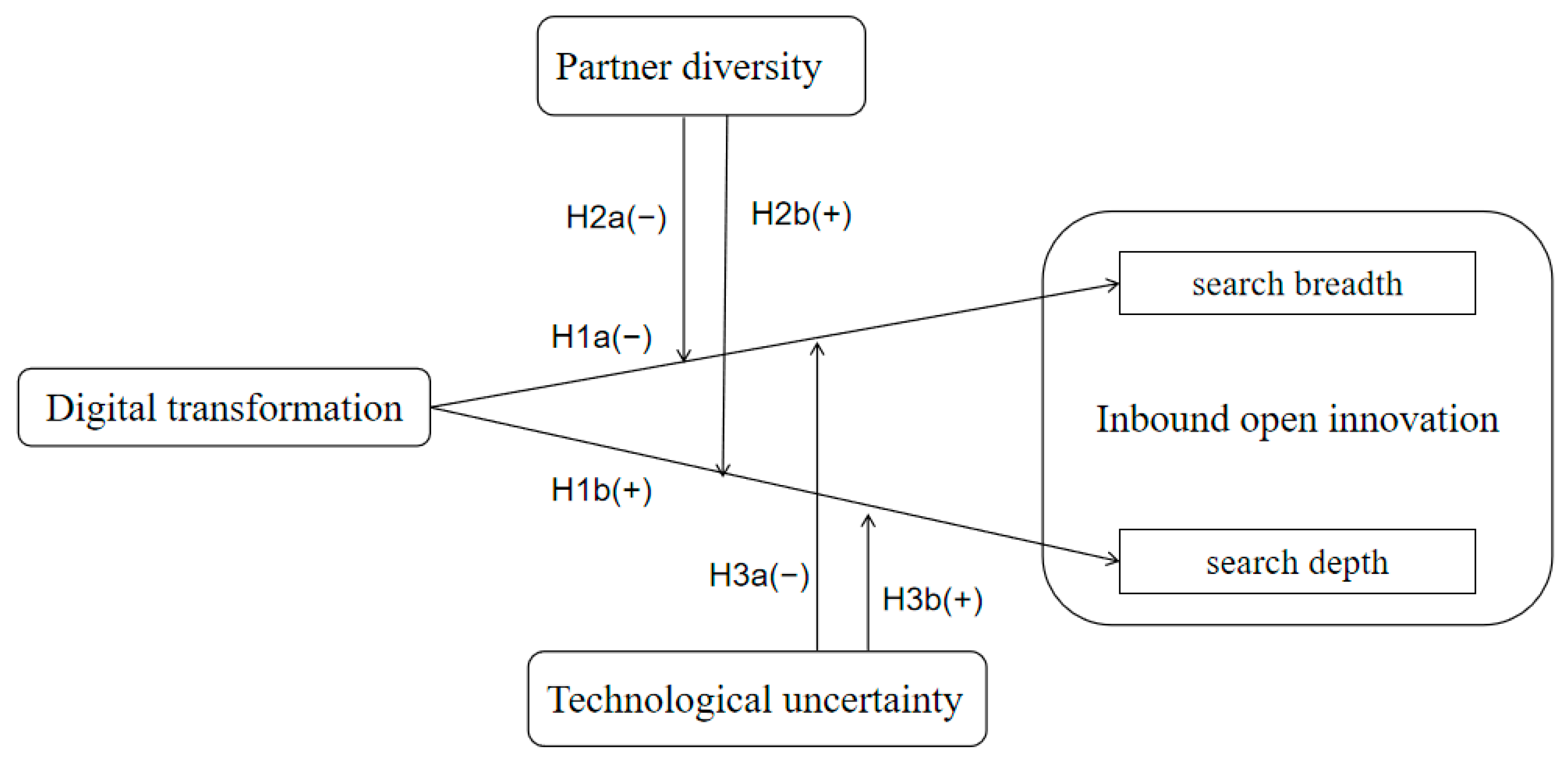
Based on the above discussion, the research model of this study is shown in Figure 1.

3. Methods

3.1. Data

The “Korean Innovation Survey (KIS) 2022: Manufacturing Industry” served as the primary dataset for this study [71]. The KIS is a nationwide survey organized biannually by the Science and Technology Policy Institute (STEPI), a government-affiliated research institute in Seoul, Korea. As a representative national survey, it systematically investigates the innovation activities of Korean firms and develops its questionnaire items in accordance with the “Community Innovation Survey (CIS)” administered by the European Statistical Office (EUROSTAT), which itself is grounded in the OECD’s Oslo Manual. By adopting this internationally standardized framework, the KIS ensures both conceptual comparability with international innovation data and reliability for policy and academic research purposes. For this reason, the KIS has been widely used in recent empirical studies on innovation and firm-level strategic behavior in Korea [72,73].
The 2022 wave of the KIS: Manufacturing Industry is particularly significant as it not only retains detailed measures on firms’ innovation outcomes, activities, and collaborations over the preceding three years (2019–2021), but also introduces a new module on digital transformation (DT) [74]. This addition reflects the increasing policy and managerial attention devoted to the role of digital transformation in shaping innovation activities. This makes the 2022 dataset especially valuable for analyzing how firms integrate digital transformation into their strategic choices and innovation practices [73].
According to the official STEPI report, the manufacturing sample in the KIS dataset encompasses 52,460 firms across Korea. Using a stratified random sampling approach, 4000 firms were selected from 24 industry sectors classified under the Korean Standard Industrial Classification (KSIC, codes 10–34) [71]. Within the 2022 KIS manufacturing dataset, 3856 of these firms were formally identified as small- and medium-sized enterprises (SMEs). SMEs therefore constitute the majority of the respondents, ensuring robust empirical coverage of this group. This dataset provides a solid empirical foundation for examining the hypothesized relationship between digital transformation and inbound open innovation strategic in the context of Korean manufacturing industries.

3.2. Measurements

3.2.1. Dependent Variable

The key dependent variable in this study is inbound open innovation, which is further divided into search breadth and search depth.
Search breadth was measured by the number of different external knowledge sources utilized by firms in their innovation activities. Following Laursen and Salter (2006), we considered eight categories of knowledge sources, such as affiliated firms, private companies, public enterprises, universities, private/public research institutes, government organizations, and non-profit entities [13]. Initially, these eight knowledge sources were all coded as binary variables: coded as “0” if not utilized and “1” if utilized. Subsequently, these binary values were summed for each firm, resulting in a scoring range from “0” (no knowledge sources utilized) to “8” (all eight knowledge sources utilized).
Search depth was measured using the same eight knowledge sources, based on the frequency of use reported on a 5-point Likert scale (1 = very infrequent, 5 = very frequent). Consistent with prior methodological approaches [13], we defined depth as the count of knowledge sources with usage ratings of 4 (“frequent”) or 5 (“very frequent”). These were coded as “1,” while all others were coded as “0,” and summed to yield a score from 0 to 8. Higher values indicate a greater number of high-intensity external exploration activities by the firm.

3.2.2. Independent Variables

The main independent variable is digital transformation (DT), conceptualized as a strategic motivation for innovation [37]. Empirically, DT was measured using the KIS 2022 survey item: “To what extent has your company responded to digital transformation over the past three years (2019–2021)?” Responses were recorded on a five-point Likert scale (1 = not at all, 5 = very actively).
To avoid potential multicollinearity and facilitate interpretation in interaction models, the DT variable was mean-centered [75,76]. The mean-centered DT variable indicates the extent to which a firm’s digital transformation engagement is above or below the sample average. Centering improves the statistical robustness of our models and allows us to meaningfully examine how DT affects inbound open innovation in terms of search breadth and depth.

3.2.3. Moderating Variables

Partner diversity. Following prior studies, partner diversity was measured using the KIS 2022 item: “With which types of external partners did your firm collaborate over the past three years (2019–2021)?” Firms could select from eight categories of external partners (e.g., affiliated firms, universities). Each category was coded as “1” if collaboration occurred and “0” otherwise. To capture the heterogeneity of these partnerships, we applied the Blau Index, an entropy-based measure of diversity [77]:
P a r t n e r   d i v e r s i t y = 1 i = 1 8 p i 2
where i represents each category of eight different external information sources, p i denotes the proportion of collaborations with each partner type relative to total types. The index is designed to reflect structural dispersion rather than the relative importance or intensity of each partner type. This approach is widely adopted in prior studies examining partner diversity.
Technological uncertainty. This variable was derived from the survey item asking respondents to assess whether “future technological developments are difficult to predict.” Responses were recorded on a five-point Likert scale (1 = not recognized at all, 5 = recognized very clearly) [72]. The variable was mean-centered to mitigate multicollinearity and facilitate interpretation of interaction effects. A higher score indicates that the firm perceives a higher degree of uncertainty in forecasting technological change relative to the sample average.

3.2.4. Control Variables

We controlled for several factors to mitigate potential estimation bias in examining the relationship between digital transformation and inbound open innovation (i.e., search breadth and search depth). First, firm age (years since establishment) was controlled, as it captures organizational maturity and inertia that may influence external knowledge search [72]. Second, firm size was measured as the natural logarithm of the number of employees and annual sales (in millions of KRW). Relatively larger SMEs tend to have greater resource endowments and absorptive capacity, which may shape their strategic choices regarding inbound open innovation [16]. Third, geographical location was coded as 1 for firms located in metropolitan areas (Seoul, Gyeonggi, and Incheon) and 0 otherwise, to control for regional disparities in resource access, knowledge networks, and innovation infrastructure [78]. Fourth, industry effects were controlled using a series of dummy variables based on the two-digit Korean Standard Industry Classification (KSIC) codes, covering 24 manufacturing industries [79]. Finally, since the partner diversity variable contained missing observations, missing values were recoded as zero for consistency. In addition, a collaboration presence dummy was created (1 = collaboration with at least one partner type; 0 = none) to account for firms’ overall engagement in interorganizational collaboration and to mitigate potential bias from missing data.

3.3. Model Specification

To examine the impact of digital transformation (DT) on inbound open innovation (IOI) strategic in SMEs, we constructed separate regression models for the two dimensions of IOI—search breadth and search depth Following prior studies, to address potential endogeneity concerns, we employed a two-stage least squares (2SLS) estimation approach. Specifically, digital transformation was instrumented using two external, environment-based variables: external environmental innovation pressure and external IT service engagement. These instruments capture exogenous pressures and technological support conditions in the firms’ external environment, which are closely related to firms’ engagement in digital transformation but are unlikely to directly affect firms’ inbound innovation search breadth or depth except through DT [80,81]. This approach enhances the robustness of the empirical results [72,82].

4. Results

Table 1 and Table 2 present the descriptive statistics and pairwise correlations for the main variables. On average, SMEs in the sample exhibit a moderate level of digital transformation. Note that 24 dummy variables representing the Korean Standard Industry Classification (KSIC) were included in the analyses but are not reported in Table 1 and Table 2 due to space limitations. In addition, all correlation coefficients are below 0.83, to assess potential multicollinearity issues, we examined the variance inflation factors (VIFs) for our models. The highest VIF was 3.86 and the mean VIF was 1.67, indicating no such issues.
Table 3 presents the IV regression results for inbound open innovation measured by search breadth, with all hypothesized effects carefully examined. For brevity, the coefficients of industry dummies, which were included as control variables, are not reported in the table. Model 1 includes all control variables and serves as the baseline model. The results show that firm age, number of employees, and annual sales have significantly positive effects on search breadth (p < 0.01), suggesting that SMEs with greater firm age and larger firm size are more likely to engage in a wider range of external search activities. Model 2 extends the baseline model by incorporating digital transformation (DT) as the key independent variable. The results reveal that DT exerts a negative effect on search breadth (β = −0.31, p < 0.01), supporting Hypothesis 1a. This finding indicates that SMEs with a stronger strategic motivation for digital transformation tend to narrow the scope of their external search, concentrating their attention and resources on select knowledge sources rather than exploring a wide range of external channels.
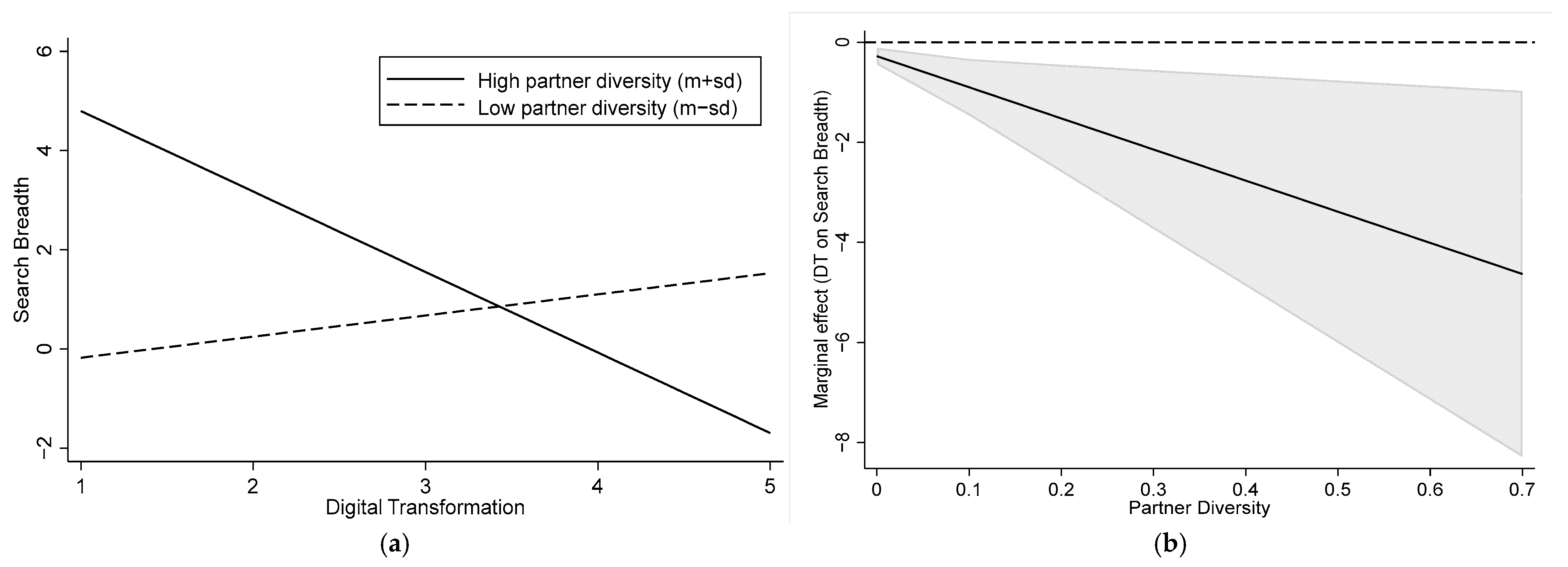
Model 3 adds the interaction term between DT and partner diversity to test Hypothesis 2a. The coefficient of the interaction term is significantly negative (β = −6.22, p < 0.05 ), providing support for Hypothesis 2a. Consistent with this result, Figure 2a shows that the negative effect of digital transformation on search breadth becomes substantially stronger when partner diversity is high, whereas this effect weakens and even turns slightly positive when partner diversity is low. The marginal effect plot in Figure 2b further confirms this pattern, indicating that the negative effect of digital transformation on search breadth intensifies as partner diversity increases. Together, these results demonstrate that partner diversity strengthens the negative impact of digital transformation on firms’ external search breadth. We further verified the robustness of the moderating effect, we re-estimated the models using an alternative measure of partner diversity (partner scope) [83,84]. The results are qualitatively consistent with the baseline findings.
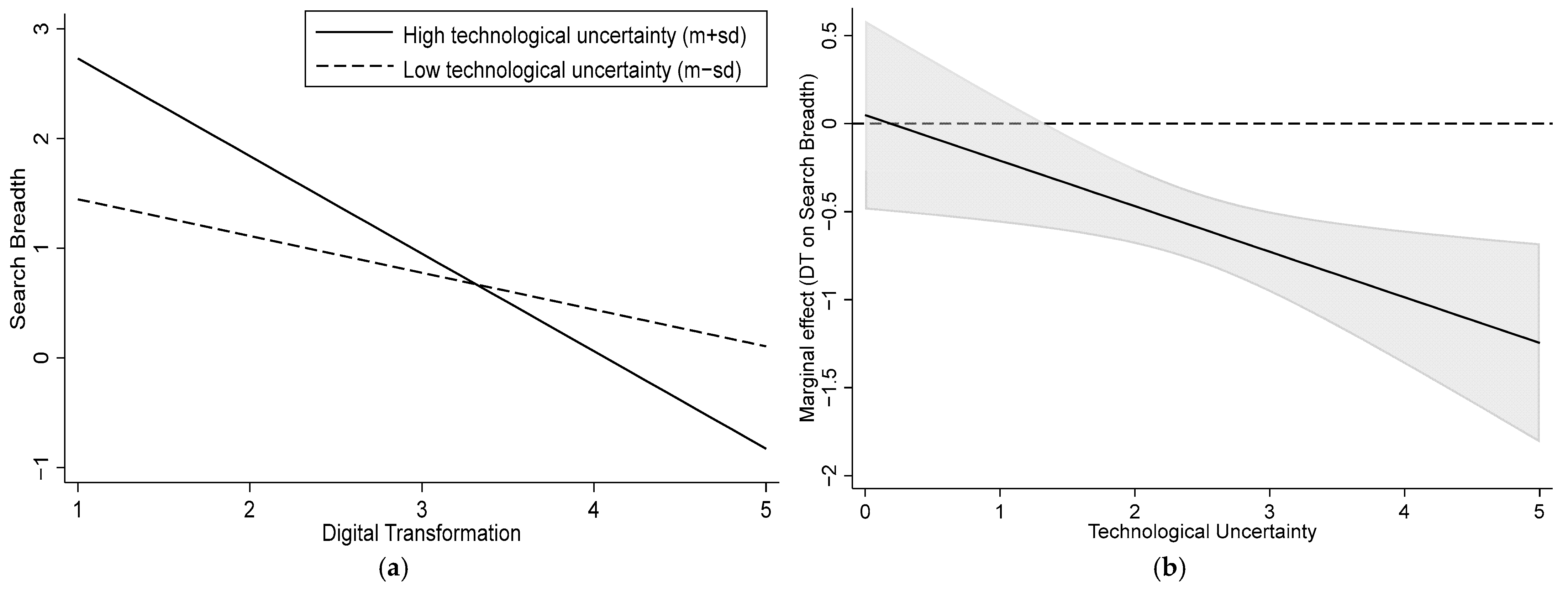
In Model 4, we test Hypothesis 3a by introducing the interaction term between DT and technological uncertainty. The interaction termyields a significantly negative coefficient (β = −0.26, p < 0.05), indicating support for Hypothesis 3a. As illustrated in Figure 3a, the slopes of digital transformation on search breadth are negative under both low and high technological uncertainty, but the slope becomes noticeably steeper when technological uncertainty is high, indicating a stronger negative effect. Figure 3b provides additional evidence through the marginal effect analysis: the marginal effects are predominantly negative and decline further as technological uncertainty increases. Overall, these results suggest that higher technological uncertainty exacerbates the negative influence of digital transformation on firms’ search breadth.
After examining the effects of DT on search breadth, we next turn to the results for search depth, another dimension of inbound open innovation. This complementary analysis provides further insight into whether DT drives SMEs toward deeper, more focused external search strategy. Table 4 presents the IV regression results for inbound open innovation (search depth). Model 1 includes only control variables. Notably, while firm age exhibits a consistently positive and stable association with search breadth in Table 3, its effect on search depth in Table 4 appears weaker and less robust across model specifications. This contrasting pattern is theoretically meaningful and highlights the conceptual distinction between search breadth and search depth. Specifically, firm age likely captures accumulated experience, established routines, and broader external networks, which structurally enable firms to engage with a wider range of external knowledge sources. However, a deeper and more intensive search within specific domains requires stronger strategic motivation and supportive environmental conditions, beyond accumulated firm age alone.
Model 2 adds the variable of digital transformation (DT), which exhibits a positive and significant effect on search depth (β = 0.16, p < 0.01), supporting Hypothesis 1b. This finding indicates that SMEs with a stronger DT strategic motivation are more likely to reinforce ongoing relationships and engage more intensively with selected external sources to extract deeper technological and experiential knowledge.
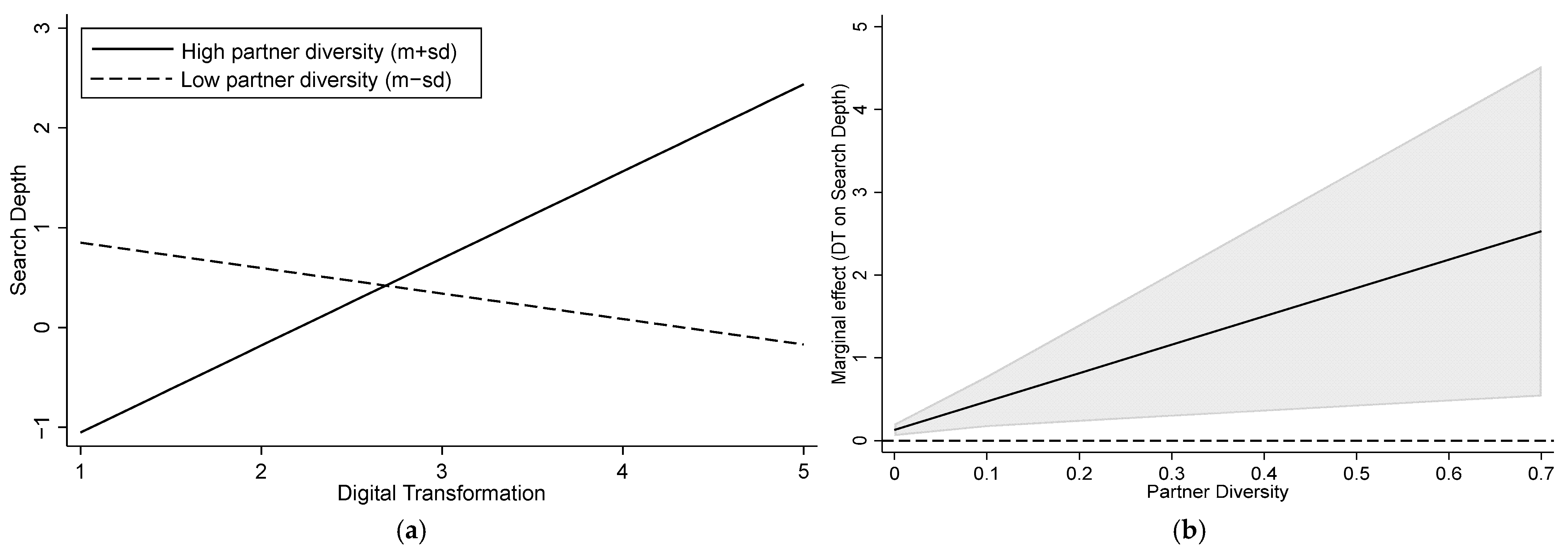
Model 3 introduces the interaction term between DT and partner diversity to test Hypothesis 2b. The interaction coefficient is positive and statistically significant (β = 3.43, p < 0.05), lending support to Hypothesis 2b. As presented in Figure 4a, when partner diversity is high, digital transformation exerts a strong and significant positive influence on search depth. In contrast, when partner diversity is low, the effect of digital transformation becomes substantially weaker and even turns slightly negative. The marginal effect analysis in Figure 4b confirms this pattern: the estimated marginal effects are upward sloping and remain above zero for most values of partner diversity. Taken together, these results show that partner diversity strengthens the positive influence of digital transformation on search depth.
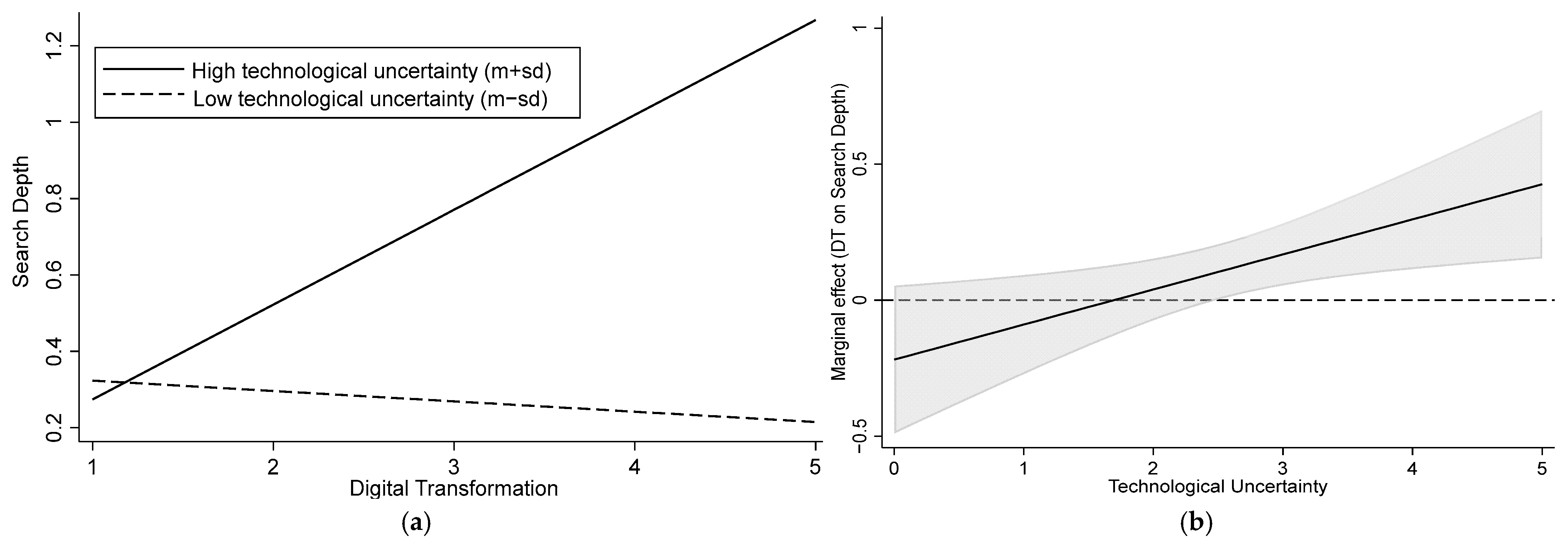
Model 4 incorporates the interaction between DT and technological uncertainty to test Hypothesis 3b. The interaction term is positive and significant (β = 0.13, p < 0.05), indicating that technological uncertainty strengthens the positive relationship between DT and search depth, supporting Hypothesis 3b. Figure 5a further depicts the moderating effect of technological uncertainty on the relationship between digital transformation and search depth. When technological uncertainty is high, digital transformation shows a strong and positive effect on search depth, with search depth increasing steadily as the level of digital transformation rises. In contrast, under conditions of low technological uncertainty, the effect of digital transformation becomes notably weaker and even turns slightly negative. The marginal effect analysis presented in Figure 5b supports this interpretation: the estimated marginal effects rise with increasing technological uncertainty and remain above zero across most of the distribution. This upward trend, together with the predominance of positive marginal effects, demonstrates that higher technological uncertainty strengthens the positive influence of digital transformation on firms’ search depth.

5. Discussion

Our study aims to explore how digital transformation (DT), as a strategic motivation, shapes SMEs’ strategic choices in inbound open innovation, specifically focusing on whether they pursue broader or deeper external search. Building on prior research on resource allocation and organizational learning efficiency, we argue that DT alters firms’ information-processing routines and ways to search for external knowledge, thereby influencing the scope and intensity of their external knowledge search. Using data from the 2022 Korea Innovation Survey (manufacturing industry) and addressing potential endogeneity with a two-stage least squares (2SLS) approach, the empirical results demonstrate that all proposed hypotheses were statistically supported. Specifically, DT significantly narrows the breadth of search while enhancing its depth, and these relationships are further moderated by partner diversity and technological uncertainty. In other words, digital transformation drives SMEs to concentrate their search efforts on fewer but more relevant external knowledge domains, facilitating deeper learning and knowledge integration. Our findings provide a nuanced understanding that DT reshapes the structure and focus of inbound open innovation activities rather than merely expanding their overall scale.

5.1. Theoretical Implications

This study makes several contributions to the existing literature. First, our study contributes to the digital transformation (DT) literature by conceptualizing DT not merely as a technological capability but as a strategic motivation that shapes how SMEs allocate limited resources and attention in the pursuit of innovation. Whereas prior research has largely emphasized the technological or operational benefits of DT [1,4], our study highlights its strategic implications. We show that DT-oriented firms make deliberate choices in configuring the breadth and depth of their external search activities, reflecting how digital transformation motivates specific patterns of openness rather than simply increasing it.
Second, our findings extend open innovation research by suggesting that digital transformation not only facilitates openness but also restructures it. Specifically, DT enables SMEs to engage in more focused and intensive interactions with selected knowledge domains, enhancing learning depth and efficiency. However, excessive concentration on deep search may reduce exposure to diverse external sources and limit opportunities for exploration. This highlights the need to view inbound open innovation as a dynamic balancing process in which firms continuously adjust the scope and intensity of their external knowledge search to sustain long-term innovation potential.
Third, this study deepens understanding of how digital transformation influences firms’ cognitive and knowledge management mechanisms. Our findings suggest that DT redefines how firms perceive, prioritize, and process external knowledge, thereby shaping the configuration of their inbound open innovation search strategies. Rather than functioning solely as a technological enabler, DT acts as a strategic and cognitive mechanism that restructures firms’ attention and resource allocation. This perspective provides a richer explanation of how digital transformation drives strategic adaptation in SMEs operating under resource constraints.
Fourth, by incorporating partner diversity and technological uncertainty as moderating variables, our study reveals that the influence of digital transformation (DT) on SMEs’ inbound open innovation strategies does not manifest uniformly across all contexts. The results indicate that the effects of DT on SMEs’ search strategies depend both on the structure of their external collaboration network and on the level of technological uncertainty. Specifically, partner diversity amplifies the negative impact of DT on search breadth, whereas technological uncertainty strengthens its positive effect on search depth.

5.2. Practical Implications

This study offers several practical insights for managers of small- and medium-sized enterprises (SMEs) seeking to leverage digital transformation (DT) for inbound open innovation. First, the results indicate that DT encourages firms to focus their attention and resources on a narrower range of external knowledge sources, allowing for deeper learning and more efficient knowledge integration. While such focus can enhance absorptive capacity and accelerate technological refinement, managers should be aware that excessive concentration on a limited set of knowledge domains may constrain exploratory learning and limit access to novel knowledge. To sustain long-term innovation potential, SMEs should adopt a balanced approach by primarily deepening engagement with key knowledge domains through digital tools, while flexibly expanding the breadth of their external search when conditions allow.
Second, the moderating results provide important guidance for managers. When making strategic decisions about inbound open innovation, SMEs should be aware that the effects of digital transformation (DT) on their search strategies are context-dependent. Specifically, in networks with high partner diversity, DT tends to intensify the narrowing of search breadth, potentially limiting exposure to diverse knowledge sources. Managers should therefore monitor the risk of over-concentration and selectively expand external search when necessary. Conversely, in environments characterized by high technological uncertainty, DT strengthens the focus on deep engagement with key knowledge domains. While this can enhance learning and innovation depth, managers should still ensure that sufficient search breadth is maintained to capture novel opportunities. By aligning DT-driven strategies with network composition and environmental conditions, SMEs can balance depth and breadth in their external knowledge search, maximizing both short-term efficiency and long-term innovation potential.
Finally, this study highlights the importance of managerial awareness and strategic motivation in digital transformation initiatives. DT should not be pursued solely as a technological upgrade, but as a means to reorient how firms learn from and interact with external environments. Managers of SMEs, in particular, should periodically evaluate whether their DT efforts are reinforcing overly narrow search patterns and consider how digital tools such as data analytics, online knowledge repositories, and AI-assisted scanning can be used to broaden their external search scope without diluting learning depth.
In addition, policymakers aiming to promote open innovation ecosystems should focus on fostering data-sharing standards, interoperability, and digital infrastructure that enable firms to extract deeper insights from fewer but more meaningful channels. Such an approach can amplify collective innovation performance and enhance the efficiency of industrial innovation networks.

5.3. Limitations and Future Research

Despite its contributions, this study is not without limitations. First, the analysis relies on cross-sectional survey data, which restricts the ability to capture the dynamic processes of digital transformation and inbound open innovation search over time. Future research could employ longitudinal designs to examine how the effects of DT on search breadth and depth evolve across different stages of transformation. Second, while the instrumental variable approach helps address potential endogeneity, unobserved heterogeneity may still remain. Further studies could use panel instrumental methods or quasi-experimental designs to provide stronger causal inference. Third, the current study measures DT and inbound open innovation at the firm level, which may obscure intra-firm heterogeneity or the role of specific network structures. Future research could integrate digital trace data or social network analysis to uncover how firms’ relational configurations change as DT progresses. Fourth, this study focuses on manufacturing firms; however, the mechanisms linking DT to search behaviors may differ in service or digital-native industries, where digital capabilities and network fluidity are inherently higher. Comparative studies across sectors and institutional contexts would further enhance the generalizability of the findings. Fifth, while this study conceptualizes digital transformation as a firm-level strategic motivation and examines its direct association with inbound open innovation search strategies, the available data do not allow us to capture the internal information-processing routines or resource allocation mechanisms that may further explain how DT influences firms’ innovation search strategies. Future research drawing on more suitable datasets or alternative empirical designs could more fully explore these mechanisms and offer deeper insights into how DT influences firms’ innovation search strategies. Finally, this study does not account for internal mechanisms such as the Not-Invented-Here (NIH) syndrome, which can impede the integration of external knowledge [85,86]. Future research should employ multilevel analysis to investigate how such micro-level resistance mechanisms moderate the relationship between digital transformation and open innovation search strategies.

6. Conclusions

In conclusion, this study demonstrates that firms’ strategic motivation for digital transformation reshapes their inbound open innovation strategies, leading to a narrower search breadth and greater search depth. Our empirical analyses provide consistent support for all proposed hypotheses, confirming digital transformation as a strategic motivation rather than a purely technological adoption; firms realign their external search priorities toward fewer but more valuable knowledge channels. These findings highlight that DT is not simply an amplifier of openness but a reconfigurator of openness that changes the quality and structure of firms’ external engagement. By integrating insights from inbound open innovation, digital transformation, and environmental factors, this study provides a more fine-grained understanding of how DT transform SMEs’ strategic search behavior. Ultimately, the results underscore the dual role of digital transformation as both a technological enabler and a strategic filter in firms’ pursuit of innovation.

Author Contributions

Conceptualization, W.S. and D.Y.; methodology, W.S. and X.J.; software, W.S., S.K. and X.J.; validation, W.S., S.K., D.Y. and X.J.; formal analysis, W.S. and X.J.; investigation, W.S., S.K. and D.Y.; resources, D.Y.; data curation, W.S. and D.Y.; writing—original draft preparation, W.S. and X.J.; writing—review and editing, D.Y.; visualization, W.S., S.K. and X.J.; supervision, D.Y.; project administration, W.S. and D.Y.; All authors have read and agreed to the published version of the manuscript.

Funding

This research received no external funding.

Data Availability Statement

Korean Innovation Survey 2022: Manufacturing Industry can be obtained on request at https://www.stepi.re.kr (accessed on 12 November 2025).

Conflicts of Interest

The authors declare no conflicts of interest.

References

  1. Verhoef, P.C.; Broekhuizen, T.; Bart, Y.; Bhattacharya, A.; Qi Dong, J.; Fabian, N.; Haenlein, M. Digital Transformation: A Multidisciplinary Reflection and Research Agenda. J. Bus. Res. 2021, 122, 889–901. [Google Scholar] [CrossRef]
  2. Fernandez-Vidal, J.; Antonio Perotti, F.; Gonzalez, R.; Gasco, J. Managing Digital Transformation: The View from the Top. J. Bus. Res. 2022, 152, 29–41. [Google Scholar] [CrossRef]
  3. Romero, I.; Mammadov, H. Digital Transformation of Small and Medium-Sized Enterprises as an Innovation Process: A Holistic Study of Its Determinants. J. Knowl. Econ. 2025, 16, 8496–8523. [Google Scholar] [CrossRef]
  4. Yoo, Y.; Boland, R.J.; Lyytinen, K.; Majchrzak, A. Organizing for Innovation in the Digitized World. Organ. Sci. 2012, 23, 1398–1408. [Google Scholar] [CrossRef]
  5. Escoz Barragan, K.; Becker, F.S.R. Keeping Pace with the Digital Transformation—Exploring the Digital Orientation of SMEs. Small Bus. Econ. 2025, 64, 1361–1385. [Google Scholar] [CrossRef]
  6. Omrani, N.; Rejeb, N.; Maalaoui, A.; Dabić, M.; Kraus, S. Drivers of Digital Transformation in SMEs. IEEE Trans. Eng. Manag. 2024, 71, 5030–5043. [Google Scholar] [CrossRef]
  7. Chen, D.Q.; Preston, D.S.; Swink, M. How the Use of Big Data Analytics Affects Value Creation in Supply Chain Management. J. Manag. Inf. Syst. 2015, 32, 4–39. [Google Scholar] [CrossRef]
  8. Yang, M.; Fu, M.; Zhang, Z. The Adoption of Digital Technologies in Supply Chains: Drivers, Process and Impact. Technol. Forecast. Soc. Change 2021, 169, 120795. [Google Scholar] [CrossRef]
  9. Sherer, S.A.; Meyerhoefer, C.D.; Peng, L. Applying Institutional Theory to the Adoption of Electronic Health Records in the U.S. Inf. Manag. 2016, 53, 570–580. [Google Scholar] [CrossRef]
  10. Chesbrough, H.W. Open Innovation: The New Imperative for Creating and Profiting from Technology; Harvard Business Press: Boston, MA, USA, 2003; ISBN 978-1-57851-837-1. [Google Scholar]
  11. Dahlander, L.; Gann, D.M. How Open Is Innovation? Res. Policy 2010, 39, 699–709. [Google Scholar] [CrossRef]
  12. Gassmann, O.; Enkel, E. Towards a Theory of Open Innovation: Three Core Process Archetypes. In Proceedings of the R&D Management Conference (RADMA), Lissabon, Portugal, 7–9 July 2004. [Google Scholar]
  13. Laursen, K.; Salter, A. Open for Innovation: The Role of Openness in Explaining Innovation Performance among U.K. Manufacturing Firms. Strateg. Manag. J. 2006, 27, 131–150. [Google Scholar] [CrossRef]
  14. Chesbrough, H. Open Business Models: How to Thrive in the New Innovation Landscape; Harvard Business Press: Boston, MA, USA, 2006; ISBN 978-1-4221-4807-5. [Google Scholar]
  15. Carrasco-Carvajal, O.; Castillo-Vergara, M.; García-Pérez-de-Lema, D. Measuring Open Innovation in SMEs: An Overview of Current Research. Rev. Manag. Sci. 2023, 17, 397–442. [Google Scholar] [CrossRef]
  16. Parida, V.; Westerberg, M.; Frishammar, J. Inbound Open Innovation Activities in High-Tech SMEs: The Impact on Innovation Performance. J. Small Bus. Manag. 2012, 50, 283–309. [Google Scholar] [CrossRef]
  17. Granovetter, M.S. The Strength of Weak Ties. Am. J. Sociol. 1973, 78, 1360–1380. [Google Scholar] [CrossRef]
  18. Zhou, Y.M. Synergy, Coordination Costs, and Diversification Choices. Strateg. Manag. J. 2011, 32, 624–639. [Google Scholar] [CrossRef]
  19. Onal Vural, M.; Dahlander, L.; George, G. Collaborative Benefits and Coordination Costs: Learning and Capability Development in Science. Strateg. Entrep. J. 2013, 7, 122–137. [Google Scholar] [CrossRef]
  20. Vivona, R.; Demircioglu, M.A.; Audretsch, D.B. The Costs of Collaborative Innovation. J. Technol. Transf. 2023, 48, 873–899. [Google Scholar] [CrossRef]
  21. Bolli, T.; Seliger, F.; Woerter, M. Technological Diversity, Uncertainty and Innovation Performance. Appl. Econ. 2020, 52, 1831–1844. [Google Scholar] [CrossRef]
  22. Bstieler, L. The Moderating Effect of Environmental Uncertainty on New Product Development and Time Efficiency. J. Prod. Innov. Manag. 2005, 22, 267–284. [Google Scholar] [CrossRef]
  23. Bogers, M.; Chesbrough, H.; Moedas, C. Open Innovation: Research, Practices, and Policies. Calif. Manag. Rev. 2018, 60, 5–16. [Google Scholar] [CrossRef]
  24. Popa, S.; Soto-Acosta, P.; Martinez-Conesa, I. Antecedents, Moderators, and Outcomes of Innovation Climate and Open Innovation: An Empirical Study in SMEs. Technol. Forecast. Soc. Change 2017, 118, 134–142. [Google Scholar] [CrossRef]
  25. Hochleitner, F.P.; Arbussà, A.; Coenders, G. Inbound Open Innovation in SMEs: Indicators, Non-Financial Outcomes and Entry-Timing. Technol. Anal. Strateg. Manag. 2017, 29, 204–218. [Google Scholar] [CrossRef]
  26. Enkel, E.; Gassmann, O.; Chesbrough, H. Open R&D and Open Innovation: Exploring the Phenomenon. RD Manag. 2009, 39, 311–316. [Google Scholar] [CrossRef]
  27. Madrid-guijarro, A.; Garcia, D.; Van Auken, H. Barriers to Innovation among Spanish Manufacturing SMEs. J. Small Bus. Manag. 2009, 47, 465–488. [Google Scholar] [CrossRef]
  28. Chiang, Y.-H.; Hung, K.-P. Exploring Open Search Strategies and Perceived Innovation Performance from the Perspective of Inter-Organizational Knowledge Flows. RD Manag. 2010, 40, 292–299. [Google Scholar] [CrossRef]
  29. Katila, R.; Ahuja, G. Something Old, Something New: A Longitudinal Study of Search Behavior and New Product Introduction. Acad. Manag. J. 2022, 45, 1183–1194. [Google Scholar] [CrossRef]
  30. Hansen, M.T. The Search-Transfer Problem: The Role of Weak Ties in Sharing Knowledge across Organization Subunits. Adm. Sci. Q. 1999, 44, 82–111. [Google Scholar] [CrossRef]
  31. Yoon, J.; Oh, S.J. The Roles of Entrepreneurial Orientation and Government Support in the Open Innovation of Manufacturing Firms: Empirical Evidence from South Korea. Cross Cult. Strateg. Manag. 2025, 32, 109–136. [Google Scholar] [CrossRef]
  32. Demirkan, H.; Spohrer, J.C.; Welser, J.J. Digital Innovation and Strategic Transformation. IT Prof. 2016, 18, 14–18. [Google Scholar] [CrossRef]
  33. Hess, T.; Matt, C.; Benlian, A.; Wiesböck, F. Options for Formulating a Digital Transformation Strategy. In Strategic Information Management; Routledge: New York, NY, USA, 2020. [Google Scholar]
  34. Heilig, L.; Lalla-Ruiz, E.; Voß, S. Digital Transformation in Maritime Ports: Analysis and a Game Theoretic Framework. Netnomics 2017, 18, 227–254. [Google Scholar] [CrossRef]
  35. Schwertner, K. Digital Transformation of Business. Trakia J. Sci. 2017, 15, 388–393. [Google Scholar] [CrossRef]
  36. Vial, G. Understanding Digital Transformation: A Review and a Research Agenda. In Managing Digital Transformation; Routledge: New York, NY, USA, 2021. [Google Scholar]
  37. Bharadwaj, A.; El Sawy, O.A.; Pavlou, P.A.; Venkatraman, N. Digital Business Strategy: Toward a Next Generation of Insights. MIS Q. 2013, 37, 471–482. [Google Scholar] [CrossRef]
  38. Kavre, M.S.; Sunnapwar, V.K.; Gardas, B.B. Strategic Digitization for Sustainable Growth in Emerging Markets: Empowering Manufacturing MSMEs for a Greener Future. Int. J. Organ. Anal. 2025, 15, 57–69. [Google Scholar] [CrossRef]
  39. Appio, F.P.; Cacciatore, E.; Cesaroni, F.; Crupi, A.; Marozzo, V. Open Innovation at the Digital Frontier: Unraveling the Paradoxes and Roadmaps for SMEs’ Successful Digital Transformation. Eur. J. Innov. Manag. 2024, 27, 223–247. [Google Scholar] [CrossRef]
  40. Zhang, X.; Xu, Y.; Ma, L. Research on Successful Factors and Influencing Mechanism of the Digital Transformation in SMEs. Sustainability 2022, 14, 2549. [Google Scholar] [CrossRef]
  41. Cen, T.; Lin, S. Digital Transformation and Corporate Innovation in SMEs. Systems 2025, 13, 551. [Google Scholar] [CrossRef]
  42. Saratchandra, M.; Shrestha, A. The Role of Cloud Computing in Knowledge Management for Small and Medium Enterprises: A Systematic Literature Review. J. Knowl. Manag. 2022, 26, 2668–2698. [Google Scholar] [CrossRef]
  43. Khin, S.; Ho, T.C. Digital Technology, Digital Capability and Organizational Performance. Int. J. Innov. Sci. 2019, 11, 177–195. [Google Scholar] [CrossRef]
  44. Ocasio, W. Towards an Attention-Based View of the Firm. Strateg. Manag. J. 1997, 18, 187–206. [Google Scholar] [CrossRef]
  45. Dyer, J.H.; Nobeoka, K. Creating and Managing a High-Performance Knowledge-Sharing Network: The Toyota Case. Strateg. Manag. J. 2000, 21, 345–367. [Google Scholar] [CrossRef]
  46. Tao, F.; Qi, Q.; Liu, A.; Kusiak, A. Data-Driven Smart Manufacturing. J. Manuf. Syst. 2018, 48, 157–169. [Google Scholar] [CrossRef]
  47. Wang, Y.; He, P. Enterprise Digital Transformation, Financial Information Disclosure and Innovation Efficiency. Financ. Res. Lett. 2024, 59, 104707. [Google Scholar] [CrossRef]
  48. Chen, H.; Chiang, R.H.L.; Storey, V.C. Business Intelligence and Analytics: From Big Data to Big Impact. MIS Q. 2012, 36, 1165–1188. [Google Scholar] [CrossRef]
  49. Uzzi, B. Social Structure and Competition in Interfirm Networks: The Paradox of Embeddedness. In The Sociology of Economic Life; Routledge: New York, NY, USA, 2018; pp. 213–241. [Google Scholar]
  50. Leana, C.R.; van Buren, H.J. Organizational Social Capital and Employment Practices. Acad. Manag. Rev. 1999, 24, 538–555. [Google Scholar] [CrossRef]
  51. Du, J.; Leten, B.; Vanhaverbeke, W. Managing Open Innovation Projects with Science-Based and Market-Based Partners. Res. Policy 2014, 43, 828–840. [Google Scholar] [CrossRef]
  52. Phelps, C.C. A Longitudinal Study of the Influence of Alliance Network Structure and Composition on Firm Exploratory Innovation. Acad. Manag. J. 2010, 53, 890–913. [Google Scholar] [CrossRef]
  53. van Beers, C.; Zand, F. R&D Cooperation, Partner Diversity, and Innovation Performance: An Empirical Analysis. J. Prod. Innov. Manag. 2014, 31, 292–312. [Google Scholar] [CrossRef]
  54. Faems, D.; Janssens, M.; Madhok, A.; Looy, B.V. Toward An Integrative Perspective on Alliance Governance: Connecting Contract Design, Trust Dynamics, and Contract Application. Acad. Manag. J. 2008, 51, 1053–1078. [Google Scholar] [CrossRef]
  55. Park, S.H.; Ungson, G.R. Interfirm Rivalry and Managerial Complexity: A Conceptual Framework of Alliance Failure. Organ. Sci. 2001, 12, 37–53. [Google Scholar] [CrossRef]
  56. van de Vrande, V.; de Jong, J.P.J.; Vanhaverbeke, W.; de Rochemont, M. Open Innovation in SMEs: Trends, Motives and Management Challenges. Technovation 2009, 29, 423–437. [Google Scholar] [CrossRef]
  57. Santoro, G.; Bresciani, S.; Papa, A. Collaborative Modes with Cultural and Creative Industries and Innovation Performance: The Moderating Role of Heterogeneous Sources of Knowledge and Absorptive Capacity. Technovation 2020, 92–93, 102040. [Google Scholar] [CrossRef]
  58. Hottenrott, H.; Lopes-Bento, C. R&D Partnerships and Innovation Performance: Can There Be Too Much of a Good Thing? J. Prod. Innov. Manag. 2016, 33, 773–794. [Google Scholar] [CrossRef]
  59. Lee, S.; Park, G.; Yoon, B.; Park, J. Open Innovation in SMEs—An Intermediated Network Model. Res. Policy 2010, 39, 290–300. [Google Scholar] [CrossRef]
  60. Zeng, S.X.; Xie, X.M.; Tam, C.M. Relationship between Cooperation Networks and Innovation Performance of SMEs. Technovation 2010, 30, 181–194. [Google Scholar] [CrossRef]
  61. Tiwana, A. Do Bridging Ties Complement Strong Ties? An Empirical Examination of Alliance Ambidexterity. Strateg. Manag. J. 2008, 29, 251–272. [Google Scholar] [CrossRef]
  62. Jewapatarakul, D.; Ueasangkomsate, P. Digital Organizational Culture, Organizational Readiness, and Knowledge Acquisition Affecting Digital Transformation in SMEs from Food Manufacturing Sector. Sage Open 2024, 14, 21582440241297405. [Google Scholar] [CrossRef]
  63. Zhao, Y.; Cavusgil, E.; Cavusgil, S.T. An Investigation of the Black-Box Supplier Integration in New Product Development. J. Bus. Res. 2014, 67, 1058–1064. [Google Scholar] [CrossRef]
  64. Xu, W.; Liu, C. External Environment Uncertainty, Key Resources Acquisition, and Corporate Technological Innovation. Manag. Decis. Econ. 2024, 45, 4–18. [Google Scholar] [CrossRef]
  65. Ye, F.; Paulson, N.; Khanna, M. Are Renewable Energy Policies Effective to Promote Technological Change? The Role of Induced Technological Risk. J. Environ. Econ. Manag. 2022, 114, 102665. [Google Scholar] [CrossRef]
  66. Darvishmotevali, M.; Altinay, L.; Köseoglu, M.A. The Link between Environmental Uncertainty, Organizational Agility, and Organizational Creativity in the Hotel Industry. Int. J. Hosp. Manag. 2020, 87, 102499. [Google Scholar] [CrossRef]
  67. McCarthy, K.; Aalbers, R.; Kearney, C. Organising for Innovation: Alliance-to-Acquisition Transitions and Patent Production. J. Technol. Transf. 2025, 50, 2837–2866. [Google Scholar] [CrossRef]
  68. Martínez-Román, J.A.; Gamero, J.; Tamayo, J.A.; Delgado-González, M.d.L. Empirical Analysis of the Technological Exploration–Exploitation Balance and Its Impact on Organizational Performance under Uncertainty. Humanit. Soc. Sci. Commun. 2025, 12, 221. [Google Scholar] [CrossRef]
  69. Hafeez, S.; Shahzad, K.; Helo, P.; Mubarak, M.F. Knowledge Management and SMEs’ Digital Transformation: A Systematic Literature Review and Future Research Agenda. J. Innov. Knowl. 2025, 10, 100728. [Google Scholar] [CrossRef]
  70. Liu, X.; Jiang, L. How Do Digital Platform Capabilities Affect Service Innovation in Service Manufacturing Firms? The Role of Knowledge Creation and Environmental Uncertainty. PLoS ONE 2025, 20, e0333382. [Google Scholar] [CrossRef] [PubMed]
  71. Korea Innovation Survey. Available online: https://www.stepi.re.kr/site/stepiko/02/10203070100002025032416.jsp (accessed on 12 November 2025).
  72. Kang, S.; Shin, J.; Kim, Y.S.; Kim, C. Cost and Quality Priorities, Technological Uncertainty, and Green Innovation: An Empirical Study of Manufacturing Firms in South Korea. Asia Pac. Bus. Rev. 2025, 31, 1–23. [Google Scholar] [CrossRef]
  73. Kim, H.-M. Impact of Digital Transformation, Smart Factory, and Government Support on Business Performance in Manufacturing Companies: A Comparative Analysis of SMEs and Large Enterprises. Ind. Promot. Res. 2025, 10, 27–37. [Google Scholar] [CrossRef]
  74. Jin, W.; Lee, Y.; Shin, K. The Impact of Innovation Capabilities on Digital Transformation_ The Moderating Effect of Government Support. Asia-Pac. J. Bus. Ventur. Entrep. 2025, 20, 63–77. [Google Scholar]
  75. Cohen, J.; Cohen, P.; West, S.G.; Aiken, L.S. Applied Multiple Regression/Correlation Analysis for the Behavioral Sciences, 3rd ed.; Routledge: New York, NY, USA, 2013; ISBN 978-0-203-77444-1. [Google Scholar]
  76. Aiken, L.S.; West, S.G.; Reno, R.R. Multiple Regression: Testing and Interpreting Interactions; SAGE: Thousand Oaks, CA, USA, 1991; ISBN 978-0-7619-0712-1. [Google Scholar]
  77. Blau, P.M. Inequality and Heterogeneity: A Primitive Theory of Social Structure; Free Press: New York, NY, USA, 1977; p. XI-307. ISBN 978-0-02-903660-0. [Google Scholar]
  78. Rodríguez-Pose, A.; Crescenzi, R. Research and Development, Spillovers, Innovation Systems, and the Genesis of Regional Growth in Europe. Reg. Stud. 2008, 42, 51–67. [Google Scholar] [CrossRef]
  79. Kim, J.M.; Park, J.-H. When Is Digital Transformation Beneficial for Coupled Open Innovation? The Contingent Role of the Adoption of Industry 4.0 Technologies. Technovation 2024, 136, 103087. [Google Scholar] [CrossRef]
  80. Zhu, K.; Kraemer, K.L.; Xu, S. The Process of Innovation Assimilation by Firms in Different Countries: A Technology Diffusion Perspective on E-Business. Manag. Sci. 2006, 52, 1557–1576. [Google Scholar] [CrossRef]
  81. Xue, L.; Ray, G.; Sambamurthy, V. Efficiency or Innovation: How Do Industry Environments Moderate the Effects of Firms’ IT Asset Portfolios? MIS Q. 2012, 36, 509–528. [Google Scholar] [CrossRef]
  82. Ma, D.; Rhee, M.; Yang, D. Power Source Mismatch and the Effectiveness of Interorganizational Relations: The Case of Venture Capital Syndication. Acad. Manag. J. 2013, 56, 711–734. [Google Scholar] [CrossRef]
  83. Hagedoorn, J.; Lokshin, B.; Zobel, A.-K. Partner Type Diversity in Alliance Portfolios: Multiple Dimensions, Boundary Conditions and Firm Innovation Performance. J. Manag. Stud. 2018, 55, 809–836. [Google Scholar] [CrossRef]
  84. Beamish, P.W.; Kachra, A. Number of Partners and JV Performance. J. World Bus. 2004, 39, 107–120. [Google Scholar] [CrossRef]
  85. Burger-Helmchen, T. Crowdsourcing of Inventive Activities, AI, and the NIH Syndrome. Adm. Sci. 2024, 14, 300. [Google Scholar] [CrossRef]
  86. Lichtenthaler, U.; Ernst, H. Attitudes to Externally Organising Knowledge Management Tasks: A Review, Reconsideration and Extension of the NIH Syndrome. RD Manag. 2006, 36, 367–386. [Google Scholar] [CrossRef]
Figure 1. Research model.
Systems 14 00019 g001
Figure 2. (a) Moderating effect of partner diversity on the relationship between digital transformation and search breadth; (b) Marginal effect analysis of digital transformation on search breadth across levels of partner diversity.
Systems 14 00019 g002
Figure 3. (a) Moderating effect of technological uncertainty on the relationship between digital transformation and search breadth; (b) Marginal effect analysis of digital transformation on search breadth across levels of technological uncertainty.
Systems 14 00019 g003
Figure 4. (a) Moderating effect of partner diversity on the relationship between digital transformation and search depth; (b) Marginal effect analysis of digital transformation on search depth across levels of partner diversity.
Systems 14 00019 g004
Figure 5. (a) Moderating effect of technological uncertainty on the relationship between digital transformation and search depth; (b) Marginal effect of digital transformation on search depth across levels of technological uncertainty.
Systems 14 00019 g005
Table 1. Descriptive statistics.
VariablesMeanS.D.Min.Max
Digital transformation2.351.111.005.00
Search breadth1.252.120.008.00
Search depth0.450.950.008.00
Partner diversity0.050.160.000.75
Technological uncertainty2.551.070.005.00
Firm age (in year)21.2413.053.0081.00
ln (number of employees)0.440.570.001.61
ln (annual sales)1.160.440.001.79
Metropolitan area (dummy)0.490.500.001.00
PD missing values0.130.330.001.00
Notes: N = 3856; industrial code dummies are not reported due to the space limitations.
Table 2. Pairwise correlations.
Variables12345678910
Digital transformation1
Search breadth0.15 **1
Search depth0.19 **0.56 **1
Partner diversity0.22 **0.32 **0.39 **1
Technological uncertainty0.04 *0.18 **0.19 **0.05 *1
Firm age (in year)0.14 **0.21 **0.17 **0.15 **0.07 **1
ln (number of employees)0.27 **0.32 **0.28 **0.28 **0.11 **0.45 **1
ln (annual sales)0.26 **0.30 **0.28 **0.26 **0.10 **0.44 **0.77 **1
Metropolitan area (dummy)0.05 *0.020.030.010.010.04 *−0.04 *−0.04 *1
PD missing values0.22 **0.31 **0.36 **0.83 **0.05 *0.15 **0.28 **0.27 **−0.011
Notes: N = 3856; ** p < 0.001, * p < 0.05; industrial code dummies are not reported due to the space limitations.
Table 3. IV regression results for inbound open innovation (search breadth).
VariablesModel 1Model 2Model 3Model 4
Firm age (in year)0.01 ***0.01 ***0.01 ***0.01 ***
(0.00)(0.00)(0.00)(0.00)
ln (number of employees)0.55 ***0.62 ***0.76 ***0.64 ***
(0.09)(0.09)(0.14)(0.10)
ln (annual sales)0.52 ***0.63 ***0.61 ***0.69 ***
(0.10)(0.11)(0.12)(0.12)
Metropolitan area (dummy)0.040.050.070.04
(0.06)(0.06)(0.08)(0.07)
PD missing values1.45 ***1.56 ***0.72 ***1.68 ***
(0.12)(0.12)(0.24)(0.12)
H1a: Digital transformation −0.31 ***−0.60 ***−0.61 ***
(0.09)(0.17)(0.10)
Partner diversity 6.70 ***
(2.25)
H2a: Digital transformation × Partner diversity −6.22 **
(2.65)
Technological uncertainty 0.25 ***
(0.04)
H3a: Digital transformation × Technological uncertainty −0.26 **
(0.11)
R-squared0.210.200.170.15
Notes: N = 3856; *** p < 0.01, ** p < 0.05; Standard errors in parentheses; industrial code dummies are not reported due to the space limitations.
Table 4. IV regression results for inbound open innovation (search depth).
VariablesModel 1Model 2Model 3Model 4
Firm age (in year)0.00 *0.00 *0.000.00
(0.00)(0.00)(0.00)(0.00)
ln (number of employees)0.19 ***0.16 ***0.040.15 ***
(0.04)(0.04)(0.07)(0.04)
ln (annual sales)0.20 ***0.15 ***0.17 ***0.17 ***
(0.04)(0.05)(0.05)(0.05)
Metropolitan area (dummy)0.06 **0.06 *0.040.06 **
(0.03)(0.03)(0.03)(0.03)
PD missing values0.90 ***0.85 ***0.30 **0.84 ***
(0.07)(0.07)(0.12)(0.07)
H1b: Digital transformation 0.16 ***0.31 ***0.11 **
(0.05)(0.09)(0.05)
Partner diversity −1.15
(1.22)
H2b: Digital transformation × Partner diversity 3.43 **
(1.44)
Technological uncertainty 0.15 ***
(0.02)
H3b: Digital transformation × Technological uncertainty 0.13 **
(0.05)
R-squared0.190.200.220.23
Notes: N = 3856; *** p < 0.01, ** p < 0.05, * p < 0.1; Standard errors in parentheses; industrial code dummies are not reported due to the space limitations.
Disclaimer/Publisher’s Note: The statements, opinions and data contained in all publications are solely those of the individual author(s) and contributor(s) and not of MDPI and/or the editor(s). MDPI and/or the editor(s) disclaim responsibility for any injury to people or property resulting from any ideas, methods, instructions or products referred to in the content.