1. Introduction
Technological innovation has recently emerged as a key driver of regional economic transformation, industrial upgrading, and high-quality development [
1]. As central hubs of knowledge creation, talent development, and technological advancement, universities play a crucial role within national innovation systems [
2]. University Science and Technology Innovation Parks (USTIPs) serve as a key platform for academic research and industry–academia integration [
3]. These platforms are increasingly essential in portraying universities’ innovation potential, accelerating technology transfer, and supporting regional socio-economic development [
4,
5]. Their operational efficacy significantly impacts the magnitude of the relationship between innovation, industrial, and talent chains, with strategic implications for enhancing regional innovation capacity and competitiveness [
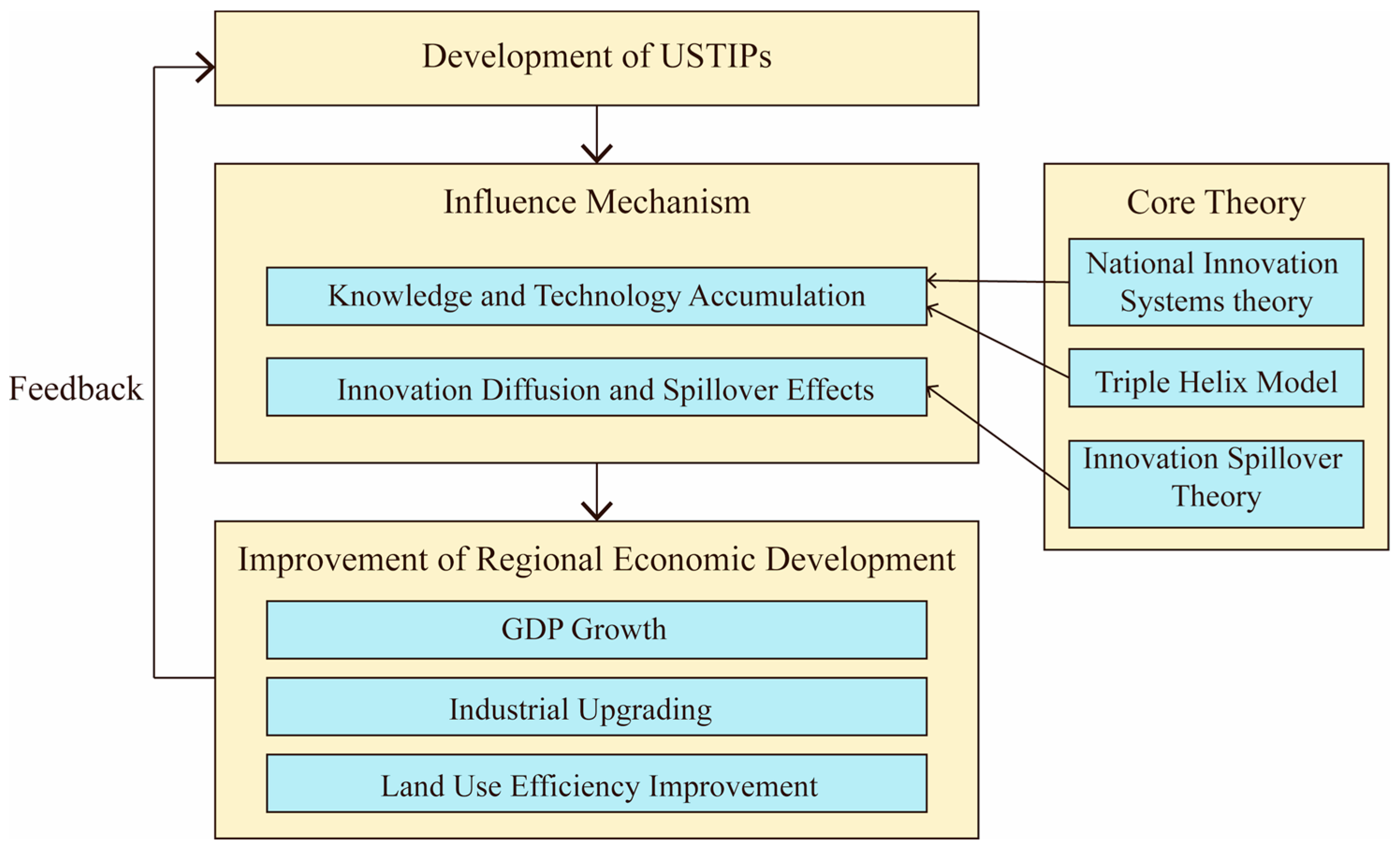
6]. Theories such as the National Innovation Systems (NIS) theory, the Triple Helix Model (university–industry–government collaboration), and the Innovation Spillover Theory establishes how USTIPs promote economic growth [
7,
8,
9]. These theories collectively indicate that USTIPs are comprehensive platforms that transform academic knowledge into economic output through multi stakeholder collaboration and knowledge diffusion [
10,
11,
12,
13,
14,
15].
Research globally shows that USTIPs have rapidly evolved from incubation-oriented facilities into complex multi-stakeholder innovation hubs [
16]. The governance structures of USTIPs have changed from the early single actor models dominated by a host university or government to institutional framework characterized by more comprehensive and coordinated multi-stakeholder governance [
17]. High-performing science parks tend to adopt more open and collaborative governance frameworks that enhance overall strategic alignment among actors for their effective operation [
18]. USTIPs have also undergone functional transition to a more comprehensive innovation hub. Studies indicate that, beyond their earlier role as basic incubation hubs, USTIPs have presently transformed to comprise a range of diversified functions that include research commercialization, startup incubation and acceleration, talent training, high-end enterprise clustering, innovation services, and policy experimentation [
19]. This diversification marks a significant transformation from a mere physical space to multi-stakeholder innovation hubs. USTIPs in China have exhibited development patterns that are consistent with international trends and are shaped by the country’s strategies and regional institutional framework [
20,
21]. Chinese USTIPs depend not only on universities for knowledge creation, scientific research capabilities, and human capital, but also rely heavily on local industrial policies, fiscal incentives, spatial planning, land support mechanisms, technology intermediaries, and industrial capital [
22,
23]. The combined influence of these interrelated factors helps explain the different development trajectories of USTIP in China’s rapidly growing innovation system.
Several studies have highlighted the multi-dimensional economic contributions of science and technology parks in enhancing innovation performance, job creation, and industrial restructuring [
24,
25,
26]. Research on Stanford Research Park and Cambridge Science Park have demonstrated the potential of robust university–industry integration in creating regional innovation spillovers and entrepreneurial dynamics [
27,
28,
29]. Such findings have led to the broader assessment of incubation mechanisms, university–industry collaboration, and the dynamics of innovation hubs [
30,
31]. Studies have shown that proximity to universities significantly improves the capacity of science parks to generate and absorb innovative ideas and advanced knowledge, which in turn increases their absorptive capacity [
28,
32]. Further empirical studies show that most firms and employees located within USTIPs have substantial multiplier effects that contribute to the indirect and induced employment in surrounding areas [
33,
34]. In China, recent studies indicate that USTIPs improve the productivity and innovation outputs of tenant firms [
17,
35], contribute to employment generation [
36], and support the development of high-tech industries [
37,
38]. Such studies reveal that USTIPs facilitate the agglomeration of high-tech enterprises and support the transition of knowledge-oriented industrial structures [
14,
39].
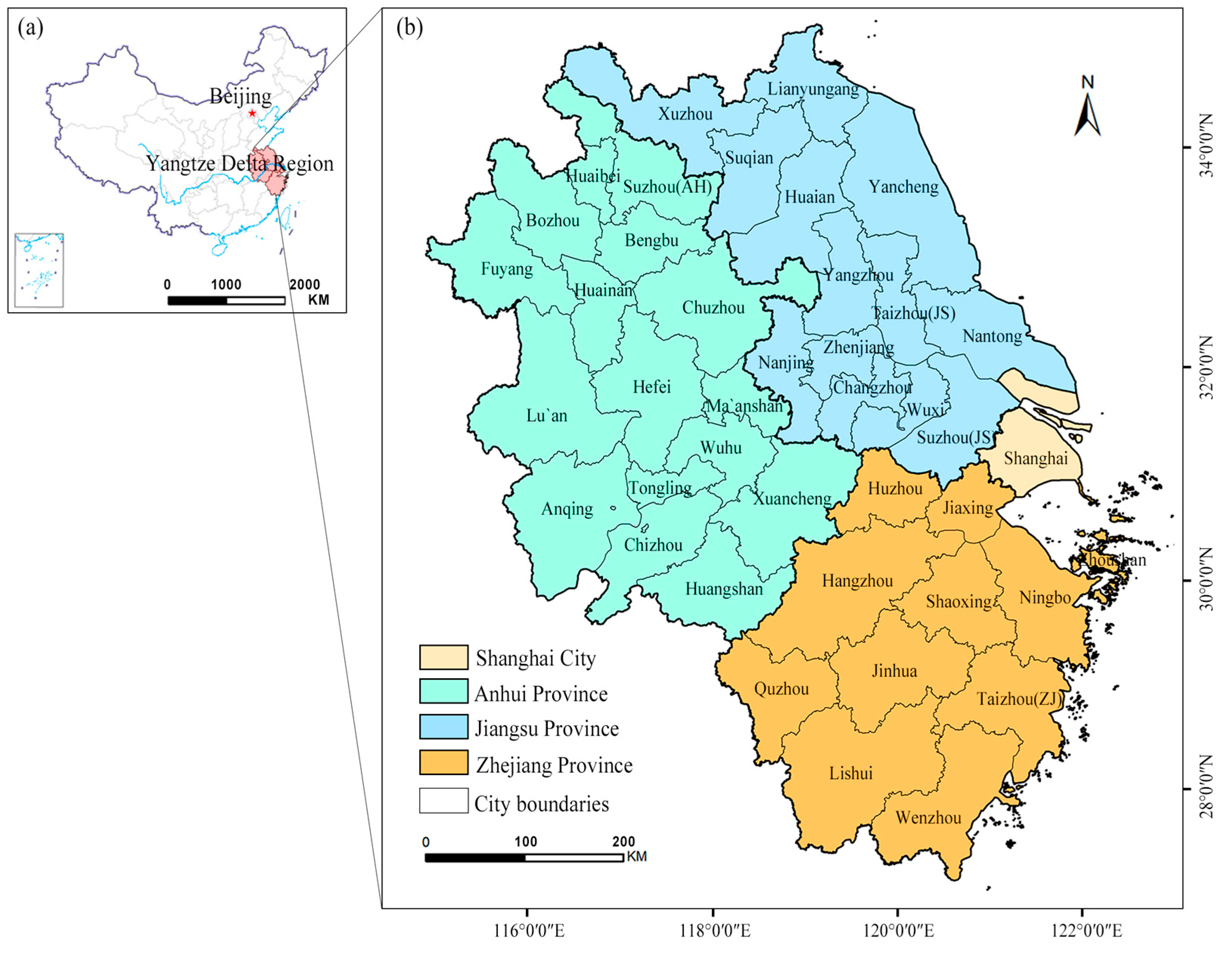
However, despite the growing studies on USTIPs, vital knowledge gap still exists regarding its socio-economic contributions, particularly within the economic region of the Yangtze River Delta (YRD) in China. Existing studies are largely descriptive, lacking an empirical evaluation of newer and more diversified USTIP models. The YRD region in China has undergone rapid expansion that is characterized by large scale urban growth and socio-economic development [
20]. Technological innovation has emerged as a vital pillar of the integrated development strategy of the region [
40]. Such innovations are driven by a dense concentration of top-tier universities whose global ranking reflects increasing academic strength and research capacity [
41]. However, despite the advances, the economic contributions of these universities remain understudied, especially through USTIPs. While universities and research institutions are abundant in the YRD, their potential to drive regional economic development and facilitate industrial transformation has not been fully harnessed [
42].
In response to these research gaps, the present study examines USTIPs through a more detailed and systematic analysis on how the developmental patterns of USTIPs in the YRD influence regional economic development. Therefore, the study answers the following questions: (i) What are the key development characteristics of USTIPs in the YRD? (ii) What are the comparative advantages and limitations relative of USTIPs relative to other STIP types? (iii) What are the key roles of USTIPs to the regional economic development of the YRD region?
5. Results
5.1. Analysis of the STIP System in China
The analysis of the result reveals that China has progressively established a multi-tiered Science, Technology, and Innovation Platform (STIP) system since 1980s (
Table 3).
At the initial stage, the Economic and Technological Development Zones (ETDZs) of China were created as advanced manufacturing clusters that served as the main engine of regional economic growth. Subsequently, High-Tech Industrial Development Zones (HTIDZs) emerged with a dedicated focus on cultivating high-technology industries and today serving as the main hubs for China’s innovation-driven development strategy. Later, the National Innovation Demonstration Zones (NIDZs) of China were established to serve as core platforms for advancing China’s innovation-driven development and promoting the transition toward an innovation-oriented society. These large-scale zones also had smaller but yet strategically significant entities that comprise University Science Parks (USPs), technology business incubators, maker spaces, and new Research and Development (R&D) institutions. These entities jointly form a diversified, multi-level STIP system that combines industrial, academia, and research activities.
The Yangtze River Delta (YRD) region hosts about 20 to 35% of all the national-level STIPs. This number underscores the region’s role as China’s most dynamic innovation hub. Also, the provincial and municipal governments within the YRD have expanded the regional network by introducing localized certification schemes that reinforce the density and diversity of the innovation landscape. Recent policies such as the 2024 Action Plan for Promoting High-Quality Development of National-Level New Areas in China, issued by the National Development and Reform Commission, prioritizes the development of scientific capacity and industrial competitiveness as its key strategic objective. Similarly, universities are increasingly integrated into innovation chains through USPs and collaborative research consortia, accelerating industry/academia/research collaboration and strengthening regional innovations.
5.2. Analysis of the Growth of USTIPs in the YRD Between 1992 and 2024
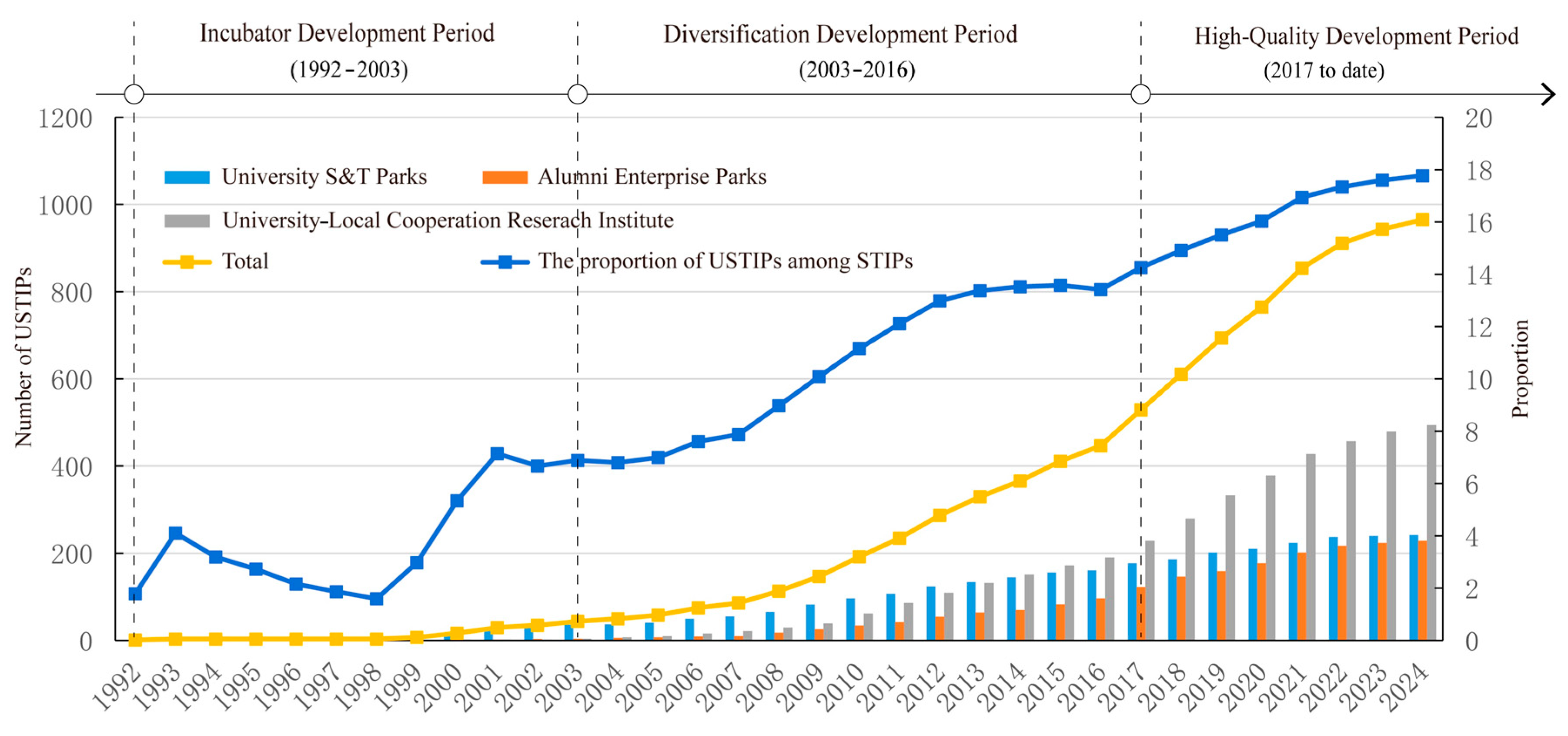
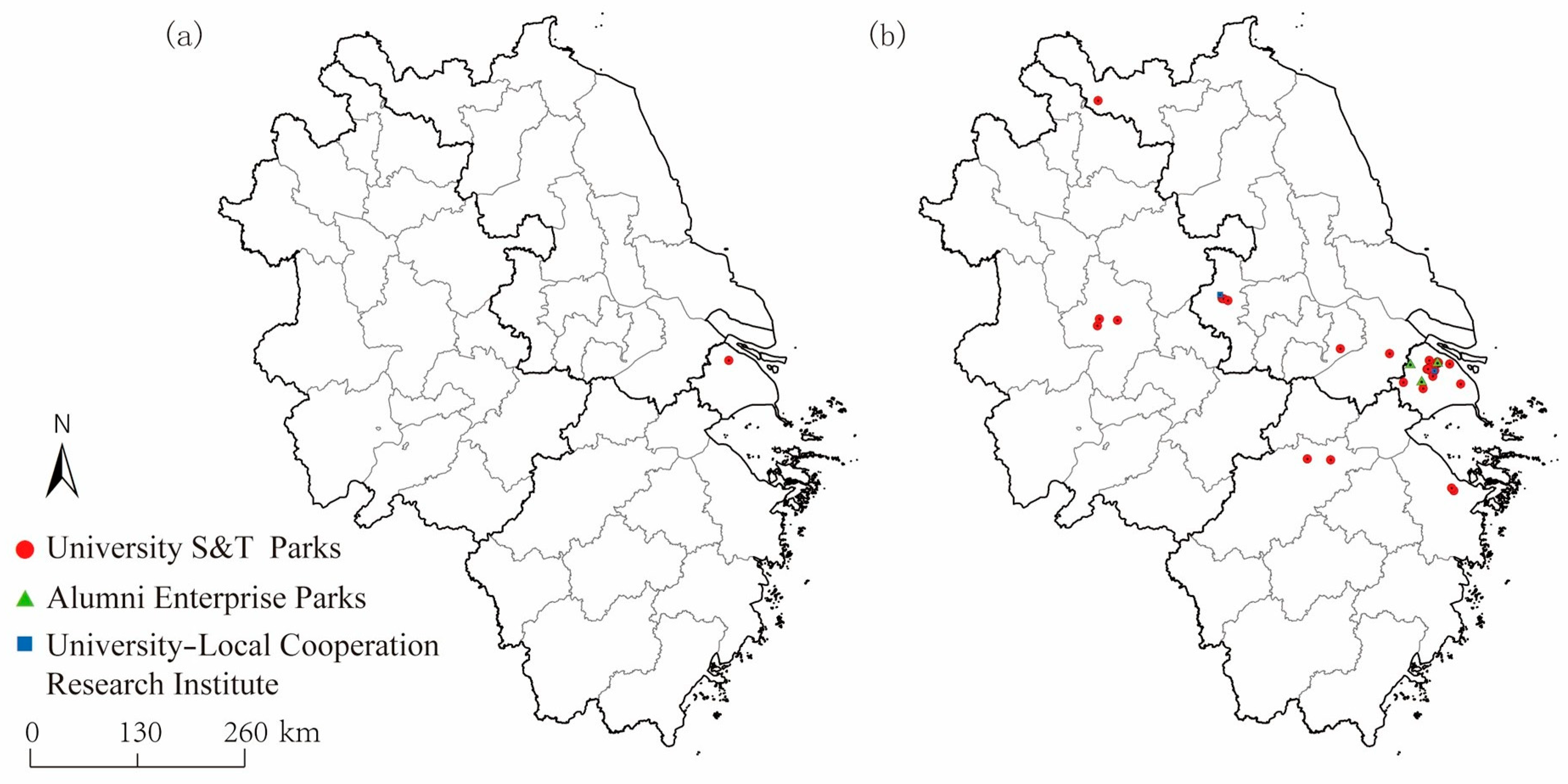
Since 1992, USTIPs within the Yangtze River Delta (YRD) have experienced rapid and dynamic expansion (
Figure 3). This expansion can be categorized into the three distinct phases presented below.
5.2.1. Incubator Development Period (1992–2002)
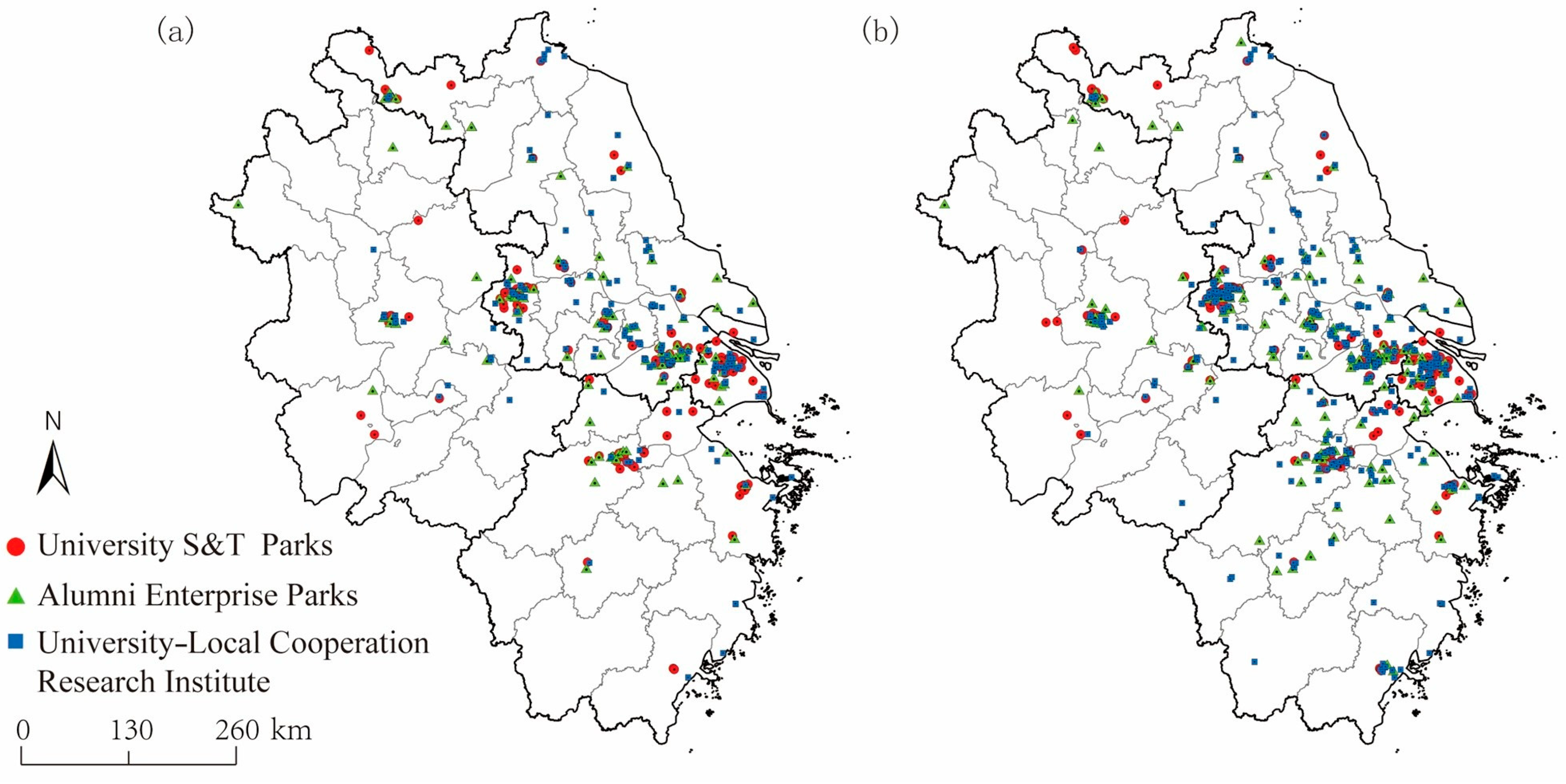
During this initial stage, USTIPs within the YRD region mainly adopted the conventional university science park models, which emphasized technology transfer and venture incubation. The establishment of the Shanghai University of Technology Science Park in 1992 marked the region’s first USTIP. From 1999 to 2001, key university science parks in the YRD, within the Shanghai Jiao Tong University and Zhejiang University, were officially recognized as national university science parks. This recognition stimulated broader institutional participation in park development; however, the growth was mainly in Shanghai, Nanjing, and Hefei. By 2002, a total of 35 USTIPs were operating within the YRD, following an incubation-oriented paradigms (
Figure 4).
5.2.2. Diversification Development Period (2003–2016)
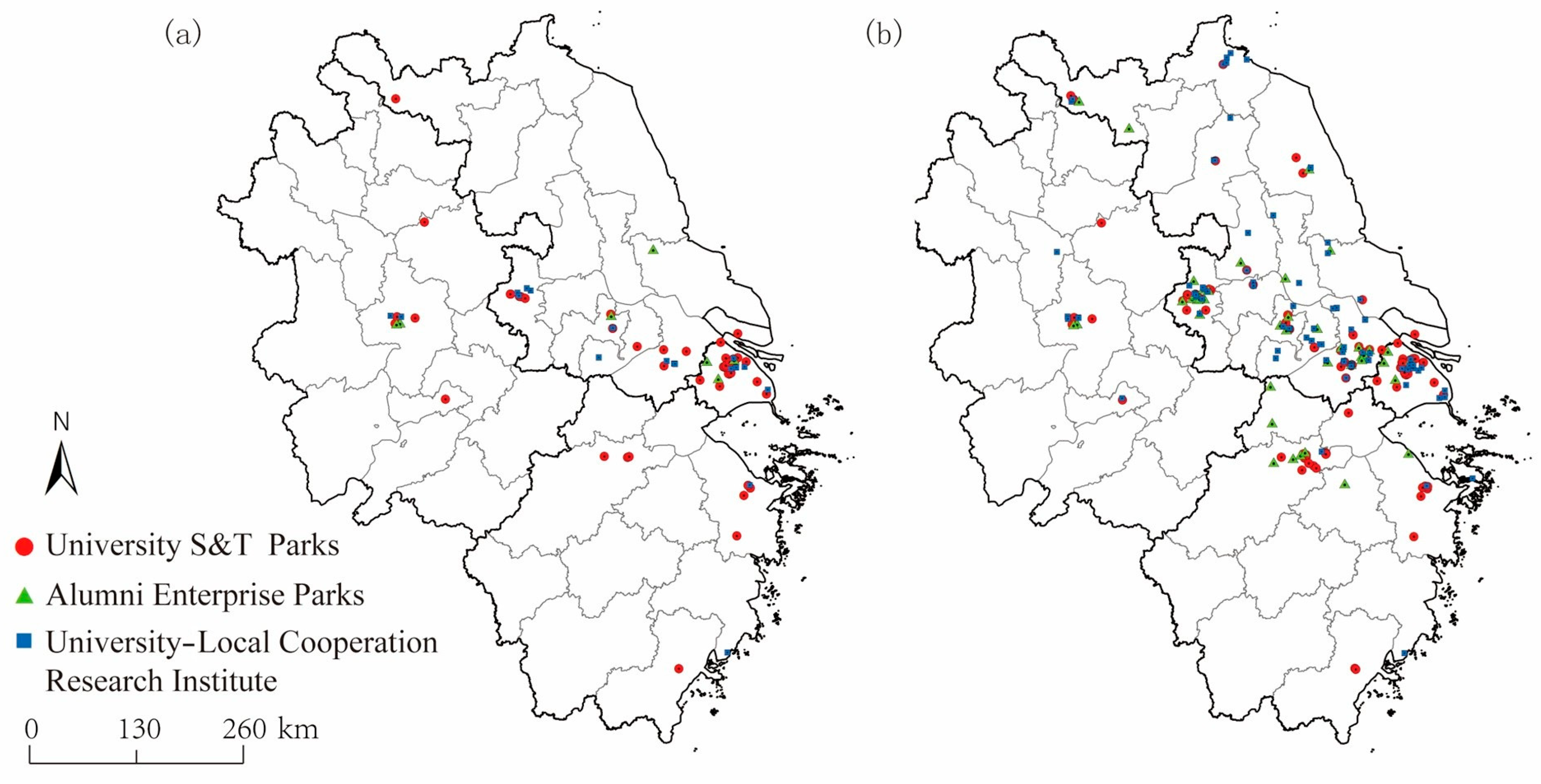
This phase marked a transition from the singular incubation models to the diversified and collaborative innovation structures (
Figure 5). Two landmark developments occurred in 2003 with the establishment of the Yangtze Delta Region Institute of Tsinghua University (YIT) and the Suzhou Institute for Advanced Research (SIAR), which became the catalysts for the region’s scientific innovation. During this period, the number of USTIPs grew significantly, rising from 44 in 2003 to 334 in 2016, with geographic expansion into Hangzhou and Suzhou. By 2016, university–local government research institutes became the predominant model, accounting for 42.5% of all USTIPs. This trend signified the region’s progression toward more integrated and multi-tie innovation system.
5.2.3. High-Quality Development Period (2017 to Date)
This phase is being shaped by the broader context of urban transformation and regional integration within the YRD as shown in
Figure 6. This stage is defined by the strengthening of multi-agent collaboration mechanisms, cross-regional collaborations, and integrated frameworks of “research × transformation (incubation) × industrialization × talent training”. Such initiatives highlight the growing interconnectedness between academic resources and local development agendas. Spatially, USTIPs have merged with five core innovation hubs in Shanghai, Nanjing, Suzhou, Hangzhou, and Hefei, and have simultaneously expanded to surrounding urban areas. By 2024, the YRD hosted 955 USTIPs, representing 17.8% of all Science and Technology Innovation Parks (STIPs) in YRD. This progress highlights the strategic consolidation, functional maturity, and regional significance of USTIPs within YRD region as drivers of China’s innovation-led development.
5.3. Regression Analysis Between USTIPs Growth and Economic Development Indicators
The study employed a multivariate linear regression model across forty-one YRD cities, with GDP, STR1, STR2, and LUE as dependent variables, number of USTIPs as the independent variable, and POP, INV (investment), OPE, and GOV as controls. The regression results revealed a substantial positive effect of USTIPs on regional economic development.
5.3.1. USTIPs Directly Stimulate GDP Growth
Table 4 shows that a 1% increase in the number of USTIPs was associated with a 0.443% rise in GDP. This can be attributed to the numerous economic activities hosted within USTIPs comprising enterprise output, investment attraction, technology commercialization, and job creation. For example, Jicui Yaokang, incubated through Nanjing University’s Humanized Models and Drug Screening Innovation Technology Institute, has grown into one of the world’s largest murine model suppliers, reporting RMB 687 million in revenue in 2024. Similarly, since its establishment four years ago, Xidian University’s Hangzhou Research Institute has signed 558 contracts and agreements worth RMB 490 million and attracted RMB 630 million investment in corporate R&D. These cases exemplify how USTIPs generate direct economic output and also mobilize private-sector innovation capital.
5.3.2. USTIPs Accelerate Industrial Restructuring and Upgrading
Table 5 and
Table 6 indicate an inconsistent but yet a balancing dynamic: a 1% increase in USTIP numbers corresponds to a 0.099% decline in STR1, i.e., traditional industries and a 0.167% increase in STR2, i.e., emerging industries. This signifies the role of USTIPs as both catalysts for upgrading conventional industries and incubators for new growth sectors. However, parks such as Nanjing Gulou National University Science Park leverage the city’s manufacturing base by nurturing high-tech enterprises such as NARI Group and Emerson Electric. This fosters industrial clusters in electronics, power automation, and new materials. Therefore, USTIPs drive the rise in frontier technologies. The Hefei National Comprehensive Science Center, drawing on the scientific achievements of the University of Science and Technology of China (USTC), has incubated globally leading quantum technology enterprises that include QuantumCTek and Origin Quantum. These firms have established Hefei as the “Quantum Capital,” highlighting the role of USTIPs in positioning the YRD at the forefront of next-generation industries.
5.3.3. USTIPs Enhance the Efficiency of Regional Economic Development
Table 7 shows that for every 1% increase in the number of USTIPs, land use efficiency (LUE) increases by 0.243%. Therefore, USTIPs function as integrative platforms that acquire resources from universities, enterprises, and governments to build collaborative innovation systems. For instance, Shanghai University Science Park, through its Robotics Key Laboratory and collaboration with Kangda Kale Medical Technology Co., Ltd. (affiliated with East China Normal University), has advanced minimally invasive interventional therapy and precision medicine. Such cases exemplify how USTIPs not only improve economic outputs but also enhance the overall efficiency and quality of regional development. The result of various regression models reveals that USTIPs significantly contribute to the YRD’s economic transformation by boosting GDP, restructuring industries, and improving efficiency. These findings highlight the strategic role of USTIPs as vital hubs for high-quality innovation-driven regional development in China.
5.4. Instrumental Variable Analysis for Endogeneity Problem
The study utilized a two-stage least squares (2SLS) method for the instrumental variable (IV) analysis. The regression results of the first stage (
Table 8) show that IV1 (β = 0.37,
p < 0.05) and IV2 (β = 0.206,
p < 0.05) are significantly positively correlated with the number of USTIPs, indicating that they are key factors influencing USTIP growth. Also, the first stage revealed an F-statistic value of 10.749, exceeding the threshold of 10. This result rules out the concerns of weak instrumental variables.
The regression results of the second stage (
Table 9) indicate that, after considering endogeneity problems, the positive impact of USTIPs on regional economic development remains statistically significant. Specifically, the regression coefficients of USTIPs for GDP, STR1, and STR2 are 1.223, 0.326, and 0.801, all greater than the corresponding OLS regression coefficients of 0.443, 0.099, and 0.167. This indicates that U STIPs have a stronger influence on economic growth and industrial structure. Also, USTIPs’ regression coefficient for LUE is 0.103, which is lower than the 0.243 in OLS regression, but still retains a strong positive influence. Thus, the analysis of the IV confirms the study’s findings of USTIP’s positive economic contributions. It also provides more credible evidence, indicating that this relationship is not solely driven by reverse causality.
5.5. Comparative Analysis of Economic Contributions Between USTIPs and Other STIP
For the comparative analysis, the study employed a multivariate linear regression model across forty-one YRD cities, with the four indicators of economic development, i.e., GDP, STR1, STR2, and LUE as dependent variables. The number of USTIPs were used as the independent variable, while population (POP), investment (INV), openness (OPE), and government expenditure (GOV) were the control variables. The results revealed significant but heterogeneous effects of USTIPs on regional economic development (
Table 10).
The results indicate that USTIPs exert weaker economic effects compared to other types of science and technology innovation parks. Specifically, a 1% increase in USTIP quantity was associated with 0.11% GDP growth, a 0.096% increase in STR2, and a 0.087% rise in LUE, with no statistically significant effect on STR1.
The non-significant impact on STR1 indicates that USTIPs have a relatively limited effect on the transformation and upgrading of the secondary industry, with the current driving effect appearing more evident in the tertiary industry, which is centered on technological innovation services. This finding underscores the need to promote the deeper integration of university-generated innovations with traditional secondary industries.
In comparison, the other STIPs demonstrated substantially greater impacts with a 1% increase corresponding to 0.595% GDP growth, 0.106% STR2 increase, and 0.289% LUE improvement. This difference highlights the small operational scale and lower productivity level of USTIPs compared to other STIPs. These results are further substantiated by large-scale statistical data. According to the 2024 Statistical Yearbook, enterprises located in National High-tech Industrial Development Zones (HTIDZs) within the YRD region generated a total revenue of USD 2104.98 billion in 2023, employing 7.4343 million people, with per-employee revenue reaching USD 297,290. By comparison, enterprises incubated from national-level USTIPs had lower figures with a total revenue of USD 19.17 billion and 180,200 employees that resulted in a per-employee revenue of USD 106,408. This difference highlights USTIPs’ smaller operational scale and weaker productivity levels relative to other STIPs. As presented in
Table 11, the Hangzhou Chengxi S&T Innovation Corridor provides a micro-level case that exemplifies this disparity.
Among the total STIPs of 135, only 12 are USTIPs. These 12 parks accommodate 861 enterprises with USD 2.12 billion in registered capital and 21,325 insured employees, with a registered capital density of USD 57.22 million/km2 and employee density of 5748/km2. In comparison, the 123 non-university STIPs had stronger indicators comprising USD 24.09 billion in registered capital and 226,055 insured employees that corresponds to a capital density of USD 74.64 million/km2 and employee density of 7005/km2.
This comparison shows that USTIPs exert weaker economic effects, operate at smaller scales, and deliver lower output efficiency relative to other STIPs. Such findings highlight the importance of regional development strategies to address USTIPs’ structural bottlenecks while concurrently leveraging their advantages through targeted policy interventions to strengthen their economic contributions.
6. Discussion
The results revealed that University Science and Technology Innovation Parks (US-TIPs) exert a significant impact on regional economic development (β = 0.122, p < 0.01), thus verifying research hypothesis H1 which states that the development of USTIPs has a significant positive effect on regional GDP growth, industrial restructuring and upgrading, and land use efficiency. However, consistent with Hypothesis H2, such contributions remain markedly weaker than compared to the other Science and Technology Innovation Parks (β = 0.595, p < 0.001). This finding underscores the presence of structural bottlenecks within the YRD region that demand urgent consideration.
The declining economic influence is attributed to the failure of USTIPs within the YRD region to achieve cluster effects due to insufficient resource integration capabilities and limited industrial chain embeddedness. USTIPs usually have fewer enterprises and less capital overall, leading to smaller output, while other STIPs in the region with large government-designated high-tech zones typically have more established industries and larger firm clusters than USTIPs. Despite their abundance to high-quality talent pools, USTIPs mainly served as campus-based innovators without effectively leveraging alumni networks and broader social capital [
53,
54]. This results in fragmented innovation activities that fail to generate economies of scale. In contrast, the underdeveloped industry–academia coordination mechanisms constrain tenant composition by primarily focusing on technology startups [
55,
56]. This hinders the attraction of industries, thereby limiting knowledge spillovers and stifling innovation circulation within the broader industrial system.
Another significant challenge is the lopsided emphasis on frontier research over industrial application. For instance, national reports in China indicates that while Chinese enterprises achieve a patent industrialization rate of 48.1%, universities reach only 3.9%. This disparity suggests an underutilization of academic intellectual capital and the inefficiency of technology transfer pathways [
57]. Therefore, the present study highlights this problem in three interrelated ways that include research agendas often prioritize academic outputs over market applicability, commercialization requirements are frequently overlooked, and fragmented policy frameworks continue to impede the conversion of knowledge into productivity. These findings align with earlier studies that identified limited knowledge transfer [
58], inadequate industry engagement [
59], and insufficient support mechanisms for transforming research into practical outcomes [
60]. It has also been reported that substantial research teams of universities do not fully understand the practical needs of the industry [
49]. This contributes to the failure of technical cooperation.
In addition, university faculty members face multiple obstacles when transiting from scientists to entrepreneurs [
61]. At the level of identity recognition, they are compelled to juggle the triple roles of scholar, educator, and entrepreneur. This results in conflicts in values, objectives, norms, and practices. At the property rights level, disputes often arise regarding ownership and benefit distribution [
62], mostly in multi-funded projects where the distinction between official and non-official achievements is blurred. This leads to recurring conflicts over collaborative outcomes. At the skills level, most scientific researchers lack entrepreneurial competencies such as business management, financial insight, and market awareness [
63]. This deficiency hinders the establishment of complete value chains from technological development to market-ready products.
Despite these constraints, the strategic importance of USTIPs lies less in its direct economic outputs and their catalytic role in fostering high-quality regional innovation. They serve as key platforms for multi-stakeholder resource convergence that promote the development of innovation-driven ecosystem by strengthening industry/academia/research integration. Therefore, USTIPs effectively enhance the innovation capacity of entire YRD region using the universities, research institutes, enterprises, and government entities. The case of Hangzhou exemplifies how USTIPs can drive systemic innovation. The city has Zhejiang’s first MNSTI project that is backed by over 2.1 billion yuan and the world’s largest-capacity hyper gravity centrifuge. Similarly, Beihang University’s scientific facility has an investment exceeding 3.5 billion yuan, serving as the world’s most advanced breakthroughs in deep-space exploration. The Hangzhou High-Tech Zone also plans to establish a 500-million-yuan technology transfer fund to link research, technology transfer, and industrial incubation. These examples demonstrate the significance of USTIPs in strengthening innovation ecosystems and long-term regional competitiveness.
The successes of the Stanford Research Park in the United States and Cambridge Science and Technology Park in the United Kingdom are deeply rooted in entrepreneurial culture [
21], active venture capital market [
28], and decades of transformation [
64], which led to large-scale innovation clusters with global influence. Studies in Japan show that the government promotes technology transfer through the national subsidy system [
65,
66]. The findings reveal that the influence of such an intervention is mainly dependent on the tripartite collaboration. This comparative analysis provides valuable perspective into the efficiency gap between foreign and Chinese USTIP. USTIPs in China exhibit limitations in terms of physical scale, concentration of high-tenants, and the collaboration between industry, universities, and research institutions. These international examples suggest that USTIPs in the Yangtze River Delta remain at an early stage of a comparable development trajectory, demonstrating a strong regional potential to lead innovation in China.
Therefore, addressing the identified challenges would help significantly in achieving regional improvements in technological output, organizational capacity, and innovation performance.