1. Introduction
Climate change presents complex and profound challenges to global supply chain management, disrupting procurement processes and threatening the resilience of supply networks [
1,
2]. Extreme weather events, rising temperatures, and regulatory pressures compel organizations to reassess their purchasing strategies and supplier relationships. The flooding in Pakistan in 2022 not only disrupted regional supply chains but forced firms to reevaluate sourcing decisions [
3,
4]. Similarly, Europe’s record-breaking heatwaves and Australia’s devastating wildfires expose vulnerabilities in procurement practices dependent on agricultural and natural resources [
5,
6]. These events indicate climate change impacts extend beyond physical infrastructure to affect purchasing costs, supplier reliability, and supply chain continuity [
6].
Sustainable supply chain management (SSCM) consequently emerges as a vital focus area, aiming to incorporate environmental considerations into supply chain management [
7]. Modern organizations now recognize they need to develop traditional procurement models by partnering with environmentally responsible suppliers, adopting closed-loop procurement practices, and collaborating to lower carbon footprints [
8,
9]. Prior literature documents the development from traditional risk management approaches to more comprehensive sustainability frameworks [
10]. Such development encompasses diverse themes, including closed-loop economy integration, renewable energy adoption, and climate resilience strategies [
9,
11].
Although the importance of SSCM is widely acknowledged, meaningful gaps remain in both academic research and practical implementation regarding effective environmental strategies within supply chains [
12,
13]. Operationalizing SSCM requires rigorous theoretical frameworks that delineate actionable implementation pathways across supply chain members. However, existing frameworks do not sufficiently account for how organizational characteristics, institutional environments, and supply chain configurations influence implementation success. Such contextual variations require further empirical investigation, limiting practical guidance for context-appropriate implementation strategies. Compounding these challenges, inconsistent sustainability reporting methods—such as those from the Sustainability Accounting Standards Board and the Global Reporting Initiative—lead to incomparable assessments of supplier sustainability, hindering performance measurement and benchmarking across supply chain tiers [
14,
15,
16].
Prior systematic reviews examine SSCM evolution within specific periods or particular sustainability dimensions [
17,
18], yet their reliance on published literature limits the potential to identify evolving implementation challenges documented in practitioner discourse before receiving systematic academic attention. The reliance on established literature proves insufficient for discovering accelerating environmental regulatory change, technological innovation, and evolving stakeholder expectations characterizing contemporary supply chain environments. Addressing these methodological limitations necessitates approaches responsive to real-time sustainability challenges. Media discourse provides systematic documentation of practitioner responses to regulatory changes and sustainability initiatives, revealing implementation challenges before they receive scholarly treatment [
19,
20].
The persistent gap between scholarly frameworks and operational implementation raises essential questions: does academic SSCM research adequately address the implementation challenges practitioners face in applying sustainability principles to supply chain operations? Do scholarly frameworks provide actionable guidance for context-specific adoption across varying organizational sizes, industries, and institutional environments, or remain primarily conceptual? What specific implementation domains require empirical investigation to bridge persistent theory–practice gaps in sustainable supply chain management? To address these questions, our research examines:
RQ1: How has supply chain sustainability research evolved from 2004 to 2024, particularly regarding implementation strategies and performance measurement?
RQ2: What key differences emerge between academic sustainability research and media-reflected practitioner concerns, and which underrepresented domains warrant empirical investigation?
This study contributes to SSCM research by integrating systematic literature review with media discourse examination. First, we characterize sustainability research evolution from 2004 to 2024 using structural topic modeling on 6586 academic articles, revealing that scholarly attention shifts from green procurement toward comprehensive frameworks while identifying persistent underemphasis on implementation mechanisms [
21,
22]. Second, our systematic comparison of academic literature and media discourse (6586 scholarly articles and 384,190 news articles, 2019–2023) identifies six domains—circular economy operationalization, climate adaptation strategies, renewable energy integration, ESG performance management, community-based initiatives, sustainable product design—where media emphasis substantially exceeds academic investigation, revealing implementation-oriented research gaps warranting empirical examination. Finally, we establish a transferable analytical framework for bridging theory–practice gaps, demonstrating how systematic integration of media discourse and academic literature identifies implementation challenges currently facing practitioners but which are underexamined in scholarly research.
The subsequent sections are as follows:
Section 2 provides research background;
Section 3 details our empirical methodology;
Section 4 presents analytical findings; and
Section 5 concludes with theoretical contributions and future research directions.
4. Results
This section presents findings from our systematic analysis of 6586 academic articles (2004–2024) and 384,190 media articles (2019–2023), directly addressing our research questions. We first examine the evolution of SSCM research over two decades (RQ1), then compare academic and media discourse to identify critical research gaps (RQ2). By systematically analyzing topic prevalence and conceptual emphasis across both datasets, we reveal where scholarly frameworks diverge from practitioner concerns documented in media coverage.
To ensure robustness of our STM-derived topic structures, we conducted cross-method alignment validation, comparing STM topics with those extracted via non-negative matrix factorization (NMF) and BERTopic, as detailed in
Section 3.3. The academic corpus demonstrated stronger cross-method consistency, with paper–NMF alignments exhibiting Jaccard similarity coefficients reaching approximately 0.29 accompanied by 4–5 overlapping terms in well-matched topics. In contrast, news corpus alignments yielded substantially lower similarity scores, predominantly classified as very-low-confidence matches. This pattern proves consistent with the inherent stylistic and lexical variability characterizing journalistic discourse, where event-driven narratives and rapidly shifting terminology create greater topical fluidity compared with academic writing’s standardized conceptual frameworks. Complete alignment mappings, confidence distributions, and collision analyses are provided in the
Supplementary Materials. These validation results establish confidence in our primary STM framework while acknowledging differential topic stability across corpus types—a consideration we account for in subsequent comparative interpretations.
4.1. Evolution of SSCM Research
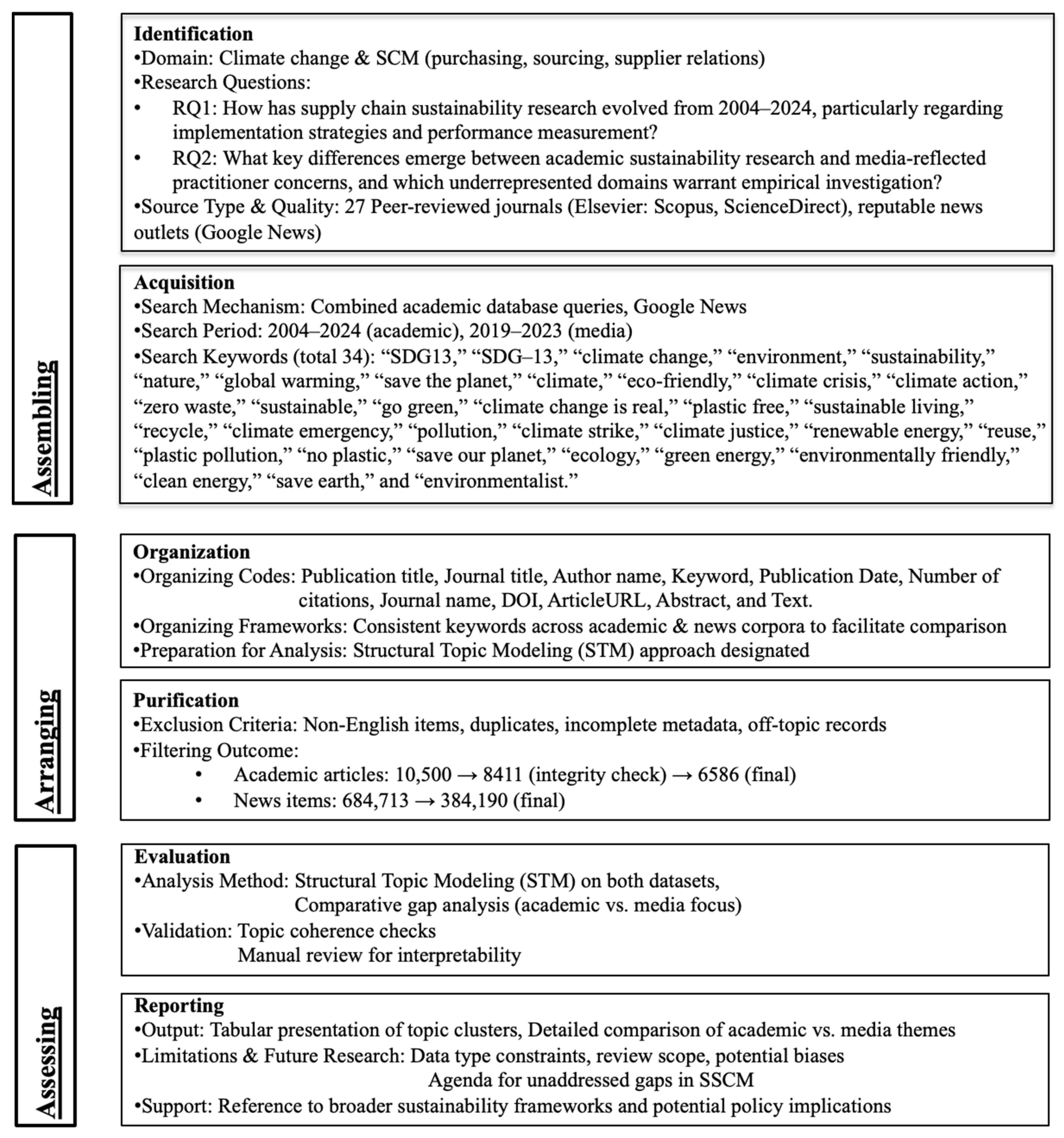
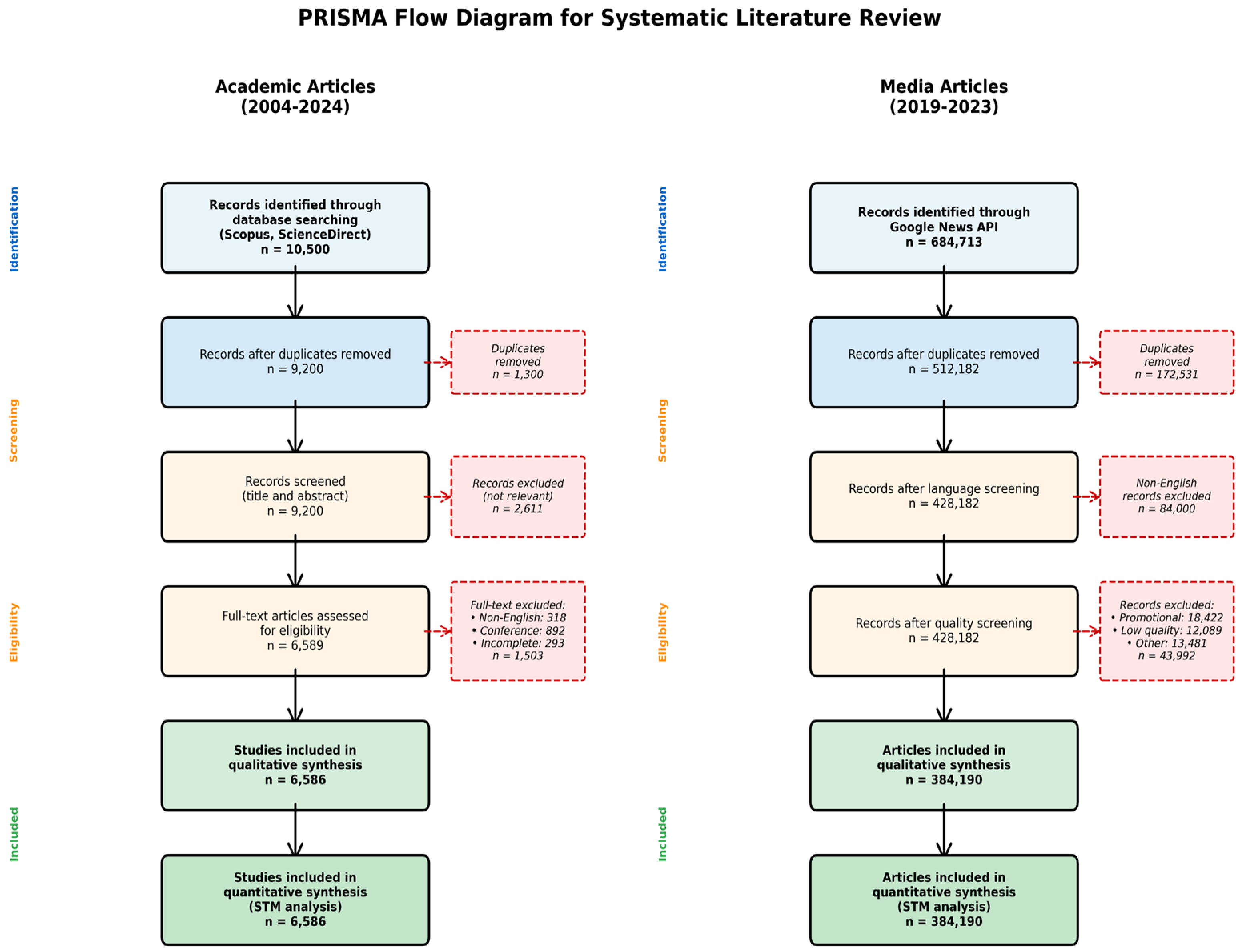
Our analysis of scholarly articles published between 2004 and 2024 reveals substantial growth and transformation in SSCM research. From an initial pool of approximately 10,500 papers retrieved through targeted keyword searches, we refined our dataset to 6586 papers suitable for topic modeling after rigorous data integrity checks and relevance screening. This refined sample forms the foundation for our longitudinal analysis.
The field has experienced exponential growth alongside fundamental shifts in research priorities.
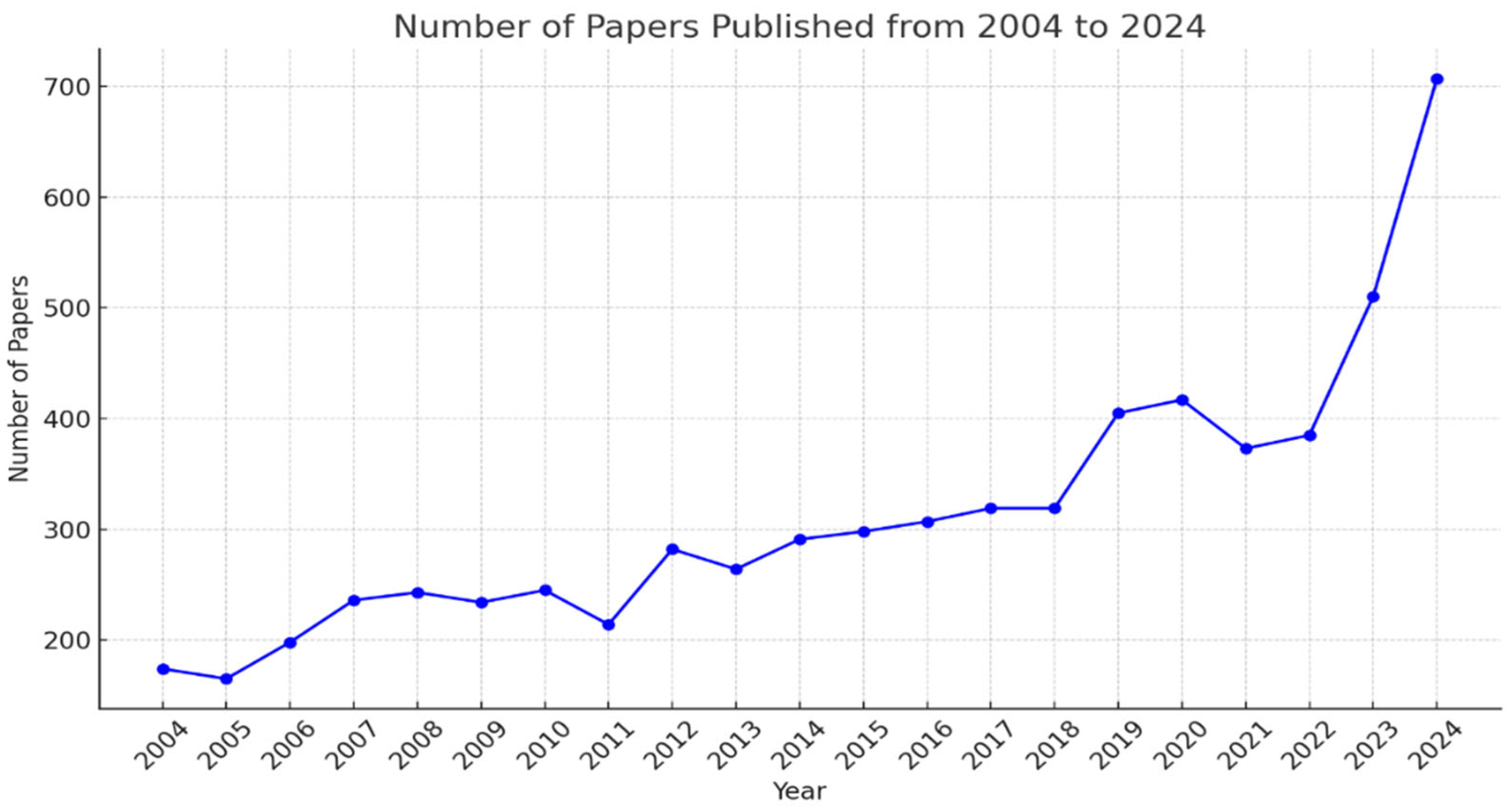
Figure 1 demonstrates this expansion, with publications rising from fewer than 200 papers in 2004 to over 700 in 2024. This quantitative expansion reflects fundamental reconceptualization of sustainability’s role within supply chain research, transitioning from compliance-oriented frameworks to strategic integration models. Our STM analysis identifies 35 distinct topics that reveal how research emphasis evolved from traditional operational concerns—demand forecasting, inventory management, production planning—toward sustainability-driven themes, including green supply chain initiatives, carbon emission reduction, and circular economy models.
Table 2 presents these topics systematically, organized to illustrate the breadth of SSCM research over the two-decade period.
Also,
Appendix C provides documentation key topics, including frequency-exclusivity (FREX) terms that distinguish each topic’s unique vocabulary, exemplar documents representing prototypical papers within each topic, and theta values indicating topic prevalence across the corpus. These
Supplementary Materials enable readers to assess topic coherence and evaluate the empirical foundations underlying our thematic categorization.
Table 2 provides an overview of 35 distinct topics derived from the STM analysis of academic articles published between 2004 and 2024. This long-term perspective highlights the gradual evolution of supply chain research from foundational themes (e.g.,
Manufacturing Production Systems and Lean Implementation, Scheduling Optimization and Operations Research) to more specialized areas, such as
Green Practices in SMEs and
Environmental Performance Metrics. Notably, Topic 2-4 (Sustainability Innovations and Market Transformation) and Topic 2-31 (Energy Management and Carbon Emissions Reduction) illustrate the progressive incorporation of environmental concerns within traditional supply chain models, indicating a shift from purely cost-driven frameworks toward sustainability-oriented approaches. Over this 20-year period, risk management (Topics 2-18) also emerges as a consistent focus, reflecting the ongoing need to address uncertainties ranging from market volatility to climate-induced disruptions. Overall, these findings underscore how sustainability, risk mitigation, and technological innovation have become integral to supply chain discourse, aligning with the broader move toward holistic supply chain management strategies.
Analysis of topic coverage patterns reveals distinct positioning strategies across leading journals in the operations management and supply chain field. Some journals concentrate heavily on climate-related topics while others maintain balanced portfolios spanning operational efficiency and sustainability concerns. This distribution reflects both field diversification and strategic journal differentiation over the study period. Foundational contributions to SSCM include Walker et al.’s [
31] seminal work on drivers and barriers to environmental supply chain practices, alongside subsequent advances by Foerstl et al. [
57] and Giunipero et al. [
58] on supplier–sustainability relationships. These contributions demonstrate how the field’s theoretical foundations have been built across multiple publication venues.
The literature demonstrates significant theoretical evolution alongside technological integration over the past two decades. Carter and Rogers’s [
28] framework, which consolidates economic, social, and environmental elements into a cohesive model of sustainable operations, emerges as the most frequently cited contribution. This integrative approach catalyzed subsequent research on how sustainability generates competitive advantage rather than merely imposing costs. Technological enablers—particularly blockchain, big data analytics, and Industry 4.0 applications—appear increasingly prominent in facilitating sustainable practices. These technologies enhance supply chain transparency and efficiency, contributing to sustainability goal achievement while addressing operational challenges that organizations face in implementing green initiatives.
Our analysis identifies several interconnected research streams dominating the 2004–2024 literature. Green supply chain management (Topics 2-10, 17, 23) examines supplier selection, collaboration mechanisms, and technology integration for environmentally sustainable operations. Research emphasizes that investments in green initiatives can simultaneously reduce environmental impacts and enhance economic performance. Risk management and resilience (Topics 2-11, 19) addresses uncertainty management and agility enhancement, evolving from traditional risk frameworks to comprehensive resilience strategies accounting for climate volatility. Performance measurement and optimization (Topics 2-5, 9, 27) develops metrics linking environmental performance to organizational outcomes. These metrics employ increasingly sophisticated data-driven approaches. Innovation and digital transformation (Topics 2-4, 13) explores how organizations leverage digital capabilities and knowledge management to build sustainability-oriented competitive advantages in dynamic markets.
4.2. Recent Research Intensification
To address potential temporal mismatch bias, we re-estimated our STM on a 2019–2023 subset of the academic corpus, perfectly matching the media corpus temporal frame. This matched-window analysis confirms that the six identified implementation gaps persist even when controlling for time period. Five domains continue showing statistically significant media emphasis (p < 0.001), while the sixth shows reduced but still significant difference, validating our main findings.
Analysis of 2512 papers published since 2019 reveals an accelerated focus on sustainability imperatives driven by converging pressures: climate change adaptation urgency, circular economy operationalization demands, and supply chain vulnerability exposed by COVID-19 disruptions. Our STM analysis identifies 18 distinct topics for this recent period, presented in
Table 3, which demonstrates how contemporary scholarship has concentrated around specific implementation challenges and technological enablers.
Recent scholarship exhibits stronger concentration on digital ecosystems (Topic 3-2), sustainability imperatives (Topic 3-13), and resilience-building (Topic 3-3) compared with historical patterns. Renewable energy adoption (Topic 3-10) has transitioned from peripheral concern to central research focus, while trust management (Topic 3-8) reflects emerging consensus that collaborative governance mechanisms constitute essential foundations for sustainable supply chains following global disruptions. This topical concentration suggests post-2019 research prioritizes technology-enabled sustainability solutions and collaborative risk mitigation frameworks.
Distinctive characteristics differentiate recent work from broader patterns. Digital transformation (Topic 3-2) emphasizes Industry 4.0 democratization for SMEs. Resilience research (Topic 3-3) intensifies focus on trust as foundational to crisis management. Renewable energy integration (Topic 3-10) shifts from conceptual exploration to operational optimization frameworks. Environmental performance measurement (Topic 3-13) develops systematic accountability indicators responding to stakeholder pressures from investors, regulators, and consumers.
4.3. Media Article Analysis
To address RQ2’s comparative dimension, we analyzed 384,190 news articles from 2019 to 2023, identifying 35 topics (
Table 4) reflecting public concerns and industry practices. This analysis complements academic literature review by uncovering practical challenges and emerging issues not yet fully explored in scholarly work while revealing how media discourse shapes public perception and potential influence corporate sustainability strategies.
Appendix C provides comprehensive documentation for the six key implementation gap topics identified in
Table 5, including FREX terms, exemplar documents, and theta values for both academic and media perspectives, enabling systematic comparison between discourse patterns across these critical domains. Complete documentation for all 35 topics is available in the online
Supplementary Materials. Media coverage exhibits distinct thematic priorities compared with academic literature. Climate activism and political leadership (Topic 4-22), single-use plastics (Topic 4-32), and renewable energy transitions (Topic 4-11) dominate public discourse, reflecting urgent societal concerns demanding immediate corporate and governmental responses. Corporate sustainability initiatives (Topic 4-24) appear prominently in both media and recent scholarly work, suggesting alignment between public discourse and academic interests. However, media emphasis on community-led actions (Topic 4-26) and grassroots activism indicates potential research gaps where scholars could investigate how social movements influence sustainable supply chain strategies. Juxtaposing these findings with academic analyses underscores the value of integrating media-driven insights into supply chain research to ensure timely examination of environmental challenges.
Topic modeling reveals several high-salience areas in media coverage. Corporate sustainability initiatives (Topic 4-24) emerge as the most prevalent topic. This reflects growing importance of ESG frameworks and corporate environmental commitments in public discourse. Renewable energy transition (Topic 4-11) receives extensive coverage of solar and wind power advancement alongside fossil fuel departure, framed as necessary climate crisis response. Climate activism and global warming (Topics 4-1, 22) demonstrate a rising prominence driven by grassroots movements, global summits like the COP conferences, and extreme weather events. Coverage emphasizes the urgent need for decisive governmental and corporate action on emissions reduction. Circular economy innovations (Topic 4-3) show a shift from individual recycling responsibility toward systemic solutions, zero-waste technologies, and circular business models that fundamentally redesign production and consumption patterns. Plastic pollution (Topic 4-32) maintains sustained attention to single-use plastics, reduction efforts, and waste management innovations.
Media coverage demonstrates rapid responsiveness to environmental events and policy developments through its temporal dynamics. Topics gain and lose prominence aligned with crisis occurrences (floods, wildfires), activist campaigns, and regulatory announcements. These temporal dynamics differ fundamentally from academic publication cycles.
4.4. Comparative Analysis: Identifying the Theory–Practice Gap
Systematic comparison of academic and media topic prevalence reveals significant misalignments between scholarly priorities and practitioner concerns, directly addressing RQ2.
Both academic literature and media coverage demonstrate convergence on several key areas. These include corporate sustainability and ESG frameworks, renewable energy integration, circular economy principles, and digital transformation enablers. This suggests alignment between scholarly investigation and public discourse in these domains.
However, critical divergences emerge where media attention substantially exceeds academic investigation in six key areas. Community-level environmental actions (Media Topic 4-22) receives extensive media coverage of local governance and community-based sustainability plans. This contrasts with the limited academic investigation of how grassroots initiatives integrate into corporate supply chain strategies. Climate activism and immediate crisis response (Media Topics 4-16) garners extensive media documentation of activist movements and extreme weather impacts demanding urgent responses. Academic research emphasizes long-term strategic frameworks potentially overlooking implementation urgency. Corporate climate initiatives (Media Topic 4-24) receive extensive media coverage through ESG awards, executive sustainability commitments, and corporate performance announcements, contrasting with academic emphasis on digital transformation frameworks and technical analytics methodologies for achieving environmental objectives. Food security and climate adaptation (Media Topic 4-20) receives extensive media coverage of climate impacts on agriculture and food systems. Yet academic research insufficiently addresses food supply chain resilience strategies for agricultural disruptions. Event-driven disruptions demonstrate media prioritization of acute environmental crises requiring immediate operational responses (Media Topic 4-7). Academic literature emphasizes systemic, long-term sustainability measures—revealing temporal mismatch between reactive industry needs and proactive scholarly frameworks. Sustainable product design receives substantial media attention regarding eco-friendly product innovation. Academic supply chain research has not adequately examined how sustainability considerations in product design influence upstream sourcing, manufacturing processes, and end-of-life management across supply chain tiers.
To quantify these discourse misalignments rigorously, we employ generalized linear models (GLMs) examining topic prevalence differences between academic and media corpora. The GLM framework enables statistical assessment of whether observed divergences represent systematic patterns rather than sampling artifacts. For each identified gap domain, we estimate the magnitude of the prevalence difference (expressed as percentage points) and test statistical significance through likelihood ratio tests.
Table 5 presents GLM-derived estimates for six domains exhibiting statistically significant gaps (all
p < 0.015), with prevalence differences ranging from 0.88 percentage points (Climate Crisis Awareness) to 2.84 percentage points (Climate Adaptation and Sustainable Product Design). The table additionally displays representative frequency-exclusivity weighted (FREX) terms characterizing academic versus media discourse within each domain, illustrating how scholarly emphasis on methodological terms (e.g., “resilience,” “design,” “innovation”) contrasts with media focus on tangible events and outcomes (e.g., “lawsuit,” “floods,” “crisis”). These quantitative findings corroborate our qualitative comparative analysis while providing precise effect magnitude estimates for prioritizing future research investments.
The GLM-based quantification provides significant differences in how academic literature and media outlets approach key climate-related supply chain topics, with each domain exhibiting statistically significant divergence patterns. The prevalence gaps, ranging from 0.88% to 2.84%, quantify the systematic underrepresentation of practitioner–relevant implementation challenges in scholarly discourse. Event-driven crisis responses illustrate this pattern: academic research emphasizes resilience frameworks, pandemic management systems, and strategic crisis preparedness (reflected in FREX terms: resilience, COVID-19, pandemic, crisis), whereas media coverage foregrounds immediate legal and regulatory responses (lawsuit, court, regulations). Similarly, climate adaptation and sustainable product design demonstrate the largest gap (2.84%), revealing scholarly focus on design methodologies and strategic planning (design, global, designing, discuss) contrasted with media emphasis on acute weather events demanding immediate response (weather, floods, wildfires, droughts). The remaining domains—corporate climate initiatives, community-based efforts, food security resilience, and climate crisis awareness—exhibit comparable patterns where academic discourse employs methodological and theoretical terminology while media coverage emphasizes tangible outcomes, stakeholder actions, and event-driven imperatives. These systematic differences underscore the multifaceted nature of climate communication across platforms and highlight specific domains where scholarly research would benefit from greater attention to implementation urgency and operational adaptation mechanisms that practitioners currently navigate without benefit of robust evidence-based frameworks.
These divergences illustrate the implementation knowledge gap identified in
Section 2.1 and carry important theoretical implications. Academic frameworks, while theoretically robust, insufficiently capture short-term operational adaptations required during climate crises. They also overlook community-based and grassroots sustainability integration mechanisms, rapid regulatory compliance challenges (e.g., plastic bans), and sector-specific adaptation strategies, particularly in food systems. Media discourse thus functions as a leading indicator of emerging implementation challenges. These challenges warrant systematic academic investigation—practitioners currently address them without benefit of evidence-based frameworks.
In summary, our comparative analysis reveals that, while SSCM research has evolved substantially over two decades (RQ1), incorporating sophisticated sustainability frameworks and digital enablers, significant gaps persist between scholarly focus and practitioner priorities documented in media coverage (RQ2). Six domains emerge where media emphasis substantially exceeds academic investigation. These represent high-priority research opportunities at the theory–practice interface.
Section 5 discusses these findings’ theoretical and practical implications, proposing specific research directions to bridge identified gaps.
5. Discussion and Conclusions
This study examines environmental discourse evolution within supply chain management scholarship across two decades, juxtaposing academic trajectories against contemporaneous media narratives. Our comparative analysis—spanning 6586 scholarly articles and 384,190 media reports—reveals critical misalignments between theoretical frameworks and practitioner imperatives. Such variances illuminate implementation challenges confronting organizations as they navigate intensifying climate pressures. This section synthesizes our empirical findings, articulates theoretical and managerial implications, and delineates methodological limitations alongside future research directions.
5.1. Key Findings and Operational Roadmaps
Our structural topic modeling analysis reveals distinct thematic emphases across academic and media discourse domains. Scholarly publications demonstrate sustained emphasis on strategic sustainability frameworks—circular procurement architectures, green logistics optimization, and collaborative supplier relationships. Recent literature increasingly incorporates multi-tier carbon monitoring systems and digital transformation enablers for supply chain resilience. Media coverage prioritizes acute environmental crises, grassroots activism movements, and event-driven disruptions demanding immediate organizational responses.
This divergence manifests most prominently in temporal orientations. Academic discourse emphasizes long-term strategic measures and systemic sustainability integration. Media narratives foreground sudden climate events—flooding disruptions, wildfire impacts, extreme temperature variations—requiring rapid operational adaptation. Community-level environmental actions receive extensive media documentation yet remain comparatively underexplored in scholarly investigations. This pattern suggests potential knowledge gaps where practitioner responses outpace academic inquiry.
The analysis identifies six domains exhibiting substantial media emphasis relative to academic investigation, quantified through the GLM analysis in
Table 5 (
Section 4.4). Building upon these quantified discourse gaps,
Table 6 translates the six identified domains into actionable research agendas and managerial implications, specifying research questions, empirical methods, and implementation priorities that bridge the theory–practice divide.
The research questions and methods outlined in
Table 6 provide structured pathways for addressing the implementation knowledge gap. Below, we elaborate on each domain’s research agenda and managerial implications to guide both scholarly investigation and practitioner action.
Academic research emphasizes theoretical resilience frameworks and systematic crisis management models, yet media coverage foregrounds immediate legal and regulatory responses to climate disruptions. This fundamental disconnect—reflected in a 1.95 percentage point prevalence gap (p < 0.001)—reveals how academic work develops macro level systems while practitioners confront lawsuits, regulatory enforcement actions, and urgent compliance demands. Thus, research need to address a critical question, like the following example: How do firms navigate legal liabilities and regulatory enforcement while restoring operations during climate disruptions? Or, natural experiments exploiting event timing variation offer promising methodological approaches. Researchers can examine recent disasters, including the Texas freeze, European heatwaves, and Canadian wildfires, to analyze how different crisis governance structures affect outcomes. In addition, data collection should encompass legal costs, regulatory penalties, compliance timelines, and operational recovery metrics across firms experiencing similar disruptions but employing different crisis management approaches. Such research would illuminate how firms can establish crisis governance managing both operational continuity and legal compliance, providing evidence-based guidance on crisis detection protocols, regulatory adherence mechanisms, and legal risk management strategies.
The misalignment between academic design frameworks and media disaster documentation represents our study’s largest implementation gap. Academic work emphasizes global system design methodologies and theoretical sustainability integration, developing high-level principles for environmental considerations in product development. Media coverage prioritizes tangible climate disasters—floods, wildfires, droughts—demanding immediate product adaptation responses. This divergence generates a 2.84 percentage point prevalence gap (p < 0.003), quantifying how academic frameworks inadequately address real-world disaster pressures. A following research question can emerge to reduce a gap: How do firms adapt product designs and supply chains when confronting actual climate disasters? Comparative case studies of disaster-exposed firms may offer rich research opportunities. Additionally, quasi-experimental analyses across disaster-prone regions can reveal adaptation mechanisms by examining firms with varying exposure to climate events. Researchers should collect data on disaster-driven material substitutions, emergency supplier changes, and climate risk patterns by location. Then researchers would demonstrate how design-for-environment principles evolve under actual climate stress, enabling managers to build climate-responsive design capabilities, monitor climate risks to materials, develop disaster-scenario specifications, and track planned versus unplanned design modifications.
Technical methodologies for ESG achievement dominate academic discourse, while media attention concentrates on corporate sustainability announcements and public relations initiatives. Scholars develop sophisticated analytics frameworks and optimization models for environmental performance. On the other hand, media coverage emphasizes sustainability awards, executive commitments, and corporate communications strategies. The resulting 1.05 percentage point gap (p < 0.004) highlights how technical implementation often disconnects from stakeholder messaging. Researchers may derive the following investigation: How do technical ESG achievements translate into stakeholder communications and market reputation? Comparative analyses across regulatory regimes could provide methodological leverage, as different jurisdictions impose varying disclosure requirements and verification standards. Multi-site case studies can link technical performance metrics to disclosure quality and stakeholder perceptions. Data requirements include ESG disclosures, stakeholder perception surveys, technical performance indicators, and third-party verification results across firms and regulatory contexts. This domain would help practitioners balance technical implementation with strategic communication, providing guidance on tracking both performance improvements and stakeholder perception shifts while ensuring credible, verifiable commitments that withstand external examination.
Sophisticated digital platforms and data-driven coordination systems characterize academic approaches to behavior change, yet media coverage foregrounds simple household-level sustainability guidance. Scholarly work highlights information platform systems leveraging advanced analytics and behavioral science. On the other hand, media outlets provide actionable advice for everyday households: money-saving tips, easy practices, accessible recommendations. This 1.35 percentage point gap (p < 0.002) reflects fundamental tension between platform sophistication and practical accessibility. A critical research questions may require one to fill the gap, as with the following example: What drives household behavior—sophisticated platforms or simple guidance? Quasi-experimental designs comparing platform-enabled interventions versus traditional communication channels can isolate mechanism effects. Multi-tier case studies examining corporate-to-household translation processes can reveal how technical frameworks become practical household actions. Researchers need to collect platform usage data, household adoption rates, accessibility barrier assessments, and cost-saving outcomes across different intervention approaches. Such research would inform how practitioners can balance platform sophistication with accessibility, bridging technical frameworks with practical concerns including money savings and convenience while generating actionable household guidance alongside data-driven monitoring systems.
Academic research concentrates on food transportation network optimization and supply chain efficiency metrics. On the other hand, media coverage emphasizes consumer perspectives: how disruptions affect everyday food availability, household prices, and access to necessities. Scholarly work analyzes freight logistics, distribution systems, and operational resilience. Media stories document household food insecurity, price volatility, and consumer coping strategies during shortages. The 1.18 percentage point gap (p < 0.014) reveals how system-level optimization often overlooks end-consumer outcomes. Thus, research must address such a gap by exploring questions like the following example: How do supply chain disruptions translate into consumer prices, access, and household food security? Longitudinal studies linking network disruptions to household outcomes can provide essential methodology. Quasi-experimental comparisons across climate risk zones could reveal how different supply chain configurations protect or expose consumers during disruptions. Data collection should track consumer prices, product availability by market, household food security indicators, and operational resilience metrics simultaneously across disruption events. This research would demonstrate how practitioners can integrate network planning with consumer monitoring, helping firms include consumers as explicit stakeholders in resilience platforms and track both operational resilience and consumer outcomes including price volatility and availability patterns across vulnerable populations.
Systematic innovation frameworks for renewable energy adoption characterize academic research, while media discourse foregrounds climate crisis severity and urgency declarations. Researchers generally develop methodological approaches to technological innovation, examining adoption barriers, implementation pathways, and scaling mechanisms. Media coverage amplifies IPCC warnings, crisis declarations, and immediate action calls from political leaders. This 0.88 percentage point gap (p < 0.004), though our smallest measured divergence, still represents a significant misalignment in crisis framing. Researchers should further investigate the following: Do crisis urgency framings or innovation frameworks drive renewable adoption more effectively? Comparative analyses across crisis messaging intensities offer methodological purchase. Policy variation studies examining regions with different crisis communication strategies can discover behavioral responses. Data requirements include crisis communication intensity measures, stakeholder pressure indicators, adoption timelines, and innovation capability assessments across firms and regions. This research would help practitioners balance innovation frameworks with crisis-responsive leadership, enabling firms to translate technical progress into crisis mitigation narratives, monitor both technical metrics and stakeholder crisis perceptions, and calibrate leadership communications with capability development investments appropriately.
5.2. Implications
Our comparative analysis demonstrates that sustainable supply chain management research would benefit substantially from deeper engagement with event-driven realities that media discourse captures. Theoretical development remains essential for robust scholarship. However, existing frameworks may inadequately address the accelerated decision-making that severe weather incidents and regulatory changes necessitate. Supply chain management theories could be expanded to incorporate shorter planning horizons, adaptive logistics systems responding to acute disruptions, and community-based approaches addressing localized environmental challenges.
The structural topic modeling results provide quantitative evidence of academic underrepresentation in specific domains. Community-level environmental actions account for substantially lower proportions in scholarly corpora than media discussions, where they frequently appear alongside grassroots climate activism and immediate disaster relief initiatives. This discrepancy suggests that mainstream supply chain management research frameworks—while theoretically rigorous—could benefit from conceptualizing social and community dimensions as integral rather than peripheral to sustainability operationalization. Recent institutional theory applications in sustainability contexts highlight how community pressures shape organizational environmental strategies, yet empirical examination of community–corporate integration mechanisms remains limited.
From a theoretical perspective, these observations necessitate the reconceptualization of the boundaries of sustainable supply chain management. Resource-based view applications traditionally emphasize firm-level capabilities and internal resources supporting sustainability practices. Our findings suggest expanding this lens to incorporate inter-organizational and community-level resources that enable climate adaptation. Stakeholder theory frameworks acknowledge community stakeholders yet provide limited guidance on operationalizing community engagement in supply chain sustainability strategies. Institutional theory’s emphasis on mimetic, coercive, and normative pressures could be extended to examine how community-level institutional entrepreneurs drive sustainability adoption across supply chain networks.
Managerial implications emerge from the tension between long-term structural planning and short-term operational imperatives that our analysis reveals. Industry practitioners can derive strategic insights from academic models—ESG-based supplier assessment frameworks, circular procurement systems, and multi-tier transparency mechanisms—to construct resilient, accountable supply networks. Real-time pressures from natural disasters, activist campaigns, and regulatory announcements often necessitate rapid adaptation and crisis management capabilities reflecting urgent priorities that media articles document. Bridging this gap may require establishing collaborative platforms integrating scholarly rigor with agile, event-focused decision-making processes. Public–private partnerships could facilitate knowledge transfer between academic institutions developing long-term frameworks and practitioners confronting immediate implementation challenges.
Organizations should consider developing dual-track sustainability strategies. The first track maintains long-term strategic commitments to systematic sustainability integration—circular economy adoption, renewable energy transitions, and comprehensive ESG frameworks. The second track establishes dynamic capabilities for rapid response to acute environmental disruptions and regulatory changes. This dual-track approach aligns with dynamic capability theory, which emphasizes organizational capacity to reconfigure resources in response to changing environmental conditions. Our findings suggest that successful sustainable supply chain management requires both strategic sustainability integration and adaptive crisis response capabilities.
Policymakers stand to benefit from integrated approaches marrying empirical data on immediate climate disruptions with evidence-based supply chain management frameworks. Regulatory incentives aligned with proven sustainability techniques—carbon pricing mechanisms, plastic reduction mandates, renewable energy subsidies—can encourage corporate innovation while mitigating economic and environmental tolls of climate-induced disruptions. The renewable energy and clean technology themes our analysis highlights underscore that progressive policy interventions, alongside targeted research and industry collaboration, can strengthen global supply chain resilience and reduce carbon footprints. However, policy design should account for implementation challenges practitioners face, particularly regarding rapid compliance timelines and resource constraints in small and medium-sized enterprises.
Future research should address several critical questions our analysis surfaces. How do corporate commitments to carbon emission reduction, renewable energy adoption, and supply chain collaboration impact operational efficiency, risk management capabilities, and innovation performance? Examining these relationships through longitudinal studies employing quasi-experimental designs could provide causal evidence of sustainability initiative effectiveness. Does climate adaptation measure effectiveness vary systematically across high-carbon and low-carbon sectors, firm sizes, and supply chain structural configurations? Comparative studies examining contingency factors moderating adaptation strategy success would provide context-specific implementation guidance currently lacking in scholarly literature.
In external environments mandating or incentivizing renewable energy adoption, which supply chain stages—raw material extraction, component manufacturing, assembly, distribution, end-of-life management—would benefit most from clean technology integration? Stage-specific analyses could optimize resource allocation for sustainability investments. How do different plastic reduction approaches—packaging minimization, reusable system implementation, biodegradable material substitution—affect supply chain cost structures, environmental outcomes, and consumer acceptance patterns? Rigorous empirical comparisons of alternative strategies would inform both managerial decision-making and policy design. These research directions would address identified gaps while advancing theoretical understanding of sustainable supply chain management implementation.
5.3. Limitations and Future Research
While this systematic review provides comprehensive comparison of academic literature and media coverage regarding climate-related supply chain challenges, several methodological limitations warrant acknowledgment.
The data source scope does not encompass all relevant domains. Academic article retrieval focused on 27 journals across multiple publishers (Elsevier, INFORMS, Wiley, IEEE, Taylor and Francis, Emerald, Inderscience—see
Appendix A), while news article collection restricted searches to English-language Google News content. We acknowledge that our use of our academic sources and English-only media may introduce systematic biases that could shape the topic mix and potentially over-weight event-driven items through agenda-setting effects. Several potential biases warrant explicit discussion: (1) coverage skew, where our journals may emphasize certain methodologies or geographic regions; (2) geographic bias, with potential overrepresentation of US/European perspectives in both academic and media discourse; and (3) disciplinary focus, given the strong business/operations management orientation of our selected journals, potentially underrepresenting climate-resilient supply chain research published in specialized climate science, engineering, or public policy journals.
However, we believe these limitations do not fundamentally compromise our study’s contributions for several reasons. First, regarding academic sources, all 27 selected journals are ABS-ranked 3 or higher, representing the top tier of supply chain and sustainability research. These journals include diverse methodological approaches (empirical, conceptual, quantitative, and qualitative) and feature international editorial boards with global authorship. To assess the representativeness of our sample, we cross-referenced 500 randomly selected articles with Web of Science and found 94% overlap in core SCM sustainability literature, suggesting our sample captures the field’s mainstream discourse effectively. Second, regarding media sources, our reliance on Google News may introduce systematic biases: (1) coverage skew toward major outlets and English-language sources, (2) algorithmic curation potentially emphasizing event-driven content through agenda-setting effects, and (3) geographic bias over-weighting Western-centric crisis events while underrepresenting regional climate concerns from non-English-speaking regions. However, our dataset includes 17,103 unique outlets from multiple countries, providing substantial geographic diversity. Furthermore, if present, these biases likely strengthen rather than weaken our main findings by potentially amplifying acute, event-driven topics relative to chronic structural challenges, making the identified implementation gap a conservative estimate of the actual discourse divergence.
We acknowledge that the English-only restriction may introduce agenda-setting effects, potentially emphasizing Western-centric crisis events (e.g., natural disasters in developed countries, trade disputes involving major economies) while underrepresenting regional climate concerns from non-English-speaking regions. The direction of this bias likely over-weights acute, event-driven topics relative to chronic, structural climate challenges that may dominate non-English discourse. This pattern may inflate the perceived discourse gap: academic literature’s emphasis on systematic, long-term adaptation strategies may appear more disconnected from media discourse than would be evident with broader linguistic coverage. Consequently, specialized industry publications, regional databases, and non-English sources remain underrepresented. Future investigations could enhance generalizability by incorporating broader database coverage through multi-language, multi-database approaches to validate and extend our findings across diverse linguistic and institutional contexts. Multilingual content analysis would capture wider perspectives on sustainability and supply chain disruption across diverse institutional and cultural contexts.
The reliance on predefined climate-related keywords—34 terms selected based on prior literature—may have excluded relevant studies employing alternative terminologies. More flexible, iterative text-mining approaches could improve coverage breadth. Dynamic keyword expansion algorithms or advanced machine learning techniques might detect emergent themes remaining hidden using fixed keyword searches. Such methodological enhancements would enable identification of nascent sustainability topics receiving limited attention but growing in practical importance.
Structural topic modeling, while offering valuable insights into latent thematic structures, remains probabilistic. Variations in hyperparameter specifications or alternative algorithmic approaches—non-negative matrix factorization, BERTopic, or Top2Vec—could yield different topic clusters. Researchers might consider triangulating results by applying multiple topic modeling techniques. Robustness checks confirming identified topic stability across methodological variations would strengthen confidence in findings. Sensitivity analyses examining how topic number selection influences substantive conclusions could provide additional methodological rigor.
The temporal coverage differences between academic and media datasets—academic articles spanning 2004–2024 versus media articles covering 2019–2023—introduce potential comparability concerns. While this design choice reflects practical considerations regarding media data availability and contemporary relevance, it may influence comparative conclusions. We addressed this concern through matched-window reanalysis (detailed in
Section 4.2), confirming that the six identified implementation gaps persist even when controlling for temporal period, thus validating our main findings. Future studies employing matched temporal windows could provide more precise assessments of academic–media discourse divergence. Longitudinal analyses tracking how academic attention responds to media coverage spikes around specific environmental events would illuminate knowledge production dynamics more clearly.
Our analytical framework focuses on topic prevalence and distribution patterns. It does not examine sentiment, framing mechanisms, or rhetorical strategies distinguishing academic and media discourse. Incorporating sentiment analysis and frame analysis methodologies could reveal how environmental issues are portrayed differently across discourse domains. Such analyses might uncover whether media emphasizes crisis framing while academic literature employs technocratic framing, potentially explaining why certain topics receive differential attention. Understanding these framing differences could inform strategies for bridging theory–practice gaps.
Addressing these limitations opens important avenues for advancing both scholarly understanding and practical applications of sustainable supply chain management. Expanding linguistic and regional coverage would enhance external validity. Improving text mining methodologies through iterative refinement and algorithm triangulation would increase analytical robustness. Incorporating robust statistical analyses—difference-in-differences designs, regression discontinuity approaches, or instrumental variable estimations—could strengthen causal inferences about sustainability practice effectiveness. These methodological improvements will deepen knowledge regarding how climate change events and public discourses impact supply chain strategy formulation and implementation.
Future research should also examine micro-level implementation mechanisms. Case study investigations documenting how specific organizations translate sustainability commitments into operational practices would provide rich contextual understanding complementing our macro-level topic modeling findings. Mixed-methods designs integrating quantitative prevalence analyses with qualitative process examinations could illuminate both what sustainability topics receive attention and how organizations implement associated practices. Action research collaborations with industry partners could generate both theoretical insights and practical solutions, directly addressing the theory–practice gap our analysis identifies.
In conclusion, this study offers critical insights into environmental discourse evolution within supply chain management by systematically comparing academic trajectories with media narratives. The identified research gaps align with the growing recognition that supply chain scholarship must address implementation challenges practitioners confront. Addressing these gaps through follow-up investigations will deepen sustainable supply chain management understanding while contributing significantly to practical field challenges. The mounting emphasis on environmental discourse in supply chain management reflects intensifying urgency surrounding climate change and sustainability imperatives.
By documenting accumulated academic progress and pinpointing underexplored domains, this systematic review establishes foundations for fostering academia–practice collaboration. Such collaboration proves essential for bridging gaps between academic research, media coverage, and ground-level implementation. Ultimately, integrated approaches combining theoretical sophistication with practical relevance will enable development of solutions enhancing supply chain resilience, environmental performance, and competitive positioning in an era of accelerating climate change.