
Article

ESG, Innovation and the Competitive Advantage of Construction Enterprises in China—An Analysis Based on the System Dynamics

by
Dan Han
and
Shengyue Hao
*
School of Economics and Management, Beijing Jiaotong University, Beijing 100044, China
*
Author to whom correspondence should be addressed.
Systems 2025, 13(11), 997; https://doi.org/10.3390/systems13110997
Submission received: 23 August 2025 / Revised: 27 October 2025 / Accepted: 3 November 2025 / Published: 6 November 2025
(This article belongs to the Section Systems Practice in Social Science)

Abstract

The unique characteristics of Environmental, Social, and Governance (ESG) in the construction industry and its impact mechanisms within a complex environment still need to be further explored. This study employs grounded theory and a system dynamics model to construct a system of ESG, innovation, and the competitive advantage in construction enterprises. Through simulation analysis, this study elucidates the dynamic relationships, causal links, and evolutionary patterns among system elements. The results indicate that (1) ESG, innovation, and the competitive advantage exhibit oscillatory convergence patterns, with innovation and competitive advantage exhibiting time-lagged responses; (2) improvements in environmental (E), social (S), and governance (G) awareness generate diminishing marginal effects on corresponding performance metrics, while reductions in S awareness lead to more pronounced performance deterioration; and (3) simultaneous strengthening of E, S, and G awareness substantially elevates peak levels of innovation and competitive advantage while accelerating their attainment. This study systematically analyzes the dynamic and complex mechanisms through which ESG influences construction enterprises’ competitive advantage and provides valuable suggestions for the sustainable development of construction enterprises.

1. Introduction

The construction industry, characterized by high energy consumption and significant pollution [1], faces increasingly urgent pressures to transition toward sustainable development [2]. ESG is a critical pathway for firms to achieve high-quality and sustainable growth [3]. However, the industry’s inherent characteristics, such as project-based operational models, subcontracting management, and the involvement of diverse stakeholders, make ESG practices systematic and dynamic. Furthermore, government interventions and dynamic market competition amplify the environmental challenges firms encounter when adopting ESG strategies [4]. Although ESG has been extensively studied, the unique characteristics of ESG in the construction industry and its underlying impact mechanisms within a complex environment still need to be further explored.
Existing research has examined the relationship between ESG, innovation, and corporate performance [4,5,6,7,8], yet several gaps remain. First, current studies mostly employ static analytical frameworks [8], which inadequately capture the dynamic interactions and evolutionary processes among ESG, innovation, and the competitive advantage, and fail to reflect the complexity of operational environments. Second, most studies focus on how ESG impacts financial indicators such as corporate profitability and market concentration [5]. However, there is limited exploration of non-financial performance indicators such as corporate image, reputation, and product quality. These non-financial aspects are crucial for the long-term sustainable development of construction enterprises. Finally, systematic investigation of ESG’s impact on competitive advantage within the construction industry context in China remains underdeveloped. The unique characteristics of the construction industry make the implementation and impact mechanisms of ESG distinct from those of other sectors.
This study employs grounded theory and a system dynamics model to construct a theoretical model integrating ESG, innovation, and the competitive advantage in construction enterprises to address the following three issues. First, it visually represents the dynamic interactions among ESG, innovation, and the competitive advantage. Second, it simulates the direct impact of ESG on competitive advantage and explores the mediating role of innovation in construction enterprises. Finally, a parameter sensitivity analysis is conducted to evaluate the differential effects of evolving E, S, and G awareness on competitive advantage. This research framework elucidates the complex mechanism of ESG in construction enterprises and provides a theoretical foundation for enterprises to build competitive advantage.
This study makes three key contributions. It reveals the complex feedback mechanisms and evolutionary process between ESG, innovation, and the competitive advantage in construction enterprises, addressing the limitations of existing studies that predominantly utilize static analyses. Furthermore, this study synthesizes financial and non-financial perspectives to assess ESG’s impact on firm performance comprehensively. Finally, this study focuses on the construction industry within the Chinese context and expands the understanding of ESG’s economic effects within specific industry contexts.
The remainder of this paper is structured as follows. Section 2 reviews the literature on ESG and the competitive advantage in construction enterprises. Section 3 describes the system dynamics methodology. Section 4 presents the simulation results and sensitivity analysis. Section 5 summarizes the conclusions and recommendations.

2. Literature Review

2.1. ESG, Innovation and the Competitive Advantage

Extensive research has examined the relationship between ESG and corporate performance [9], with approximately 90% of studies demonstrating a non-negative association [10]. For example, Sreepriya et al. [11] found that companies effectively integrating ESG practices into their operations demonstrate superior market valuation and financial resilience. Similarly, Yoon et al. [12] found that ESG significantly promotes the market value of Korean companies. Wang et al. [13] demonstrated that incorporating ESG standards into financial planning strengthens a company’s resilience and adaptability in turbulent markets, thereby facilitating more sustainable long-term growth.
Several studies have investigated the mediating and moderating effects of ESG on corporate performance. Zhou, Rashid [8] confirmed innovation’s mediating role between ESG and corporate sustainability performance. Xing, Huang [4], along with Li and Li [14], found that policies and market competition moderate the ESG-corporate performance relationship. Furthermore, the relationship between ESG and corporate performance exhibits significant industry heterogeneity. Zhou, Rashid [8] found that ESG performance significantly improves innovation and sustainability performance in manufacturing enterprises. Conversely, Yoon, Lee [12] observed that the positive valuation effect of ESG diminishes for environmentally sensitive industries. Notably, Chen and Zhang [15] discovered that ESG improvements in construction enterprises negatively impact sustainability, contrasting with findings for coal, finance, and food industries.
Despite extensive scholarly attention to the relationship between ESG and corporate performance, several research gaps persist. The primary limitation concerns methodological approaches. Existing studies mainly employ static research frameworks [8], including structural equation modeling [8], panel regression [13,15], and multi-period difference-in-differences models [14]. These approaches demonstrate fundamental limitations in capturing dynamic changes and complex feedback mechanisms inherent in ESG implementation, which become particularly evident when contrasted with longitudinal investigations in other sectors. For instance, Li and An [16] utilize system dynamics model to examine how balanced development across economic, social, and environmental responsibilities synergistically enhances competitive advantage in pharmaceutical manufacturing enterprises. Xing, Huang [4] use evolutionary game to illustrate how ESG performance drives strategic innovation and market restructuring in the new energy vehicle industry through complex dynamic pathways. These studies indicate that ESG factors have complex and evolving impacts on corporate performance, highlighting dynamic relationships that are often overlooked in traditional cross-sectional analyses. More importantly, these studies validate the applicability of system dynamics model for capturing such feedback mechanisms.
Beyond methodological constraints, the second significant gap relates to performance measurement., most studies examine the impact of ESG on financial indicators, including corporate valuation, profitability, innovation, and risk management [9], while neglecting the impact on non-financial indicators such as corporate image, reputation, and product and service quality. These non-financial aspects significantly influence the long-term sustainable development of construction enterprises. Consequently, a comprehensive framework is necessary to evaluate ESG’s comprehensive impact on corporate performance and fully appreciate its intrinsic value.
Furthermore, sector-specific research remains underdeveloped, with a pronounced gap in the Chinese construction context. While most studies have concentrated on finance, tourism, energy, and manufacturing sectors, research on ESG within the construction context remains notably insufficient [17]. Within the limited research on Chinese construction enterprises, scholars have typically investigated the influencing factors of ESG fulfillment [18,19], performance improvement pathways [2], and financial impacts in isolation [20]. This fragmented perspective fails to reveal the dynamic interaction mechanisms among the three ESG pillars, while also neglecting to capture how the inherent characteristics of the construction industry in the Chinese context create unique ESG implementation challenges and distinct managerial focuses. For instance, the project-based operational model hinders the effective accumulation of ESG knowledge and management systems at the organizational level. Subcontractor management may dilute environmental compliance and social responsibilities, necessitating the establishment of a collaborative governance mechanism that spans the entire project lifecycle. The complexity of stakeholders, including heightened government oversight and community expectations in the Chinese regulatory environment, compels firms to navigate a series of conflicting ESG value demands. These industry-specific barriers reshape the path to ESG value realization. Competitive advantage thus depends not only on immediate cost savings but also on the long-term cultivation of product quality, brand reputation, and construction capabilities, which together strengthen project acquisition capabilities and ensure sustained competitiveness. However, the fundamental components of ESG within Chinese construction industry context have yet to be identified, and how these elements systematically and dynamically shape a firm’s competitive advantage remains unclear.
To address these gaps, this study employs a system dynamics model to unravel the complex causal mechanisms between ESG implementation and competitive advantage in construction enterprises. Therefore, this study addresses a critical industry-specific gap and provides a novel analytical lens for the broader field of ESG research.

2.2. Research on System Dynamics Approach

System dynamics methodology illuminates the temporal behavioral patterns of complex systems by simulating interactions and feedback mechanisms among system elements [21]. This approach has been applied in construction project management to analyze complex systems, including strategic decision-making [22], knowledge evolution [23], and low-carbon innovation [24]. Ogunlana Stephen, Li [22] used system dynamics to simulate the impact of three strategic policies on construction company performance. Chen and Fong Patrick [23] utilized system dynamics to visualize knowledge management capability evolution in construction companies. Lai, Liu [24] utilized system dynamics to investigate the driving forces behind low-carbon technological innovation and its role in the construction industry. ESG, innovation, and the competitive advantage of construction enterprises constitute a complex and dynamic system characterized by multiple interacting factors. This system is closely related the enterprise’s resource endowment, organizational capabilities, and external institutional environment. These elements interact through information feedback loops, resource integration mechanisms, and capability development processes, forming sophisticated non-linear relationships that facilitate dynamic coupling and synergistic evolution. The construction industry’s distinctive characteristics, including project-based operational models, labor subcontracting management, and multi-stakeholder engagement, further intensify the complexity and dynamic nature of these relationships.
Moreover, regulatory policies and intra-industry competition constitute critical factors influencing managerial decision-making and corporate ESG performance [4,25]. Organizations must continuously adjust their development strategies and resource allocation as the external environment changes to maintain and enhance their competitive position. Conventional static research approaches inadequately capture the time lag effects, cumulative impacts, and feedback mechanisms operating between variables within this complex system. Consequently, adopting a system dynamics perspective enables comprehensively simulation and analysis of the dynamic interactions among diverse factors, thereby revealing the intricate relationships and evolutionary patterns among ESG, innovation, and the competitive advantage in construction enterprises. This approach provides robust empirical support for organizations formulating evidence-based sustainable development strategies.

3. Research Methodology

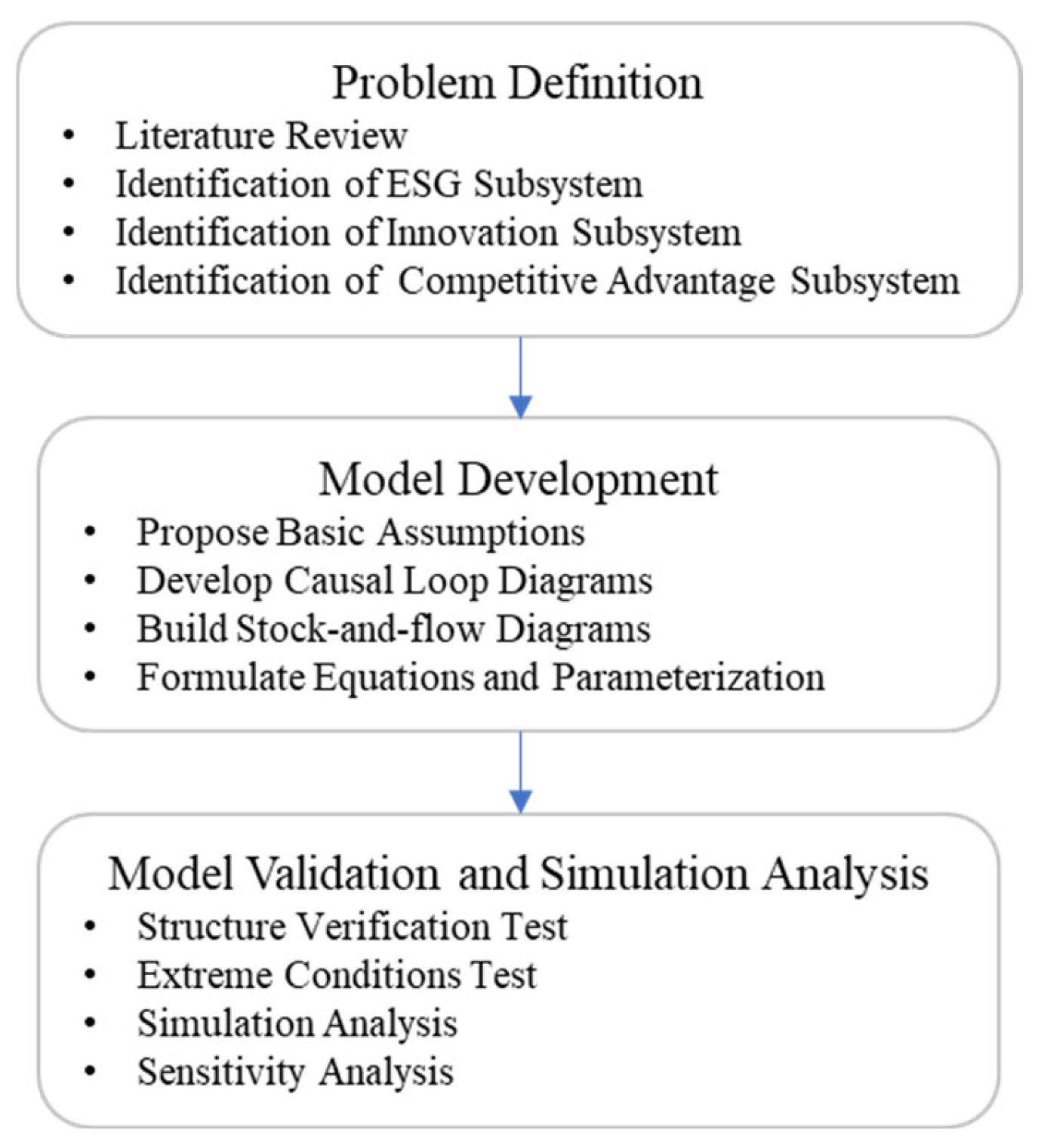
This study employs Vensim PLE 10.2 software to construct a comprehensive system model that elucidates the dynamic impact mechanisms of ESG on innovation and the competitive advantage in construction enterprises through simulation and sensitivity analysis. The framework of the research methodology is shown in Figure 1.

3.1. System Composition and Analysis

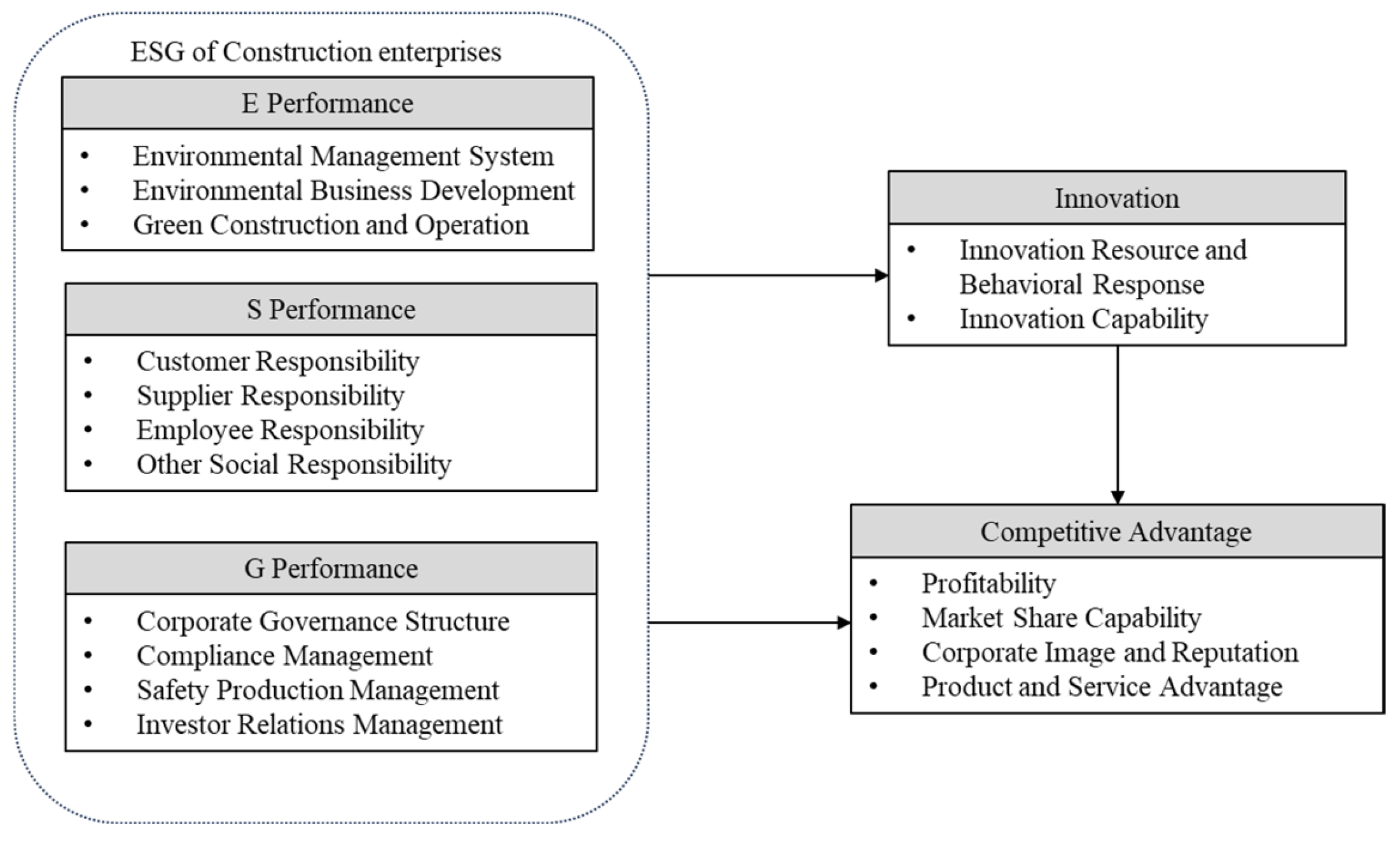
The system consists of three subsystems including ESG, innovation, and construction enterprises’ competitive advantage. ESG not only directly influences construction enterprises’ competitive advantage but also exerts indirect effects through innovation pathways. These subsystems interact through multiple feedback loops, forming a complex network of causal relationships. The conceptual model of the system is shown in Figure 2.

3.1.1. Identification of ESG Subsystem Through Grounded Theory Analysis

The ESG of construction enterprises has industry-specific characteristics, and the existing theoretical framework cannot fully explain its contextual characteristics. Grounded theory is a qualitative research method that constructs theory based on systematic collection and analysis of empirical data [17]. This approach emphasizes extracting concepts and categories from experiential evidence to address industry-specific complexities. Within the construction sector, ESG practices encompass numerous elements, and grounded theory methodology enables more effective identification of these empirical phenomena and precise conceptualization of related constructs.
This study applied a procedural grounded theory method to systematically analyze 90 ESG reports (some named social responsibility reports) published by 10 listed construction enterprises between 2015 and 2023, 14 industry-specific ESG reports, and 15 related studies. These 10 companies were selected due to their market leadership and to ensure coverage of key sub-industries, including three residential construction companies, five infrastructure construction companies, and two building decoration companies. The analysis proceeded through open coding, axial coding, and selective coding phases. Using NVivo 14 software for qualitative data analysis, we identified 11 core categories from the raw data, ultimately developing an ESG subsystem model comprising three dimensions, including environmental management, social responsibility, and corporate governance. The theoretical model was validated through saturation testing.
The ESG subsystem is conceptualized as an integrated framework encompassing construction enterprises’ practices across three dimensions: environmental management, social responsibility, and corporate governance. Environmental management comprises systematic activities undertaken by construction enterprises to mitigate the ecological impact of their operations, including the establishment of environmental protection systems, environmental business development, and green construction practices. Social responsibility refers to construction enterprises taking the initiative to assume responsibility for their customers, suppliers, employees, and society. Corporate governance encompasses the organizational structures and institutional mechanisms established to optimize shareholder value, including governance structure, safety production management, compliance management, and investor relations management.

3.1.2. Identification of Innovation Subsystem

The innovation subsystem comprises two primary components: innovation resources and behavioral responses, and innovation performance outcomes. ESG implementation in construction enterprises significantly influences the innovation subsystem through several key mechanisms. One key aspect is that ESG practices enhance the environmental legitimacy [12] and stakeholder recognition [26], facilitating access to critical innovation resources, such as diverse knowledge repositories and information networks. Additionally, ESG implementation optimizes governance structures and mitigates managerial short-termism [27], thereby stimulating innovation activities within construction enterprises [28]. As a result, the accumulation of innovation resources and behavioral responses collectively influence the innovation capabilities of construction enterprises.

3.1.3. Identification of Competitive Advantage Subsystem

The competitive advantage subsystem represents the distinctive capabilities that enable construction enterprises to outperform competitors in market environments [29]. This subsystem encompasses profitability, market share [30], product and service quality [31], and corporate reputation and image [32]. Profitability and market share function as fundamental indicators of financial performance in construction enterprises. Profitability measures an enterprise’s capacity to generate returns through operational activities, while market share reflects the enterprise’s relative position and stability within specific market segments. Product and service quality, corporate reputation, and image are critical indicators of non-financial performance. The quality dimension represents the degree of professionalism and differentiation in the enterprise’s construction offerings, while reputation and image constitute intangible assets reflecting brand equity and customer loyalty. These dimensions exhibit interdependent and complementary relationships, collectively constituting the multifaceted competitive advantage of construction enterprises.

3.2. Basic Assumptions

Within the established system boundaries and variable ranges, this study proposes the following foundational assumptions:
(1)
Inter-subsystem relationships maintain stability and persistence, with system variables evolving according to causal feedback mechanisms without undergoing abrupt structural transformations.
(2)
The critical factors influencing ESG implementation, innovation processes, and competitive advantage in construction enterprises have been comprehensively identified, with the model’s principal variables adequately representing the system’s essential dynamic properties.
(3)
External environmental conditions and policy frameworks remain relatively constant throughout the analysis period, excluding potential impacts from macroeconomic volatility or force majeure circumstances.
(4)
The model specifically examines the innovation’s mediating function in the ESG-competitive advantage relationship, deliberately excluding alternative mediating variables and complex interaction effects to maintain analytical precision.
Based on the above assumptions, this study aims to develop a dynamic feedback model that elucidates how construction enterprises leverage ESG-driven innovation to foster competitive advantage, thereby contributing valuable insights to both theoretical advancement and practical applications in the field.

3.3. The Causality and Feedback Loops

Based on the three subsystem compositions, this study identified key variables and their interrelationships through in-depth interviews with 18 carefully selected participants who had over five years of direct experiences in ESG practice, supplemented by literature review. The group comprised 10 mid-to-senior managers from listed construction enterprises (e.g., leaders in charge of ESG, general managers, and project managers), 3 governmental officials from the State Council’s Social Responsibility Bureau and the Ministry of Housing and Urban-Rural Development, and 5 academics specializing in corporate sustainability in the construction industry. The sample size was guided by the criterion of theoretical saturation, which was met when successive interviews ceased to yield novel insights or themes.
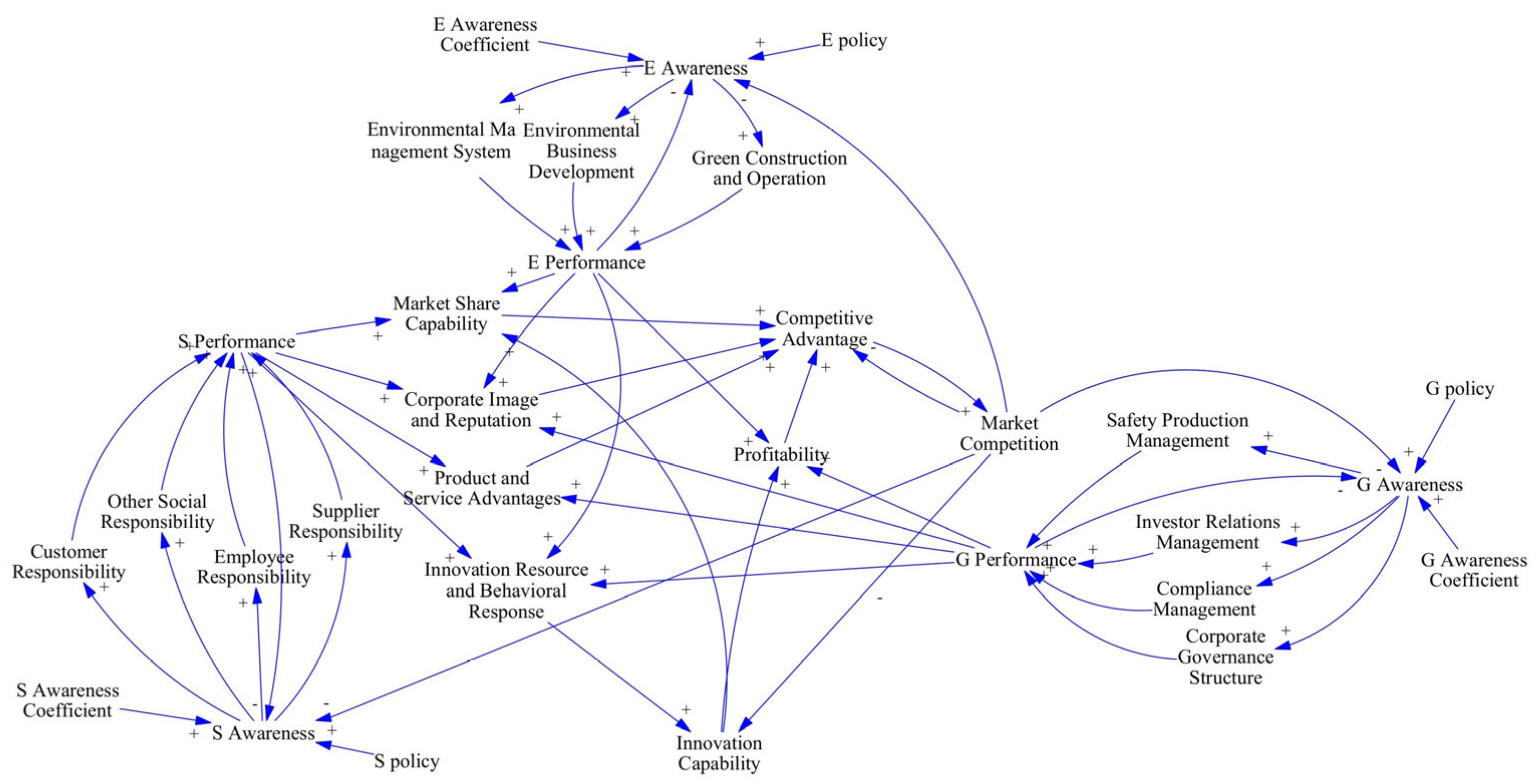
Subsequently, Vensim PLE 10.2 software was utilized to develop a causal relationship diagram illustrating the interconnections between ESG, innovation, and the competitive advantage in construction enterprises (Figure 3). The causal relationship diagram consists of nodes and directed arrows. The nodes represent variables within the system, and the directed arrows represent causal relationships between variables, which include positive feedback loops (+) and negative feedback loops (−). The main feedback loops are as follows:
(1)
E policy → + E awareness → + E behaviors → + E performance → + profitability, market share, corporate reputation and image → + the competitive advantage of construction enterprises. Environmental protection policies compel construction enterprises to enhance environmental consciousness and improve performance through systematic approaches, including establish environmental protection systems, participate in environmental protection business development, and implement green construction and operations [33]. These initiatives systematically reduce operating costs and regulatory compliance risks while enhancing profitability, expanding market share, and strengthening corporate reputation. Such outcomes enable continued investment in strategic capabilities, thereby consolidating the competitive advantage of construction enterprises in the marketplace [34].
(2)
S policy → + S awareness → + S behaviors → + S performance → + corporate reputation and image, market share capacity, product and service quality → + the competitive advantage of construction enterprises. Social responsibility policies compel construction enterprises to enhance stakeholder-oriented consciousness and systematically fulfill obligations toward customers, suppliers, employees, and other key stakeholders, thereby improving social performance metrics. This multifaceted approach not only elevates corporate reputation and brand equity but also strengthens market position through improved stakeholder relationships. Concurrently, enhanced social performance incentivizes continuous quality improvement in products and services to better align with customer requirements and societal expectations. These interconnected factors collectively reinforce the competitive advantage of construction enterprises in their operational ecosystem.
(3)
G policy → + G awareness → + G behaviors → + G performance → + profitability, corporate reputation and image, product and service quality → + the competitive advantage of construction enterprises. Corporate governance policies necessitate that construction firms develop robust governance awareness and enhance governance performance by improving governance structures, strengthening safety production management and compliance management, and investor relations management. Effective corporate governance facilitates improved financial performance, enhanced corporate reputation, and systematic quality advancement in products and services, thereby consolidating the enterprise’s competitive positioning in the industry landscape.
(4)
E policy → + E awareness → + E behaviors → + E performance → + innovation resources and behavioral responses → + innovation capability → + profitability, market share → + the competitive advantage of construction enterprises. Environmental regulations and internal sustainability awareness compel construction enterprises to adopt green construction practices and operational protocols. This process specifically stimulates green innovation resources and initiatives, such as the development of low-carbon building materials and construction waste recycling systems. The resulting enhancement in green innovation capability enables enterprises to deliver differentiated eco-friendly products and access emerging markets for sustainable building projects. These strategic outcomes collectively drive profitability and market share growth while strengthening the enterprise’s competitive position.
(5)
S policy → + S awareness → + S behaviors → + S performance → + innovation resources and behavioral responses → + innovation capability → + profitability, market share → + the competitive advantage of construction enterprises. Social responsibility policies compel construction enterprises to actively fulfill their duties toward employees, suppliers, and local communities. This effort facilitates access to critical innovation resources held by these stakeholders and encourages their participation in jointly developing new construction technologies, material applications, and process optimization solutions. The enhanced capacity for collaborative innovation significantly improves the enterprise’s profitability and market competitiveness, thereby consolidating its sustainable competitive advantage.
(6)
G policy → + G awareness → + G behaviors → + G performance → + innovation resources and behavioral responses → + innovative capability → + profitability, market share → + the competitive advantage of construction enterprises. Corporate governance policies help construction enterprises strengthen long-term orientation, mitigate managerial short-termism, and increase willingness to pursue innovation. Meanwhile, robust governance structures optimize the allocation of innovation resources by directing R&D investments toward the most promising areas. The resulting improvement in innovation capability enables enterprises to more effectively capitalize on emerging market opportunities and secure favorable positions in evolving industry landscapes, ultimately achieving superior profitability and market share.
The feedback loops (4) to (6) collectively illustrate the key role of the ESG subsystem of construction enterprises in promoting the innovation processes. Construction enterprises accumulate substantial innovation resources through systematic ESG implementation [35], enhance innovation motivation of internal and external stakeholders, and improve innovation response behaviors [36]. The synergy between resource accumulation and behavioral refinement significantly augments organizational innovation capabilities, enabling more efficient resource allocation and market responsiveness, thereby securing sustainable competitive advantage.
(7)
Competitive advantage of construction enterprises → + market competition → − E awareness, S awareness, G awareness → − E performance, S performance, G performance, innovation capability. When construction enterprises attain competitive superiority, market concentration increases and competition intensifies. To consolidate market position, construction enterprises strategically reallocate resources from ESG initiatives toward direct competitive investments, consequently diminishing ESG performance metrics and innovation capabilities [25]. This negative feedback mechanism counterbalances the positive effects generated by ESG policies, compelling enterprises to maintain a strategic equilibrium between competitive advantage development and sustainable growth objectives.

3.4. Analysis of System Flow Diagram

This study employed Delphi expert scoring method and the hierarchical analysis process (AHP) to determine variable weightings, supplemented by questionnaire data collection to establish initial variable values. The survey questionnaire contained three main sections. The first section provided an introduction to the research purpose and ESG concepts. The second section focused on collecting demographic and organizational profiles. The third section involved assessing key parameters using five-point Likert scales adapted from grounded theory and established literature. We collected 375 valid responses from mid-to-senior managers responsible for ESG implementation in construction enterprises. The sample demonstrated strong professional qualifications, with over 60% holding bachelor’s degrees and 30% aged 41–50, ensuring adequate expertise for evaluating complex ESG issues.
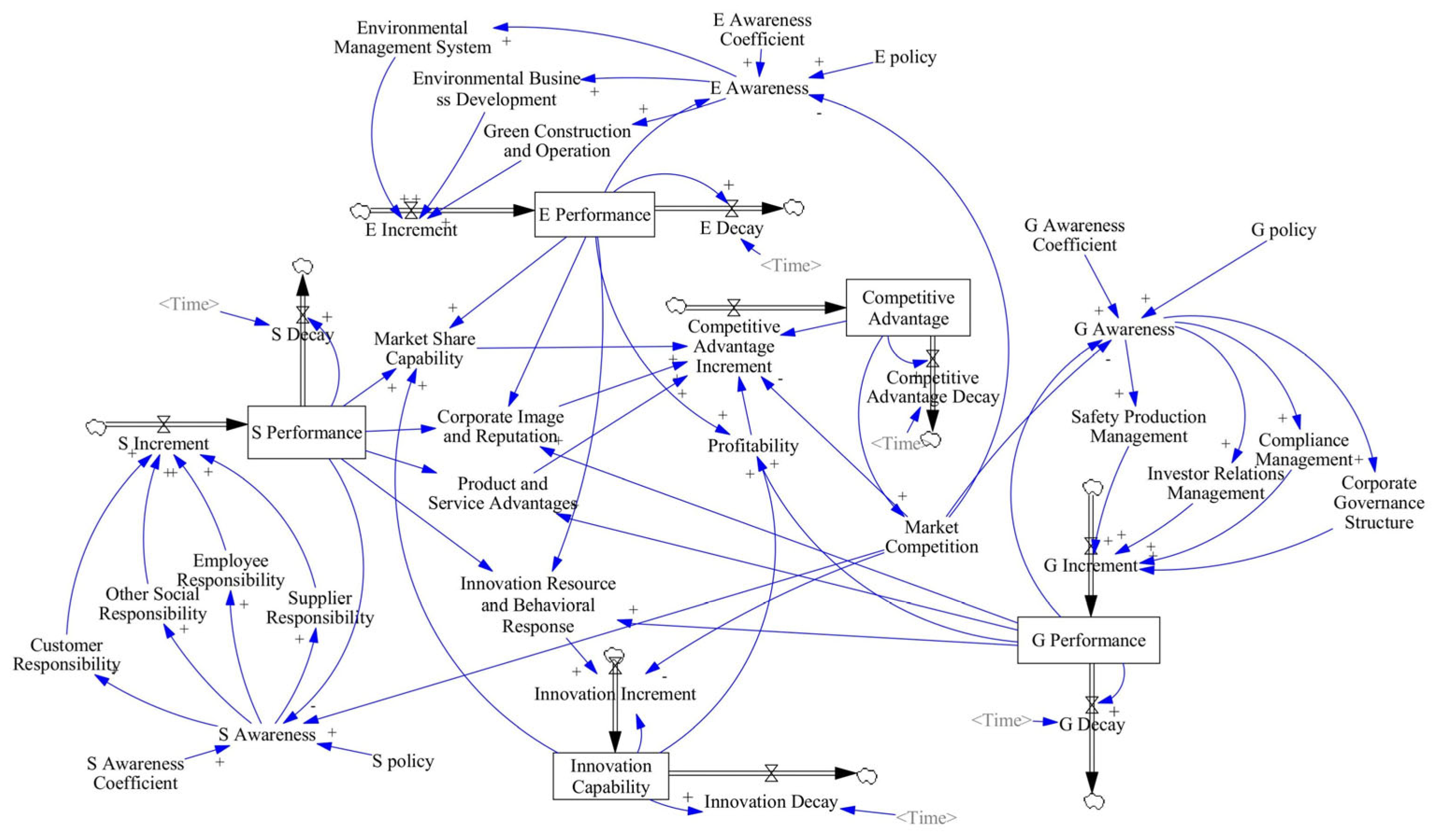
Vensim PLE 10.2 software was used to construct a system flow chart (see Figure 4) to depict the dynamic interactions between ESG, innovation, and the competitive advantage subsystems of construction enterprises. The flow diagram consists of four types of variables. 6 constants (Constants) represent the system’s external parameters, including E, S, G policy settings and their corresponding awareness coefficients. 5 state variables (States) represent the accumulated amounts of E, S, G performance, innovation, and competitive advantage over time. 10 rate variables (Rates) govern the inflows and outflows of these 5 states. Additionally, 20 auxiliary variables (Auxiliary) support intermediate calculations, including E, S, G awareness, 11 ESG sub-dimensions, innovation resources and behavioral responses, 4 competitive advantage dimensions, and market competition dynamics. The variables and specific equations are detailed in Appendix A (Table A1).

4. Results and Discussion

4.1. Model Validity Testing

Model validity testing is a key step in ensuring the reliability of system dynamics research results [37]. In this study, structural validity testing and extreme condition testing were used to verify the validity of the model.

4.1.1. Structure Verification Test

This study applied the structural validity testing framework proposed by Pruyt [38] for system validation. The validation process began with delineating system boundaries through grounded theory applications and systematic literature review, ensuring inclusion of essential variables while excluding extraneous factors. Subsequently, causal relationship networks were established through triangulation of in-depth stakeholder interviews and literature synthesis, maintaining theoretical and logical coherence throughout the model structure. To ensure empirical grounding, variable weightings were quantified through Delphi expert evaluation protocols and AHP, while initial parameter values were derived from questionnaire data to ensure alignment with organizational realities. Finally, dimensional consistency verification was performed using Vensim PLE 10.2 ‘s unit checking functionality to confirm equation coherence. This multi-stage validation process confirmed the model’s structural integrity and its capacity to accurately represent the dynamic characteristics of ESG implementation within construction enterprises.

4.1.2. Extreme Conditions Test

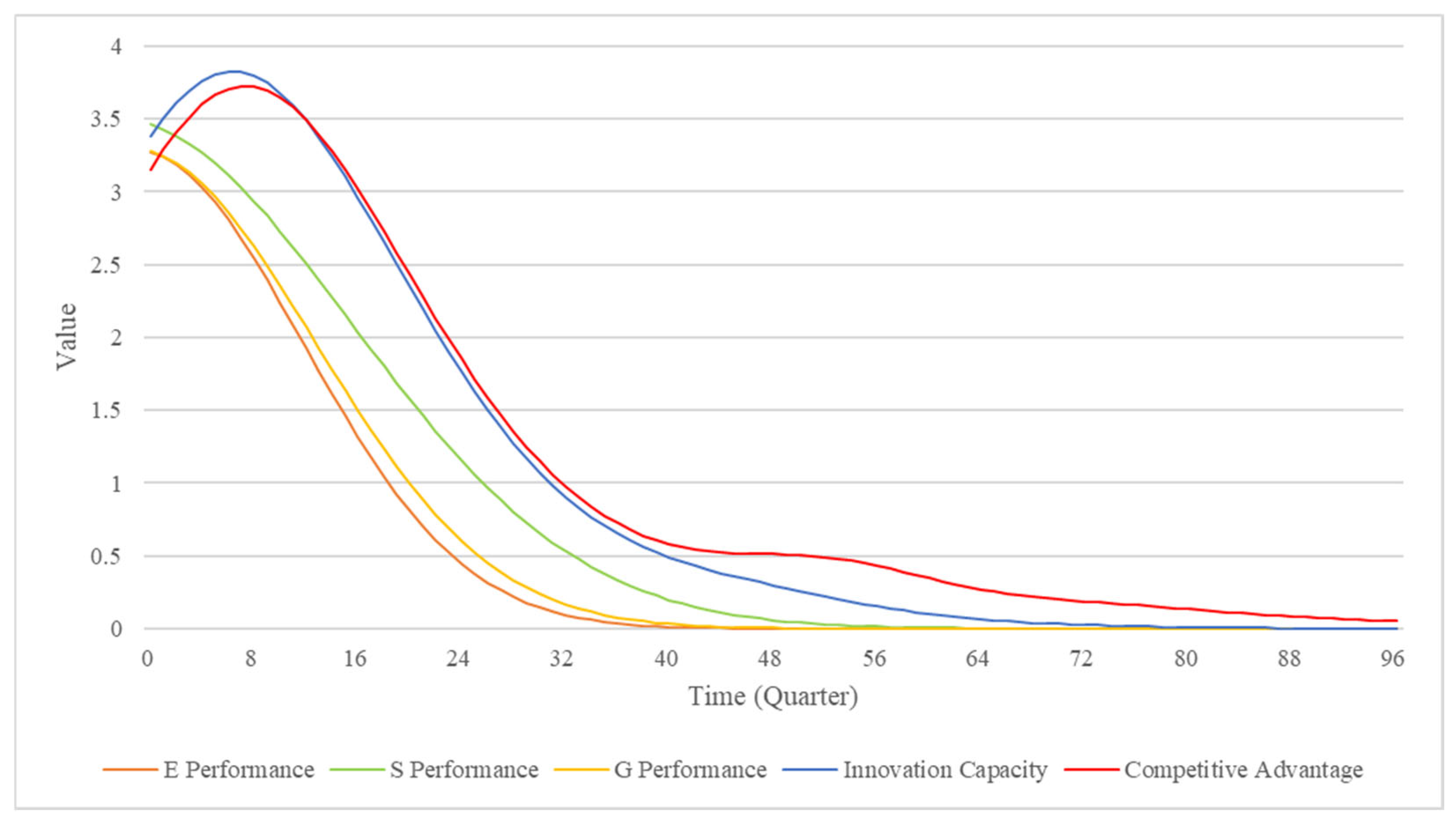
Extreme condition testing involves setting model parameters to extreme values to verify whether the model can still produce reasonable behavior consistent with realistic expectations under extreme conditions, thereby assessing the robustness of the model [37]. This study used Vensim PLE 10.2 software to set the simulation duration and step size to 96 quarters (24 years) and 1 quarter, respectively. The three exogenous variables—E policy, S policy, and G policy—were set to their extreme values of 0 to conduct extreme condition testing on the constructed system dynamics model.
As shown in Figure 5, construction enterprises exhibit a continuous deterioration in ESG performance in the absence of ESG policy, with values approaching zero. This result confirms the essential role of policy in ESG practices. While construction firms can temporarily maintain innovation capabilities and competitive positioning through existing technical reserves and management systems during initial phases, these resources are finite and their efficacy diminishes over time. Without policy incentives, construction enterprises’ innovation capabilities and competitive advantage gradually disappear. These findings align with industry operational patterns and provide insights into the relationship between regulatory environments and corporate sustainability.

4.2. Simulation Analysis

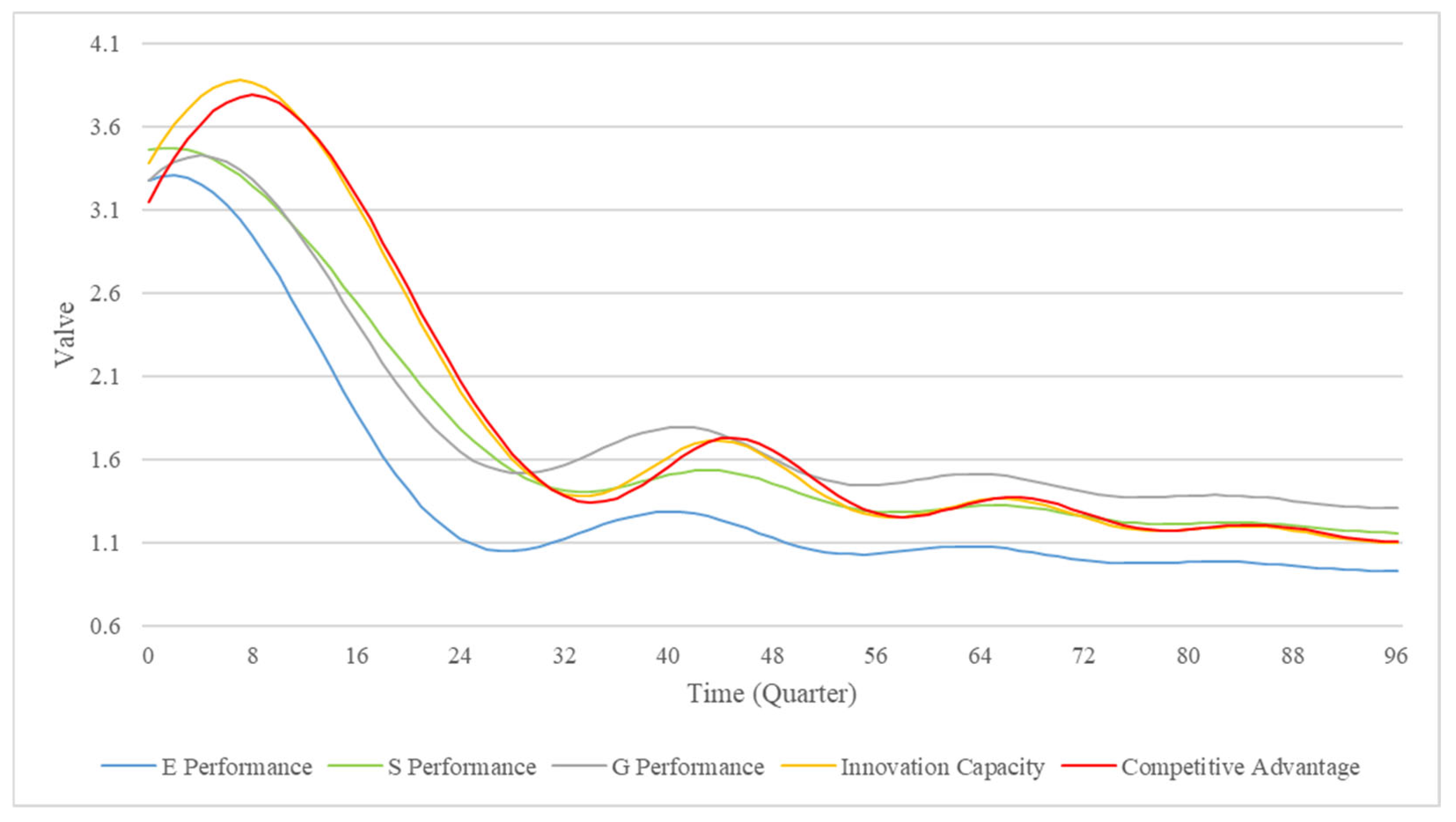
This study employed Vensim PLE 10.2 software to conduct simulation analysis of the system dynamic model, elucidating the dynamic interrelationships among ESG, innovation, and the competitive advantage of construction enterprises. The results are shown in Figure 6.

4.2.1. Simulation Analysis of ESG

Driven by regulatory policies, construction enterprises’ ESG performance exhibits oscillatory convergence, peaking initially in the first year and again in the tenth year before stabilizing. This dynamic pattern stems from several key mechanisms:
(1)
The initial rapid improvement (0–1 year) results from policy pressures compelling construction enterprises to address ESG issues [39] through visible compliance measures that satisfy green construction standards and bidding requirements, such as dust and noise control protocols.
(2)
Subsequently, intensifying financial constraints and market competition force construction enterprises to reduce ESG investments [40], leading to performance decline during years 1–7 [41].
(3)
Minimum ESG policy requirements and market recognition of sustainable practices, such as green building certification, then drive construction enterprises to renew ESG investments, while reduced market competition facilitates performance recovery (years 7–10) [42]. However, the homogenization of ESG practices across the industry and diminishing competitive advantages impair enterprises ‘ ability to secure critical resources [34], resulting in a secondary peak (year 10) substantially lower than the initial one (year 1).
(4)
ESG performance ultimately reaches dynamic equilibrium amid the ongoing tension between regulatory pressures and limited market incentives.
This process illuminates the structural dilemma construction enterprises face in balancing immediate operational viability with long-term sustainability objectives.

4.2.2. Simulation Analysis of Innovation

Innovation in construction enterprises exhibits oscillatory convergence similar to ESG performance, but with a one-year lag. This dynamic pattern can be attributed to several key mechanisms:
(1)
The initial rapid improvement in innovation (0–2 years) reflects superficial adaptations to ESG policies, manifested through incremental modifications to organizational structures, production processes, and pollution control equipment [43]. These innovations are characterized by short implementation cycles and rapid outcomes.
(2)
The subsequent decline (2–8 years) reveals structural challenges within the construction industry. The project-based organizational model impedes effective knowledge accumulation at the enterprise level, while labor subcontracting hinders the penetration of technological innovation to operational levels. Simultaneously, intensified market competition increases innovation costs, driving enterprises toward more conservative innovation strategies [4,44].
(3)
ESG practices enable construction enterprises to accumulate external information and financial support while leveraging organizational learning effects. These factors collectively enhance innovation propensity and capability [24], culminating in a secondary peak in year 11.
(4)
Innovation capabilities ultimately stabilize when ESG-driven initiatives and market regulations reach equilibrium.

4.2.3. Simulation Analysis of Competitive Advantage

Competitive advantage in construction enterprises exhibits oscillatory convergence with dynamics clearly correlated to ESG and innovation. This pattern can be attributed to several key mechanisms:
(1)
During the initial phase (0–2.5 years), construction enterprises experience rapid competitive advantage growth primarily derived from compliance efficiencies and cost control benefits generated by ESG practices [45]. These advantages significantly enhance profitability [46], market share, reputation, and corporate reputation [47]. Concurrently, environmental management innovation fosters differentiated competitive positioning [44], enabling firms to maintain market strength even as ESG performance begins to de-cline.
(2)
As market competition intensifies, reduced ESG investment [48] and practice homogenization across the industry lead to competitive advantage erosion (2.5–8.5 years).
(3)
Defensive barriers established through green supply chain development and digital platform implementation eventually become effective, triggering competitive ad-vantage recovery (beyond 8.5 years). This recovery process ultimately leads to dynamic equilibrium under the dual influences of continuous policy intervention and market regulation.
This process demonstrates that construction enterprises must strategically coordinate the relationships between ESG implementation, innovation activities, and competitive positioning. Sustainable competitive advantage requires effective resource allocation and integration while adapting to external environmental demands.

4.3. Sensitivity Analysis

Sensitivity analysis was conducted to identify the most effective strategy for allocating limited resources to ESG in order to enhance innovation and competitive advantage, while simultaneously verifying the robustness of the baseline simulation results. ESG awareness coefficients is the critical bridge between external factors and internal ESG implementation in construction enterprises, directly influencing the intensity of corporate resource allocation towards ESG. This study examined the impacts of changes in E awareness, S awareness, and G awareness, both individually and in combination, on key system outcomes.

4.3.1. Sensitivity Analysis of E Awareness

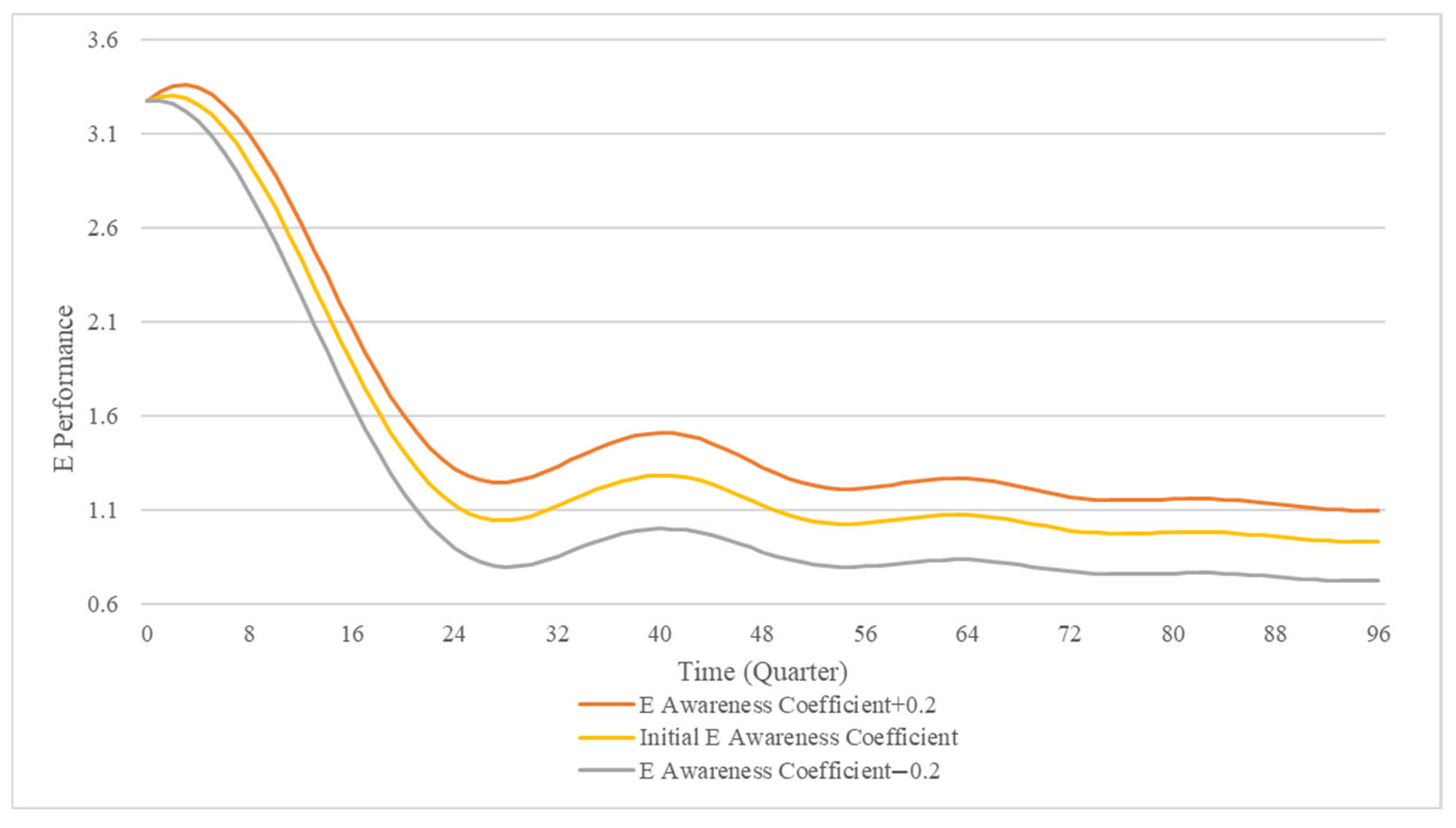
This study systematically investigated the impact of changes in E awareness on E performance, innovation, and competitive advantage by adjusting the environmental awareness coefficient by ±0.2 from baseline levels. Simulation results demonstrate that improvements in E awareness exhibit diminishing marginal returns on E performance enhancement in construction enterprises (Figure 7).
This finding aligns with the research of Niu and Wang [43], which identified that mental accounting mechanisms lead managers to prioritize environmentally friendly initiatives requiring minimal investment while providing rapid outcomes to satisfy regulatory requirements. While this approach significantly enhances E performance during initial phases, organizations tend to adopt conservative positions toward substantial long-term sustainability investments, resulting in attenuated performance improvements in subsequent stages.
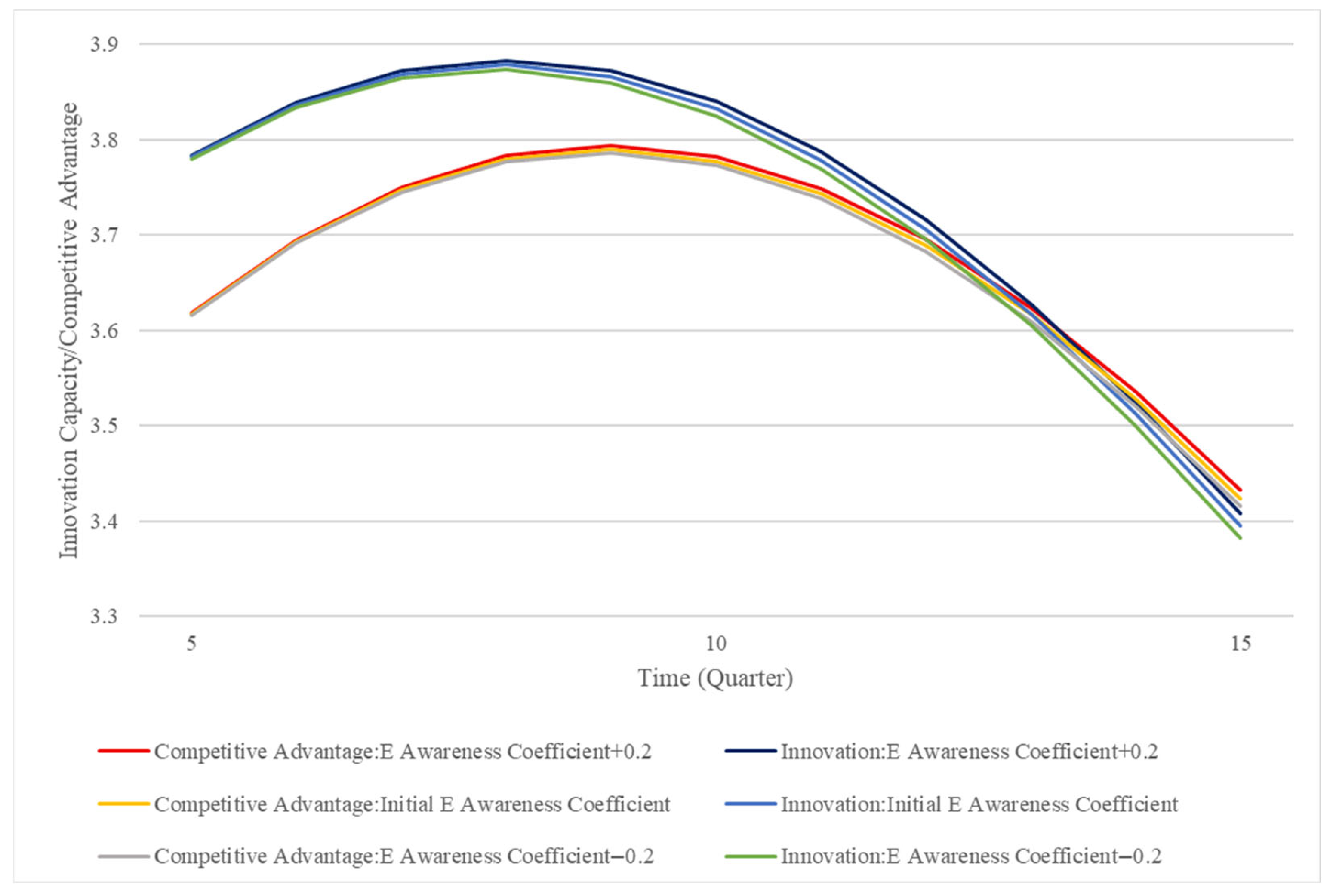
Simulation results indicate that enhanced E awareness in construction enterprises positively influences innovation and competitive advantage (Figure 8 illustrates simulation outcomes before and after the initial peak). As a critical prerequisite for corporate sustainability [49], E awareness catalyzes green innovation initiatives to address regulatory compliance requirements. These strategic activities enhance product quality, foster positive corporate reputation, and generate advantages in cost efficiency and market positioning [50].
However, interventions focused exclusively on environmental awareness typically yield only incremental innovations. Achieving breakthrough innovations and sustained competitive advantages necessitates integration with complementary factors, particularly digital transformation strategies [19] and comprehensive supply chain management approaches [51].

4.3.2. Sensitivity Analysis of S Awareness

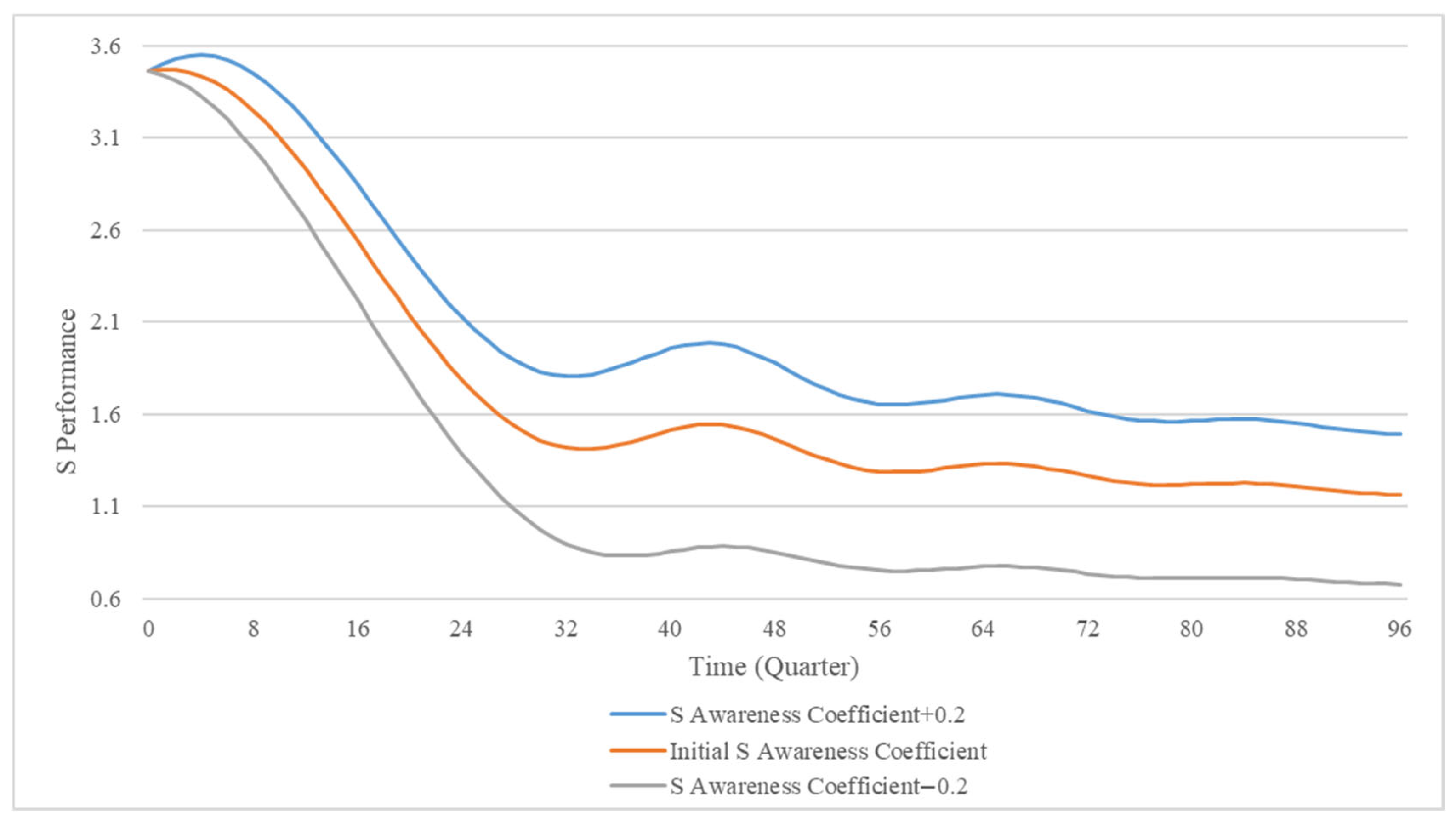
The enhancement of S awareness in construction enterprises has led to a significant diminishing marginal utility in S performance (Figure 9). During initial phases, S performance can be rapidly enhanced primarily through strategic interventions in labor rights and community relations. However, subsequent performance improvements necessitate substantial investments, while the subcontracting labor system creates significant barriers to comprehensive social responsibility integration, thereby precipitating diminishing marginal returns.
It is worth noting that when S awareness declines, the consequent deterioration of S performance significantly exceeds the performance improvements achieved through enhanced S awareness. This asymmetrical relationship stems from the project-based organizational structure, which facilitates rapid propagation of negative incidents such as labor disputes and safety violations throughout the workforce, potentially triggering precipitous reputational damage. Concurrently, inadequate social responsibility implementation increases vulnerability to regulatory penalties, including disqualification from bidding processes and project suspensions [52], potentially initiating cascading economic losses. This performance asymmetry underscores the critical importance of maintaining fundamental social responsibility standards within construction enterprises.
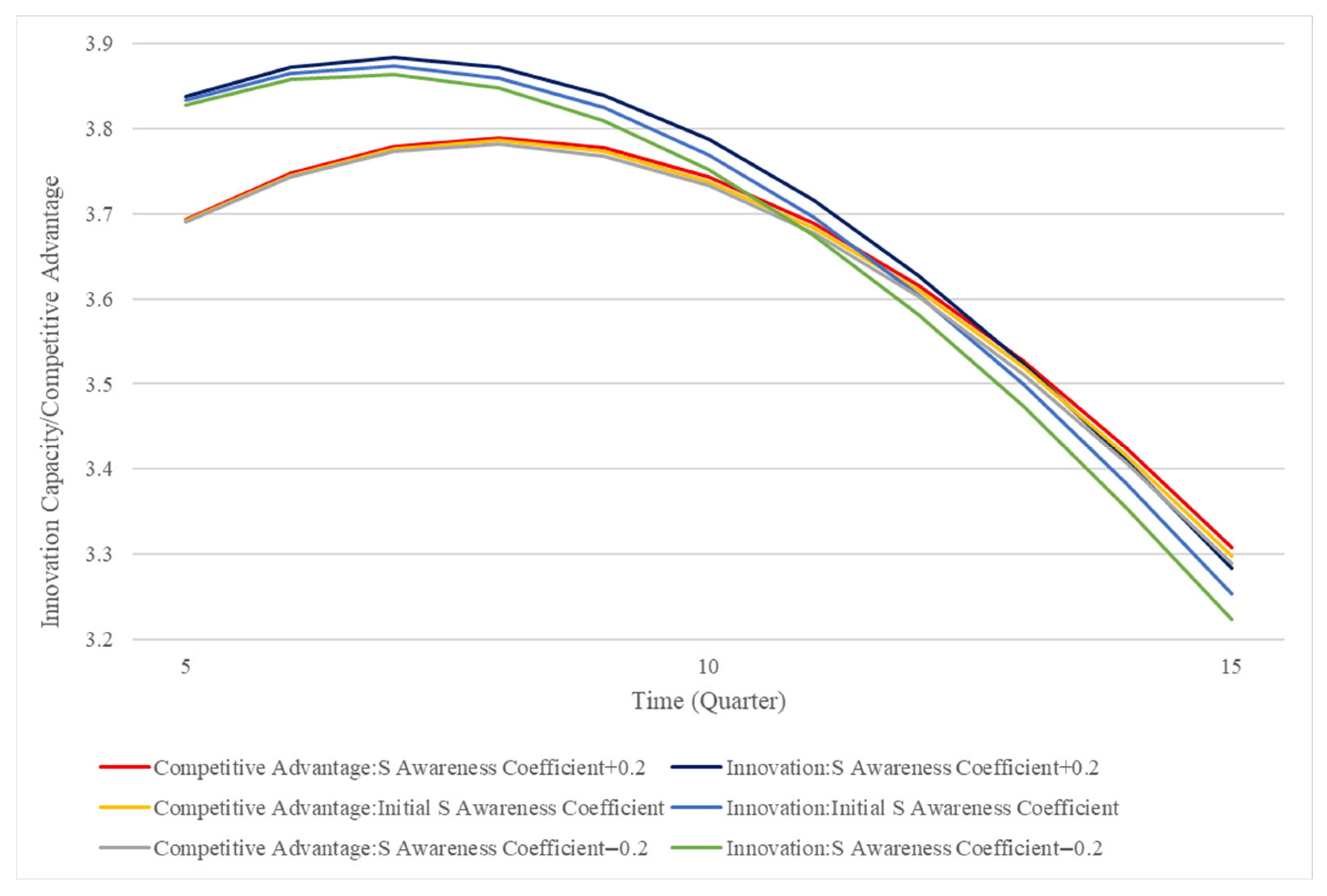
Simulation results demonstrate that enhanced S awareness in construction enterprises generates significant positive impacts on both innovation and competitive ad-vantage, with a more pronounced effect on innovation outcomes (Figure 10). Improved labor relations directly strengthen technical collaboration capacities among construction personnel, and suppliers’ fulfillment of social responsibility facilitates their engagement in innovation processes through collaborative mechanisms, trust development, and cooperative frameworks [53]. These factors directly augment the innovation capabilities of construction enterprises. Competitive advantage formation, however, necessitates an additional market transformation process before these innovation benefits can be fully realized in market positioning.

4.3.3. Sensitivity Analysis of G Awareness

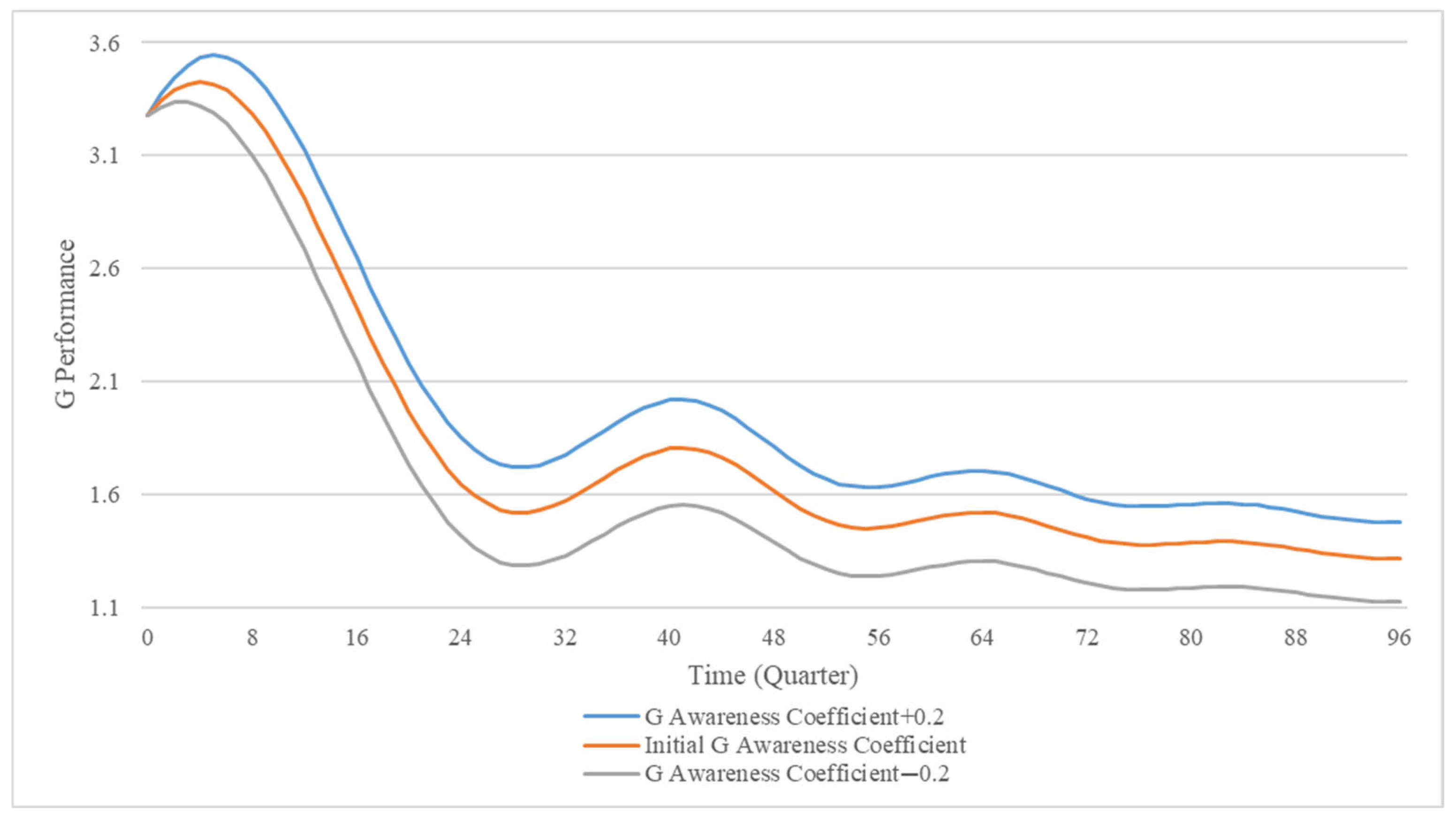
G performance exhibits diminishing marginal utility as construction enterprises’ G awareness increases (Figure 11). As governance mechanisms are progressively strengthened and refined, the incremental performance improvements generated by further governance awareness enhancements gradually attenuate. Furthermore, corporate investments in governance infrastructure and organizational reform initiatives may yield diminishing marginal returns, particularly in contexts where governance frameworks have already achieved relative maturity. Consequently, during governance enhancement processes, construction enterprises must identify optimal governance strategies that establish equilibrium between governance sophistication and implementation resource expenditures.
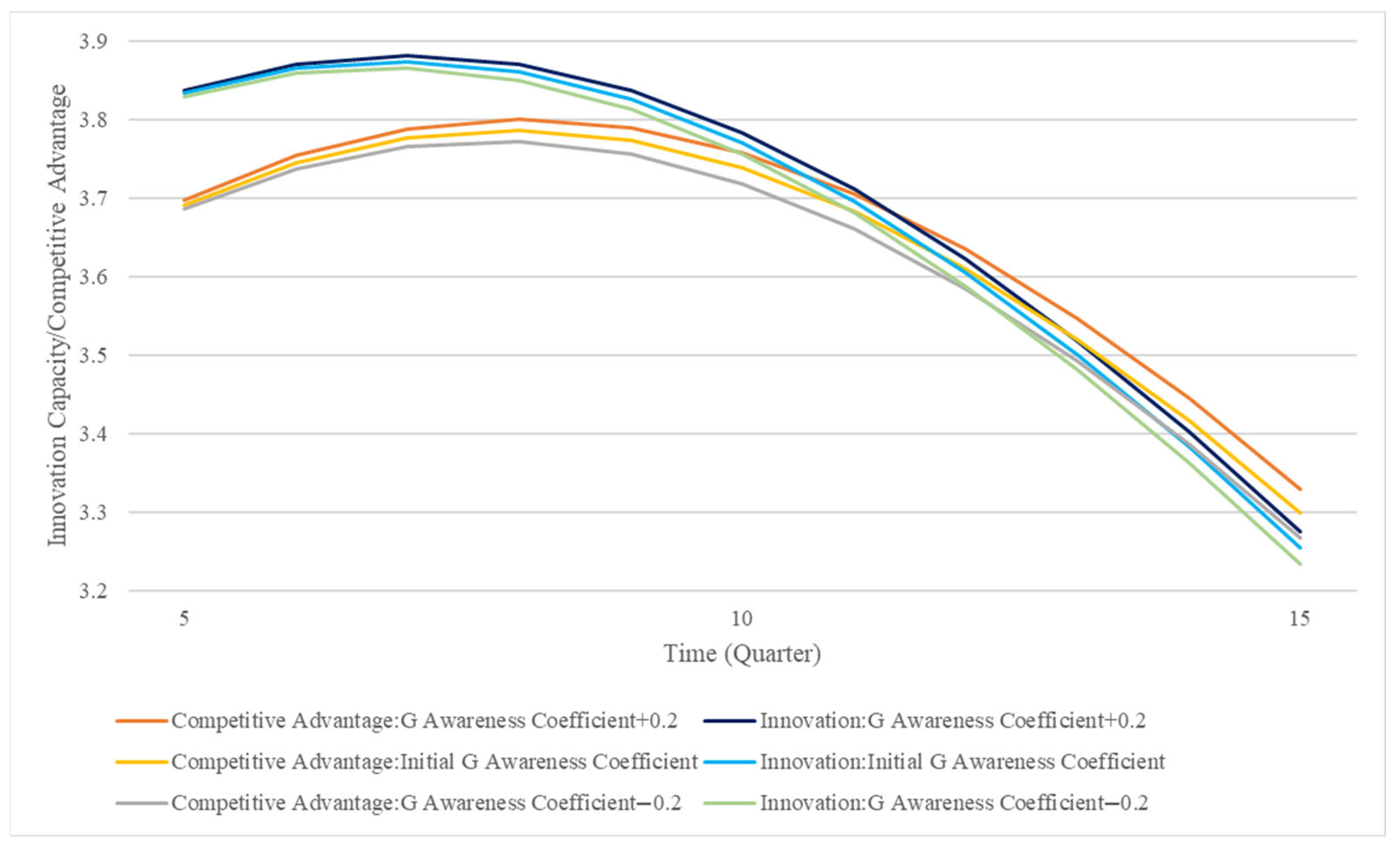
Simulation results demonstrate that enhanced G awareness in construction enterprises positively influences both innovation and competitive advantage, with substantially stronger effects on competitive advantage development (Figure 12). G awareness directly improves project performance and strengthens competitive positioning through governance structure optimization, risk management enhancement, and compliance cost reduction [54]. Conversely, G awareness impacts innovation through multiple intermediary mechanisms, including incentive systems [55], R&D investment [56] and technology transfer. However, factors such as the project-based organizational model and labor subcontracting in the construction industry limit the effectiveness of these long-term mechanisms. Consequently, G awareness improvements generate comparatively weaker innovation outcomes than their direct enhancement effects on competitive advantage.

4.3.4. Comparative Analysis of E, S, and G Awareness Sensitivity Results

There is a distinct hierarchy in how E, S, and G awareness enhancements influence competitive advantage when elevated by the same magnitude (+0.2). G awareness demonstrates the most substantial promoting effect, followed by E awareness, with S awareness exhibiting a relatively weaker impact.
This hierarchy stems from their distinct causal pathways. Enhanced G awareness directly strengthens risk resilience and project management capabilities by optimizing decision-making frameworks and improving resource allocation efficiency, thereby rapidly building competitive advantage. E awareness primarily promotes green construction technologies and environmentally friendly operations to achieve cost savings and product differentiation. However, the transformation of environmental practices into market value remains susceptible to external constraints such as policy changes and consumer perceptions. In contrast, S awareness exerts the most indirect influence. While proactive social responsibility helps improve relationships with employees, communities, and other stakeholders, the accumulation of such relational capital requires a longer transmission chain to translate into competitive advantage, resulting in a more complex and unpredictable value realization process. Therefore, under resource constraints, prioritizing G awareness enhancement provides the most effective strategic leverage for construction enterprises to establish sustainable competitive advantage.

4.3.5. Sensitivity Analysis of Combined E, S, and G Awareness

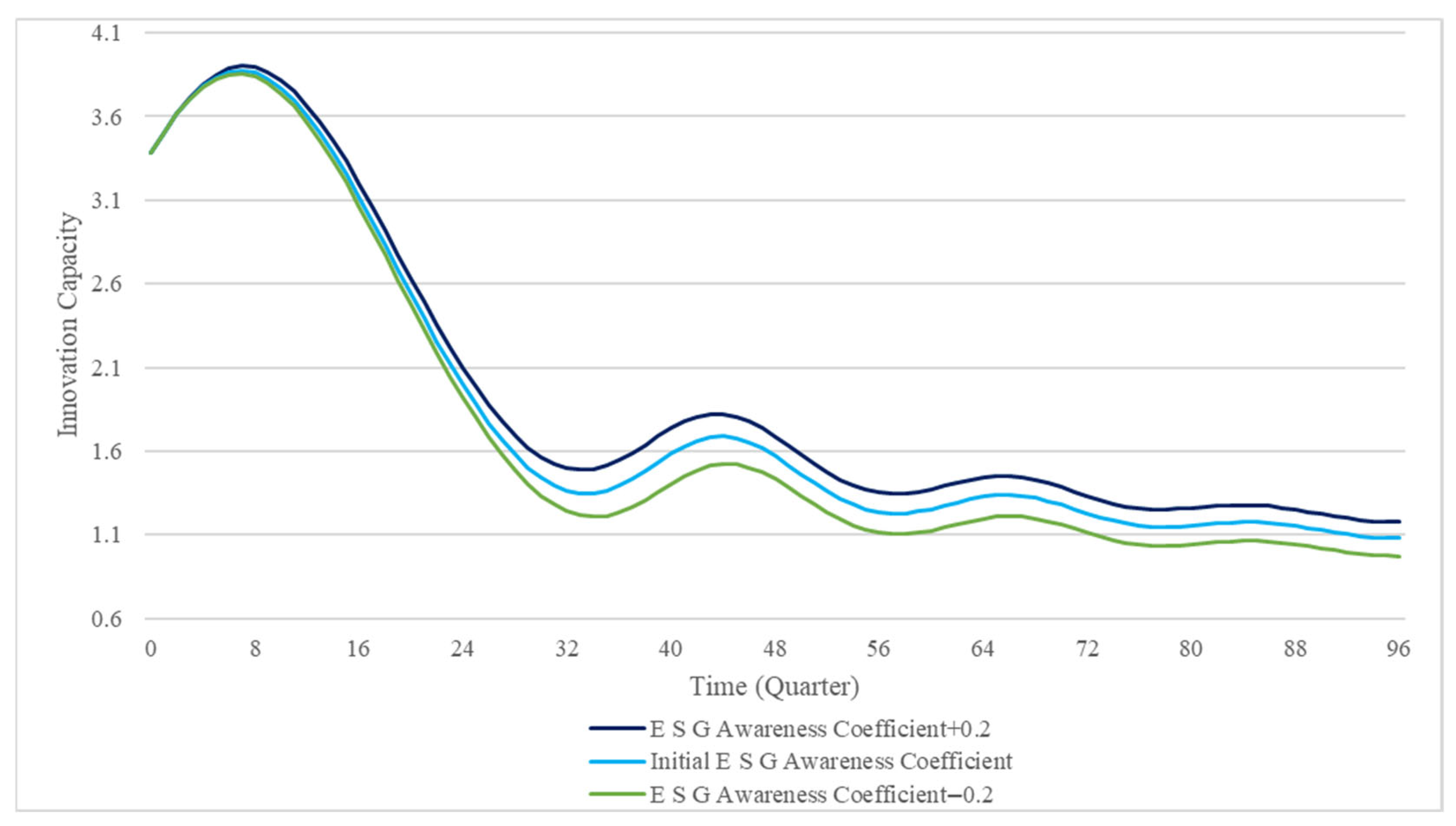
This study systematically examined the dynamic impact of the joint enhancement of ESG awareness on construction enterprises’ innovation capabilities and competitive positioning through simultaneous adjustment of E, S, and G awareness coefficients (±0.2). Results in Figure 13 show that the joint strengthening of ESG awareness raises the peak of innovation in construction enterprises and accelerates its manifestation timeline.
Specifically, the enhancement of E awareness drives green innovation practices in construction enterprises [57] while heightened S awareness directs organizational focus toward employee development initiatives and facilitates access to stakeholder-embedded diverse knowledge repositories essential for innovation advancement [8]. The enhancement of G awareness improves the efficiency of innovation resource allocation by optimizing decision-making processes and improving incentive mechanisms. The simultaneous enhancement of E, S, and G awareness creates an internal and external environment conducive to innovation for construction enterprises, enabling them to identify innovation opportunities, allocate innovation resources, and realize innovation value more quickly, thereby accelerating innovation development.
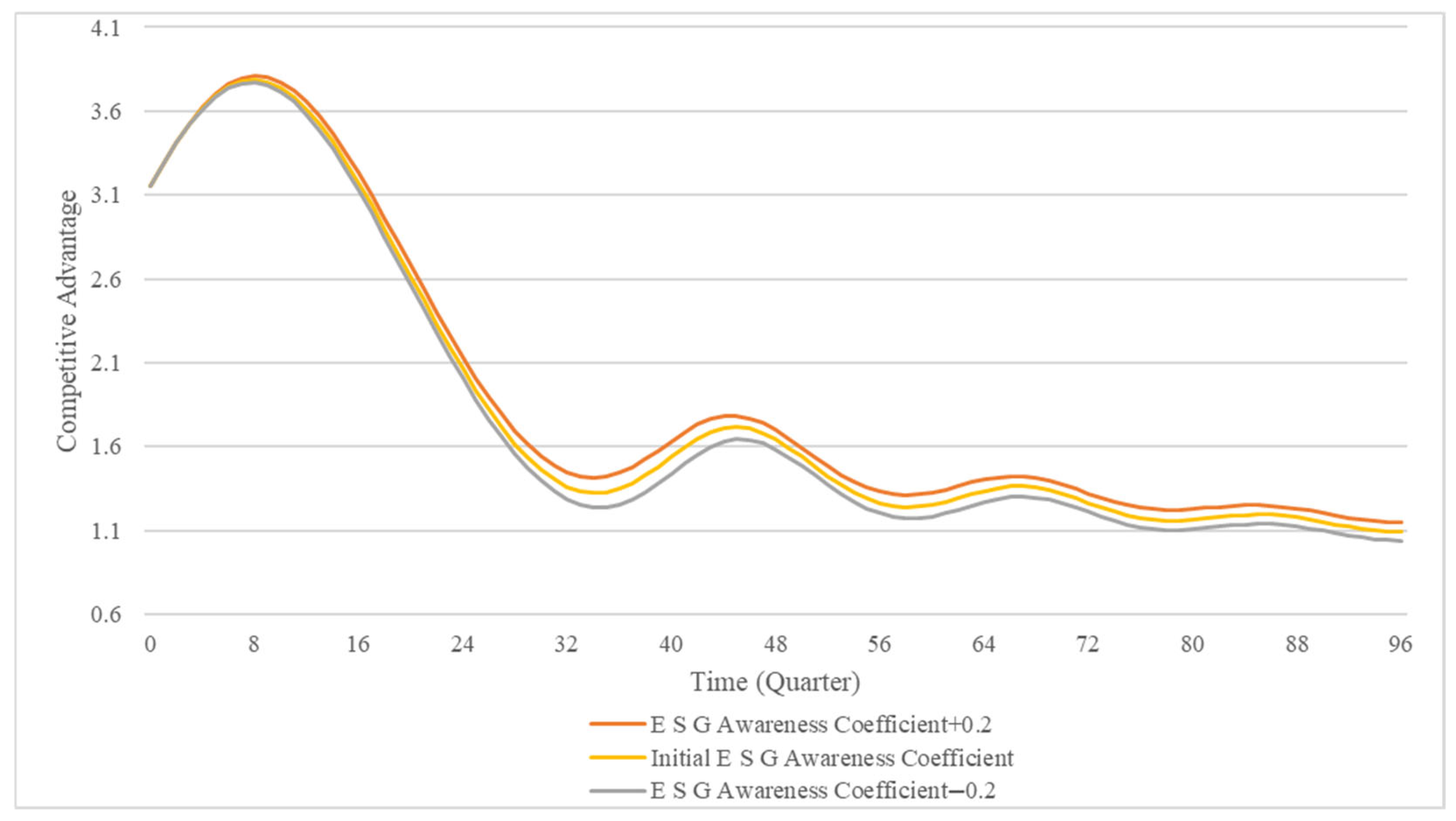
Simulation results depicted in Figure 14 demonstrate that the joint enhancement of ESG awareness elevates both the peak level and development speed of competitive advantage in construction enterprises. The results are achieved through a synergistic process where the effective governance establishes the institutional foundation for environmental innovation, which in turn generates tangible market advantages through green solutions and cost savings. These advantages are then solidified and amplified by the social dimension, where strengthened responsibility builds trust capital, enhancing brand reputation and stakeholder collaboration [47]. This transformation of market gains into sustainable value completes the cycle. Consequently, this dynamic interplay not only raises the potential ceiling of competitive advantage through comprehensive resource optimization but also accelerates the formation of competitive advantage by shortening innovation conversion cycles. These findings align with Zhang et al. [58] who found that when senior executives fully understand the concept of ESG, they are more likely to incorporate ESG goals into corporate strategy and gain low-cost and differentiated competitive advantage [33]. This study extends prior research by elucidating the synergistic mechanism through which E, S, and G awareness dynamically shapes the competitive advantage of construction enterprises, thereby providing strategic guidance for developing integrated sustainability initiatives.

5. Conclusions and Recommendations

5.1. Conclusions

This study uses a system dynamics model to reveal the interaction and dynamic evolution of ESG, innovation, and the competitive advantage in construction enterprises. First, simulation results show that, driven by policy, ESG, innovation, and the competitive advantage exhibit oscillatory convergence patterns. Compared with ESG performance, fluctuations in innovation and competitive advantage are lagging. This lag reflects the inherent time delay required for ESG practices to be absorbed, integrated, and ultimately translated into competitive advantage in construction enterprises—a critical temporal dimension that conventional static methodologies fail to capture. Second, sensitivity analysis indicates that E, S, and G awareness enhancements exhibit diminishing marginal returns on corresponding performance dimensions. However, S awareness deterioration triggers disproportionately severe performance degradation relative to improvements generated by equivalent awareness enhancement. This underscores the critical role of social responsibility as a risk-mitigation dimension in corporate ESG strategy. Third, the joint improvement of E, S, and G awareness not only significantly improves the peak of construction enterprises’ innovation and competitive advantage but also accelerates the process of achieving these peaks. This outcome highlights the superiority of holistic ESG implementation over isolated initiatives.
The main contribution of this study is that it establishes a system dynamics-based causal explanatory paradigm that reveals the temporal lags, non-linear responses, and synergistic effects among ESG, innovation, and competitive advantage in construction enterprises. These findings break through the limitations of traditional static analysis by elucidating the dynamic interactions and feedback mechanisms through which E, S, and G collectively drive competitive advantage via innovation pathways, thereby theoretically deepening the understanding of the ESG value creation process in construction enterprises.

5.2. Managerial Implications and Recommendations

This study provides the following insights for managers of construction enterprises. To begin with, ESG is not only a compliance tool but also an important means for construction enterprises to enhance their innovation capabilities and competitive advantage. Therefore, construction enterprises should deeply integrate ESG principles into their organizational frameworks, facilitating transformation from compliance-oriented approaches toward proactive innovation strategies by developing differentiated competitive advantages in emergent domains such as green building technologies and intelligent construction systems. Moreover, ESG has a lagging effect on the innovation and competitive advantage of construction enterprises. Therefore, a phased development strategy should be formulated to reasonably allocate the resources accumulated through ESG practices and continue to invest in research and development to shorten the cycle of forming innovation capabilities and competitive advantage. Finally, construction enterprises should focus on the coordinated improvement of all dimensions of ESG, especially the continuous cultivation of social responsibility awareness, to prevent significant fluctuations in performance caused by short-term slackness and ensure the sustainability of enterprise development.

5.3. Limitations and Future Directions

Despite this study making some contributions in theory and practice, it also has certain limitations. First, while examining innovation’s mediating function between ESG implementation and competitive advantage formation, the research framework does not differentiate between innovation types and their respective impact. Second, the system dynamics model operates under assumptions of environmental stability and consistent policy parameters, overlooking the volatility and unpredictability of external contextual factors. Future research should explore the impact of environmental uncertainty on the relationship between ESG and corporate performance. Finally, although the quantification of key variables through survey instrumentation provides targeted data acquisition, subsequent investigations would benefit from integrating publicly accessible objective metrics to enhance analytical comprehensiveness and validity.

Author Contributions

Conceptualization, D.H. and S.H.; methodology, D.H.; software, D.H.; validation, D.H.; formal analysis, D.H.; investigation, D.H.; resources, D.H.; data curation, D.H.; writing—original draft preparation, D.H.; writing—review and editing, D.H.; visualization, D.H.; supervision, S.H.; project administration, S.H.; funding acquisition, S.H. All authors have read and agreed to the published version of the manuscript.

Funding

This research received no external funding.

Data Availability Statement

The data presented in this study are available on request from the corresponding author.

Acknowledgments

We offer our sincere thanks to the editor and anonymous reviewers for their careful evaluation and their fruitful observations, suggestions, corrections, and recommendations that substantially improved the initial manuscript.

Conflicts of Interest

The authors declare no conflicts of interest.

Abbreviations

The following abbreviations are used in this manuscript:
ESGEnvironmental, Social and Governance
EEnvironmental
SSocial
GGovernance

Appendix A

Table A1. Variables and equations.
VariableTypeEquation/Value
E PolicyConstant3.2
S PolicyConstant3
G PolicyConstant3.5
E Awareness
Coefficient
Constant0.5
S Awareness
Coefficient
Constant0.3
G Awareness
Coefficient
Constant0.7
Market Competition AuxiliaryDELAY1(Competitive Advantage, 4) ∗ 0.2
E AwarenessAuxiliaryE Awareness Coefficient ∗ E policy/(DELAY1(E, 4) ∗ DELAY1(Market Competition, 4))
Green
Construction and Operation
Auxiliary0.05 ∗ Environmental Awareness
Environmental Business
Development
Auxiliary0.05 ∗ Environmental Awareness
Environmental Management
System
Auxiliary0.1 ∗ Environmental Awareness
E IncrementRate0.2 ∗ Environmental Management System + 0.3 ∗ Environmental Business Development + 0.5 ∗ Green Construction and Operation
E DecayRateIF THEN ELSE (E Performance > 0, E Performance ∗ (0.01 + 0.006 ∗ Time), 0)
E PerformanceStateINTEG (E Increment—E Decay, 3.274)
S AwarenessAuxiliaryS Awareness Coefficient ∗ S policy/(DELAY1(S, 4) ∗ DELAY1(Market Competition, 4))
Customer
Responsibility
Auxiliary0.1 ∗ Social Responsibility Awareness
Supplier
Responsibility
Auxiliary0.1 ∗ Social Responsibility Awareness
Employee
Responsibility
Auxiliary0.1 ∗ Social Responsibility Awareness
Other Social
Responsibility
Auxiliary0.15 ∗ Social Responsibility Awareness
S IncrementRate0.3 ∗ Customer Responsibility + 0.3 ∗ Supplier Responsibility + 0.3 ∗ Employee Responsibility + 0.1 ∗ Other Social Responsibility
S DecayRateIF THEN ELSE (S Performance > 0, S Performance ∗ (0.01 + 0.003 ∗ Time), 0)
S PerformanceStateINTEG (S Increment − S Decay, 3.464)
G AwarenessAuxiliaryG Awareness Coefficient ∗ G policy/(DELAY1(G, 4) ∗ DELAY1 (Market Competition, 4))
Corporate
Governance
Structure
Auxiliary0.06 ∗ Corporate Governance Awareness
Compliance
Management
Auxiliary0.1 ∗ Corporate Governance Awareness
Safety Production ManagementAuxiliary0.1 ∗ Corporate Governance Awareness
Investor Relations ManagementAuxiliary0.04 ∗ Corporate Governance Awareness
G IncrementRate0.25 ∗ Corporate Governance Structure + 0.3 ∗ Compliance Management + 0.3 ∗ Safety Production Management + 0.15 ∗ Investor Relations Management
G DecayRateIF THEN ELSE (G Performance > 0, G Performance ∗ (0.01 + 0.005 ∗ Time), 0)
G Performance StateINTEG (G Increment − G Decay, 3.28)
Innovation
Resource and
Behavioral
Response
Auxiliary0.26 ∗ E + 0.4 ∗ S + 0.34 ∗ G
Innovation
Increment
RateInnovation Resource and Behavioral Response ∗ 0.1/DELAY1 (Innovation, 5)/DELAY1 (Market Competition, 5)
Innovation DecayRateIF THEN ELSE (Innovation Capability > 0, Innovation Capability ∗ (0.01 + 0.004 ∗ Time), 0)
Innovation
Capability
StateINTEG (Innovation Increment − Innovation Decay, 3.38)
Market Share
Capability
Auxiliary0.342 ∗ E + 0.193 ∗ S + 0.465 ∗ Innovation
Corporate Image and ReputationAuxiliary0.42 ∗ E + 0.187 ∗ S + 0.393 ∗ G
Product and Service QualityAuxiliary0.097 ∗ S + 0.903 ∗ G
ProfitabilityAuxiliary0.119 ∗ E + 0.196 ∗ G + 0.685 ∗ Innovation
Competitive
Advantage
Increment
Rate(0.3 ∗ Profitability + 0.2 ∗ Market Share Capability + 0.1 ∗ Corporate Image and Reputation + 0.4 ∗ Product and Service Advantages) ∗ 0.1/DELAY1(Competitive Advantage, 6)/DELAY1(Market Competition, 6)
Competitive
Advantage Decay
RateIF THEN ELSE (Competitive Advantage > 0, Competitive Advantage ∗ (0.01 + 0.004 ∗ Time), 0)
Competitive
Advantage of
Construction
Enterprises
StateINTEG (Competitive Advantage Increment − Competitive Advantage Decay, 3.15)

References

  1. Song, Y.; Sun, Z.; Chang, L. Can executives’ overseas backgrounds enhance ESG performance?—Empirical evidence from the construction engineering industry. J. Asian Archit. Build. Eng. 2025, 1–18. [Google Scholar] [CrossRef]
  2. Dang, X.X.; Peng, J.; Deng, X.P. How to Improve the Environmental, Social and Governance Performance of Chinese Construction Enterprises Based on the Fuzzy Set Qualitative Comparative Analysis Method. Sustainability 2024, 16, 3153. [Google Scholar] [CrossRef]
  3. Işık, C.; Ongan, S.; Islam, H.; Menegaki, A.N. A roadmap for sustainable global supply chain distribution: Exploring the interplay of ECON-ESG factors, technological advancement and SDGs on natural resources. Resour. Policy 2024, 95, 105114. [Google Scholar] [CrossRef]
  4. Xing, Z.; Huang, J.; Fang, D. From Compliance to Competitiveness: Unpacking the Impact of ESG Performance on Strategic Innovation and Market Dynamics. IEEE Trans. Eng. Manag. 2025, 72, 1297–1319. [Google Scholar] [CrossRef]
  5. Rabaya, A.J.; Saleh, N.M. The moderating effect of IR framework adoption on the relationship between environmental, social, and governance (ESG) disclosure and a firm’s competitive advantage. Environ. Dev. Sustain. 2022, 24, 2037–2055. [Google Scholar] [CrossRef]
  6. Truant, E.; Borlatto, E.; Crocco, E.; Bhatia, M. ESG performance and technological change: Current state-of-the-art, development and future directions. J. Clean. Prod. 2023, 429, 139493. [Google Scholar] [CrossRef]
  7. Korankye, B.; Hao, Y.; Borah, P.S.; Odai, L.A.; Ahakwa, I. Transformational leadership, ESG performance, corporate reputation and competitive advantage: A serial mediation model. Bus. Process Manag. J. 2024; ahead-of-print. [Google Scholar] [CrossRef]
  8. Zhou, S.K.; Rashid, M.H.U.; Zobair, S.A.M.; Sobhani, F.A.; Siddik, A. Does ESG Impact Firms’ Sustainability Performance? The Mediating Effect of Innovation Performance. Sustainability 2023, 15, 5586. [Google Scholar] [CrossRef]
  9. Cardillo, M.A.D.; Basso, L.F.C. Revisiting knowledge on ESG/CSR and financial performance: A bibliometric and systematic review of moderating variables. J. Innov. Knowl. 2025, 10, 100648. [Google Scholar] [CrossRef]
  10. Friede, G.; Busch, T.; Bassen, A. ESG and financial performance: Aggregated evidence from more than 2000 empirical studies. J. Sustain. Financ. Invest. 2015, 5, 210–233. [Google Scholar] [CrossRef]
  11. Sreepriya, J.; Suprabha, K.R.; Prasad, K. Does GRI compliance moderate the impact of sustainability disclosure on firm value? Soc. Bus. Rev. 2023, 18, 152–174. [Google Scholar]
  12. Yoon, B.; Lee, J.H.; Byun, R. Does ESG Performance Enhance Firm Value? Evidence from Korea. Sustainability 2018, 10, 3635. [Google Scholar] [CrossRef]
  13. Wang, X.; Feng, X.; He, Y.; Cui, X.; Song, X.; Xi, M.; Liu, J. How does corporate internationalization affect the link between social responsibility and financial performance? Evidence from China. J. Environ. Plan. Manag. 2024, 67, 2327–2355. [Google Scholar] [CrossRef]
  14. Li, C.; Li, Y. Market competition, resource allocation and corporate ESG performance. Eurasian Bus. Rev. 2025, 1–36. [Google Scholar] [CrossRef]
  15. Chen, Y.; Zhang, Z. Industry Heterogeneity and the Economic Consequences of Corporate ESG Performance for Good or Bad: A Firm Value Perspective. Sustainability 2024, 16, 6506. [Google Scholar] [CrossRef]
  16. Li, C.; An, T. Research on Scenario Simulation and Evaluation on RelationshipBetween Corporate Social Responsibility Strategies andCompetitiveness. J. Univ. Electron. Sci. Technol. China (Soc. Sci. Ed.) 2017, 19, 59–66. [Google Scholar] [CrossRef]
  17. Gong, X.B.; Tao, X.Y.; Zhang, M.; Xu, Y.Q.; Kwok, H.H.L.; Dai, J.; Cheng, J.C.P. Secure environmental, social, and governance (ESG) data management for construction projects using blockchain. Sustain. Cities Soc. 2024, 114, 105582. [Google Scholar] [CrossRef]
  18. Zhang, Q.; Oo, B.L.; Lim, B.T.H. Key practices and impact factors of corporate social responsibility implementation: Evidence from construction firms. Eng. Constr. Archit. Manag. 2023, 30, 2124–2154. [Google Scholar] [CrossRef]
  19. Zhang, X. Influence mechanism of digital technology on environmental, social, and governance (ESG) responsibility fulfilment of construction enterprises from the perspective of sustainability. J. Asian Archit. Build. Eng. 2025, 1–23. [Google Scholar] [CrossRef]
  20. Zheng, X.; Deng, J.; Song, X.; Ye, M.; Luo, L. Examining the nonlinear relationships of corporate social responsibility, innovation and construction firm performance: The moderating role of construction firms’ competitive position. Eng. Constr. Archit. Manag. 2022, 31, 1517–1538. [Google Scholar] [CrossRef]
  21. Dong, J.-J.; Yan, S.-M.; Yang, X.-W. Influencing Factors and Mechanisms of Value Co-Creation in Artificial Intelligence-Driven Human Resource Management: A System Dynamics Simulation. Systems 2024, 12, 352. [Google Scholar] [CrossRef]
  22. Ogunlana, S.O.; Li, H.; Sukhera, F.A. System Dynamics Approach to Exploring Performance Enhancement in a Construction Organization. J. Constr. Eng. Manag. 2003, 129, 528–536. [Google Scholar] [CrossRef]
  23. Chen, L.; Fong, P.S.W. Visualizing Evolution of Knowledge Management Capability in Construction Firms. J. Constr. Eng. Manag. 2013, 139, 839–851. [Google Scholar] [CrossRef]
  24. Lai, X.; Liu, J.; Shi, Q.; Georgiev, G.; Wu, G. Driving forces for low carbon technology innovation in the building industry: A critical review. Renew. Sustain. Energy Rev. 2017, 74, 299–315. [Google Scholar] [CrossRef]
  25. Sun, X.; Xiong, X. ESG performance and corporate innovation. Res. Int. Bus. Financ. 2025, 76, 102817. [Google Scholar] [CrossRef]
  26. Aramburu, I.A.; Pescador, I.G. The Effects of Corporate Social Responsibility on Customer Loyalty: The Mediating Effect of Reputation in Cooperative Banks Versus Commercial Banks in the Basque Country. J. Bus. Ethics 2019, 154, 701–719. [Google Scholar] [CrossRef]
  27. Rajesh, R. Exploring the sustainability performances of firms using environmental, social, and governance scores. J. Clean. Prod. 2020, 247, 119600. [Google Scholar] [CrossRef]
  28. Broadstock, D.C.; Matousek, R.; Meyer, M.; Tzeremes, N.G. Does corporate social responsibility impact firms’ innovation capacity? The indirect link between environmental & social governance implementation and innovation performance. J. Bus. Res. 2019, 119, 99–110. [Google Scholar]
  29. Peteraf, M.A.; Barney, J.B. Unraveling the Resource-Based Tangle. Manag. Decis. Econ. 2003, 24, 309–323. [Google Scholar] [CrossRef]
  30. Maury, B. Sustainable competitive advantage and profitability persistence: Sources versus outcomes for assessing advantage. J. Bus. Res. 2018, 84, 100–113. [Google Scholar] [CrossRef]
  31. Tan, Y.T.; Xue, B.; Cheung, Y.T. Relationships between Main Contractors and Subcontractors and Their Impacts on Main Contractor Competitiveness: An Empirical Study in Hong Kong. J. Constr. Eng. Manag. 2017, 143, 05017007. [Google Scholar] [CrossRef]
  32. Tan, Y.; Shen, L.Y.; Langston, C. A fuzzy approach for assessing contractors’ competitiveness. Eng. Constr. Archit. Manag. 2011, 18, 234–247. [Google Scholar] [CrossRef]
  33. Tan, K.; Siddik, A.B.; Sobhani, F.A.; Hamayun, M.; Masukujjaman, M. Do Environmental Strategy and Awareness Improve Firms’ Environmental and Financial Performance? The Role of Competitive Advantage. Sustainability 2022, 14, 10600. [Google Scholar] [CrossRef]
  34. Barney, J. Firm Resources and Sustained Competitive Advantage. J. Manag. 1991, 17, 99–120. [Google Scholar] [CrossRef]
  35. Zhang, J.; Liu, Z. Study on the Impact of Corporate ESG Performance on Green Innovation Performance—Evidence from Listed Companies in China A-Shares. Sustainability 2023, 15, 14750. [Google Scholar] [CrossRef]
  36. Zhang, Z.; Hou, Y.; Li, Z.; Li, M. From symbolic to substantive green innovation: How does ESG ratings optimize corporate green innovation structure. Financ. Res. Lett. 2024, 63, 105401. [Google Scholar] [CrossRef]
  37. Sterman, J. Business Dynamics, System Thinking and Modeling for a Complex World; Irwin McGraw-Hill: Boston, MA, USA, 2000. [Google Scholar]
  38. Pruyt, E. Small System Dynamics Models for Big Issues: Triple Jump towards Real-World Dynamic Complexity; TU Delft Library: Delft, The Netherlands, 2013. [Google Scholar]
  39. Shi, Q.; Mai, Y. Institutional pressures, attention allocation, and corporate ESG performance. J. Environ. Manag. 2025, 386, 125749. [Google Scholar] [CrossRef] [PubMed]
  40. Wu, Y.; Liuru, H.; Yue, Y.; Shenglin, M.; Zeng, H. Green credit policy’s influence on construction firm ESG performance: A difference in differences estimation. J. Asian Archit. Build. Eng. 2025, 1–13. [Google Scholar] [CrossRef]
  41. Zhang, Z.; Feng, Y.; Zhou, H.; Chen, L.; Liu, Y. The Impact of Climate Policy Uncertainty on the ESG Performance of Enterprises. Systems 2024, 12, 495. [Google Scholar] [CrossRef]
  42. Martins, H.C. Competition and ESG practices in emerging markets: Evidence from a difference-in-differences model. Financ. Res. Lett. 2022, 46, 102371. [Google Scholar] [CrossRef]
  43. Niu, D.; Wang, Z. Environmental, social and governance performance and green transformation strategies for enterprises: Improving technical efficiency or expanding technological boundaries. PLoS ONE 2024, 19, e0299767. [Google Scholar] [CrossRef]
  44. Zhang, F.; Zhu, L. Enhancing corporate sustainable development: Stakeholder pressures, organizational learning, and green innovation. Bus. Strategy Environ. 2019, 28, 1012–1026. [Google Scholar] [CrossRef]
  45. Puente De La Vega Caceres, A. Drivers of Value Creation and the Effect of ESG Risk Rating on Investor Perceptions through Financial Metrics. Sustainability 2024, 16, 5347. [Google Scholar] [CrossRef]
  46. Agnese, P.; Carè, R.; Cerciello, M.; Taddeo, S. Reconsidering the impact of environmental, social and governance practices on firm profitability. Manag. Decis. 2025, 63, 25–48. [Google Scholar] [CrossRef]
  47. Ruan, L.; Liu, H. Environmental, Social, Governance Activities and Firm Performance: Evidence from China. Sustainability 2021, 13, 767. [Google Scholar] [CrossRef]
  48. Muhmad, S.; Ariff, A.; Abd Majid, N.; Kamarudin, K.A. Product Market Competition, Corporate Governance and ESG. Asian Acad. Manag. J. Account. Financ. 2021, 17, 63–91. [Google Scholar] [CrossRef]
  49. Cao, C.; Tong, X.; Chen, Y.; Zhang, Y. How top management’s environmental awareness affect corporate green competitive advantage: Evidence from China. Kybernetes 2022, 51, 1250–1279. [Google Scholar] [CrossRef]
  50. Nguyen, M.V. Investigating the relationship between corporate social responsibility implementation and contractor competitiveness. Eng. Constr. Archit. Manag. 2024, 31, 3895–3920. [Google Scholar] [CrossRef]
  51. Khaksar, E.; Abbasnejad, T.; Esmaeili, A.; Tamošaitienė, J. The effect of green supply chain management practices on environmental performance and competitive advantage: A case study of the cement industry. Technol. Econ. Dev. Econ. 2016, 22, 293–308. [Google Scholar] [CrossRef]
  52. Liao, P.-C.; Shih, Y.-N.; Wu, C.-L.; Zhang, X.-L.; Wang, Y. Does corporate social performance pay back quickly? A longitudinal content analysis on international contractors. J. Clean. Prod. 2018, 170, 1328–1337. [Google Scholar] [CrossRef]
  53. Afraz, M.F.; Bhatti, S.H.; Ferraris, A.; Couturier, J. The impact of supply chain innovation on competitive advantage in the construction industry: Evidence from a moderated multi-mediation model. Technol. Forecast. Soc. Change 2021, 162, 120370. [Google Scholar] [CrossRef]
  54. Yan, L.; Wang, Y.; Ning, Y. Configuring Governance Mechanisms to Improve the Engineering Consulting Project Performance. J. Constr. Eng. Manag. 2025, 151, 04025070. [Google Scholar] [CrossRef]
  55. Yigitcanlar, T.; Sabatini-Marques, J.; da-Costa, E.M.; Kamruzzaman, M.; Ioppolo, G. Stimulating technological innovation through incentives: Perceptions of Australian and Brazilian firms. Technol. Forecast. Soc. Change 2019, 146, 403–412. [Google Scholar] [CrossRef]
  56. Xu, J.; Wang, X.; Liu, F. Government subsidies, R&D investment and innovation performance: Analysis from pharmaceutical sector in China. Technol. Anal. Strateg. Manag. 2021, 33, 535–553. [Google Scholar] [CrossRef]
  57. Qi, G.Y.; Shen, L.Y.; Zeng, S.X.; Jorge, O.J. The drivers for contractors’ green innovation: An industry perspective. J. Clean. Prod. 2010, 18, 1358–1365. [Google Scholar] [CrossRef]
  58. Zhang, Z.; Cheng, J.; Xu, Y. Executives’ ESG cognition, ESG responsibility fulfillment, and corporate competitive advantage: Evidence from China. Financ. Res. Lett. 2025, 83, 107724. [Google Scholar] [CrossRef]
Figure 1. The Framework of the Research Methodology.
Systems 13 00997 g001
Figure 2. The Conceptual Model of the ESG–Innovation–Competitive Advantage System in Construction Enterprises.
Systems 13 00997 g002
Figure 3. The causality diagram of the ESG–Innovation–Competitive Advantage System in Construction Enterprises.
Systems 13 00997 g003
Figure 4. The stock-flow diagram of the ESG–Innovation–Competitive Advantage System in Construction Enterprises.
Systems 13 00997 g004
Figure 5. Extreme conditions test effects of zero value (E Policy, S Policy, G Policy) on the ESG–Innovation–Competitive Advantage System in Construction Enterprises.
Systems 13 00997 g005
Figure 6. Simulation Results of the ESG–Innovation–Competitive Advantage System Dynamics Model in Construction Enterprises.
Systems 13 00997 g006
Figure 7. Sensitivity Analysis of E Awareness on E Performance of Construction Enterprises.
Systems 13 00997 g007
Figure 8. Sensitivity Analysis of E Awareness on Innovation and Competitive Advantage of Construction Enterprises.
Systems 13 00997 g008
Figure 9. Sensitivity Analysis of S Awareness on S Performance of Construction Enterprises.
Systems 13 00997 g009
Figure 10. Sensitivity Analysis of S Awareness on Innovation and Competitive Advantage of Construction Enterprises.
Systems 13 00997 g010
Figure 11. Sensitivity Analysis of G Awareness on G Performance of Construction Enterprises.
Systems 13 00997 g011
Figure 12. Sensitivity Analysis of G Awareness on Innovation and Competitive Advantage of Construction Enterprises.
Systems 13 00997 g012
Figure 13. Sensitivity Analysis of E S G Awareness on Innovation of Construction Enterprises.
Systems 13 00997 g013
Figure 14. Sensitivity Analysis of E S G Awareness on Competitive Advantage of Construction Enterprises.
Systems 13 00997 g014
Disclaimer/Publisher’s Note: The statements, opinions and data contained in all publications are solely those of the individual author(s) and contributor(s) and not of MDPI and/or the editor(s). MDPI and/or the editor(s) disclaim responsibility for any injury to people or property resulting from any ideas, methods, instructions or products referred to in the content.