Article

Modeling a Carbon-Efficient Road–Rail Intermodal Routing Problem with Soft Time Windows in a Time-Dependent and Fuzzy Environment by Chance-Constrained Programming


1
School of Management Science and Engineering, Shandong University of Finance and Economics, Jinan 250014, China
2
School of International Trade and Economics, Shandong University of Finance and Economics, Jinan 250014, China
3
SDU-ANU Joint Science College, Shandong University, Weihai 264209, China
*
Author to whom correspondence should be addressed.
Systems 2023, 11(8), 403; https://doi.org/10.3390/systems11080403

Submission received: 6 July 2023 / Revised: 2 August 2023 / Accepted: 4 August 2023 / Published: 6 August 2023

Abstract

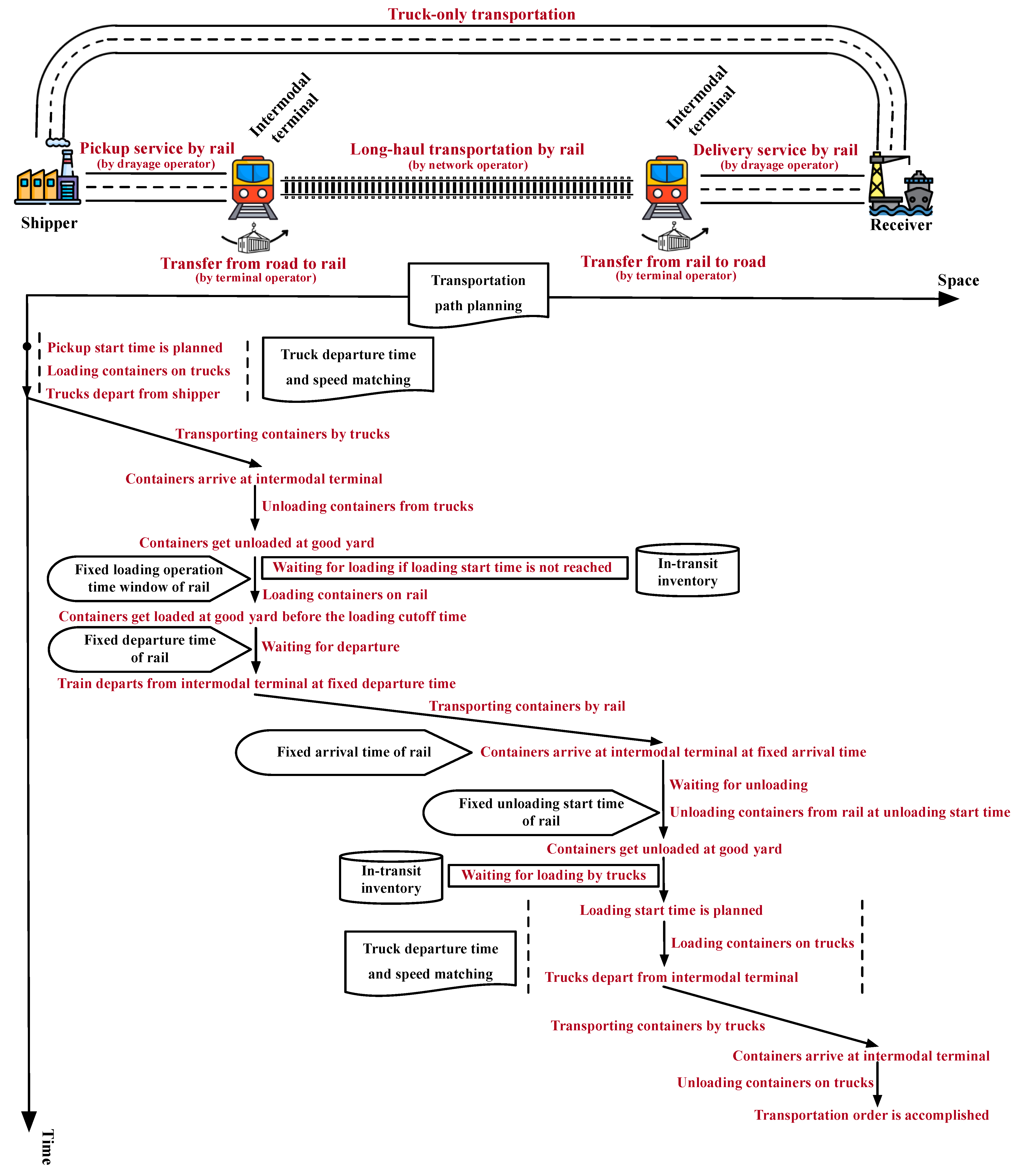
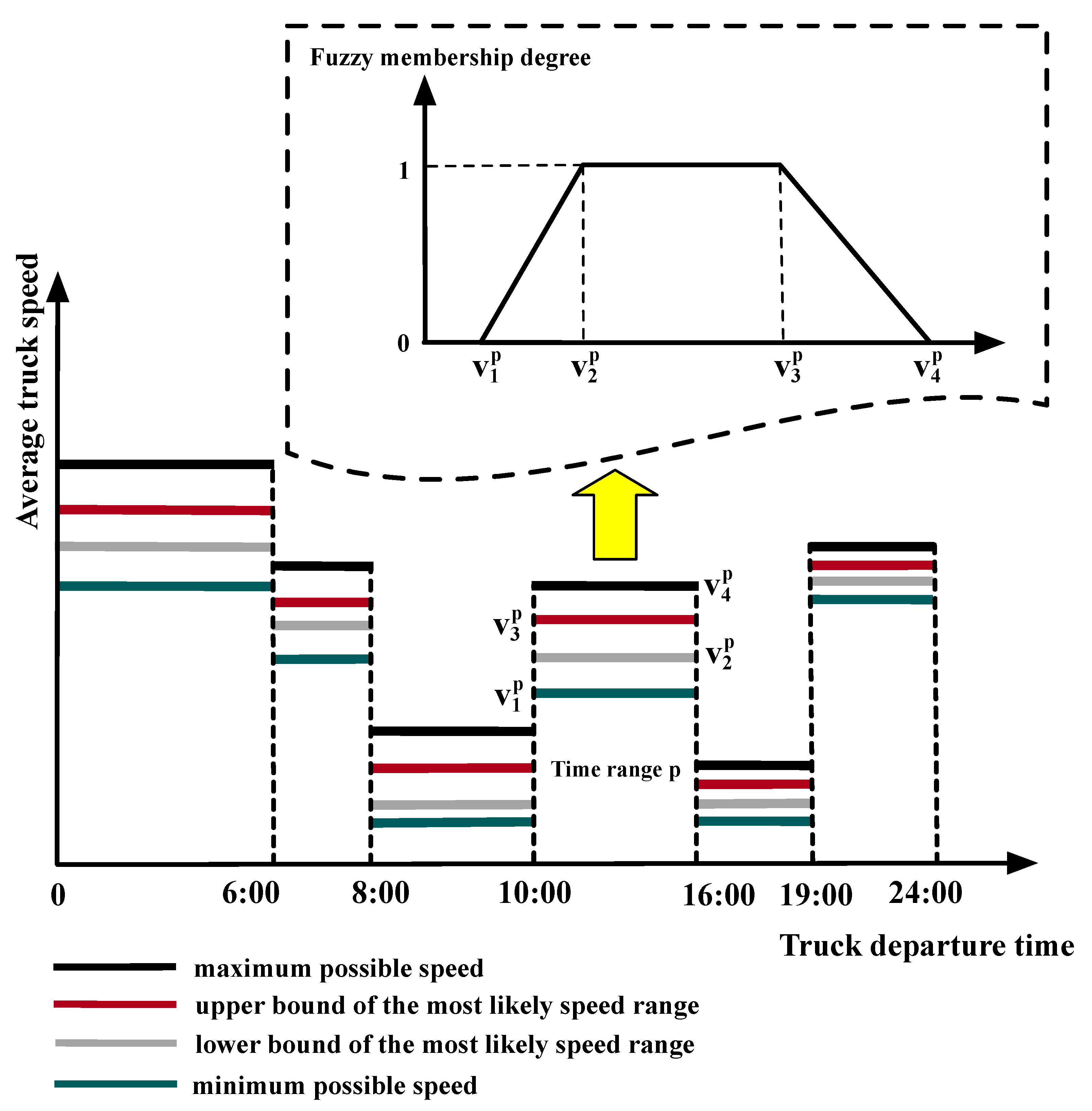
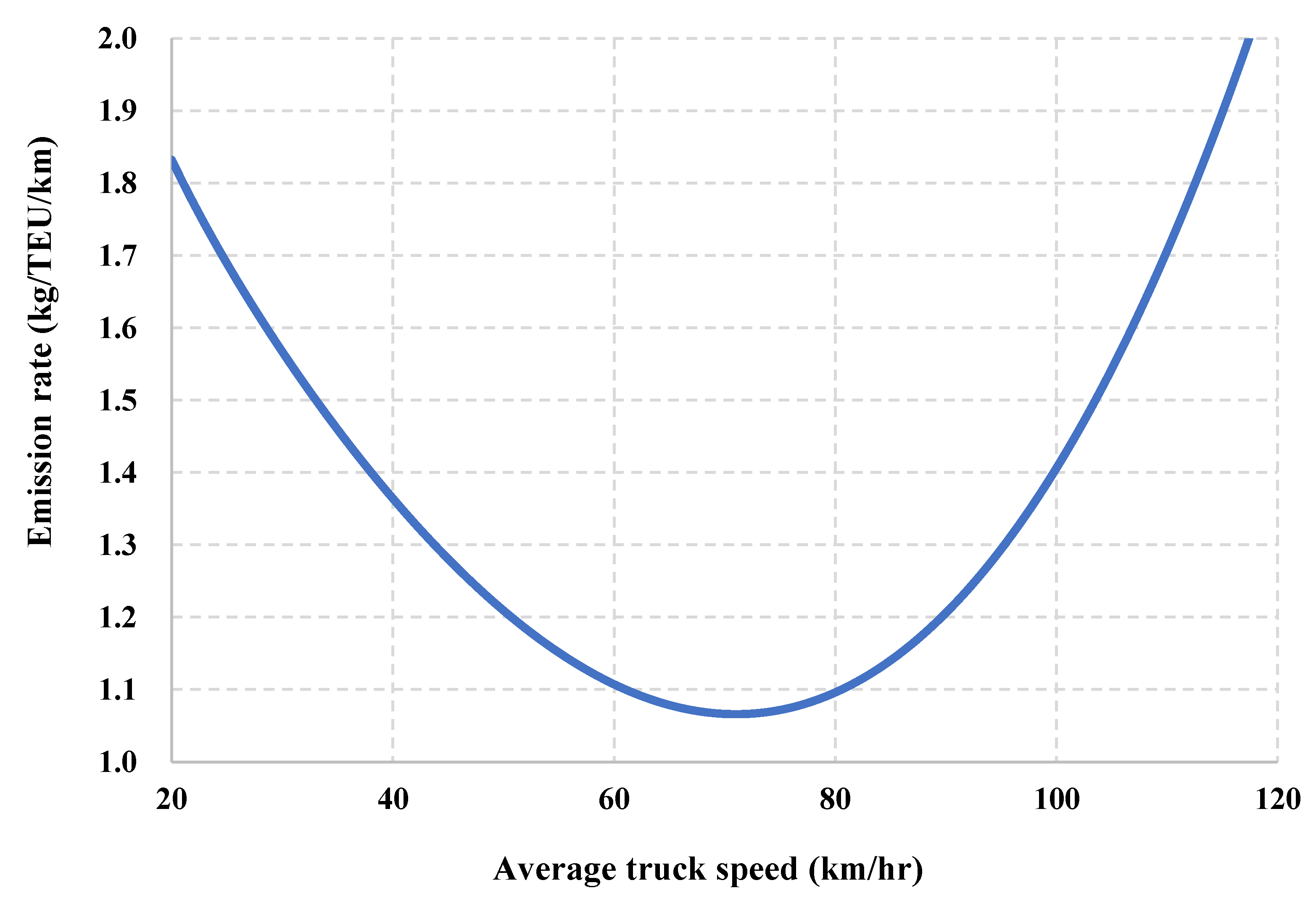
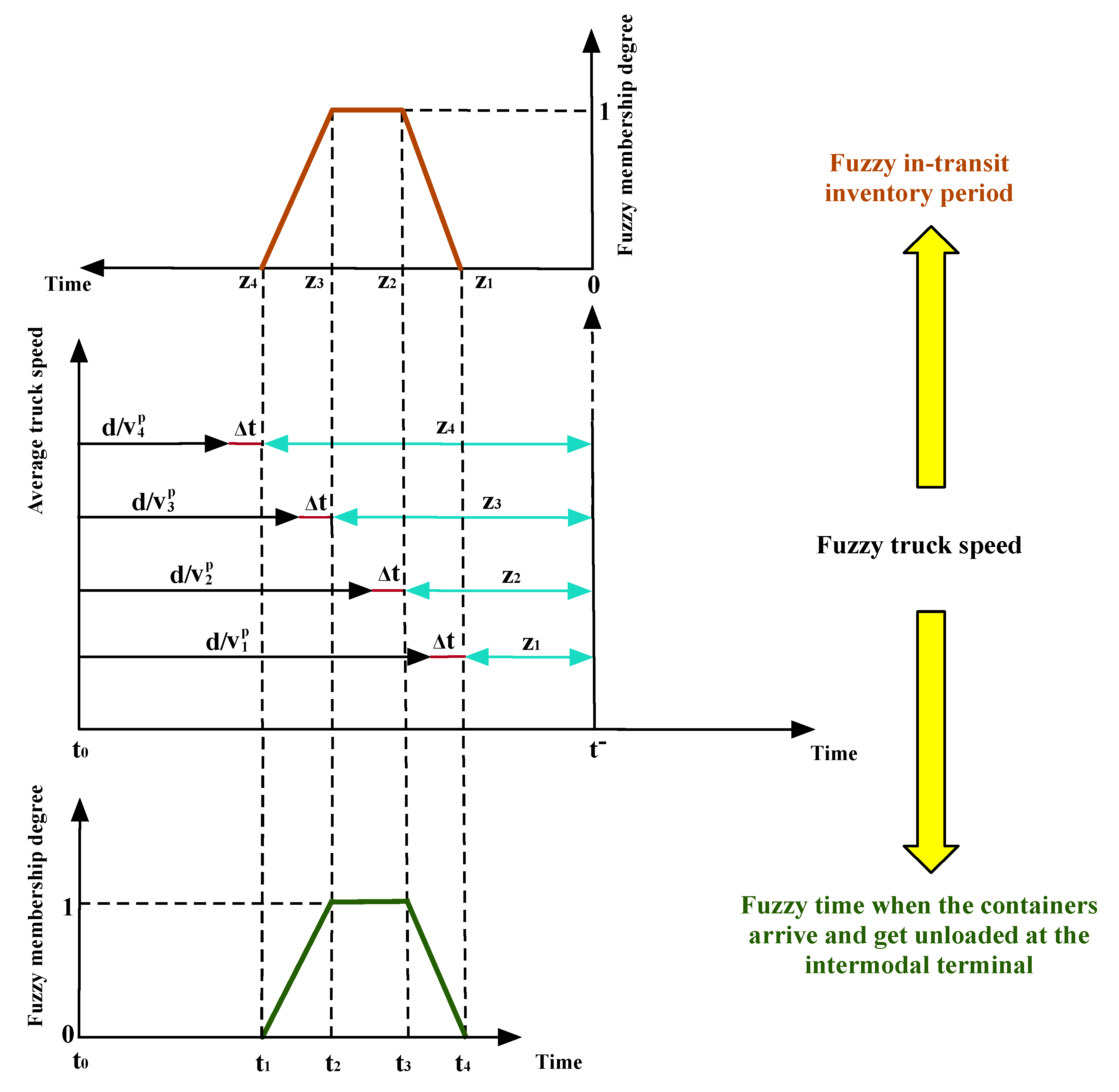
This study explores a road–rail intermodal routing problem. To improve the carbon efficiency of transportation, reducing CO2 emissions is considered by the routing. Soft time windows are incorporated into the routing to optimize the timeliness of the first-mile pickup and last-mile delivery services in intermodal transportation. The routing is further modeled in a time-dependent and fuzzy environment where the average truck speeds of the road depend on the truck departure times and are simultaneously considered fuzzy along with rail capacities. The fuzzy truck speed leads to the fuzziness of three aspects, including speed-dependent CO2 emissions of the road, a timetable-constrained transfer process from road to rail, and delivery time window violation. This study formulates the routing problem under the above considerations and carbon tax regulation as a combination of transportation path planning problem and truck departure time and speed matching problem. A fuzzy nonlinear optimization model is then established for the proposed routing problem. Furthermore, chance-constrained programming with general fuzzy measure is used to conduct the defuzzification of the model to make the problem solvable, and linearization techniques are adopted to linearize the model to enhance the efficiency of problem-solving. Finally, this study presents an empirical case to demonstrate the effectiveness of the designed approach. This case study evaluates the performance of carbon tax regulation by comparing it with multi-objective optimization. It also focuses on sensitivity analysis to discuss the influence of the optimistic–pessimistic parameter and confidence level on the optimization results. Several managerial insights are revealed based on the case study.
Keywords: carbon-efficient intermodal routing; soft time windows; time-dependent speed; fuzzy environment; truck departure time and speed matching; chance-constrained programming carbon-efficient intermodal routing; soft time windows; time-dependent speed; fuzzy environment; truck departure time and speed matching; chance-constrained programming