Article

An Emotional Design Model for Future Smart Product Based on Grounded Theory

1
Academy of Art and Design, Tsinghua University, Beijing 100084, China
2
Central Academy of Fine Arts, Beijing 100105, China
3
School of Future Design, Beijing Normal University, Beijing 100091, China
4
College of Education, Zhejiang University of Technology, Hangzhou 310014, China
*
Author to whom correspondence should be addressed.
Systems 2023, 11(7), 377; https://doi.org/10.3390/systems11070377

Submission received: 30 May 2023 / Revised: 13 July 2023 / Accepted: 21 July 2023 / Published: 23 July 2023
(This article belongs to the Special Issue Futures Thinking in Design Systems and Social Transformation)

Abstract

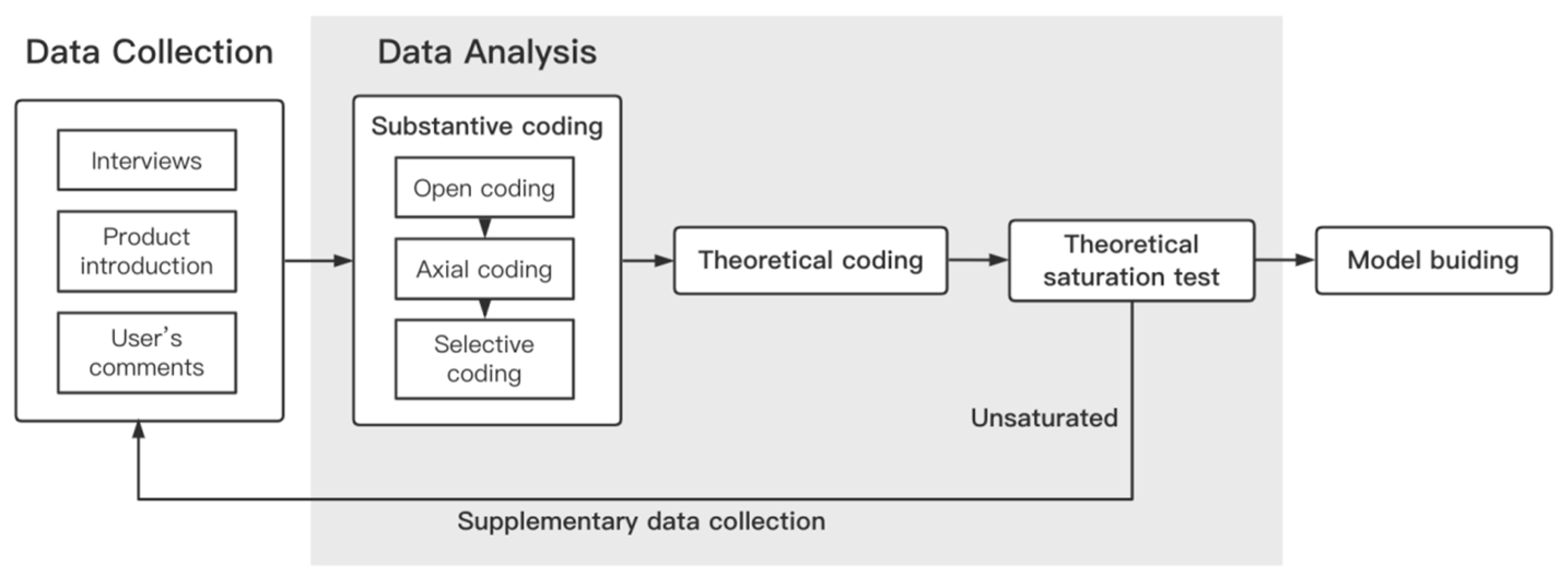
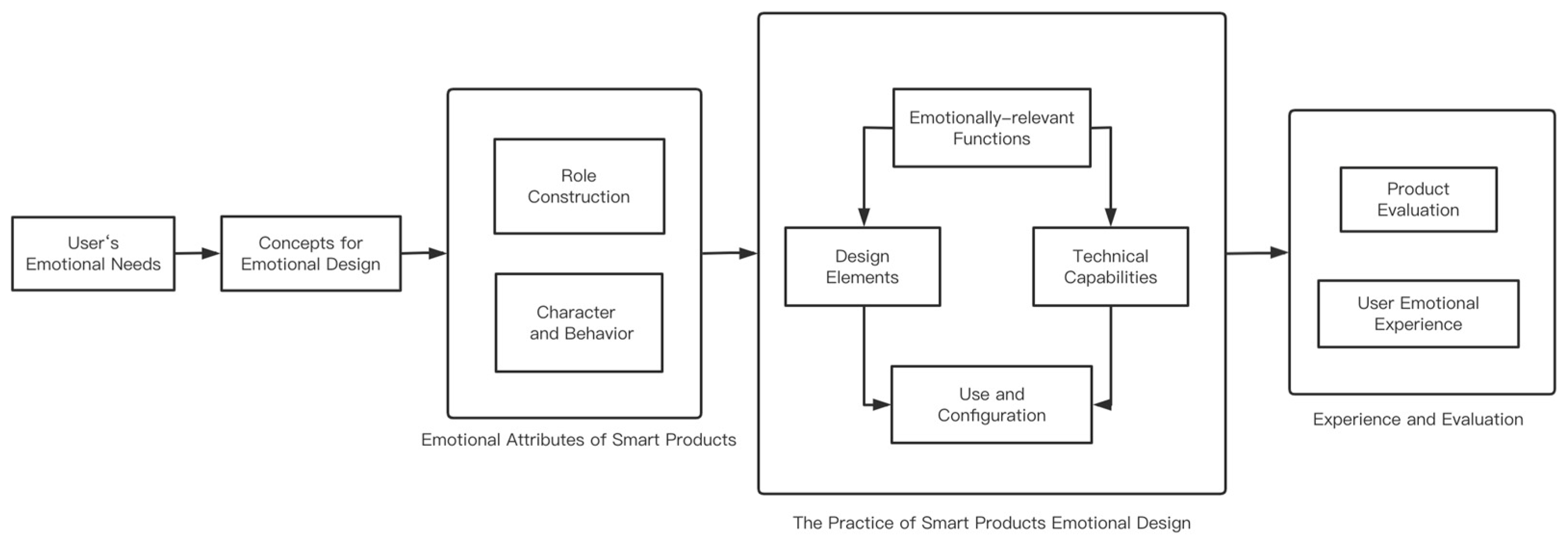
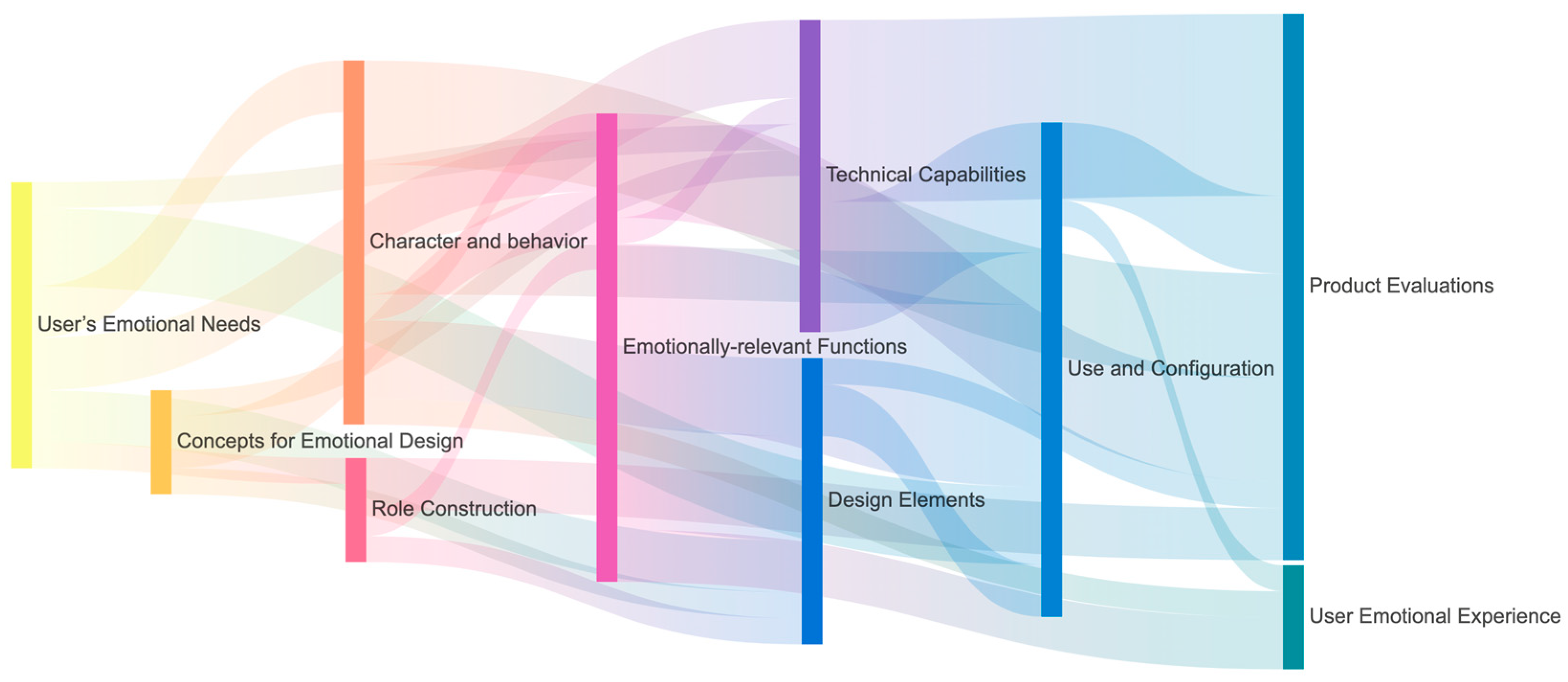
Recently, smart products have not only demonstrated more functionality and technical capabilities but have also shown a trend towards emotional expression. Emotional design plays a crucial role in smart products as it not only influences users’ perception and evaluation of the product but also promotes collaborative communication between users and the product. In the future, emotional design of smart products needs to be regarded as an important comprehensive design issue, rather than simply targeting a specific element. It should consider factors such as design systems, values, business strategies, technical capabilities, design ethics, and cultural responsibilities. However, currently, there is a lack of a design model that combines these elements. Currently, there are numerous practices in emotional design for smart products from different perspectives. They provide us an opportunity to build a comprehensive design model based on a large number of design case studies. Therefore, this study employed a standardized grounded theory approach to investigate 80 smart products and conducted interviews with 12 designers to progressively code and generate a design model. Through the coding process, this research extracted 547 nodes and gradually formed 10 categories, ultimately resulting in a design model comprising 5 sequential steps. This model includes user requirements, concept definition, design ideation, design implementation, and evaluation, making it applicable to most current and future emotional design issues in smart products.
Keywords: smart product; emotional design; design model; grounded theory; design theory; intelligent product smart product; emotional design; design model; grounded theory; design theory; intelligent product