You are currently on the new version of our website. Access the old version .
SystemsSystems
  • Article
  • Open Access

2 March 2023

AI-Based Environmental Color System in Achieving Sustainable Urban Development

,
,
,
and
1
Faculty of Innovation and Design, City University of Macau, Macau 999078, China
2
College of Mechanical Engineering and Automation, Huaqiao University, Quanzhou 362021, China
3
College of Fine Arts, Guangdong Polytechnic Normal University, Guangzhou 510640, China
4
State Key Laboratory of Subtropical Building Science, South China University of Technology, Guangzhou 510641, China
This article belongs to the Special Issue Artificial Intelligence and Intelligent Control for Autonomous Systems

Abstract

Confronting the age of artificial intelligence, exploring art through technology has become one of the directions of interdisciplinary development. Not only does artificial intelligence technology explore sustainability on a technical level; it can also take advantage of itself to focus on the visual perception of the living environment. People frequently interpret environmental features through their eyes, and the use of intuitive eye-tracking can provide effective data that can contribute to environmental sustainability in managing the environment and color planning to enhance the image of cities. This research investigates the visual responses of people viewing the historic city of Macau through an eye movement experiment to understand how the color characteristics of the physical environment are perceived. The research reveals that the buildings and plantings in the historic district of Macau are the most visible objects in the environment, while the smaller scale of St. Dominic’s Square, the Company of Jesus Square, and St. Augustine’s Square, which have a sense of spatial extension, have also become iconic environmental landscapes. This also draws visual attention and guides the direction of travel. The overall impressions of the Historic Centre of Macau, as expressed by the participants after the eye movement experiment, were mainly described as “multiculturalism”, “architectural style”, “traditional architecture”, “color scheme”, and “garden planting”. The 60 colors representing the urban color of Macau are then organized around these deep feelings about the environment. Therefore, for future inspiration, the 60 colors can be applied through design practice to create color expressions that fit the local characteristics, and thereby enhance the overall visual image of the city.

1. Introduction

According to the United Nations Educational, Scientific and Cultural Organization (UNESCO), World Heritage can be classified as natural and cultural heritage, with the latter distinguished into artifacts, buildings, and sites. Following the adoption of the 2030 Agenda for Sustainable Development by the UN General Assembly in 2015, which included culture in the discussion on sustainable development and provided an in-depth analysis of the many ways in which culture can contribute to environmental, economic, and social development [1], the role of heritage conservation and cultural resources in promoting sustainable development should be recognised when it comes to the environmental dimension, minimizing damage to cultural heritage from commercial activities, preserving its historic environment, and maintaining the urban landscape. Economically, in addition to meeting the need for economic development, reducing the impact on the rich traditional cultural environment is also important. Socially, a good historical environment contributes to the continuation of the urban pattern, the promotion of national culture, and the passing of generations. Furthermore, excavation, exploration and other investigations aimed at discovering, recognising, preserving, and promoting the historic environment should be actively pursued through “scientific and technological” means [2]. In the Asian region, Macau is a tourist city with a thriving economy and a rich cultural heritage. With the gradual settlement of the Portuguese in the mid-16th century and the construction of St. Paul’s College and a series of churches, the Historic Centre of Macau took shape as a city of churches and European-style buildings and is now part of the World Heritage List. Witnessing the development of Western religious culture in China and the Far East, the Historic Centre of Macao is the oldest surviving heritage of Western-style architecture in China, a synthesis of the architectural arts of east and west. As the first permanent base of a European nation in East Asia, the city has witnessed over 400 years of mutual exchange and diversified coexistence between Chinese and Western cultures in Macau. According to Ramírez-Guerrero et al. [3], World Heritage is a combination of social, tourism, heritage, and sustainable development that can improve people’s attitude towards their living environment. In the Historic Centre of Macau, both the living, passing, and commercial streets and the squares (or foregrounds) that link them create a spatial character with variability. A preliminary understanding of people’s concerns about the geographical location of street spaces, their surroundings, and people’s feelings can also serve as a basis for improving the environmental landscape [4]. In urban landscapes, architectural colors are also an integral part of urban culture and style, which influence the mood of urban residents [5]. According to Zhang and Chan [6], the color characteristics of distinctive buildings are easily reminiscent of realistic architectural landmarks, reinforcing the impression of urban character. In general, the color of the urban environment can be said to be an expression of the overall urban body.
Color, as one of the dimensions of visual communication, plays a crucial role in people’s place identity and environmental experience [7]. Simultaneously, it is involved in a wide range of fields and scopes, such as the changing seasons of nature and even human-constructed architecture. According to Huang and Kobayashi [8], exploring the phenomenon of color presence in the environment can be based on the relationship between environmental color and local culture and history; thus, we understand how color is represented. Conversely, with the prevalence of globalized industrial materials, architectural colors in cities will almost inevitably be similar. However, it is worth noting that color continues to maintain the character of the city in a symbolic form [9]. Moreover, with the help of imaging science, it is possible to clearly understand the parts of the environment that receive more attention. For example, Papinutto et al. [10] Used eye movement technology to perform a series of sweeps of the environment to provide observational information to the visual system. Consequently, areas of interest in the physical environment are obtained to understand people’s visual motion directions and preferences, which can guide planning for environment design. This research investigates the core areas of the historic city of Macau and scrutinizes and analyzes the environmental colors thereof. The range of colors will hence be summarized to form the environmental color system of the Historic Centre of Macau. Additionally, this research focuses specifically on the visual response history of people when viewing environmental places and applies it to distinguish the visual focus and area when viewing scenes. The study methodology mentioned above will help the extension and development of artificial intelligence technology in areas related to image identification and provide a greater emphasis on aesthetics in environment constructions. Thus, the research can thereby analyze the color range of the urban area in a more procedural way and provide a more precise reference for urban planning and color design practices.

3. Research Method

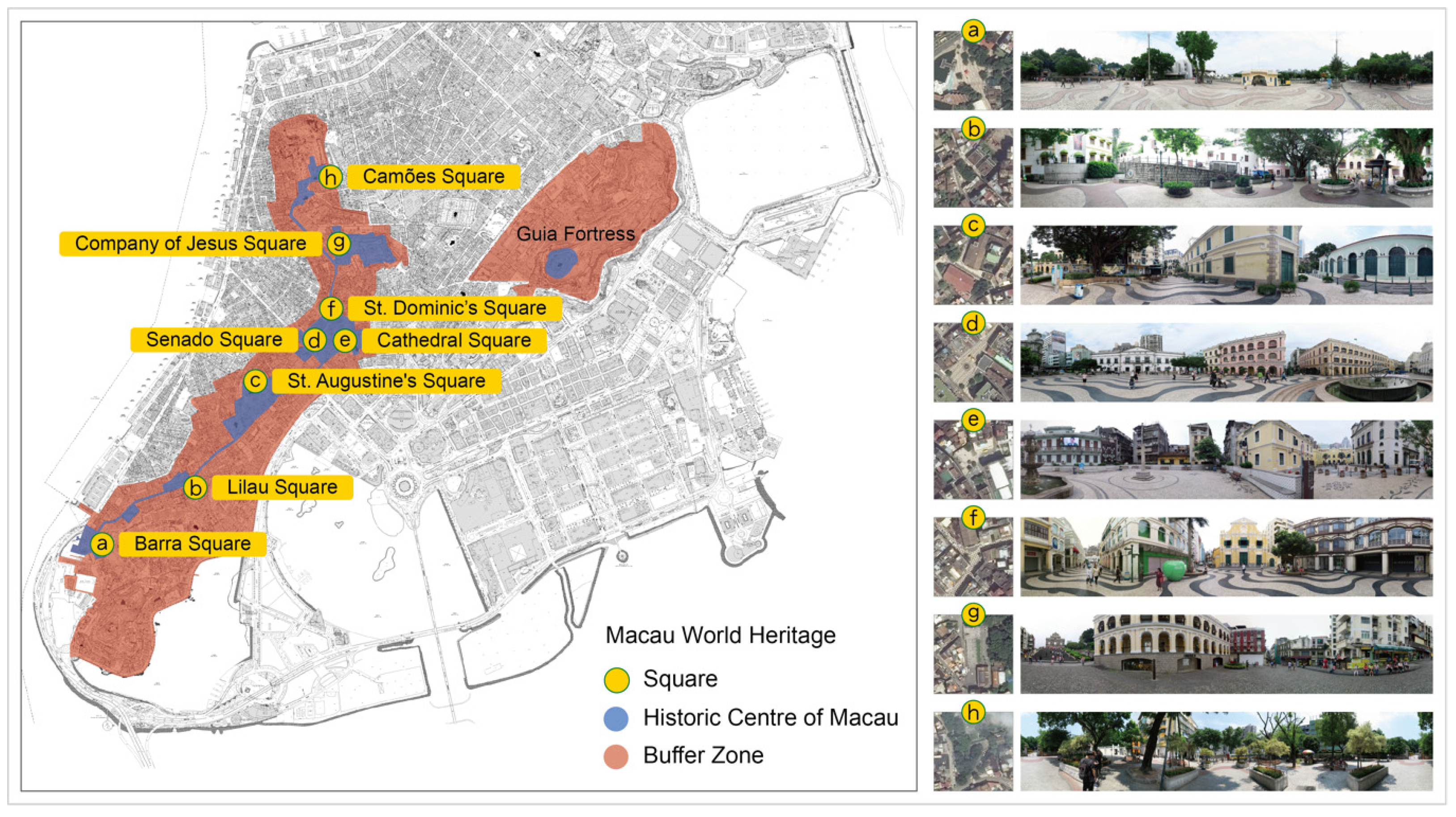
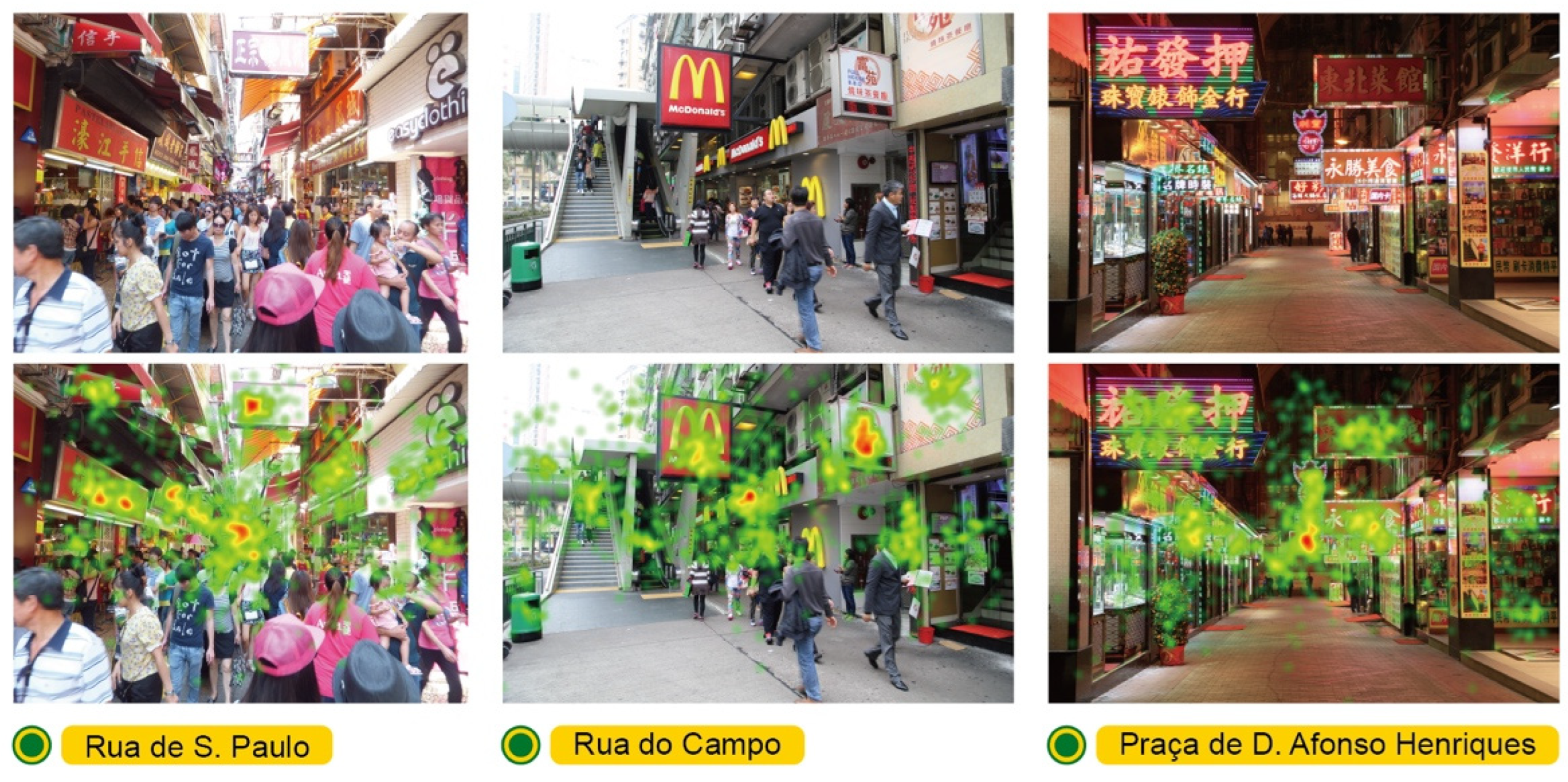
To conduct research in Macau, it is first necessary to understand the city’s urban characteristics, historic urban area, and architectural landscape. Then, the research objectives are completed by using environmental color, eye movement, and other technologies. As for the research process, the Tobii Pro x3-120 (sampling rate 120 Hz) screen eye tracker is used to screen subjects who had not previously visited Macau. Moreover, subjects must pass the Ishihara color test to ensure that they can accurately identify different hues. The research scope focuses on 8 squares in the Historic Centre of Macau (Figure 3), this part comprises the creation of banner images of various squares for eye-movement experiments in the laboratory, including the surrounding buildings, plants, and ground pavements. Additionally, three other street scenes in Macau were selected as early experimental observations (Figure 4). These street scenes reflect the historical urban area and commercial blocks and are also public places formed through formal planning in the process of urban development in Macau. These were chosen to understand the subjects’ feelings about the street scenes in Macau.
Figure 3. The spatial distribution of eight squares in the Historic Centre of Macau and the panoramic view and development of each square.
Figure 4. The eye movement technique was used to analyze the attention of characteristic street scenes in Macau. It was found that both the characters and the advertising signs affected the subjects’ fixation. In view of this, in the next phase of the experiment in the Historic Centre of Macau, the subjects will be first told to avoid looking at people and advertising objects as much as possible.
In this research, 30 students (No. 01–30) from Huaqiao University participated in the test, comprising 12 males and 18 females, with an average age of 21 years, who met the standard of experimental conditions. Prior to the experiment, participants were told to avoid looking at people and advertising signs while viewing images of the environment, in order to reduce distractions. When the test completed, supplemented by a retrospective interview, the semi-structured interview was carried out as follows:
  • Which places impressed you the most when you saw the eight squares in the Historic Centre of Macau?
  • What objects are you particularly interested in when looking at the environmental content?
  • What scenery would you like to revisit after seeing these squares?
  • Describe the objects you are particularly interested in, e.g., features or color appearance;
  • Please describe your overall impression or feeling of the Historic Centre of Macau.
After completing the eye-movement viewing experiment, the author compiled the results thereof, together with the interviews, followed by a field survey to collect the environmental content of the subjects’ concerns, and then collected and summarized the representative colors of the historic district of Macau. This research used the 2014 edition of the Pantone Formula Guide (uncoated paper-based color cards) with the Pantone CapSure color measuring instrument. The color survey was conducted in groups of three to avoid individual subjective judgments. During the research, the color cards and objects were kept in the same light environment as much as possible, so that they were not affected by changes in the light source. After collecting the color samples of the environmental landscape, color was analyzed and summarized through field records, instrument color measurement, color card comparison and subsequent elimination of duplicate hues, color value descriptions, color coding, and color group archiving.
In conclusion, the analysis of environmental factors combined with artificial intelligence technology for color recognition is still focused on promoting the conservation and renewal of architectural colors in historic districts, shifting previous research thinking toward more open and interactive public participation. In the future, it will improve the user’s intuitive perception and experience of urban color when paired with virtual reality experiences.

4. Result Analysis and Discussion

4.1. Environmental Color and Atmosphere of the Historic Centre of Macau

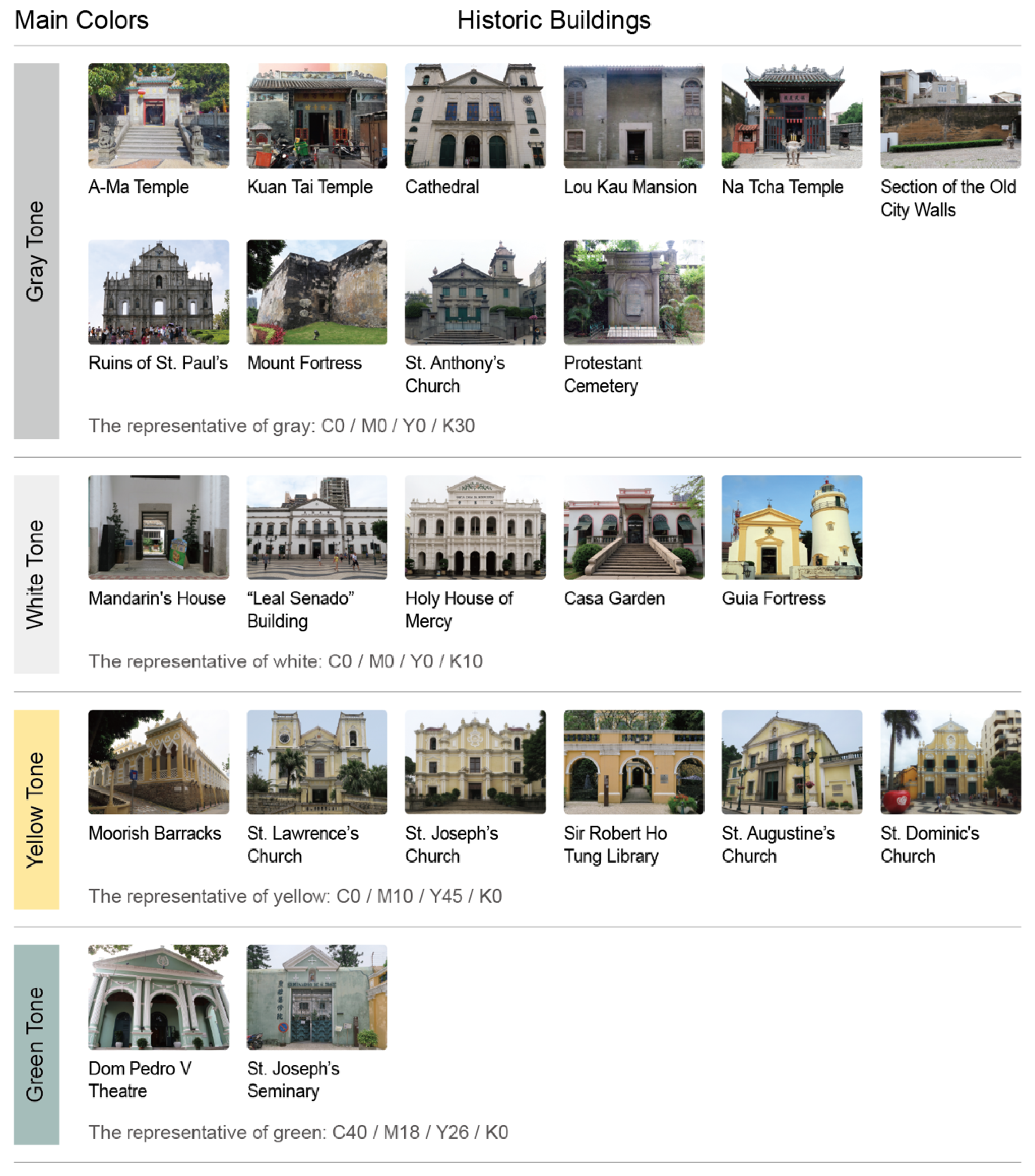
According to the official definition of Macau, the Historic Centre is broadly defined as the area of monuments, buildings, clusters of buildings, and places with significant cultural value, and architectural and artistic value [31]. For instance, constructed in 1644, the Ruins of St. Paul’s was also the first Baroque building in China. Combining traditional Chinese figurative stone lions, Chinese characters and chrysanthemums, a symbol of Japan, with classical European elements in its construction, the front wall represents the expression of Catholic architectural art in the Far East and reflects the east–west cultural mix in Macau’s history. For the historic district, it should simultaneously have many historic buildings, a representative historic landscape, and an intact or remediable visual environment. Among them, “historic landscape” refers to the style, image, material, color, and topography of buildings and structures, reflecting the traditional landscape characteristics of the place in a certain historical period [32]. A look at the heritage buildings in the Historic Centre of Macau reveals that they are mostly colored in gray, white, yellow, and green (Figure 5), and there are mainly two colors used for the architectural elevation, such as the Lou Kau Mansion, the Casa Garden, the St. Lawrence’s Church, and the Dom Pedro V Theatre. The survey reveals that the historic district of Macau is dominated by gray colors. It is also dominated by gray tones, such as the Memorial Arch of A-Ma Temple and the Ruins of St. Paul’s. Using granites as the building material, it is also known as pockmarked or hemp stone due to its characteristic mixture of tiny black and grey dots, which create a grey-like color when viewed from a distance. The color painting method makes the buildings in the city appear to have a clean, elegant, and plain style, such as St. Lawrence’s Church, St. Joseph’s Church, St. Augustine’s Church, and the St. Dominic’s Church, all with yellow tones as the main color. The color of the windows and doors of these European-style buildings is generally green, with a hue close to dark green, which also constitutes one of the characteristics of the imitation of European-style architecture in Macau.
Figure 5. Main colors of historic buildings in the Historic Centre of Macau.

4.2. Visual Information and Communication of the Historic Centre of Macau

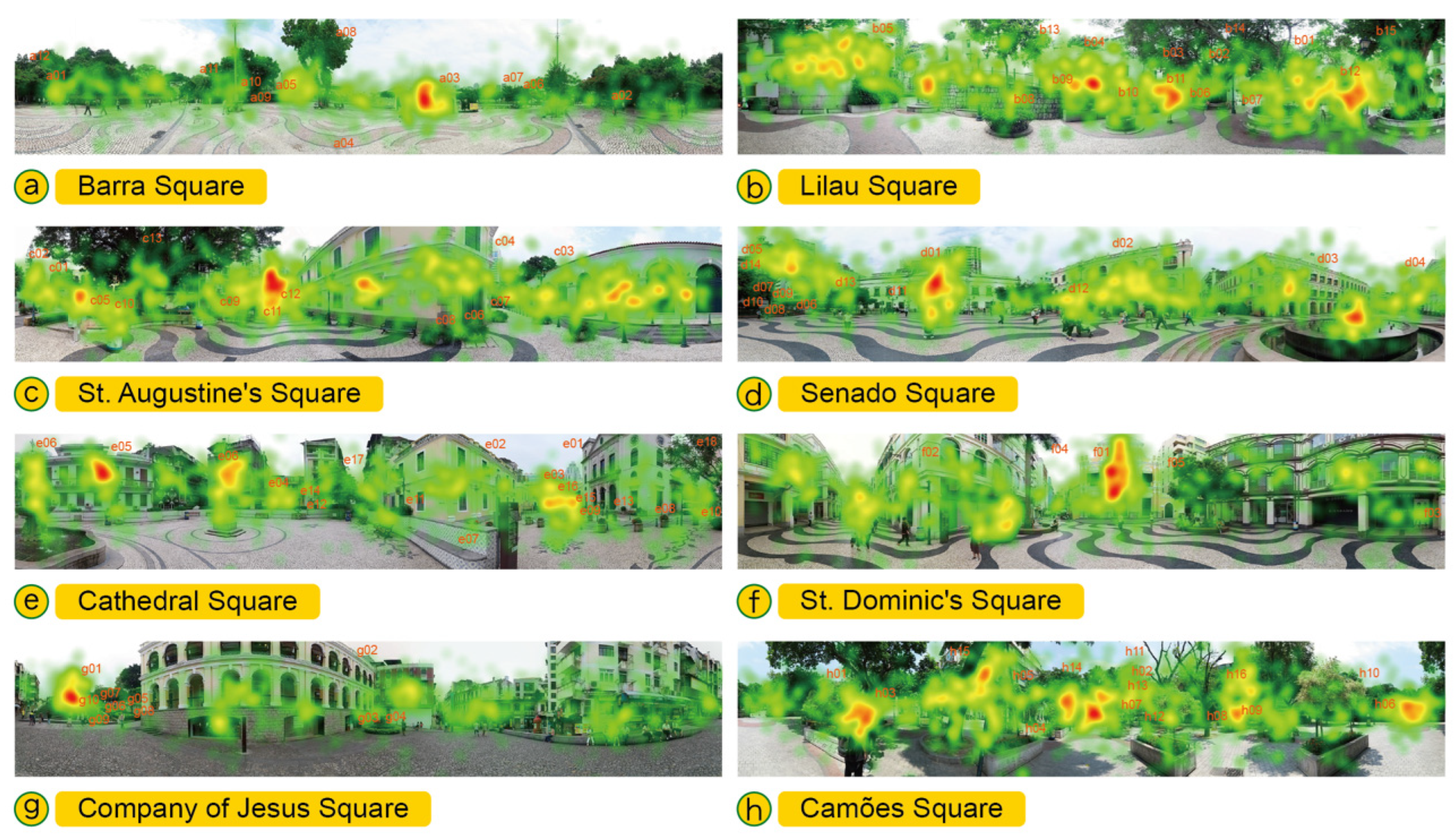
Eight square spaces in Macao’s historic city center were photographed panorama-style and turned into images based on their central location. Then, 30 subjects were tracked through eye movement to further analyze the preferences of the objects they looked at. After analyzing the eye movement data, it was found that subjects generally focused on buildings and plants, but could not completely eliminate objects in the environment, especially public facilities, advertising objects, and people. When looking at the content of the environment, people will not only be attracted by the close-range objects and pay attention to the relatively large single buildings in the environment, but also pay special attention to the angle space in the distance. This phenomenon occurred in smaller squares and urban streets adjacent to compact residential buildings, which was also caused by participants’ curiosity.
Excluding the interfering objects in the staring environment, the analysis found that the most concentrated objects of Barra Square are the sightseeing boat wharf, Memorial Arch of A-Ma Temple and surrounding green plants (Figure 6a). The Portuguese residential buildings around Lilau Square attract the most attention, followed by plantings (Figure 6b); St. Augustine’s Square is the most popular European-style building, with a distant corner street view, followed by Dom Pedro V Theatre, St. Augustine’s Church, etc. (Figure 6c). Senado Square attracts the most attention with Lear Senado, Koi Kei bakery, Macau business tourism center, etc. (Figure 6d). Cathedral Square’s decorative patterns of St. Dominic’s houses, Macau Diesel’s epic office, fountain, and cobblestone road can be seen in Figure 6e. St. Dominic’s Square attracts the most attention with the St. Dominic’s Church and the surrounding European-style buildings, as well as Lear Senado (Figure 6f) with a corner street view in the distance. The Company of Jesus Square is the most concentrated at the Ruins of St. Paul, Houses of No. 4 and No. 6 (Figure 6g), and, at Camões Square, most focus on the surrounding plants, followed by the entrance of the Anglican Morrison Hall (Figure 6h).
Figure 6. Thirty subjects were tracked by eye movement to watch the target objects in eight square spaces in the Historic Centre of Macau.
After the eye movement experiment, retrospective interviews were conducted to reconfirm and understand the participants’ perceptions of the historic district of Macau. From the interview data, participants were most impressed with St. Dominic’s Square, Company of Jesus Square, St. Augustine’s Square, and Senado Square, and less impressed with Barra Square. This may be because there are fewer objects in the environment. The scenes that caused particular interest to the subjects were the Ruins of St. Paul, the fountain, and the advertising objects. The buildings around these aforementioned plazas were most impressive for their yellow and green architectural appearance, reflecting the church building and the theater on top of the hill, and the green window and door decorations.
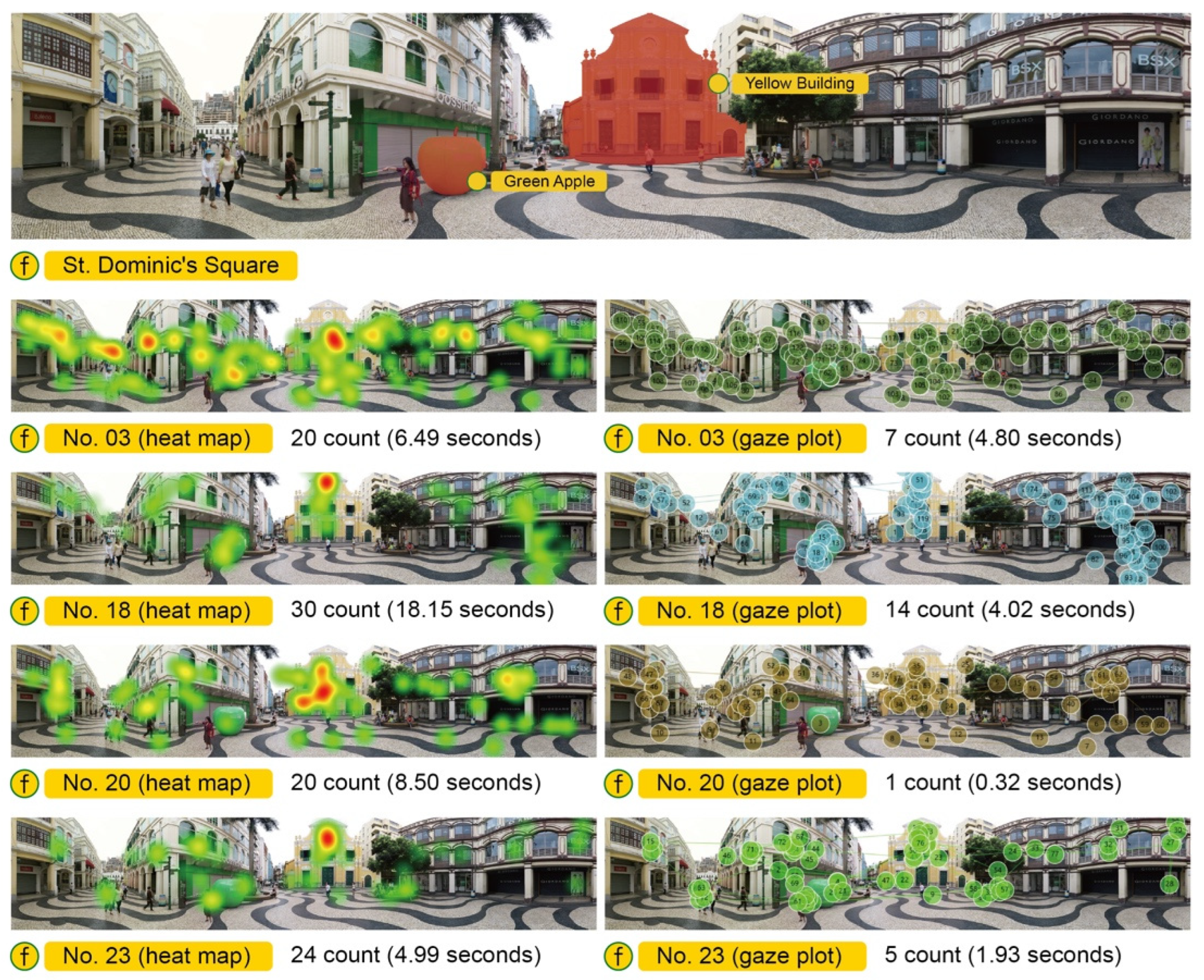
After paying attention to the environment, the subjects were inclined to repeat their viewing, including the yellow building of the St. Dominic’s Church in St. Dominic’s Square, and the green apple-shaped propaganda facility; for example, one of the subjects, No. 18, looked at a specific object for a longer period (Figure 7). By observing his eye movement with a hot spot map and trajectory map, we can see that the color red represents the longest fixation duration, followed by yellow, and the shortest was green. Similarly, we observed the same situation in subjects No. 03, No. 20, and No. 23 (Table 1). The eye tracking software (Tobii Pro Lab) was used to calculate the experimental data, with the following formula showing the subjects’ average number and duration of fixations on a specific object (such as the area of interest, AOI) [33].
Figure 7. St. Dominic’s Square receives the most attention for its yellow buildings and green apples.
Table 1. Thirty participants were asked to look at a specific object using St. Dominic’s Square as an example.
By calculating the average number of fixations (ANF), a normalized value is acquired where the ideal value is 1 ( Equation (1), below).
Average   Number   of   Fixations   on   stimuli   points = detected   fixations number   of   recordings × fixations   encoded   in   the   stimuli
The average fixation duration (AFD), which refers to the average time a fixation lasted, is calculated by adding the duration for all detected fixations and dividing them by the number of fixations detected (Equation (2), below,).
Average   Fixation   Duration = 1 N i = 1 N fixation   _   duration n i
According to the results, the average number of fixations and durations thereof for the yellow building were 12.50 and 3.63 s, respectively, which were higher than the 3.20 and 1.22 s of the green facility (Table 2). Afterwards, a t-test examined whether the difference between the two objects was significant (Table 3). The statistical analysis of the mean gaze times showed a t-value of 7.218 and a two-tailed significance of 0.001, which is much smaller than the 95% confidence interval reference value of 0.05, indicating that the yellow building was noticed more often than the green facility. It can thus be concluded that the t-value is 3.718 and the two-tailed significance is 0.001, which is much smaller than the reference value of 0.05 in the 95% confidence interval. As mentioned above, the main descriptions of respondents’ overall impressions of the Historic Center of Macau are “multiculturalism”, “architectural style”, “traditional architecture”, “color scheme”, and “garden planting”. Adjectives such as “color scheme” and “garden planting” show that architecture and plantings are the color components of the Historic Centre of Macau.
Table 2. The average number of fixations and duration of subjects’ fixations at specific objects presented by St. Dominic’s Square.
Table 3. t-test for the number of fixations and fixation duration on two objects at St. Dominic’s Square.

4.3. Environmental Color and Representation of the Historic Centre of Macau

According to the eye-tracking experiment, in addition to the color of the exterior of the buildings, garden plantings are also used to complement and match the architectural expressions in the square space. For instance, there are four species of plants—red strap flowers, Dwarf umbrella tree, New Guinea impatiens and Ehretia microphylla—on the flowering platform in front of the Senado Square. Red strap flowers are composites of red and green, and the latter three, although they all have green leaves, are distinctly different in color, with the two red flowers of the New Guinea impatiens producing a rich color palette. Such landscape shaping techniques can also be seen in the sloping beds of the Jesuit Memorial Square with Dragon juniper, Duranta erecta, little ruby, African Touch-me-not, and Globe amaranth. The combination of these plants is a common planting in Macau. Based on the site survey, it was found that the plant species in the eight squares were duplicated, and excluding similar architectural colors and plant species, a total of 372 colors were identified for the historical buildings and 261 colors for the garden plants. By eliminating duplicate or similar colors of buildings and plants, a total of 60 colors representing the city of Macau can be obtained. Reviewing how to select the city colors that represent Macau among the many colors, the factors considered will differ depending on the subject, such as the environmental objects that received the most attention and the distracting factors learned from the interviewees, etc. It is important to collate and summarise them in as objective a manner as possible.
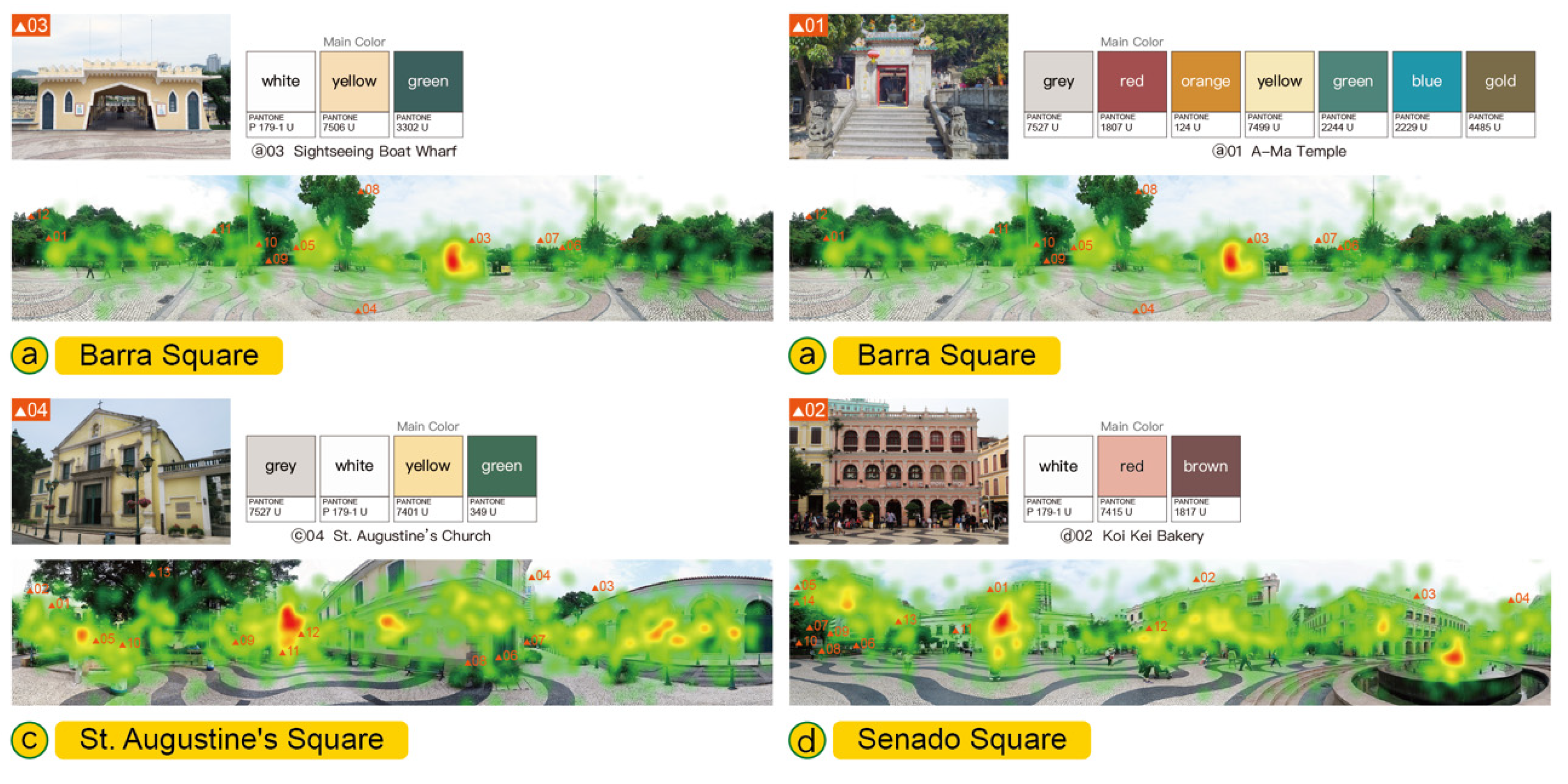
Regarding the selection of architectural colors, the research revealed that brown and green are common colors for windows and doors in Macau’s historic buildings. For example, regarding the sightseeing boat wharf of Barra Square (Figure 8a-03), Pantone-3302u (green) was chosen to represent the color of windows and doors, while the main color of the Memorial Arch of A-Ma Temple (Figure 8a-01) was Pantone-7527u (gray), but considering the special color of Chinese temple architecture, Pantone-1807u (red) is used as a secondary color instead. The St. Augustine’s Church in St. Augustine’s Square is a European-style church building (Figure 8c-04), represented by the primary color Pantone-7401u (yellow). Pantone-7415u (red) is the main color, which was also considered an impressive architectural color by the subjects (Figure 8d-02).
Figure 8. Examples of the selection of main colors of architectural color: sightseeing boat wharf, Memorial Arch of A-Ma Temple, St. Augustine’s Church, and Koi Kei Bakery.
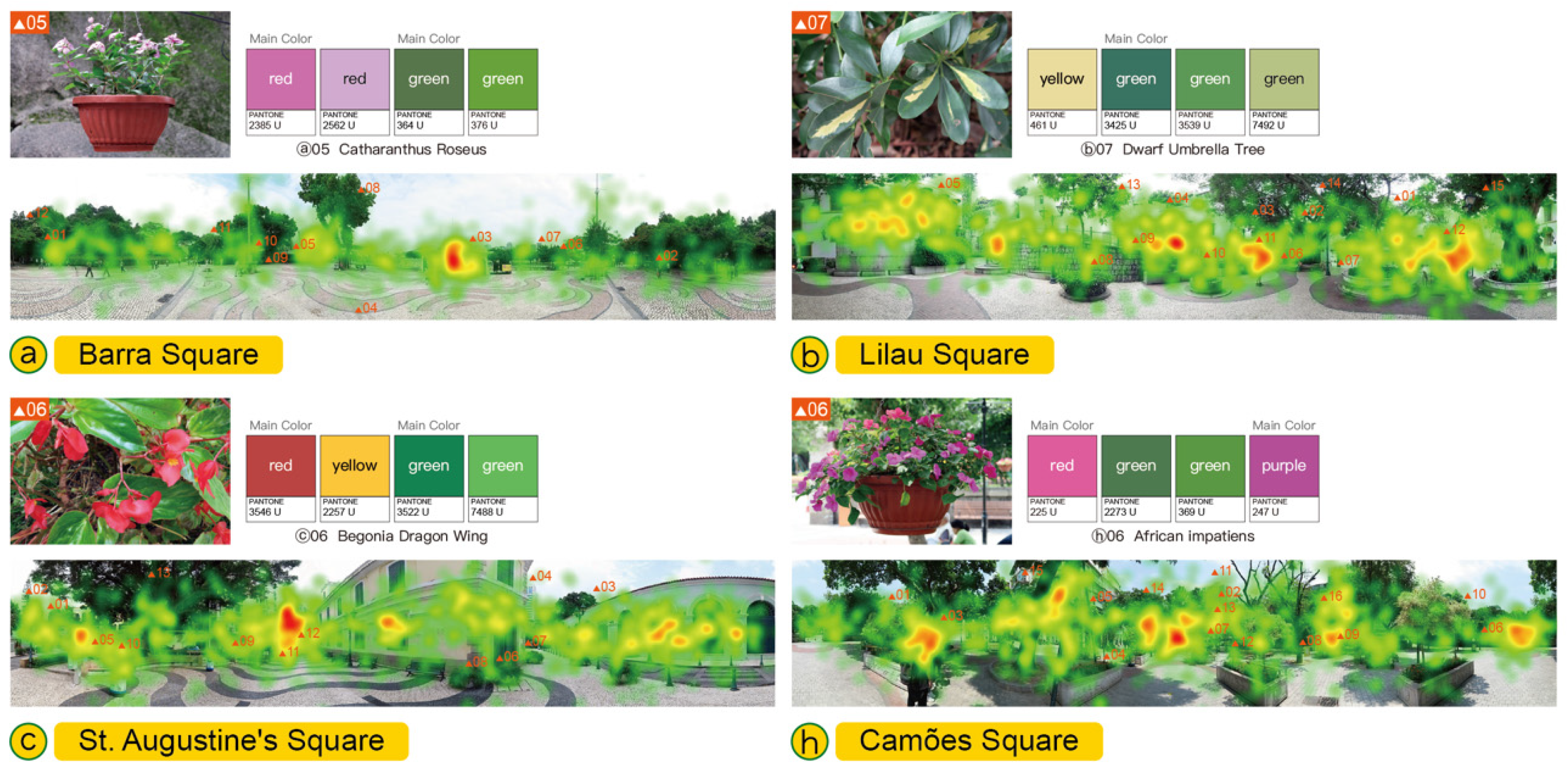
The selection of garden color is slightly more complicated than the investigation of architectural color. According to the eye movement experiment and the overall impression of the interviewees, it can be concluded that the garden plants of Lilau Square, St. Augustine’s Square, and Camões Square are the most concentrated upon; the design color or leaf color of plants can be considered as the main color. After deleting similar plants, Pantone-3425u (green) (Figure 9b-07) of Dwarf umbrella tree, Pantone-2385u (red) and Pantone-364u (green) (Figure 9a-05) of Ficus microcarpa, Red strap flowers, Dragon juniper, and Catharanthus roseus can be seen. Pantone-225u (red) and Pantone-247u (purple) (Figure 9h-06) of African impatiens are plants planted in large numbers, which can also be said to be common colors of garden plants in Macau. In view of this, when selecting the main color of the plants, the flower color should be given priority, and if it is not flowering, the leaf color should be seen as supplemental. The more special ones, such as New Guinea impatiens and African impatiens, have different designs and colors. For example, Jungle fire plant is also a similar case, with its single leaf having positive and negative colors. Therefore, these designs and colors are also included.
Figure 9. Examples of the main colors for selection of architectural color: Catharanthus roseus, Dwarf umbrella tree, Begonia Dragon Wing, and African impatiens.
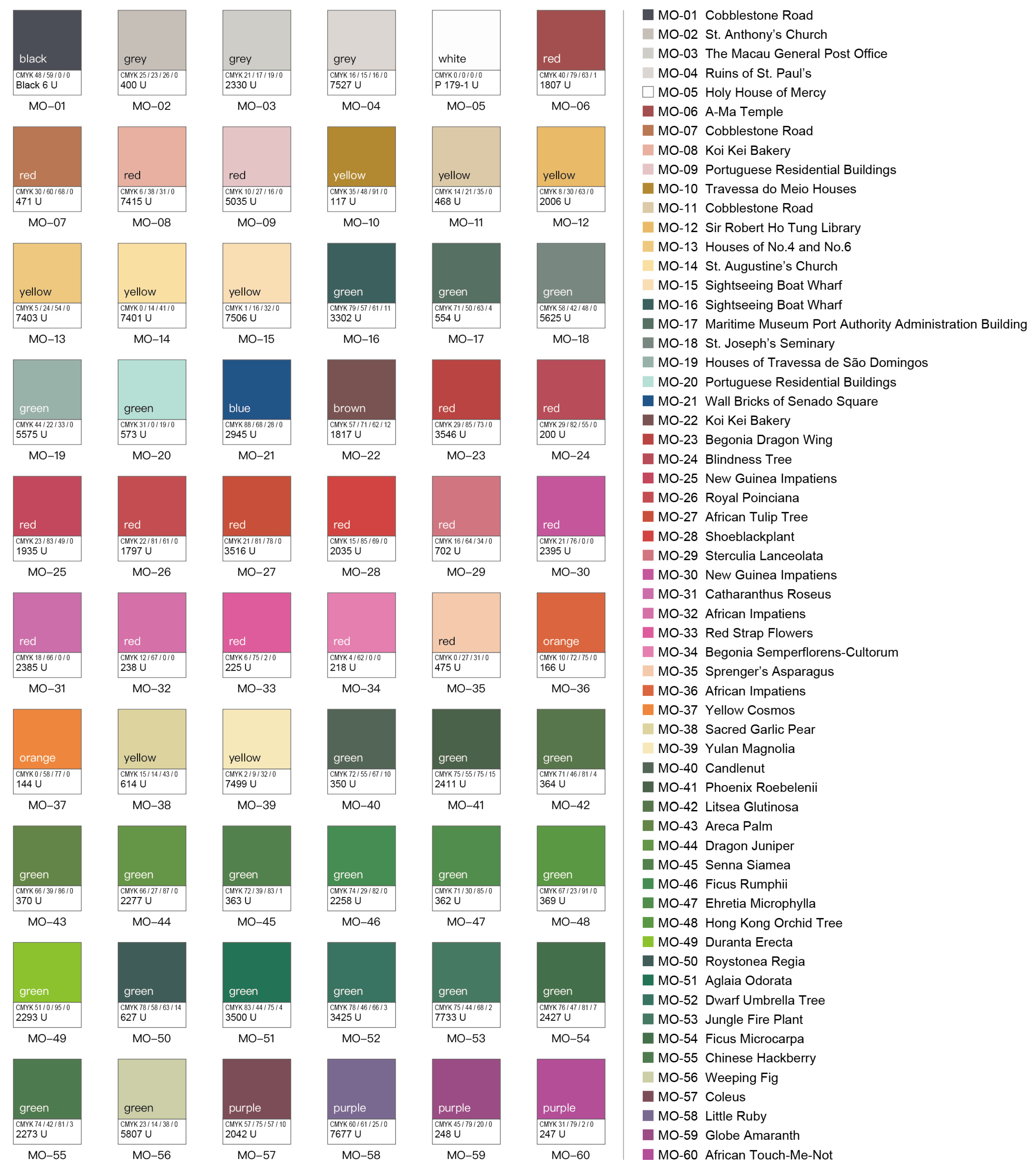
The Pantone Formula Guide Uncoated color system can be used as the basis for the construction of the urban colors of Macau, with not only the Pantone color codes but also the CMYK printed color values. Additionally, to distinguish the sample codes of the survey process according to different fields, the 60 colors of Macau urban color (Figure 10) are also coded with the abbreviation MO. For example, MO-01 to MO-22 are the colors of historical buildings, and MO-23 to MO-60 are the colors of garden plants.
Figure 10. Sixty colors of Macau city.
In conclusion, the digital capture of environmental color in the Historic Centre of Macau and environmental color concerns and visual preferences summarized through eye-movement experiments have been implemented to achieve a fusion between specialization and popularization through the use of contemporary artificial intelligence in environmental color digital technology, which may serve as a reference for future design practice.

5. Conclusions

In order to maintain the identity of the historic district as a place, the government of the Macau Special Administrative Region (MSAR) continues to encourage the discovery and use of cultural resources from the environment, with the expectation of continuously enhancing the overall image of the Historic Centre of Macau. With the help of an eye movement experiment, this research analyzed the expression of place composition from the objects in the environment, on which the participants focused and generalized the color system that represents the city of Macau. It can therefore be concluded that buildings and plantings are the most easily viewed objects in the environment. The Historic Centre of Macau is listed as a World Heritage Site, and the color expressions of heritage buildings constitute the characteristics of places, forming the current state of the environment, with plantings matching the buildings. In particular, the smaller St. Dominic’s Square, the Company of Jesus Square, and St. Augustine’s Square, which have a sense of spatial extension, impressed the participants the most. After the eye movement experiment, the main keywords that the participants expressed as their overall impression of the Historic Centre of Macau were “multiculturalism”, “architectural style”, “traditional architecture”, “color scheme”, and “garden planting”. These impressions of the environment can be grouped into two categories: one is the relatively common architectural color scheme with 3 or 4 colors, with the most common combinations of three colors being white, grey, green and brown, such as St. Joseph’s Seminary, the “Leal Senado” Building, the Macau General Post Office and St. Antho-ny’s Church; the other category is a four-color combination, mostly white and yellow, such as the Sir Robert Ho Tung Library and St. Augustine’s Church and Casa Garden. Most of the garden colors are in four-color combinations, especially red, yellow, green and purple, such as Catharanthus Roseus, Begonia Dragon Wing, Shoeblackplant, African Impatiens, as well as variegated foliage plants with a wide range of colors, such as Dwarf Umbrella Tree, Coleus, Duranta Erecta, Weeping Figure.
The composition of environmental colors not only reflects the characteristics of the place in the historical city, but also forms a kind of iconic environmental landscape, which also draws visual attention and guides the direction of travel, becoming a visual dynamic influenced by the environmental palette. Given that visual space is created and constituted around a series of objects in space, Macau Urban Color 60 is the result of a survey of the colors of historic buildings and garden plants at a specific time and place, and the selection of hue groups that represent the color of the city. Color has always been a means of highlighting the image of a city, and the purpose of urban color construction is to discover the color state of existing spaces and to sort out the color patterns hidden in the environment. However, it is indispensable to apply this to design practice, which ultimately enhances the visual image of the city as a whole. To sum up, the eye movement experiment is used to obtain the more concerned objects in the environment, thus obtaining effective visual information, and analyzing the relationship between people’s attention and visual preference and architectural color. In the future, we will make further beneficial exploration for image recognition in complex environments, hoping to help extend and expand the field of artificial intelligence.

Author Contributions

Conceptualization, P.W., W.S., Y.T. and H.W.; investigation and methodology, P.W., W.S., J.Z., Y.T. and H.W.; project administration, P.W., W.S. and J.Z.; resources, J.Z.; supervision, W.S.; writing of the original draft, P.W. and J.Z.; writing of the review and editing, P.W., W.S. and J.Z.; software, W.S., J.Z. and H.W.; formal analysis, P.W., W.S., J.Z. and H.W.; data curation, P.W., W.S., Y.T. and H.W. All authors have read and agreed to the published version of the manuscript.

Funding

This research was supported by the Science and Technology Development Fund of the Macao Special Administrative Region (0036/2022/A).

Data Availability Statement

The data used to support the findings of this study are included within the article.

Acknowledgments

We thank lab members at Institute of Industrial Design of Huaqiao University for their technical support. This research was assisted by the Institute of Industrial Design of Huaqiao University and the City University of Macau, and the State Key Laboratory of Subtropical Building Science, South China University of Technology.

Conflicts of Interest

The authors declare no conflict of interest.

References

  1. UNESCO World Heritage Centre. UNESCO Culture 2030 Indicators Project. 2019. Available online: https://is.gd/uZEMeR (accessed on 1 November 2022).
  2. Macao Special Administrative Region Government Printing Office. Law on the Protection of Cultural Heritage. 2013. Available online: https://is.gd/aSRNvR (accessed on 1 November 2022).
  3. Ramírez-Guerrero, G.; García-Onetti, J.; Arcila-Garrido, M.; Chica-Ruiz, J.A. A Tourism potential index for cultural heritage management through the ecosystem services approach. Sustainability 2021, 13, 6415. [Google Scholar] [CrossRef]
  4. Dobbie, M.F.; Farrelly, M.A. Using best-worst scaling to reveal preferences for retrofitting raingardens in suburban streets. Urban For. Urban Green. 2022, 74, 127619. [Google Scholar] [CrossRef]
  5. Wang, J.; Zhang, L.; Gou, A. Study of the color characteristics of residential buildings in Shanghai. Color Res. Appl. 2020, 46, 240–257. [Google Scholar] [CrossRef]
  6. Zhang, H.; Chan, B.H.-S. Differentiating graffiti in Macao: Activity types, multimodality and institutional appropriation. Vis. Commun. 2022, 21, 560–580. [Google Scholar] [CrossRef]
  7. Yang, M. Investigating seasonal color change in the environment by color analysis and information visualization. Color Res. Appl. 2020, 45, 503–511. [Google Scholar] [CrossRef]
  8. Huang, Q.; Kobayashi, A. A proposal of designing diagrams as survey tools for environmental color workshop. J. Sci. Des. 2019, 3, 277–286. [Google Scholar] [CrossRef]
  9. Períes, L.; Kesman, M.C.; Barraud, S.D.L. El color como componente paisajístico en los catálogos de paisaje urbano. Rev. Arquit. 2020, 22, 58–66. [Google Scholar] [CrossRef]
  10. Papinutto, M.; Lao, J.; Lalanne, D.; Caldara, R. Watchers do not follow the eye movements of Walkers. Vis. Res. 2020, 176, 130–140. [Google Scholar] [CrossRef]
  11. Gao, H.; Zhou, S. Oriental Marco Polo Plaza Encounter: Choreographing Place and Placelessness from a Phenomenological Perspective. Sustainability 2021, 13, 6159. [Google Scholar] [CrossRef]
  12. Køster, A.; Fernandez, A.V. Investigating modes of being in the world: An introduction to Phenomenologically grounded qualitative research. Phenomenol. Cogn. Sci. 2021, 22, 149–169. [Google Scholar] [CrossRef]
  13. Hawkins, H. Cultural Geography I: Mediums. Prog. Hum. Geogr. 2021, 45, 1709–1720. [Google Scholar] [CrossRef]
  14. Urbanc, M.; Fridl, J.; Planinc, T.R. Landscapes as represented in textbooks and in students’ imagination: Stability, generational gap, image retention and recognisability. Child. Geogr. 2021, 19, 446–461. [Google Scholar] [CrossRef]
  15. Creem-Regehr, S.H.; Barhorst-Cates, E.M.; Tarampi, M.R.; Rand, K.M.; Legge, G.E. How can basic research on spatial cognition enhance the visual accessibility of architecture for people with low vision? Cogn. Res. Princ. Implic. 2021, 6, 3. [Google Scholar] [CrossRef] [PubMed]
  16. Gentsch, K.; Beermann, U.; Wu, L.; Trznadel, S.; Scherer, K.R. Temporal unfolding of micro-valences in facial expression evoked by visual, auditory, and olfactory stimuli. Affect. Sci. 2020, 1, 208–224. [Google Scholar] [CrossRef] [PubMed]
  17. Scherer, K.R. Theory convergence in emotion science is timely and realistic. Cogn. Emot. 2022, 36, 154–170. [Google Scholar] [CrossRef] [PubMed]
  18. Samalavičius, A. Towards Multisensory Architecture: Juhani Pallasmaa and Phenomenology of the Built Envi-ronment. Logos-Vilnius 2021, 109, 142–152. [Google Scholar] [CrossRef]
  19. Wu, B.; Zhu, Y.; Yu, K.; Nishimura, S.; Jin, Q. The effect of eye movements and cultural factors on product color selection. Hum. -Cent. Comput. Inf. Sci. 2020, 10, 48. [Google Scholar] [CrossRef]
  20. Kriken, J.L.; Enquist, P.; Rapaport, R. City Building: Nine Planning Principles for the Twenty-First Century; Princeton Architectural Press: New York, NY, USA, 2010. [Google Scholar]
  21. Moughtin, J.C. Urban Design: Street and Square; Architectural Press: Oxford, UK, 2003. [Google Scholar]
  22. Yi, J.H.; Jeon, J. A study on color conspicuity and color harmony of wayfinding signs according to outdoor environment types. Color Res. Appl. 2022, 47, 1259–1294. [Google Scholar] [CrossRef]
  23. Skaržauskienė, A.; Mačiulienė, M. Assessment of Digital Co-Creation for Public Open Spaces: Methodological Guidelines. Informatics 2019, 6, 39. [Google Scholar] [CrossRef]
  24. Pilarczyk, J.; Kuniecki, M.; Wołoszyn, K.; Sterna, R. Blue blood, red blood. How does the color of an emotional scene affect visual attention and pupil size? Vis. Res. 2020, 171, 36–45. [Google Scholar] [CrossRef]
  25. Damle, A.; Smith, P.J. Biasing cognitive processes during design: The effects of color. Des. Stud. 2009, 30, 521–540. [Google Scholar] [CrossRef]
  26. Khaire, P.; Kumar, P. Deep learning and RGB-D based human action, human–human and human–object interaction recognition: A survey. J. Vis. Commun. Image Represent. 2022, 86, 103531. [Google Scholar] [CrossRef]
  27. Bálizs, B. Meanings of the Color Yellow and Its Color Associates, Yellow-Black and Yellow-Green. Hung. Cult. Stud. 2021, 14, 100–120. [Google Scholar] [CrossRef]
  28. Gehl, J.; Svarre, B. How to Study Public Life; Island Press: Washington, DC, USA, 2013. [Google Scholar]
  29. Dowd, E.W.; Golomb, J.D. The Binding Problem after an eye movement. Atten. Percept. Psychophys. 2020, 82, 168–180. [Google Scholar] [CrossRef] [PubMed]
  30. Schloss, K.B.; Leggon, Z.; Lessard, L. Semantic Discriminability for Visual Communication. IEEE Trans. Vis. Comput. Graph. 2021, 27, 1022–1031. [Google Scholar] [CrossRef] [PubMed]
  31. Cultural Affairs Bureau. Macau Special Administrative Region Cultural Affairs Bureau, Planning Framework for the Conservation and Management of the Historic Centre of Macau: A consultation Text; Cultural Affairs Bureau: Macau, China, 2014. [Google Scholar]
  32. Grazuleviciute-Vileniske, I.; Seduikyte, L.; Daugelaite, A.; Rudokas, K. Links between heritage building, historic urban landscape and sustainable development: Systematic approach. Landsc. Arch. Art 2020, 17, 30–38. [Google Scholar] [CrossRef]
  33. Tobii® Technology. Determining the Tobii I-VT Fixation Filter’s Default Values Method Description and Results Discussion. 2012. Available online: https://www.vinis.co.kr/ivt_filter.pdf (accessed on 1 November 2022).
Disclaimer/Publisher’s Note: The statements, opinions and data contained in all publications are solely those of the individual author(s) and contributor(s) and not of MDPI and/or the editor(s). MDPI and/or the editor(s) disclaim responsibility for any injury to people or property resulting from any ideas, methods, instructions or products referred to in the content.

Article Metrics

Citations

Article Access Statistics

Multiple requests from the same IP address are counted as one view.