Article

Microscopic and Molecular Identification of Sarcocystis spp. in Intestines of Canids and Mustelids Associated with Sarcocyst-Forming Species in Rodent Muscles


by
Adomas Ragauskas
*,
Tamara Kalashnikova
,
Dovilė Laisvūnė Bagdonaitė
,
Evelina Juozaitytė-Ngugu
,
Dalius Butkauskas
and
Petras Prakas
State Scientific Research Institute Nature Research Centre, Akademijos Str. 2, 08412 Vilnius, Lithuania
*
Author to whom correspondence should be addressed.
Biology 2026, 15(8), 593; https://doi.org/10.3390/biology15080593
Submission received: 9 March 2026 / Revised: 2 April 2026 / Accepted: 6 April 2026 / Published: 8 April 2026
(This article belongs to the Section Infection Biology)

Simple Summary

Research on associations between parasites and their hosts under natural ecological conditions is significantly lacking. Although studying the distribution of Sarcocystis protists is technically demanding and requires both microscopy and molecular tools, such investigations are necessary to address important gaps in the knowledge about their diversity and transmission. In Lithuania, members of the Mustelidae and Canidae families are abundant carnivorous mammals that frequently prey on rodents and are therefore likely important in the transmission of Sarcocystis species that use rodents as intermediate hosts. Although these predators are known to host various pathogens, their role in the transmission of rodent-associated Sarcocystis species remains poorly studied worldwide. In this study, Sarcocystis oocysts and sporocysts were detected microscopically in the intestines of mustelids and canids, while species identification was based on molecular analysis. Examination of the intestines of 151 predatory mammals from Lithuania revealed three Sarcocystis species, S. arvalis, S. myodes, and S. ratti, and a genetically distinct lineage, Sarcocystis sp. Rod8, that may represent a previously undescribed taxon. Based on DNA sequence analysis, mustelids contribute more than canids to the transmission of rodent-associated Sarcocystis spp. in Lithuania, highlighting the complexity of parasitic lifecycles and the need for further regional research.

Abstract

Sarcocystis, a diverse and species-rich protist genus infecting reptiles, birds, and mammals, remains poorly understood in terms of true diversity and their lifecycles. Typically, sarcocysts are found in the muscle tissue of the intermediate host (IH), while oocysts undergo sporulation in the intestines of the definitive host (DH). Rodent-associated Sarcocystis species often form cryptic species complexes with strong specificity to their DHs; however, their presence in the intestines of wild carnivores, whose IHs are rodents, is understudied. The aim of this study was to investigate the distribution of rodent-associated Sarcocystis species in the intestines of wild Mustelidae and Canidae from Lithuania using light microscopy (LM) and nested PCR targeting 28S rRNA. LM analysis of intestinal scraping revealed Sarcocystis spp. in 56.3% of canids and mustelids, while DNA sequence analysis identified 41.0% of mustelids and 11.6% of canids as positive. Three Sarcocystis species, S. arvalis, S. myodes, and S. ratti, and the genetic lineage Sarcocystis sp. Rod8, which belong to the same cryptic species complex, were identified in mustelids, while S. arvalis and S. myodes were detected in canids. Thus, mustelids contribute more than canids to the natural transmission of Sarcocystis spp. from rodents in Lithuania.

1. Introduction

Members of the genus Sarcocystis (Apicomplexa: Sarcocystidae), a species-rich group of coccidian parasites, infect reptiles, birds, and mammals worldwide. To date, over 220 species have been recorded [1,2]; however, the actual number of species is thought to be considerably higher due to limited research [3,4]. Sarcocystis spp. are characterized by an obligate heteroxenous two-host lifecycle based on prey–predator relationships involving the formation of sarcocysts in the extra-intestinal tissues, mainly in the muscles, of the intermediate host (IH) and the endogenous sporulation of oocysts in the definitive host (DH) [1,5,6]. Notably, the DH becomes infected through ingestion of animal tissues harbouring mature sarcocysts, whereas the IH acquires infection via contaminated water or food with sporocysts [1,6]. Sarcocystis spp. are described in IHs using combined morphological and molecular analyses. In the case of natural infections, parasite species in DHs can generally be differentiated only by molecular analysis, due to common co-infections with multiple Sarcocystis spp. and the lack of clear morphological differences between distinct species [3,7,8,9,10]. The pathogenicity of Sarcocystis spp. primarily occurs in the IH, whereas infections in the DH are generally asymptomatic. In most cases, Sarcocystis spp. cause subclinical infections; however, some species can induce acute disease in livestock, synanthropic, and wild animals [1,6,11].
Of the Sarcocystis spp. described to date, predatory mammals are the predominantly confirmed DHs, while reptiles and birds are less commonly identified to serve as DHs [1]. Carnivorous mammals act as DHs of numerous avian and mammalian Sarcocystis spp., including those parasitizing economically important livestock and poultry species, as well as wildlife birds and mammals of various families. For instance, most of the Sarcocystis spp. identified in cattle, sheep, and Cervidae ungulates are transmittable via predatory mammals [1,12,13]. Historically, DHs have been identified through experimental infections; however, ethical and practical limitations have shifted research toward molecular detection in naturally infected animals. The number of studies using wild carnivores as experimental DHs has substantially decreased due to stricter ethical regulations [12,13,14,15,16]. Moreover, experimental infections do not necessarily confirm that the same host species act as DHs under natural conditions. Additionally, frequent occurrence of mixed-species infections in IH muscles can lead to misinterpretation of experimental results [11,17]. Progress in molecular methods has led to an increasing number of studies identifying Sarcocystis spp. directly from intestinal or faecal samples using different genetic markers, allowing for more accurate and ethically acceptable identification of host–parasite associations in DHs under natural conditions [8,9,10,18]. The most commonly used markers were 18S and 28S ribosomal RNA (rRNA), internal transcribed spacer 1 (ITS1) and mitochondrial cytochrome c oxidase subunit I (cox1) [9,10,18,19]. The selection of genetic regions depends on the taxonomic group of IHs, as different markers are recommended for identifying Sarcocystis spp., depending on whether their IHs are ungulates, rodents, or birds [20,21,22,23].
The order Carnivora consists of 245 terrestrial species worldwide [24]. Large wild carnivores and mesocarnivores (a carnivorous animal for which 50–70% of its diet is the flesh or meat of another animal) [25] play an important role in regulating ecosystems [26,27,28,29]. Both native and invasive wild mammalian predators are a potential risk factor for transmission of zoonotic pathogens of various origins (e.g., viruses, bacteria, protists, helminths) [30,31] to domesticated animals and humans. This is a crucial challenge for the realization of anthropocentric plans based on the concept of One Health, which is of growing significance and emphasizes the interdependence of human, animal, and environmental health [32]. Notably, the parasites inhabiting these animals require more comprehensive continuous practical and theoretical research due to the limited current knowledge. Around 15 species of wild carnivores inhabit Lithuania [33]. The principal carnivores and mesocarnivores in the country belong to the families Canidae and Mustelidae [34,35]. In Lithuania, the major canids are the carnivore grey wolf (Canis lupus), the invasive raccoon dog (Nyctereutes procyonoides), and the red fox (Vulpes vulpes) [36]. In total, eight mustelid species occur in Lithuania [33]. Among terrestrial mustelids, the beech marten (Martes foina), pine marten (Martes martes), European badger (Meles meles), European polecat (Mustela putorius), and American mink (Neovison vison) are the most abundant [33,34].
In Lithuania, previous studies on Mustelidae and Canidae as potential DHs have primarily focused on Sarcocystis spp., whose IHs are livestock, cervids, or birds [10,19,37,38]. Recently, two new Sarcocystis species, S. myodes and S. arvalis, were identified in bank voles (Clethrionomys glareolus) and common voles (Microtus arvalis) from Lithuania, and phylogenetic analyses indicated that both species most likely utilize carnivorous mammals as DHs [21,39]. Furthermore, S. putorii, a species that utilizes mustelids as DHs, has been reported in Lithuanian rodents [40]. To date, no molecular studies worldwide have investigated the presence of Sarcocystis spp. in the intestines of wild carnivores, for which rodents serve as IHs. In this study, the aim was to identify and evaluate the distribution of rodent-associated Sarcocystis spp. in the intestines of wild Mustelidae and Canidae from Lithuania using 28S rRNA sequence analysis accompanied by microscopy results.

2. Materials and Methods

2.1. Sample Collection and Processing

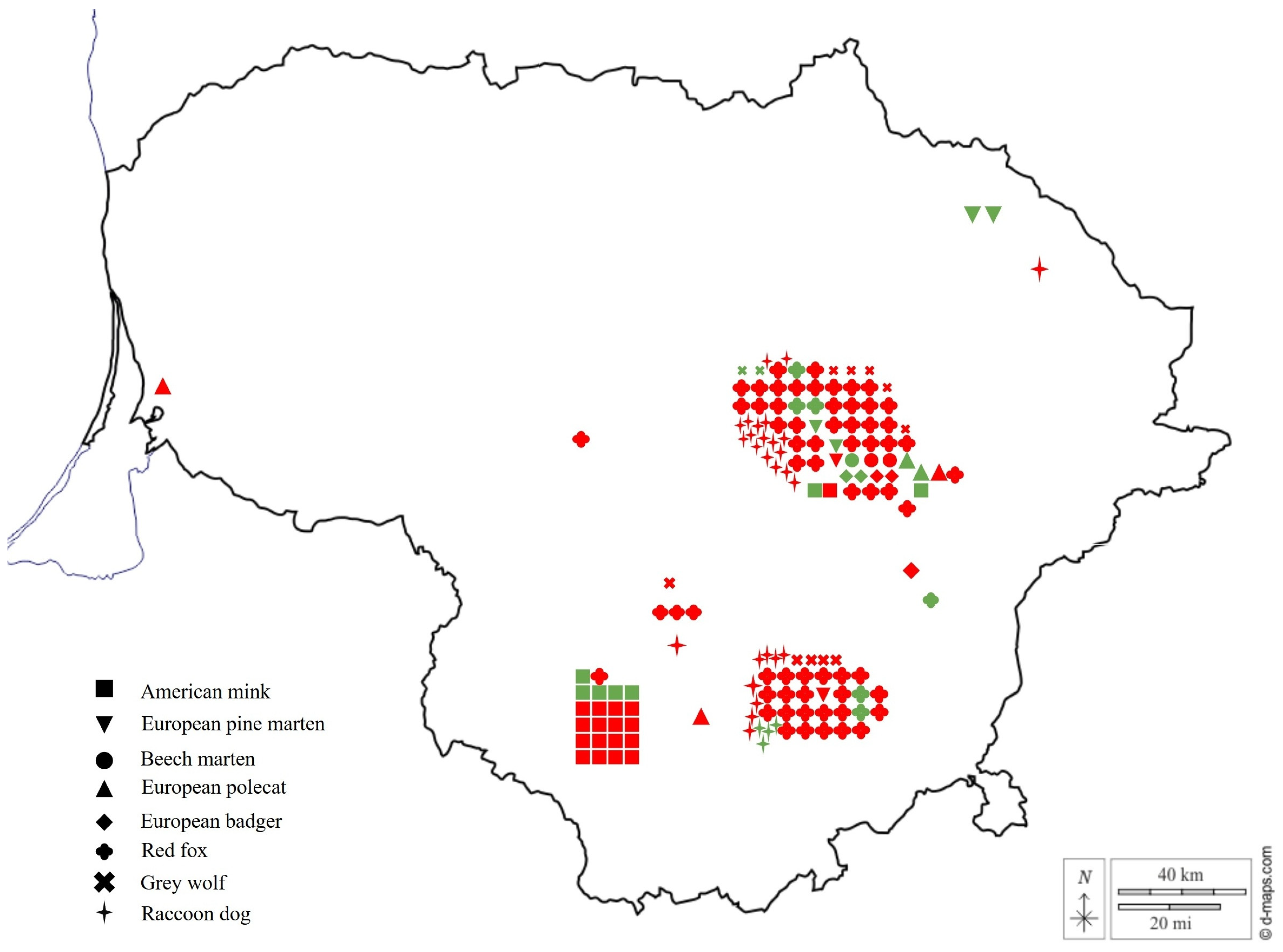
In the present study, intestines of 39 animals belonging to the family Mustelidae and 112 individuals belonging to the family Canidae were screened for Sarcocystis spp. Specifically, Mustelidae samples consisted of three beech martens, five European badgers, six pine martens, five European polecats, and 20 American minks, whereas Canidae samples comprised 12 grey wolves, 31 raccoon dogs and 69 red foxes (Figure 1). The examination of animal material was conducted in accordance with the guidelines of the Ethics Committee of the State Scientific Research Institute Nature Research Centre (no. GGT-1; issued on 11 January 2024).
The Minister of Environment in Lithuania approves the rules on hunting (20 June 2002, no. IX-966) of the Republic of Lithuania, sets a list of game species, and defines limits on the time and means of hunting. Under the legislation, hunting of invasive American minks, raccoon dogs as well as red foxes is permitted throughout the year in Lithuania. Hunting of beech martens, pine martens and European polecats are allowed from 1 July to 1 April, whereas European badgers can be legally hunted from 1 October to 1 December. According to Council Directive 92/43/EEC on the Conservation of Natural Habitats and of Wild Fauna and Flora, the grey wolf is a protected species throughout the European Union. In Lithuania, grey wolves can be hunted from 15 October to 1 April, with seasonal quotas set by the Minister of Environment. The animals of listed species were legally hunted mainly in the eastern, southern, and central parts of Lithuania in the 2021–2025 period. All animals included in this study came from legally hunted individuals during the regular annual hunting season; no animals were killed for the purpose of this research. In cooperation with local hunters, intestine samples of grey wolves and some raccoon dogs as well as red foxes were delivered to the Laboratory of Molecular Ecology of State Scientific Research Institute Nature Research Centre, Vilnius, Lithuania. Meanwhile, full carcasses of mustelids and some raccoon dogs, as well as red foxes, were provided to the laboratory. Carcasses of red foxes and other predator species were frozen—at −20 °C for a minimum of 90 days before examination to ensure inactivation of Echinococcus sp. eggs, in accordance with recommended biosafety procedures.

2.2. Microscopical Analysis of Sarcocystis spp.

The small intestine was removed from animals and cut lengthwise. The intestinal epithelium was gently scraped with a scalpel, and the material was suspended in 100 mL of distilled water. The isolation of oocysts and sporocysts of Sarcocystis spp. was conducted following previously established methods [41]. The modifications included in the processing of intestinal material are described in detail in the previous work [42]. After processing, samples were examined for oocysts and sporocysts of Sarcocystis spp. under a light microscope (LM) at ×400 magnification. Notably, DNA was extracted from all samples, regardless of whether Sarcocystis sp. stages were observed under an LM.

2.3. Molecular Examination of Sarcocystis spp.

DNA was extracted with the GeneJET Genomic DNA Purification Kit (Thermo Fisher Scientific Baltics, Vilnius, Lithuania) following the manufacturer’s protocol. Purified genomic DNA was stored at −20 °C for further molecular manipulation. Sarcocystis spp. were identified using nested PCR (nPCR) targeting 28S rRNA and the subsequent Sanger sequencing of amplified products. Two external primers (Sgrau281 5′-GAACAGGGAAGAGCTCAAAGTG-3′ and Sgrau282 5′-GGTTTCCCCTGACTTCATTCTAC-3′) amplifying about a 900 bp fragment were used in the first step of nPCR [43], whereas in the second step of nPCR, a single forward primer, SgrauzinF 5′-CCTGTGTCATTTAGTTCCACGTA-3′, was applied with a combination of three alternative reverse primers: SmyodesR 5′-TAAAAAGAAAAGTTCCAACGGTGT-3′, SrattiR 5′-CCAGAATCCTTTCACCCCAAC-3′ and SspRod1R 5′-CTGGAGTCTTTTCGTCCCAAC-3′. Specifically, SmyodesR, SrattiR and SspRod1R were in silico designed using Primer 3 plus software [44] to amplify S. myodes, S. arvalis and Sarcocystis spp. using rodents and carnivores as their IHs and DHs, respectively. The primer pair SgrauzinF/SmyodesR theoretically amplifies a 420 bp fragment, whereas SgrauzinF/SrattiR and SgrauzinF/SspRod1R amplify a 357 bp fragment. Nuclease-free water was used as the negative control in both nPCR steps. Positive controls included DNA of S. myodes, S. arvalis or S. meriones, which was isolated from individual sarcocysts and identified by sequencing in previous investigations [21,39,45].
Reactions of nPCR were carried out in a 25 µL volume using DreamTaq PCR Master Mix (Thermo Fisher Scientific Baltics, Vilnius, Lithuania). For the first step of nPCR, 12.5 µL of PCR mix, 0.5 µM of each primer, 4 µL of extracted DNA and 7.5 µL of nuclease-free water were used. The composition of the second step was the same as in the first step, except that 2 µL from the first nPCR product was used instead of template DNA. The PCR thermal cycling conditions were as follows: initial denaturation at 95 °C for 5 min, followed by 35 cycles consisting of denaturation at 94 °C for 35 s, annealing at 58–63 °C depending on the primer pair for 45 s, and elongation at 72 °C for 55 s, concluding with a final extension step at 72 °C for 5 min.
The amplified products were visualized and evaluated using 1% agarose gel electrophoresis. Amplicons of the correct size without non-specific bands were enzymatically purified with exonuclease ExoI and alkaline phosphatase FastAP (Thermo Fisher Scientific Baltics, Vilnius, Lithuania). All amplified target samples of the second step of nPCR were bidirectionally sequenced using the Big-Dye® Terminator v3.1 Cycle Sequencing Kit (Thermo Fisher Scientific, Vilnius, Lithuania) and the 3500 Genetic Analyzer (Applied Biosystems, Foster City, CA, USA). The 28S rRNA sequences obtained in the present study were deposited in NCBI GenBank with PX804151–PX804203 accession numbers.

2.4. Data Analysis

In the current work, the generated 28S rRNA sequences were compared with those of Sarcocystis spp. using the Nucleotide BLAST online tool [46] (https://blast.ncbi.nlm.nih.gov/, accessed on 19 December 2025). Phylogenetic analyses were conducted using MEGA 12.0.14 software [47]. Sequences were aligned with the help of the ClustalW algorithm, and the Maximum Likelihood (ML) method was used for phylogenetic inference. The best fitting nucleotide substitution model for the analysed datasets was chosen based on the lowest values of the Bayesian Information Criterion (BIC), calculated using the “Find Best DNA/Protein Models (ML)” option. Hyaloklossia lieberkuenhi, Eumonospora henryae and Cystoisospora yuensis were set as the outgroup. The reliability of the phylogenetic tree was assessed using the bootstrap method with 1000 replicates. The ratio of transitions to transversions (Ts/Tv) was established to evaluate substitution biases in datasets.
A 95% confidence interval (CI) for the prevalence of Sarcocystis in each DH species and family, as well as for the frequency of co-infections, was calculated using Sterne’s exact method [48]. Pair-wise comparisons of prevalence were computed by the unconditional exact test [49], while Fisher’s exact test was employed for analyses of datasets comprising more than two samples. All statistical analyses were conducted in Quantitative Parasitology 3.0 software [50], and differences were considered statistically significant at p < 0.05.

3. Results

3.1. Detection of Sarcocystis sp. Oocysts and Sporocysts by Light Microscopy

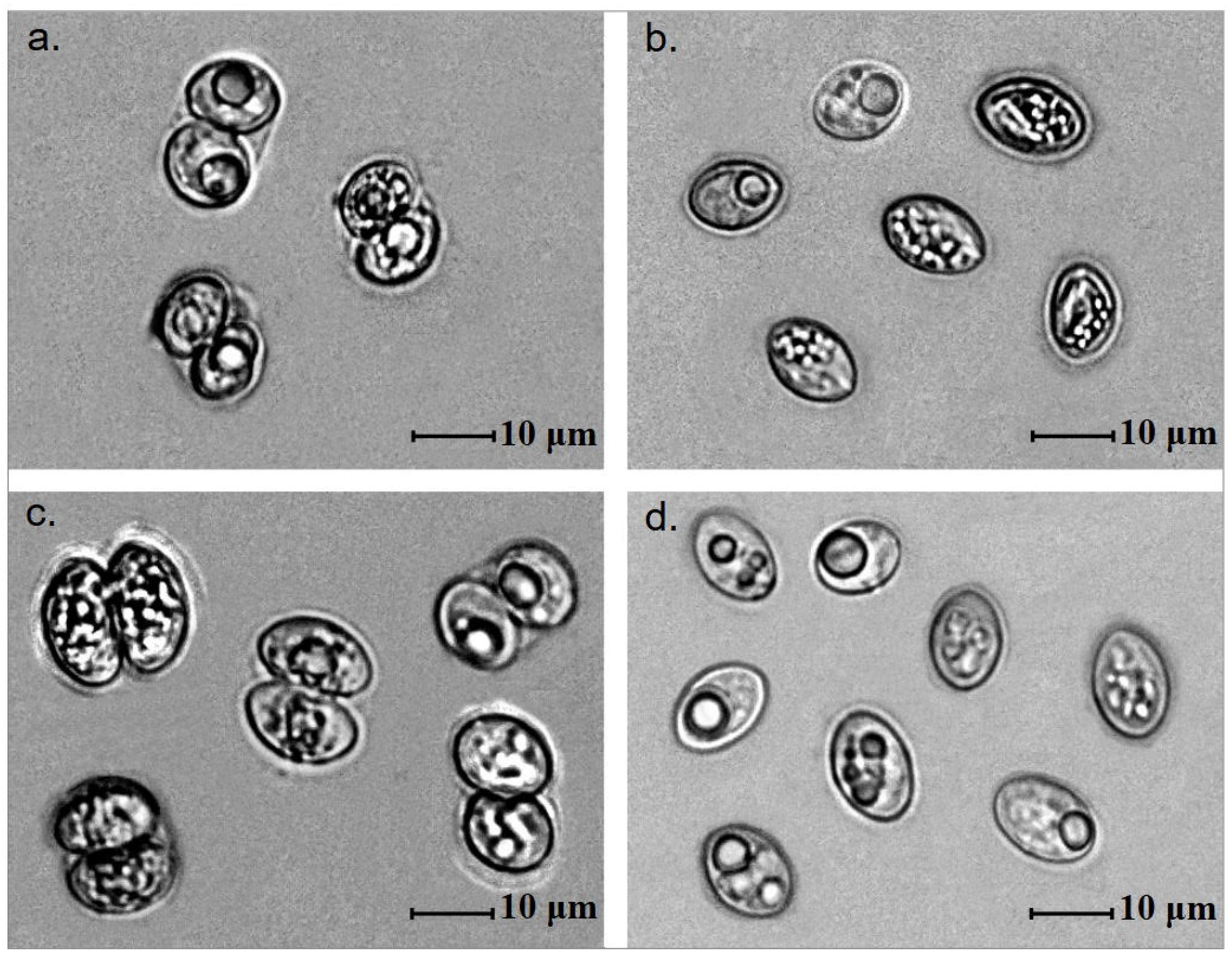
Sarcocystis sp. sporocysts and/or sporulated oocysts were observed in the intestinal epithelia of the small intestines of all eight species of canids and mustelids analysed in the current study (Figure 2). Free sporocysts were seen more frequently than sporulated oocysts. The highest number of Sarcocystis sp. parasites, i.e., 320 sporocysts, were observed in the 24 × 24 mm coverslip of mucosal scrapings from one grey wolf and a single red fox collected in the Trakai and Ukmergė districts, respectively.
LM analysis of intestinal scraping samples detected Sarcocystis sp. infection in 85 out of 151 (56.3%) canids and mustelids. Specifically, sporocysts or oocysts of the parasite were found in 33.3% (13/39) of mustelids and 64.3% of canids (72/112). The observed prevalence of Sarcocystis spp. by LM was significantly higher in canids than mustelids (p = 0.0008). No unsporulated oocysts were detected in the investigated species. The average size of sporulated oocysts of Sarcocystis spp. in mucosal scrapings of mustelids measured 8.3–22.4 × 12.3–23.9 μm (13.2 ± 3.6 × 16.9 ± 3.0 μm; n = 75) (Figure 2a), whereas that of free sporocysts was 6.4–11.5 × 7.0–17.5 μm (8.3 ± 0.8 × 12.4 ± 1.4 μm; n = 160) (Figure 2b). Meanwhile, sporulated oocysts of Sarcocystis spp. in canids measured 8.1–19.7 × 13.6–28.7 μm (14.0 ± 2.3 × 19.8 ± 2.7 μm; n = 240) (Figure 2c), while free sporocysts were 7.1–13.9 × 10.1–20.8 μm (9.8 ± 1.0 × 14.0 ± 1.7 μm; n = 569) (Figure 2d). Therefore, the sporocyst and sporulated oocyst sizes found in different species of canids and mustelids overlapped (Table 1); however, on average, canid oocysts and sporocysts appeared to be larger than those collected from mustelids. According to animal species, the largest average sporocyst size was observed in grey wolves (10.5 × 16.2), while the smallest average was found in beech marten (7.8 × 10.2). Meanwhile, on average, American minks exhibited the largest sporulated oocysts (18.3 × 21.1), whereas European pine marten had the smallest (9.3 × 14.6).

3.2. Genetic Identification of Sarcocystis Species

Overall, 53 sequences of 28S rRNA were obtained (Table 2). Similar numbers of sequences, i.e., 26 and 21, were generated with the SgrauzinF/SspRod1R and SgrauzinF/SmyodesR primers, respectively. By contrast, only six samples were amplified with the SgrauzinF/SrattiR primer pair. Overall, 23 sequences were assigned to S. arvalis (PX804151–PX804173), 18 to S. myodes (PX804174–PX804191) and one to S. ratti (PX804192). Finally, five identical 313 bp sequences (PX804193–PX804197) and six identical 373 bp sequences (PX804198–PX804203) generated with the SgrauzinF/SspRod1R and SgrauzinF/SmyodesR primers, respectively, exhibited 100% identity in the overlapping region. Notably, these sequences differed by at least 1% from all other Sarcocystis sp. sequences. Specifically, the longer 373 bp sequences of this parasitic taxon shared 97.9–98.1% similarity with those of S. arvalis, 96.8–97.9% similarity with those of S. myodes, 96.8% similarity with those of S. meriones, and 96.3% similarity with those of S. ratti. Therefore, 11 sequences of this genetic lineage were tentatively assigned to Sarcocystis sp. Rod8, as our research group previously identified seven other Sarcocystis spp. whose sequences exhibited the highest similarities to sequences obtained from sarcocysts in rodents.
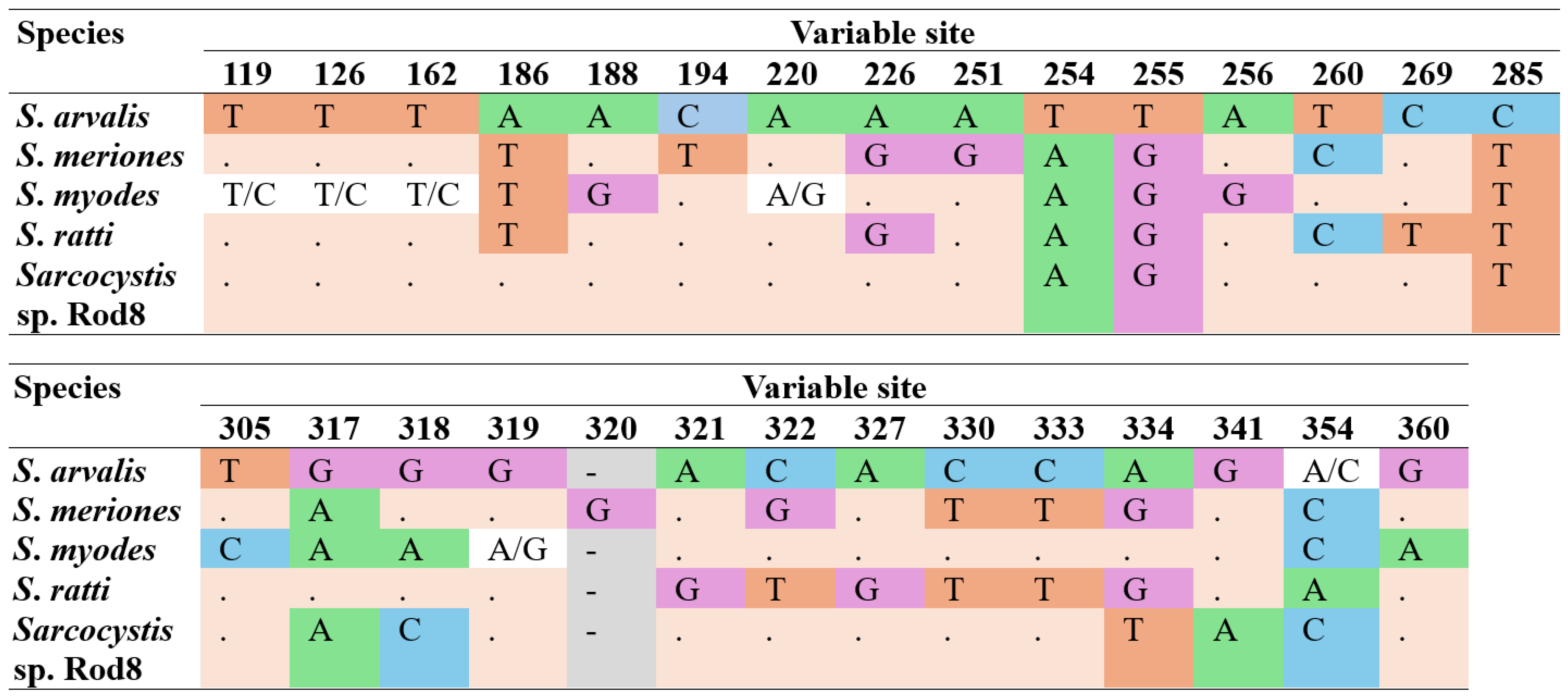
Comparisons of the numbers of substitutions across the Sarcocystis sp. Rod8 lineage and closely related S. arvalis, S. meriones, S. myodes and S. ratti were made (Figure 3). Sarcocystis sp. Rod8 showed the lowest genetic divergence from S. arvalis (with seven single-nucleotide polymorphisms (SNPs), including three transitions). It differed from S. myodes by eight SNPs, including five transitions, from S. meriones by 11 SNPs, including seven transitions and one insertion, and from S. ratti by 14 SNPs, including 10 transitions. Among the analysed Sarcocystis spp., the lowest divergence was observed between S. ratti and S. meriones, with seven differences, whereas the largest divergence (17 SNPs) was found between S. myodes and S. ratti. The proportion of transitions relative to transversions (Ts/Tv) increased with evolutionary distance, reflecting the higher prevalence of transitions in this conserved 28S rRNA region.
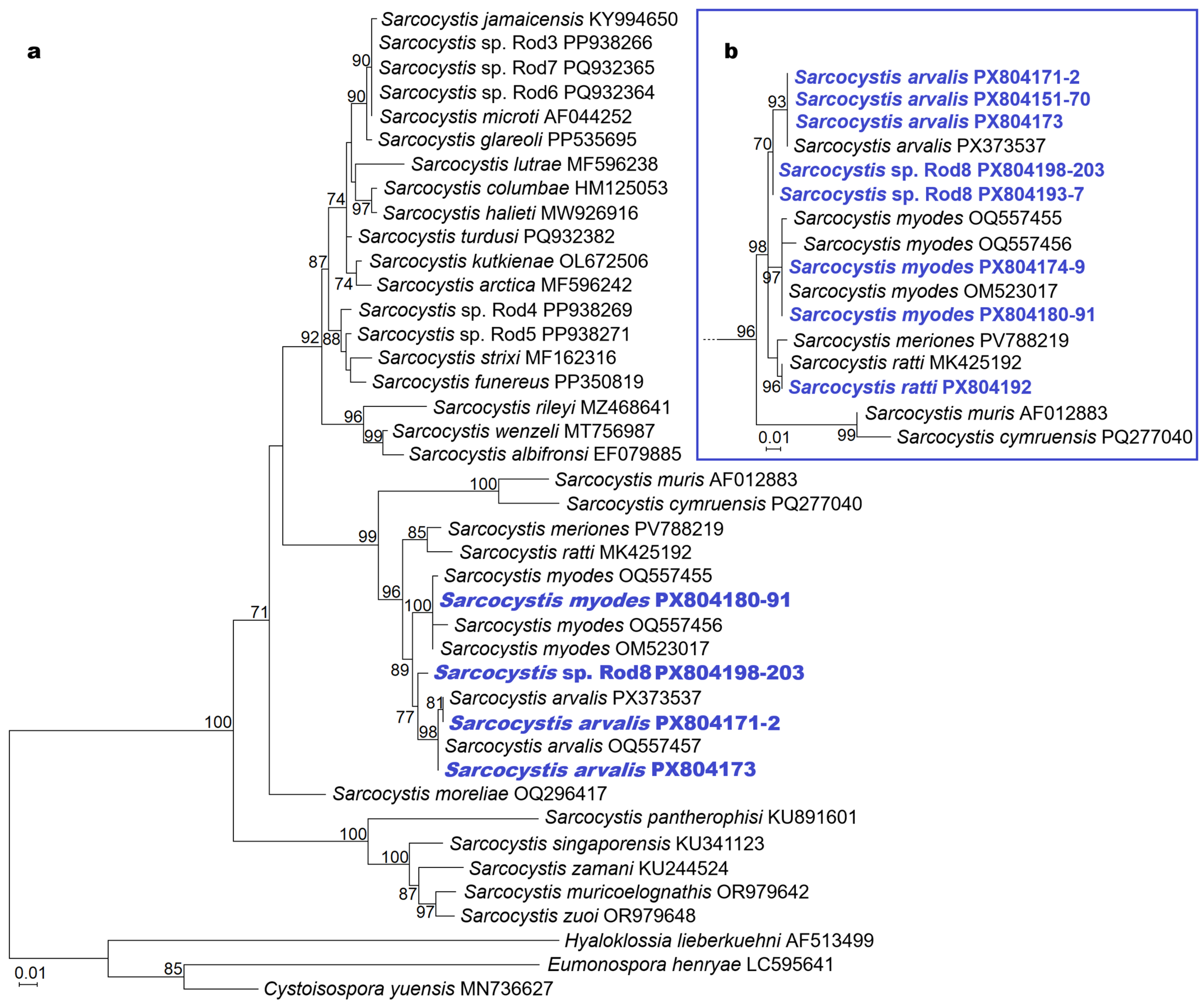
Based on 28S rRNA sequences, the lineage Sarcocystis sp. Rod8 clustered within a rodent-associated Sarcocystis sp. complex comprising S. meriones, S. ratti, S. arvalis, and S. myodes. Two additional species, S. cymruensis and S. muris, which also use rodents as IHs, formed a sister clade to this complex, characterized by short branch lengths. Sarcocystis sp. Rod8 was the most closely related to S. arvalis, while S. myodes was sister to this clade, and S. meriones clustered with S. ratti (Figure 4). Notably, sequences of S. arvalis, S. myodes and S. ratti acquired in this study were placed with high support together with sequences of certain species. Furthermore, two different clades of S. arvalis were identified, as two sequences obtained in this study grouped with S. arvalis from common vole (M. arvalis) (PX373537), while a single sequence grouped with S. arvalis from tundra vole (Alexandromys oeconomus) (OQ557457). Across the five discussed closely related Sarcocystis spp., the overall Ts/Tv ratio was 2.77, reflecting a predominance of transitions, whereas among Sarcocystis Rod8 and its closest relatives (S. arvalis and S. myodes), the Ts/Tv ratio was lower at 1.50, indicating a relatively balanced accumulation of nucleotide substitutions.

3.3. Distribution of Detected Sarcocystis Species Across Mustelids and Canids Examined

Sarcocystis spp. were detected in all five Mustelidae and all three Canidae species examined (Table 3). However, due to the low sample sizes for beech martens, European badgers, European pine martens, and European polecats (three to six individuals each), meaningful conclusions regarding differences in the Sarcocystis prevalence among these host species cannot be drawn. No significant differences in the detection rates of Sarcocystis spp. were observed among the five Mustelidae species (p = 0.749). Likewise, comparison of prevalence between the grey wolf, the raccoon dog and the red fox revealed no significant differences (p = 0.744). In contrast, the detection rate of Sarcocystis spp. in 112 canids (11.6%) was significantly lower (p = 0.0001) than that recorded in 39 mustelids (41.0%).
All four identified Sarcocystis spp. were found in the European polecat, while in other DHs, one or two parasite species were confirmed by molecular analysis. Notably, four Sarcocystis spp. were established in mustelids and only two species, S. arvalis with S. myodes, were confirmed in the three canid species.
Co-infections with two different Sarcocystis spp. were detected in five individual animals. Specifically, S. arvalis and S. myodes co-infections were identified in a single beech marten and a single red fox, whereas S. arvalis together with lineage Sarcocystis sp. Rod8 was detected in one American mink. In addition, two European polecats harboured mixed infections, comprising S. arvalis with S. myodes in one individual and S. ratti with lineage Sarcocystis sp. Rod8 in another (Table 3). Overall, the prevalence of co-infections was significantly higher (p = 0.0098) in mustelids (10.3%) than in canids (0.9%), whereas no significant interspecific differences in the Sarcocystis co-infection rates were observed within the Mustelidae or Canidae families (p = 0.090 and p = 1.000, respectively).
Among the targeted rodent-associated Sarcocystis spp., S. arvalis was the most frequently detected, followed by S. myodes, indicating that these two species are the dominant parasites in the intestines of the examined carnivores (Table 4). Lineage Sarcocystis sp. Rod8 was less common, and S. ratti was identified only in a single European polecat. No significant differences were observed in the distribution of Sarcocystis spp. among Mustelidae (p = 0.114), in contrast to the uneven distribution of species in Canidae (p < 0.001). Two Sarcocystis spp. found in both carnivore families, S. arvalis and S. myodes, were more frequently detected in Mustelidae than in Canidae; however, these differences were not statistically significant (p = 0.0565 in both cases).

4. Discussion

4.1. Prevalence of Sarcocystis spp. in Mustelids and Canids

Epidemiological studies on the role of wild mustelids as DHs in the natural transmission of Sarcocystis spp. remain notably scarce compared to similar examinations involving canids. Besides investigations carried out by our research group in 2021–2025 on the prevalence of Sarcocystis spp. in intestinal scrapings of mustelids [19,37,51,52,53], other research involving these predators has not been conducted. Previously, microscopical examination of intestinal samples of one to five species of mustelids (n = 20–115) revealed prevalence of Sarcocystis spp. in two neighbouring countries, Lithuania and Latvia, ranging from 37.5% to 70.0% [52,53]. In the present study, LM analysis revealed a 33.3% prevalence of Sarcocystis parasites in mustelids. The relatively low infection rate in the current study can be explained by the bias toward American mink samples (n = 20) compared to other mustelids (n = 19). While 25.0% of the invasive American mink were positive for Sarcocystis spp., the combined prevalence in all other host species was 42.1%. Similarly, higher Sarcocystis infection rates were observed in other mustelid species compared to American mink (56.8% vs. 37.5%) in one of our previous studies [37]. Therefore, Sarcocystis sp. infection rates likely vary by mustelid species; however, low sample sizes for some species require further studies to confirm these findings.
In contrast to mustelids, epidemiological studies on the role of wild canids in the natural transmission of Sarcocystis spp. appear to be broader in terms of geographic scope (Europe, Asia, North America, South America), study period (1982–2026), and type of biological material used (faecal or intestinal samples) [3,7,10,38,54,55,56,57,58]. Notably, red foxes, raccoon dogs, and grey wolves have been the most commonly investigated species for Sarcocystis spp., as in the current study. The prevalence of Sarcocystis spp. in these studies, as determined by morphological methods, varied greatly from 2.8% in the intestines of Slovenian red foxes [59] to 92.3% in the intestines of Lithuanian grey wolves [10]. In several studies, both the intestines and faeces of the same canid species were examined, and in all cases, Sarcocystis spp. were more prevalent in intestinal samples [7,54,60]. The current work revealed a relatively high (64.3%) prevalence of Sarcocystis spp. in intestinal scrapings of canids. Differences in detection rates of Sarcocystis spp. in canids may be linked to host dietary preferences, geographical regions, host age, seasonal patterns, and methodological peculiarities for sample handling, preparation, and examination [7,38,54,61].
It is worth noting that occurrence rates of Sarcocystis spp. detected by microscopic analysis and molecular methods cannot be directly compared, as the current molecular methods used are biased towards specific groups of IHs [3,37,51]. This study focused only on Sarcocystis spp. associated with rodents. Therefore, samples that were positive for Sarcocystis spp. via LM analysis but were negative by PCR likely harbour Sarcocystis spp. utilizing other types of IHs, such as ungulates or birds. To understand the full scope of Sarcocystis spp. utilizing mustelids and canids as DHs, larger-scale molecular studies are needed.

4.2. Genetic Identification of Sarcocystis spp. Associated with Rodents in Intestines of Mustelidae and Canidae

Recent molecular studies suggest that S. arvalis, S. meriones, S. myodes and S. ratti represent a cryptic species complex associated with a rodent–mammal lifecycle. These species can be discriminated by 28S rRNA and ITS1; however, the later region is difficult to amplify and sequence [39,45]. These Sarcocystis spp. utilize rodents of the genera Alexandromys, Apodemus, Clethrionomys, Microtus, Meriones and Rattus as IHs and, based on phylogenetic data, carnivorous mammals as DHs [39,45,62]. Current data indicates that lineage Sarcocystis sp. Rod8 is part of this Sarcocystis sp. complex. Notably, other cryptic Sarcocystis sp. complexes associated with rodents can be distinguished. Broadly discussed, the Sarcocystis-zuoi complex comprises species with small mammal–snake lifecycles. Members of this complex, including S. attenuati, S. kani, S. muricoelognathis, S. scandentiborneensis, and Sarcocystis zuoi, use rodents, specifically rats of the genera Ratus and Maxomys, shrews or treeshrews as IHs and colubrid snakes as DHs [63,64,65]. Members of this complex can be reliably distinguished using 18S rRNA and ITS1, rather than cox1. Moreover, the currently available phylogenetic evidence points to the possible existence of an additional species complex with a rodent–bird lifecycle, including S. glareoli, S. microti, S. jamaicensis, Sarcocystis sp. Rod3, Sarcocystis sp. Rod6 and Sarcocystis sp. Rod7 [2,17,66,67]. These species can be confidently distinguished through 28S rRNA and ITS1 analyses [9,66].
Despite early descriptions of Sarcocystis spp. that use rodents or other small mammals as IHs, this parasite group remains significantly understudied [1]. A major limitation is the low prevalence rate of Sarcocystis spp. in IHs [68,69]. Additionally, some Sarcocystis spp. that form microscopic sarcocysts are morphologically undistinguishable under LM and require transmission electron microscopy (TEM) and molecular analysis [21,22,70]. Furthermore, a major part of Sarcocystis spp. from rodents are characterized only morphologically [71,72], lacking molecular data entirely [43,63,64]. In cases where molecular data is available, some of it is outdated and insufficient, as new studies have revealed the limited suitability of previously used genetic markers [21,22,64,70]. One of the indications of the lack of comprehensive morphological and molecular studies on Sarcocystis spp. infecting rodents is the fact that, since 2023, our research group has molecularly detected eight distinct rodent-associated Sarcocystis lineages in biological samples from Lithuania and Spain. Seven of these lineages (Sarcocystis sp. Rod1–Rod7) were identified in our earlier studies [2,9,43,67], whereas an additional lineage, Sarcocystis sp. Rod8, was detected for the first time in the present study. None of these lineages could be genetically assigned to any previously described Sarcocystis spp. at the time of their detection. Recently, S. arvalis was described in the common vole, and its molecular identity was demonstrated to correspond to Sarcocystis sp. Rod1 [39]. Beyond the studies discussed above, there is a growing number of reports documenting the presence of rodent-associated Sarcocystis spp., which nevertheless remain unidentified at the species level [65,70,73,74,75].

4.3. The Transmission of Rodent-Associated Sarcocystis Species

Approximately 50 Sarcocystis spp. have been described in rodents, of which data on partial DNA is available for only one-third of the species [39,45,63,76]. Historically, DHs were determined through lifecycle experiments and confirmed reptiles, birds, and mammals as DHs of rodent-associated Sarcocystis spp. [63,64,76,77]. The role of carnivorous mammals in transmitting Sarcocystis spp. from rodents is poorly understood. To date, a limited subset of species has been confirmed to use mammalian DHs from the families Canidae, Felidae, and Mustelidae. Some Sarcocystis spp. exhibit broader host associations and have been reported in both Felidae and Mustelidae (e.g., S. muris, S. putorii), or in Canidae and Mustelidae (e.g., S. undulati) [1,78]. However, no species have been conclusively demonstrated to complete their lifecycle in both Canidae and Felidae. Other species appear to be more host-specific: S. baibacinacanis and S. rhombomys are associated with canids, S. cymruensis and S. neotomafelis with felids, and S. campestris with mustelids [1,78]. The results of the present study indicate a tendency toward a higher occurrence of S. arvalis and S. myodes in Lithuanian mustelids; however, these two species can presumably be transmitted by both canids and mustelids, whereas lineage Sarcocystis sp. Rod8 was detected exclusively in mustelids. In contrast, S. ratti was found in only a single sample, precluding any reliable conclusions regarding its DH range.

4.4. The Underestimated Role of Mustelids in the Transmission of Sarcocystis Species

It is generally accepted that Sarcocystis spp. transmitted via canids cannot be transmitted via felids, and vice versa [1]. An exception to this pattern is S. wenzeli, which parasitizes chickens and has been shown to use both dogs and cats as DHs. As compared to canids and felids, mustelids are less commonly examined as potential DHs of Sarcocystis spp. [37]. This pattern may reflect the fact that transmission experiments have predominantly focused on dogs and cats, given their frequent contact with farm animals, which are the most thoroughly examined for Sarcocystis spp. In general, studies examining naturally infected mustelids and canids, or mustelids and felids together, for their role in the transmission of various Sarcocystis spp. are lacking. Recently, molecular analyses indicated that canid-associated Sarcocystis spp. (e.g., S. arieticanis, S. bertrami, S. capracanis, S. cruzi) or felid-associated Sarcocystis spp. (S. bovifelis, S. hirsuta) can be detected in intestines of mustelids [37,51]. Furthermore, cervid-associated Sarcocystis spp., which previously were shown by experimental studies not to be transmitted via canids or felids, were confirmed in mustelids through DNA sequence analysis [52,53]. Furthermore, mustelids were demonstrated to be involved in the transmission of Sarcocystis forming sarcocysts in birds [19,53]. Finally, the present study indicates that mustelids may be involved in the transmission of four Sarcocystis spp. from rodents. Based on previous studies and current results, the role of mustelids in Sarcocystis transmission is significant and has been previously underestimated.

4.5. Comparison of Mustelidae and Canidae in Transmission of Rodent-Associated Sarcocystis Species

This study revealed that both the prevalence of Sarcocystis spp. associated with rodents and the proportion of co-infections were higher in Mustelidae than in Canidae, with four species detected in mustelids compared to two in canids (Table 3 and Table 4). Based on data presented in the literature, we assume that this pattern is driven more by the phylogeny and taxonomy of DHs than by distribution, abundance, or feeding ecology [33,34,35,79,80,81,82,83].
The majority of the studied animals, except the grey wolf, were mesocarnivores, [36,79], yet the Sarcocystis sp. prevalence and species richness in the studied canids was lower compared to those in mustelids. Dietary differences provide only a partial explanation for the observed patterns. Currently, among mustelids, only the diet of the European pine marten has been comprehensively studied in Lithuania [80]. The European pine marten feeds extensively on small mammals, including voles (Clethrionomys spp., Microtus spp.) and mice (Apodemus spp.) [80], and shows substantial dietary overlap with the red fox (62.4–96.5% shared rodent prey) [81]. In contrast, raccoon dogs consume considerably fewer rodents (10.5–13.3%) than red foxes (40.1–40.9%) and pine martens (38.9–46.0%) [82], while grey wolves primarily prey on larger ungulates [83]. Overall, both mustelids and canids in Lithuania consume small mammals, but the higher Sarcocystis sp. prevalence in mustelids suggests either greater exposure or higher susceptibility to Sarcocystis sp. infection; however, further studies are needed to clarify these patterns.

4.6. Limitations, Implications, and Future Perspectives

Despite providing novel insights into the transmission of rodent-associated Sarcocystis spp., this study has several limitations. Only the 28S rRNA gene was used for molecular identification, which limits the resolution of species discrimination [9,39,63,70]. In addition, a relatively small primer set was employed, further restricting the ability to detect different Sarcocystis spp. Although additional genetic markers could improve accuracy, their amplification and sequencing from naturally infected carnivores remain technically challenging [21,39,43,70]. Furthermore, developing suitable genetic markers and primers for rodent–carnivore Sarcocystis spp. remains difficult due to the limited molecular data available for this group [21,22,39,45]. Finally, the number of animals examined per carnivore species was relatively limited, which could have reduced the detection rate of rare species or co-infections.
Nevertheless, this study represents the first large-scale investigation of rodent-associated Sarcocystis across two carnivore families, Mustelidae and Canidae. Furthermore, it provides critical insights into host associations and transmission patterns. The current results emphasize the underrecognized role of mustelids in the transmission of several Sarcocystis species, complementing the existing knowledge that has largely focused on canids and felids.
Future research should focus on multi-host studies in areas where multiple carnivore families coexist. Such studies would allow for a more comprehensive assessment of the relative contributions of different DHs to Sarcocystis sp. transmission. Additionally, using a broader set of molecular markers and standardized detection methods across studies will improve species identification and facilitate the comparison of the prevalence, host specificity, and potential effects of Sarcocystis parasites on wildlife and domestic animals. Attention should also be directed toward comprehensive research on the studied Sarcocystis cryptic species complex, including detailed investigations across different continents to assess the number of Sarcocystis spp. within the species complex. Finally, genetic and ecological relationships of different Sarcocystis cryptic species complexes involving rodents as IHs in the same geographic areas should be investigated.

5. Conclusions

This study provides the first large-scale molecular investigation of rodent-associated Sarcocystis spp. in the intestines of Mustelidae and Canidae. Four closely related species, S. arvalis, S. myodes, S. ratti and the genetically new lineage Sarcocystis sp. Rod8, were identified by 28S rRNA sequence analysis. These species together with S. meriones form a cryptic species complex. Based on the species richness, prevalence, and co-infection rates, mustelids appear to contribute more to the natural transmission of rodent-associated Sarcocystis spp. in Lithuania than canids. The findings underscore the ecological complexity of rodent–carnivore Sarcocystis lifecycles and highlight the need for further studies in the same geographic regions, involving different carnivore families and additional molecular markers.

Author Contributions

Conceptualization, P.P.; methodology, E.J.-N. and P.P.; software, P.P.; validation, P.P., E.J.-N. and T.K.; formal analysis, E.J.-N., T.K. and P.P.; investigation, A.R., T.K. and E.J.-N.; resources, A.R., E.J.-N., D.B. and P.P.; writing—original draft preparation, A.R., T.K., D.L.B., E.J.-N. and P.P.; writing—review and editing, A.R., T.K., E.J.-N., D.L.B., D.B. and P.P.; visualization, T.K., E.J.-N. and P.P.; supervision, D.B. and P.P.; project administration, D.B. and P.P.; funding acquisition, D.B. All authors have read and agreed to the published version of the manuscript.

Funding

This research was funded by the Research Council of Lithuania (grant number S-MIP-23-3).

Institutional Review Board Statement

Animals were legally hunted by third parties, and carcasses or samples of intestines were delivered to the Laboratory of Molecular Ecology at the State Scientific Research Institute Nature Research Centre. The use of animal material was approved by the Ethics Committee of the institution where the research was conducted (approval no. GGT-1; issued 11 January 2024).

Informed Consent Statement

Not applicable.

Data Availability Statement

The 28S rRNA sequences of S. arvalis, S. myodes, S. ratti, and Sarcocystis sp. Rod8 obtained in the present study were deposited in NCBI GenBank under accession numbers PX804151–PX804203.

Acknowledgments

The authors are grateful to Marijonas Mackevičius, Rasa Vaitkevičiūtė-Koklevičienė and Juozas Zdanevičius for providing animal samples for this study, and to Donatas Šneideris for his valuable consultations on molecular investigations.

Conflicts of Interest

The authors declare no conflicts of interest.

References

  1. Dubey, J.P.; Calero-Bernal, R.; Rosenthal, B.M.; Speer, C.A.; Fayer, R. Sarcocystosis of Animals and Humans; CRC Press: Boca Raton, FL, USA, 2015. [Google Scholar]
  2. Juozaitytė-Ngugu, E.; Švažas, S.; Bea, A.; Šneideris, D.; Villanúa, D.; Butkauskas, D.; Prakas, P. Molecular Confirmation of Raptors from Spain as Definitive Hosts of Numerous Sarcocystis Species. Animals 2025, 15, 646. [Google Scholar] [CrossRef]
  3. Lückner, S.; Moré, G.; Marti, I.; Frey, C.F.; Fernandez, J.E.; Belhout, C.; Basso, W. High Prevalence of Sarcocystis spp. in the Eurasian Wolf (Canis lupus lupus): Third-Generation Sequencing Resolves Mixed Infections. Int. J. Parasitol. Parasites Wildl. 2025, 28, 101140. [Google Scholar] [CrossRef]
  4. Shams, M.; Shamsi, L.; Asghari, A.; Motazedian, M.H.; Mohammadi-Ghalehbin, B.; Omidian, M.; Nazari, N.; Sadrebazzaz, A. Molecular Epidemiology, Species Distribution, and Zoonotic Importance of the Neglected Meat-Borne Pathogen Sarcocystis spp. in Cattle (Bos taurus): A Global Systematic Review and Meta-Analysis. Acta Parasitol. 2022, 67, 1055–1072. [Google Scholar] [CrossRef] [PubMed]
  5. Shnawa, B.; Swar, S. Sarcocystosis in Meat-Producing Animals: An Updating on the Molecular Characterization. In Veterinary Pathobiology and Public Health; Unique Scientific Publishers: Faisalabad, Pakistan, 2021; pp. 144–151. [Google Scholar]
  6. Fayer, R. Sarcocystis spp. in Human Infections. Clin. Microbiol. Rev. 2004, 17, 894–902. [Google Scholar] [CrossRef] [PubMed]
  7. Basso, W.; Alvarez Rojas, C.A.; Buob, D.; Ruetten, M.; Deplazes, P. Sarcocystis Infection in Red Deer (Cervus elaphus) with Eosinophilic Myositis/Fasciitis in Switzerland and Involvement of Red Foxes (Vulpes vulpes) and Hunting Dogs in the Transmission. Int. J. Parasitol. Parasites Wildl. 2020, 13, 130–141. [Google Scholar] [CrossRef] [PubMed]
  8. Máca, O.; Kouba, M.; Korpimäki, E.; González-Solís, D. Molecular Identification of Sarcocystis sp. (Apicomplexa, Sarcocystidae) in Offspring of Tengmalm’s Owls, Aegolius funereus (Aves, Strigidae). Front. Vet. Sci. 2021, 8, 804096. [Google Scholar] [CrossRef]
  9. Šukytė, T.; Juozaitytė-Ngugu, E.; Švažas, S.; Butkauskas, D.; Prakas, P. The Genetic Identification of Numerous Apicomplexan Sarcocystis Species in Intestines of Common Buzzard (Buteo buteo). Animals 2024, 14, 2391. [Google Scholar] [CrossRef]
  10. Šneideris, D.; Gudiškis, N.; Juozaitytė-Ngugu, E.; Kalashnikova, T.; Butkauskas, D.; Prakas, P. High Richness of Ungulate Sarcocystis Species in Intestines of the Grey Wolf (Canis lupus) from Lithuania. Vet. Res. Commun. 2025, 49, 235. [Google Scholar] [CrossRef]
  11. Rubiola, S.; Moré, G.; Civera, T.; Hemphill, A.; Frey, C.F.; Basso, W.; Colasanto, I.; Vercellino, D.; Fidelio, M.; Lovisone, M.; et al. Detection of Sarcocystis hominis, Sarcocystis bovifelis, Sarcocystis cruzi, Sarcocystis hirsuta and Sarcocystis sigmoideus sp. nov. in Carcasses Affected by Bovine Eosinophilic Myositis. Food Waterborne Parasitol. 2024, 34, e00220. [Google Scholar] [CrossRef]
  12. Morsy, K.; Saleh, A.; Al-Ghamdi, A.; Abdel-Ghaffara, F.; Al-Rasheid, K.; Bashtar, A.-R.; Al Quraishy, S.; Mehlhorn, H. Prevalence Pattern and Biology of Sarcocystis capracanis Infection in the Egyptian Goats: A Light and Ultrastructural Study. Vet. Parasitol. 2011, 181, 75–82. [Google Scholar] [CrossRef]
  13. Wu, Z.; Sun, J.; Hu, J.; Song, J.; Deng, S.; Zhu, N.; Yang, Y.; Tao, J. Morphological and Molecular Characterization, and Demonstration of a Definitive Host, for Sarcocystis masoni from an Alpaca (Vicugna pacos) in China. Biology 2022, 11, 1016. [Google Scholar] [CrossRef] [PubMed]
  14. Speer, C.A.; Dubey, J.P. Sarcocystis wapiti sp. nov. from the North American Wapiti (Cervus elaphus). Can. J. Zool. 1982, 60, 881–888. [Google Scholar] [CrossRef]
  15. Dahlgren, S.S.; Gjerde, B. The Red Fox (Vulpes vulpes) and the Arctic Fox (Vulpes lagopus) Are Definitive Hosts of Sarcocystis alces and Sarcocystis hjorti from Moose (Alces alces). Parasitology 2010, 137, 1547–1557. [Google Scholar] [CrossRef] [PubMed]
  16. Gjerde, B.; Hilali, M. Domestic Cats (Felis catus) Are Definitive Hosts for Sarcocystis sinensis from Water Buffaloes (Bubalus bubalis). J. Vet. Med. Sci. 2016, 78, 1217–1221. [Google Scholar] [CrossRef]
  17. Rogers, K.H.; Arranz-Solís, D.; Saeij, J.P.J.; Lewis, S.; Mete, A. Sarcocystis calchasi and Other Sarcocystidae Detected in Predatory Birds in California, USA. Int. J. Parasitol. Parasites Wildl. 2022, 17, 91–99. [Google Scholar] [CrossRef]
  18. Gjerde, B.; Vikøren, T.; Hamnes, I.S. Molecular Identification of Sarcocystis halieti n. sp., Sarcocystis lari and Sarcocystis truncata in the Intestine of a White-Tailed Sea Eagle (Haliaeetus albicilla) in Norway. Int. J. Parasitol. Parasites Wildl. 2018, 7, 1–11. [Google Scholar] [CrossRef]
  19. Prakas, P.; Moskaliova, D.; Šneideris, D.; Juozaitytė-Ngugu, E.; Maziliauskaitė, E.; Švažas, S.; Butkauskas, D. Molecular Identification of Sarcocystis rileyi and Sarcocystis sp. (Closely Related to Sarcocystis wenzeli) in Intestines of Mustelids from Lithuania. Animals 2023, 13, 467. [Google Scholar] [CrossRef]
  20. Gjerde, B. Phylogenetic Relationships among Sarcocystis Species in Cervids, Cattle and Sheep Inferred from the Mitochondrial Cytochrome c Oxidase Subunit I Gene. Int. J. Parasitol. 2013, 43, 579–591. [Google Scholar] [CrossRef]
  21. Rudaitytė-Lukošienė, E.; Jasiulionis, M.; Balčiauskas, L.; Prakas, P.; Stirkė, V.; Butkauskas, D. Morphological and Molecular Description of Sarcocystis myodes n. sp. from the Bank Vole (Clethrionomys glareolus) in Lithuania. Biology 2022, 11, 512. [Google Scholar] [CrossRef]
  22. Prakas, P.; Kirillova, V.; Gavarāne, I.; Grāvele, E.; Butkauskas, D.; Rudaitytė-Lukošienė, E.; Kirjušina, M. Morphological and Molecular Description of Sarcocystis ratti n. sp. from the Black Rat (Rattus rattus) in Latvia. Parasitol. Res. 2019, 118, 2689–2694. [Google Scholar] [CrossRef]
  23. Prakas, P.; Butkauskas, D.; Juozaitytė-Ngugu, E. Molecular and Morphological Description of Sarcocystis kutkienae sp. nov. from the Common Raven (Corvus corax). Parasitol. Res. 2020, 119, 4205–4210. [Google Scholar] [CrossRef]
  24. Hunter, L. Carnivores of the World; Princeton University Press: Princeton, NJ, USA, 2011. [Google Scholar]
  25. Madsen, E.K.; Eckersley, L.; Linden, J.F.; Lai, S.; Hare, D.; Macdonald, D.W.; Kimaili, D.; Kulunge, S.; Mutinhuma, Y.; Petracca, L.; et al. What’s in a Name? Not All Mesopredators Are Mesocarnivores. Ecol. Evol. 2025, 15, e72768. [Google Scholar] [CrossRef] [PubMed]
  26. Beschta, R.L.; Ripple, W.J. Large Predators and Trophic Cascades in Terrestrial Ecosystems of the Western United States. Biol. Conserv. 2009, 142, 2401–2414. [Google Scholar] [CrossRef]
  27. Prugh, L.R.; Stoner, C.J.; Epps, C.W.; Bean, W.T.; Ripple, W.J.; Laliberte, A.S.; Brashares, J.S. The Rise of the Mesopredator. BioScience 2009, 59, 779–791. [Google Scholar] [CrossRef]
  28. Estes, J.A.; Terborgh, J.; Brashares, J.S.; Power, M.E.; Berger, J.; Bond, W.J.; Carpenter, S.R.; Essington, T.E.; Holt, R.D.; Jackson, J.B.C.; et al. Trophic Downgrading of Planet Earth. Science 2011, 333, 301–306. [Google Scholar] [CrossRef]
  29. Ritchie, E.G.; Elmhagen, B.; Glen, A.S.; Letnic, M.; Ludwig, G.; McDonald, R.A. Ecosystem Restoration with Teeth: What Role for Predators? Trends Ecol. Evol. 2012, 27, 265–271. [Google Scholar] [CrossRef]
  30. Stope, M.B. The Raccoon (Procyon lotor) as a Neozoon in Europe. Animals 2023, 13, 273. [Google Scholar] [CrossRef]
  31. Dziech, A.; Wierzbicki, H.; Moska, M.; Zatoń-Dobrowolska, M. Invasive and Alien Mammal Species in Poland—A Review. Diversity 2023, 15, 138. [Google Scholar] [CrossRef]
  32. Tull, A.; Valdmann, H.; Tammeleht, E.; Kaasiku, T.; Rannap, R.; Saarma, U. High Overlap of Zoonotic Helminths between Wild Mammalian Predators and Rural Dogs—An Emerging One Health Concern? Parasitology 2022, 149, 1565–1574. [Google Scholar] [CrossRef]
  33. Balčiauskas, L.; Trakimas, G.; Juškaitis, R.; Ulevičius, A.; Balčiauskienė, L. Lietuvos Žinduolių, Varliagyvių Ir Roplių Atlasas. Atlas of Lithuanian Mammals, Amphibians and Reptiles, 2nd ed.; Akstis: Vilnius, Lithuania, 1999. [Google Scholar]
  34. Prūsaitė, J. Fauna of Lithuania. In Mammals; Mokslas: Vilnius, Lithuania, 1988. [Google Scholar]
  35. Baltrūnaitė, L. Winter Habitat Use, Niche Breadth and Overlap between the Red Fox, Pine Marten and Raccoon Dog in Different Landscapes of Lithuania. Folia Zool. 2010, 59, 278–284. [Google Scholar] [CrossRef]
  36. Kuijper, D.P.J.; Diserens, T.A.; Say-Sallaz, E.; Kasper, K.; Szafrańska, P.A.; Szewczyk, M.; Stępniak, K.M.; Churski, M. Wolves Recolonize Novel Ecosystems Leading to Novel Interactions. J. Appl. Ecol. 2024, 61, 906–921. [Google Scholar] [CrossRef]
  37. Prakas, P.; Balčiauskas, L.; Juozaitytė-Ngugu, E.; Butkauskas, D. The Role of Mustelids in the Transmission of Sarcocystis spp. Using Cattle as Intermediate Hosts. Animals 2021, 11, 822. [Google Scholar] [CrossRef] [PubMed]
  38. Máca, O.; Gudiškis, N.; Butkauskas, D.; González-Solís, D.; Prakas, P. Red Foxes (Vulpes vulpes) and Raccoon Dogs (Nyctereutes procyonoides) as Potential Spreaders of Sarcocystis Species. Front. Vet. Sci. 2024, 11, 1392618. [Google Scholar] [CrossRef] [PubMed]
  39. Bagdonaitė, D.L.; Rudaitytė-Lukošienė, E.; Stirkė, V.; Balčiauskas, L.; Butkauskas, D.; Prakas, P. Description of Sarcocystis arvalis n. sp. from the Common Vole (Microtus arvalis) in Lithuania Using Morphological and Molecular Methods. Pathogens 2025, 14, 1086. [Google Scholar] [CrossRef]
  40. Grikienienė, J.; Mažeikytė, R. Investigation of Sarcosporidians (Sarcocystis) of Small Mammals in Kamasta Landscape Reserve and Its Surroundings. Acta Zool. Litu. 2000, 10, 55–68. [Google Scholar] [CrossRef]
  41. Verma, S.K.; Lindsay, D.S.; Grigg, M.E.; Dubey, J.P. Isolation, Culture and Cryopreservation of Sarcocystis Species. Curr. Protoc. Microbiol. 2017, 45, 20D.1.1–20D.1.27. [Google Scholar] [CrossRef]
  42. Juozaitytė-Ngugu, E.; Maziliauskaitė, E.; Vaitkevičiūtė-Koklevičienė, R.; Strazdaitė-Žielienė, Ž.; Servienė, E.; Butkauskas, D.; Prakas, P. First Report of Atriotaenia Tapeworms and Sarcocystis Protists in Invasive Raccoons (Procyon lotor) from Lithuania. BMC Vet. Res. 2026, 22, 190. [Google Scholar] [CrossRef]
  43. Prakas, P.; Stirkė, V.; Šneideris, D.; Rakauskaitė, P.; Butkauskas, D.; Balčiauskas, L. Protozoan Parasites of Sarcocystis spp. in Rodents from Commercial Orchards. Animals 2023, 13, 2087. [Google Scholar] [CrossRef]
  44. Untergasser, A.; Nijveen, H.; Rao, X.; Bisseling, T.; Geurts, R.; Leunissen, J.A.M. Primer3Plus, an Enhanced Web Interface to Primer3. Nucleic Acids Res. 2007, 35, W71–W74. [Google Scholar] [CrossRef]
  45. Aryan, F.A.M.; El-Azazy, O.M.E.; Juozaitytė-Ngugu, E.; Šneideris, D.; Tahrani, L.M.A.; Butkauskas, D.; Prakas, P. Morphological and Molecular Description of Sarcocystis meriones n. sp. from the Libyan Jird (Meriones libycus) in Kuwait. Animals 2025, 15, 2575. [Google Scholar] [CrossRef]
  46. Altschul, S.F.; Gish, W.; Miller, W.; Myers, E.W.; Lipman, D.J. Basic Local Alignment Search Tool. J. Mol. Biol. 1990, 215, 403–410. [Google Scholar] [CrossRef] [PubMed]
  47. Kumar, S.; Stecher, G.; Suleski, M.; Sanderford, M.; Sharma, S.; Tamura, K. MEGA12: Molecular Evolutionary Genetic Analysis Version 12 for Adaptive and Green Computing. Mol. Biol. Evol. 2024, 41, msae263. [Google Scholar] [CrossRef] [PubMed]
  48. Reiczigel, J. Confidence Intervals for the Binomial Parameter: Some New Considerations. Stat. Med. 2003, 22, 611–621. [Google Scholar] [CrossRef] [PubMed]
  49. Reiczigel, J.; Abonyi-Tóth, Z.; Singer, J. An Exact Confidence Set for Two Binomial Proportions and Exact Unconditional Confidence Intervals for the Difference and Ratio of Proportions. Comput. Stat. Data Anal. 2008, 52, 5046–5053. [Google Scholar] [CrossRef]
  50. Rózsa, L.; Reiczigel, J.; Majoros, G. Quantifying Parasites in Samples of Hosts. J. Parasitol. 2000, 86, 228–232. [Google Scholar] [CrossRef]
  51. Šneideris, D.; Moskaliova, D.; Butkauskas, D.; Prakas, P. The Distribution of Sarcocsytis Species Described by Ungulates-Canids Life Cycle in Intestines of Small Predators of the Family Mustelidae. Acta Parasitol. 2024, 69, 747–758. [Google Scholar] [CrossRef]
  52. Prakas, P.; Rudaitytė-Lukošienė, E.; Šneideris, D.; Butkauskas, D. Invasive American Mink (Neovison vison) as Potential Definitive Host of Sarcocystis elongata, S. entzerothi, S. japonica, S. truncata and S. silva Using Different Cervid Species as Intermediate Hosts. Parasitol. Res. 2021, 120, 2243–2250. [Google Scholar] [CrossRef]
  53. Prakas, P.; Vaitkevičiūtė, R.; Gudiškis, N.; Grigaliūnaitė, E.; Juozaitytė-Ngugu, E.; Stankevičiūtė, J.; Butkauskas, D. European Pine Marten (Martes martes) as Natural Definitive Host of Sarcocystis Species in Latvia: Microscopic and Molecular Analysis. Vet. Sci. 2025, 12, 379. [Google Scholar] [CrossRef]
  54. Scioscia, N.P.; Gos, M.L.; Denegri, G.M.; Moré, G. Molecular Characterization of Sarcocystis spp. in Intestine Mucosal Scrapings and Fecal Samples of Pampas Fox (Lycalopex gymnocercus). Parasitol. Int. 2017, 66, 622–626. [Google Scholar] [CrossRef]
  55. Dubey, J.P. Sarcocystis and Other Coccidia in Foxes and Other Wild Carnivores from Montana. J. Am. Vet. Med. Assoc. 1982, 181, 1270–1271. [Google Scholar] [CrossRef]
  56. Jo, Y.; Lee, S.J.; Bia, M.M.; Choe, S.; Jeong, D.-H. First Report of Sarcocystis pilosa from a Red Fox (Vulpes vulpes) Released for the Re-Introduction Project in South Korea. Animals 2023, 14, 89. [Google Scholar] [CrossRef] [PubMed]
  57. Molnar, B.; Ciucci, P.; Mastrantonio, G.; Betschart, B. Correlates of Parasites and Pseudoparasites in Wolves (Canis lupus) across Continents: A Comparison among Yellowstone (USA), Abruzzo (IT) and Mercantour (FR) National Parks. Int. J. Parasitol. Parasites Wildl. 2019, 10, 196–206. [Google Scholar] [CrossRef] [PubMed]
  58. Gudiškis, N.; Prakas, P.; Beck, R.; Figueiredo, A.; Juozaitytė-Ngugu, E.; Balčiauskas, L.; Calero-Bernal, R.; Gagović, E.; Torres, R.T.; Hipólito, D.; et al. Molecular Evidence of the Role of the Red Fox (Vulpes vulpes) in the Epidemiology of Ungulate-Related Sarcocystis Species in Croatia, Lithuania, and Portugal. Animals 2026, 16, 538. [Google Scholar] [CrossRef] [PubMed]
  59. Rataj, A.V.; Posedi, J.; Žele, D.; Vengušt, G. Intestinal Parasites of the Red Fox (Vulpes vulpes) in Slovenia. Acta Vet. Hung. 2013, 61, 454–462. [Google Scholar] [CrossRef]
  60. Prakas, P.; Liaugaudaitė, S.; Kutkienė, L.; Sruoga, A.; Švažas, S. Molecular Identification of Sarcocystis rileyi Sporocysts in Red Foxes (Vulpes vulpes) and Raccoon Dogs (Nyctereutes procyonoides) in Lithuania. Parasitol. Res. 2015, 114, 1671–1676. [Google Scholar] [CrossRef]
  61. Moré, G.; Maksimov, A.; Conraths, F.J.; Schares, G. Molecular Identification of Sarcocystis spp. in Foxes (Vulpes vulpes) and Raccoon Dogs (Nyctereutes procyonoides) from Germany. Vet. Parasitol. 2016, 220, 9–14. [Google Scholar] [CrossRef]
  62. Zeng, H.; Guo, Y.; Ma, C.; Deng, S.; Hu, J.; Zhang, Y. Redescription and Molecular Characterization of Sarcocysts of Sarcocystis cymruensis from Norway Rats (Rattus norvegicus) and Sarcocystis ratti from Black Rats (R. rattus) in China. Parasitol. Res. 2020, 119, 3785–3791. [Google Scholar] [CrossRef]
  63. Jäkel, T.; Raisch, L.; Richter, S.; Wirth, M.; Birenbaum, D.; Ginting, S.; Khoprasert, Y.; Mackenstedt, U.; Wassermann, M. Morphological and Molecular Phylogenetic Characterization of Sarcocystis kani sp. nov. and Other Novel, Closely Related Sarcocystis spp. Infecting Small Mammals and Colubrid Snakes in Asia. Int. J. Parasitol. Parasites Wildl. 2023, 22, 184–198. [Google Scholar] [CrossRef]
  64. Qin, T.; Ortega-Perez, P.; Wibbelt, G.; Lakim, M.B.; Ginting, S.; Khoprasert, Y.; Wells, K.; Hu, J.; Jäkel, T. A Cyst-Forming Coccidian with Large Geographical Range Infecting Forest and Commensal Rodents: Sarcocystis muricoelognathis sp. nov. Parasites Vectors 2024, 17, 135. [Google Scholar] [CrossRef]
  65. McDonald, B.M.; Cove, M.V.; Ruder, M.G.; Yabsley, M.J.; Garrett, K.B.; Thompson, A.T.; Nemeth, N.M.; Dixon, J.D.; Lashley, M.A. High Prevalence of Sarcocystis in a Collapsed Black Rat (Rattus rattus) Population from the Florida Keys, Florida, USA. J. Wildl. Dis. 2025, 61, 180–185. [Google Scholar] [CrossRef]
  66. Verma, S.K.; von Dohlen, A.R.; Mowery, J.D.; Scott, D.; Rosenthal, B.M.; Dubey, J.P.; Lindsay, D.S. Sarcocystis jamaicensis n. sp., from Red-Tailed Hawks (Buteo jamaicensis) Definitive Host and IFN-γ Gene Knockout Mice as Experimental Intermediate Host. J. Parasitol. 2017, 103, 555–564. [Google Scholar] [CrossRef] [PubMed]
  67. Prakas, P.; Jasiulionis, M.; Šukytė, T.; Juozaitytė-Ngugu, E.; Stirkė, V.; Balčiauskas, L.; Butkauskas, D. First Observations of Buzzards (Buteo) as Definitive Hosts of Sarcocystis Parasites Forming Cysts in the Brain Tissues of Rodents in Lithuania. Biology 2024, 13, 264. [Google Scholar] [CrossRef] [PubMed]
  68. Svobodová, M.; Vo, P.; Votýpka, J.; Weidinger, K. Heteroxenous Coccidia (Apicomplexa: Sarcocystidae) in the Populations of Their Final and Intermediate Hosts: European Buzzard and Small Mammals. Acta Protozool. 2004, 43, 251–260. [Google Scholar]
  69. Grikienienė, J. Investigations into Endoparasites of Small Mammals in the Environs of Lake Drūkšiai. Acta Zool. Litu. 2005, 15, 109–114. [Google Scholar] [CrossRef]
  70. Bentancourt Rossoli, J.V.; Moré, G.; Soto-Cabrera, A.; Moore, D.P.; Morrell, E.L.; Pedrana, J.; Scioli, M.V.; Campero, L.M.; Basso, W.; Hecker, Y.P.; et al. Identification of Sarcocystis spp. in Synanthropic (Muridae) and Wild (Cricetidae) Rodents from Argentina. Parasitol. Res. 2023, 123, 31. [Google Scholar] [CrossRef]
  71. Häfner, U.; Frank, W. Morphological Studies on the Muscle Cysts of Sarcocystis dirumpens (Hoare 1933) Häfner and Matuschka 1984 in Several Host Species Revealing Endopolygeny in Metrocytes. Z. Parasitenkd. 1986, 72, 453–461. [Google Scholar] [CrossRef]
  72. Hoogenboom, I.; Dijkstra, C. Sarcocystis cernae: A Parasite Increasing the Risk of Predation of Its Intermediate Host, Microtus arvalis. Oecologia 1987, 74, 86–92. [Google Scholar] [CrossRef]
  73. Oyarzún-Ruiz, P.; Thomas, R.S.; Santodomingo, A.M.; Uribe, J.E.; Ardila, M.M.; Echeverry, D.M.; Muñoz-Leal, S.; Silva-de la Fuente, M.C.; Loyola, M.; Palma, C.J.; et al. Survey and Molecular Characterization of Sarcocystidae Protozoa in Wild Cricetid Rodents from Central and Southern Chile. Animals 2023, 13, 2100. [Google Scholar] [CrossRef]
  74. Canova, V.; Helman, E.; del Rosario Robles, M.; Abba, A.M.; Moré, G. First Report of Sarcocystis spp. (Apicomplexa, Sarcocystidae) in Lagostomus maximus (Desmarest, 1917) (Rodentia, Chinchillidae) in Argentina. Int. J. Parasitol. Parasites Wildl. 2023, 20, 180–186. [Google Scholar] [CrossRef]
  75. Fernández-Escobar, M.; Millán, J.; Chirife, A.D.; Ortega-Mora, L.M.; Calero-Bernal, R. Molecular Survey for Cyst-Forming Coccidia (Toxoplasma gondii, Neospora caninum, Sarcocystis spp.) in Mediterranean Periurban Micromammals. Parasitol. Res. 2020, 119, 2679–2686. [Google Scholar] [CrossRef]
  76. Máca, O.; Kouba, M.; Langrová, I.; Panská, L.; Korpimäki, E.; González-Solís, D. The Tengmalm’s Owl Aegolius funereus (Aves, Strigidae) as the Definitive Host of Sarcocystis funereus sp. nov. (Apicomplexa). Front. Vet. Sci. 2024, 11, 1356549. [Google Scholar] [CrossRef]
  77. Cawthorn, R.J.; Wobeser, G.A.; Gajadhar, A.A. Description of Sarcocystis campestris sp. n. (Protozoa: Sarcocystidae): A Parasite of the Badger Taxidea taxus with Experimental Transmission to the Richardson’s Ground Squirrel, Spermophilus richardsonii. Can. J. Zool. 1983, 61, 370–377. [Google Scholar] [CrossRef]
  78. Odening, K. The Present State of Species-Systematics in Sarcocystis Lankester, 1882 (Protista, Sporozoa, Coccidia). Syst. Parasitol. 1998, 41, 209–233. [Google Scholar] [CrossRef]
  79. Veronesi, F.; Deak, G.; Diakou, A. Wild Mesocarnivores as Reservoirs of Endoparasites Causing Important Zoonoses and Emerging Bridging Infections across Europe. Pathogens 2023, 12, 178. [Google Scholar] [CrossRef] [PubMed]
  80. Balčiauskas, L.; Garbaras, A.; Koklevičienė, R.V.; Garbarienė, I.; Balčiauskienė, L. Isotopic Niche of Three Sympatric Mustelids. Life 2026, 16, 208. [Google Scholar] [CrossRef]
  81. Baltrunaite, L. Feeding Habits, Food Niche Overlap of Red Fox (Vulpes vulpes L.) and Pine Marten (Martes martes L.) in Hilly Moraine Highland, Lithuania. Ekologija 2001, 2, 27–31. [Google Scholar]
  82. Baltrūnaitė, L. Diet and Winter Habitat Use of the Red Fox, Pine Marten and Raccoon Dog in Dzūkija National Park, Lithuania. Acta Zool. Litu. 2006, 16, 46–53. [Google Scholar] [CrossRef]
  83. Špinkytė-Bačkaitienė, R.; Pėtelis, K. Diet Composition of Wolves (Canis lupus L.) in Lithuania. Acta Biol. Univ. Daugavp. 2012, 12, 100–105. [Google Scholar]
Figure 1. Sampling locations of animals analysed in the current study. Red indicates samples that tested negative during molecular analysis, and green indicates samples positive for rodent-associated Sarcocystis spp.
Biology 15 00593 g001
Figure 2. Oocysts/sporocysts found in small intestine mucosal scrapings of Canidae and Mustelidae species. (a,c) Sporulated oocysts. (b,d) Sporocysts. Sarcocystis spp. from pine marten (a,b) and red fox (c,d).
Biology 15 00593 g002
Figure 3. Variable sites in 28S rRNA sequences of closely related S. arvalis, S. meriones, S. myodes, and Sarcocystis sp. Rod8. Dashes indicate deletion.
Biology 15 00593 g003
Figure 4. Phylogenetic relationships of Sarcocystis spp. identified in intestines of canids and mustelids examined. Phylogenetic trees were constructed using 373 bp (a) and 313 bp (b) 28S rRNA fragments obtained in present study. The final multiple sequence alignments comprised 41 unique sequences and 411 nucleotide positions, including gaps, for (a), and 44 unique sequences and 328 nucleotide positions, including gaps, for (b). In panel (b), only a partial phylogram containing a cluster with sequences determined in this work is displayed. Phylograms were generated using the ML method, scaled according to branch length and rooted on H. lieberkuenhi, E. henryae and C. yuensis. Kimura 2-parameter and HKY+G evolutionary models were set for (a) and (b) analyses. Sequences obtained in the present work are displayed in indigo colour. Figures next to branches show bootstrap support values, and GenBank accession numbers are provided after species names.
Biology 15 00593 g004
Table 1. Detection rates and morphologies of oocysts/sporocysts found in small intestine mucosal scrapings of Mustelidae and Canidae species from Lithuania.
AnimalInfected/Investigated (%)
by Microscopical Detection
of Sarcocystis spp.
Infected/Investigated (%)
by Molecular Detection
of Sarcocystis spp.
Sporocysts (μm)Sporulated Oocysts (μm)
American mink5/20 (25.0%)7/20 (35.0%)7.8–8.8 × 10.2–12.7
(8.3 ± 0.3 × 11.9 ± 0.7, n = 32)
13.5–22.4 × 14.8–23.5
(18.3 ± 2.9 × 21.1 ± 2.5; n = 14)
Beech marten3/3 (100%)1/3 (33.3%)7.0–8.6 × 7.0–12.6
(7.8 ± 0.6 × 10.2 ± 1.7; n = 10)
10.1–17.5 × 13.5–23.9
(13.1 ± 2.4 × 16.2 ± 2.7; n = 23)
European badger1/5 (20.0%)2/5 (40.0%)6.4–9.6 × 10.0–14.1
(8.1 ± 0.8 × 12.7 ± 1.0; n = 25)
9.7–16.0 × 13.5–18.6
(13.1 ± 2.0 × 16.2 ± 1.7; n = 17)
European pine marten3/6 (50.0%)4/6 (66.7%)7.4–11.5 × 10.5–17.5
(9.0 ± 1.1 × 13.5 ± 2.2, n = 21)
8.3–10.6 × 12.3–16.2
(9.3 ± 0.8 × 14.6 ± 1.3, n = 15)
European polecat1/5 (20.0%)2/5 (40.0%)6.7–9.5 × 10.5–14.6
(8.3 ± 0.7 ×12.5 ± 0.8, n = 72)
10.4–12.8 × 16.0–18.4
(11.5 ± 0.8 × 17.6 ± 0.7, n = 6)
Grey wolf10/12 (83.3%)2/12 (16.7%)8.2–13.9 × 11.6–20.8
(10.5 ± 1.2 × 16.2 ± 1.5, n = 140)
10.9–19.7 × 16.1–28.7
(15.7 ± 1.9 × 20.2 ± 2.6, n = 78)
Raccoon dog15/31 (48.4%)4/31 (12.9%)7.1–12.6 × 10.7–18.2
(9.8 ± 1.0 × 14.0 ± 1.5, n = 229)
10.1–19.0 × 13.6–26.6
(13.8 ± 2.0 × 18.6 ± 2.7, n = 32)
Red fox47/69 (68.1%)7/69 (10.1%)7.5–10.1 × 12.8–18.8
(9.5 ± 0.9 × 13.4 ± 1.3, n = 200)
8.1–14.7 × 18.6–27.0
(13.0 ± 2.1 × 19.4 ± 2.6, n = 130)
Table 2. Genetic identification of Sarcocystis spp. in intestines of mustelids and canids from Lithuania based on 28S rRNA sequences.
SpeciesGenBank
Acc. No.
PrimersLengthGenetic Similarity Comparing
with
Same Species
with Most
Closely Related Species
S. arvalisPX804151–PX804155SgrauzinF/SrattiR313100%96.8–97.8% S. myodes; 97.8% S. ratti; 97.4% S. meriones; 93.3% S. moreliae
S. arvalisPX804156–PX804170SgrauzinF/SspRod1R 313100%96.8–97.8% S. myodes; 97.8% S. ratti; 97.4% S. meriones; 93.3% S. moreliae
S. arvalisPX804171–PX804172SgrauzinF/SmyodesR37399.7–100% 96.0–97.1% S. myodes; 96.5% S. ratti; 96.3% S. meriones; 91.0% S. cymruensis
S. arvalisPX804173SgrauzinF/SmyodesR37399.7–100%96.3–97.3% S. myodes; 96.5% S. meriones; 96.3% S. ratti; 90.9% S. cymruensis
S. myodesPX804174–PX804179SgrauzinF/SspRod1R 31399.0–100%98.1% S. ratti; 97.8% S. arvalis,
97.8% S. meriones; 93.3% S. moreliae
S. myodesPX804180–PX804191SgrauzinF/SmyodesR37398.9–100%97.1–97.3% S. arvalis; 96.3% S. meriones; 95.7% S. ratti; 91.4% S. moreliae
S. rattiPX804192SgrauzinF/SrattiR313100%99.0% S. meriones; 97.1–98.1% S. myodes; 97.8% S. arvalis; 93.6% S. muris
Sarcocystis sp. Rod8PX804193–PX804197SgrauzinF/SspRod1R 313-99.0% S. arvalis; 97.8–98.7% S. myodes; 98.7% S. ratti; 98.4% S. meriones; 94.0% S. moreliae
Sarcocystis sp. Rod8PX804198–PX804203SgrauzinF/SmyodesR373-97.9–98.1% S. arvalis; 96.8–97.9% S. myodes; 96.8% S. meriones; 96.3% S. ratti; 91.7% S. moreliae
Table 3. Prevalences and proportions of Sarcocystis co-infections in intestines of five Mustelidae and three Canidae carnivore species in Lithuania.
Host Species or FamilyNInfectedPrevalence (95% Confidence Intervals)Sarcocystis
Species
Proportion of Co-Infections
(95% Confidence Intervals)
American mink20735.0 (16.7–57.6)S. arvalis, Sarcocystis sp. Rod85.0 (0.3–24.4)
Beech marten3133.3 (1.7–86.5)S. arvalis, S. myodes33.3 (1.7–86.5)
European badger5240.0 (7.7–81.1)S. arvalis0
European pine marten6466.7 (27.1–93.7)S. myodes0
European polecat5240.0 (7.7–81.1)S. arvalis, S. myodes, S. ratti, Sarcocystis sp. Rod840.0 * (7.7–81.1)
Mustelidae391641.0 (26.7–57.8)S. arvalis, S. myodes, S. ratti, Sarcocystis sp. Rod810.3 (3.6–24.1)
Grey wolf12216.7 (3.1–45.7)S. arvalis, S. myodes0
Raccoon dog31412.9 (4.5–28.8)S. arvalis, S. myodes0
Red fox69710.1 (4.9–19.4)S. arvalis, S. myodes1.4 (0.1–7.7)
Canidae1121311.6 (6.5–19.1)S. arvalis, S. myodes0.9 (0.1–4.8)
* In one animal, S. arvalis + S. myodes Rod8 co-infections were identified, while in another animal, S. ratti + Sarcocystis sp. Rod8 co-infections were identified.
Table 4. Prevalences of four identified Sarcocystis species in mustelids and canids examined.
Sarcocystis
Species
Number of
Animals Infected
Prevalence in Mustelidae
(95% Confidence Intervals)
Prevalence in Canidae
(95% Confidence Intervals)
S. arvalis1518.0 (8.6–33.2)7.1 (3.4–13.7)
S. myodes1215.4 (6.9–30.4)5.4 (2.4–11.5)
S. ratti12.6 (0.1–13.6)0
Sarcocystis sp. Rod8615.4 (6.9–30.4)0
Disclaimer/Publisher’s Note: The statements, opinions and data contained in all publications are solely those of the individual author(s) and contributor(s) and not of MDPI and/or the editor(s). MDPI and/or the editor(s) disclaim responsibility for any injury to people or property resulting from any ideas, methods, instructions or products referred to in the content.